Curated collectionAnswer keys includedPrint-ready PDFs
Homeschool Worksheets With Answer Keys
Turn a printable library into a flexible weekly rhythm with explicit teaching, short independent practice, answer-key feedback and mixed-age planning.
Start with a real resource
Browse this worksheet collection
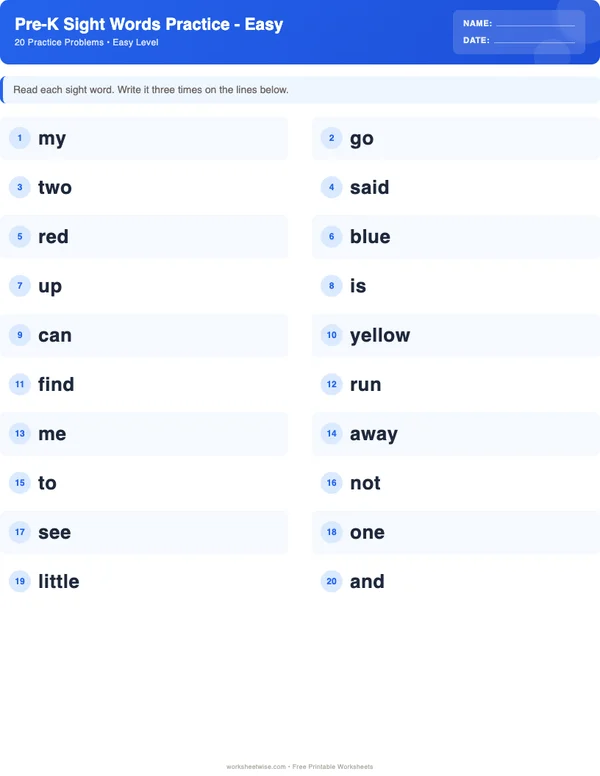
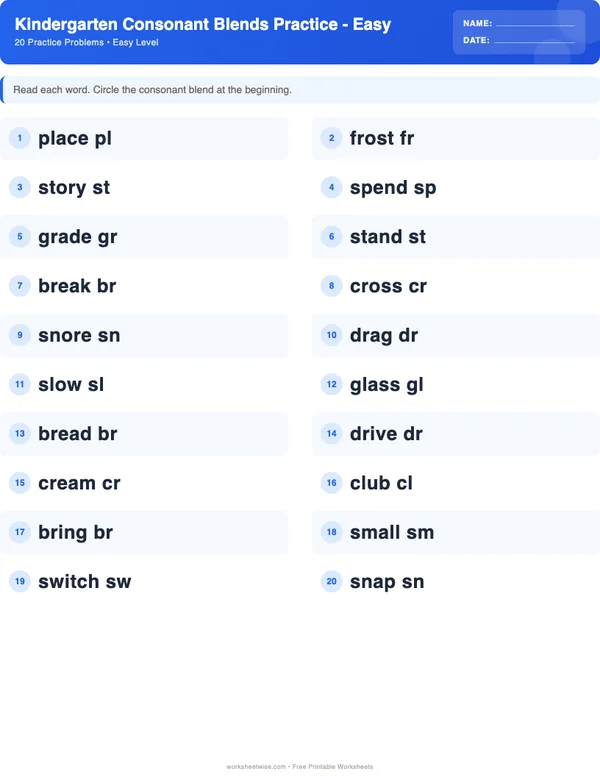
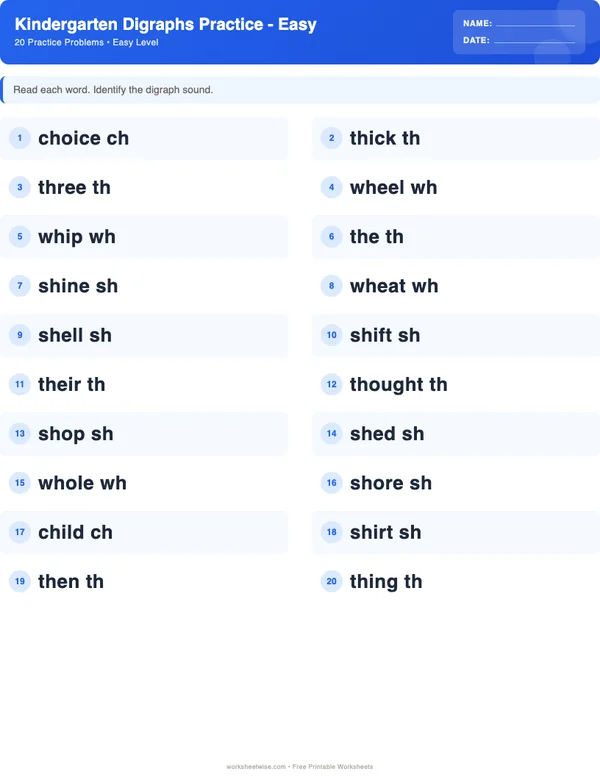
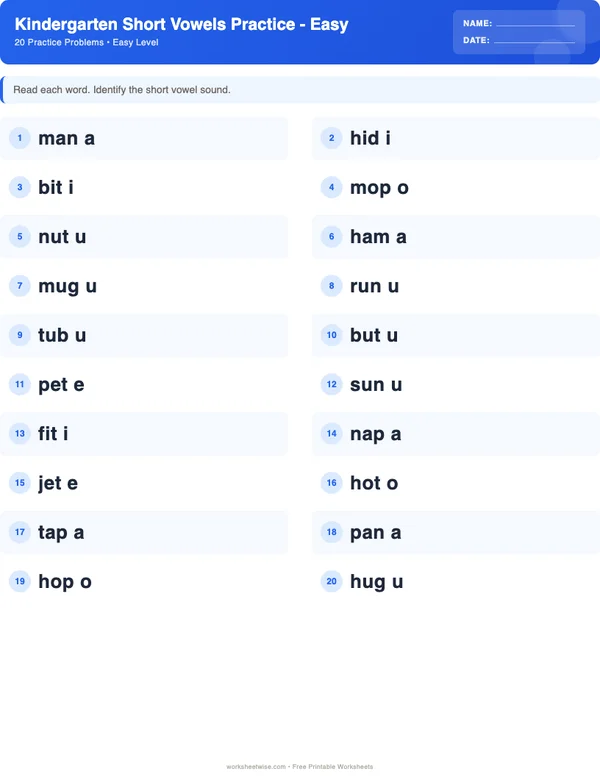
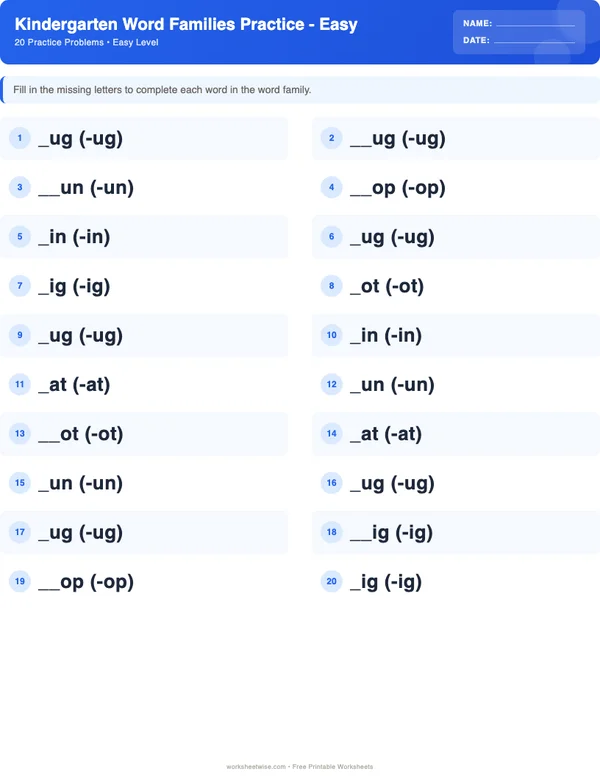
107 relevant free entry points are available. Each one includes a printable learner PDF and separate answer key.
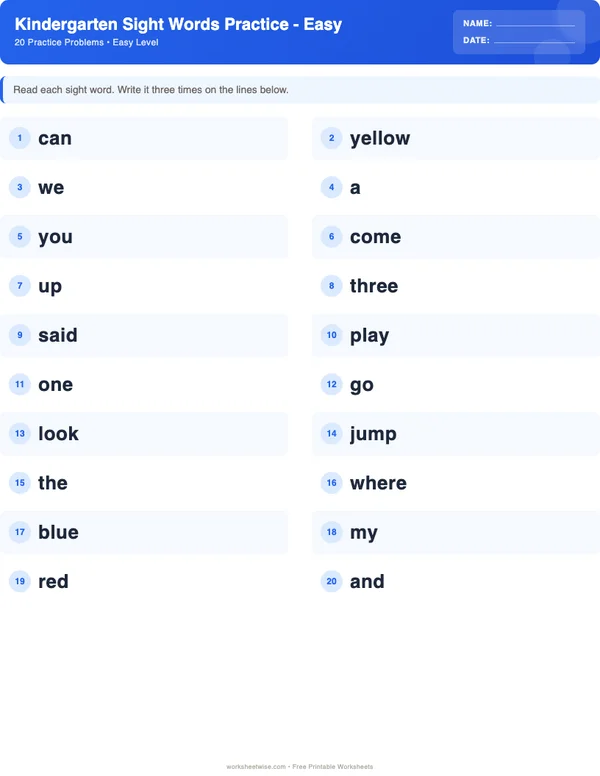
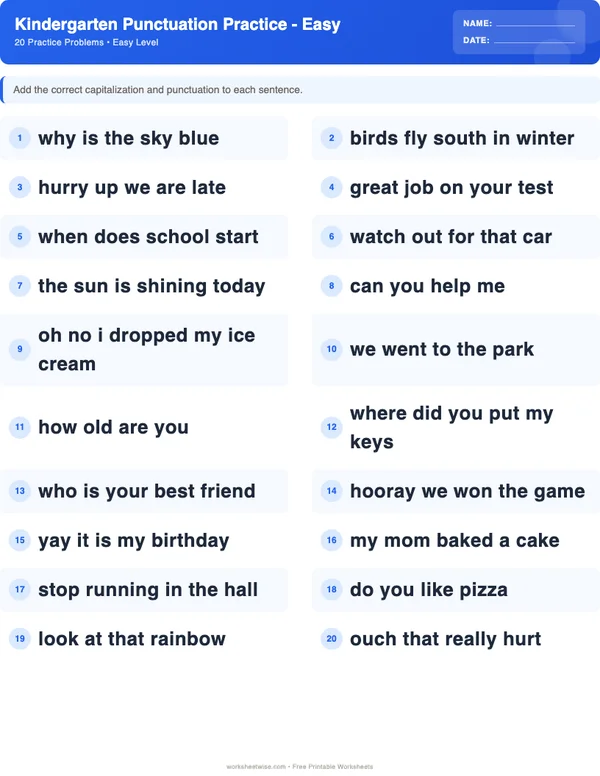
A useful practice loop
Print less. Observe more.
- Choose one skill and model the first item aloud.
- Use a short set and notice the learner’s strategy.
- Change the next task from the work you can see.
Need more than the free sheet?
Plus includes all 1926 matching catalogue variations where available, plus saved deterministic generators and the worksheet designer.
See Plus membershipExplore homeschool worksheets with answer keys by subject or level
Complete guide
How to teach and practise homeschool worksheets
3,308 words Updated 6 instructional visuals
Build the week around teaching, practice, and response
Homeschool worksheets work best as one part of a weekly teaching rhythm: explain or model a skill, let the learner try a short set, study the work together, and use the errors to choose the next lesson. The answer key supports that feedback loop; it does not replace instruction.
WorksheetWise’s live catalogue contains 1,926 worksheet variants across eight grade labels, four subjects, and 23 topics, including 107 free resources. That breadth is useful only if selection stays disciplined. Do not print a large packet merely because it is available. Choose one current target, one short practice set, and a specific way to respond afterward.
A workable homeschool week might look like this:
- Monday: teach with objects, oral examples, or a worked model; complete two or three items together.
- Tuesday: assign a short independent section and observe without correcting every move.
- Wednesday: reteach the most revealing error with a different representation.
- Thursday: use a fresh or mixed set to see whether the idea transfers.
- Friday: review selected errors, record what the learner can now do, and decide whether to continue, pause, or move on.
This structure is flexible enough for mixed-age households. One child may be building CVC words with letter tiles while another solves subtraction problems and a third explains geometry. The shared rhythm is the same even when the content is different.
Prepare one teachable target, not a pile of pages
Preparation begins with a sentence describing what the learner will do. “Work on math” is too broad. “Represent each addition with counters before writing the number sentence” is observable. So is “read an initial-blend word without dropping either consonant.”
Select by the action inside the task
Use grade and age labels to locate likely material, then inspect the actual demands. Grade labels describe an intended practice level; local curriculum sequences differ. Age is a discovery aid rather than a placement decision. A first grader may need earlier counting practice, while another may be ready to discuss several ways of composing ten. Neither fact defines the child.
When a catalogue item has a difficulty label, translate it into visible task features. An “easy” sheet might use smaller quantities, familiar patterns, one operation, picture support, or fewer steps. A more demanding task might remove visual support, mix problem types, enlarge the number range, or require an explanation. Describe those features instead of labeling a learner “easy,” “developing,” or “advanced.”
Before printing, check:
- What knowledge must already be secure?
- Is the target decoding, computation, handwriting, comprehension, or explanation?
- How many items are needed to reveal a pattern?
- Does the page introduce anything the learner has not been taught?
- Can the learner show the same skill orally or with objects first?
- Will handwriting, reading load, or visual density obscure the target?
A 20-problem page does not require 20 problems in one sitting. Fold the sheet, cover sections, circle six items, or use the remainder later. A 12-problem word-problem page may require more time than a 20-item counting page because reading, representing, choosing an operation, and checking are separate demands.
Prepare the model and the correction before the lesson
Work several items yourself. Verify the answer key, note any vocabulary that needs explanation, and choose one model. If the task involves counting objects, gather buttons or cubes. For place value, prepare bundled sticks or base-ten blocks. For phonics, keep letter tiles or three sound boxes nearby.
Also decide what you will do after a predictable error. If a learner writes 26 for , you need tens and ones for regrouping, not another verbal reminder to “be careful.” If a learner reads stop as sop, you need sound-by-sound attention to the blend, not a larger word list.
Launch each worksheet with explicit teaching
The launch should make the target clear without completing the entire task for the learner. State the purpose, model one example, solve one together, and then release a small section.
Use a four-part launch
- Name the action. “Today you will show how two parts combine to make a total.”
- Model aloud. Show what you notice and why you choose each step.
- Complete one together. Ask the learner to perform the next action rather than echo your explanation.
- Set a stopping point. “Try problems 3 through 7. Stop if two in a row feel confusing.”
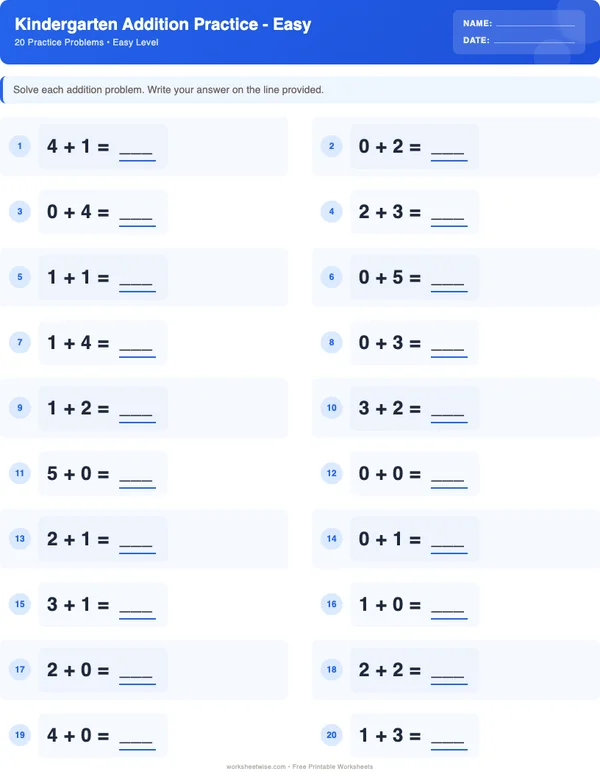
For early addition, suppose the problem is . Place six counters on a ten frame, then add three. Ask the learner to point to each added counter and state the total. Draw the representation and only then write . On the next item, the learner chooses whether to use counters, a drawing, or a known fact.
This example belongs in a homeschool worksheet routine because it shows how a printable becomes the final representation of a lesson rather than the lesson itself. The catalogue’s addition progression moves from objects and pictures toward abstract number sentences, so the adult can choose the amount of support without changing the target.
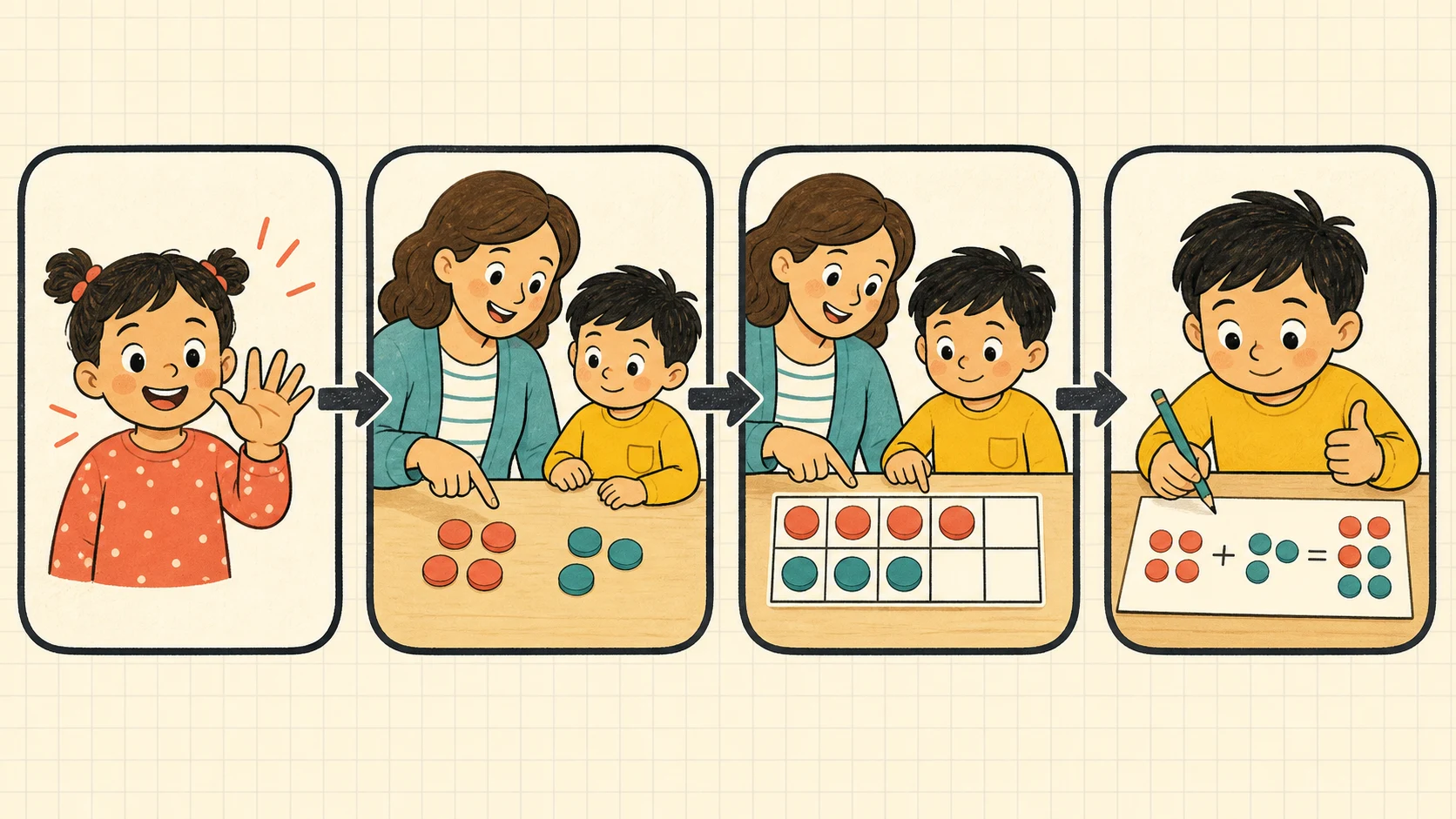
Use the first-grade addition routine to decide what you will model, what the learner will attempt, and where feedback will occur.
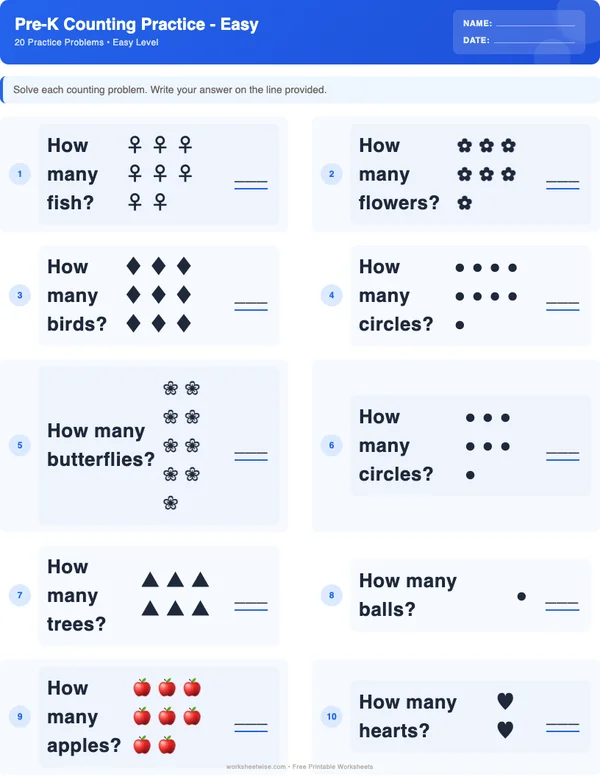
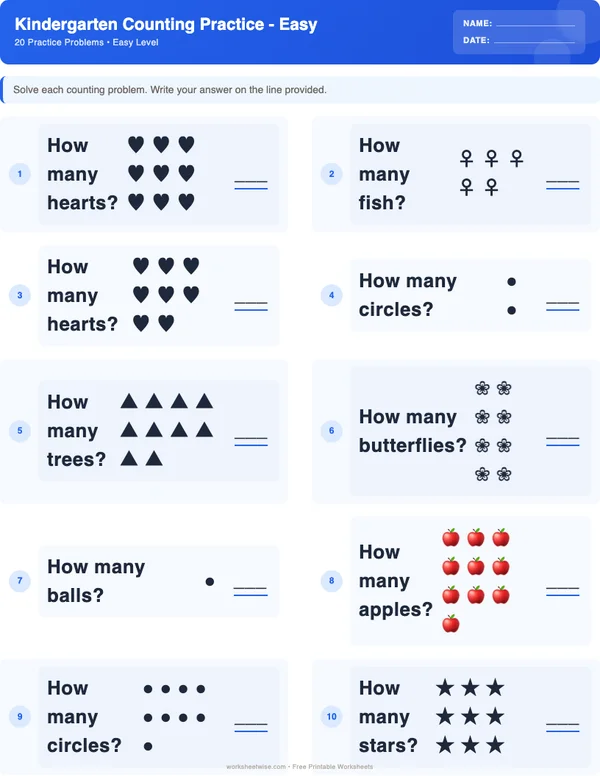
For young children, the launch may be the main lesson. For ages three and four, prioritize brief adult-led oral, matching, manipulative, and movement work over desk work. A Pre-K Counting guide and free sheet can supply a few closing items, but first let the child touch and count a scattered group of objects, move one object for each number word, and stop while attention is still available.
The IES guide on teaching math to young children recommends purposeful progressions, monitoring children’s mathematical understanding, and helping them view and describe their world mathematically. In practice, that supports short, intentional encounters with quantities and shapes—not long sessions devoted to finishing paper.
Observe the process before checking the product
During independent practice, watch for actions that an answer key cannot reveal. Avoid hovering over every pencil mark, but collect evidence.
Record compact observations such as:
- counted every object once, then recounted from the beginning;
- started from six and counted on three;
- read the first consonant but omitted the second;
- aligned ones under tens without prompting;
- chose subtraction after retelling the story;
- gave the right answer but could not explain the drawing;
- completed four items accurately, then began guessing.
These notes distinguish a knowledge gap from an execution problem. A wrong total may result from miscounting, misunderstanding the operation, losing track, or copying a numeral incorrectly. The correction depends on which action broke down.
Example: telling time from a model to an answer
For a first-grade telling-time task showing 4:30, build the time on a movable clock before asking for a written response. Put the minute hand on 6 and the hour hand halfway between 4 and 5. Ask:
- Which hand tells the hour?
- Has the hour hand reached 5?
- How many groups of five minutes lead to the 6?
- How would we write the time?
The checked answer is 4:30, not 5:30. The hour hand’s movement matters: at half past four, it sits between four and five. This example belongs here because the adult can observe whether an incorrect answer comes from reading the hands, counting minute intervals, or writing the notation.
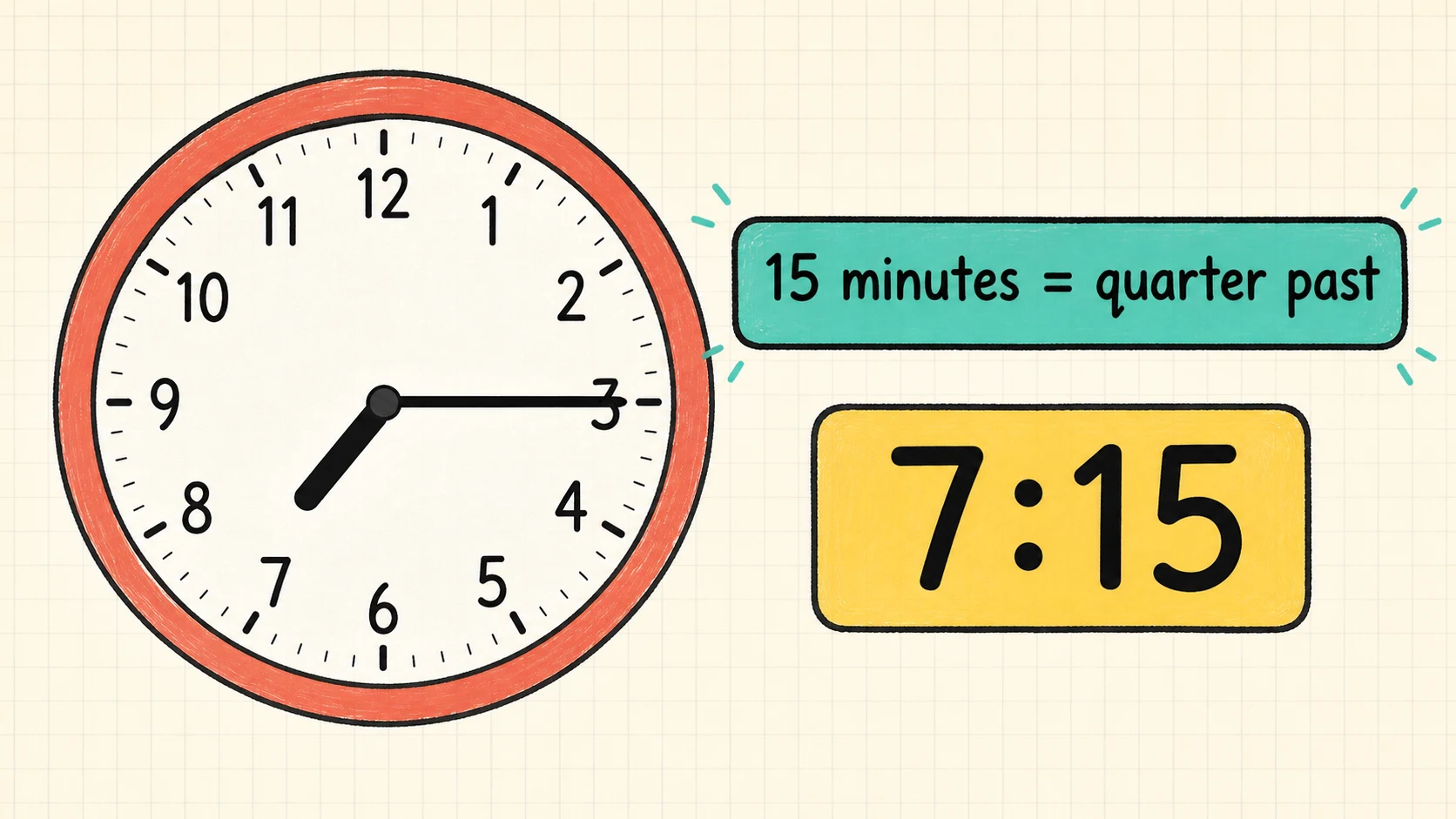
Move from a clock the learner can manipulate to the printed clock, then to the written time; do not remove the model until the relationship is understood.
If the learner writes 5:30, do not merely supply 4:30. Move the hour hand to exactly 5:00, compare the two positions, and ask which hour has been completed at 4:30. Then try 2:30 with the hour hand between 2 and 3. The next action is observable: correctly name the completed hour on two half-hour models.
Use answer keys as feedback tools
An answer key tells you whether the final response matches. It does not tell you why the response was produced, whether the learner used a sound method, or whether the skill will transfer. Check work soon enough that the learner remembers the reasoning.
A productive feedback conversation has four moves:
- Ask the learner to explain or reconstruct the attempt.
- Identify the first step where the reasoning changed course.
- Model or prompt one correction.
- Give one nearby problem to test the correction.
Avoid marking a page with a field of red symbols and returning it without discussion. For independent checking, let an older learner compare a small set with the key, circle mismatches, and choose one to explain. Self-checking is useful when it leads to reasoning; copying correct answers is not review.
Example: interpret a subtraction error
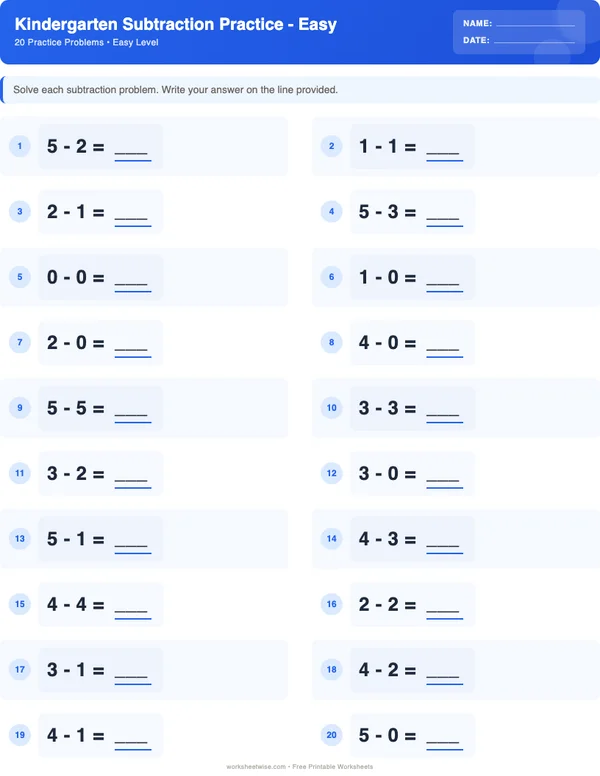
Consider . The correct result is 18:
- Regroup as 3 tens and 13 ones.
- Subtract 5 ones from 13 ones to get 8 ones.
- Subtract 2 tens from 3 tens to get 1 ten.
A learner who writes 22 may have subtracted 3 from 5 and 2 from 4, always taking the smaller digit from the larger. A learner who writes 28 may have changed 3 ones to 13 but forgotten that trading one ten leaves only 3 tens. Those answers look similar on a score sheet but require different responses.
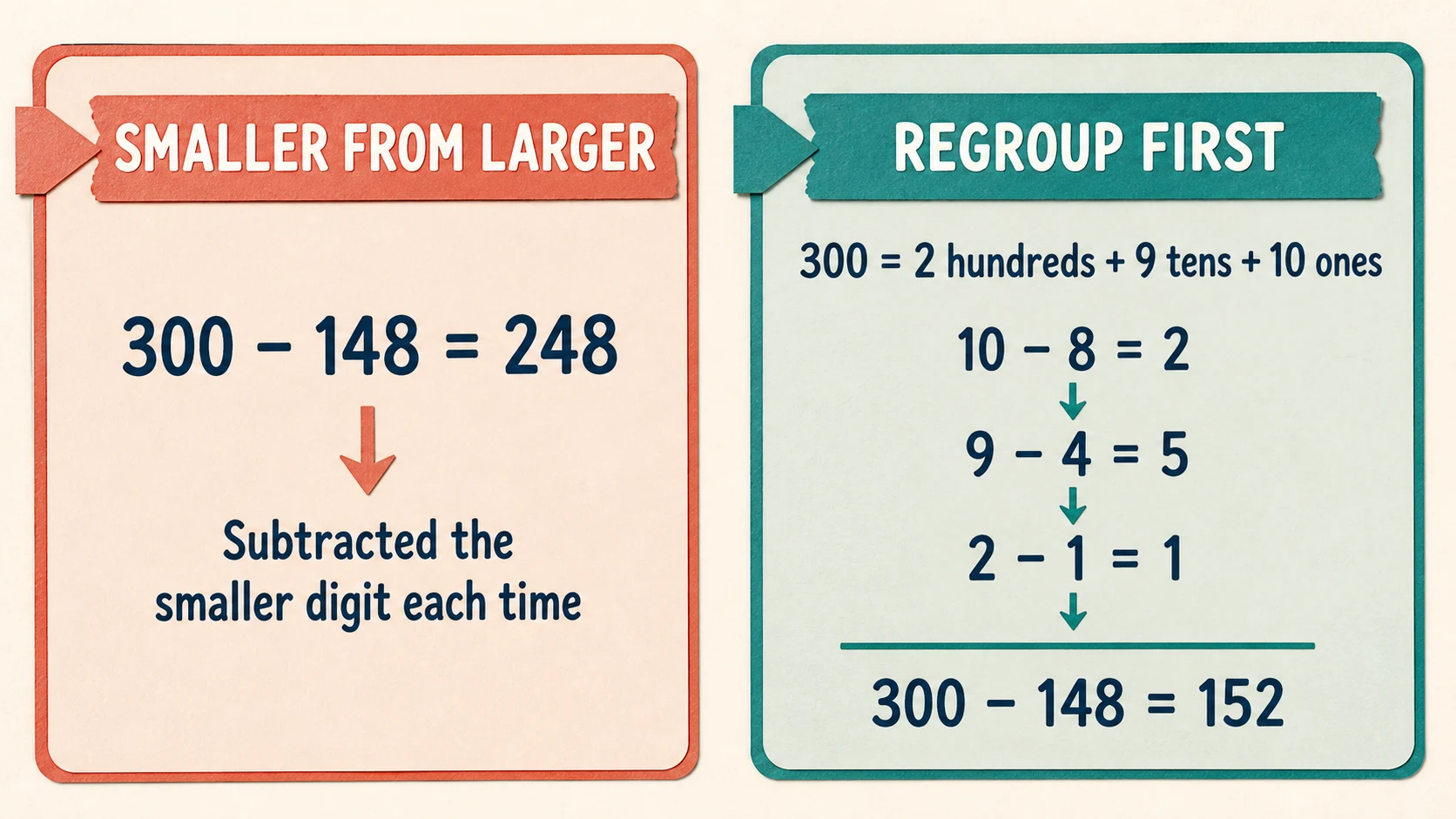
Match the third-grade subtraction response to the observed step: operation choice, place alignment, regrouping, or calculation.
Use base-ten blocks to represent 43, physically trade one ten for ten ones, and keep the written notation beside the model. Then ask the learner to solve . The correct result is 25: regroup to 4 tens and 12 ones, calculate , then . This follow-up belongs here because it tests the exact regrouping decision without repeating the original numbers.
The IES guide on assisting students who struggle with mathematics supports systematic instruction, clear mathematical language, representations, and deliberate practice. It does not assess WorksheetWise. It provides a sound basis for using a worksheet error as evidence for a focused teaching response rather than as a diagnosis.
Plan across subjects without teaching everyone at once
Mixed-age planning becomes manageable when the adult schedules attention, not just pages. Give the child learning a new or fragile skill the first teaching block. Give another child familiar independent practice that truly can be completed without repeated explanation. Then switch.
A simple rotation might be:
- Block 1: adult teaches phonics; older learner completes familiar math review.
- Block 2: phonics learner uses letter tiles or rereads taught words; adult discusses the older learner’s math.
- Block 3: shared read-aloud, oral language, science observation, art, or movement.
- Block 4: brief writing or record update.
“Independent” should describe a known routine, not the adult’s wish to be uninterrupted. If a learner needs help understanding every instruction, the page is not independent practice yet. The Independent practice Worksheets With Answer Keys context can help you think about that handoff, while the full worksheet library provides the broader selection point.
Example: a two-week consonant-blend cycle
A second-grade consonant-blend cycle can use the printed task as one component of decoding and spelling work:
- Days 1–2: review CVC words and model an initial blend such as st.
- Days 3–4: build and read lap → slap and top → stop with letter tiles.
- Day 5: complete a short set and note whether either consonant disappears.
- Days 6–7: contrast sop/stop and sack/stack orally and in print.
- Days 8–9: read blend words in sentences and dictate several for spelling.
- Day 10: use a mixed review containing previously taught patterns.
In stop, the learner must retain /s/, /t/, /ŏ/, and /p/. Reading sop drops /t/; reading top drops /s/. The correction is to touch or tap four sound positions, blend them without inserting a vowel between /s/ and /t/, and then spell the word. This example belongs because the worksheet result can expose exactly which sound was omitted, while tiles and oral blending preserve the actual decoding target.
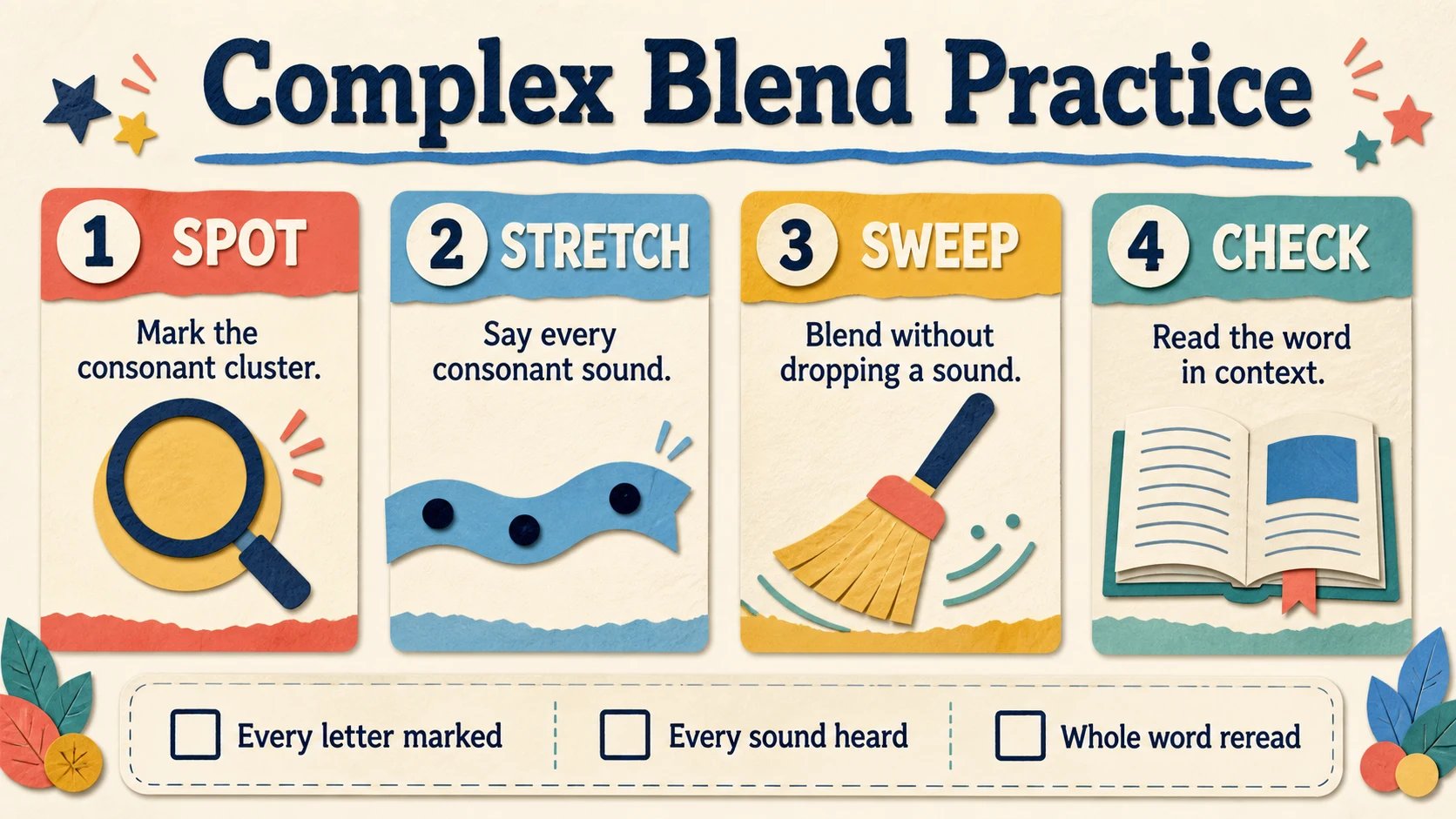
Space second-grade blend work across modeling, word building, connected reading, spelling, and mixed review instead of repeating isolated lists.
The IES foundational reading skills guide emphasizes sound–letter relationships, decoding and word analysis, and daily reading of connected text. Therefore, a phonics worksheet should not stand alone. Pair it with spoken sound work, word building, and text that uses patterns already taught.
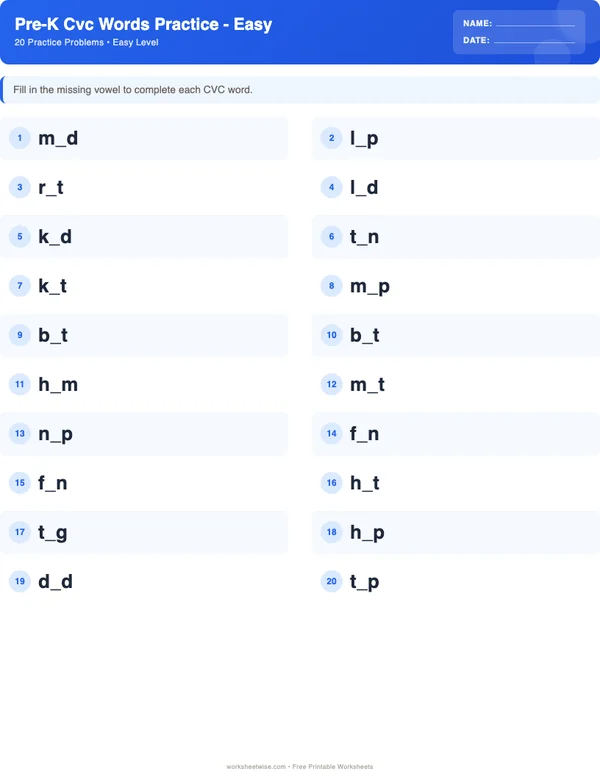
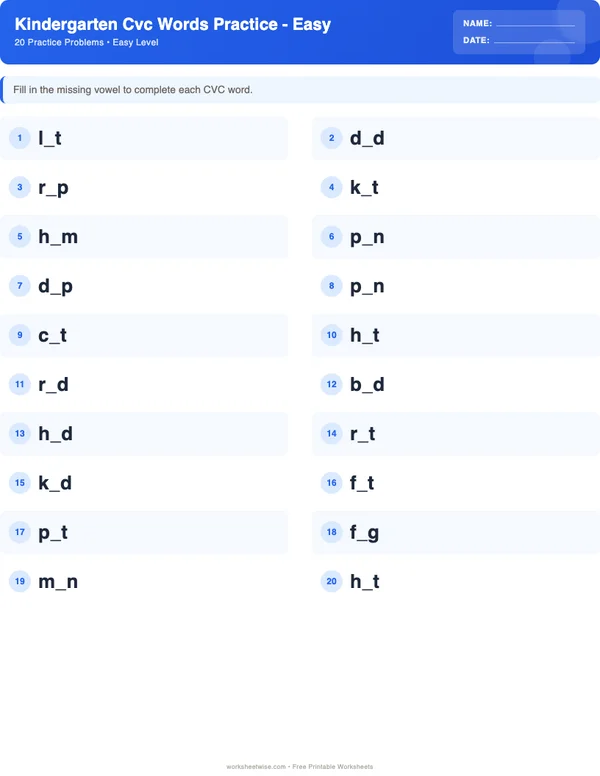
For an earlier entry point, the Pre-K CVC Words guide and free sheet can support adult-led blending. With ages three and four, use three tokens, three sound boxes, picture matching, and brief oral play before considering pencil work.
Schedule review so skills return in new forms
Reuse should produce retrieval and transfer, not simple page repetition. Keep the original target but change the representation, order, context, or interval.
Example: place value over two weeks
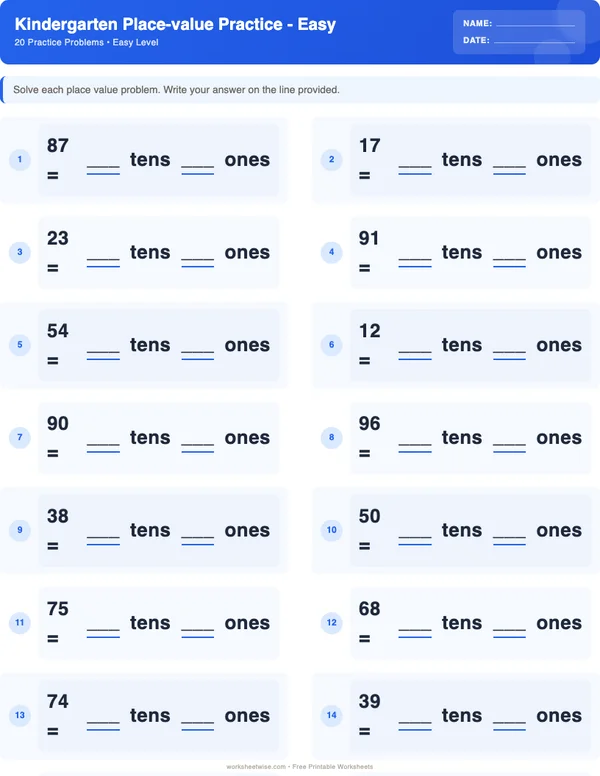
For first-grade place value, suppose the target is to represent 14 as 1 ten and 4 ones. The checked forms are:
- 14 has 1 ten and 4 ones
- a bundle of ten plus four single objects
A two-week sequence could include:
- build 14 with bundled sticks;
- draw one ten and four ones;
- match 14 to ;
- compare 14 and 17 using the same model;
- find the error in a drawing of one ten and five ones labeled 14;
- return several days later with 16 and 12 mixed into the set.
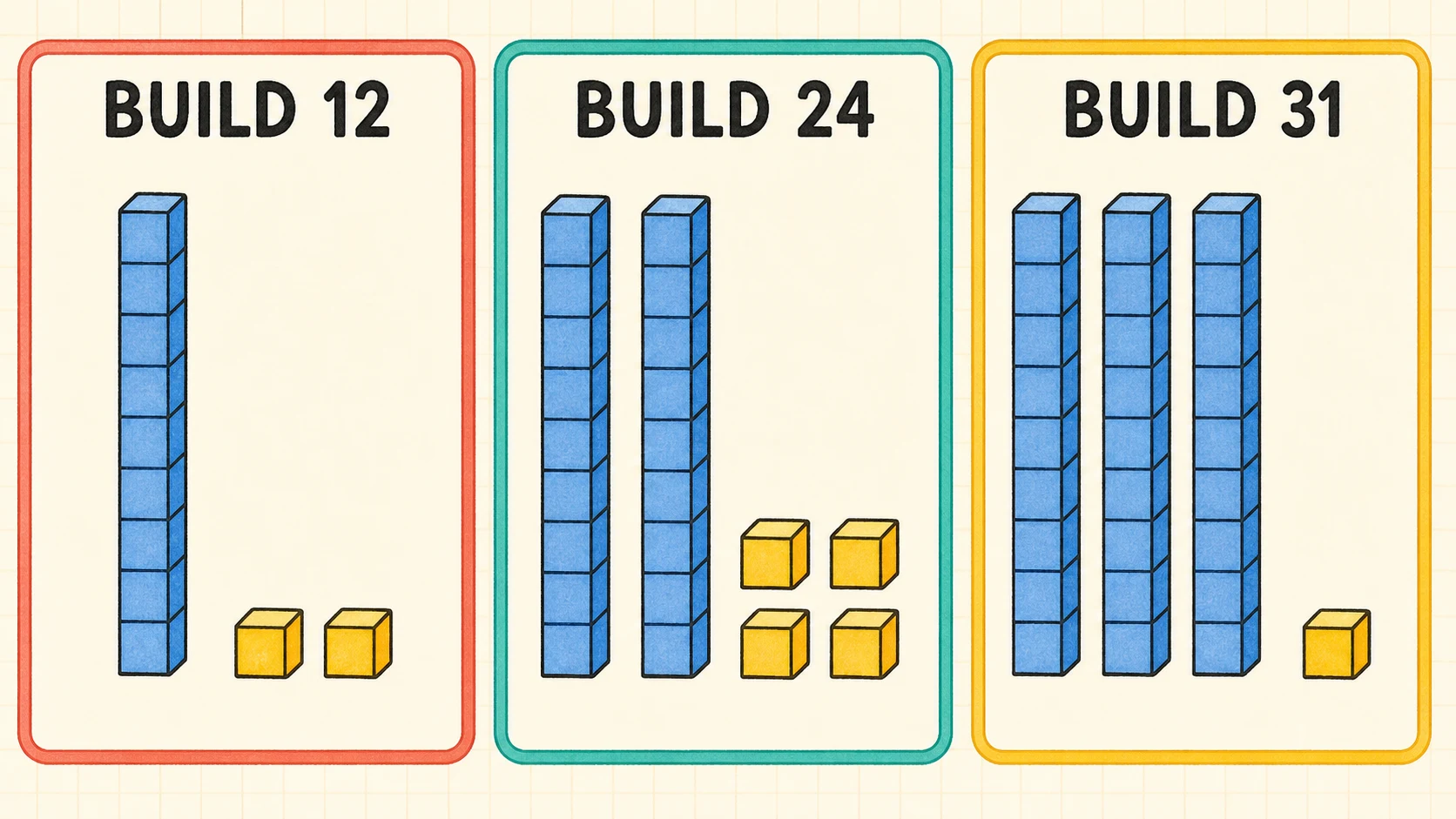
Use the first-grade place-value plan to revisit one tens-and-ones relationship through building, drawing, notation, comparison, and delayed review.
If the learner reads 14 correctly but builds four tens and one one, numeral recognition is not the main issue. Return to grouping and trading. If the learner builds 14 accurately but writes , connect each part of the model to its value: the bundle is worth ten, not one. The next action is to build and write 16 as without a prompt.
Do not laminate every page automatically. Lamination or a page protector is useful for a small set that supports repeated oral practice, erasable modeling, or spaced review. It is less useful when handwriting development, saved work samples, or visible revisions matter. You can also cut a page into task cards, cover completed items, or reuse only the problem structure with new numbers.
Adapt the access demands without changing the skill
An adaptation preserves the target while reducing an unrelated obstacle. First name the target; then decide what can change.
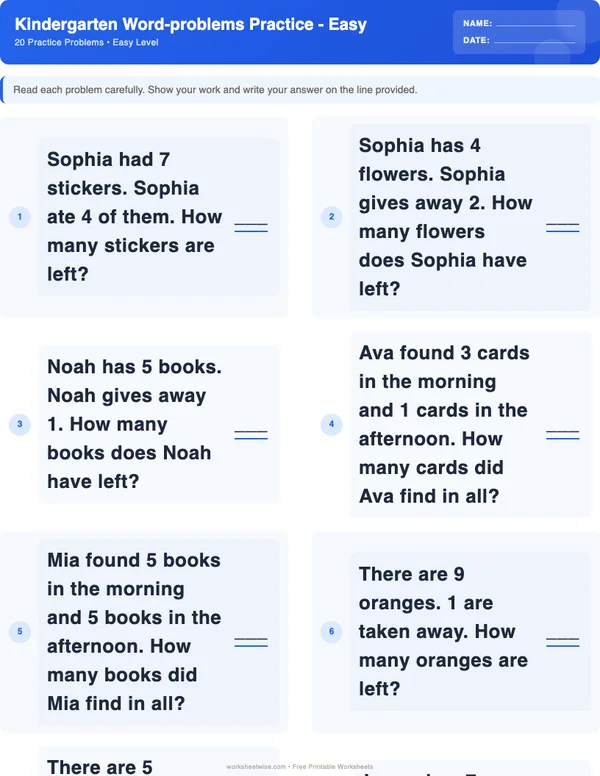
If the target is addition reasoning, the learner may answer orally, use counters, point, or dictate while an adult records. If the target is numeral formation, the learner needs to write. If the target is reading a word, an adult may read the directions but should not read the target word. If the target is solving a word problem, clarify unfamiliar context without indicating the operation.
Useful adaptations include:
- enlarge the print or isolate one row;
- reduce the number of items while retaining representative types;
- provide counters, a number line, letter tiles, or a movable clock;
- read directions aloud;
- allow oral explanation before writing;
- offer graph paper to support place alignment;
- schedule a movement break between short sets;
- alternate written items with oral or manipulative responses.
Example: geometry with the same reasoning target
For an upper-elementary geometry task, suppose the target is distinguishing area from perimeter. Build a rectangle from unit squares.
The checked measures are:
- area: square units;
- perimeter: units.
Now rearrange 12 unit squares into a rectangle:
- area remains 12 square units;
- perimeter becomes units.
This example belongs because it exposes the conceptual distinction that a page may test. If handwriting or crowded diagrams interfere, let the learner build and explain the rectangles while the adult records the equations. The geometry target remains intact.
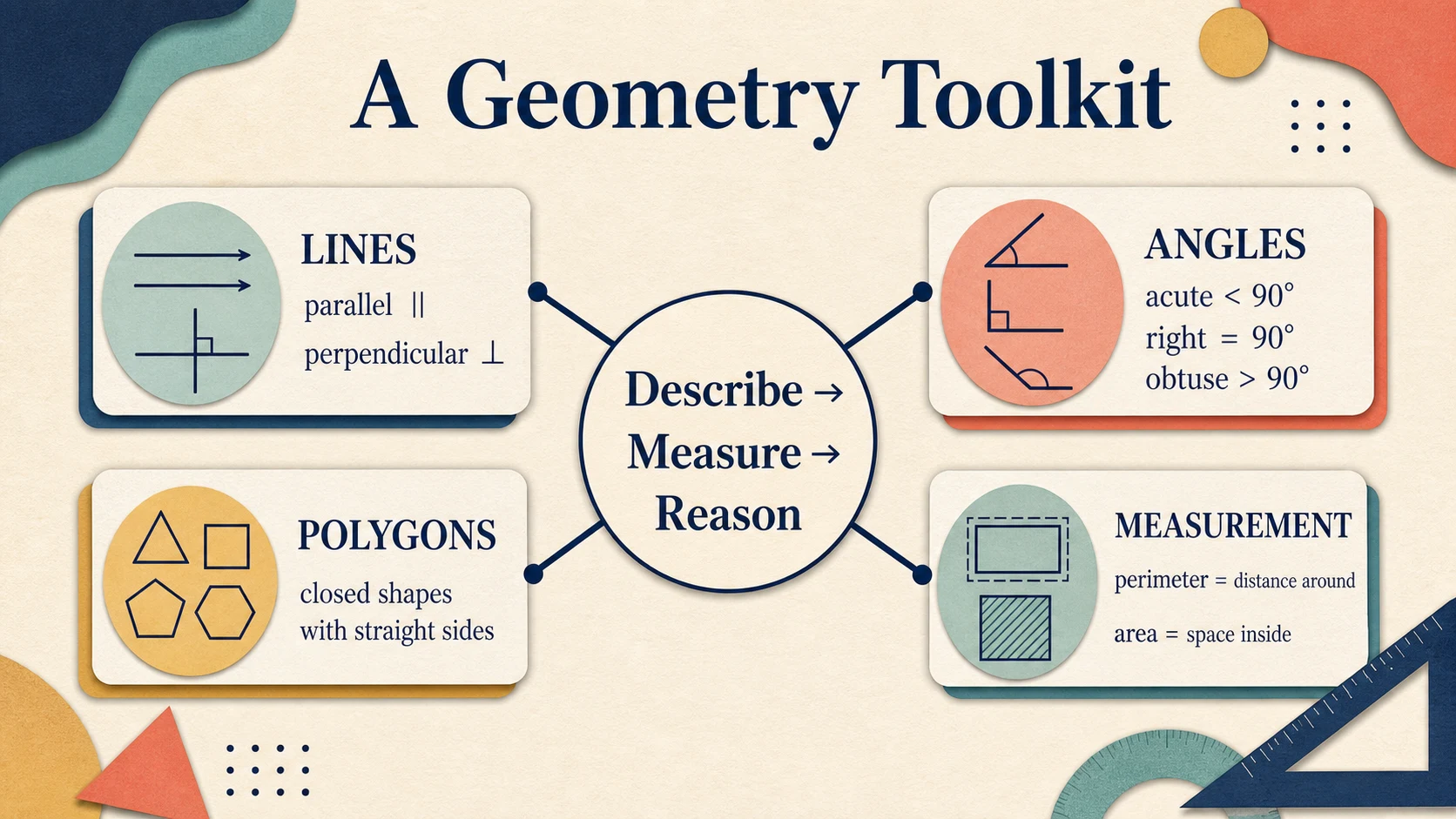
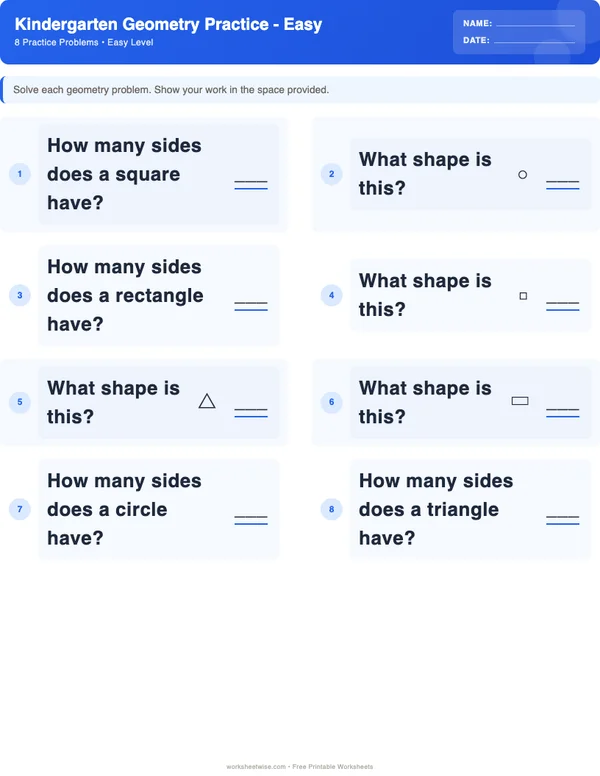
Use the sixth-grade geometry map to separate prerequisite shape and measurement ideas from the specific relationship being practiced.
Common Core’s mathematics standards can help adults inspect how mathematical ideas develop across grade bands, but a grade label on a worksheet is not proof of alignment with a local sequence. Use the learner’s observed prerequisite knowledge and your curriculum plan to make placement decisions.
Keep records that change tomorrow’s teaching
A homeschool record does not need to be a percentage for every page. A short log is more useful when it captures the target, conditions, evidence, and next action.
Use five fields:
| Date | Target | Conditions | Evidence | Next action |
|---|---|---|---|---|
| Sept. 3 | Represent teen numbers | Bundled sticks available | Built 14 correctly; wrote | Connect bundle to value 10; test 16 |
| Sept. 4 | Read initial st | Adult modeled one word | Read 5 of 6; dropped /t/ in stop | Tap four sounds; contrast sop/stop |
| Sept. 5 | Regroup in subtraction | Base-ten blocks available | Traded correctly; forgot to reduce tens | Pair physical trade with written notation |
Keep selected samples rather than every completed page. Save an early attempt, a corrected example, and a later transfer task. Add a learner explanation when possible: “I traded one ten, so only three tens were left.” That sentence may reveal more than a score.
Use accuracy cautiously. Five correct answers copied from a model do not show independent control. One self-corrected answer may show productive monitoring. Record the support level: modeled, prompted, reference available, or independent.
For writing, keep planning, drafting, revising, and editing distinct. The IES guide on teaching elementary students to be effective writers recommends explicit strategy instruction, attention to the writing process, and regular opportunities to write. A worksheet can organize one portion of that work, but it cannot replace composing for a real purpose or receiving feedback on meaning.
Know when a worksheet is the wrong tool
Do not use a worksheet when the learner has not yet encountered the idea through suitable instruction. It is also the wrong tool when the target requires conversation, physical experience, extended composition, experimentation, or authentic reading that the page cannot provide.
Pause the page when:
- the learner is guessing across several items;
- the directions consume more effort than the target skill;
- an unsteady prerequisite is causing every error;
- fatigue, distress, vision, or motor demands are obscuring performance;
- the task asks for repetitive output after the learner has already demonstrated the skill;
- a model, conversation, game, book, measurement activity, or real object would reveal more;
- checking has become answer copying;
- the page’s sequence conflicts with the curriculum you have chosen.
Do not treat repeated worksheet errors as a diagnosis. They are observations tied to a particular task under particular conditions. If concerns persist across settings and representations, document what you see and consult an appropriate qualified professional rather than assigning a label yourself.
A worksheet is also a poor substitute for sustained reading, discussion, outdoor observation, building, art, movement, practical measurement, or extended writing. Homeschool flexibility is valuable precisely because paper practice can stop when a better learning experience is available.
Make the next print decision from evidence
Choose one skill for the coming week and write its observable target. Then visit the free deterministic worksheet generators to create a short practice set that matches the numbers or pattern you have actually taught. Complete the examples yourself, select only enough items to reveal a pattern, and write one planned response for the most likely error.
After the first session, record one thing the learner did, one error pattern if present, and one next action. That small cycle—teach, try, observe, respond, revisit—is what turns printable homeschool worksheets with answer keys into a coherent weekly routine.
Put it into practice
Use the guide with a real printable
Move from explanation to a short, observable practice task. Check the first item together, then adjust the next session from the learner's actual work.
Open the first free worksheetExplore a neighboring collection
Choose by a different teaching need
After-School Worksheets With Answer Keys Formative Assessment Worksheets With Answer Keys Classroom Worksheets With Answer Keys Homework Worksheets With Answer Keys Independent Practice Worksheets With Answer Keys Intervention Worksheets With Answer Keys Morning Work Worksheets With Answer Keys School Readiness Worksheets With Answer Keys