Curated collectionAnswer keys includedPrint-ready PDFs
4th Grade Homeschool Worksheets
Turn a printable library into a flexible weekly rhythm with explicit teaching, short independent practice, answer-key feedback and mixed-age planning.
Start with a real resource
Browse this worksheet collection
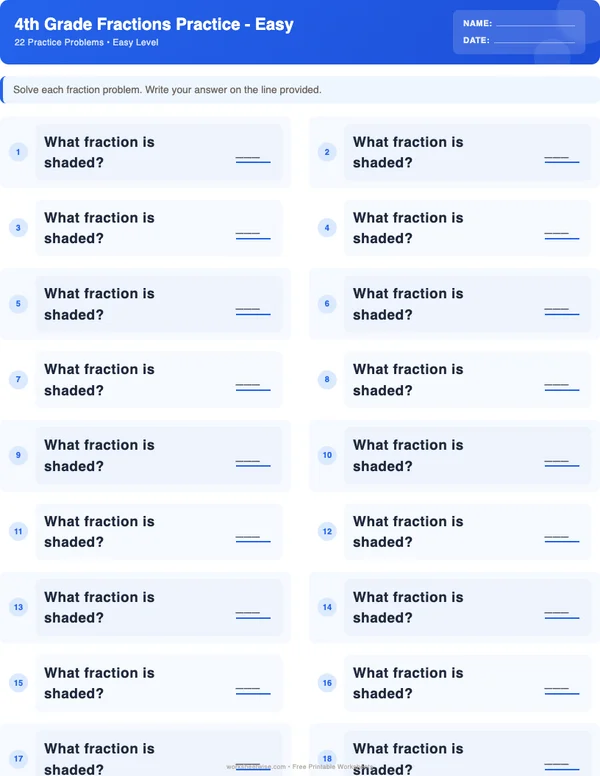
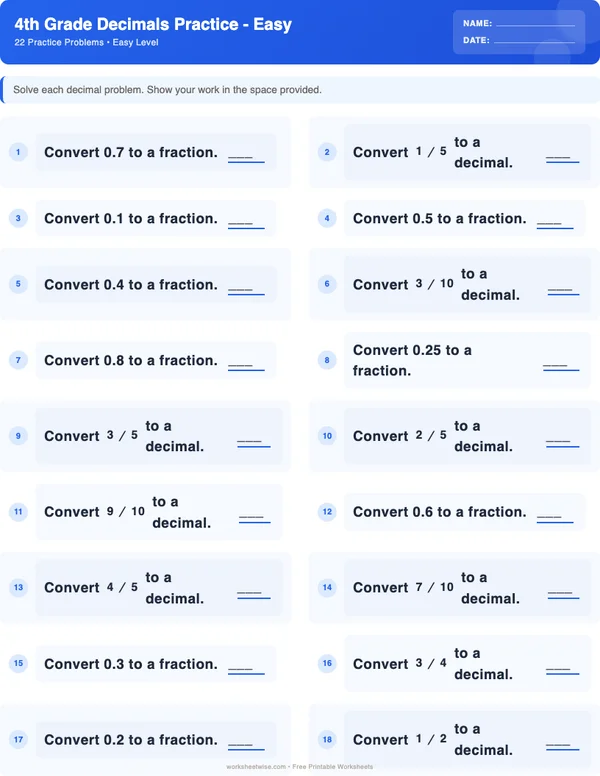
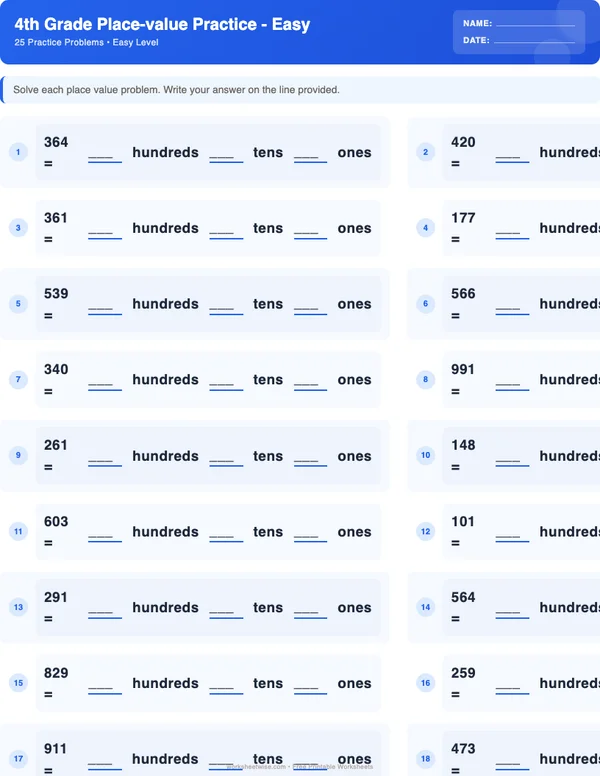
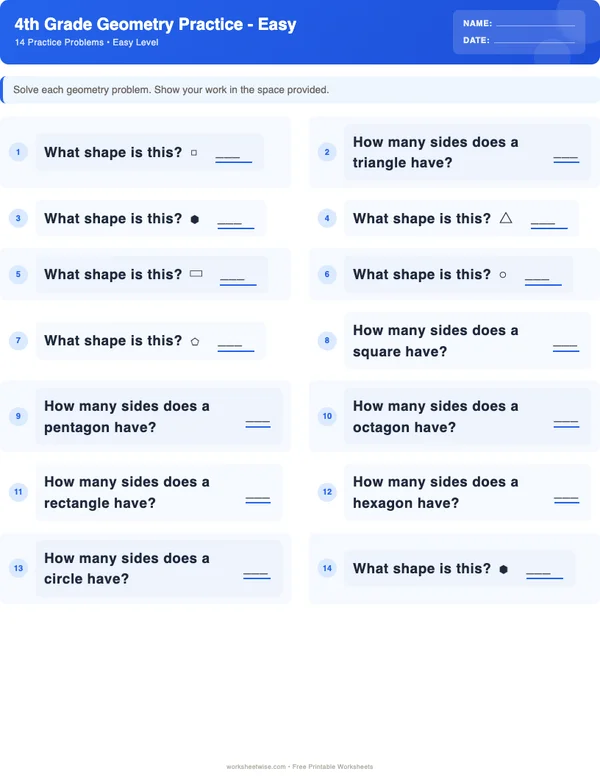
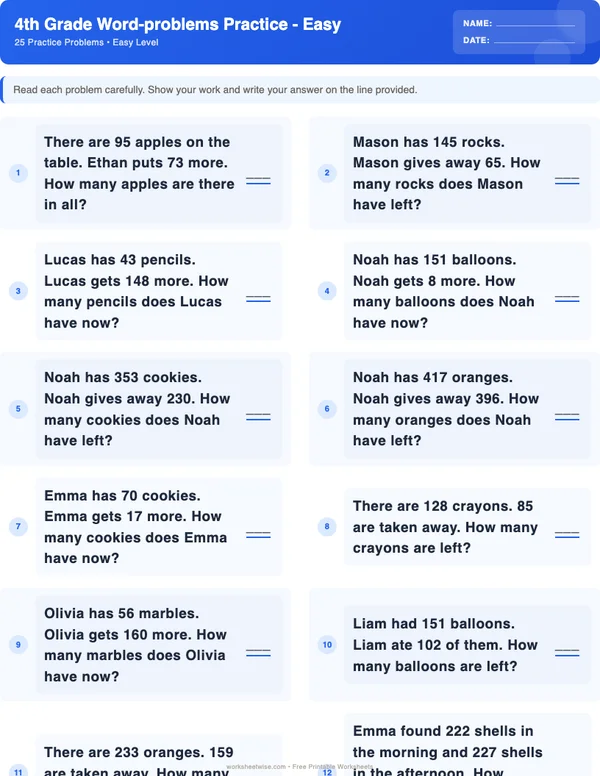
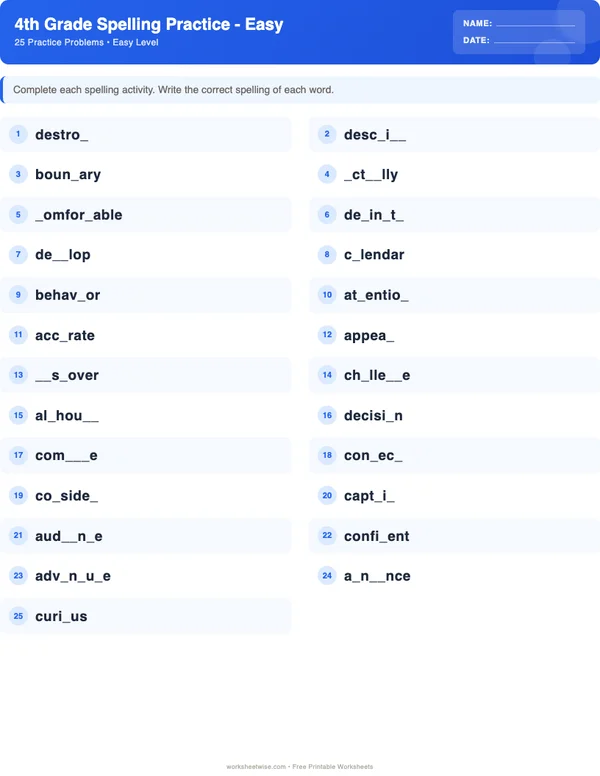
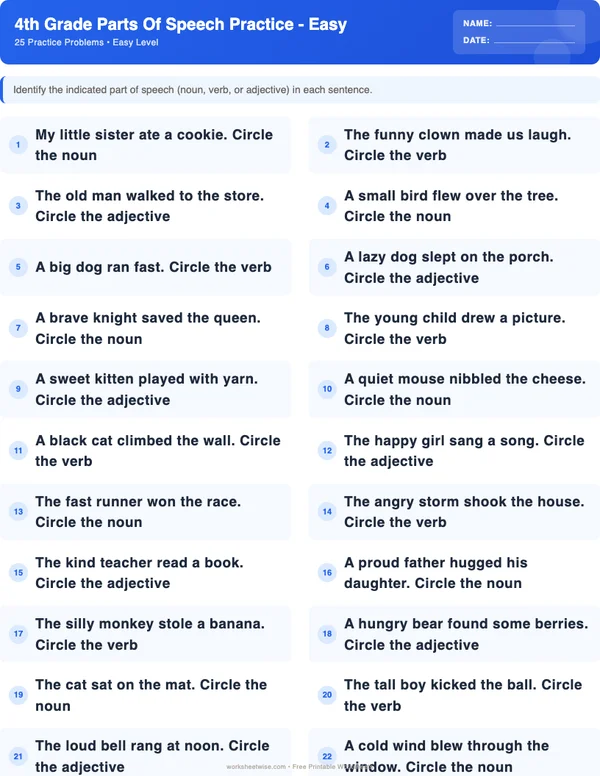
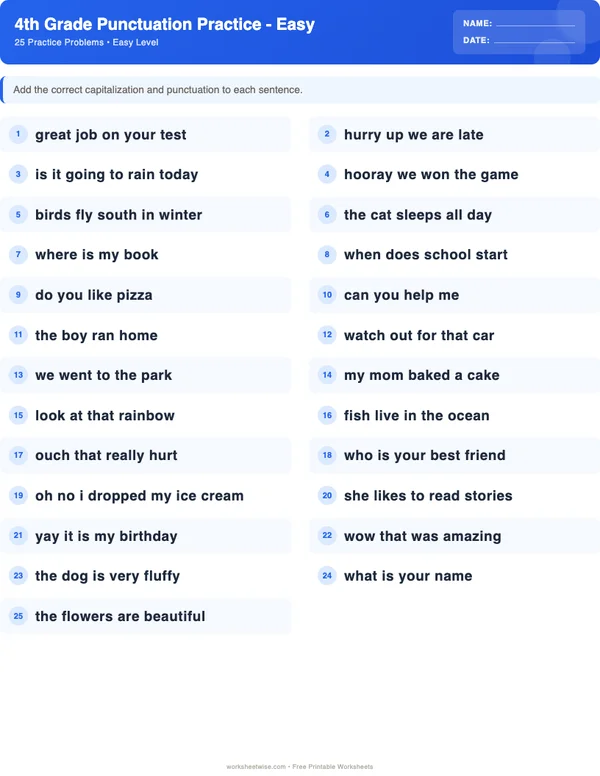
13 relevant free entry points are available. Each one includes a printable learner PDF and separate answer key.
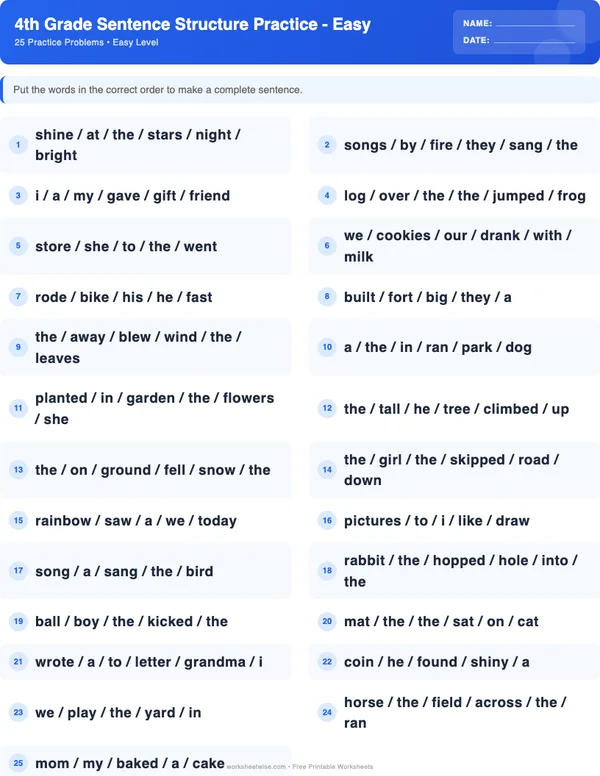
A useful practice loop
Print less. Observe more.
- Choose one skill and model the first item aloud.
- Use a short set and notice the learner’s strategy.
- Change the next task from the work you can see.
Need more than the free sheet?
Plus includes all 234 matching catalogue variations where available, plus saved deterministic generators and the worksheet designer.
See Plus membershipComplete guide
How to teach and practise 4th grade homeschool worksheets
3,593 words Updated 6 instructional visuals
Build a fourth-grade week around teach, practice, check, and revisit
A workable fourth-grade homeschool routine does not require filling every day with worksheets. Use the printable collection to support a four-part cycle:
- Teach one idea explicitly with objects, drawings, or a worked example.
- Assign a short section for independent practice.
- Check the work with the learner, using the answer key to locate the first misunderstanding.
- Revisit that misunderstanding in a different form before adding difficulty.
For example, teach 7 × 8 by splitting 8 into 5 and 3: 7 × 5 + 7 × 3 = 35 + 21 = 56. Let the learner complete six to ten related multiplication items alone. Check the answers immediately, and ask for an explanation of one correct answer as well as one error. On the next day, use 6 × 8 or 9 × 7 to see whether the distributive strategy transfers.
That rhythm is more useful than treating a 25-problem sheet as a one-sitting assignment. The live fourth-grade collection contains 234 variants across three subjects and 13 topics, with 13 free entry points. Those counts indicate choice, not a requirement to complete everything. Select pages according to the skill being taught, the amount of support visible in the task, and what the learner’s work shows.
Grade labels describe intended practice level; local curriculum sequences differ. Age can help adults discover likely resources, but it is not a placement decision. Choose from the fourth-grade collection when its actual task features match the learner’s current instruction—not merely because of a birthday, school label, or assumed pace.
Decide what the worksheet must do before printing it
A worksheet can introduce a representation, provide focused practice, reveal an error pattern, or supply later review. It should not be expected to perform all four jobs at once.
Match the page to one precise teaching purpose
Name the day’s target in observable language. “Do multiplication” is too broad. Better targets include:
- Represent a two-digit multiplication problem with partial products.
- Explain why a digit changes value when it moves one place left.
- Distinguish a complete sentence from a fragment.
- Identify a noun’s function in a specific sentence.
- Compare tenths and hundredths using place value.
- Interpret a remainder in the context of a division story.
Then inspect the printable before assigning it. Look at the directions, number of items, visual support, response format, vocabulary load, and whether the problems remain focused on the target. A page with 25 calculations may be useful for practice after a method is understood. A 14-item grammar page may still be demanding if every item contains a long or syntactically complicated sentence.
The catalogue calls each representative free sheet “easy,” but difficulty should be defined by observable task features, not attached to a learner. In this guide, a lower-demand task might use one familiar operation, uncluttered numbers, a visible model, short directions, or one decision per item. A higher-demand task might remove the model, mix operations, include several steps, require written justification, or place the same skill inside an unfamiliar context.
Separate teaching load from writing load
A learner may understand a fraction comparison but tire when copying explanations. Preserve the mathematical target by allowing the learner to point to a number line and explain orally. Conversely, if written mathematical reasoning is the target, reducing all responses to multiple choice would change the skill.
Apply the same distinction to grammar. If the target is identifying predicates, the learner can underline them rather than rewrite every sentence. If the target is constructing complete sentences, oral identification alone is insufficient; the learner eventually needs to write and revise sentences.
Use the full worksheet library to compare formats before choosing. Print one page because its task matches the lesson, not because it happens to sit first in a topic list.
Use a realistic five-day fourth-grade sequence
A steady week alternates direct teaching, independent work, feedback, and cumulative review. The following sequence is a suggested homeschool structure, not a sourced mandate. It assumes approximately 20–30 minutes for the main math block and 15–25 minutes for language work, adjusted according to attention, reading load, and the need for modeling.
Monday: establish meaning before procedure
Begin with one new or newly revisited idea. Keep the independent section short enough that you can check it while the reasoning is still fresh.
For place value, write 43,582 and ask the learner to build or sketch its decomposition:
40,000 + 3,000 + 500 + 80 + 2
Then ask what the 3 represents and what would happen if that digit moved one place to the left. The checked answer is: in 43,582, the 3 represents 3,000; moving it one place left would make its value 30,000. This example belongs in fourth grade because it connects multi-digit notation, expanded form, and the base-ten relationship needed for computation and rounding.
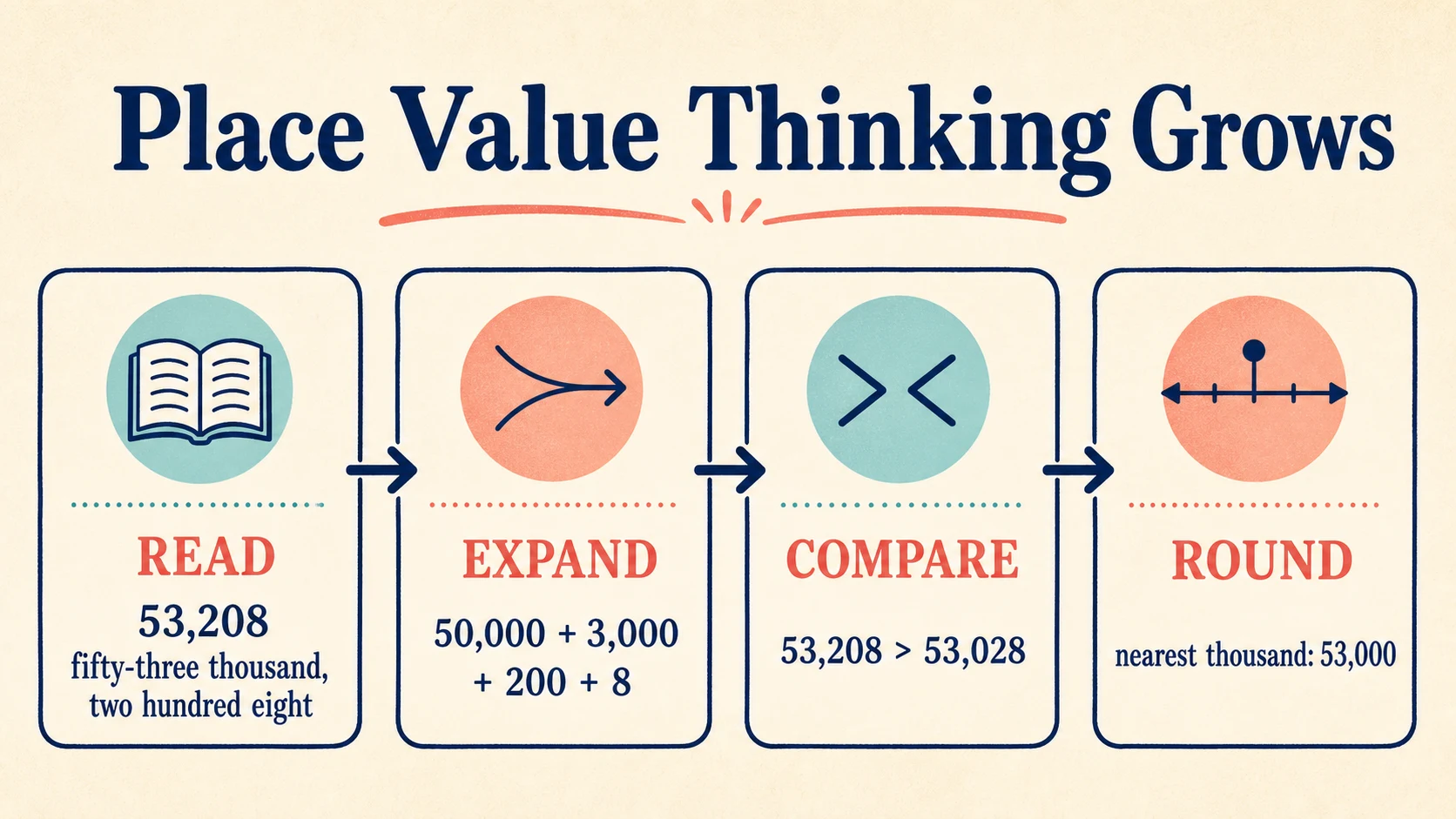
Move from a place-value model and expanded form to independent comparison or rounding only after the learner can explain the value of each digit.
After the model, assign perhaps eight focused place-value items rather than automatically requiring all 25. Stop sooner if the learner produces three errors with the same structure; more repetition of an uncorrected misconception is not useful practice.
Tuesday: retrieve Monday’s idea and connect it
Open with two no-notes questions from Monday. Then connect place value to addition or subtraction.
Consider 3,782 + 1,469:
- Ones:
2 + 9 = 11, so record 1 one and regroup 10 ones as 1 ten. - Tens:
8 tens + 6 tens + 1 ten = 15 tens, so record 5 tens and regroup 10 tens. - Hundreds:
7 + 4 + 1 = 12 hundreds. - Thousands:
3 + 1 + 1 = 5 thousands. - Answer:
5,251.
Check by subtraction: 5,251 − 1,469 = 3,782.
This is a fully checked fourth-grade example because it requires multi-place regrouping and an inverse-operation check. If the learner writes 4,141, do not merely mark it wrong. Ask the learner to rebuild the ones and tens with a place-value chart. That distinguishes a regrouping misunderstanding from a copying error.
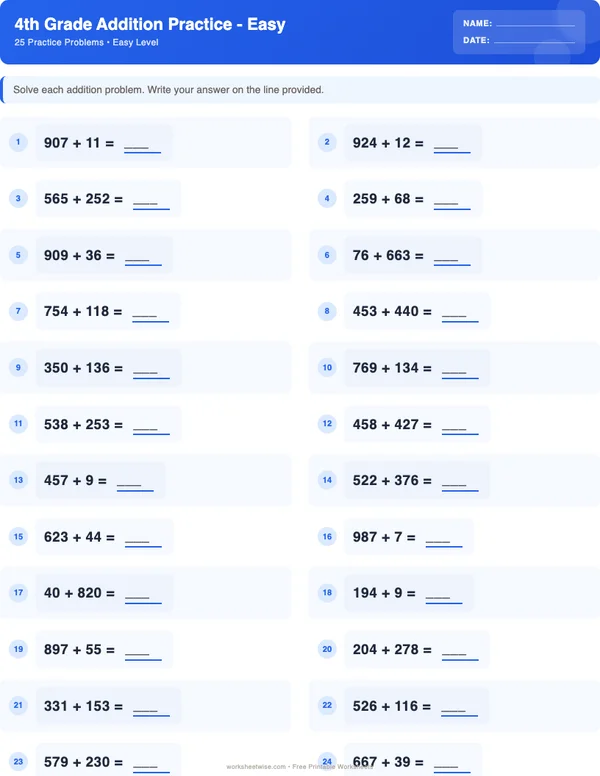
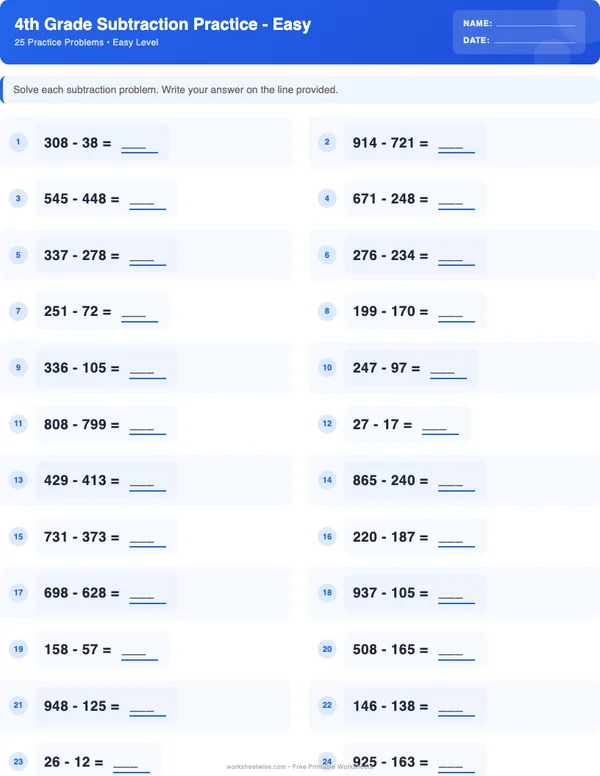
The 4th Grade Addition guide and free sheet offers a focused entry point when addition is the current target. Use the 4th Grade Subtraction guide and free sheet when the follow-up question is whether the learner can undo or verify the addition.
Wednesday: teach a second domain, not a larger pile
Use the middle of the week for language. Start orally, model one response, and then shift responsibility.
Say, “After the rain stopped.” Ask whether it communicates a complete thought. It does not: the word “after” creates a dependent clause and leaves the listener waiting. Add an independent clause: “After the rain stopped, the class returned to the garden.” The subject and predicate of the independent clause are “the class” and “returned to the garden.”
Now contrast it with a run-on: “The rain stopped the class returned to the garden.” It contains two complete thoughts without correct joining punctuation or a conjunction. One repair is: “The rain stopped, and the class returned to the garden.” Another is: “The rain stopped. The class returned to the garden.”
This example belongs here because fourth-grade sentence work moves beyond naming subjects and predicates toward distinguishing fragments, repairing run-ons, and combining ideas deliberately.
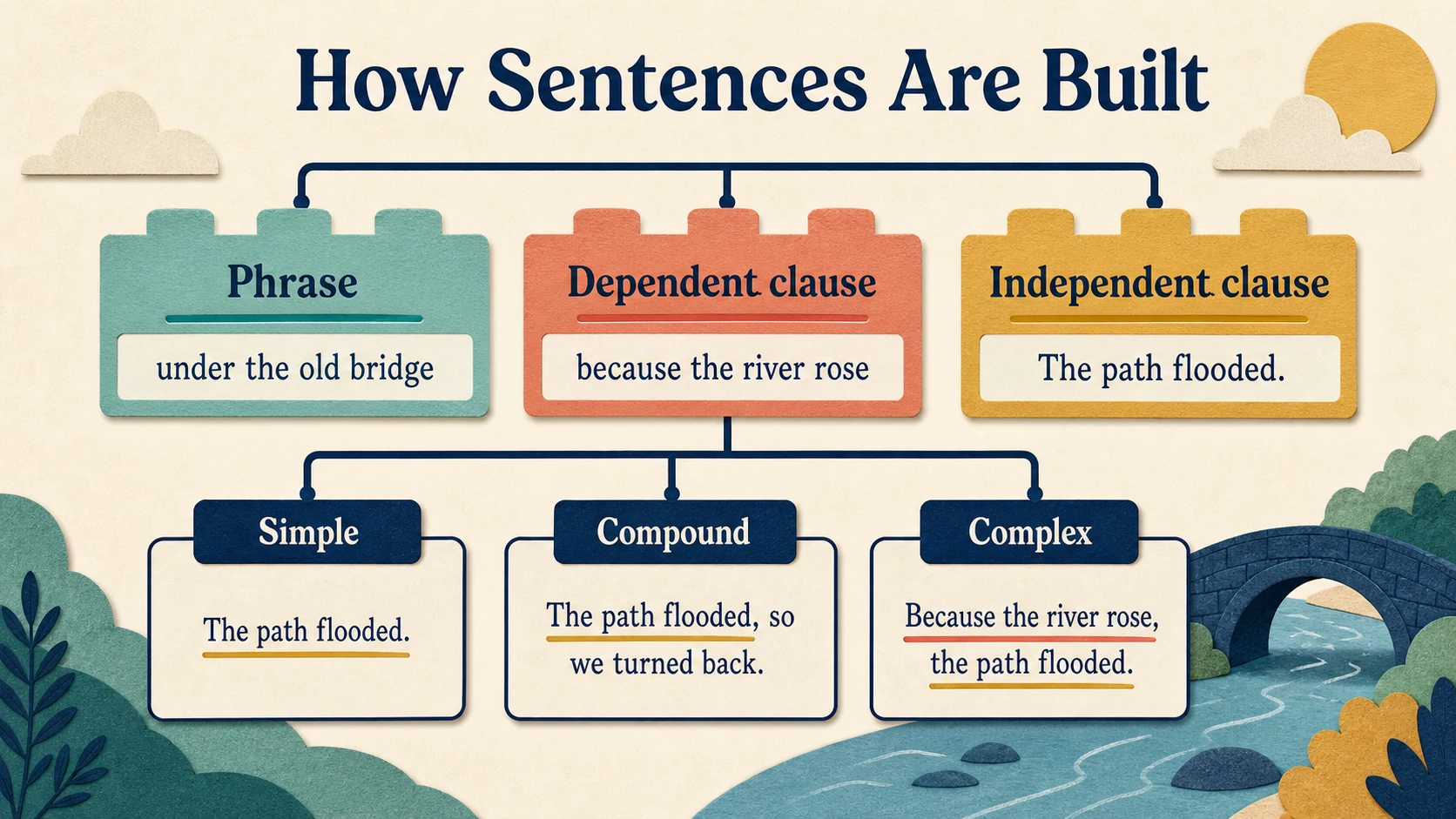
Use the sentence map to keep completeness, joining, expansion, and variation connected rather than teaching each as an isolated label.
The IES elementary writing practice guide recommends explicit instruction in writing strategies, gradual release, and frequent opportunities to write. That source did not assess WorksheetWise. Here, its guidance supports a practical sequence: model one sentence decision, solve one together, and then ask the learner to make and explain the same kind of decision independently.
Thursday: practice independently, then analyze the answer
Return to Monday’s math target or extend it into multiplication. Keep the teaching prompt visible, but remove step-by-step adult narration.
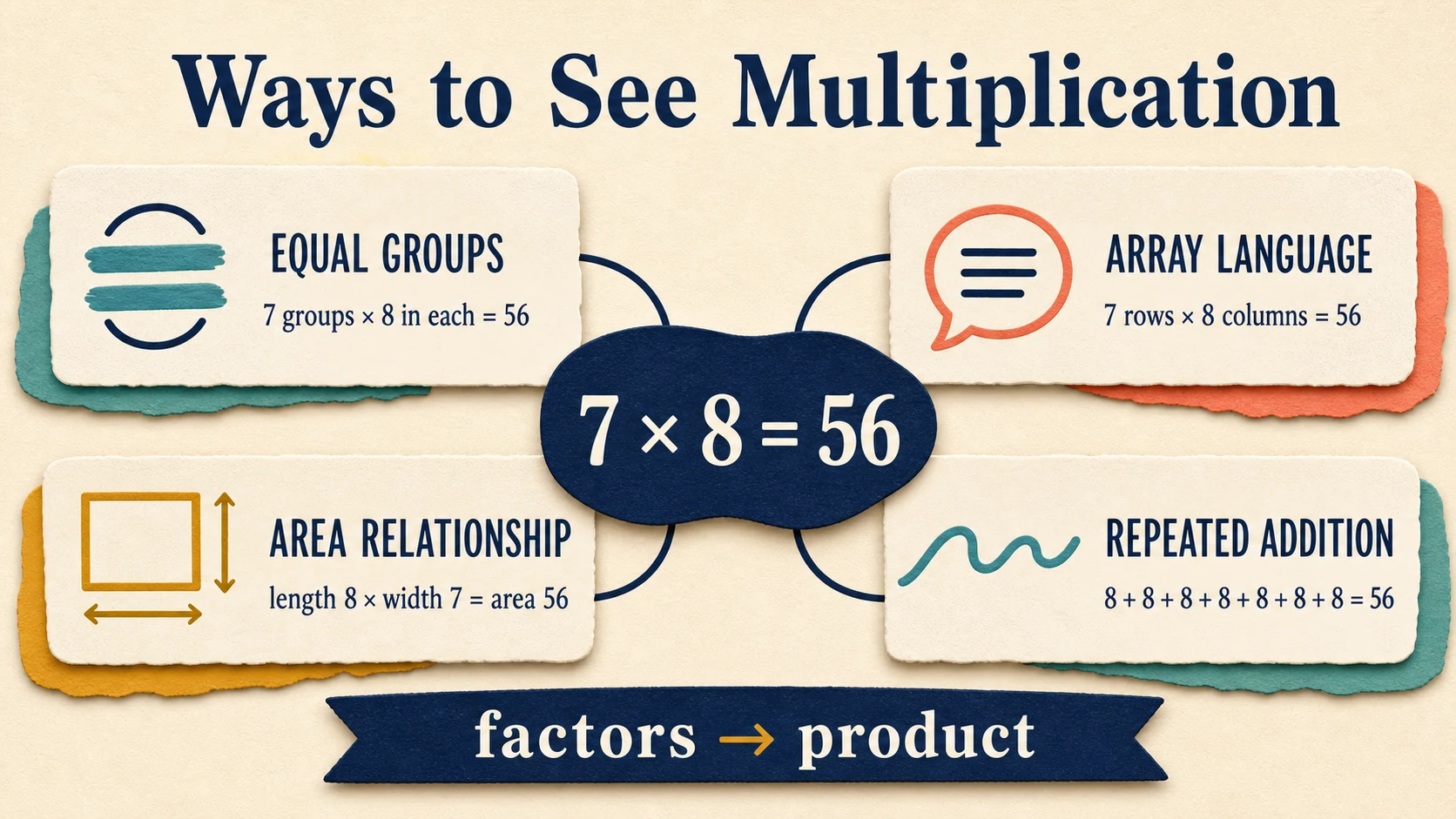
Connect equal groups, arrays, properties, facts, and multi-digit products so independent calculation rests on a visible structure.
Use 23 × 14 as a checked example:
23 × 14 = 23 × (10 + 4)
= 230 + 92
= 322
An area-model version partitions 23 into 20 and 3, and 14 into 10 and 4:
20 × 10 = 20020 × 4 = 803 × 10 = 303 × 4 = 12200 + 80 + 30 + 12 = 322
The two methods agree. This example is appropriate to fourth-grade work because it links the distributive property, place value, partial products, and multi-digit multiplication. It also gives the adult several diagnostic checkpoints. An answer of 242 may indicate that 20 × 4 was omitted; 3,220 may indicate an extra zero or a place-value error; 312 may come from adding partial products inaccurately.
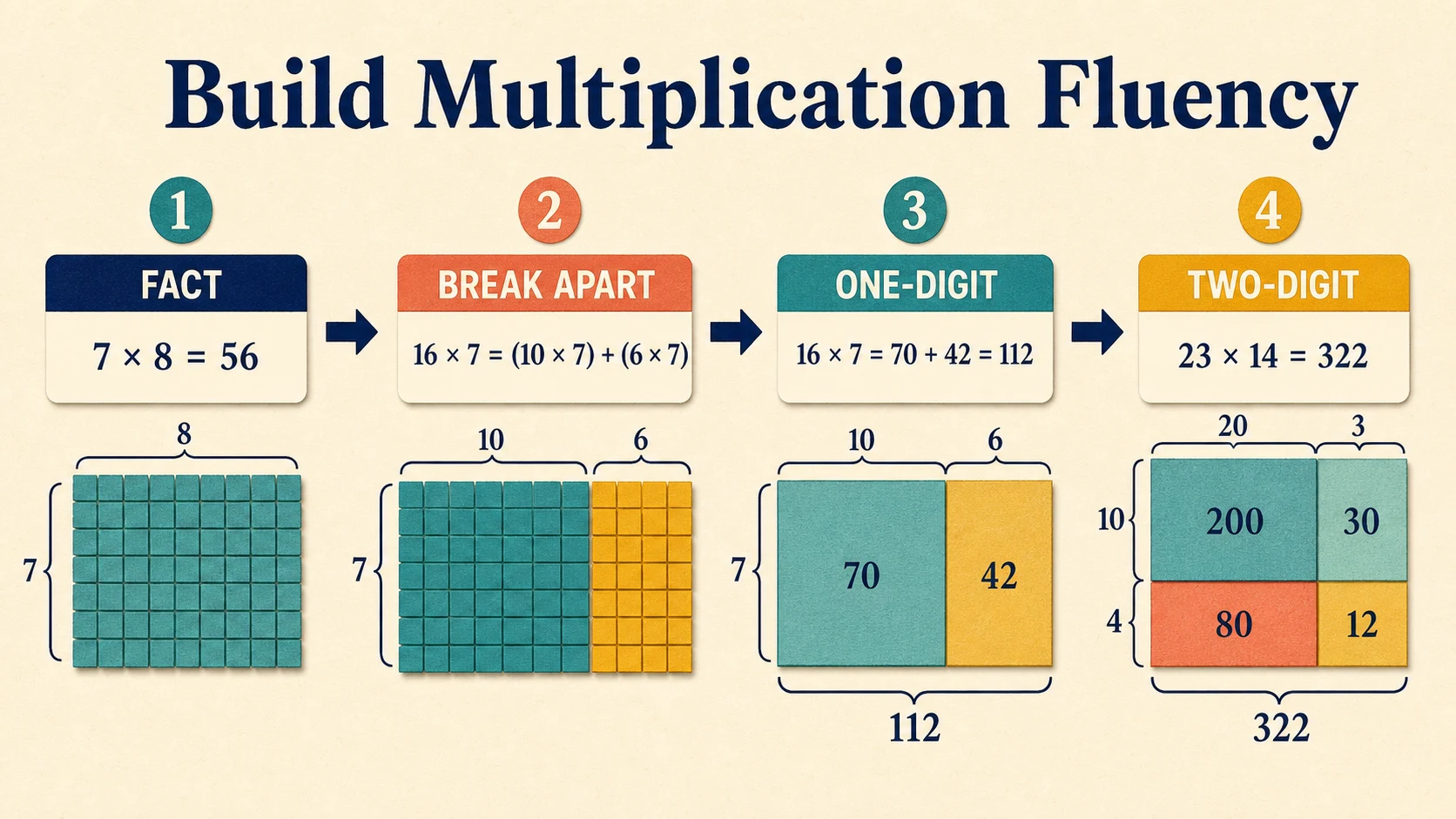
Remove the array or partial-product scaffold only after the learner can explain where every product comes from.
The IES mathematics intervention guide supports systematic instruction, clear mathematical language, representations, and deliberate word-problem teaching for learners who need additional help. It does not evaluate these printables. A home application is to keep the representation available while the learner explains it, then fade one support at a time.
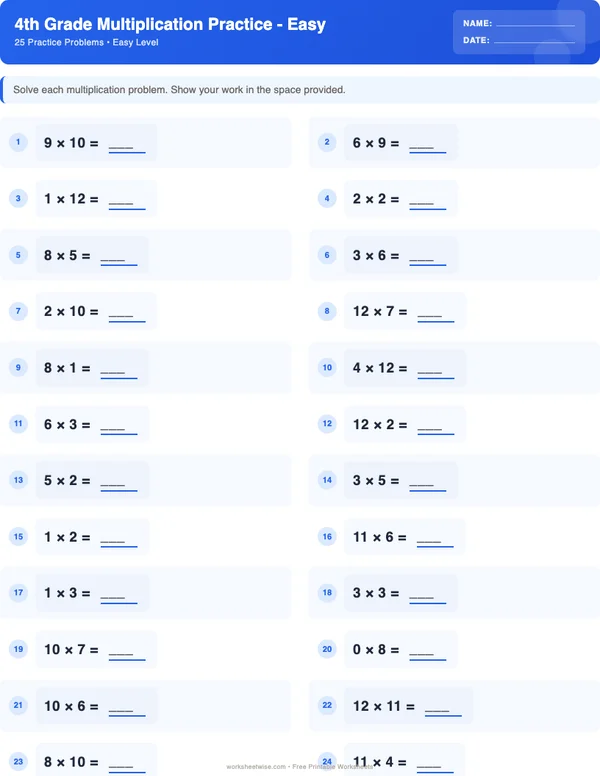
For additional focused practice, use the 4th Grade Multiplication guide and free sheet. Do not assign all 25 items solely to prove independence. Independence means starting from the directions, choosing an appropriate method, completing a manageable set, and checking work without the adult supplying each next step.
Friday: use mixed review to plan, not to rank
Choose four to eight items from the week:
- one place-value explanation;
- one multi-digit calculation;
- one multiplication model;
- one sentence repair;
- one parts-of-speech decision;
- one previously learned fraction or division item.
Let the learner work without hints for a short, announced period. Then sort the results into three instructional categories:
- Secure today: correct and explained without prompting.
- Revisit briefly: correct after one cue or wrong because of a specific repairable step.
- Reteach with a model: the learner cannot yet explain the task or repeats a structural error.
These categories describe today’s work, not the learner. Friday’s purpose is to choose Monday’s starting point.
Make independence visible instead of withdrawing help abruptly
Fourth graders often need less moment-to-moment supervision than younger learners, but “work alone” is not a complete instructional plan. Independence grows when the adult makes the routine predictable and the help boundary explicit.
Use a three-stage release
First, model one item while speaking the decision process aloud. Second, solve one together, with the learner making the next decision. Third, assign a small independent set.
For sentence structure:
- Adult model: “
Because the dog barkedis a fragment in this context because it begins a dependent idea but never states what happened as a result.” - Shared item: “
When the timer rang, we checked the oven.Which part can stand alone?” - Independent item: “Repair
Although Maya practiced.”
One checked repair is: “Although Maya practiced, she still felt nervous before the recital.” The independent clause is “she still felt nervous before the recital.” Other repairs are possible, so the adult should check grammatical completeness rather than demand one exact sentence.
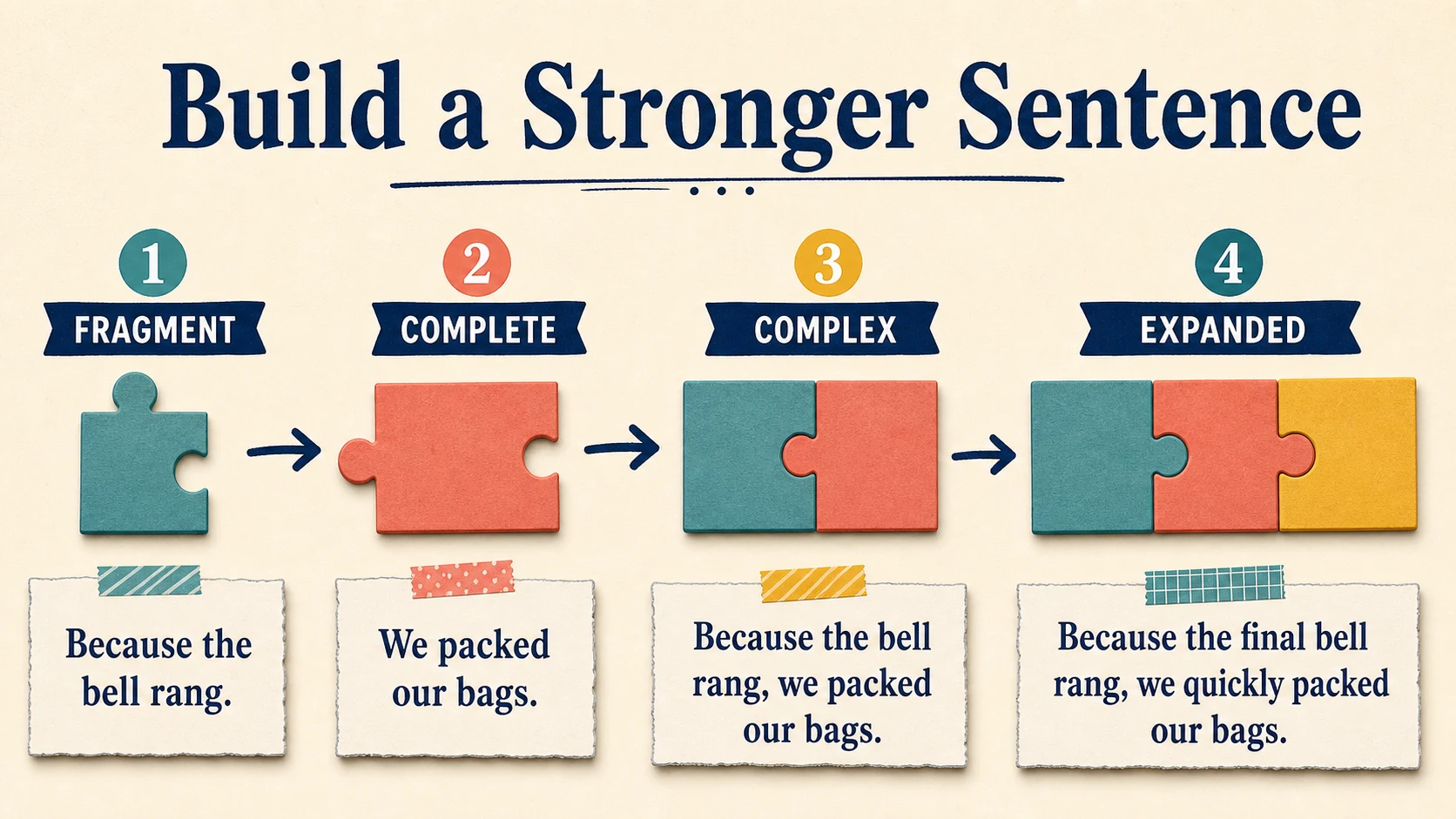
Shift from oral identification to guided repair and finally independent sentence construction without changing the target midway.
A useful help rule is: “Circle the item, write what you tried, and continue if you can.” This prevents one blocked question from ending the session. It also gives the adult evidence about whether the obstacle was vocabulary, directions, recall, computation, or self-monitoring.
Define the stopping point in advance
Before the learner starts, state one boundary:
- Complete items 1–8, then check.
- Work for 12 focused minutes, then finish the current item.
- Solve until you have four in a row that you can explain.
- Stop after two repeated errors and bring the page back for a new model.
A session boundary prevents a 25-problem page from becoming an endurance test. It also makes pacing adjustable without implying failure.
Turn answer keys into feedback, not verdicts
The answer key is most useful after the learner has committed to a response and, where appropriate, shown work. Checking every answer only at the end of the week allows a mistaken procedure to become rehearsed.
Check the first point of divergence
For 23 × 14, compare the learner’s work with the partial products. If 23 × 4 became 82, the first divergence is basic multiplication or addition within that partial product—not the final addition of 230 and 92. Repair that step first.
For a parts-of-speech item, require context. In “We watched the play,” play is a noun because it names the performance watched. In “We play after lunch,” play is a verb because it states the action. Both classifications are correct in their respective sentences.
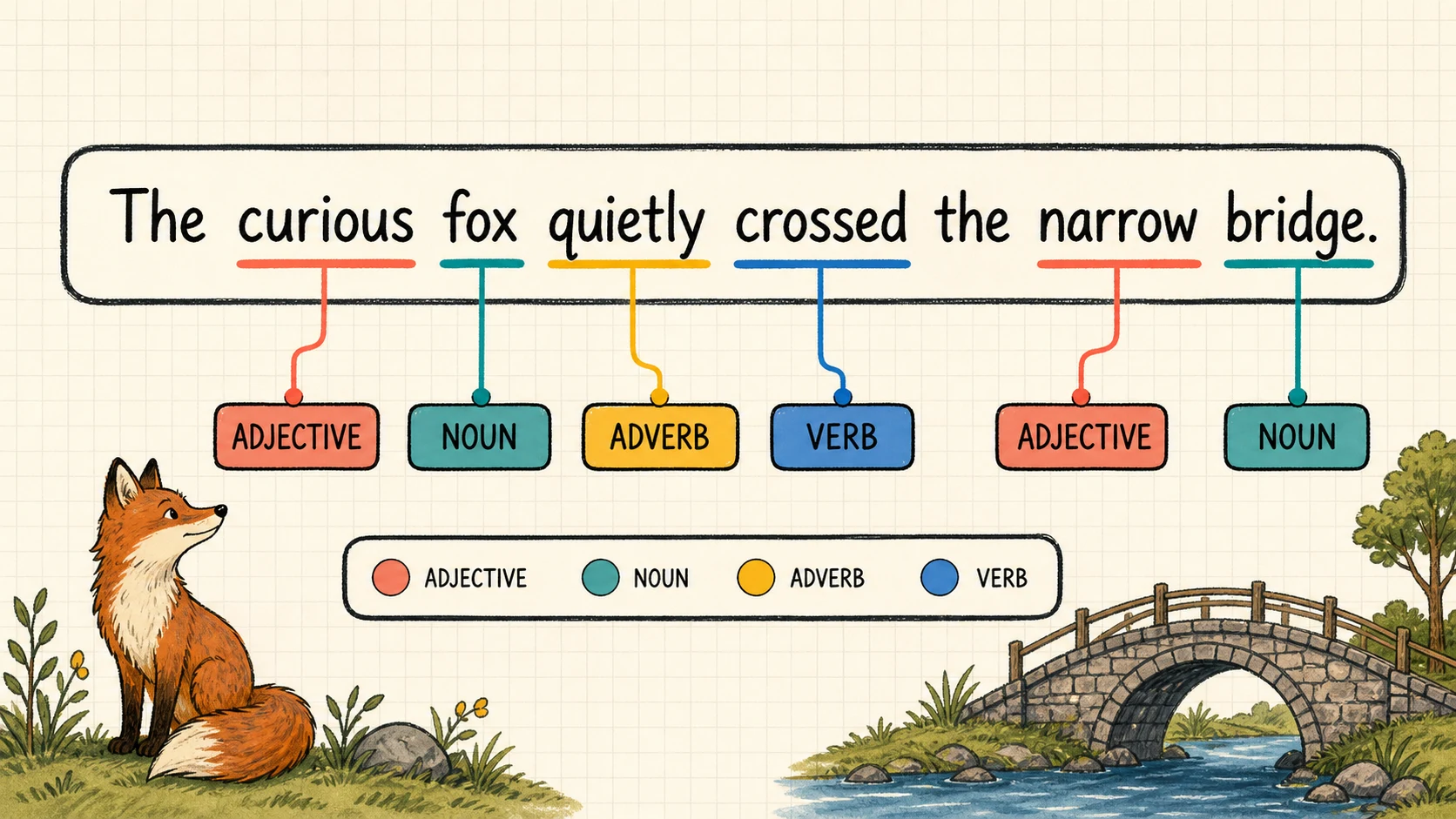
Classify a word by the job it performs in the actual sentence, then use that evidence to justify the label.
This example belongs in fourth grade because grammar practice at this level should move beyond memorized definitions. The observable skill is using sentence context to decide a word’s function.
Use feedback that names the next action:
- “Your product is correct; now label the two partial products.”
- “You found both complete thoughts; add punctuation that joins them correctly.”
- “Your decimal comparison changed after you lined up the digits. Draw a hundredths grid to verify it.”
- “Your noun label fits the word in isolation, but reread what the word is doing in this sentence.”
Avoid feedback such as “Careless,” “You know this,” or “Try harder.” It does not identify a repair.
Recheck with a near transfer
After correcting 23 × 14, give 21 × 13, not the identical problem. Check:
21 × 13 = 21 × (10 + 3) = 210 + 63 = 273.
A correct new response provides better evidence than copying the repaired answer. If the same omission appears, return to the area model. If the method is correct but 210 + 63 is misadded, separate multiplication from addition practice.
Interpret errors before selecting the next sheet
One wrong answer is not a diagnosis. Look for a repeatable pattern and test a plausible explanation with one short follow-up.
In mathematics, distinguish concept, procedure, and recording
Suppose the learner claims 0.36 > 0.4 because “36 is more than 4.” Ask the learner to rewrite 0.4 as 0.40 and shade both values on hundredths grids. Since 40 hundredths is greater than 36 hundredths, 0.40 > 0.36. This belongs in fourth-grade decimal work because it relies on tenths, hundredths, and equivalent decimal notation.
If the learner shades the models correctly but reverses the symbol, the decimal concept may be intact while comparison notation needs review. If the learner shades 4 hundredths for 0.4, revisit place value before assigning more comparison items. The 4th Grade Decimals guide and free sheet is a sensible next resource only after deciding which of those tasks needs practice.
For fractions, check the same distinction. To compare 3/4 and 5/8, rename fourths as eighths: 3/4 = 6/8, so 3/4 > 5/8. A number-line or fraction-strip model should show the same result. The 4th Grade Fractions guide and free sheet can supply focused practice, but a symbolic comparison page should not replace the model when equivalence is the unresolved idea.
The Common Core mathematics standards provide one prominent description of fourth-grade expectations, including multi-digit arithmetic and fraction equivalence. They did not assess WorksheetWise, and local curricula may introduce, emphasize, or sequence content differently. Use standards as a planning reference, not as evidence that a specific sheet is appropriate for a particular learner.
In language, distinguish identification from application
A learner may correctly underline adjectives yet omit useful detail in original writing. That means identification has not automatically transferred to composition. Ask for one constrained revision: change “The animal moved” by replacing the vague noun and verb, then add one precise modifier. A possible answer is “The startled rabbit darted beneath the fence.”
Conversely, a learner may write vivid sentences while struggling to label every word. If the target is composing clear prose, do not let terminology consume the entire session. If grammar classification is the target, teach it directly in sentences drawn from the learner’s writing.
The Common Core English language arts standards can help an adult see how language conventions and writing fit within a broader grade-level framework. Again, they neither certify these resources nor override a local sequence.
Adapt the task without quietly replacing the skill
An adaptation preserves the intended decision while reducing an unrelated barrier. Before changing a page, finish the sentence: “The learner still must…”
For multi-digit multiplication, the learner still must decompose factors and combine partial products. Appropriate supports may include graph paper for alignment, a multiplication chart when fact recall is not the target, fewer problems, or an area-model template. Replacing every problem with single-digit facts would change the target.
For sentence repair, the learner still must identify and correct an incomplete or improperly joined thought. The adult may read the directions aloud, enlarge the text, or let the learner dictate one repair before writing the next. Turning the task into merely circling punctuation marks would not preserve sentence construction.
For word problems, the learner still must interpret the quantities and choose an operation. You may reduce copying, explain unfamiliar nonmathematical vocabulary, or allow a tape diagram. Do not underline operation “keywords” for the learner; words such as left or in all do not reliably determine the operation in every context.
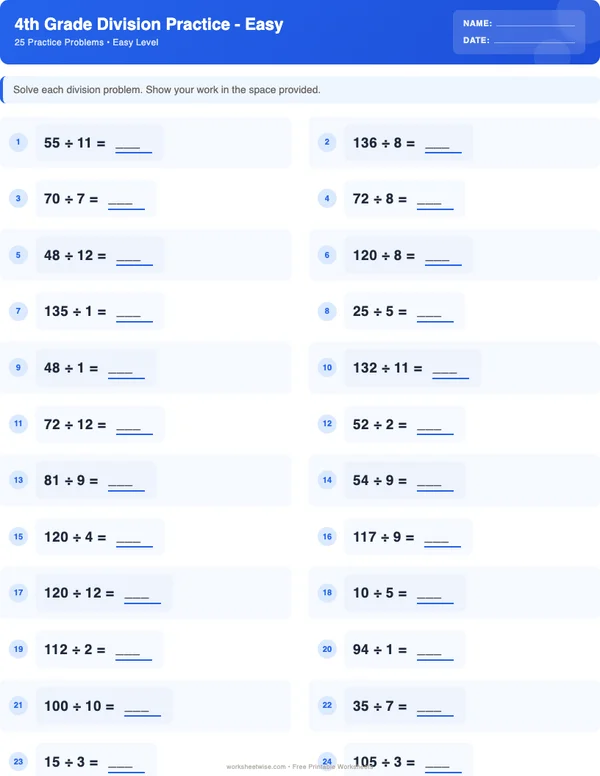
A useful fourth-grade division check is: “Twenty-five students travel in vans that hold six students each. How many vans are needed?” Since 25 ÷ 6 = 4 remainder 1, four vans leave one student without a seat, so five vans are needed. This checked example belongs here because the learner must interpret the remainder rather than report 4 R1 mechanically. The 4th Grade Division guide and free sheet is appropriate when that interpretation—not only the division calculation—is the practice target.
Coordinate mixed-age learning without diluting fourth-grade work
Mixed-age homeschooling works best when learners share a context but receive different mathematical or language decisions. Do not force everyone onto the same worksheet.
During a “garden plan” lesson, a fourth grader might calculate the area and perimeter of a 6-by-9-foot bed:
- Area:
6 × 9 = 54square feet. - Perimeter:
6 + 9 + 6 + 9 = 30feet.
A younger learner could build the rectangle with tiles or count equal groups. An older learner could compare several rectangles with area 54 or calculate material cost. The context remains shared, while the fourth-grade target stays intact.
For a shared read-aloud, the fourth grader might identify a fragment, combine two related sentences, or revise a vague verb. A younger sibling could retell one event orally. An older sibling could analyze how sentence length changes emphasis.
Age is a discovery aid rather than a placement decision. If younger children join the session—especially ages three and four—prioritize brief adult-led oral language, matching, manipulatives, and movement over desk work. They might sort objects, act out verbs, or place six counters into two equal groups while the fourth grader records equations. Do not use the fourth-grade page as the younger child’s placement test.
The 3rd Grade Homeschool Worksheets and 5th Grade Homeschool Worksheets can help locate adjacent task formats for siblings or for a narrowly targeted prerequisite or extension. Moving to another grade-labelled page should follow inspection of the task itself, not a judgment that the learner “is” a different grade.
Know what printable practice cannot establish
A worksheet can show written responses under particular conditions. It cannot by itself establish broad mastery, explain every error, diagnose a learning condition, measure the quality of oral reasoning, or guarantee transfer to new situations.
Printed work also underrepresents some important learning:
- explaining why an algorithm works;
- choosing tools independently;
- discussing multiple solution paths;
- composing and revising longer writing;
- reading fluently and understanding connected text;
- applying mathematics in measurement, games, or projects.
Balance pages with conversation, manipulatives, reading, writing, and practical tasks. The IES foundational reading guide emphasizes systematic foundational instruction and daily work with connected text for younger elementary readers. Although that guide is not a fourth-grade worksheet review, it reinforces an important boundary: isolated spelling or grammar practice should not replace meaningful reading.
Seek additional educational support when persistent difficulty remains despite clear instruction, appropriate representations, shorter practice, and repeated opportunities over time. Record what the learner was asked to do, what support was provided, and what error recurred. Describe observations rather than proposing a diagnosis.
Make the next Monday decision from one short sample
Choose one current fourth-grade target and create a 30-minute Monday block:
- Spend 8–10 minutes modeling one representative problem.
- Solve one parallel problem together.
- Assign six to eight independent items or a 10–12-minute work interval.
- Check immediately with the answer key.
- Record one sentence: “Next time, preserve ___ and change ___.”
For example: “Next time, preserve the area model and change the numbers from 23 × 14 to 21 × 13.” Or: “Preserve sentence combining and change from choosing a conjunction to writing the combined sentence independently.”
Start by opening the free deterministic worksheet generators and generating one narrowly focused set for that recorded next step. Print only enough to test whether the learner can apply the repaired idea; let that observable response determine Tuesday’s lesson.
Put it into practice
Use the guide with a real printable
Move from explanation to a short, observable practice task. Check the first item together, then adjust the next session from the learner's actual work.
Open the first free worksheetExplore a neighboring collection