Curated collectionAnswer keys includedPrint-ready PDFs
Classroom Worksheets With Answer Keys
Move from whole-group modeling to guided practice, independent work and a manageable check routine without using sheets as filler.
Start with a real resource
Browse this worksheet collection
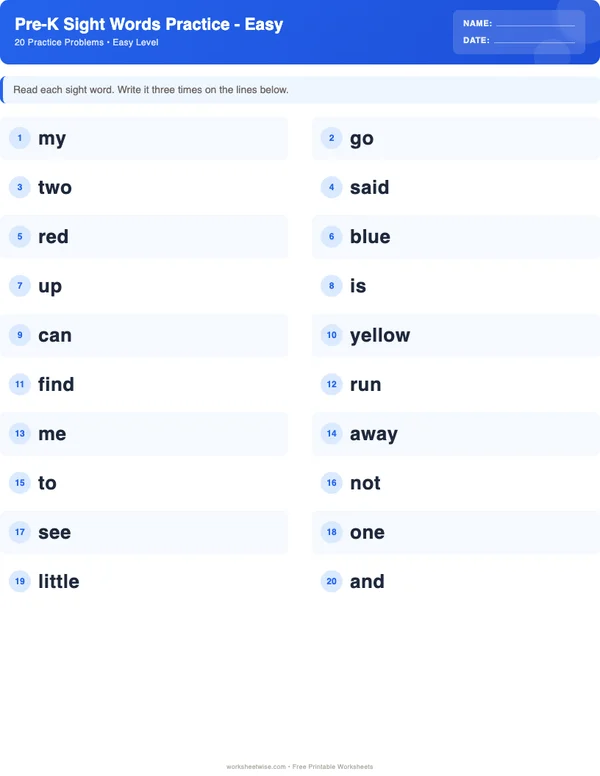
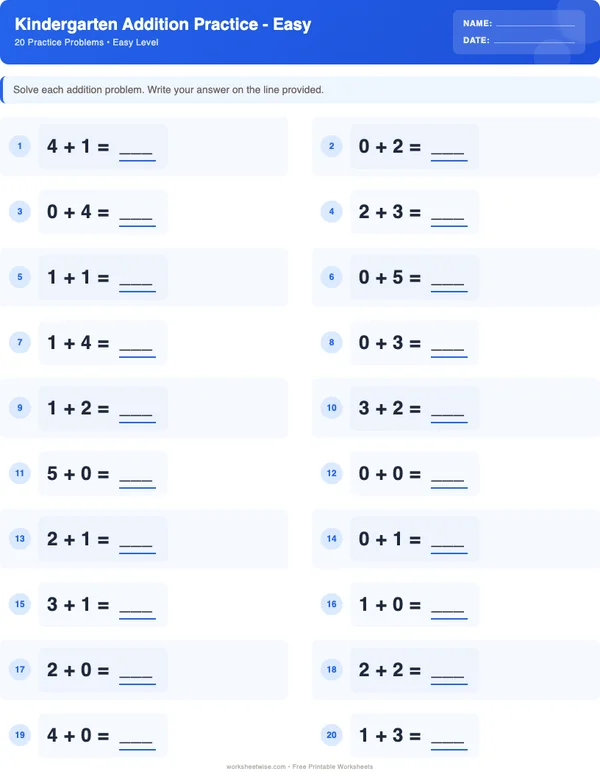
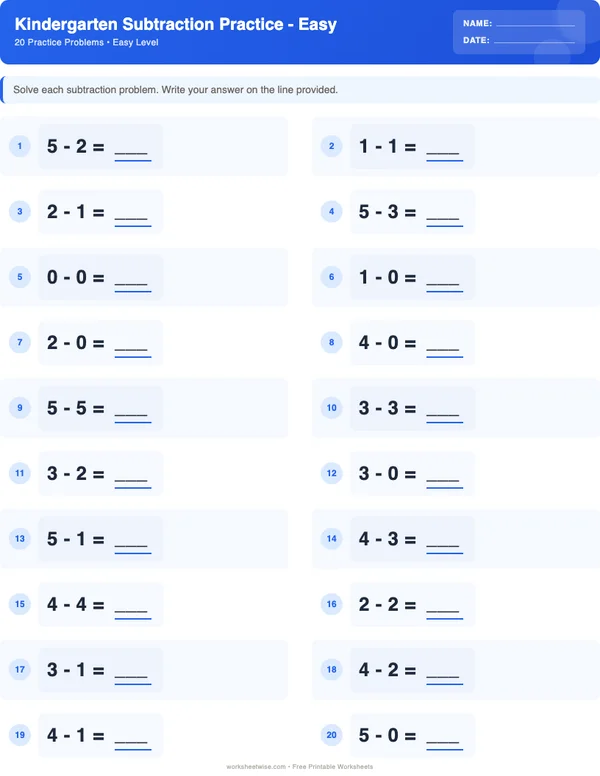
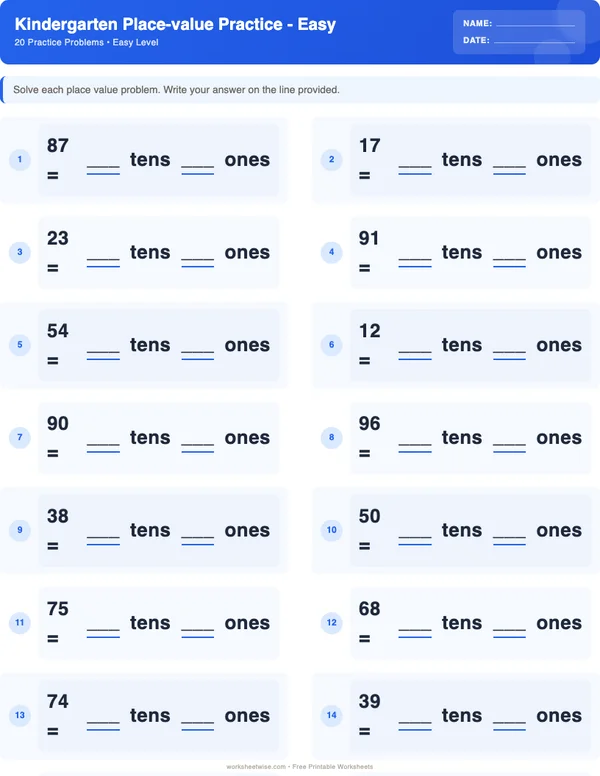
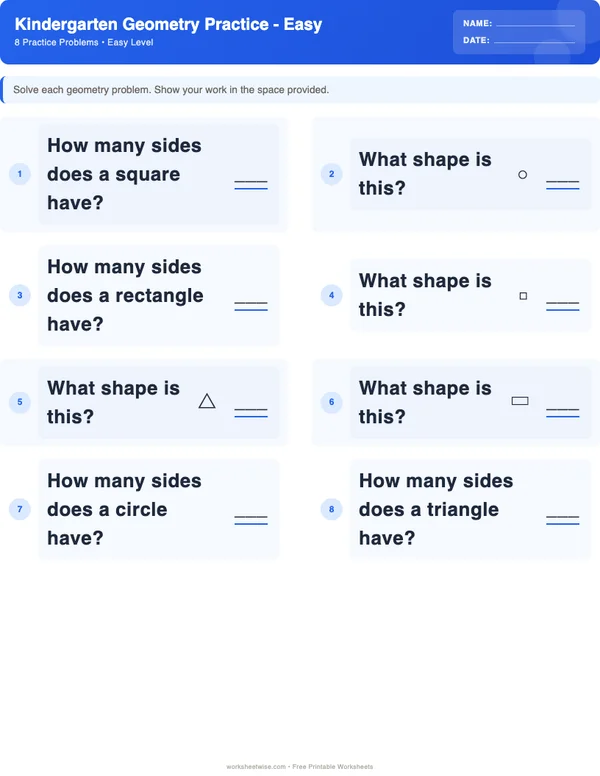
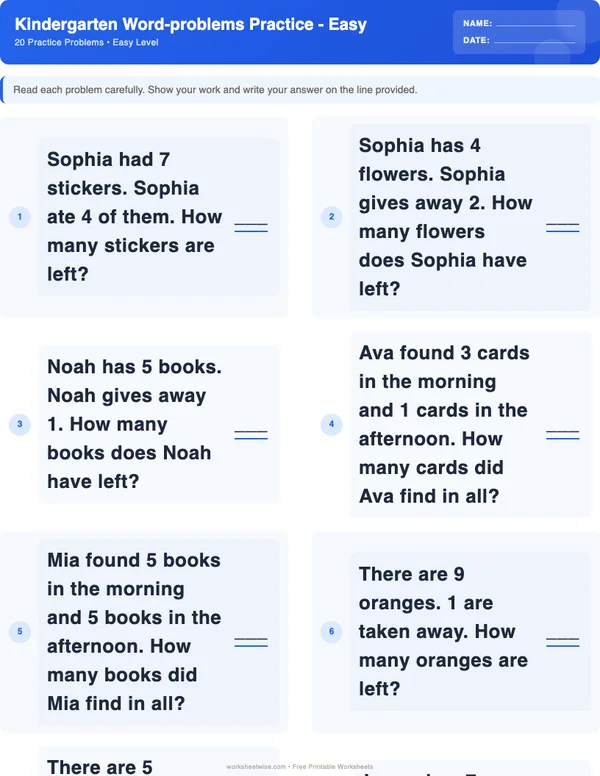
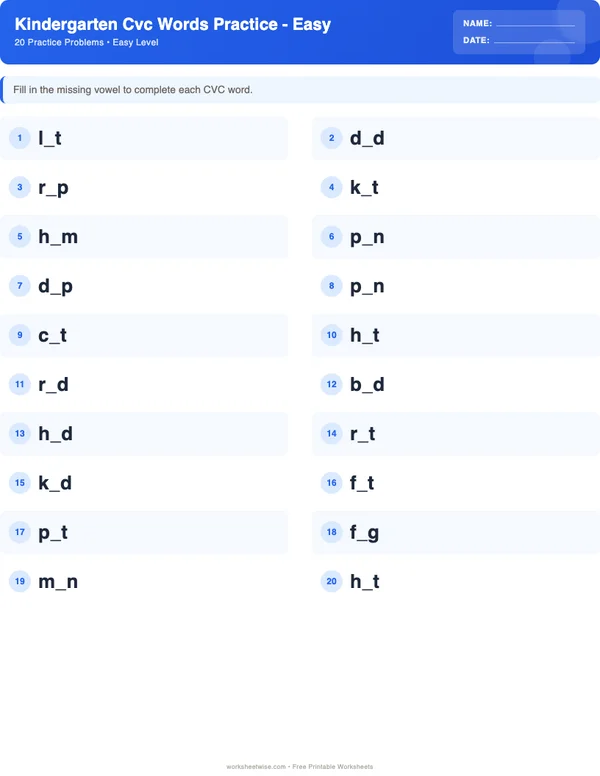
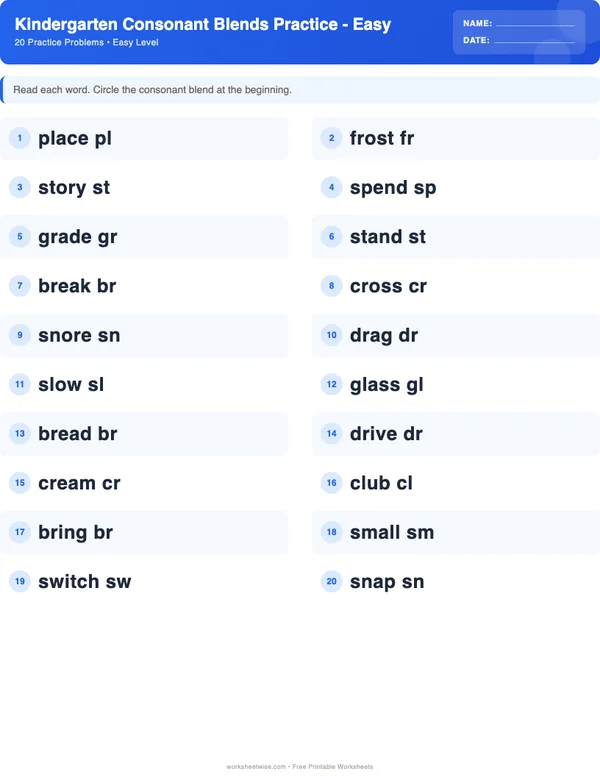
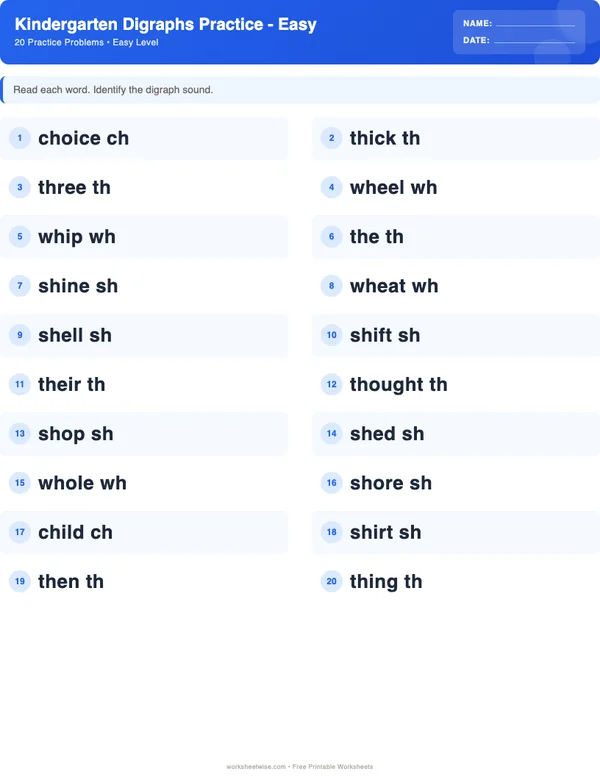
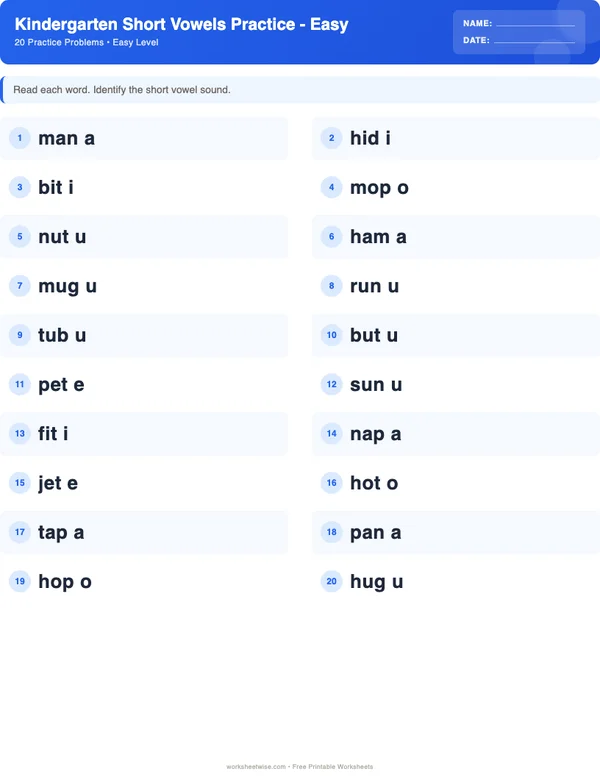
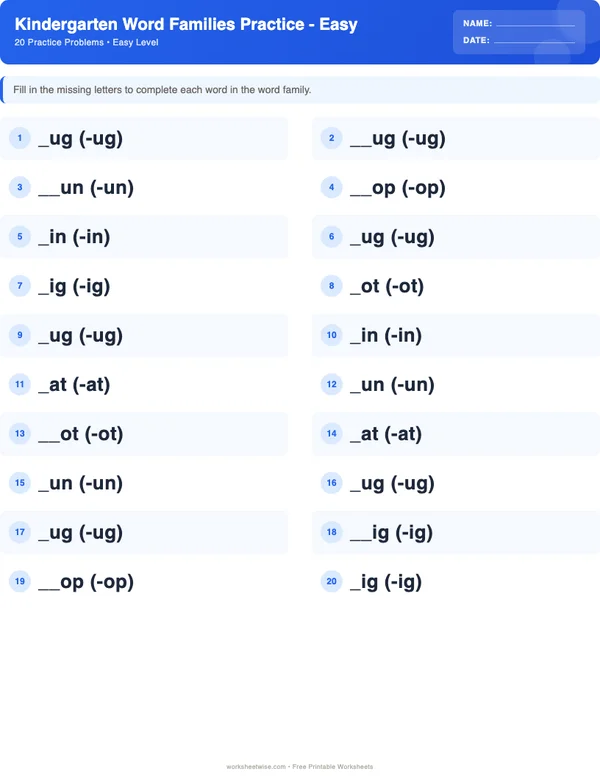
107 relevant free entry points are available. Each one includes a printable learner PDF and separate answer key.
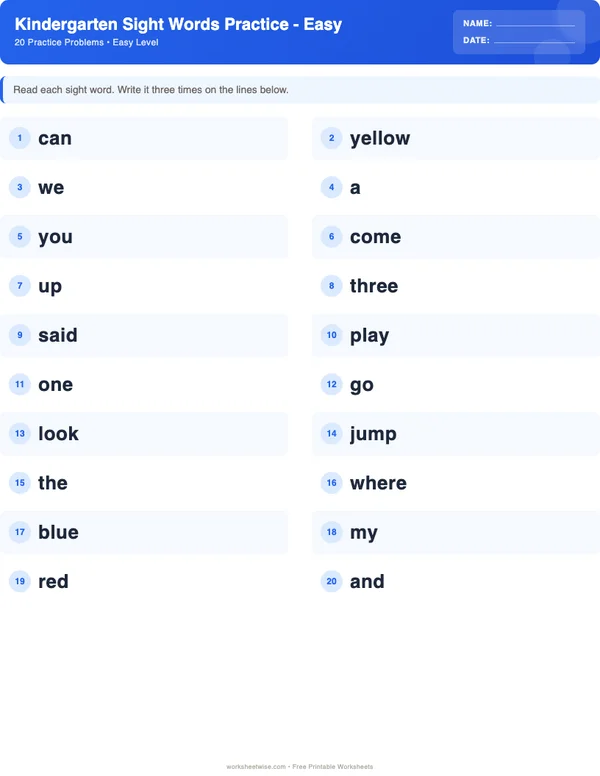
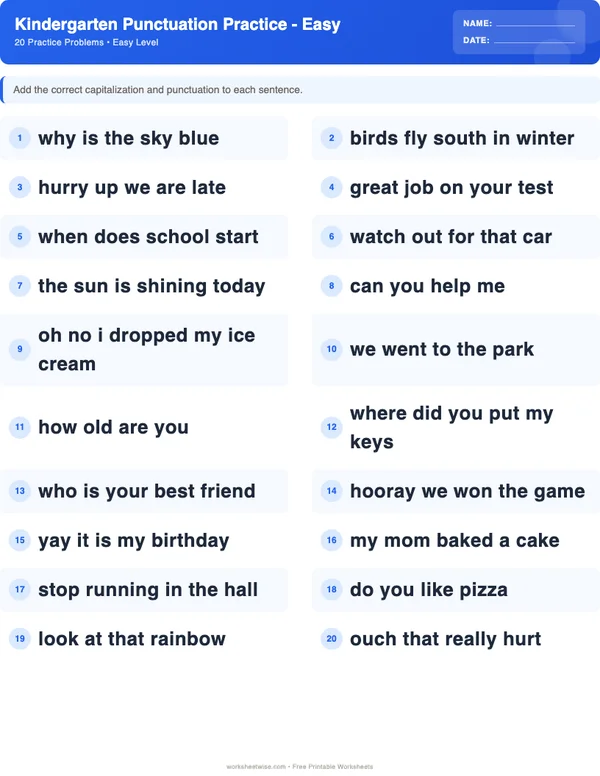
A useful practice loop
Print less. Observe more.
- Choose one skill and model the first item aloud.
- Use a short set and notice the learner’s strategy.
- Change the next task from the work you can see.
Need more than the free sheet?
Plus includes all 1926 matching catalogue variations where available, plus saved deterministic generators and the worksheet designer.
See Plus membershipExplore classroom worksheets with answer keys by subject or level
Complete guide
How to teach and practise classroom worksheets
3,502 words Updated 6 instructional visuals
Use a worksheet only when it advances today’s lesson
Classroom worksheets work best as one part of an instructional sequence: model the target, solve or read together, observe guided attempts, release a short set for independent work, and check only the evidence needed to choose the next teaching move. They become filler when every learner receives a full page simply because time remains.
WorksheetWise currently lists 1,926 variants across eight grade labels, four subjects, and 23 topics, including 107 free resources. Those counts describe available choices, not evidence that every resource fits every class. Begin with the lesson target and the learner’s observable performance; then search the full worksheet library for a close match.
Grade labels describe the intended practice level, but local curriculum sequences differ. Age is a discovery aid rather than a placement decision. Neither should override what a learner can presently explain, read, represent, or solve.
For ages three and four, prioritize brief adult-led oral, matching, manipulative, and movement work over desk work. A 20-item Pre-K page might supply useful pictures or prompts, but it should not automatically become a 20-item seated assignment.
Prepare the teaching move before printing the page
Name one target and one form of evidence
Complete this sentence before selecting anything: “After instruction, learners will independently ___, and I will know because they ___.”
“Practice fractions” is too broad. “Identify one-half in shapes divided into equal parts and explain why unequal parts are not halves” gives you a selection test. A suitable page must show partitioned shapes, include both examples and nonexamples, and leave room for the explanation you intend to hear or read.
For phonics, distinguish recognizing a spelling pattern from decoding a word containing it. For writing, distinguish adding punctuation from composing a sentence. For math, distinguish producing an answer from representing the relationship that makes the answer reasonable.
Inspect the actual cognitive work
Check five features before assigning a sheet:
- Prerequisites: Does the page assume vocabulary, notation, letter-sound knowledge, or computation that has not been taught?
- Response type: Must learners choose, copy, calculate, draw, read aloud, or explain? A matching task cannot by itself show fluent production.
- Item variation: Do items test the same idea in useful variations, or does success reduce to copying a visible pattern?
- Support: Are models, word banks, pictures, manipulatives, or worked examples available? Decide when they will be removed.
- Checkability: Can you determine what an error means, or will the answer key reveal only right and wrong?
A difficulty label must be translated into observable task features. An “easy” free sheet in the catalogue might use familiar content, one-step directions, pictured quantities, a constrained response, or 20 similar items. That label describes the task—not a learner. A more demanding page might remove pictures, mix item forms, require explanation, increase the number range, or combine steps.
Preview every answer yourself. Work the questions without looking at the key, compare your answers, test whether any wording permits another defensible response, and mark items that need an oral clarification. Do not discover an ambiguous diagram while 25 learners are already working.
Trim rather than assign by default
Circle the items everyone should attempt. Box one item you will model. Star two items you will inspect closely. Cross out unnecessary repetition. If ten responses provide sufficient evidence, do not require twenty merely because twenty are printed.
Prepare an extension that preserves the same target: explain a second method, create a contrasting example, or correct a fictional error. Also prepare a support that preserves the target: fewer visible items, oral directions, larger print, manipulatives, a sound box, or a number line. Changing the answer demand from reasoning to copying does not preserve the target.
Launch with a short model and a visible handoff
Use “I do, we notice, you try, we check”
Keep the opening tied to the page learners will use:
- State the target in learner-facing language.
- Model one item while naming the decision, not merely the pencil movement.
- Complete one different item with the class.
- Give everyone one unprompted “hinge” item.
- Decide whether to release, reteach, or create a temporary guided group.
The hinge item should require the target but remain quick to inspect. Ask all learners to show simultaneously on a board, card, paper, or with manipulatives. Calling on one volunteer cannot tell you whether the class is ready.
WorksheetWise classroom suggestion: Use a three-color release mark. Green means begin the selected independent items. Blue means meet at the guided table. Yellow means retry the hinge item with one stated support. The colors organize instruction; they do not classify learners permanently.
Checked example 1: first-grade digraphs
Suppose the target is to read and spell words containing sh and ch. Model that a digraph uses two letters for one sound. Compare ship and chip, touching one counter for /sh/ or /ch/, one for the vowel, and one for the final consonant. Then ask learners to read shop and write chin without copying.
Check the examples: ship segments as /sh/ /i/ /p/; chip as /ch/ /i/ /p/; shop as /sh/ /o/ /p/; and chin as /ch/ /i/ /n/. Each has three phonemes even though it has four letters. The example belongs on this page because it demonstrates a whole-class model, a guided contrast, and an independent response that can be checked quickly.
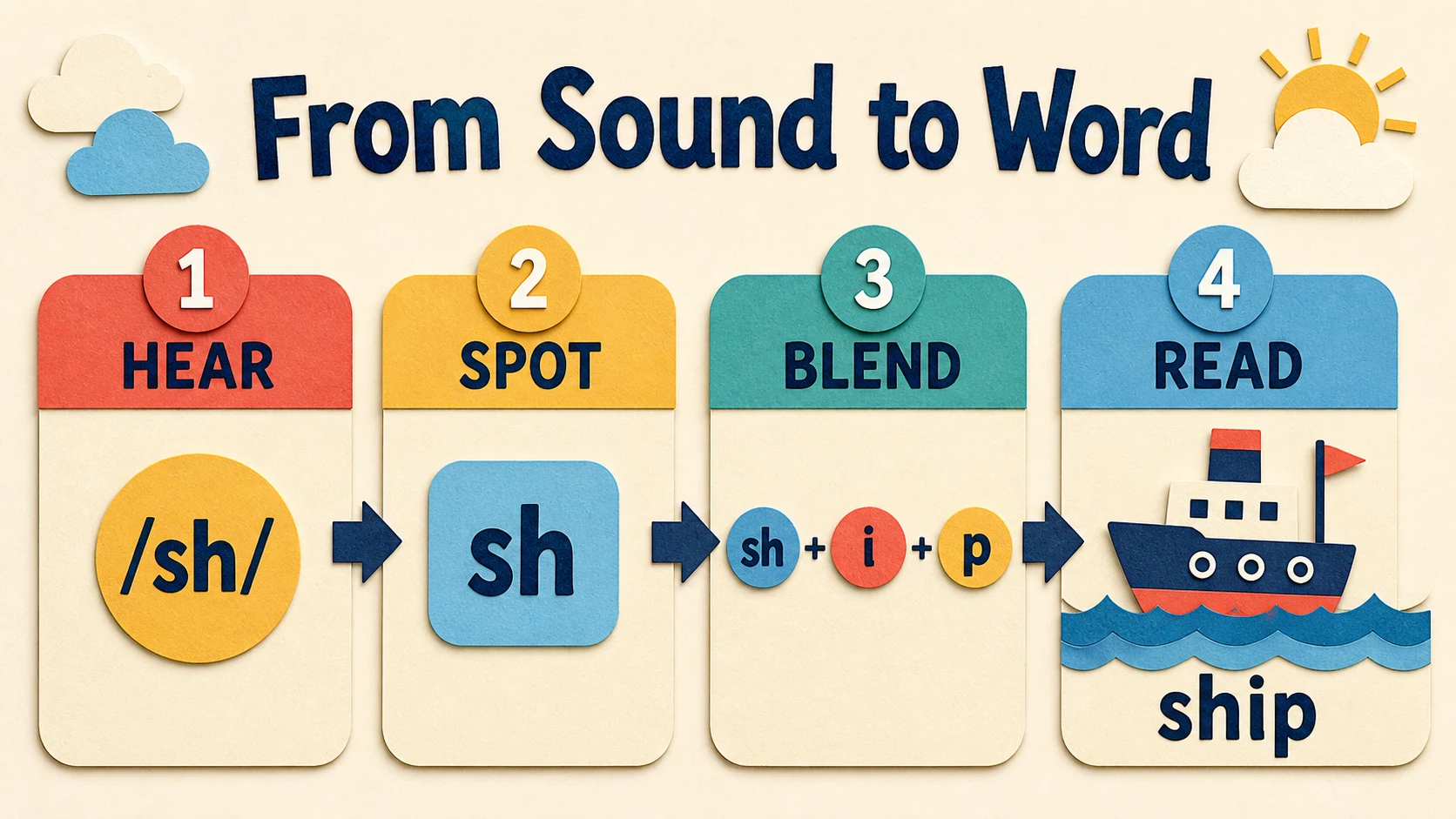
The release point comes after learners distinguish the two digraph sounds, not after they watch the teacher complete several rows.
The IES foundational reading guide recommends connecting speech sounds to letters, teaching decoding and word analysis, and providing daily connected-text reading. It did not assess WorksheetWise. Therefore, use an isolated-word sheet as focused practice, then ask learners to read a short, controlled sentence containing the pattern. A worksheet should not replace connected text.
Observe strategies while learners work
Once pencils move, resist correcting every desk. The first pass is for evidence collection.
Watch the first, middle, and transfer item
Observe three moments:
- The first independent item shows whether the handoff was clear.
- A middle item shows whether the process remains stable without immediate teacher attention.
- A transfer item—new layout, mixed pattern, or explanation—shows whether success extends beyond repetition.
Use neutral prompts that reveal thinking: “Read this to me.” “Show where you began.” “What does this mark mean?” “How do you know these parts are equal?” Avoid “Are you sure?” when it merely signals that an answer is wrong.
Record what is observable rather than an interpretation of character. Write “counted the same object twice in a scattered set,” not “careless with counting.” Write “read ship as sip twice,” not “weak reader.” A repeated behavior suggests a teaching response; it does not establish a diagnosis.
Checked example 2: Pre-K counting without a desk-work trap
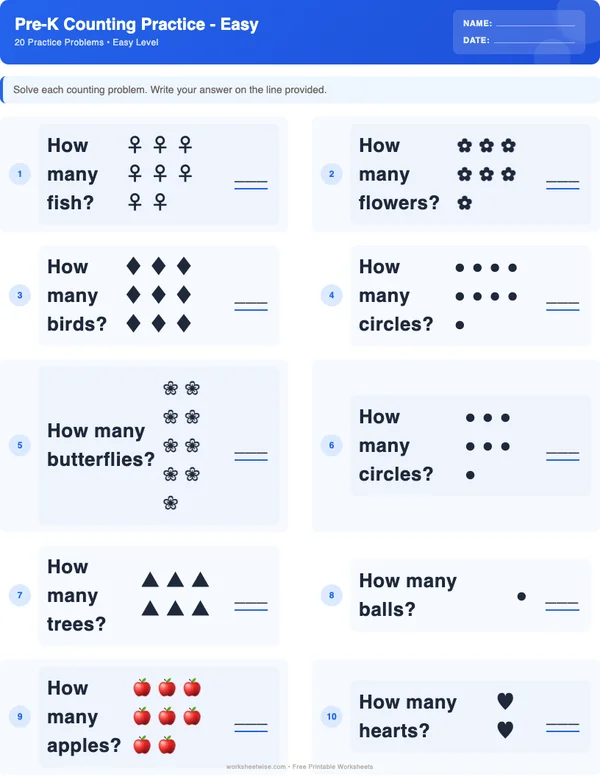
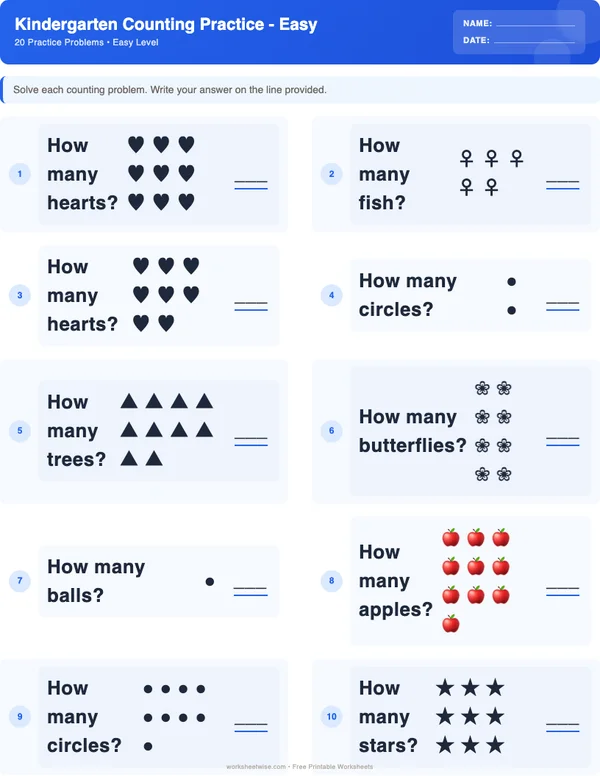
The catalogue’s free Pre-K Counting resource contains 20 problems and is labeled easy. For a four-year-old, do not begin by assigning all 20. Select three pictured sets and place matching counters beside the page. Ask the child to move one counter onto each picture while saying one number word, then tell how many there are. Finish with a movement count—five jumps or eight claps.
If the child says “one, two, three, four, five” while touching one object twice, the issue visible in that moment is one-to-one coordination, not number-word order. Return to a short row of physical objects and have the child slide each counted object into a cup. If the child coordinates correctly in a row but loses track in a scattered set, change the arrangement and teach an organizing path.
This belongs here because it shows how to use a 20-problem classroom resource as a source of adult-led prompts rather than compulsory seatwork. The Pre-K Counting guide and free sheet provides the specific catalogue entry.
The IES guide for teaching math to young children recommends developmental progressions and progress monitoring that builds from what a child knows. That is sourced guidance. Selecting three items, adding counters, and recording the touching pattern are practical classroom applications suggested here; IES did not review this page or those exact adaptations.
Interpret errors before choosing feedback
An answer key settles whether a response matches the intended answer. It usually does not settle why the response occurred. Sort errors by the decision that broke down.
| Observable pattern | Plausible interpretation to test | Immediate check | Next teaching action |
|---|---|---|---|
| Correct orally, wrong when copying | Recording or transcription may be interfering | Ask for one oral response and one copied response | Reduce copying; keep the same content decision |
| Same wrong operation across several items | Operation or relationship may be misunderstood | Ask the learner to act out or draw one item | Re-model the situation before more computation |
| Correct with pictures, incorrect without them | The representation may still be carrying the reasoning | Ask the learner to explain the picture-number connection | Fade one support at a time |
| First items correct, later items erratic | Stamina, attention, visual crowding, or increasing task variation may matter | Present one later item alone | Shorten or reformat, then retest the same skill |
| Rule applied to every item, including exceptions | Learner may be overgeneralizing a recently taught pattern | Present a matched example and nonexample | Teach the boundary through contrast |
| Correct answer with an unexplained method | Answer may be guessed or procedure may be fragile | Ask for a representation or explanation | Require evidence on one selected item |
These are hypotheses to test, not diagnoses.
Checked example 3: first-grade fraction errors
Show two rectangles. Divide the first into two equal parts and shade one. Divide the second into two visibly unequal parts and shade the smaller part. Ask, “Which shows one-half, and why?”
The first shows one-half because the whole has two equal parts and one is shaded. The second does not show one-half because the two parts are unequal, even though one of two regions is shaded. Now divide a circle into four equal parts and shade two. It also represents one-half because two of four equal parts are shaded.
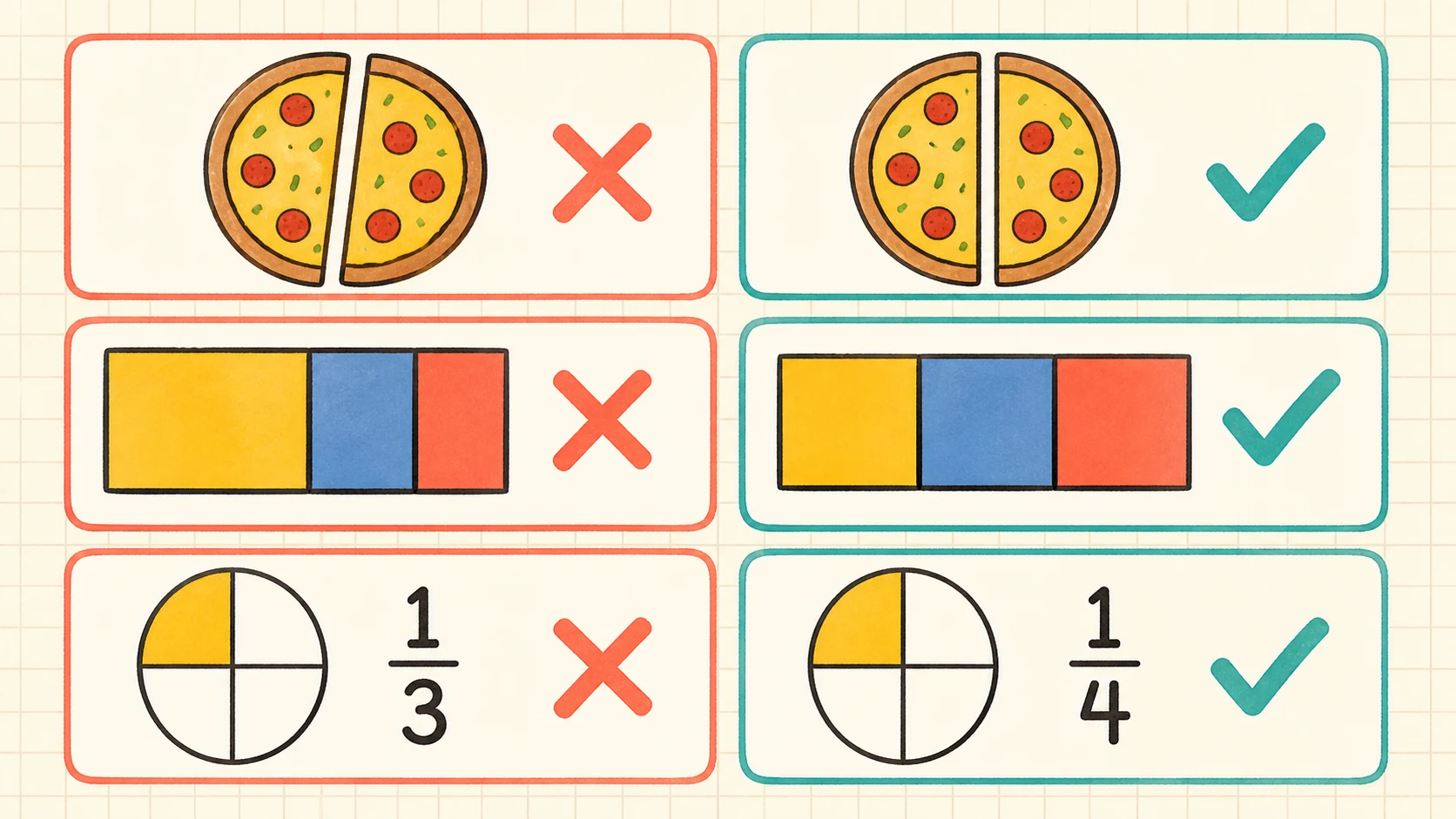
Treat “one of two pieces” as evidence to inspect: the next prompt should test equality of parts, not assign another row of look-alike questions.
This example belongs because a classroom answer key may mark the unequal partition wrong but cannot identify whether the learner ignored equality, misunderstood the whole, or misread the shading. The teacher needs the follow-up contrast.
Give feedback that causes a second attempt
Check less, but make the check consequential
Whole-class answer reading is fast but often gives the teacher little information. Learners can overwrite an answer without revising their reasoning. Instead, choose a check mode based on the lesson:
- Teacher scan: Inspect the two starred evidence items while learners complete another task.
- Partner explanation: Partners compare one item and must state why, not merely announce answers.
- Self-check with key: Learners mark a difference, then write or tell what they will change before seeing a worked solution.
- Small-group conference: Group learners by the next explanation or representation they need, not by total score alone.
- Exit item: Use one fresh item after feedback to see whether the correction transfers.
A useful feedback statement names the successful part, locates the decision to reconsider, and requests an action: “Your denominator shows four equal parts. Recount the shaded parts and revise the numerator.” “You wrote a complete idea. Read it aloud and add the mark that shows the sentence is asking.”
Do not turn corrections into public ranking. Return work in a way that protects learner dignity, and use neutral group names that can change the next day.
Checked example 4: first-grade punctuation across two weeks
Use the sentences “The dog is wet” and “Is the dog wet”. The first is a statement and takes a period: The dog is wet. The second asks a question and takes a question mark: Is the dog wet? Then give “What a wet dog” as an expressive sentence: What a wet dog!
The punctuation is checked, but the important reasoning is sentence purpose. A learner who adds periods to every sentence may know that sentences need end marks while not yet using purpose to choose among them.

Space the practice so learners revisit sentence purpose in fresh sentences instead of completing one large punctuation packet.
This example belongs because it supports a manageable cycle: model one contrast, practice a few items, check a fresh sentence, and revisit later. The IES elementary writing guide recommends daily writing time, explicit teaching of the writing process, fluency with foundational writing skills, and an engaged community of writers. A punctuation sheet can support one foundational skill, but learners also need to compose and share meaningful writing.
Adapt access without replacing the target
An adaptation is useful when it removes an irrelevant barrier while leaving the intended decision intact.
Keep the same mathematical or literacy demand
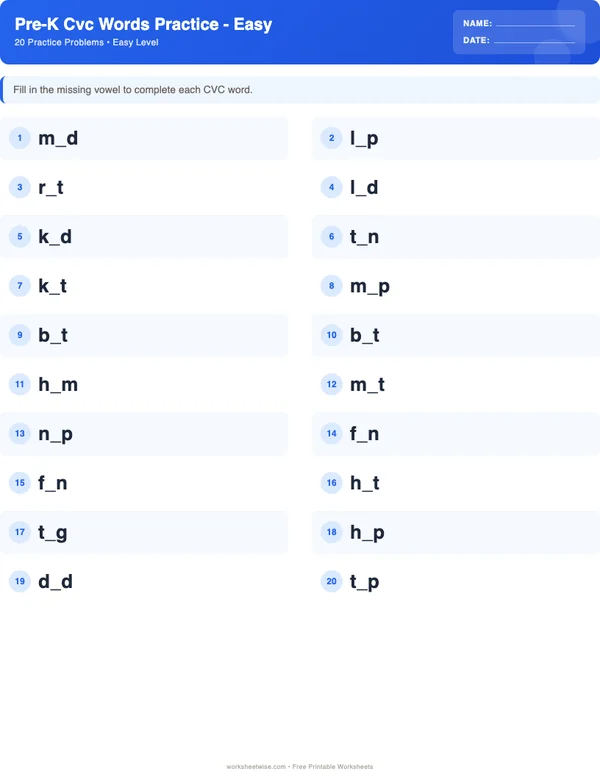
If the target is decoding CVC words, an adult may read the directions but should not read the target words. A learner can move letter tiles before writing, but matching every word to an obvious picture may reduce decoding demand.
If the target is solving a word problem, an adult may clarify an unfamiliar context, enlarge the print, or let the learner state reasoning orally. Telling which operation to use removes a central part of the task.
If the target is punctuation, speech-to-text may remove handwriting demands, but the learner must still choose and insert the punctuation.
If the target is fraction equivalence, pre-drawn bars may remove drawing load while preserving comparison. Giving the completed equivalence statement does not.
The IES elementary mathematics intervention guide supports systematic instruction, precise mathematical language, deliberate work with word problems, and carefully chosen concrete and semi-concrete representations. Those recommendations justify purposeful representations, not permanent dependence on whichever picture happens to appear on a sheet.
Checked example 5: sixth-grade fractions from model to notation
To solve , draw one rectangle, partition it into thirds vertically, and shade two thirds. Partition the same whole into fourths horizontally and mark three fourths in another direction. The overlap covers 6 of 12 equal parts, so the product is .
Check the arithmetic: , , and dividing numerator and denominator by 6 gives . The concrete or drawn model and the symbolic procedure agree.
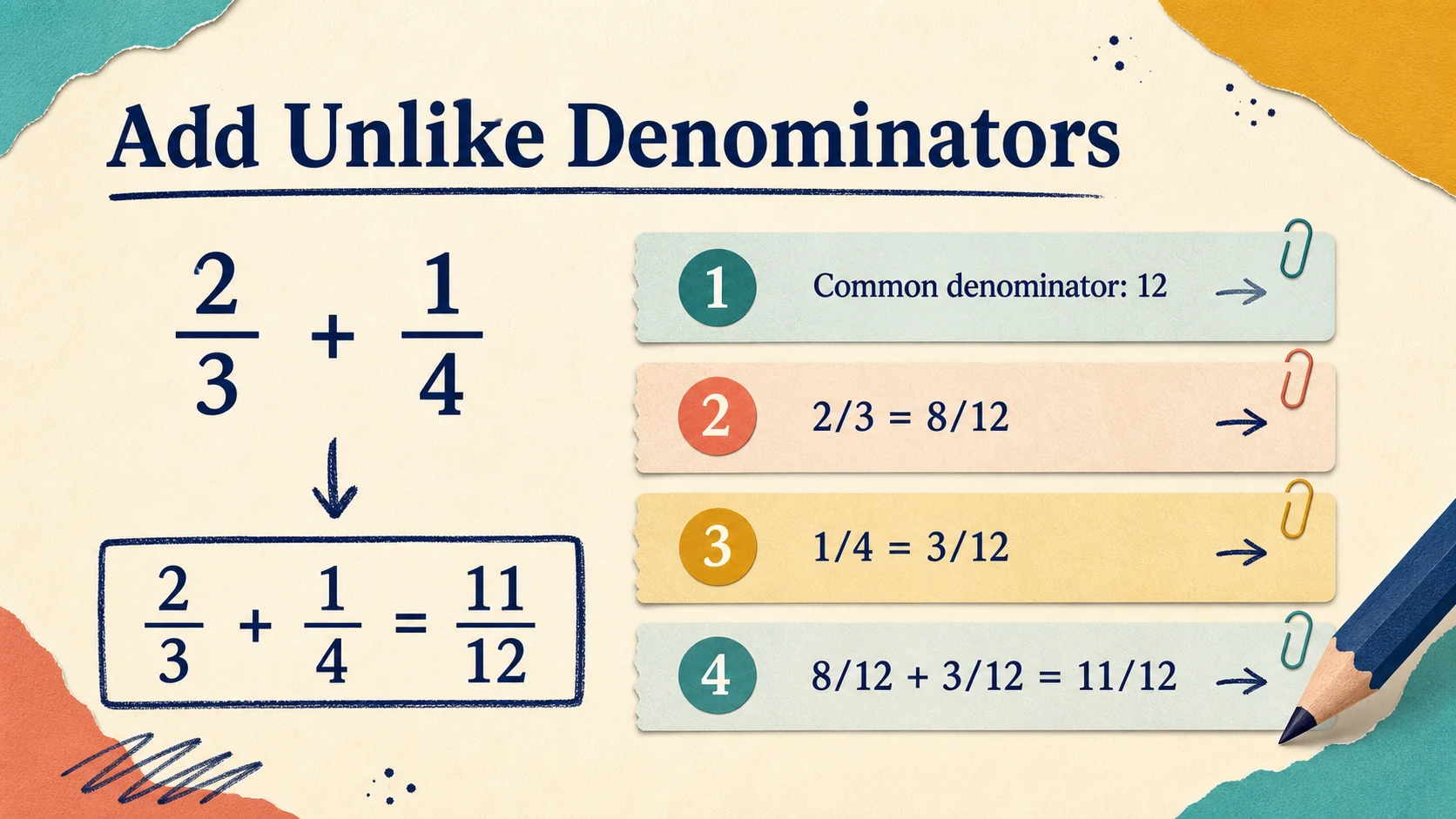
Use the model to expose why the product is six twelfths, then require the learner to connect the overlap to the multiplication and simplification.
This belongs because an upper-elementary worksheet can follow explicit modeling without becoming a page of unexplained numerator-and-denominator multiplication. For one learner, provide the partitioned rectangle; for another, require construction of it. Both should explain the connection to .
Build independent work through visible progression
Independence means performing the intended work without instructional prompting, not completing a page alone while misconceptions accumulate.
Change one task feature at a time
A dependable progression is:
- Same item type with a worked model visible.
- Same item type with a short reminder.
- Mixed items requiring choice of strategy or category.
- A new item without prompts.
- A delayed item on another day.
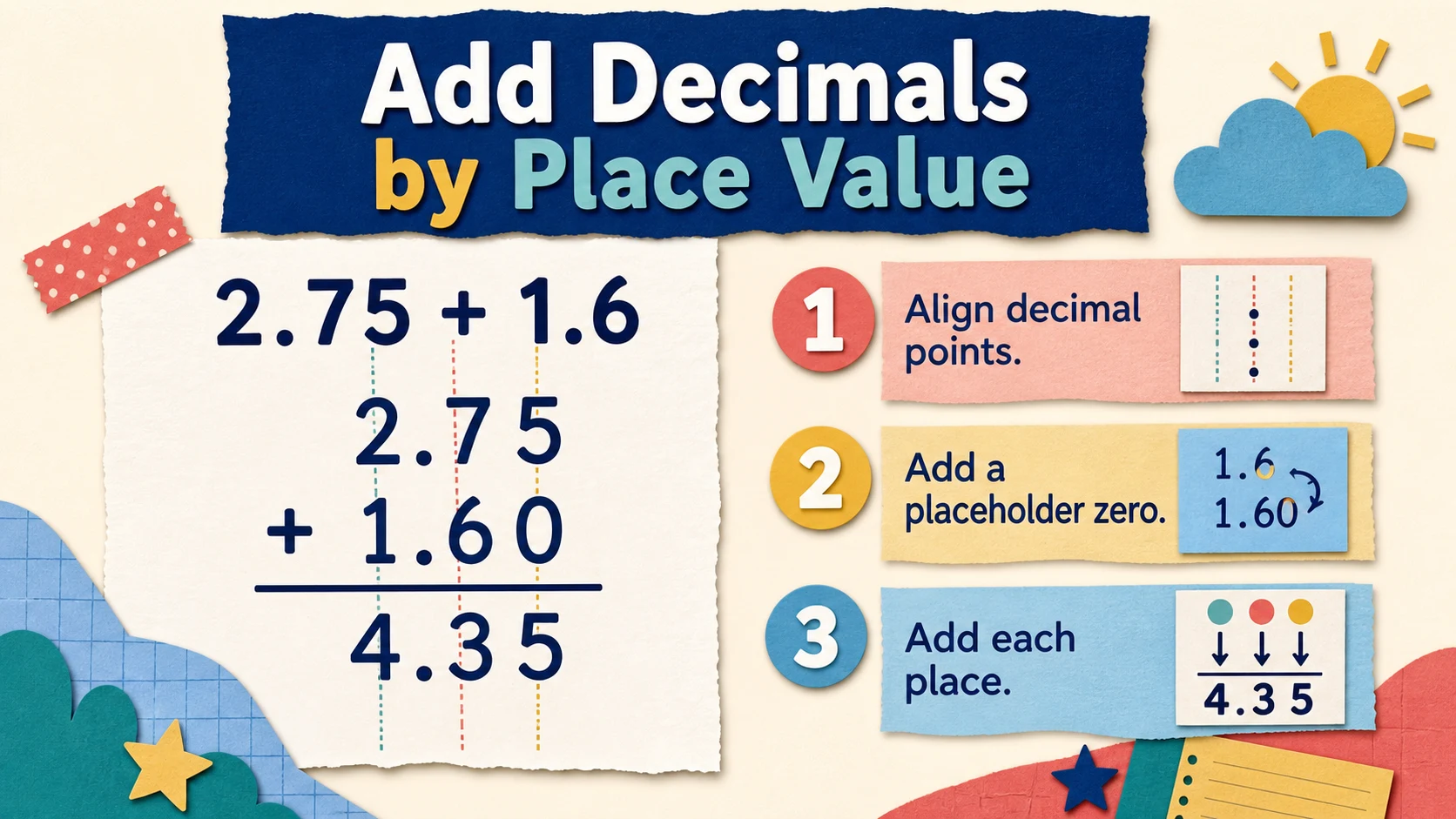
The independent decimal item should remove a support only after learners have connected the visual quantity, place-value language, and notation.
For a checked decimal example, compare 0.4 and 0.35. Rewrite 0.4 as 0.40; forty hundredths is greater than thirty-five hundredths, so . A learner who says 0.35 is greater because 35 is greater than 4 is treating the digits as whole numbers. The next action is to place both numbers on the same hundred grid or number line, then retry with 0.6 and 0.58. This belongs because it turns an independent-work error into a specific representational bridge and a fresh check.
For independent follow-up, use the Independent practice Worksheets With Answer Keys, but release only resources whose prerequisites were modeled and demonstrated during guided work.
Keep records small enough to use tomorrow
Do not create a gradebook entry for every worksheet. Maintain a short instructional record with four fields:
| Date and target | Evidence item | Observable pattern | Next action |
|---|---|---|---|
| Sept. 8: distinguish sh/ch | Read shop; spell chin | Read both; wrote shin for chin | Contrast mouth/sound and spell two ch words |
| Sept. 10: equal shares | Identify half in two partitions | Chose unequal two-part figure | Rebuild equal halves with folding |
| Sept. 12: sentence purpose | Punctuate one question | Added period after question | Oral statement/question sort, then retry |
| Sept. 15: compare decimals | Compare 0.4 and 0.35 | Chose 0.35; cited 35 > 4 | Hundred-grid comparison, then fresh pair |
Record a class-level pattern when many learners need the same next model. Record an individual note only when it changes instruction. A raw score such as 14/20 may be useful for local grading requirements, but it is less actionable than knowing that all six errors involved unequal fraction partitions.
For a more deliberate evidence cycle, the Formative assessment Worksheets With Answer Keys can help you separate short checks from ordinary practice. A worksheet result is one classroom observation, not a diagnosis, permanent placement, or promise of later performance.
Reuse content without repeating the same experience
A completed page can support several later tasks without another photocopy:
- Cover the answers and solve two selected items orally.
- Cut apart items for sorting, sequencing, or partner explanation.
- Display one anonymous error for whole-class correction.
- Change a number, word, representation, or sentence purpose while preserving the structure.
- Ask learners to create one valid item and one tempting wrong answer.
- Return to one transfer item after several days.
Reuse should deepen or retrieve the skill, not require learners to repeat an entire mastered page.
Checked example 6: sixth-grade sentence structure over time
Begin with the fragments “Because the rain started” and “The game ended.” The first contains a dependent idea that leaves the reader waiting; the second is an independent clause. Combine them: Because the rain started, the game ended. Check that the dependent clause is followed by an independent clause and that the introductory dependent clause is separated by a comma.
Later, reverse the order: The game ended because the rain started. In this construction, no comma is normally needed before the essential because clause. Ask learners to explain why both versions are complete and how the order changes punctuation.
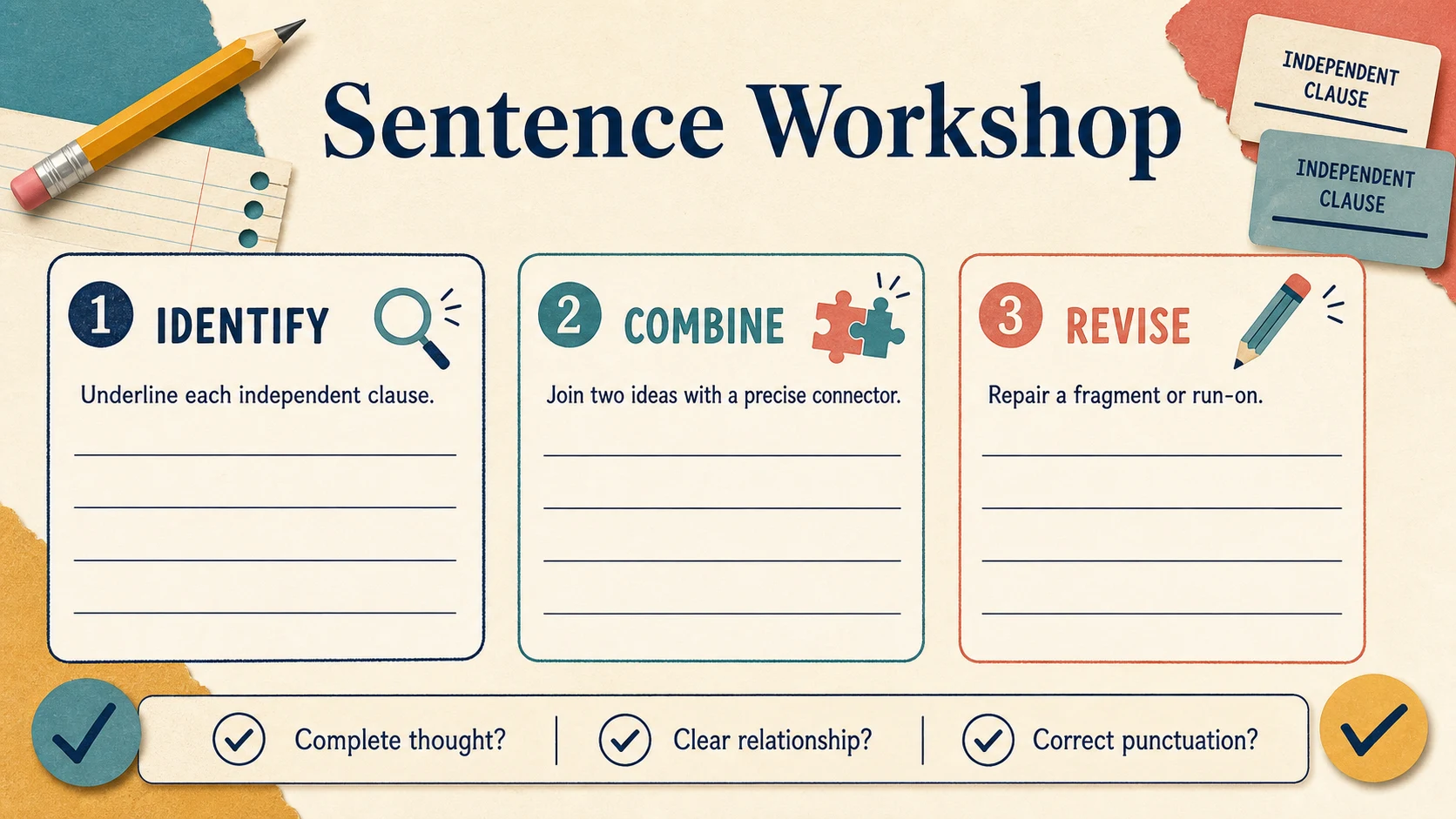
Revisit clause relationships through combining, revising, and composing—not by assigning the same identification exercise for ten consecutive days.
This belongs because sentence structure needs transfer into actual composition. A worksheet can isolate clause recognition on day one; later work should ask learners to revise their own sentences and make purposeful choices.
Know when a worksheet is the wrong tool
Choose another format when the target depends primarily on:
- oral language, pronunciation, conversation, or listening;
- physical quantity, measurement, shape construction, or movement;
- reading connected text with meaning;
- planning, drafting, revising, and sharing extended writing;
- collaborative problem solving or mathematical discussion;
- experimentation, observation, or gathering real data;
- teacher diagnosis of a process that a final written answer conceals;
- emotional, behavioral, medical, or developmental questions beyond an instructional page’s scope.
A worksheet is also the wrong tool when learners cannot access its language, when its visual layout introduces irrelevant difficulty, when the class has not received the prerequisite instruction, or when the teacher has no plan to inspect and respond to the work.
For ages three and four, a page should commonly serve the adult as a picture bank, matching source, or prompt card. Use objects, speech, movement, and brief turn-taking first. If a child can count eight real counters accurately but cannot manage a crowded 20-item page, the page format has not established a mathematical deficit.
Standards can help adults inspect the intended grade-level destination, but they do not place an individual learner. The Common Core mathematics standards and ELA standards describe organized learning expectations; they do not certify these worksheets, settle local sequence, or replace direct observation.
Run one complete cycle tomorrow
Choose one target already taught. Open the free deterministic worksheet generators and create a short set that matches it. Work every item yourself. Mark one model, one guided item, three to six independent items, and one fresh exit item. Prepare a single access support and a single transfer extension.
During the lesson, model the decision, check the hinge response, release only learners who are ready, and note one observable error pattern. Give feedback that requires a retry. Record the pattern and tomorrow’s response in one line.
If you cannot name what you will observe, how you will respond, and what learners will do next, do not print the sheet yet.
Put it into practice
Use the guide with a real printable
Move from explanation to a short, observable practice task. Check the first item together, then adjust the next session from the learner's actual work.
Open the first free worksheetExplore a neighboring collection
Choose by a different teaching need
After-School Worksheets With Answer Keys Formative Assessment Worksheets With Answer Keys Homeschool Worksheets With Answer Keys Homework Worksheets With Answer Keys Independent Practice Worksheets With Answer Keys Intervention Worksheets With Answer Keys Morning Work Worksheets With Answer Keys School Readiness Worksheets With Answer Keys