Curated collectionAnswer keys includedPrint-ready PDFs
Independent Practice Worksheets With Answer Keys
Make directions, examples, response space and answer-key timing support honest independence after a skill has been taught.
Start with a real resource
Browse this worksheet collection
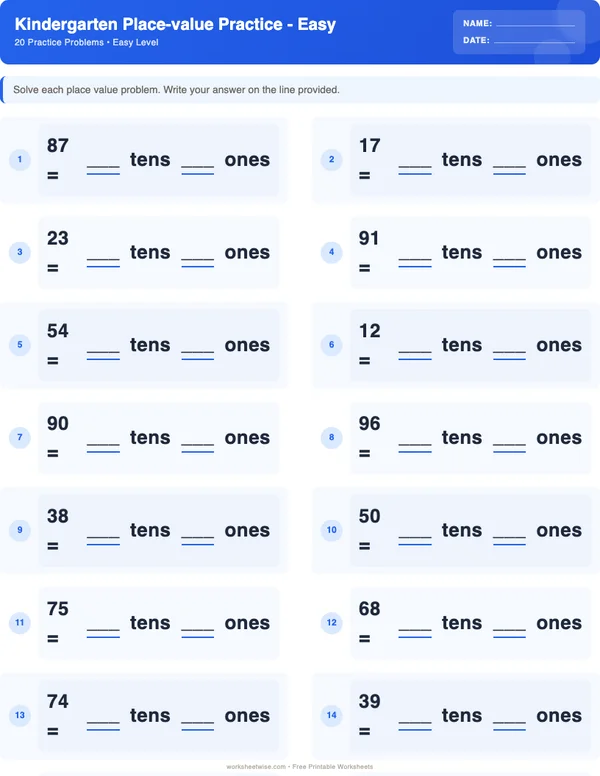
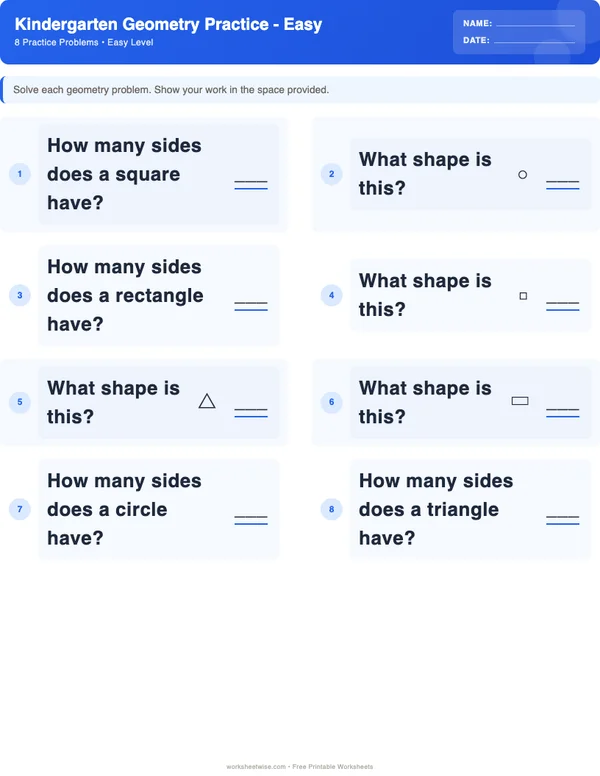
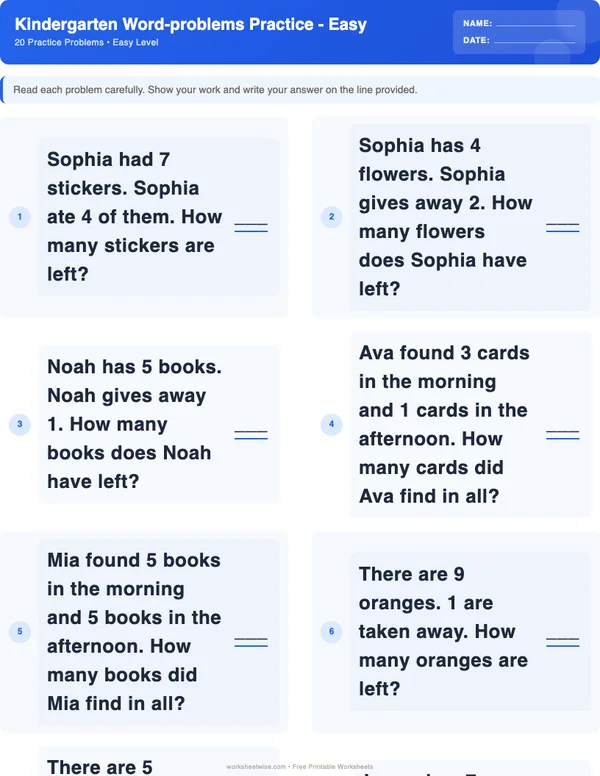
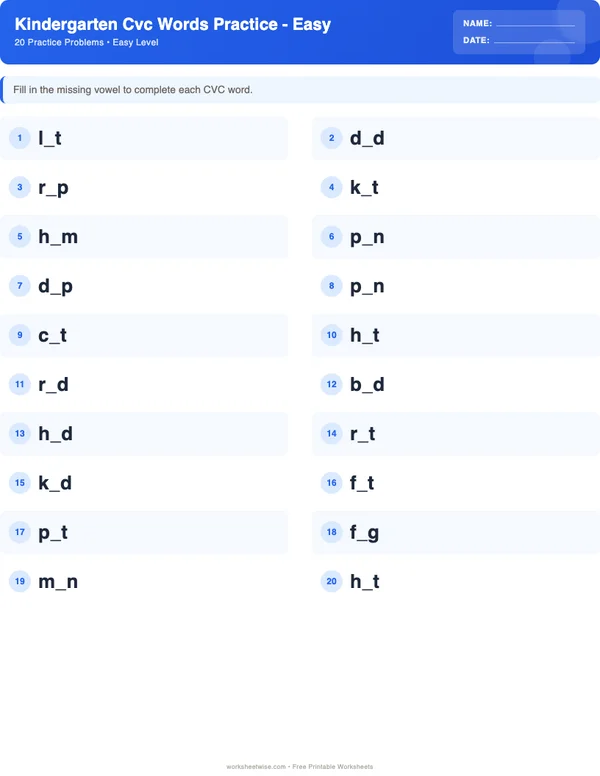
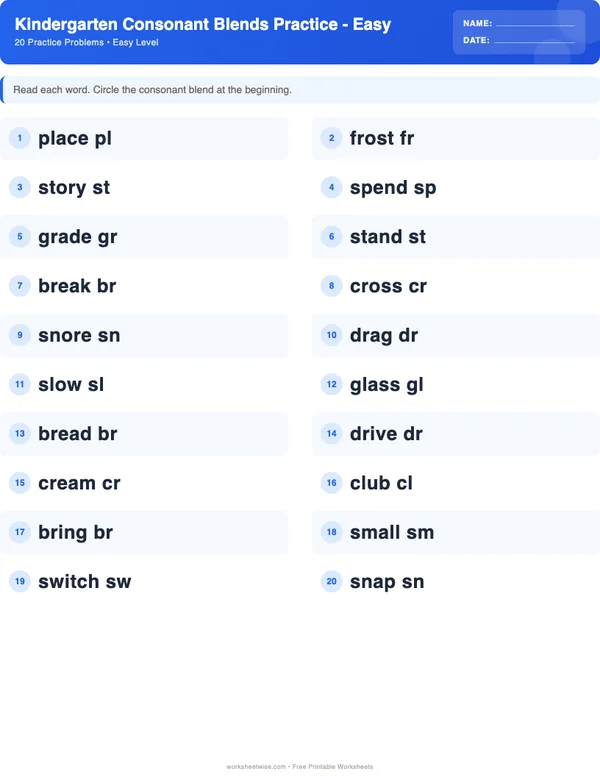
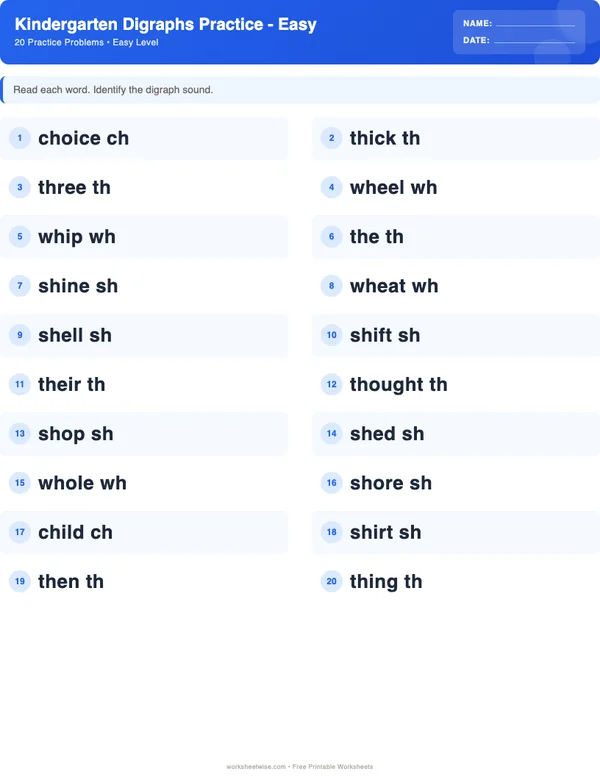
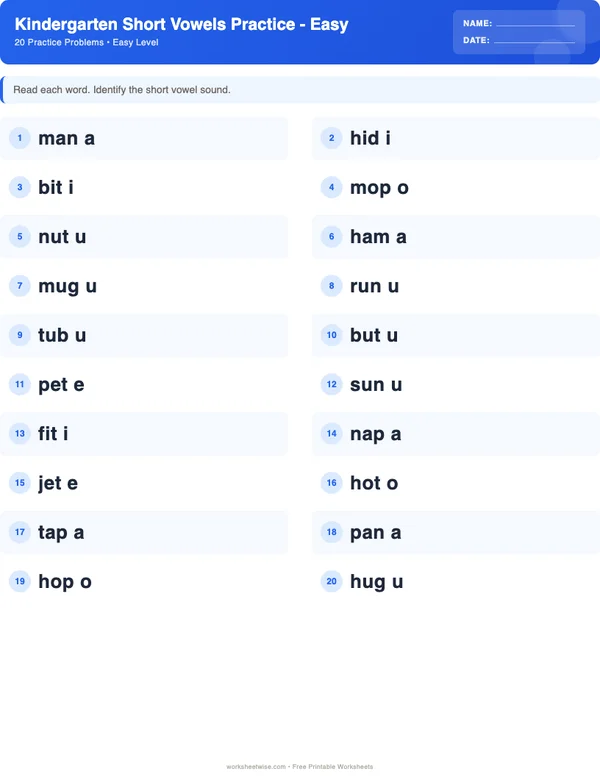
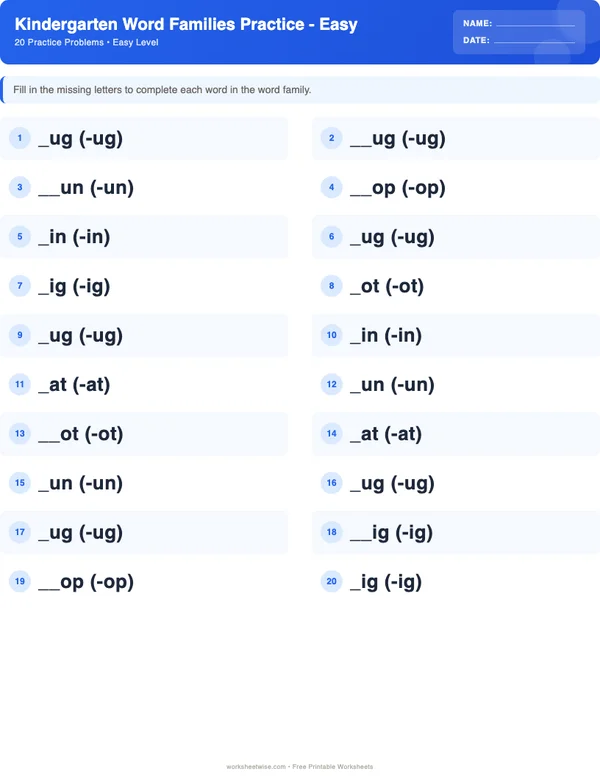
107 relevant free entry points are available. Each one includes a printable learner PDF and separate answer key.
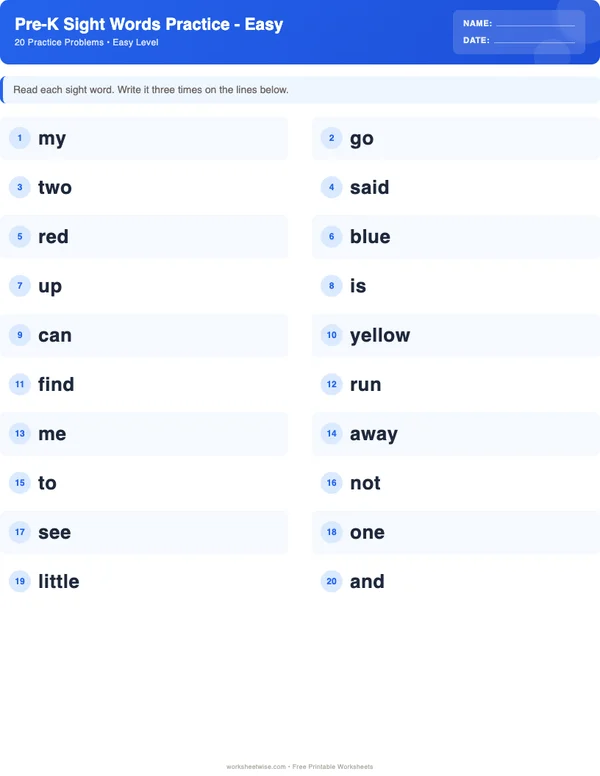
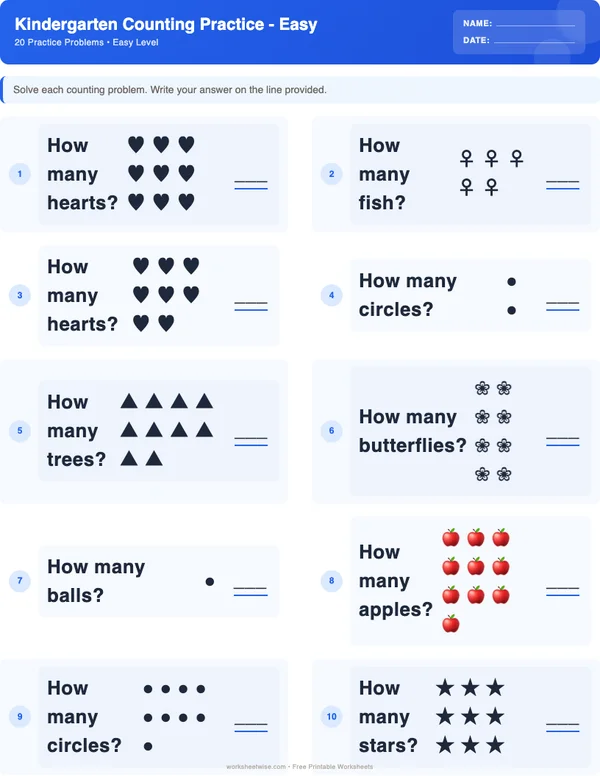
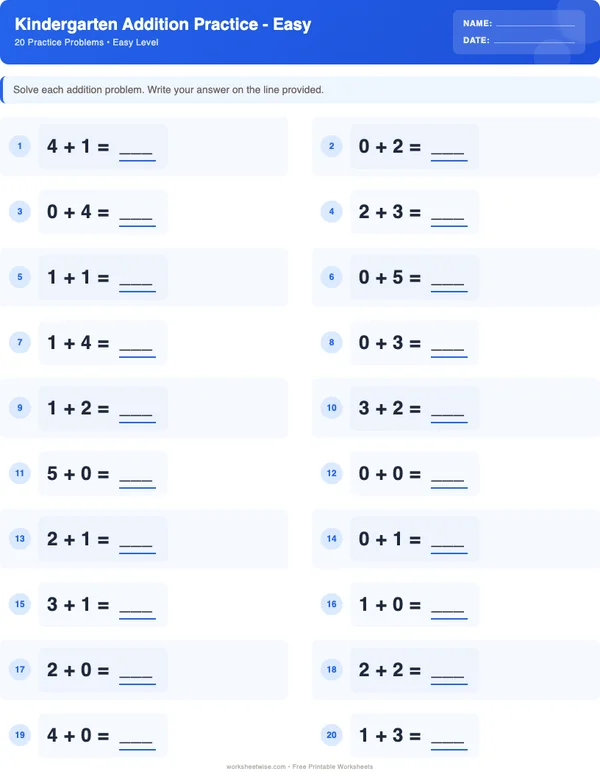
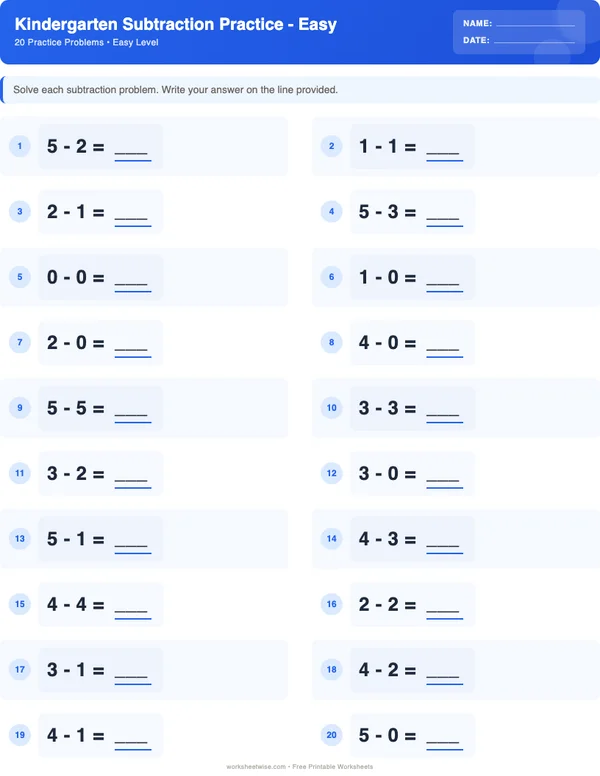
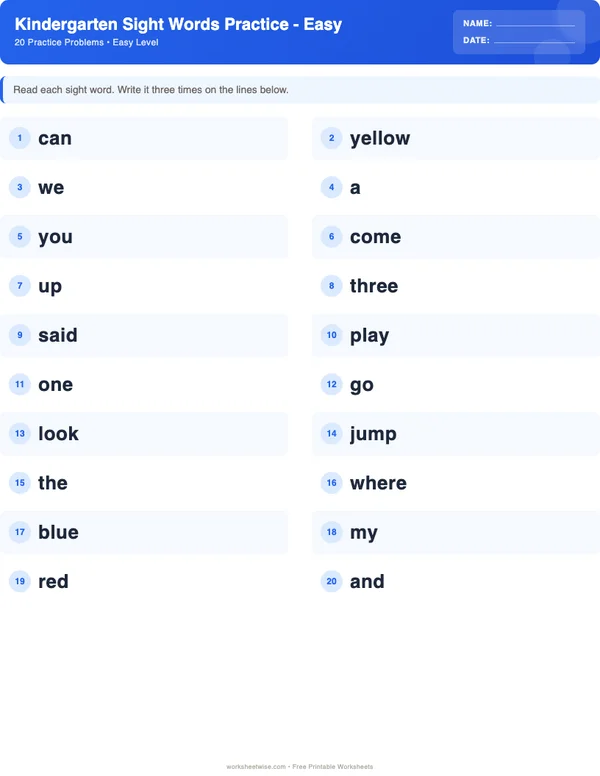
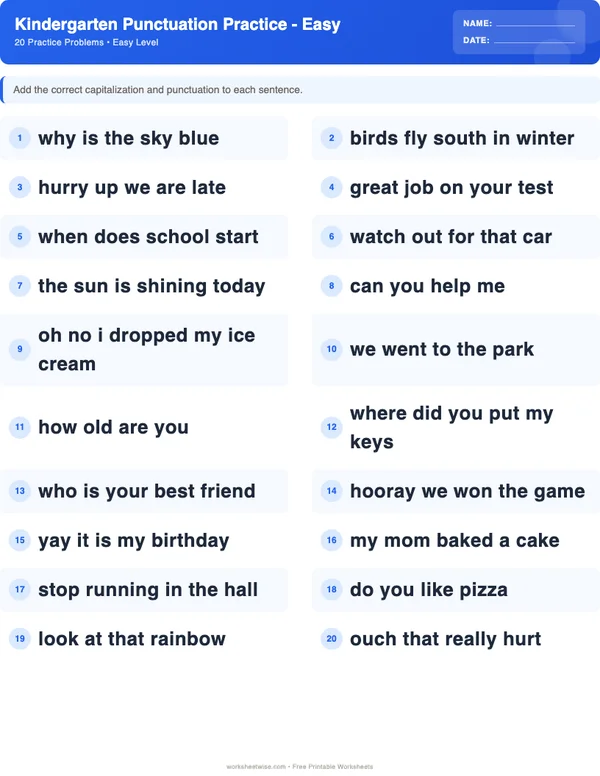
A useful practice loop
Print less. Observe more.
- Choose one skill and model the first item aloud.
- Use a short set and notice the learner’s strategy.
- Change the next task from the work you can see.
Need more than the free sheet?
Plus includes all 1926 matching catalogue variations where available, plus saved deterministic generators and the worksheet designer.
See Plus membershipExplore independent practice worksheets with answer keys by subject or level
Complete guide
How to teach and practise independent practice worksheets
3,352 words Updated 6 instructional visuals
Build independence into the sheet before the learner begins
Independent practice worksheets work best after a skill has been explicitly taught, modeled, and practiced with support. The learner should be able to understand the directions, recognize the task type, begin without prompting, record a complete response, and use an agreed checking routine. The answer key should support correction after genuine effort—not supply the next answer.
WorksheetWise currently lists 1,926 variants across eight grade labels, four subjects, and 23 topics, including 107 free resources. That range makes selection important. A printable labeled for a particular grade is not automatically suitable for every learner in that grade. Grade labels describe the intended practice level; local curriculum sequences differ. Age is a discovery aid rather than a placement decision.
A useful independent sheet sits inside a larger teaching cycle:
- Teach and model the target skill.
- Complete a few examples together.
- Select a sheet that changes practice quantity, not the underlying demand.
- Launch it with a brief direction check.
- Observe without quietly reteaching every item.
- Give feedback based on the pattern of work.
- Record one instructional decision.
- Reuse, adapt, or replace the format according to what the work reveals.
Independence is honest when the adult can distinguish “the learner knows the skill” from “the learner succeeded because I translated every direction, pointed to every operation, or confirmed every answer.”
Select for the task the learner can actually perform
Begin with the exact skill taught, not a broad subject label. “Math practice” is too vague. “Represent division as equal groups and write the matching equation” is selectable. So are “supply end punctuation for statements and questions,” “blend short-a CVC words,” and “subtract decimals by aligning place values.”
Use five selection tests.
Match the mathematical or literacy move
Read at least five items before printing. Identify what the learner must do in each one. A page advertised as subtraction may also require reading a paragraph, deciding which information matters, selecting an operation, regrouping, and writing a sentence. That can be worthwhile, but it is not a clean measure of subtraction procedure.
Likewise, a phonics page with unfamiliar picture names may test vocabulary alongside sound-symbol knowledge. A writing page with tiny response boxes may test handwriting endurance more than sentence construction.
The full worksheet library is best searched from a precise goal: topic, representation, number range, text demand, and expected response.
Define difficulty through observable features
A catalogue label such as “easy” describes a resource category, not a learner. Replace the label with visible task features:
- how many items appear;
- whether examples are worked or merely answered;
- whether pictures, manipulatives, number lines, or word banks are available;
- how many steps each item requires;
- whether numbers require regrouping;
- whether words follow already-taught spelling patterns;
- how much reading and writing is required;
- whether items are mixed or all follow one format;
- whether response spaces fit the expected work.
A 20-item counting sheet may be manageable if it uses familiar sets and clear pictures. The same item count may be excessive for a child still coordinating one touch with one spoken number. Difficulty is in the task architecture, not in a personal label such as “easy learner” or “advanced learner.”
Inspect directions, model, space, and key
Directions should name an action the learner already understands: “Circle the group with 8,” “Subtract,” or “Add the missing punctuation.” If the directions introduce a new strategy, vocabulary term, or notation, the sheet is teaching rather than providing independent practice.
A useful worked example shows the same decision demanded by the remaining items. It should not disclose a pattern that lets the learner copy answers mechanically. Response space must accommodate the method already taught: columns for regrouping, boxes for phonemes, lines for sentences, or room to sketch equal groups.
Finally, inspect the answer key. Confirm that its item order matches the page and calculate or read every answer that will affect feedback. A key can save checking time, but it does not replace professional judgment about equivalent wording, alternate strategies, or legible reasoning.
Prepare one page for an independent start
Preparation takes less time when it follows a fixed sequence.
Write the learning target in adult language: “Check whether the learner can independently subtract four-digit whole numbers with regrouping.” Then translate it into learner language: “I can subtract and show my regrouping.”
Complete the first unworked item yourself. This catches unclear diagrams, insufficient space, unexpected vocabulary, and answer-key errors. Decide what resources are permitted: counters, alphabet cards, a multiplication chart, a number line, or no reference at all. A familiar support can preserve independence; an unplanned hint can change what the work measures.
Mark a stopping point. Six informative items are often more useful than 20 completed through fatigue or repeated prompting. You can fold the page, cover later rows, or circle a first set. Keep the remaining items for follow-up rather than treating completion as the goal.
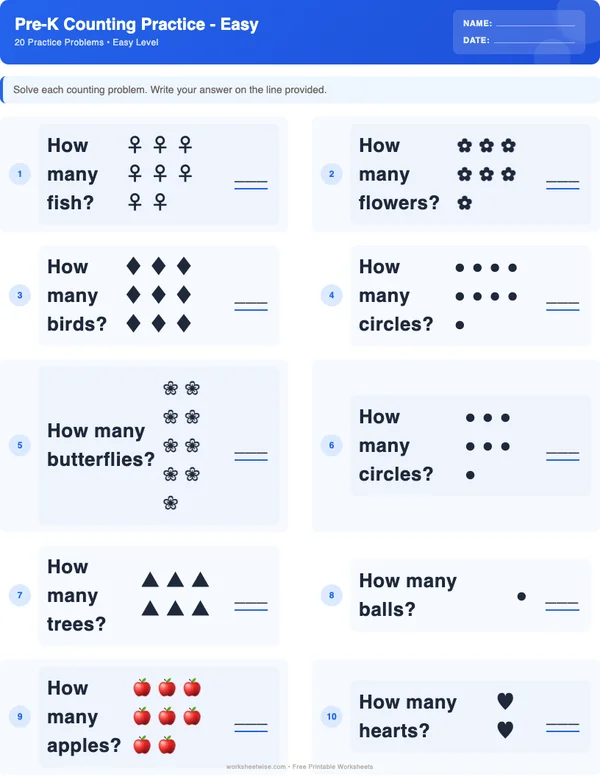
For young children, reduce desk demand. For ages three and four, prioritize brief adult-led oral, matching, manipulative, and movement work over desk work. The catalogue’s Pre-K counting sheet contains 20 problems, but that does not mean a three- or four-year-old should complete all 20 in one sitting. Use the Pre-K Counting guide and free sheet as a source of pictures or prompts after real objects have been counted together.
The IES guide on teaching math to young children recommends building young children’s mathematical understanding through developmental progressions, monitoring what they know, and using everyday activities and representations. For worksheet preparation, that supports moving from objects to pictures to written symbols rather than beginning with a dense abstract page.
Launch in three minutes without reteaching the page
A long launch turns independent practice into another lesson. Keep it short and consistent.
Name the target and the boundary
Say what is being practiced and what help is available:
“You are practicing question marks and periods. Read each sentence, decide whether it asks or tells, and add the punctuation. You may reread the worked example. Try the first four before asking for help.”
Avoid “This is easy” or “You know this.” Those comments provide no actionable information and can make ordinary difficulty feel like failure.
Ask for a direction demonstration
Do not ask only, “Do you understand?” Have the learner show what the direction means without solving the target item:
“Point to where you will write.”
“Tell me what you decide before you choose a punctuation mark.”
“Show me how you will line up the decimal points.”
If the learner cannot explain the action, clarify the direction. If the learner understands the direction but cannot perform the skill, return to instruction rather than feeding hints one item at a time.
Use a worked example that exposes the decision
Consider the first-grade sentence:
where is my hat
A correct revision is:
Where is my hat?
This is checked because the first word begins with a capital letter and the sentence asks a question, so it ends with a question mark. It belongs in independent practice only after the learner has been taught to distinguish asking sentences from telling sentences. A model that merely displays the corrected sentence is weaker than one that names both decisions.
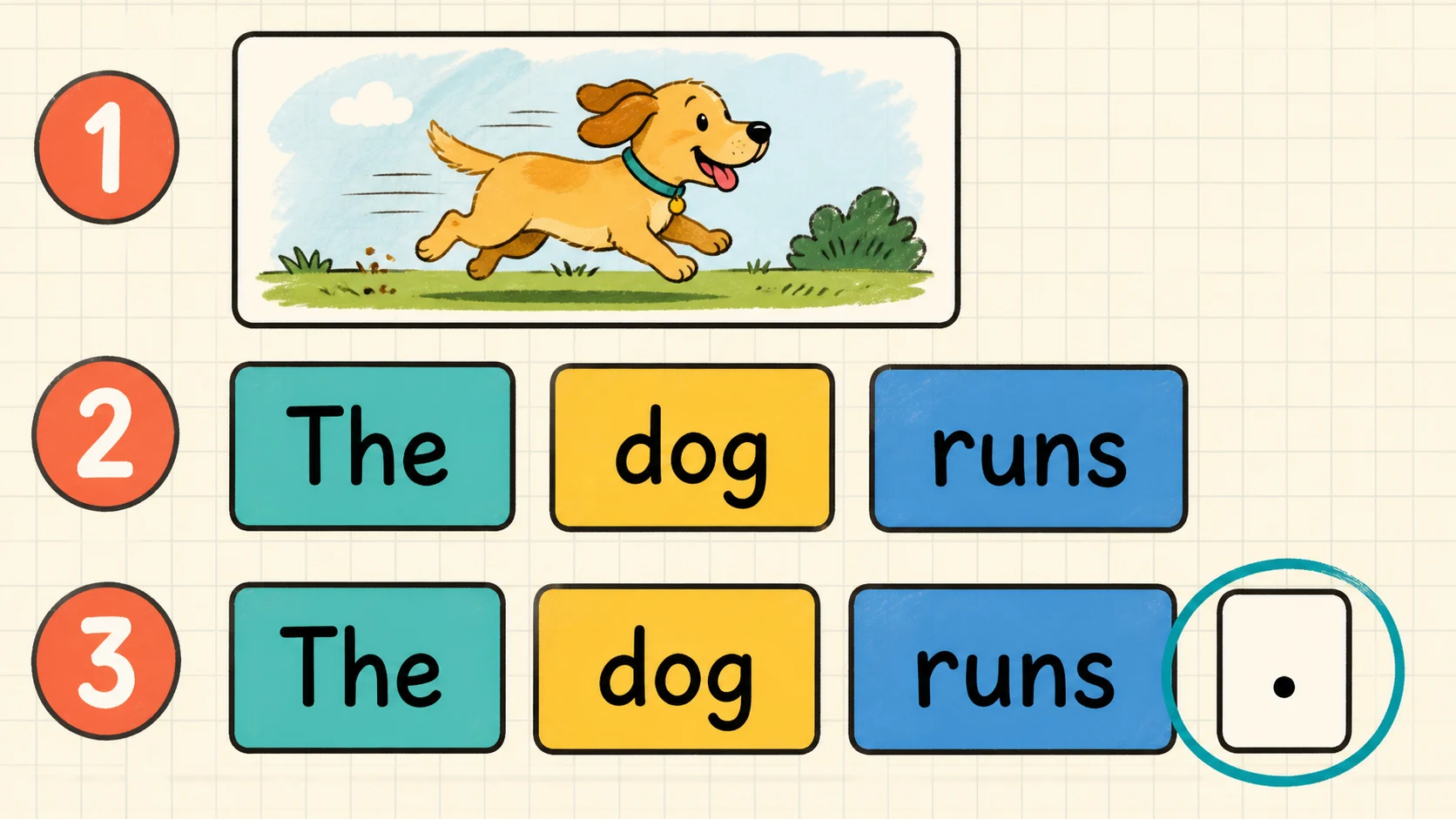
The model should remind a first grader of the two taught checks—sentence beginning and sentence purpose—without solving the remaining items.
This approach is consistent with the IES guide on teaching elementary students to be effective writers, which emphasizes explicit strategy instruction, modeling, and supported practice before students apply writing processes more independently.
Observe independence without rescuing it
Observation should answer two separate questions: Can the learner do the target skill, and can the learner manage the page?
Watch the first item, one middle item, and the transition after a mistake. Record actions rather than impressions:
- began within 30 seconds;
- reread the worked example;
- counted each pictured object once;
- aligned decimal points before subtracting;
- skipped an unfamiliar word and continued;
- asked what to do on every row;
- checked the key before attempting an item;
- corrected an answer after recomputing.
“Careless” is not an observation. “Copied 35.2 as 3.52 on items 2 and 5” is.
Use a neutral help ladder:
- “Read the direction aloud.”
- “Show me the example.”
- “What is the first decision?”
- “Which familiar tool could help?”
- Stop and reteach if those prompts are insufficient.
Record the highest level of help required. An answer completed after “borrow from the tens column” is not independent evidence of regrouping, even if it is correct.
Checked subtraction example
For a fifth-grade subtraction item:
  4,302
- 1,786
-------
The checked answer is 2,516. Regrouping can be verified as follows: 12 − 6 = 6 ones; after regrouping through the zero, 9 − 8 = 1 ten; 12 − 7 = 5 hundreds; and 3 − 1 = 2 thousands. Addition confirms the result: 2,516 + 1,786 = 4,302.
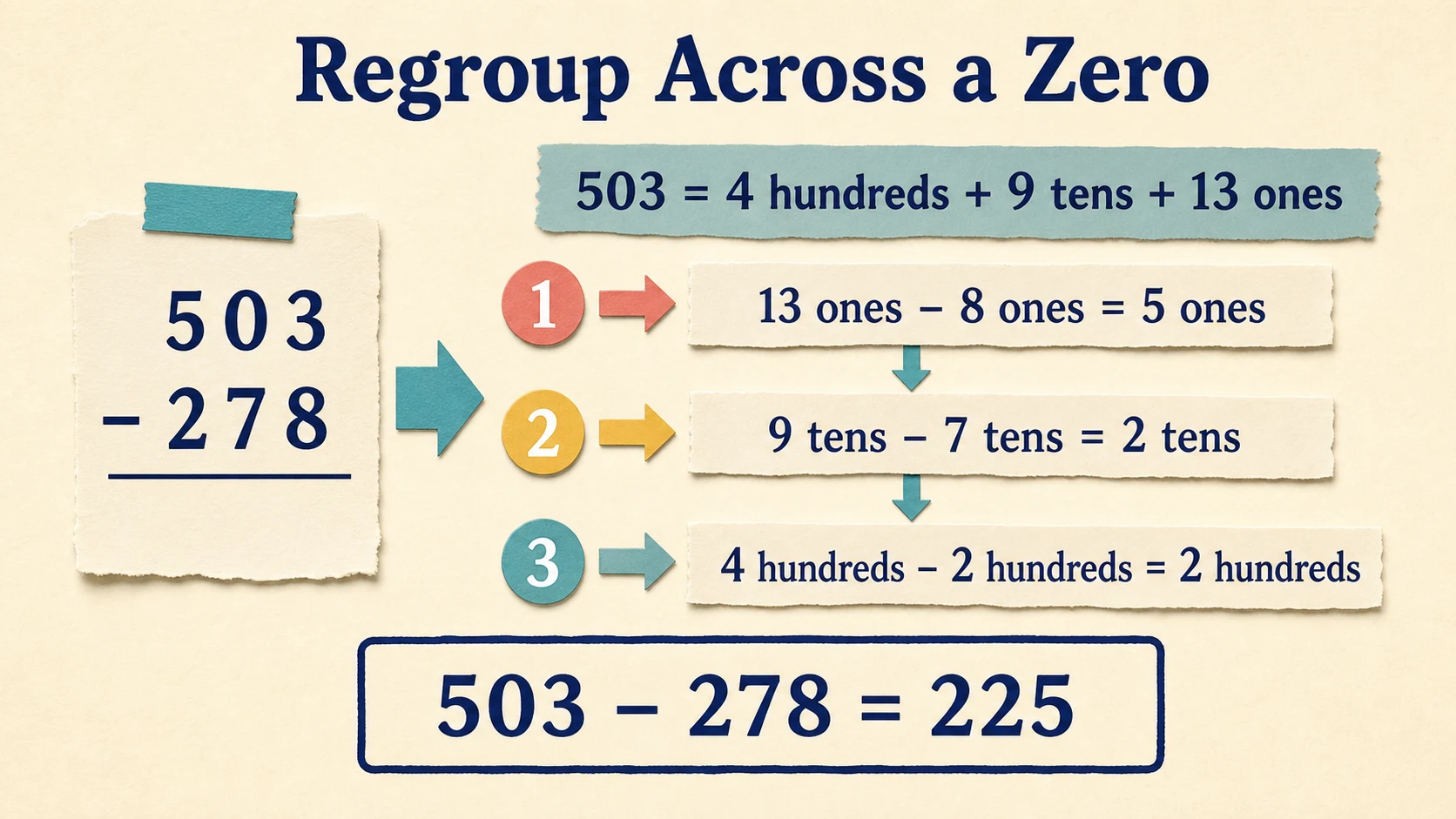
This example belongs after place-value regrouping has been modeled; it tests whether the learner can execute and record the trades without an adult naming each one.
If a learner writes 3,484 by subtracting each smaller digit from each larger digit, the work suggests a positional regrouping error. That observation warrants a return to base-ten representations or place-value language. It does not support a diagnosis.
Use examples across subjects without hiding extra demands
A complete independent-practice routine transfers across subjects, but the evidence changes with the target.
Third-grade division: connect a picture, equation, and check
Suppose 24 counters are separated into 6 equal groups. Each group contains 4, so:
24 ÷ 6 = 4
The inverse check is:
6 × 4 = 24
This example is mathematically checked and belongs here because it asks the learner to coordinate an equal-groups representation with division notation after that relationship has been taught. If the learner makes six groups but distributes only 18 counters, the issue is not necessarily division-fact recall; it may be loss of one-to-one tracking during distribution.
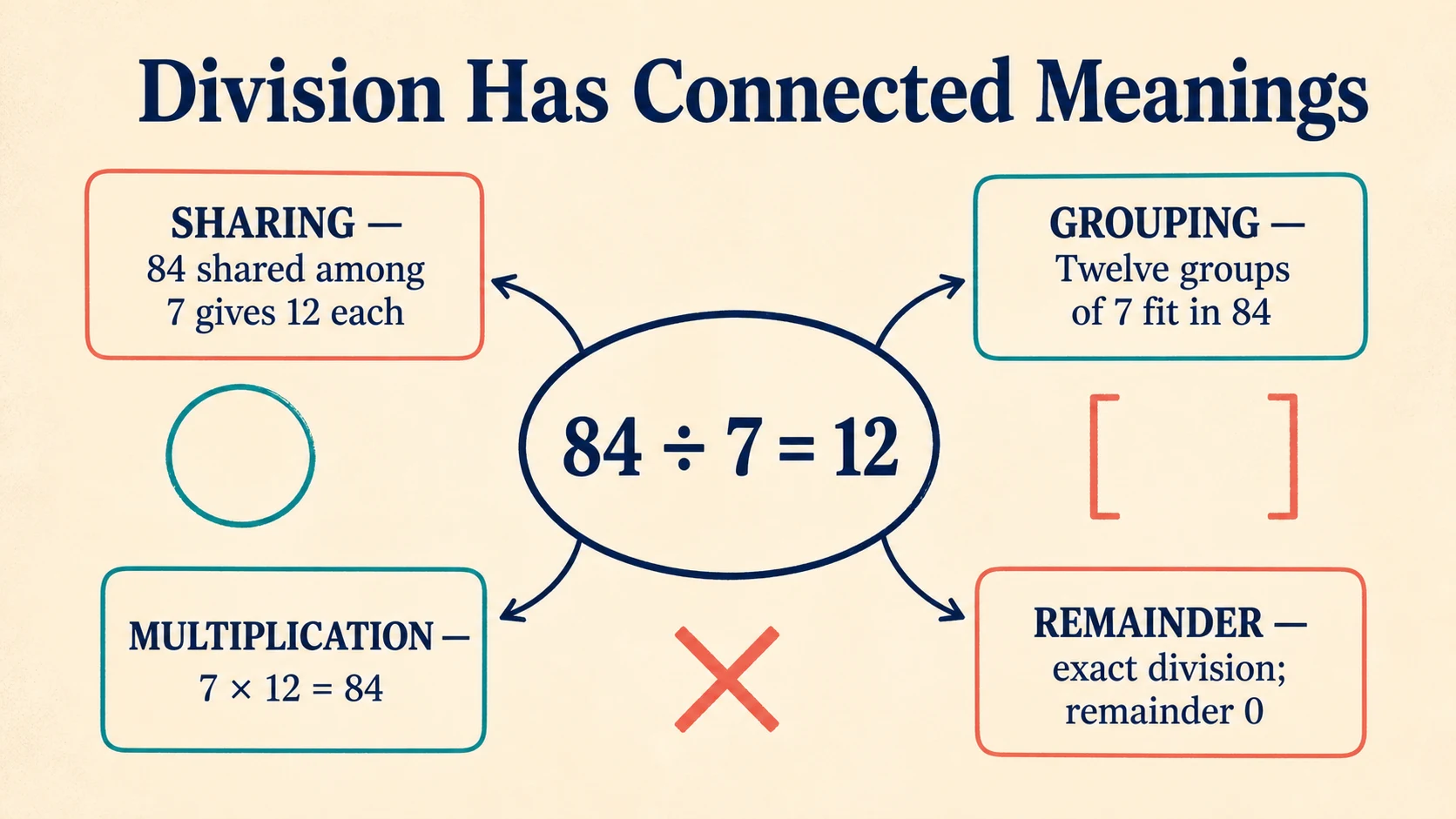
The map clarifies which part is being practiced: interpreting equal groups, writing a division equation, finding the quotient, or checking with multiplication.
The IES guide on assisting students struggling with mathematics supports systematic instruction, clear mathematical language, representations, and deliberate work with word problems and concepts. Use those principles to decide what must be taught before a division worksheet becomes independent work.
Phonics: separate decoding from picture guessing
For a short-a CVC sequence, use cat, map, sat. Each word contains three phonemes and follows the consonant-vowel-consonant form:
cat: /k/ /ă/ /t/
map: /m/ /ă/ /p/
sat: /s/ /ă/ /t/
The learner can push one token for each sound, sweep under the three tokens, and say the word. This belongs after the sound correspondences and continuous blending routine have been taught. If the sheet shows a picture of a cat, a correct response might come from recognizing the picture rather than decoding the letters. Include at least one item without a picture when decoding is the target.
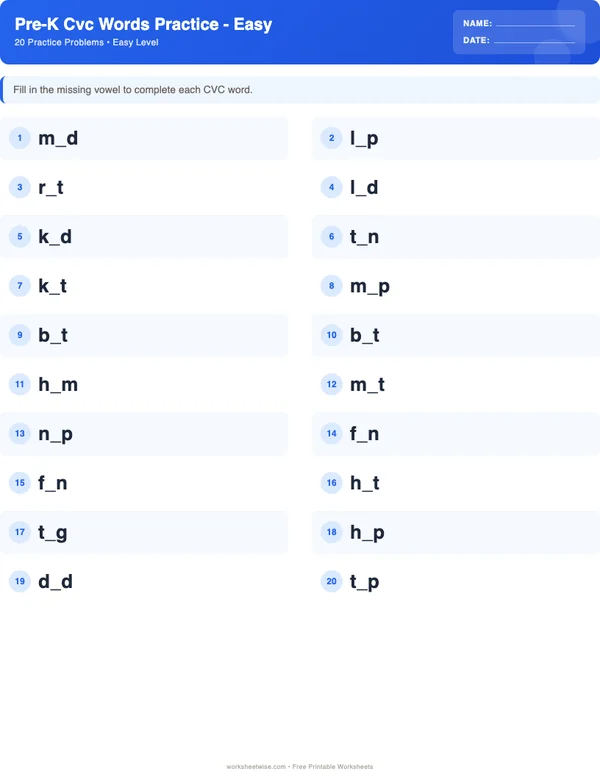
The Pre-K CVC Words guide and free sheet can supply practice material, but use it briefly and with adult-led oral blending for ages three and four. The IES foundational reading skills guide recommends explicit work connecting speech sounds to letters, teaching decoding and word analysis, and ensuring practice in connected text. A word sheet can rehearse one part of that sequence; it cannot replace oral language, teacher modeling, or reading meaningful text.
Sixth-grade decimals: keep place value visible
For:
7.35 − 2.8
Rewrite 2.8 as 2.80, align decimal points, and subtract:
  7.35
- 2.80
------
  4.55
The answer is 4.55, checked by addition: 4.55 + 2.80 = 7.35. It also passes an estimation check because 7.35 − 2.8 is close to 7.4 − 2.8 = 4.6.
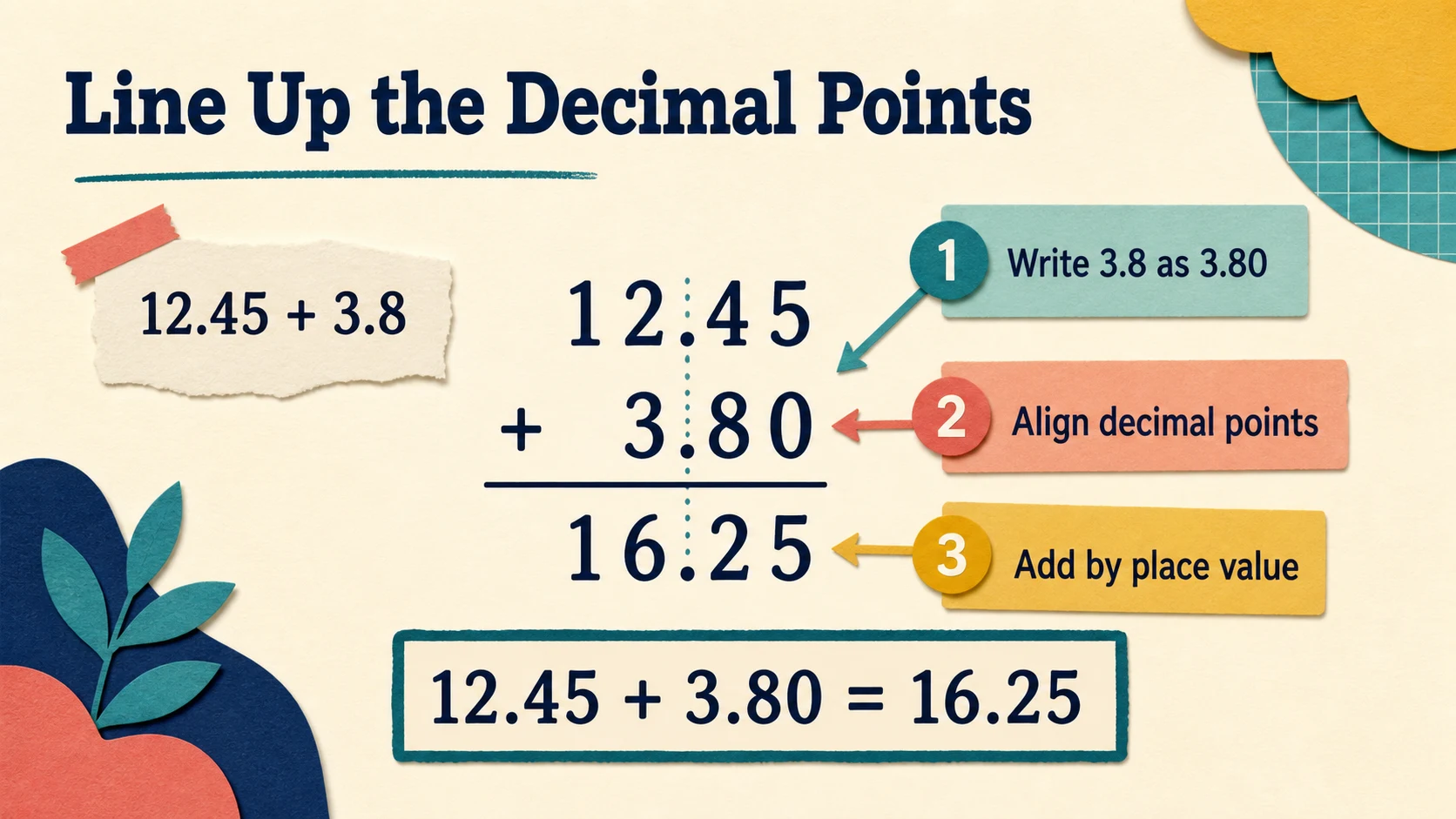
This example belongs in independent work only when the learner already understands that adding a trailing zero does not change the decimal’s value.
An answer of 7.07 may indicate subtraction by written position without aligning place values. A correct answer reached only after the adult says “add a zero” shows that the procedure still needs a prompt.
Sixth-grade geometry: identify what the diagram supplies
A triangle with base 8 units and perpendicular height 5 units has area:
A = ½ × 8 × 5 = 20 square units
This calculation is checked: half of 8 is 4, and 4 × 5 is 20. The example belongs because it requires the learner to select the perpendicular height, distinguish area from perimeter, substitute values, and include square units.
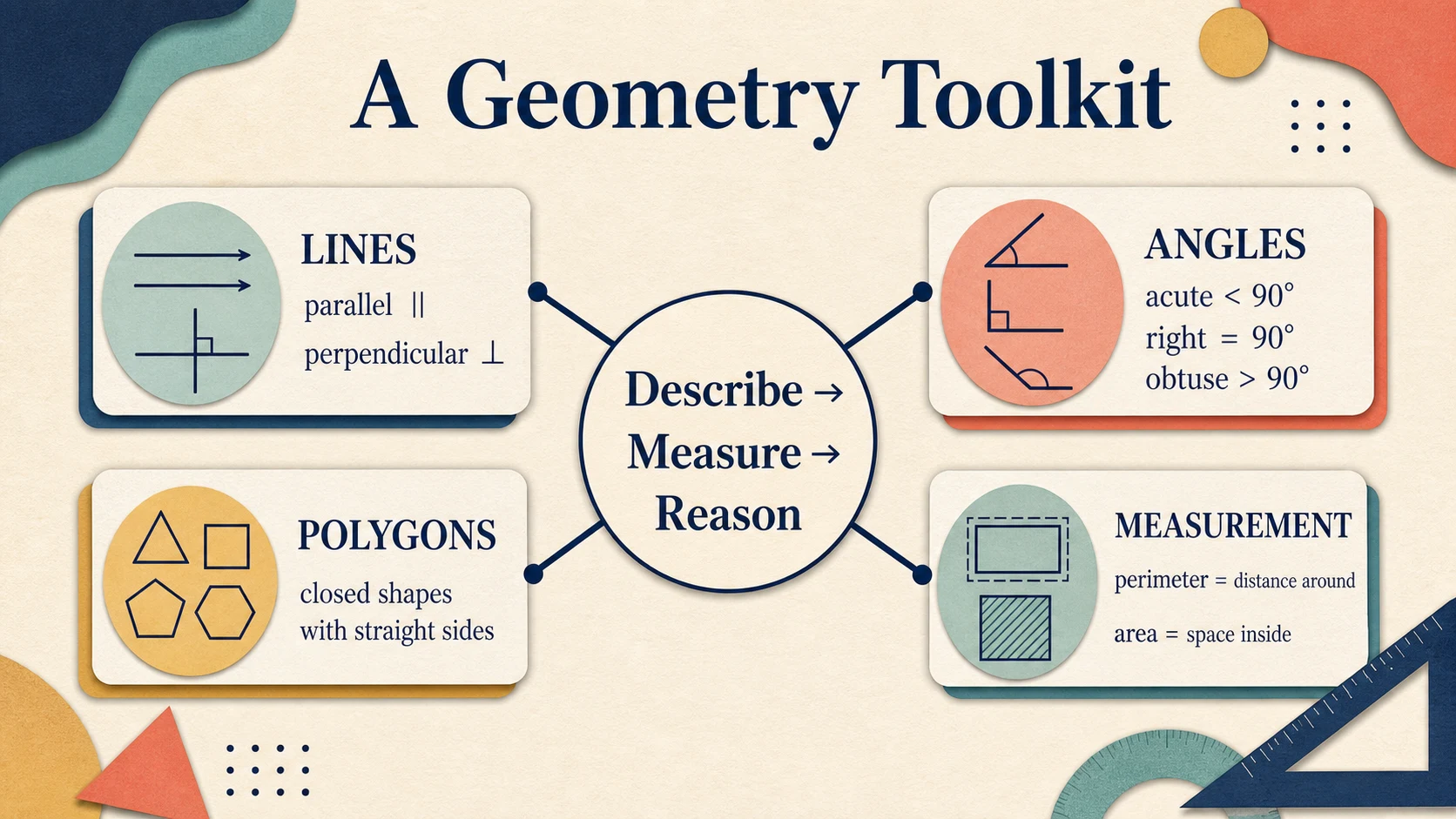
The geometry map helps an adult decide whether a page practices classification, measurement, area, coordinate reasoning, or several demands at once.
A learner who writes 13 may have added the two labeled dimensions. A learner who writes 40 may have used base × height but omitted the one-half. Those are different errors and call for different feedback.
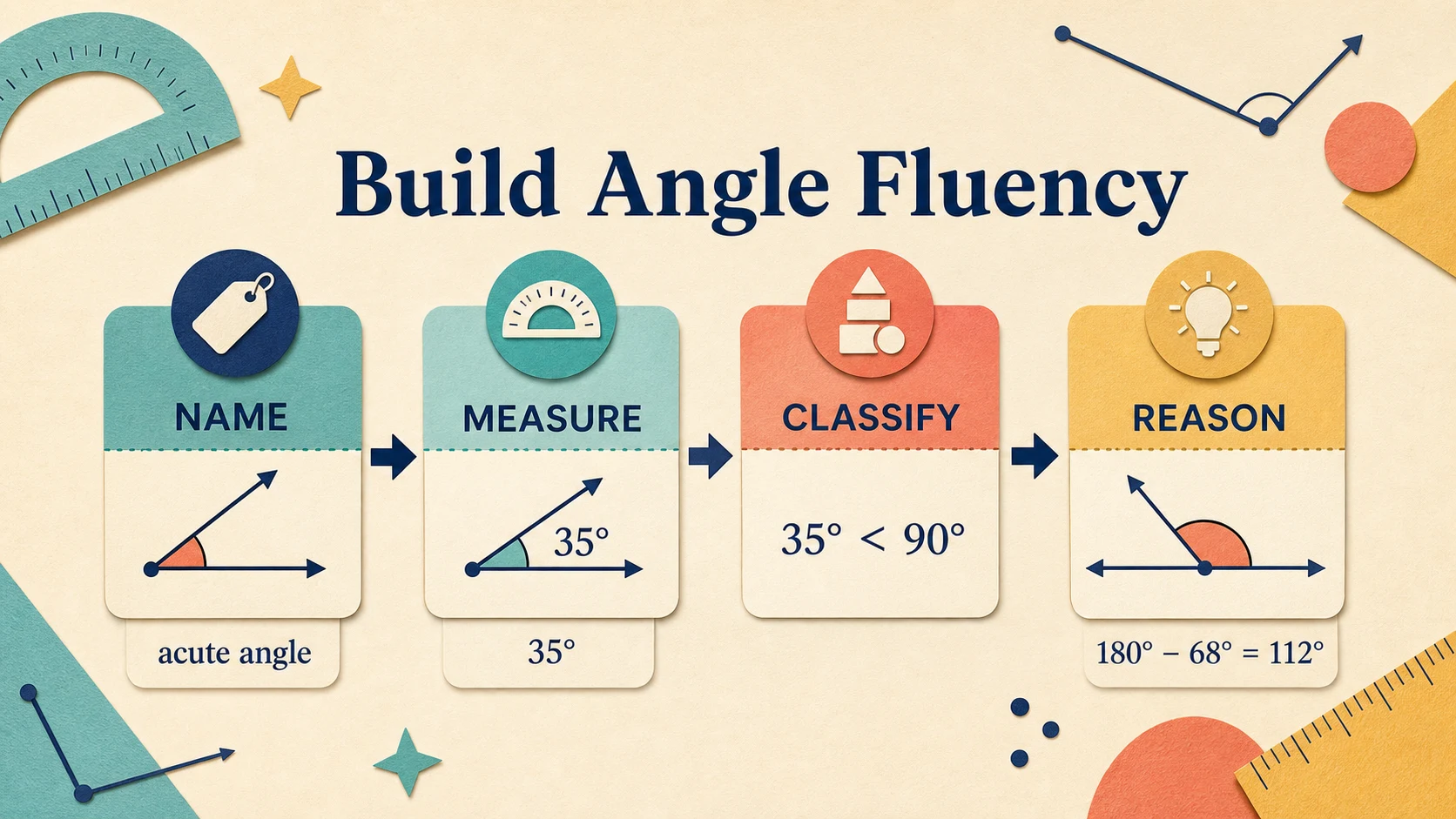
Move to the independent stage only after the learner can identify the base and perpendicular height in more than one orientation.
Time the answer key to protect honest effort
The answer key has three distinct jobs: adult verification, learner self-correction, and later review. Decide which job it will perform before the page begins.
For a first independent attempt, keep the key out of sight until the learner completes the agreed set and marks one uncertain answer. Then offer the key with a checking routine:
- Compare one item at a time.
- Mark correct answers with a small check.
- Circle—not erase—an incorrect answer.
- Rework it in a different color.
- Write or say what changed.
For cumulative practice, the key can be available face down at a checking station. For fluency practice, check after a short batch rather than after every item. Immediate checking can prevent repeated errors, but item-by-item access can also turn practice into answer copying.
Do not treat every difference from the key as incorrect. A writing response may have several acceptable sentences. A math problem may allow equivalent fractions, alternate diagrams, or another valid method. Conversely, a matching final answer does not prove sound reasoning if the work contains a compensating error.
When the goal is information for the adult rather than practice for the learner, use formative assessment worksheets with answer keys and define in advance what evidence will change tomorrow’s instruction.
Interpret errors as decisions, not scores alone
A total such as 16/20 conceals the pattern that matters. Sort errors into useful categories.
Direction and format errors
The learner circles instead of writes, answers only the first item in each row, or misses the reverse side. Check layout, reading demand, and launch clarity before reteaching the academic skill.
Concept or representation errors
The learner counts the same object twice, treats unequal groups as equal, confuses perimeter with area, or reads a digraph as two separate sounds. Return to objects, diagrams, oral language, or explicit modeling.
Procedure errors
The learner knows what operation is needed but misaligns place values, skips a regrouping step, or applies the area formula incompletely. Compare two worked examples, then assign a short fresh set.
Fact, transcription, and monitoring errors
The learner writes 6 × 4 = 26, copies 4,302 as 4,032, or does not notice an unreasonable decimal answer. Teach a specific check: inverse operation, rereading digits, estimation, or reading the completed sentence aloud.
Record only what supports a next decision. A compact entry might read:
Aug. 30 — Decimal subtraction, 6 items. Four correct independently. Two place-value alignment errors when the subtrahend had one decimal place. Next: model 3.6 as 3.60 with a place-value chart, then give three new items.
That record is more actionable than “Decimals: 67%.” One worksheet is a sample of performance under particular conditions; it should not be used to diagnose a learner or promise an outcome.
Adapt the page while preserving the target skill
An adaptation is valid when it removes an irrelevant barrier without supplying the thinking being measured.
If the target is subtraction, read a word problem aloud when decoding is not being assessed. If the target is sentence punctuation, allow oral reading before the learner writes the mark. If handwriting is not the target, permit pointing, magnetic letters, a keyboard, or an adult scribe who records exactly what the learner says. Enlarge crowded print, cover unused rows, provide lined paper, or cut a long assignment into batches.
Keep supports stable and visible. A learner who routinely uses a number line may use it independently; an adult silently pointing to the correct number is assistance. A word bank preserves sentence construction only if choosing among the words is not the skill being tested.
Do not reduce difficulty by changing the central operation. Replacing decimal subtraction with whole-number subtraction does not adapt the same task; it assigns a prerequisite. That may be the correct instructional decision, but record it accurately.
For ages three and four, convert many printable tasks into oral or manipulative ones: match two picture cards, move one counter per spoken number, step on a floor numeral, or build a CVC word with letters while an adult guides the sounds. Keep any pencil portion brief.
Reuse evidence, not just paper
A completed sheet can generate several targeted follow-ups.
Use two correct items for oral explanation: “How did you know?” Use one corrected error for retrieval the next day. Change the numbers while preserving the structure. Ask the learner to create one parallel item and solve it. Cut selected items into task cards. Place a clean copy in a dry-erase sleeve only when repeated format practice is useful.
Avoid repeating the identical page until answers are memorized. Change surface features while holding the target constant:
24 ÷ 6becomes28 ÷ 7;7.35 − 2.8becomes6.42 − 1.7;- “Where is my hat?” becomes “Can we go now?”;
- a triangle with base 8 and height 5 becomes one with base 6 and height 7.
The new checked answers are 4, 4.72, a capital letter plus question mark, and 21 square units, respectively. These variants reveal whether the learner can transfer the method.
The free deterministic worksheet generators are a practical source for fresh items when you want the same structure with changed content. Check the generated page and key before use, just as you would any other resource.
Know when a worksheet is the wrong tool
Do not assign independent paper practice when the skill has not been taught, the directions require continuous translation, or the learner is guessing across the first few items. Stop if the page is producing repeated uncorrected errors, physical distress, escalating frustration, or copying from the key.
Choose conversation, demonstration, manipulatives, movement, shared reading, hands-on measurement, or collaborative problem solving when the target depends on interaction. A worksheet cannot show whether a child can orally blend sounds if the pictures reveal every word. It cannot replace handling equal groups, comparing real shapes, discussing a text, rehearsing a sentence, or receiving immediate corrective modeling.
A worksheet is also the wrong tool when the real purpose is exploration. The first encounter with why regrouping works, how division represents equal sharing, or why a triangle’s area is half a related parallelogram needs teaching and representation. Paper practice comes after that meaning has been built.
Tomorrow, choose one target and generate no more than six closely matched items with the free deterministic worksheet generators. Complete the first item yourself, set the permitted support and answer-key time, then record the learner’s first observable action and one next teaching decision.
Put it into practice
Use the guide with a real printable
Move from explanation to a short, observable practice task. Check the first item together, then adjust the next session from the learner's actual work.
Open the first free worksheetExplore a neighboring collection
Choose by a different teaching need
After-School Worksheets With Answer Keys Formative Assessment Worksheets With Answer Keys Classroom Worksheets With Answer Keys Homeschool Worksheets With Answer Keys Homework Worksheets With Answer Keys Intervention Worksheets With Answer Keys Morning Work Worksheets With Answer Keys School Readiness Worksheets With Answer Keys