Curated collectionAnswer keys includedPrint-ready PDFs
6th Grade Homeschool Worksheets
Turn a printable library into a flexible weekly rhythm with explicit teaching, short independent practice, answer-key feedback and mixed-age planning.
Start with a real resource
Browse this worksheet collection
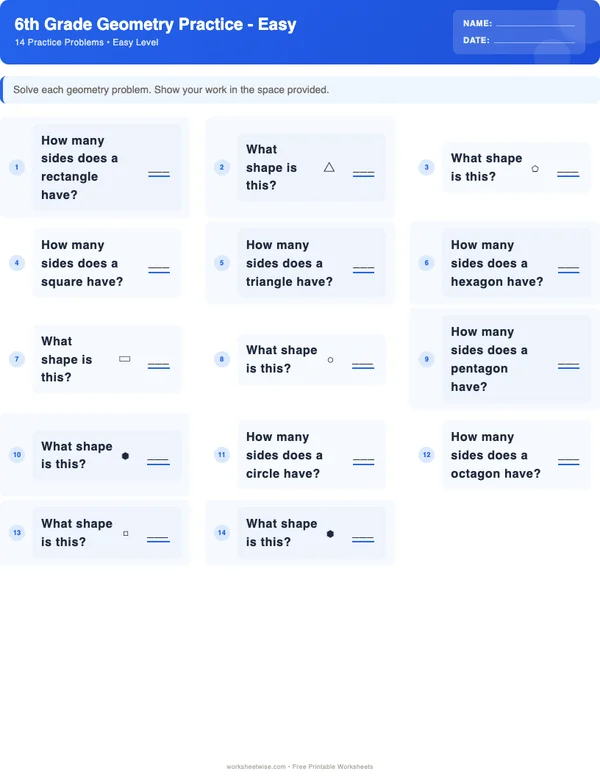
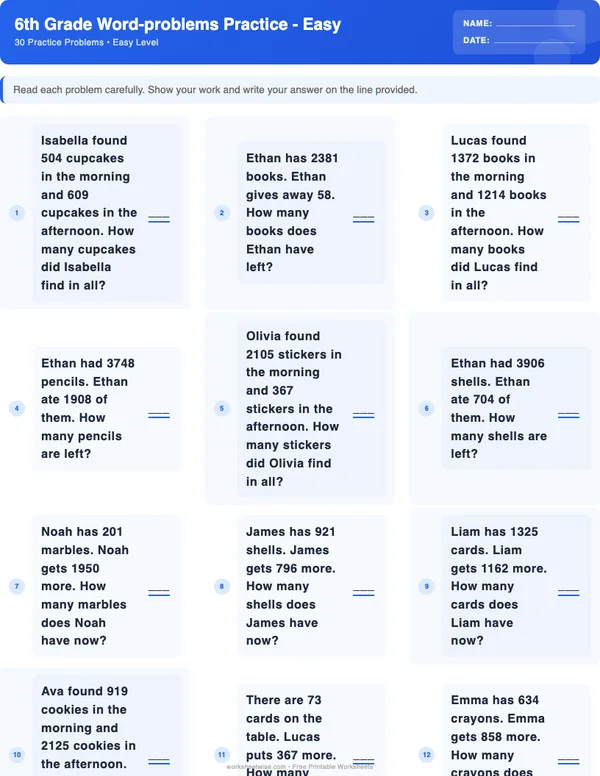
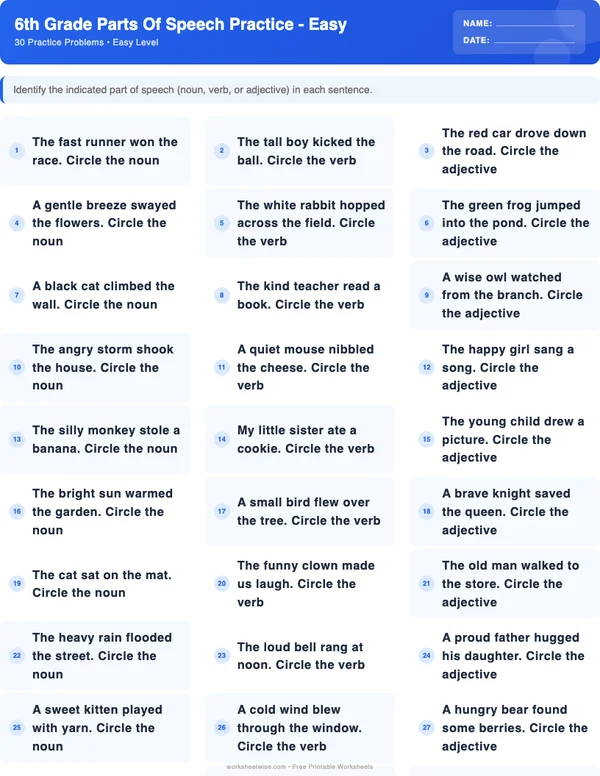
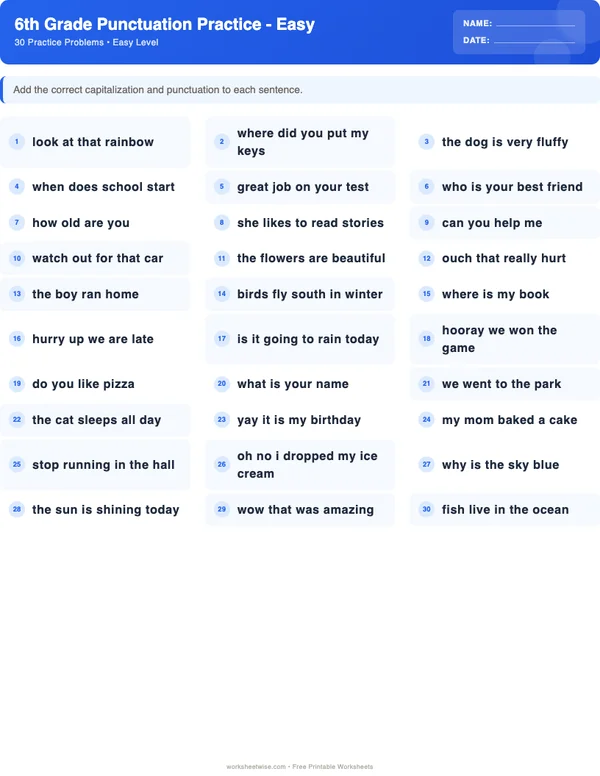
9 relevant free entry points are available. Each one includes a printable learner PDF and separate answer key.
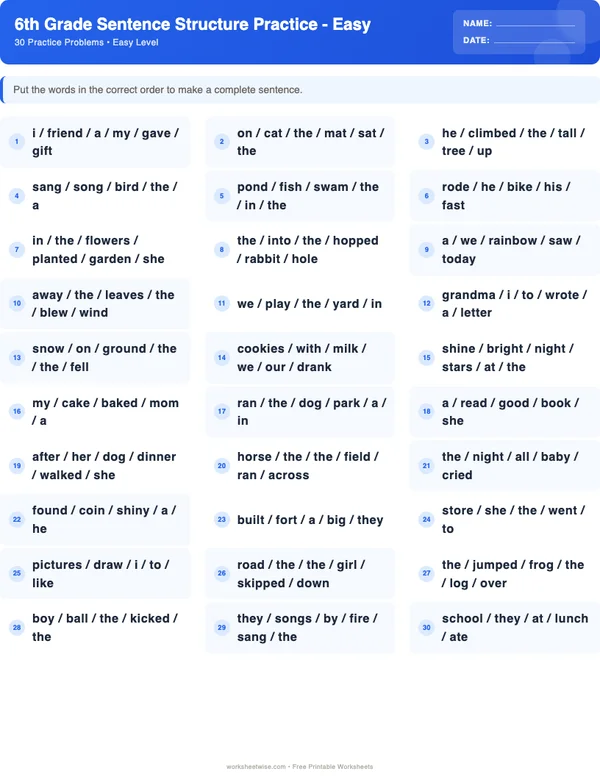
A useful practice loop
Print less. Observe more.
- Choose one skill and model the first item aloud.
- Use a short set and notice the learner’s strategy.
- Change the next task from the work you can see.
Need more than the free sheet?
Plus includes all 162 matching catalogue variations where available, plus saved deterministic generators and the worksheet designer.
See Plus membershipComplete guide
How to teach and practise 6th grade homeschool worksheets
3,449 words Updated 6 instructional visuals
Build a 6th grade week around teach, practice, check, and revisit
A useful 6th grade homeschool worksheet routine does not mean handing over a stack of printables on Monday. Use the library to create a repeatable weekly cycle:
- Teach or model one idea explicitly.
- Assign a short section for independent practice.
- Check it with the answer key while the learner’s reasoning is still fresh.
- Interpret errors before choosing the next sheet.
- Revisit the skill later in the week alongside one previously learned skill.
For most sessions, plan about 25–40 minutes for math and 20–30 minutes for grammar or writing. These are planning suggestions, not catalogue requirements. A learner who is explaining a difficult fraction comparison may need longer; one who demonstrates accurate decimal computation quickly may need fewer problems. Completion of every item is less important than obtaining enough evidence to make the next instructional decision.
The live 6th grade collection contains 162 worksheet variants across two subjects and nine topics, with nine free entry points. Representative topics include multiplication, division, fractions, decimals, geometry, word problems, parts of speech, punctuation, and sentence structure. Each representative free sheet is labeled “easy,” but that label should describe the task, not the learner. In practice, inspect observable features: whether directions are explicit, whether examples or visual supports appear, how many operations each item requires, how much reading is involved, and whether the response is selected, computed, corrected, or composed.
Grade labels likewise describe an intended practice level. Local curriculum sequences differ, so use “6th Grade” as a catalogue filter rather than proof that a particular worksheet is the right placement or standards match.
Select one teaching target and one maintenance target
A workable week has two different kinds of work:
- The teaching target is the skill receiving explanation, modeling, and feedback now.
- The maintenance target is a previously taught skill practiced briefly so it remains available.
Do not open three new topics simply because all three appear under the same grade. If fraction division is new, for example, it should not compete for instructional attention with a new long-division procedure and a new semicolon rule. A stronger plan is to teach fractions while maintaining multiplication and revisiting a familiar sentence-editing routine.
Use a quick entry check
Before assigning a full sheet, choose three representative items. Ask the learner to complete them without coaching and to explain at least one answer.
Use the results this way:
- Three correct with clear explanations: move to a less-supported variant or use the skill in word problems.
- Two correct: teach the point exposed by the error, then assign a short practice set.
- Zero or one correct: return to a model, prerequisite, or simpler task feature before expecting independent work.
- Correct answers with unclear reasoning: ask for a model, estimate, or verbal explanation before increasing difficulty.
- Incorrect answers caused by copied numbers or skipped directions: reduce the amount shown at once and check work habits separately from mathematical understanding.
This check is a local teaching decision, not a diagnostic instrument. A worksheet cannot identify a disability, establish a grade placement, or explain every cause of an error.
Read “easy” through the work on the page
All nine representative free sheets are catalogued as easy. That may make them useful entry points, but the label does not mean every 6th grader will find them effortless. A 30-item decimal sheet can still create a heavy attention load. A fractions sheet with 22 items can still demand substantial reasoning if unlike denominators or multiple operations appear.
Before printing, examine five features:
- Representation: Does the page include an array, number line, fraction model, place-value cue, or sentence frame?
- Operation count: Is each item one step or several?
- Language demand: Must the learner interpret a situation or simply compute?
- Response demand: Is the learner identifying, correcting, calculating, explaining, or writing?
- Volume: Can enough evidence be collected from 6–10 items rather than all 22 or 30?
Those features make difficulty observable and adjustable.
Use explicit teaching before independent math
Independent work should begin after the learner has seen what to notice and how to start. A compact teaching sequence is enough:
- State the target in one sentence.
- Solve one example while explaining each decision.
- Solve a second example together.
- Ask the learner to solve one while speaking aloud.
- Release a short set for quiet practice.
The IES practice guide for students who struggle with mathematics recommends systematic instruction that includes clear mathematical language, visual representations, worked examples, and deliberate review. That guidance is external research-based advice; it is not an evaluation of WorksheetWise.
Checked example: compare fractions by value, not denominator size
Suppose the learner must compare and .
First place both fractions over a common denominator:
Because , it follows that:
Check the result against a benchmark: and , so the comparison is consistent.
This example belongs in a 6th grade routine because the catalogue’s fractions sequence includes comparison and equivalence as well as operations. It also exposes a consequential misconception: choosing merely because 5 and 8 look larger. Model the quantities with fraction bars or a number line before relying only on the common-denominator procedure.
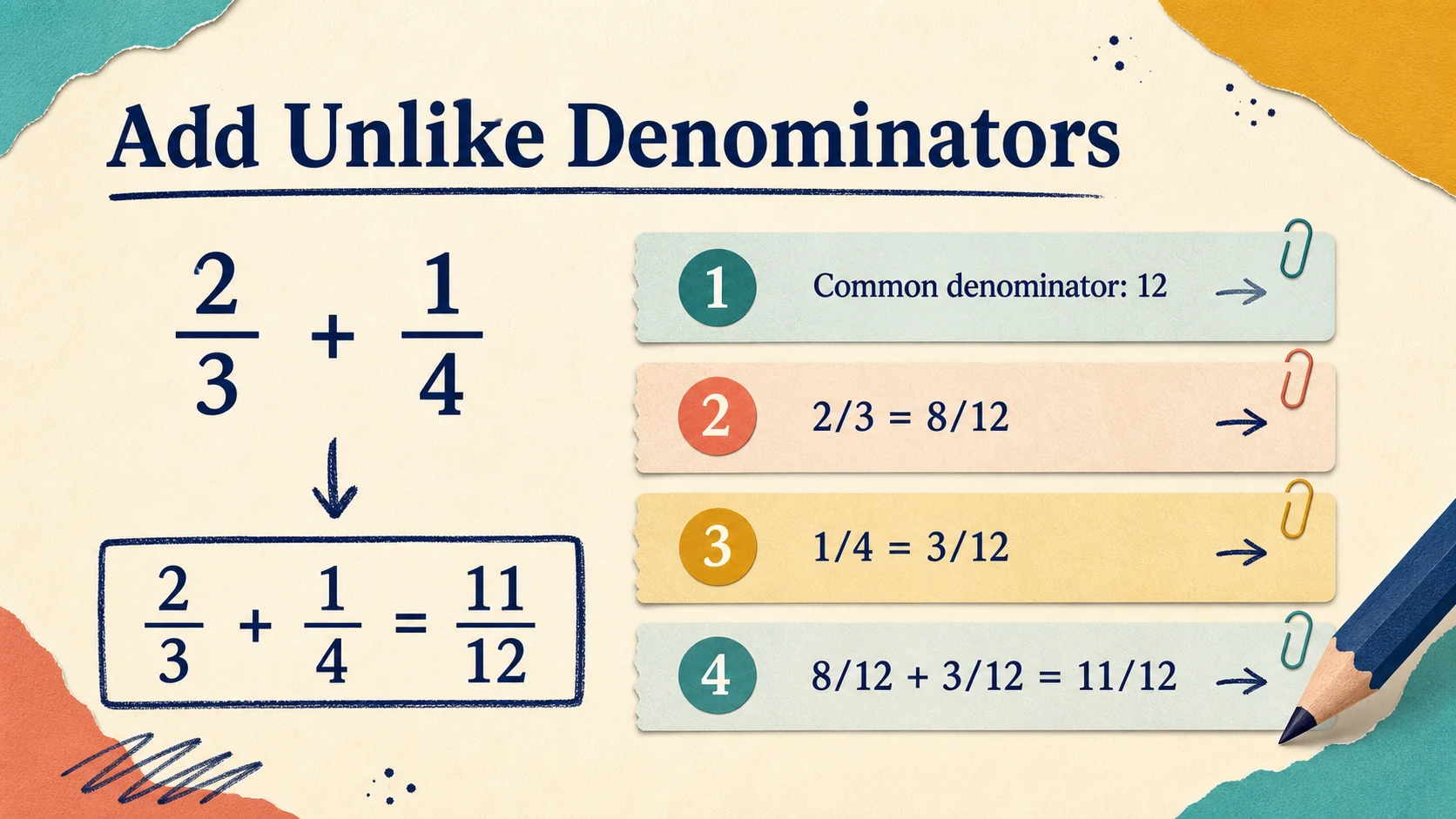
Use the concrete model to establish that the fractions are numbers with positions and sizes; use the symbolic answer only after the visual comparison is understood.
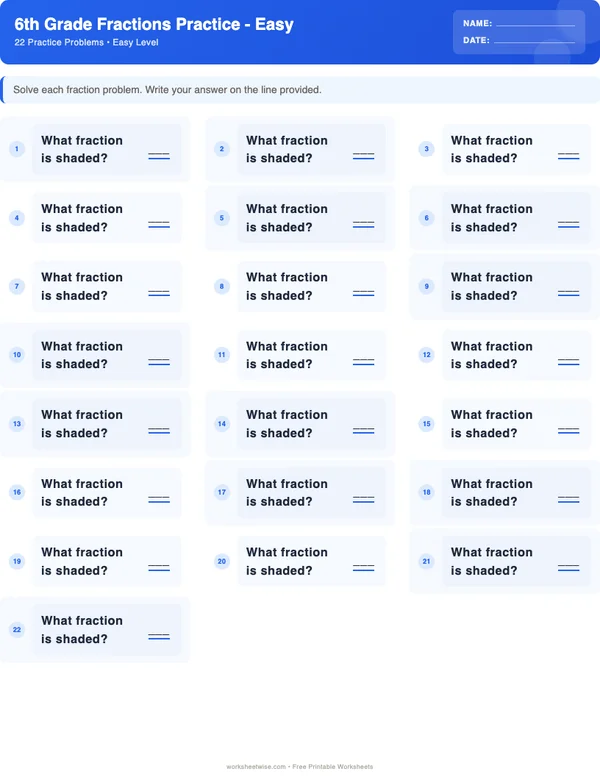
On the first day, use the 6th Grade Fractions guide and free sheet for a short entry check. If the learner can compare fractions but cannot explain equivalence, pause before assigning fraction operations. If equivalence is secure, assign six to ten relevant problems, not automatically all 22.
Checked example: place value controls decimal comparison
Compare and . Rewrite as :
The difference is:
This belongs here because the catalogue’s decimal materials include place value, comparison, rounding, conversion, and computation. It checks whether the learner compares values by place rather than treating a longer decimal as a larger number.
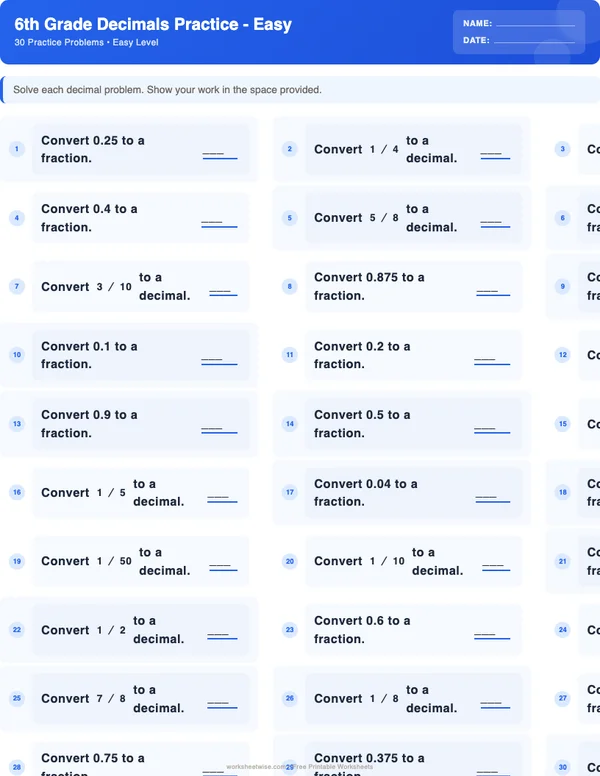
If the learner says is greater because 36 is greater than 4, shade 40 hundredths and 36 hundredths on equal grids. Preserve the target—decimal comparison—while changing the representation. Do not replace the task with unrelated whole-number practice.
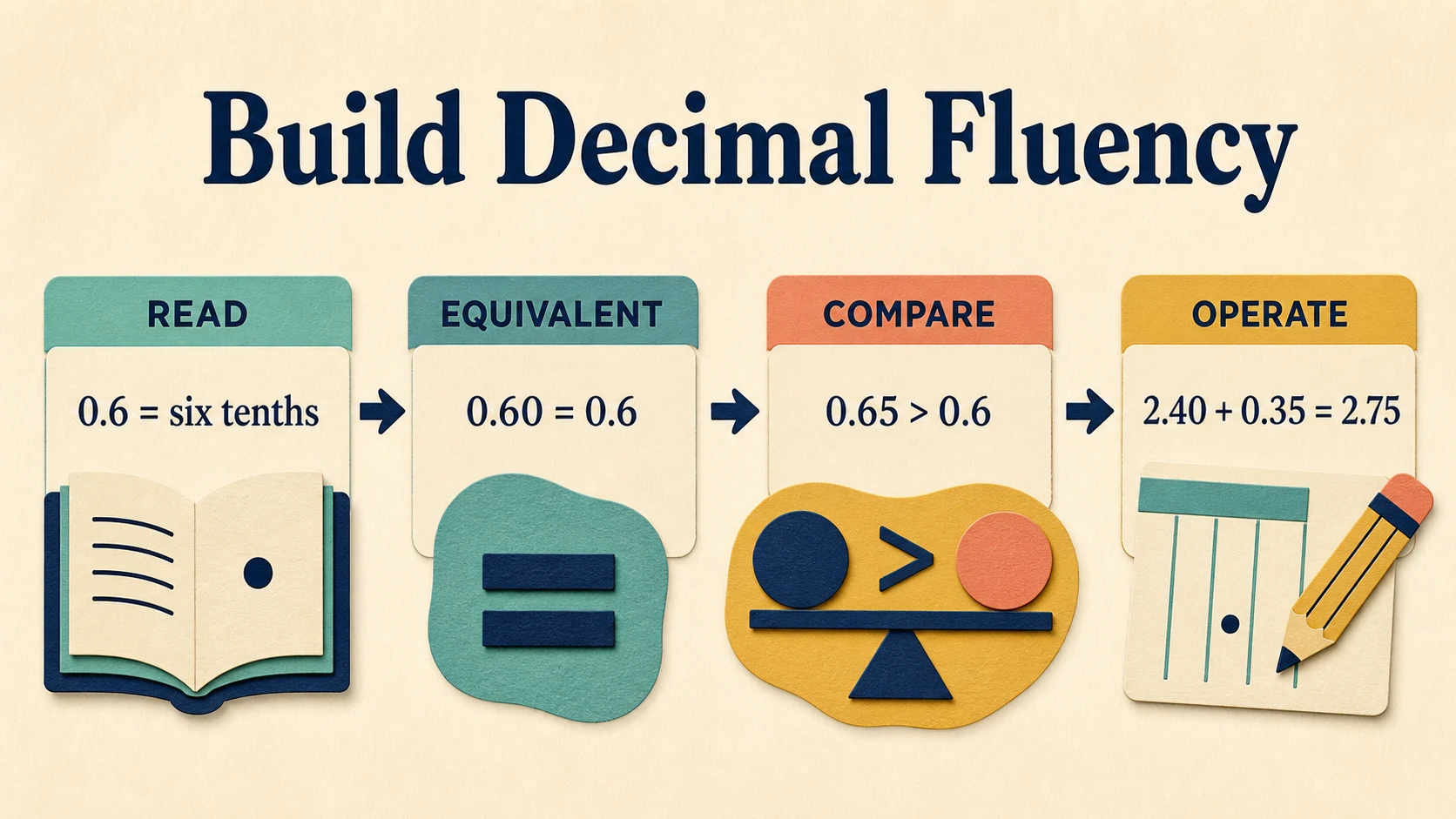
Remove decimal supports in stages: equal grids first, aligned place-value notation next, and unsupported comparison only after the learner consistently attends to tenths and hundredths.
The Common Core mathematics standards can help adults inspect broad grade-level expectations, but they should not be treated as proof that a particular sheet matches a local sequence. Compare the actual task with the learner’s curriculum and current instruction.
Make answer-key feedback an active part of the lesson
An answer key is most useful when it starts a conversation rather than ends one. Check a short batch—often four to eight items—before the learner completes a long page. Immediate review prevents the same misunderstanding from being repeated 20 times.
Use this feedback sequence:
- Mark the item without rewriting it for the learner.
- Ask, “What was the first decision you made?”
- Identify the first point where the reasoning changed direction.
- Correct one example with a model or explanation.
- Give a parallel item to test whether the correction transfers.
- Record the error pattern in a short planning note.
Avoid vague feedback such as “be careful.” Name the action: “Align the decimal points,” “Find equivalent denominators before adding,” or “Decide what the remainder means in this situation.”
Interpret multiplication and division errors precisely
Consider:
A partial-products check gives:
Therefore, .
This example belongs here because the catalogue describes a progression from arrays and properties to partial products and multi-digit computation. If a learner writes 242, inspect whether was calculated incorrectly or whether the tens and ones products were combined incorrectly. Those errors require different responses.
Now consider 25 students traveling in vans that hold 6 students each:
Four vans hold only 24 students, so the practical answer is 5 vans. This checked example belongs here because the division collection explicitly includes interpreting remainders in context. If the learner writes “4 remainder 1 vans,” the division computation is correct but the contextual interpretation is unfinished.
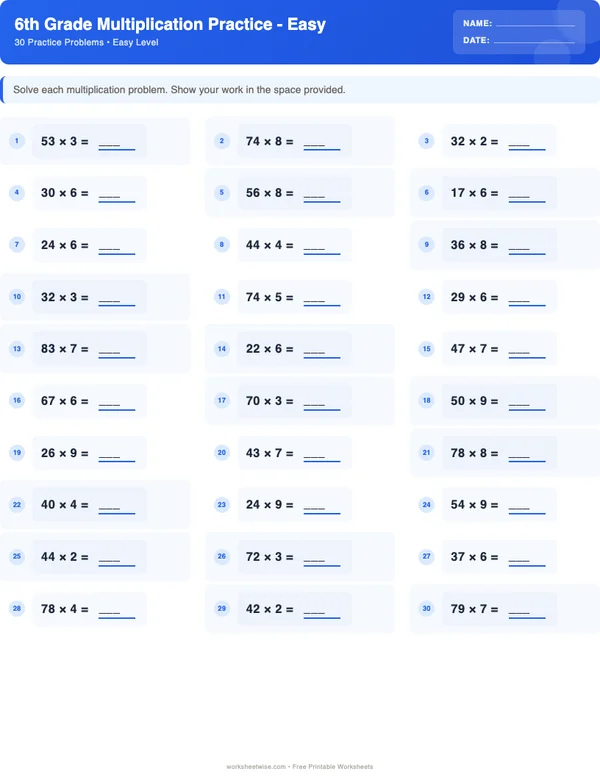
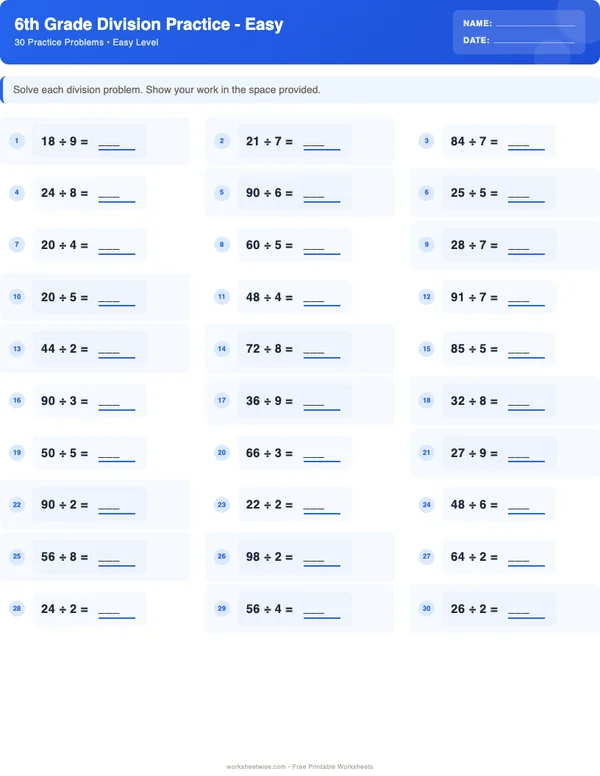
Use the 6th Grade Multiplication guide and free sheet when multiplication facts or partial products are blocking division work. Use the 6th Grade Division guide and free sheet when the computation is sound but quotient or remainder interpretation needs attention.
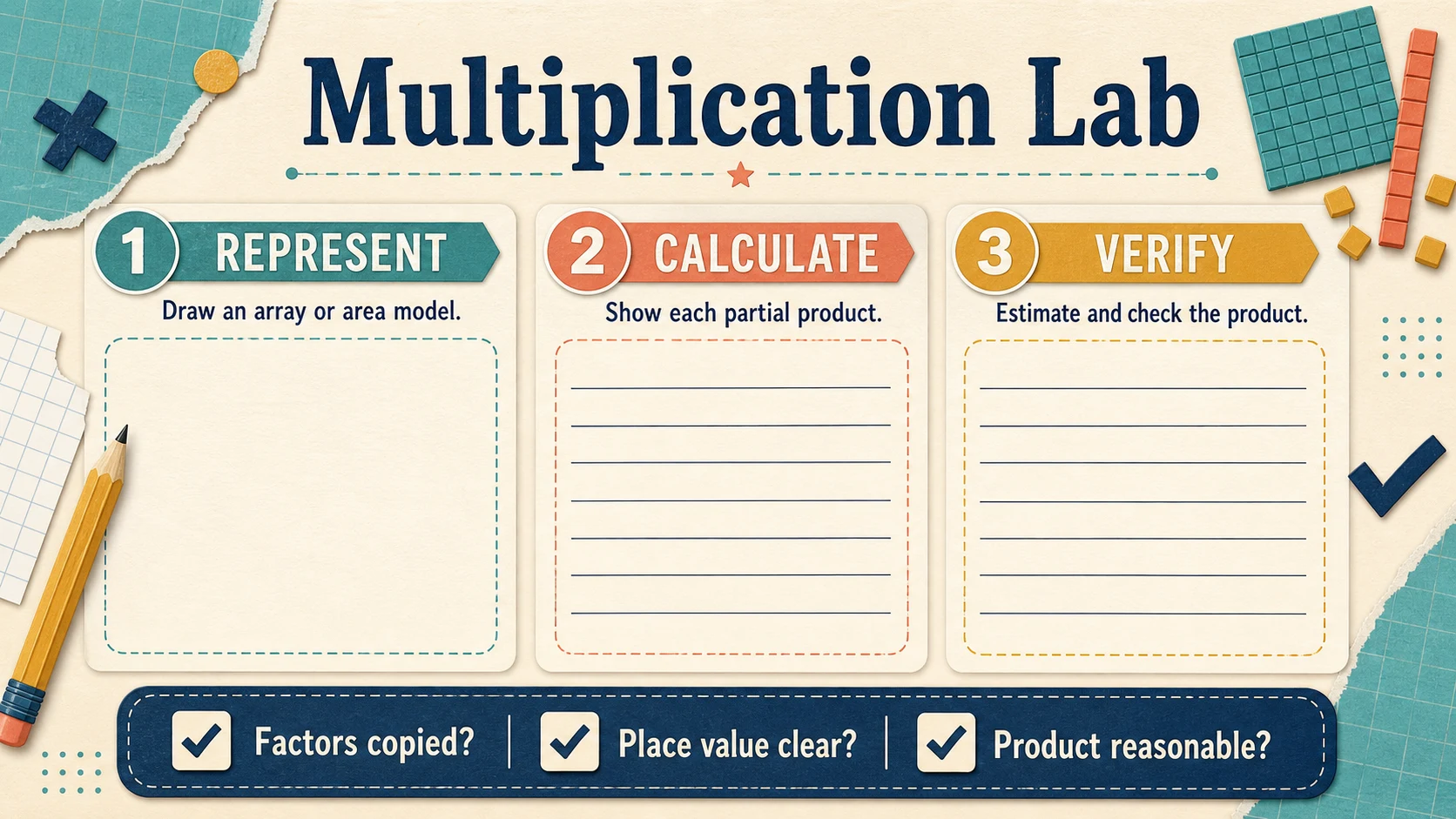
Spread multi-digit multiplication across modeling, short practice, delayed review, and application; one correct page on Monday is not yet evidence of durable recall.
Give independent work a clear beginning and ending
“Finish the worksheet” is not a useful session boundary. It makes the amount of work depend on page design rather than instructional purpose. Define independence by behavior and evidence.
A 6th grade independent block might read:
Complete problems 1–8. Circle any item where you changed your method. Estimate before problems 7 and 8. Stop after 15 minutes even if the set is unfinished.
That direction establishes scope, thinking, and a stopping point. During the block, the adult should avoid rescuing the learner at the first hesitation. Offer a neutral prompt such as, “Which example on the page is closest to this one?” or “What quantity are you trying to find?”
Independent practice is ready when the learner can:
- restate the direction;
- begin without a full reteach;
- use the taught representation or procedure;
- mark uncertainty instead of silently guessing;
- check at least one answer using a second method or estimate.
It is not ready when every item requires prompting, the directions are repeatedly misunderstood, or the learner is reproducing steps without knowing which operation applies. In that case, return to guided practice and reduce the item count.
Teach word problems as decisions, not keyword hunts
The catalogue frames word problems as a bridge between computation and real situations. The learner must identify relevant information, choose an operation, solve, and assess whether the result makes sense. That calls for a separate routine from bare computation.
Ask the learner to write four lines:
- Know: What quantities and relationships are given?
- Find: What must the answer describe?
- Model: What equation, diagram, or table represents the situation?
- Check: Is the answer reasonable and properly labeled?
Checked example: separate the operation from the context
A family buys 3 notebooks at $2.45 each and one folder for $1.20. What is the total cost?
First calculate the notebook cost:
Then add the folder:
A useful estimate is , which is close to $8.55. The checked total is $8.55.
This example belongs in the 6th grade collection because it combines decimal multiplication and addition in a multistep situation, matching the catalogue’s emphasis on decimal computation and word-problem reasoning. It also requires the learner to decide that the cost of three equal items is multiplicative before finding the total.
If the learner computes and ignores the three notebooks, the problem is interpretation, not decimal alignment. Ask for a tape diagram or table with three $2.45 entries. If the equation is correct but the answer is $85.50, use estimation to address decimal placement while preserving the multistep target.
The 6th Grade Word Problems guide and free sheet is appropriate after the component operation has been taught. It is a poor substitute for teaching that operation from scratch.
Connect grammar sheets to actual writing
Grammar practice becomes more useful when a learner moves from identifying a feature to applying it in a sentence of their own. The collection includes parts of speech, punctuation, and sentence structure. Cycle through three moves:
- Identify or correct the feature on a worksheet.
- Explain why the choice is correct.
- Apply the same feature in two original sentences or a short revision.
The IES writing practice guide recommends explicit instruction in writing strategies and attention to sentence construction within a broader writing process. That is sourced guidance for teaching decisions, not a claim that the guide reviewed these worksheets.
Checked example: repair a run-on without losing meaning
Start with:
The storm ended we walked to the creek.
This contains two complete thoughts without a valid connection. Three correct repairs are:
The storm ended, and we walked to the creek.
The storm ended. We walked to the creek.
After the storm ended, we walked to the creek.
The first creates a compound sentence with a comma and coordinating conjunction. The second separates the thoughts. The third makes the first idea a dependent introductory clause and requires a comma after it.
This belongs here because the catalogue’s sentence-structure resources cover fragments, run-ons, sentence combining, and varied beginnings. It is more appropriate than merely asking the learner to label “run-on,” because a 6th grade routine should include revising meaningfully.
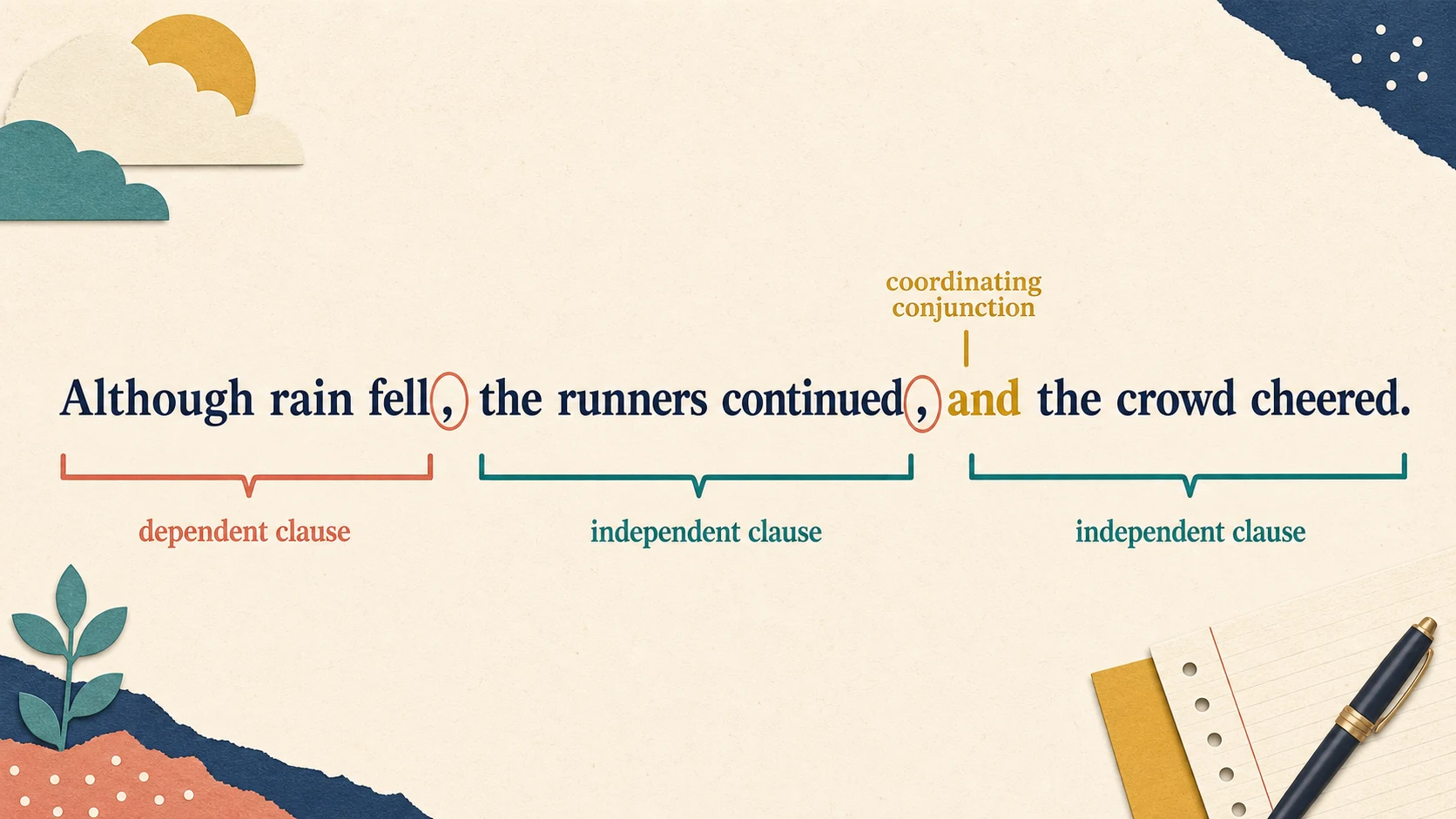
Move from hearing the two complete thoughts to marking their boundary and then selecting a repair that preserves the intended relationship.
If the learner produces “The storm ended, we walked to the creek,” explain that a comma alone does not join two independent clauses in this construction. Then give a parallel sentence:
The trail was muddy we continued carefully.
Ask for two valid repairs. This immediate transfer item shows whether the feedback changed the next decision.
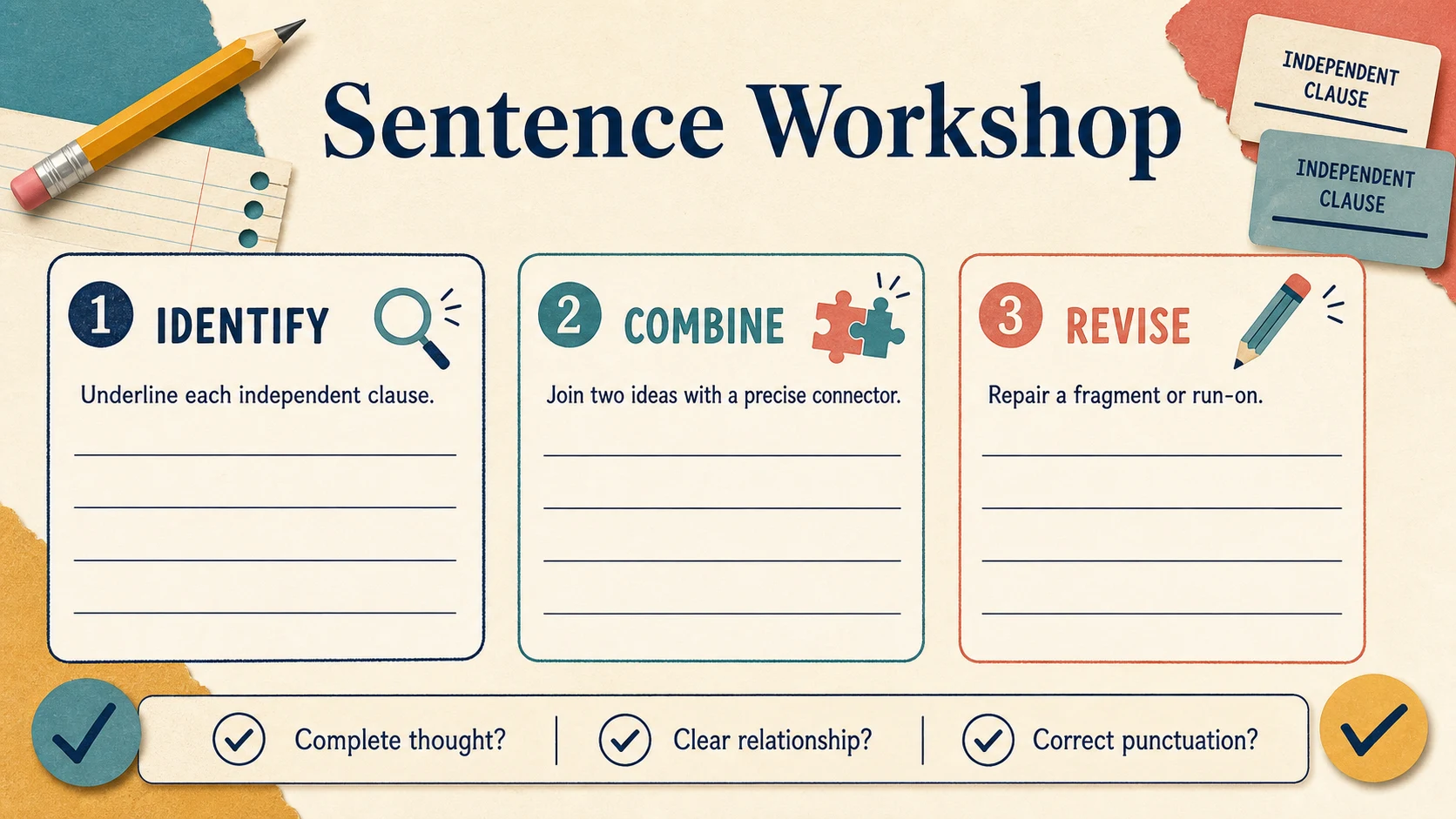
Revisit sentence boundaries after a delay and inside original writing, rather than treating one correction exercise as the end of instruction.
Checked example: distinguish possession from contraction
Compare:
The dog’s leash is blue.
The dog’s waiting by the gate.
In the first sentence, dog’s is possessive: the leash belongs to the dog. In the second, dog’s represents the contraction dog is.
To check, expand the second sentence:
The dog is waiting by the gate.
That remains grammatical. Expanding the first as “The dog is leash” does not work, confirming that its apostrophe marks possession rather than contraction.
This example belongs in the 6th grade grammar routine because the punctuation catalogue includes apostrophes for contractions and possessives, while the parts-of-speech materials attend to how words function in context. The decision depends on meaning, not simply noticing an apostrophe.
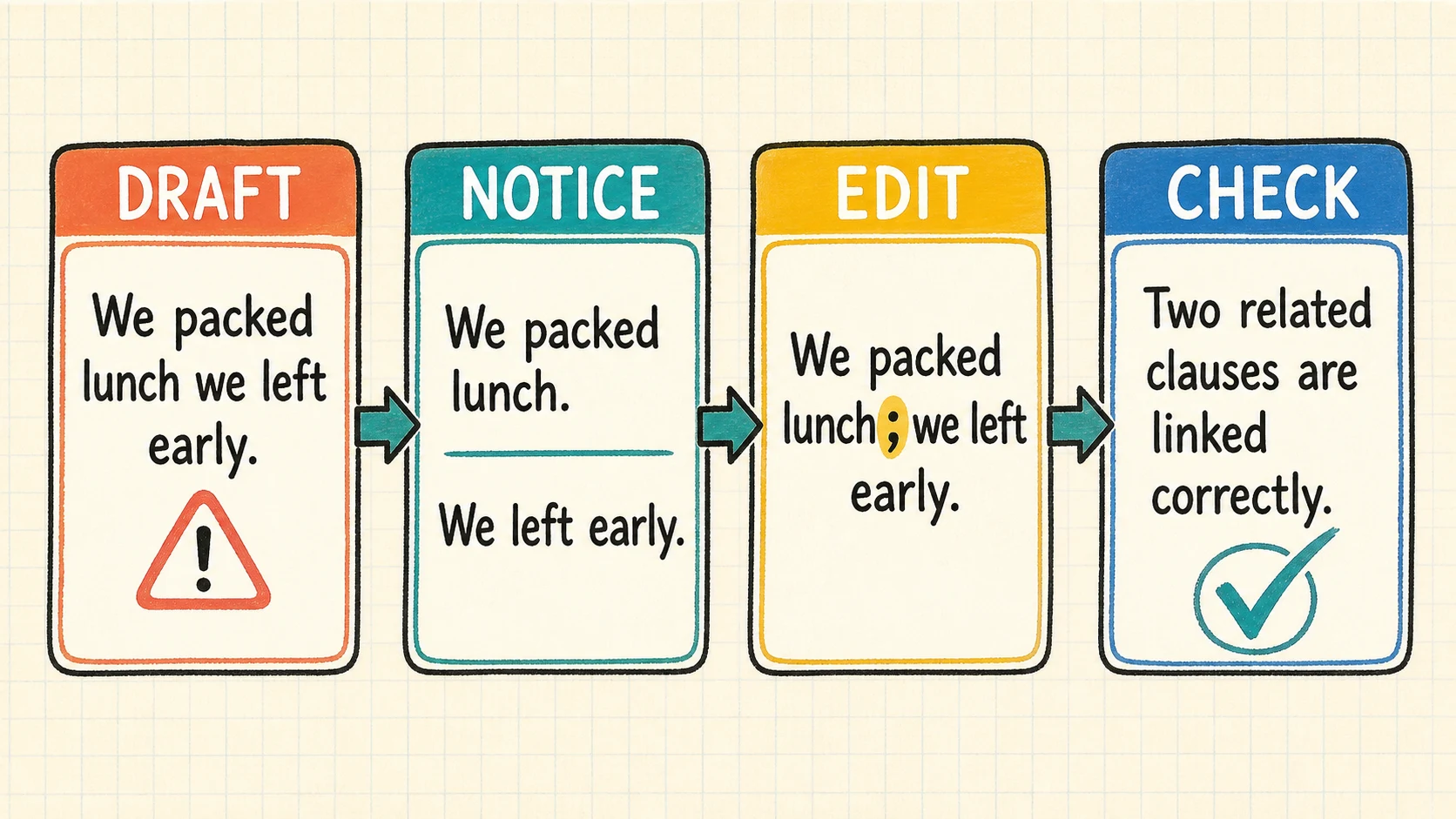
Begin with paired sentences whose meanings make the apostrophe’s job visible, then move to mixed editing and finally to the learner’s own paragraph.
The Common Core English language arts standards offer one reference point for language and writing expectations. Local programs may introduce, revisit, or assess conventions in a different order; select from the page itself rather than assuming the grade label establishes alignment.
Follow a realistic five-day rhythm
The following schedule uses short sessions, delayed review, and alternation between new and maintained skills. Adjust the clock without changing the instructional sequence.
Monday: establish the week’s evidence
For math, give a three-item entry check on the teaching target. Model one example, solve one together, and assign six independent items. Check them immediately.
For grammar, inspect a short paragraph for sentence boundaries. Model one correction and ask the learner to repair two more. End with one original sentence using the same structure.
Record only actionable notes, such as “compares decimals correctly after rewriting tenths as hundredths” or “identifies two complete thoughts but uses a comma without a conjunction.”
Tuesday: shorten support
Begin with two maintenance items from an older skill. Then return to Monday’s target using less visual or verbal support. Assign a short independent batch and check it before the session ends.
If the learner repeats the same misconception, do not increase the volume. Change the representation: fraction bars for equivalence, a place-value chart for decimals, partial products for multiplication, or clause brackets for sentence boundaries.
Wednesday: apply the skill
Use a word problem for math or a short revision task for grammar. Application should add a decision, not an entirely new procedure. A learner working on decimal multiplication might solve a money problem; a learner working on commas after introductory elements might revise three sentences in a paragraph.
Ask for a written or oral explanation. Accuracy without an explanation can support continued practice, but it does not yet show that the learner can choose the method independently.
Thursday: mix and retrieve
Give a small mixed set: perhaps two fraction comparisons, two decimal calculations, and one word problem. In grammar, mix sentence boundaries, apostrophes, and one parts-of-speech item.
Labeling the topic beside every question can remove the need to choose a strategy. Mixed practice restores that decision. Keep the set short enough that feedback still occurs in the session.
Friday: review, repair, and plan
Select one previously missed item and one new parallel item. Ask the learner to explain what changed. Then use a brief task that combines the week’s work—for example, solving a decimal word problem and writing a complete answer sentence with correct punctuation.
Do not use Friday merely to finish abandoned pages. Review the evidence and choose next week’s action:
- continue the target with reduced support;
- move to application;
- revisit a prerequisite;
- pause the topic and schedule delayed review;
- select a different worksheet whose task features better match the need.
Adapt the task without removing its target
An adaptation is useful only if the intended reasoning remains visible.
For a learner overwhelmed by 30 items, cover the lower portion and assign eight. That reduces volume while preserving computation. For a learner who loses place in a dense decimal set, enlarge the page or expose one row at a time. For fraction comparison, permit fraction strips or a number line while still requiring the comparison. For sentence correction, read the sentence aloud if decoding is obstructing punctuation work, but still require the learner to locate and repair the boundary.
Avoid adaptations that answer the central question. If the target is choosing the operation in a word problem, writing “multiply” beside the item removes the target. If the target is recognizing a run-on, inserting a slash at the exact sentence boundary supplies the key decision.
Mixed-age homeschooling also benefits from shared contexts with separate outputs. During a shopping activity, a younger child might count three objects while the 6th grader calculates three items at $2.45 each and checks the total by estimation. During a family read-aloud, one learner might identify a noun while the 6th grader studies how a published sentence joins clauses. The context is shared; the intellectual target is not flattened.
For younger siblings, use the appropriate 1st Grade Homeschool Worksheets, 3rd Grade Homeschool Worksheets, or another matching grade entry rather than assigning a 6th grade page with fewer questions.
Know what the worksheets cannot decide
A printable can provide practice evidence, but it cannot determine why a learner is struggling. Fatigue, unfamiliar vocabulary, weak prerequisite knowledge, rushed copying, and misunderstanding can produce similar incorrect marks.
These worksheets also do not establish:
- a diagnosis;
- complete curriculum coverage;
- local standards alignment;
- mastery from a single successful attempt;
- a required duration for every homeschool;
- an outcome guaranteed by completing a certain number of pages.
Use the answer key to verify responses, then use explanation, a parallel item, and delayed retrieval to judge what to do next. Seek appropriate professional or curricular support when persistent difficulties extend beyond what ordinary reteaching and practice can address.
Turn today’s result into next Monday’s choice
Choose one topic, not an entire grade-level stack. Open the full worksheet library, select 6th Grade and either Math or Grammar, and inspect one worksheet for representation, operation count, language demand, response demand, and volume. Give three representative items today.
Write one observable note from the result—for example, “uses equivalent denominators accurately but does not estimate fraction sums” or “repairs run-ons when prompted but creates comma splices independently.” On Monday, use that note to choose the model, six-item practice block, and feedback question. That single evidence-based choice is the beginning of a flexible 6th grade homeschool rhythm.
Put it into practice
Use the guide with a real printable
Move from explanation to a short, observable practice task. Check the first item together, then adjust the next session from the learner's actual work.
Open the first free worksheetExplore a neighboring collection