Curated collectionAnswer keys includedPrint-ready PDFs
5th Grade Homeschool Worksheets
Turn a printable library into a flexible weekly rhythm with explicit teaching, short independent practice, answer-key feedback and mixed-age planning.
Start with a real resource
Browse this worksheet collection
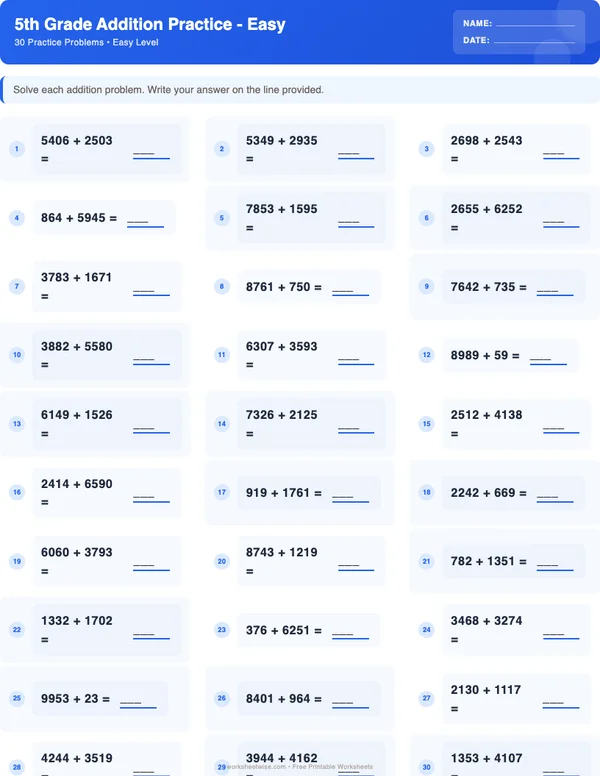
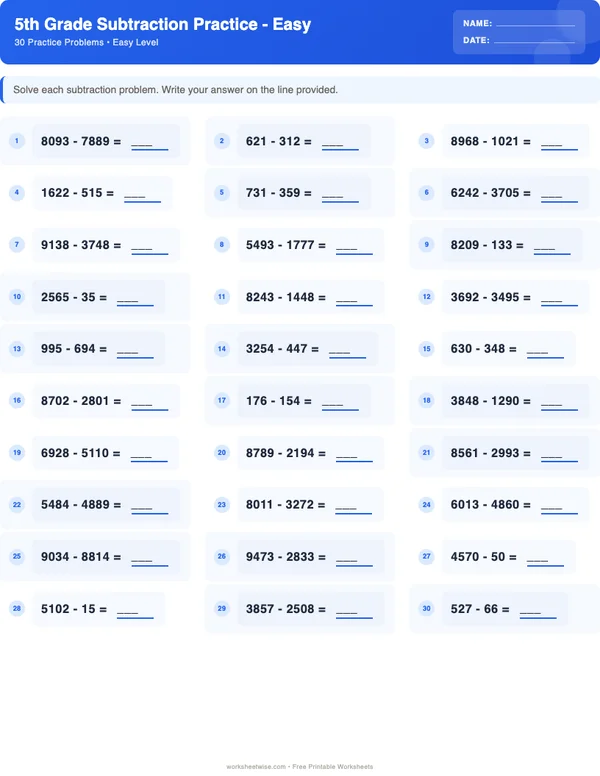
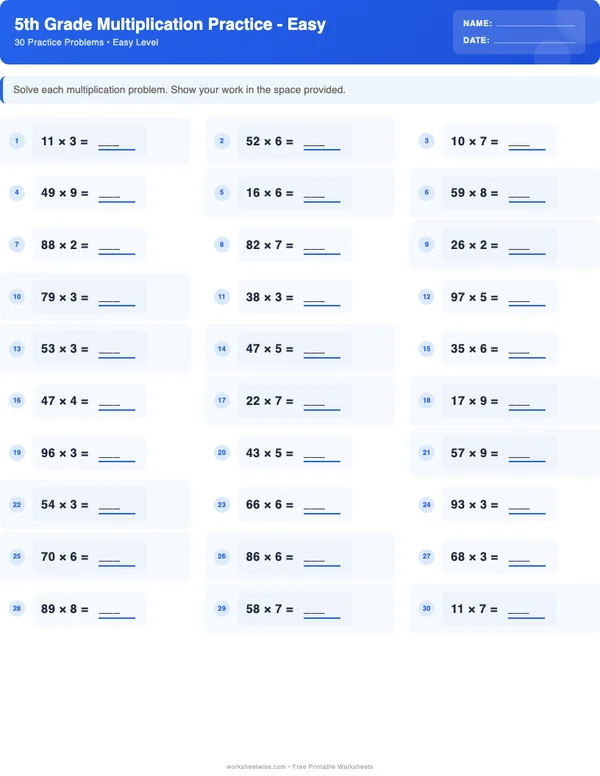
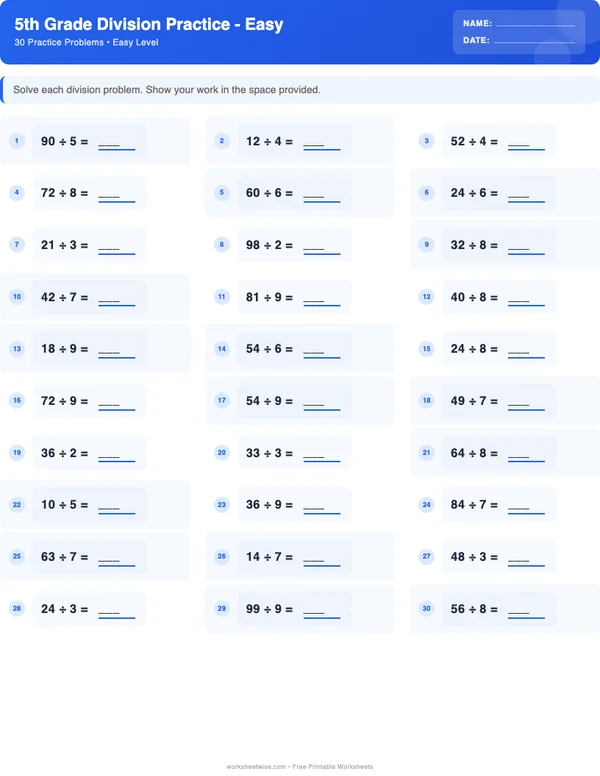
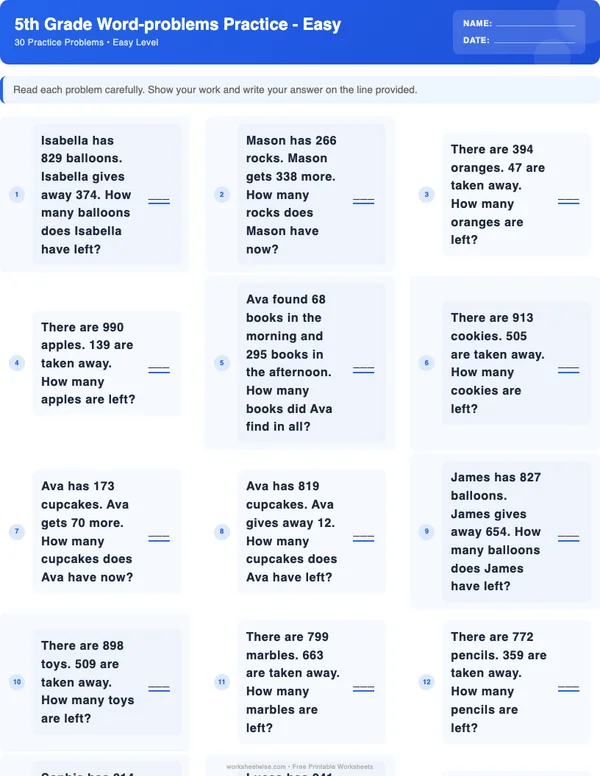
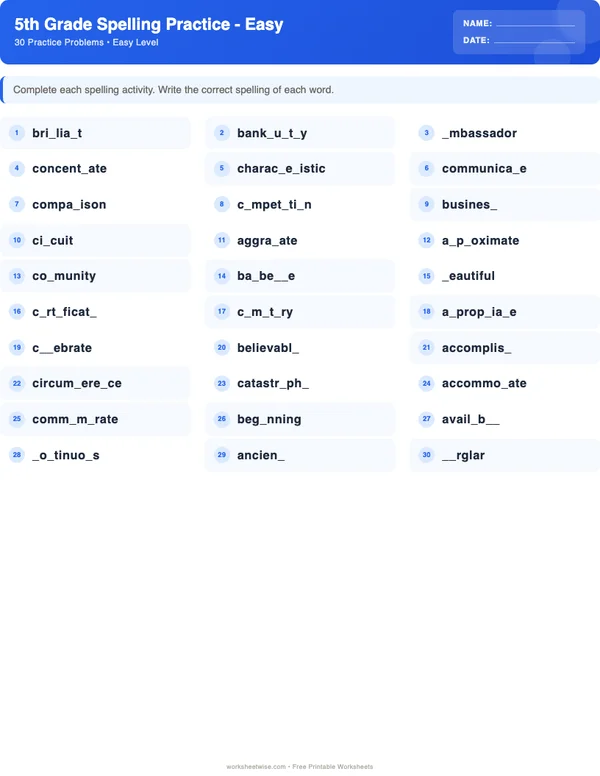
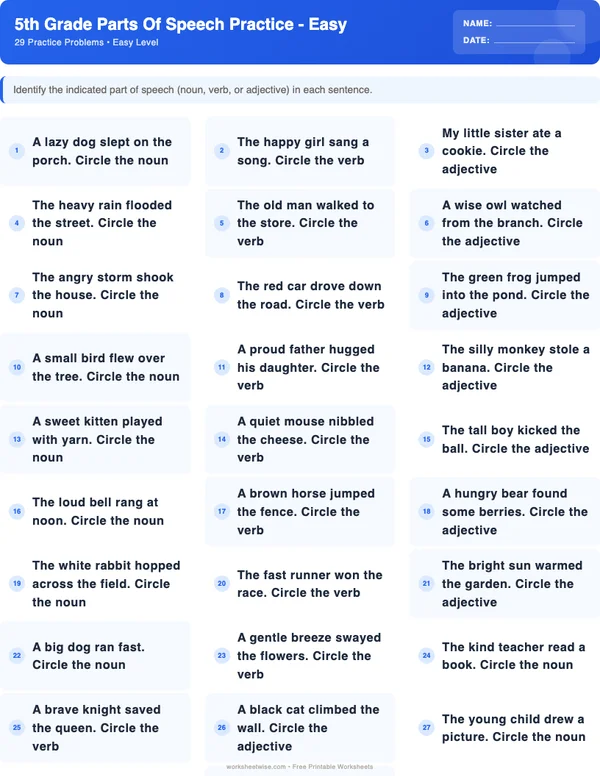
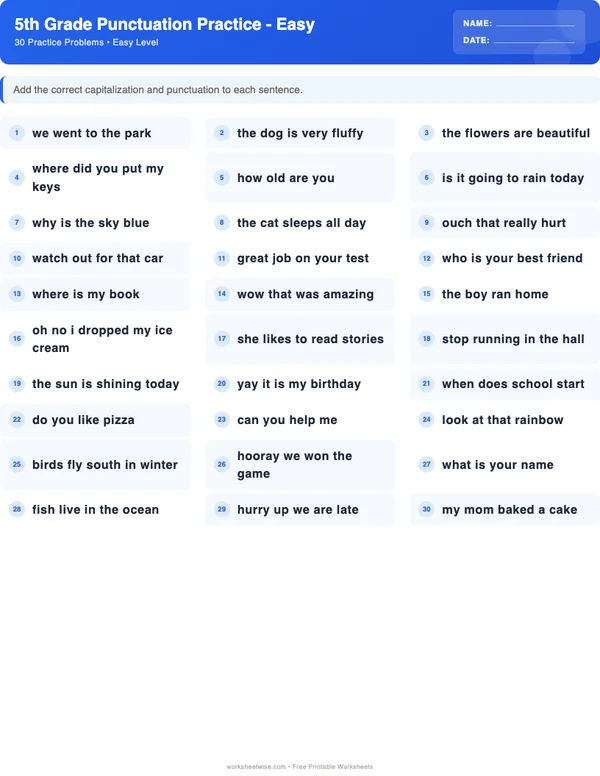
13 relevant free entry points are available. Each one includes a printable learner PDF and separate answer key.
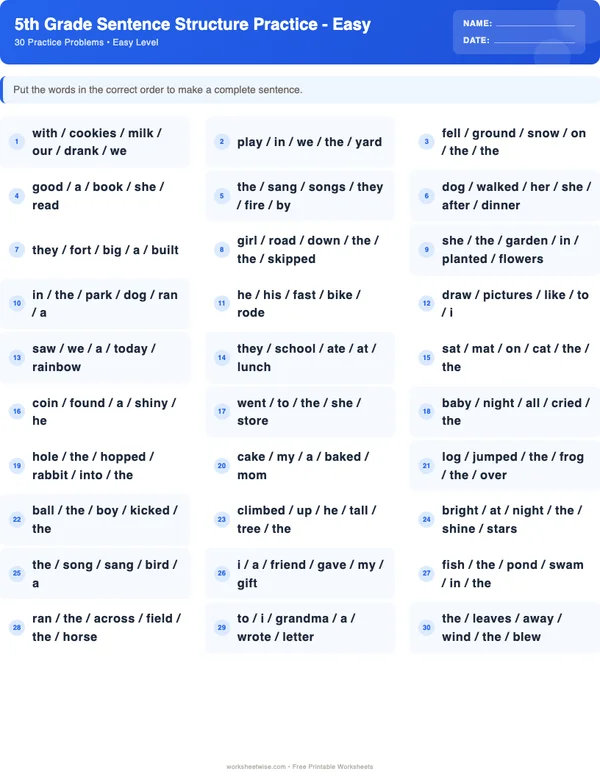
A useful practice loop
Print less. Observe more.
- Choose one skill and model the first item aloud.
- Use a short set and notice the learner’s strategy.
- Change the next task from the work you can see.
Need more than the free sheet?
Plus includes all 234 matching catalogue variations where available, plus saved deterministic generators and the worksheet designer.
See Plus membershipComplete guide
How to teach and practise 5th grade homeschool worksheets
3,297 words Updated 6 instructional visuals
Build the week around teaching, practice, and correction
A useful 5th grade homeschool worksheet routine does not begin by printing a large packet. Begin with one current math target and one current language target, teach each briefly, assign a short section for independent practice, and use the answer key to decide what happens next. Across the week, alternate new instruction with correction and mixed review so that completed pages produce information, not just a stack of paper.
The live 5th Grade collection contains 234 worksheet variants across three subjects and 13 topics, with 13 free entry points. That range supports flexible planning, but it also makes selection important. A fifth grader does not need work from every topic every week. A workable rhythm is:
- Monday: model one math skill and one language skill.
- Tuesday: short independent practice on those same skills.
- Wednesday: correct errors, reteach one misconception, and practice again.
- Thursday: apply the skills in a less supported format.
- Friday: complete mixed review and use the results to plan the following week.
Treat grade labels as intended practice levels, not proof of placement or guaranteed curriculum alignment. Local curriculum sequences differ. Select work from what the learner can explain and do now, then adjust the task—not the learner’s label—when the evidence calls for it.
Choose two weekly targets instead of sampling everything
The clearest weekly plan gives each worksheet a job. Before printing, decide whether a page will introduce, rehearse, apply, or review a skill. If its job cannot be named, leave it out.
For a typical week, choose:
- One math focus, such as fraction equivalence, decimal place value, division with remainders, or classifying shapes by attributes.
- One language focus, such as parts of speech in context, punctuation in dialogue, sentence combining, or a spelling pattern.
- One brief mixed-review page or teacher-made set for Friday.
- One transfer task in which the fifth grader explains, edits, writes, draws, or solves without copying the worksheet format.
The catalogue’s “easy” designation describes the free sheet, not the learner. Interpret that level through observable task features: a familiar format, limited changes in directions, relatively direct questions, and fewer demands combined in one item. Confirm those features by previewing the actual page. A 30-problem sheet can still create a high workload even when individual items are direct. A 16-problem word-problem sheet may demand more reading, representation, and decision-making than a 30-item computation sheet.
Use these selection checks:
- The prerequisite is visible. Before decimal computation, can the learner explain tenths and hundredths? Before long division, can they use multiplication to estimate a quotient?
- The new demand is narrow. Do not introduce unfamiliar notation, a new procedure, and a dense page layout in the same independent session.
- The page permits an appropriate stopping point. Mark 8 or 10 items rather than assuming every printed problem must be completed.
- The answer key can reveal a pattern. Choose work where you can tell whether an error came from place value, operation choice, notation, vocabulary, or attention.
- The page matches this week’s purpose. A calculation page is not a substitute for teaching how to interpret a remainder or justify a comparison.
These are WorksheetWise planning suggestions. Separately, the IES elementary mathematics practice guide recommends systematic instruction, clear mathematical language, carefully chosen representations, number lines, and deliberate word-problem instruction. The guide did not evaluate WorksheetWise; its recommendations help adults decide how to teach around any practice page.
Use a repeatable 25-minute lesson boundary
Fifth graders can do meaningful independent work, but independence should follow a clear model. “Complete the page” is not sufficient instruction when the page includes a new idea.
Minutes 0–5: retrieve and state the target
Begin with two oral or written retrieval prompts from earlier work. Then state the day’s target in language the learner can use.
For fractions: “Today you will compare two fractions by placing them relative to benchmarks such as 0, one-half, and 1.”
For punctuation: “Today you will decide whether a comma belongs after an introductory element. You will explain where the opening element ends.”
Ask the learner to repeat the target in their own words. If the restatement reveals a vocabulary problem—such as confusing numerator and denominator—resolve it before the worksheet begins.
Minutes 5–11: model one complete example
Think aloud, but keep the learner involved. Show the decision that matters, not merely the pen movements.
Consider . First estimate: is close to 1, and is three-fourths, so the total should be close to , not below 1 and not above 2. Convert to , then calculate . Finally, compare the exact answer with the estimate.
This example belongs in a 5th Grade fractions routine because the live collection includes equivalent fractions, mixed numbers, and fraction operations. Every computation has also been checked: . The estimate acts as a reasonableness boundary rather than a second algorithm.
Minutes 11–16: solve together, then remove a prompt
Work through one related item. Ask the learner to name the representation or first decision before calculating. On the next item, stop supplying that prompt.
For division, model in context: 25 students need vans that hold 6 students each. Four vans hold students, leaving one student. The answer is five vans because every student needs a seat. The arithmetic result is 4 remainder 1, but the contextual answer rounds up.
This checked example belongs here because the live Division resource explicitly includes division word problems and interpretation of remainders. It also demonstrates why procedural accuracy alone is not enough.
Minutes 16–23: assign a bounded independent set
Give a clear quantity and stopping condition: “Complete items 1–8. Put a dot beside any item where you are unsure. Stop after eight even if the page continues.”
That direction supports honest independence. A learner who knows when to flag uncertainty is doing more useful work than one who fills every blank by guessing. Do not silently turn a short practice session into a full-page endurance test.
Minutes 23–25: collect one piece of evidence
Ask one exit prompt:
- “Show which step made the denominator equivalent.”
- “Explain why the remainder changed the number of vans.”
- “Circle the introductory words and place the comma.”
- “Name the noun that this pronoun replaces.”
Record the response in one sentence. This note, not the percentage alone, should guide the next lesson.
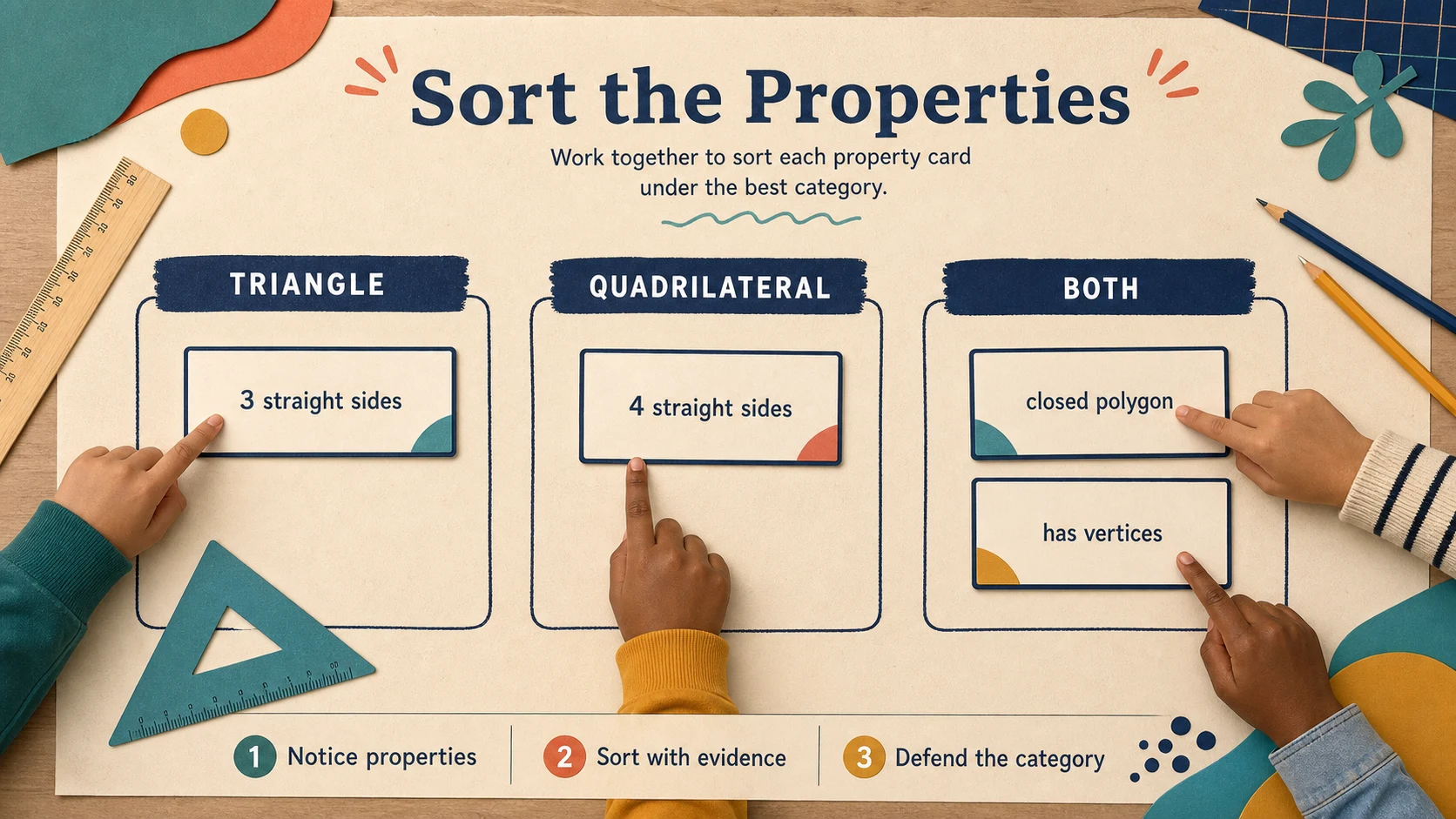
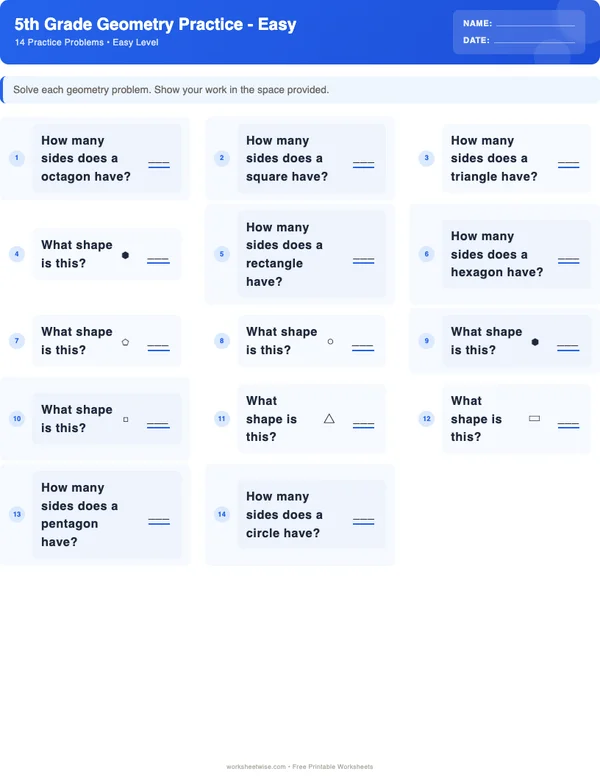
A 5th grade geometry session stays manageable when explanation, one modeled case, bounded independent work, and a final evidence check each have a defined place.
Follow a realistic five-day sequence
A weekly rhythm should revisit the same ideas without repeating the same task unchanged. The sequence below uses fractions and parts of speech because both live resources support a progression from identification toward more demanding use.
Monday: establish meaning before procedure
For fractions, draw a number line from 0 to 1. Mark halves, fourths, and eighths. Ask the learner to place , , , and . Confirm that and occupy the same point.
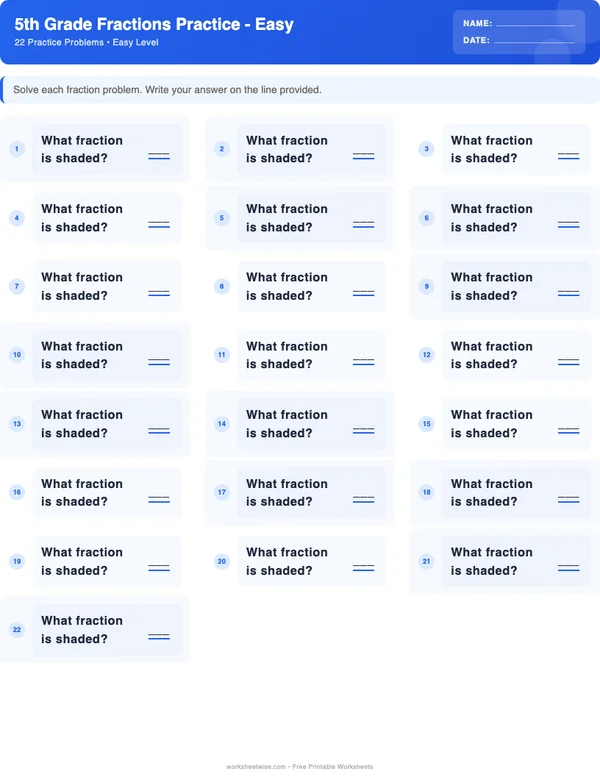
Then model a small portion of the 5th Grade Fractions guide and free sheet. Stop after 6–8 selected items. The live free sheet contains 22 problems, but that count is inventory information, not a daily assignment requirement.
For grammar, use the sentence “The light backpack rested beside the desk.” Identify backpack and desk as nouns, rested as the verb, light as an adjective, beside as a preposition, and the as a determiner or article if the worksheet’s directions include that category. Do not force a category that the page has not taught.
The word light is worth discussing because its function depends on context. In “Please light the candle,” it is a verb; in “The light flickered,” it is a noun; in “the light backpack,” it is an adjective. This checked example belongs in 5th Grade parts-of-speech work because the catalogue specifically notes that upper-grade learners should classify words by how they function in real sentences.
Tuesday: practice independently, then explain one item
Assign a short fraction set and a short parts-of-speech set. The learner works without live correction. When finished, they select one answer from each subject and explain it before seeing the key.
Do not interpret a correct answer with no explanation as failure. Instead, note the boundary: “Calculation correct; explanation not yet clear.” Likewise, do not treat polished grammar terminology as proof that the learner can improve a sentence. Identification and application are separate demands.
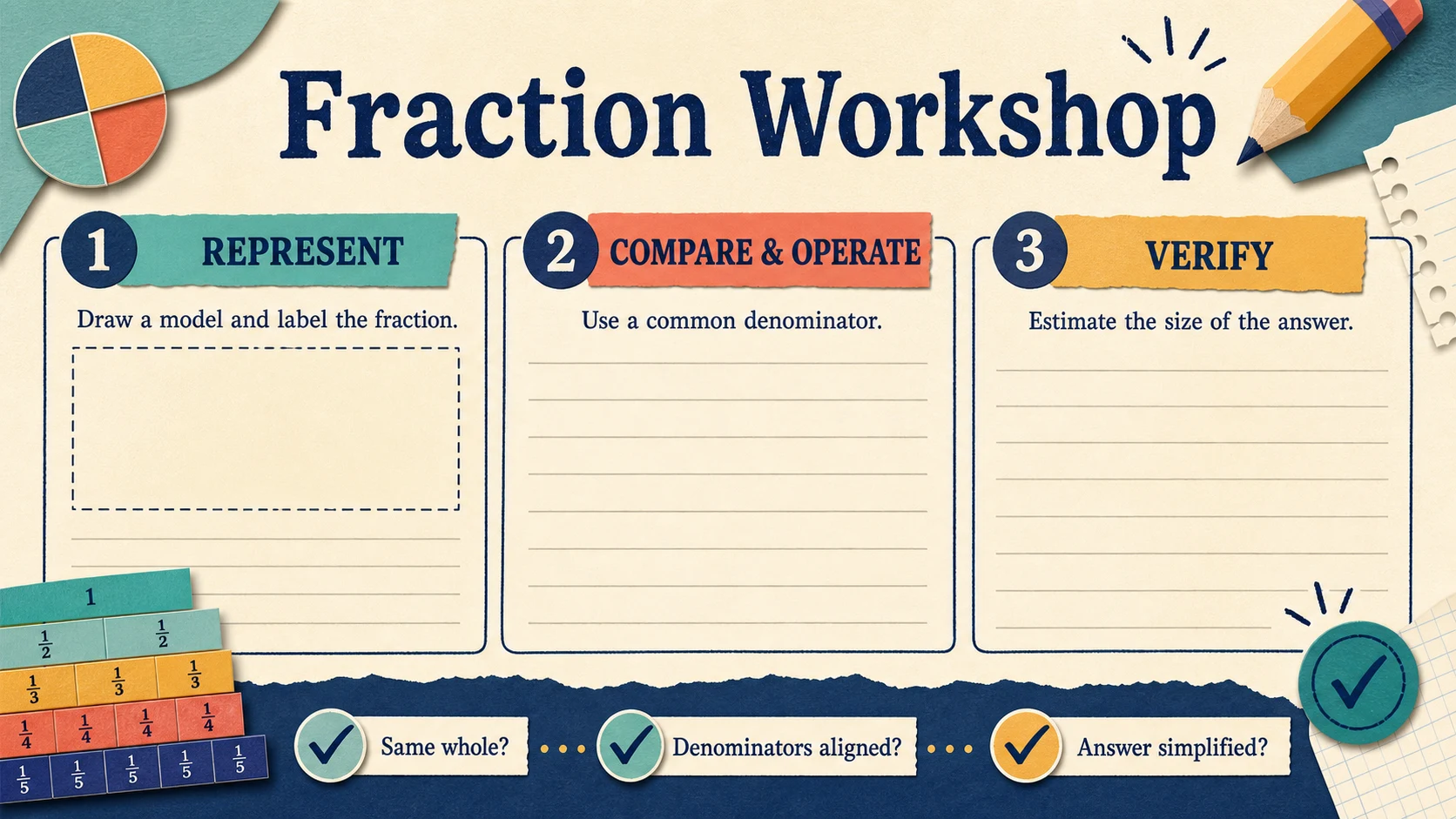
Across two weeks, 5th grade fraction work should cycle through models, equivalence, computation, correction, and later retrieval rather than consume one long packet at once.
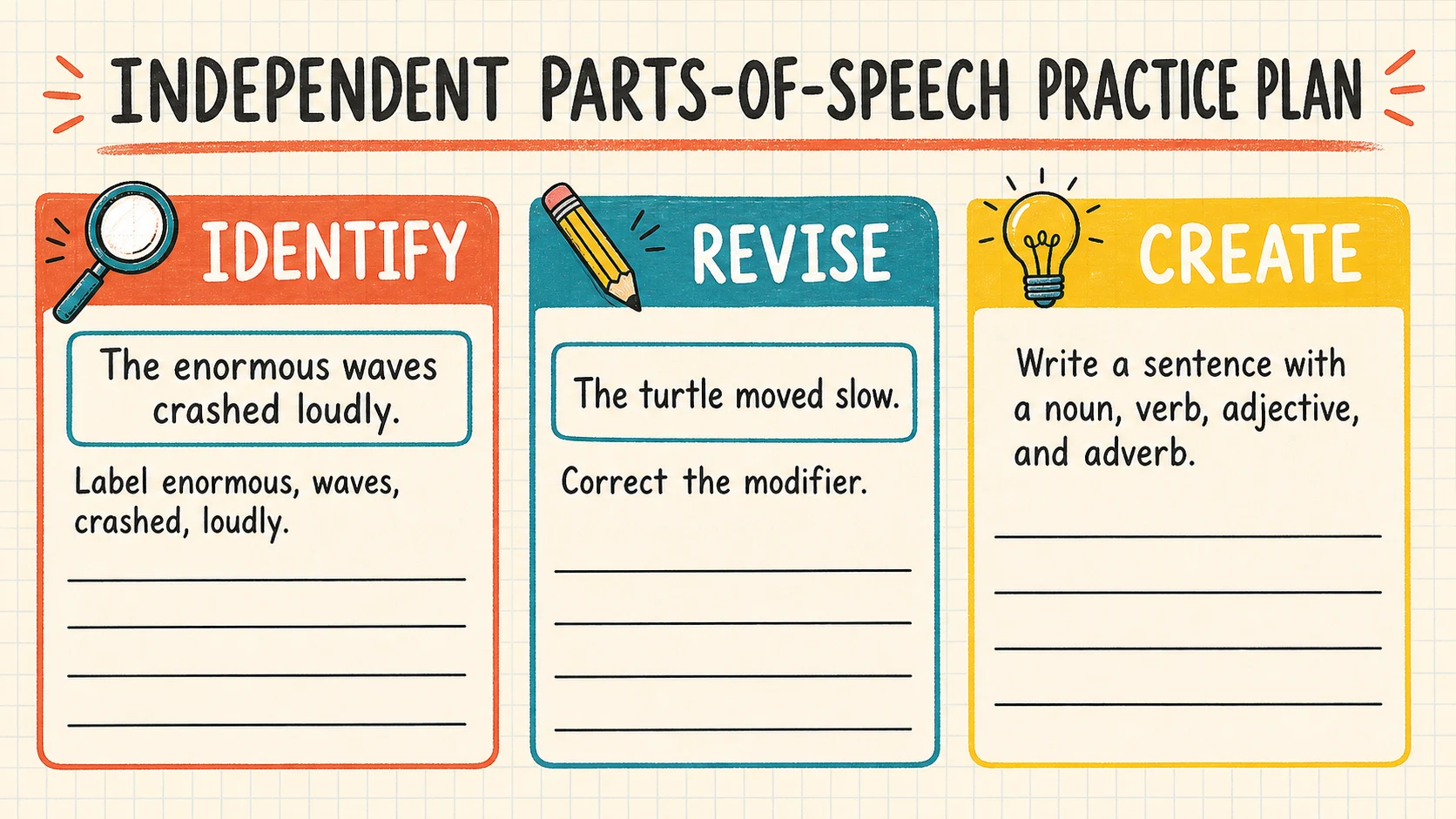
Parts-of-speech practice becomes useful when a fifth grader moves from naming a word class to explaining its function and revising a sentence with it.
Wednesday: correct by error type
Return Tuesday’s work without first announcing a score. Ask the learner to compare each marked item with the answer key and sort corrections into two columns:
- “I know what I misunderstood.”
- “I need a model or explanation.”
Reteach only the smallest missing idea. If the learner added denominators, return to fraction strips or a number line. If they called light a noun in every sentence, compare two contexts and ask what job the word performs in each. Complete two fresh items after the correction; do not erase the original evidence.
Thursday: transfer beyond the worksheet format
Give one new problem and one short writing task.
Math: “A recipe uses cup of oats for one batch. You make two batches. How many cups are needed?” Calculate cups. The answer is checked, and the example belongs here because it joins fraction addition, equivalence, a mixed number, and a concrete quantity without adding irrelevant data.
Language: “Write two sentences using record: first as a noun, then as a verb.” Possible checked responses are “The record contains the final score” and “Please record the final score.” The spelling is unchanged, but its grammatical function changes.
The IES elementary writing guide recommends daily writing time and explicit teaching of the writing process and sentence-level skills. That sourced guidance supports using a brief original-writing transfer task. The specific two-sentence activity is a field-guide suggestion, not a claim made by IES.
Friday: review, confer, and plan
Use four to six mixed items, including at least one from earlier in the week and one from a previous topic. Then hold a five-minute conference:
- What can you now do without a prompt?
- Which representation still helps?
- Which error did you correct successfully?
- What should be practiced again next week?
- What should be left alone because it is secure?
A Friday review is not a cumulative exam. Its purpose is to distinguish retained learning from same-day imitation.
Make answer-key feedback instructional
An answer key tells you whether an answer matches. It does not tell you why a mismatch occurred. The adult’s task is to interpret the written evidence without making a diagnosis.
Read math errors from the work shown
In versus , a learner may say is larger because 36 is larger than 4. Do not respond only with “wrong.” Rewrite as , shade 36 hundredths and 40 hundredths on equal grids, or place both on a number line. Then ask for a comparison sentence: .
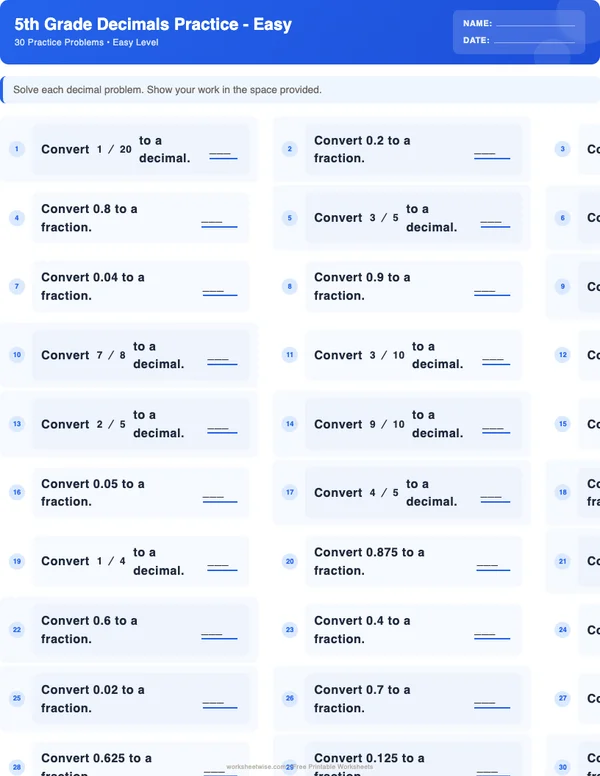
This checked example belongs in the 5th Grade Decimals collection because its description includes decimal place value and comparison, while the teaching tip identifies the specific misconception that more digits imply a larger value. The correction preserves the target—comparing decimals—while changing the representation.
For , an answer of 22 may indicate inconsistent regrouping; an answer of 26 may reflect subtracting the smaller digit from the larger in each column. These answers require different responses. Rebuild 43 as 3 tens and 13 ones, then subtract 2 tens and 5 ones to obtain 18. Follow with a nearby problem, such as , and ask the learner to explain the trade.
For , estimate first: , leaving 36; , so the quotient is 13. If the learner’s long-division notation fails but this partial-quotients reasoning succeeds, preserve the quotient target and provide temporary support for notation.
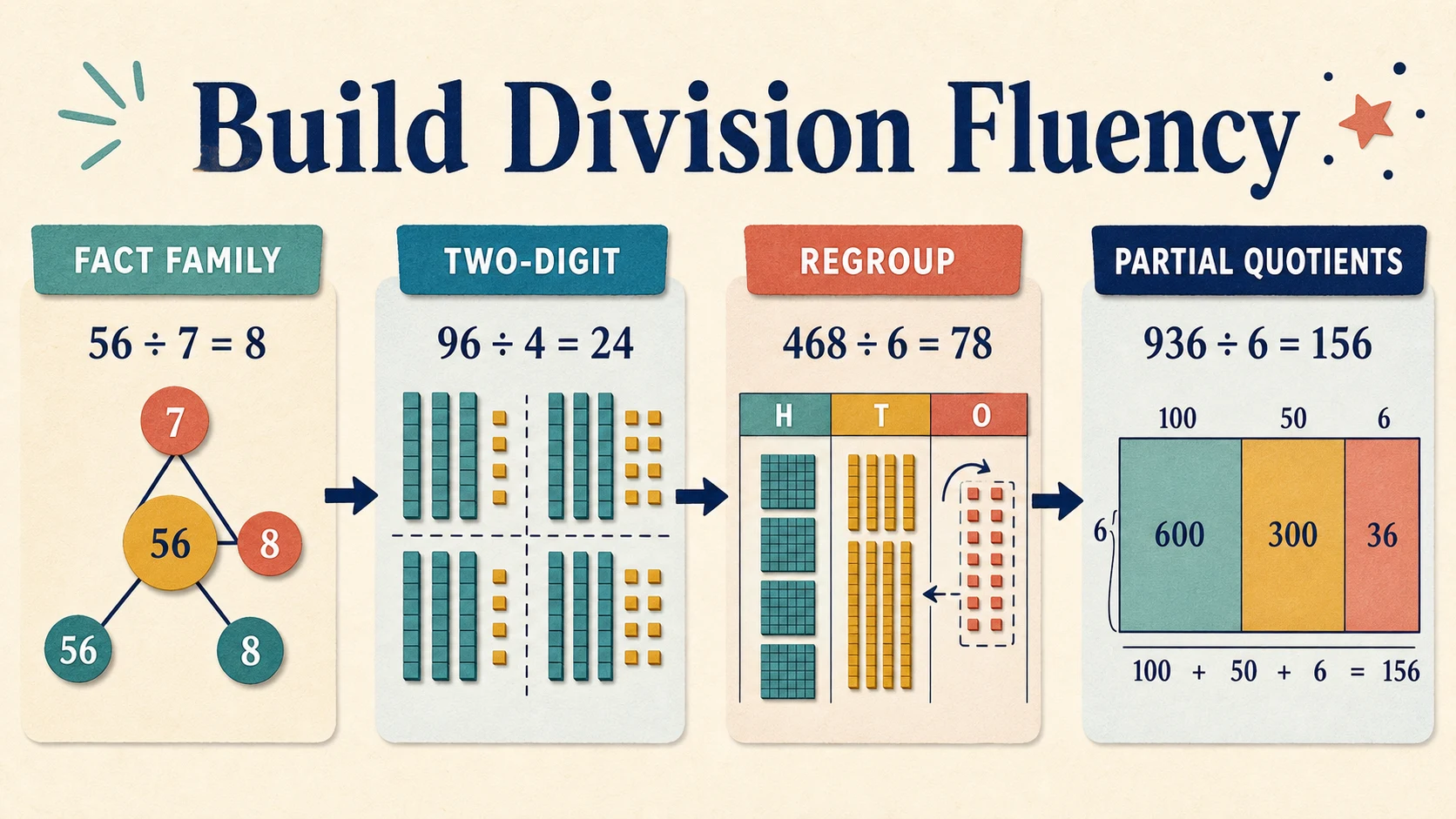
In 5th grade division, independence should follow estimation, multiplication connections, and an understood representation—not precede them.
Read grammar errors from the sentence
Suppose the sentence is “After dinner we played a board game.” If the learner adds no comma, ask them to identify the opening element. Then bracket it: “[After dinner], we played a board game.” The correction is a comma after the introductory phrase.
If commas appear after every first word, the learner may be imitating position rather than applying the rule. Contrast “After dinner, we played” with “Yesterday we played.” Discuss the actual structure expected by the current lesson instead of inventing a universal “comma after the opener” shortcut.
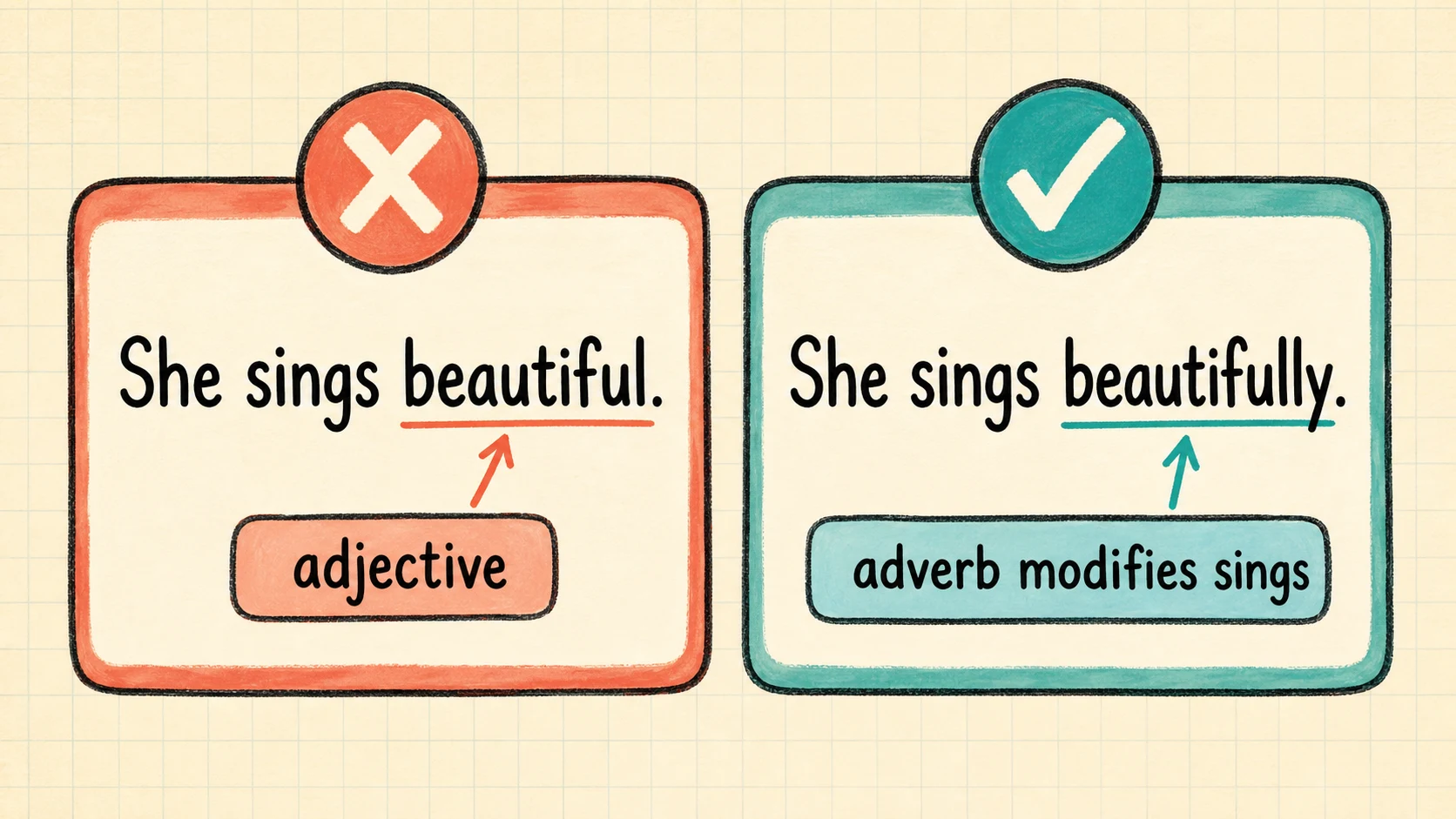
The useful response to a parts-of-speech error depends on whether the fifth grader misunderstood a definition, ignored sentence context, or could identify a class but not use it.
Use a three-step correction script
Keep feedback short:
- “Show me where your work changed direction.”
- “Here is the smallest idea to reconsider.”
- “Try this new item and explain the decision.”
Avoid correcting every mark while the learner watches. Prioritize the error tied to the weekly target. If handwriting, spelling, punctuation, and sentence structure are all marked on the same draft, the central lesson can disappear.
Increase independence by removing one support at a time
Independence is observable. A fifth grader is working independently when they can restate the target, begin without repeated prompting, use an agreed tool, mark uncertainty, stop at the boundary, and check completed work in the assigned way.
Move through four stages:
- Adult model: The adult solves and names each decision.
- Shared attempt: The learner supplies steps while the adult records or prompts.
- Bounded solo work: The learner completes a small set with tools available.
- Independent application: The learner completes a new item and explains or checks it.
Do not remove the model, reference card, manipulatives, and reduced item count simultaneously. If a learner can compare fractions accurately with a number line, remove verbal prompting before removing the number line. The target is fraction comparison, not memory for an adult’s preferred procedure.
For punctuation, begin with sentences where the learner inserts one kind of comma. Next, mix examples that do and do not need that comma. Then ask the learner to edit a short paragraph. Finally, ask for original sentences and a self-check.
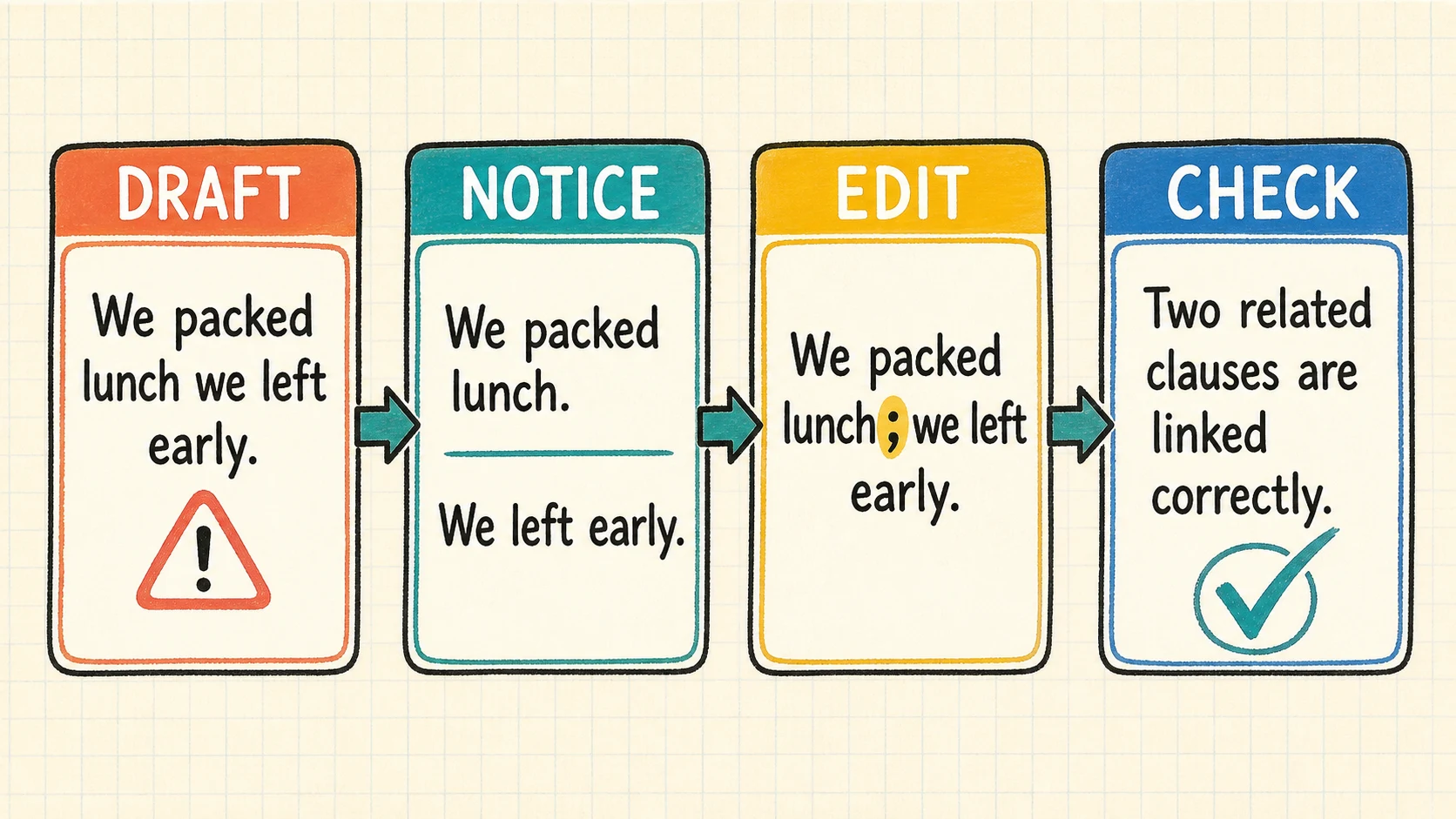
A 5th grade punctuation progression changes one demand at a time: identify the structure, insert the mark, edit mixed sentences, and punctuate original writing.
The Common Core ELA standards overview describes literacy across reading, writing, speaking, listening, and language. It does not establish that a particular worksheet teaches all of those modes. That distinction matters: a punctuation page supplies written practice, while explanation, reading aloud, and original composition must be added through instruction.
Adapt the workload without replacing the skill
An adaptation should reduce an obstacle while keeping the intended decision intact.
For a 30-problem multiplication page:
- Assign 10 representative items rather than all 30.
- Cover unused rows to reduce visual crowding.
- Allow an array or area model if the target is multi-digit reasoning.
- Ask for an explanation on two items instead of requiring identical written explanations 30 times.
Do not replace multi-digit multiplication with single-digit fact recall if multi-digit multiplication is the actual target. That changes the skill.
For a 22-problem fractions page:
- Pre-highlight the operation signs if tracking across the page is interfering.
- Supply fraction strips or a number line.
- Group items by like and unlike denominators.
- Split the page across two days.
- Let the learner explain equivalence orally while still recording the calculation.
Do not supply common denominators on every item indefinitely if finding them is the target.
For a 29-problem parts-of-speech page:
- Work one paragraph or eight sentences.
- Underline the word to classify so visual search is not the main task.
- Provide a concise list of possible word classes.
- Let the learner read the sentence aloud before classifying the word.
- Require a contextual justification: “It is a verb here because it expresses the action.”
Do not turn every classification item into copying a definition. That preserves writing volume, not grammatical reasoning.
For mixed-age homeschooling, teach the fifth grader’s focused lesson first, then release them to bounded practice while supporting a younger child. The fifth grader can use a visible card: “Read directions; complete eight; dot uncertain items; check only after finishing.” If coordinating with siblings, choose nearby resources such as 4th Grade Homeschool Worksheets or 6th Grade Homeschool Worksheets, but do not assume the same topic appears in the same sequence or at an equivalent demand.
Know when to pause, shorten, or move on
A worksheet session has reached its limit when continued work would produce less useful evidence. Pause when the learner cannot explain the directions after clarification, repeats the same conceptual error across three items, or is guessing to finish. Shorten when accuracy remains stable but attention or written output is deteriorating. Move on when the learner succeeds on a fresh item, explains the key decision, and retrieves the skill later without recreating the entire lesson.
Use this decision rule after a short set:
- Mostly correct with a clear explanation: use a less supported application next.
- Correct only with a model: repeat the skill with one support removed.
- A repeated, interpretable misconception: reteach that idea with a representation, then give two fresh items.
- Scattered slips with sound reasoning: reduce copying demands or add a checking routine.
- No interpretable work: return to a shared example; do not infer a diagnosis.
The Common Core mathematics overview emphasizes both conceptual understanding and procedural skill, including justification appropriate to the learner’s level. It is a useful planning reference, not evidence that the catalogue is aligned to a particular local sequence. Check state, district, charter, umbrella-school, or homeschool requirements separately where they apply.
Worksheet practice also has firm limits. It cannot by itself replace discussion, reading connected text, hands-on measurement, mathematical modeling, sustained composition, or an adult’s explanation of a new idea. A result from one page should not be used to diagnose a learning condition or promise an outcome. Look for patterns across different tasks and dates.
Turn one Monday selection into next Friday’s evidence
Start with one real resource, not a packet. Open the 5th Grade Division guide and free sheet, preview the problem formats, and circle no more than eight items for Monday.
Write this target at the top: “Interpret a quotient and any remainder in context.” Model the checked vans example , assign the bounded set, and record one exit response. On Wednesday, sort errors by computation versus remainder interpretation. On Friday, give one new context in which the remainder must be explained.
That single cycle creates an observable next action: by Friday, the learner should either explain what a remainder means in a fresh situation or show exactly which representation and teaching step is still needed.
Put it into practice
Use the guide with a real printable
Move from explanation to a short, observable practice task. Check the first item together, then adjust the next session from the learner's actual work.
Open the first free worksheetExplore a neighboring collection