Curated collectionAnswer keys includedPrint-ready PDFs
After-School Worksheets With Answer Keys
Account for transition and fatigue with short tasks, clear stopping points and a print-plus-conversation routine.
Start with a real resource
Browse this worksheet collection
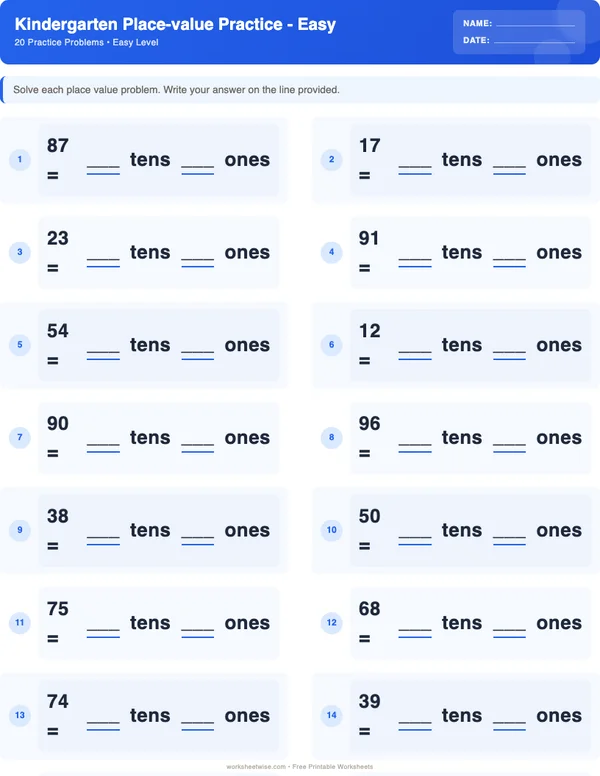
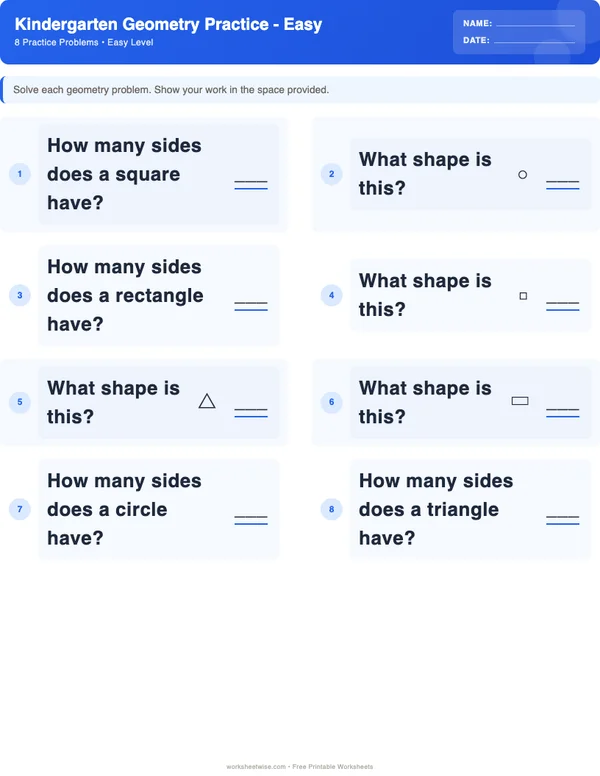
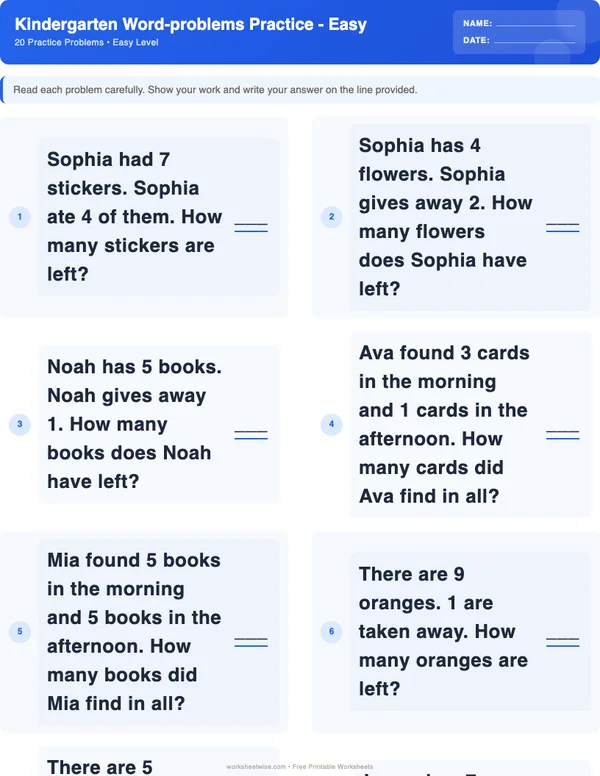
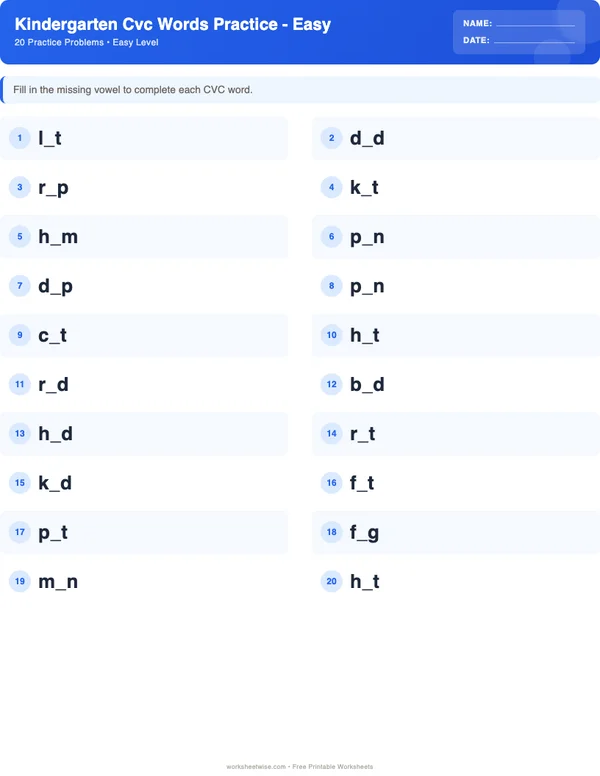
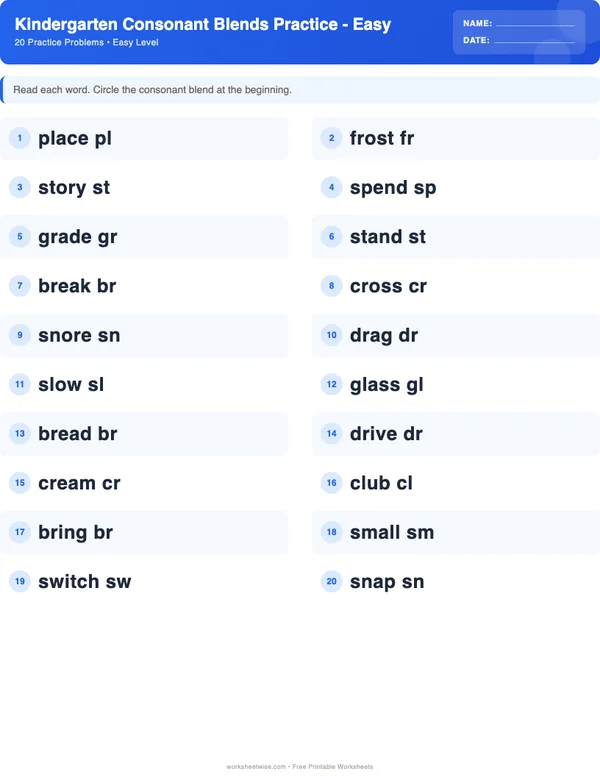
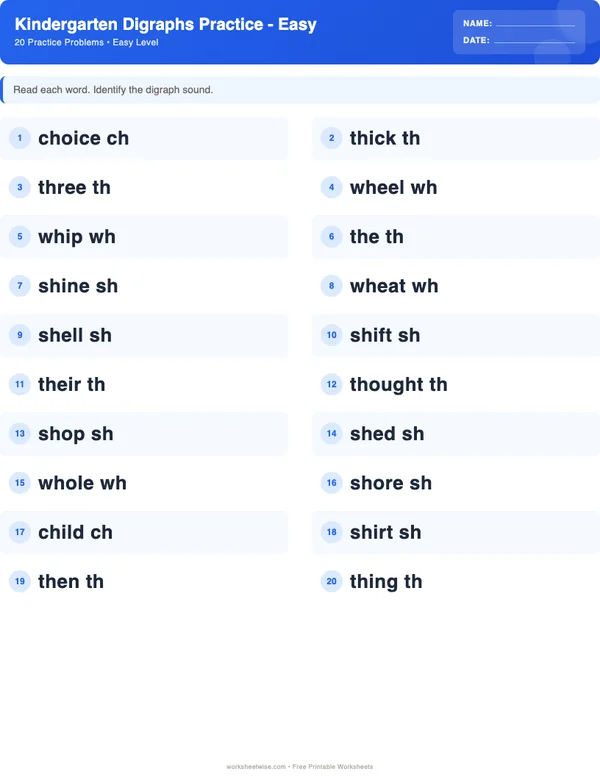
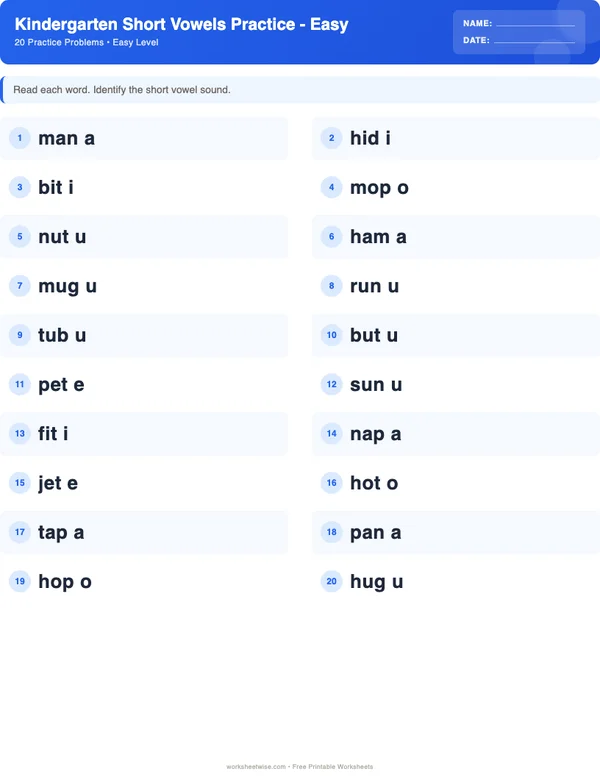
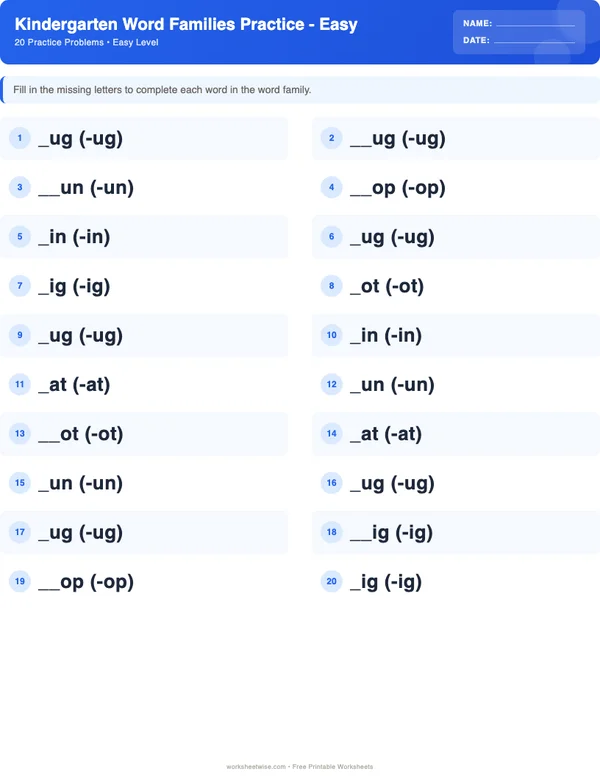
107 relevant free entry points are available. Each one includes a printable learner PDF and separate answer key.
A useful practice loop
Print less. Observe more.
- Choose one skill and model the first item aloud.
- Use a short set and notice the learner’s strategy.
- Change the next task from the work you can see.
Need more than the free sheet?
Plus includes all 1926 matching catalogue variations where available, plus saved deterministic generators and the worksheet designer.
See Plus membershipExplore after-school worksheets with answer keys by subject or level
Complete guide
How to teach and practise after school worksheets
3,454 words Updated 6 instructional visuals
Make after-school practice short enough to finish well
After-school worksheets work best as one small part of a transition routine, not as a second school day. Choose one target skill, mark a stopping point before handing over the page, and plan a brief conversation afterward. For many elementary learners, 8–15 focused minutes is more useful than completing every item while tired. Younger children may need even less.
A practical sequence is:
- Allow time for a snack, movement and reconnection.
- State the single purpose: “We are checking how you count objects,” not “Finish this worksheet.”
- Complete one example together.
- Let the learner work until the marked stopping point.
- Discuss one success and one revealing error.
- Record the next teaching action in one sentence.
The WorksheetWise catalogue currently provides 1,926 variants across eight grade labels, four subjects and 23 topics, including 107 free resources. That range supports precise selection, but it also makes restraint important. A learner who needs six carefully chosen CVC words does not benefit merely because a printable contains 20 items. Fold the page, cover a section or stop at an agreed line.
Grade and age labels are discovery aids rather than placement decisions. They help adults locate plausible material; they do not determine what a particular child should do. Local curriculum sequences also differ, so a grade label describes the worksheet’s intended practice level—not confirmed standards alignment, readiness or mastery.
Prepare before the learner reaches the table
The most important preparation happens without the learner present. Preview every item, solve it yourself, inspect the answer key and decide what evidence you want to see. An answer key can confirm a result, but it cannot tell you whether the learner understood the prompt, guessed, counted inaccurately or used a sound strategy.
Select one observable target
Write a narrow target that you could hear or see. Useful targets include:
- Touch each object once while counting a scattered set.
- Blend three sounds into one CVC word.
- Distinguish
shfromchin spoken and printed words. - Represent a division situation as equal groups.
- Explain why a punctuation mark belongs at the end of a sentence.
Avoid broad goals such as “get better at math” or “improve reading.” They do not help you decide which items to use or what to notice.
Then check the page against five selection criteria:
- Skill match: Does each chosen item actually exercise the target?
- Reading load: Could unfamiliar vocabulary hide the target skill?
- Response load: Is the writing, drawing or copying demand necessary?
- Length: Can the selected portion be completed before fatigue overwhelms the evidence?
- Checkability: Can you tell what produced an incorrect response?
The catalogue calls the representative free sheets “easy.” Do not transfer that label to a learner. Define difficulty through observable task features instead. A counting page is more supported when sets are small, neatly arranged and pictured; it becomes more demanding when objects are scattered, quantities are larger or missing numerals must be supplied without a model. A phonics page is more supported when it offers pictures or letter choices; it becomes more demanding when the learner must read or spell without those cues.
Set the stopping point in ink
Circle six items, draw a line after one row or attach a sticky note saying, “Stop here and check together.” A clear endpoint reduces negotiation and lets the learner see that the task is finite. Keep the unused portion for another day rather than presenting it as unfinished debt.
Prepare any support that preserves the target: counters for counting, three tokens for sound segmentation, a number line for computation or a highlighter for punctuation. Also prepare a blank scrap of paper. It often reveals more than the worksheet because the learner can demonstrate a strategy without squeezing it into a response box.
Launch after transition, not at the moment of arrival
A learner walking in from school may be hungry, physically restless, socially preoccupied or tired of following directions. Treat the transition as part of the teaching context. Offer food if appropriate, allow movement and reconnect briefly before asking for academic attention.
Use a two-minute readiness check
Ask for a small, observable response:
- “Would you rather start now or after ten minutes of movement?”
- “Show me with your fingers: how much thinking energy do you have from one to five?”
- “Read these two words with me.”
- “Count these five buttons while you touch them.”
This is not a diagnosis. It is a same-day decision about task size and support. If the learner can engage but is sluggish, reduce the number of items and keep the target. If the learner cannot settle after reasonable transition support, postpone the sheet rather than converting fatigue into conflict.
Launch with a purpose, a model and a stopping point:
“We are practicing touching each object once as we count. Watch me do the first set. You will try the next four. We stop at the blue line, and then you’ll tell me which set was hardest.”
Do not lead with “This is easy.” That can make a mistake feel like a verdict. Describe the work instead: “These sets have up to ten objects, and the objects are arranged in different ways.”
Use a print-plus-conversation routine
The printable creates a stable set of prompts; conversation exposes the thinking behind the marks. Keep the adult contribution brief enough that the learner still does the intellectual work.
Work in three passes
Pass one: model one item. Think aloud only about the target. For counting, touch and move each counter while saying one number. For phonics, point to the letters as you blend. Avoid adding several rules at once.
Pass two: watch a short independent attempt. Choose three to six items initially. Stay nearby without correcting each response as it appears. Immediate interruption can erase useful evidence and make the learner wait for adult approval after every mark.
Pass three: discuss evidence. Ask the learner to choose one item to explain. Then choose one item that helps distinguish between possible causes of an error. Finish with either one corrected example or one oral transfer question—not a complete reworking of the page.
Useful prompts include:
- “Show me what you did first.”
- “Where did the number in your answer come from?”
- “Say the sounds while you point to the letters.”
- “Can you build that quantity with counters?”
- “Which two choices were you deciding between?”
- “What would you check if I were not here?”
The IES foundational reading practice guide supports explicit instruction in sound segments, letter–sound relationships, decoding and connected text. It did not assess WorksheetWise. Applied here, that guidance means a phonics printable should sit inside spoken modeling, blending and reading—not replace them.
The IES guide on teaching math to young children recommends using developmental progressions, monitoring children’s mathematical understanding and teaching them to view and describe their world mathematically. In an after-school routine, manipulatives and explanation therefore belong beside the printed answers.
Match the routine to the subject
The transition structure can stay consistent while the evidence changes by subject. These examples use catalogue facts and have been checked for internal accuracy.
Counting: preserve one-to-one correspondence
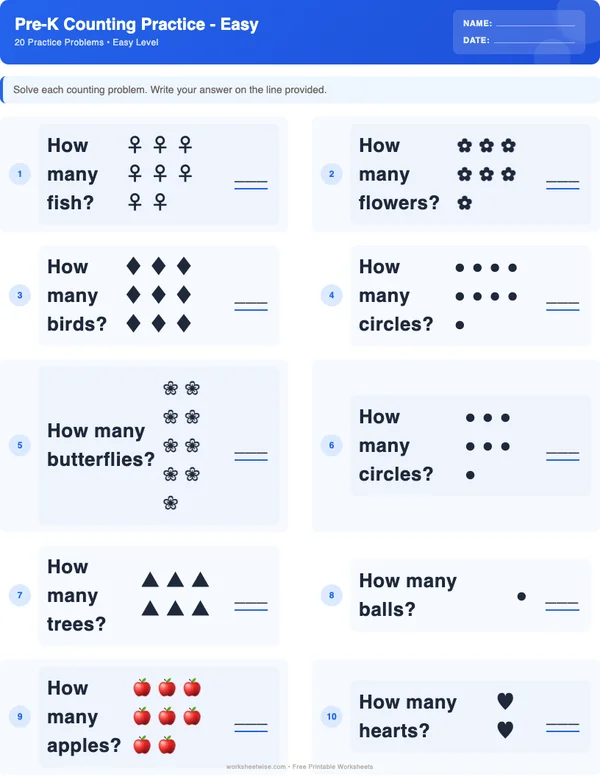
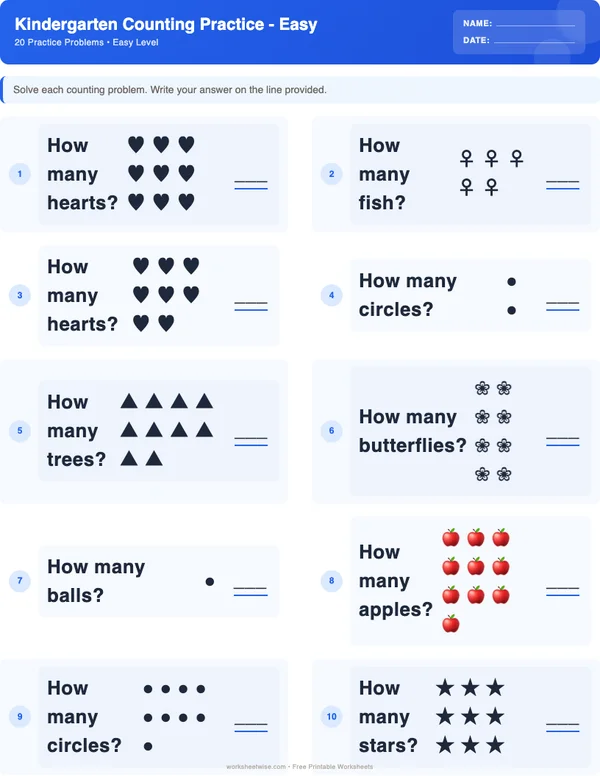
The free Pre-K Counting guide and sheet contains 20 problems and focuses on skills including number sequences, missing numbers and counting sets. Do not assign all 20 automatically.
For a three- or four-year-old, prioritize brief adult-led oral, matching, manipulative and movement work over desk work. Place seven buttons in a scattered group. Ask the child to move each button into a cup while saying one number word. There are seven buttons, so the checked answer is 7 if every object is counted exactly once. Then invite the child to match a numeral card showing 7.
This example belongs on this page because scattered objects reveal whether the child coordinates one number word with one object; a neat row can allow a memorized rhythm to mask that difficulty. It also fits after school because it takes about two minutes, includes movement and does not require sustained pencil control. If the learner says “1, 2, 3, 4, 5, 6, 7, 8” while moving seven buttons, the issue shown is not simply a wrong written answer. Observe whether an object was counted twice, a number word was inserted or the spoken sequence continued after the objects ended.
For a kindergartner, the Kindergarten Counting guide and sheet may be the better discovery point, but selection still depends on observed task features rather than the grade label alone.
CVC words: hear, blend, read and spell
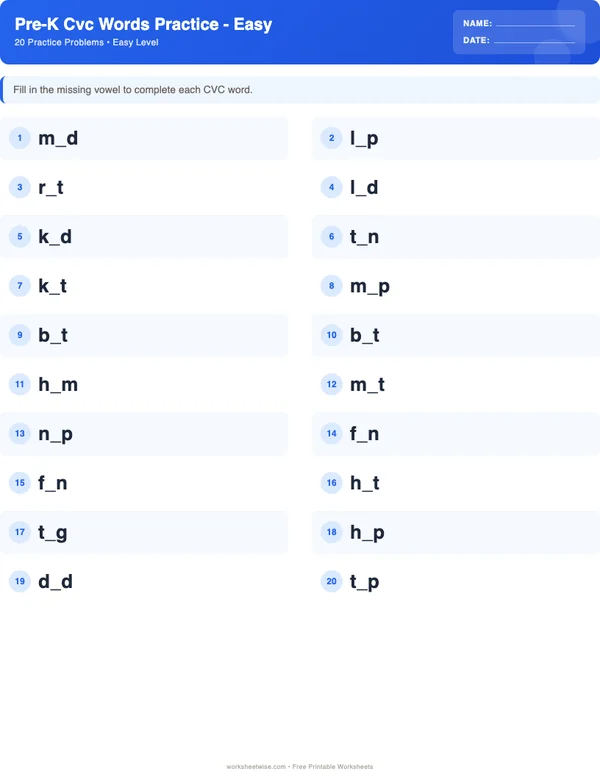
Suppose the selected item asks the learner to read map. Check it as three phonemes: /m/ /ă/ /p/, blended to map. After the learner reads it, say the word without showing it and ask them to build or write map. Then change the first sound: “Replace /m/ with /t/.” The checked result is tap.
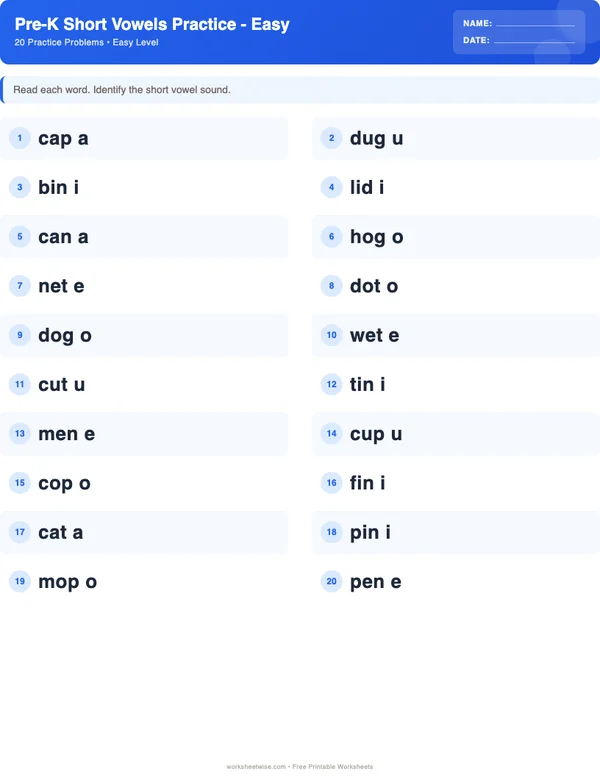
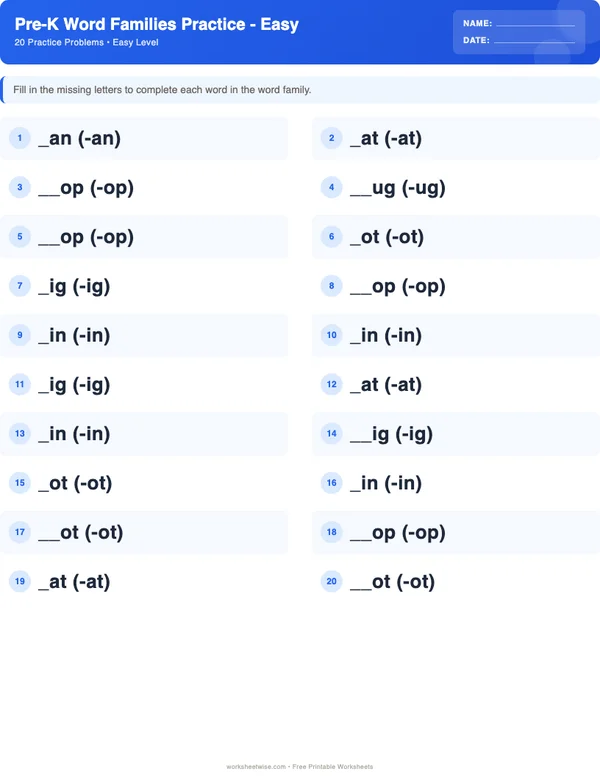
This example belongs here because the catalogue’s CVC resources specifically include word building, picture matching, fill-in-the-blank and reading across short-vowel families. The read–change–spell sequence tests more than picture recognition while remaining short. Use the Pre-K CVC Words guide and free sheet as a source of prompts, but for ages three and four keep the first attempt oral and manipulative: push one token for each sound, sweep beneath the tokens to blend, and use letter tiles before expecting desk writing.
If map is read as “mat,” ask the learner to point to the final letter and say its sound. If the individual sounds are accurate but the blend fails, model continuous blending and retry with the same word. Those are different instructional responses to the same incorrect spoken answer.
Digraphs: distinguish one combined sound from a blend
Use the pair ship and chip. In ship, sh represents /sh/; in chip, ch represents /ch/. The remaining letters in each word represent /ĭ/ and /p/. Ask the learner to sort ship, shop, chip and chop into two columns. The checked groups are:
sh: ship, shopch: chip, chop
This example belongs because the catalogue describes digraph practice as identifying, reading and spelling words with initial and final digraphs. The four-word contrast holds the vowel pattern relatively stable while changing the target digraph. If the learner calls sh two separate sounds, place two letter cards together and explain that these two letters represent one sound in these words. If the learner can sort the words but cannot read them, the visual pattern may be recognized without successful decoding.
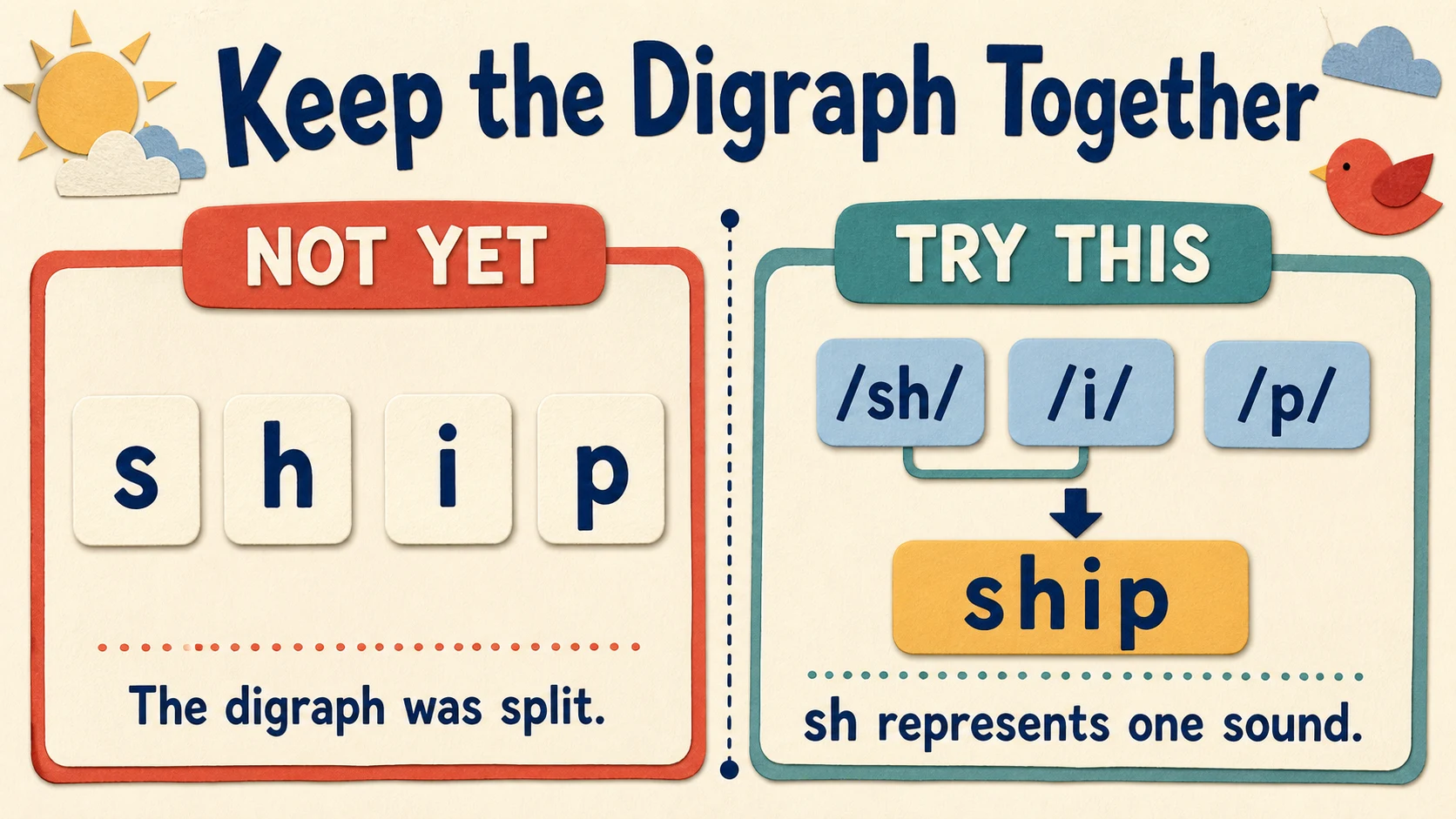
Use the error pattern to choose one spoken or letter-tile response before assigning another digraph row.
Sight words: separate recall from context
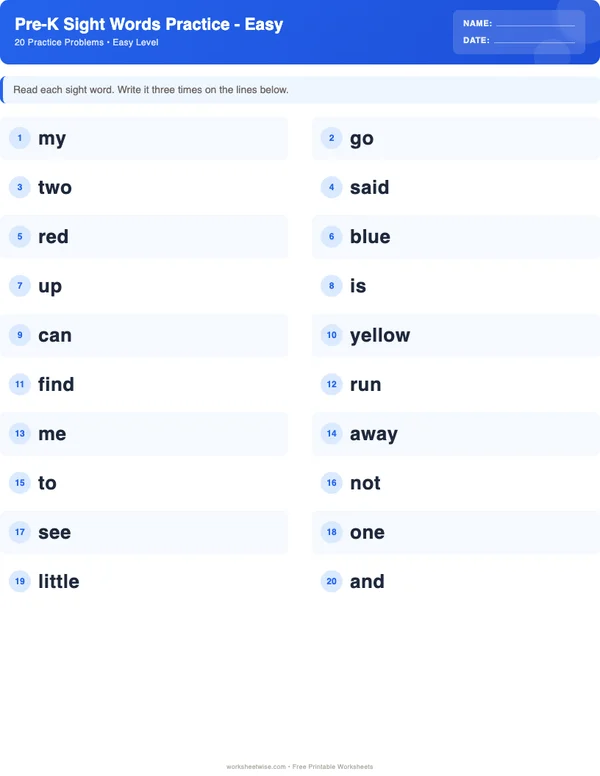
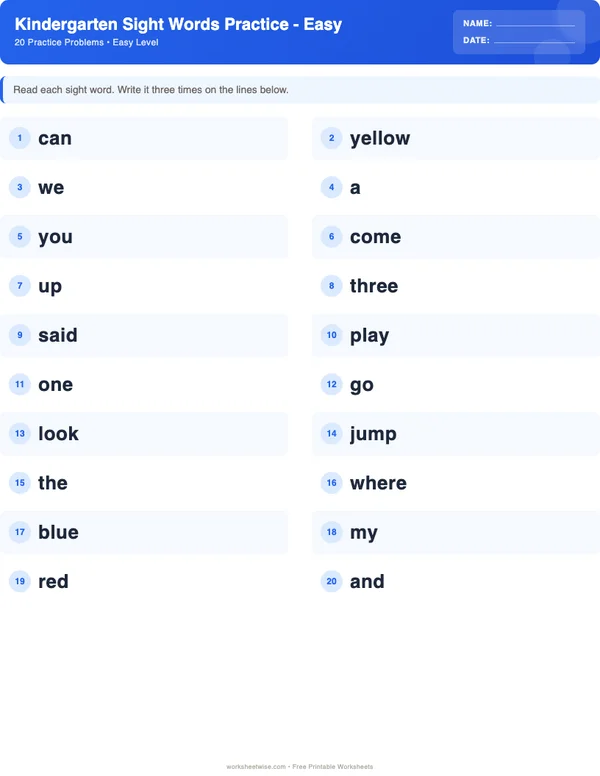
For the word said, first ask for a quick read. Then place it in “Maya said hello.” If the learner reads the isolated word but pauses in the sentence, practice reading the complete sentence naturally. If the learner guesses saw, compare the printed words letter by letter and return to the sound–spelling relationships already taught rather than demanding faster guessing.
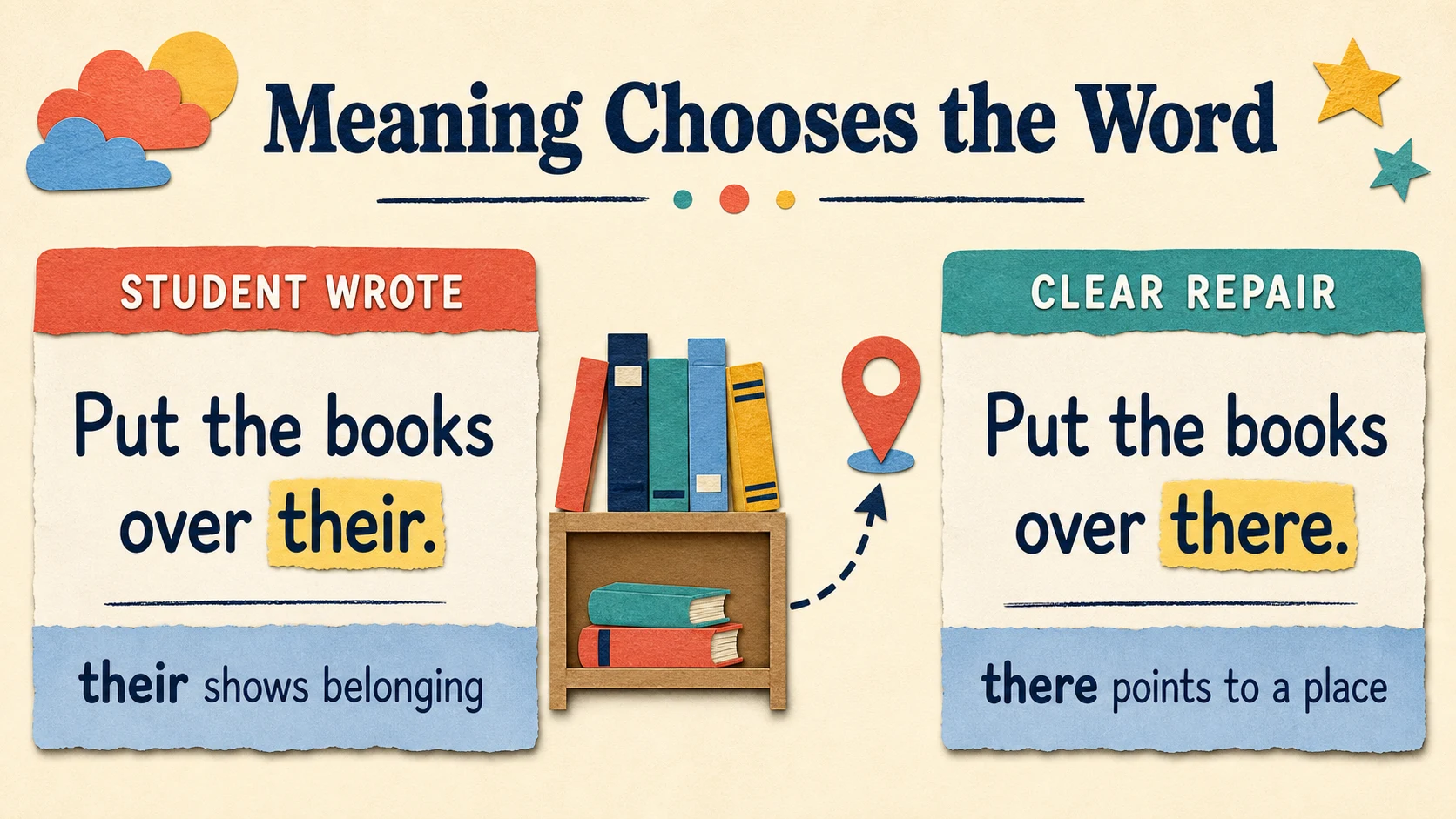
One sight-word error can reflect visual guessing, uncertain spelling knowledge or difficulty carrying recognition into a sentence.
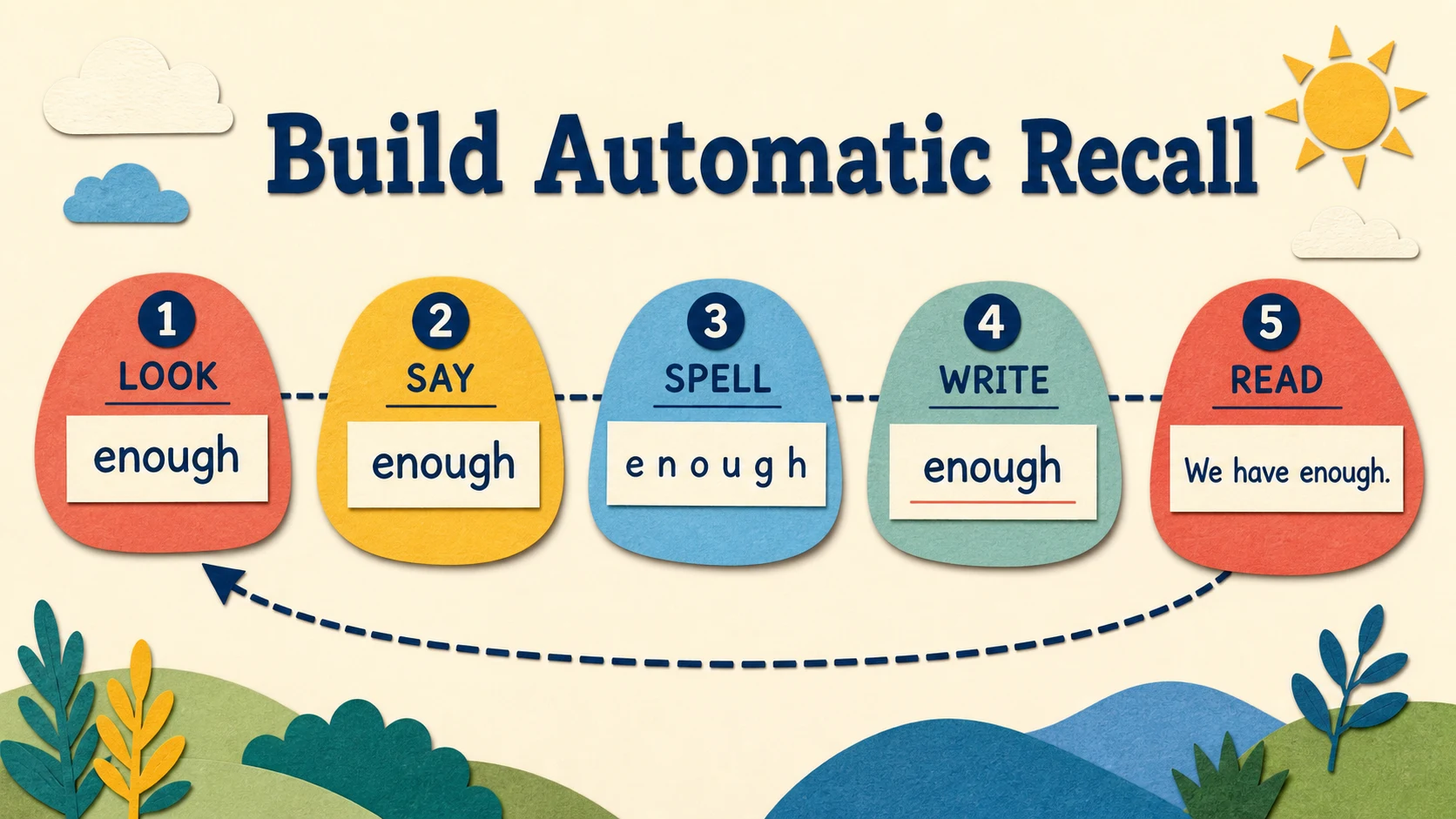
Move from an adult model to a brief independent check only after the learner can explain or demonstrate the word pattern.
This belongs in an after-school guide because sight-word sheets can easily become long copying exercises when the useful evidence may come from two words and one sentence. The suggestion to limit the set and add a sentence is an editorial application, not a claim that a fixed number of repetitions produces a particular outcome.
Division: ask what the quotient represents
Present: “Twelve counters are shared equally among three plates. How many counters go on each plate?” Distribute one counter to each plate repeatedly. Each plate receives four, so 12 ÷ 3 = 4. Check by recombining the groups: 3 × 4 = 12.
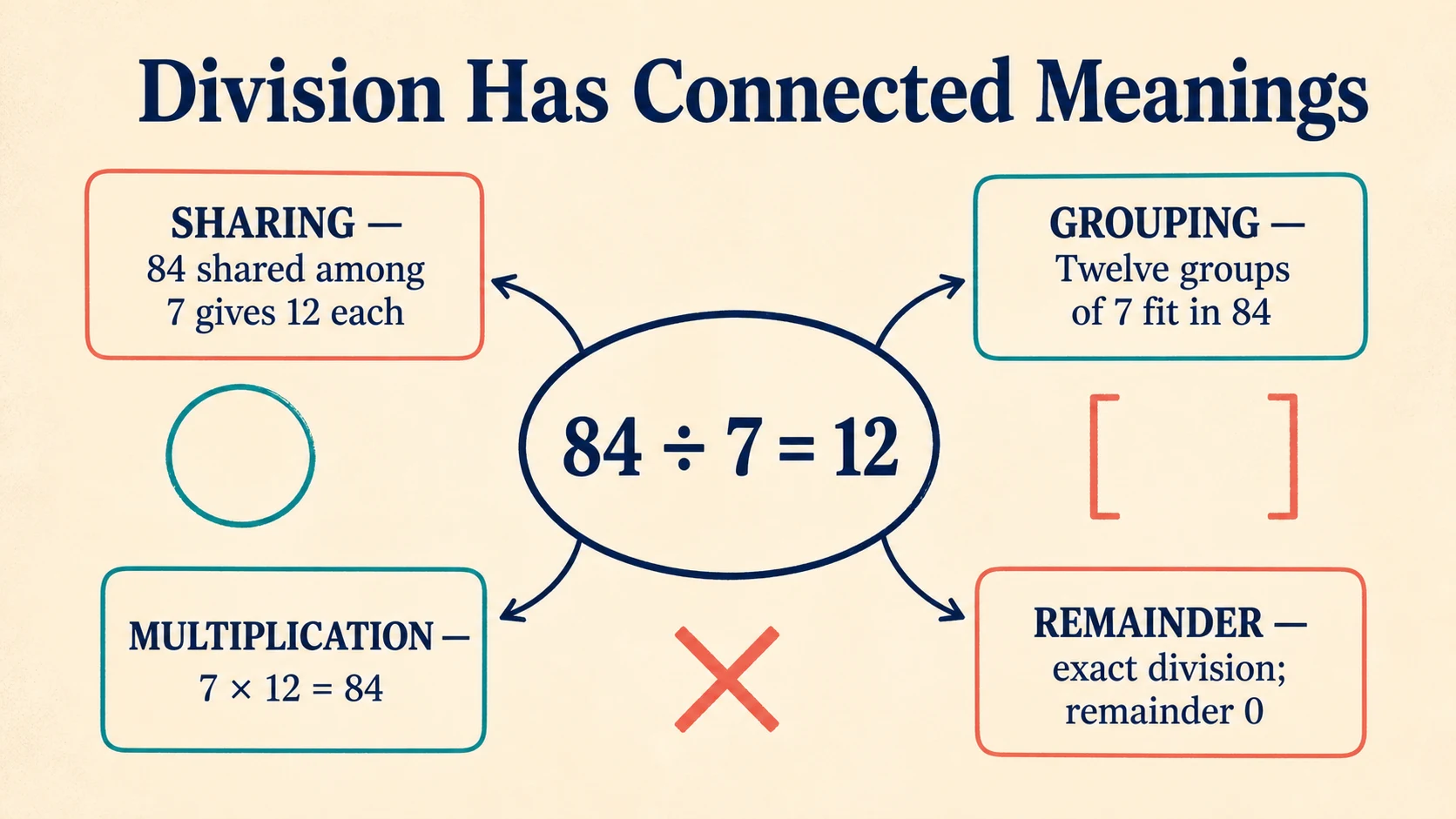
Use the map to identify the exact division idea being practiced; equal sharing, equal grouping and symbolic calculation are related but not interchangeable tasks.
This example belongs because it connects a printed equation to equal sharing and offers a concrete after-school alternative when symbolic work stalls. If a learner writes 9, do not merely circle the answer. Ask them to deal 12 counters across three plates. Notice whether they stop after one round, make unequal groups or lose track of the original total.
The IES guide for assisting students who struggle with mathematics recommends systematic instruction, clear mathematical language, representations and attention to word problems. That sourced guidance supports using counters and explicit language here; it does not establish a diagnosis from one worksheet response.
Spelling and punctuation: reduce copying, increase explanation
For spelling, dictate hop, then ask the learner to change it to shop. The checked change is adding sh before op; shop has three phonemes, /sh/ /ŏ/ /p/, represented by four letters. A learner who writes sop may be representing three heard sounds but not yet using the sh spelling for /sh/.
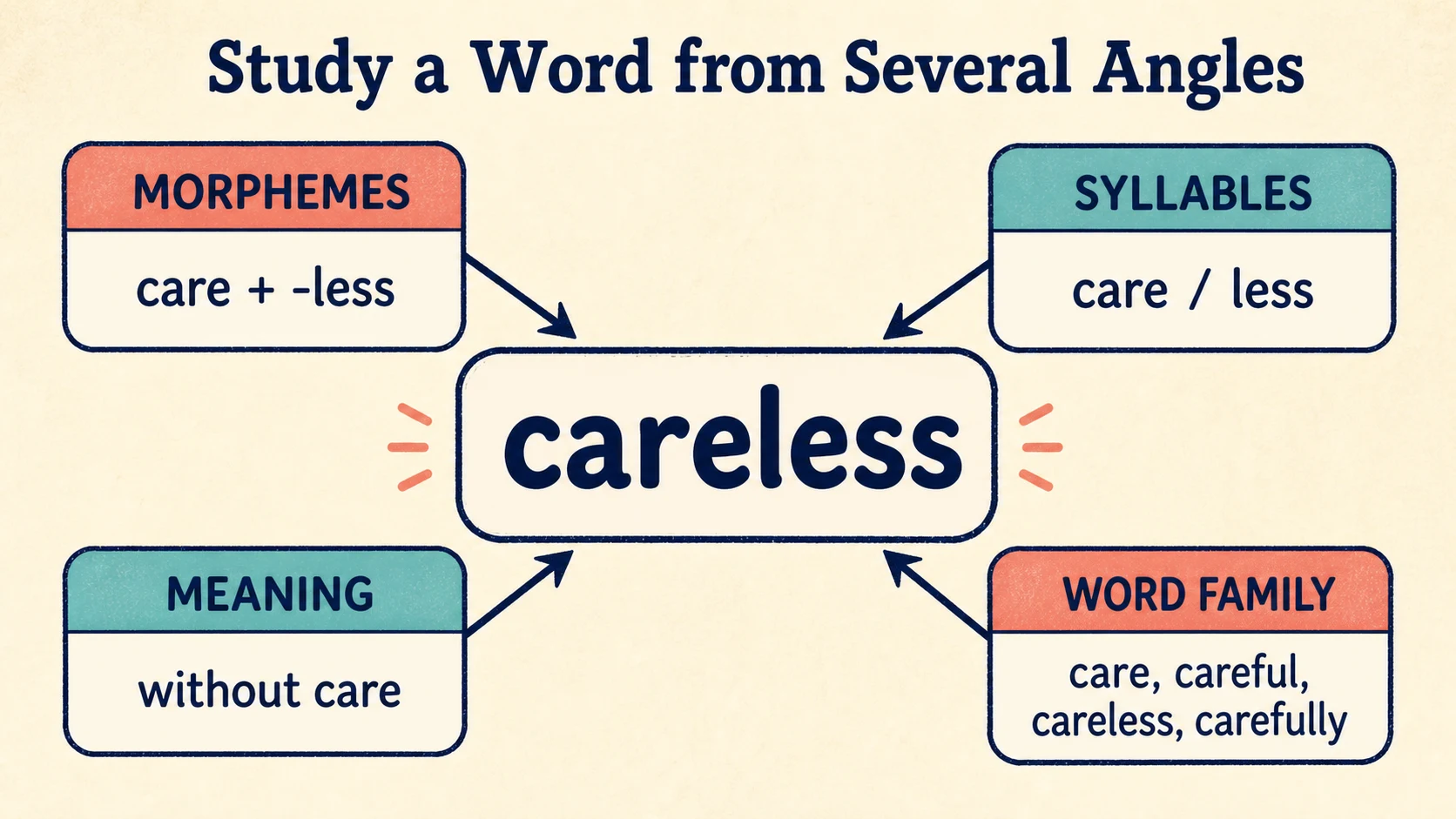
Choose one spelling relationship from the map so that tired handwriting does not obscure the word knowledge you intend to observe.
For punctuation, use two checked sentences:
- Where is my blue backpack?
- Please put your shoes by the door.
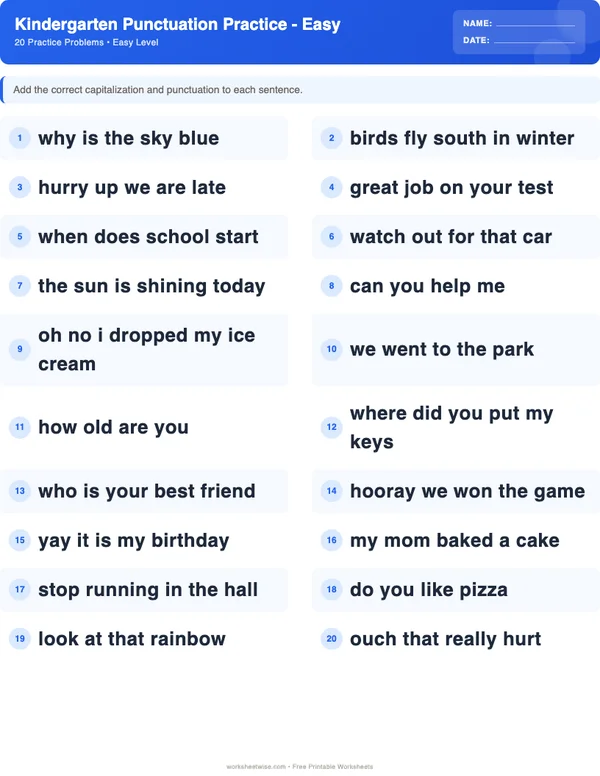
The first asks a direct question and takes a question mark. The second is a request and takes a period. Ask the learner to read each aloud and explain the ending mark. This belongs after school because explanation distinguishes punctuation knowledge from indiscriminate mark insertion.
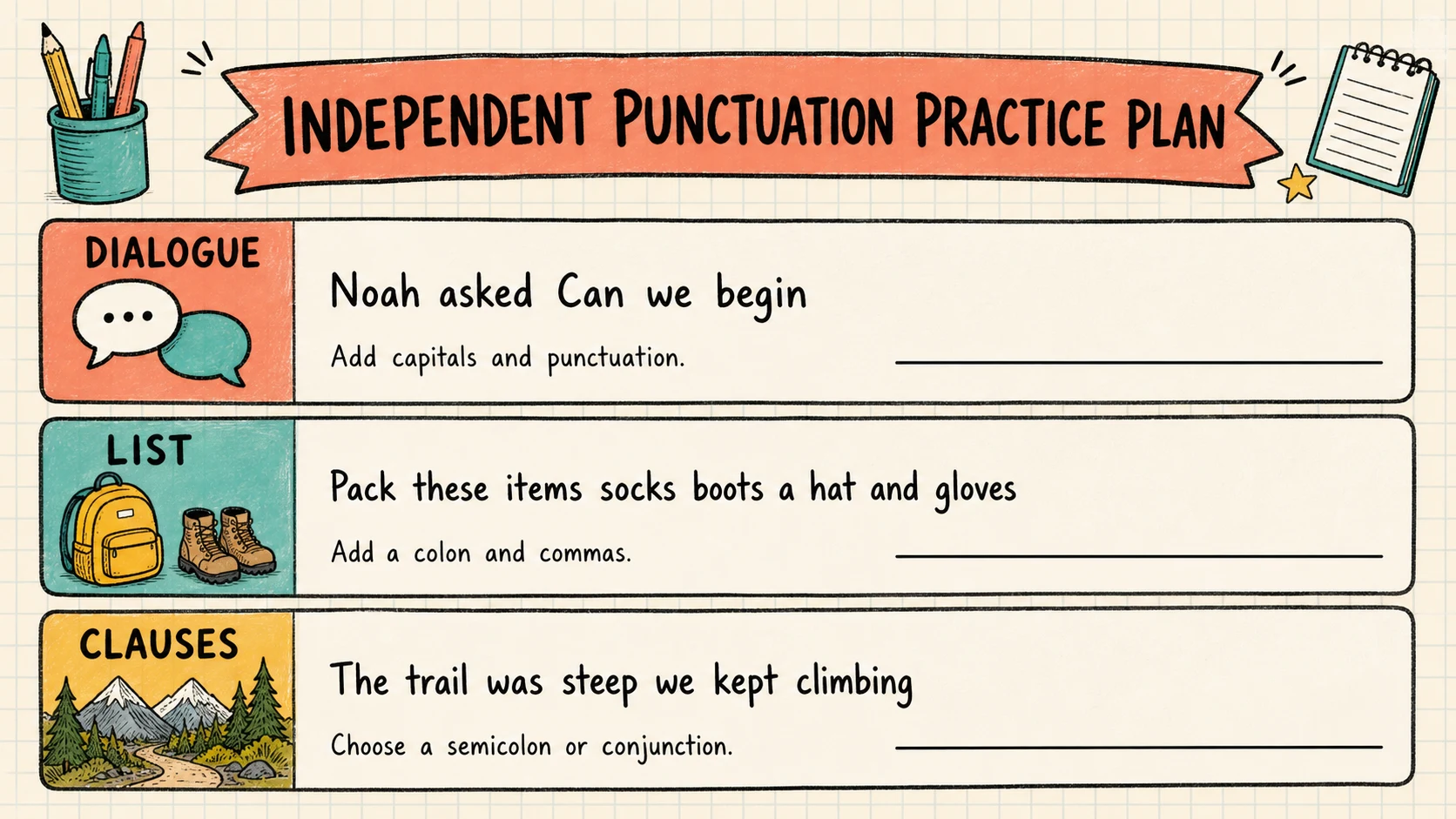
Treat a longer punctuation plan as spaced, selectable practice—not a requirement to complete a full page every evening.
The IES elementary writing guide recommends daily time for writing, teaching the writing process and building foundational writing skills. For after-school support, a short punctuation decision can contribute to that broader work, but a worksheet alone does not provide the planning, composing and revising involved in authentic writing.
Observe without turning fatigue into a label
Record what happened, not what you think the learner “is.” “Skipped three objects in scattered sets after item four” is useful. “Bad at counting” is neither precise nor justified. One tired session cannot establish a persistent need, and this guide does not offer diagnoses.
Read errors by pattern, timing and explanation
Use three lenses:
Pattern: Did the same error recur? Repeatedly dropping the final consonant in CVC words suggests a different next lesson from one accidental omission.
Timing: Did accuracy change after several items? Correct responses on items 1–5 followed by rushed omissions on items 6–10 may indicate that the task exceeded that day’s useful duration.
Explanation: Can the learner justify an answer? A correct answer reached by counting a picture accurately differs from a correct answer copied from a visible key.
When an answer is wrong, test the smallest plausible cause:
- Read the direction aloud to separate comprehension load from the target skill.
- Offer manipulatives to separate representation from calculation.
- Ask for an oral response to reduce handwriting load.
- Remove picture choices to check whether a phonics response depended on guessing.
- Present one parallel item to see whether the correction transfers.
These are teaching checks, not assessments that justify placement, disability conclusions or promises about progress. If a pattern persists across settings and occasions, share specific observations with the learner’s teacher or an appropriately qualified professional.
Give feedback that leads to one repair
Start with evidence: “You touched each counter once in the first three sets.” Avoid general praise that gives no reusable information. Then identify one repair: “In this set, the last button was counted twice. Move each button after you count it.”
A compact feedback exchange has four parts:
- Name what worked.
- Point to one exact place where the strategy broke down.
- Model or prompt one correction.
- Give one new item that checks transfer.
For 12 ÷ 3, for example: “You made three groups, which matches the three plates. The groups were not equal. Deal one counter to each plate in rounds.” Then try 8 ÷ 2 with counters. The checked result is four in each group. Stop if the learner demonstrates the corrected process; more of the same is not automatically better.
Do not use the answer key as a public scorecard. Keep it beside the adult, ask the learner to explain before revealing the answer and correct only the selected items. If practice turns into debate over points, grades or perfection, the routine has lost its instructional purpose.
Keep a record small enough to maintain
A useful log can fit on one line:
Date | target | items attempted | evidence | next action
For example:
Aug. 30 | count scattered sets to 10 | 5 | accurate through 7; double-counted when objects touched but not moved | count one new scattered set while moving objects
Record attempted items rather than a percentage when the sample is very small. Four correct answers out of five is mathematically 80%, but that percentage can imply more certainty than five selected responses support.
Save only information that changes the next decision:
- the support used;
- the error pattern;
- whether the learner explained the strategy;
- when fatigue appeared;
- the next item or representation to try.
For broader evidence gathering, see Formative assessment Worksheets With Answer Keys. Use it to structure observation, not to convert an informal after-school interaction into a diagnosis or standardized judgment.
Reuse a page without repeating the same demand
A printed page can support several short sessions if each reuse has a clear purpose.
On the first day, complete selected items with manipulatives. On the second, cover the prior answers and solve two parallel items orally. On the third, ask the learner to explain or create an example. A counting picture can become a “show the same quantity with buttons” task. A CVC list can become a word sort or dictation set. A punctuation item can become a sentence-reading and explanation task.
Preserve the target when adapting:
- Read directions aloud if decoding the directions is not the target.
- Allow pointing or oral answers if handwriting is not the target.
- Reduce the number of items without simplifying the mathematical or phonics relationship.
- Enlarge or isolate items if visual crowding interferes.
- Use counters or letter tiles before returning to symbols.
- Add movement between small sets rather than rewarding endurance with unrelated entertainment.
Do not preserve the appearance of the worksheet at the expense of the skill. Conversely, do not adapt away the target. Reading every word aloud for a learner defeats a decoding check; placing the correct number of counters yourself defeats a counting check.
Know when a worksheet is the wrong tool
Put the page aside when the skill requires experience the paper cannot provide, when fatigue makes responses uninterpretable or when interaction has become adversarial.
A worksheet is the wrong first tool for a three- or four-year-old who needs to coordinate counting words with real objects, hear and manipulate sounds, match pictures, or move while learning. Begin with brief adult-led oral, matching, manipulative and movement work. Paper may follow as a tiny record of an experience already understood.
It is also the wrong tool when:
- the learner does not understand the underlying context or vocabulary;
- handwriting demand overwhelms an oral skill;
- a geometry idea needs building, turning or sorting real shapes;
- a word problem needs acting out before symbols make sense;
- emotional distress or exhaustion prevents useful observation;
- the goal is extended composition, discussion, experimentation or cooperative problem-solving.
Choose conversation, shared reading, counters, letter tiles, drawing, outdoor measurement, a game or rest instead. A postponed worksheet is not a failed session. The boundary protects both the relationship and the validity of what you observe.
Take one concrete step for the next afternoon
Choose one target now, not a mixed packet. Open the full worksheet library, select a page whose observable task matches that target, and preview its answers yourself. Circle no more than six initial items, mark the stopping line, prepare one support such as counters or letter tiles, and write one transfer question on a sticky note.
Tomorrow, use the sequence: transition, purpose, model, short attempt, conversation, one-line record. Your final note should name the learner’s next observable action—for example, “Move each object while counting one scattered set to eight” or “Blend and spell two short-a CVC words without picture choices.”
Put it into practice
Use the guide with a real printable
Move from explanation to a short, observable practice task. Check the first item together, then adjust the next session from the learner's actual work.
Open the first free worksheetExplore a neighboring collection
Choose by a different teaching need
Formative Assessment Worksheets With Answer Keys Classroom Worksheets With Answer Keys Homeschool Worksheets With Answer Keys Homework Worksheets With Answer Keys Independent Practice Worksheets With Answer Keys Intervention Worksheets With Answer Keys Morning Work Worksheets With Answer Keys School Readiness Worksheets With Answer Keys