Curated collectionAnswer keys includedPrint-ready PDFs
Intervention Worksheets With Answer Keys
Identify a narrow prerequisite, model it explicitly, reduce task variation and use observed errors to select the next practice step; no diagnostic or treatment claims.
Start with a real resource
Browse this worksheet collection
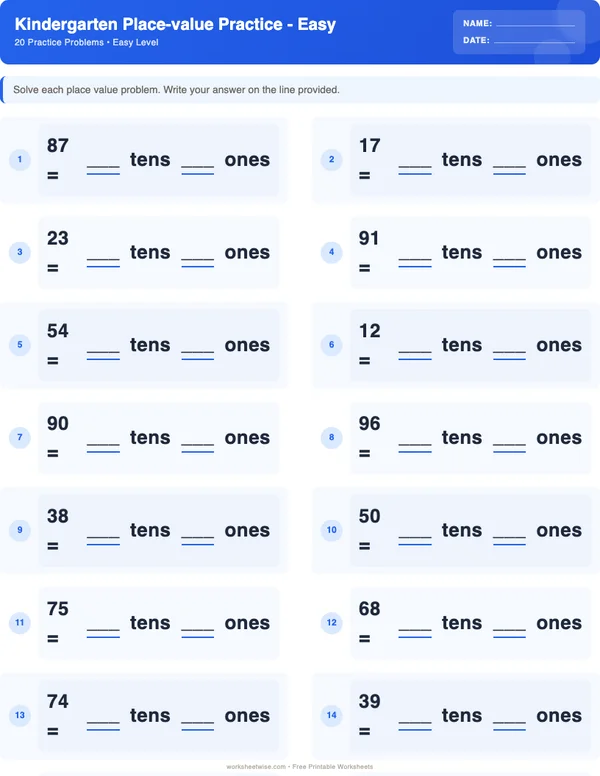
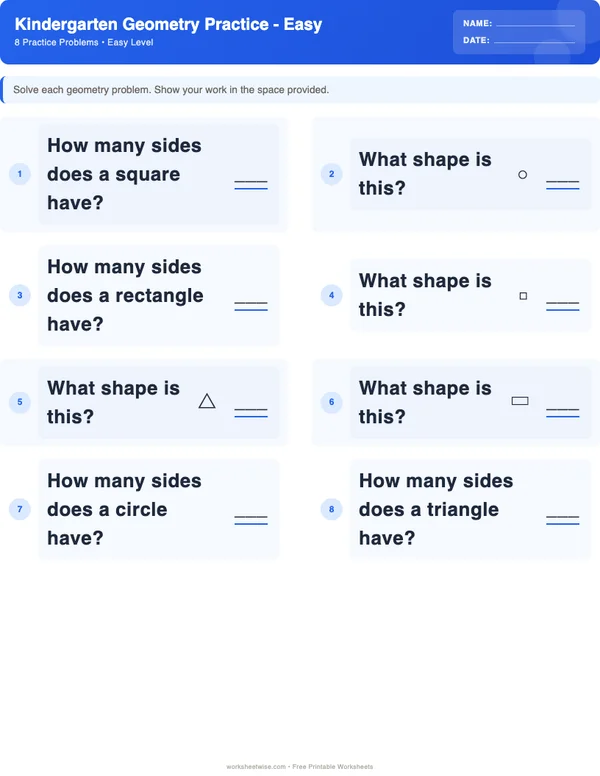
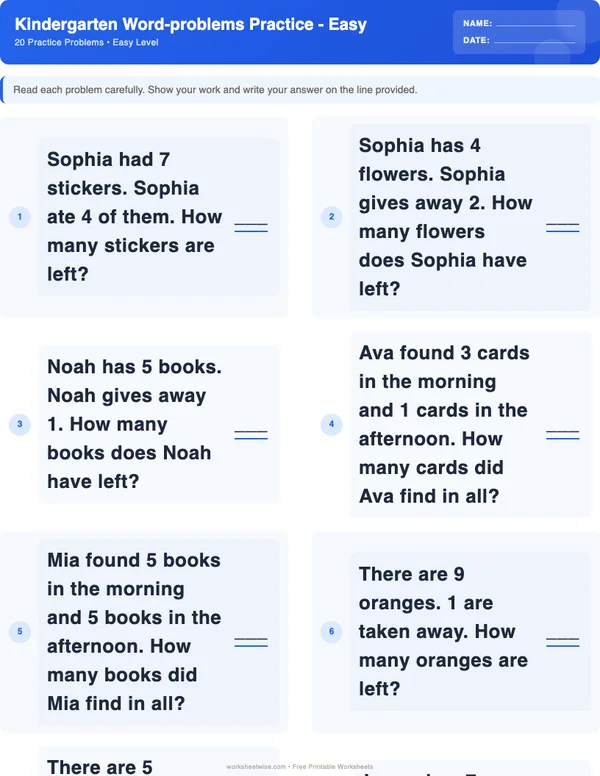
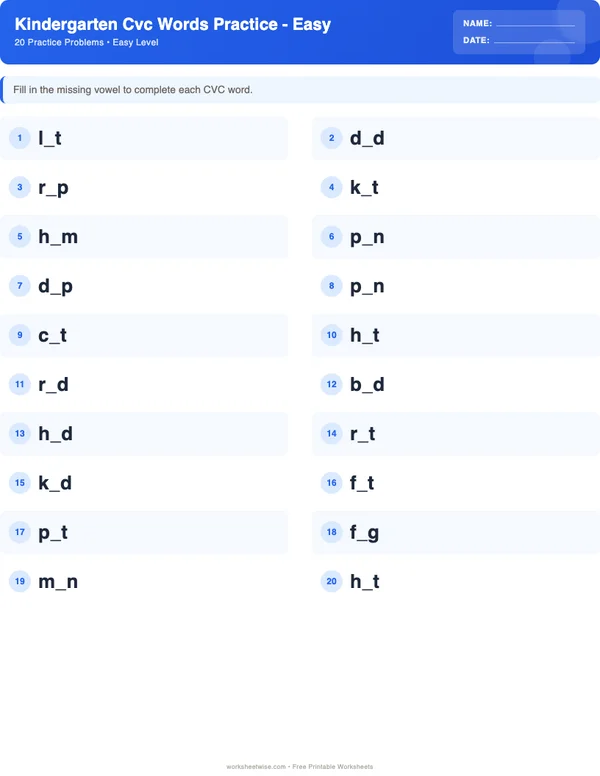
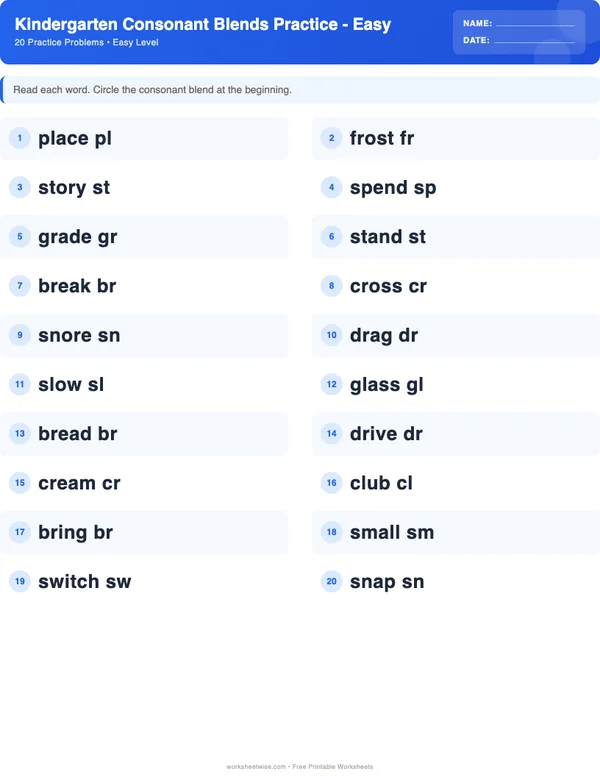
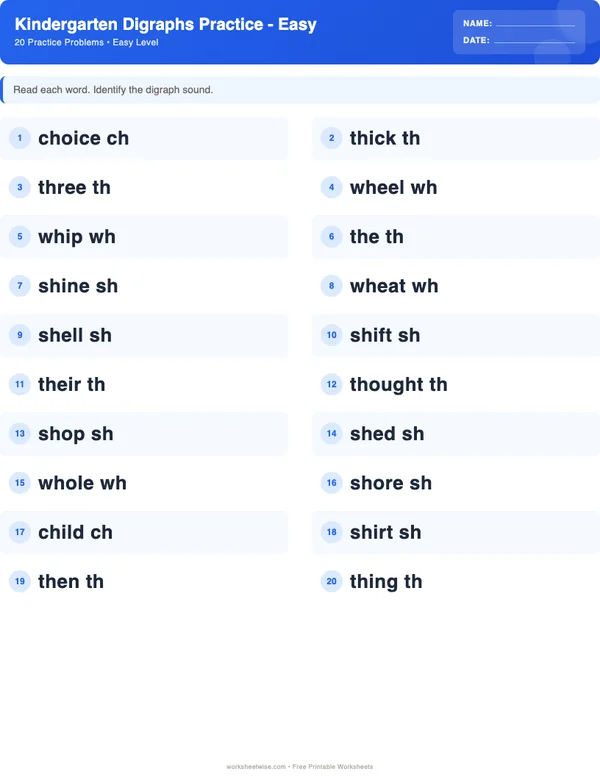
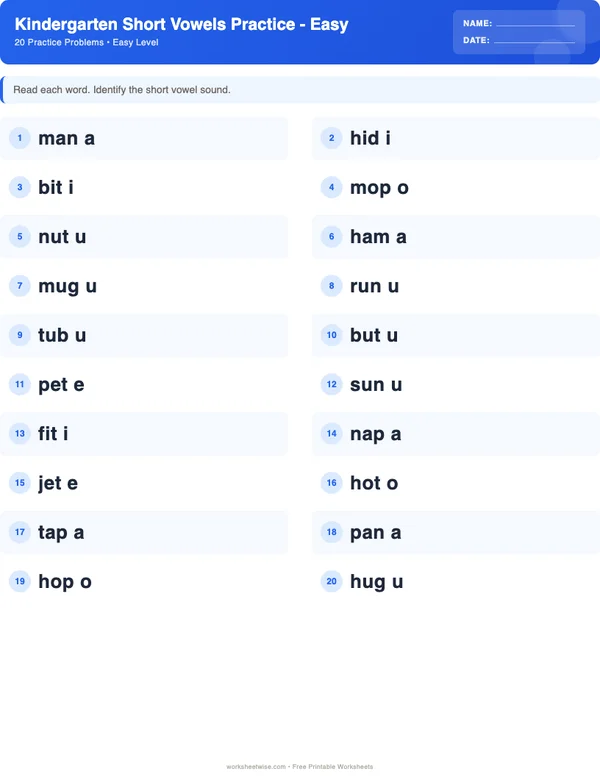
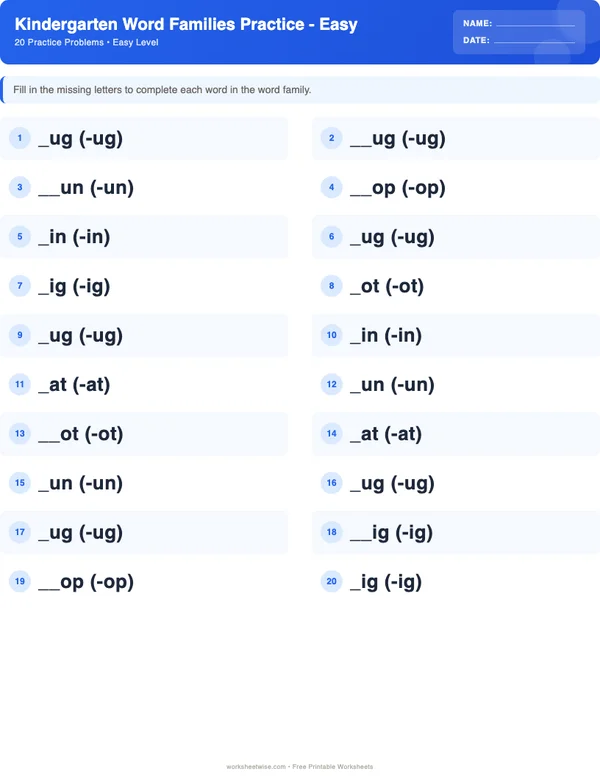
107 relevant free entry points are available. Each one includes a printable learner PDF and separate answer key.
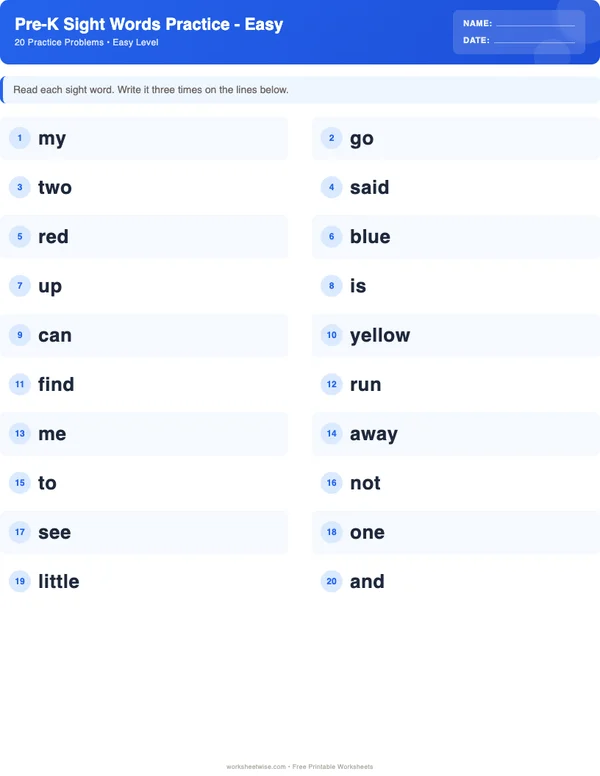
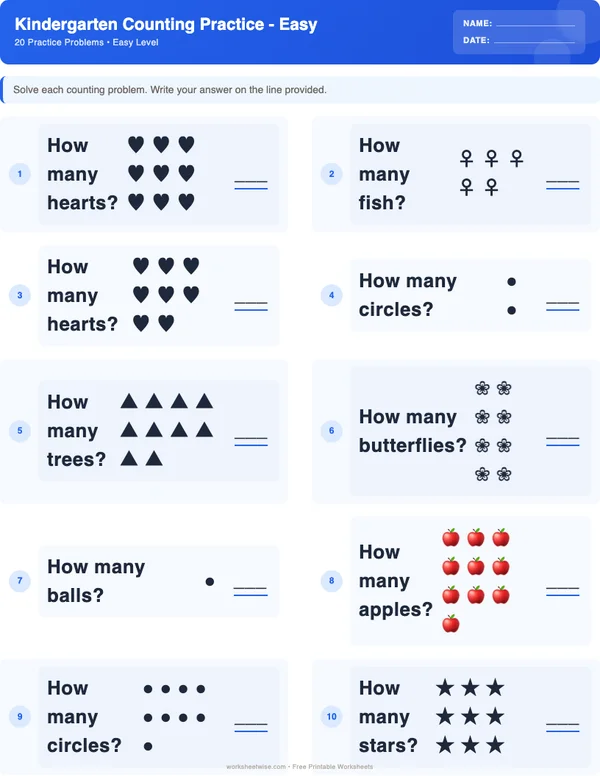
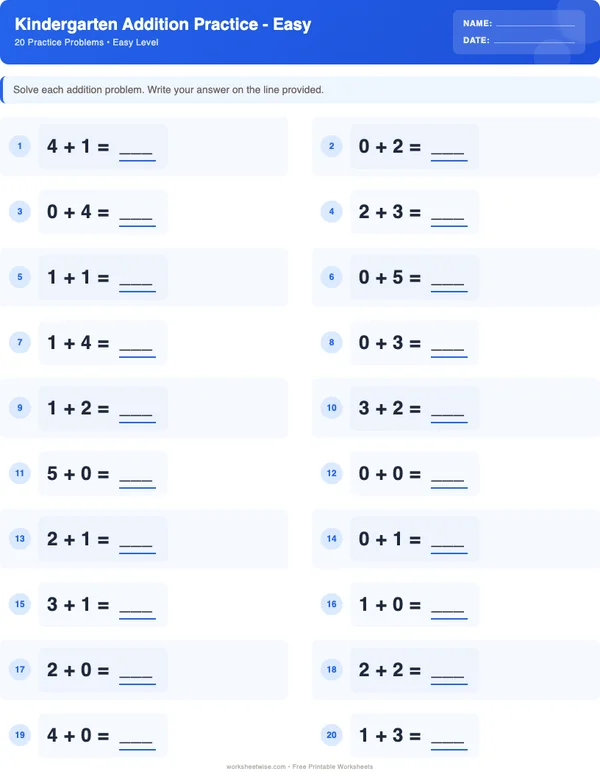
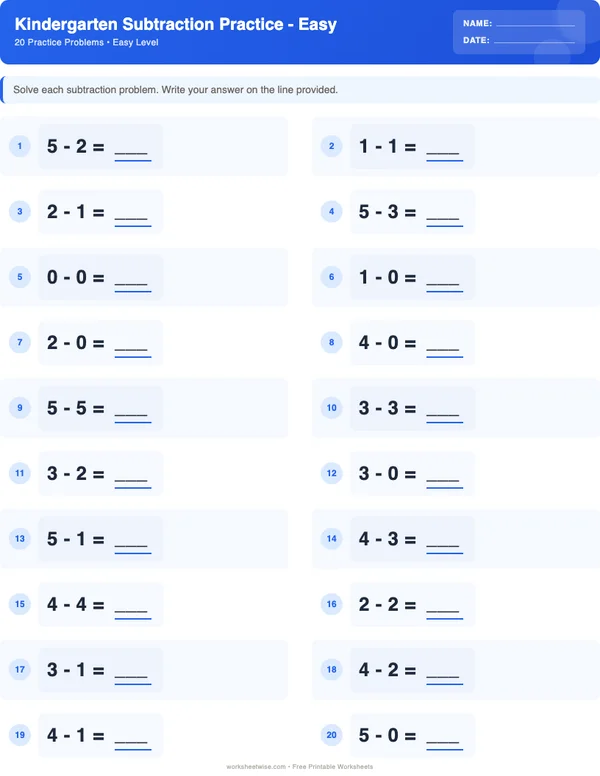
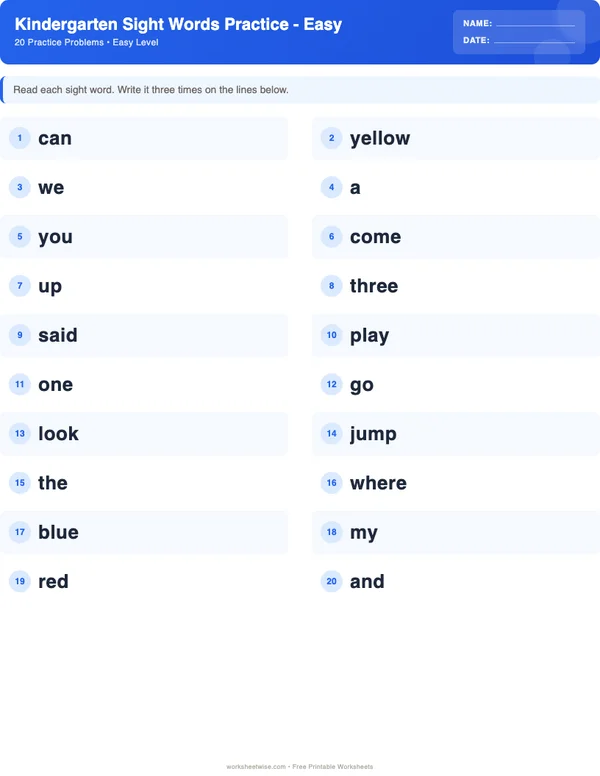
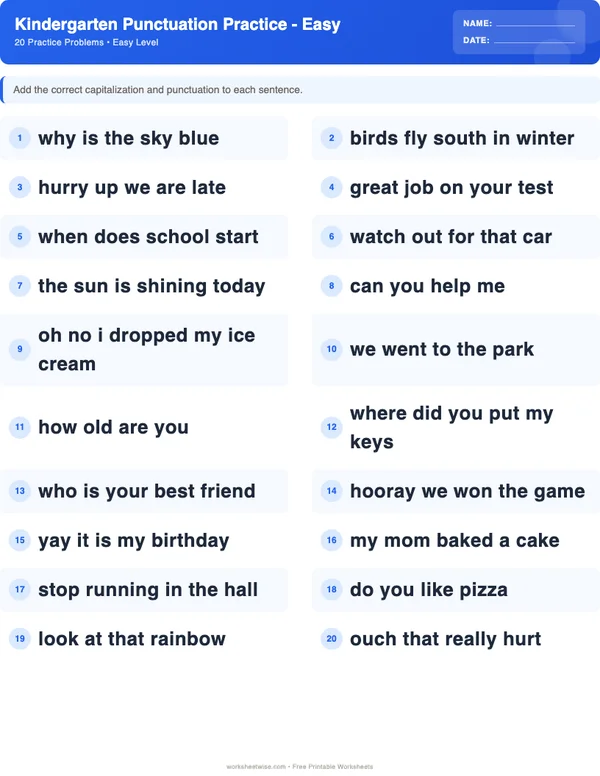
A useful practice loop
Print less. Observe more.
- Choose one skill and model the first item aloud.
- Use a short set and notice the learner’s strategy.
- Change the next task from the work you can see.
Need more than the free sheet?
Plus includes all 1926 matching catalogue variations where available, plus saved deterministic generators and the worksheet designer.
See Plus membershipExplore intervention worksheets with answer keys by subject or level
Complete guide
How to teach and practise intervention worksheets
3,606 words Updated 6 instructional visuals
Start with one prerequisite, not a broad subject
Intervention worksheets are most useful when an adult has identified one narrow prerequisite, demonstrated it explicitly, and chosen a short practice set that keeps the target stable. The worksheet is not a diagnosis, treatment, or complete lesson. It is a controlled place to notice what a learner does after instruction and to decide the next teaching step.
For example, “needs help with math” is too broad. “Touches objects more than once while counting a scattered set” identifies an observable difficulty with one-to-one correspondence. “Struggles with reading” is also too broad. “Reads ship as sip, omitting the sound represented by sh” points to a specific digraph-reading step.
WorksheetWise’s live catalogue contains 1,926 variants across eight grade labels, four subjects, and 23 topics, including 107 free resources. Those counts provide choice, but more choice is not automatically better. Begin with the smallest relevant target, not the largest packet.
Grade labels describe the intended practice level; local curriculum sequences differ. Age can help an adult discover potentially suitable material, but it is not a placement decision. Select from what the learner can already do, the prerequisite that is presently missing, and the task features on the page.
Prepare a short evidence-gathering lesson
A useful session can be planned on one index card. Write down five things:
- Target: the exact action the learner will perform.
- Prerequisite: what must already be reasonably secure.
- Model: one worked example with spoken reasoning.
- Practice sample: usually three to eight carefully chosen items before deciding whether to continue.
- Observation: the error or strategy you will record.
A target such as “complete the counting worksheet” describes an assignment, not learning. A better target is “touch each object once, say one number for each touch, and state the total.” For phonics, replace “practice CVC words” with “blend three sounds continuously to read short-a CVC words.” For writing, “add the correct end mark to four sentences and explain each choice” is more actionable than “work on punctuation.”
Check the answer key before the session. Confirm each printed answer yourself, including diagrams and alternate reasonable responses. Decide whether spelling, handwriting, reading load, or computation is part of the target. If it is not, plan a way to reduce that demand without supplying the target response.
Also decide your stopping rule. Stop or change course when the learner repeatedly uses the same incorrect process, cannot begin after a second model, becomes distressed, or shows that an assumed prerequisite is absent. Completing all 20 problems is not a defensible goal when the first four already reveal what needs teaching.
Select by task features rather than labels
The catalogue’s representative free sheets are marked “easy,” but difficulty must be interpreted through observable features. It does not describe a learner.
A lower-demand task might have:
- one operation or sound pattern at a time;
- small quantities;
- pictures or manipulatives that directly represent the answer;
- consistent directions and item formats;
- little unrelated reading or writing;
- no regrouping, competing vowel patterns, or multi-step decisions.
A higher-demand version of the same skill might remove the model, mix item types, change the position of an unknown, increase the quantity, require an explanation, or place the skill in connected text. Change only one important feature when you want to learn what caused success or difficulty.
Check the prerequisite before printing
Before selecting a kindergarten addition page, determine whether the learner can reliably count the represented quantities. Before digraph work, check whether the learner can blend simpler CVC words. Before a word-problem page, separate reading comprehension from computation by reading one problem aloud and asking the learner to retell the situation.
The formative assessment worksheets collection may be useful when your immediate purpose is to collect a small sample rather than assign extended practice. Regardless of the page used, interpret the work alongside what the learner says and does.
Match the response mode to the target
If the target is recognizing a short-vowel sound, the learner could point to or sort pictures rather than write every word. If the target is choosing an operation in a word problem, the learner could explain the relationship and use counters before recording an equation. If the target is sentence punctuation, an adult could read the sentence aloud so decoding does not obscure the punctuation decision.
These are access adaptations because they preserve the intellectual target. Telling the learner which operation, vowel, or punctuation mark to use would remove the target.
Treat ages three and four differently
For ages three and four, prioritize brief adult-led oral, matching, manipulative, and movement work over desk work. A Pre-K label is a discovery aid, not evidence that a child should complete a 20-item sheet independently.
A page can become a source of prompts: cut apart or cover most items, match two pictures, count a few real objects, move once per number, or listen for a sound in spoken words. Two attentive minutes with objects may provide better evidence than a full page completed through guessing or adult prompting.
Launch with an explicit model
Do not hand over the sheet and wait for errors. State the target in plain language, connect it to something already known, model one example, and then complete one together.
A compact launch sounds like this:
“Today we are making sure each object gets one number. Watch my finger. I touch one object and say one number. I stop when every object has been touched. The last number tells how many.”
During the model, show the decision, not merely the finished answer. In phonics, point to the letters while sustaining blendable sounds. In subtraction, show how a quantity changes. In punctuation, explain what the sentence is doing and why that calls for a particular mark.
Next, ask the learner to explain or imitate the process. “What will you do first?” is more informative than “Do you understand?” If the response reveals confusion, model again with a smaller or clearer example.
Example 1: counting a scattered set
Suppose a Pre-K or kindergarten learner correctly recites “one, two, three, four, five” but counts five scattered buttons as six because one button is touched twice. The narrow target is one-to-one correspondence, not memorizing a longer number sequence.
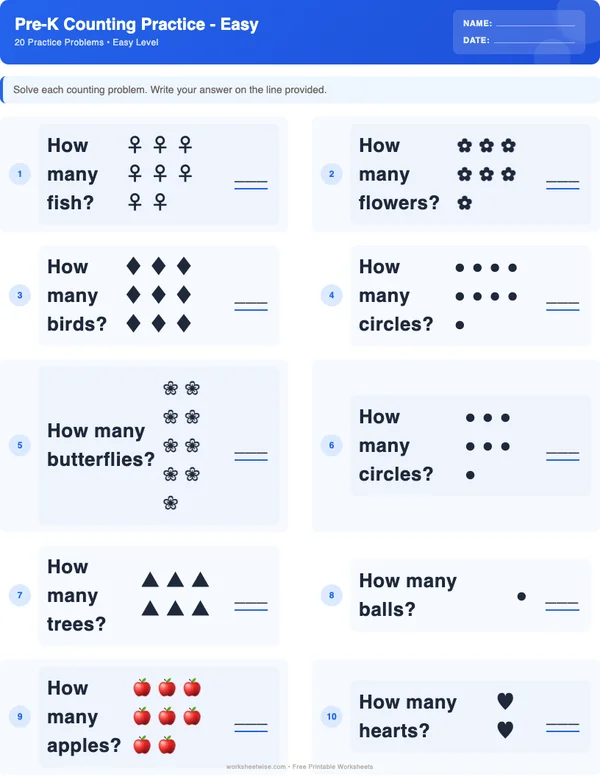
Place five real buttons on the table. Model sliding each button into a cup while saying one number. Then reset the same five buttons and let the learner try. Only afterward move to pictures on a page. The WorksheetWise catalogue describes Pre-K counting as focusing on counting to 20 with concrete objects and includes a 20-problem free sheet, but that does not mean all 20 items should be used in one sitting.
This example belongs in an intervention routine because the adult has isolated the prerequisite beneath an incorrect total. The next observable action is not “practice more counting”; it is “count a new scattered set of five while moving each object exactly once.”
The IES guide on teaching math to young children supports deliberately helping children connect informal mathematical experiences, representations, and mathematical language. Here, the physical move makes the one-to-one action visible before a picture asks the learner to manage it mentally.
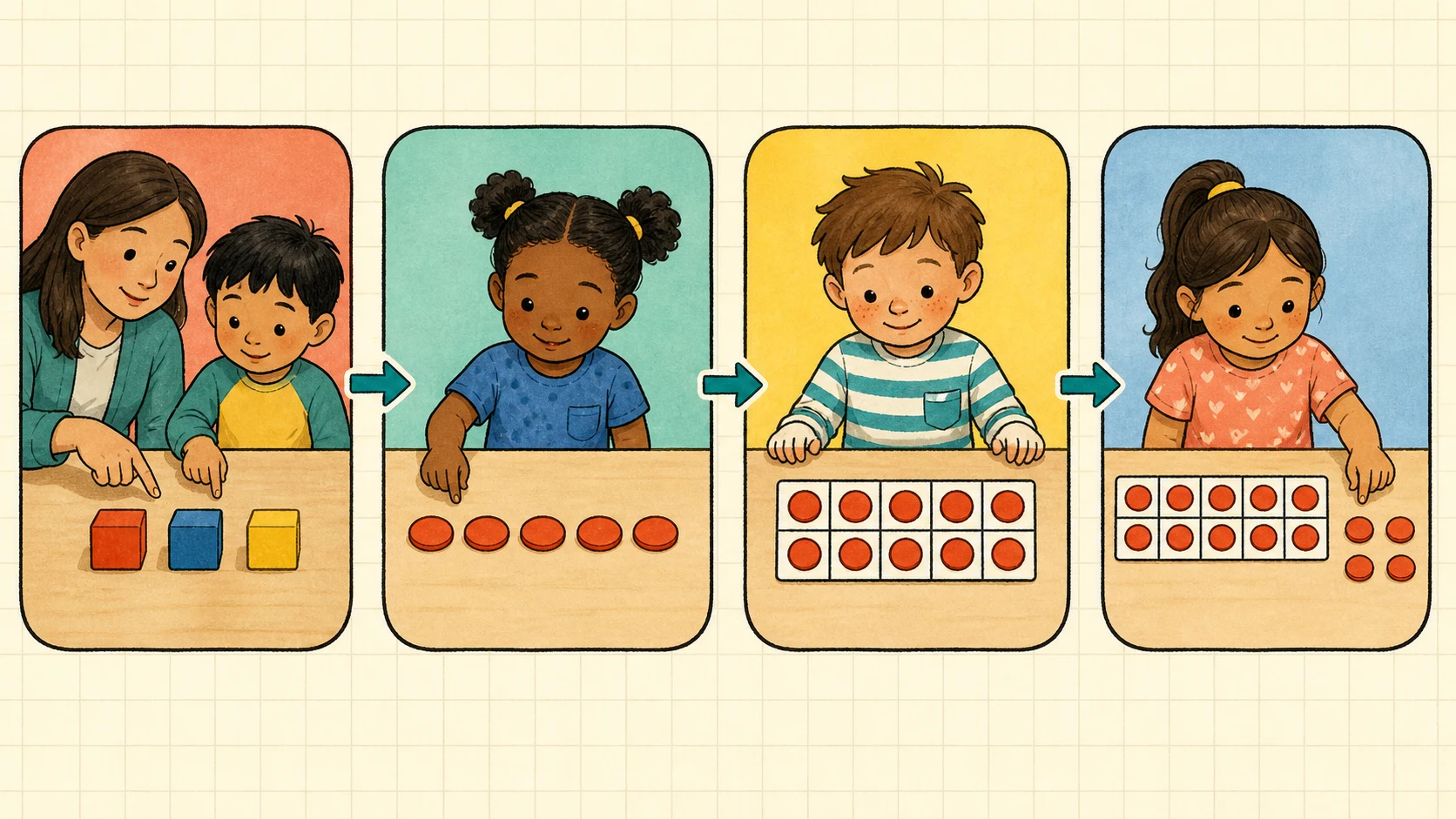
Use the progression to decide which support to remove next: adult modeling, movable objects, a pointing routine, or the worked example—not all supports at once.
Observe the process before checking the answer
An answer key tells you whether an answer matches the expected response. It does not tell you why the learner answered that way. During the first few items, watch for:
- where the learner begins;
- whether directions are reread or ignored;
- what is pointed to, whispered, drawn, or counted;
- whether an error repeats in the same position;
- whether a correct answer follows a reliable method or a guess;
- whether performance changes after one prompt;
- how long the learner persists before switching strategies.
Use neutral notes. Write “read chip as ship on two of four words” rather than “confuses digraphs.” Record “computed 13 − 5 correctly with counters but wrote 13 + 5” rather than “doesn’t understand subtraction.” The first phrasing preserves evidence; the second jumps to a broad conclusion.
Example 2: separate a digraph from a blend
A learner reads ship as sip and wish as wis. Both errors omit the sound represented by sh. First verify that the learner can read simpler short-vowel CVC words such as sip. Then model that s and h work together in this word to represent one sound. Place two fingers together over the two letters, say the sound, and blend through the word.
Use a small contrast set that you have checked: sip/ship and wish/wis. Explain that wis is not the intended word; it is included only to expose what changes when h is removed. Then return to real words such as shop, fish, and shut. Do not mix ch, th, wh, and ck until sh is reasonably stable.
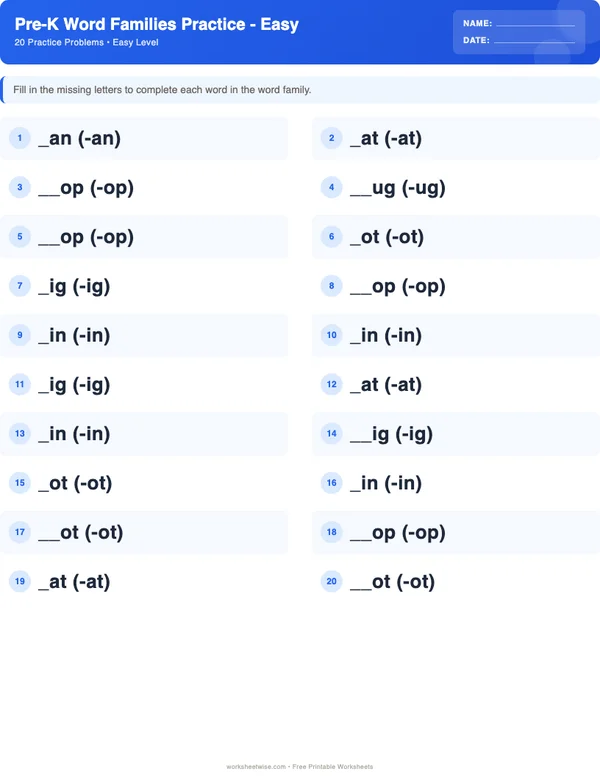
This example belongs here because the catalogue’s kindergarten digraph resource focuses on identifying, reading, and spelling common digraph words, while its CVC material represents an earlier decoding step. The observed omission selects the next practice set more precisely than a general phonics score would.
The IES foundational reading skills guide recommends explicit work connecting sounds with letters and teaching learners to decode words. That guidance supports the modeled sound–spelling connection; it does not establish that any particular WorksheetWise page will produce a given outcome.
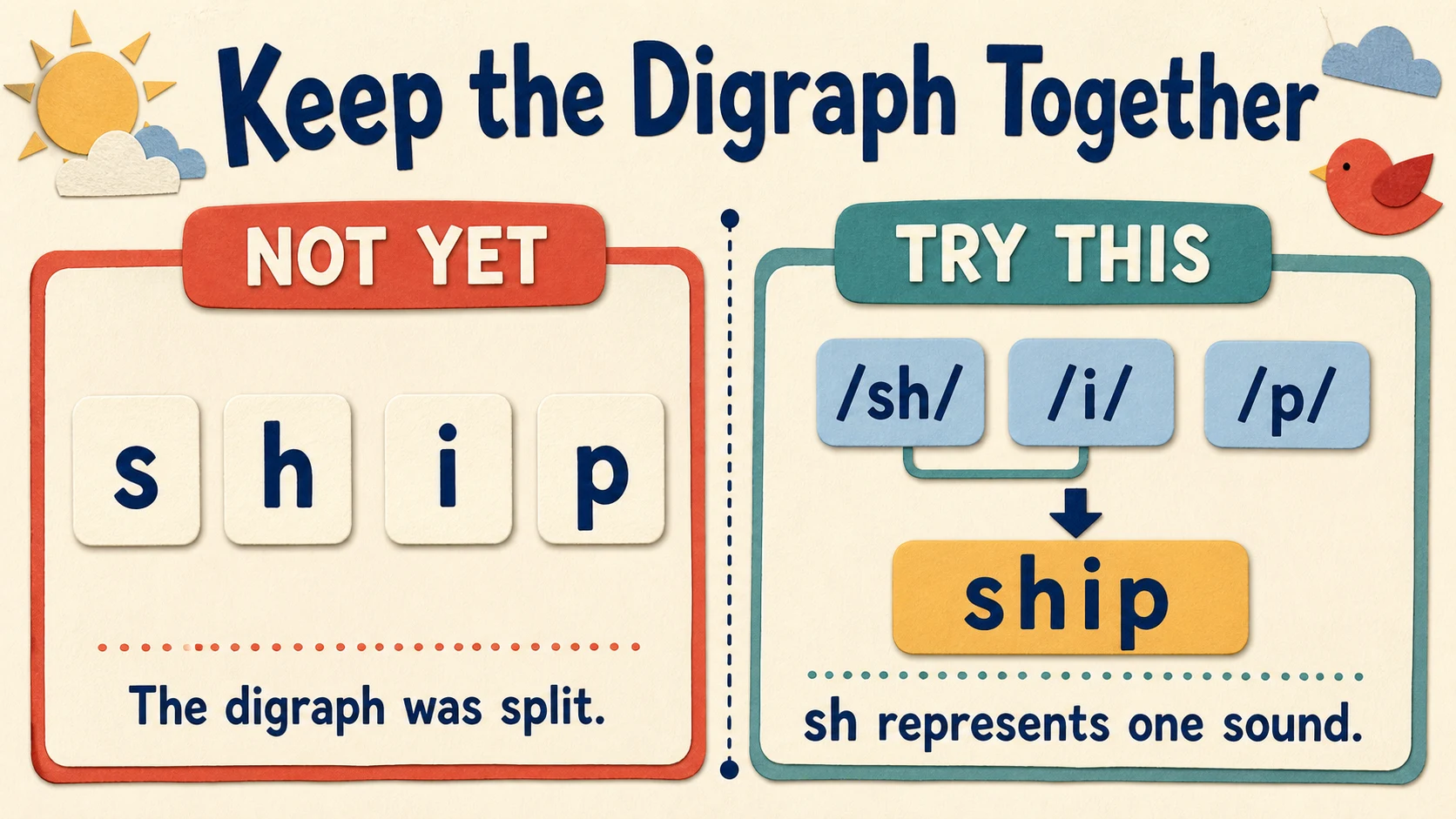
Treat the pictured responses as teaching hypotheses to check with another word, not as diagnoses of a learner.
Give feedback that changes the next attempt
Effective worksheet feedback arrives while the learner can still use it. It identifies the process, prompts a correction, and then tests the same decision on a fresh item.
Use the least support that restores the target process:
- Pause: “Check that item again.”
- Direct attention: “Point to each object as you count.”
- Name the relevant feature: “These two letters represent one sound here.”
- Provide a cue or representation: counters, sound boxes, a number line, or an enlarged sentence.
- Remodel the step.
- Reduce the task to its missing prerequisite.
Avoid writing all correct answers after the session and calling that feedback. Also avoid praise that gives no information. “You moved each button once, so no object was counted twice” tells the learner what to repeat. “Good job” does not.
Example 3: blend a CVC word without breaking the sounds apart
For cat, check the sound sequence yourself: /k/ /ă/ /t/. Model a connected blend, shortening the stop sound /k/ and sustaining what can be sustained: “/k/ăăăt/—cat.” Then have the learner push one token into each of three sound boxes, sweep beneath the boxes, and read the word.
Keep short a stable for the first contrast: cat, mat, map, tap. Changing only one consonant at a time reduces task variation. If the learner reads cat but cannot build it with letters, move from decoding to encoding: say cat, ask for each sound, and have the learner select the three letters.
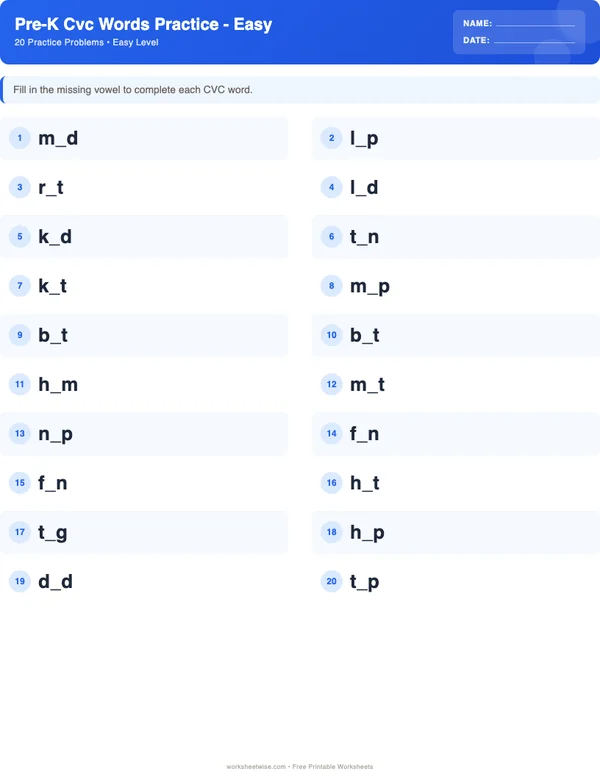
This belongs here because the catalogue’s Pre-K and kindergarten CVC resources explicitly include word building, picture matching, reading, and short-vowel practice. The free CVC sheet contains 20 problems, but four checked words may be enough for one focused cycle. Adults can explore the Pre-K CVC Words guide and free sheet, remembering that age is a browsing aid and oral blending may be the better starting point for a younger learner.
Interpret error patterns without overreaching
One wrong response rarely justifies changing the plan. Look for a pattern across a few comparable items, then run a small check designed to distinguish plausible causes.
Correct answer, unreliable process
A learner may produce the correct total by recounting from one every time. If the target is counting on, the answer is correct but the strategy does not show the intended skill. Ask the learner to start with the known quantity and continue, then try one parallel item.
Same error across similar items
A repeated omission, reversed operation, or misplaced punctuation mark is more useful than scattered mistakes. Hold the format steady and change the content. If the error follows the same feature, teach that feature explicitly.
Errors appear only after the format changes
If a learner succeeds with counters but not pictures, the bridge from concrete to representation may need attention. If isolated words are correct but connected text is not, the increased reading load may be the issue. Return to a supported version, model the transition, and test again.
Mixed errors late in a long page
When early work is accurate and later work becomes inconsistent, do not automatically infer a skill gap. Length, attention, visual density, or fatigue may have affected performance. Repeat a few representative items in a shorter session before selecting more instruction.
The IES guide for assisting students struggling with mathematics emphasizes systematic instruction and visual representations, among other recommendations. In practice, that means an adult should teach and inspect a repeatable process instead of assigning an undifferentiated stack of problems.
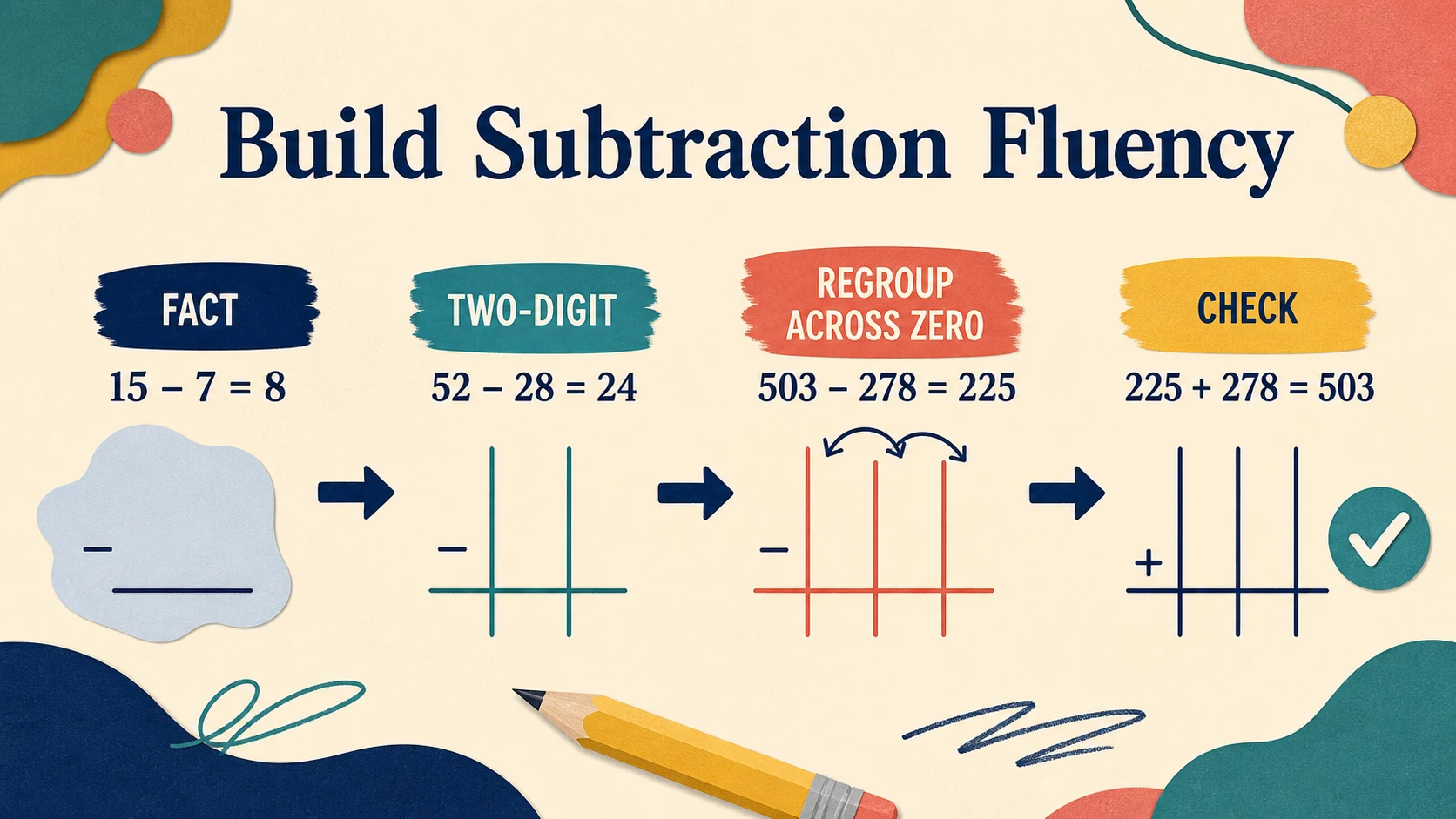
Use an upper-grade progression to locate the first unstable task feature—representation, regrouping, notation, or independence—without attaching a global ability label to the learner.
Adapt access while preserving the target
An adaptation is useful only if the learner still performs the skill you intend to observe.
If the target is counting objects, enlarge the pictures, reduce the set, provide movable counters, or let the learner point instead of write. Do not tell the total.
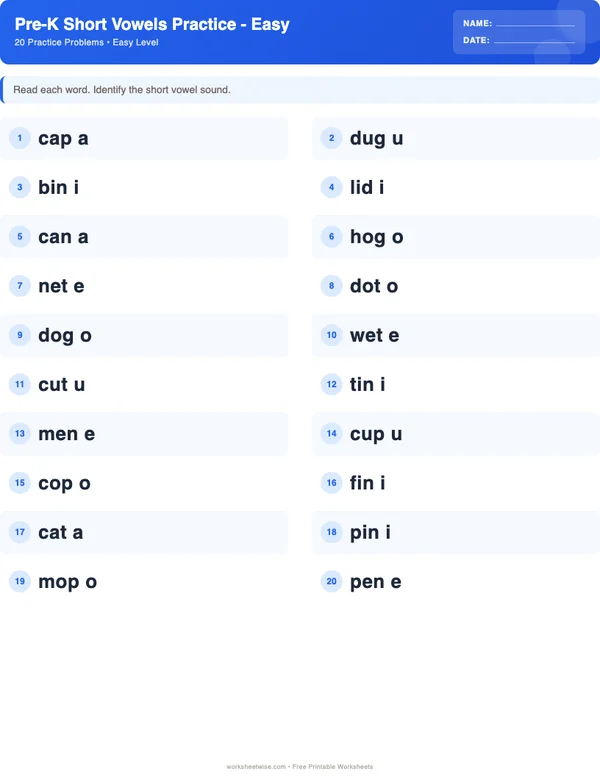
If the target is short-vowel discrimination, say the pictured words aloud when picture naming is uncertain. Do not emphasize the target vowel in your voice.
If the target is word-problem structure, read the problem aloud, remove decorative information, or let the learner act it out. Do not identify the operation.
If the target is punctuation choice, provide handwriting support or let the learner place punctuation cards. Do not read the sentence with exaggerated question or exclamation intonation if interpreting its function is the target.
Example 4: distinguish a subtraction situation from an addition situation
Consider this checked story: “Mia has 8 counters. She gives 3 away. How many counters remain?” Start with eight counters, physically remove three, and count the five that remain. Record . Then change only the context: “Mia has 5 counters. Her teacher gives her 3 more. How many does she have now?” Combine the quantities and record .
The numbers form a related fact family, but the actions differ. Ask the learner to retell what happened before choosing a symbol. If computation is not the target, allow counters. If choosing the operation is the target, do not circle “gives away” as a keyword shortcut; the learner should represent the relationship.
This belongs here because the catalogue’s kindergarten subtraction description distinguishes taking away, comparison, and missing-part situations, while its word-problem material calls for identifying relevant information, selecting an operation, solving, and checking. The next observable action is to represent one new take-away story without an adult naming the operation.
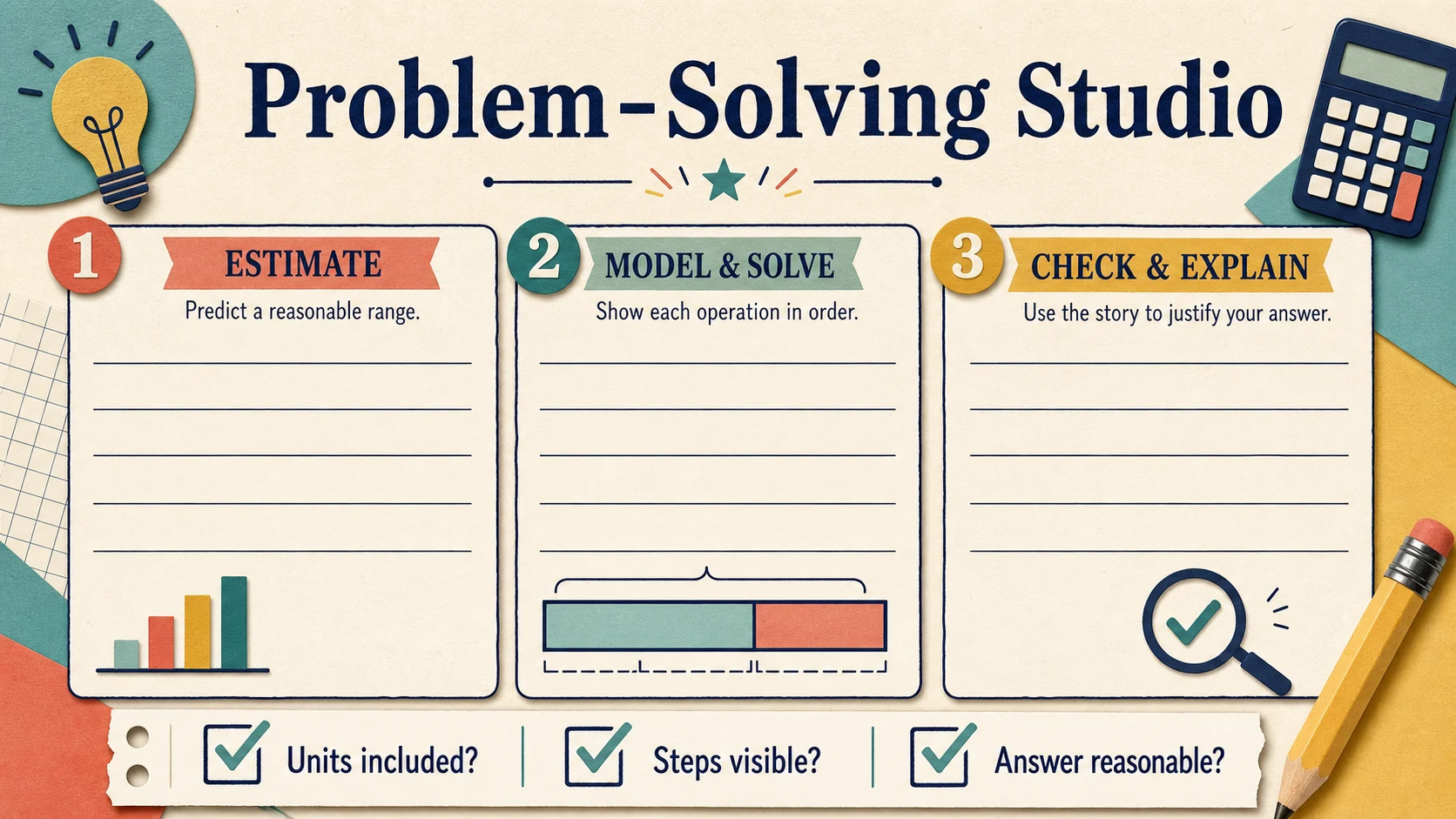
The schedule illustrates spaced practice and review; use it only after identifying the precise relationship or reasoning step that needs practice.
Build cross-subject routines around the same decision cycle
The routine remains consistent across subjects: identify, model, attempt, observe, respond, and verify. What changes is the evidence.
Phonics and high-frequency words
For phonics, record the word, the learner’s exact reading, and whether a prompt changed it. Keep decoding and spelling connected. When practicing a high-frequency word, inspect its regular and unexpected spelling features rather than relying only on visual memorization.
A brief routine might be: read the word, identify its sounds and letters, write it from memory, use it in a sentence, and meet it later in connected text. A printable page can hold the practice, but oral reading tells you whether the written work transfers to reading.
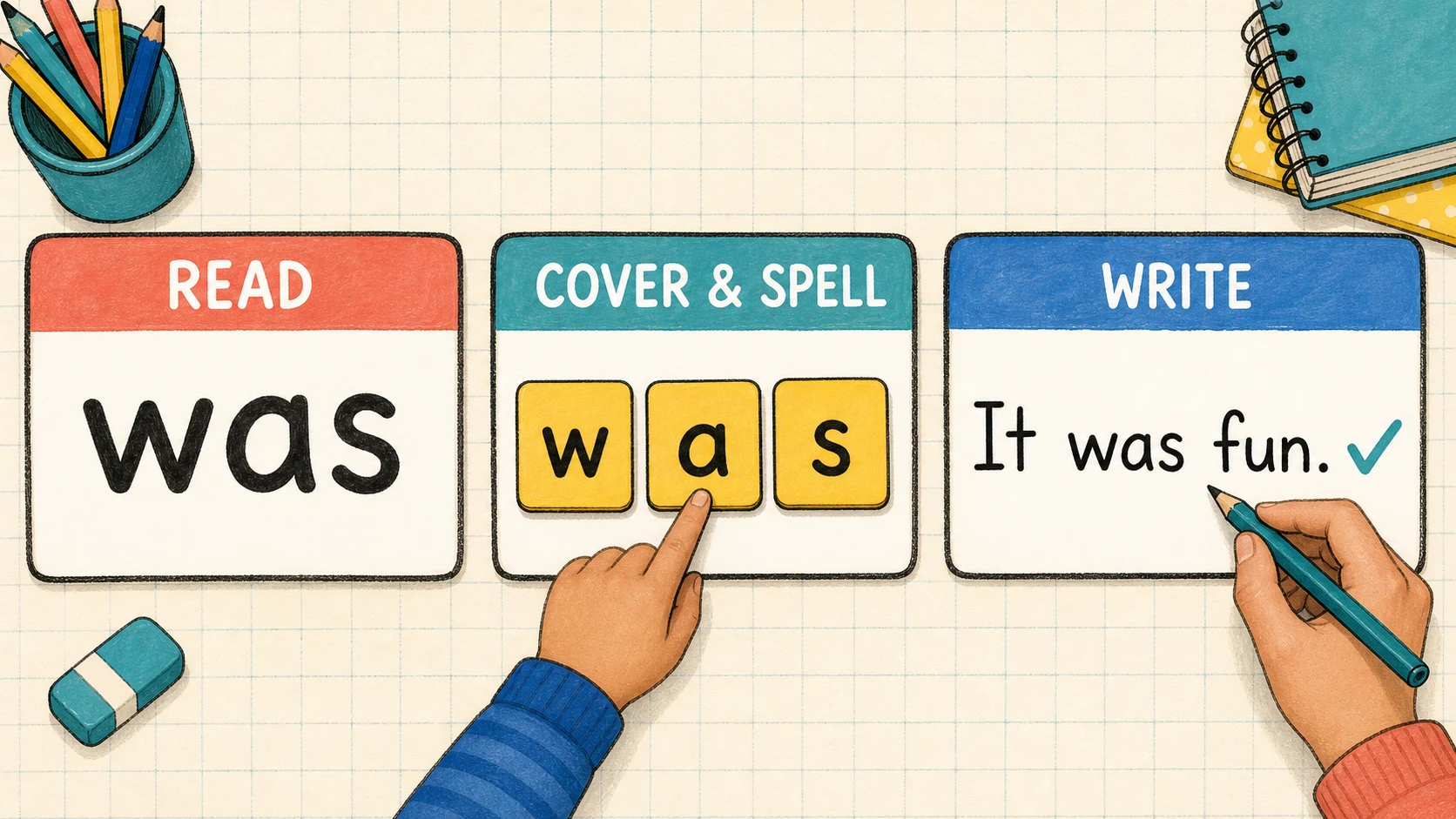
Keep the word routine brief and cumulative, then verify recognition in a sentence rather than equating copied spellings with automatic reading.
Mathematics
For mathematics, record the representation and strategy, not only the answer. Did the learner count every object, count on, use a known fact, draw a model, or apply a written procedure? Ask for a quick check: rebuild the quantity, estimate, use the inverse operation, or explain why the answer is reasonable.
The Kindergarten Counting guide and free sheet provides a concrete entry point for number-sequence, missing-number, and counting-set practice. Select individual items according to the learner’s demonstrated counting action rather than assigning the page solely because of the grade label.
Writing and punctuation
For writing, decide whether the target is idea generation, sentence construction, spelling, handwriting, or conventions. Correcting everything at once conceals the teaching decision. If punctuation is the target, use already-composed sentences and ask what each sentence is doing. If sentence construction is the target, temporarily accept invented spelling or provide word cards so transcription does not take over.
The IES guide on teaching elementary students to be effective writers recommends explicit teaching of writing strategies and a supportive writing process. A punctuation worksheet can therefore serve as focused conventions practice, but it should not replace composing, revising, and communicating for real purposes.
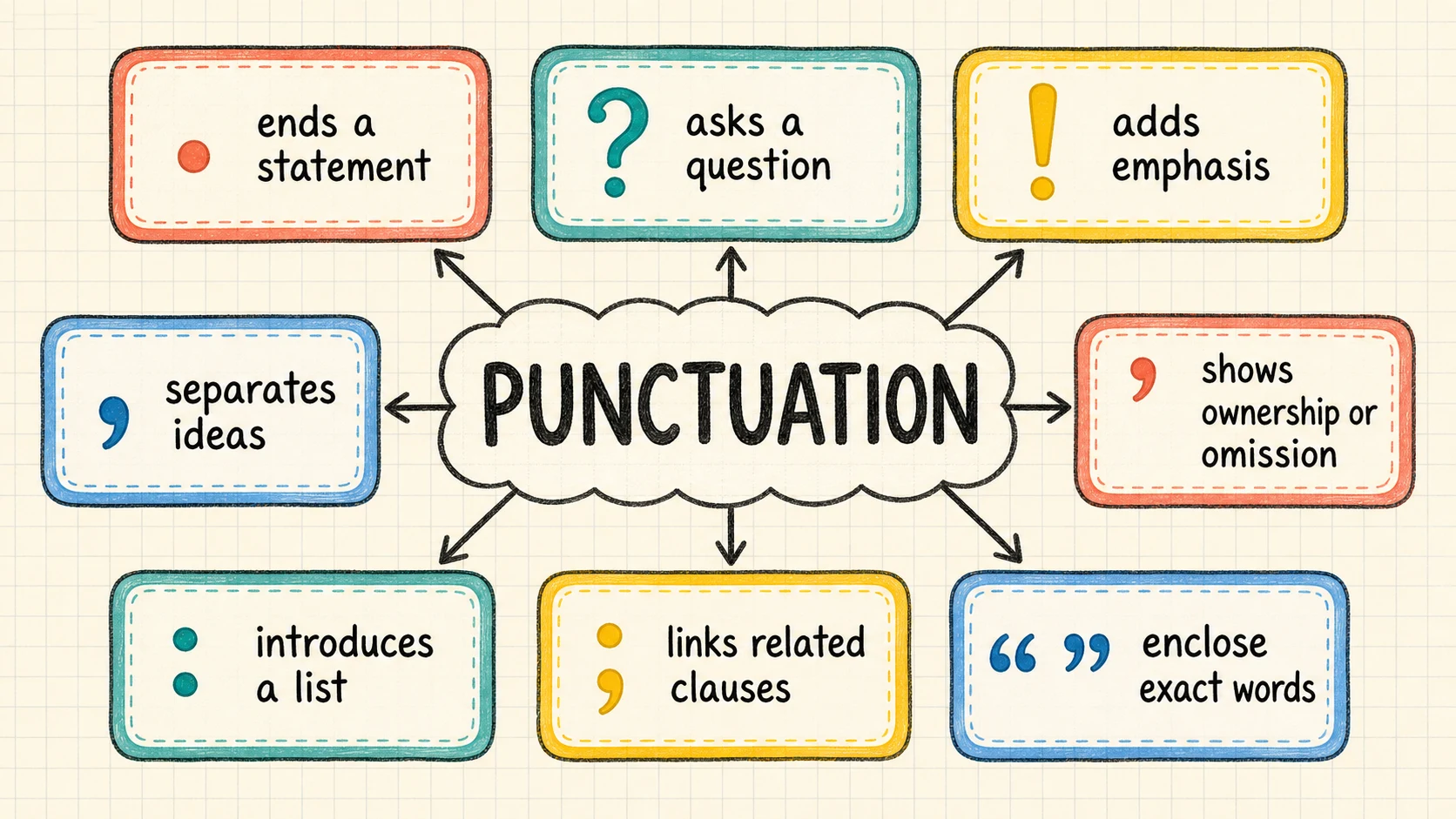
Use the map to choose one punctuation relationship at a time; a broad conventions page is unsuitable when the learner needs a single explicitly modeled decision.
Keep records small enough to use
A useful record is brief, factual, and connected to an action. Use one row per short session:
| Date | Narrow target | Sample | Observed process or error | Support used | Next action |
|---|---|---|---|---|---|
| Aug. 30 | Count each object once | 3 sets of 5–7 | Double-counted one object in scattered sets | Moved each object into a cup | Try one scattered set with pointing only |
| Sept. 1 | Read initial sh | 5 words | Read ship as sip twice | Two-finger digraph cue | Contrast sip/ship, then read three new sh words |
| Sept. 3 | Represent take-away stories | 3 stories | Added when objects were removed | Acted out first story | Retell and model one new story independently |
Do not record speculative causes, diagnoses, or labels. Keep the actual page or item numbers when possible so another adult can reproduce the sample. Note assistance precisely: “adult read directions,” “one model,” or “number line available.” “Completed independently” means little unless independence was defined.
End every record with an observable next action. “Continue working” is not enough. “Read four new short-a CVC words, then spell two from dictation” specifies what happens next and what evidence will be collected.
Reuse a worksheet without rehearsing answers
Reusing the same page can reduce unnecessary variation, but memorized answers can hide whether the skill transfers. Choose the reuse method according to your question.
Reuse the identical item when checking whether the learner can now execute a corrected process. Change the numbers, objects, or words while preserving the structure when checking transfer. Mix one previously secure form with one new form when checking discrimination. Return after a delay when checking whether the process is retained without immediate prompting.
Ways to reuse responsibly include:
- cover completed answers and solve orally;
- use counters or letter tiles before writing;
- cut a page into short sets;
- ask the learner to explain why a provided answer is correct or incorrect;
- generate parallel items with the same task features;
- reverse the response, such as spelling a word previously decoded.
The free deterministic worksheet generators are the practical choice when you need a fresh parallel set rather than a remembered page. Inspect the generated items and answer key before teaching, then change only the feature you intend to test.
Know when a worksheet is the wrong tool
Do not use a worksheet merely because practice time is scheduled. Choose another tool when the target requires an interaction the page cannot provide.
A worksheet is the wrong primary tool when:
- a three- or four-year-old needs oral play, movement, matching, or manipulation;
- the learner cannot access the directions or symbols even with reasonable support;
- the missing prerequisite is best made visible with objects, sound boxes, acting, or teacher modeling;
- the learner needs conversation, oral language, connected reading, or authentic composition;
- motor or visual demands overwhelm the target;
- repeated errors show that more explanation is needed before more practice;
- the learner is distressed, fatigued, or guessing simply to finish;
- the adult needs to hear pronunciation or reasoning that written marks cannot reveal.
It is also the wrong tool for making a diagnosis or promising an outcome. A pattern on a worksheet can prompt another teaching check or a conversation with the learner’s teacher. It cannot establish a disorder, determine placement by itself, or substitute for evaluation by an appropriately qualified professional.
Run the next cycle from one checked sample
Choose one prerequisite today. Write it as an observable action, model one example, and give three comparable items. Record the learner’s exact process, provide the least intrusive useful feedback, and end with one fresh item that checks the correction.
For a concrete starting point, open the Pre-K Counting guide and free sheet. If the learner is age three or four, use its ideas as brief adult-led object and movement prompts rather than assigning desk work. If the learner is older, ignore the age label when necessary and test the prerequisite itself: count a small scattered set by touching or moving each object once, state the total, and then record whether the next step should remove a support or reteach the one-to-one action.
Put it into practice
Use the guide with a real printable
Move from explanation to a short, observable practice task. Check the first item together, then adjust the next session from the learner's actual work.
Open the first free worksheetExplore a neighboring collection
Choose by a different teaching need
After-School Worksheets With Answer Keys Formative Assessment Worksheets With Answer Keys Classroom Worksheets With Answer Keys Homeschool Worksheets With Answer Keys Homework Worksheets With Answer Keys Independent Practice Worksheets With Answer Keys Morning Work Worksheets With Answer Keys School Readiness Worksheets With Answer Keys