Curated collectionAnswer keys includedPrint-ready PDFs
Homeschool Math Worksheets
Turn a printable library into a flexible weekly rhythm with explicit teaching, short independent practice, answer-key feedback and mixed-age planning.
Start with a real resource
Browse this worksheet collection
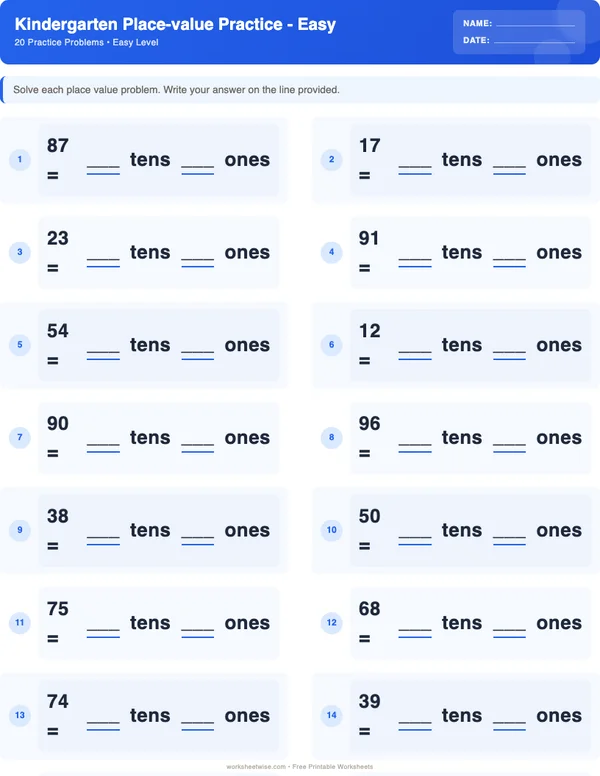
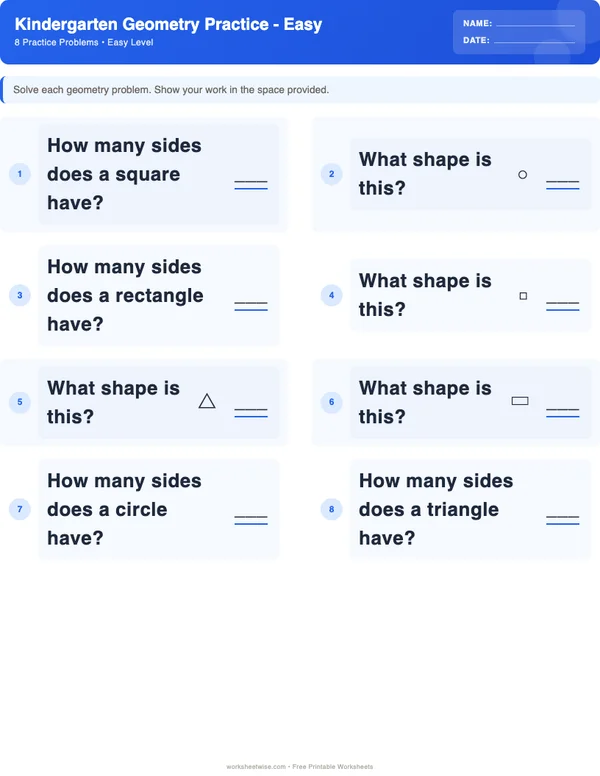
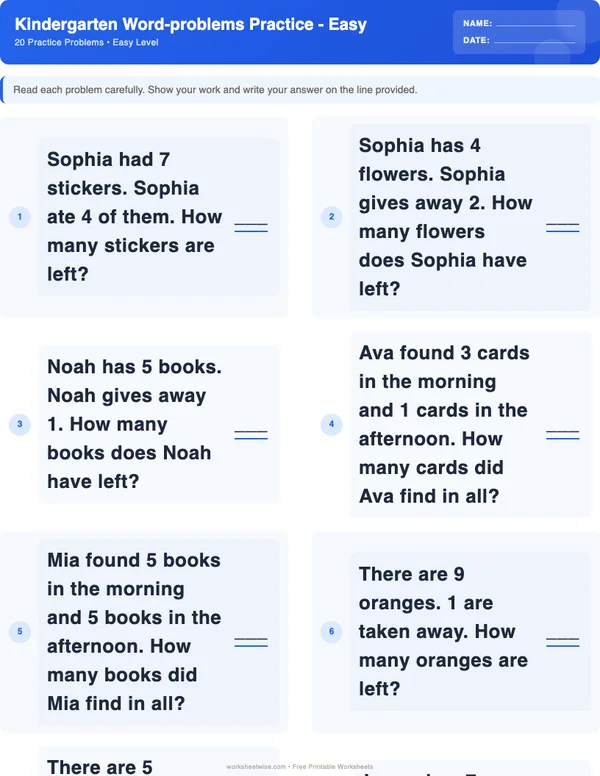
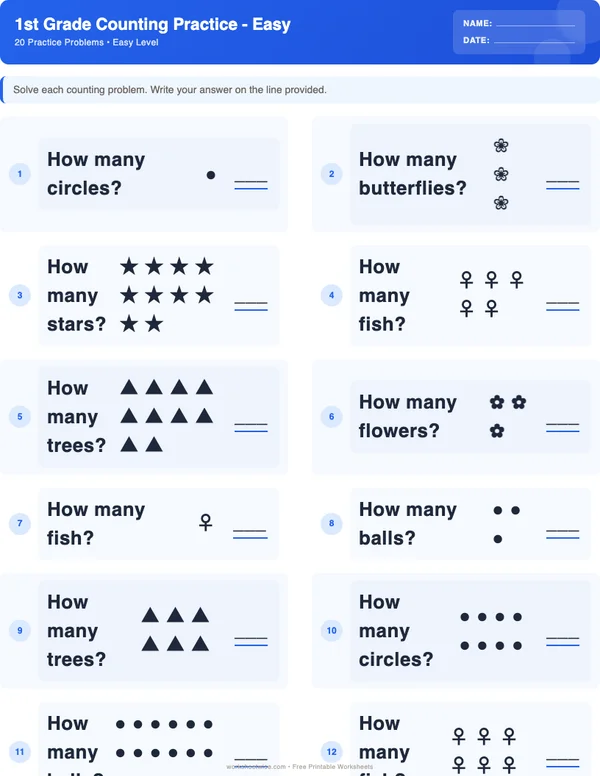
61 relevant free entry points are available. Each one includes a printable learner PDF and separate answer key.
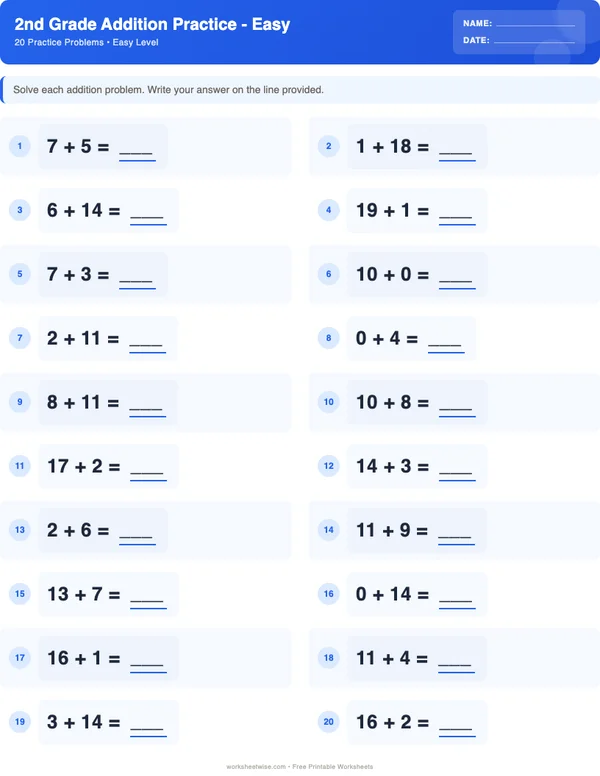
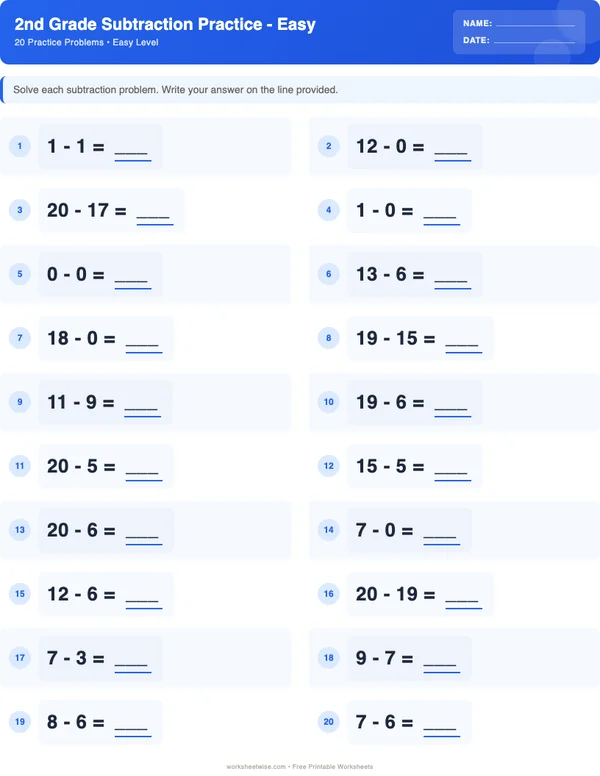
A useful practice loop
Print less. Observe more.
- Choose one skill and model the first item aloud.
- Use a short set and notice the learner’s strategy.
- Change the next task from the work you can see.
Need more than the free sheet?
Plus includes all 1098 matching catalogue variations where available, plus saved deterministic generators and the worksheet designer.
See Plus membershipComplete guide
How to teach and practise homeschool math worksheets
3,545 words Updated 6 instructional visuals
Build a homeschool math week around teach, practice, inspect and respond
A useful homeschool math worksheet routine is not “print a packet and finish it.” It is a repeating cycle:
- Model one mathematical idea.
- Assign a short set that practices that same idea.
- Check the work with the learner.
- Interpret errors by type.
- Choose the next sheet from the evidence.
WorksheetWise’s live math catalogue currently includes 1,098 variants across 12 topics and eight grade filters, with 61 free resources. That breadth is useful only when selection stays narrow. For one learner, choose one primary skill, one response format and one likely misconception at a time. For a mixed-age household, keep the shared lesson short, then give each learner a task with different numbers or representations.
Grade and age labels help adults discover potentially relevant material; they do not make placement decisions. Grade labels describe an intended practice level, and local curriculum sequences differ. Begin with what the learner can show, explain and represent. Then adjust from observed work rather than pushing through a grade-labelled stack.
Choose a sheet by the thinking it requires
Start by naming the mathematical action. “Do addition” is too broad. “Combine two quantities within 10 and explain how the total was found” is selectable and observable.
Before printing, inspect five features:
- Number range: Is the learner working within 5, 10 or 20, or with larger place values?
- Representation: Does the task use objects, pictures, number lines, clock faces, equations or written situations?
- Response format: Must the learner circle, match, draw, write a number, write an equation or explain?
- Variation: Do problems change enough to require attention, or can the learner repeat one visual pattern?
- Load: How many items can reveal a pattern without turning the session into endurance work?
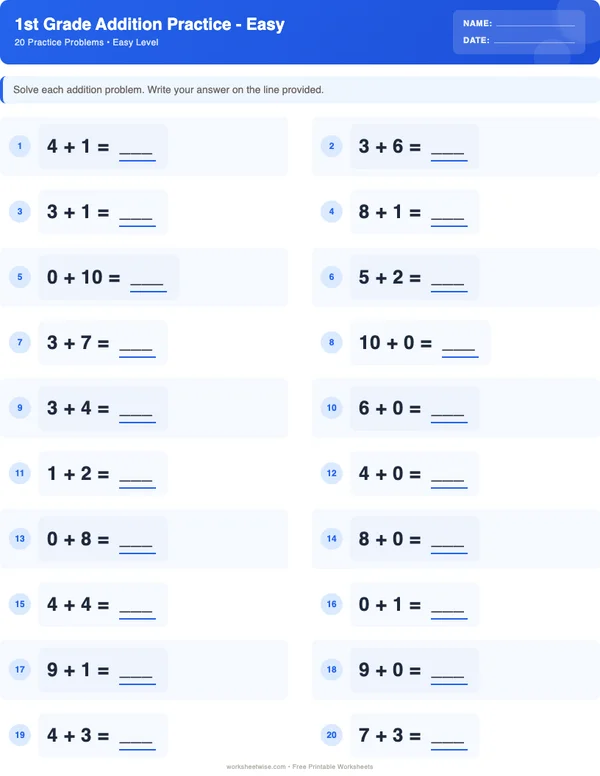
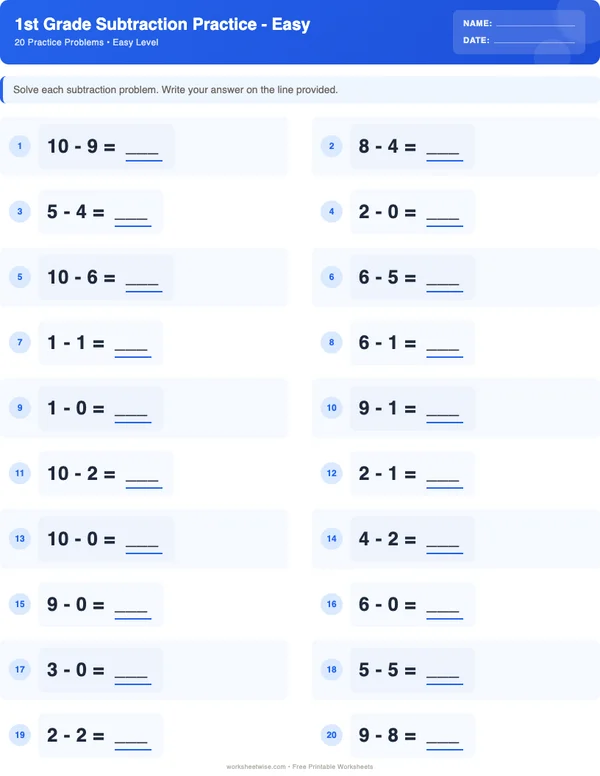
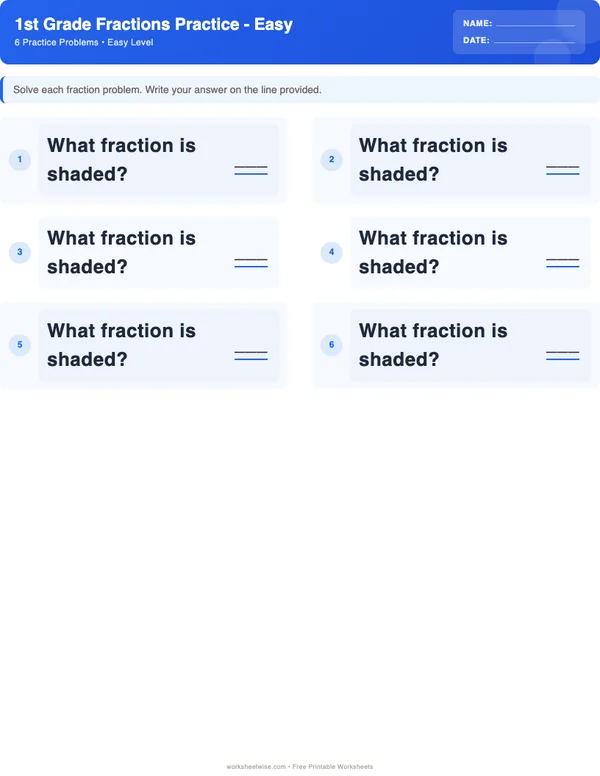
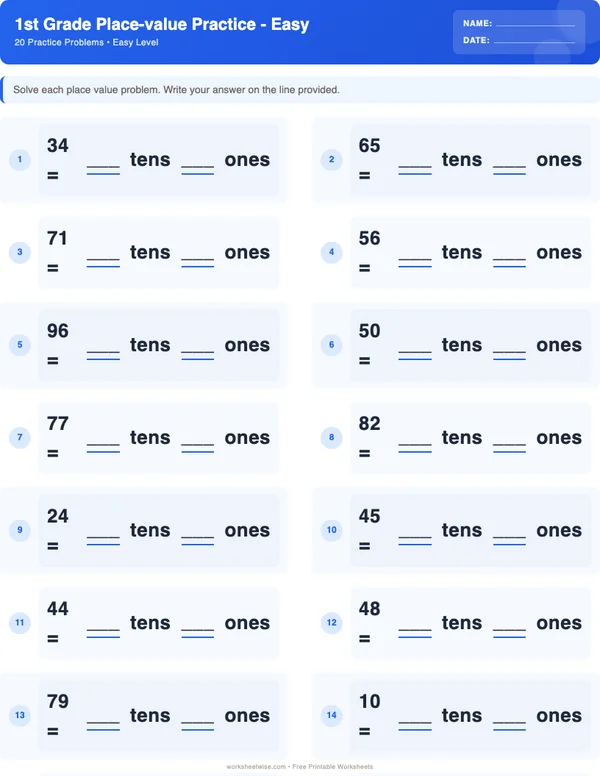
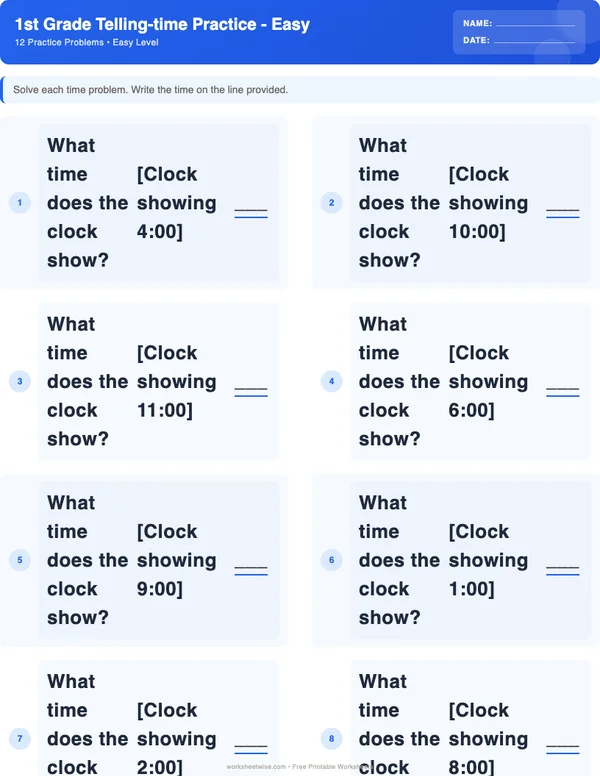
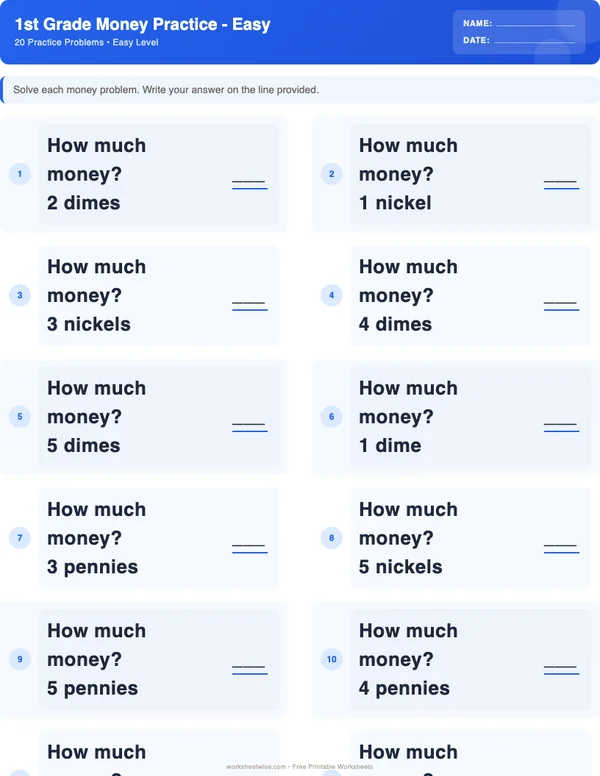
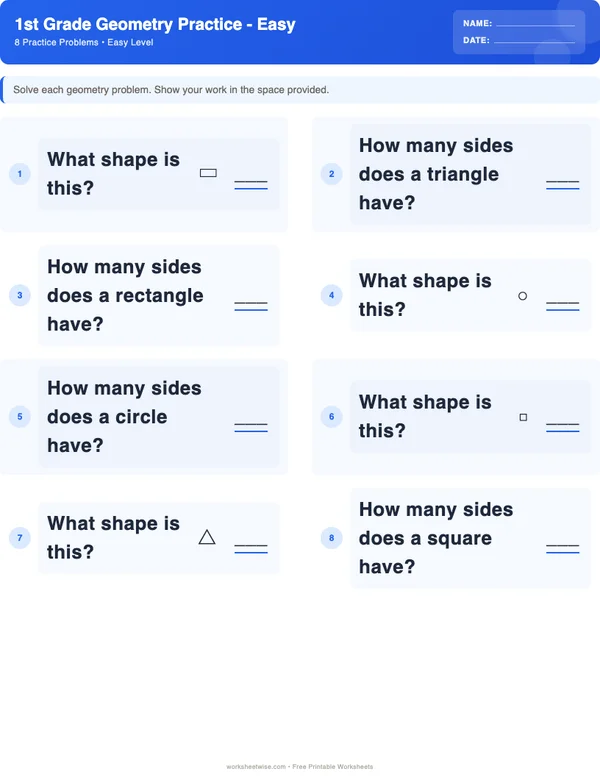
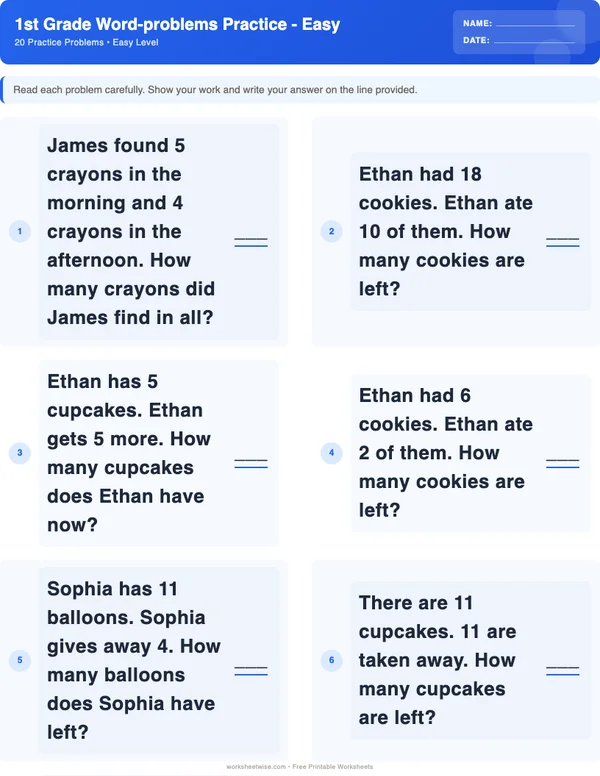
The catalogue’s “easy” label should be read through observable task features, not as a description of a learner. In the representative free resources, that label accompanies such configurations as 20-item counting, addition, subtraction and place-value sheets; a 12-item telling-time sheet; a 12-item kindergarten word-problem sheet; and a six-item first-grade fractions sheet. Item count alone does not determine difficulty. Six fraction prompts involving equal parts may demand more interpretation than 20 familiar numeral completions.
A practical selection rule is to change only one major demand at a time. If a learner can add with counters, move to drawings while keeping the number range stable. If analog clocks are new, keep the times simple while the learner learns to coordinate two hands. If word-problem comprehension is the target, avoid introducing unfamiliar computation in the same set.
Separate mathematical demand from writing demand
A learner may understand a relationship yet struggle to record it. Preserve the target skill by changing the response format:
- Let the learner point to the larger set before writing a comparison.
- Accept a dictated explanation while the adult records it.
- Let the learner build
7 − 3with counters before completing the equation. - Provide a larger clock face when hand placement, not fine-motor control, is the target.
- Ask for one labelled bar model instead of several sentences.
These are access adaptations. They preserve the mathematics. Giving the answer, reducing the number range below the target or replacing comparison with simple counting would change the skill being assessed.
Use a four-part daily lesson instead of a packet
A compact session can fit four distinct jobs. The exact minutes are a household decision, not a research claim.
Model one example aloud
Use an example that exposes the structure, not merely the procedure. For 8 + 5, place eight counters on a ten-frame and five beside it. Move two counters to complete ten, then identify the remaining three: 8 + 5 = 10 + 3 = 13.
Ask the learner to describe what stayed equal when five was split into two and three. This keeps “make ten” connected to quantity. The IES guide for teaching mathematics to young children recommends deliberate instruction in mathematical ideas, progressions and representations; it did not evaluate WorksheetWise or any sheet in this catalogue.
Solve one together
Change the numbers but retain the structure: 9 + 4. Ask, “How many from four would fill the ten-frame?” The checked solution is:
9 + 4 = 9 + 1 + 3 = 10 + 3 = 13.
If the learner counts all 13 counters from one, do not call that wrong. It is a valid but less efficient strategy. Model counting on or making ten, then ask the learner to compare methods.
Assign a short independent sample
Do not require the full 20-item sheet to establish whether the learner understands the model. Mark a small run—perhaps four to eight items—and tell the learner to stop there. Continue only if the responses show stable understanding and attention.
Independent means the adult does not cue the operation or point to the next step. It does not mean removing legitimate supports such as a number line that were part of the lesson.
Review the answer key as feedback
The answer key identifies mismatches; it does not explain them. Ask the learner to select one answer that feels certain and one that needs checking. For each mismatch:
- Re-read or rebuild the problem.
- Locate the first step where the work changed direction.
- Correct it using a representation.
- Solve a parallel item without prompting.
Record a brief note such as “counts accurately but skips an object in scattered sets” or “subtracts the smaller digit from the larger digit in each column.” That note determines tomorrow’s task more reliably than a percentage alone.
Plan mixed-age math around one shared structure
Mixed-age planning works best when learners share materials or a mathematical relationship, not identical sheets. A family might use counters together while pursuing different targets.
One set of counters, three distinct tasks
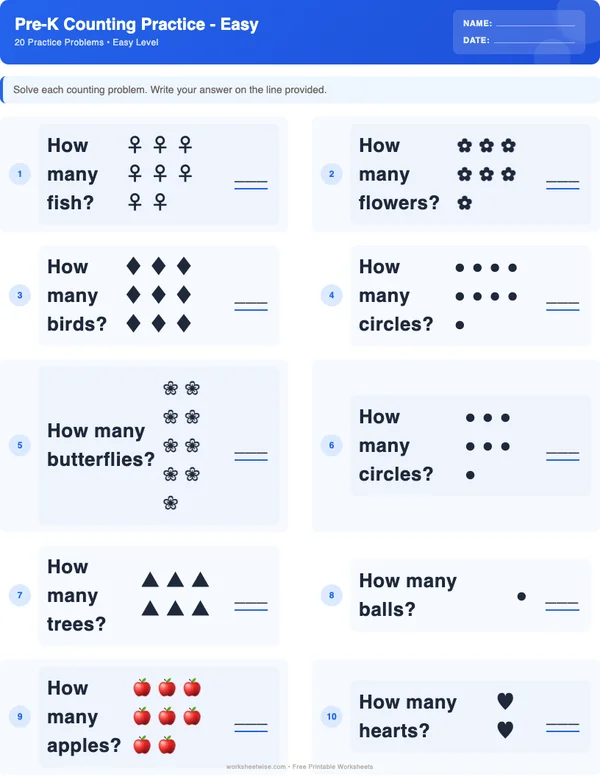
For a preschool-age learner, place up to 10 counters in a scattered arrangement. Ask the learner to touch or move each counter while counting. For ages three and four, prioritize brief adult-led oral, matching, manipulative and movement work over desk work. A printed Pre-K Counting guide and free sheet can help the adult choose content, but it need not become a full seated assignment.
A kindergarten learner might use the same counters to solve 4 + 3. The learner builds four, adds three and records 7. A first-grade learner might solve the related subtraction situation: “There are seven counters. Three are covered. How many can you see?” The checked answer is four because 4 + 3 = 7 and 7 − 3 = 4.
The shared discussion can be: “What does seven represent in your problem?” The preschooler identifies the total counted; the kindergarten learner identifies the sum; the older learner identifies the whole from which a part is hidden.
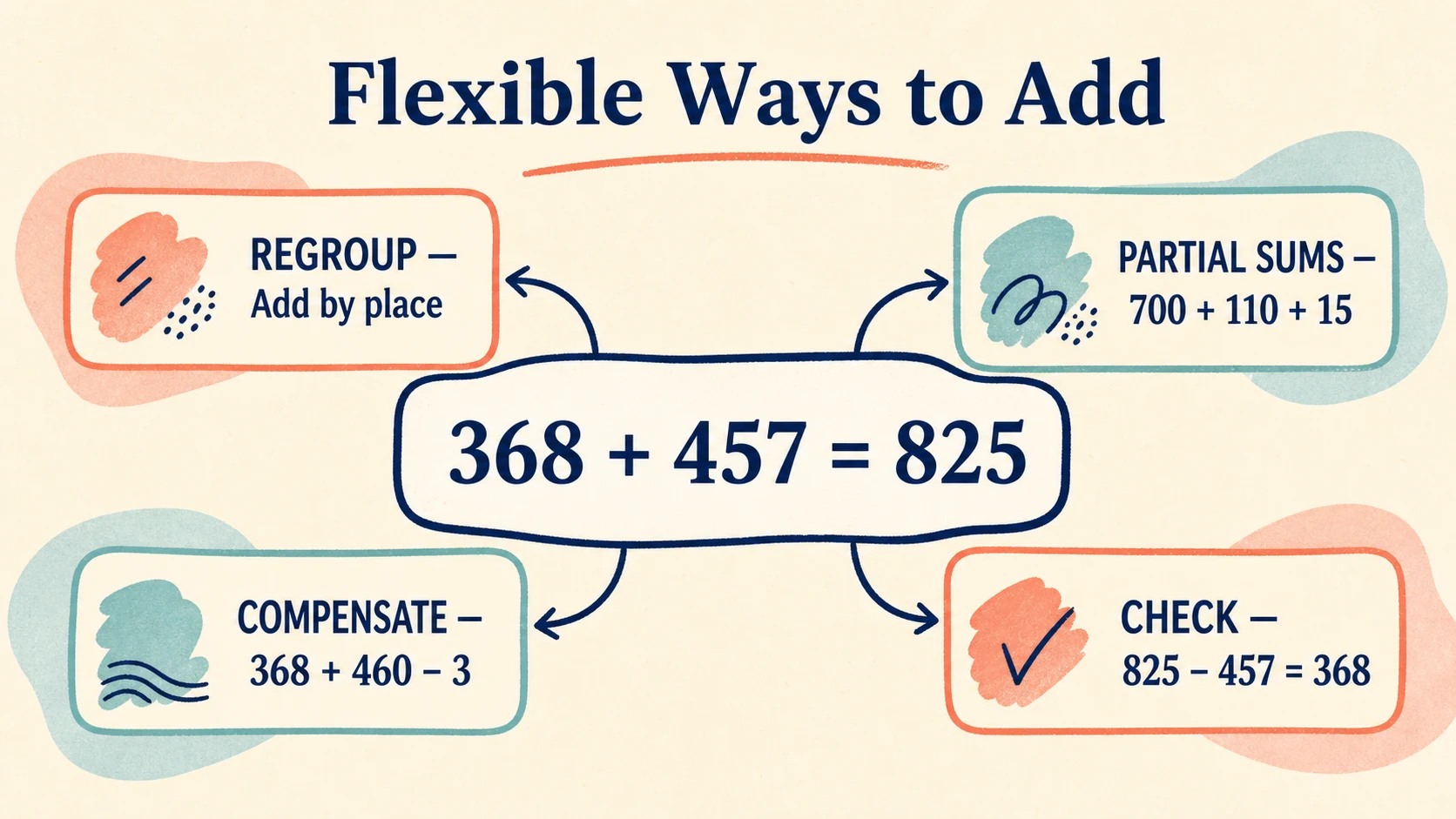
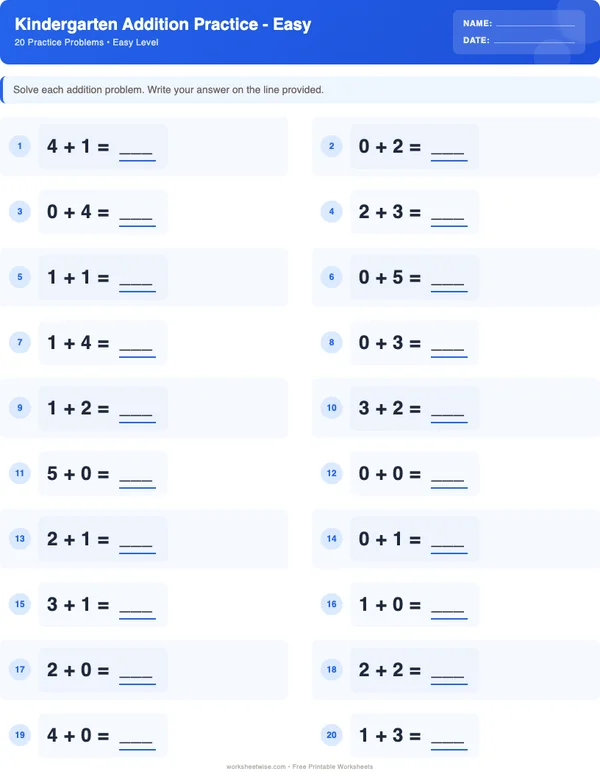
Use the addition map to decide which relationship the older learner will explain while younger learners build smaller quantities with the same materials.
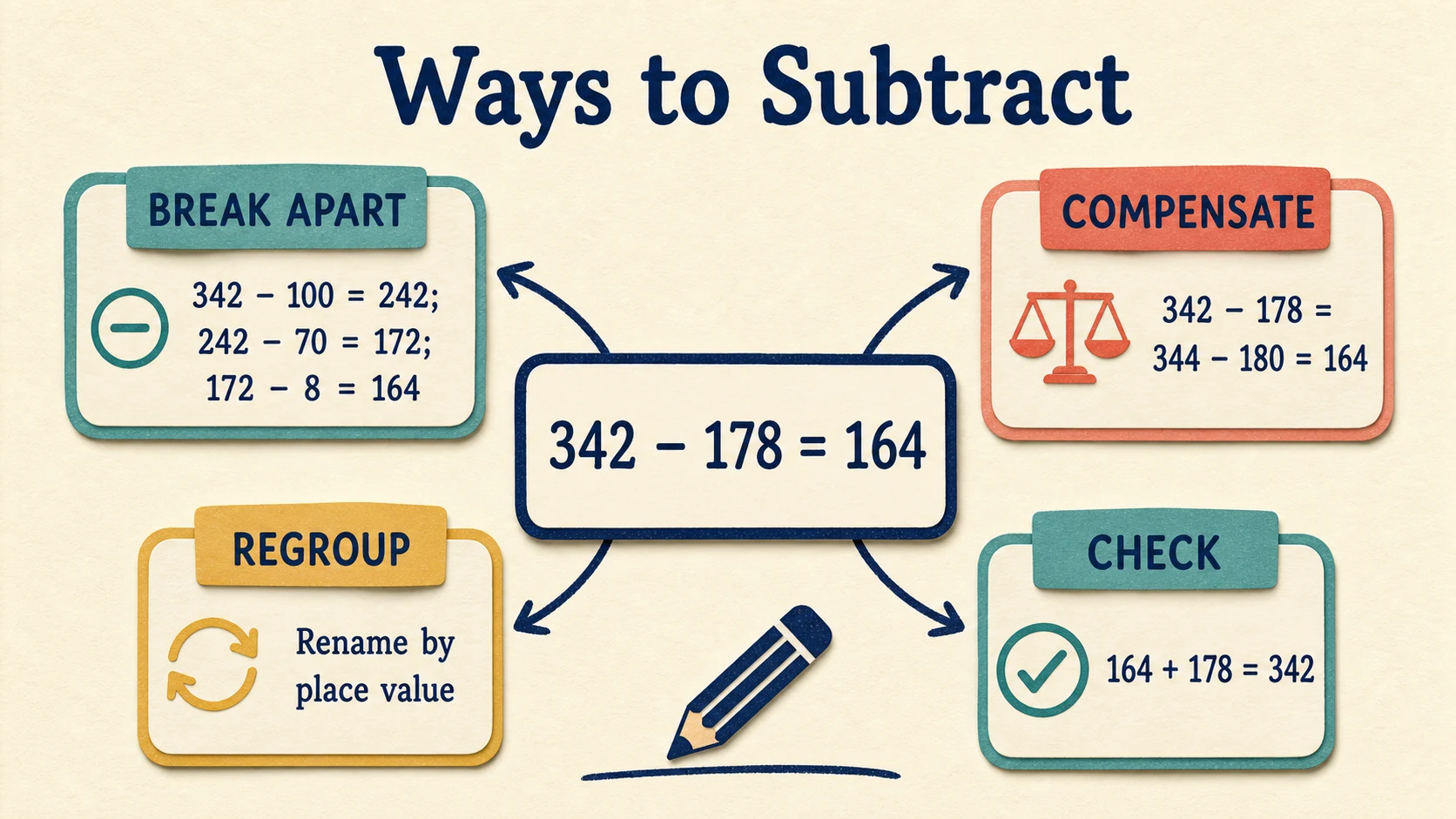
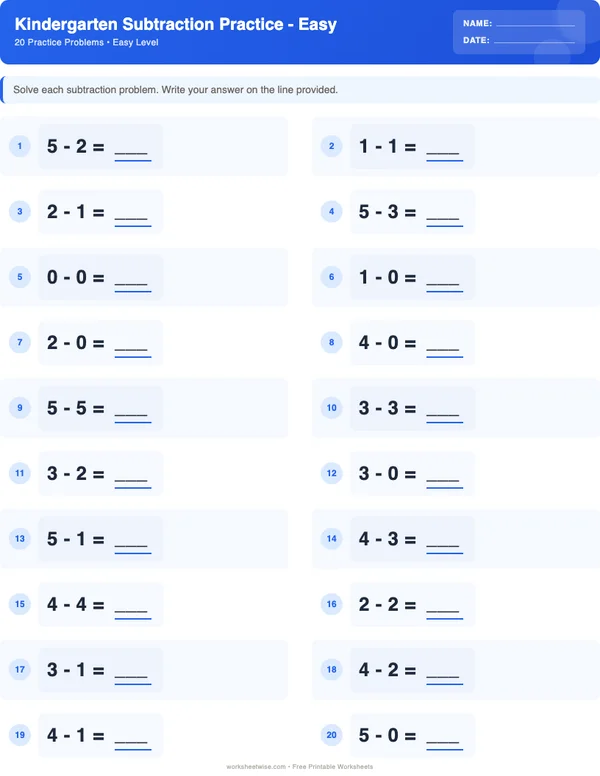
Pair the subtraction map with addition work when the family is examining fact families, missing parts and differences rather than treating subtraction as an unrelated procedure.
Age remains a discovery aid rather than a placement decision. A six-year-old who can recite a long number sequence but cannot count a scattered set once each needs one-to-one correspondence work, not simply a sheet with larger numbers. Conversely, a younger learner who accurately builds and compares quantities may need richer oral questions even if handwriting remains limited.
Move from objects to drawings to symbols in addition and subtraction
The catalogue descriptions position addition as a progression from objects and pictures toward equations and larger-number work. Subtraction includes take-away, comparison and missing-addend situations. Those distinctions matter when choosing the next sheet.
Checked addition example: preserve the total while regrouping
Consider 7 + 6.
Build seven counters and six counters. Move three from the group of six to the group of seven:
7 + 6 = (7 + 3) + 3 = 10 + 3 = 13.
This example belongs on a homeschool math page because it shows how an adult can connect a printable equation to a model, listen for a strategy and then choose follow-up work. If the learner writes 12, inspect the model:
- If only five counters were placed in the second group, the error is in representing six.
- If all 13 are present but the learner says 12, recounting or one-to-one tracking needs attention.
- If the model is correct and only the written answer is 12, the issue may be recording or fact retrieval.
Each observation leads to a different next sheet. Choose counting sets for tracking errors, addition with visual supports for quantity-combination errors, or short symbolic addition practice when the reasoning is secure but retrieval is hesitant.
Checked subtraction example: distinguish three meanings
Use the whole 9 and part 4 in three forms:
- Take away: Nine markers are on the table; four are removed. Five remain.
- Comparison: One person has nine markers and another has four. The difference is five.
- Missing part: Nine markers fill a box; four are visible. Five are covered.
All three can be represented by 9 − 4 = 5, but the actions differ. A learner who succeeds only when objects are physically removed needs comparison and missing-part modeling, not merely more take-away items. The Kindergarten Subtraction guide and free sheet is a relevant entry point when these early meanings are the current target.
For multi-digit work, a result such as 43 − 25 = 22 can reveal “subtract the smaller digit from the larger digit” reasoning: the learner may calculate 5 − 3 and 4 − 2. Rebuild 43 with four tens and three ones. Trade one ten for 10 ones, giving three tens and 13 ones. Then:
13 − 5 = 8 and 3 tens − 2 tens = 1 ten, so 43 − 25 = 18.
The next task should include physical or drawn regrouping with a small number of examples. Another page of bare vertical subtraction would rehearse the misconception.
Treat word problems as modeling tasks
Word problems require decisions about quantities and relationships before computation. The representative kindergarten resource has 12 problems, fewer than the 20 on several computation sheets. That is sensible for planning because each story can require reading, retelling, modeling, calculating and checking.
Checked word-problem example: reject keyword hunting
“Lena has eight shells. She has three more shells than Omar. How many shells does Omar have?”
A learner trained to add whenever seeing “more” might calculate 8 + 3 = 11. But eight is Lena’s amount, and it is three greater than Omar’s. A bar model shows Omar’s unknown amount plus three equals eight:
? + 3 = 8
Therefore, Omar has five shells because 5 + 3 = 8.
This example belongs here because the central homeschool decision is whether the next sheet should target reading, modeling or computation. If the learner draws the correct comparison but calculates 8 − 3 incorrectly, assign subtraction practice. If the learner calculates accurately after an adult draws the model, select more comparison stories with supported modeling. If the learner explains the relationship and solves independently, move to varied unknown positions rather than simply increasing the numbers.
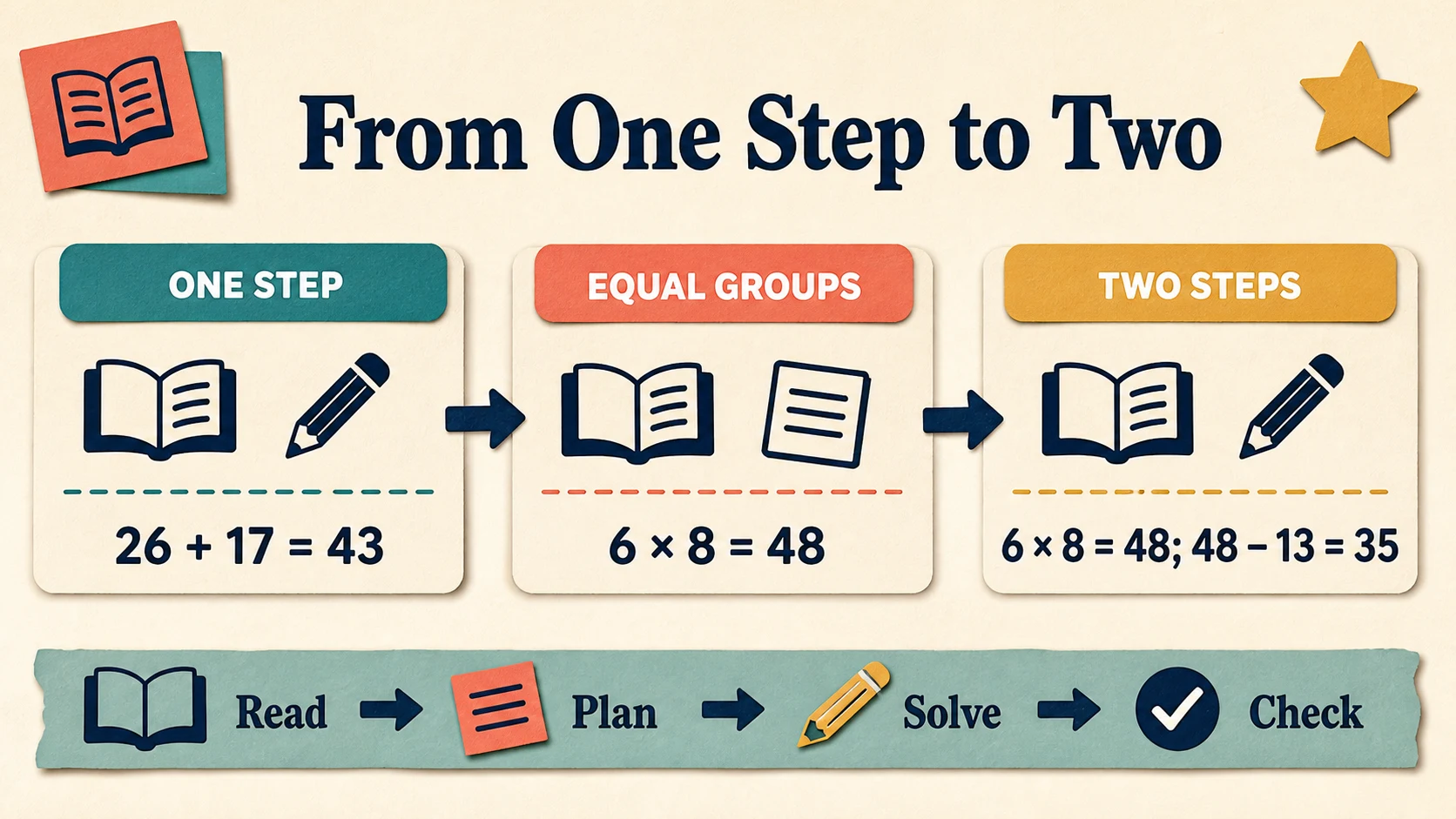
Use this progression to fade adult prompts: first retell and model together, then ask the learner to choose and label a model before solving independently.
The catalogue guidance suggests reading the entire problem, retelling it, identifying known and unknown quantities, selecting a strategy, solving and checking. That is sourced from the supplied catalogue facts. A practical household addition is to require a “meaning check”: the learner must point to what each number in the equation represents.
Read decimals and fractions through models before rules
Symbols can conceal whether a learner understands the quantities. Models make misconceptions visible, especially when digits or denominators tempt an incorrect whole-number rule.
Checked decimal example: name the place before comparing
Compare 0.4 and 0.35.
Represent 0.4 as four tenths, then rename it as 40 hundredths:
0.4 = 0.40
Because 40 hundredths is greater than 35 hundredths:
0.40 > 0.35.
A learner may choose 0.35 because 35 is greater than 4. That response indicates whole-number comparison has been applied to decimal notation. The next sheet should require tenths and hundredths to be represented on grids, number lines or place-value charts before introducing more decimal places.
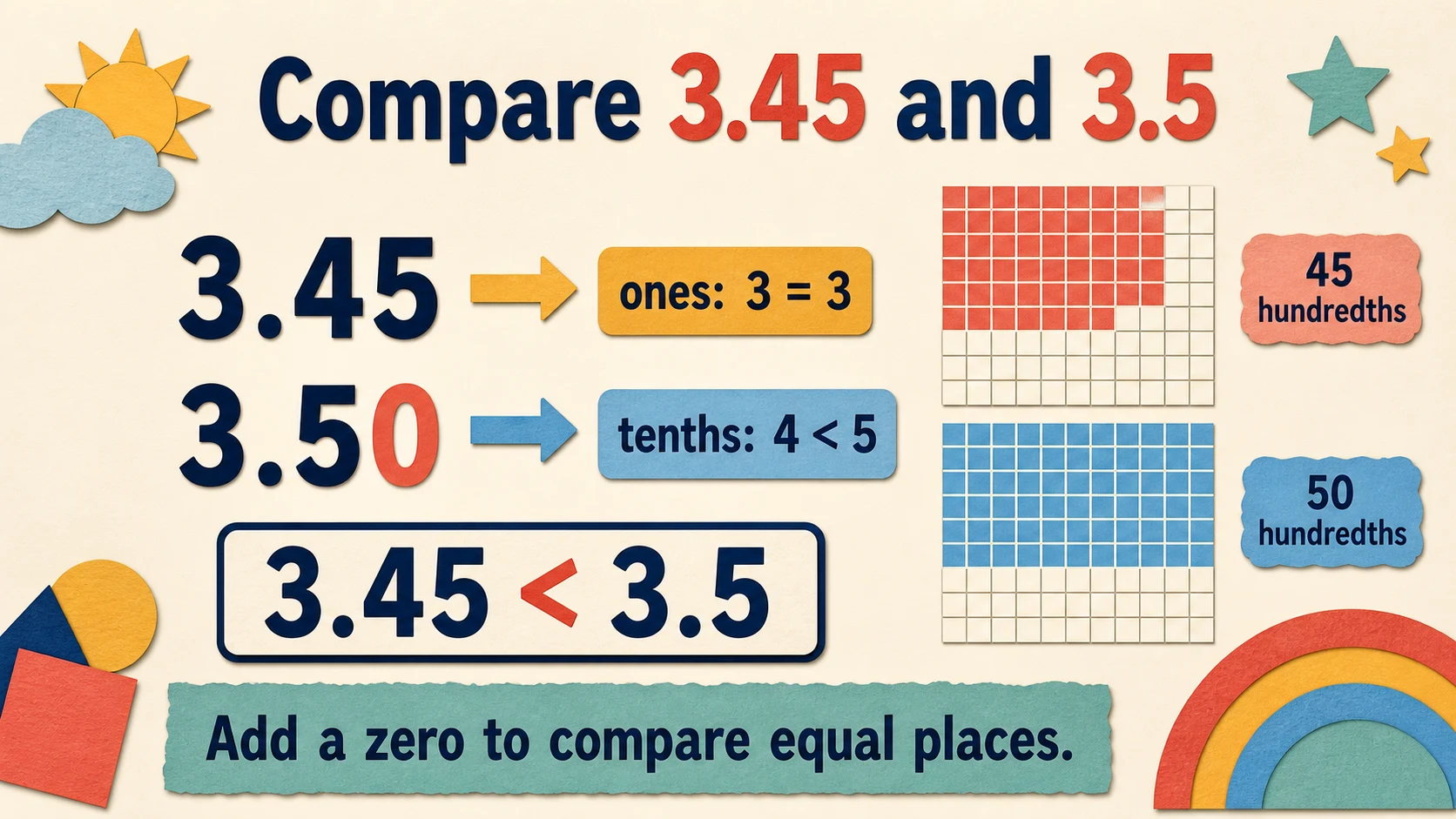
Keep the concrete model visible during feedback so the learner can connect each decimal digit to its place instead of comparing digit strings.
Checked fraction example: test the size of the unit fraction
Compare 1/4 and 1/8. With equal-sized wholes, fourths are larger pieces than eighths, so:
1/4 > 1/8.
The denominator tells how many equal parts compose the whole; a larger denominator does not automatically mean a larger fraction. Draw two equal-length strips, partition one into four equal sections and the other into eight, then shade one section of each.
The representative first-grade fractions resource contains six problems. For an early fractions session, six carefully discussed representations may reveal more than a long symbolic set. If the learner compares correctly only after seeing the strips, the next sheet should preserve equal wholes and visual partitions. If the learner independently explains why fourths are larger, move to number-line placement or comparisons with different numerators.
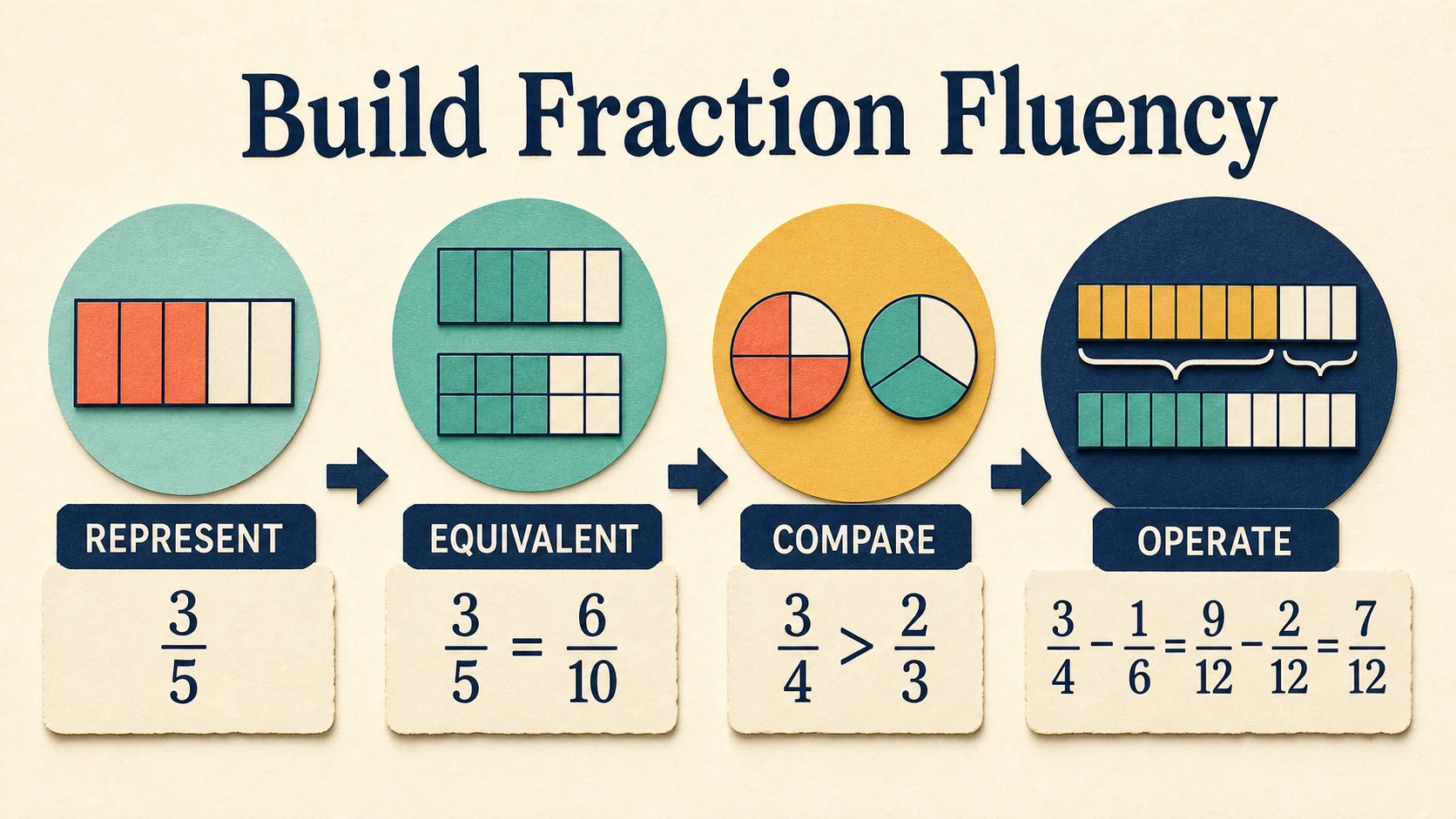
Use the upper-grade progression to decide when a model remains necessary and when the learner can justify a fraction operation without adult prompting.
The IES practice guide on assisting students who struggle with mathematics discusses systematic instruction, mathematical language and visual representations. It is an authoritative source for instructional planning, not evidence that a particular WorksheetWise sequence will produce a specified result.
Make clock work reveal which hand is misunderstood
Telling time combines skip counting, spatial position and the relationship between two hands. A correct answer can still come from guessing, so ask the learner to read the hour hand and minute hand separately.
Checked telling-time example: the hour has not changed yet
On a clock showing 3:45, the minute hand points to 9, representing 45 minutes. The hour hand lies between 3 and 4. The time is 3:45, not 4:45, because the hour hand has not reached 4.
If a learner answers 4:45, the minute reading is secure but the hour-hand interpretation is not. The next activity should hold the minutes at :45 while varying the hour, using a geared demonstration clock if available. If the learner says 3:09, the problem is different: the position label 9 has been treated as nine minutes instead of nine groups of five. Follow with skip-counting around a clock face.
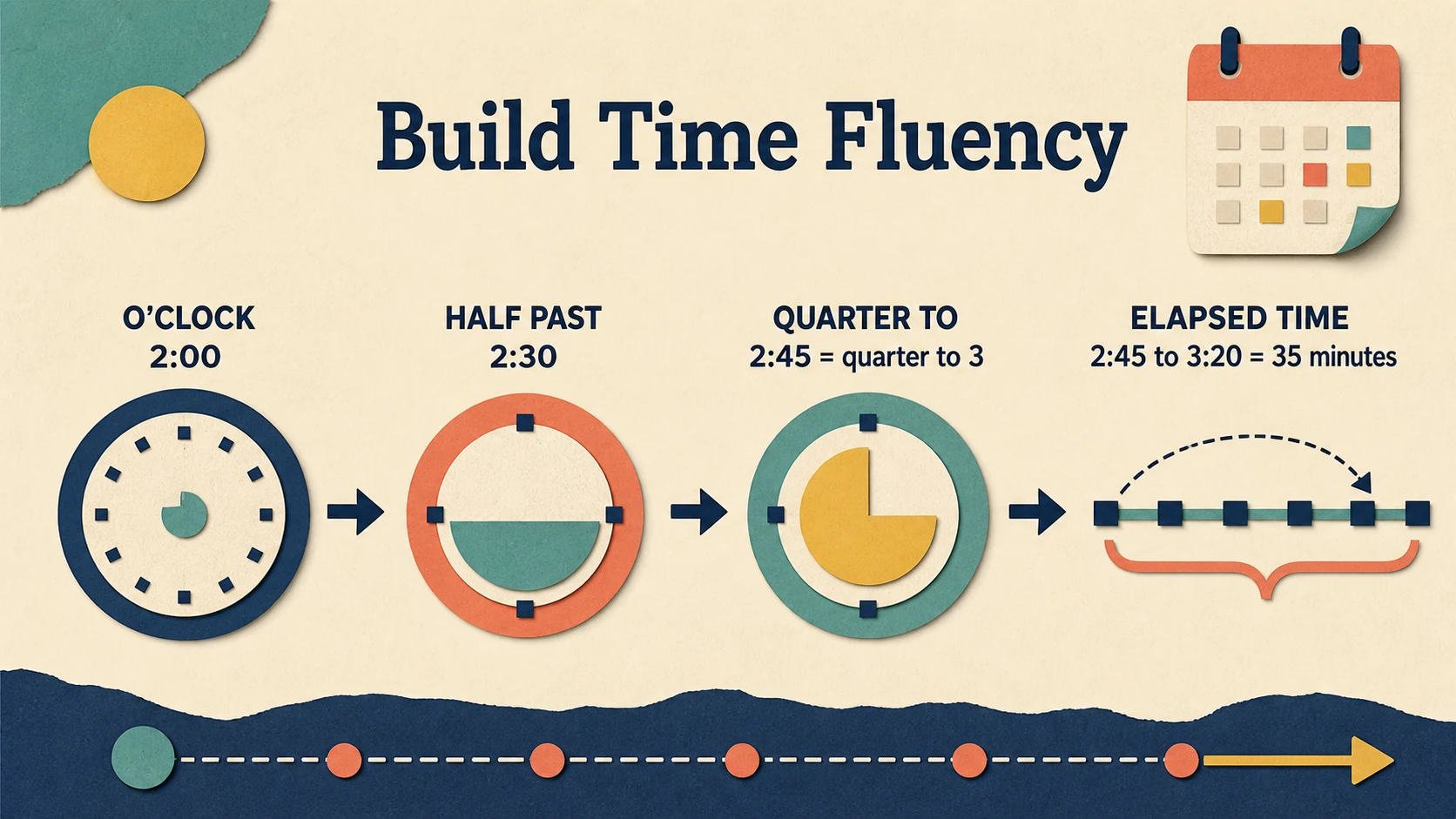
Use the telling-time progression to separate hand identification, five-minute counting and independent time reading instead of correcting all three at once.
For elapsed time, an open number line can expose reasoning. From 2:35 to 3:10, jump 25 minutes to 3:00, then 10 more minutes to 3:10. The elapsed time is 35 minutes. If the learner writes 75 minutes after subtracting digits without respecting 60-minute units, choose elapsed-time work with number-line jumps rather than harder clock calculations.
Convert answer-key mismatches into next-sheet decisions
Do not sort every error into “careless” or “doesn’t know it.” Look for repeatable evidence.
| Observed work | Plausible interpretation to test | Immediate check | Next-sheet feature |
|---|---|---|---|
| Counts a row correctly but recounts or skips objects in a scattered set | One-to-one tracking is unstable | Ask the learner to move each counted object into a cup | Small scattered sets with touching or moving |
Solves 8 + 5 by counting all from one |
Understands combination but lacks an efficient strategy | Ask how many are needed to make 10 | Ten-frames and make-ten decompositions |
Writes 43 − 25 = 22 |
May subtract the smaller digit from the larger in each column | Ask the learner to build 43 and trade one ten | Regrouping with base-ten drawings |
| Adds after seeing “more” in a comparison story | May be following a keyword instead of the relationship | Ask who has the greater amount and draw two bars | Comparison stories with labelled models |
Says 1/8 > 1/4 |
May treat denominators as whole-number sizes | Compare one piece from equal partitioned strips | Equal-whole fraction models |
| Reads 3:45 as 4:45 | May name the nearest hour rather than the hour already reached | Cover the minute hand and locate the hour interval | Clocks emphasizing hour-hand position |
These are hypotheses, not diagnoses. Confirm them with one parallel prompt. A single incorrect answer can come from misreading, copying or losing place. A repeated strategy across differently formatted items is stronger evidence about what to teach next.
The Common Core State Standards for Mathematics can help adults inspect how mathematical expectations are organized by grade and domain. They do not establish an individual learner’s placement, and they do not represent every local curriculum sequence. Use them as one reference when comparing intended practice levels, not as a claim of alignment for unverified resources.
Adapt the session without removing the mathematics
Homeschool flexibility is most valuable when it changes access, pacing or context while retaining the intended reasoning.
Preserve the target
If the target is counting with one-to-one correspondence, allow the learner to move objects, stand and touch floor numerals, or count during a short walk. For ages three and four, keep this work brief, oral and adult-led, with matching, manipulatives and movement taking priority over desk work.
If the target is addition strategy, reduce the number of items but retain opportunities to compose ten. If the target is word-problem modeling, read the text aloud when decoding is the barrier, but require the learner to identify the quantities and relationship. If the target is fraction comparison, provide larger diagrams or fraction strips without stating which fraction is greater.
Know when an adaptation changes the target
Reading a problem aloud preserves mathematical modeling when reading fluency is not under assessment. Drawing the comparison bars for the learner does not preserve independent model selection. Providing a multiplication chart may preserve multi-step reasoning when fact recall is incidental, but it changes a task intended to assess fact recall.
Answer keys also have limits. They can confirm the final response but may not show whether a learner used a valid model, misunderstood a unit or copied an operation. They should support a conversation, not replace observation.
Printable practice cannot supply every part of mathematics instruction. Physical objects, oral explanation, estimation, drawing and discussion are necessary when the printed response hides the learner’s thinking. No worksheet result should be treated as a diagnosis, and no number of completed pages guarantees mastery or a particular outcome.
Assemble a weekly rhythm from the live library
A four-day cycle leaves room for teaching and review without turning the week into a stack of unrelated pages.
Day 1: establish the model
Choose one catalogue topic and teach one example with objects or a drawing. Use two independent items to see whether the learner can reproduce the relationship.
Day 2: vary the response
Keep the skill stable but change how it is shown. Move from counters to a ten-frame, from a clock model to drawing hands, or from acting out a story to drawing a bar model.
Day 3: practice briefly and inspect errors
Assign a short run from the selected sheet. Check it the same day. Record the first incorrect step and verify the suspected misconception with one fresh item.
Day 4: respond and mix
Begin with a targeted correction task. Then include two previously learned items in different formats. Mixed review should test recognition: can the learner decide whether a problem calls for addition, subtraction, comparison or another representation without being told?
For siblings, teach the common representation together and stagger independent work. One learner can complete oral counting while another works on equations; then switch adult attention. Avoid assigning simultaneous new concepts that both require sustained modeling.
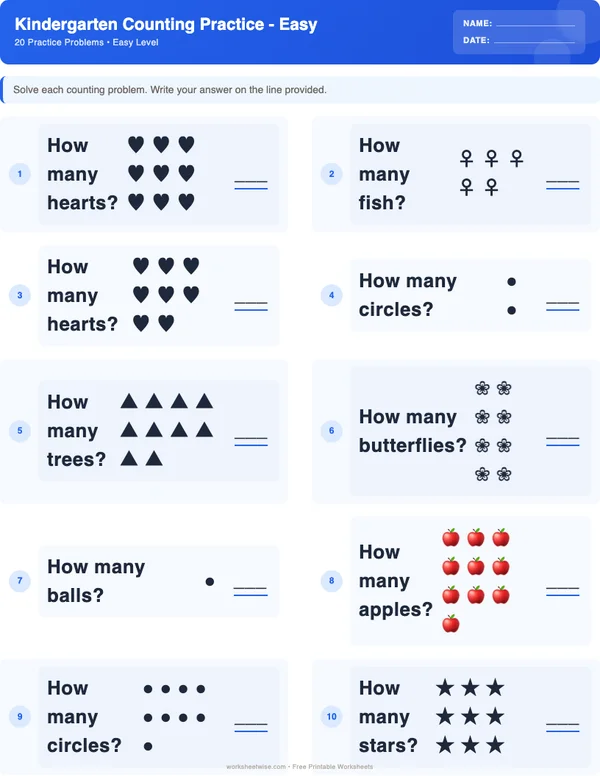
The catalogue’s 61 free entry points provide room to sample before committing to a longer sequence. The Kindergarten Addition guide and free sheet is a concrete starting point for early combining and make-ten work, while the Kindergarten Counting guide and free sheet suits learners who still need to coordinate number words with objects.
Make tomorrow’s sheet earn its place
At the end of today’s session, write one observable statement:
The learner can ___ when ___, but currently ___ when ___.
For example:
The learner can solve
9 − 4by removing counters, but currently adds when a comparison story contains the word “more.”
Tomorrow’s choice is then specific: select a small set of comparison stories, read each aloud if needed, require labelled bars and ask who has more before choosing an operation. Do not increase the number range yet.
If today’s note instead says, “The learner accurately models and solves three comparison stories without prompts,” tomorrow’s sheet can vary the unknown position or mix comparison with take-away situations. That is progression based on visible work, not age, completion speed or a difficulty label.
Start now by opening the full worksheet library, choosing one math topic and printing only the sheet that matches one written observation from the learner’s latest work.
Put it into practice
Use the guide with a real printable
Move from explanation to a short, observable practice task. Check the first item together, then adjust the next session from the learner's actual work.
Open the first free worksheetExplore a neighboring collection