Curated collectionAnswer keys includedPrint-ready PDFs
Homeschool Phonics Worksheets
Turn a printable library into a flexible weekly rhythm with explicit teaching, short independent practice, answer-key feedback and mixed-age planning.
Start with a real resource
Browse this worksheet collection
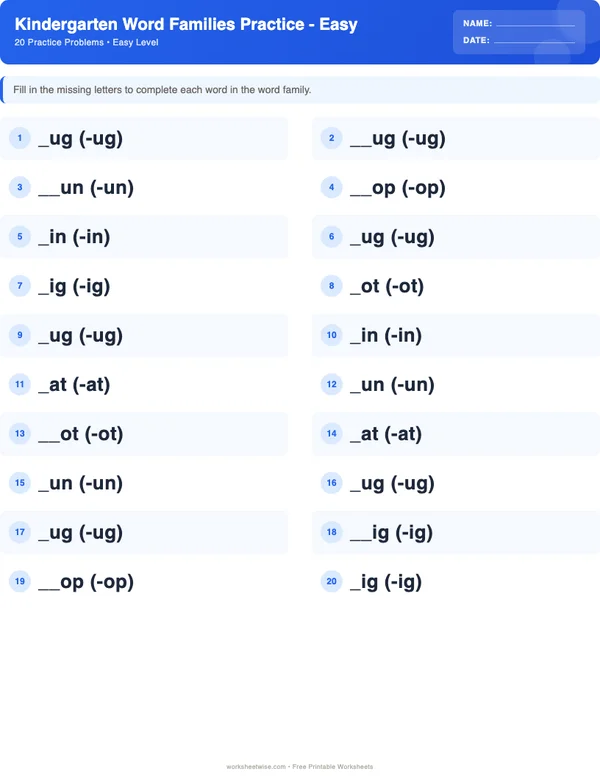
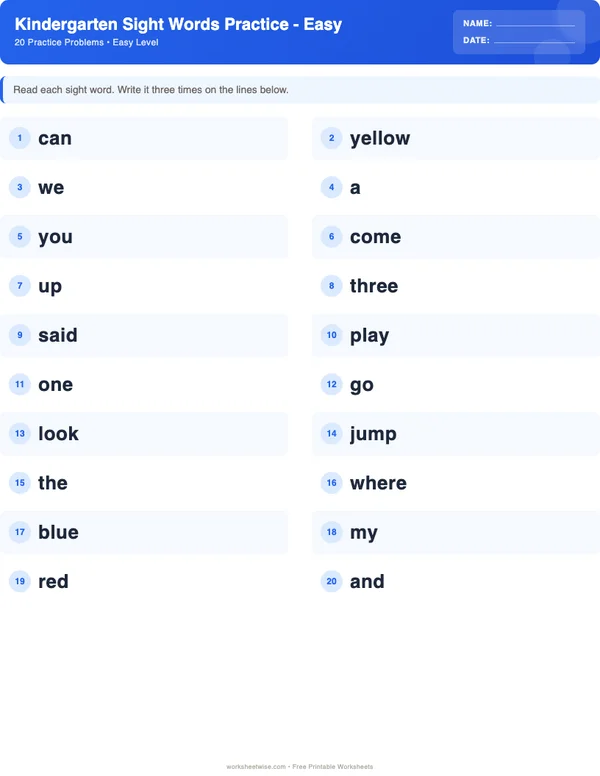
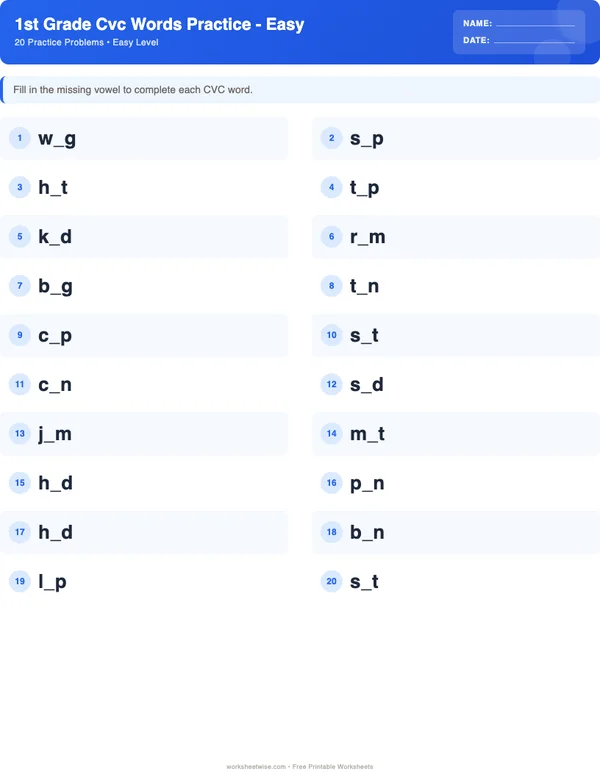
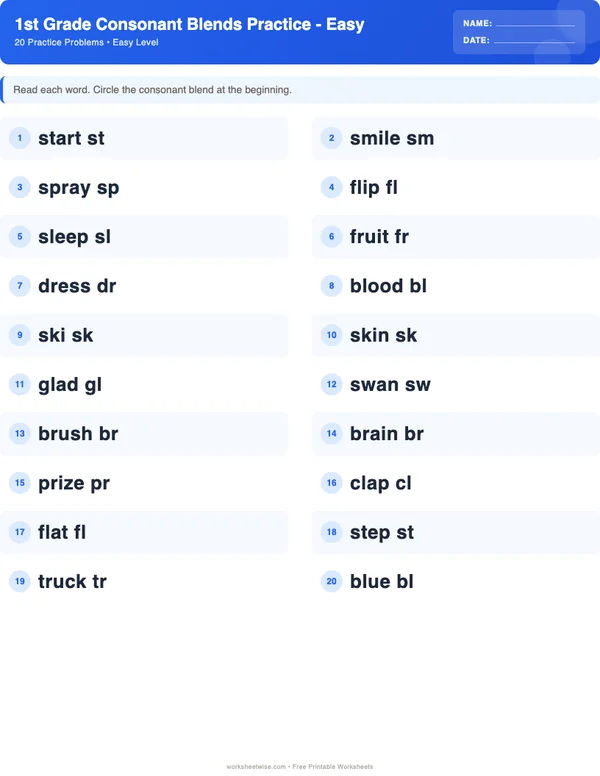
22 relevant free entry points are available. Each one includes a printable learner PDF and separate answer key.
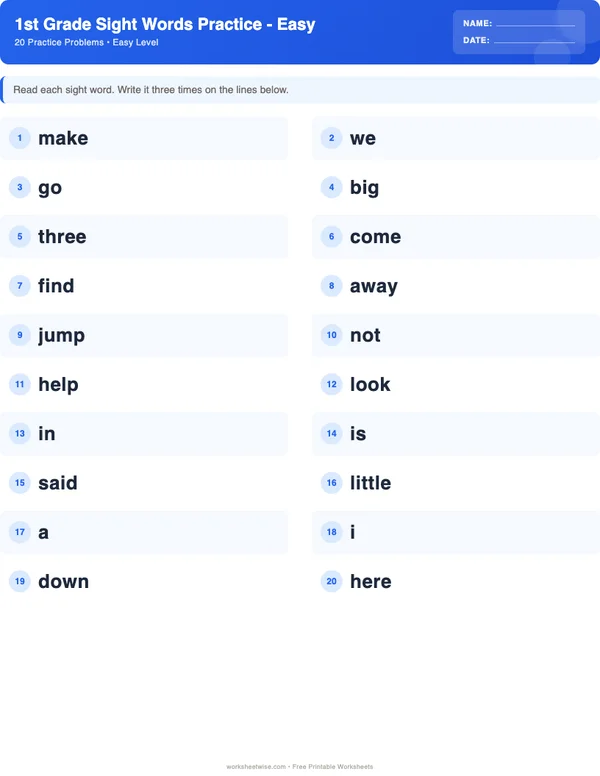
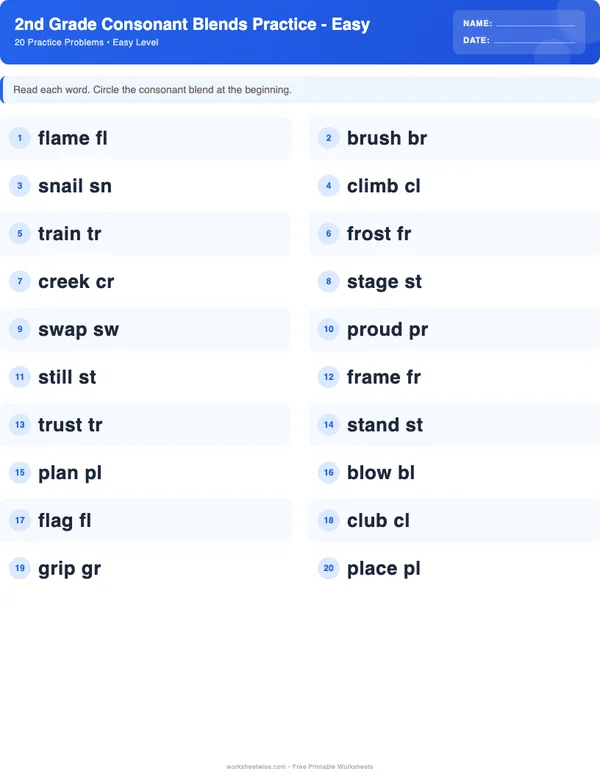
A useful practice loop
Print less. Observe more.
- Choose one skill and model the first item aloud.
- Use a short set and notice the learner’s strategy.
- Change the next task from the work you can see.
Need more than the free sheet?
Plus includes all 396 matching catalogue variations where available, plus saved deterministic generators and the worksheet designer.
See Plus membershipComplete guide
How to teach and practise homeschool phonics worksheets
3,405 words Updated 6 instructional visuals
Build the week around teach, try, check and choose
Homeschool phonics worksheets work best as short practice inside an explicit teaching routine—not as the lesson by themselves. Choose one sound-spelling target, model it aloud, complete a few items together, assign a brief independent portion, check the responses promptly and use the error pattern to select the next sheet.
The live WorksheetWise catalogue provides 396 phonics worksheet variants across four grade labels and seven topics, including 22 free resources. That range makes flexible planning possible, but more pages do not automatically produce a better sequence. The adult still decides what the learner needs to hear, notice and do.
A workable weekly rhythm is:
- Monday: Model the new sound-spelling relationship and complete a few representative items together.
- Tuesday: Rehearse it orally and with movable letters before assigning short written practice.
- Wednesday: Use a different response format—sorting instead of filling blanks, for example—while keeping the same phonics target.
- Thursday: Mix the target with previously taught patterns so the learner must choose rather than follow a page-wide cue.
- Friday: Review the answer key and the learner’s oral reading, identify the most informative error and choose the next sheet accordingly.
This is an editorially recommended workflow, not a claim that WorksheetWise has been evaluated by the cited authorities. The IES foundational reading practice guide supports explicit instruction in sound segments, letter-sound relationships, decoding, word analysis and connected text. A printable can supply practice opportunities; an adult supplies the explanation, modeling and responsive feedback.
Select a sheet by the work it requires
Begin with the learner’s observable behavior, not the grade printed on the page. Grade labels describe intended practice level, and local curriculum sequences differ. Age can help you discover potentially suitable materials, but it is not a placement decision.
Before printing, inspect four features.
Identify the exact phonics decision
Name what the learner must decide on each item. “Practice vowels” is too broad. More useful targets include:
- Hear whether the middle sound in pin is /ĭ/ or /ĕ/.
- Blend three sounds without pausing between them.
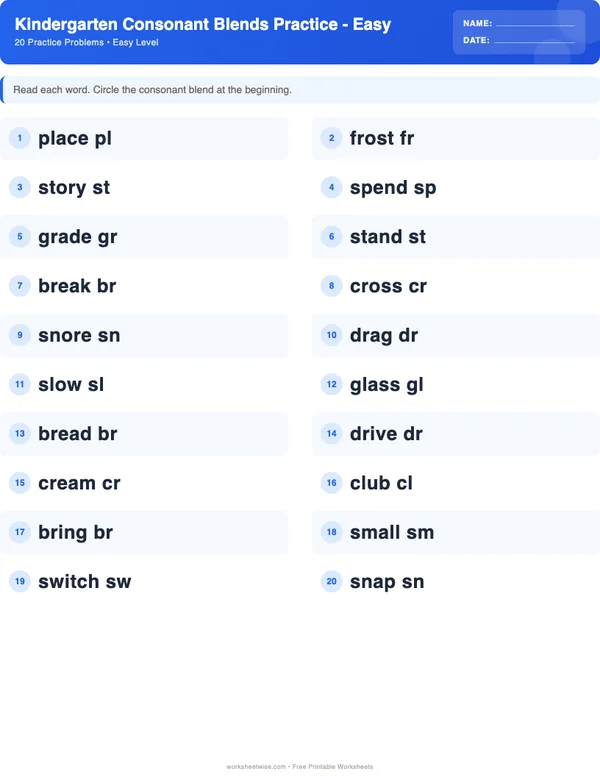
- Preserve both sounds in an initial blend such as st.
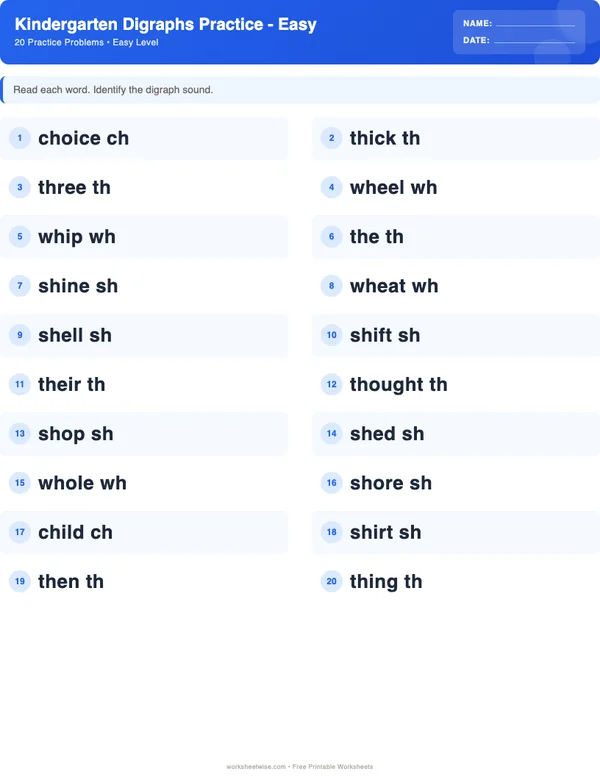
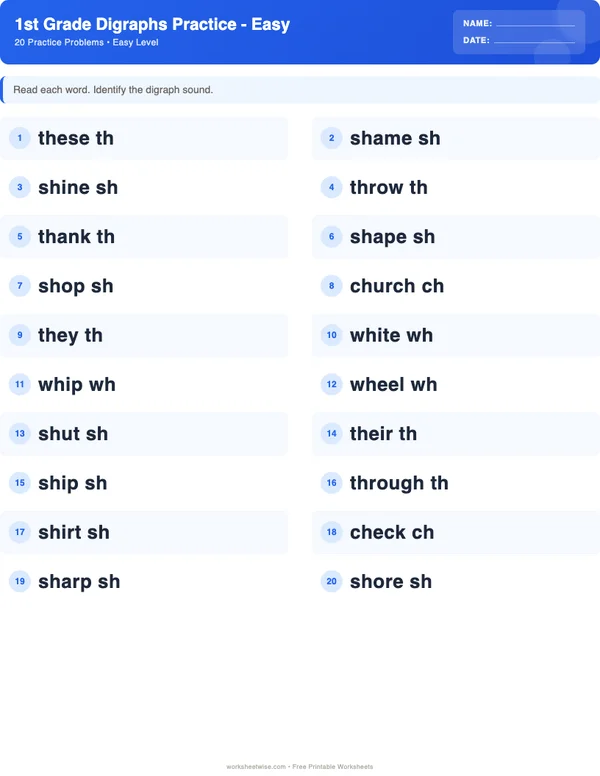
- Distinguish a two-sound blend in slip from the one-sound digraph in ship.
- Decide whether a word needs the short-vowel CVC pattern or silent-e CVCe pattern.
- Recognize which part of a high-frequency word follows taught phonics and which part requires specific attention.
A worksheet belongs in today’s lesson only if its main decision matches the target you intend to teach.
Define difficulty through visible task features
The catalogue marks the representative free sheets as “easy,” but that label should describe the task—not the learner. In this guide, a relatively supported sheet has observable features such as familiar one-syllable words, pictures that clarify meaning, one pattern repeated across the page, a small response set or tracing and matching rather than recall from memory.
A more demanding task might remove pictures, mix several patterns, require spelling from dictation, include the target in sentences or ask the learner to produce rather than recognize an answer. These changes can make a task harder even when the grade label stays the same.
Check what the response can reveal
Matching is useful when handwriting would obscure whether the learner can hear a contrast. Sorting can reveal whether the learner notices categories. Reading aloud reveals blending behavior that a completed page cannot show. Dictation reveals encoding: the learner must hear the sounds and select letters without seeing the word.
Avoid using one response format as proof of broad command. A learner may match ship to a picture by initial sound yet be unable to read the whole word. Conversely, a learner with effortful handwriting may read the word accurately but leave an incomplete written response.
Limit the page before the lesson begins
Many representative free sheets contain 20 problems. Twenty is a catalogue fact, not a required sitting. Circle six to ten items, fold the page, cover unused rows or ask for oral responses. Stop when the responses are no longer informative.
For ages three and four, prioritize brief adult-led oral, matching, manipulative and movement work over desk work. Cut apart a few pictures, move tokens into sound boxes, build words with letters or step once for each sound. A 20-item page can be a source of reusable prompts across several days rather than a single assignment.
Model phonics before asking for independent work
The modeling portion should make the hidden thinking audible. State the target, demonstrate the response and contrast it with a plausible mistake.
Use “I do, we do, you do” with real words
For a CVC lesson, place three tokens or letters in a row for cat. Say, “I will keep the sounds connected: /cccaaat/, cat.” Sweep a finger beneath the letters while blending. Then build mat together by changing only the first letter. Finally, ask the learner to build and read map.
This sequence belongs here because the catalogue’s Pre-K, kindergarten and first-grade CVC resources use words with the same consonant-vowel-consonant structure and include word building, matching, filling blanks and reading. The checked word chain is sound: cat → mat → map changes one phoneme at each step. If you continue to mop, the middle phoneme changes from short a to short o, giving you a deliberate contrast rather than an accidental jump.
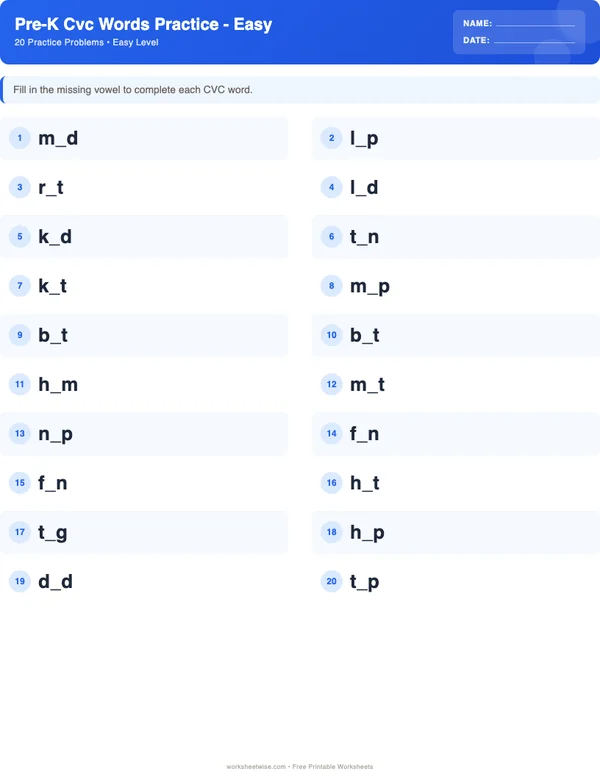
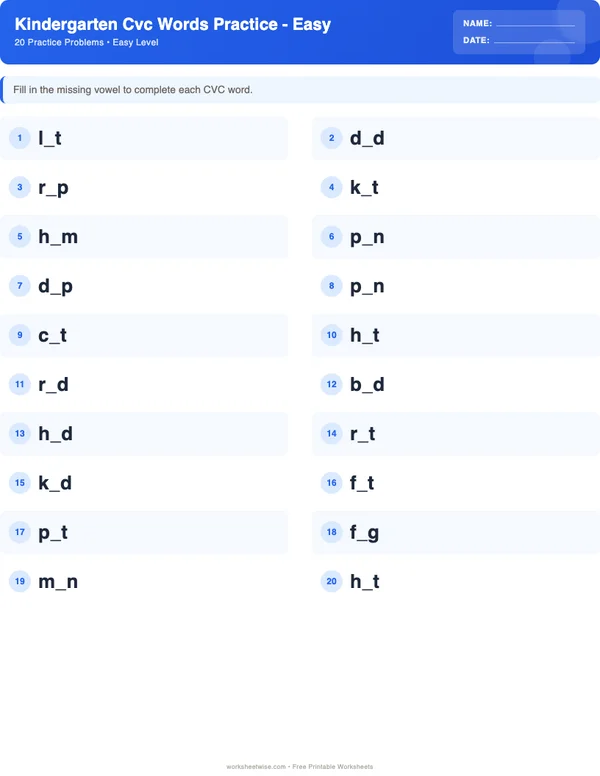
The Pre-K CVC Words guide and free sheet can supply prompts, but the adult should demonstrate blending before expecting the learner to complete them.
Keep contrasts precise
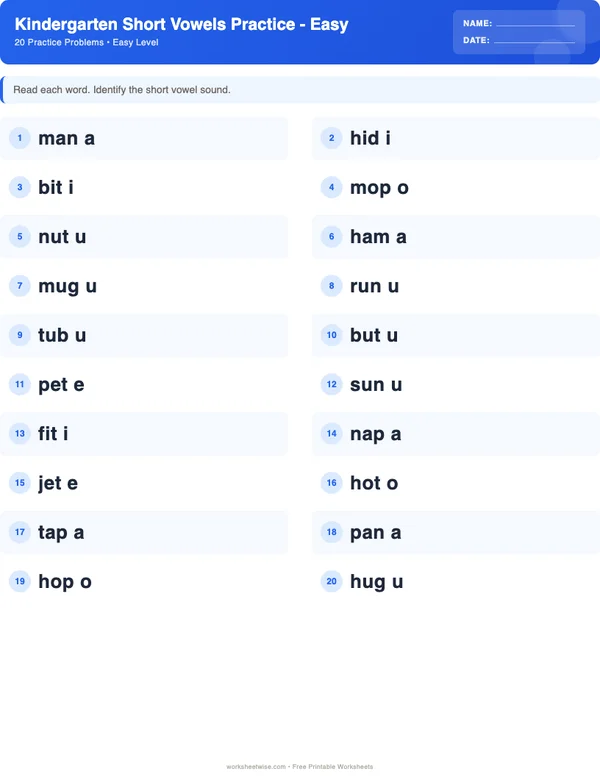
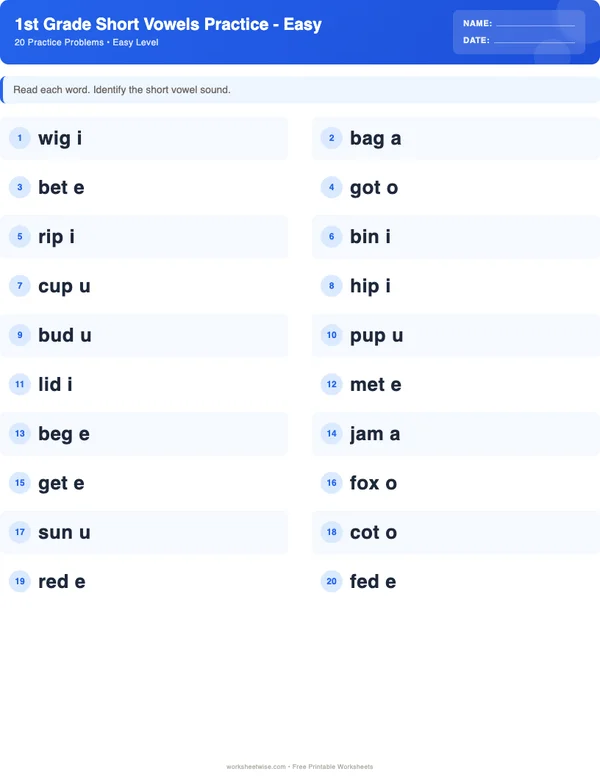
For short vowels, compare words differing in one middle sound: pen/pin, set/sit or bed/bid. Say both words, ask the learner to repeat them and then place a picture or word card under an e or i heading. Do not add spelling until the learner understands the listening decision.
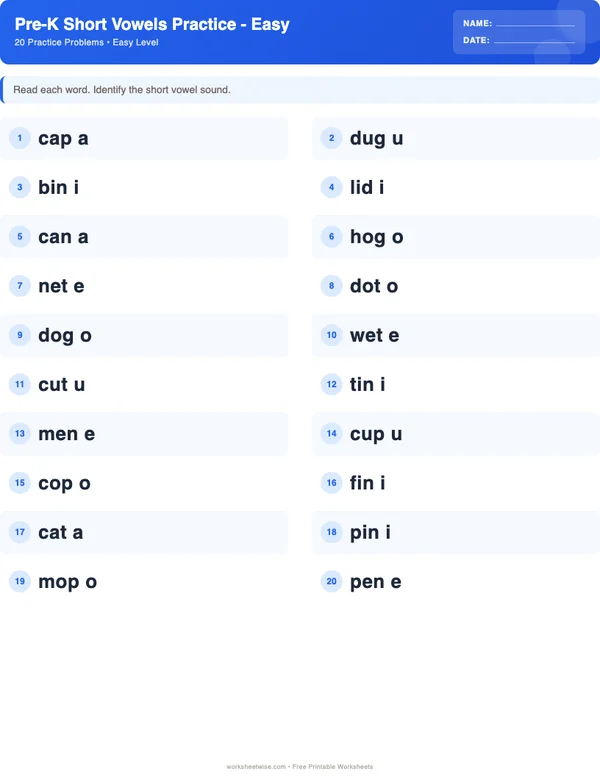
The pairs have been checked: each pair keeps its beginning and ending consonants while changing only /ĕ/ to /ĭ/. They belong in this context because the live short-vowel resources specifically include vowel discrimination, picture sorting, word reading, spelling and fill-in-the-middle tasks.
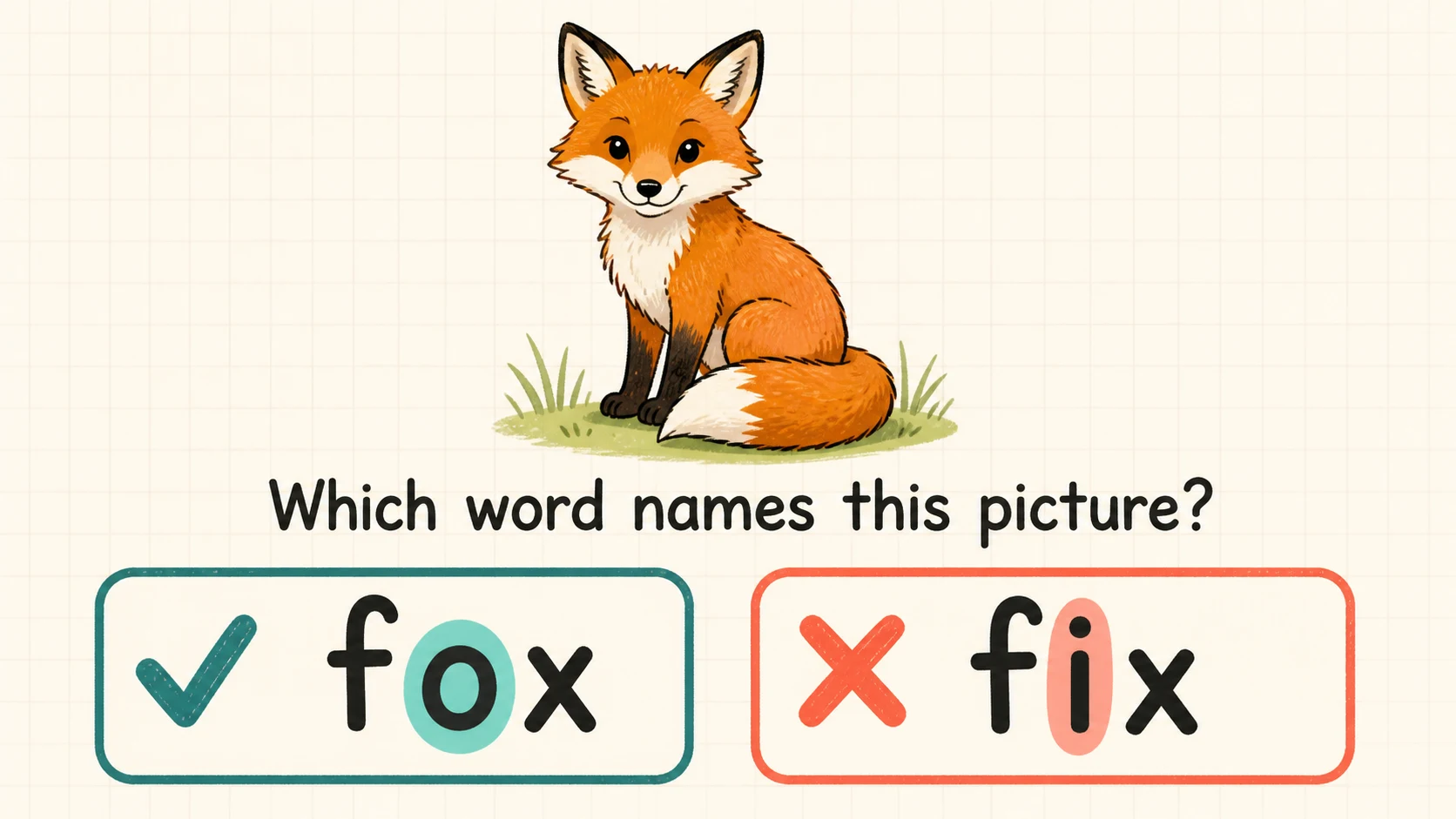
Use a short-vowel error chart after listening to the learner; the checked mark alone cannot show whether the problem was hearing, decoding or writing.
Show why an answer works
Suppose the item contrasts hop and hope. Point under each word and say:
- “In hop, the vowel is followed by a consonant at the end, and I hear short o.”
- “In hope, the final e changes the pattern. I hear long o.”
- “I will read both again so the spelling and sound stay connected: hop, hope.”
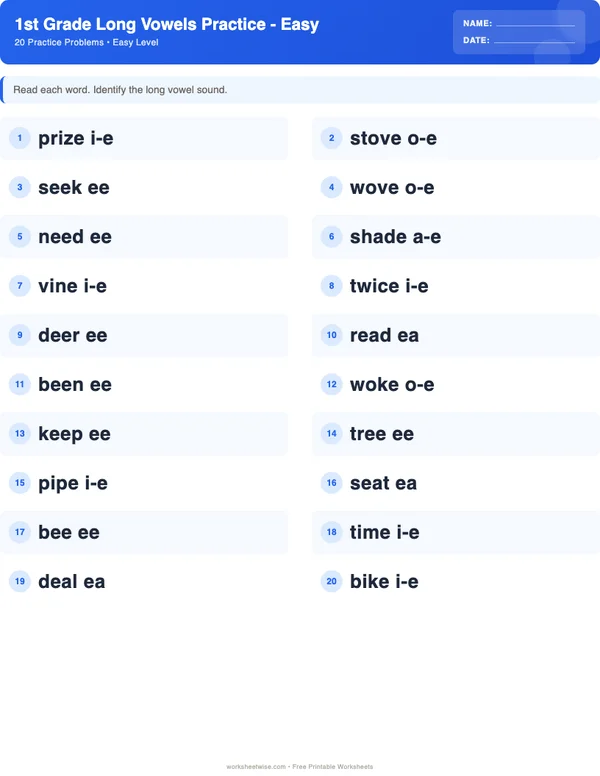
This checked example belongs to the first-grade long-vowel catalogue entry, which includes silent-e words and specifically uses short/long contrasts. Other accurate pairs include cap/cape, pin/pine and cub/cube. Present the pattern as a useful initial generalization, then acknowledge that English spelling contains exceptions; a worksheet sample cannot establish a universal rule.
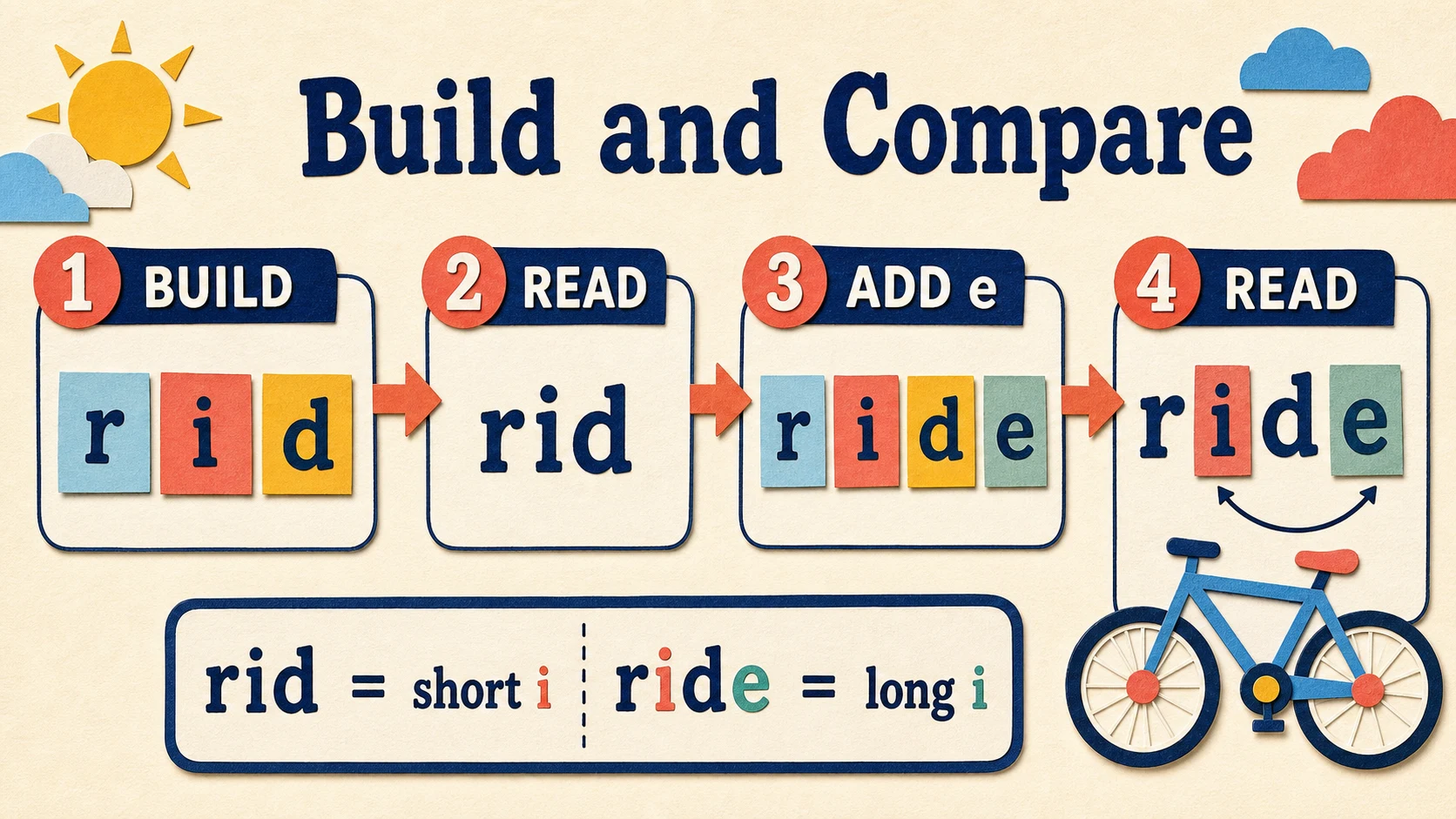
Move from an adult-modeled CVC/CVCe contrast to independent sorting only when the learner can explain or demonstrate the difference.
Use a repeatable weekly phonics routine
A stable structure reduces planning while allowing the content and response demands to change.
Monday: establish the sound-spelling target
Spend about five minutes on oral and manipulative work. Then model three printed examples and complete two together. End with two independent checks.
For initial st, for example, stretch the continuous /s/ and move directly into /t/: /ssst/. Build sat, then insert t to make stat only if using a familiar and meaningful word; a clearer elementary chain is top → stop. Ask the learner to touch one letter for /s/, one for /t/ and then blend the whole word. The point is that both consonants remain audible.
Tuesday: practice briefly and observe
Assign a limited set of items in the same pattern. Sit nearby without prompting each answer. Record what happens:
- Did the learner start immediately?
- Did the learner say the sounds or guess from a picture?
- Was one sound consistently omitted?
- Did the learner read correctly but write inaccurately?
- Did errors increase only near the end?
These observations are more useful than a total score alone.
Wednesday: change the format, preserve the target
If Tuesday used picture-word matching for short a, Wednesday might use letter tiles to complete c_t, m_p and s_d. The phonics decision remains the middle vowel. Only the motor and response demand changes.
For young learners, replace writing with movement: put a and i cards on opposite sides of the room, say map or mip, and ask the child to move to the heard vowel. If nonsense words are used, explain that they are pretend words for checking sound-by-sound decoding. Do not use them as vocabulary or claim that one response diagnoses a reading condition.
Thursday: require a real choice
Mix the week’s target with known material. A page containing only sh words lets the learner infer the answer from the page heading. A mixed sort containing ship, slip, shop and stop requires a distinction:
- ship: sh represents one consonant sound.
- slip: sl retains /s/ and /l/.
- shop: sh again represents one sound.
- stop: st retains /s/ and /t/.
All four examples are checked and appropriate because the catalogue includes both digraph and consonant-blend topics. Ask the learner to say the word before sorting it. If the child cannot identify a picture, supply the word; the lesson is phonics, not picture interpretation.
Friday: check, correct and select
Use the answer key to locate mismatches, but listen to two or three items again. Mark the error type beside each response:
- H: the learner appears not to hear or preserve a sound.
- P: the learner hears it but chooses the wrong spelling pattern.
- B: the learner knows the parts but cannot blend them smoothly.
- W: the oral answer is correct, but the written response is inaccurate.
- A: attention, vocabulary or page interpretation may have interfered.
These are planning codes, not diagnoses. Finish by selecting one next action: repeat with more support, keep the target and change the format, mix it with a known contrast or advance to the next pattern.
Compare four live skill paths before moving forward
The catalogue’s topics overlap, but they do not demand the same reasoning.
CVC words: coordinate three sounds
CVC work asks the learner to segment, connect letters to sounds and blend. A picture-matching sheet provides recognition support; spelling from dictation removes that support. Choose CVC practice when the learner drops the middle sound, guesses from the first letter or produces disconnected sounds without arriving at the word.
The Kindergarten CVC Words guide and free sheet is a sensible entry point when three-sound words are the actual target, regardless of whether the learner’s chronological age matches the label.
Short vowels: discriminate the middle phoneme
Short-vowel work belongs next when consonants are preserved but the middle vowel is unstable. If the learner reads pin as pen, do not immediately assign a mixed five-vowel page. Return to a two-way oral contrast, then match, then spell.
A learner who gets 18 of 20 correct but confuses e and i twice needs targeted contrast practice more than a repeat of 20 broadly mixed items. A learner who misses the final six across several vowels may instead need a shorter task and a fresh check before you infer a pattern.
Consonant blends: retain adjacent sounds
Blend tasks increase the number of consonant sounds the learner must hold together. In stop, four phonemes are represented: /s/ /t/ /ŏ/ /p/. Reading it as sop drops /t/; reading it as top drops /s/. Those errors point back to sound-by-sound mapping with tokens or finger taps.
A checked word chain is lap → clap → clam → clamp. It adds /k/ to make clap, changes final /p/ to /m/ for clam, then adds final /p/ for clamp. This belongs here because it makes the learner attend to both initial and final blends rather than memorize a single onset.
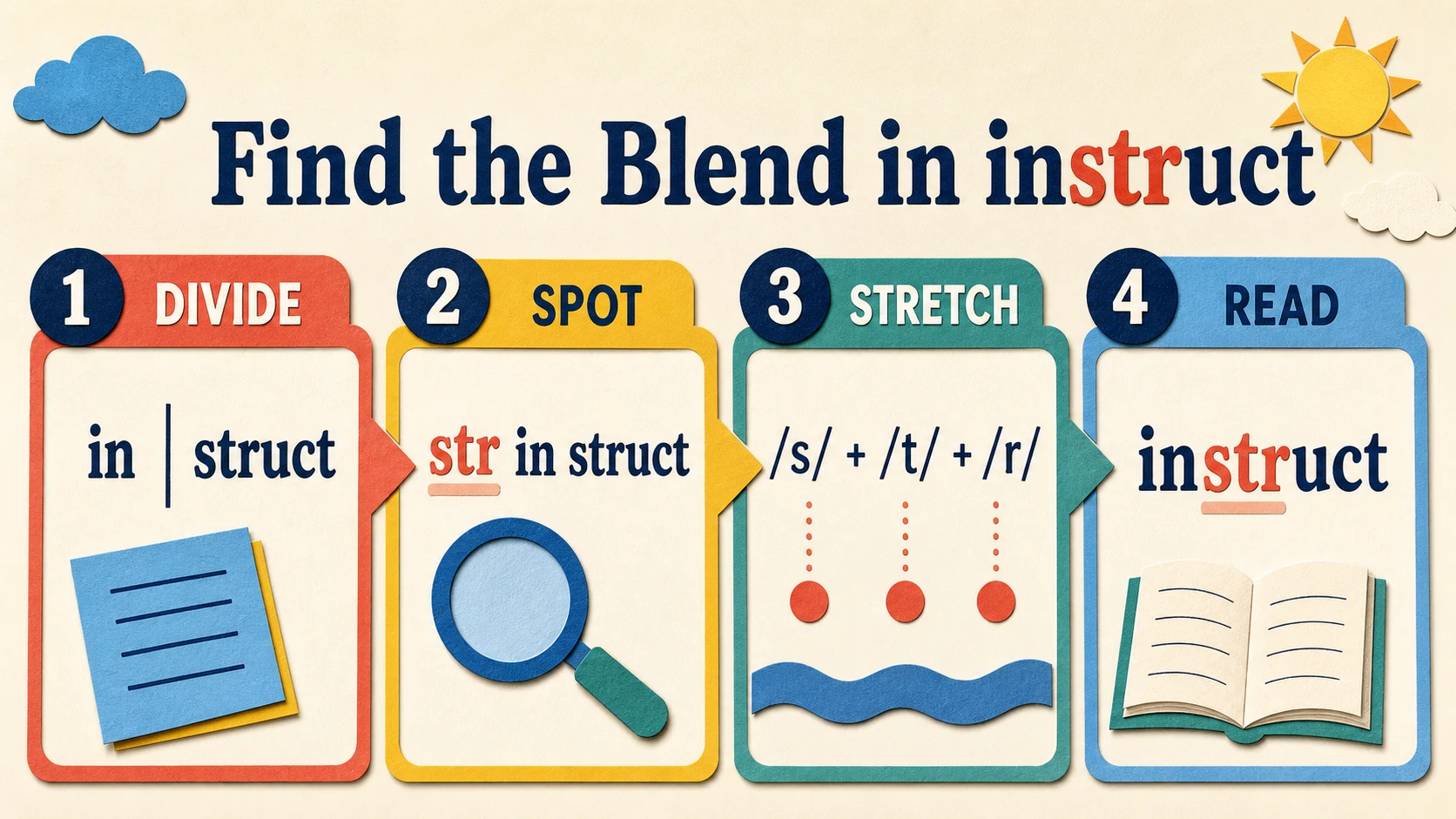
Advance blend practice by changing one observable demand at a time: adult support, visual cues, pattern mixing or independent response.
Long vowels: select among spelling patterns
Long-vowel work should follow reliable short-vowel CVC decoding because learners need the contrast. Begin with visually clear CVC/CVCe pairs before mixing vowel teams. Later, a long-a sort might compare cake, rain and day: each has long /ā/, but the spellings are a_e, ai and ay.
That example is accurate and belongs here because the live first-grade long-vowel topic includes silent-e and common vowel teams. Treat any mnemonic about “two vowels” as a starting prompt, not an absolute English spelling rule.
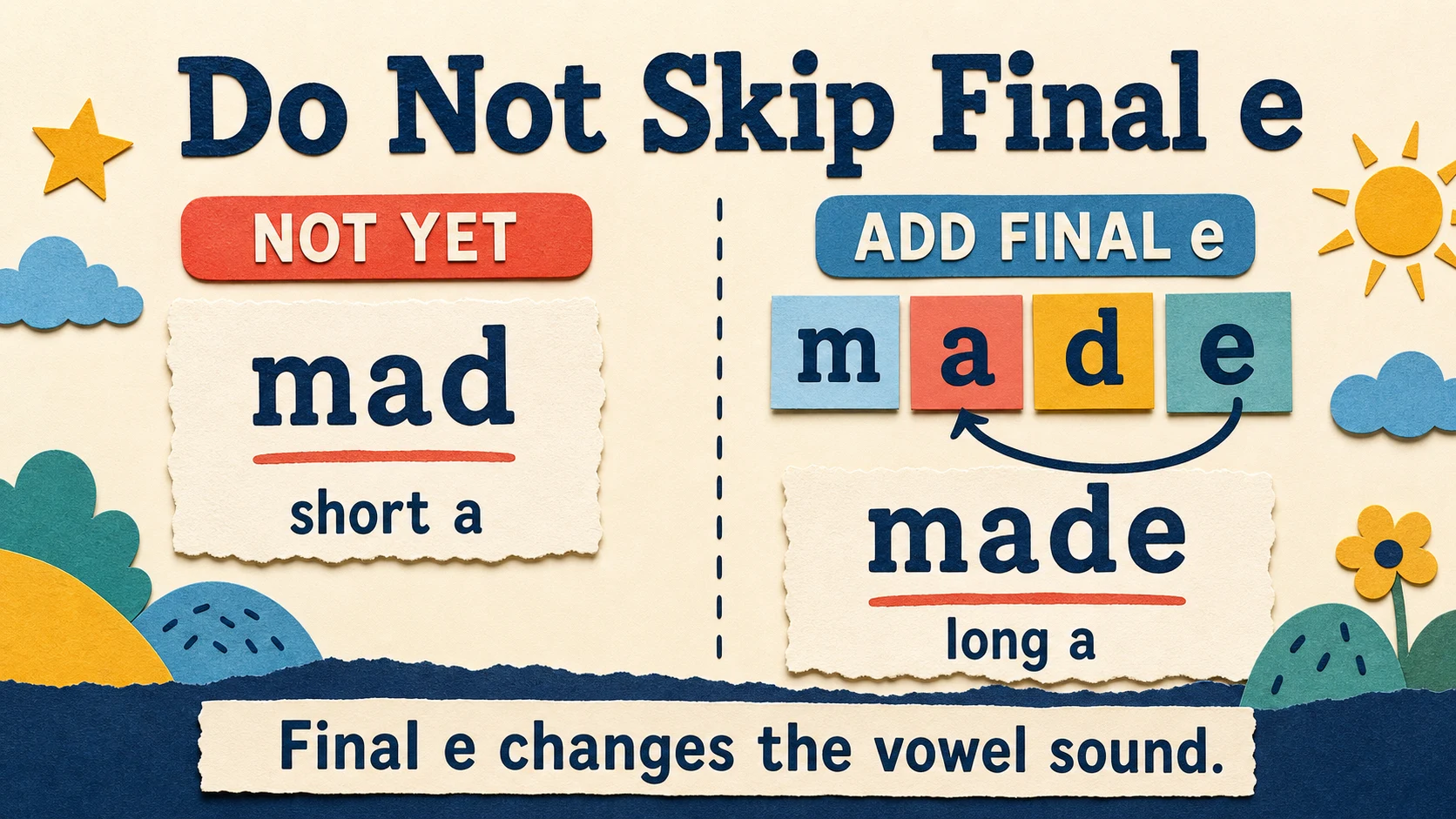
Use the location of the error—vowel sound, pattern choice or word reading—to choose a narrower follow-up than “more long vowels.”
Teach sight words without disconnecting them from phonics
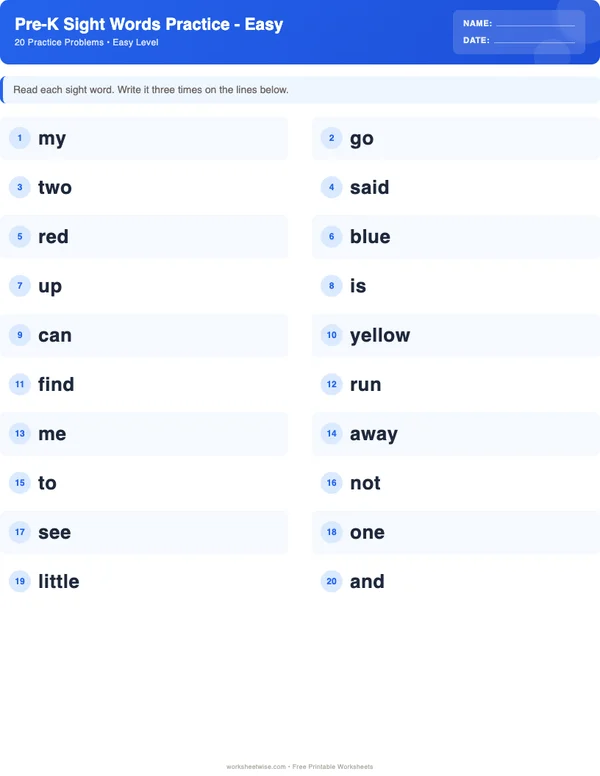
Sight-word pages can include tracing, writing, sentence finding and passage reading. The adult’s task is to distinguish a high-frequency word that is largely decodable from an irregular spelling element requiring direct attention.
For said, /s/ and /d/ correspond predictably to s and d, while ai represents /ĕ/ in this word rather than its more familiar long-a value. Have the learner:
- Read and say said.
- Map the sounds /s/ /ĕ/ /d/.
- Identify the unexpected spelling ai.
- Cover the word and build or write it.
- Read it in a short, meaningful sentence.
This checked example belongs here because said appears in the catalogue’s sight-word guidance as a word with an irregular element. It keeps sight-word practice connected to phonics instead of treating the whole word as an arbitrary visual shape.
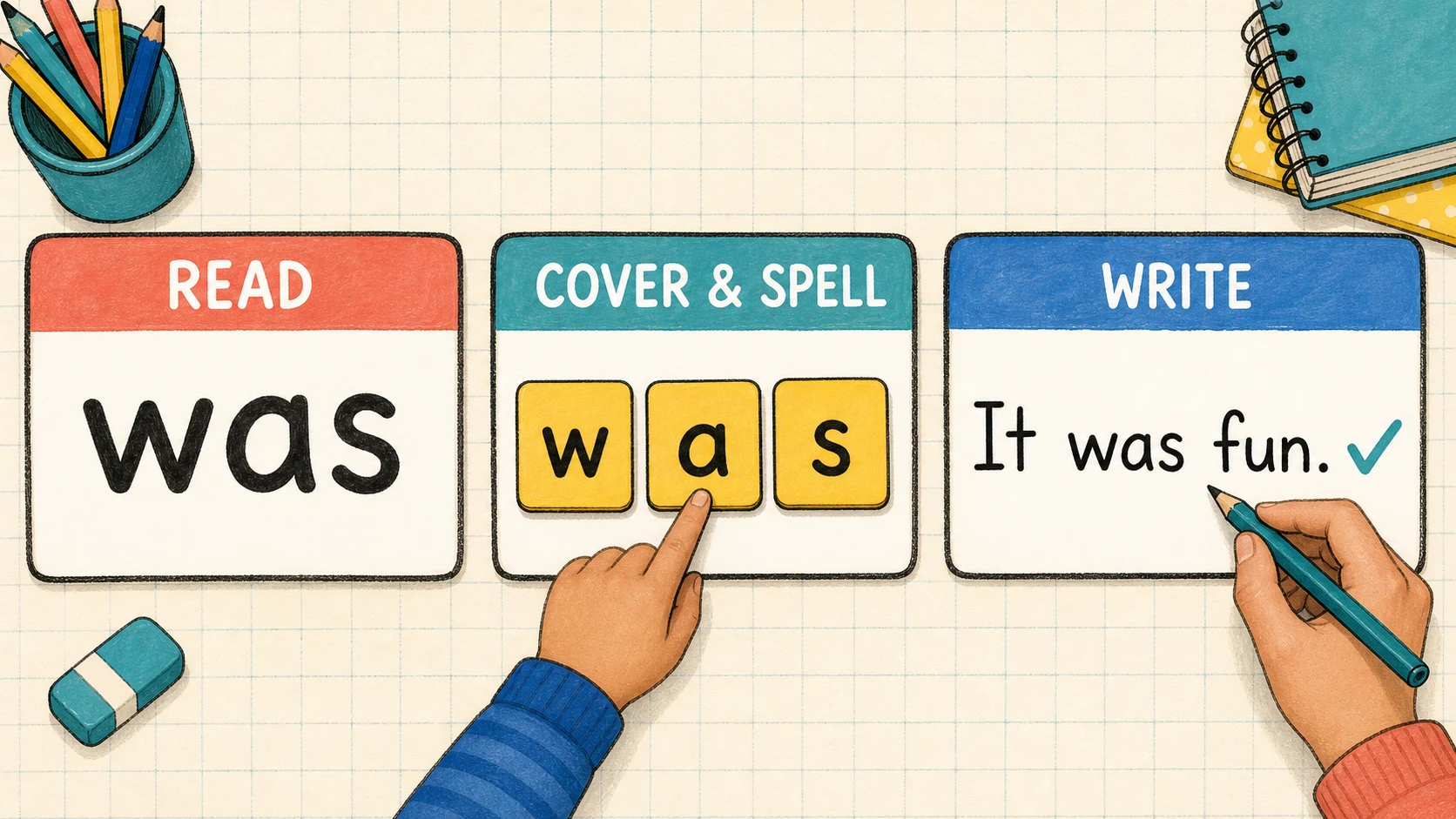
Keep the routine short: read, map, notice the unexpected part, recall and use the word.
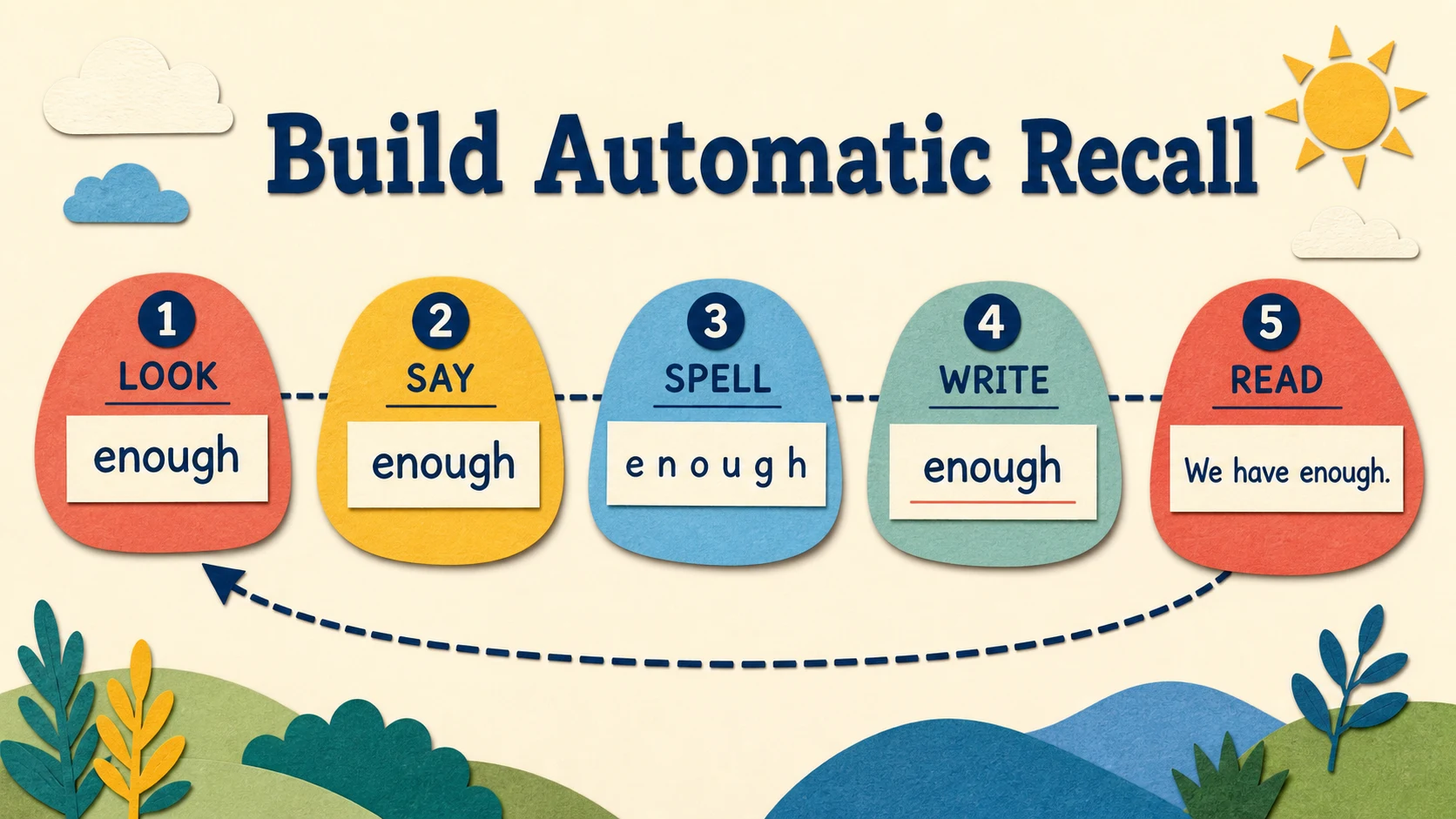
Move toward independent recall and sentence reading while continuing to review previously introduced words.
Do not count one successful tracing as independent recognition. Check the word later without the model, in a different order and eventually in connected text. The catalogue suggests a possible routine; it does not establish a guaranteed mastery threshold.
Turn answer-key checking into phonics feedback
Answer keys identify whether a response matches the expected answer. They do not explain why it differs. Give feedback that sends the learner back to the sound or spelling feature.
Instead of “No, try again,” use a brief prompt matched to the error:
- For stop read as sop: “Touch every consonant before the vowel. Which sound disappeared?”
- For pin read as pen: “Say both middle sounds after me. Now look at the vowel letter.”
- For hope read as hop: “Check the end of the word. What pattern do you see?”
- For ship sorted with slip: “Say the beginning slowly. Do you hear one consonant sound or two?”
- For correctly read but misspelled said: “Your spoken word is right. Which middle spelling must we remember in this word?”
Then ask the learner to correct the item and complete one new example with the same feature. Copying the answer without a fresh application checks pen movement, not the phonics decision.
The IES writing practice guide addresses elementary writing instruction rather than evaluating these worksheets. Its emphasis on teaching component skills and using a writing process provides useful context for separating transcription demands from phonics knowledge. If handwriting is masking an oral success, accept tiles, pointing or oral spelling first, then add writing deliberately.
Let the error pattern choose the next sheet
Do not advance or repeat based only on a percentage. Sort errors by what they have in common.
| Observed response | Cautious interpretation | Next practice |
|---|---|---|
| Reads stop as sop and clap as cap | One sound in an initial blend is being omitted | Use oral segmentation and tokens for two-sound blends, then a short initial-blend sheet |
| Reads pin as pen but preserves both consonants | The short-i/short-e contrast needs checking | Use a two-category listening sort, then a fill-the-middle sheet |
| Reads hop for hope repeatedly | The final-e pattern is not yet guiding the vowel choice | Return to paired CVC/CVCe words before a mixed long-vowel sheet |
| Sorts pictures correctly but cannot read the printed words | Picture meaning may be carrying the task | Remove pictures and use adult-supported word reading |
| Reads words accurately but misspells them from dictation | Encoding requires additional practice | Keep the same pattern and switch to building or writing from spoken words |
| Makes varied errors only in the final rows | End-of-page performance may be obscuring skill | Shorten the next sample and recheck before changing the target |
These interpretations are hypotheses for instruction, not diagnoses. If errors remain broad, persistent or difficult to interpret despite careful teaching, a worksheet cannot determine their cause. Consult an appropriately qualified educator or specialist for individualized evaluation.
The Formative assessment Phonics Worksheets collection can provide another practice context, but its results still require adult observation. One page is a sample of performance under particular conditions, not a complete reading profile.
Plan mixed-age lessons around one shared action
Mixed-age teaching becomes manageable when learners share materials or oral routines while working at different phonics decisions.
Begin together with a three-minute listening or word-building activity. Then assign distinct responses:
- A younger learner matches pictures beginning with /sh/ while the adult names each picture.
- Another learner reads CVC words such as ship and shop.
- A more experienced learner sorts ship/slip and shop/stop, explaining whether the opening letters represent one sound or two.
- A writer uses one target word in a sentence, with spelling support kept separate from sentence composition.
The common action is attending to initial sounds; the printed demand changes. This preserves the target better than giving the younger learner a random coloring page while another child receives phonics instruction.
For ages three and four, keep the shared segment brief and adult-led. Use oral repetition, matching, letters, tokens, gestures and movement. A grade-labeled printable may provide pictures or words to cut out, but age remains a discovery aid rather than a placement decision.
When siblings need different subjects during independent time, coordinate rather than duplicate the schedule. The Homeschool Spelling Worksheets collection may extend an already taught phonics pattern into encoding, while phonics time remains focused on hearing, mapping and decoding.
Adapt the activity without losing the phonics target
An adaptation is sound only if the target decision survives.
If handwriting is difficult, let the learner point, use letter tiles or dictate the spelling. If visual density is distracting, cover unused rows. If a picture is unfamiliar, name it. If the learner needs movement, place word cards around the room and have the learner carry each to a pattern heading.
Do not inadvertently replace the target:
- Reading every word aloud for a decoding task removes the need to decode.
- Giving the correct vowel sound during a vowel-choice item removes the discrimination decision.
- Letting a learner copy a visible answer during recall practice removes retrieval.
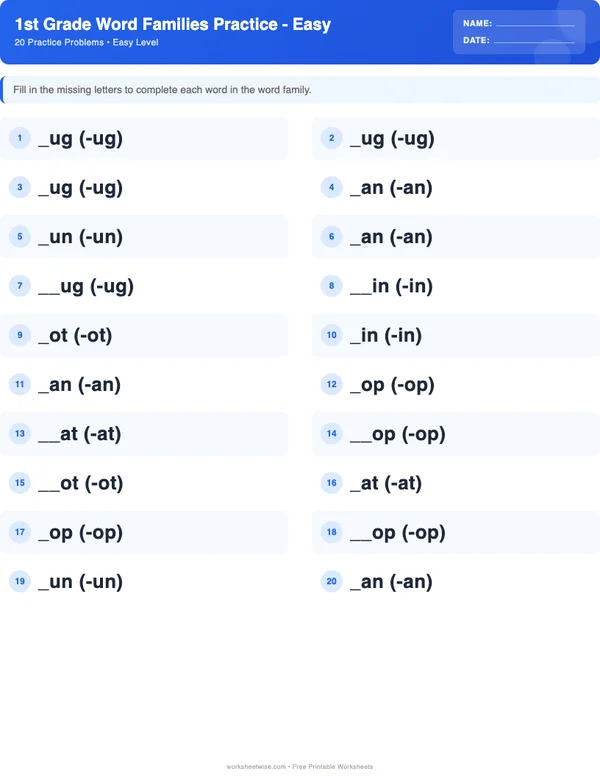
- Using only rhyming pictures for word-family work can turn a print-pattern lesson into a vocabulary or picture-recognition task.
- Correcting handwriting while the learner is blending can overload the moment and obscure the phonics feedback.
The Common Core English Language Arts standards include grade-specific expectations for foundational reading skills, but they do not establish a universal homeschool sequence or certify WorksheetWise materials. Use standards, where locally relevant, as one planning reference. Use the learner’s observed work to decide today’s support and tomorrow’s practice.
Know what a printable cannot establish
A printable can present words, pictures, categories, blanks and sentences. It can preserve a record of selected or written answers. It cannot by itself show whether a learner guessed, misunderstood a picture, forgot directions, tired near the end or produced the correct sound before writing the wrong letter.
It also cannot:
- Replace adult modeling of articulation and blending.
- Guarantee that isolated word reading transfers to connected text.
- Determine curriculum placement from age or grade alone.
- Diagnose dyslexia, language differences, attention conditions or any other cause of difficulty.
- Prove mastery from one accurate completion.
- Promise a reading outcome.
Balance worksheet work with oral language, read-alouds, decodable or otherwise instructionally appropriate connected text and genuine writing. The IES foundational-skills guide recommends that learners read connected text daily to support accuracy, fluency and comprehension; that is broader than completing isolated phonics items.
Choose tomorrow’s page before putting today’s away
At the end of each session, circle one corrected item and write one next-step note: “contrast short e/i orally,” “retain both sounds in st,” “repeat CVC/CVCe pairs” or “spell the same pattern from dictation.” That note should determine the next sheet more strongly than the grade label or the desire to finish a packet.
For the next lesson, open the free deterministic worksheet generators and create or select practice that isolates the recorded feature. Print only enough items to test the decision, model the first example and reserve one unseen example for the final check.
Put it into practice
Use the guide with a real printable
Move from explanation to a short, observable practice task. Check the first item together, then adjust the next session from the learner's actual work.
Open the first free worksheetExplore a neighboring collection