Curated collectionAnswer keys includedPrint-ready PDFs
2nd Grade Homeschool Worksheets
Turn a printable library into a flexible weekly rhythm with explicit teaching, short independent practice, answer-key feedback and mixed-age planning.
Start with a real resource
Browse this worksheet collection
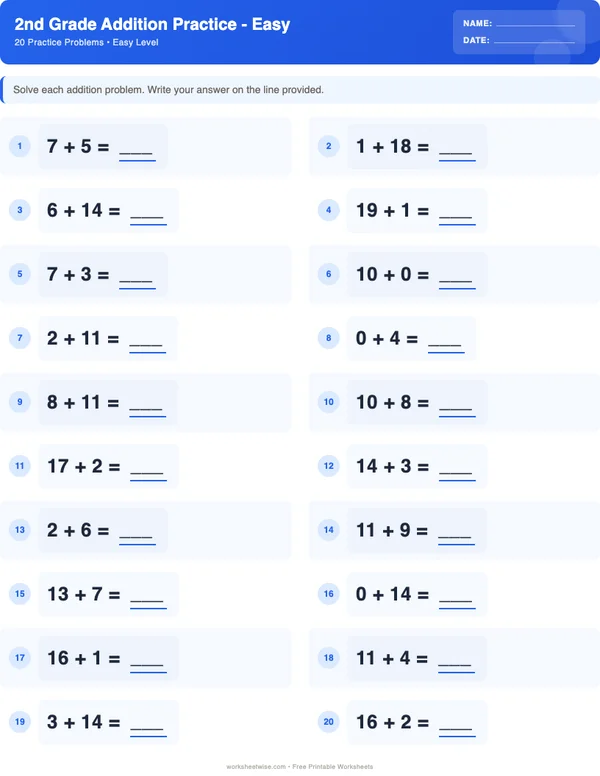
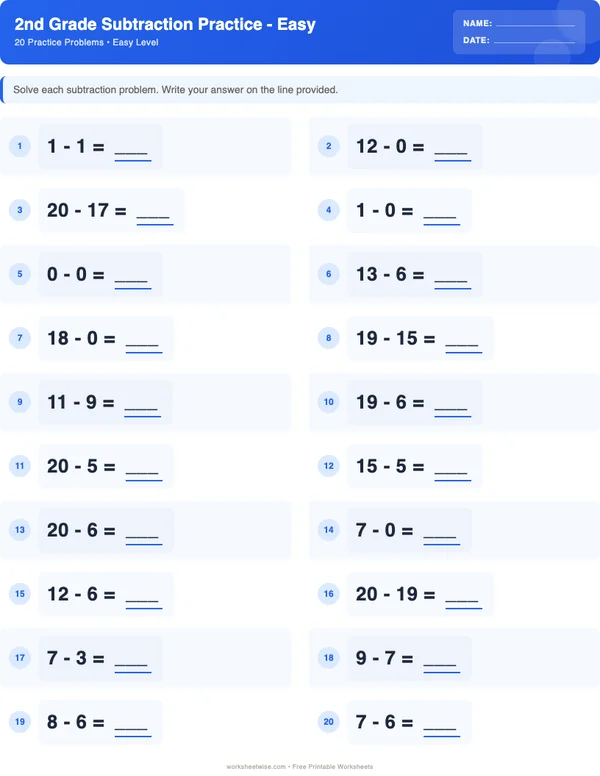
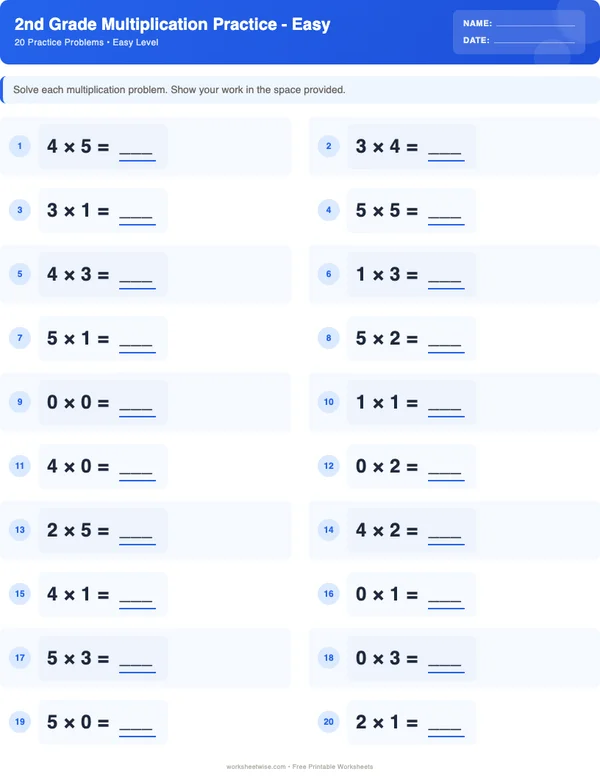
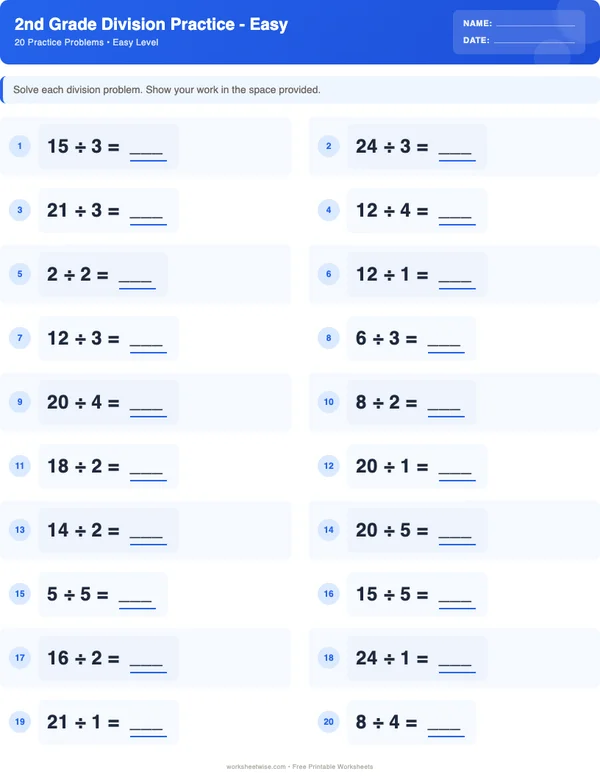
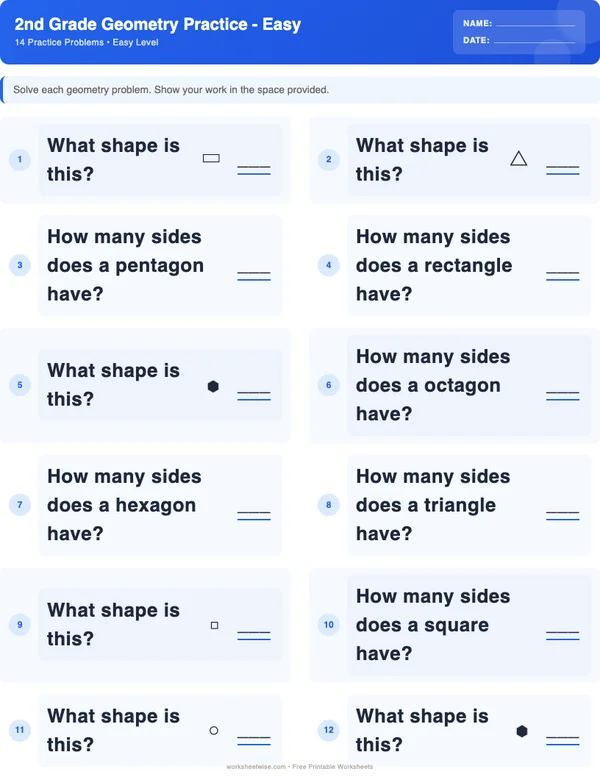
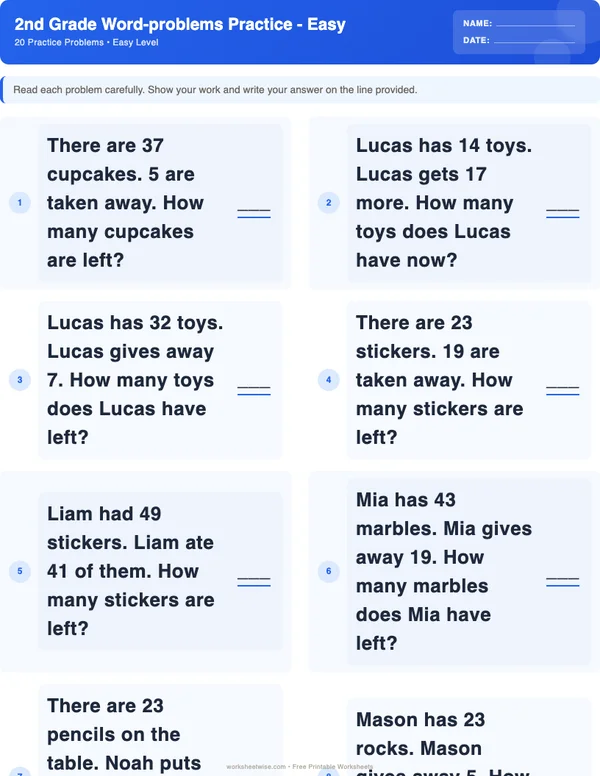
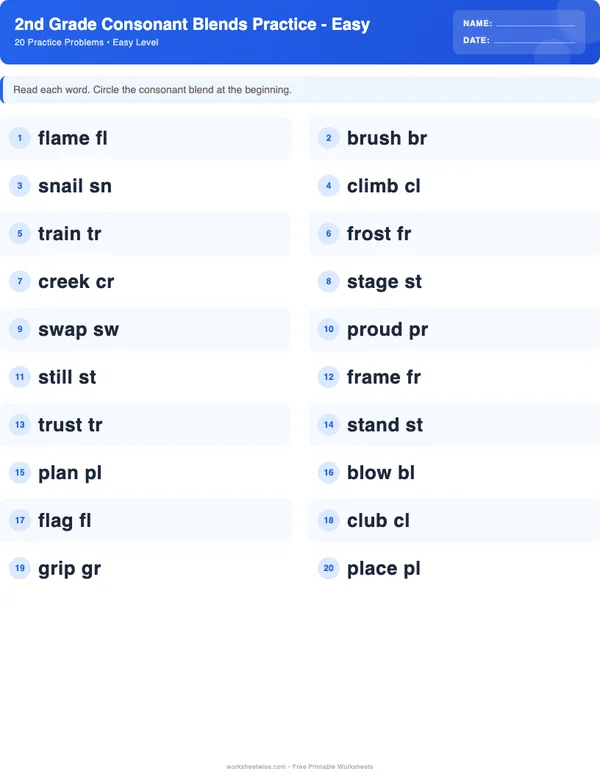
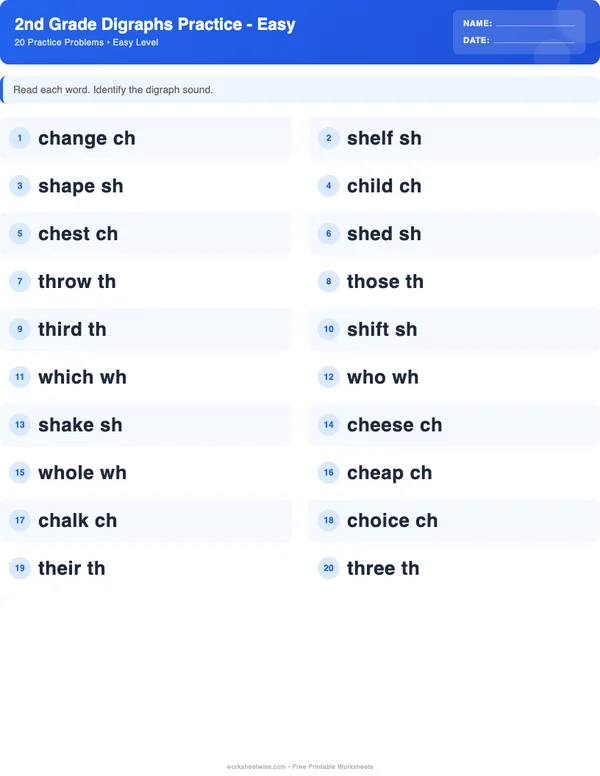
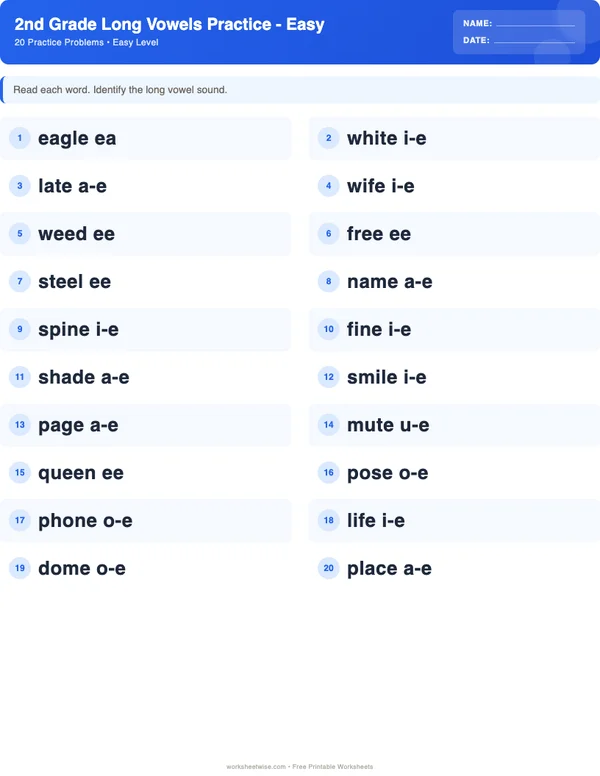
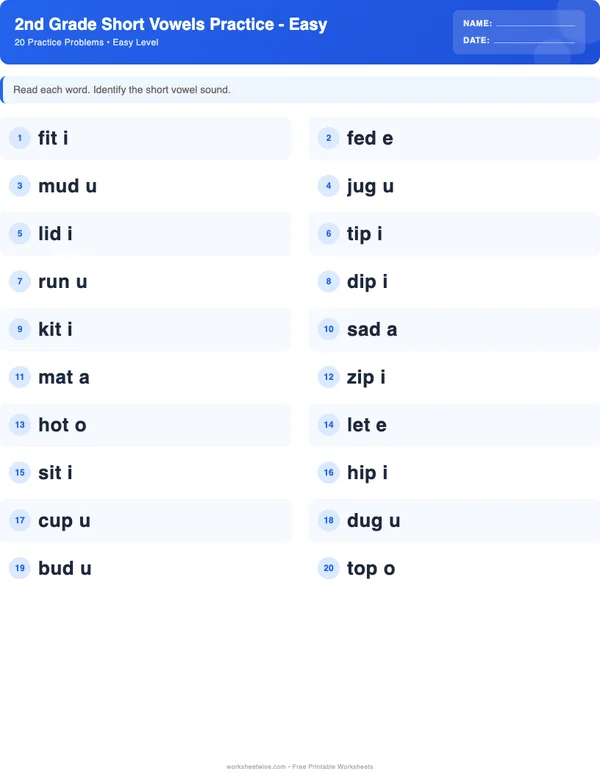
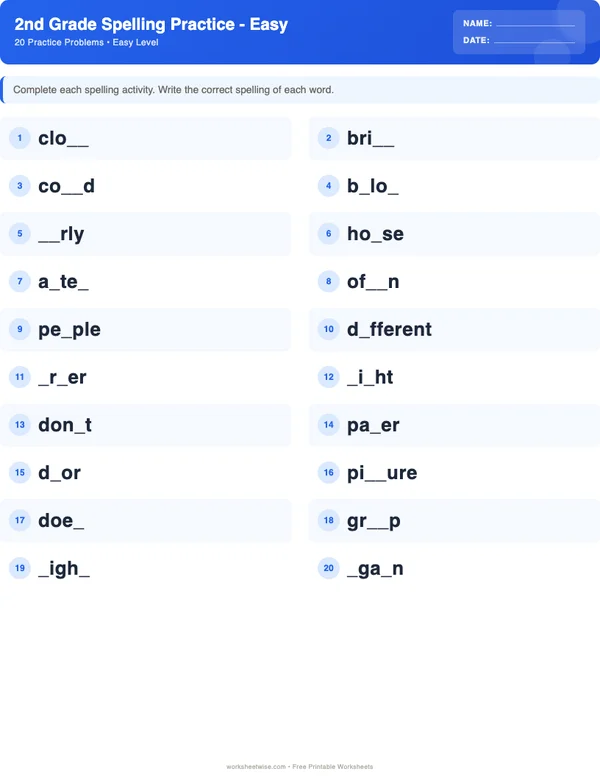
19 relevant free entry points are available. Each one includes a printable learner PDF and separate answer key.
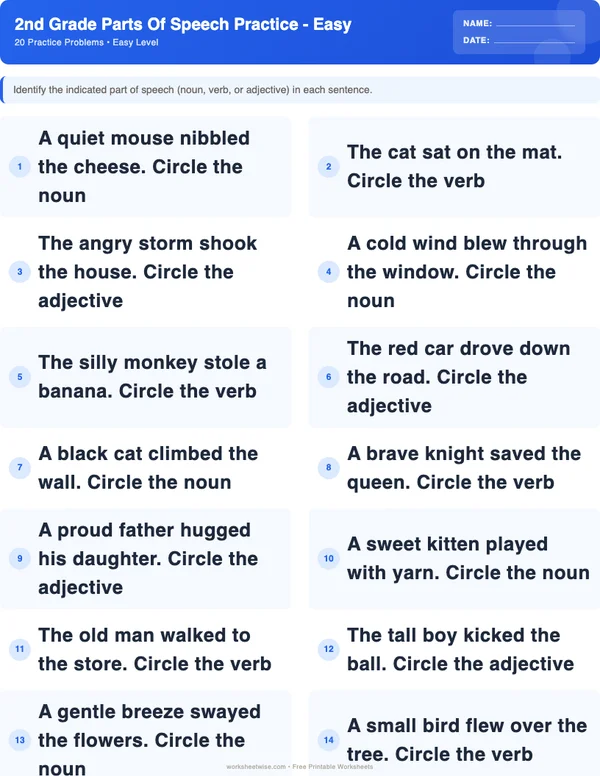
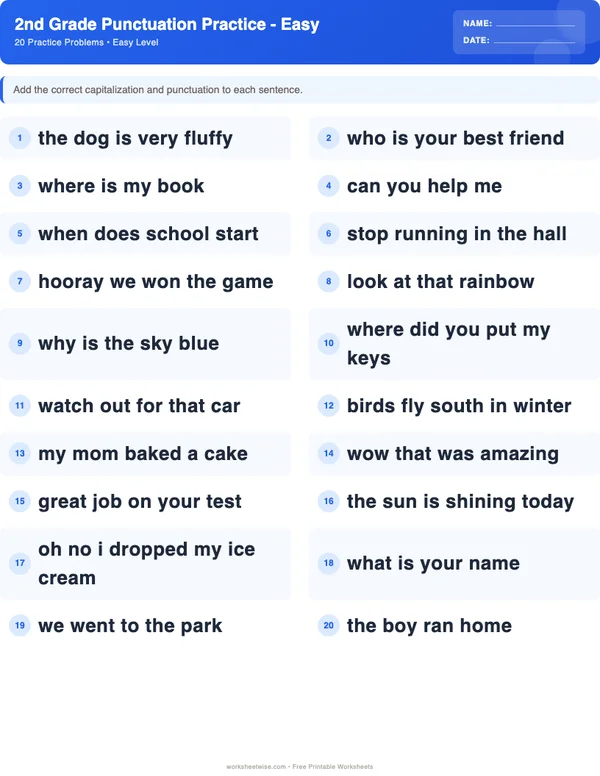
A useful practice loop
Print less. Observe more.
- Choose one skill and model the first item aloud.
- Use a short set and notice the learner’s strategy.
- Change the next task from the work you can see.
Need more than the free sheet?
Plus includes all 342 matching catalogue variations where available, plus saved deterministic generators and the worksheet designer.
See Plus membershipComplete guide
How to teach and practise 2nd grade homeschool worksheets
3,142 words Updated 6 instructional visuals
Build a 2nd grade week around teach, practice, check, and revisit
A useful set of 2nd grade homeschool worksheets is not a stack to finish. It is a library from which an adult selects one well-matched page, teaches the idea explicitly, assigns a short stretch of independent work, and uses the answer key to decide what happens next.
For most weeks, choose one mathematics focus and one reading or language focus. Keep direct instruction separate from independent practice: demonstrate the new thinking first, solve a few examples together, then ask the learner to complete only enough items to show whether the idea is secure. A 20-problem sheet can support two or three sessions; it does not have to be completed at once.
The live 2nd Grade collection contains 342 worksheet variants across four subjects and 19 topics, with 19 free entry points. That range makes selection important. Grade labels describe an intended practice level, not a placement decision, and local curriculum sequences differ. Use the page’s subject, topic, directions, visual support, number range, and response demands to choose—not the label alone.
Ages, when shown elsewhere in a catalogue, should be treated as discovery aids rather than placement decisions. What matters here is the observable task: Can the learner read the directions, represent the idea, explain a strategy, and complete a short sample with appropriate support?
Select one page by looking at the work it requires
Before printing, inspect three things: the target skill, the source of difficulty, and the amount of practice.
Name the target in one sentence
A narrow target makes feedback possible. “Do math” is not a target. These are:
- Compose a ten to solve addition facts within 20.
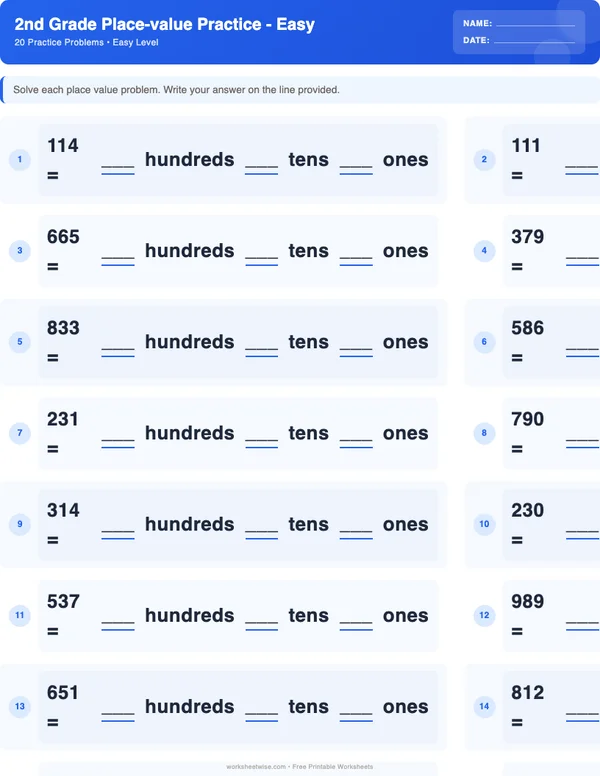
- Explain a two-digit number as tens and ones.
- Distinguish an initial blend from a single consonant.
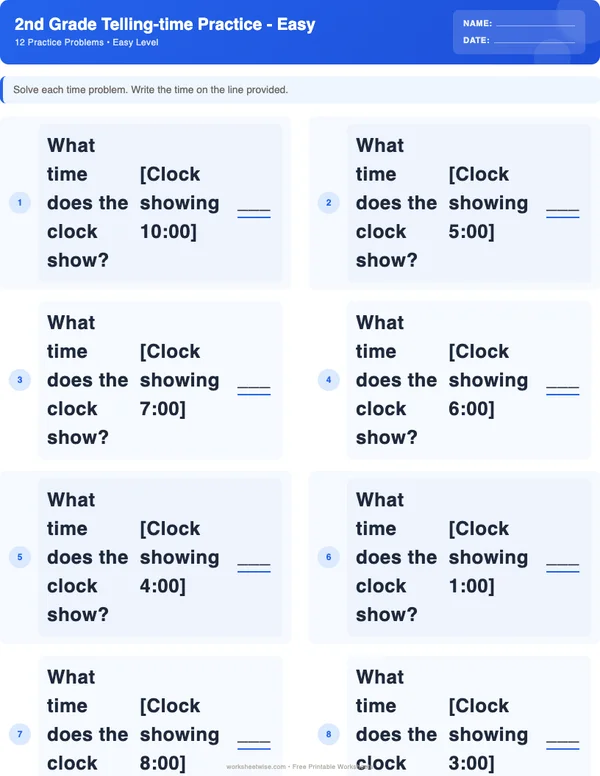
- Read an analog clock by checking the hour hand before the minute hand.
- Sort words according to their function in a sentence.
- Model equal groups before writing a multiplication equation.
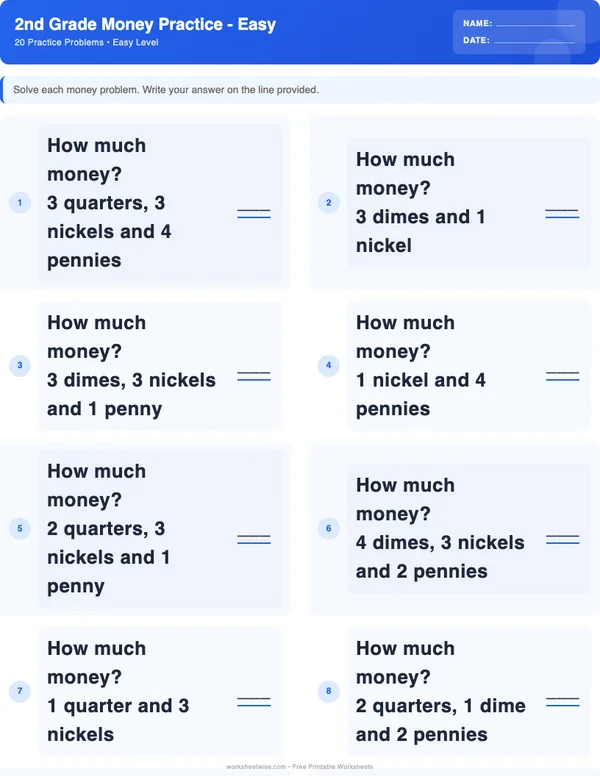
If a page asks for several unfamiliar actions at once, use only the section that matches the day’s target. For example, a money page may require recognizing coins, remembering their values, skip-counting, and adding mixed denominations. A learner who can identify coins but loses track while counting mixed sets needs a counting lesson, not more coin-identification questions.
Define difficulty through visible features
The catalogue calls the representative free sheets “easy,” but that word describes worksheet features rather than a learner. On this page, an easier starting task may have a familiar format, smaller quantities, one operation, pictures or models, fewer language demands, and no required transfer to a new context. A harder task may remove the model, mix problem types, change the unknown’s position, require an explanation, or combine reading and computation.
Compare these two subtraction prompts:
13 − 5 = ___- “Maya has 13 beads. Five are blue. How many are not blue? Draw a model and write an equation.”
Both use the same numbers and answer, 8, but the second adds reading, situation interpretation, representation, and equation writing. If computation is the target, reading the second prompt aloud preserves the subtraction work while removing an unrelated decoding barrier.
Match the page length to the evidence needed
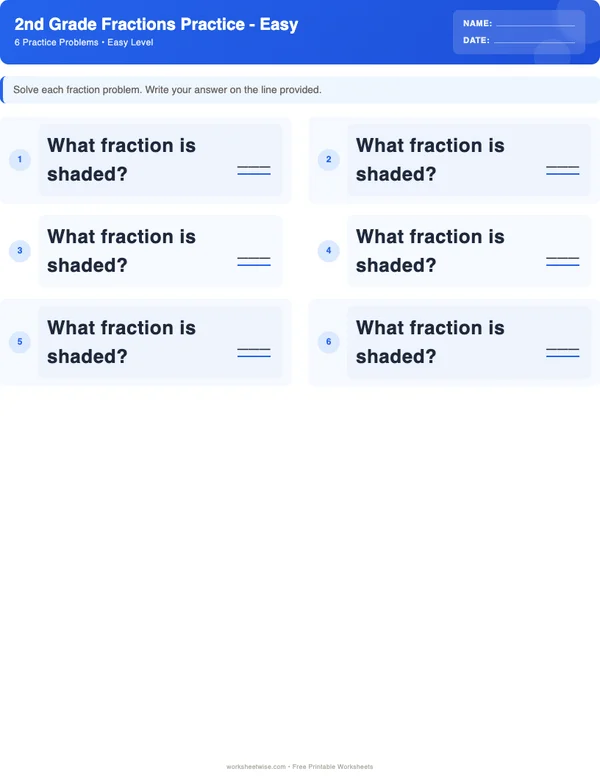
The representative addition, subtraction, place-value, multiplication, division, and phonics sheets contain 20 problems. The representative telling-time and word-problem sheets contain 12; the fractions sheet contains six. Those counts are catalogue facts, not required daily quotas.
Start with four to six carefully chosen items after instruction. Continue if the learner is accurate and can explain the method. Stop and reteach if the same misconception appears twice. Stop for a break if handwriting deteriorates, the learner begins guessing, or attention—not the target skill—is controlling performance.
Use a repeatable daily session with clear boundaries
A practical 2nd grade session can fit into 25 to 35 minutes per subject. The exact time is a household decision, not a research-backed threshold.
Minutes 1–5: retrieve something already taught
Begin orally or with manipulatives. Ask for three known addition facts, read five previously taught words, or build a number with base-ten blocks. This is a warm-up, not a surprise test.
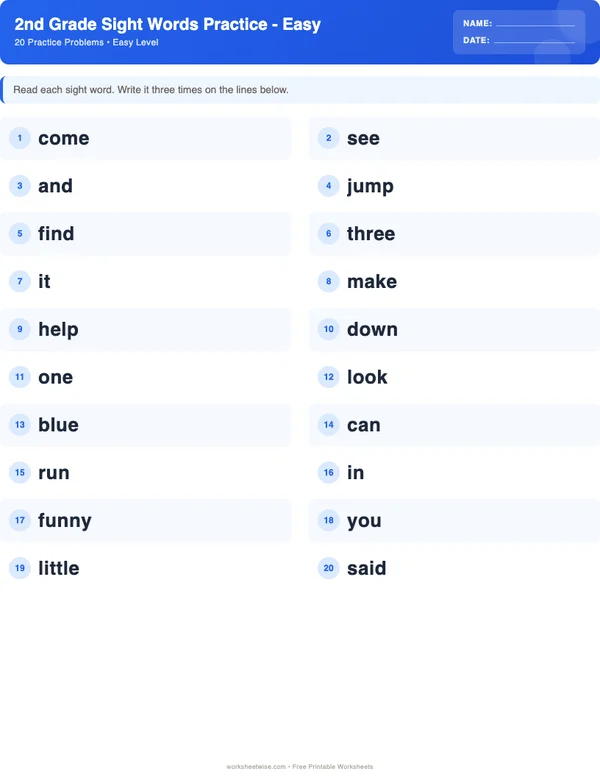
For a sight-word review, show one word, have the learner read it in isolation, find it in a sentence, spell or build it, and read the sentence again. Keep the set small enough to notice exact errors.
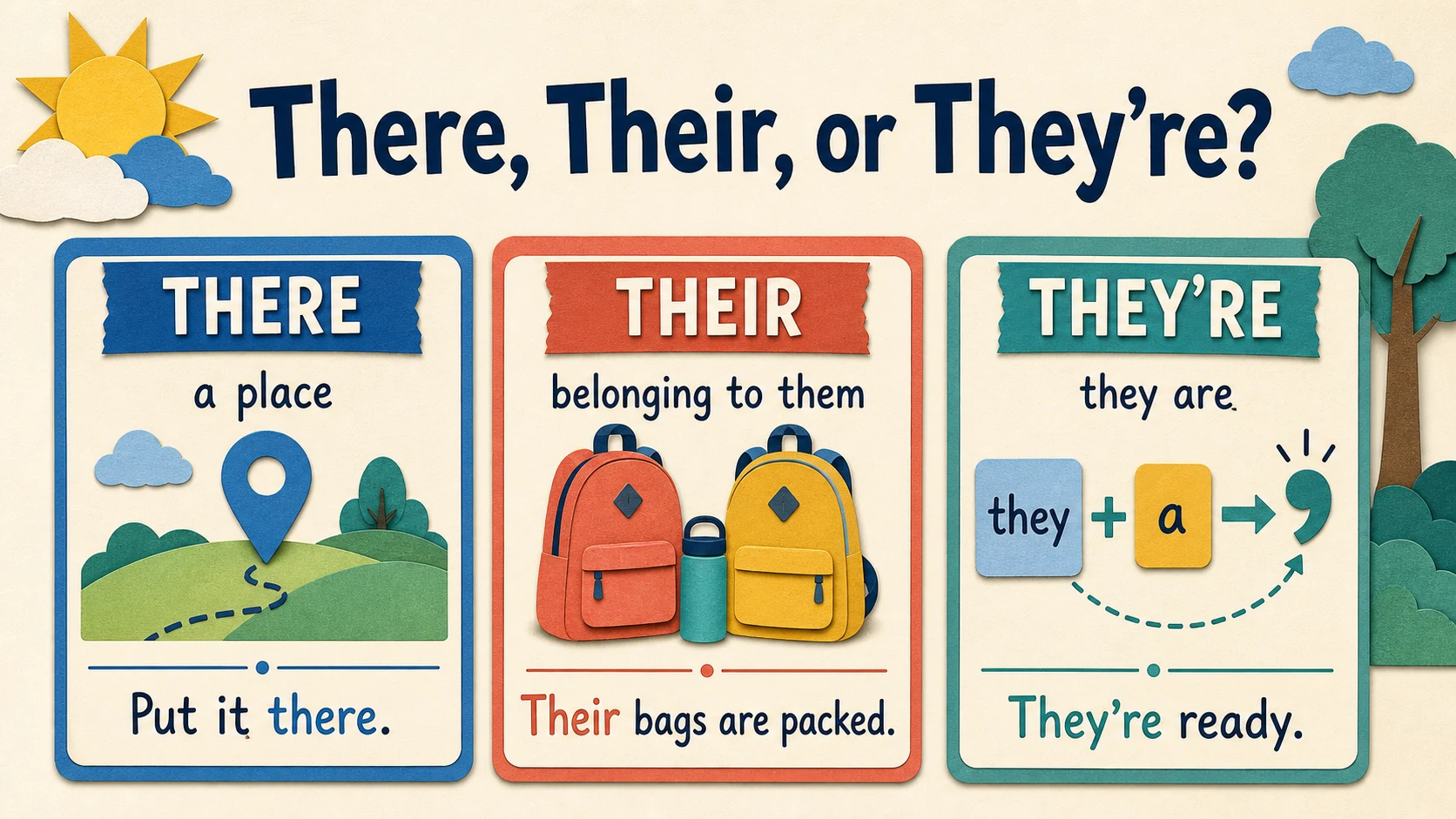
Use this 2nd grade routine before a worksheet so recognition, spelling, and sentence reading reinforce the same small word set.
Minutes 5–12: teach and model
State the target, demonstrate one example, and narrate the decision that matters. Then solve a second example together.
For 8 + 7, place eight counters in a ten-frame and seven beside it. Move two from the group of seven to fill the frame: 8 + 2 = 10, with five remaining, so 10 + 5 = 15. Check the arithmetic: 8 + 7 = 15. This example belongs in a 2nd grade routine because it practices addition within 20 while making the structure of ten visible, instead of asking the learner to memorize an unexplained answer.
The catalogue recommends a concrete-representational-abstract sequence for addition: begin with objects, move to drawings, and then use equations. This is consistent with the IES guidance on teaching mathematics to young children, which supports purposeful use of representations and explicit attention to mathematical ideas. Neither source has assessed an individual learner or promised a particular result.
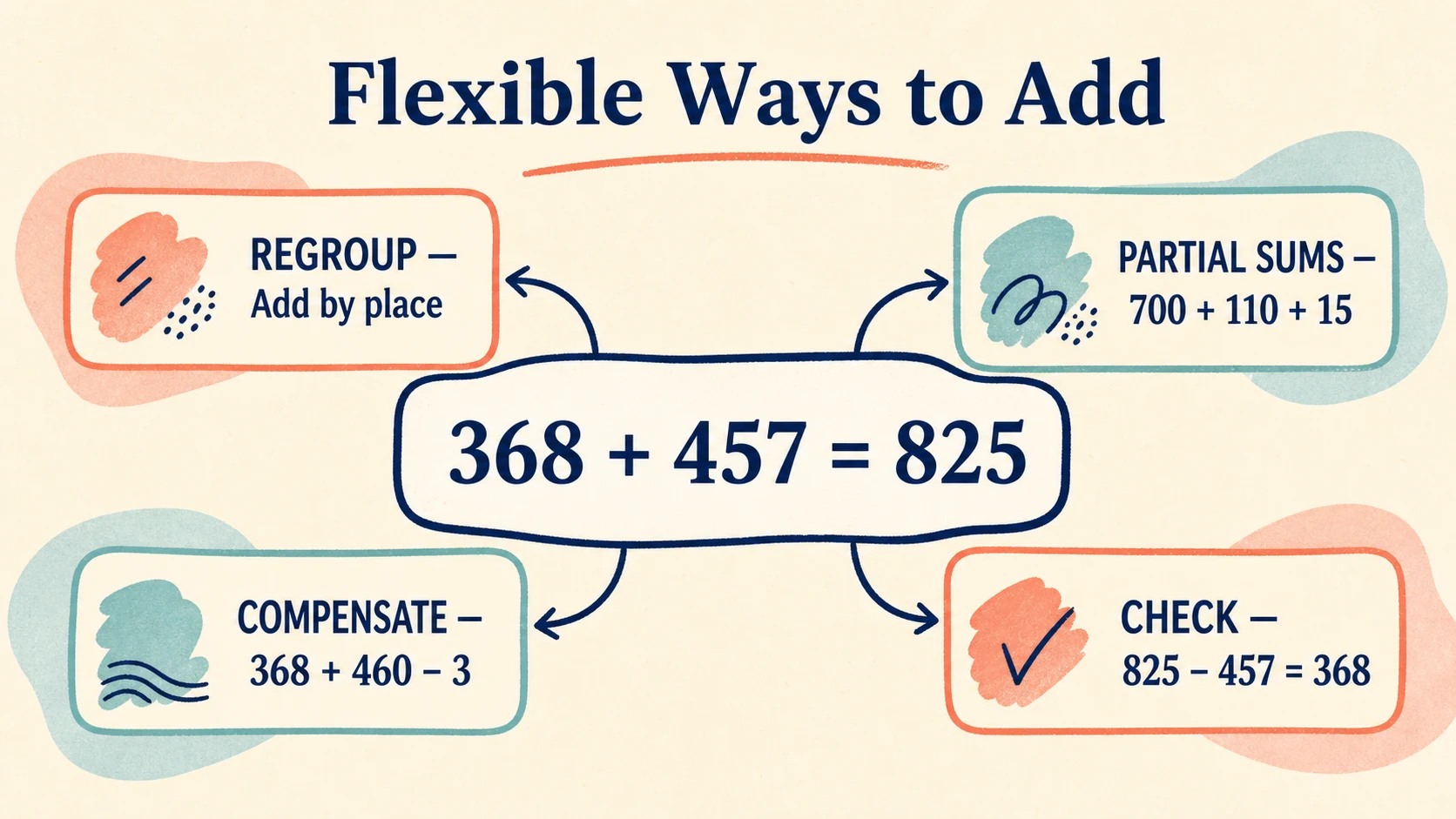
The map helps an adult choose whether today’s 2nd grade work is fact strategy, visual representation, or written computation rather than treating all addition pages as interchangeable.
Minutes 12–22: release a short set for independent work
Independence means the learner can begin, follow the known routine, and attempt the target without step-by-step prompting. It does not mean the adult leaves before confirming that the directions are understood.
Try this release:
- Solve the first item together.
- Ask the learner to explain what to do next.
- Assign four items independently.
- Remain available without correcting each mark.
- Check the four-item sample before assigning more.
If the learner asks, “Is this right?” after every item, respond with a checking prompt: “Show me how you know,” “Can you build it?” or “Which part of the directions have you completed?” That shifts responsibility without withholding useful support.
Minutes 22–30: check, correct, and record one note
Use the answer key after the learner has completed the short set. Marking every answer right or wrong is less useful than identifying a pattern. Ask the learner to correct one error with a model, then finish with one successful item of the same type.
Record a brief note such as:
- “Makes ten independently; continue within 20.”
- “Drops the second sound in
st; return to sound tapping.” - “Counts equal groups correctly but writes repeated addition instead of a multiplication equation.”
- “Reads minute hand accurately; names the next hour when the hand is past 30.”
That note should drive tomorrow’s page choice.
Turn the catalogue into a realistic Monday-to-Friday sequence
A weekly rhythm should alternate new instruction, guided practice, independent evidence, and mixed review. Here is one specific 2nd grade week using addition and consonant blends.
Monday: establish the two targets
For mathematics, teach making ten with counters and a ten-frame. Work through 8 + 7 = 15 and 9 + 6 = 15, checking each by counting the total once. Assign four addition problems with similar number ranges.
For phonics, contrast CVC words with initial blends: top/stop, lap/clap, and rip/grip. Say each sound without inserting an extra vowel. Ask the learner to tap /s/ /t/ /ŏ/ /p/ and blend stop.
The IES foundational reading guide recommends explicit instruction in sound-letter relationships and practice applying taught patterns while reading words and connected text. For this routine, that sourced guidance supports teaching the blend before assigning the sheet. The exact word chain and session length are WorksheetWise editorial suggestions based on the catalogue skill description.
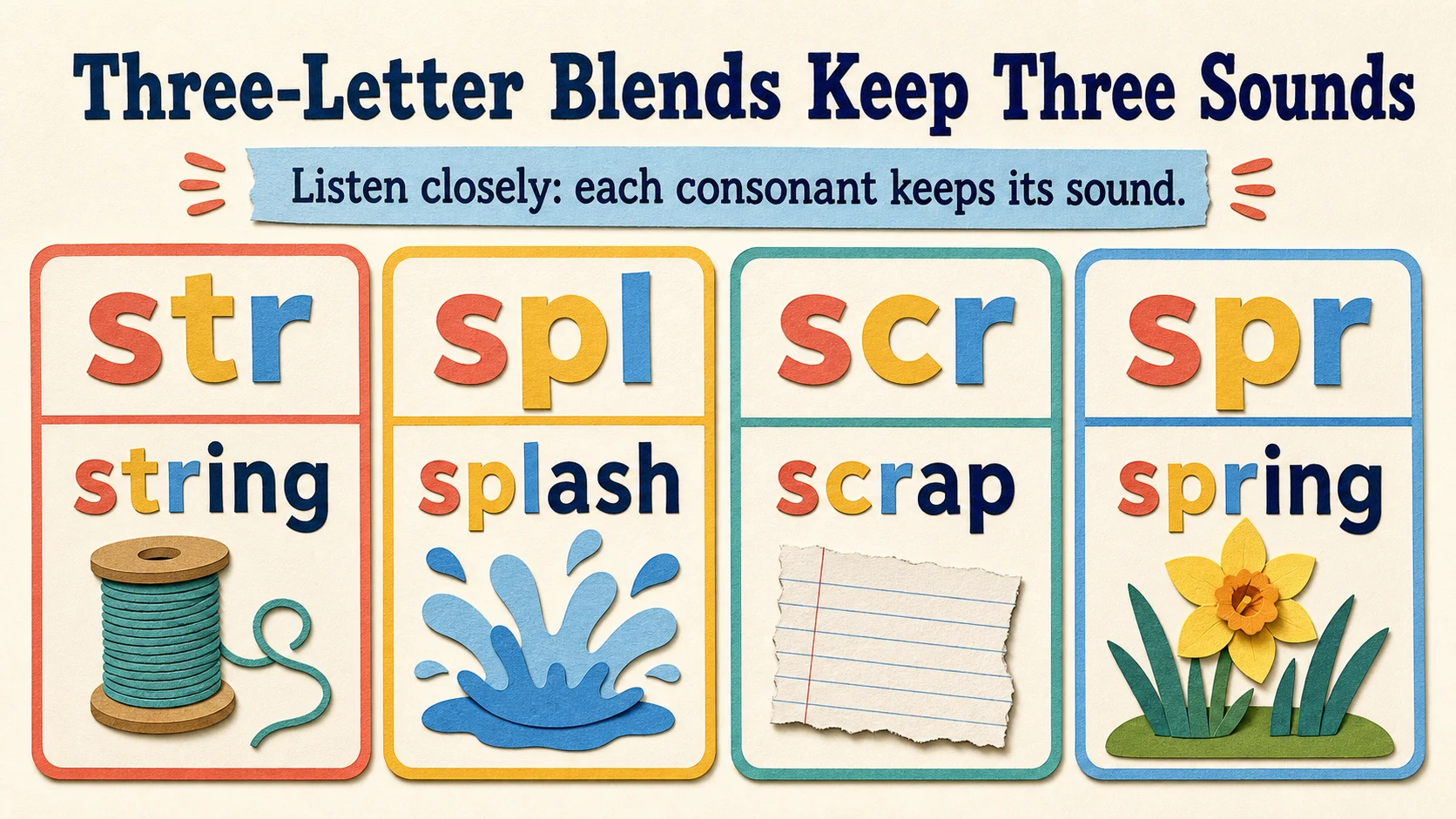
Use the map to locate the day’s work: hearing both consonants, reading a blend in a whole word, spelling it, or carrying it into sentence reading.
Tuesday: represent before recording
Repeat one making-ten example with counters, then replace the objects with a drawn ten-frame or number bond. Ask, “What did you move to make ten?” The learner completes six selected addition items, circling the pair that composes ten where appropriate.
For phonics, use the checked chain lap → clap → clam → clamp. Each step changes or adds a sound:
lapbecomesclapby adding/k/before/l/.clapbecomesclamby changing final/p/to/m/.clambecomesclampby adding final/p/.
This belongs here because the catalogue specifically identifies blends as a step beyond CVC words and recommends whole-word chains. It also exposes two distinct problems: dropping the first consonant in clap and dropping the final consonant in clamp.
Wednesday: collect independent evidence
Give a fresh six-item addition set without counters on the table, but make them available if requested. Watch whether the learner starts by counting every quantity, decomposes an addend to make ten, or recalls a fact. A correct answer obtained by counting is still correct; it tells you which strategy is currently available.
Then assign a brief blend sort or picture-word match. Include only taught blends plus familiar CVC words. End with one or two sentences containing those patterns so the learner applies decoding beyond an isolated list.
Thursday: respond to the error, not the score
If addition errors cluster around 8 + 6, 7 + 5, and 9 + 4, rebuild one with the ten-frame and have the learner describe the split. If errors are scattered but self-corrections are strong, reduce the quantity and allow more time rather than introducing a new method.
If stop is read as sop, return to finger tapping for every sound. If tent is read as ten, contrast the pair orally and in print. Do not replace the target with easier CVC work indefinitely; add enough support to make the blend audible.
Friday: mix, explain, and plan
Choose four addition items: two familiar facts, one new fact within the same structure, and one short story problem. Ask the learner to explain one answer using a drawing or equation.
For reading, mix initial and final blends in words and one short passage. Do not count a guessed word as secure merely because it fits the picture. Record one target to retain next week and one ready-to-expand skill.
This sequence can coexist with history, science, art, physical activity, read-alouds, and practical household learning. Worksheets are the written-practice portion of the week, not the whole homeschool program.
Teach early multiplication and division as equal-group reasoning
The catalogue includes representative 2nd Grade multiplication and division resources. Their broader descriptions extend into later work such as fact mastery, multi-digit computation, long division, and remainders. Do not assume every listed endpoint belongs in a current 2nd grade session. Select observable tasks that preserve equal-group meaning.
Multiplication: start with groups and arrays
Place four counters in each of three circles. Ask:
- How many groups?
3 - How many in each group?
4 - How many altogether?
12 - What repeated addition matches?
4 + 4 + 4 = 12 - What multiplication equation matches?
3 × 4 = 12
Check: three groups of four contain 12 counters. This example belongs here because it introduces multiplication through equal groups and connects a concrete model to an equation. It does not require memorization of a full facts table.
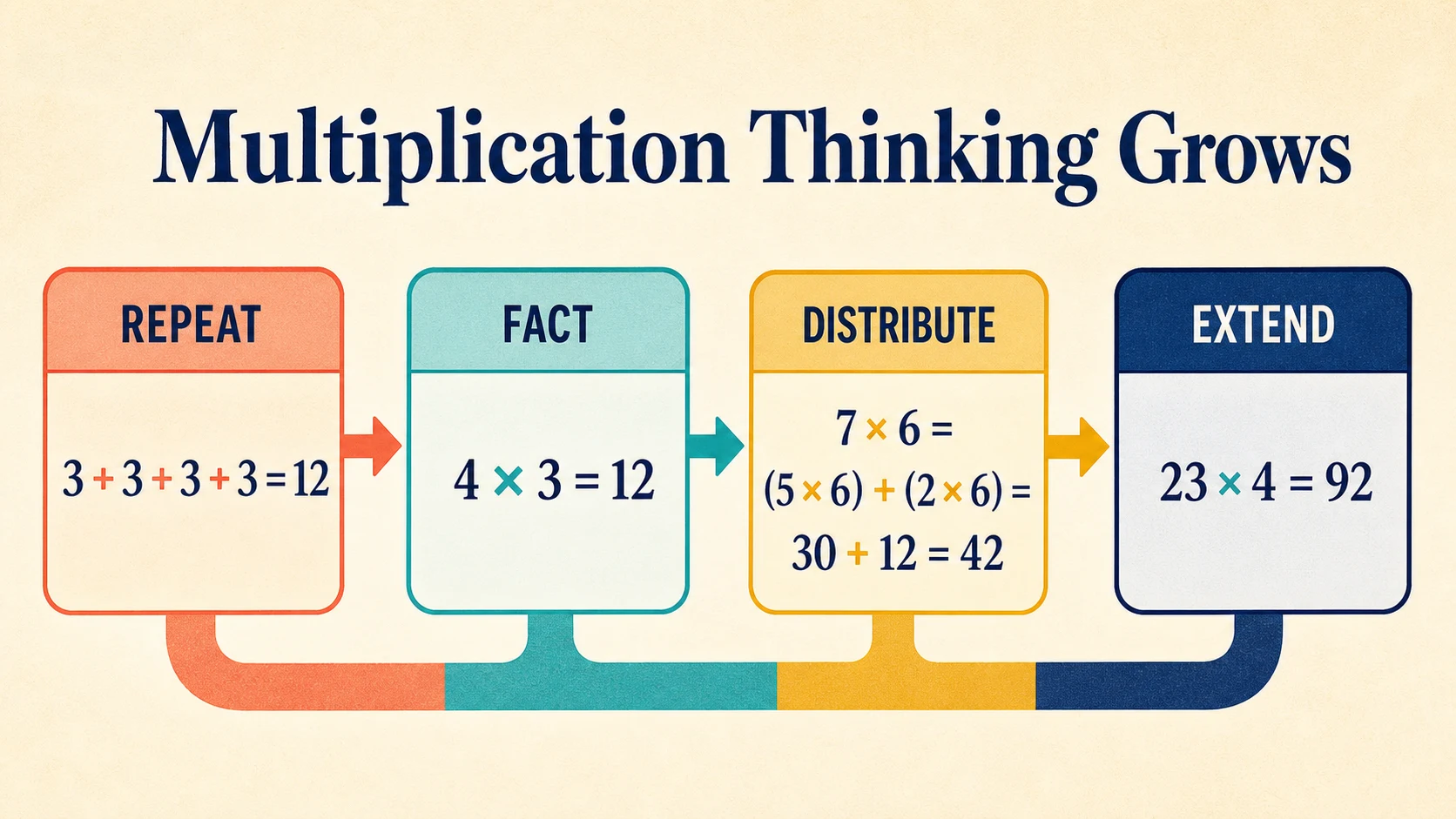
Move along this progression only when the learner can explain what each factor represents in a 2nd grade equal-groups or array task.
If the learner counts 12 correctly but writes 3 + 4 = 12, the total is understood but the operation notation is not. Keep the counters and ask the learner to point to each group while saying “four, four, four.” Then reconnect the model to 3 × 4.
Division: teach sharing and grouping separately
Use 12 counters for two problems:
- “Share 12 counters equally among three plates.” Each plate receives four, so
12 ÷ 3 = 4. - “Make groups of four from 12 counters.” Three groups can be made, so
12 ÷ 4 = 3.
Both calculations are correct, and together they show why division questions can ask either the size of each group or the number of groups. This distinction belongs in 2nd grade exploratory work because it builds meaning before symbolic procedures.
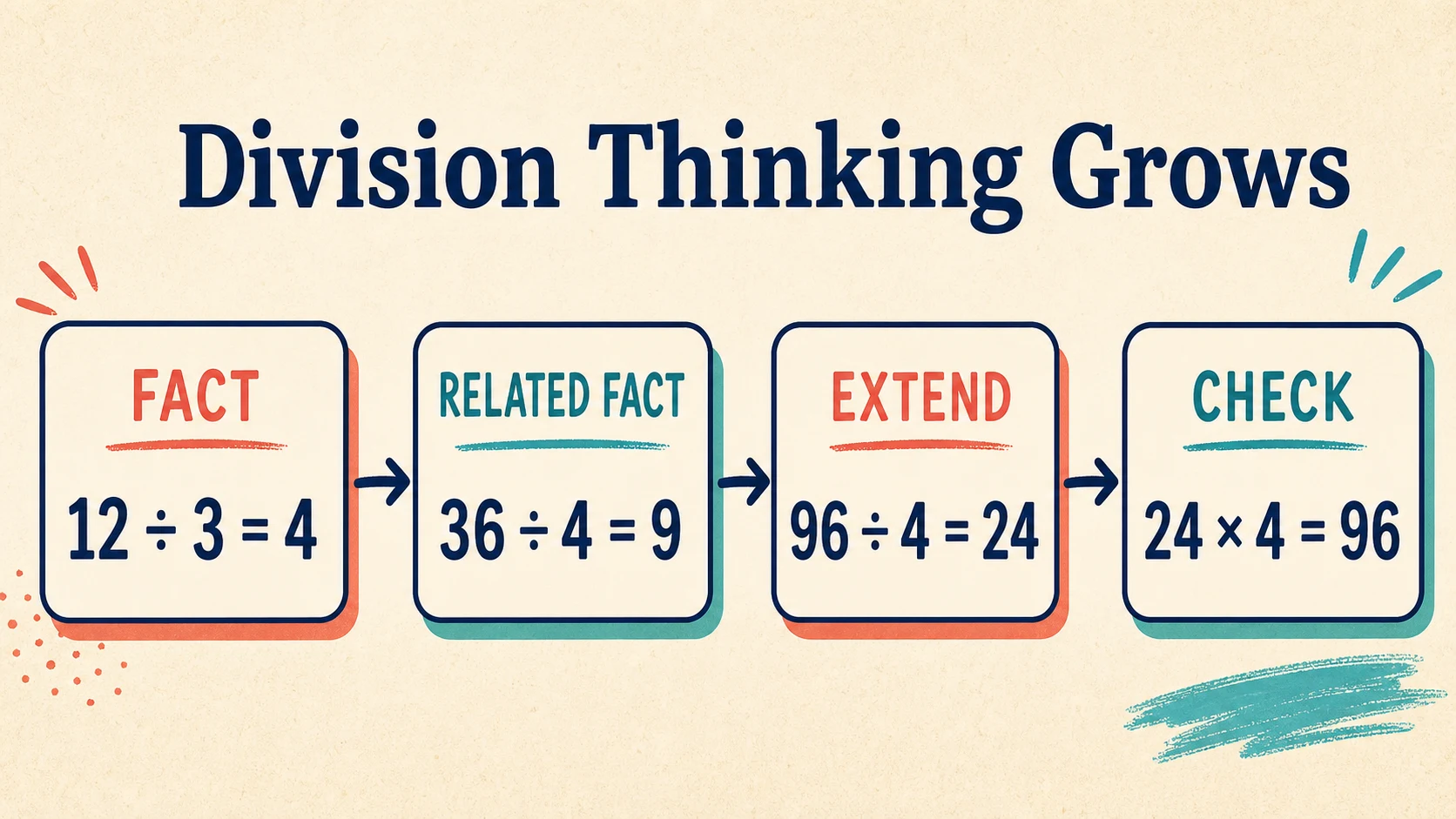
Use the supported end for counters and drawn groups; reserve independent symbolic items for a learner who can state what is being shared or grouped.
The IES guide for assisting students who struggle with mathematics recommends systematic instruction, clear mathematical language, representations, and deliberate review. Applied here, that means explicitly naming “groups,” “in each group,” and “altogether,” then connecting the model to notation. It does not justify diagnosing a difficulty from one worksheet.
Use answer keys to interpret errors, not merely total them
A score such as 14 out of 20 cannot tell you what to teach next. Group errors by their observable form.
When the method is sound but execution slips
A learner may correctly decompose 8 + 7 as 8 + 2 + 5 but write 14. Ask for a recount or inverse check. Keep the target and shorten the set. The reasoning is present; the calculation or recording needs attention.
When a place-value misconception controls the answer
For 43 − 25, the correct answer is 18. Build 43 as four tens and three ones. Because three ones cannot supply five ones, exchange one ten for 10 ones, leaving three tens and 13 ones. Then 13 − 5 = 8 and 3 tens − 2 tens = 1 ten, producing 18.
An answer of 22 may come from subtracting tens and then adding or mishandling ones. An answer of 26 may indicate subtracting the smaller digit from the larger in each column: 5 − 3 = 2 and 4 − 2 = 2, perhaps with reversed placement or confused recording. Ask the learner to rebuild the problem before assigning more of the same worksheet. The 2nd Grade Subtraction guide and free sheet provides a focused next resource.
When grammar knowledge changes with the sentence
Suppose the task is to identify nouns and verbs:
- “Birds fly.” Here,
flynames an action, so it functions as a verb. - “A fly landed.” Here,
flynames an insect, so it functions as a noun.
If the learner labels fly the same way in both sentences, the error may reflect reliance on a memorized word list rather than attention to the word’s job. Read the full sentence, ask what the word is doing there, and compare the two uses. This checked example belongs in a 2nd grade parts-of-speech routine because it requires a concrete sentence-level decision without introducing technical grammatical analysis beyond noun and verb functions.
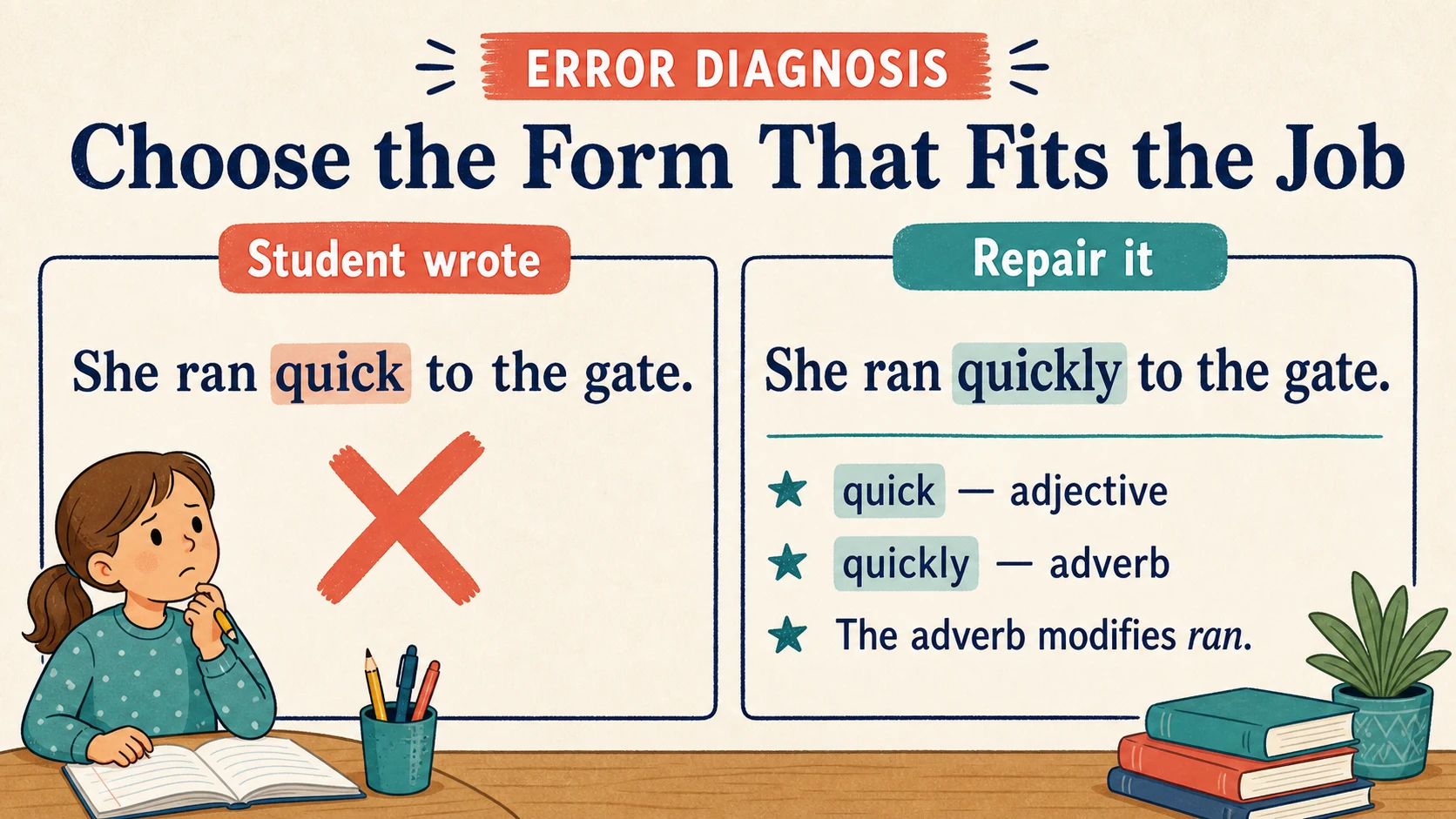
Treat each response as a clue for the next teaching move, not as evidence for a diagnosis or a fixed language ability.
The IES elementary writing guide supports explicit teaching of writing processes and foundational skills with frequent opportunities to write. A worksheet can rehearse a convention, but a short sentence written for a real purpose is needed to see whether the learner can use that convention in composition.
Adapt the page without replacing the target skill
A good adaptation changes access, volume, or response mode while preserving the thinking you intended to observe.
For a word problem targeting subtraction, read the prompt aloud if decoding is the barrier, but still require the learner to decide the operation and represent the quantities. For a phonics page targeting consonant blends, do not read the target words for the learner; instead, reduce the number of words, enlarge the print, or provide sound boxes.
For handwriting fatigue, allow oral answers, magnetic numbers, movable letter tiles, or an adult scribe. Ask the learner to explain each response so the academic decision remains visible. For visual crowding, cover the unused rows with blank paper and reveal one line at a time.
In a mixed-age household, keep the shared context but vary the task. During a pretend-store activity, a younger sibling might sort coins, the 2nd grade learner might count a mixed set or solve a one-step purchase problem, and an older learner might calculate change. During a read-aloud, everyone can discuss the story, while the 2nd grade follow-up targets a taught blend, sentence, or brief written response.
Use the 1st Grade Homeschool Worksheets when the observable prerequisite itself needs systematic practice—for example, CVC decoding before blends. Use the 3rd Grade Homeschool Worksheets only when the current 2nd grade task is consistently accurate, explainable, and transferable without extensive prompting. Moving between grade-labelled collections is a resource decision, not a statement about the learner.
Know what a printable can and cannot show
A completed page can show written accuracy under particular conditions. It cannot by itself establish durable understanding, independent transfer, reading comprehension, attention capacity, or a diagnosis. It also cannot reveal how much prompting occurred unless the adult records it.
Check important skills in more than one form. After an addition worksheet, ask for a model or a short story matching 8 + 7. After a clock worksheet, use a movable clock. After a fractions page, fold paper into equal parts. After a blends page, listen to the learner read a sentence containing the same pattern.
The Common Core mathematics standards and English language arts standards can help adults inspect broad grade-level expectations, but local curricula may introduce, emphasize, or sequence content differently. The catalogue’s grade label should therefore guide browsing rather than be presented as verified alignment to a particular school, state, or program.
Pause worksheet use when repeated practice is producing repeated guessing, conflict, or copied procedures without meaning. Return to objects, oral language, demonstration, or a shared example. If persistent concerns affect learning across settings and tasks, keep neutral observations and consult an appropriately qualified professional; a worksheet result should not be treated as an assessment or diagnosis.
Make Monday’s next page choice now
Open the 2nd Grade Addition guide and free sheet. Select four problems that can be modeled by making ten, gather counters and a drawn ten-frame, and write this target at the top: “I can show how an addend is split to make 10.”
Teach 8 + 7 = 15, solve one similar item together, then release four items independently. Check immediately, ask for one explanation, and record one observable note: continue independently, repeat with a drawing, or return to counters. That single decision turns a large printable library into a workable 2nd grade homeschool rhythm.
Put it into practice
Use the guide with a real printable
Move from explanation to a short, observable practice task. Check the first item together, then adjust the next session from the learner's actual work.
Open the first free worksheetExplore a neighboring collection