Curated collectionAnswer keys includedPrint-ready PDFs
Morning Work Worksheets With Answer Keys
Build predictable, low-friction arrival routines with retrieval, a short completion boundary and a fast teacher scan.
Start with a real resource
Browse this worksheet collection
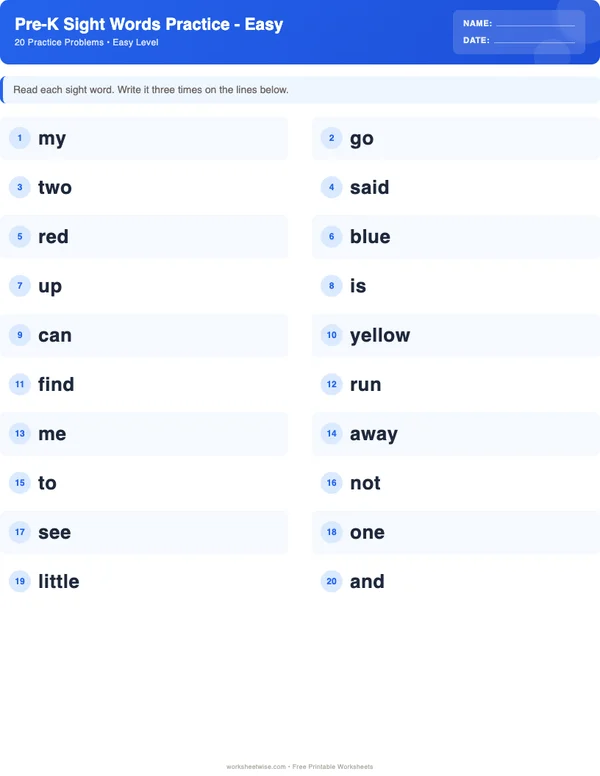
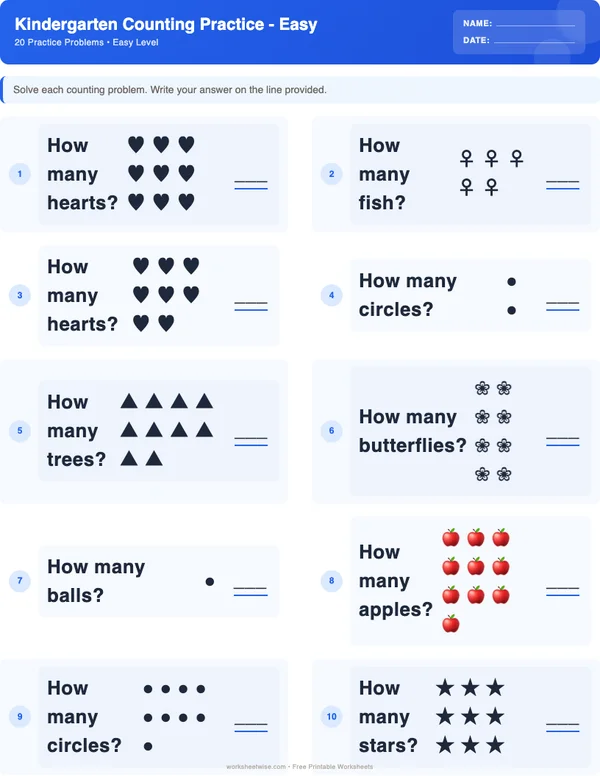
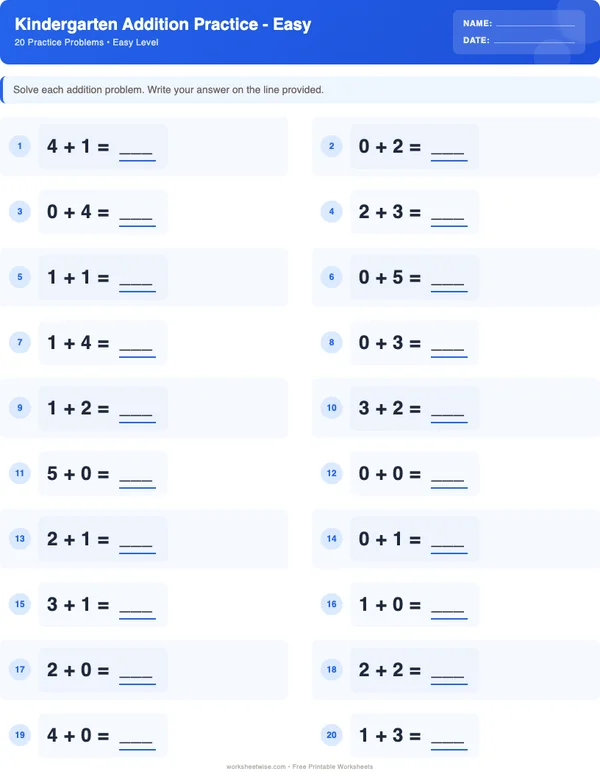
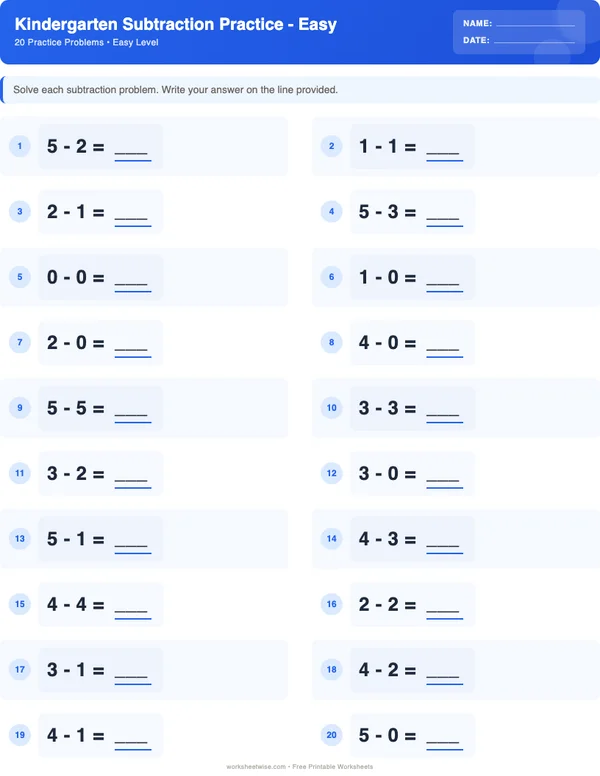
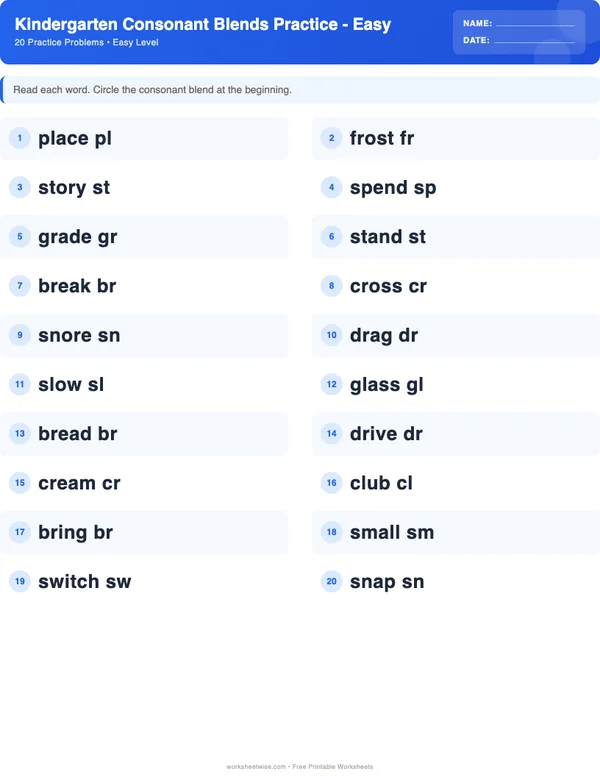
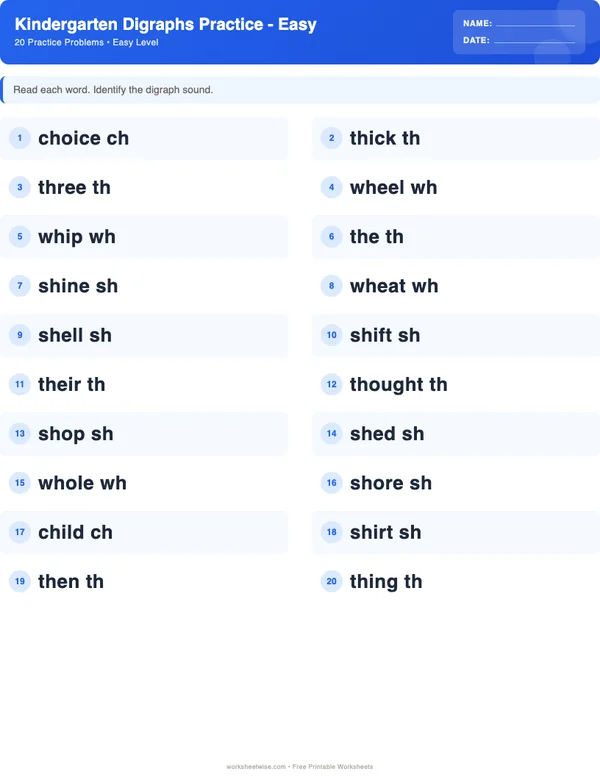
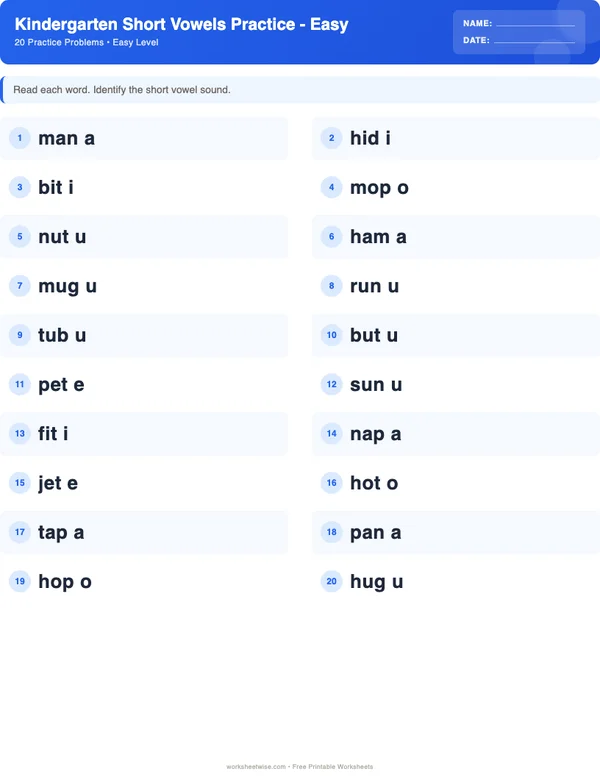
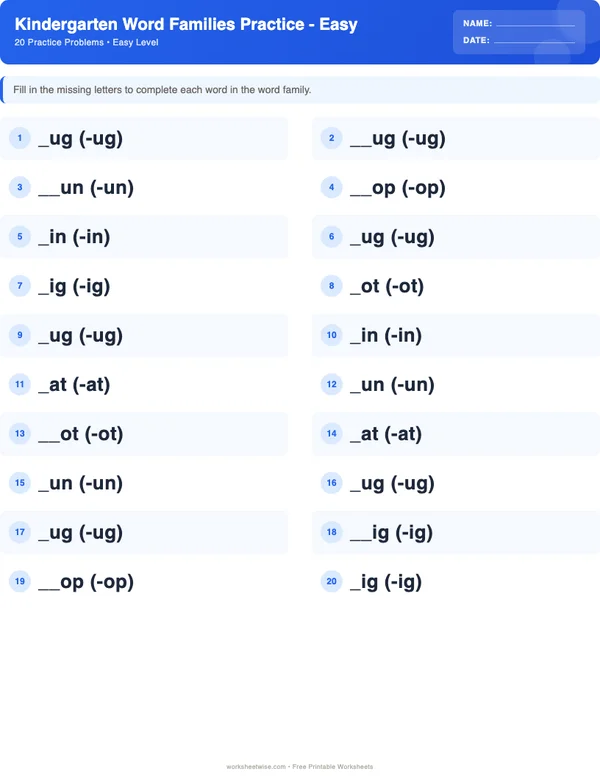
107 relevant free entry points are available. Each one includes a printable learner PDF and separate answer key.
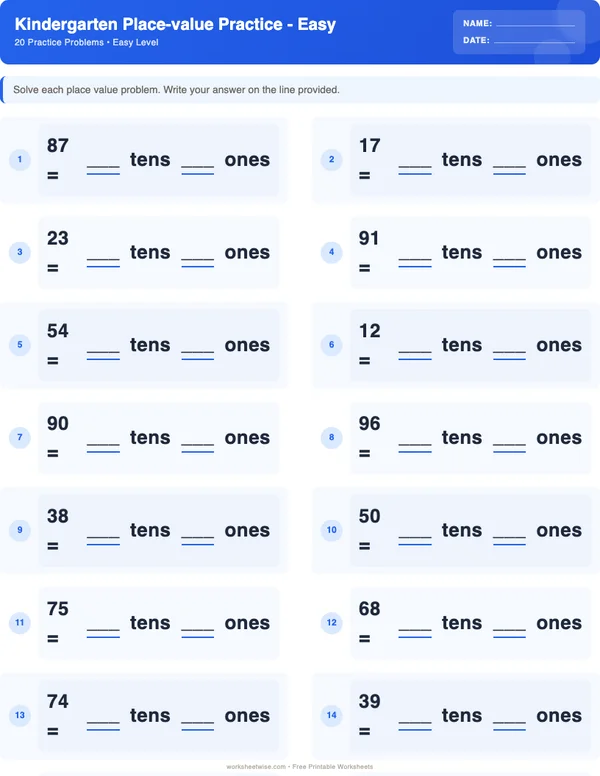
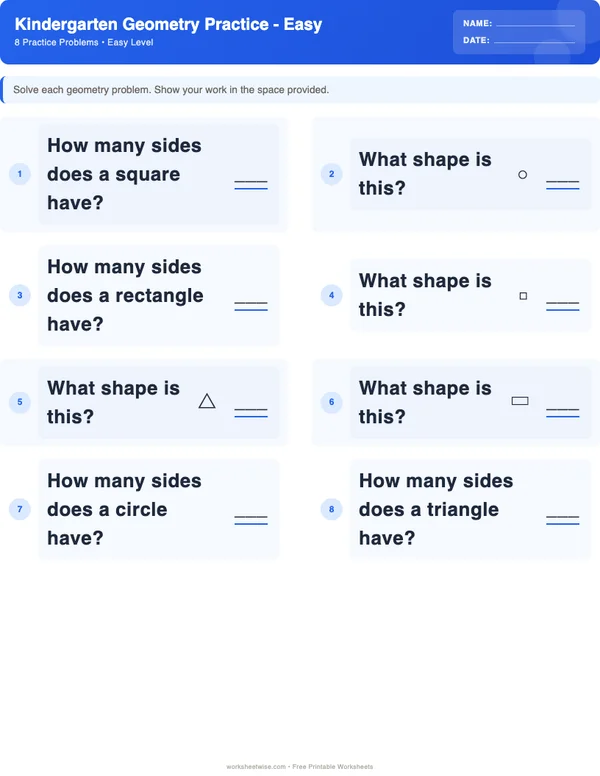
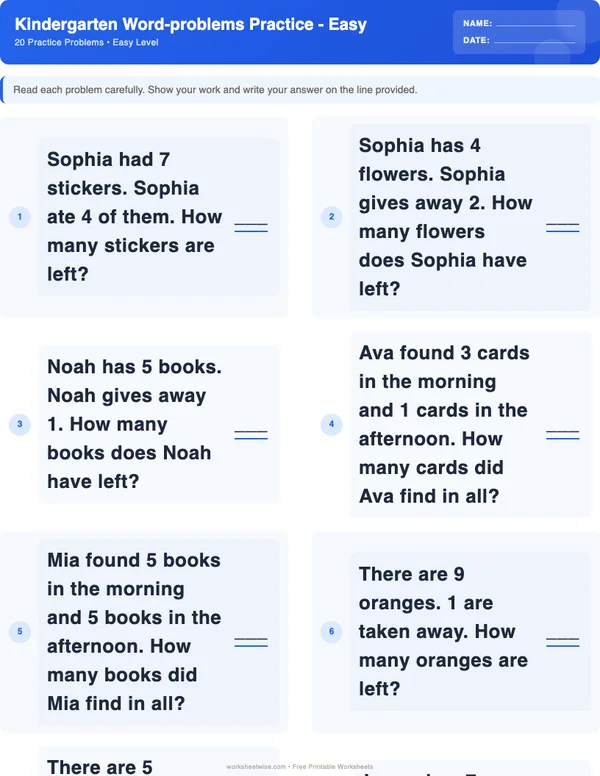
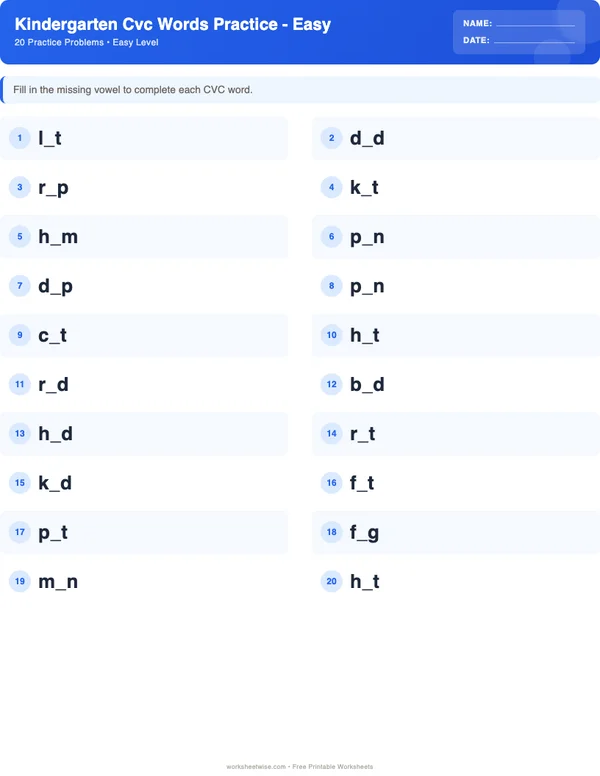
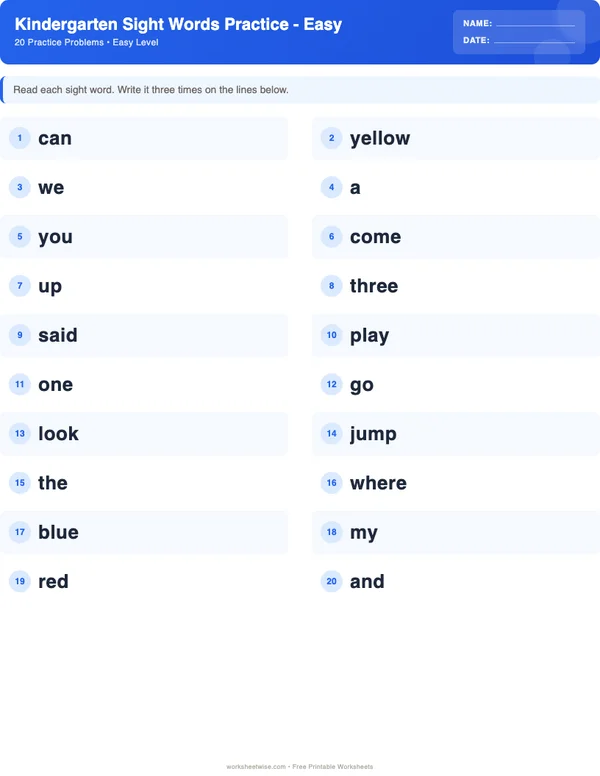
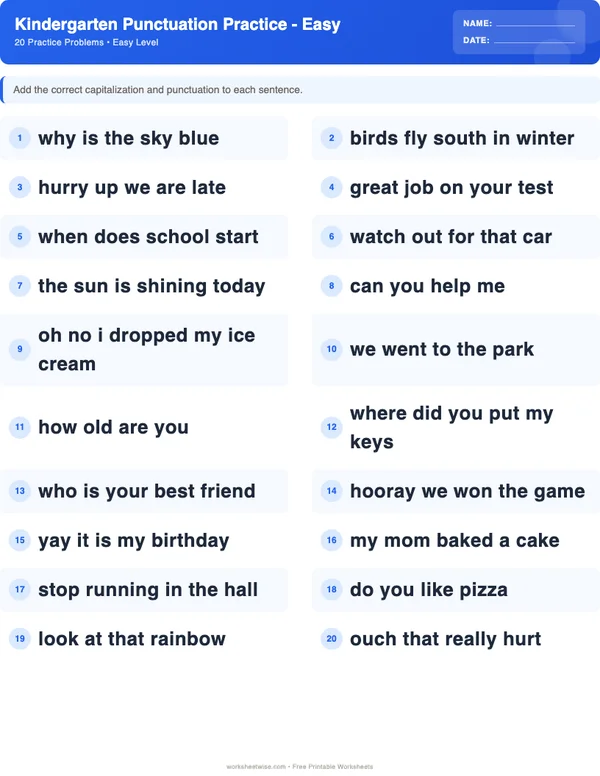
A useful practice loop
Print less. Observe more.
- Choose one skill and model the first item aloud.
- Use a short set and notice the learner’s strategy.
- Change the next task from the work you can see.
Need more than the free sheet?
Plus includes all 1926 matching catalogue variations where available, plus saved deterministic generators and the worksheet designer.
See Plus membershipExplore morning work worksheets with answer keys by subject or level
Complete guide
How to teach and practise morning work worksheets
3,773 words Updated 6 instructional visuals
Make arrival work brief, familiar and easy to scan
Morning work should give elementary learners something they can begin without waiting for a new lesson. The strongest routine uses already-taught material, a visible stopping point and a quick review that tells the adult what to do next. It is not a race, a packet to fill time or a substitute for instruction.
For most classes, plan a 7–12 minute working window with one compact retrieval task. A learner might complete six familiar addition items, read and sort eight taught words, repair three sentences or solve one word problem with a drawing. The completion boundary should be unmistakable: “Finish the boxed section,” “Do questions 1–6” or “Stop after you explain one answer.”
WorksheetWise’s live morning-work catalogue contains 1,926 variants across eight grades, four subjects and 23 topics, including 107 free resources. Those counts provide choice, not a reason to print indiscriminately. Select one page by asking what learners have already encountered, what evidence you need today and whether you can inspect that evidence before instruction begins.
A complete arrival cycle is:
- Prepare one known task and its answer key.
- Display the same start directions used each day.
- Let learners attempt the bounded section independently.
- Observe starts, strategies and recurring errors.
- Scan for one classwide pattern.
- Give brief feedback or schedule a targeted follow-up.
- Record only information that will change a decision.
- Reuse the task only when its content and response pattern justify reuse.
That routine is a page-specific use of printable morning work: predictable retrieval followed by a fast instructional decision.
Choose a page by evidence value, not by grade label alone
Grade labels describe intended practice level; local curriculum sequences differ. A first-grade label does not prove that every first grader has been taught the content, and a kindergarten label does not prevent an older learner from using a page for a specific review need.
Age is also a discovery aid rather than a placement decision. Select from what a learner has been taught and can meaningfully attempt. For ages three and four, prioritize brief adult-led oral, matching, manipulative and movement work over desk work. A 20-problem page may supply five picture prompts for an adult-led activity without becoming a demand to complete all 20 items.
Check what the learner must actually do
Before printing, inspect four task features:
- Content: Is every symbol, word pattern, operation or direction already familiar?
- Response load: Must the learner circle, match, write a word, construct a sentence or explain reasoning?
- Item count: Can you mark a short stopping boundary without breaking the task?
- Independence demands: Can learners start from a posted model, or will they need repeated adult interpretation?
The catalogue calls the representative free sheets “easy,” but difficulty should be defined through observable task features, never attached to a learner. On a particular page, easier task features might include one-step directions, familiar pictures, small quantities, repeated item formats and short written responses. Greater difficulty might come from mixed operations, less visual support, longer reading, an unknown in an unfamiliar position or a requirement to justify an answer.
Reject a poor arrival fit even if the topic is right
Do not use a page for independent morning work when it introduces a new spelling pattern, assumes an untaught algorithm, requires materials learners cannot access or makes handwriting the main obstacle to showing the target skill. A mathematically suitable page can still be a poor arrival task if learners must read dense directions. A phonics page can be unsuitable if the pictures are ambiguous or if several vowel patterns appear before they have been taught.
A useful selection test is: “If I say nothing after the start signal, can most learners show something interpretable within two minutes?” If not, simplify the boundary, add a worked example, make the task adult-led or choose another page from the full worksheet library.
Prepare the room so starting does not depend on the teacher
Low-friction arrival work is mostly designed before learners enter. Put the page in one consistent location. Place pencils, counters, letter tiles or number lines where they are normally used. Project or post three short directions:
- Put away your belongings.
- Complete the boxed items.
- Check one answer, then begin the named quiet follow-up.
Mark the stopping boundary on the master copy before duplicating it. If a 20-problem counting or phonics sheet is too long for the arrival window, box four to eight items. The catalogue’s problem count describes the full resource; it does not require full completion in one sitting.
Prepare the answer key for adult scanning, not public answer copying. Highlight the two or three items most likely to reveal the target distinction. For addition, that might be a fact requiring a make-ten strategy. For short vowels, it might be a minimal contrast. For punctuation, it might be a sentence whose meaning makes the end mark clear.
Also decide what early finishers do. “Read your library book” is clearer than an expanding menu. Avoid rewarding speed with more of the same work; that can encourage rushed answers and make careful learners experience accuracy as a penalty.
Launch the same short routine across subjects
Consistency should live in the procedure, not in interchangeable content. Learners can follow one arrival architecture while the evidence changes by subject.
Use a 10-minute launch script
A practical schedule is:
- Minute 0–2: Enter, organize materials and read the posted boundary.
- Minute 2–8: Attempt the selected items.
- Minute 8–9: Check one designated response using a stated method.
- Minute 9–10: Stop, place the page in the scan tray and transition.
Say, “This is practice from work we have already done. Complete the box. If you are unsure, show your best attempt and mark the item with a dot.” That final instruction makes uncertainty visible without turning arrival into a queue for teacher help.
The adult should not reteach every item during this period. Handle access problems—missing pencil, unreadable copy, unclear start location—while preserving evidence of what learners can retrieve. If you explain the mathematical or reading decision during the attempt, the page no longer shows independent retrieval.
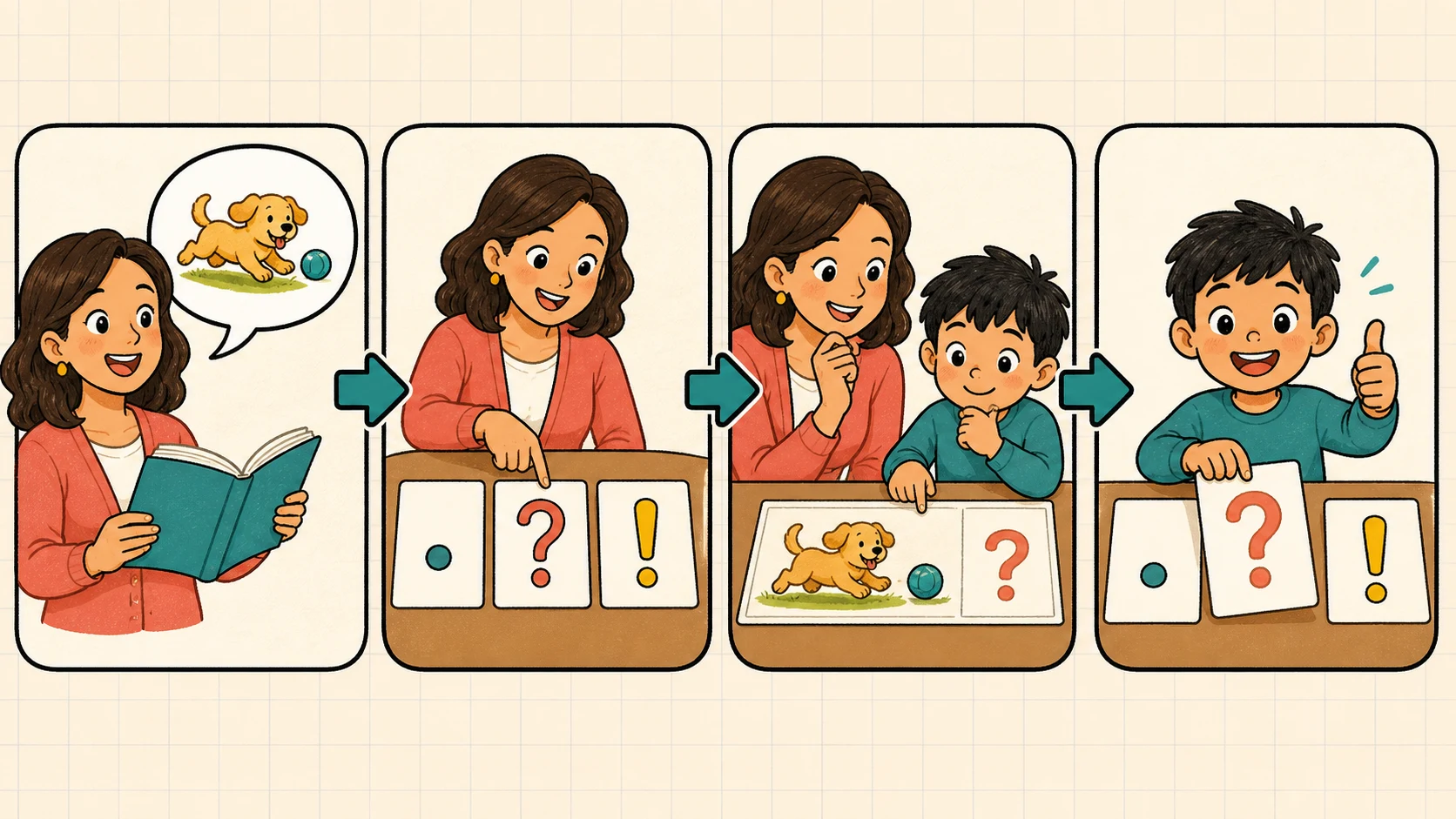
Use a repeated first-grade punctuation sequence as a model for stable procedure: read, decide, mark and briefly justify rather than filling an open-ended block of time.
Keep the completion boundary visible
“Do what you can” has no shared finish line. Better directions name the exact work:
- “Correct the capitals and end marks in sentences 1–3.”
- “Count and match the first five sets.”
- “Read the eight words; sort them under -at or -an.”
- “Solve one story problem and draw how the quantities relate.”
- “Name the first four shapes and underline the property you used.”
If the bell or transition arrives first, stop everyone at the same point. Incomplete work then remains interpretable: the learner may have needed more time, but the class does not inherit an unpredictable packet debt.
Use checked examples that fit a morning boundary
The following examples are grounded in the supplied catalogue and checked for content, directions and answers. They are suggested routines, not claims that an outside source evaluated WorksheetWise.
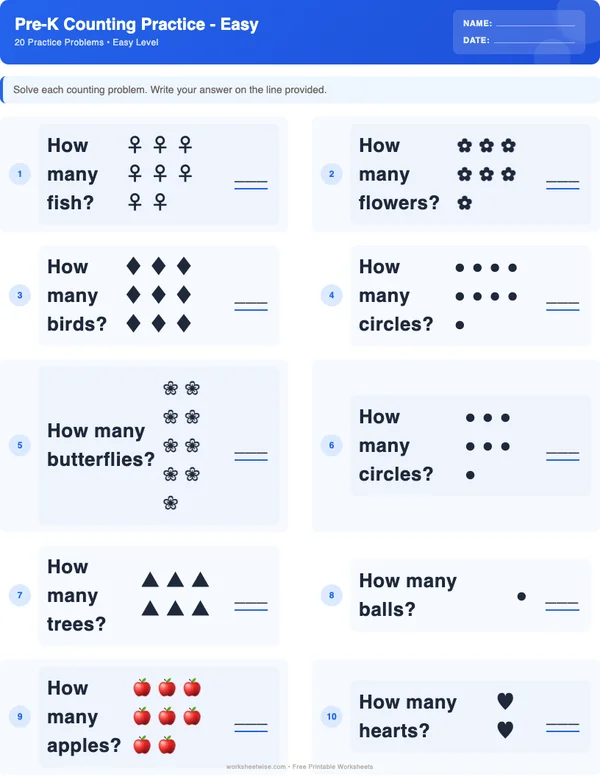
Example 1: Pre-K or kindergarten counting with objects
Use five small collections containing 3, 5, 7, 9 and 12 objects. Ask the learner to touch or move each object once, say the count and match it to the numeral. Checked answers are 3, 5, 7, 9 and 12.
This belongs in the morning-work context because the representative Pre-K and kindergarten counting resources include counting sets and the catalogue guidance emphasizes concrete objects before pictures and abstract numerals. It also produces observable evidence quickly: watch whether the learner coordinates one spoken number with one object and whether the final number names the total.
For a three- or four-year-old, do not hand over a 20-item desk page. Use two or three collections in an adult-led matching task, then count while stepping or clapping. The Pre-K Counting guide and free sheet can supply prompts, while manipulatives and movement remain the activity.
An error such as saying “eight” for seven objects could reflect a skipped object, a double-counted object or an unstable counting sequence. Observe before interpreting. The next action differs: spread the objects farther apart for tracking, have the learner move each counted object, or practice the oral sequence without objects.
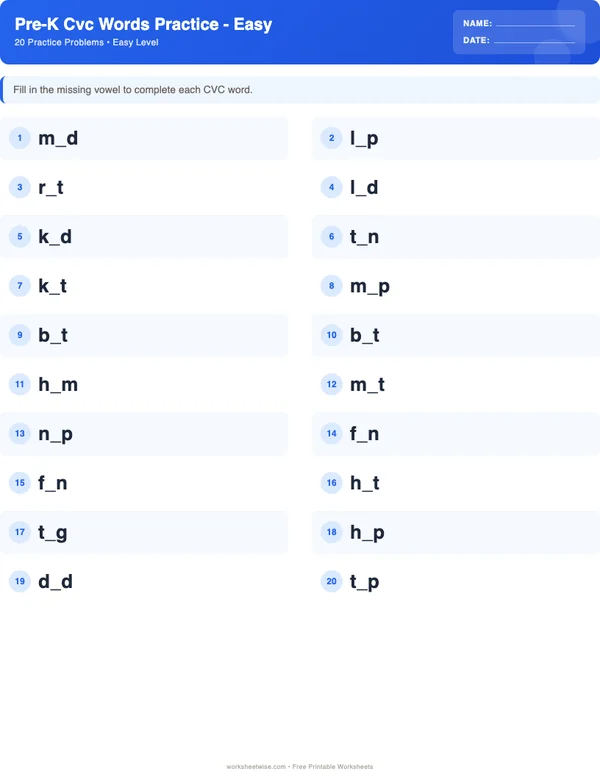
Example 2: Kindergarten CVC retrieval with sound boxes
Present map, sit, log and sun. The learner says each word, pushes one token for each sound and then writes the three letters. Checked segmentations are /m/ /ă/ /p/, /s/ /ĭ/ /t/, /l/ /ŏ/ /g/ and /s/ /ŭ/ /n/. Each has three phonemes and a consonant-vowel-consonant spelling.
This belongs here because CVC word building, picture matching and reading appear in the supplied Pre-K and kindergarten catalogue facts. Four words create a short completion boundary while sampling four short vowels. The task retrieves an already-taught decoding process; it should not be a learner’s first blending lesson.
The IES foundational-reading guide recommends explicit work connecting sounds with letters, blending from left to right and reading connected text after foundational practice. That guidance supports the instructional sequence, not any claim about this worksheet collection. See IES, Foundational Skills to Support Reading for Understanding.
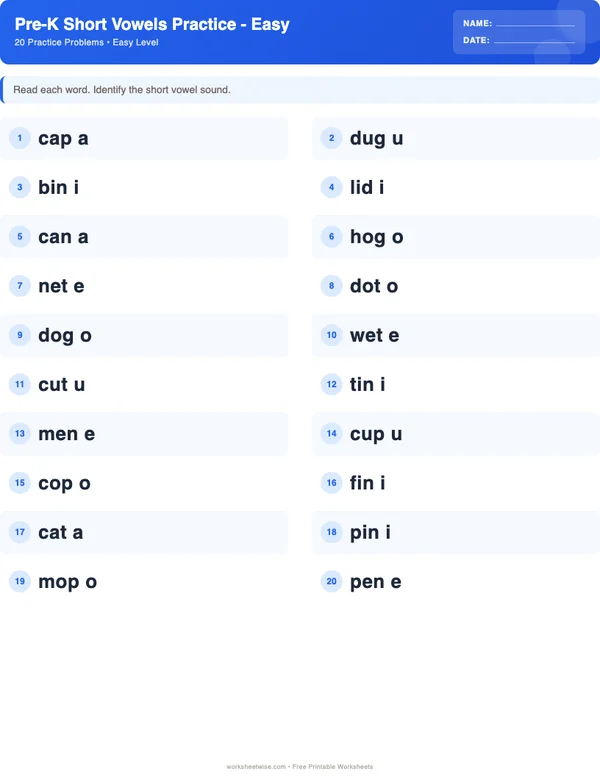
If sit becomes set, preserve the target skill by offering oral discrimination between the two vowel sounds before asking for another written attempt. Do not replace decoding with copying the correct word. The next observable action is to ask the learner to identify the middle sound in one new contrast, such as pin/pen.
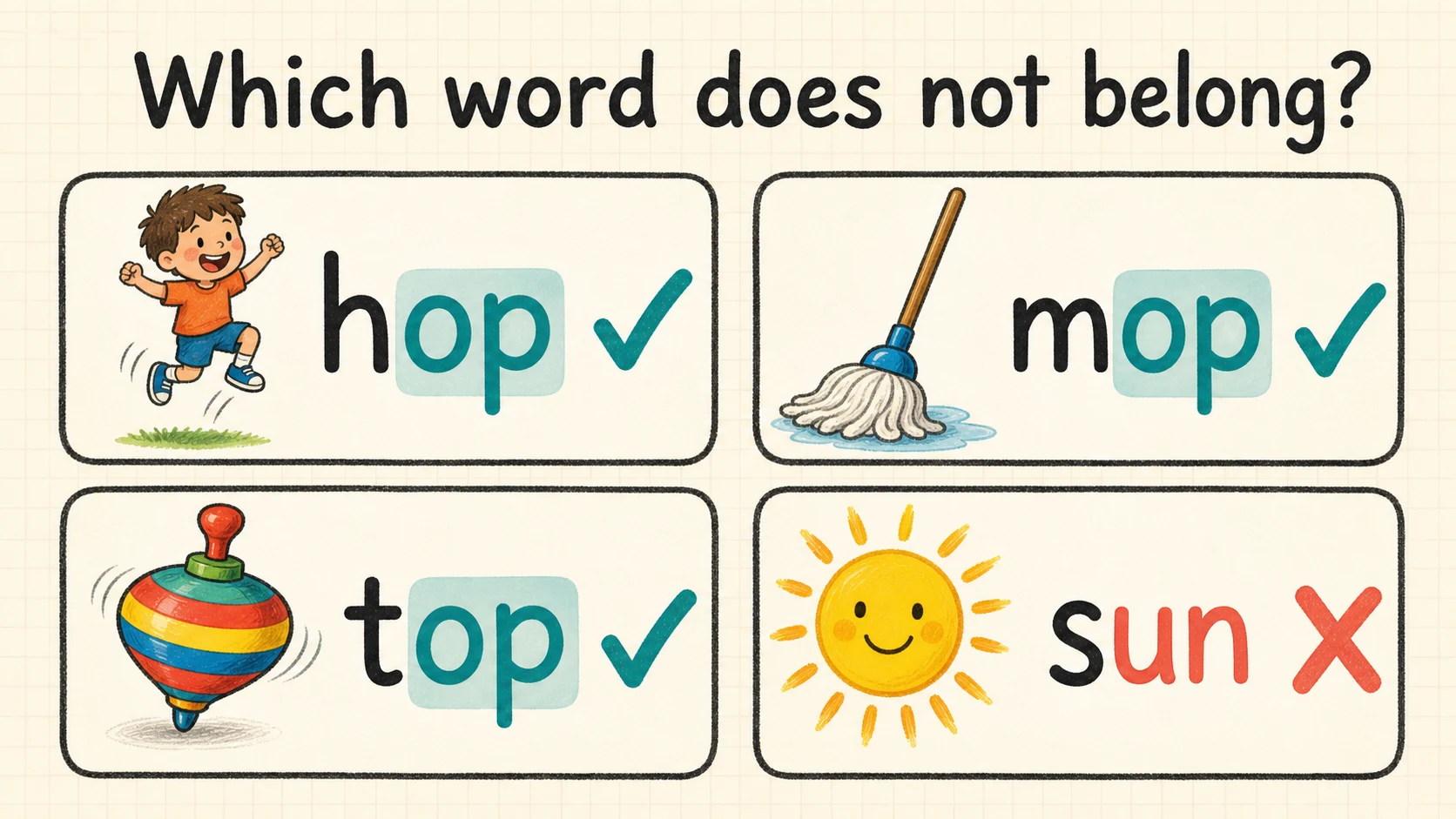
Treat a word-family error as a clue about the onset, vowel or shared ending; the mark alone does not identify the cause.
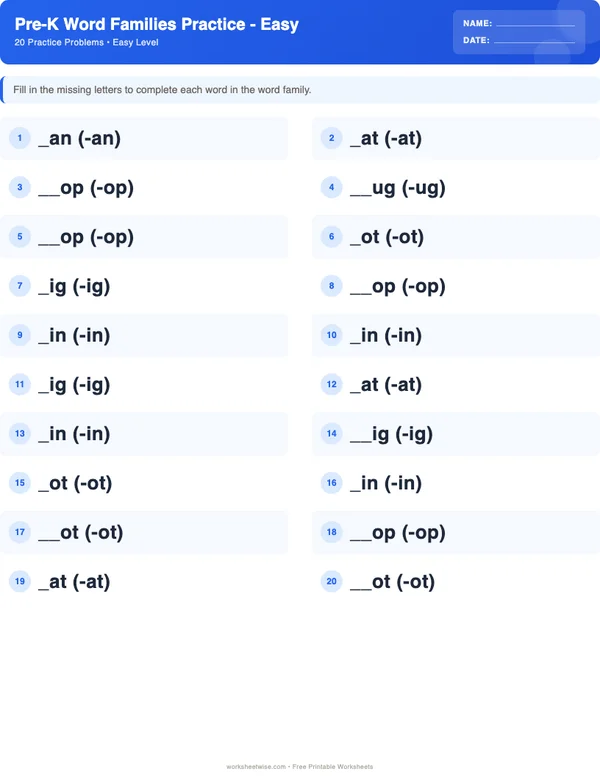
Example 3: First-grade word-family sorting
Give the words cat, map, hat, fan, cap and man. Ask learners to sort them into -at, -ap and -an. Checked groups are:
- -at: cat, hat
- -ap: map, cap
- -an: fan, man
This belongs in arrival practice because the catalogue describes word-family sorting and changing initial consonants while retaining a shared ending. Six words fit a fast scan. More importantly, the distractor structure reveals whether the learner attends to the entire rime rather than merely noticing short a.
If map is placed under -at, ask the learner to cover the first letter and read the remaining chunk in both words. That preserves the pattern-comparison target. It does not lower the task to tracing or unrelated alphabet review. Follow with one transfer item, sat, and observe whether the learner places it under -at without prompting.
For a younger learner, turn the same content into adult-led picture and word matching. The Pre-K Word Families guide and free sheet is an appropriate entry point, but readiness still depends on taught sound-letter knowledge rather than age alone.
Example 4: Kindergarten addition and subtraction as related facts
Display counters and the equation 6 + 3 = 9. Ask learners to complete 3 + 6 = __, 9 − 6 = __ and 9 − 3 = __. Checked answers are 9, 3 and 6.
This example belongs because the catalogue presents addition and subtraction as connected operations and recommends concrete or representational support before abstract calculation. The four related equations are small enough for morning retrieval and more informative than a long row of unrelated facts.
A learner who answers 9 − 6 = 4 may have recounted inaccurately, confused the operation or not yet connected the subtraction fact to the known addition fact. Ask the learner to rebuild nine with two groups of six and three, remove one group and state what remains. The observable next action is a second fact family using 5, 2 and 7.
The IES guide for young children’s mathematics emphasizes using developmental progressions, monitoring what children know and helping them represent and discuss mathematical ideas. It does not prescribe a WorksheetWise routine. See IES, Teaching Math to Young Children.
Example 5: A one-step word problem with a representation
Use: “Maya has 8 red blocks and 5 blue blocks. How many blocks does she have altogether?” The checked equation is 8 + 5 = 13, so the answer is 13 blocks. A valid drawing shows groups of eight and five combined, or a ten and three.
This belongs in morning work only after learners have solved combine-result-unknown stories. It is short, but it samples comprehension, operation choice, representation and computation. Do not teach “altogether means add” as a keyword rule; ask learners to retell what happens to the quantities.
If a learner writes 8 − 5 = 3, inspect the drawing and retelling. The subtraction may signal that the learner compared the numbers instead of joining the groups. Have the learner act out the story with blocks, then choose an equation again. Preserve the target—interpreting the relationship—rather than reading the problem aloud and naming the operation.
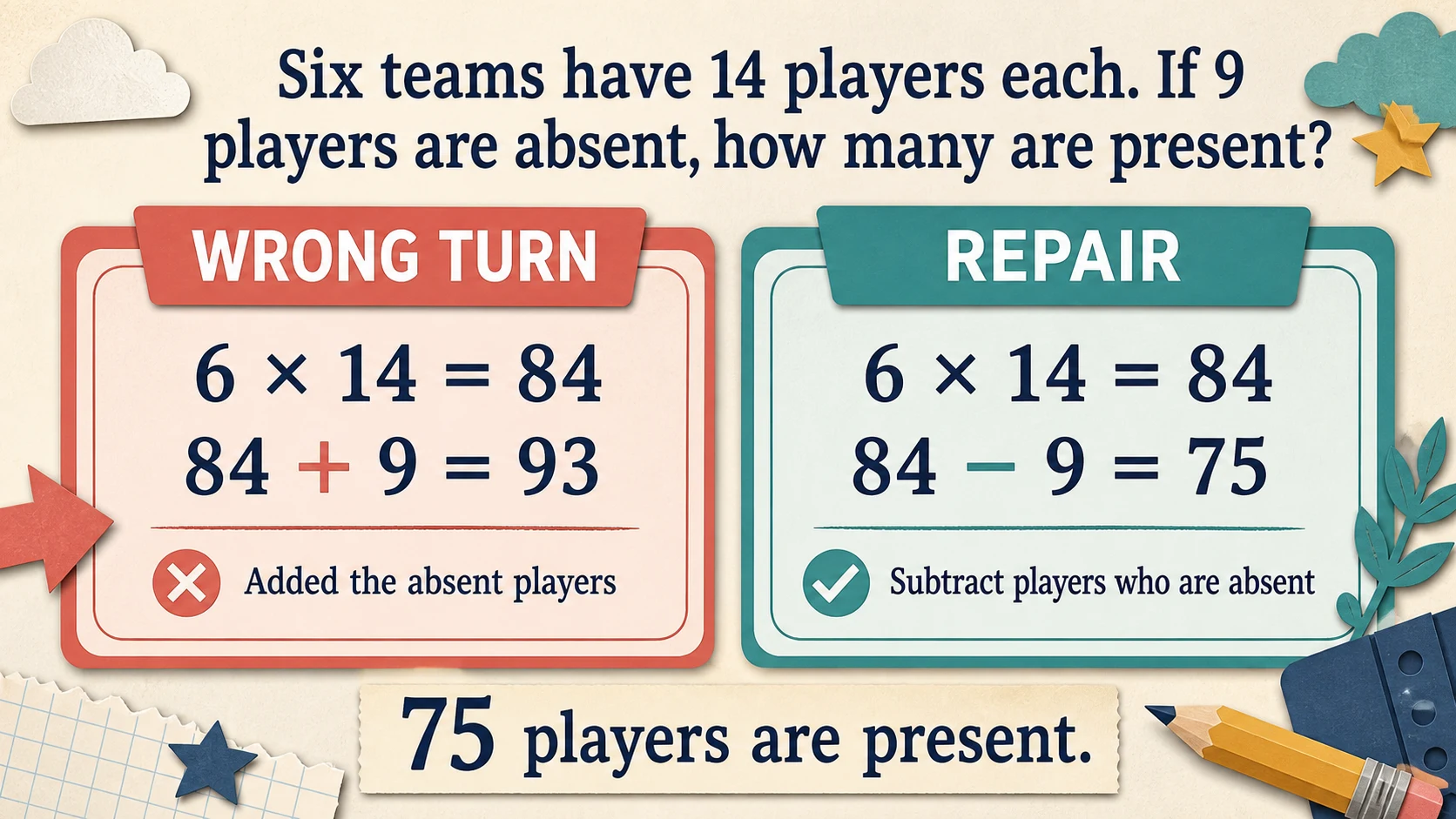
Although this visual uses sixth-grade errors, its morning-work lesson is broader: separate comprehension, representation, operation choice and calculation before planning a response.
Example 6: First-grade punctuation repair
Write:
- where is my hat
- I found it
- Watch out
Ask learners to add the initial capital and appropriate end mark. Checked versions are Where is my hat?, I found it. and Watch out! In ordinary context, these forms match a question, a statement and an exclamation or warning.
This belongs here because it requires a small, fast writing decision rather than extended composition. Ask the learner to read each sentence with expression and explain one end mark. That prevents punctuation from becoming a visual guessing task.
The IES elementary-writing guide supports explicitly teaching writing strategies, integrating writing with reading and using assessment to guide instruction. This source offers general guidance; it did not review these examples or WorksheetWise. See IES, Teaching Elementary School Students to Be Effective Writers.
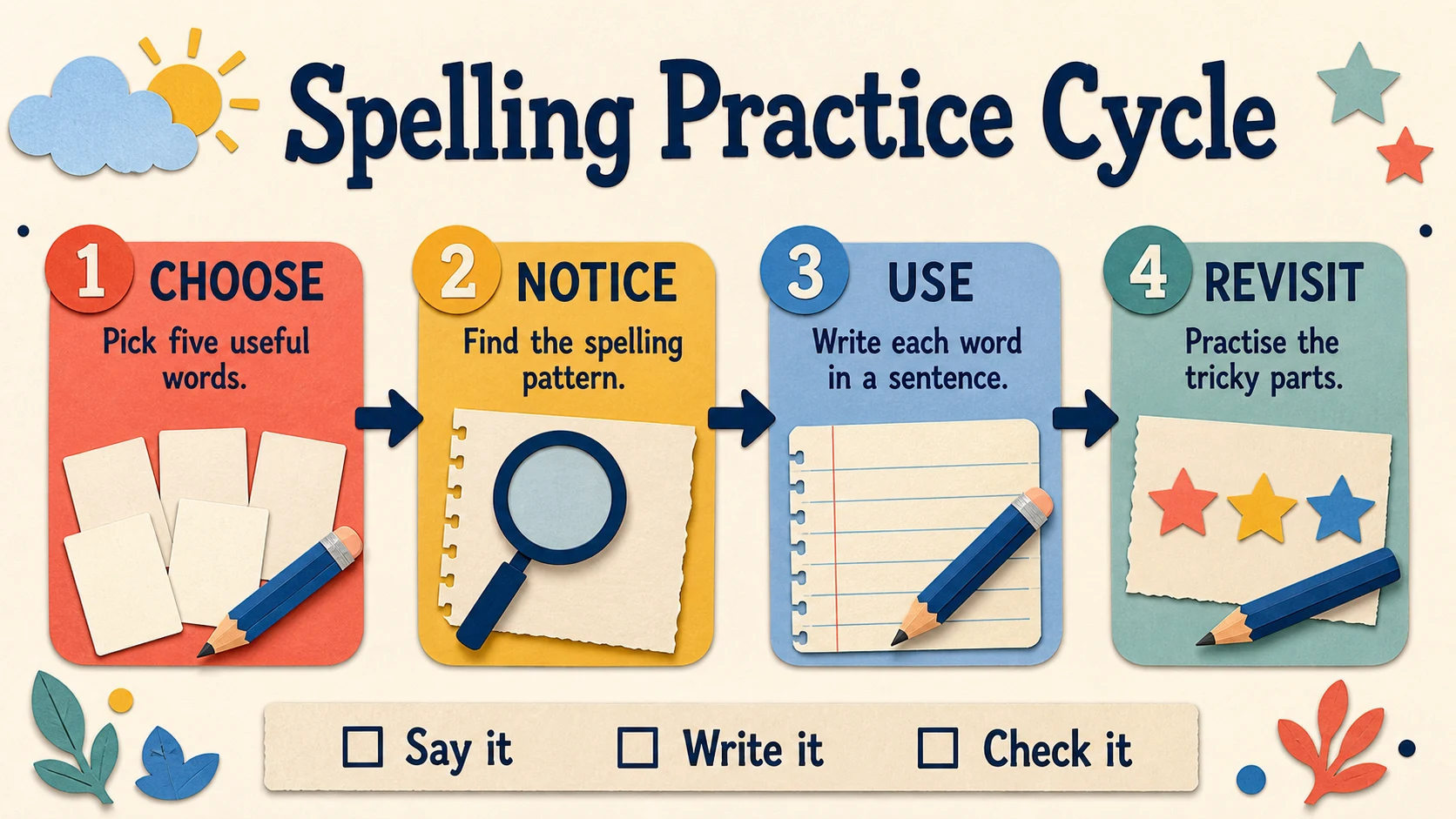
A planned spelling cycle helps keep arrival work cumulative: retrieve a taught pattern, revisit it later and avoid presenting an unbounded new list.
Observe the start, not only the final score
A correct answer can conceal counting from one, copying a neighbor or guessing from a picture. An incorrect answer can coexist with sound reasoning and one transcription slip. During the working window, scan three things:
- Start: Does the learner identify the task and begin without content coaching?
- Process: Does the learner use counters, sound boxes, a drawing, rereading or another taught strategy?
- Pattern: Do errors cluster around one feature, or are they scattered?
Use neutral notation. A dot might mean “needed the direction reread,” V might mean “used a visual model” and R might mean “reversed an operation.” Define any codes locally and keep the set small.
For geometry, do not accept shape names as the only evidence. If a learner calls every slanted four-sided figure a “diamond,” ask for properties: number of sides, equal lengths, parallel sides or angles, as appropriate to taught content.
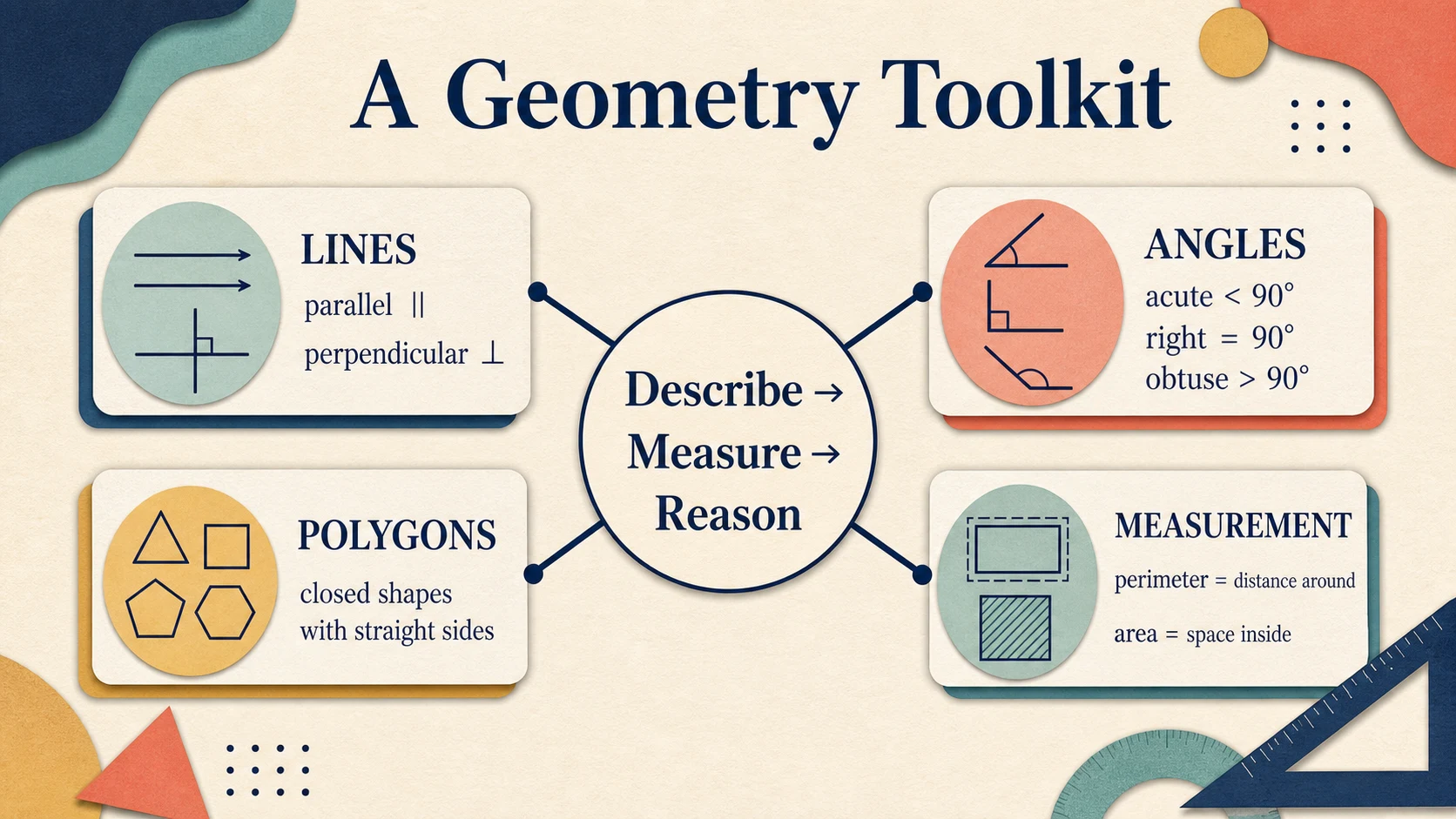
Use a skill map to locate the evidence you are gathering; a geometry page may test vocabulary, classification, measurement or spatial reasoning rather than one generic “geometry” ability.
A morning page is a small sample under particular conditions. It cannot diagnose a learning disability, establish mastery by itself or explain motivation. Fatigue, unfamiliar formatting, language demands, vision, motor load and an interrupted arrival can affect the result. Describe what occurred: “matched 4 of 6 CVC words and confused the medial vowels in sit and set,” not “is weak in phonics.”
Scan answer keys for patterns that change teaching
Use the key in two passes. First, find whether the class is ready to move into the day: glance at the designated high-information items. Second, sort pages into no more than three action groups:
- Proceed: responses show the intended retrieval with no pattern needing immediate attention.
- Brief check: one response needs a question, another example or a strategy demonstration.
- Reteach later: several responses show the same prerequisite or concept needs explicit instruction.
Do not turn the arrival transition into a public correction marathon. Address a widespread, concise issue in two minutes: “Several drawings showed the groups but the equation used subtraction. Let’s act out what ‘combine’ means.” Schedule a small-group or later lesson when the explanation requires more.
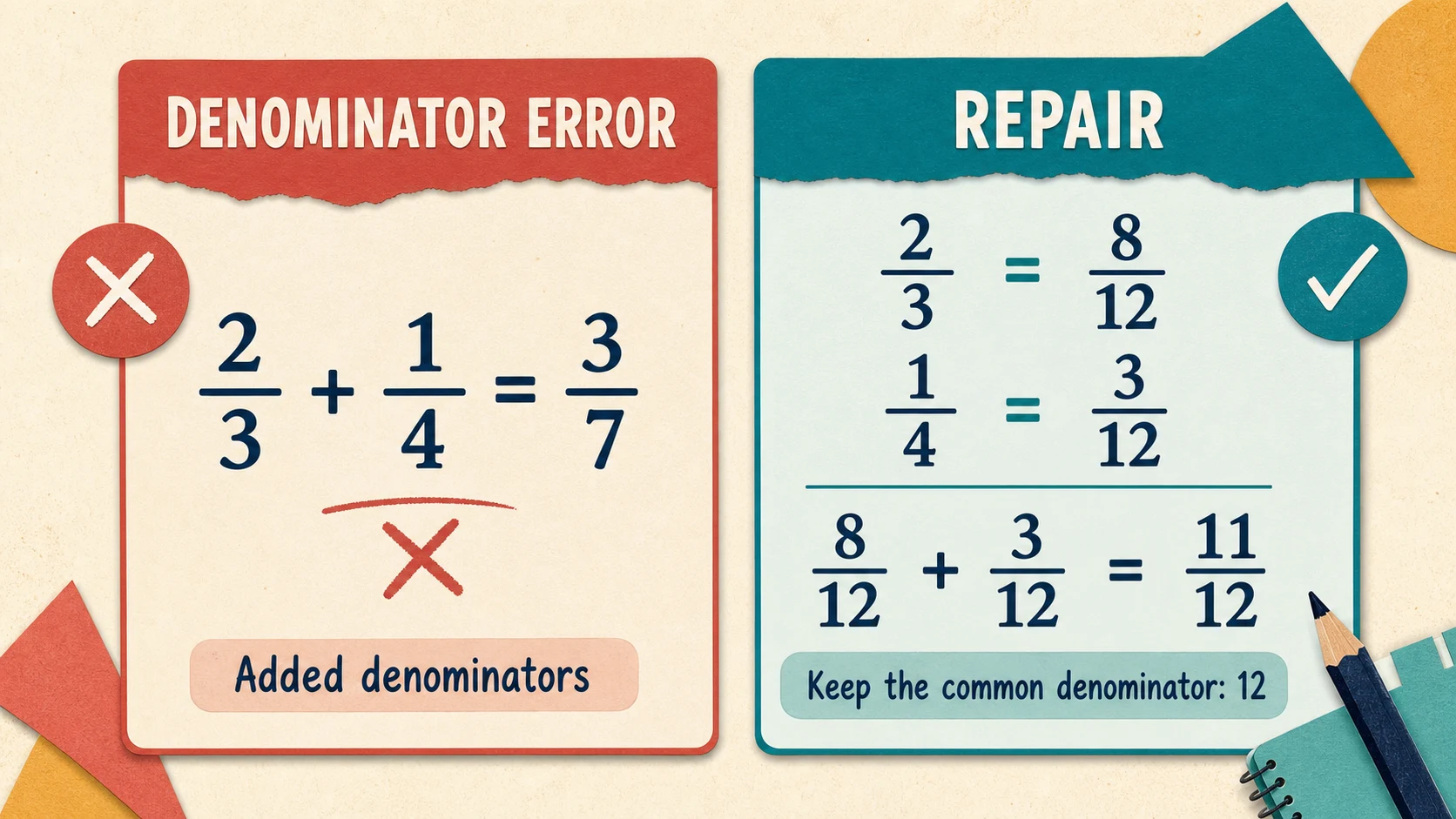
Pair an error pattern with a checking question before choosing a response; even a plausible fractions error does not reveal its cause automatically.
For math support, the IES guide on assisting learners who struggle with mathematics recommends systematic instruction, clear mathematical language, representations and regular progress monitoring. Those principles can inform follow-up, but they do not justify a diagnosis from a worksheet. See IES, Assisting Students Struggling with Mathematics.
Give feedback that sends the learner back to the target
Feedback should be brief enough to use and specific enough to act on. Prefer:
- “Touch each object once and recount this set.”
- “Read the middle sound again; compare sit with set.”
- “Show which quantities are being joined.”
- “Read the sentence aloud. Is it asking, telling or warning?”
- “Name the shape property you used.”
Avoid “Try harder,” a bare X or correcting every mark yourself. When possible, ask for one revision and one transfer item. The revision shows whether feedback was understood; the transfer item shows whether the learner can use the idea beyond the corrected question.
Whole-class feedback should address a shared pattern without displaying names or ranking completion speed. Individual feedback can wait until a quieter moment if discussing it during arrival would expose a learner or derail the transition.
The Formative assessment Worksheets With Answer Keys collection can be useful when the primary purpose is a more deliberate evidence check. Morning work remains narrower: establish the day, retrieve familiar material and surface one actionable pattern.
Keep records small enough to use tomorrow
Do not record every answer from every morning. Record a result only when it changes grouping, task selection, support or follow-up. A compact weekly grid can contain:
| Date | Retrieval target | Observed evidence | Next action |
|---|---|---|---|
| Mon | Count scattered sets to 12 | Double-counted two moved objects | Use a “counted” mat Tuesday |
| Tue | Sort -at/-ap/-an | 5/6 correct; confused map/mat | Contrast final phonemes orally |
| Wed | Related facts within 10 | Built facts accurately with counters | Try drawings before counters |
| Thu | Sentence end marks | Questions secure; warnings uncertain | Model statement versus warning |
| Fri | Combine word problem | Drew groups; selected subtraction | Act out one new combine story |
This is descriptive evidence, not a gradebook category or diagnostic record. Preserve actual work only when it helps compare strategy use over time. Otherwise, recycle routine pages according to school policy after recording the one useful observation.
Review the grid weekly. If the same note appears repeatedly, morning retrieval alone is not resolving it. Plan explicit instruction, gather a different kind of evidence or consult the appropriate school support process. Do not keep assigning near-identical pages merely because they are easy to distribute.
Adapt access without replacing the target
An adaptation preserves the decision the task is meant to reveal.
If the target is one-to-one counting, reduce visual clutter, enlarge the objects or allow counters—but do not supply the total. If the target is short-vowel discrimination, let the learner point or place a letter tile instead of handwriting every word—but do not pronounce the vowel for them. If the target is operation choice, read the story aloud when decoding is not being assessed—but do not emphasize a supposed keyword or name the operation.
Other useful access changes include:
- box fewer items while keeping the same item type;
- provide a familiar number line, ten frame or sound boxes;
- enlarge print and increase spacing;
- allow oral explanation or pointing when writing is not the target;
- preview the routine, not the answers;
- place one worked example above the boundary if learners have used that format before.
When the adaptation changes the construct, label the resulting evidence honestly. A word problem read aloud can show mathematical interpretation under oral presentation; it does not show independent reading of the problem.
Reuse pages only when repetition has a purpose
Reuse can lower procedural friction, but exact repetition can also produce memory of answers. Choose among three forms:
Repeat the format with new content
Use the same layout but change numbers, words or sentences. This is the strongest default because learners know how to begin while still retrieving the skill. The free deterministic worksheet generators can support this kind of controlled variation.
Revisit selected missed items
Return one or two items after feedback, mixed with new examples. Do this to check transfer, not to require a cleaner copy. Record whether the learner uses the corrected strategy independently.
Repurpose the printed page
Cut a phonics page into sorting cards, put a counting page under a sleeve for marker-and-counter work or use three word problems in a partner discussion. For ages three and four, this adult-led repurposing is often more suitable than seated page completion.
Stop reusing a page when learners recall positions rather than reason, when the content has become automatic enough that no decision follows, or when repeated errors show that instruction—not further independent practice—is required.
Know when a worksheet is the wrong arrival tool
Choose another format when the target depends on speech production, collaborative reasoning, movement, manipulation, sustained writing or teacher modeling. A page is particularly poor when:
- the concept is new;
- the learner needs immediate corrective feedback;
- pictures cannot represent the mathematical or phonological distinction clearly;
- reading demands obscure the subject being checked;
- the task rewards copying or speed more than reasoning;
- emotional regulation and connection are the actual arrival priorities;
- materials such as shapes, counters or letter tiles would reveal more;
- the same worksheet error has persisted after feedback.
Use a number talk for comparing strategies, magnetic letters for building CVC words, a shape hunt for recognizing varied orientations, oral retelling for story comprehension or a brief check-in when learners are not ready for academic retrieval. The decision is not “worksheet or no learning.” It is which tool produces interpretable practice without adding avoidable friction.
Tomorrow, choose one already-taught target and create a six-item version with the free deterministic worksheet generators. Box the stopping point, prepare one strategy prompt and decide in advance what observed pattern will lead to reteaching, a brief check or moving on.
Put it into practice
Use the guide with a real printable
Move from explanation to a short, observable practice task. Check the first item together, then adjust the next session from the learner's actual work.
Open the first free worksheetExplore a neighboring collection
Choose by a different teaching need
After-School Worksheets With Answer Keys Formative Assessment Worksheets With Answer Keys Classroom Worksheets With Answer Keys Homeschool Worksheets With Answer Keys Homework Worksheets With Answer Keys Independent Practice Worksheets With Answer Keys Intervention Worksheets With Answer Keys School Readiness Worksheets With Answer Keys