What Pre-K Sight Words Instruction Should Accomplish
Pre-K sight word instruction should help a learner recognize a small, useful set of printed words, connect those words to speech and meaning, and notice which letter-sound relationships are regular or unexpected. The goal is accurate recognition—not racing through a long list.
A Pre-K learner might learn to:
- Notice the difference between a word and a single letter.
- Track print from left to right.
- Match two copies of the same word.
- Say a familiar word when shown its printed form.
- Find that word among a few clearly different choices.
- Trace or copy it with adult support.
- Recognize it in a short, meaningful sentence.
Sight words include frequently used words that can become immediately recognizable. Some, such as and, can be decoded through common letter-sound relationships. Others contain a spelling that deserves explicit attention. In said, for example, the first and final consonants are predictable, while ai represents an unexpected sound and must be remembered.
This work should complement alphabet knowledge, phonological awareness, and phonics. It should not replace them. The IES foundational reading practice guide supports an instructional framework that includes sound awareness, letter-sound relationships, word reading, and connected text. That broader framework is more useful than treating every frequent word as an indivisible visual shape.
Grade labels describe an intended practice level; local curricula and instructional sequences differ. The Common Core kindergarten standards include reading common high-frequency words by sight, but they do not establish a universal Pre-K timetable. The Common Core English Language Arts standards are therefore best used here as context for what may follow, not as proof that every Pre-K learner should master a fixed list.
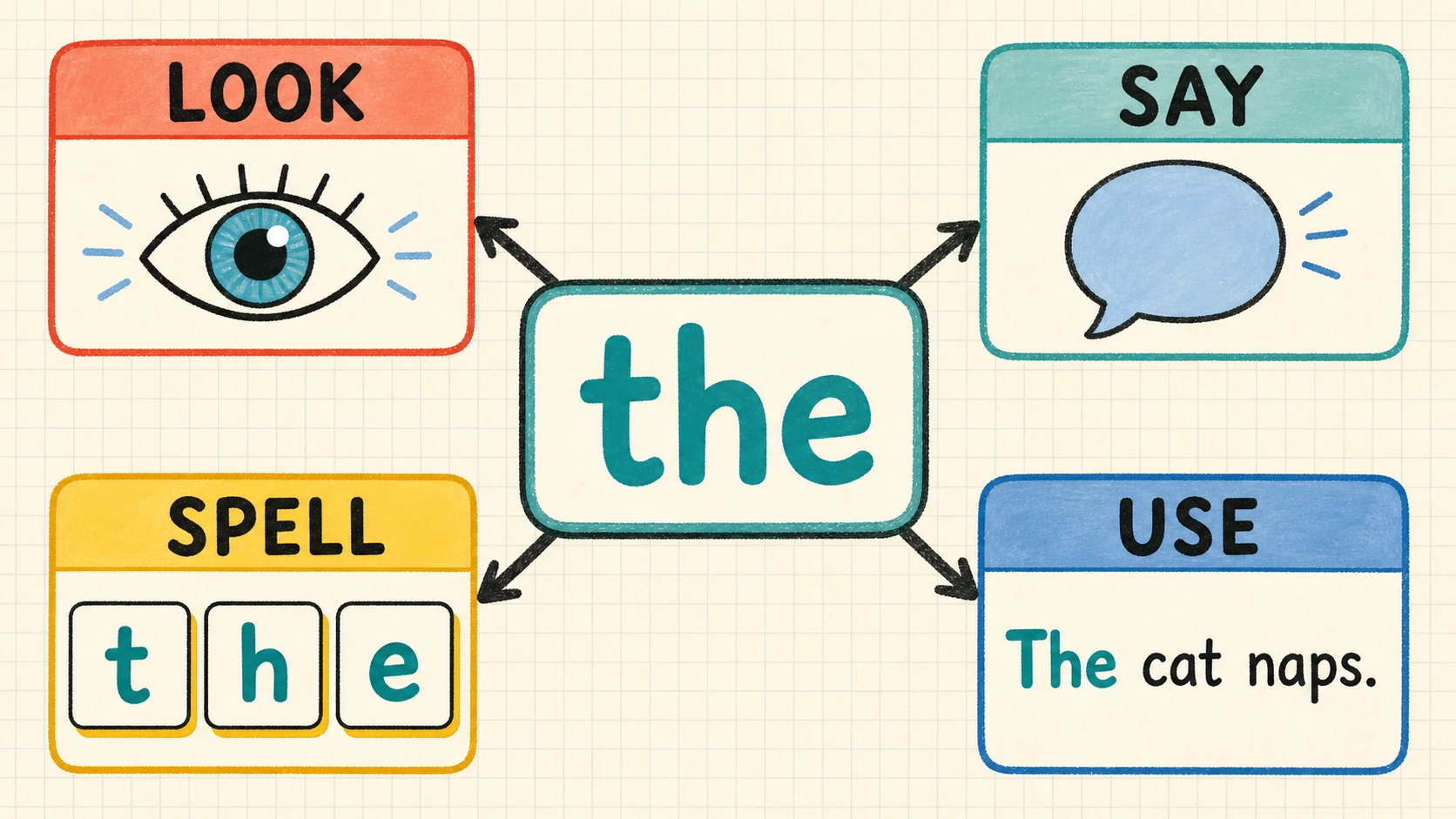
Sight word learning draws on print awareness, speech, meaning, letter knowledge, phonics, memory, and repeated reading.
Prerequisites to Check Before Introducing New Words
A child does not need perfect alphabet knowledge before seeing useful words in print. However, several foundational behaviors make instruction more productive.
Print awareness
Check whether the learner understands that a printed word represents something a person can say. Place a familiar word such as I beside a simple picture. Point to the print and then the picture. Ask, “Which one is the word?” If the child consistently points to the picture, spend more time distinguishing pictures, letters, and words.
Also observe whether the learner can:
- Look where an adult points.
- Follow a finger moving from left to right.
- Notice spaces between words.
- Attend to a short line of print for several seconds.
These are instructional starting points, not entrance tests.
Spoken-language understanding
Teach words the learner can understand in a simple sentence. A child can more readily connect the to print when hearing and completing a phrase such as “the dog” than when studying the printed word without context.
A sight word exercise is not an appropriate tool for evaluating a child’s overall language development. If a word is unfamiliar in speech, explain it naturally or choose a more familiar word.
Letter and sound awareness
Useful early readiness includes recognizing some uppercase letters, hearing beginning sounds in familiar words, identifying rhymes, and clapping syllables. Those abilities are part of the supplied Pre-K learning scope. Lowercase letters also appear frequently in books, so an adult can introduce them as they occur without expecting immediate mastery.
Before teaching a word such as and, check whether the learner can notice at least some of its letters and sounds. If not, word matching and oral sentence work may be more suitable than spelling from memory.
Fine-motor readiness
Reading a word and writing it are related but distinct demands. A learner may recognize the without being ready to form all three letters accurately. The supplied Pre-K scope describes a developing pencil grip and practice tracing lines and simple shapes. Permit pointing, moving letter cards, tracing with a finger, or choosing an answer when handwriting would obscure the reading skill.
A Grade-Appropriate Progression
Sight word learning is better organized by the learner’s observed responses than by an inflexible calendar. Introduce approximately three to five new words in a week only when that pace leaves enough time to review older words. Fewer words are appropriate when recognition remains uncertain.
| Stage |
Learner’s task |
Adult support |
Evidence to look for |
| 1. Attend and match |
Match identical printed words |
Model and limit choices to two |
The learner matches without using color or position |
| 2. See and say |
Look at a word and repeat it |
Say the word, point to each letter, use it orally |
The learner connects print with the spoken word |
| 3. Analyze |
Notice letters and regular or unexpected parts |
Prompt sound-by-sound attention where appropriate |
The learner explains or points to a memorable part |
| 4. Find |
Select the named word from a small group |
Begin with visibly different choices |
The learner identifies it after positions change |
| 5. Build and write |
Arrange letters, trace, copy, or write |
Provide a model and reduce support gradually |
Letter order is increasingly stable |
| 6. Read in context |
Read the word in a phrase or short sentence |
Support other words as needed |
Recognition transfers beyond a card |
| 7. Retrieve later |
Read it during spaced review |
Mix old and new words |
The learner reads it correctly on separate occasions |
Begin with matching if a learner guesses frequently. Move toward finding and building once matching is reliable. Connected text comes after—but also alongside—word-card practice so that the learner experiences the word doing real work in a sentence.
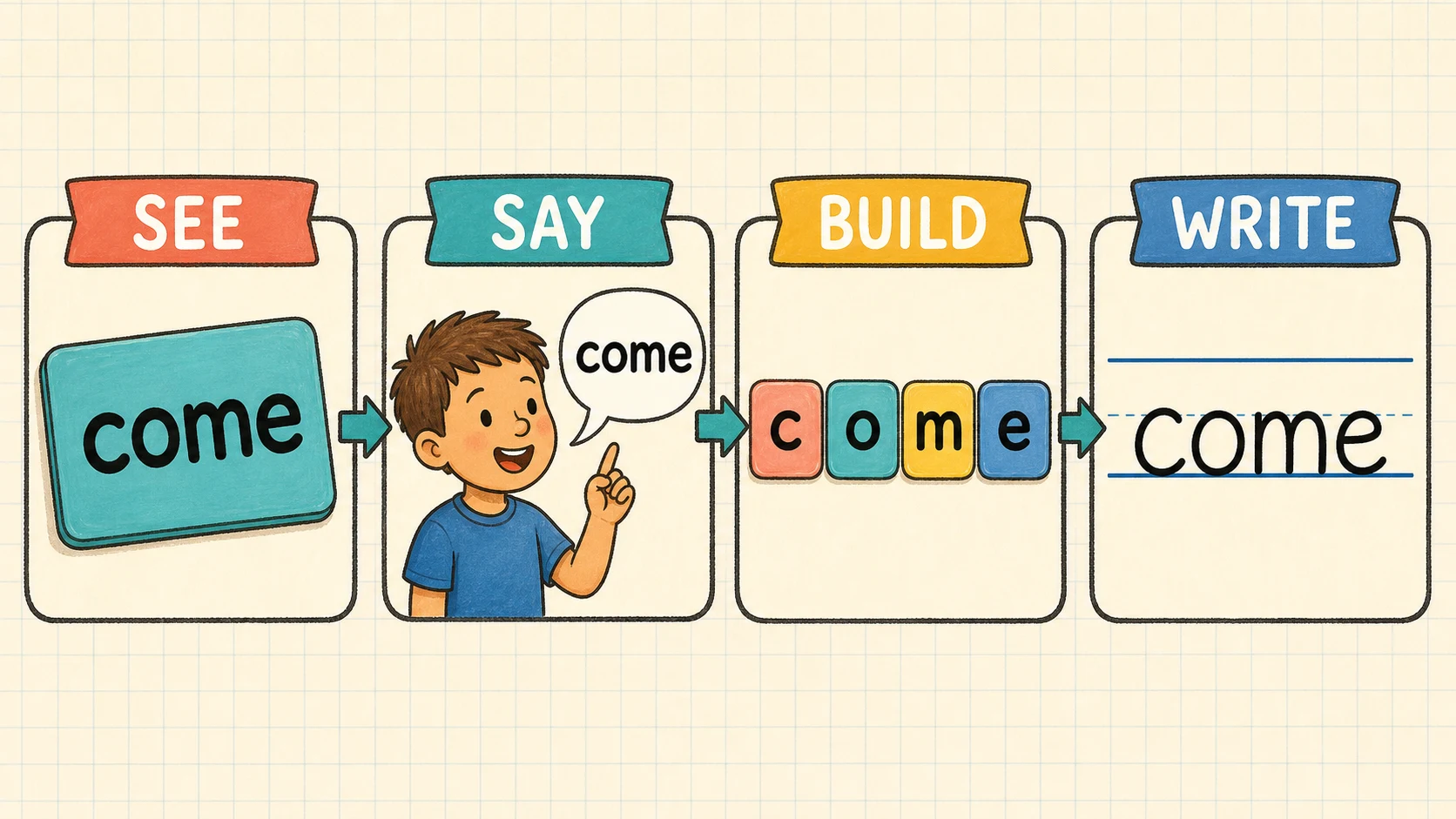
Support can fade from matching and modeling to recall, writing, and reading in context.
Concrete and Visual Models That Clarify the Skill
Word cards and movable letters
Write one word in clear lowercase print on an unadorned card. Make a duplicate for matching. Then provide individual letter cards so the learner can build the same word beneath the model.
For and, the display might be:
Model:     and
Letters:   a   n   d
Built word: and
Ask the learner to touch each letter from left to right. Say the corresponding sounds when the learner has enough sound knowledge, blend the word, and then say it normally. Rearrange the movable letters only after the correct sequence has been established.
Avoid relying on a unique picture, card color, or border for each word. Otherwise, the learner may recognize the decoration rather than the print.
Sound boxes and “heart” parts
A simple sound model helps distinguish a word’s spoken sounds from its printed letters. For said, the spoken word has three sounds:
Sounds:   /s/   /ĕ/   /d/
Spelling:  s     ai    d
The s and d are regular in this example. The ai spelling is the part to remember “by heart” because it represents the short e sound here. Circle or mark ai, but keep the whole word visible.
This method prevents the misleading idea that the entire word has no phonics information. At the same time, do not demand technical explanations from a Pre-K learner. “This is the part our brain needs to remember” is enough.
Sentence strips
Place a known target word in a very short sentence:
I see the cat.
Point under each word while reading aloud. Invite the learner to read only I and the at first, supplying the other words if necessary. Then ask the learner to locate another the on a separate card. This checks whether recognition transfers beyond one sentence position.
Fully Checked Worked Examples
Example 1: Matching and identifying “I”
Show these two cards:
Card A: I
Card B: the
Say, “Point to I.” The checked answer is Card A because its only printed character is the uppercase letter I, which is also the complete word.
Now switch the cards’ positions and ask again. If the learner still points to I, the response is less likely to depend on location.
Next, use it in context:
I see a dog.
The target word is the first word. It is followed by a space, confirming that I stands alone. Because I is conventionally written as an uppercase word, lowercase i should not be presented as an interchangeable word card.
Example 2: Decoding and building “and”
Display:
and
Check the letters from left to right: a–n–d. Using common short-vowel sound values, blend:
/a/ + /n/ + /d/ → and
The written answer is and, not ad or an, because all three sounds and all three letters are present in order.
Now give the learner the movable letters d, a, n. Ask for the first sound. The short a sound leads to a. The middle sound is /n/, so n follows. The final sound is /d/, so d finishes the word:
a + n + d = and
This is a useful boundary case: a high-frequency word can become a sight word through repeated successful decoding. “Sight word” describes rapid recognition; it does not necessarily mean “cannot be sounded out.”
Example 3: Finding the unexpected part in “said”
Write:
said
Say the word slowly enough to hear /s/–/ĕ/–/d/. Compare the sounds with the spelling:
- s represents /s/.
- ai represents /ĕ/ in this word.
- d represents /d/.
The checked “heart” part is ai, not sa and not the entire word. A learner might reasonably try to pronounce ai using a more familiar sound. That attempt shows attention to print, so respond precisely: “You used what you know about these letters. In said, this middle part sounds like /ĕ/. We remember ai here.”
Then cover the model and offer letter groups:
s ai d
The correct order is s–ai–d, producing said.
Example 4: Distinguishing “the” from “they”
Present:
the they
Both words begin with t–h–e. The second word has an additional final y. If the adult says “Point to the,” the checked answer is the three-letter word:
the
Ask the learner to slide a finger under all the letters in each word. Counting letters provides a visual confirmation:
the  = 3 letters
they = 4 letters
This task is more informative than asking the learner to choose the from unrelated options such as I and and. Similar choices reveal whether the learner examines the complete word instead of responding to its first letter.
Example 5: Reading “is” in two positions
Use two sentences:
The dog is big.
Is the dog big?
In the first sentence, is appears after dog and begins with lowercase i. In the second, it begins the sentence and therefore appears as Is with an uppercase I.
The checked target is the same spoken word in both places. This is a boundary case because the visual form changes with sentence position. If a learner recognizes is but not Is, explain the capital-letter change and practice matching the two forms. Do not count that confusion as proof that the learner knows nothing about the word.
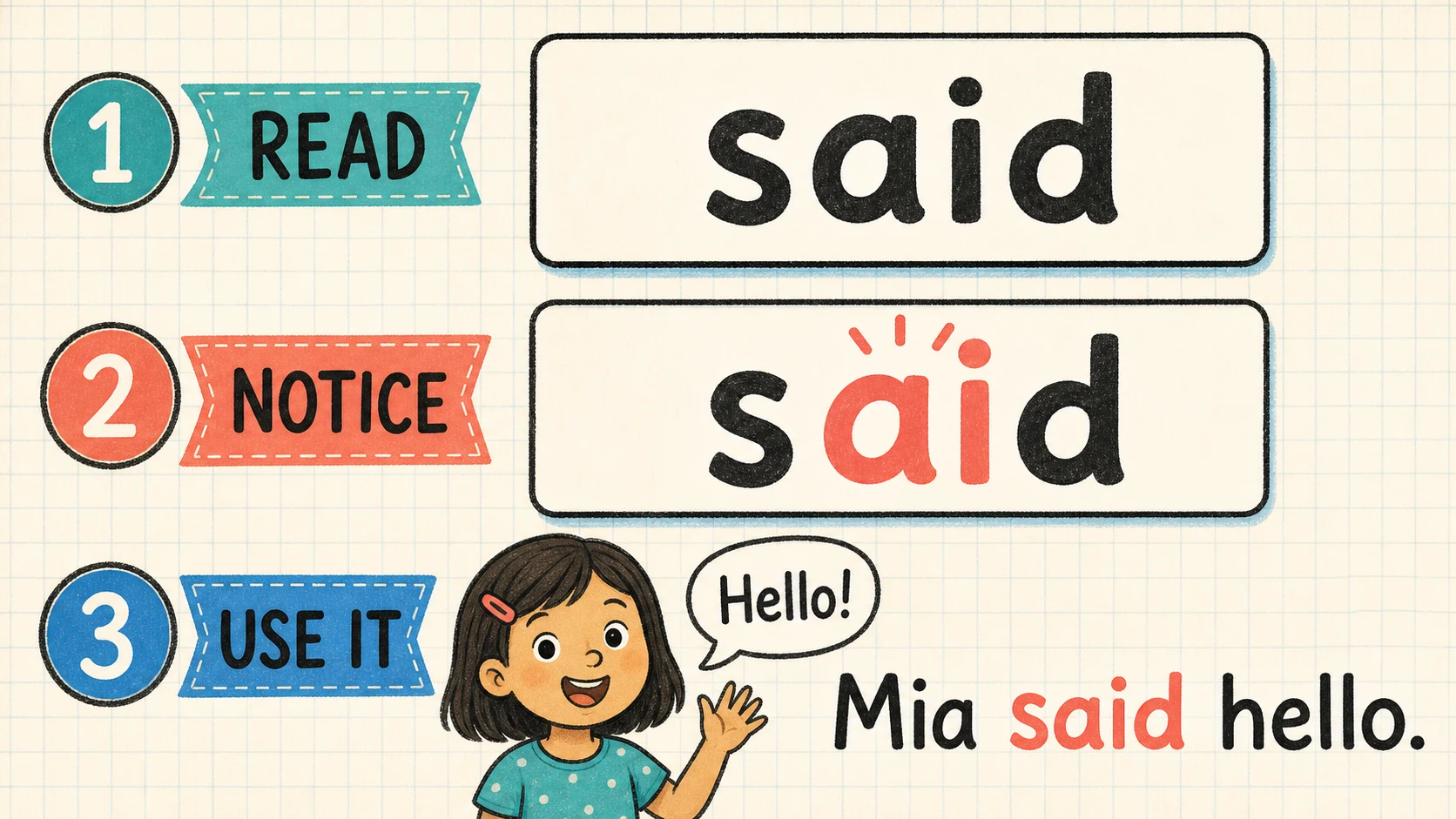
A checked example makes the spoken word, letter sequence, and final response visible.
A Short, Repeatable Lesson Routine
A focused lesson can be brief. Stop or shift activities when attention deteriorates; a longer session is not automatically a better one.
1. Review known words
Show two or three previously taught words in mixed order. Ask the learner to read them or find the word you say. Record hesitation or errors without interrupting every response.
2. Introduce one target
Show the new word. Say it, have the learner repeat it, and use it in a short oral sentence. Ask the learner to point from the first letter to the last.
3. Examine the spelling
Name the letters aloud. Connect predictable spellings to sounds the learner knows. Identify any unexpected part that must be remembered. Keep this explanation short and accurate.
4. Build, trace, or write
Have the learner arrange movable letters first if letter order is difficult. Next, trace while naming each letter. Copy from a visible model before attempting writing from memory.
The IES elementary writing practice guide offers high-level support for giving students regular opportunities to write and for explicitly teaching component skills. It does not establish that writing a sight word three times is sufficient by itself. Here, writing is one retrieval and letter-sequence activity within a broader reading lesson.
5. Find and read
Mix the target with two or three known words. Change positions between turns. Finish by placing the word in a short phrase or sentence and reading it together.
6. Note the response
Mark whether the learner read independently, read after a prompt, confused the word, or declined. That note should determine the next review.
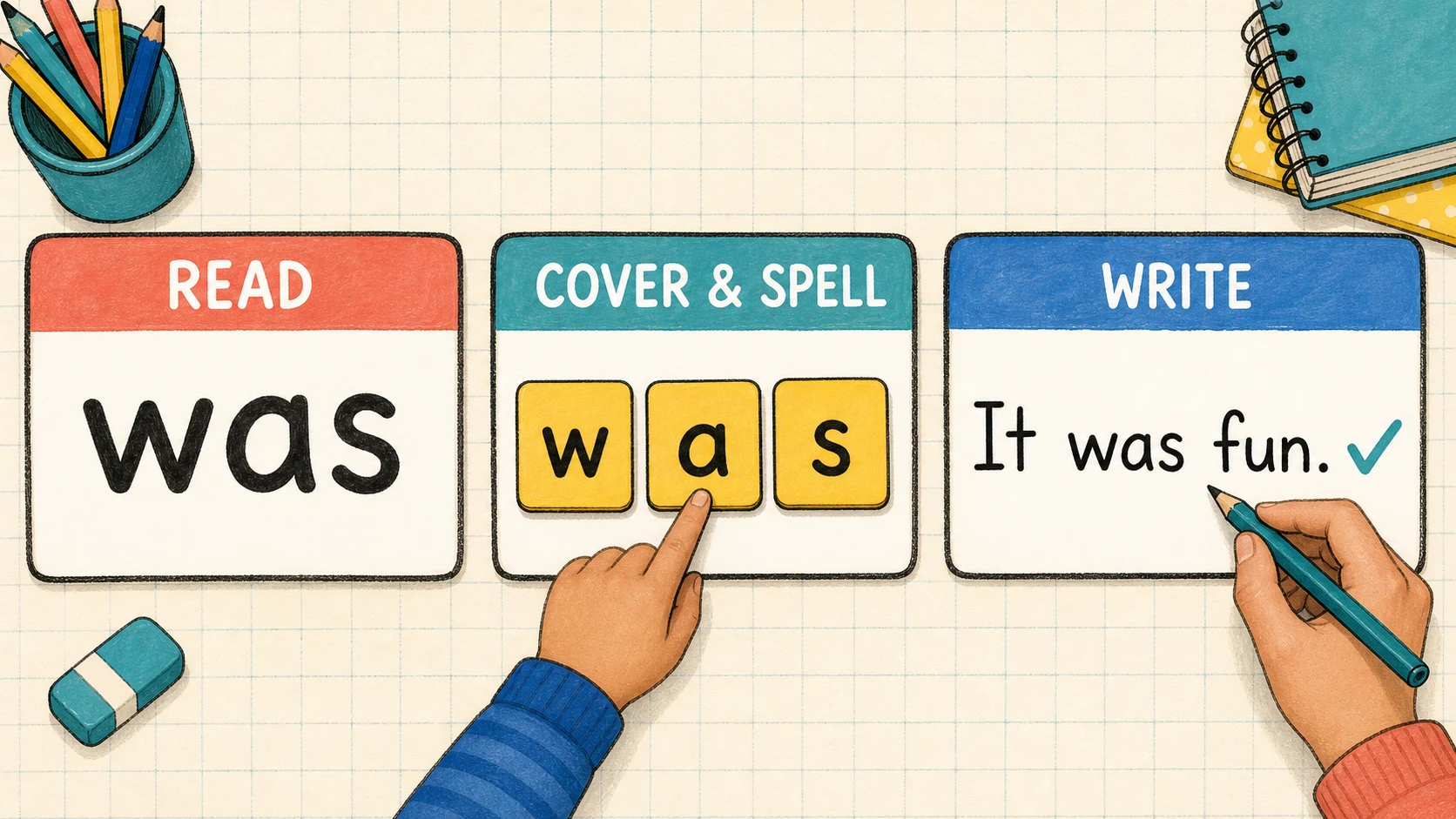
Review, teach, analyze, build, read, and record one small piece of evidence.
Choosing Appropriate Practice
Choose practice by matching the task to the error you actually observe. The Pre-K phonics collection can provide broader letter-sound work, while the sight words topic guide keeps attention on frequent-word recognition.
| Observation |
Useful next practice |
Practice to postpone |
| Cannot match identical words |
Two-card matching with plain cards |
Timed flashcards |
| Matches but cannot name the word |
See-say-use routine with one target |
A page containing many new words |
| Confuses similar words |
Side-by-side comparison and full-letter tracking |
Choices that differ only in card color |
| Reads a card but misses the word in a sentence |
Sentence strips and repeated short readings |
More isolated copying |
| Reads accurately but cannot spell |
Movable-letter building, tracing, then copying |
Unsupported dictation |
| Writes neatly but cannot read the word |
Oral recognition and sentence reading |
Additional handwriting repetitions |
| Remembers today but not later |
Spaced review on separate days |
Immediate massed repetition alone |
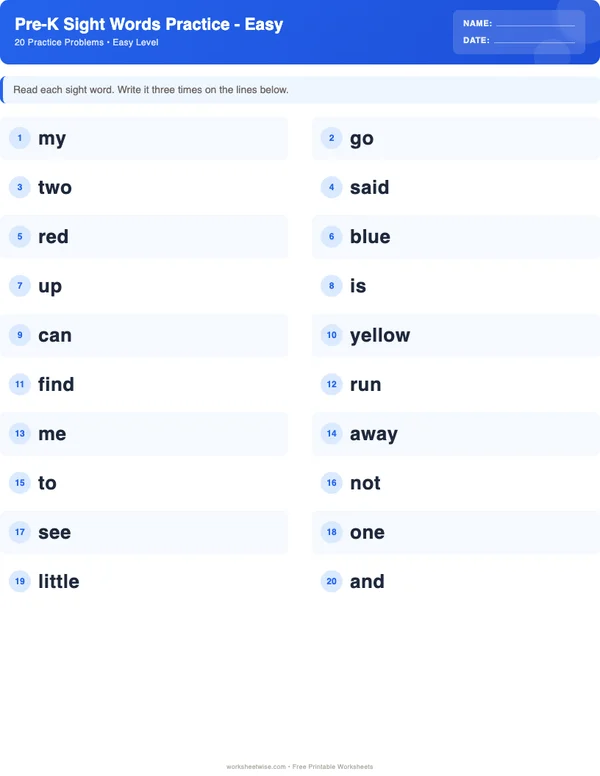
The free easy worksheet contains 20 exercises with the direction, “Read each sight word. Write it three times on the lines below.” It practices recognition, word memory, spelling, and reading fluency. Because 20 items can be a large instructional load for a beginning learner, an adult may cover unused rows and complete only a small selected portion at one sitting.
The worksheet should follow or reinforce explicit teaching. Copying three times can support attention to letter order, but accurate copying does not by itself demonstrate immediate reading. Pair the page with oral reading and later retrieval.
Differentiating Without Lowering Accuracy
When the learner needs more support
Reduce the number of choices, not the clarity of the word. Use one target and one known contrast. Let the learner point instead of speak if speaking is not necessary to the reading task. Provide a model for copying and use larger movable letters when pencil control interferes.
Return to alphabet or beginning-sound practice when letter information is not yet meaningful. The Pre-K grade hub includes practice across the wider readiness range described in the catalogue.
When recognition is developing
Mix one new word with two securely known words. Ask for the target in different positions. Alternate reading, building, and finding so the learner cannot succeed through one memorized movement.
Use a short sentence after isolated practice. If the learner reads the sentence from memory, rearrange it or place the target in a second sentence.
When the learner is ready for extension
Use closer visual contrasts such as the/they. Ask the learner to find a target in a short passage, explain which letters differ, or write the word from memory after a brief delay.
Extension should deepen flexible recognition rather than simply accelerate the list. A learner who knows a word on a flashcard still benefits from reading it in connected text and noticing it during shared reading.
Diagnosing Common Errors and Misconceptions
“Sight words must be memorized as pictures”
Words are sequences of letters, not pictures with an overall silhouette. A learner who looks only at the first letter may confuse the and they. Prompt left-to-right inspection and compare the complete spellings.
“Every sight word is irregular”
Some frequent words are decodable through taught sound-spelling relationships. And is the clearest example in this guide. Other words contain both regular and unexpected parts. Analyze what can be decoded and mark only what needs special attention.
“Fast guessing shows fluency”
A quick wrong answer is not automatic recognition. Accuracy comes first. If the learner says they for the, slow the task down and compare every letter.
“Three copied words mean mastery”
Copying demonstrates a form of supported writing. It does not establish that the learner can read the word later, recognize it in a sentence, or spell it without a model. Check those skills separately.
“A missed capitalized form is a completely new word”
Capitalization can change a word’s appearance. Explicitly match is/Is when the word appears at the beginning of a sentence. Likewise, explain that the word I is conventionally uppercase.
“More new words will fix weak recall”
If yesterday’s words are still uncertain, adding more may increase confusion. Reduce the new-word load and schedule retrieval across separate occasions.
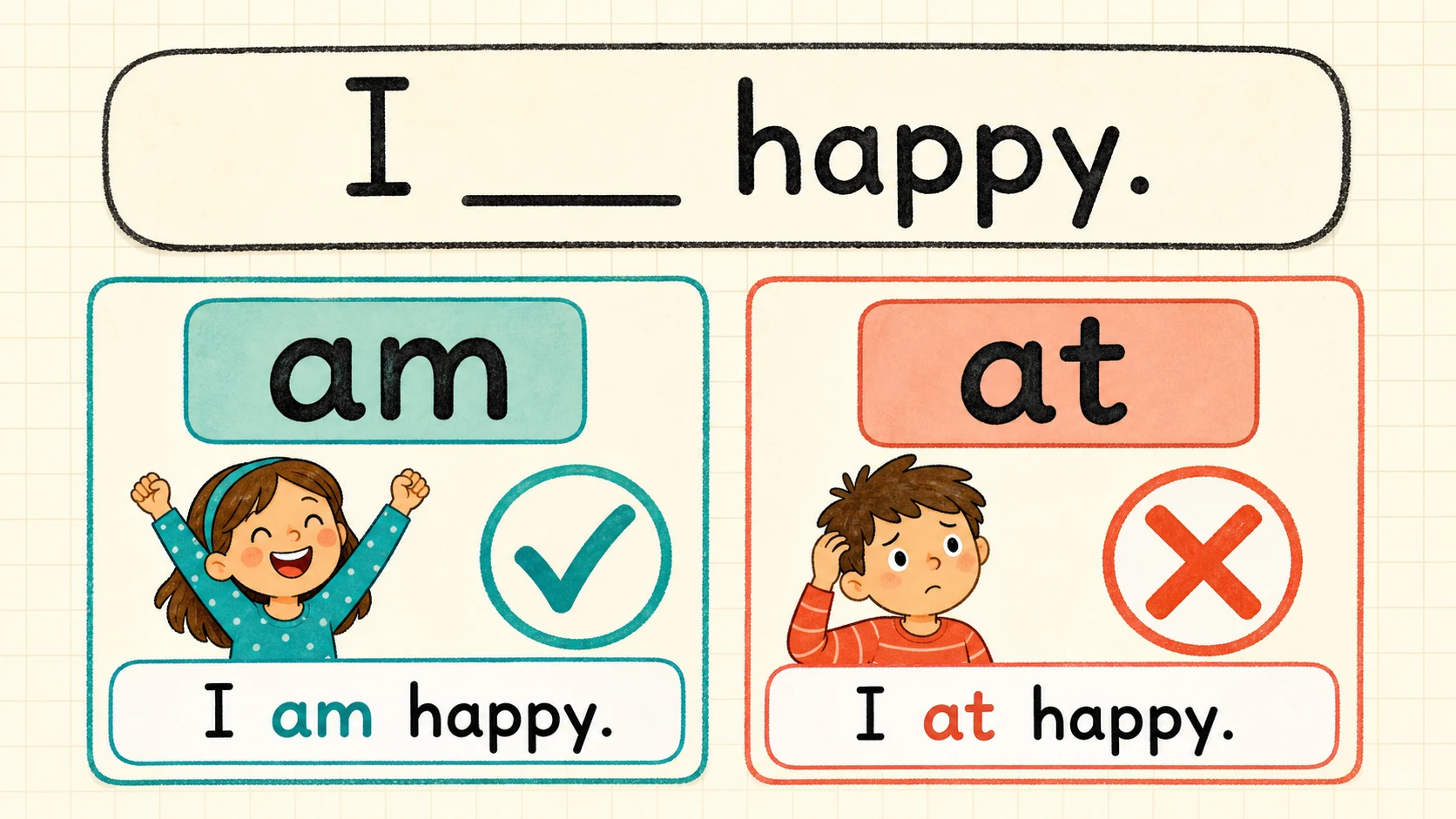
An error becomes useful when it leads to a specific change in modeling, contrast, or review.
Monitoring Progress Without Turning Practice Into a Test
Use a simple record with four possible notes:
- Independent: Read correctly without help.
- Delayed: Read correctly after noticeable hesitation.
- Prompted: Read after a letter, sound, sentence, or adult model.
- Incorrect: Gave another word or did not respond.
Check a small mixed set rather than drilling one card until the answer is inevitable. Change card order and use plain formatting. On another day, check the same word in a phrase or sentence.
The catalogue teaching guidance suggests moving a word to a mastered group only after the learner reads it correctly on three separate occasions. Treat that as a practical tracking rule, not a scientific guarantee. At least one check should occur after a delay, and it is useful to include both isolated and contextual reading.
If recognition becomes less accurate as the set grows, return some words to active review. If the learner reads but forms letters poorly, separate reading progress from handwriting progress. If several sessions produce distress, persistent avoidance, or guessing, pause the current sequence and reconsider task size, prerequisites, and presentation.
A Two-Week Practice Plan
This plan is an instructional example, not a universal timetable. It assumes short sessions, up to three initial target words, and adjustment based on observed work.
| Day |
Main focus |
Suggested activity |
Decision point |
| 1 |
Establish baseline |
Match and name I, and, the |
Teach one or more only if needed |
| 2 |
Analyze first targets |
Build and; inspect the |
Reduce the set if matching is uncertain |
| 3 |
Retrieval |
Mix cards, change positions, use oral sentences |
Note independent versus prompted responses |
| 4 |
Writing connection |
Trace or copy selected known words |
Separate motor errors from reading errors |
| 5 |
Context |
Read targets in short sentence strips |
Keep words active if transfer is weak |
| 6 |
Review |
Recheck after a gap; no new word required |
Move forward only when recall is stable |
| 7 |
Light exposure |
Notice targets during shared reading |
Avoid requiring a formal performance |
| 8 |
Add one word |
Introduce said and mark ai |
Keep it separate if the unexpected part confuses |
| 9 |
Contrast |
Compare the/they; rebuild and |
Watch for first-letter guessing |
| 10 |
Worksheet practice |
Complete a few selected writing rows |
Ask the learner to read before writing |
| 11 |
Capitalization |
Match is/Is in two sentences |
Explain appearance change directly |
| 12 |
Mixed retrieval |
Read old and new cards in random order |
Return hesitant words to daily review |
| 13 |
Connected text |
Read a short adult-made sentence set |
Supply untaught words rather than forcing guesses |
| 14 |
Review and plan |
Check each target once in isolation and context |
Choose consolidation or a small next set |
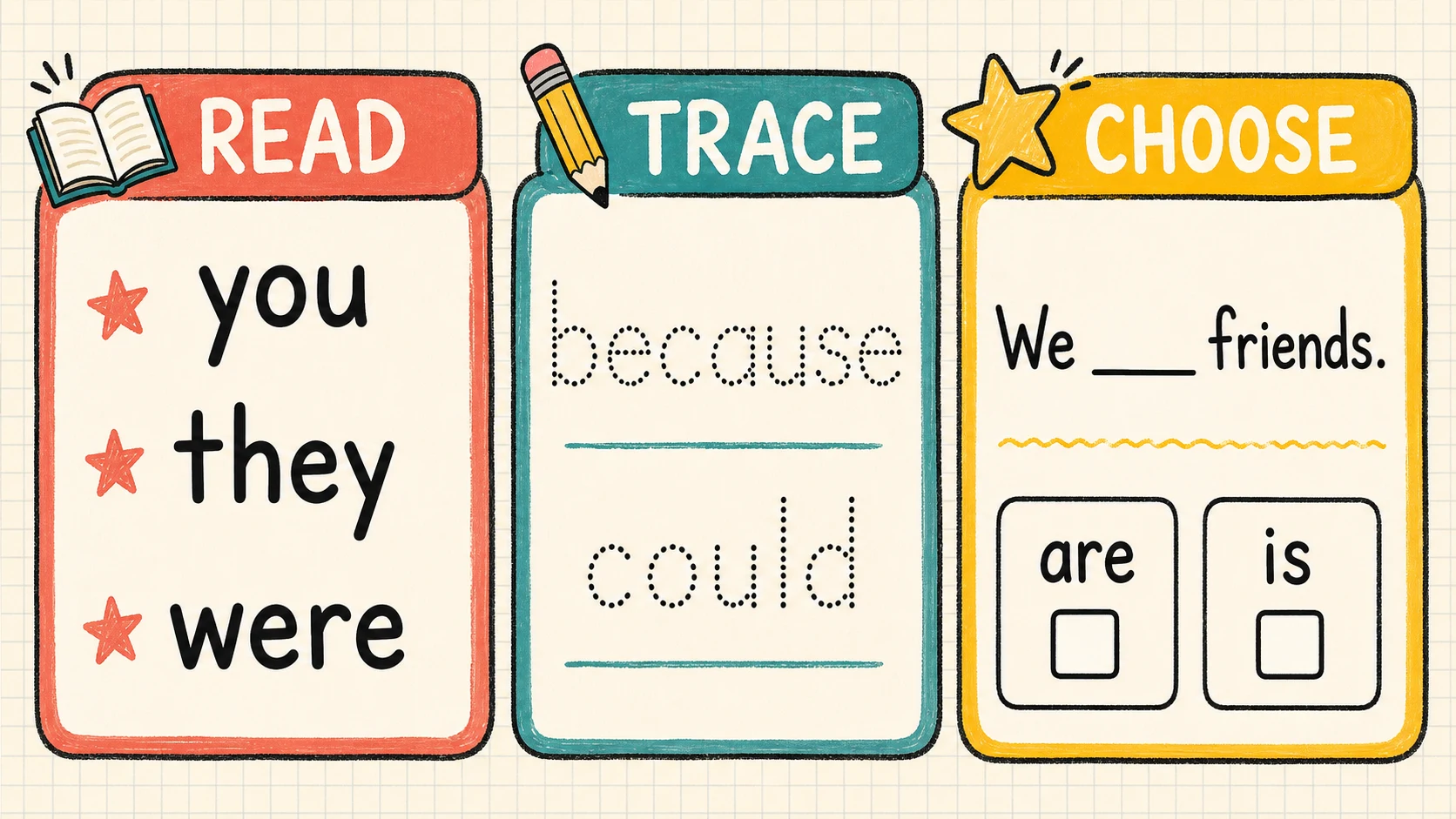
The plan alternates instruction, retrieval, writing, comparison, and connected reading.
Limits and the Honest Next Step
A sight word worksheet cannot establish reading readiness, diagnose a learning difficulty, or replace direct interaction with an attentive adult. It also cannot guarantee fluency. The supplied worksheet offers 20 easy-level exercises and an answer key, but a learner may need only a few rows, repeated modeling, or additional letter-sound work.
Lists such as Dolch and Fry can organize frequently occurring words, but list completion should not become the sole aim. Recognition is more useful when the learner can inspect the spelling, retrieve the word after a delay, and read it in meaningful text.
Start with the free Pre-K Sight Words worksheet. Select two or three words rather than assigning all 20 exercises immediately. Read each selected word aloud, examine its letters, complete the writing practice, and check recognition again on a separate day. If the learner is accurate across several words and contexts, the focused 18-worksheet pack offers a larger practice set; if the learner needs a different task format, use the free worksheet generators to choose practice that better matches the observed need.