Curated collectionAnswer keys includedPrint-ready PDFs
Kindergarten Homeschool Worksheets
Turn a printable library into a flexible weekly rhythm with explicit teaching, short independent practice, answer-key feedback and mixed-age planning.
Start with a real resource
Browse this worksheet collection
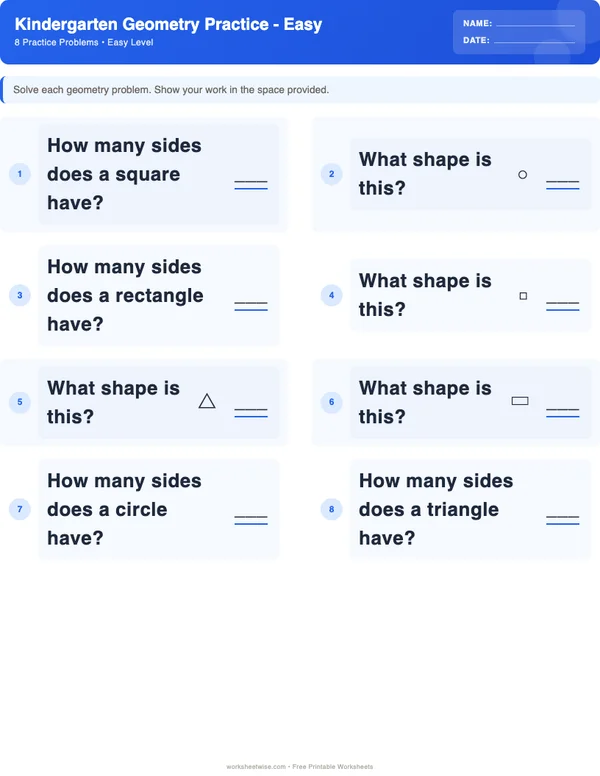
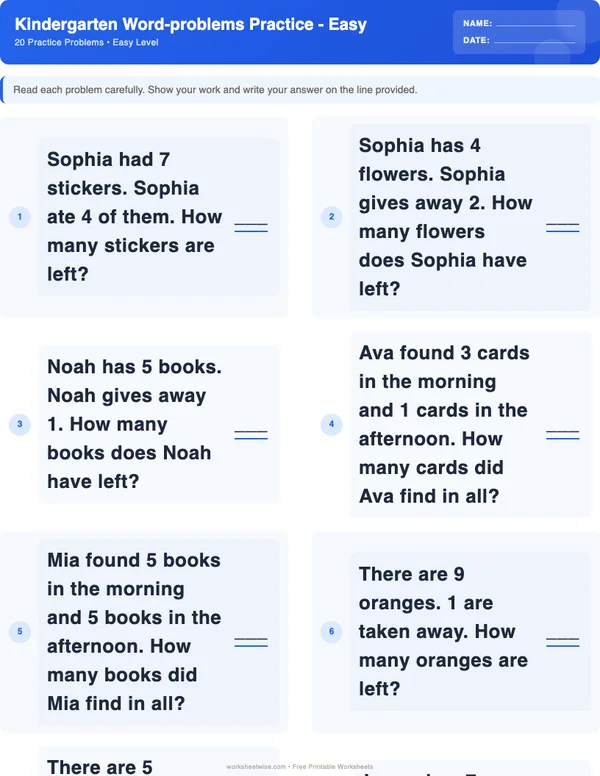
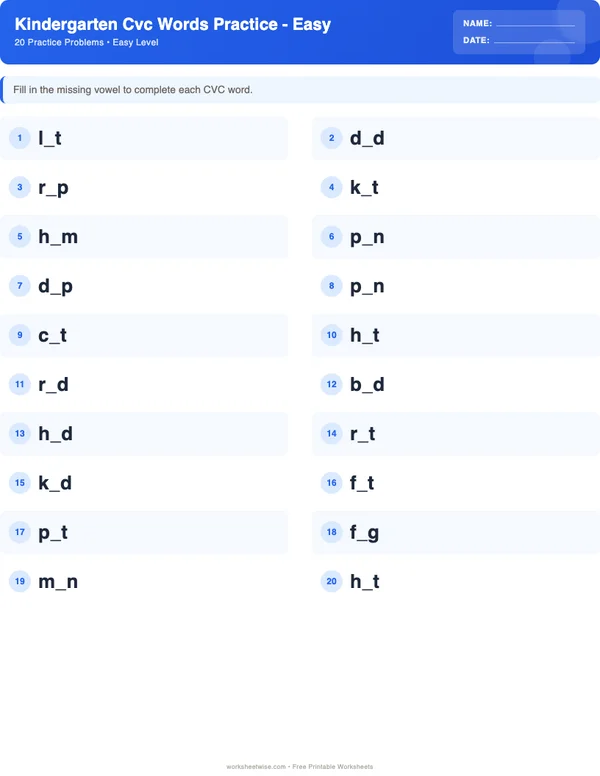
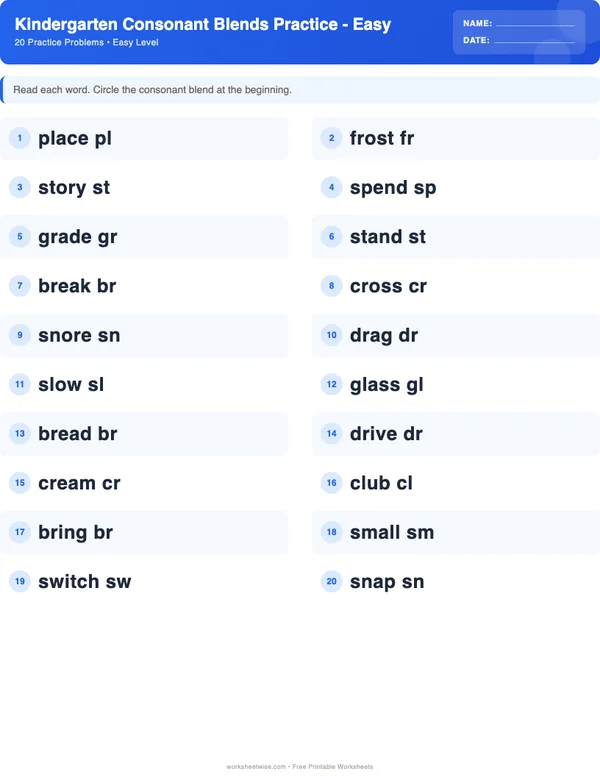
13 relevant free entry points are available. Each one includes a printable learner PDF and separate answer key.
A useful practice loop
Print less. Observe more.
- Choose one skill and model the first item aloud.
- Use a short set and notice the learner’s strategy.
- Change the next task from the work you can see.
Need more than the free sheet?
Plus includes all 234 matching catalogue variations where available, plus saved deterministic generators and the worksheet designer.
See Plus membershipComplete guide
How to teach and practise kindergarten homeschool worksheets
3,220 words Updated 6 instructional visuals
Build a Kindergarten Week Around Teaching, Practice, and Review
Kindergarten homeschool worksheets work best as one part of a short teaching cycle: explain or model one idea, practice it together, let the child try a small set independently, and use the answer key to decide what happens next. A 20-problem sheet is a resource, not a required one-sitting assignment. For many kindergarten sessions, four to eight carefully selected items are enough.
The live Kindergarten collection contains 234 worksheet variants across three subjects and 13 topics, with 13 free entry points. That breadth makes flexible planning possible, but it also creates a selection problem. Do not choose a sheet merely because “Kindergarten” appears on it. Choose it because its actual task matches what the child is ready to practice today.
A practical weekly rhythm might include:
- Three short phonics sessions built around one established sound or word pattern.
- Three short math sessions alternating number work and application.
- One brief punctuation or sentence session connected to reading or drawing.
- Daily read-alouds, conversation, movement, play, and hands-on work beyond the worksheets.
- A Friday review made from previously attempted items rather than an entirely new packet.
Grade labels describe the intended practice level; local curriculum sequences differ. Age is also a discovery aid, not a placement decision. What matters is whether the learner can understand the directions, attempt the target skill, and show enough thinking for the adult to interpret the response.
Select the Task Before You Select the Printable
Start with a precise sentence: “Today, I want the child to practice ___.” “Do math” is too broad. “Count a scattered set while touching each object once” is specific enough to guide a choice.
Match the sheet to one observable target
Use four selection questions:
- What must the child notice? A short vowel, a missing number, a digraph, a group being taken away, or an end mark?
- What must the child do? Match, circle, say, count, write, draw, or solve?
- What knowledge is assumed? A blend sheet assumes the child can already manage simpler CVC words. A word-problem sheet assumes the child can follow the story language.
- How much handwriting competes with the target? If forming letters or numerals consumes all the child’s attention, reduce the writing without reducing the thinking.
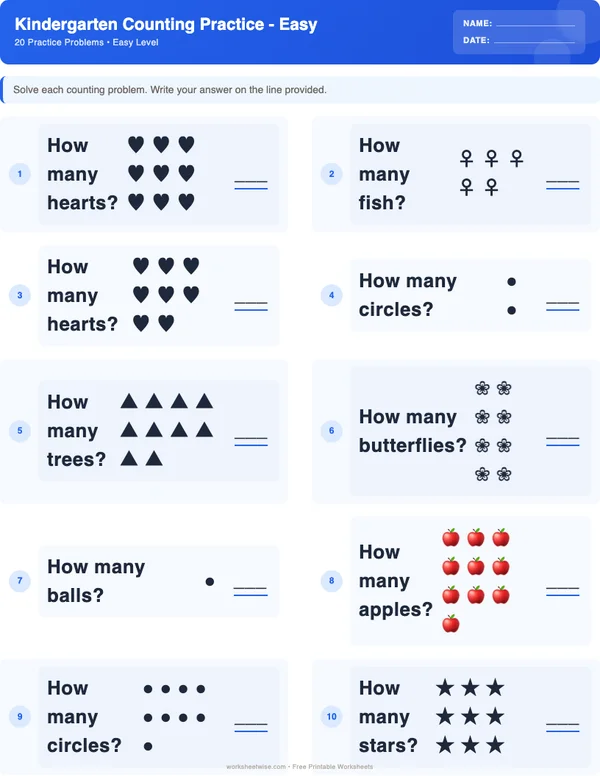
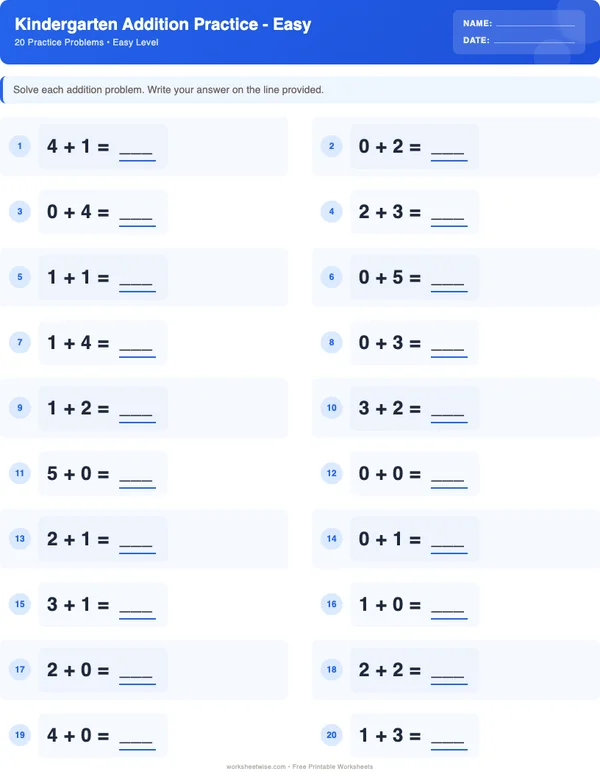
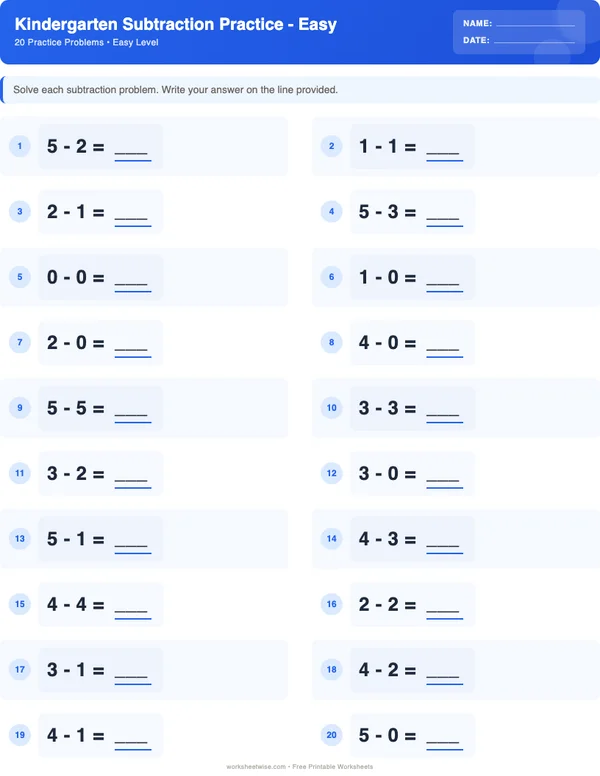
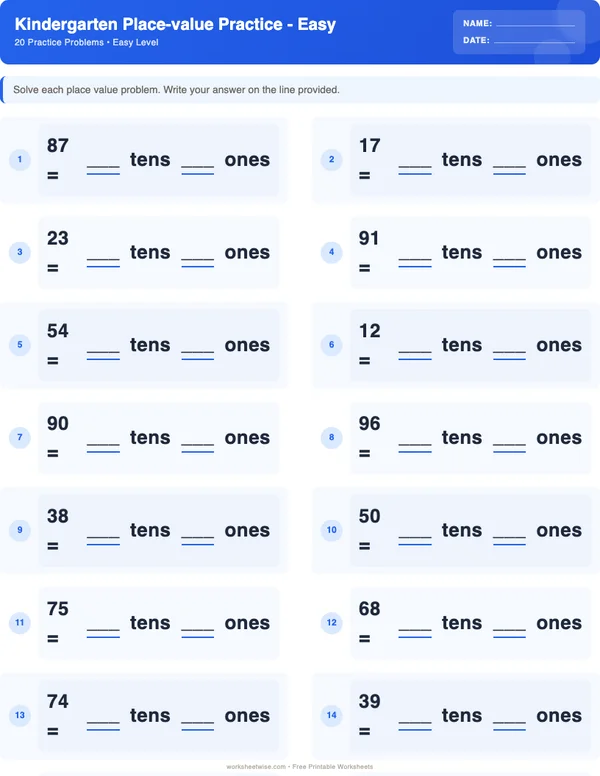
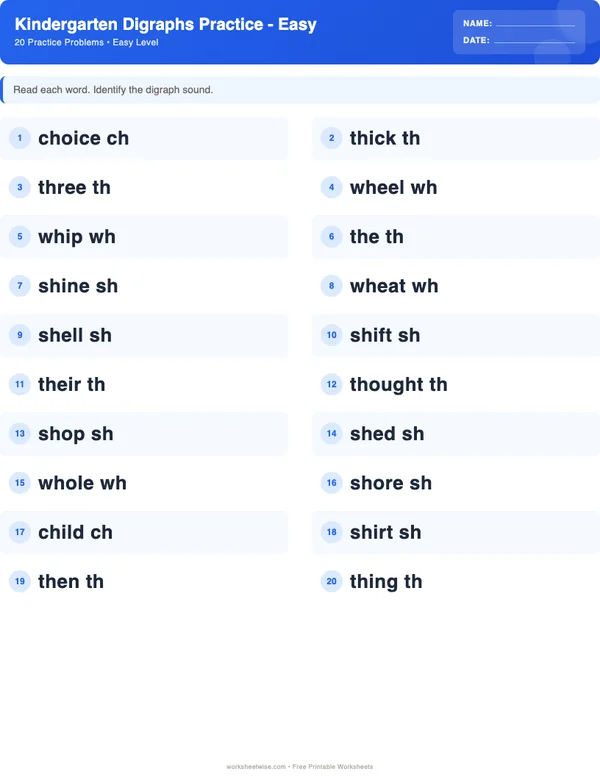
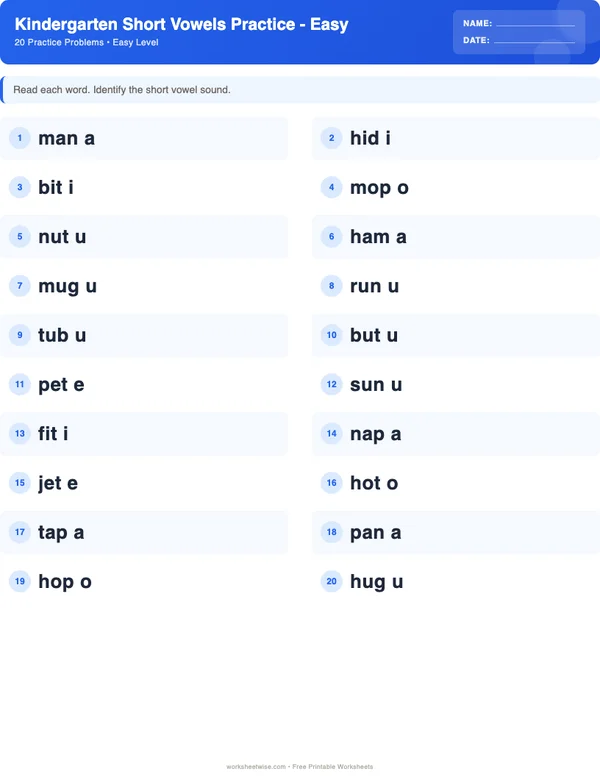
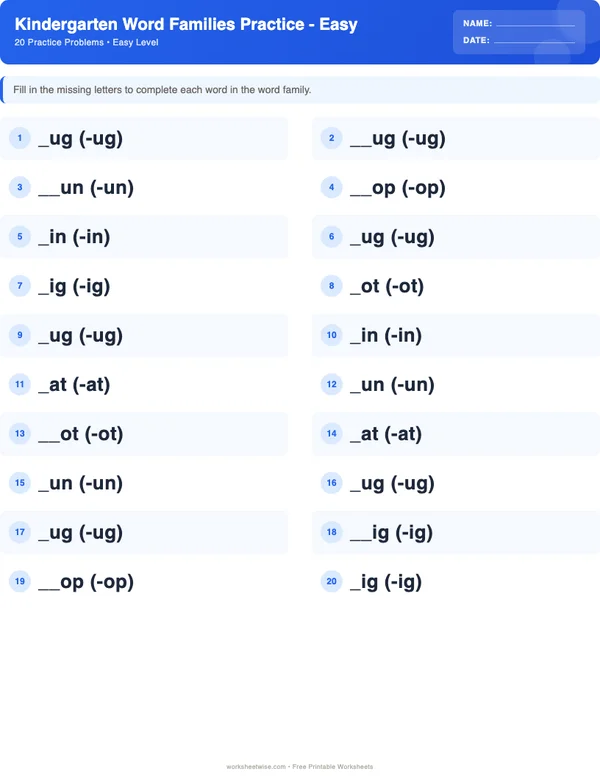
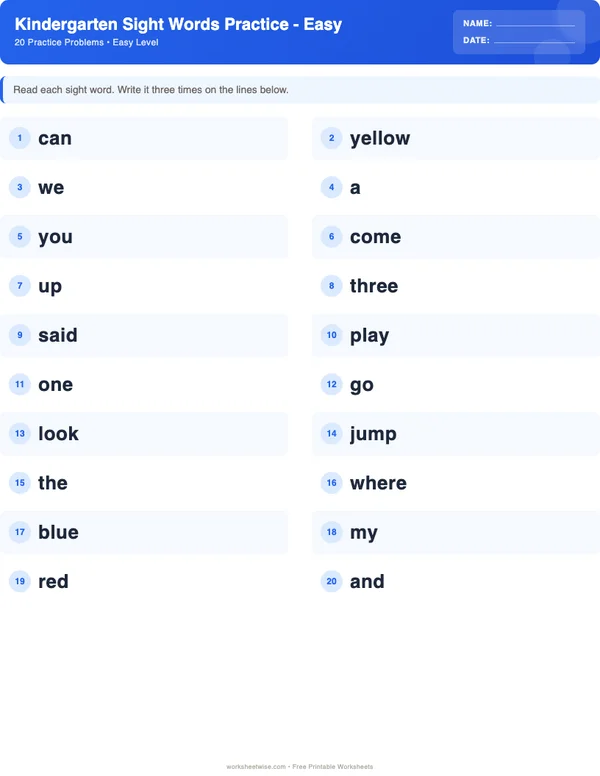
For example, the free Counting, Addition, Subtraction, Place Value, Geometry, CVC Words, Consonant Blends, Digraphs, Short Vowels, Word Families, Sight Words, and Punctuation sheets each contain 20 problems. The Word Problems sheet contains 12. Those counts describe the printables, not suitable session lengths. Fold the page, cover later rows, or mark the six items you intend to use.
Translate “easy” into task features
The catalogue labels the representative free sheets “easy,” but that word should describe features of the task, never the learner. On this page, inspect whether a task has:
- One operation or decision per item.
- Familiar pictures or short words.
- Small quantities or simple number relationships.
- A consistent response format.
- Limited reading and writing demands.
- Visual support that makes the intended action clear.
A page can still be a poor fit if it requires an unfamiliar sound pattern, too much visual scanning, or more handwriting than the child can comfortably sustain. Conversely, a child who completes a page quickly may still need to explain an answer or apply the skill in a new arrangement before moving on.
Use a Repeatable 15-Minute Lesson Shape
Consistency can increase independence because the child learns what each part of the session requires. Keep the sequence stable even while the content changes.
Minutes 1–4: teach explicitly
State the target in child-friendly language and model one example. Think aloud only about the relevant decision.
For counting, say, “I will touch each button once. The last number I say tells how many there are.” For CVC decoding, point beneath each letter, blend the sounds, and then say the whole word. For subtraction, move objects away while narrating what changed.
The IES guide to teaching math to young children recommends helping children connect mathematical ideas with representations and everyday activity. Applied here, that supports starting with counters, drawings, shapes, or acted-out stories before expecting marks on paper. This is sourced general guidance, not an evaluation of WorksheetWise.
Minutes 5–8: solve together
Complete two or three items with the child. Ask for an action or explanation rather than repeatedly asking, “Do you understand?”
Useful checks include:
- “Touch each object while you count.”
- “Point to the three sounds you blended.”
- “Show me which cubes were taken away.”
- “Read this sentence so your voice matches the end mark.”
- “Tell the story in your own words before choosing what to do.”
If the child cannot begin, return to the model. If the child begins correctly but loses track, simplify the layout or provide a physical marker.
Minutes 9–13: attempt a small independent set
Independence means the child can perform the known routine without step-by-step prompting. It does not mean being left alone with unfamiliar content. Mark four to six suitable items and give a clear boundary: “Try these five. Put a small dot beside one you want us to discuss.”
Remain available, but avoid correcting during every item. Immediate interruption can hide whether the child can monitor the task. Observe whether the child starts promptly, follows the response format, and checks the page.
Minutes 14–15: review one decision
Use the answer key after the attempt, not as a substitute for looking at the child’s method. Choose one correct response to explain and one error, hesitation, or skipped item to revisit. End by naming the next action: repeat with objects, try two similar items tomorrow, or move to a mixed review.
Plan a Weekly Rhythm That Leaves Room for Play
A kindergarten week does not need five full worksheet days. Use printables to capture a narrow practice target while preserving time for oral language, read-alouds, outdoor movement, construction, drawing, pretend play, and practical routines.
Monday: establish one phonics pattern and one number idea
For phonics, choose CVC words with one short vowel already introduced. Model blending, build words with letters, and complete four worksheet items.
For math, count an actual collection before using a counting page. Put seven buttons in a scattered arrangement. The child touches each button once and says the count sequence. Then rearrange the same seven buttons and count again.
This example belongs in Kindergarten because the live Counting resource explicitly covers counting sets, missing numbers, and number sequences, while its teaching guidance emphasizes concrete objects and one-to-one correspondence. The answer remains seven after rearrangement; if it changes, the issue to investigate is tracking, not numeral writing. Continue with the Kindergarten Counting guide and free sheet when the physical count is stable enough to connect to pictured sets.
Tuesday: revisit the pattern and introduce taking away
Review Monday’s CVC words with oral blending and letter tiles. Use only a few new worksheet items.
For subtraction, place five counters on the table and remove two. The checked result is three because the starting set can be paired with the two removed counters and the three remaining counters: . Ask the child to point to what is left before writing .
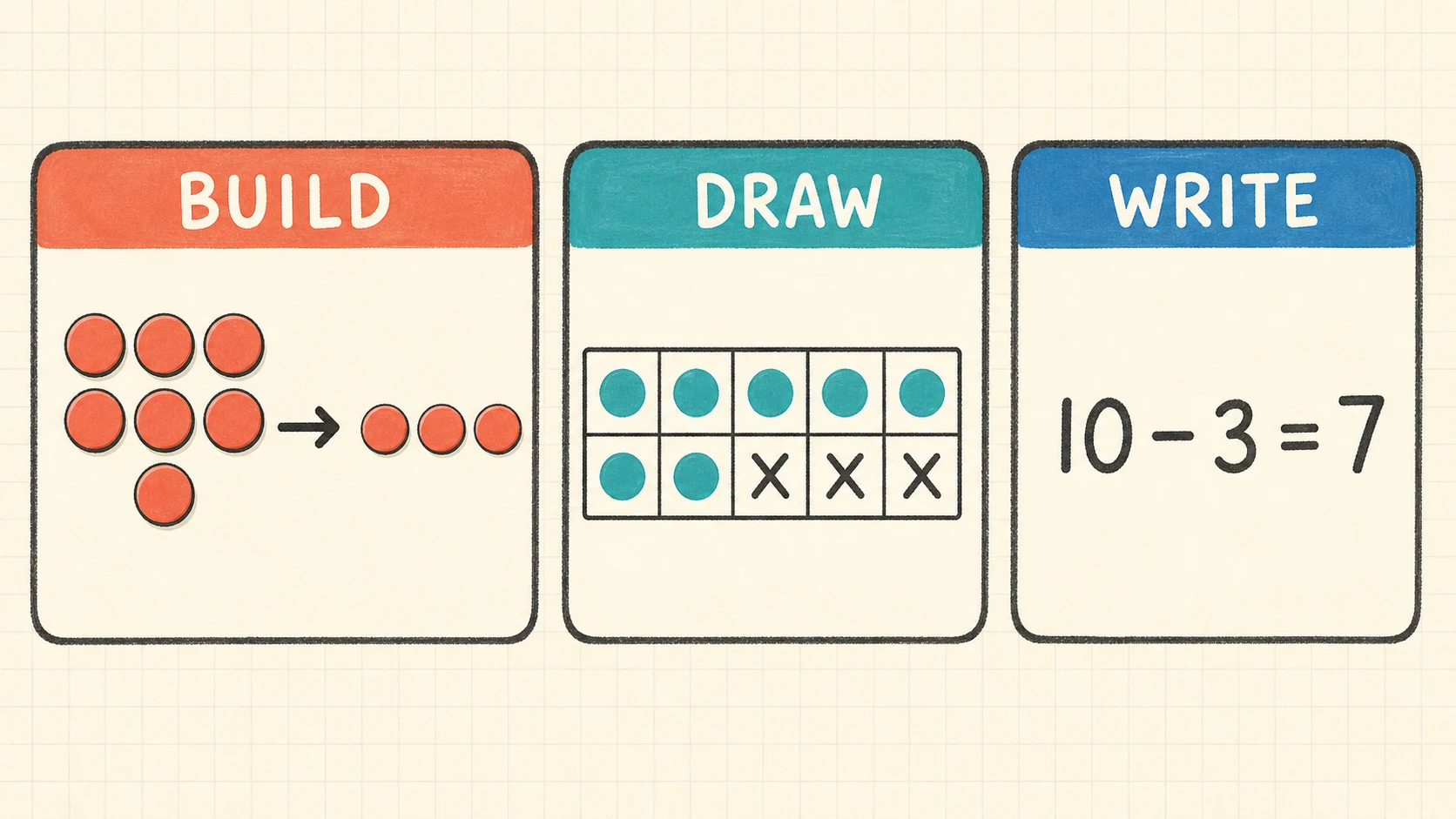
Use the progression to decide whether today’s subtraction should remain acted out, move to a drawing, or finish with a short independent set.
This example belongs here because the Kindergarten Subtraction resource begins with taking away objects and includes work within small quantities. The page’s broader description also includes comparison and missing-part situations, but do not mix all three structures in the first independent set. The Kindergarten Subtraction guide and free sheet can supply follow-up practice once the child can explain what changed.
Wednesday: discriminate sounds and revisit quantities
Use a short-vowel sort or compare a few CVC words. Then return to counting, addition, or place value rather than introducing a new math topic automatically.
A useful addition example is . Place three counters on a five-frame, add two, and count the completed row: five. Next, draw the same arrangement, then record . It belongs in Kindergarten because the live Addition resource starts with adding within 5 using objects and pictures before moving toward larger ranges. If the child recounts all five rather than counting on, the answer is still correct; recounting shows the current strategy and does not require immediate correction.
The Kindergarten Addition guide and free sheet is most useful after the child has seen the quantity represented, not as the first encounter with addition symbols.
Thursday: apply a known skill in language
Choose one simple word problem using quantities and actions the child can represent. Read it aloud if decoding would obscure the math:
“Four ducks are in the pond. One duck walks out. How many ducks stay in the pond?”
Act it out with four counters and remove one. The checked answer is three. Ask, “What happened?” before asking for an operation. This belongs in Kindergarten because the live Word Problems resource includes age-appropriate, single-operation situations, while its teaching guidance favors retelling, acting out, and drawing over keyword hunting.
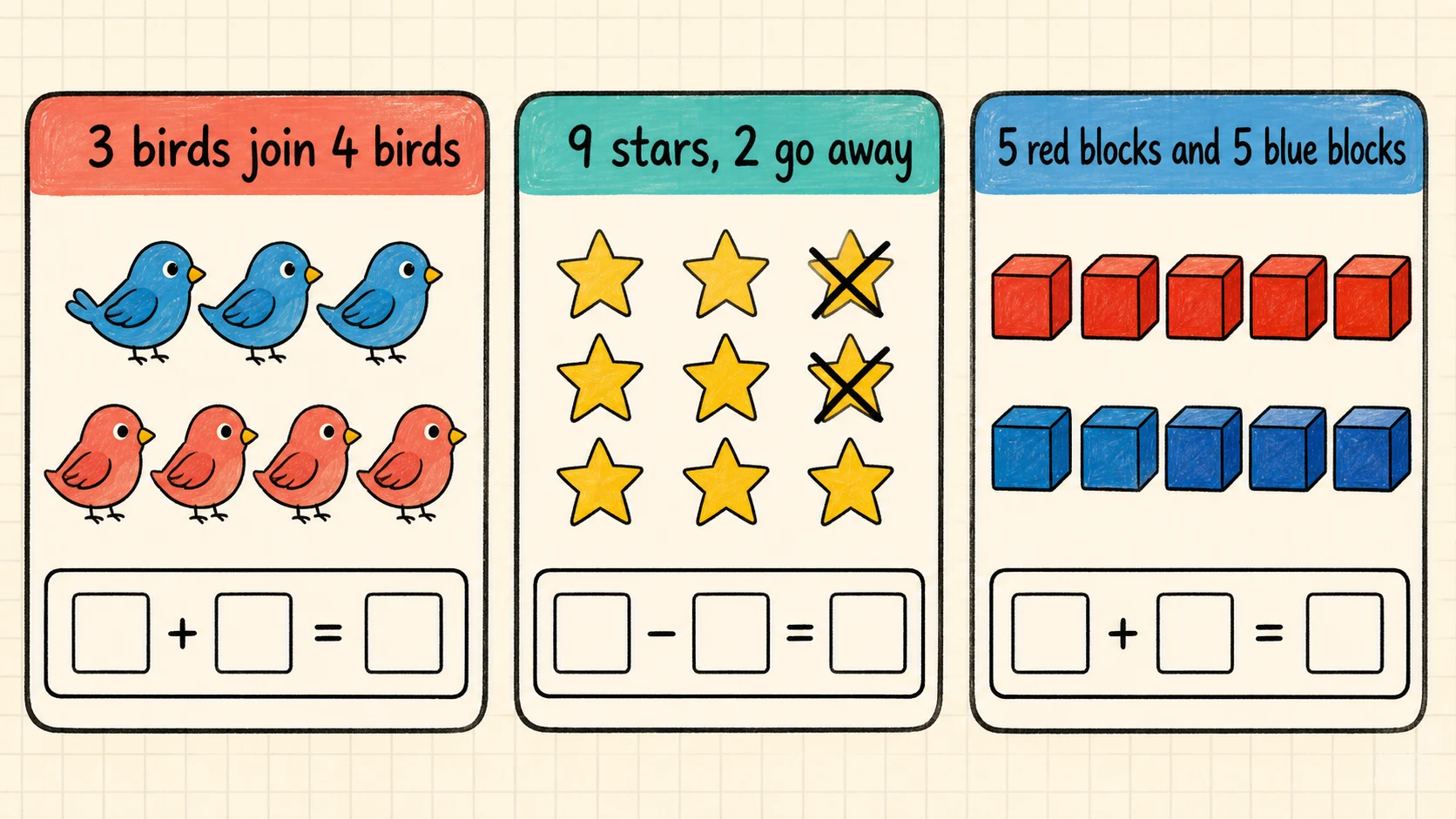
Spread the 12-problem resource across repeated read-retell-model-solve sessions rather than treating it as one independent assignment.
The Kindergarten Word Problems guide and free sheet can support this application day. Read the problem to the child whenever the mathematical target is story interpretation rather than independent reading.
Friday: retrieve, explain, and stop
Select six previously seen items: perhaps two CVC items, two counting or operation items, one word problem, and one punctuation item. Do not make Friday a catch-up marathon.
Record three observations:
- Which items began without prompting?
- Which answer could the child explain?
- Which error repeated in the same way?
Use those observations to plan Monday. A successful review may lead to another short week on the same target. Novelty is not the same as progress.
Move From CVC Words to Blends and Digraphs Deliberately
The phonics topics in the collection form useful options, but they are not interchangeable. CVC words, consonant blends, and digraphs demand different sound decisions.
Check CVC blending before adding another sound
Take the word map. It contains three letters and three sounds: /m/ /ă/ /p/. Build it with letter tiles, slide a finger under the letters while blending, then change only the final consonant to make mat. Both are valid CVC words with the same short vowel.
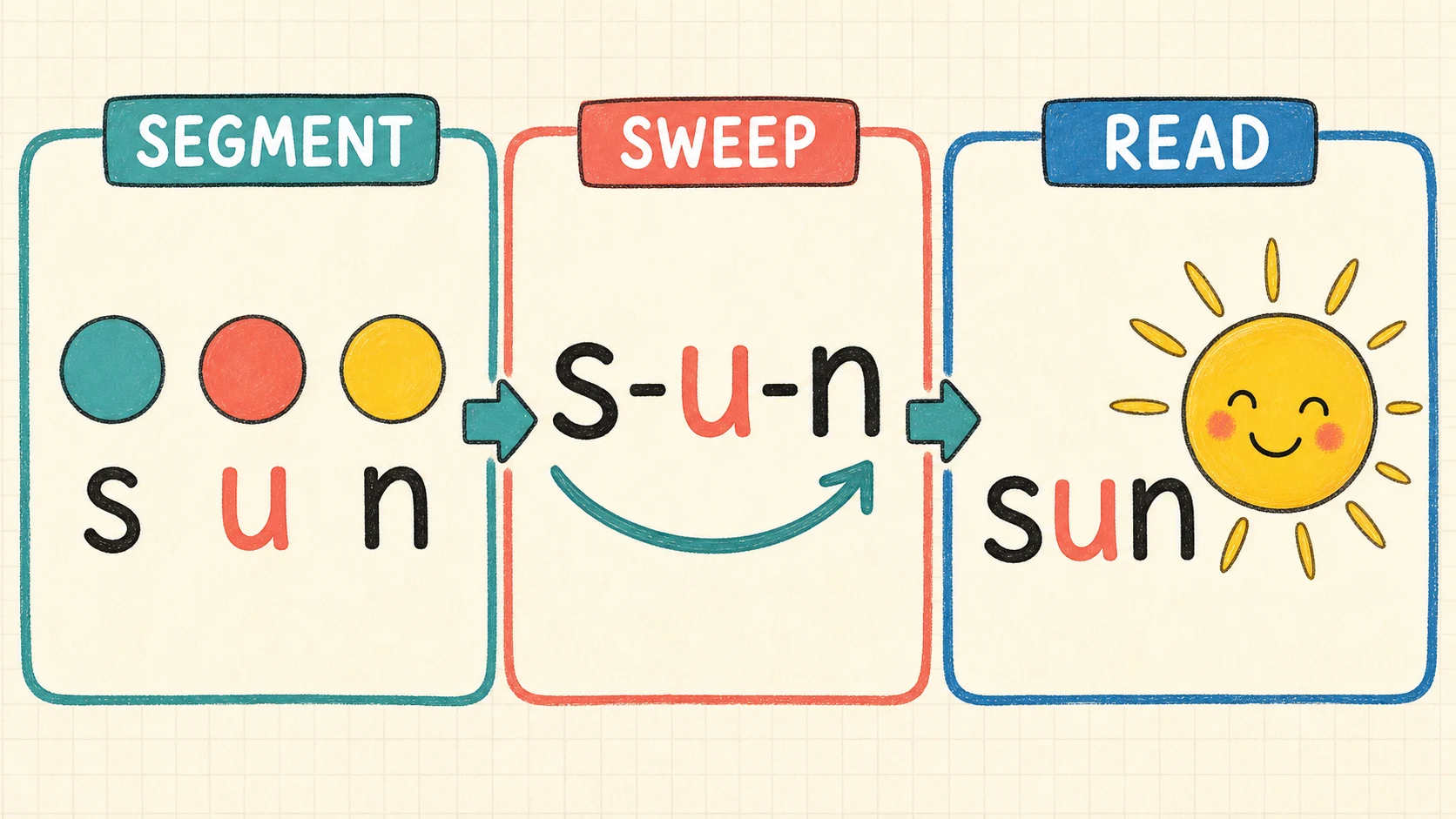
Keep the letters visible while the child maps each sound, then use the worksheet response to check the same decoding decision.
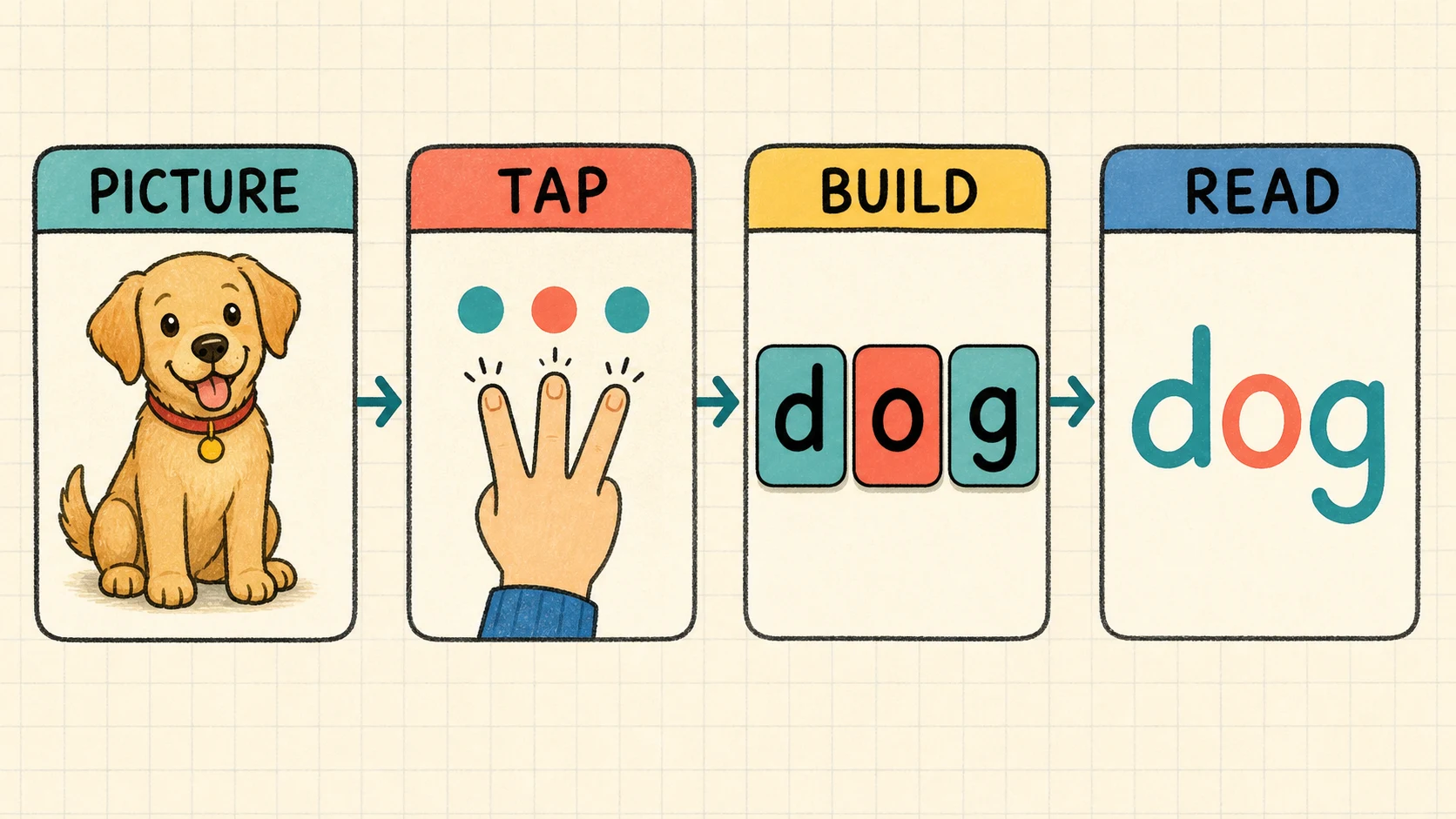
Move toward independent CVC practice only after the child can blend a few modeled words without guessing from the first letter or picture.
This example belongs here because the live CVC Words resource covers short-vowel word building, picture matching, reading, and fill-in-the-blank tasks. The IES foundational reading guide supports explicit work with sound segments and their links to letters as part of foundational reading instruction. That source informs the instructional approach; it does not verify this particular worksheet collection.
Treat blends as multiple retained sounds
In stop, the initial st is a blend: /s/ and /t/ both remain audible. A child who reads sop has dropped one sound. Return to four tokens or finger taps for /s/ /t/ /ŏ/ /p/, then blend the word again.
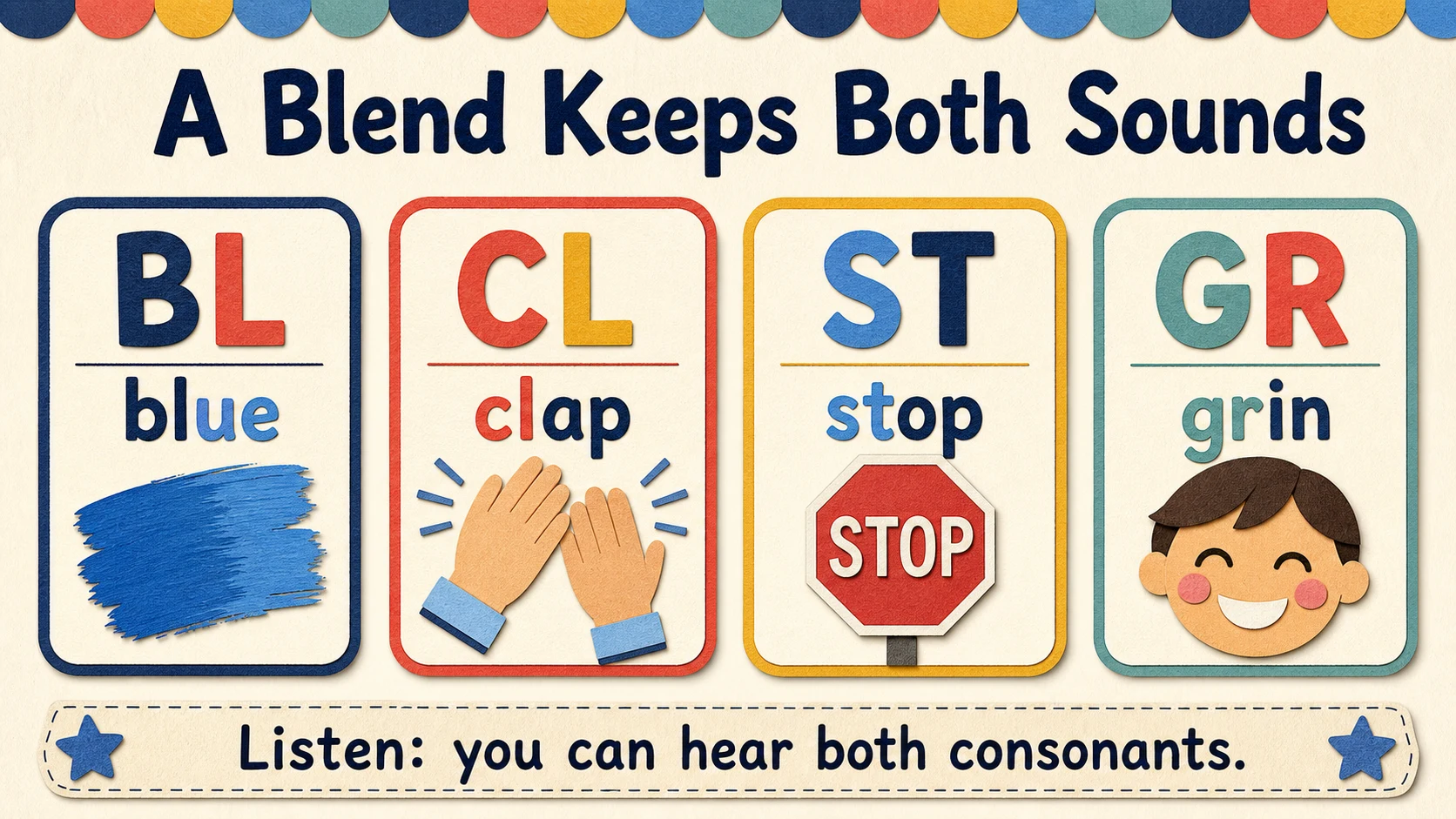
Use the map after CVC practice is secure enough for the child to hold the extra sound in a blend.
This example belongs here because the catalogue places consonant blends beyond CVC words and identifies sound-dropping as a relevant error. A 20-item blend page should therefore be shortened if the child is still working hard to retain all four sounds.
Treat a digraph as one sound represented by two letters
In ship, sh represents one sound. The word has four letters but three sound units: /sh/ /ĭ/ /p/. Contrast it with slip, where /s/ and /l/ remain separate. Do not tell the child that every pair of consonants works the same way.
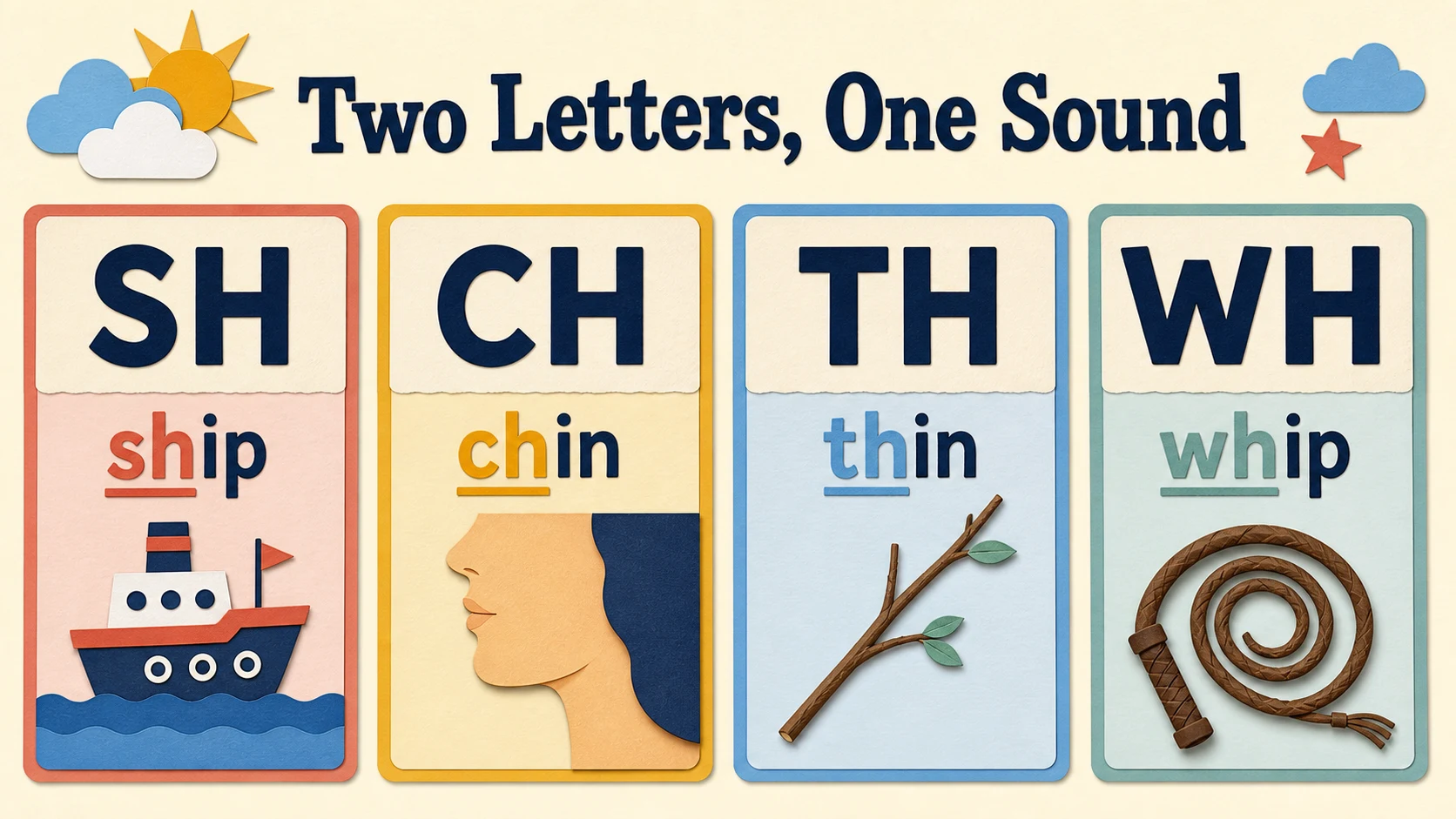
Use this distinction to select digraph practice only when the child can attend to two letters working together as one sound.
The example belongs here because the live Digraphs resource focuses on sh, ch, th, wh, and ck, while explicitly distinguishing digraphs from blends. Introduce one pattern at a time; mixed review comes after the child has encountered each pattern explicitly.
Use Errors to Choose Tomorrow’s Support
An answer key tells whether a response matches the expected answer. It does not tell why the response occurred. Interpret the work alongside what the child said and did.
Counting errors
If the spoken sequence is correct but the total changes when objects are rearranged, observe one-to-one tracking. Ask the child to move each counted object into a cup. Preserve the target—counting a set—while reducing the chance of counting an object twice.
If the count is correct but the numeral is reversed or difficult to form, separate quantity knowledge from handwriting. Let the child choose the printed numeral, trace it, or dictate it. Continue numeral formation separately.
Operation errors
If is answered as seven, the child may be combining rather than removing. Reenact the action and ask what happened to the starting group. If the child gets three with counters but not from the written expression, keep connecting the concrete action, drawing, and symbols.
The IES mathematics intervention guide recommends systematic instruction and clear mathematical language, among other practices. In this homeschool routine, that supports modeling a small step, checking the child’s response, and selecting focused follow-up rather than assigning a larger volume of mixed problems.
Phonics errors
A response based only on a picture may be a guess rather than decoding. Cover the picture and ask the child to blend the letters. If the child reads stop as sop, restore the missing /t/ with tokens or taps. If ship becomes sip, point to sh together and produce its single sound before blending the whole word.
Do not diagnose a reading condition from a worksheet pattern. Record exactly what occurred—“dropped the second sound in three initial blends”—and adjust instruction. Persistent concerns require a broader conversation with an appropriate educator or qualified professional, not a label generated from printable work.
Punctuation errors
Read these aloud:
- “The dog is wet.”
- “Is the dog wet?”
- “The dog is wet!”
A period completes a statement, a question mark completes a question, and an exclamation point marks strong feeling or emphasis. If the child selects marks randomly, use voice and meaning first. If the child identifies the mark orally but cannot copy it neatly, accept pointing or placing a punctuation card while practicing formation separately.
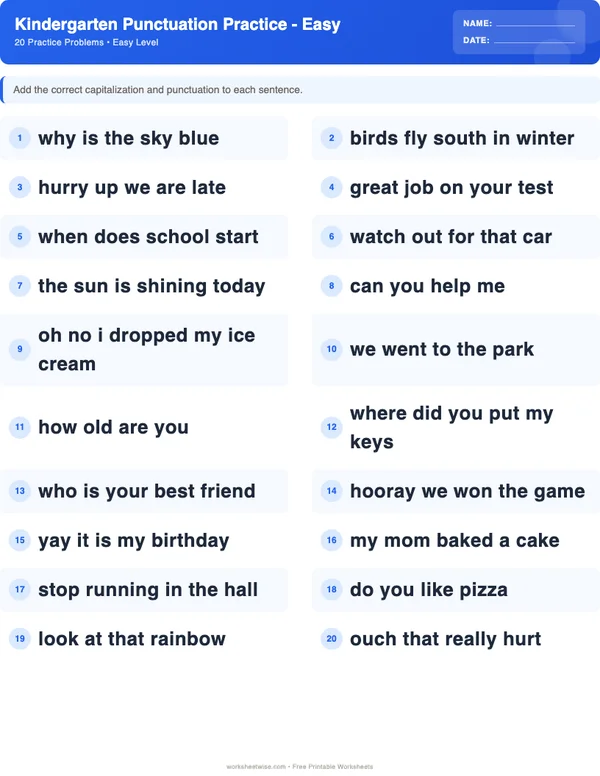
This example belongs in Kindergarten because the live Punctuation resource includes 12 problems and introduces periods, question marks, and exclamation points. The IES writing guide addresses broader elementary writing instruction; use it as general guidance for explicit strategy teaching and supported practice, not as evidence that a punctuation worksheet alone develops writing proficiency.
Adapt the Response Without Replacing the Skill
A useful adaptation changes access, volume, or response mode while preserving the intended thinking.
For a counting target, enlarge or space the objects, allow touching, or provide counters. Do not count for the child.
For a CVC target, let the child use magnetic letters instead of handwriting. Do not supply the middle vowel if identifying it is the target.
For a word problem, read the text aloud and let the child act it out. Do not translate the story directly into an equation before the child identifies what happened.
For punctuation, let the child place a period, question mark, or exclamation-point card. Do not reduce the task to tracing a mark if choosing the correct mark is the target.
For a visually busy sheet:
- Cover unused rows.
- Present one item at a time.
- Increase spacing.
- Mark a clear stopping point.
- Use a blank card to help track across the page.
For ages three and four, use age only to discover possible resources, not to decide placement. Prioritize brief adult-led oral, matching, manipulative, and movement work over desk work. A younger child might hop while counting, match two identical shapes, push tokens into sound boxes, or act out one subtraction story. Completing a full Kindergarten printable is not the goal.
Coordinate Mixed-Age Homeschool Time Without Flattening the Levels
A shared theme can reduce preparation, but each child needs a distinct task. During a “store” activity, a kindergartner might count five objects, combine two small groups, or solve a one-step oral story. An older sibling might calculate totals, compare prices, or write a multistep explanation. Shared materials do not require shared worksheet levels.
Use three blocks:
- Shared opening: read the situation, gather materials, or play a brief oral game.
- Kindergarten teaching turn: give the kindergartner five focused minutes while the older child begins known independent work.
- Separate practice: assign a short, clearly bounded task to each learner and rotate feedback.
If an older child needs a grade-specific printable, use the 1st Grade Homeschool Worksheets or another appropriate grade page rather than stretching the Kindergarten sheet into a more complicated task. Likewise, do not accelerate the kindergartner merely to make family scheduling neater.
Know What a Worksheet Cannot Establish
A completed page is one sample under one set of conditions. It cannot establish mastery by itself, identify a diagnosis, guarantee readiness for the next grade, or show whether the child can apply the idea orally, with objects, in connected reading, or in a new context.
The Common Core mathematics standards and English language arts standards can help adults inspect one widely used description of grade-level expectations. They do not determine every local sequence, and their inclusion here does not claim formal standards alignment for WorksheetWise resources.
Pause or replace the printable when:
- Directions require more explanation than the target skill.
- Fatigue or frustration prevents useful observation.
- Handwriting consistently obscures math or phonics knowledge.
- The child succeeds only by copying a demonstrated answer.
- Errors show that a prerequisite needs direct teaching.
- The page demands concepts that have not yet been introduced.
The observable next action should be small and testable: “Tomorrow, count two scattered sets while moving each object,” or “Tomorrow, blend four short-a CVC words, including one without a picture.” Avoid vague plans such as “work harder on reading.”
Prepare Monday’s Six-Item Starting Set
Choose one familiar phonics target and one concrete math target. Print or open the relevant free sheet, mark no more than six items, gather counters or letter tiles, and write the lesson boundary at the top: model one, solve two together, try three independently.
If the existing pages do not give you the exact quantity or item mix needed, use the free deterministic worksheet generators to create Monday’s narrowly targeted practice. Keep the generated set short, check every item before teaching, and use the child’s explanation—not the number of completed pages—to choose Tuesday’s next step.
Put it into practice
Use the guide with a real printable
Move from explanation to a short, observable practice task. Check the first item together, then adjust the next session from the learner's actual work.
Open the first free worksheetExplore a neighboring collection