Curated collectionAnswer keys includedPrint-ready PDFs
Morning Work Phonics Worksheets
Build predictable, low-friction arrival routines with retrieval, a short completion boundary and a fast teacher scan.
Start with a real resource
Browse this worksheet collection
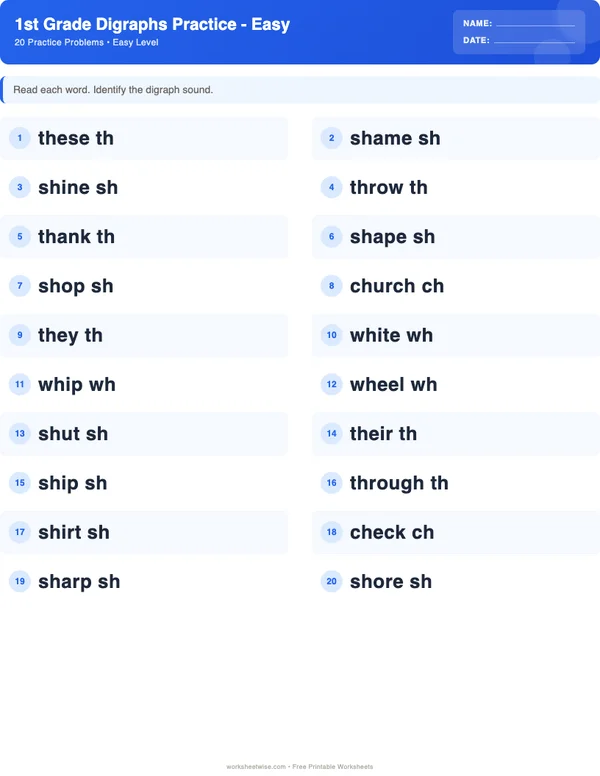
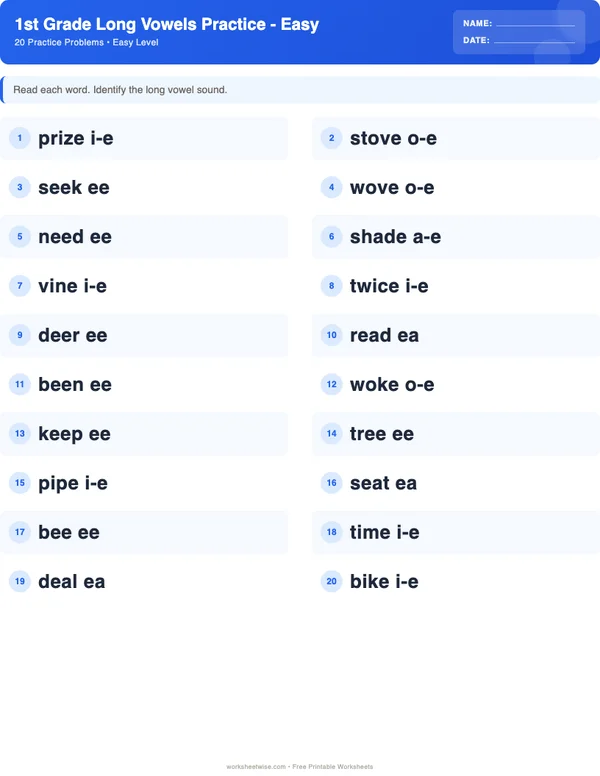
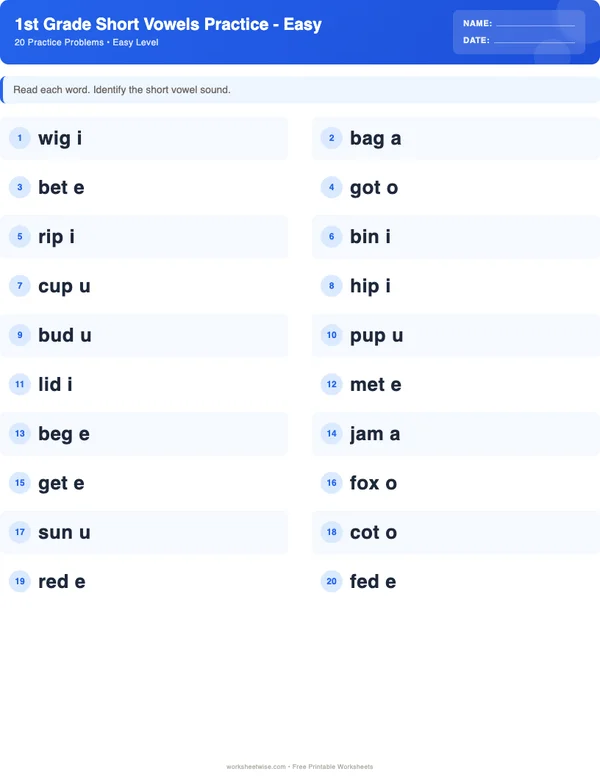
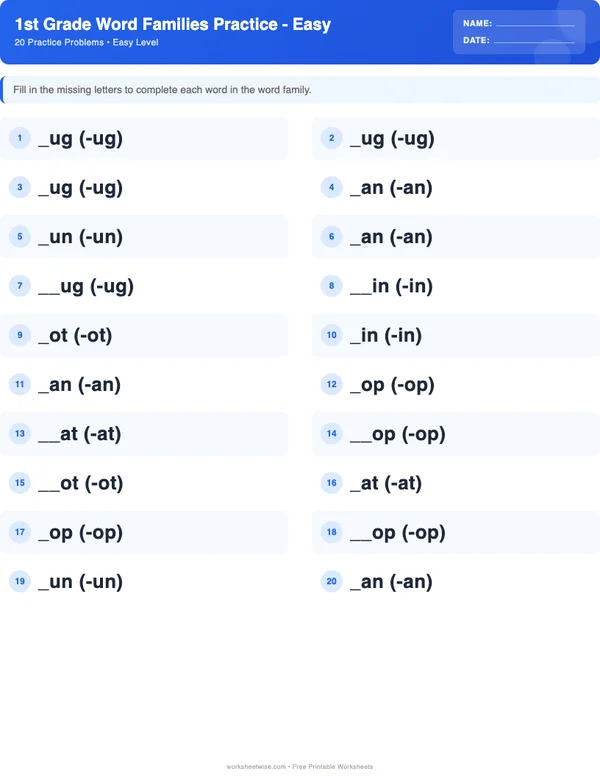
22 relevant free entry points are available. Each one includes a printable learner PDF and separate answer key.
A useful practice loop
Print less. Observe more.
- Choose one skill and model the first item aloud.
- Use a short set and notice the learner’s strategy.
- Change the next task from the work you can see.
Need more than the free sheet?
Plus includes all 396 matching catalogue variations where available, plus saved deterministic generators and the worksheet designer.
See Plus membershipComplete guide
How to teach and practise morning-work phonics worksheets
3,466 words Updated 6 instructional visuals
Make morning phonics a short retrieval routine, not a new lesson
Use morning work to retrieve a phonics pattern that learners have already been taught, produce a small amount of readable evidence, and finish at a clear stopping point. A practical sequence is:
- Read or listen to one modeled item.
- Complete four to eight closely related items.
- Mark the stopping line.
- Let the adult scan for one specific error pattern.
- Choose the next sheet from that evidence.
The important boundary is “already taught.” Arrival time is usually too fragmented for first instruction in an unfamiliar spelling pattern. A learner who has never been shown how cap changes to cape needs modeling and guided practice before an independent silent-e worksheet.
WorksheetWise’s live catalogue currently contains 396 morning-work phonics variants across four grade labels and seven topics, including 22 free resources. That breadth makes selection useful only when the adult chooses by the task’s actual demands—not simply by grade, age, or the word “easy.”
A grade label describes an intended practice level; local curriculum sequences differ. Age is a discovery aid rather than a placement decision. Look at what the learner has been taught, what the directions require, and what the completed responses will reveal.
Give every arrival the same five-part shape
Predictability reduces the time spent interpreting directions. Keep the routine stable while changing the phonics content.
1. Preview the target before learners arrive
Write one precise target where adults can see it: “Hear and write the middle vowel in CVC words,” “Keep both sounds in an initial blend,” or “Contrast CVC and CVCe words.” Avoid targets such as “work on phonics,” which do not tell anyone what to notice.
Scan the sheet yourself. Confirm that its words use taught sound-spelling relationships, its pictures are unambiguous enough for the task, and its response format is familiar. Decide where learners should stop. A live free sheet may contain 20 problems, but morning work does not have to mean finishing all 20.
2. Model one item in under a minute
Model the thinking that the sheet requires, not merely the answer. For map, an adult might say, “I stretch the word: /mmmăăăp/. I hear /ă/ in the middle, so I write a.” Then point to the part of the response learners must produce.
A model should be close enough to transfer but not identical to the first problem. If the sheet asks learners to choose between pin and pen, model sit and set. This preserves the decision while preventing copying.
3. Set a short completion boundary
Use a visible boundary such as “Complete the first six,” “Stop after the star,” or “Work for six minutes, then circle the last item attempted.” The boundary makes unfinished work interpretable. Six accurate responses followed by a marked stop mean something different from a half-completed page abandoned without explanation.
For a learner who writes slowly, reduce the number of written responses while retaining the phonics decision. Do not replace phonics practice with copying a longer sentence merely to keep the learner occupied.
4. Include one retrieval item
Most items can rehearse yesterday’s target, but include one previously taught contrast. A short-a sheet might end with pin; a blend sheet might include one plain CVC word beside several CCVC words. This shows whether the learner is attending to the spelling pattern or applying a morning guess such as “all answers contain a.”
The IES foundational reading practice guide recommends explicit instruction in sound segments, letter-sound relationships, decoding, and reading connected text. It also supports building instruction systematically. Applied here, that means morning retrieval should sit inside an instructional sequence; a worksheet is one practice event, not the sequence itself.
5. Scan for a pattern before correcting everything
At collection, inspect the target position first. For short vowels, scan middle letters. For initial blends, scan whether both consonants remain. For silent-e contrasts, scan the vowel and final e together. Put pages into three temporary groups:
- target pattern consistently represented;
- one recurring, interpretable error;
- responses too incomplete or inconsistent to interpret.
This is a planning sort, not a label for children. Record the observable evidence: “wrote i for e in 4 of 6 dictated words,” not “weak vowels.”
Select the sheet by what the learner must notice and produce
The catalogue’s free representative sheets are marked “easy,” but difficulty must be defined through observable task features. Here, an “easy” listing does not describe a learner. It describes a sheet whose demands may include familiar one-syllable patterns, short directions, picture matching, word-level responses, or a limited choice set. Confirm those features on the actual page before assigning it.
Match the response format to the evidence you need
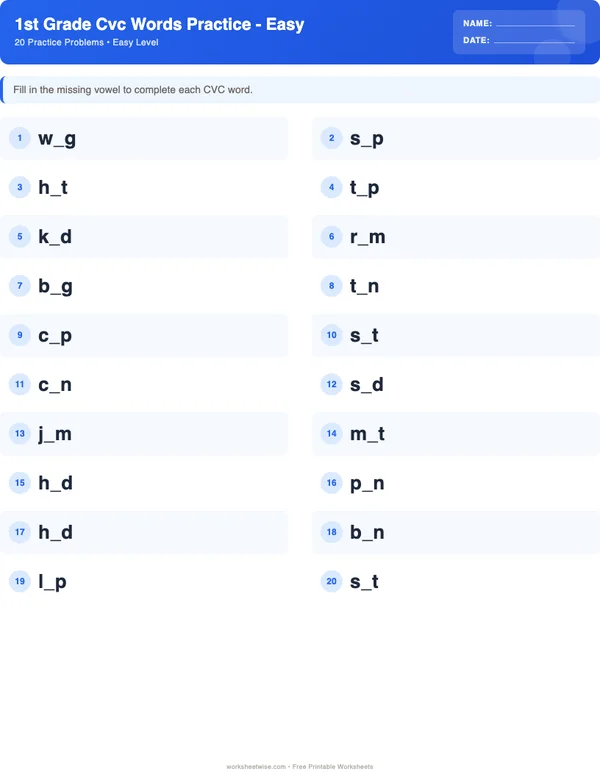
Picture-to-word matching can show whether a learner distinguishes printed alternatives, but it may not reveal independent spelling. Filling in the middle letter of p_n isolates vowel selection, while writing pin from dictation requires segmentation, letter retrieval, and handwriting. Reading a word aloud tests decoding more directly than copying it.
Choose deliberately:
| If you need to observe… | Use a response such as… | Avoid treating this as equivalent… |
|---|---|---|
| auditory vowel discrimination | sort spoken pen/pin or select e/i |
copying both words |
| sound-by-sound segmentation | move one token per sound, then write | naming the picture only |
| retention of both blend sounds | build or write stop from speech |
tracing stop |
| recognition of an irregular part | identify the unexpected letters in said |
memorizing an unexplained whole-word shape |
| application in reading | read a short controlled phrase or sentence | completing a word search |
The Common Core English Language Arts standards include grade-level foundational skills involving print concepts, phonological awareness, phonics, word recognition, and fluency. They provide a broad reference point, not proof that a particular WorksheetWise page aligns with a local sequence. Check the words and response demands against what your school has taught.
Compare live skills before choosing tomorrow’s page
The representative resources are not interchangeable. Each exposes a different part of phonics knowledge.
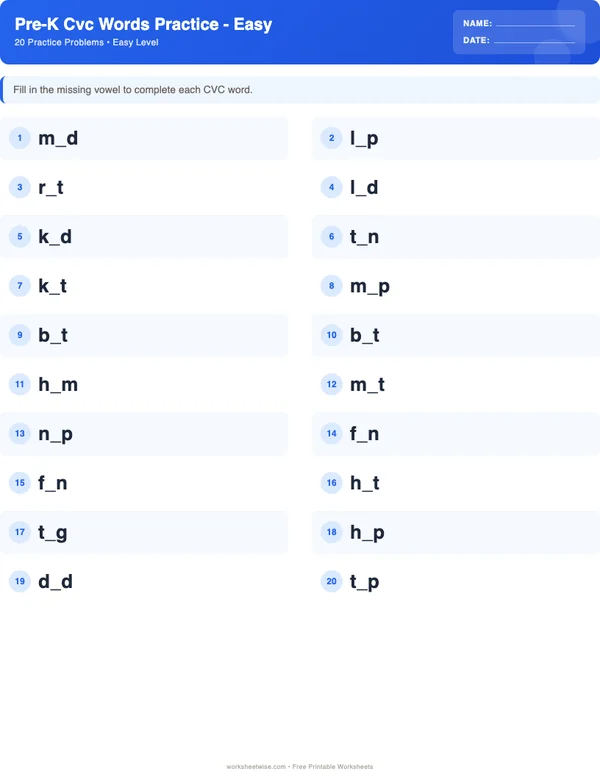
CVC words: preserve all three sound positions
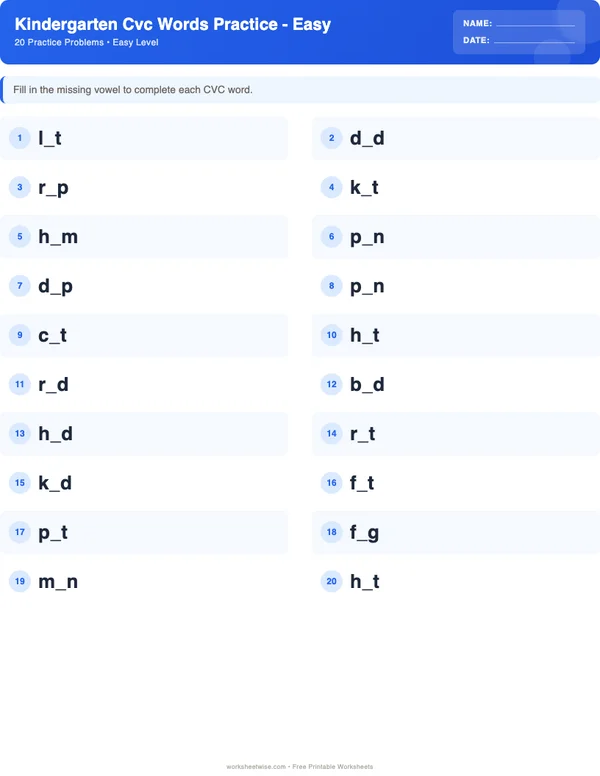
The live Pre-K, Kindergarten, and 1st Grade CVC representatives contain 20 problems and may use word building, picture matching, missing-letter work, or reading. Choose CVC practice when the learner has been taught consonant sounds and a relevant short vowel but still needs to coordinate three phonemes in a word such as cat, pin, or hug.
Checked example 1: cat → mat → map → mop. Each change can be verified letter by letter. cat to mat changes the initial consonant; mat to map changes the final consonant; map to mop changes the medial vowel. This belongs in morning phonics because a four-word chain creates a compact retrieval task and reveals whether the learner tracks the changed position. Do not present the final step until short o has been taught.
If a learner writes ct for cat, the missing middle vowel suggests that the next activity should make all three phonemes visible: say cat, push three tokens into sound boxes, sweep beneath them while blending, and then write the three letters. The Pre-K CVC Words guide and free sheet and Kindergarten CVC Words guide and free sheet provide two catalogue entry points; choose after inspecting the task, not from the grade label alone.
Short vowels: distinguish the middle sound
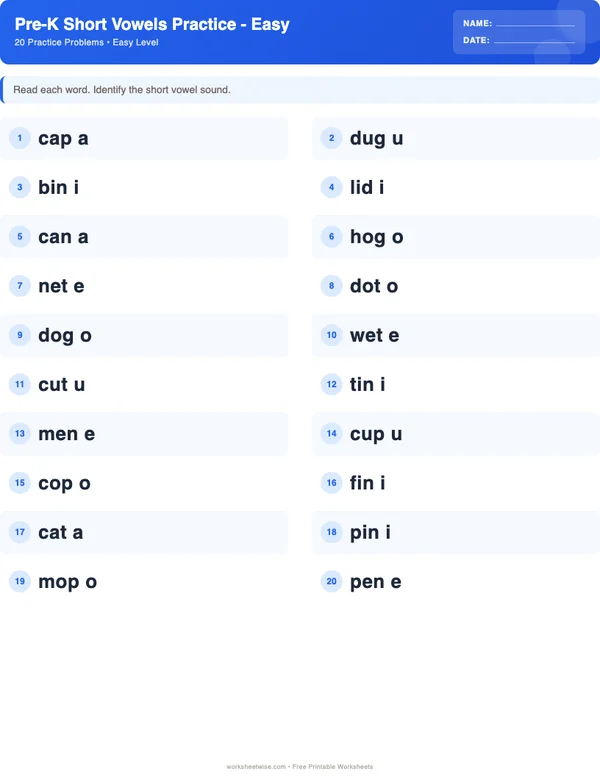
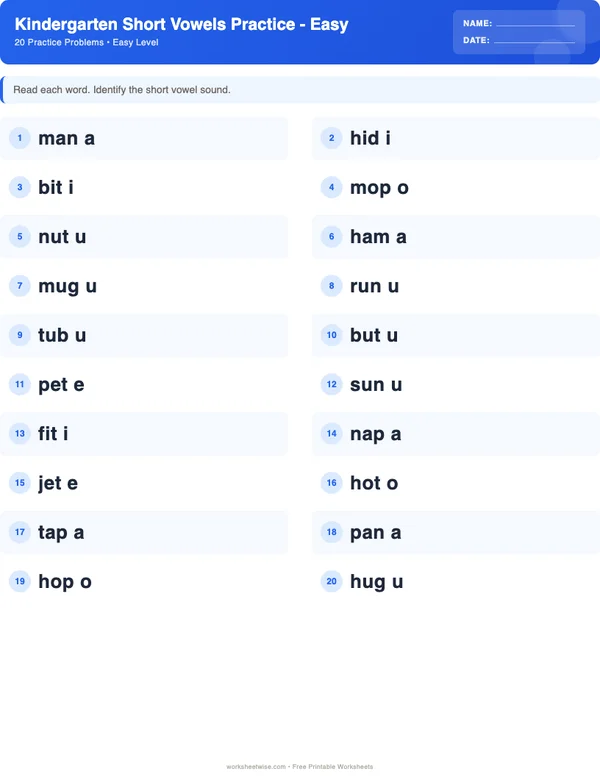
Short-vowel work belongs after the relevant sound has been explicitly introduced. A focused morning page might ask learners to identify, sort, read, or spell CVC words with one known vowel before mixing close contrasts.
Checked example 2: pen/pin, set/sit, and bed/bid. Every pair keeps the initial and final consonants constant while changing e to i. That makes the medial vowel the only relevant variable. These examples belong here when a teacher has observed confusion between those two taught sounds. First say the pair without print and ask whether the middle sounds match; then reveal the spelling and have the learner choose or write the vowel.
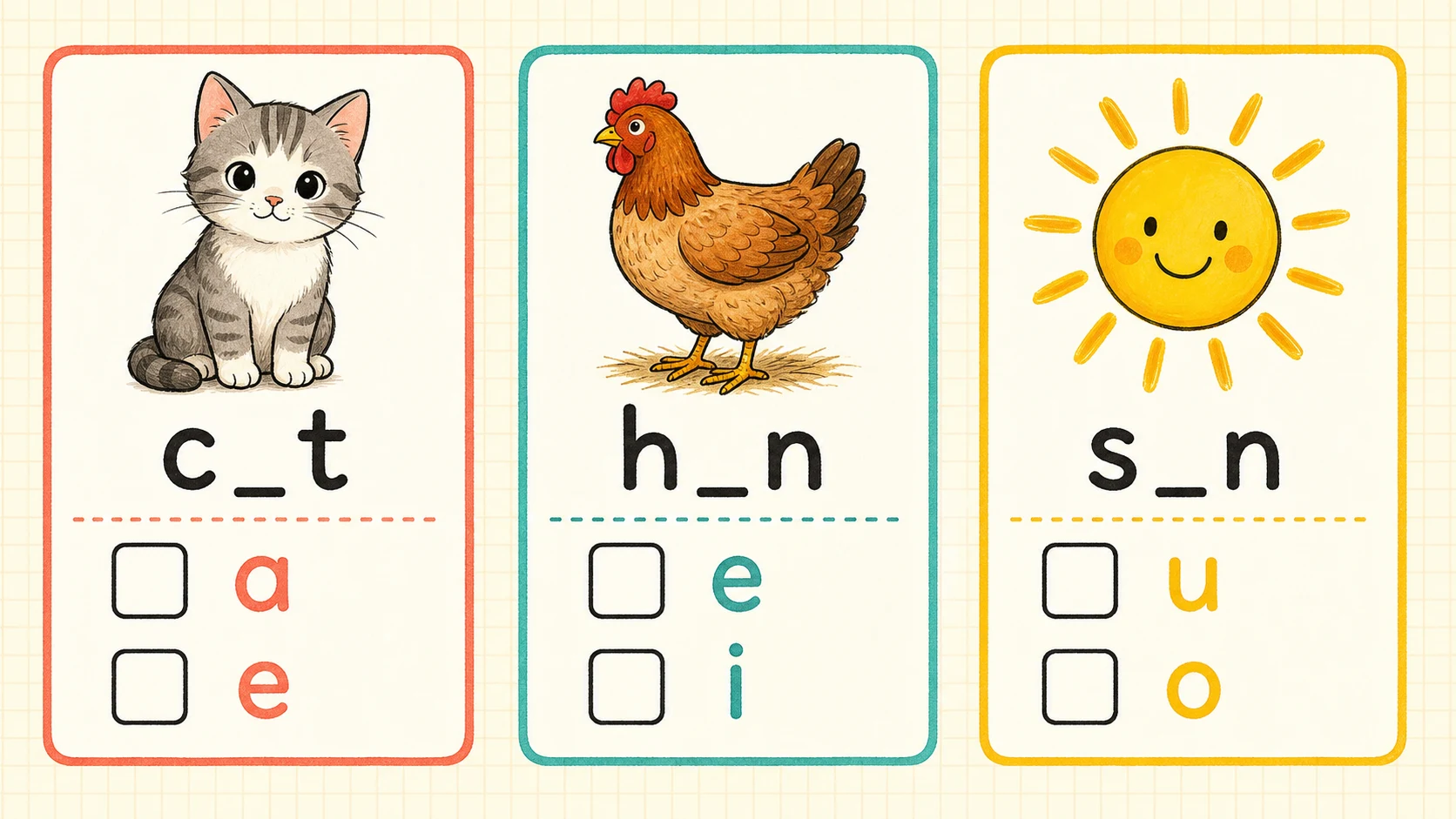
Use a two-week short-vowel plan to alternate focused retrieval, mixed review, and a decision point rather than repeating the same full sheet every morning.
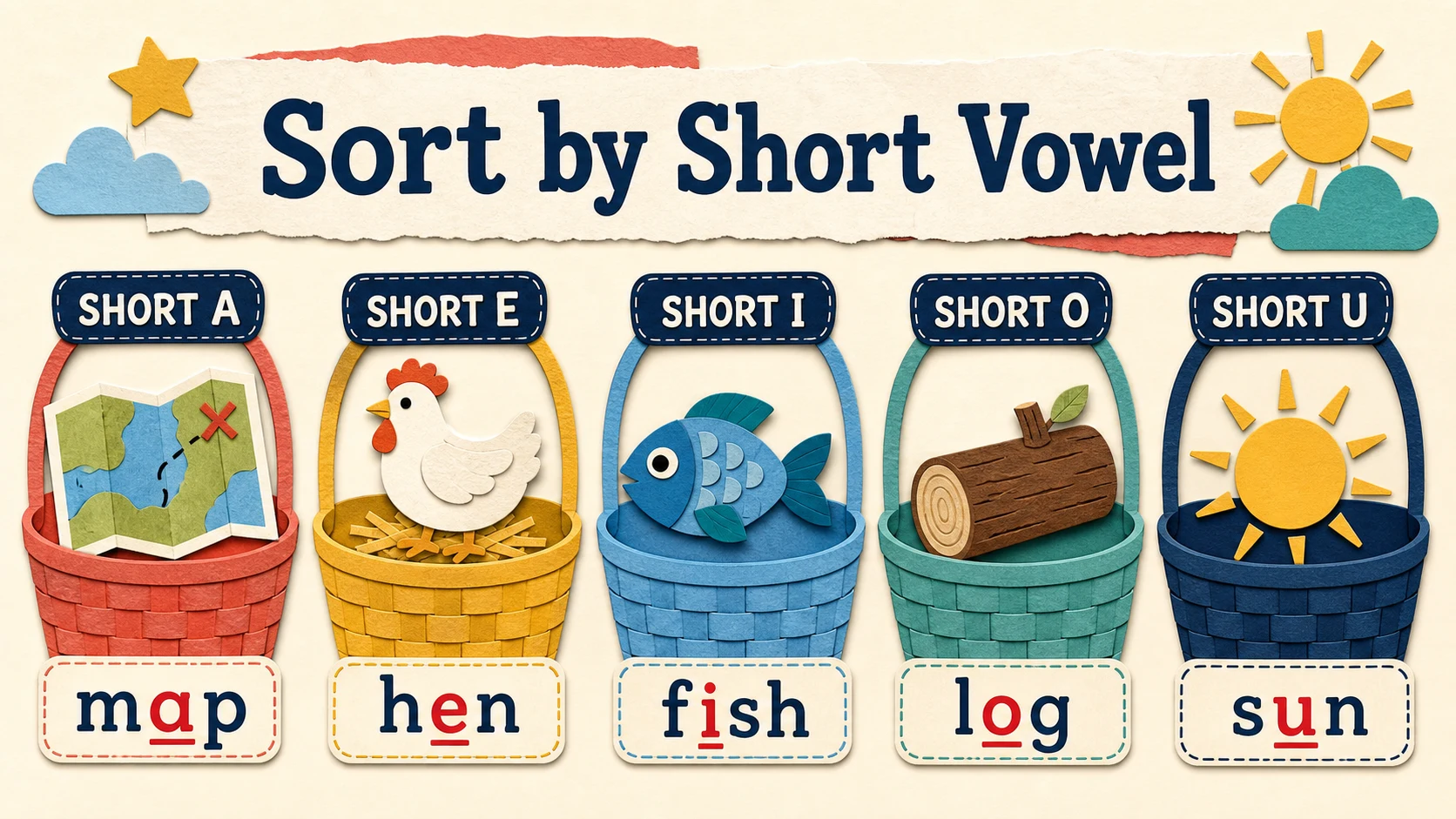
Even when a resource is labeled 2nd grade, use the visible lesson steps and word demands—not the label—to decide whether its short-vowel routine fits the learner’s taught sequence.
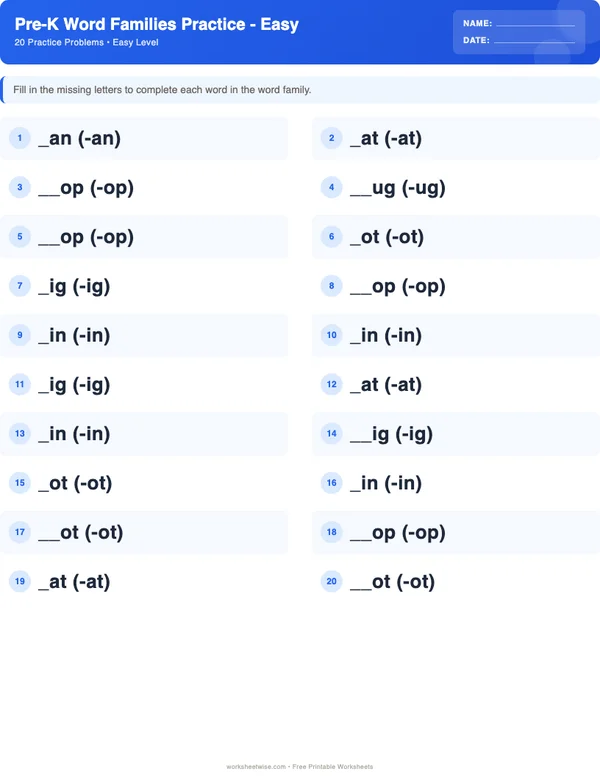
Word families: retain the rime while changing the onset
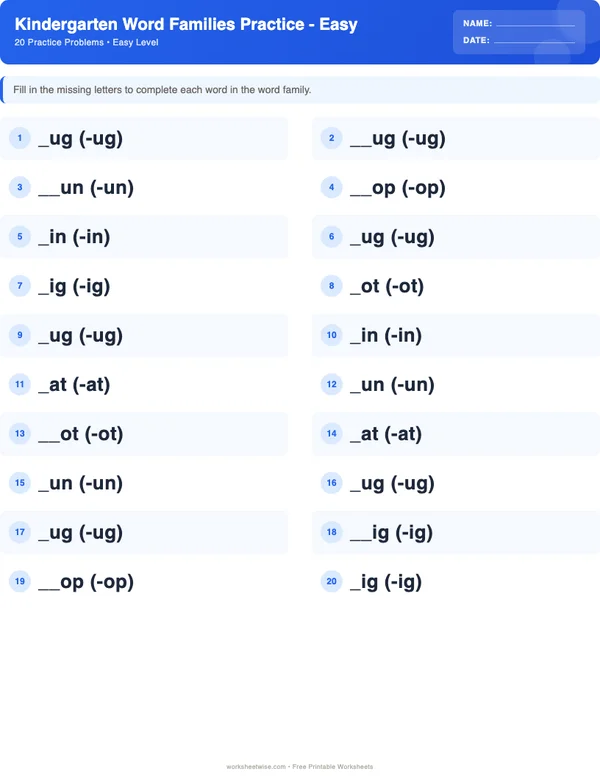
Word-family tasks ask learners to notice a shared ending such as -at, -ig, or -op. They can reduce the amount of decoding needed during retrieval, but the learner should still attend to every sound.
Checked example 3: cat, bat, hat, mat, sat. Each word contains the same spelled rime, at, and a different initial consonant. Ask the learner to underline at, point to the changed first letter, and read the whole word. This belongs in arrival work because the repeated structure makes directions quick while still yielding five distinct decoding responses.
If the learner reads every item as cat, the next task should require onset discrimination, perhaps matching b, h, and m tiles to pictures before reading the completed words. If the learner reads each onset but cannot blend the whole word, return to oral onset-rime blending before another independent sheet. The Pre-K Word Families guide and free sheet offers a focused route for that pattern.
Consonant blends: keep both consonant sounds
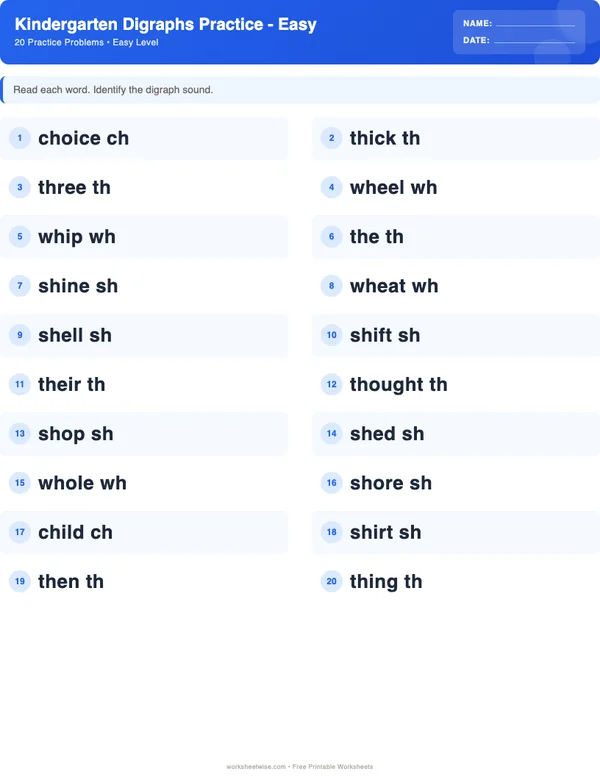
A blend contains adjacent consonants whose individual sounds remain audible. This differs from a digraph such as sh, in which two letters represent one sound. Blend practice should therefore reveal whether the learner retains both consonants.
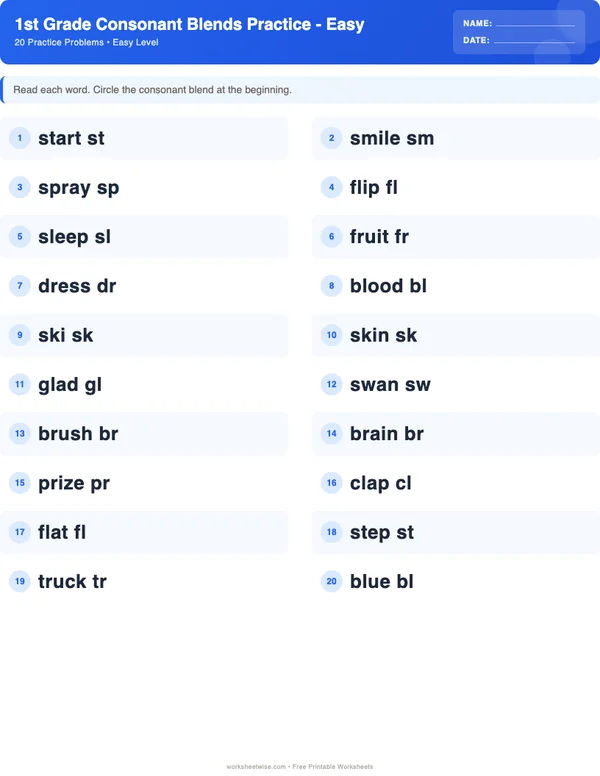
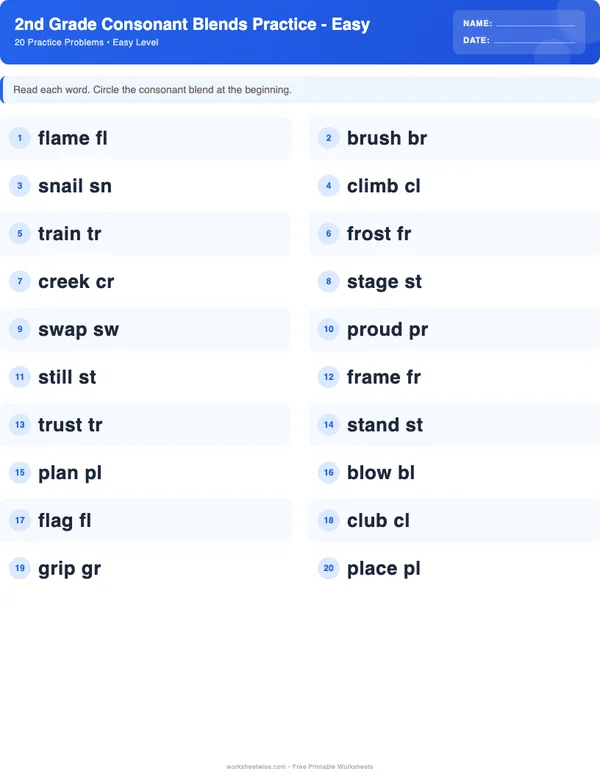
Checked example 4: lap → clap → clam → clamp. lap has three phonemes. Adding /k/ before /l/ forms clap; changing the final /p/ to /m/ forms clam; adding /p/ at the end forms clamp. The chain belongs here because it tests sound retention at both the beginning and end while limiting unrelated changes.
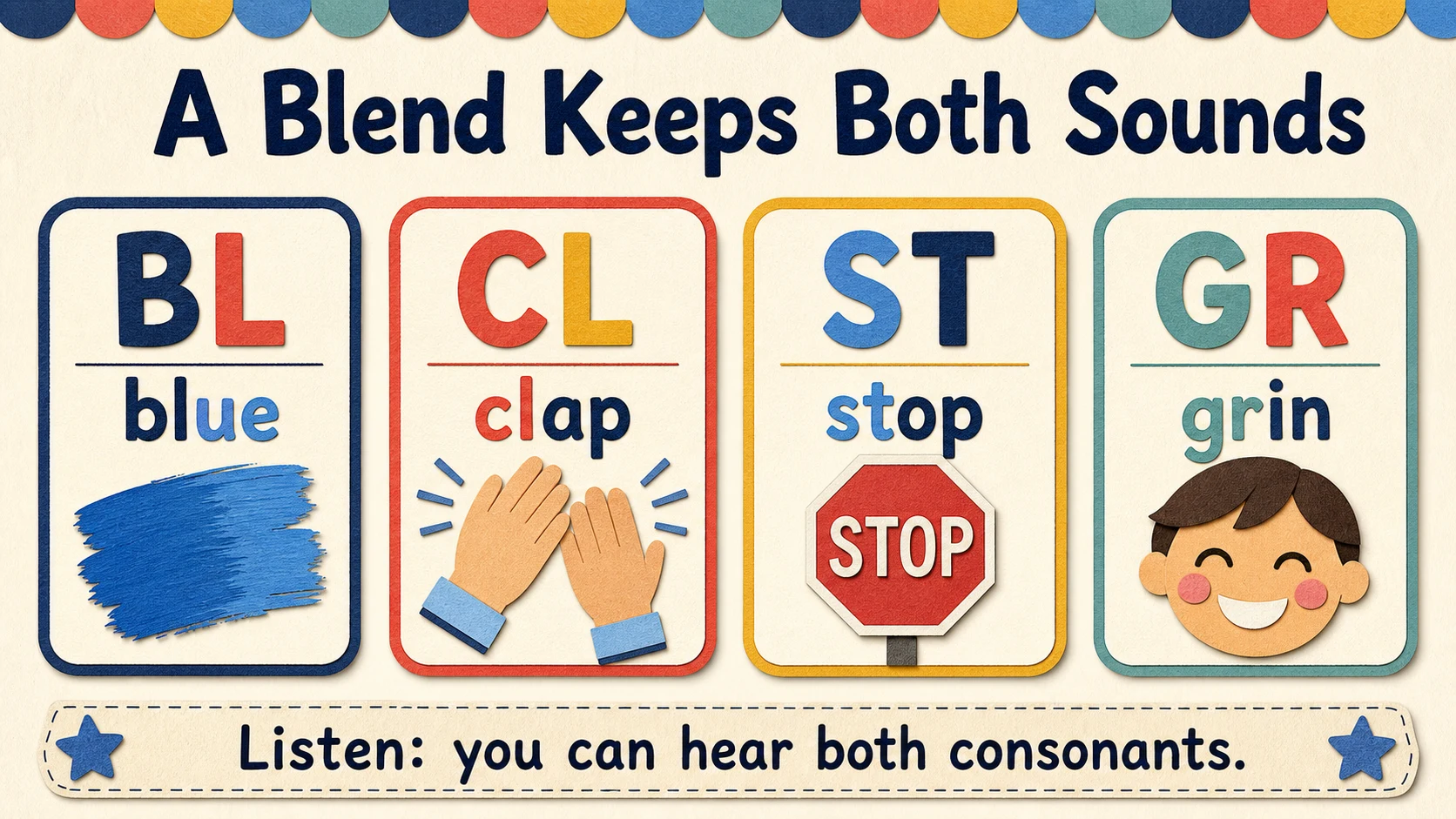
Use the blend map to identify the exact retrieval target—hearing both sounds, reading the whole word, or spelling the blend—before selecting an arrival sheet.
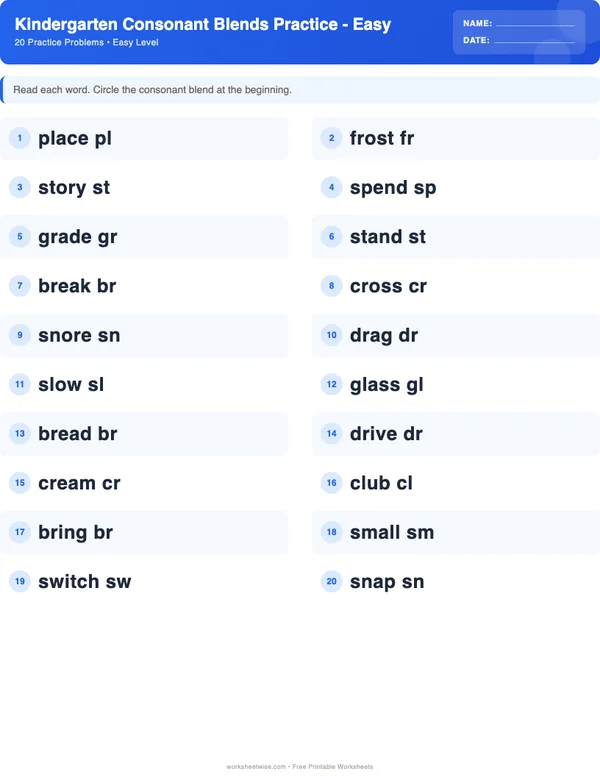
If stop becomes sop, do not merely write the missing t above the answer. Say stop slowly, have the learner tap /s/, /t/, /o/, /p/, build it with letters, and reread it. Tomorrow’s sheet should contain a small set of familiar s-blend words plus a CVC contrast, not a wider assortment of unmodeled blends. The Kindergarten Consonant Blends guide and free sheet is the relevant live entry point.
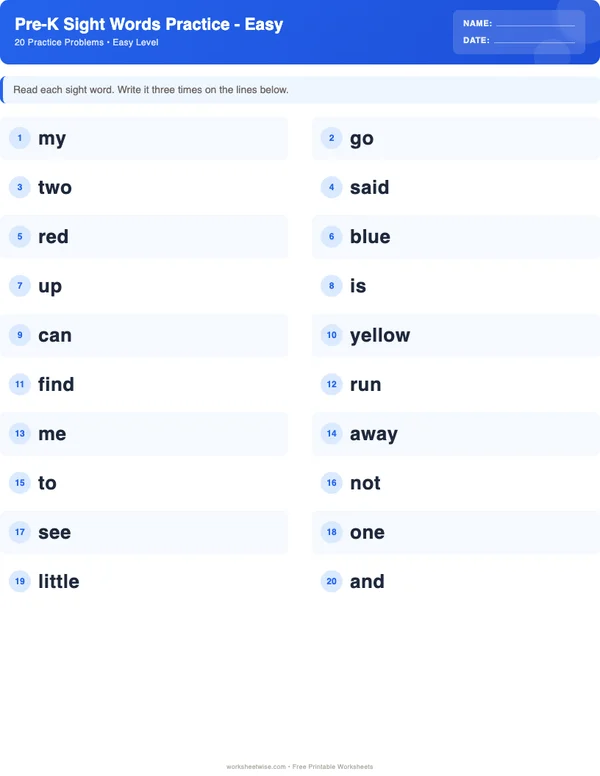
Sight words: connect regular and unexpected spellings
Sight-word practice should not become undifferentiated visual memorization. Separate the part that follows a known sound-spelling relationship from the part that must be remembered in that word.
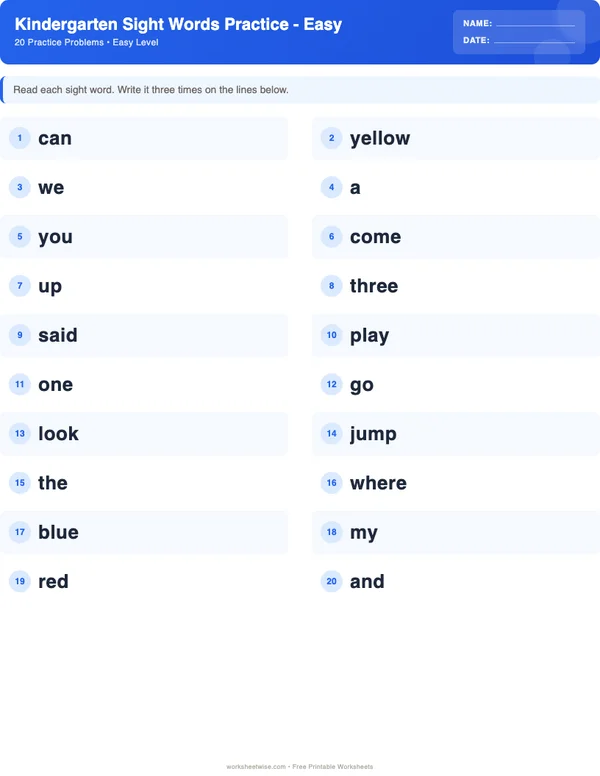
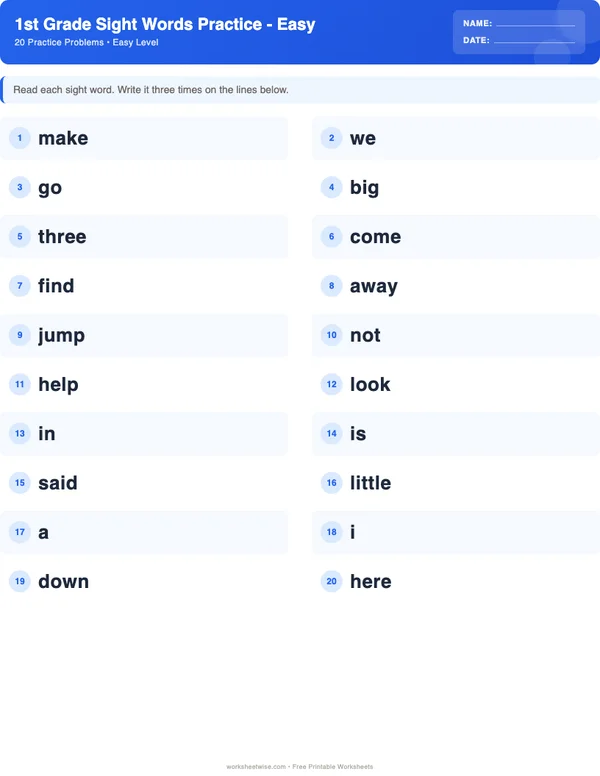
Checked example 5: said. The initial s and final d represent expected sounds; ai does not represent its common long-a pronunciation here. In a morning routine, the learner can read the word, box ai as the unexpected part, cover it, write it, and read it in a short sentence. This belongs here because it combines word recognition with phonics analysis.
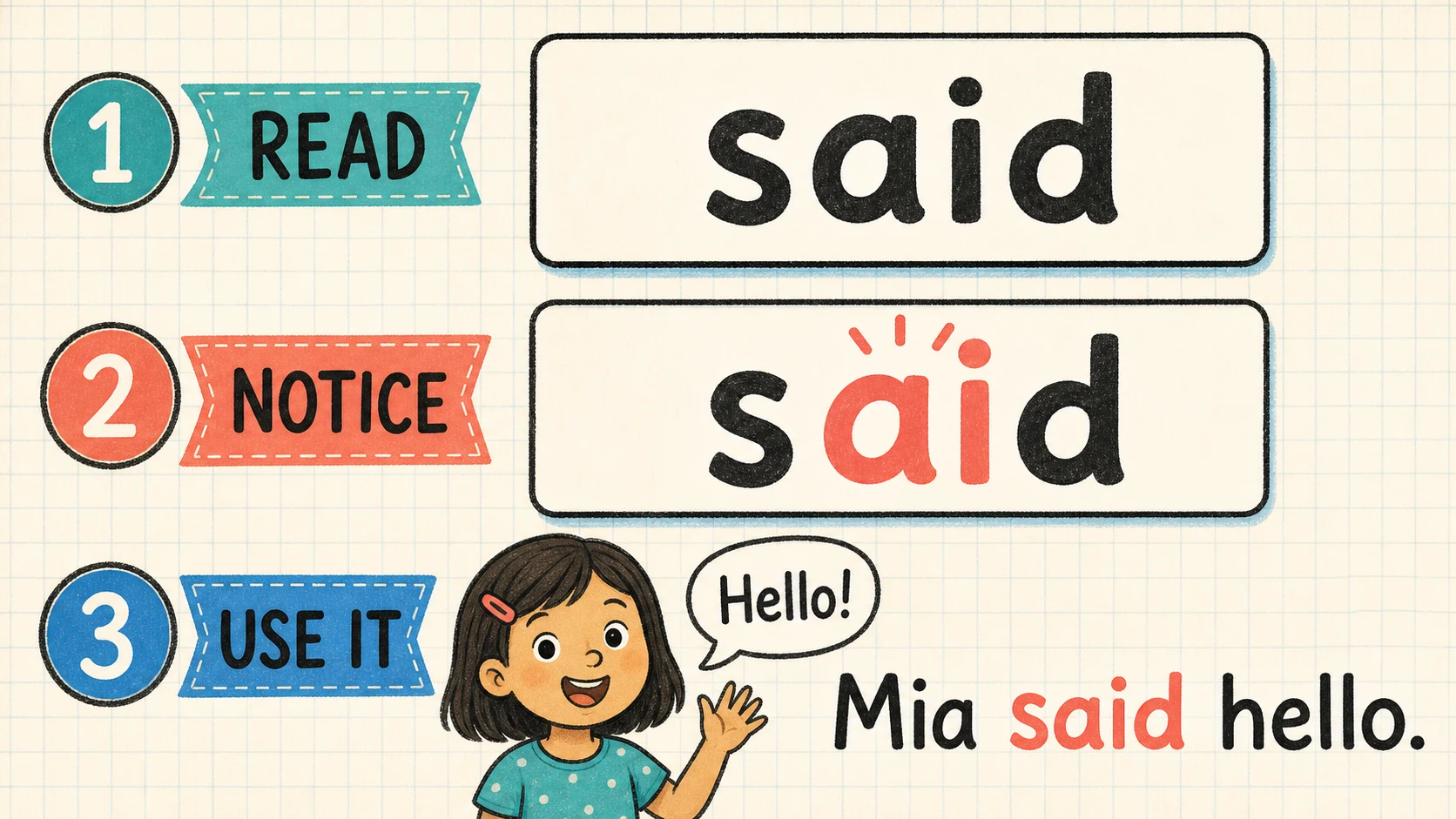
The worked sight-word sequence clarifies what the adult models before the learner completes a small set independently.
If the learner reads said correctly but writes sed, the response shows plausible sound-based encoding, not carelessness. The next morning should revisit the unexpected ai spelling in said alongside already secure words, with one delayed write-from-memory attempt. Do not infer a diagnosis from one spelling.
Long vowels: contrast patterns without teaching a false absolute
The live 1st Grade long-vowels representative covers patterns including silent-e, vowel teams, and open syllables. That is a broad field. For morning work, narrow it to a pattern already modeled, such as CVC versus CVCe.
Checked example 6: cap/cape, pin/pine, hop/hope, and cub/cube. In each pair, the final e changes the preceding vowel from its short sound to its long sound while the initial consonant remains constant. The pairs belong here because the spelling contrast is visible and can be scanned quickly.
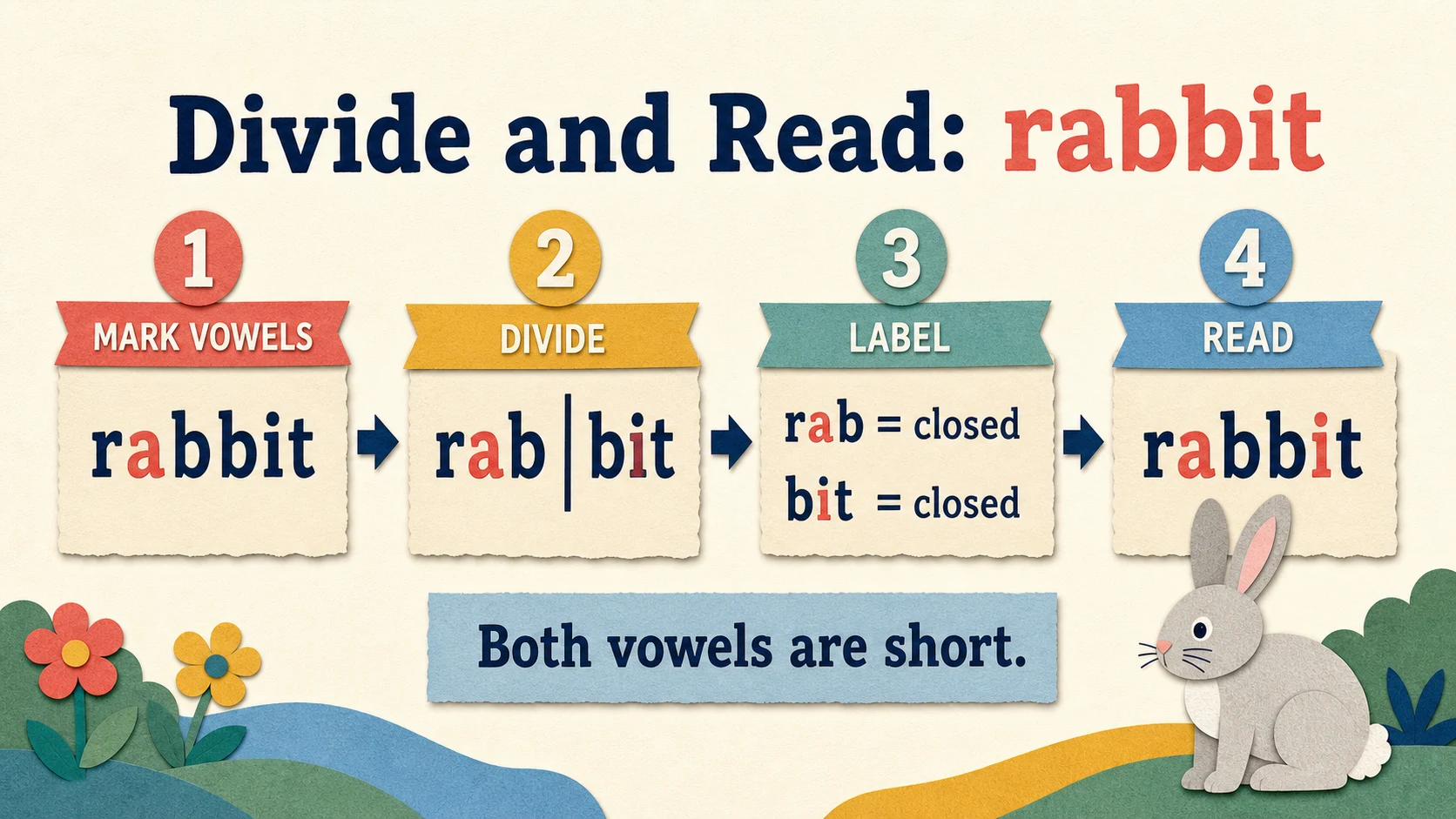
Use the short-vowel worked example as the comparison side before asking a learner to distinguish a CVC word from a long-vowel form.
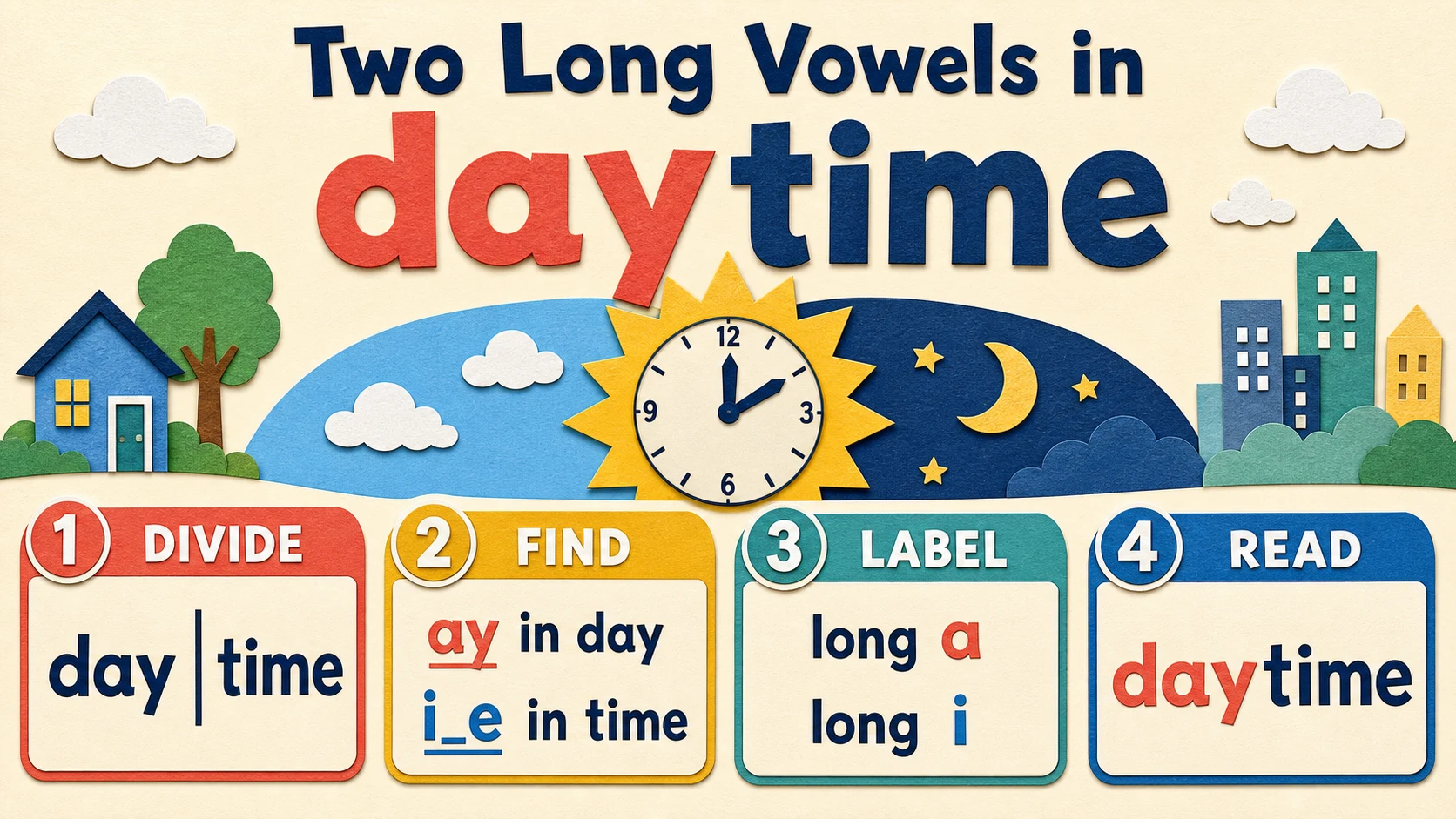
The long-vowel worked example shows the second half of the contrast: identify the spelling feature, read the changed word, and then record an answer.
Avoid presenting “two vowels together always make the first vowel say its name” as a rule without exceptions. For a low-friction arrival task, use only the particular teams or silent-e forms already taught and reserve exceptions for guided instruction.
Use feedback that sends the learner back to the sound
Feedback should identify the mismatch, prompt a useful action, and end with rereading. “Try again” supplies no phonics information; writing the answer for the learner removes the decision.
For a decoding error
If ship is read as sip, point under sh and say, “These two letters work together. What sound?” After the learner responds /sh/, sweep under the whole word and ask for a reread. If the learner cannot supply /sh/, model it. That item is no longer independent evidence, so note that the pattern needs guided review.
For an encoding error
If tent is written ten, repeat the word naturally, then contrast ten and tent. Ask the learner to stretch the end and add one token for every sound heard. The goal is to recover /t/, not memorize a red correction mark.
For a selection error
If a learner circles pin for a picture of a pen, verify the picture label orally before interpreting the response. Then say pen and pin and ask which middle sound matches. A picture-vocabulary mismatch and a vowel-discrimination error require different next sheets.
Keep the correction physically small
Use one mark with a stable meaning, such as a dot beside an item to revisit. Correct one representative item with the learner, then ask the learner to repair one similar item. A page covered with answers supplied by the adult hides the error pattern.
The IES elementary writing practice guide addresses writing instruction rather than evaluating WorksheetWise. Its emphasis on explicitly teaching the writing process and foundational writing skills is relevant when handwriting or sentence production competes with the phonics target. In practice, keep the written response short enough that letter formation does not overwhelm the sound-spelling decision.
Let observed errors choose the next sheet
A next sheet should change one meaningful variable. Repeating the same page may rehearse the same mistake; jumping to a new topic may conceal it.
| Morning evidence | Most likely instructional question | Next sheet or adult-led task |
|---|---|---|
cat written as ct repeatedly |
Is the medial vowel being heard and represented? | three-sound boxes with one taught vowel, followed by four CVC encodings |
pen and pin confused in both listening and print |
Can the learner hear the contrast before choosing letters? | brief oral minimal-pair sort, then a two-choice e/i sheet |
stop read as sop across several words |
Is one sound in the blend being dropped? | tap four phonemes, build s-blend words, then read four items |
ship read as sip, but shop and shut are untaught |
Is sh available as one sound? | adult-remodeled sh, followed by known sh words only |
cape read as cap while CVC words are accurate |
Is final e being noticed? | paired CVC/CVCe sorting with cap/cape and hop/hope |
| accurate matching but unsuccessful dictation | Is recognition stronger than independent encoding? | fewer dictated words using the same pattern |
| many blank items after the stopping point | Did the learner reach the agreed boundary? | no skill change if the required section is accurate |
| random responses before the boundary | Were directions, vocabulary, and entry routine understood? | adult check-in and a familiar response format before changing phonics content |
Treat these as instructional hypotheses, not diagnoses. Verify with a brief oral or manipulative check. One page can be affected by fatigue, an unfamiliar picture, misunderstood directions, hearing conditions, language experience, or the mechanics of writing.
Use the Formative assessment Phonics Worksheets when the purpose is to gather broader evidence rather than conduct a calm retrieval routine. Morning work can flag a question; it should not carry the entire assessment burden.
Adapt access without removing the phonics decision
An adaptation preserves the target when it changes how the learner accesses or records the task but still requires the same sound-spelling judgment.
For a learner who needs less visual load, cover the lower portion of the page and reveal one row at a time. For reduced handwriting demands, allow letter tiles, movable alphabet cards, pointing, circling, or a dry-erase response. If the target is selecting the medial vowel, choosing an e tile rather than writing e preserves the decision. If the target is spelling the complete word from dictation, supplying all three letters would remove it.
Read directions aloud when reading the directions is not the skill being tested. Name a picture if vocabulary is uncertain, but do not stretch the word or emphasize the answer sound unless that cue is part of the planned support. Give multilingual learners the picture label before interpreting their phonics response; knowing a sound-spelling relationship and knowing an English picture name are separate demands.
For ages three and four, prioritize brief adult-led oral, matching, manipulative, and movement work over desk work. A 20-problem catalogue sheet can become a source of four picture cards rather than a requirement to complete a page. The adult might say map, help the child move three counters for /m/ /ă/ /p/, and then match the word to a picture. Stop while attention remains available.
If fine-motor demands obscure the target, let the learner push counters, arrange letters, or step into three floor boxes. If spoken production is not accessible, accept a reliable selection response. Preserve the intended discrimination without assuming one mode of response fits every learner.
Keep morning work inside its proper limits
Morning phonics worksheets are useful for retrieval, routine, and a rapid instructional scan. They cannot establish why a learner is making an error, replace explicit teaching, guarantee transfer to connected reading, or determine a diagnosis. They also should not introduce several new correspondences while the adult is occupied elsewhere.
A completed page is not proof of independent decoding. Learners may copy neighboring answers, use picture clues, remember a word shape, or follow a repeated position pattern. Include occasional oral reading, dictation, word building, and a short controlled phrase so that evidence comes from more than one response format.
Do not advance because a learner finished quickly. Inspect accuracy and strategy. Conversely, do not hold a learner on the same pattern solely because handwriting is slow. Separate phonics knowledge from production demands through an oral or manipulative check.
When arrival conditions are unusually unsettled, shrink the task rather than increasing correction. One modeled item and four useful responses can produce better evidence than 20 rushed marks.
Build a two-week loop from retrieval, scan, and response
A workable cycle might look like this:
Days 1–2: retrieve one taught feature
Model one item, assign five similar responses, and scan only the target position. For short a, use known CVC words and one oral blend at the end.
Day 3: add one contrast
Mix four target items with two previously taught items. If the target is short a, add a known short i word. Watch for answer-set behavior.
Day 4: switch the response mode
Move from matching to dictation, or from filling a letter to reading complete words. Keep the phonics pattern stable so the new evidence reflects transfer across response formats.
Day 5: read in a small context
Use a phrase or sentence containing taught patterns and necessary known high-frequency words. Note whether the learner applies the pattern without a word-list layout.
Days 6–8: respond to the scan
Assign different short tasks when evidence differs. One group may revisit three-sound segmentation, another may contrast e/i, and another may practice a taught blend in words. These are temporary instructional groupings, not fixed levels.
Days 9–10: verify and decide
Return to the response format that first exposed the error. If the learner now handles the target independently across two formats, select cumulative review or the next taught pattern. If the same error remains, plan explicit adult-led instruction before another worksheet.
Begin by opening the free deterministic worksheet generators, selecting one phonics pattern already taught, and producing tomorrow’s five-to-eight-item retrieval set. Write the exact feature you will scan—middle vowel, both blend consonants, digraph, or final e—at the top before printing.
Put it into practice
Use the guide with a real printable
Move from explanation to a short, observable practice task. Check the first item together, then adjust the next session from the learner's actual work.
Open the first free worksheetExplore a neighboring collection