Curated collectionAnswer keys includedPrint-ready PDFs
Easy and Beginner Worksheets Across Grades and Subjects
Reduce number size, response load and representation changes while preserving the actual target skill.
Start with a real resource
Browse this worksheet collection
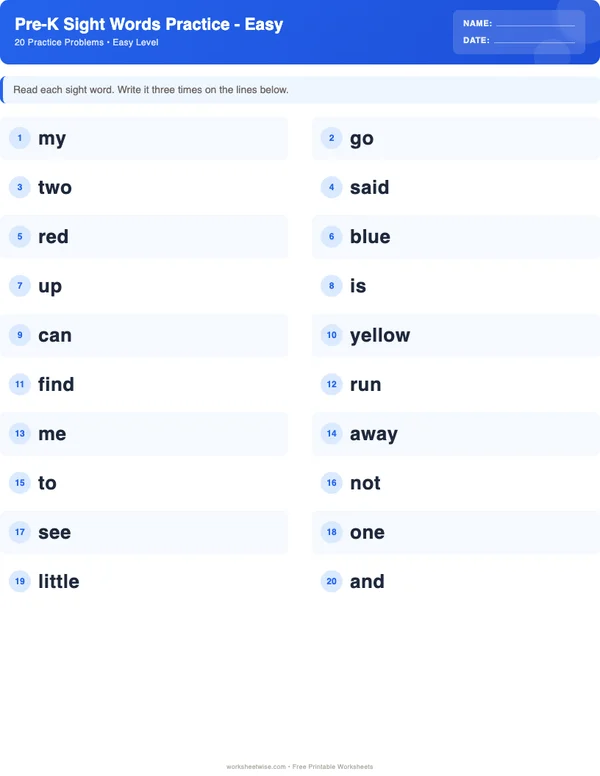
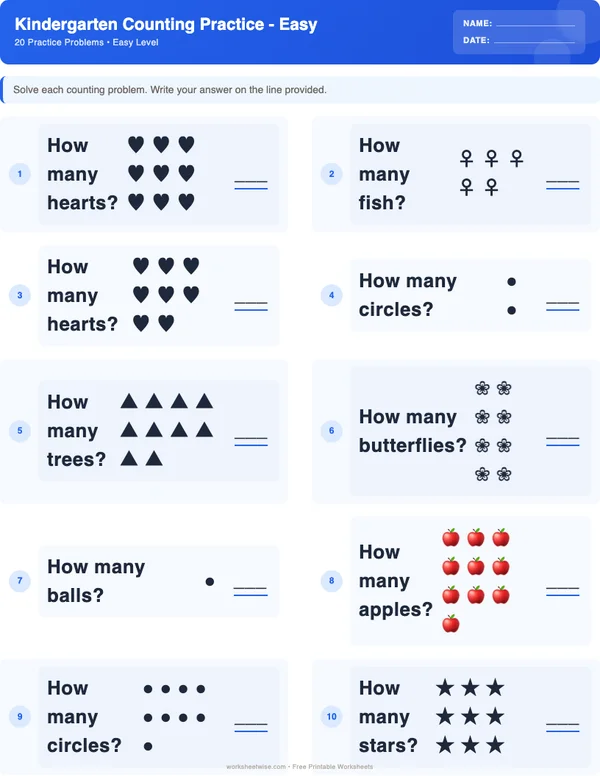
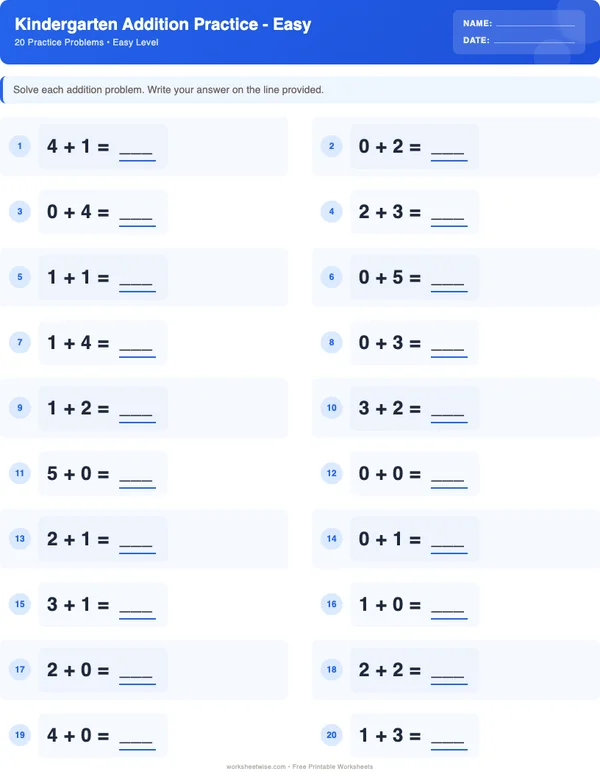
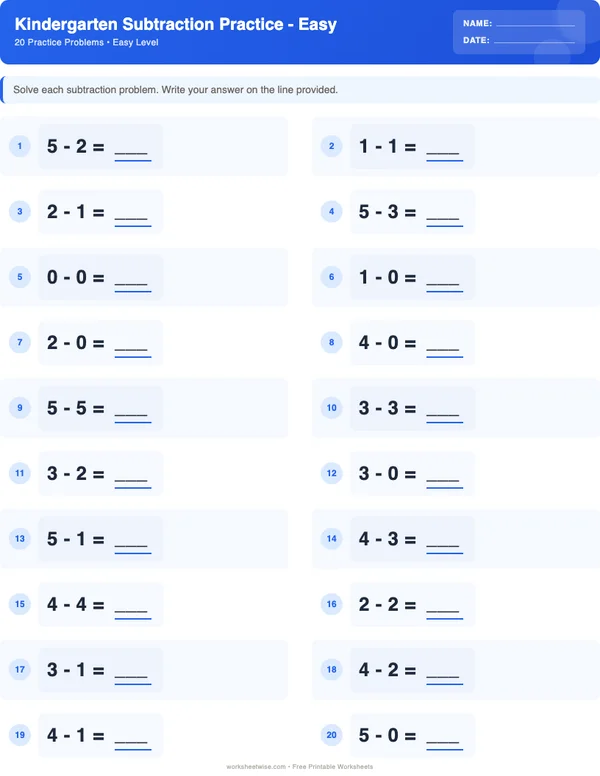
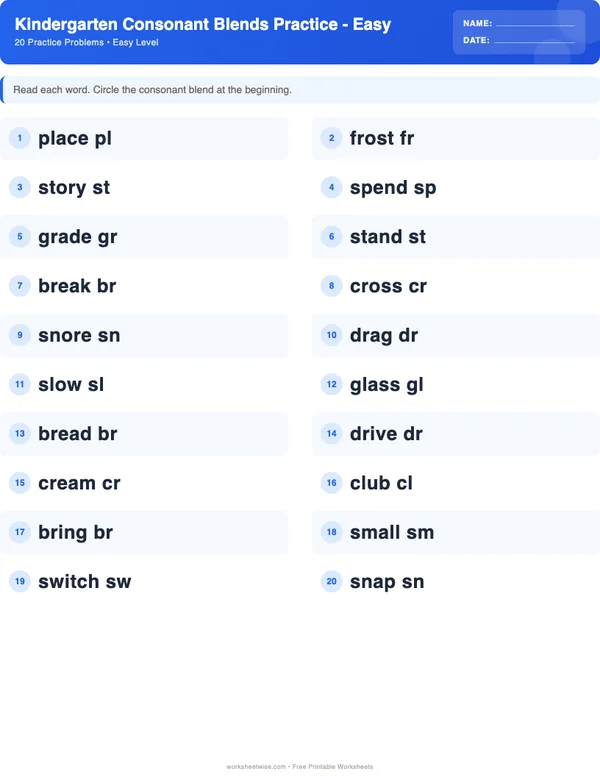
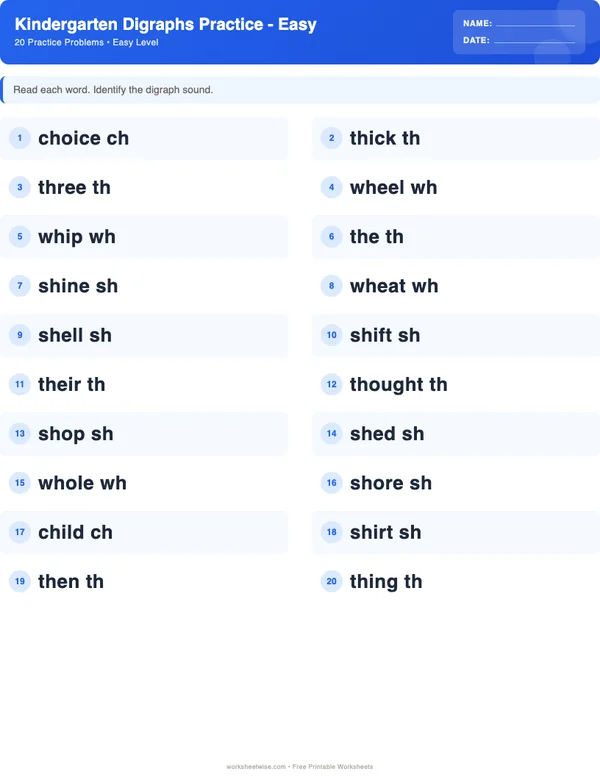
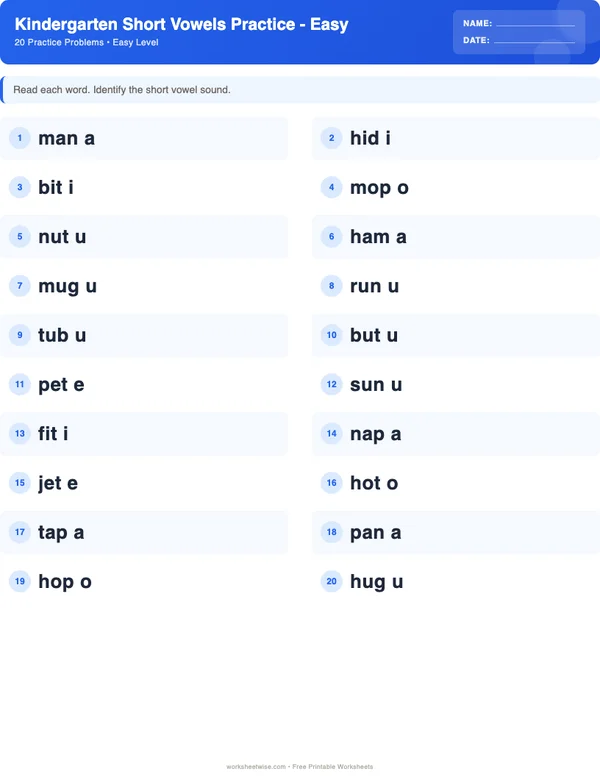
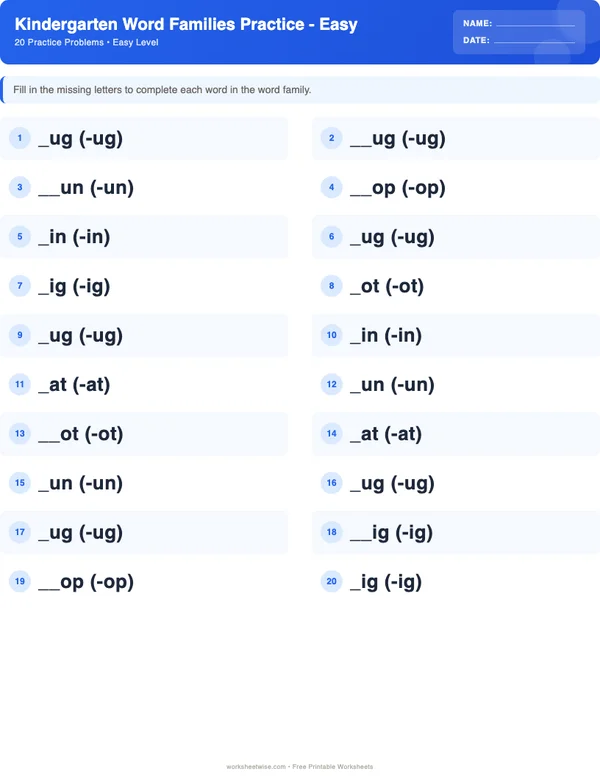
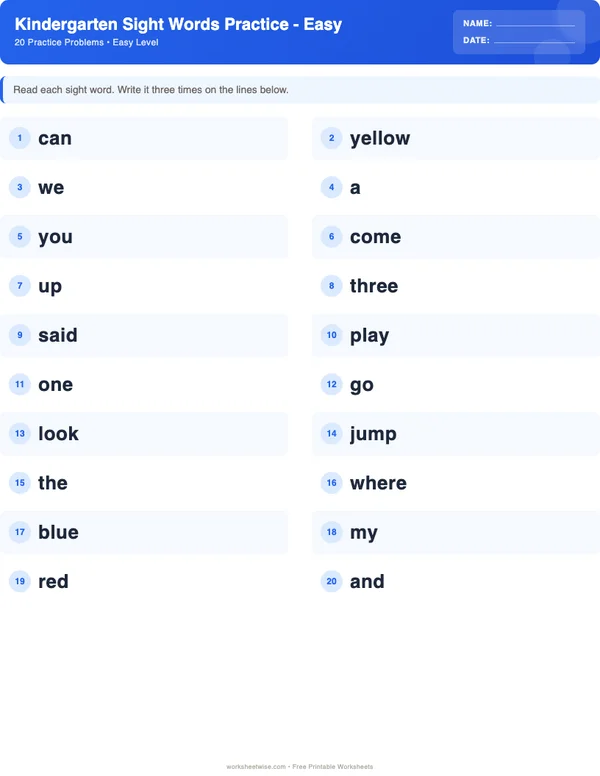
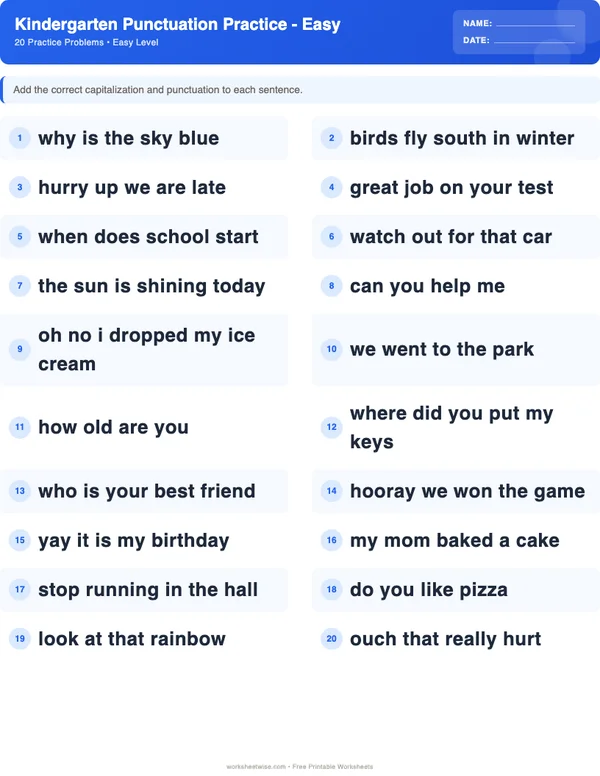
107 relevant free entry points are available. Each one includes a printable learner PDF and separate answer key.
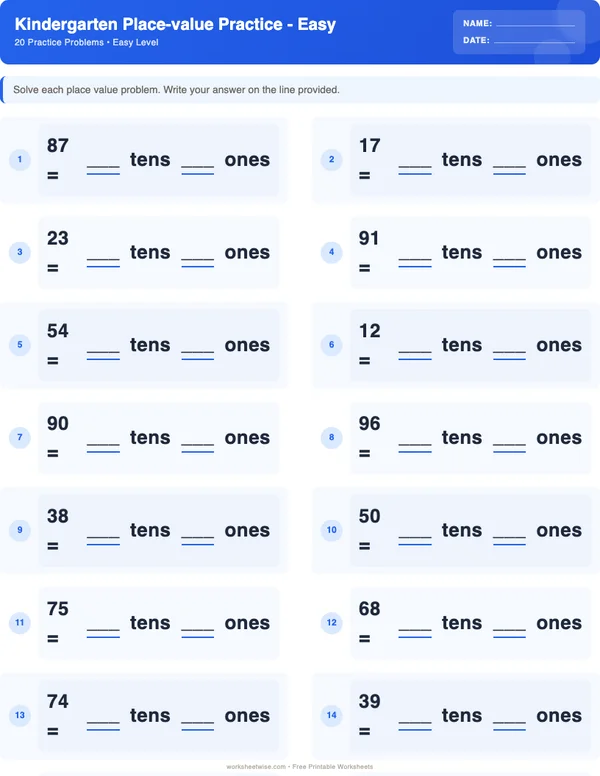
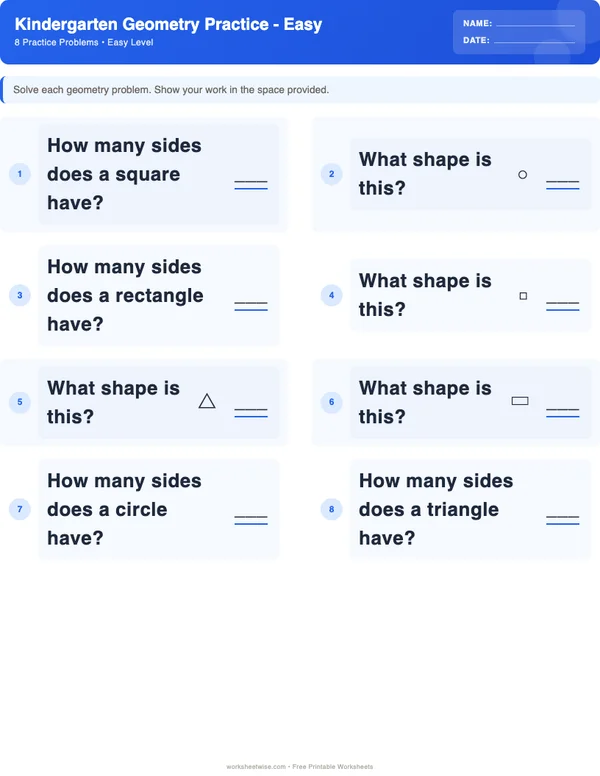
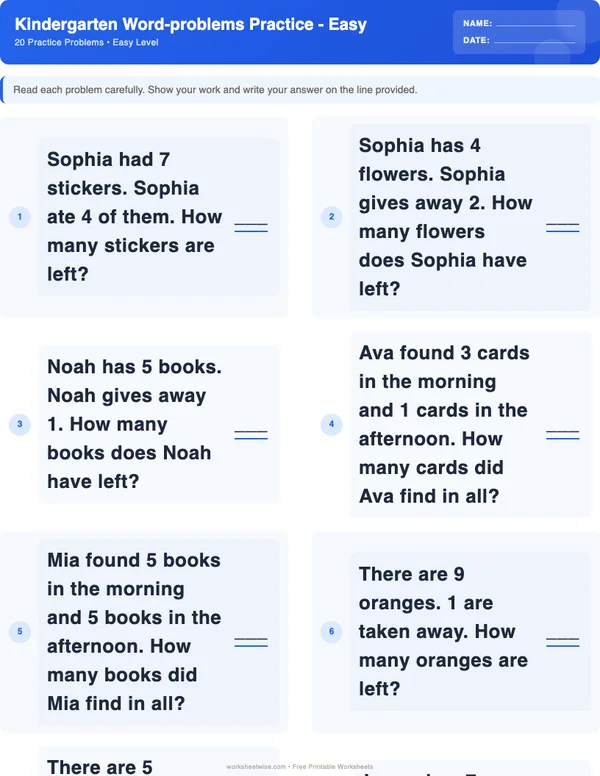
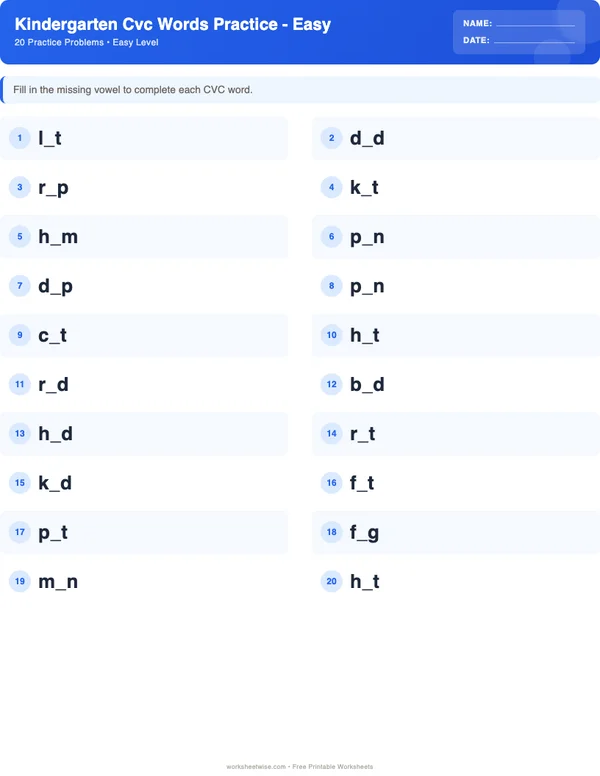
A useful practice loop
Print less. Observe more.
- Choose one skill and model the first item aloud.
- Use a short set and notice the learner’s strategy.
- Change the next task from the work you can see.
Need more than the free sheet?
Plus includes all 642 matching catalogue variations where available, plus saved deterministic generators and the worksheet designer.
See Plus membershipExplore easy and beginner worksheets across grades and subjects by subject or level
Complete guide
How to teach and practise easy worksheets
3,263 words Updated 6 instructional visuals
What “easy and beginner” should look like on the page
An easy or beginner worksheet preserves the skill being practiced while reducing avoidable demands around it. Look for smaller number ranges, fewer responses, one familiar representation at a time, concise directions, visible models, generous workspace, and a clear path from adult support to independent work.
“Easy” describes those observable task features. It does not describe a child. A learner may need beginner-level practice for regrouping, independent-level practice for addition facts, and more demanding work for geometry on the same day. Treat the level as skill-specific and temporary.
The live WorksheetWise catalogue currently places 642 easy variants across eight grades, four subjects, and 23 topics, including 107 free resources. Those counts provide breadth, not a placement rule. Grade and age labels are discovery aids: they help adults find likely material, but the learner’s response to the actual task should determine the next choice. Local curriculum sequences also differ, so a grade label describes intended practice level rather than guaranteed standards alignment.
Use this guide to make five decisions:
- What is the exact target skill?
- Which demands are essential to that skill?
- Which number, language, writing, or representation demands can be reduced?
- What help will be available during the first attempt?
- What observable response will determine the next step?
Define the level through five visible task features
A page belongs at this level when its design allows the adult and learner to concentrate on one target rather than coordinate several new demands at once.
Number range stays within the intended concept
Smaller numbers can expose the mathematical structure without turning calculation volume into the main obstacle. A beginning addition task might use with counters because the target is joining two quantities. A beginning place-value task might ask learners to build 14 as one ten and four ones rather than read, write, compare, and expand several three-digit numbers.
Reducing number size must not erase the target. If the target is regrouping, changing to makes the arithmetic easier but removes regrouping. A better adaptation is to retain , provide base-ten blocks or a tens-and-ones chart, work one problem together, and reduce the total number of problems.
The IES guide for elementary mathematics intervention recommends systematic instruction, clear mathematical language, and well-chosen concrete or semi-concrete representations. That is sourced guidance. The specific choices in this field guide—such as shortening a set or covering part of a page—are practical suggestions for using WorksheetWise materials; IES has not assessed these worksheets.
Response load is deliberately limited
Count all required actions, not just printed problem numbers. One item that asks a learner to read a paragraph, identify data, choose an operation, draw a model, calculate, and explain in a sentence carries more load than one equation.
At this level, prefer:
- One response type within a short set.
- Five carefully observed items over 20 rushed items.
- Circling, matching, pointing, or using tiles when handwriting is not the target.
- One oral explanation after several calculations rather than a written explanation for every item.
- Enough repetition to reveal a pattern, but not so much that fatigue hides what the learner understands.
A catalogue sheet may contain 20 problems; that does not require completing all 20 in one sitting. Fold the page, mark a stopping point, or select every second item. Preserve a clean sample of unaided work near the end so that help does not make the learner’s performance impossible to interpret.
Representation changes are controlled
A representation is the form in which an idea appears: physical objects, pictures, ten frames, number lines, equations, clocks, sound boxes, printed words, or written sentences. Beginner practice usually introduces one representation, connects it explicitly to the target, and avoids switching forms repeatedly within a single item.
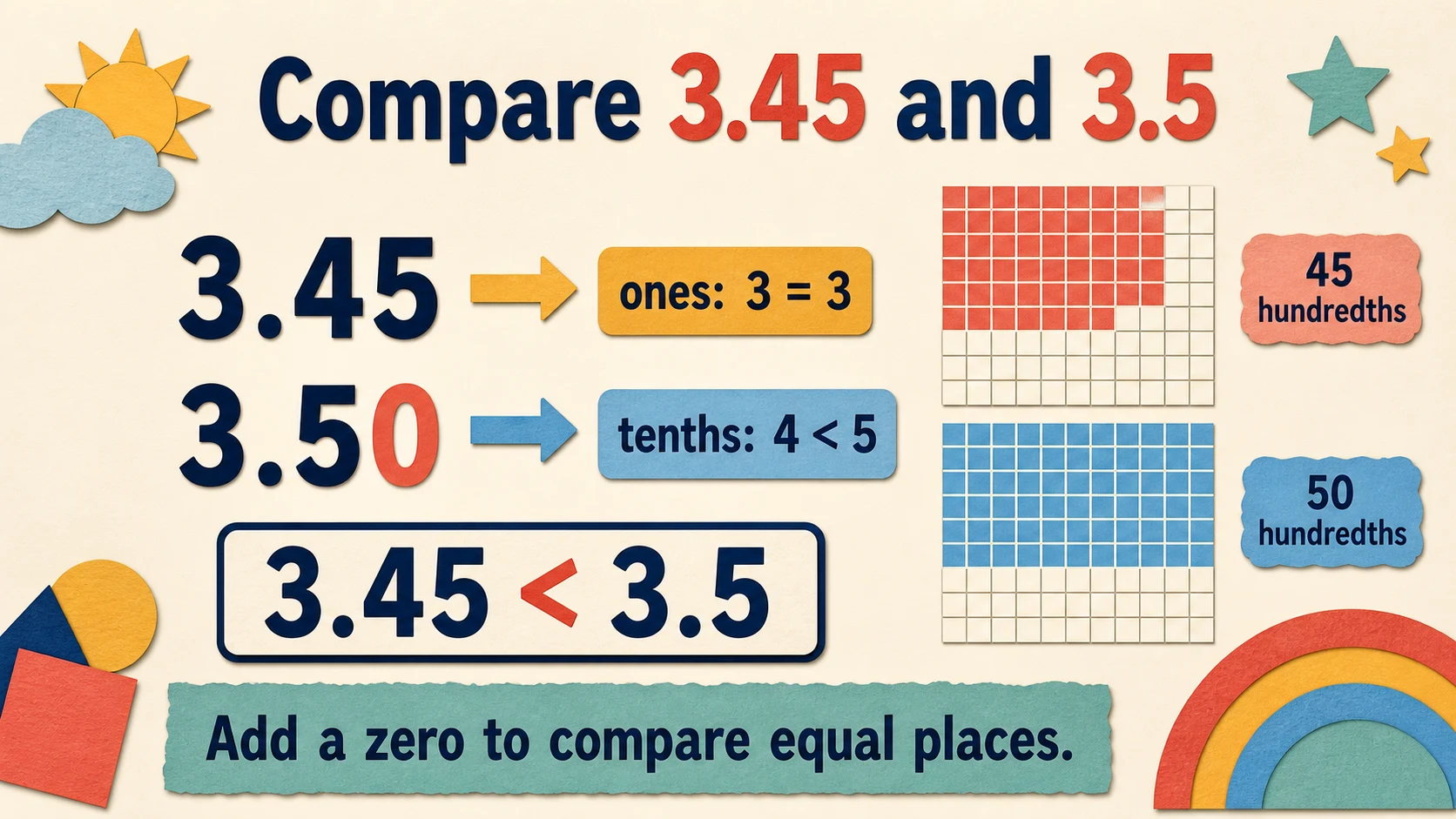
For a third-grade decimal task, the useful beginner feature is the visible bridge from a model to the numeral—not an assumption that every third grader needs the same bridge.
Suppose a shaded model shows 3 tenths and asks for the decimal. The checked answer is : three of ten equal parts are shaded, so the tenths digit is 3. This belongs here when the model remains visible, only tenths are used, and the learner makes one representation change—from a partitioned whole to decimal notation. Adding hundredths, a number line, word form, and a comparison symbol in the same item would create four intertwined demands.
Language is shorter without removing the thinking
Simplifying language means removing unnecessary syntax and unfamiliar context, not inserting operation keywords that give away the reasoning. Compare:
- Overloaded: “After receiving three additional blue marbles from her friend, Maya determines the total quantity in her collection.”
- Focused: “Maya has 5 marbles. A friend gives her 3 more. How many marbles does she have now?”
The second version still requires the learner to recognize a joining situation and calculate . It does not say “add.” For an oral first attempt, the adult can read the problem while the learner models it. If the target is mathematical reasoning, decoding should not become an accidental gate.
Scaffolds are usable and removable
A scaffold should perform a specific job: hold place value, mark sound positions, show where to start, reduce copying, or remind the learner of a routine. It should not silently complete the target step.
Useful examples include:
- Counters that the learner moves, rather than a completed picture.
- Three sound boxes for a CVC word, without letters already supplied.
- A clock with minute marks when the target is reading half hours.
- A sentence frame such as “I know ___ because ___.”
- One fully worked example followed by a nearly identical item.
- A word bank containing plausible choices rather than only the answer.
Write down which scaffold was used. “Solved 4 of 5 with a number line” is more informative than “did well.”
Select a page by skill evidence, not age alone
Start from the learner’s latest observable attempt. Ask what they could do, where the first breakdown occurred, and whether the breakdown concerned the target or an extra demand.
Use age and grade only to find a starting shelf
Age and grade narrow the catalogue. They do not decide placement. A second grader learning English may understand addition stories when they are read aloud but struggle to decode the printed text. A fifth grader may need a concrete decimal model without needing simplified reading. A kindergartner may count 18 objects accurately but not yet write the numerals reliably.
For ages three and four, prioritize brief adult-led oral, matching, manipulative, and movement work over desk work. A printed sheet can supply pictures or prompts, but the activity should remain interactive: touch each object, move a counter, match two cards, say a sound, or hop once per count. Stop before physical restlessness turns into a handwriting test.
The IES early-mathematics practice guide recommends teaching number and operations through a developmental progression, monitoring what children know, and integrating mathematics into daily activity. Applied here, that supports watching a child count real objects before expecting a page of written responses.
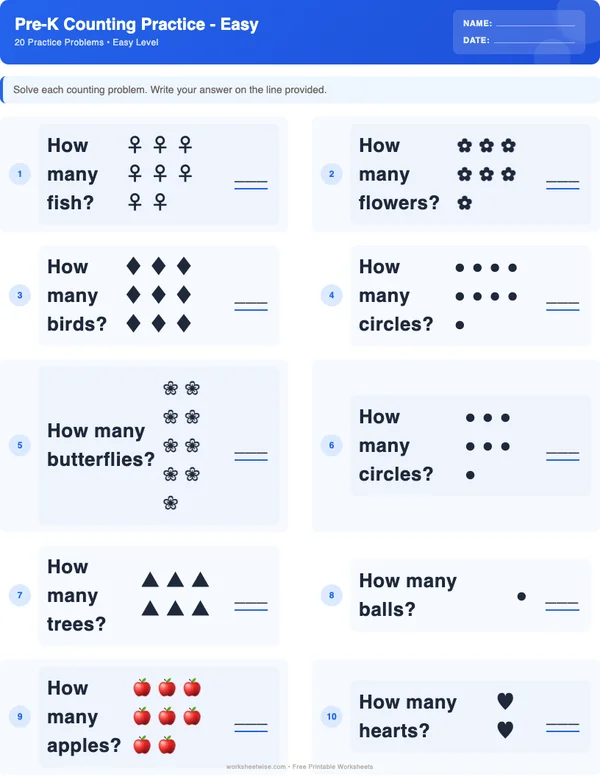
The catalogue’s Pre-K Counting guide and free sheet is therefore best treated as a source of prompts. Put five buttons in a loose arrangement. Ask the child to touch and count each button, then move the counted buttons into a cup. The checked total is 5 if each button receives one count word. This example belongs at the beginner level because it limits the range to five, uses one-to-one action, and requires an oral response rather than sustained desk work.
To probe rather than merely rehearse, rearrange the same five buttons and ask again. If the child says “five” without recounting, that may show that the quantity was retained; if the child recounts accurately, that still provides useful evidence of one-to-one correspondence. Do not turn either response into a diagnosis.
Check prerequisite behavior directly
Before selecting a page, try one short item with no teaching and one after a model. For CVC decoding, show map and ask the learner to read it. If needed, model continuous blending with another word, such as sat, then return to map. For addition, ask , then offer counters if the learner pauses.
Choose beginner practice when the learner can engage with the target after a brief model or a simple representation, but additional demands cause the work to break down. If the prerequisite itself is absent—such as not matching spoken sounds to letters yet—move to that prerequisite instead of repeatedly simplifying a later skill.
Preserve the target while changing the task
A safe adaptation changes access, quantity, or support while leaving the central decision intact.
Mathematics: retain the operation or place-value decision
Consider the fifth-grade addition problem . The checked sum is :
- Ones: ; write 4 and regroup 1 ten.
- Tens: ; write 3 and regroup 1 hundred.
- Hundreds: ; write 1 and regroup 1 thousand.
- Thousands: .
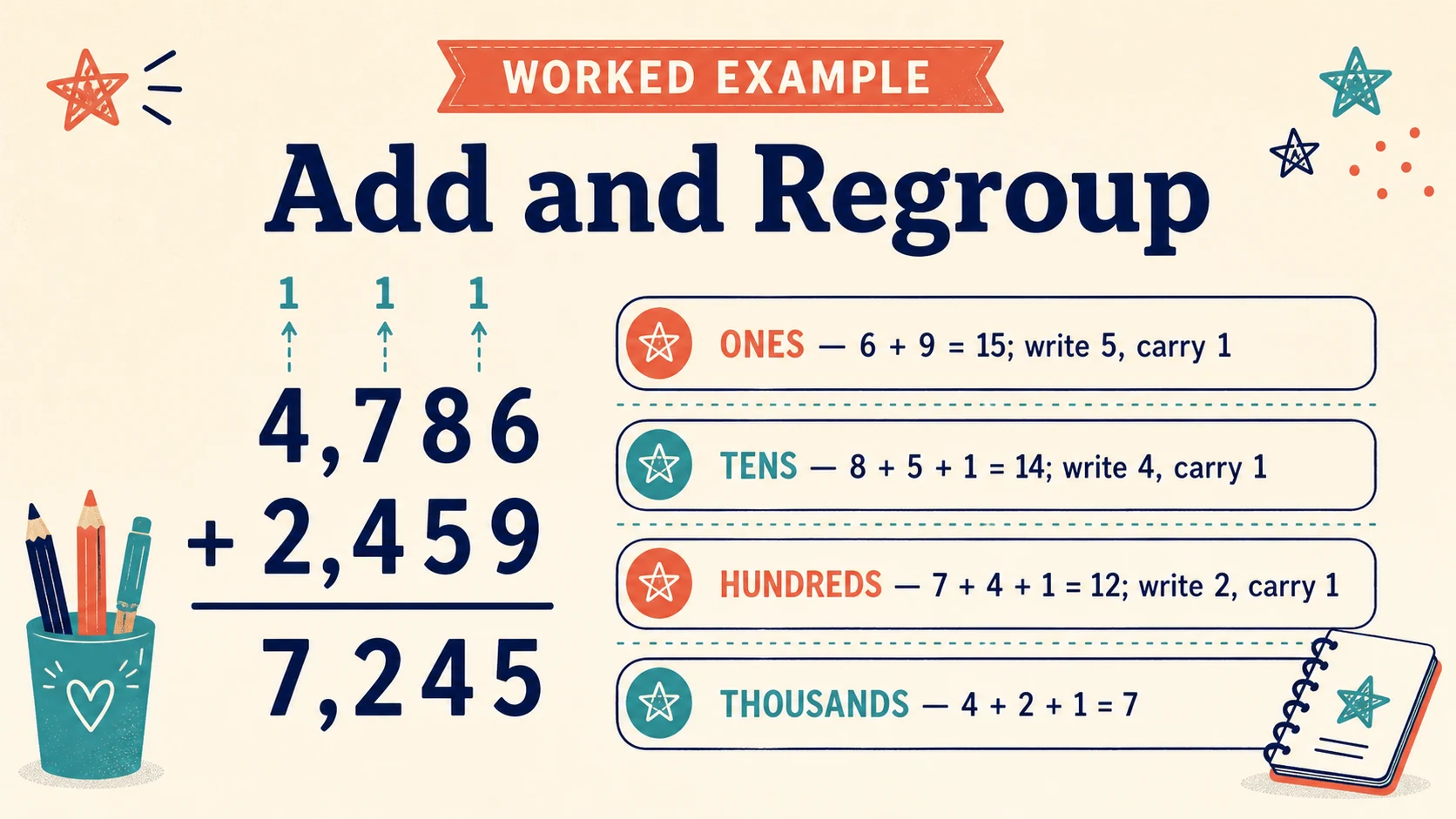
The model earns its place when it makes each regrouping exchange visible while the multi-digit addition target remains unchanged.
This can be beginner-level practice for the skill of multi-digit addition because the adult may reduce the set to three problems, provide a place-value chart, and model the first exchange. Replacing it with would remove regrouping and change the target. The page’s grade label is a catalogue description, not evidence that this exact problem fits every fifth-grade sequence.
For more focused practice, use the Easy and beginner Addition Worksheets. Select items that share one regrouping pattern before mixing patterns. If the learner can explain “14 ones become 1 ten and 4 ones,” remove the blocks on the next item but retain the chart.
Phonics: retain decoding while reducing memory and writing
Use the CVC word ship only after its structure is understood correctly: ship is not CVC because sh is a digraph representing one sound, followed by /i/ and /p/. For beginning CVC practice, choose map: /m/ /ă/ /p/. The checked blend is map, and the checked segmentation contains three phonemes.
A suitable adaptation is to give three sound boxes, have the learner push one token for each sound, and then sweep a finger under the boxes while blending. An unsuitable adaptation is to show the whole word, say “map,” and ask the learner merely to copy it; that changes decoding into copying.
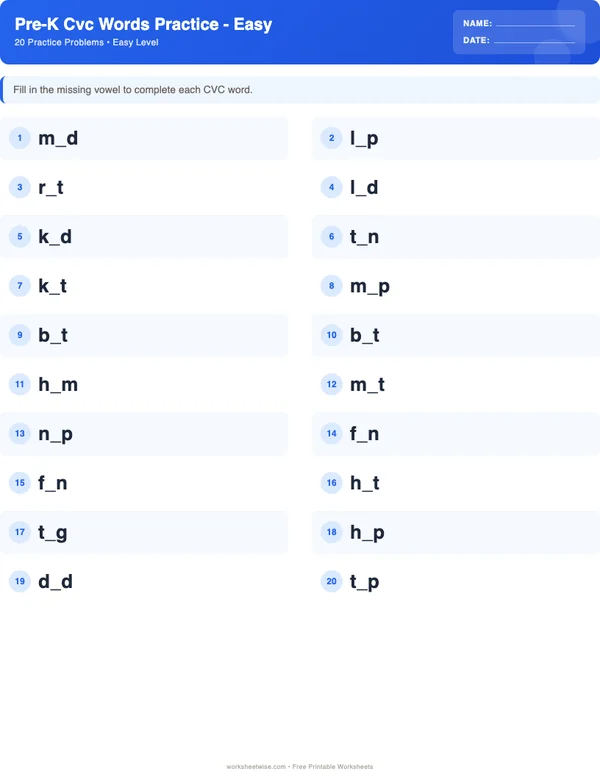
The catalogue’s Pre-K CVC Words guide and free sheet contains 20 problems and covers picture matching, word building, reading, and fill-in work. For beginner use, choose one response form and one vowel pattern for the short session. The IES foundational-reading guide recommends developing awareness of speech sounds and their links to letters, explicitly teaching decoding and word analysis, and giving learners connected-text practice. A short word-building set is therefore one part of instruction, not a complete reading program.
Digraph work illustrates why level must remain skill-specific.
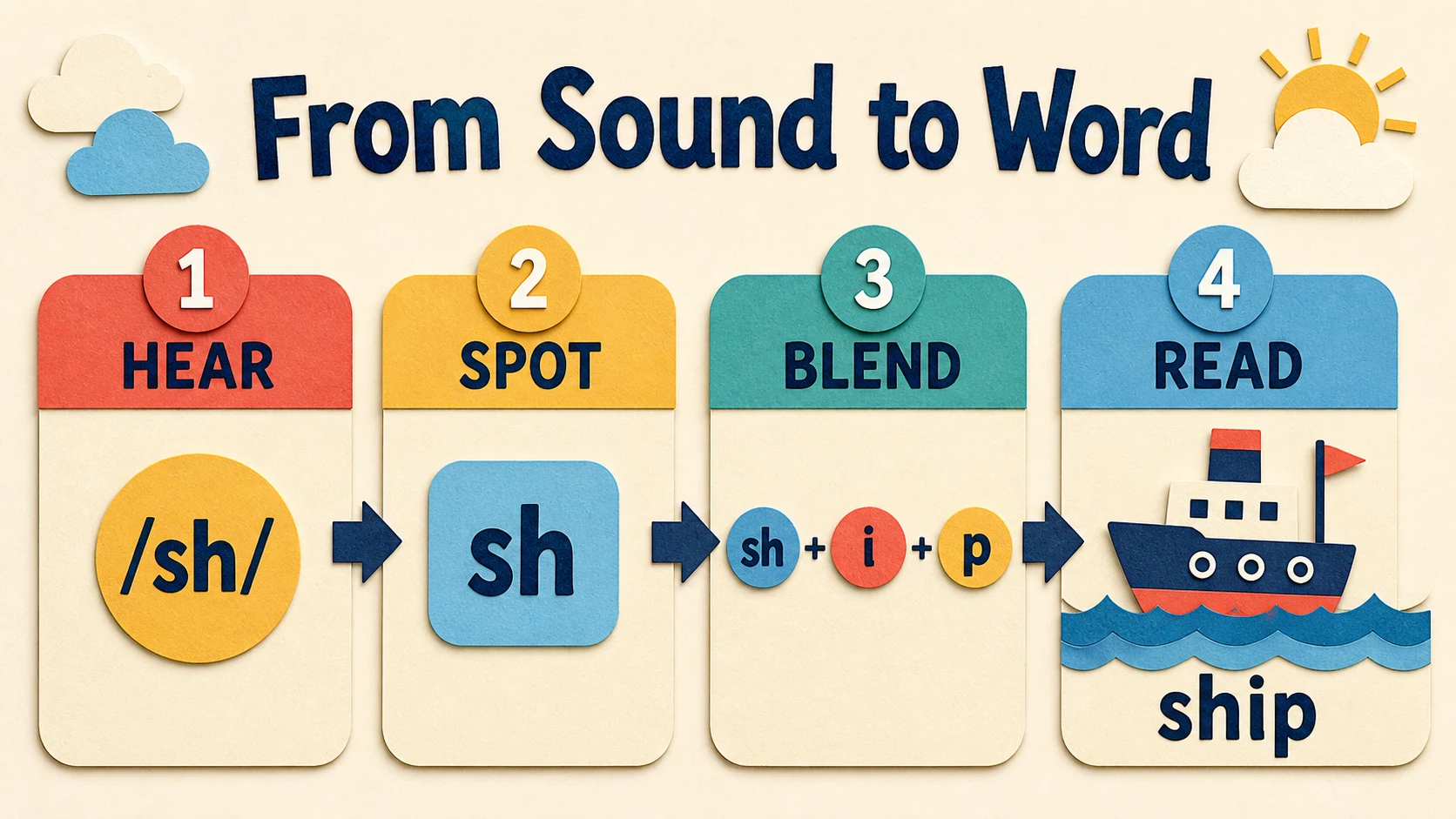
This first-grade progression should change the amount of support while retaining the decision that two letters can represent one sound.
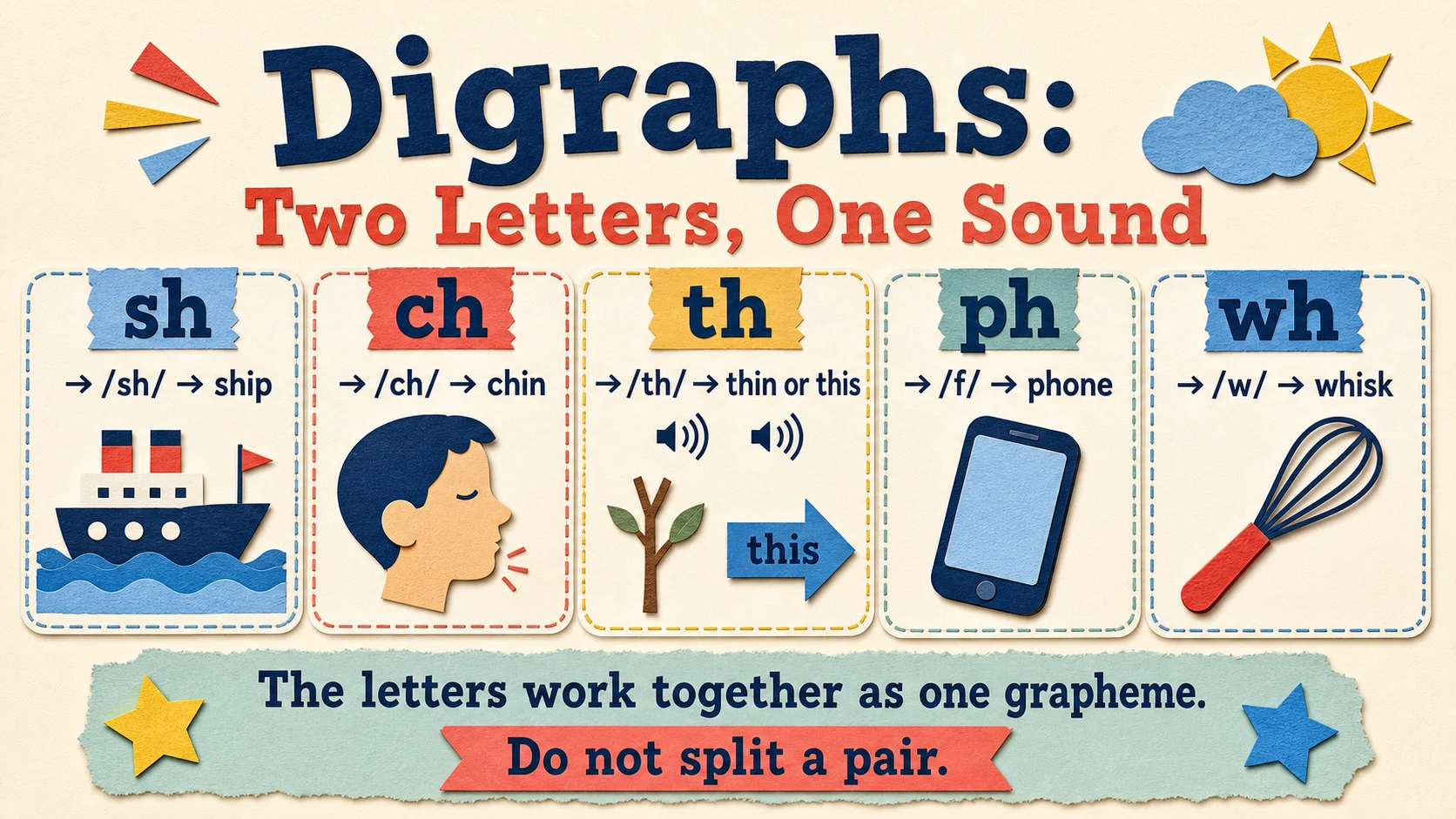
The second-grade map clarifies related digraph demands; it should guide selection, not require every branch in one session.
A checked example is wish. The final sh represents /sh/, so the word has three phonemes: /w/ /ĭ/ /sh/. Beginner practice might ask the learner to underline sh, say the sound, and blend the word. Asking the learner to sort initial and final digraphs, spell every word, and write sentences would add classification, encoding, and composition to the same target.
Time: retain clock reading while reducing visual complexity
For a clock with the minute hand on 6 and the hour hand halfway between 3 and 4, the checked time is 3:30. The hour is still 3 because the hour hand has not reached 4; the minute hand indicates 30 minutes.
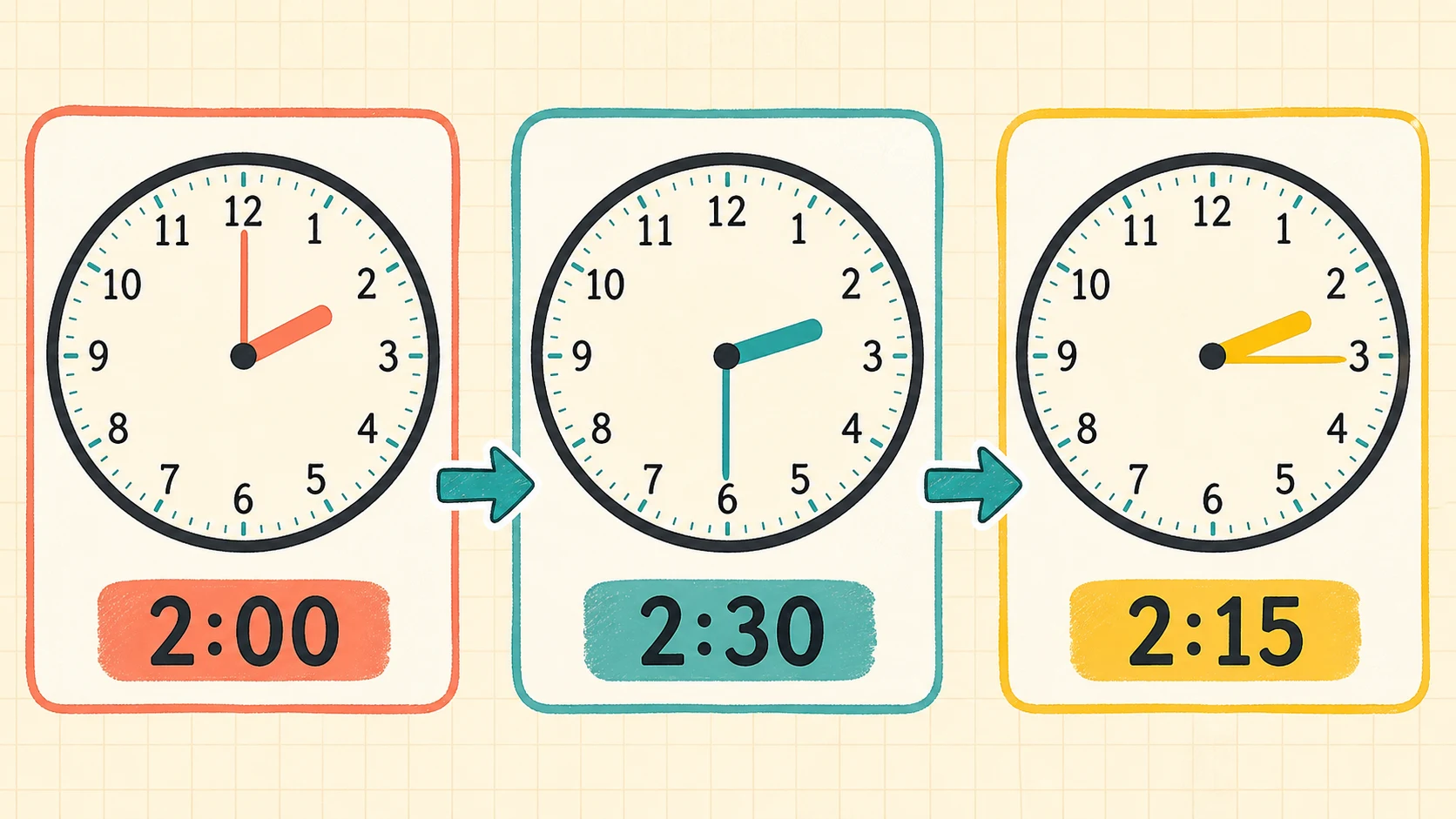
The first-grade sequence is beginner-friendly when minute marks and adult prompts fade only after the learner can coordinate both hands.
Begin with labeled hour numbers and visible five-minute marks, even if the target is only half hours. Ask, “Where is the minute hand? Which hour has the short hand passed?” Then reduce the prompt to “What time?” Do not simplify by showing only a digital clock; that removes the analog-reading target.
Writing and content responses: reduce transcription, not ideas
If the target is composing a complete sentence about an observed picture, let the learner say the sentence first. The adult may record key words, offer a sentence starter, or provide spelling for one irregular word. The learner should still decide what the sentence communicates.
The IES elementary-writing guide recommends daily time for writing, teaching the writing process, developing foundational transcription skills, and creating an engaged community of writers. For beginner worksheet use, those recommendations support brief, purposeful writing with explicit instruction; they do not justify completing sentences for a learner or treating a worksheet as the whole writing curriculum.
Use a short routine that produces interpretable evidence
A worksheet session should reveal what to do next. The following routine works across counting, addition, phonics, time, and short writing tasks.
Preview, model, try, fade, record
- Name one target. Say, “Today we will read words with sh,” not “We are doing phonics.”
- Remove irrelevant load. Choose a short set, cover later rows, read directions aloud if reading is not the target, and prepare one representation.
- Model one example. Think aloud only about the target: “Two letters, s and h, work together for /sh/.”
- Complete one together. Prompt the learner to perform the crucial step rather than watch.
- Assign two or three similar items. Use the same representation and wording so the target stays stable.
- Fade one support. Remove the example, turn over the word bank, or ask the learner to choose the tool.
- End with one independent check. Do not coach during this item.
- Record observable evidence. Note the response, support, error pattern, and next adjustment.
Keep the final note concrete: “Read ship, shop, and fish with the digraph marked; read wish independently after a five-second pause.” Avoid identity statements such as “is an easy-level reader.”
Interpret errors before changing levels
An incorrect answer is a clue, but one error rarely identifies its cause. Compare responses across two or three closely related items and ask the learner to show or explain the step.
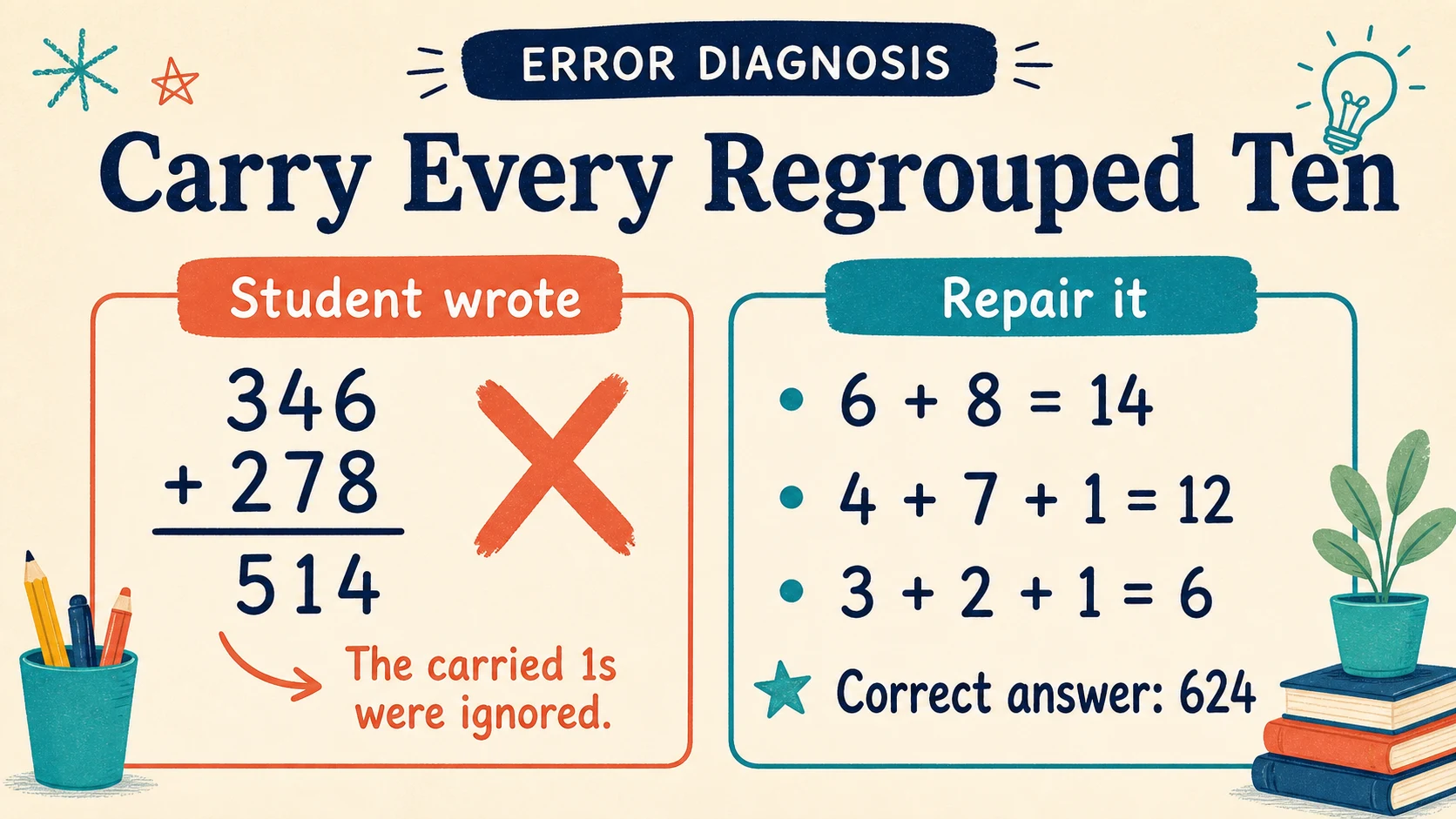
These third-grade addition patterns are prompts for follow-up questions, not diagnoses or fixed learner categories.
Suppose the problem is , whose checked answer is 75.
- Answer 65: Ask the learner to build 47 and add 28 with base-ten blocks. The result may reflect a missed regrouped ten, but verify rather than assume.
- Answer 615: Ask what happened to the 15 ones. The learner may have written partial results side by side instead of exchanging 10 ones for 1 ten.
- Answer 75 with no explanation: Give and ask the learner to show the exchange. One correct answer does not establish that the place-value reasoning is secure.
- Correct with blocks, incorrect without them: Keep the target and reduce the representation gradually. This is evidence about current independence, not a reason to label the learner.
For phonics, reading ship as sip may indicate that one letter of the digraph was processed separately or omitted. Ask the learner to point to the letters representing each sound. For counting, saying six count words while touching five objects may show a coordination error; repeat with the objects spaced farther apart. For time, answering 4:30 instead of 3:30 may show attention to the hour the hand approaches rather than the hour it has passed.
When mistakes scatter without a pattern, check non-skill factors: unclear printing, unfamiliar vocabulary, visual crowding, fatigue, pencil control, or a direction that changes midway. These are hypotheses for the next trial, not diagnoses.
Decide when to keep, fade, or increase support
Use the independent check at the end of the routine.
Keep the same level and scaffold when the learner performs the target accurately only with that scaffold and can explain how it helps. Change one feature at a time: shorten the number line, remove labels from the clock, or leave sound boxes blank.
Fade support when the learner completes several comparable items accurately, initiates the routine without prompting, and can recover from an error. The next page should not jump simultaneously in number size, language complexity, representation changes, and response count. Increase one demand so the source of success or difficulty remains visible.
Move to Developing Worksheets Across Grades and Subjects when the learner is ready for a broader range, less prompting, or an additional representation while practicing the same skill. Use Advanced Worksheets Across Grades and Subjects only when the task features fit the current goal; it is not a reward or a permanent destination.
Move backward to a prerequisite when the learner cannot perform the target after direct modeling and an appropriate concrete or visual support. For example, repeated failure to decode CVC words may call for oral sound-segmentation and letter-sound work. Repeated counting errors may call for touching and moving small sets before missing-number sequences.
Know what these pages cannot decide
A worksheet offers a bounded sample of performance. It cannot determine a diagnosis, explain a persistent difficulty by itself, establish full mastery, or represent everything a learner knows. It also cannot replace oral discussion, manipulatives, movement, connected reading, authentic writing, or instruction responsive to the learner’s questions.
Do not infer standards alignment from the level or grade label alone. The Common Core mathematics standards organize expectations by grade and mathematical practice, but states, districts, schools, and other jurisdictions may use different standards or sequences. Check the actual skill and local curriculum before assigning a page.
Likewise, a high score may reflect memorized items, adult prompting, or familiarity with one representation. A low score may reflect language, handwriting, attention, visual layout, or an unfamiliar direction rather than absence of the target knowledge. Compare work across formats and days, and consult the learner’s teacher or an appropriate qualified professional when difficulties are persistent or consequential.
Make the next selection from one observed response
Choose one skill, one brief set, and one support today. For a young counter, open the Pre-K Counting guide and free sheet, select five items or use its pictures as oral prompts, and place five movable objects beside the page. For an older learner, use the full worksheet library to find the exact topic, then inspect the actual number range, response count, language, representation, and scaffold before printing.
After one modeled item and two supported attempts, give one comparable item independently. Record exactly what happened: “counted five scattered buttons by touching each once,” “read wish after marking sh,” or “solved with a place-value chart.” Let that observation—not age, grade, or an “easy” label—choose tomorrow’s page and the single support you will keep or fade.
Put it into practice
Use the guide with a real printable
Move from explanation to a short, observable practice task. Check the first item together, then adjust the next session from the learner's actual work.
Open the first free worksheetExplore a neighboring collection
Choose by a different teaching need
Advanced Worksheets Across Grades and Subjects Developing Worksheets Across Grades and Subjects Easy and Beginner Addition Worksheets Easy and Beginner Counting Worksheets Easy and Beginner Division Worksheets Easy and Beginner Fractions Worksheets Easy and Beginner Geometry Worksheets Easy and Beginner Money Worksheets