Curated collectionAnswer keys includedPrint-ready PDFs
Independent Practice Math Worksheets
Make directions, examples, response space and answer-key timing support honest independence after a skill has been taught.
Start with a real resource
Browse this worksheet collection
61 relevant free entry points are available. Each one includes a printable learner PDF and separate answer key.
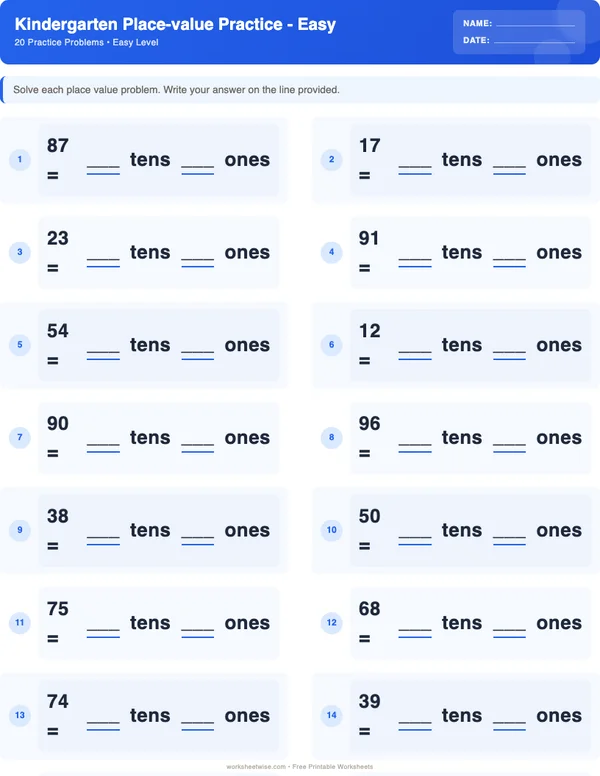
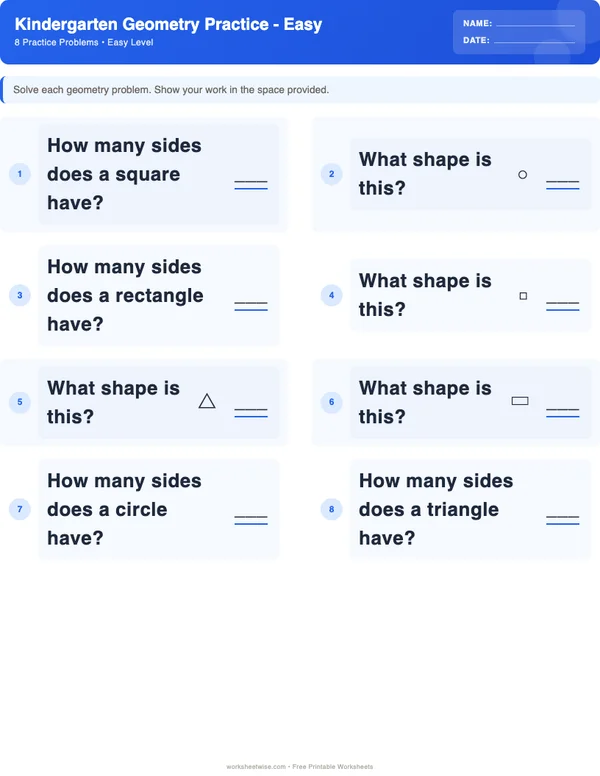
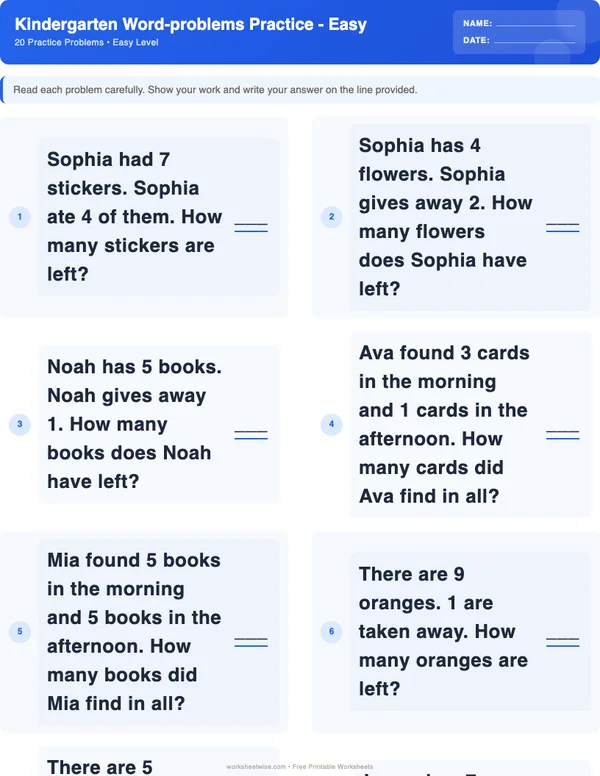
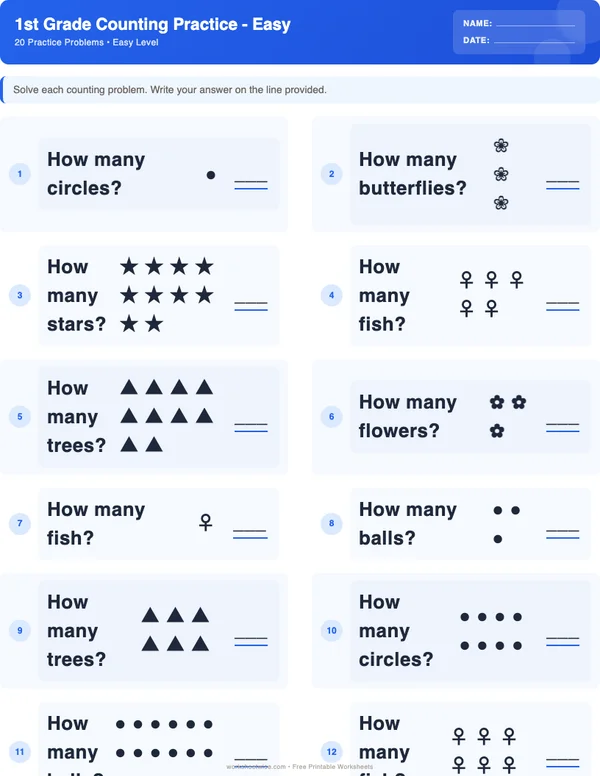
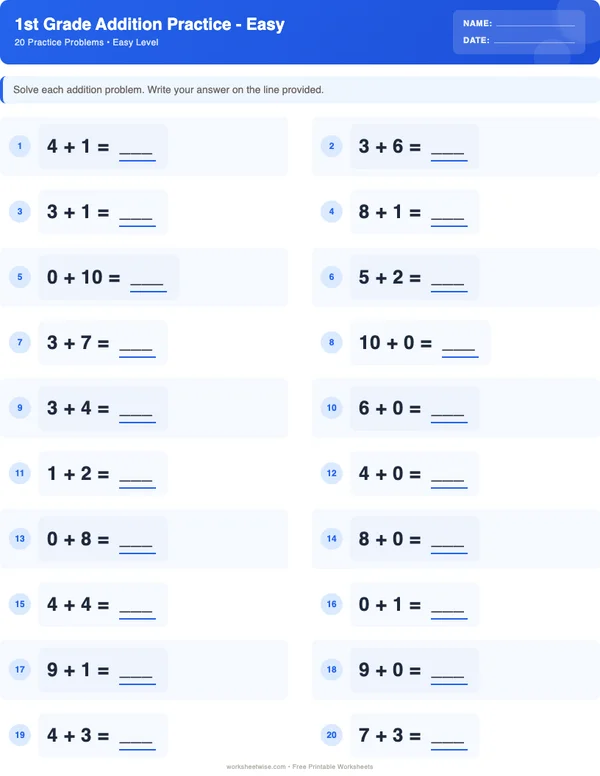
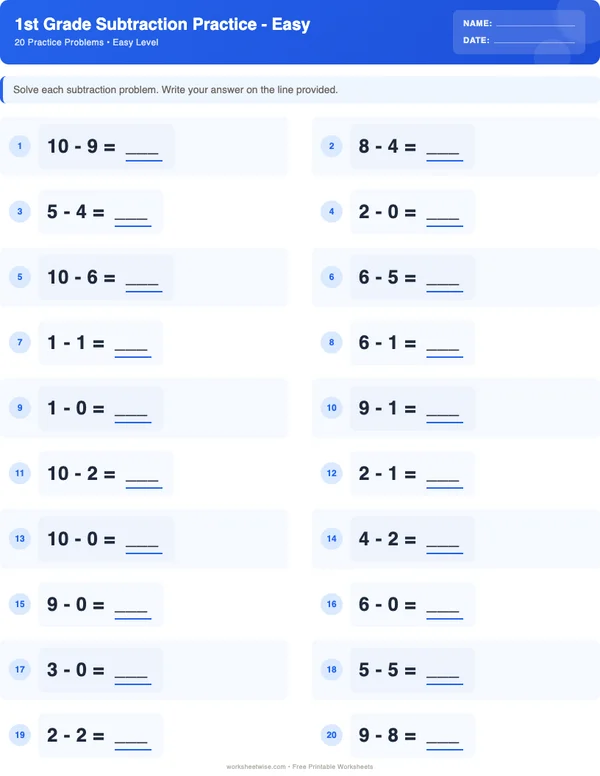
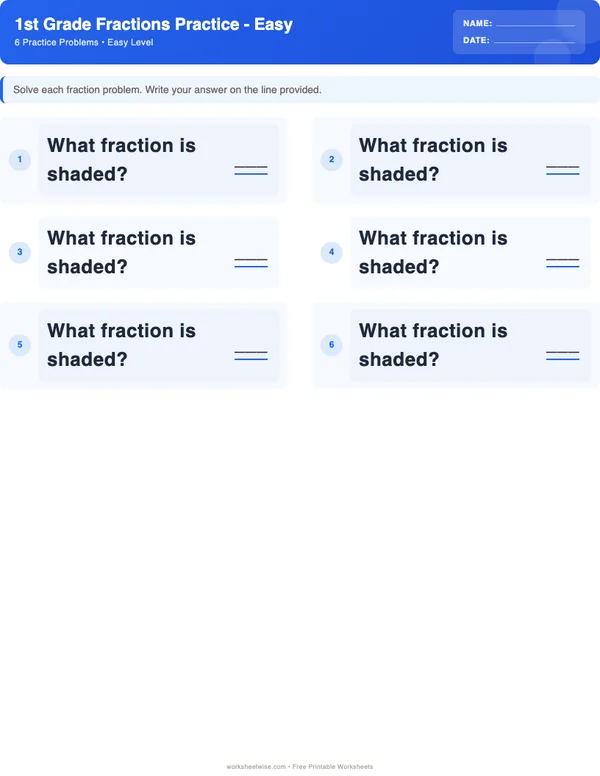
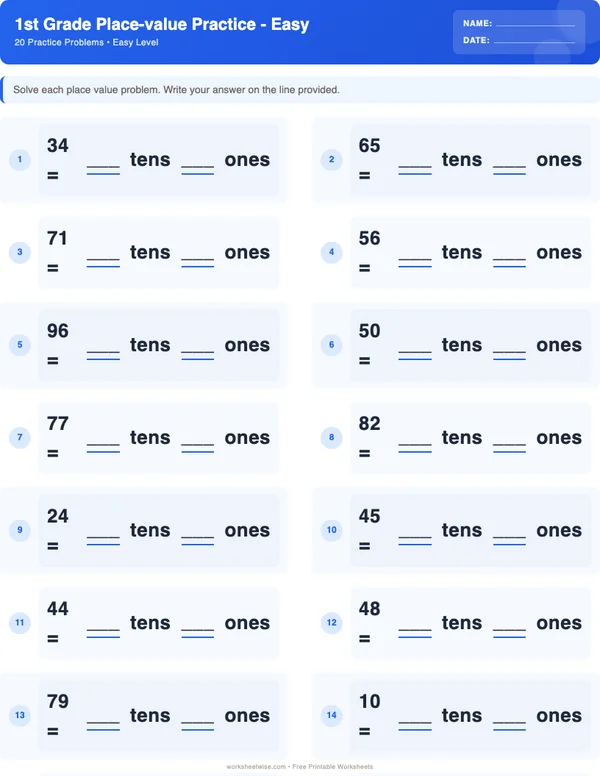
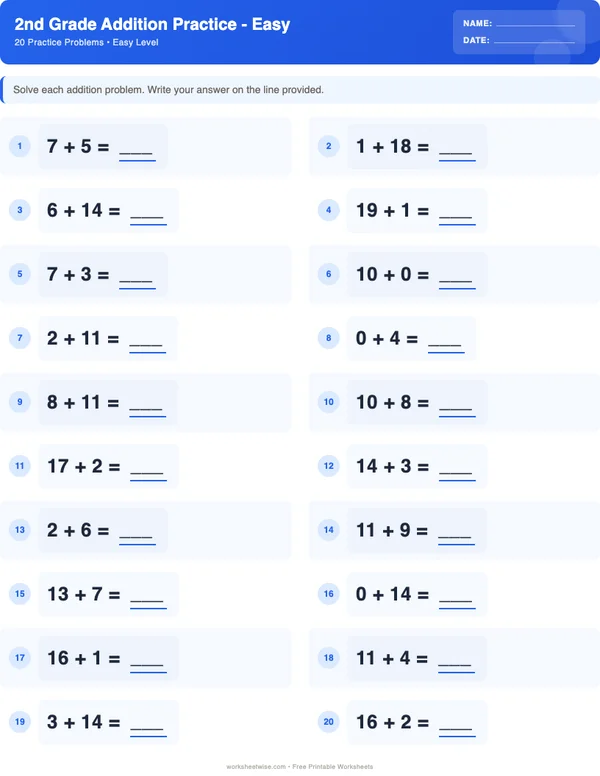
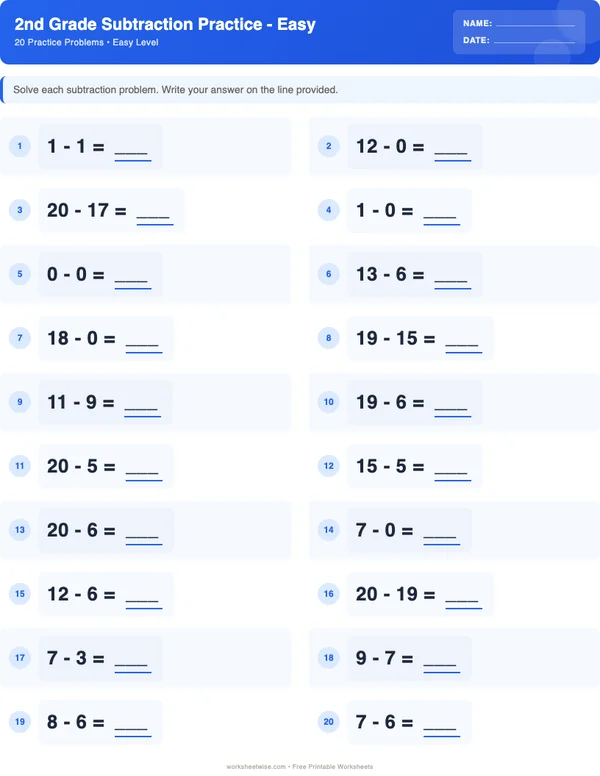
A useful practice loop
Print less. Observe more.
- Choose one skill and model the first item aloud.
- Use a short set and notice the learner’s strategy.
- Change the next task from the work you can see.
Need more than the free sheet?
Plus includes all 1098 matching catalogue variations where available, plus saved deterministic generators and the worksheet designer.
See Plus membershipComplete guide
How to teach and practise independent-practice math worksheets
3,780 words Updated 6 instructional visuals
Build independence only after the mathematics is familiar
Independent math practice should let a learner apply a taught idea without having to decode a new method, guess what the directions mean, or wait for an adult to confirm every answer. Choose a sheet whose model, numbers, response format, and amount of work resemble the instruction the learner has already received. Review one example together, confirm what may be used—counters, a number line, scratch paper, or a place-value chart—and then step back.
The WorksheetWise catalogue currently includes 1,098 math worksheet variants across eight grade labels and 12 topics, with 61 free resources. That breadth makes selection important. A worksheet is not suitable merely because its grade label matches the learner’s grade. Grade labels describe intended practice level; local curriculum sequences differ. Age is also a discovery aid, not a placement decision. The deciding question is more concrete: Can this learner understand the task and begin a known strategy without fresh teaching?
Honest independence does not mean removing every support. A ten frame used during instruction can remain available during practice. A worked example can clarify how to record an answer. Reading a direction aloud can remove a reading barrier without solving the mathematics. Independence becomes dishonest when an adult demonstrates each new item, points to the next step, corrects every error immediately, or leaves an answer key visible enough to turn practice into copying.
This guide uses a simple cycle:
- Select one already-taught mathematical target.
- Preview the directions, model, response format, and workload.
- Complete a brief launch together.
- Let the learner work through a defined independent block.
- Delay the answer key until reasoning has been recorded.
- Sort errors by likely cause.
- Choose the next sheet from the error pattern—not from the score alone.
Select the mathematical demand before the grade label
The catalogue’s representative resources range from Pre-K counting to first-grade fractions, place value, telling time, and money. Even within a single grade label, these tasks demand different models and forms of reasoning. A learner who independently adds within 10 may still need adult-led work to compare fractional parts or count mixed coins.
Define difficulty through visible task features
Catalogue resources may carry a difficulty label such as “easy.” Treat that as a filter, not a description of the learner. Define the actual challenge by inspecting the page:
- What number range appears?
- Are objects, pictures, or symbols used?
- Does every item follow the same structure?
- Is the unknown always in the same position?
- Must the learner write a numeral, draw a model, select an option, or explain?
- Does the task require one operation or several decisions?
- Are visual supports present?
- How many problems appear?
- Is reading needed to access the mathematics?
- Is regrouping, unit conversion, or comparison involved?
A 20-problem counting sheet with pictured sets may be accessible after one-to-one counting has been taught. A 12-problem word-problem sheet may be more demanding even with fewer items because the learner must understand each situation, choose an operation, model it, and calculate. Likewise, six fraction items can require more reasoning than 20 familiar addition facts.
The Common Core State Standards for Mathematics can help adults inspect how representations and expectations change across grade-level descriptions, but a standards document does not determine whether a particular learner is ready to complete a particular sheet independently. Use it as one planning reference alongside local instruction and direct observation.
Match the sheet to the representation already taught
A sound progression often moves from action with objects, to a drawing or diagram, to numerals and symbols. The catalogue guidance for counting, addition, subtraction, place value, fractions, geometry, money, and time repeatedly recommends concrete or visual experience before abstract recording. That catalogue guidance is page-specific selection information; it is not presented here as a claim that WorksheetWise materials were evaluated by an outside organization.
For young learners, compare the page with the immediately preceding lesson. If instruction used counters to solve , independent practice might show pictured objects or permit counters while the learner records . A bare page of equations may be premature if the learner still loses track without touching or moving objects.
For ages three and four, prioritize brief adult-led oral, matching, manipulative, and movement work over desk work. The Pre-K Counting guide and free sheet can help an adult see the target, but the sheet should not replace counting real objects, matching one object to one spoken number, hopping through a sequence, or noticing how many objects remain after a set is rearranged.
Audit directions, examples, response space, and workload
Before handing over a page, solve representative items yourself. This catches ambiguous wording, cramped spaces, an unfamiliar model, or an unintended prerequisite. It also tells you what a correct response should contain.
Make the direction testable
A usable direction names both the action and the response:
- “Count the objects. Write the total.”
- “Build each number with tens and ones. Write the number.”
- “Solve. Show one regrouping step.”
- “Read the story. Draw a model and write an equation.”
After reading it, ask the learner, “What will you do first, and what will you put in the answer space?” If the learner cannot explain the action, clarify the direction before independent work begins. Do not wait for ten blank or misformatted responses to reveal a direction problem.
Reading a direction aloud is an access support when reading is not the target. Paraphrasing every word problem, identifying the operation, or telling the learner which numbers to use changes the mathematical task.
Use one worked example without turning every item into guided practice
A worked example should reveal the expected model and response format. It should not introduce a strategy the learner has never used. Cover the answer, ask the learner to explain the shown steps, then uncover it and compare.
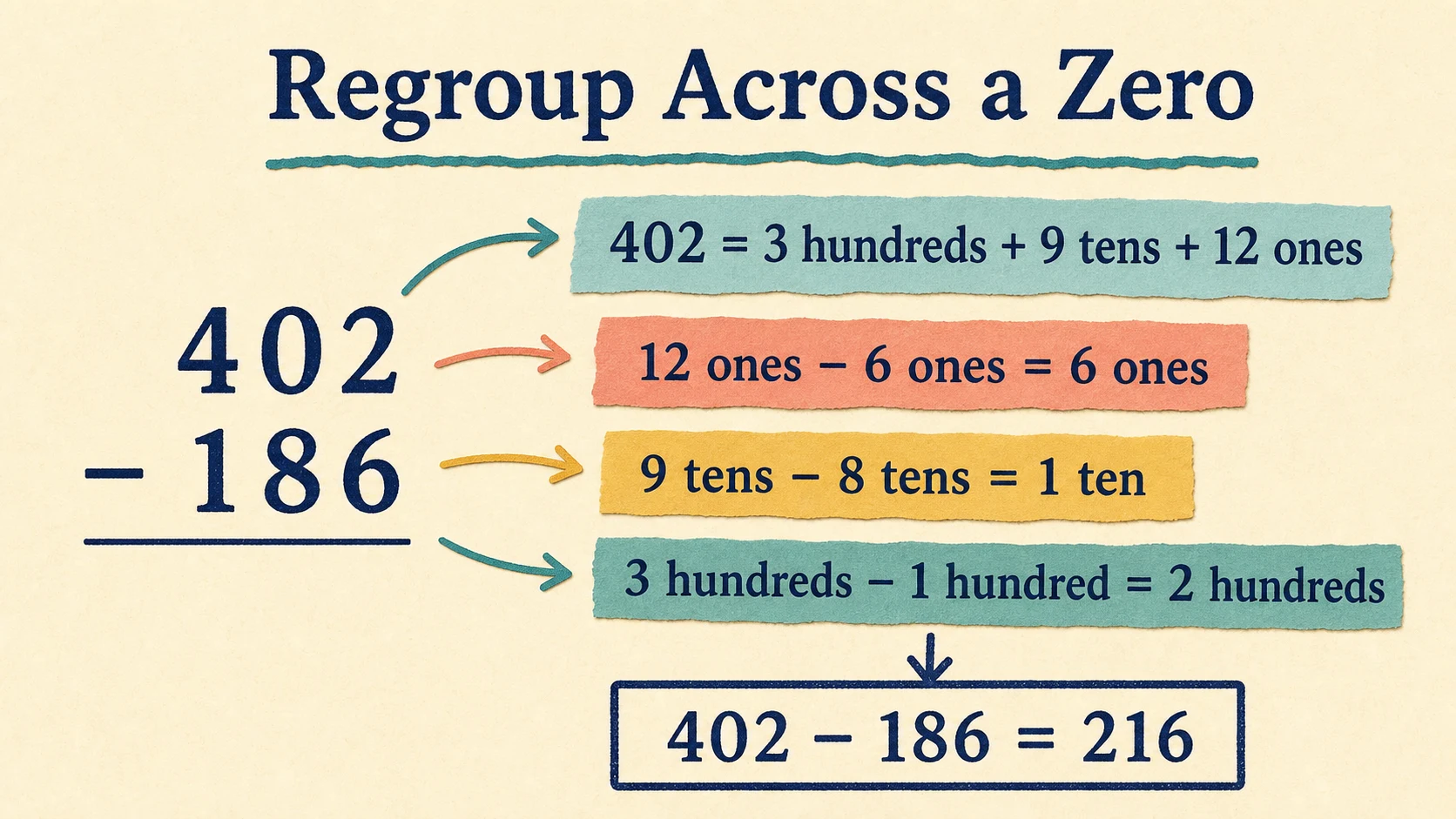
Use the subtraction model to confirm that trading a ten for 10 ones and recording the result are already familiar before assigning parallel items.
Consider . A checked regrouping model starts with 4 tens and 3 ones. Because 3 ones cannot supply 5 ones, exchange 1 ten for 10 ones: the quantity becomes 3 tens and 13 ones. Then and , so the answer is . Check by addition: .
This example belongs in independent-practice planning because it separates three demands: understanding the exchange, carrying out the subtraction, and recording the altered place values. If the worksheet’s example shows only crossed-out digits while instruction used physical base-ten blocks, the learner may need a short bridge from blocks to the written notation before working alone.
Fit the response space to the required reasoning
A small blank is enough for a single numeral. Regrouping needs vertically aligned columns or scratch space. Fraction comparison may need room for strips or number lines. Word problems need separate places for a model, equation, and answer.
Do not require elaborate written explanations when the target is basic computation unless explanation was taught as part of the task. Conversely, do not accept an unexplained numeral when the purpose is to model a story relationship. Response format is part of the mathematics, not decoration.
Launch a repeatable independence routine
A predictable routine reduces procedural questions while preserving the need to think.
Use a two-minute launch
Begin with four checks:
- Target: “Today you are practicing adding within 10 by making or seeing groups.”
- Tools: “You may use the ten frame and counters.”
- Response: “Write one numeral in each box.”
- Stop rule: “If you are stuck, circle the item, try the next one, and ask after two circled items.”
Then have the learner complete one sample. Ask for a brief explanation rather than simply confirming the answer. If the explanation shows that the strategy is unfamiliar, stop and teach; do not relabel guided instruction as independent practice.
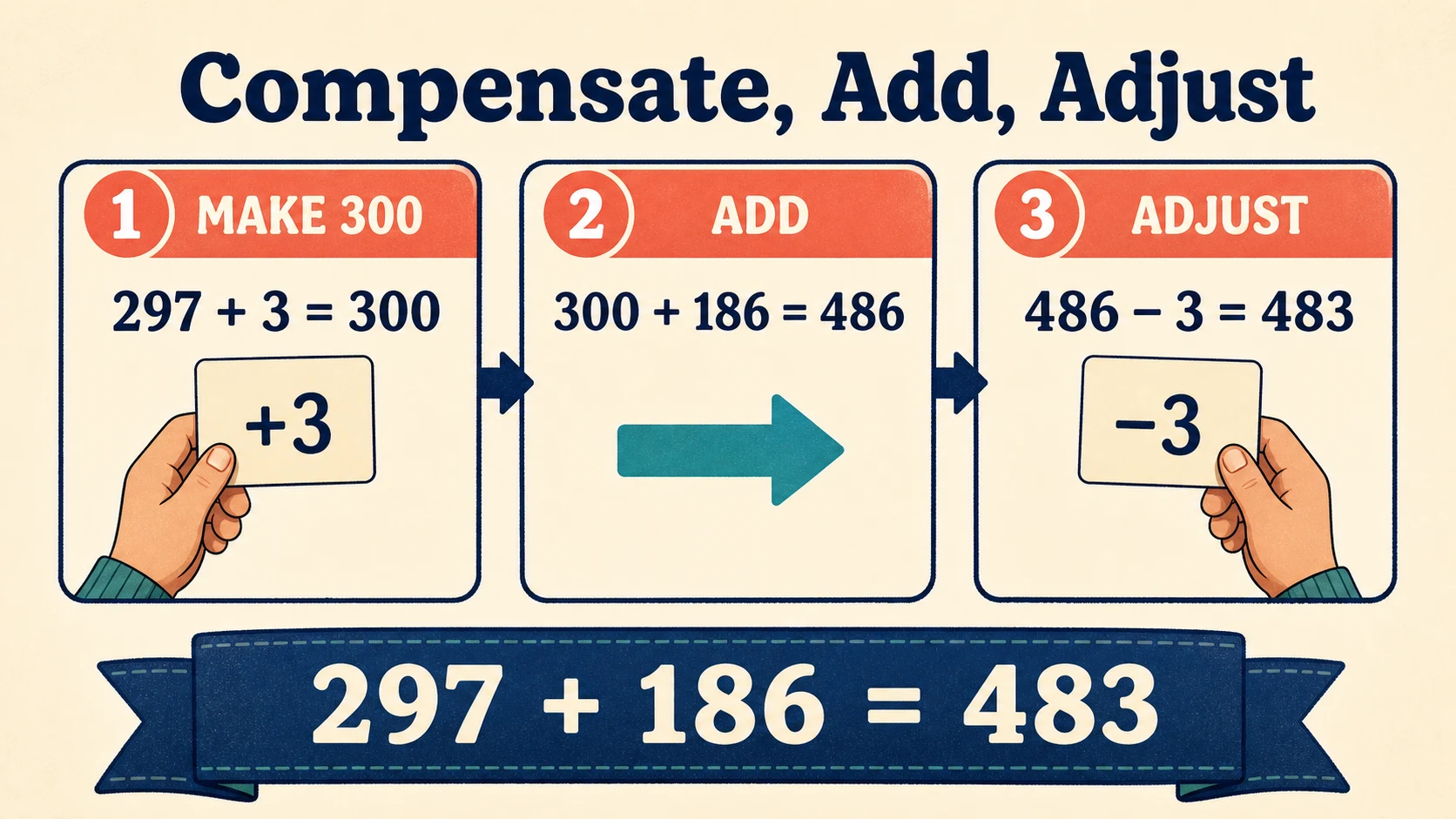
Keep the addition launch short enough that the learner, rather than the adult, performs the recurring decisions on the page.
For example, solve after a make-ten strategy has been taught. Decompose into , combine , and then add to get . Check: . This example belongs because it lets an adult ask a precise readiness question: Can the learner choose the part that completes 10, or does the adult still have to supply the 2? If the prompt must be supplied repeatedly, select a sheet with ten frames or return briefly to modeled instruction.
Step back during the work block
Choose a manageable block rather than automatically requiring the entire page. For a 20-problem sheet, the first independent block might be one row or five items. That is a suggested starting point, not an externally sourced rule. Increase the block when the learner maintains the method and attention; shorten it when fatigue obscures what the learner understands.
During the block:
- Do not hover over each answer.
- Do not use facial expressions to signal correctness.
- Record repeated requests for help.
- If necessary, reread the same direction without adding a hint.
- Let the learner circle an item and continue.
- Intervene when the learner is practicing a clearly incorrect procedure across multiple items.
The IES guide on assisting students who struggle with mathematics recommends systematic instruction, clear mathematical language, representations, number-line work, and attention to word problems. Those principles support explicit teaching before independence and purposeful feedback afterward. They do not mean every support belongs on every sheet.
Use a consistent end-of-work check
Ask the learner to mark:
- one answer they checked,
- one item that felt uncertain,
- and one model or strategy they used.
This produces better evidence than “Was it easy?” It also reveals whether an answer was reasoned, guessed, or copied from a nearby pattern.
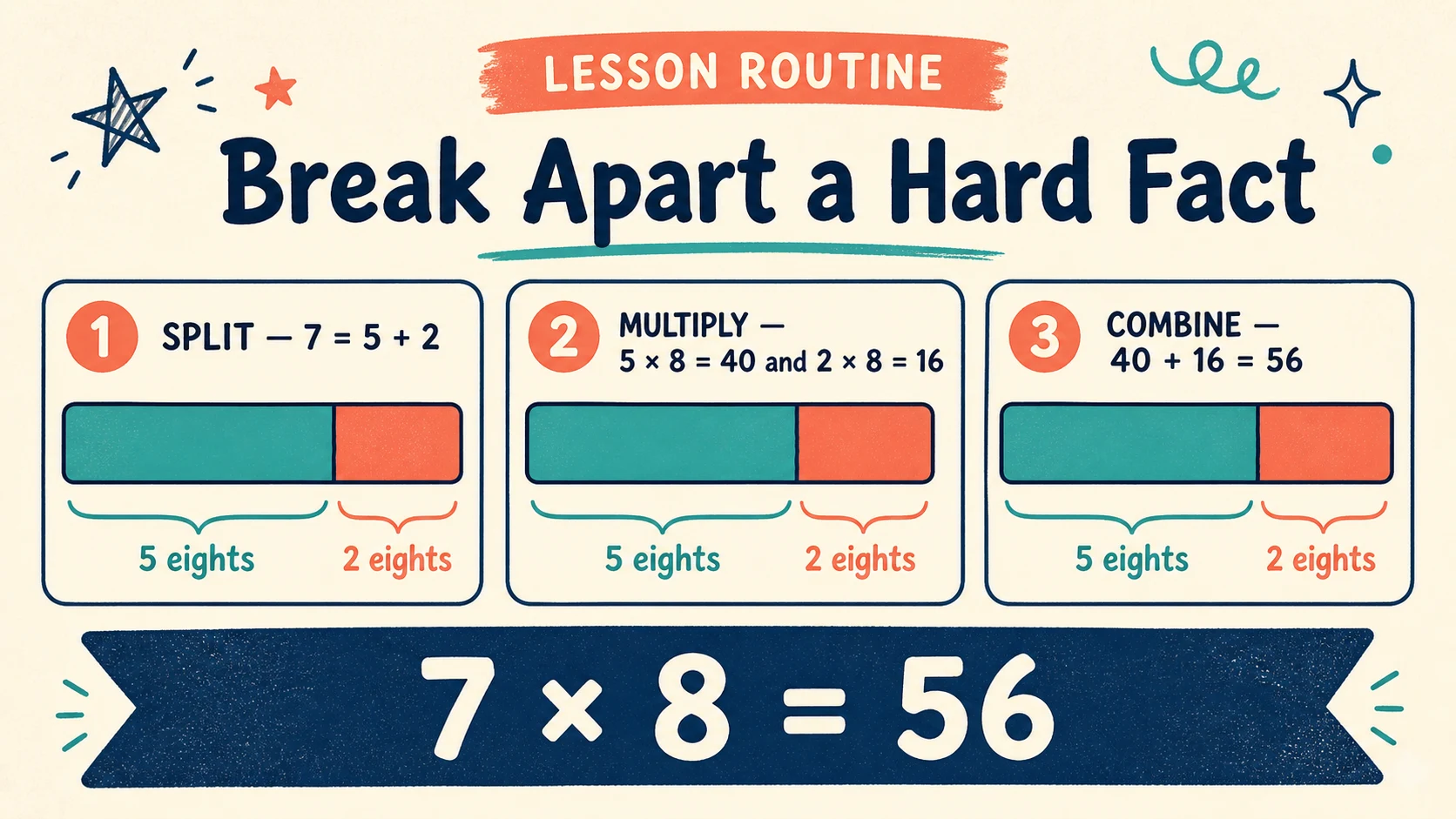
In multiplication practice, preserve a stable sequence—interpret the groups, model if needed, calculate, and check—rather than reducing independence to rapid answer production.
For a checked multiplication example, can be represented as 4 equal groups of 6. Repeated addition confirms , and division checks . It belongs here because the written product alone cannot show whether the learner understands equal groups, skip-counted accurately, or guessed from a memorized sequence. When modeling is the target, provide space for groups, an array, or a related equation.
Compare representative live skills before assigning a page
Different topics require different evidence of independence. The same routine applies, but the selection decisions change.
Counting: distinguish sequence knowledge from one-to-one counting
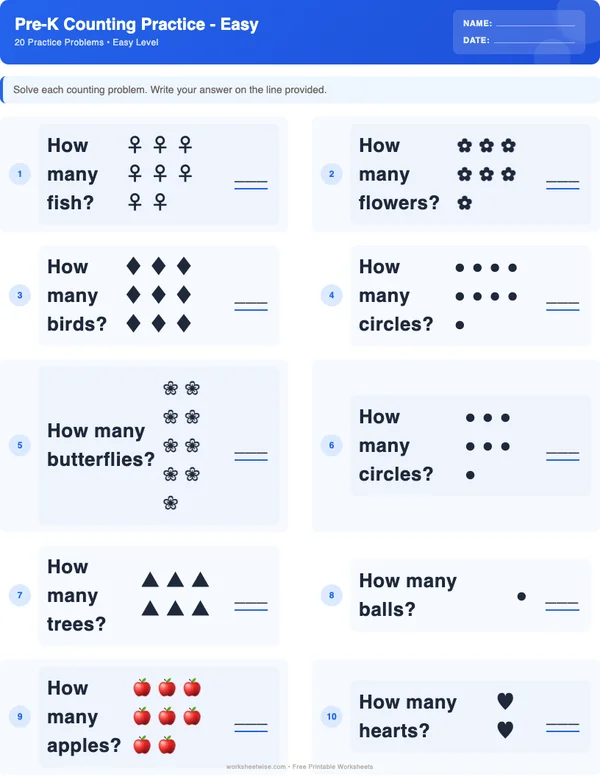
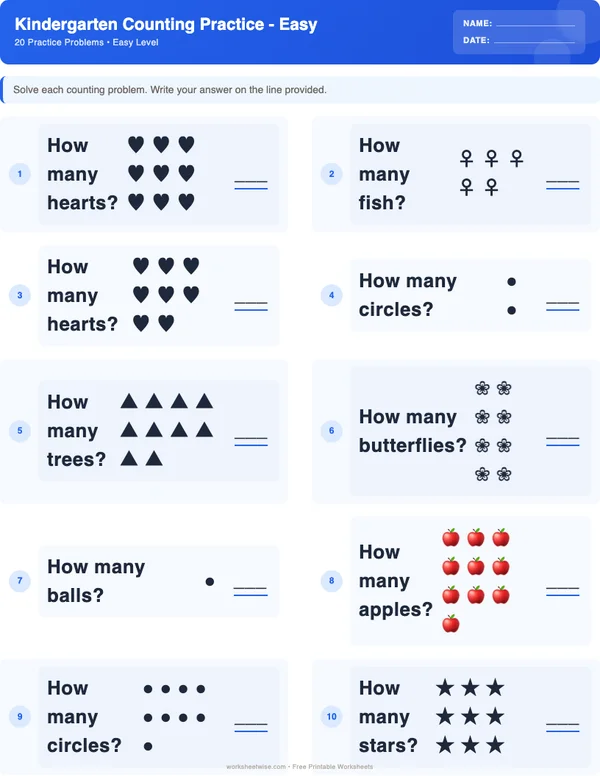
The representative Pre-K, kindergarten, and first-grade counting sheets each contain 20 problems and may include number sequences, missing numbers, or sets of objects. A learner can recite “one, two, three…” yet count an object twice or skip one.
A checked example is a scattered set of seven buttons. The learner should touch or move each button once while saying one number per object, then answer . Rearrange the same seven buttons and ask again. The total remains . This example belongs because scattered objects reveal coordination between number words and objects more clearly than a neat row.
Choose a picture-counting sheet only after the learner can keep track on a flat image. If tracking is still unreliable, use real objects first. For kindergarten materials, compare the representations in the Kindergarten Counting guide and free sheet.
Addition and subtraction: inspect the situation, not just the symbol
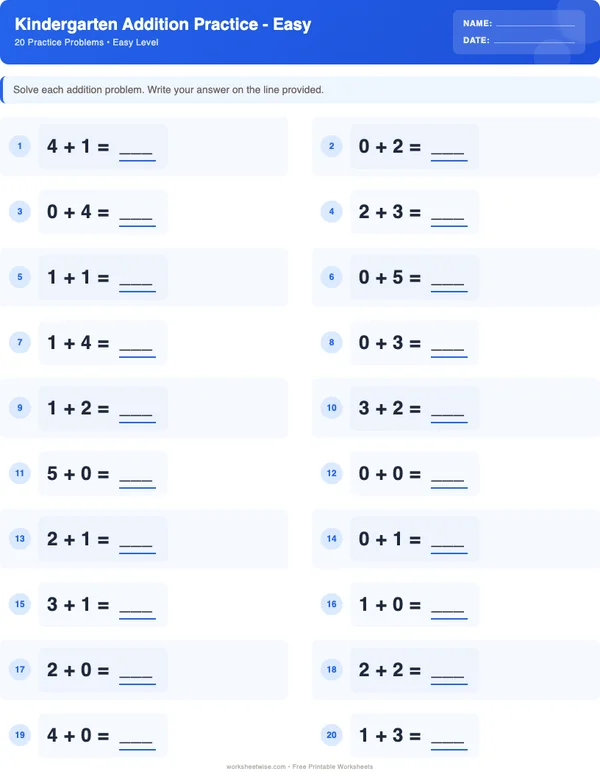
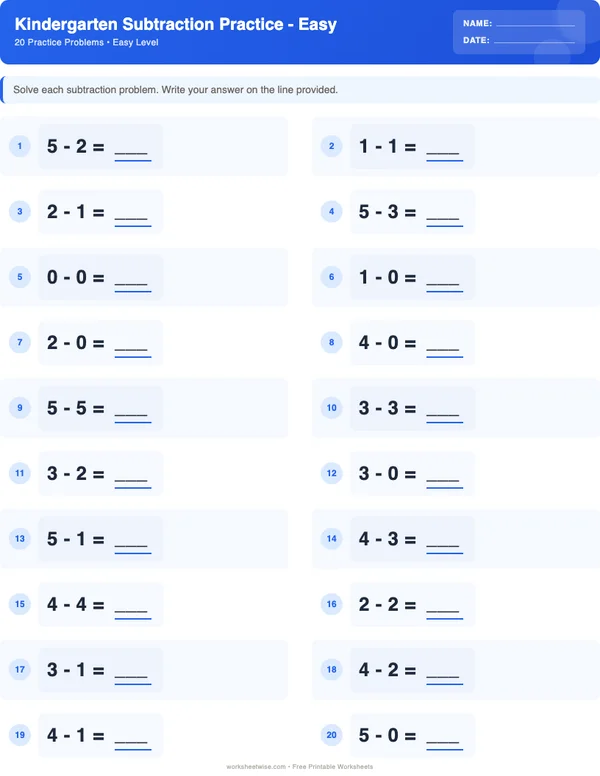
The representative kindergarten addition and subtraction sheets each contain 20 problems, but subtraction may represent taking away, comparison, or a missing part. Those are not interchangeable merely because each can use a minus sign.
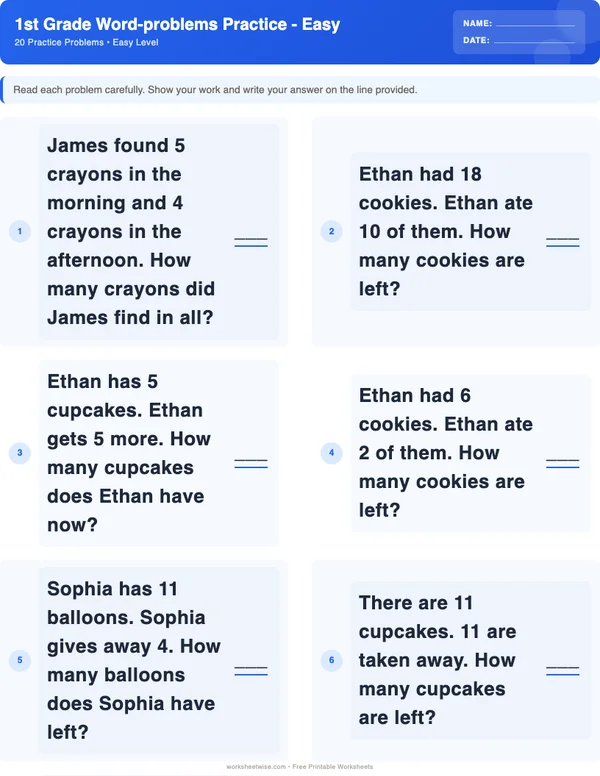
For the story “Mia has 8 shells. Leo has 3 shells. How many more shells does Mia have?” the difference is . Check: . No shells are removed; the quantities are compared. This example belongs because a learner trained only to cross out objects may misread comparison problems even while calculating subtraction facts accurately.
For “There are 8 birds; 3 fly away,” describes removal. For “Mia needs 8 shells and has 3; how many more does she need?” , so the missing part is . Select a sheet whose story structures have been explicitly discussed, not merely one with familiar numbers.
Place value: require quantities to survive a trade
The representative first-grade place-value sheet has 20 problems and may involve composing, decomposing, comparing, or recording numbers. Suppose a learner is asked to represent . One correct model is 1 ten and 4 ones; another is 14 ones before bundling. The quantity does not change when 10 ones are exchanged for 1 ten.
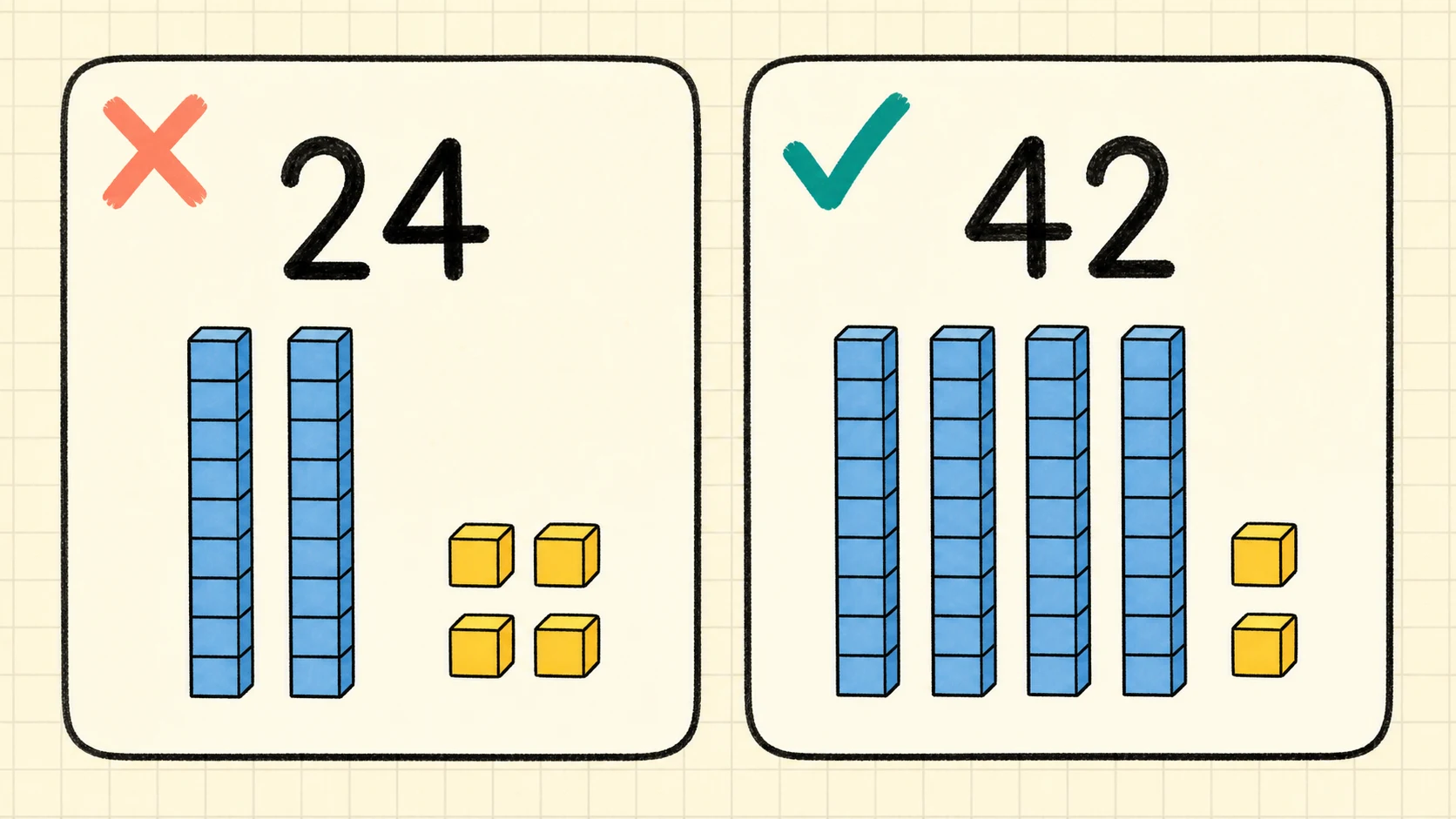
Treat a place-value error as evidence about bundling, position, or notation before choosing another page of superficially similar problems.
A learner who writes for “one ten and four ones” may be treating the spoken parts as separate numeral strings. A learner who counts 10 ones plus 4 ones correctly but cannot make one group of ten needs more bundling work. Those errors lead to different next sheets.
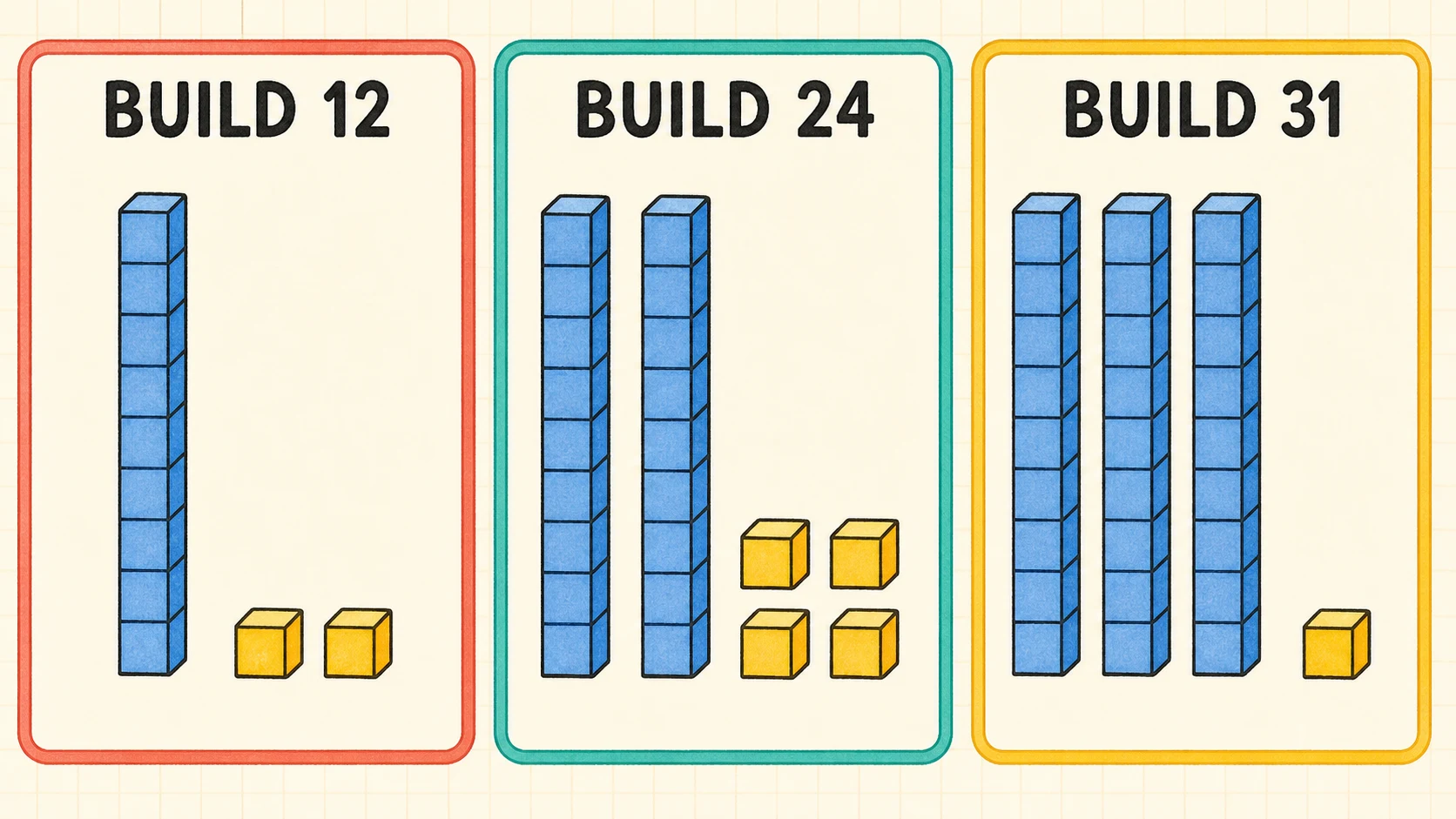
Space place-value review across model-building, reading, writing, and comparison so the next sheet tests a relationship rather than mere visual familiarity.
The visual suggests a planning rhythm, but the adult must still decide the next task from current work. A learner who composes teen numbers accurately may move from base-ten pictures to a tens-and-ones table. A learner who miscounts the objects should return to physical grouping rather than receive a denser symbolic page.
Fractions, time, and money: protect the model
The representative first-grade fractions sheet has six problems, telling-time sheet has 12, and money sheet has 20. The smaller fraction count should not be interpreted as automatically easier. Partitioning a shape into equal parts requires attention to equality, not just the number of pieces.
If a rectangle is split into four equal parts and one is shaded, the shaded fraction is . Four unequal regions do not establish fourths. A response of based solely on “one shaded piece out of four pieces” reveals a misconception if the parts are unequal.
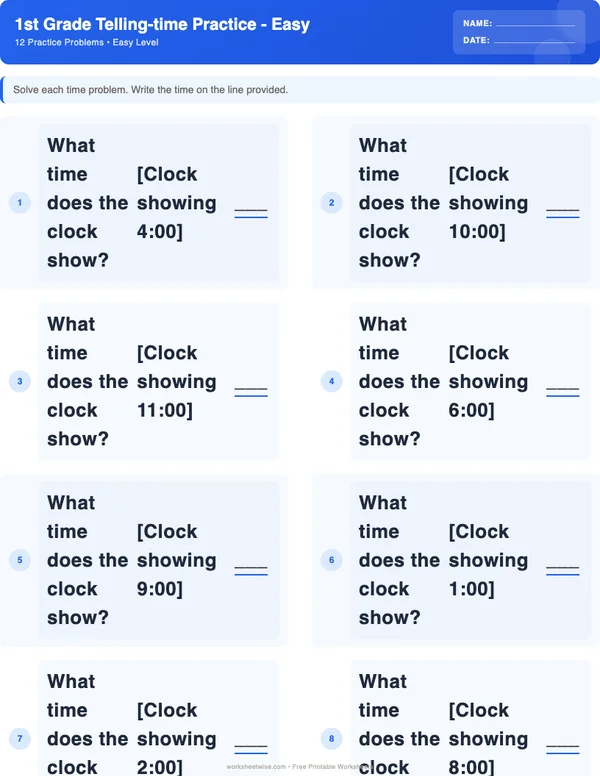
For time, a learner reading 3:45 as 4:45 may be naming the hour nearest the hour hand rather than the hour already reached. A geared demonstration clock is appropriate during reteaching; an independent sheet is appropriate once the learner can read the hour hand first and explain that it has not yet reached 4.
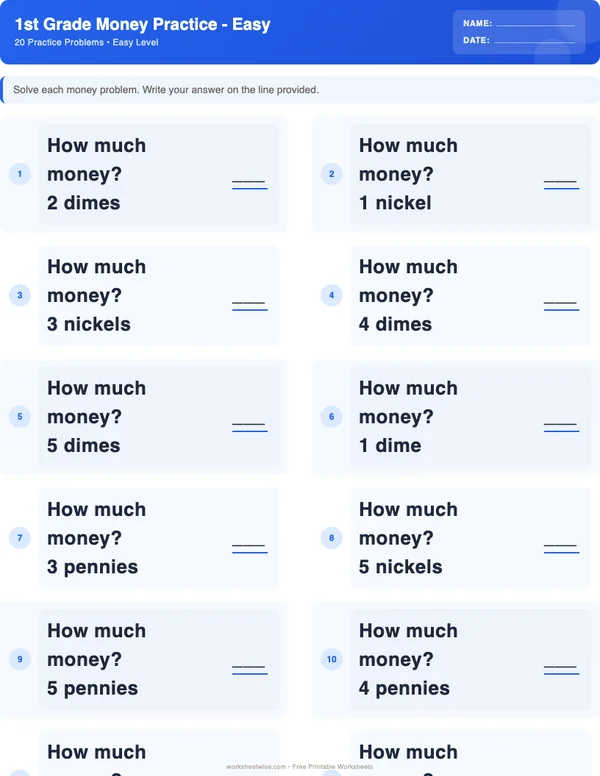
For money, counting mixed US coins requires knowing coin values and choosing an efficient order. If a learner counts a dime, nickel, and three pennies as cents, the total is 18 cents. If the total is wrong because the nickel was called 10 cents, assign coin-identification practice. If values are known but the count-on sequence breaks, assign a smaller mixed collection with a recording line.
Time the answer key to preserve useful evidence
An answer key is most useful after the learner has committed to reasoning. Keep it out of sight during the first work block. Otherwise, the adult cannot tell whether a correct response came from calculation, pattern matching, or copying.
Separate self-checking from self-teaching
After a defined block, let the learner compare answers in a different color. For each mismatch:
- Put a dot beside the item; do not erase the original.
- Recalculate without looking at the key.
- Use an inverse operation, model, or estimate to check.
- Correct the answer only after explaining the change.
Immediate feedback can prevent a wrong procedure from being repeated across a full page, but “immediate” need not mean revealing each answer before the learner finishes thinking. A five-item check can balance independence with timely correction.
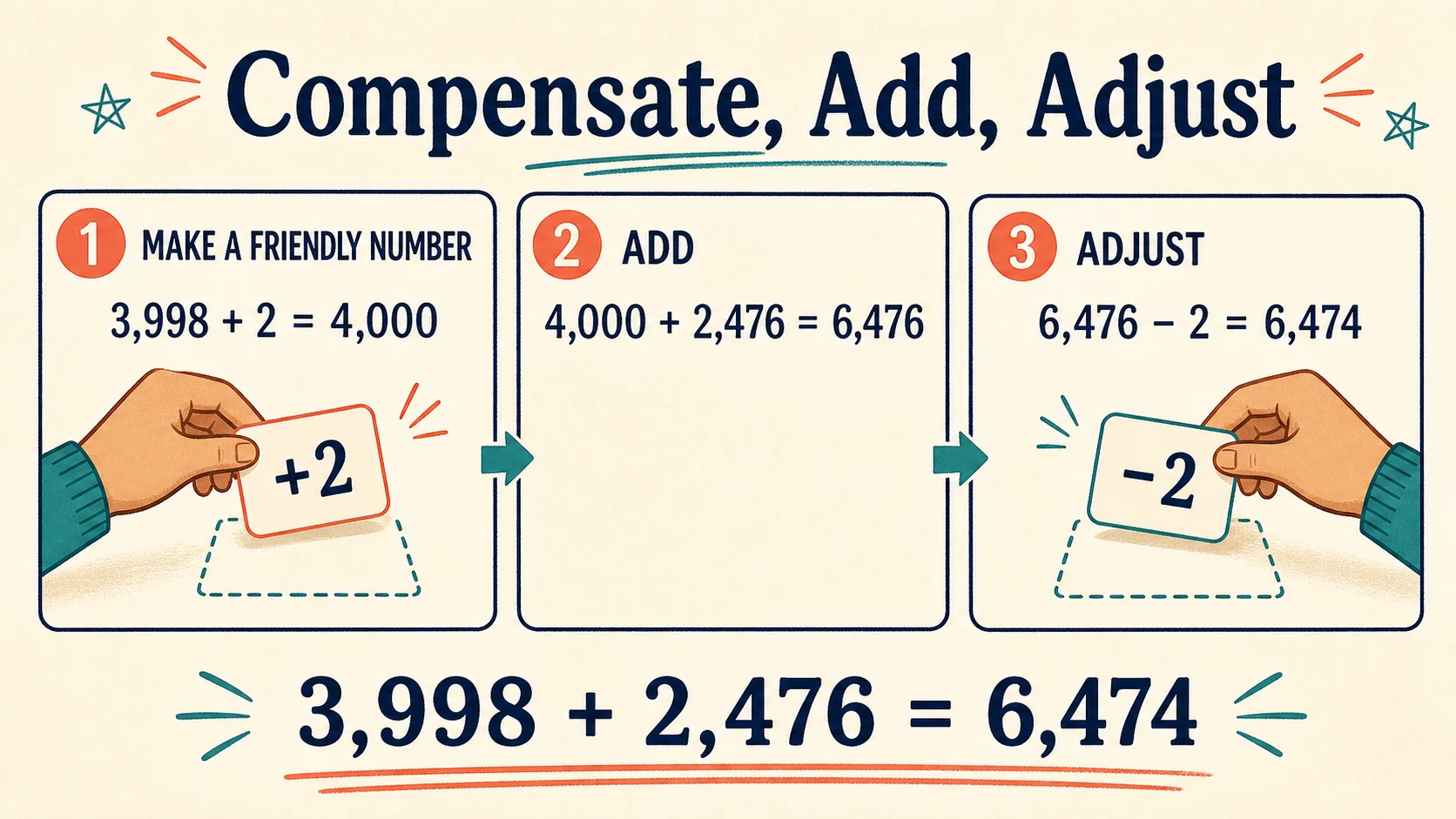
For upper-elementary addition, delay the key long enough to capture alignment, regrouping, and checking choices, then use it to revise—not replace—the reasoning.
Consider . Align decimal points and write as :
Estimate , which is consistent with . This checked example belongs because a bare wrong answer such as might come from aligning the last digits instead of place values. The next sheet should preserve decimal alignment cues if that was the error; it should not merely supply more unrelated addition.
Read errors as decisions, not as a single score
A total score compresses unlike errors. Sort the page before choosing what comes next.
Identify the smallest plausible breakdown
Use these categories:
- Direction or format error: The mathematics appears sound, but answers are entered in the wrong place or form.
- Model error: The learner misrepresents the quantity, groups, partition, comparison, or operation.
- Concept error: The same incorrect relationship appears repeatedly, such as treating 1 ten as 1 one.
- Procedure error: The setup is appropriate, but a step such as regrouping or decimal alignment is applied incorrectly.
- Fact or counting error: The strategy is appropriate, but a count or known fact is inaccurate.
- Attention error: An isolated sign, digit, or item is skipped while surrounding reasoning is consistent.
- Access barrier: Reading load, visual crowding, handwriting demand, or unfamiliar vocabulary prevents the learner from showing the intended mathematics.
These are instructional interpretations, not diagnoses. Confirm them by asking the learner to solve one parallel item aloud or with a model.
The IES early-mathematics practice guide emphasizes developmental progressions, monitoring what children know, and teaching children to view and describe their world mathematically. For an adult choosing practice, that supports observing how the learner represents a quantity—not merely counting correct boxes. The guide did not assess WorksheetWise.
Let the error pattern choose the next sheet
Use an observable rule:
- If 4 of 5 errors share one misconception, reteach that relationship and assign a short parallel sheet with the needed model.
- If errors occur only in the last row, reduce the work block before changing the mathematical level.
- If the learner calculates correctly but cannot decode directions, preserve the math and simplify or read the directions.
- If one isolated fact is wrong but the model and checking are sound, correct it and continue at the same task type.
- If answers are correct but every item requires adult prompting, the task is not yet independent.
- If the learner completes the page accurately and explains at least one check without prompting, choose a nearby variation rather than a sudden jump in number range and representation.
The numbers in the first bullet are a practical decision rule suggested for this routine, not a published threshold.
Adapt access without removing the target skill
An adaptation is sound when it reduces an irrelevant barrier while leaving the mathematical decision intact.
For computation practice, acceptable adaptations may include enlarging print, covering unused rows, providing graph paper for alignment, allowing counters, or reading directions aloud. For a word-problem target, reading every problem aloud may be appropriate if decoding is not being assessed, but choosing the operation for the learner is not.
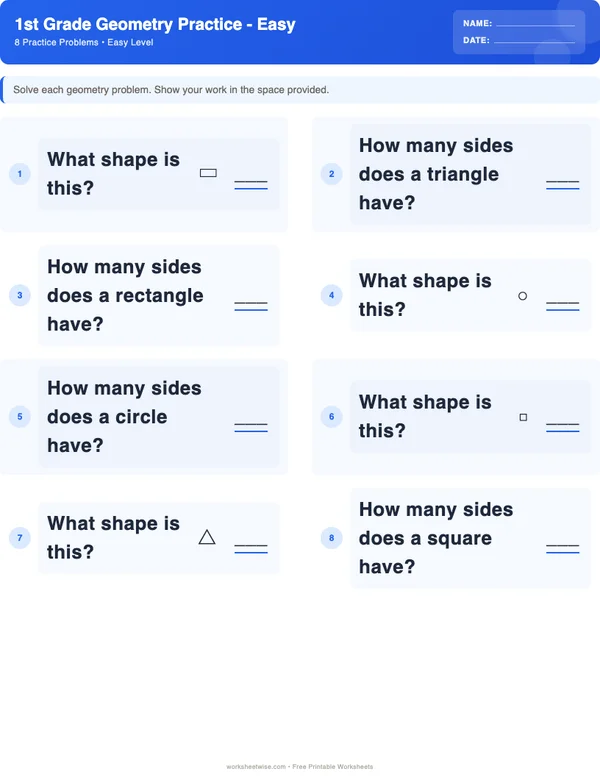
For place value, keep base-ten blocks available if the target is composing numbers; do not prebuild every number. For fractions, supply blank fraction strips if comparison is the target; do not shade the decisive amount. For telling time, enlarge the clock face; do not point to the correct hour. For geometry, permit rotating the paper or moving shape pieces because orientation is not the same as identity.
Avoid adaptations that secretly substitute another task. A multiple-choice page may reduce handwriting demand, but it also permits recognition or guessing instead of producing an answer. If production matters, let the learner dictate the numeral to an adult or use number tiles while retaining the need to determine it.
The Formative assessment Math Worksheets may be more suitable when the adult’s goal is to sample current understanding rather than provide post-lesson practice. Independent practice and assessment can use similar-looking items, but answer-key timing, adult assistance, and interpretation differ.
Know when a worksheet is the wrong next move
A worksheet cannot establish readiness, diagnose a learning condition, replace explicit teaching, or prove durable understanding. It samples performance under particular conditions. A correct page may reflect memorized layout, while an incorrect page may reflect confusing directions, fatigue, visual crowding, or an unfamiliar response format.
Pause independent desk work when the learner:
- cannot restate the direction,
- lacks the model needed to represent the task,
- repeats one incorrect procedure,
- guesses across a row,
- needs prompting on nearly every item,
- or becomes too frustrated to produce interpretable work.
Return to a brief oral or concrete task. Ask the learner to build, draw, compare, or explain one example. Then decide whether to resume the same sheet, shorten it, or select a closer match. Do not use a worksheet score to label or diagnose the learner, and do not promise that completing more pages will produce a particular outcome.
Turn today’s evidence into tomorrow’s page
End by writing one sentence that connects the observed error to the next action:
“The learner represented teen numbers accurately with blocks but wrote one ten and four ones as 104, so tomorrow’s sheet will keep the tens-and-ones model and add matched entries for 14, 16, and 19.”
That statement is better than “Needs more place value” because it names the successful representation, the precise notation error, and the feature the next page must contain.
Use the same structure for other skills:
- “Equal groups were modeled correctly, but two products were counting errors; keep arrays available and assign a short parallel multiplication set.”
- “Subtraction facts were accurate, but comparison stories were modeled as removal; reteach one comparison situation and choose a sheet containing only comparison and missing-part stories.”
- “Coin values were known, but mixed collections were counted in an unstable order; use three-coin sets with space to record the running total.”
- “Decimal addition was correct when columns were provided but misaligned on blank paper; assign a similar set on graph paper before removing the alignment support.”
For the immediate next step, open the free deterministic worksheet generators and create one short practice set that preserves the taught model, number range, and response format while changing the examples. Before printing, solve every item yourself, choose a five-item check point, and write down the single error pattern that would cause you to reteach or select a different next sheet.
Put it into practice
Use the guide with a real printable
Move from explanation to a short, observable practice task. Check the first item together, then adjust the next session from the learner's actual work.
Open the first free worksheetExplore a neighboring collection