Curated collectionAnswer keys includedPrint-ready PDFs
Independent Practice Phonics Worksheets
Make directions, examples, response space and answer-key timing support honest independence after a skill has been taught.
Start with a real resource
Browse this worksheet collection
22 relevant free entry points are available. Each one includes a printable learner PDF and separate answer key.
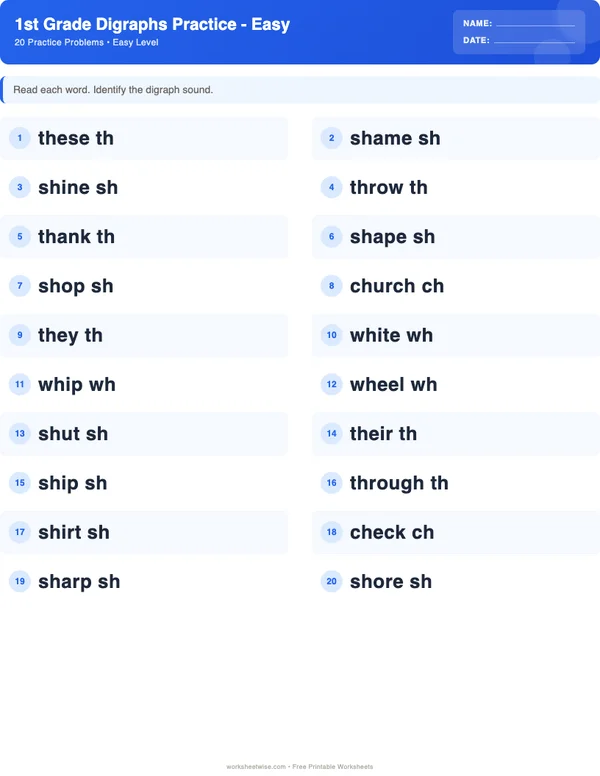
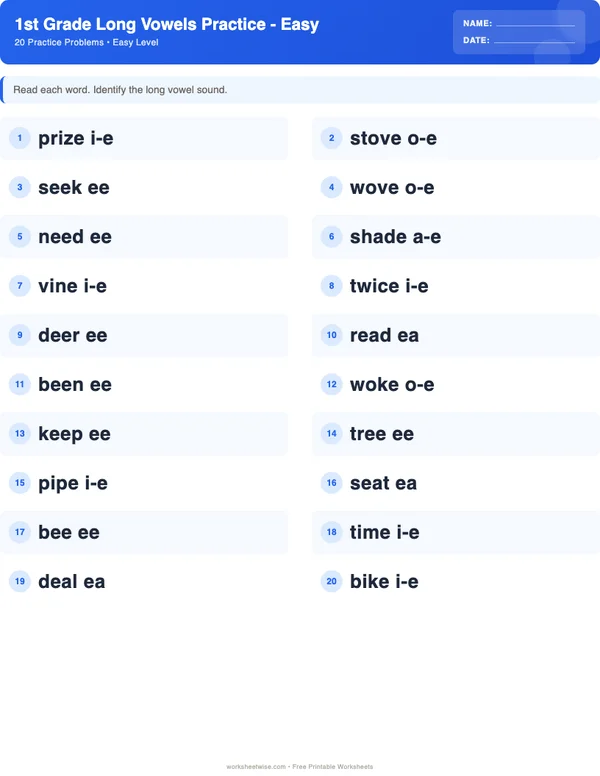
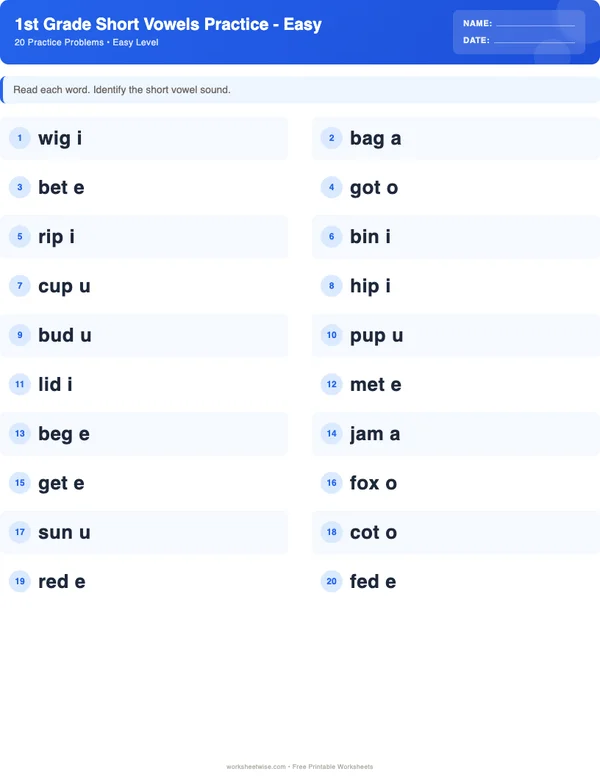
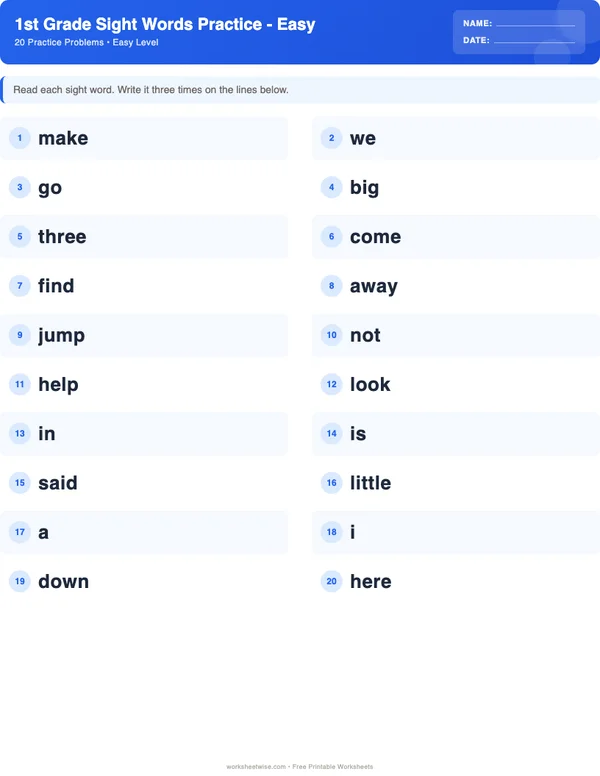
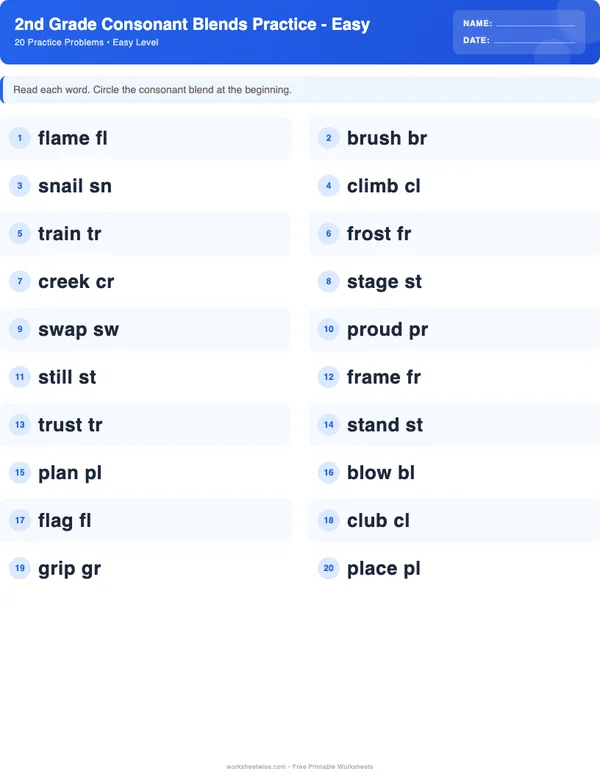
A useful practice loop
Print less. Observe more.
- Choose one skill and model the first item aloud.
- Use a short set and notice the learner’s strategy.
- Change the next task from the work you can see.
Need more than the free sheet?
Plus includes all 396 matching catalogue variations where available, plus saved deterministic generators and the worksheet designer.
See Plus membershipComplete guide
How to teach and practise independent-practice phonics worksheets
3,161 words Updated 6 instructional visuals
Build independence only after the phonics pattern is known
Independent phonics practice should ask a learner to apply a pattern that an adult has already explained, modeled, and practiced with them. The sheet is not the lesson. Its job is to reveal whether the learner can complete a familiar decoding or spelling action without prompts that supply the answer.
A suitable worksheet therefore has:
- one clearly stated phonics target;
- directions the learner has already rehearsed;
- a completed example using the same response format;
- enough writing, circling, matching, or letter-building space;
- words whose patterns have been taught;
- a delayed answer check that supports correction without turning the task into copying.
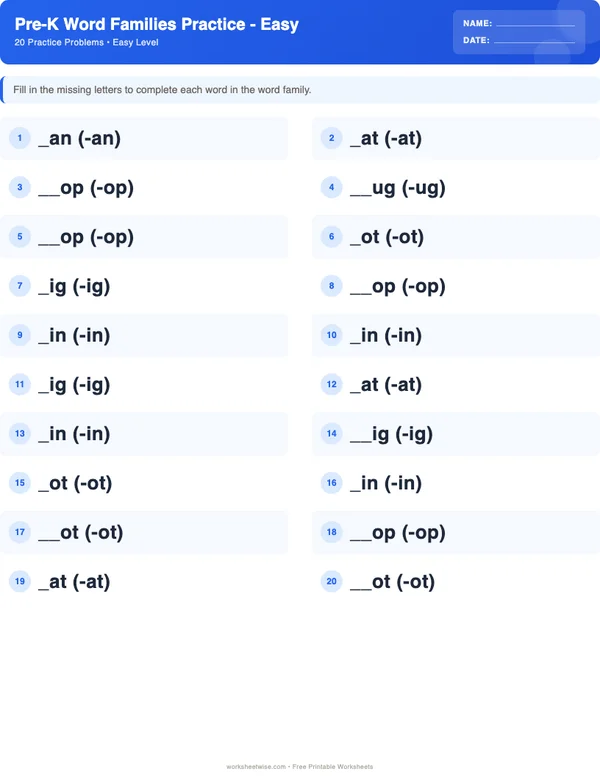
The live WorksheetWise catalogue currently contains 396 phonics variants across four intended grade levels and seven topics, including 22 free entry points. That range is useful only when selection begins with the learner’s demonstrated skill, not the grade printed on a resource. Grade labels describe the intended practice level; local curriculum sequences differ. Use age or grade as a discovery aid, never as a placement decision.
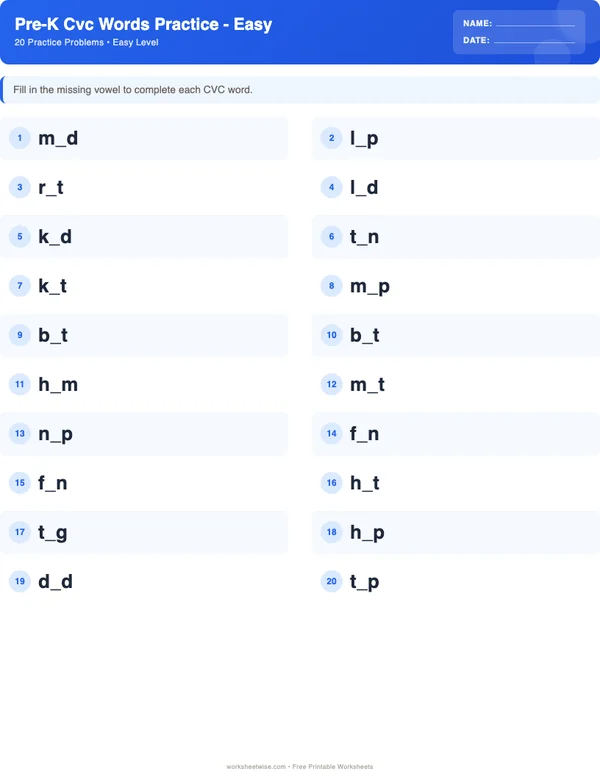
For three- and four-year-olds, prioritize brief adult-led oral blending, picture matching, letter manipulation, and movement over desk work. A 20-item Pre-K sheet can supply pictures or word choices, but it does not follow that a young learner should complete all 20 items seated or independently.
Decide whether the learner is ready for a sheet
The central question is not “Can this learner do phonics alone?” It is “Which part of this already-taught phonics task can this learner now do without help?”
Before assigning a sheet, give three oral or manipulative checks that resemble its demands. For a short-vowel fill-in task, say a word such as map, ask the learner to stretch it, and have them choose the middle vowel from letter tiles. For a digraph sort, ask whether ship begins with /sh/ or /ch/. For an initial-blend task, ask the learner to say every sound in stop. If the learner needs the adult to identify the target sound on most checks, return to teaching.
Independence is plausible when the learner can:
- restate or demonstrate the direction after hearing it once;
- solve a familiar example without being told the target letter;
- produce the relevant sounds accurately enough to compare words;
- use the worksheet response mode, such as drawing a line or writing one missing letter;
- continue after one difficult item instead of waiting for rescue.
These are task-readiness observations, not diagnoses. A learner may independently circle pictures with short a yet need adult support to spell the same words. Select the response format accordingly.
Define difficulty by what the task requires
The catalogue labels representative free sheets “easy,” but that label should describe observable features of the task, not a learner. In practical terms, such a task might present one familiar pattern, short words, a repeated direction, picture support, constrained answer choices, or one-letter responses.
Difficulty rises when a sheet:
- mixes several recently taught patterns;
- removes pictures or letter choices;
- asks for full-word spelling instead of recognition;
- includes initial and final positions;
- shifts from isolated words to sentences;
- requires the learner to explain or correct an error.
A page with 20 picture-supported CVC matches and a page with 20 dictated CVC spellings may share a topic and item count, but they do not place the same demands on listening, handwriting, recall, or self-monitoring.
Model the exact phonics action before releasing the task
A worked example must expose the thinking the learner will repeat. Completing an unrelated decorative sample is not enough.
For a CVC item showing a picture of a cat and the choices cat, cot, and cut, model this sequence: name the picture, stretch cat as /k/–/ă/–/t/, point to each grapheme in cat, and circle the whole word. Then ask the learner to say what they will do on the next item. The example is useful because it models both phonics analysis and the physical response.
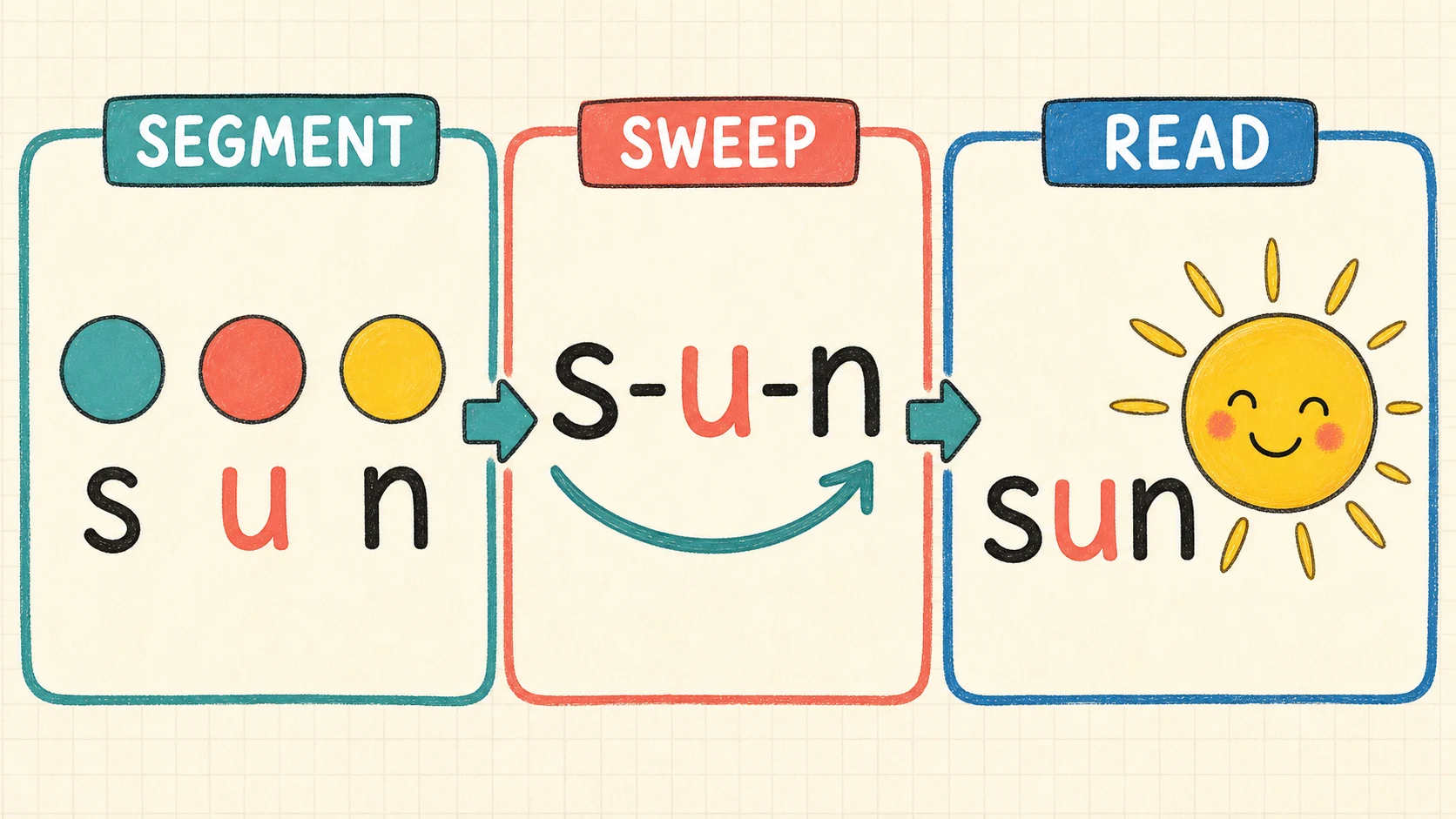
The model makes the hidden sequence visible: segment the spoken word, connect sounds to letters, blend, and then record one answer.
The IES foundational reading practice guide recommends explicit work connecting sounds and letters, decoding words, and reading connected text. That guidance supports teaching the process before independent application; it does not constitute an evaluation of WorksheetWise resources.
Use a model that matches the response format
If the sheet asks the learner to write a missing vowel, the model should include writing a missing vowel. If it asks for a word sort, physically place one sample word under its heading. If it asks the learner to read and match, demonstrate checking both the sound sequence and the picture.
Avoid modeling every phonics decision on the page. On a short-a sheet, one completed item can show the routine. Completing five examples may remove the productive work. Conversely, one example cannot prepare a learner for three unexplained response types. A sheet combining circling, cutting, and sentence writing is a poor first choice for honest independence unless all three formats are familiar.
Select the sheet by phonics contrast and response demand
The most informative sheet is not necessarily the newest topic. Choose the narrowest task that answers the next instructional question.
CVC words: test blending without hiding the middle sound
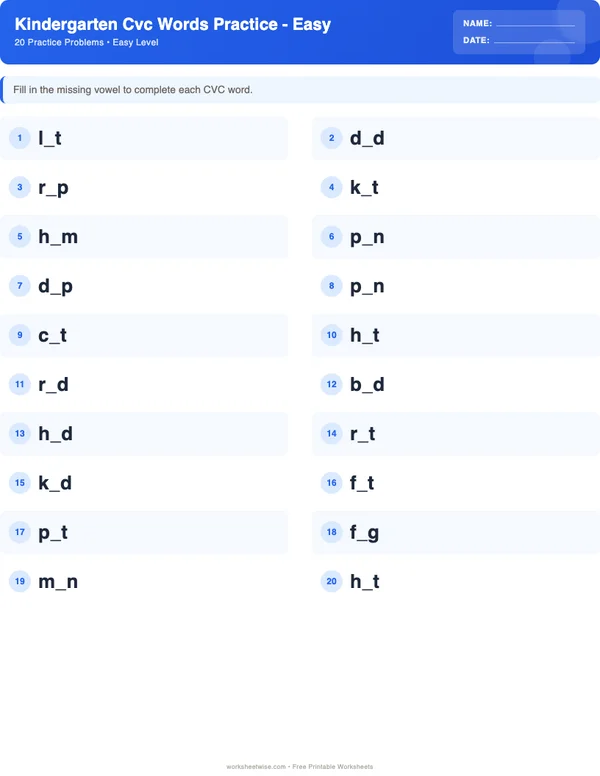
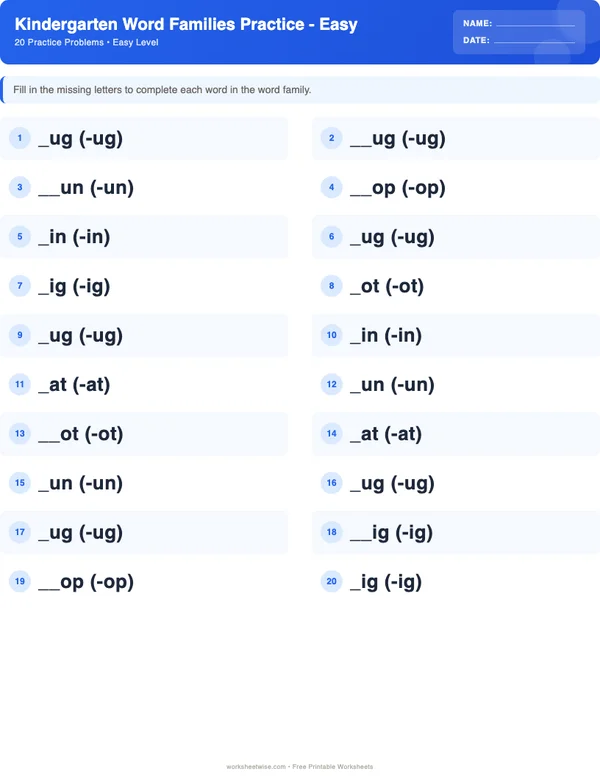
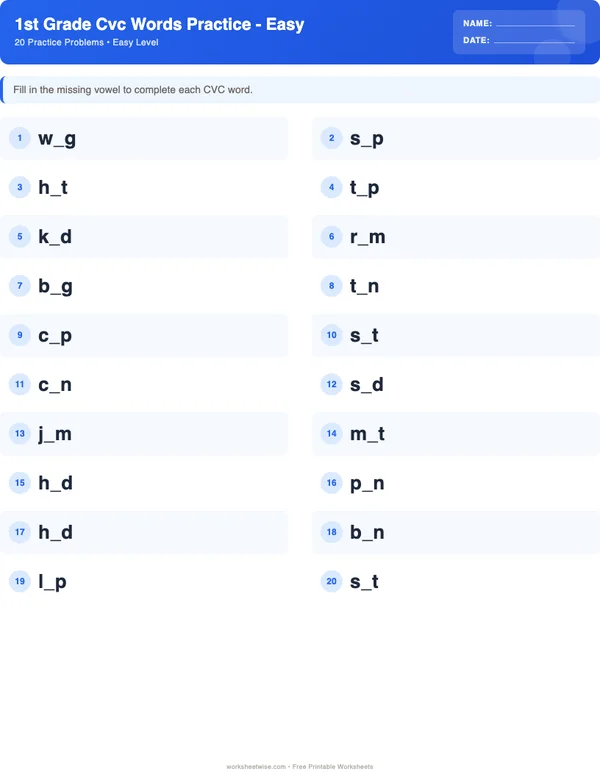
The live catalogue includes CVC resources at Pre-K, Kindergarten, and first-grade intended practice levels, with representative free sheets containing 20 problems. Available activities include word building, picture matching, fill-in-the-blank work, and reading.
A checked example is the chain cat → mat → map → mop. Each step changes one letter:
- cat to mat changes initial /k/ to /m/;
- mat to map changes final /t/ to /p/;
- map to mop changes short /ă/ to short /ŏ/.
This example belongs in independent CVC practice because the learner can compare one controlled change at a time. It also exposes whether the learner attends to the whole word. If map becomes mop correctly but cat becomes mat only after an adult supplies /m/, the issue is not simply “CVC words”; the next task should isolate initial-sound substitution.
The Kindergarten CVC Words guide and free sheet is a sensible entry point after oral segmenting, sound-to-letter matching, and continuous blending have been taught. For a younger learner, the Pre-K CVC Words guide and free sheet can provide material for short, adult-led matching or letter-tile work rather than a requirement to finish a full page.
Short vowels: choose recognition or production deliberately
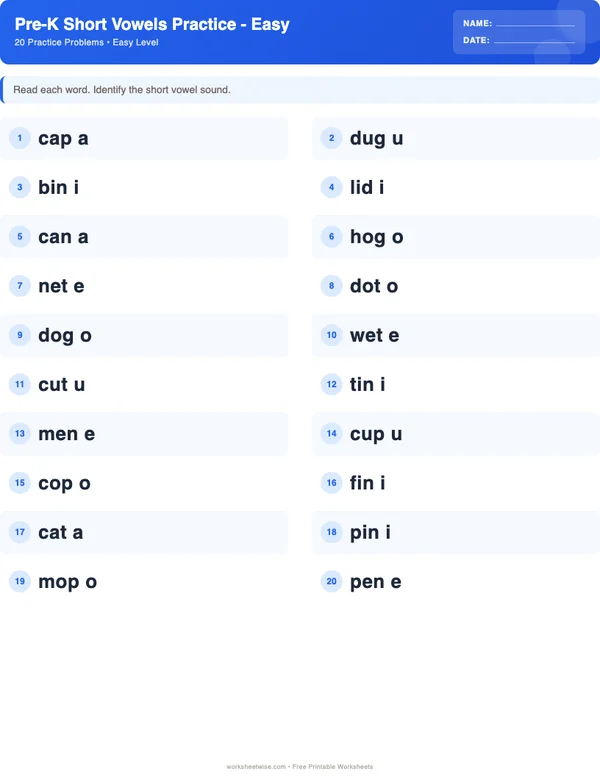
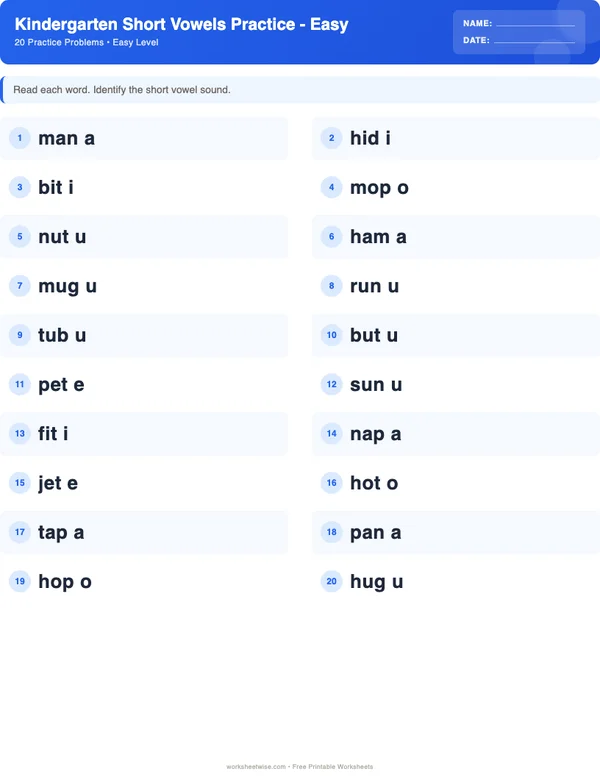
Short-vowel resources include picture sorting, word reading, spelling, and fill-in-the-middle formats. Do not treat these formats as interchangeable.
Consider the checked minimal pairs pen/pin, set/sit, and bed/bid. In every pair, the initial and final consonants remain the same while short e changes to short i. This belongs here because it prevents a learner from succeeding through the first or last letter alone. Ask the learner first to point to the word you say; later, dictate one member of each pair for spelling. Recognition followed by production shows whether the pattern transfers across response modes.
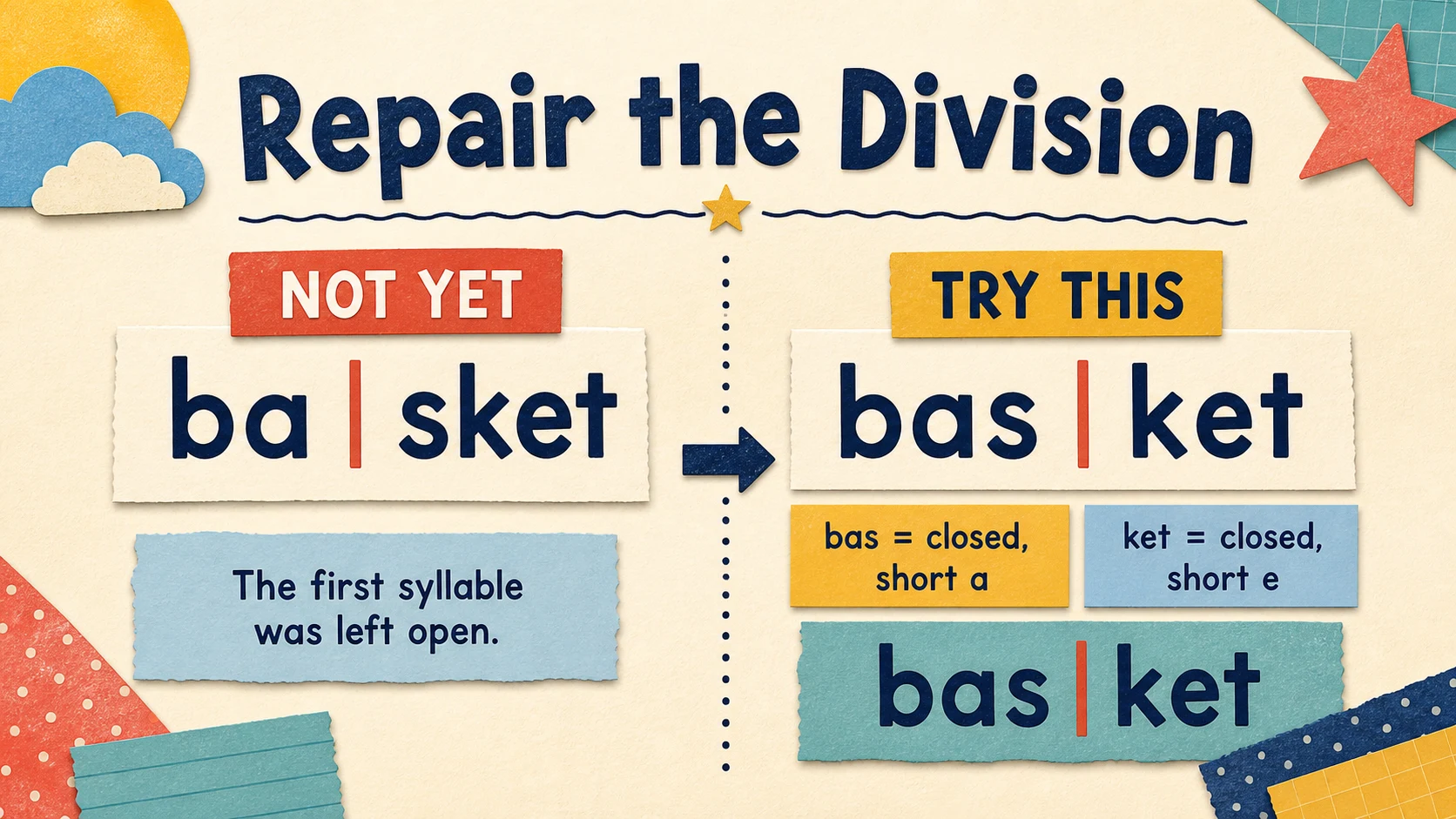
Short-vowel substitutions should lead to a narrower contrast task, not another mixed page with more items.
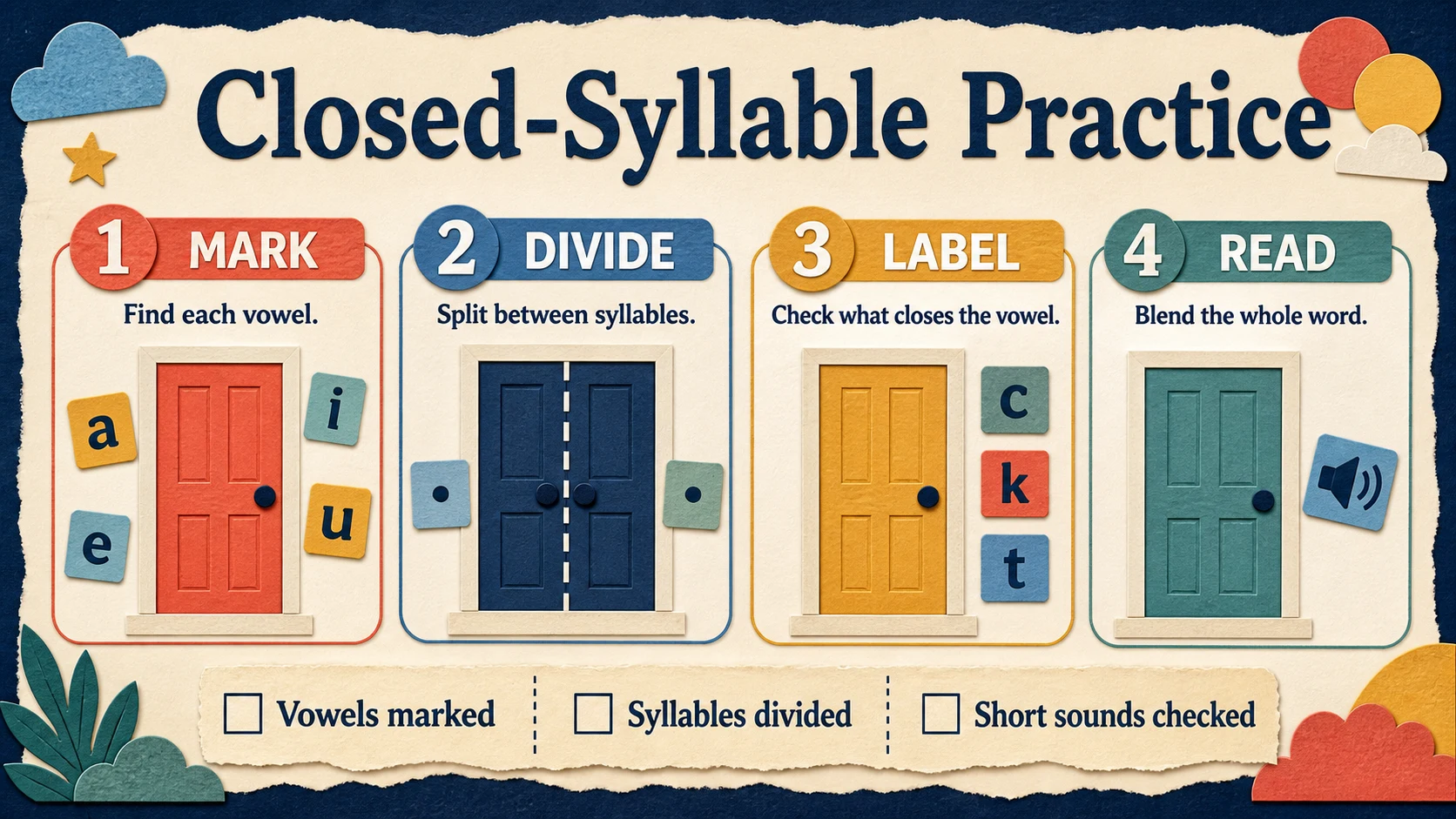
A spaced plan can alternate focused vowel contrasts, spelling, and cumulative review instead of repeating one worksheet format.
If a learner hears the distinction but writes the wrong vowel, use a response with vowel tiles before returning to handwriting. If the learner cannot reliably hear the distinction, pause independent written work and conduct brief adult-led listening comparisons. The Pre-K Short Vowels guide and free sheet can support that work when used selectively.
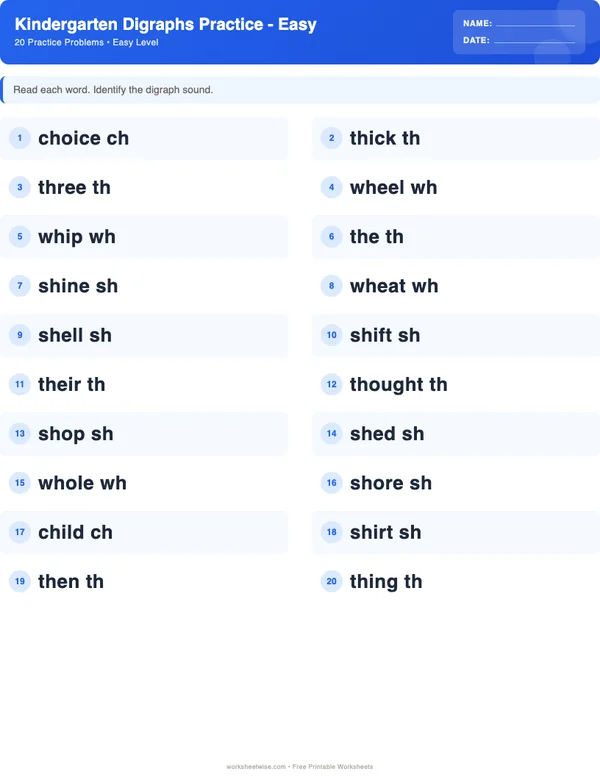
Digraphs: require one sound from two letters
For digraphs, the learner must understand that two letters represent one sound. That is different from a blend, where both consonant sounds remain audible.
A checked set is ship/wish, chin/much, and thin/bath. Each pair places the same digraph initially and finally:
- sh represents /sh/ in ship and wish;
- ch represents /ch/ in chin and much;
- th appears in thin and bath with the unvoiced sound.
This example belongs in digraph practice because changing position tests recognition of the grapheme without changing its basic sound target. It also avoids falsely teaching that a digraph can occur only at the beginning.
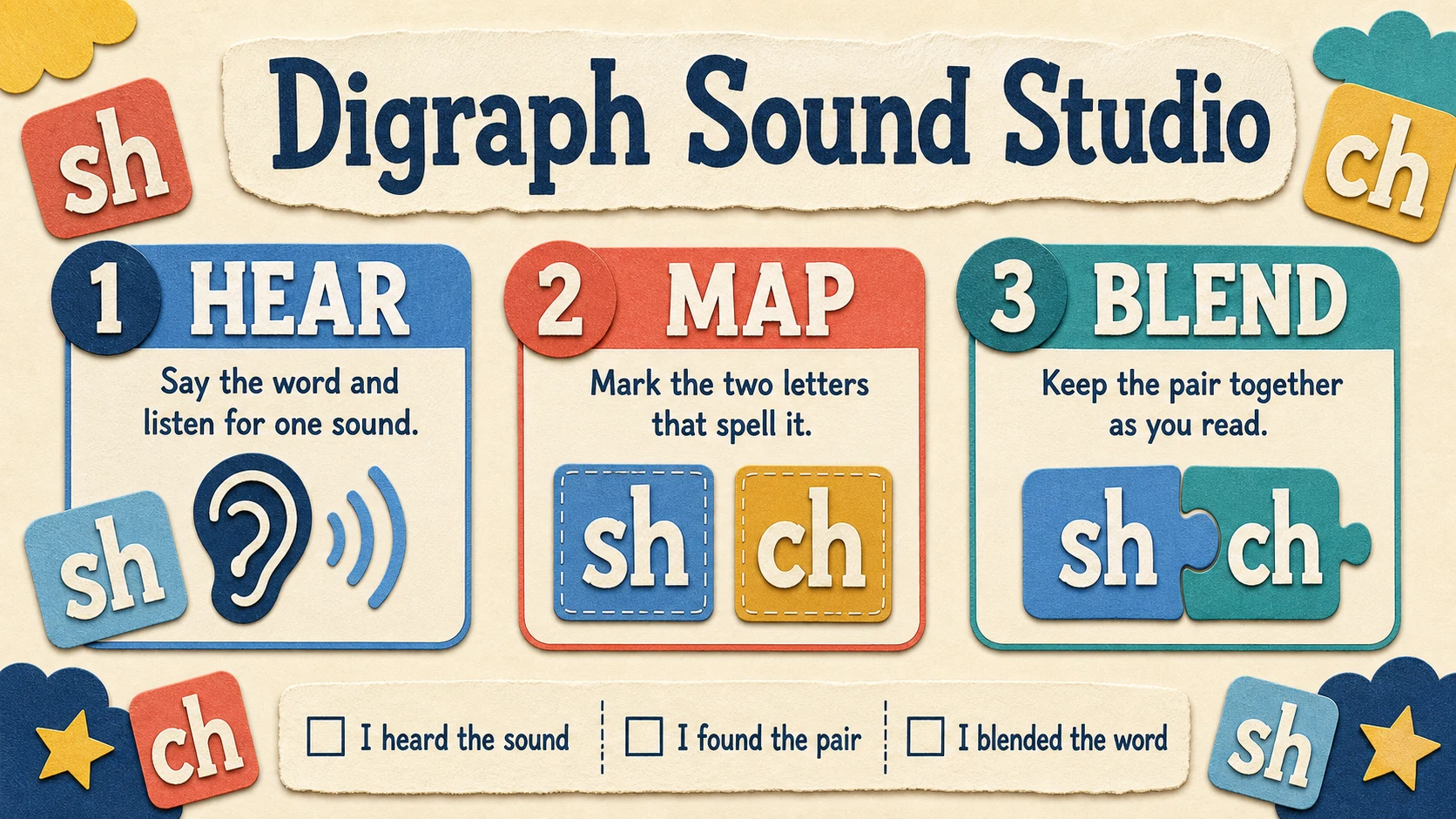
A useful digraph sequence moves from one taught correspondence to position changes and then to cumulative review with earlier word types.
When first releasing a digraph sort, offer headings such as sh and ch and use words containing only taught correspondences. Later, remove picture support or add final-position examples. Do not ask for independent discrimination among sh, ch, th, wh, and ck immediately after teaching only sh.
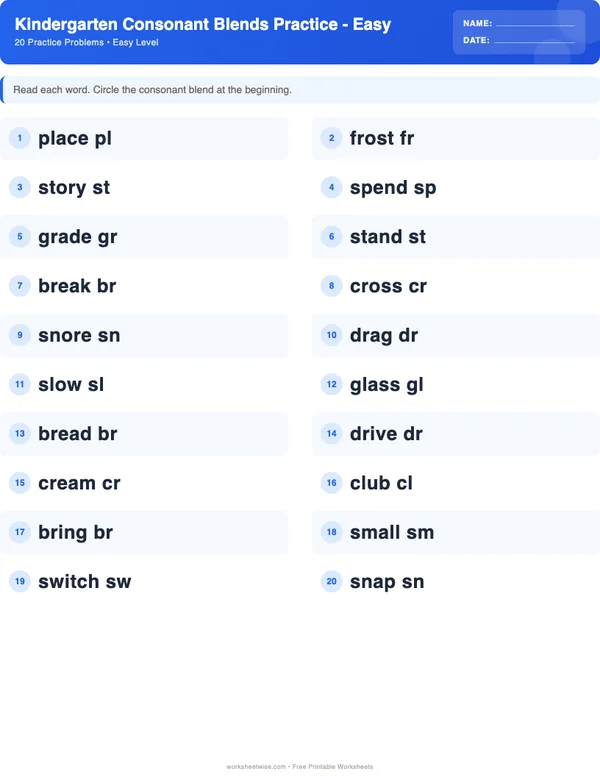
Consonant blends: listen for the sound that disappears
A checked word chain is lap → clap → clam → clamp. The changes are controlled:
- lap to clap adds /k/ before /l/;
- clap to clam changes final /p/ to /m/;
- clam to clamp adds final /p/.
The chain belongs here because it reveals whether the learner preserves each sound in an initial or final blend. Reading clap as lap signals loss of the first consonant; reading clamp as clam signals loss of the final consonant. Those are different observations and should lead to different follow-up words.
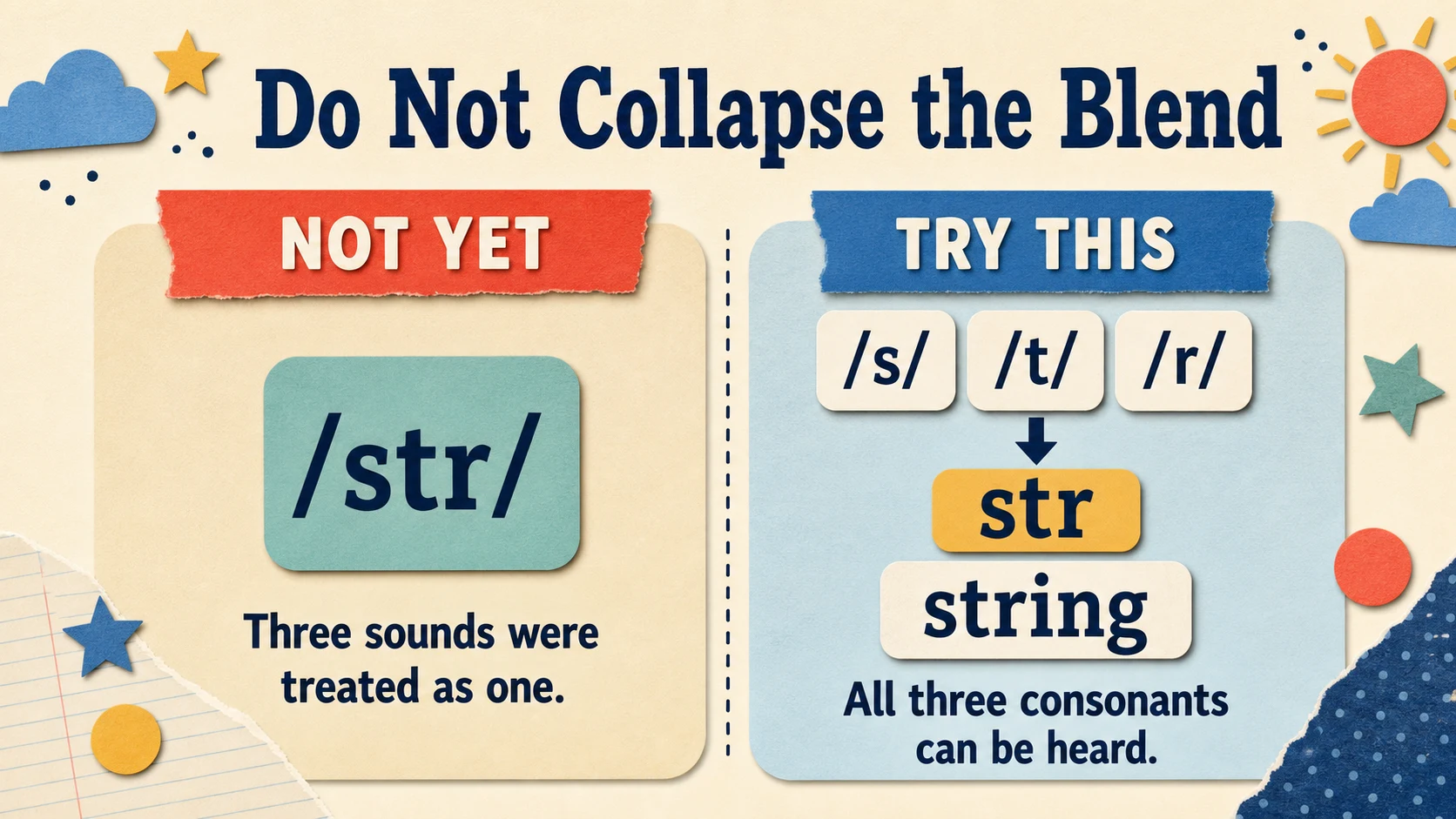
Mark which consonant was omitted and where it occurred; “blend error” is too broad to choose the next sheet.
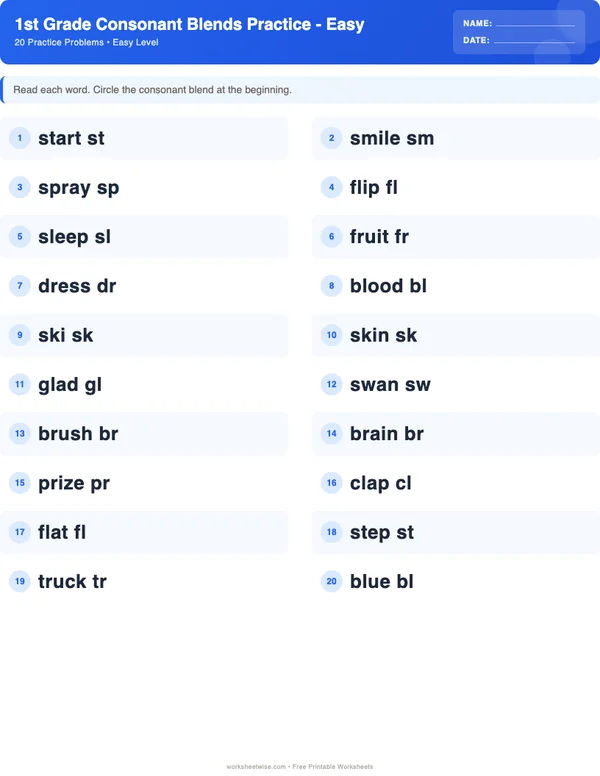
The Kindergarten Consonant Blends guide and free sheet is appropriate to inspect after the learner can blend simpler CVC words. A sheet that mixes initial and final blends is better for review than for a first independent attempt.
Long vowels: contrast one spelling change at a time
Long-vowel work should follow direct teaching of the chosen pattern. The catalogue’s representative long-vowel resource includes silent-e, vowel-team, and open-syllable patterns, but a first independent page should not necessarily mix all three.
Use the checked contrasts cap/cape, pin/pine, hop/hope, and cub/cube. Each pair adds final e and changes the vowel from short to long while retaining the initial and medial consonants. This belongs here because the comparison makes the relevant spelling feature visible. Ask the learner to underline the vowel, box the final e, read both words, and match each to a picture or short meaning cue.
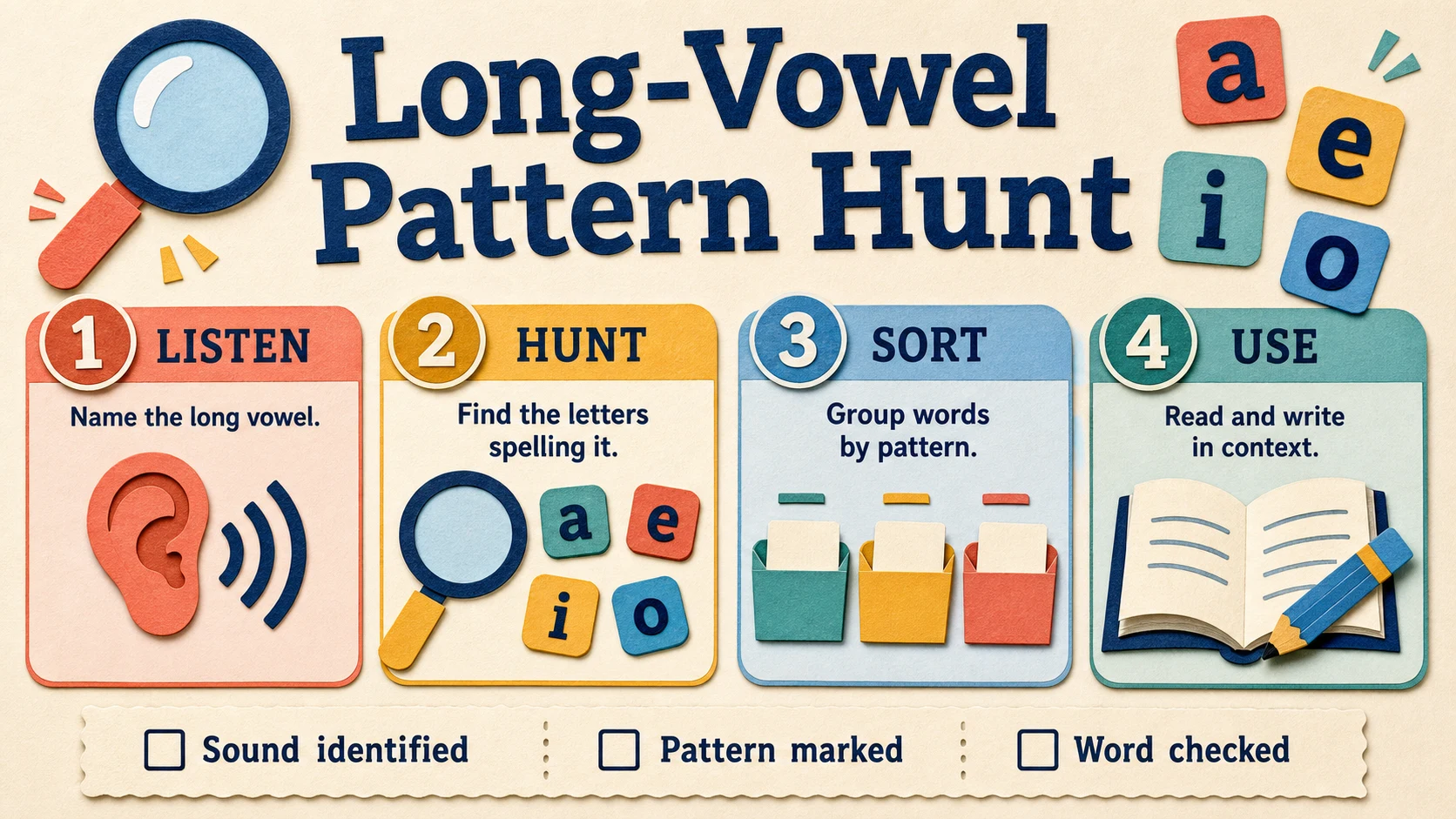
Long-vowel review should preserve a clear contrast between CVC and CVCe words before adding several vowel-team spellings.
Do not present “two vowels go walking” as a universal rule. It can describe some examples, but English contains exceptions. Teach the specific correspondence on the sheet and treat broader sayings as provisional prompts, not guarantees.
Run a release routine the learner can repeat
A consistent routine reduces dependence on adult reminders while preserving the phonics thinking.
1. Name the target
Say, “Today you will read words with sh at the beginning or end,” rather than, “Do this phonics page.” Ask the learner to point to sh and produce its sound. This takes seconds and confirms that both people mean the same target.
2. Read the direction and inspect the response space
Have the learner explain what one answer should look like: one circled word, one written vowel, a line to a picture, or a word placed in a column. Check that the print and answer spaces permit the required response. Small handwriting boxes can turn a phonics check into a fine-motor obstacle.
3. Complete one worked example together
Think aloud only about the repeatable decision. For ship, say the word, identify /sh/, point to the letters sh, and place it in the sh column. Then cover the example explanation and ask the learner to perform a parallel item.
4. Release a short set
Begin with three to five items, not an automatic demand to finish all 20. The adult should move away or attend quietly without mouthing sounds, pointing to letters, or correcting each response. Those prompts make the performance supported, even if the learner holds the pencil.
5. Pause at a planned checkpoint
After the short set, ask the learner to reread the answers. If the direction was misunderstood, reteach the format and restart with fresh items. If the direction is understood but the phonics pattern is inconsistent, stop and inspect the errors rather than accumulating 15 more of them.
6. Record one observable note
Write something precise: “Read 4/5 CVCe pairs; read hope as hop and did not attend to final e.” Avoid global labels such as “weak vowels” or “careless.” The note must be specific enough to choose tomorrow’s work.
Time the answer key to support correction
An answer key works best after an honest first attempt and before the learner has forgotten how each response was chosen. Showing the key during the first attempt can change decoding into visual copying. Withholding feedback until days later leaves errors unexamined.
Use this sequence:
- The learner completes a short set without the key.
- The learner rereads or respells each response.
- The adult reveals answers for that set.
- The learner marks each mismatch without erasing the first attempt.
- The learner explains the sound or spelling change and writes a corrected answer beside it.
- The adult selects one fresh example to check transfer.
For pin written as pen, do not settle for copying pin. Say pin, stretch the middle sound, compare it orally with pen, and ask the learner to select i before rewriting the word. The correction should revisit the decision that failed.
The IES writing practice guide addresses writing instruction rather than serving as a phonics worksheet review. Its emphasis on teaching component skills and using feedback is relevant when a phonics task includes spelling, handwriting, or written correction. Keep that connection limited: a copied correction alone does not demonstrate that the sound–spelling choice is understood.
Let error patterns choose the next sheet
A total score can tell you that more inspection is needed, but the error pattern tells you what to do next.
When the learner guesses from a picture
If the picture is a ship and the learner circles shop, the response may reflect use of the initial and final consonants without checking the vowel. Next, use a small picture-free set contrasting ship/shop or ask the learner to tap each phoneme before blending. Do not simply add more picture matches.
When a sound disappears from a blend
If stop becomes sop, use sound tokens or finger taps for /s/ /t/ /ŏ/ /p/, then assign a short initial st- set. If tent becomes ten, choose final -nt contrasts such as ten/tent. Position matters.
When a digraph is treated as two sounds
If ship is segmented as four sounds instead of three, return briefly to two letters joined on one sound card. Contrast slip, where /s/ and /l/ remain separate, with ship, where sh represents one sound. The next independent sheet should use one familiar digraph, not a five-way mixed sort.
When short and long vowels are confused
If cape is read as cap, assign CVC/CVCe pairs with the final e visually marked during reteaching, then remove the marking on a fresh three-item check. If the learner succeeds only while the adult points to e, independence has not yet transferred.
When the response is right for the wrong reason
Ask for a brief read-back or explanation on selected items. A learner could match cat to a picture by recognizing the illustration or the initial letter. A fresh decodable example such as nib can check application of a CVC pattern, but explain that it is a made-up word and use it sparingly. One unfamiliar item is evidence about that attempt, not proof of broad mastery.
The Common Core English Language Arts standards include grade-level foundational-skills expectations involving sound–spelling correspondences and word analysis. They may help adults understand intended practice progressions, but they do not determine an individual learner’s placement, and local standards and teaching sequences can differ.
Adapt access without changing the phonics target
An adaptation preserves the sound–spelling decision while reducing an unrelated barrier.
If handwriting is the obstacle, allow the learner to place letter tiles in blanks instead of writing. If the page is visually crowded, cover unused rows and reveal three items at a time. If remembering multi-step directions is difficult, provide a small cue card: “Say it. Stretch it. Choose. Read it again.” If speech production makes a sound hard to articulate, let the learner point, sort, or select while the adult carefully distinguishes what was heard from what was pronounced.
Other sound adaptations include:
- enlarging print without adding hints;
- cutting a long page into short strips;
- reading directions aloud while leaving target words unread;
- offering a blank card as a tracking window;
- allowing oral answers when the target is decoding rather than spelling;
- allowing extra time without supplying the next sound.
An adaptation changes the construct when it gives away the answer. Reading every target word aloud invalidates a decoding check. Naming the missing vowel invalidates a vowel-selection item. Placing a finger under the omitted consonant during the attempt turns independent blend reading into prompted practice. Those supports may be appropriate during reteaching, but record the result as supported work.
Keep the worksheet within honest boundaries
A worksheet sample cannot diagnose dyslexia, language disorder, attention difficulty, hearing loss, or any other condition. Repeated errors can justify closer observation, targeted teaching, and discussion with the learner’s teacher or an appropriately qualified professional. They do not establish a diagnosis.
A single completed page also cannot establish mastery. Pictures, memorized word lists, adult cues, fatigue, unfamiliar vocabulary, or the response format can influence performance. Check the same correspondence in at least one fresh mode: read a word, build it, spell it, or find it in brief connected text.
Independent sheets should not replace oral language, explicit instruction, manipulatives, read-alouds, or decodable reading. They are most useful in a cycle:
teach → model → rehearse together → attempt independently → inspect errors → reteach narrowly → check with fresh examples
Avoid using the entire 396-variant catalogue as a linear program. More pages do not automatically create a better sequence. The next sheet should earn its place by answering a specific question raised by today’s work.
Turn today’s markings into tomorrow’s decision
At the end of a session, sort responses into three columns:
| Observation | Likely next teaching move | Next independent check |
|---|---|---|
| Correct without prompts | Add a small cumulative contrast | Same pattern mixed with one earlier pattern |
| Correct only after a cue | Repeat the model and guided practice | Three fresh items without that cue |
| Same sound or letter omitted repeatedly | Reteach that position explicitly | Narrow set targeting the omission |
| Mixed, inconsistent errors | Reduce visual and pattern load | One response format and one contrast |
| Accurate reading, inaccurate spelling | Segment and build with letters | Short dictated encoding set |
| Accurate isolated words, inaccurate sentence reading | Model tracking and blending in context | One brief decodable sentence set |
End with one written next action, not a vague instruction to “practice more.” For example: “Tomorrow, model ten/tent, tap the final two consonants, then give three fresh -nt words without picture cues.”
Choose that next activity from the full worksheet library, filtering for the exact phonics pattern and intended practice level identified in your note. Select only one sheet, use its first three to five relevant items, and keep or replace it based on the learner’s observable response.
Put it into practice
Use the guide with a real printable
Move from explanation to a short, observable practice task. Check the first item together, then adjust the next session from the learner's actual work.
Open the first free worksheetExplore a neighboring collection