Curated collectionAnswer keys includedPrint-ready PDFs
Classroom Grammar Worksheets
Move from whole-group modeling to guided practice, independent work and a manageable check routine without using sheets as filler.
Start with a real resource
Browse this worksheet collection
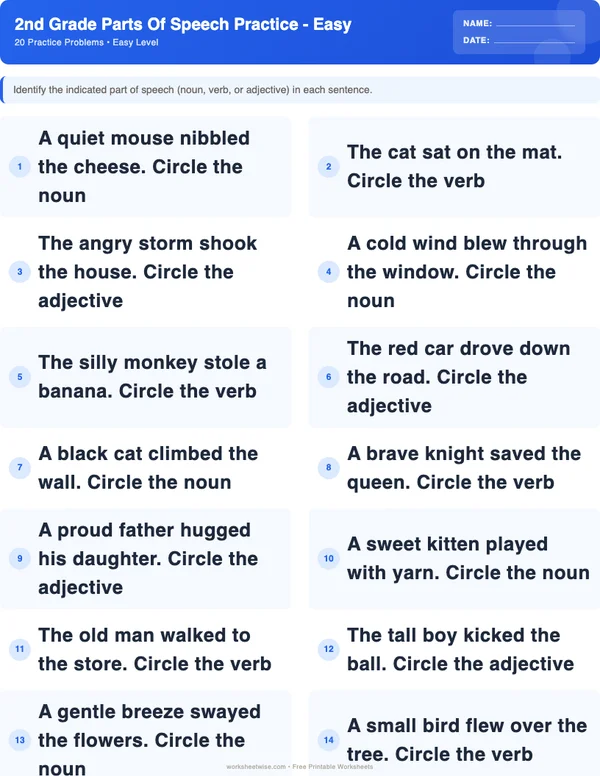
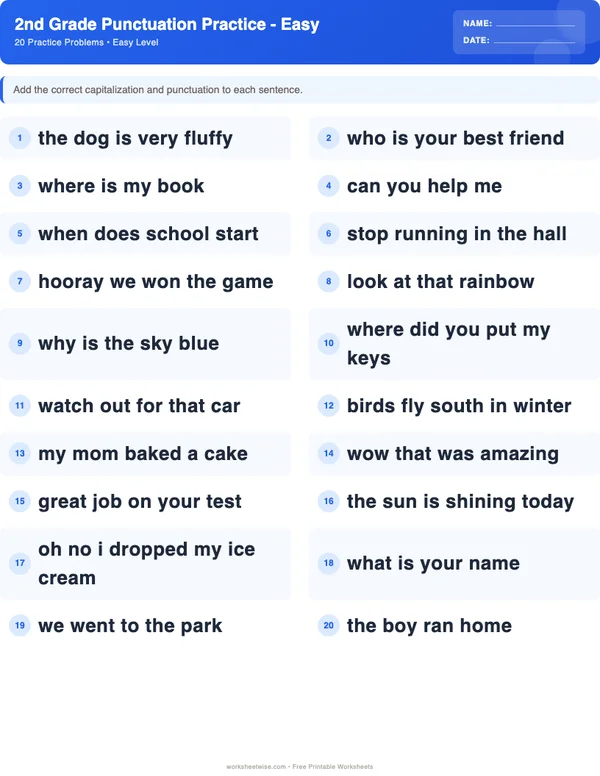
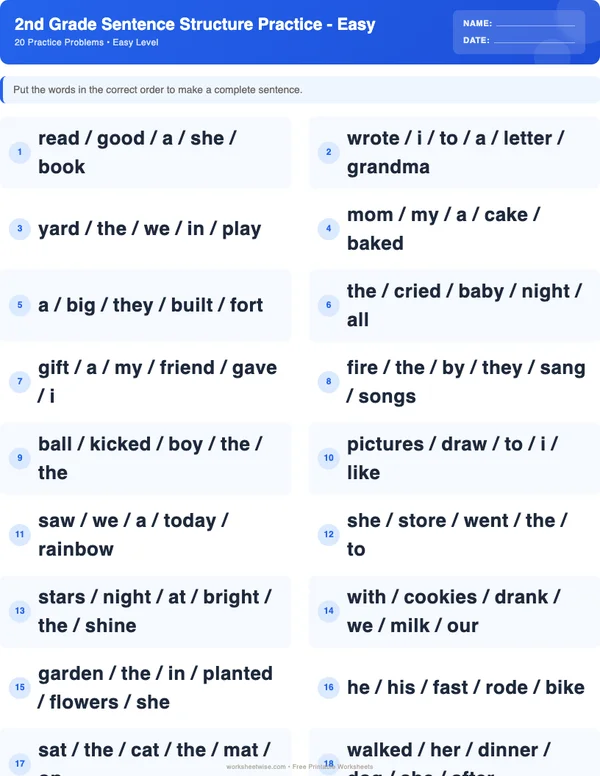
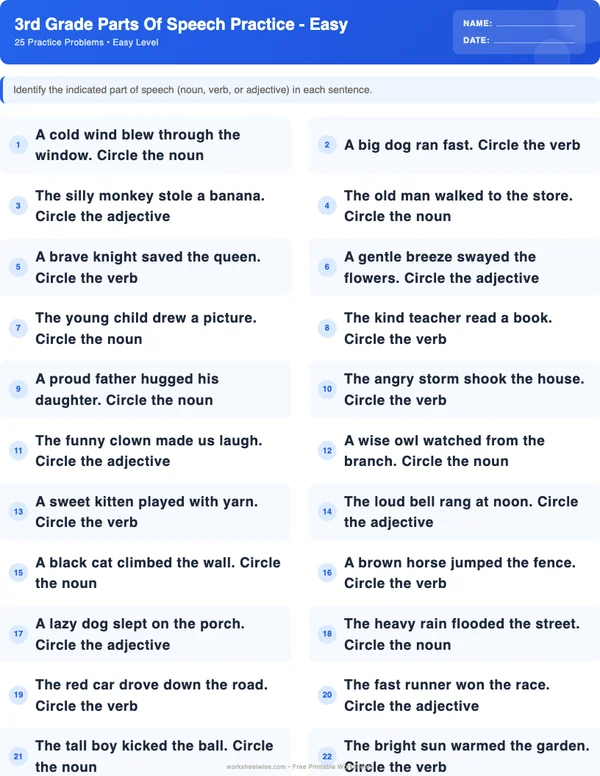
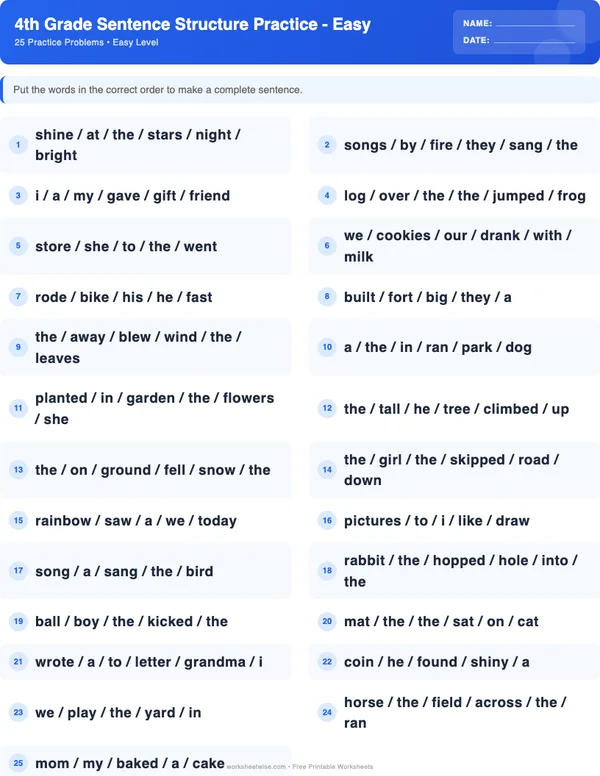
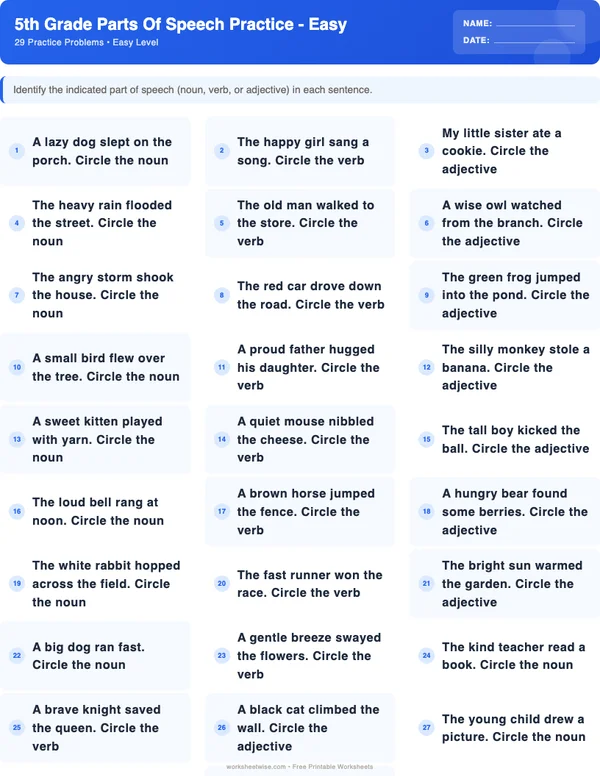
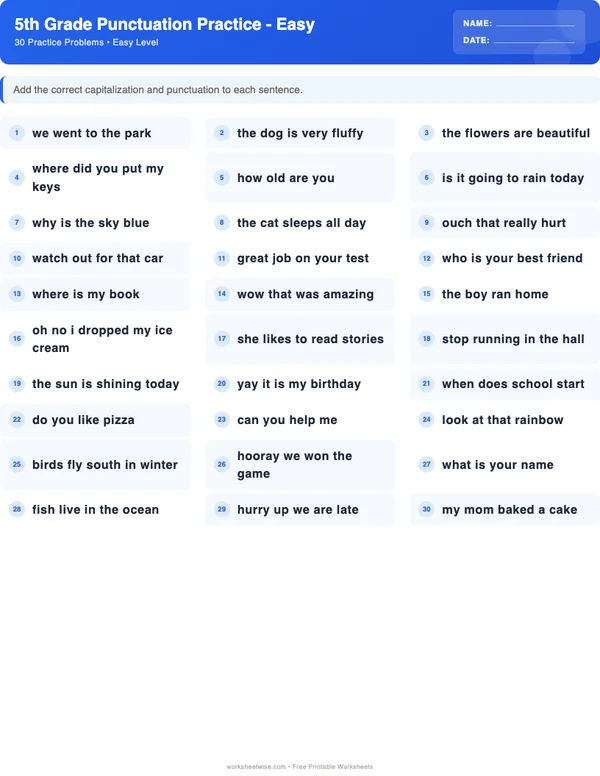
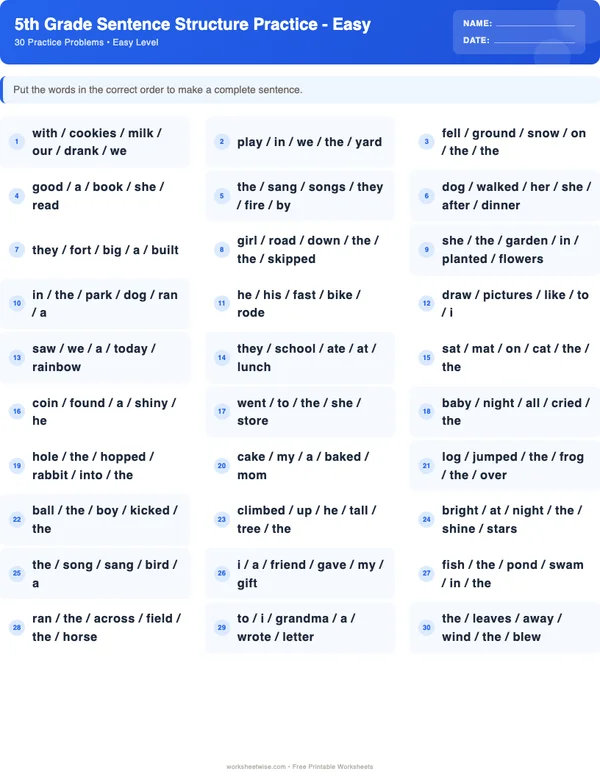
19 relevant free entry points are available. Each one includes a printable learner PDF and separate answer key.
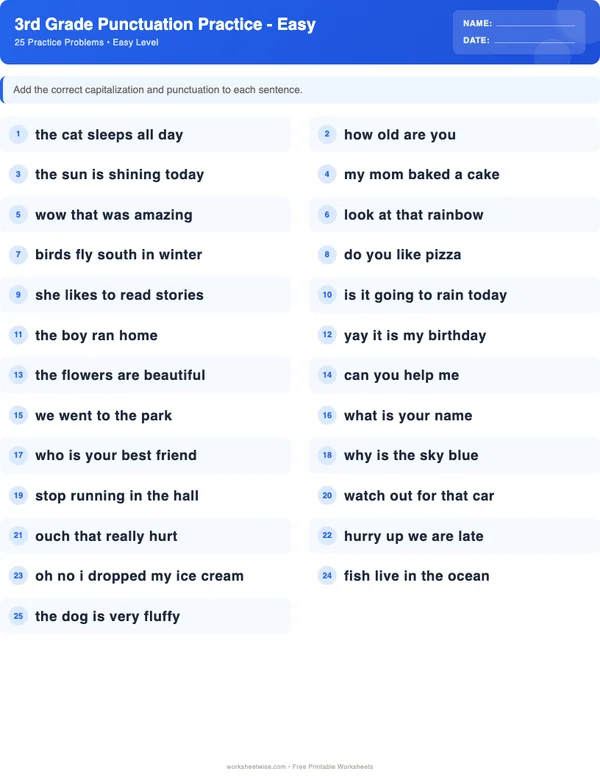
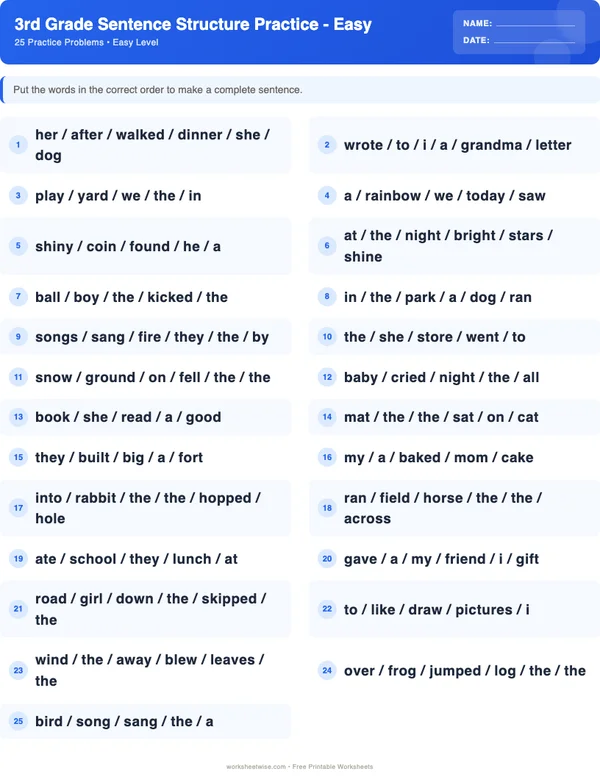
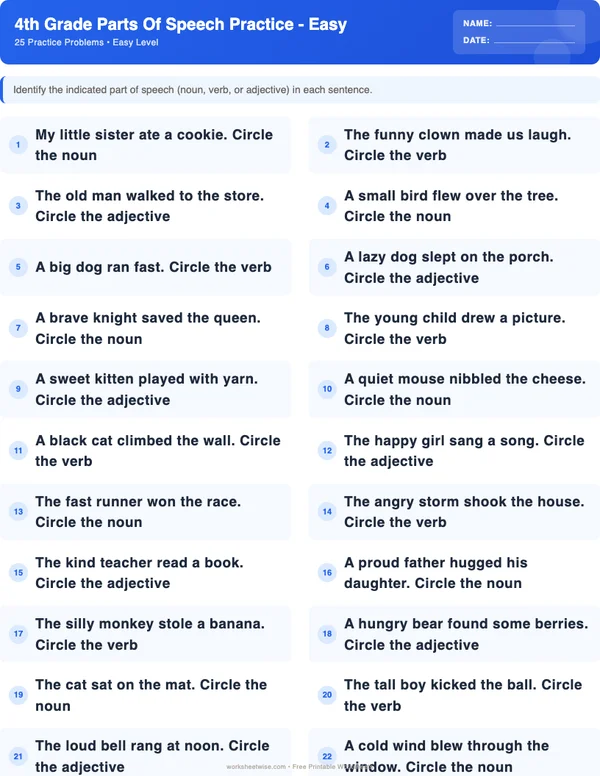
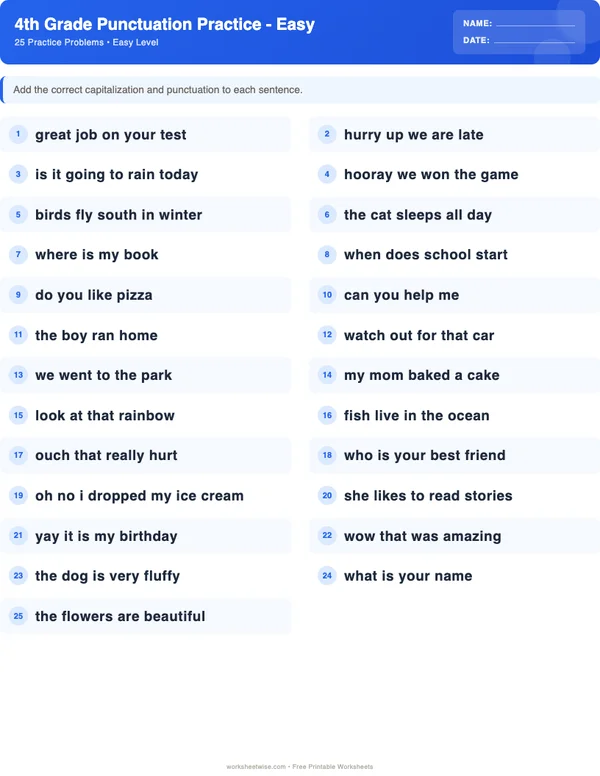
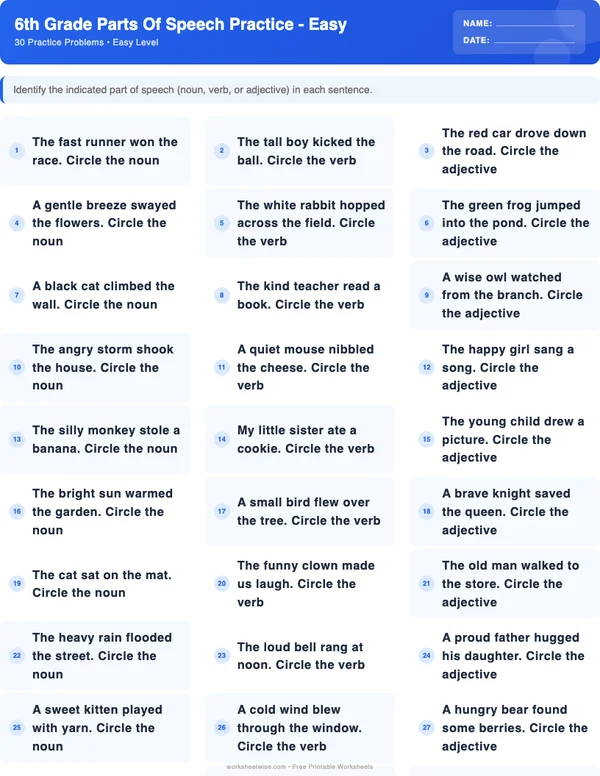
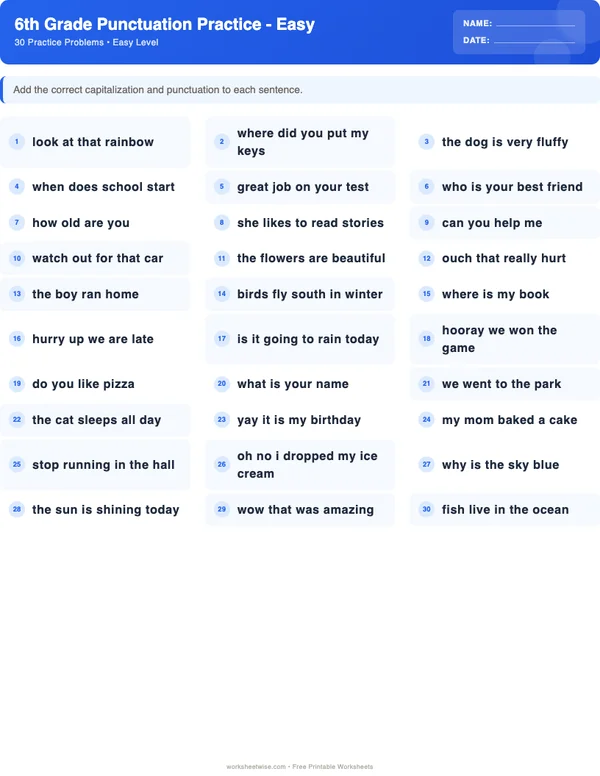
A useful practice loop
Print less. Observe more.
- Choose one skill and model the first item aloud.
- Use a short set and notice the learner’s strategy.
- Change the next task from the work you can see.
Need more than the free sheet?
Plus includes all 342 matching catalogue variations where available, plus saved deterministic generators and the worksheet designer.
See Plus membershipComplete guide
How to teach and practise classroom grammar worksheets
3,471 words Updated 6 instructional visuals
Turn a grammar sheet into a short teaching cycle
Classroom grammar worksheets are most useful when each sheet has a defined job: reveal what learners notice, support practice after a model, or confirm whether they can apply one grammar decision independently. A workable lesson moves from teacher modeling to guided responses, then to a limited set of independent items and a quick error-based check. The next sheet is selected from the errors observed—not simply because it is next in a packet.
WorksheetWise’s live grammar catalogue contains 342 variants across seven grade labels and three topics: parts of speech, punctuation, and sentence structure. Nineteen resources are free entry points. Those numbers describe available choices, not a sequence every class should complete.
Grade labels describe the intended practice level, but local curriculum sequences differ. Age is a discovery aid rather than a placement decision. Select from what learners are being asked to do: identify a feature, supply a missing form, correct an error, explain a choice, or produce an original sentence.
A repeatable classroom cycle looks like this:
- Choose one observable grammar target.
- Model the thinking on an example that is not on the sheet.
- Complete two or three items together.
- Release a small number of items for independent work.
- Sort errors by misconception rather than total score.
- Give one focused correction opportunity.
- Choose the next sheet or oral task from that evidence.
That sequence keeps printable classroom grammar worksheets from becoming filler. It also leaves enough time to hear learners explain why a mark, word class, or sentence boundary belongs where they placed it.
Select the task before selecting the grade label
Begin with the response you need to observe. “Practice punctuation” is too broad to guide a useful lesson. “Choose among a period, question mark, and exclamation point, then justify the choice by reading the sentence aloud” is specific enough to teach and check.
Match the response format to the teaching purpose
Use identification when learners are first noticing a feature. Circling the verb in “The rabbit hops” isolates recognition without requiring much writing. This can tell you whether a learner recognizes a verb in context, but it cannot show whether the learner can select a precise verb in original writing.
Use completion when the missing element has one reasonably clear function. Adding punctuation to “Where is my blue hat” makes the learner coordinate sentence meaning with a question mark. Completion is less informative when several answers could be defensible.
Use correction when you need learners to compare a flawed form with a rule. Revising “The dog is big the dog is brown” can expose whether a learner recognizes two complete thoughts. A corrected sentence without an explanation, however, may result from guessing.
Use production only after the component decision has been modeled. Asking a learner to write a compound sentence requires idea generation, spelling, handwriting, sentence construction, conjunction choice, and punctuation at once. If the aim is conjunction use, provide the two clauses first.
Use explanation when you need to distinguish knowledge from chance: “I used a question mark because the sentence asks where the hat is.” Keep the explanation oral, dictated, selected from options, or written according to the learner’s language and transcription demands.
Define difficulty through visible task features
The live representative resources are labeled “easy,” but that label should not be applied to a learner. Describe what makes the task accessible instead:
- short, familiar sentences;
- one rule operating at a time;
- a constrained answer set;
- a visible example;
- little required handwriting;
- direct identification rather than original composition.
A task becomes more demanding when sentences lengthen, distractors become plausible, several rules appear together, explanations are required, or the learner must edit a connected paragraph. The grammar concept may remain the same while the response burden changes substantially.
Build the lesson around one grammar decision
The IES guide to teaching elementary students to be effective writers recommends explicit teaching of writing processes and foundational writing skills, with gradual movement toward independence. It did not assess WorksheetWise. Applied here, that guidance supports a compact “I decide, we decide, you decide” routine.
Model the decision, not merely the answer
For end punctuation, write:
Did Maya bring the paint
Think aloud: “The sentence asks for information. I hear a question, so I add a question mark: ‘Did Maya bring the paint?’”
Do not obscure the target by simultaneously correcting spelling, capitalization, spacing, and handwriting. If capitalization also needs attention, acknowledge it and return to it in another pass.
For sentence completeness, use a two-question check:
- Who or what is the sentence about?
- What does that person or thing do, have, or seem to be?
With “The small turtle,” say: “I can find who—the turtle—but I cannot find what the turtle did or was. This is not yet a complete sentence.” Then add a predicate: “The small turtle crossed the path.”
Guide several responses while evidence is still public
Place two contrasting examples beside each other:
- “The bell rang.”
- “After the bell.”
Ask partners to point to the complete thought and supply what the fragment needs. Take responses before revealing the answer. During guided practice, you can correct an emerging rule immediately; during independent work, you are collecting evidence about whether that rule travels without prompting.
A useful release point is three consecutive guided responses in which the class can name the relevant clue—not three correct guesses. Then assign only enough independent items to see whether the decision holds across different wording.
Teach early grammar through speech, movement, and meaning
The catalogue includes kindergarten and first-grade entry points with 12 problems each. Twelve available problems do not require twelve consecutive written responses. Early lessons are stronger when adults treat the page as a source of prompts and sample only a few items.
For ages three and four, prioritize brief adult-led oral, matching, manipulative, and movement work over desk work. A child might place a toy bear under, beside, or behind a box while an adult says the preposition; match sentence cards to period, question-mark, or exclamation-point cards; or act out verbs such as jump, read, and think. These are teaching suggestions, not claims that a particular sheet was designed for preschool use.
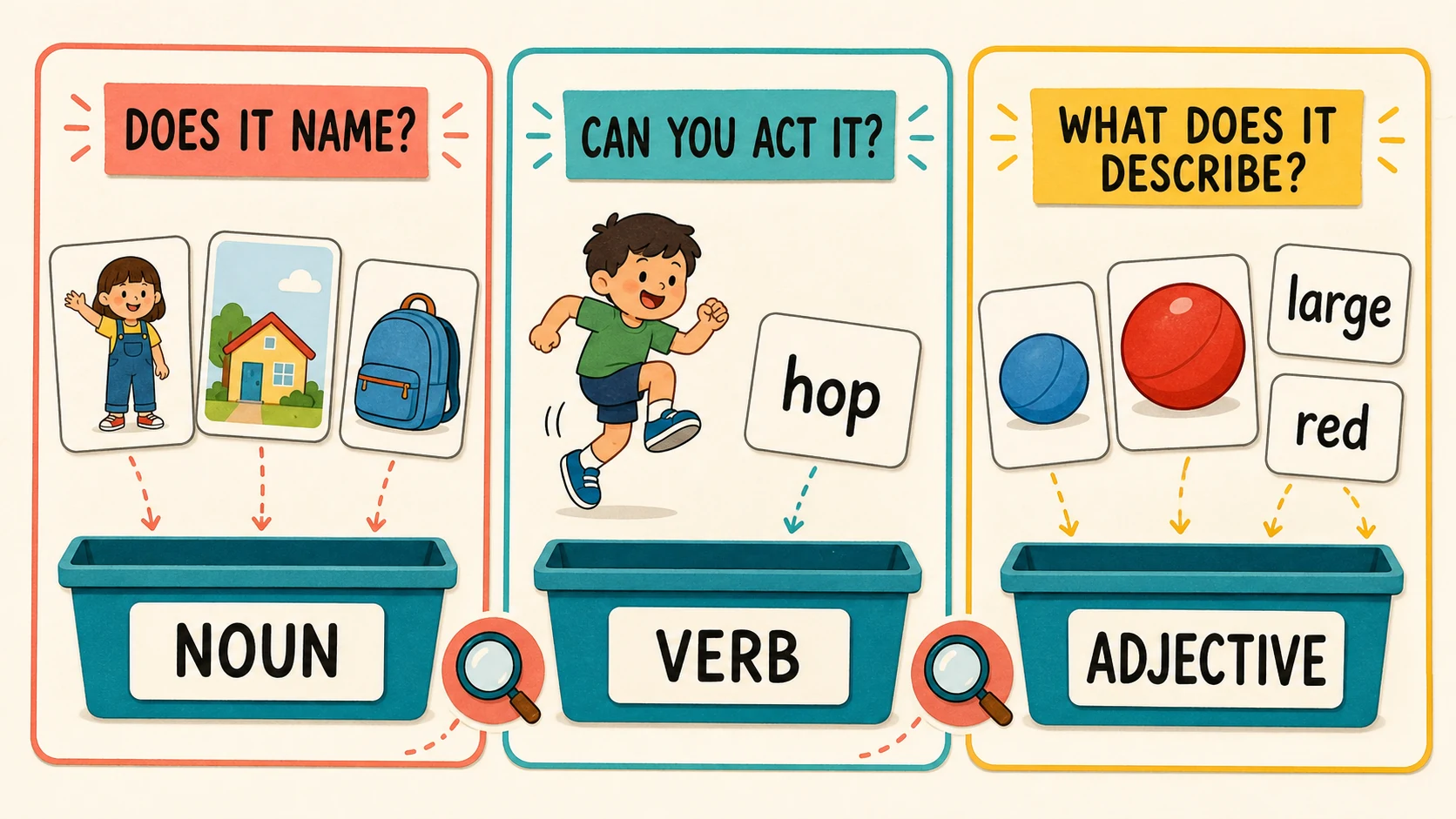
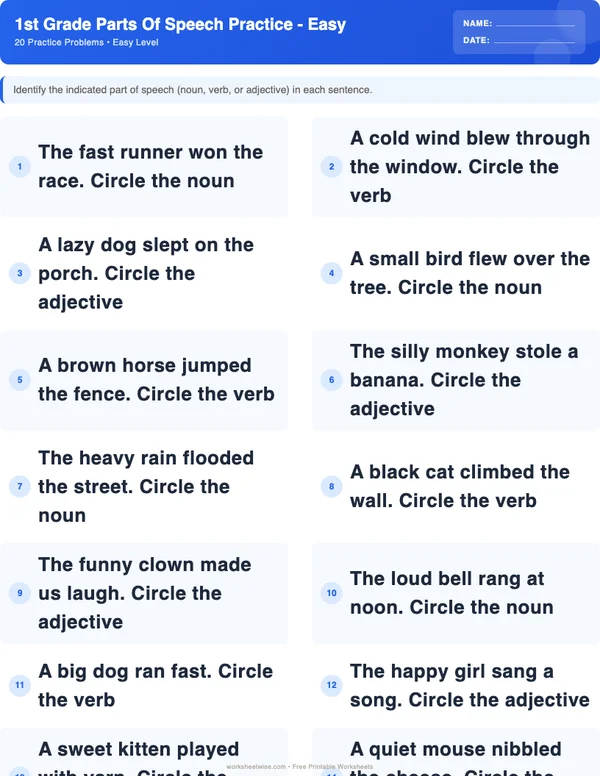
Use first-grade parts-of-speech errors to decide whether the next response should be acted, sorted, or identified inside a sentence.
Checked example 1: noun and verb in context
Use the sentence:
Birds sing.
Ask learners to tap the word naming the animals and act out the action. Birds is a plural noun naming the animals; sing is the verb expressing what they do. The example belongs in this classroom guide because the live 1st Grade Parts of Speech guide and free sheet begins with concrete noun-and-verb work and contains 12 problems.
Now change the context:
We heard a beautiful song.
Do not tell learners that every “doing word” is a verb and stop there. In this sentence, song is a noun. Grammar labels depend on a word’s job in a sentence, not on a memorized association.
If learners identify objects but miss action words, the next task should keep sentences short and contrast nouns with verbs. If they label the first word as a noun regardless of function, use sorting only as a warm-up, then return immediately to complete sentences.
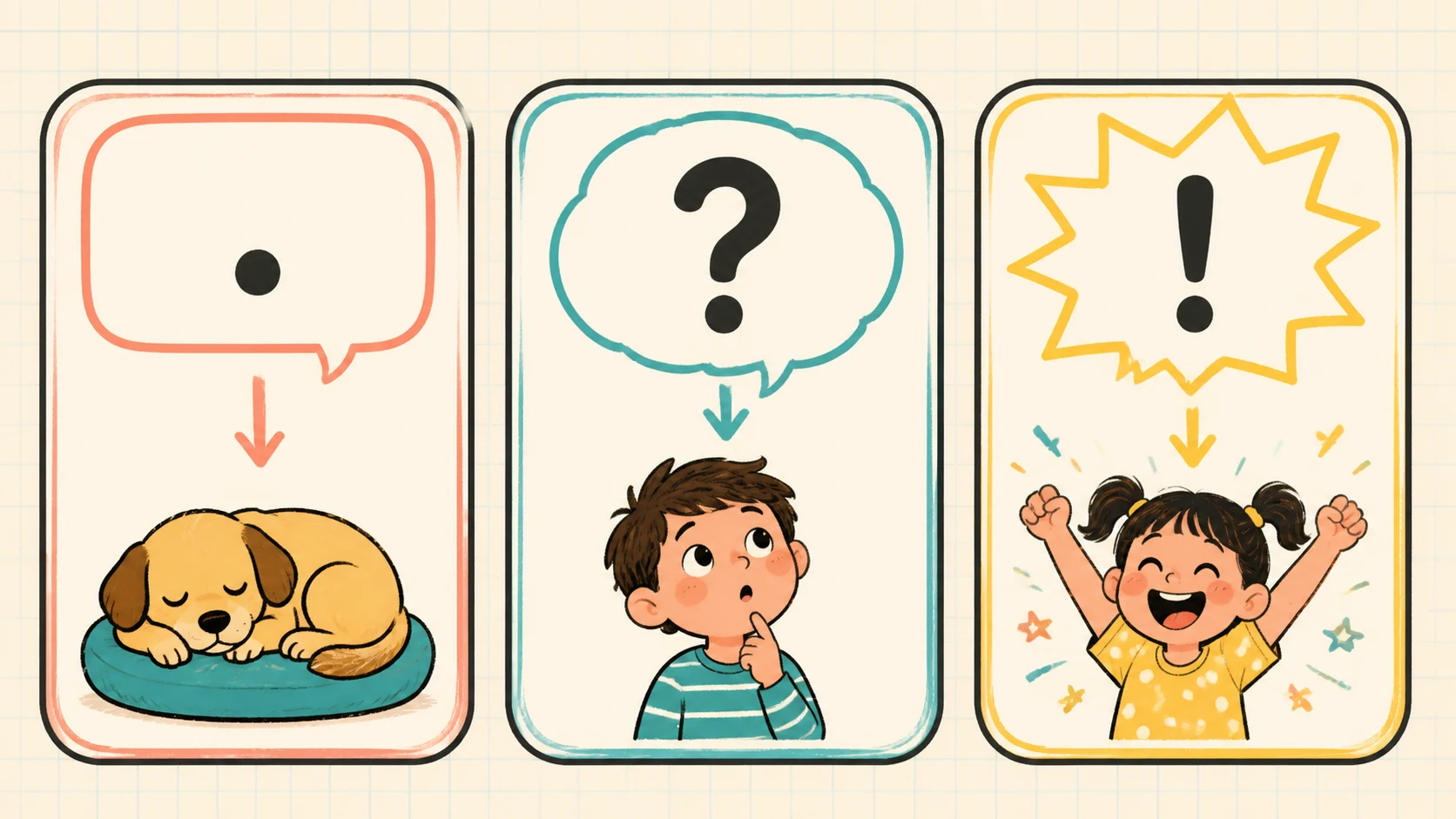
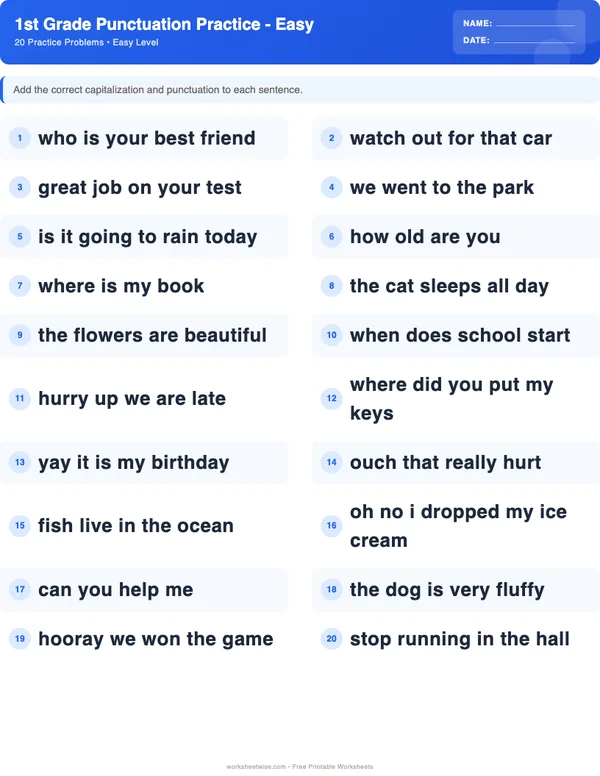
Keep early punctuation centered on meaning and voice before combining several punctuation rules on one page.
Checked example 2: meaning determines the end mark
Compare:
The puppy is in the yard.
Is the puppy in the yard?
What a muddy puppy!
The first makes a statement and takes a period. The second asks a question and takes a question mark. The third expresses strong feeling and takes an exclamation point. Read all three aloud, but do not teach pitch alone as the rule; meaning must decide the mark.
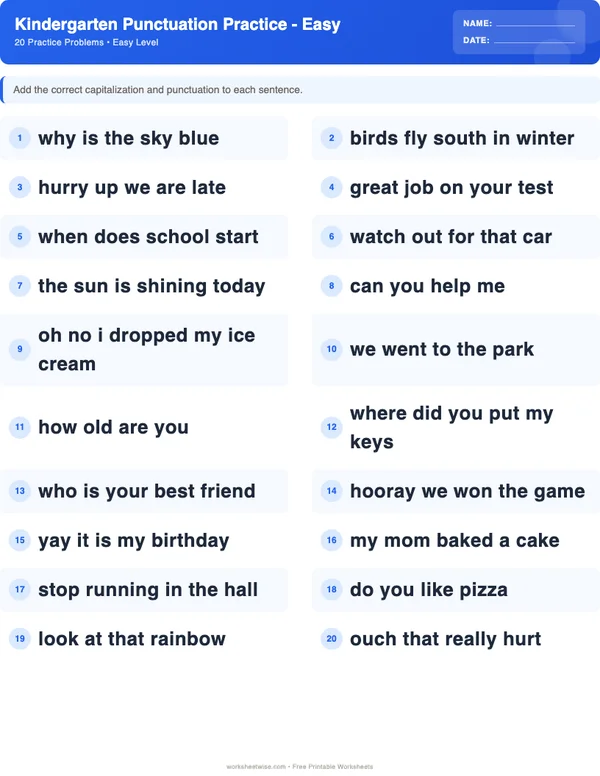
This example fits the 1st Grade Punctuation guide and free sheet, another 12-problem live entry point. If a learner chooses by voice accurately but cannot explain the sentence purpose, keep the next sheet constrained to the three end marks and add oral justification. Do not move yet to commas or quotation marks.
Compare parts of speech, punctuation, and sentence structure
The three catalogue topics demand different kinds of thinking. A sheet that works well for one should not dictate the routine for another.
Parts of speech: ask what the word does here
Parts-of-speech work ranges from identifying concrete nouns and action verbs to classifying pronouns, conjunctions, prepositions, and words whose function changes by context. The live first- and second-grade representative sheets each contain 12 problems; third- and fourth-grade representatives contain 14; the listed fifth-grade parts-of-speech resource contains 29.
The 29-problem count is a reason to plan stopping points, not a reason to complete all items in one sitting. Use five or six items after modeling, review the error pattern, and resume only if the task remains informative.
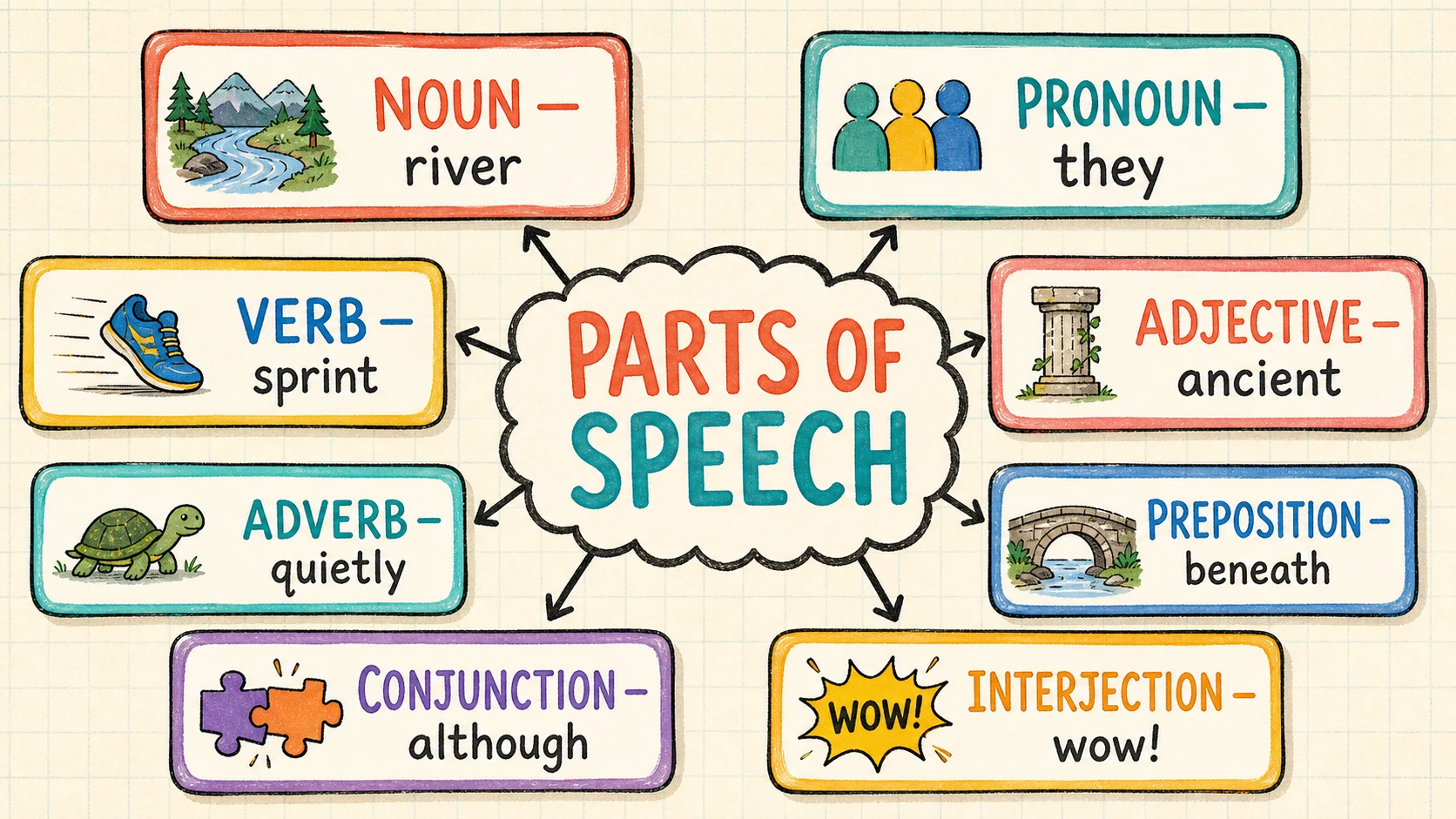
For upper-elementary practice, connect labels to sentence function and revision rather than treating the eight categories as a recital.
Consider light:
Please light the candle.
The light filled the room.
I carried a light bag.
In the first sentence, light is a verb: it names the requested action. In the second, it is a noun: it names what filled the room. In the third, it is an adjective describing bag. Each classification has been checked against the word’s function in its sentence.
This example belongs here because the catalogue guidance explicitly notes that English words can serve different parts of speech depending on context. If learners classify light from a memorized word list, the next sheet should present the same flexible word in contrasting sentences. A harder vocabulary list would not address the misconception.
Punctuation: isolate one rule before mixed editing
End marks, commas, apostrophes, and quotation marks solve different problems. Teach one comma use at a time. A learner who can punctuate a list may not yet know the comma before a coordinating conjunction joining two independent clauses.
Checked comparison:
We packed pencils, paper, and glue.
We packed the supplies, and Ana carried the box.
The first sentence uses commas to separate three listed items. In the second, the comma precedes and because it joins two complete clauses: “We packed the supplies” and “Ana carried the box.” Removing either subject changes the analysis: “We packed the supplies and carried the box” does not need that clause-separating comma.
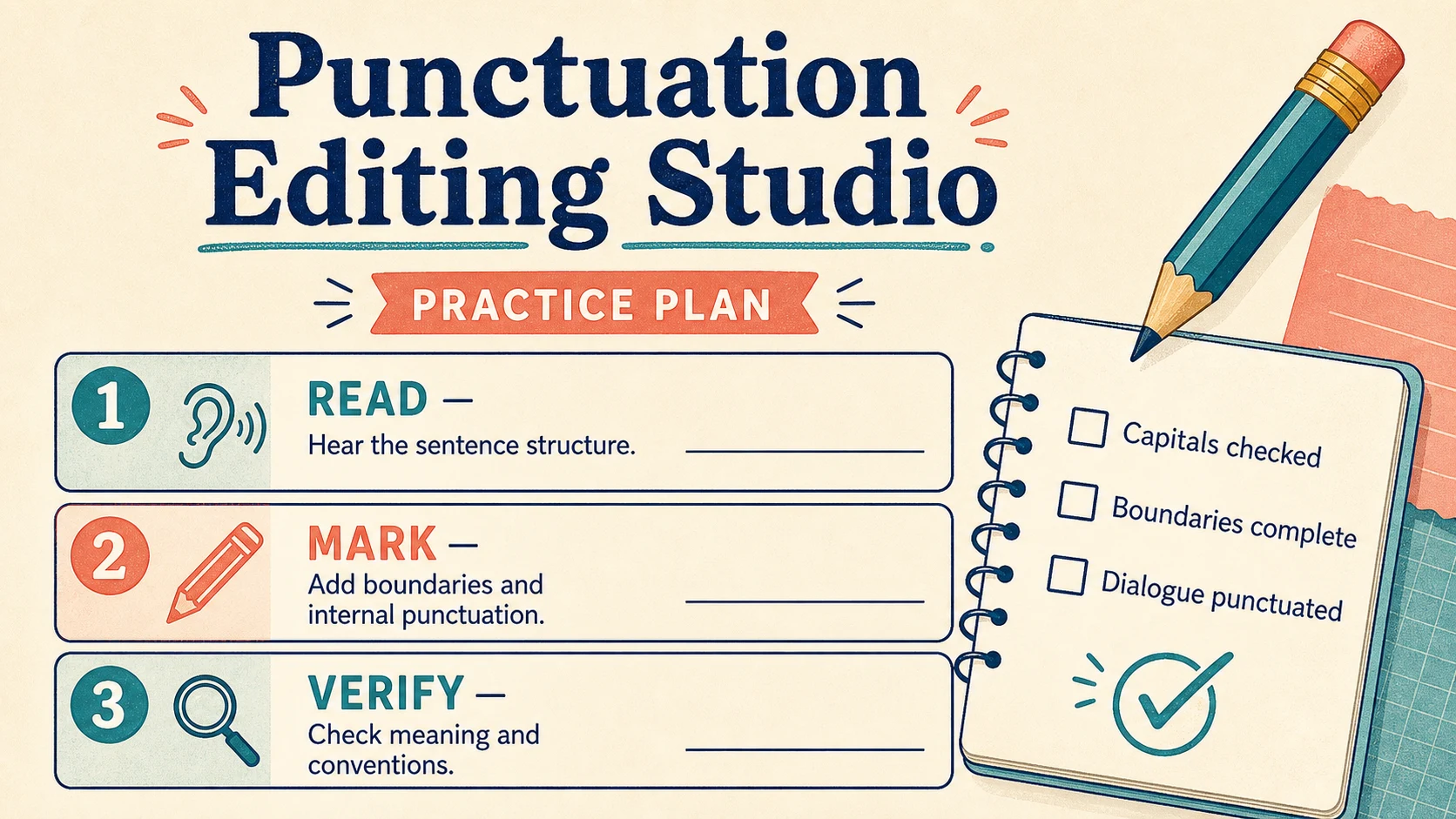
Space third-grade punctuation practice across modeling, focused items, delayed review, and a short transfer check.
The live third-grade punctuation representative contains 14 problems. It is suitable for a two-stage lesson: use part of the page for one taught rule, then save unseen items for a later check. If learners insert a comma before every and, select a next task that contrasts a compound predicate with two independent clauses. Repeating a mixed punctuation page would hide the exact decision they need to revisit.
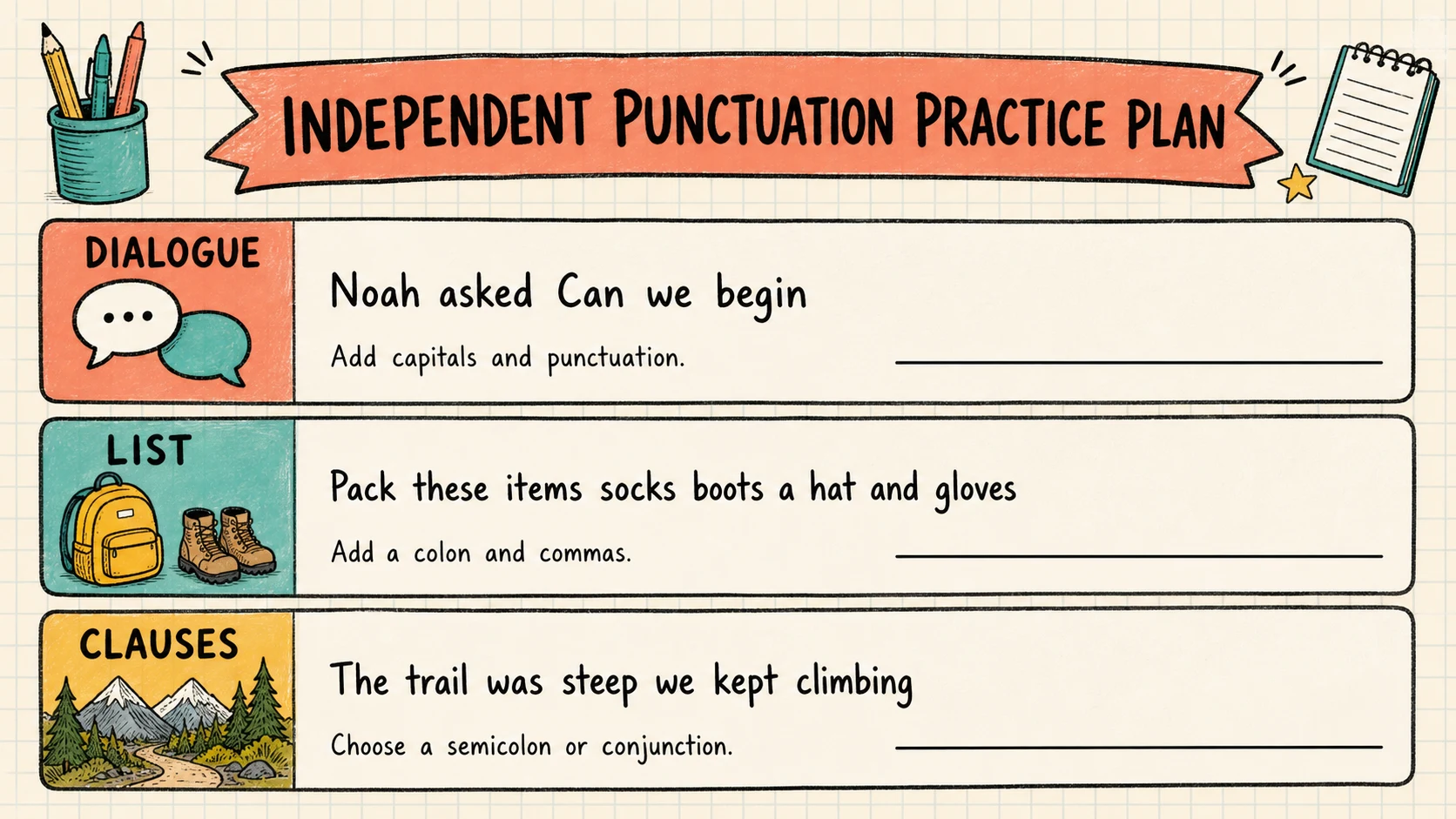
At the upper end of the catalogue’s grade range, revisit punctuation after a delay and require learners to defend boundaries in increasingly complex sentences.
Sentence structure: trace the complete thought
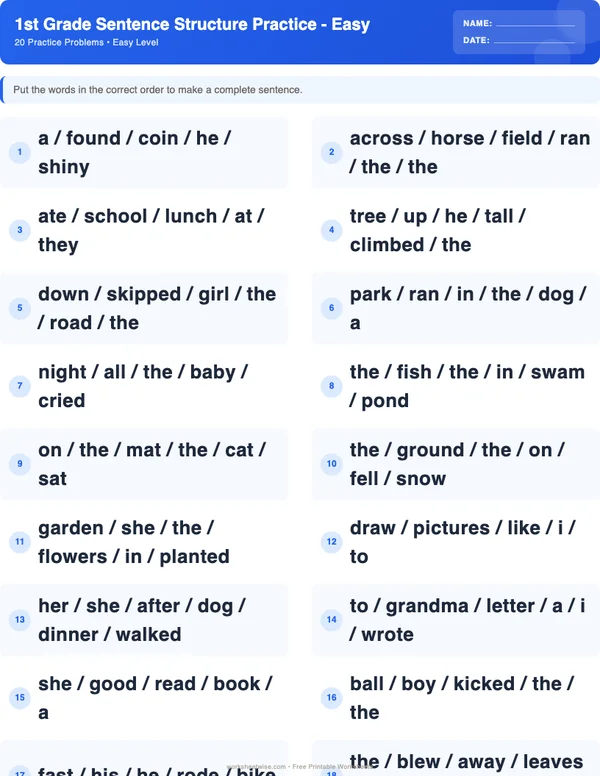
Sentence-structure tasks include distinguishing sentences from fragments and run-ons, locating subjects and predicates, combining sentences, and varying sentence openings. Identification should lead to repair and then to use in writing.
Checked example:
The red kite above the trees.
This group of words has a subject phrase, The red kite above the trees, but no predicate telling what the kite does or is. One valid repair is:
The red kite floated above the trees.
Now compare:
The red kite floated above the trees it disappeared behind a cloud.
That version contains two complete thoughts without a valid boundary. Possible repairs include:
The red kite floated above the trees, and it disappeared behind a cloud.
or
The red kite floated above the trees. It disappeared behind a cloud.
These examples belong here because the live sentence-structure resources cover fragments, run-ons, subjects, predicates, and sentence combining. They also demonstrate why marking an item merely “wrong” is insufficient: the fragment and the run-on require opposite repairs—adding a necessary part versus separating or joining complete thoughts correctly.
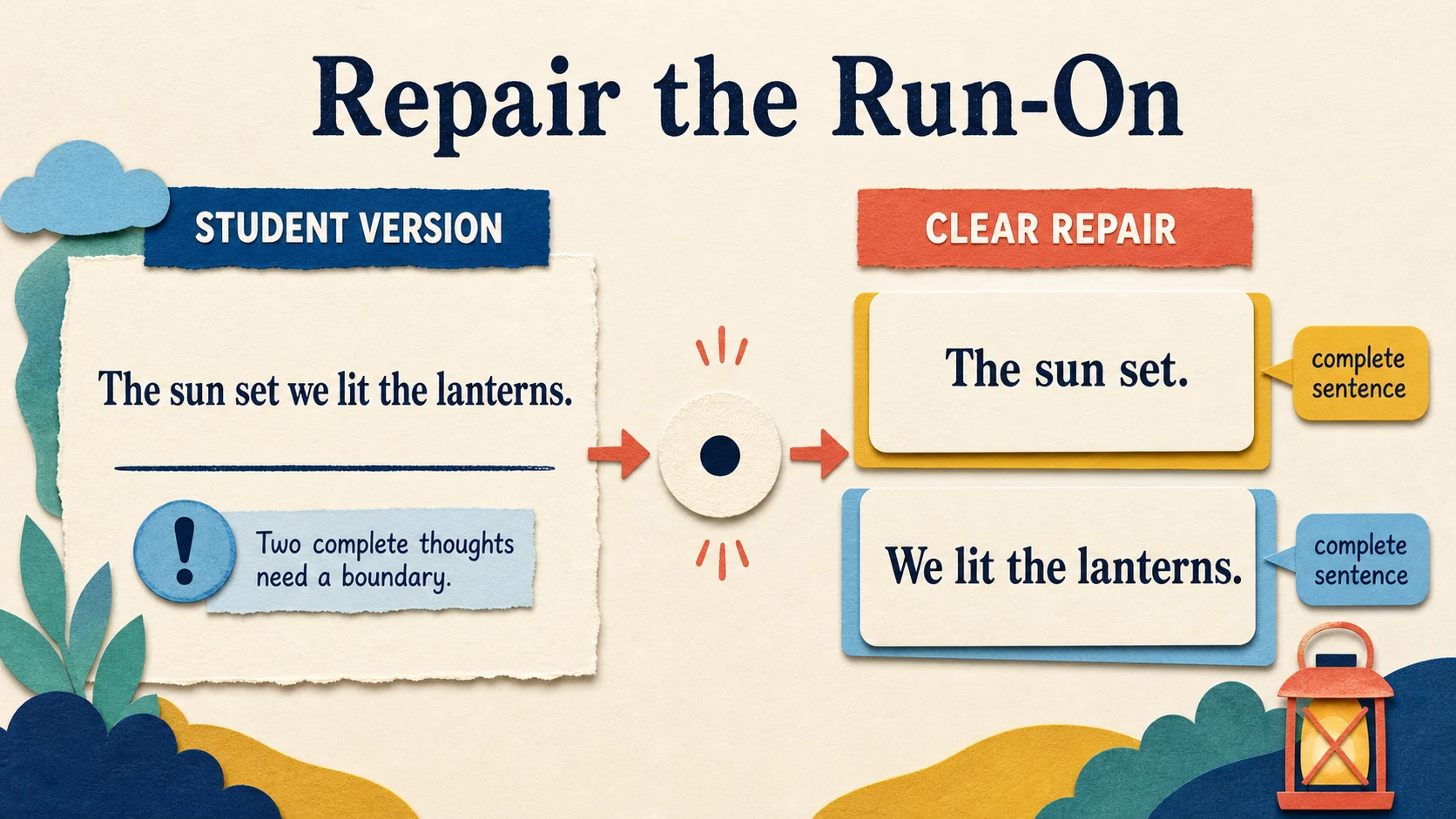
Sort third-grade sentence-structure responses by missing parts, faulty boundaries, and unsuccessful combinations before choosing another sheet.
Use a four-pass classroom routine
The routine below fits a 15- to 25-minute grammar block. Timing is a planning suggestion, not a sourced prescription.
Pass 1: establish the meaning
Spend two or three minutes on an oral contrast. For pronouns, compare “Lena put Lena’s book in Lena’s bag” with “Lena put her book in her bag.” For sentence boundaries, say a complete thought and a fragment. Have learners show one finger for “complete” and an open hand for “needs something.”
State the target in observable terms: “Today we will decide whether a group of words expresses a complete thought and repair it if it does not.”
Pass 2: model and annotate
Project or copy one example. Mark only features connected to the target. Underline the subject once and the predicate twice, or draw a slash between two complete thoughts in a run-on. Narrate the check that learners should later use independently.
The IES foundational reading practice guide emphasizes explicit instruction and supported practice in foundational literacy. It does not evaluate these worksheets or provide a WorksheetWise sequence. In this context, its broader principle supports clear modeling and immediate guided responses, especially when grammar work interacts with decoding and sentence reading.
Pass 3: release a small sample
Complete two items as a class, one with partners, and four to six independently. Conceal later items so pace does not become the lesson. Ask learners to mark uncertain responses with a dot; uncertainty is useful evidence and should not be punished.
Use response formats deliberately:
- pointing or matching to reduce writing load;
- circling to check recognition;
- editing to check application;
- sentence construction to check transfer;
- oral explanation to uncover the reason for a choice.
Pass 4: check by error category
Display answers after collecting an initial response. Learners correct in a different color and add a brief reason, such as “asks a question,” “missing a predicate,” or “two complete thoughts.” A corrected answer is not yet proof of independent control, so include one fresh exit item.
Record class patterns with simple counts: “7 confused fragments with short sentences; 5 joined clauses without punctuation; 12 applied the boundary correctly.” Avoid turning those observations into learner labels.
Let the error choose the next sheet
A raw percentage combines errors that call for different teaching. Interpret what the learner actually did.
| Observed response | Plausible interpretation to test | Immediate feedback | Next task |
|---|---|---|---|
| Adds an exclamation point to every exciting topic | Chooses by topic rather than sentence purpose | Read statement, question, and exclamation versions aloud | Contrast sentence purposes with the same subject |
| Circles every action-related word as a verb | Uses meaning without checking sentence function | Ask what job the word performs in this sentence | Classify one flexible word across contexts |
| Calls every short group a fragment | Uses length instead of completeness | Locate “who/what” and “did/is” | Contrast short complete sentences with long fragments |
| Adds a comma before every and | Recalls a visual pattern but not clause structure | Box each complete thought | Contrast lists, compound predicates, and joined clauses |
| Corrects examples but omits marks in original writing | Recognizes the rule without transferring it | Have the learner reread one self-written sentence | Use a brief edit-and-write pair, not more identification |
Treat each interpretation as a hypothesis. Ask a follow-up question before deciding. A learner may omit punctuation because of rushed copying, limited transcription stamina, or uncertainty about the rule; the worksheet alone cannot determine which.
When most errors share one cause, reteach that decision and use a narrower sheet. When errors are scattered, first check directions, vocabulary, visual layout, and whether too many rules were mixed. When independent responses are accurate but original writing is not, stop assigning more recognition items and move to supported editing of the learner’s own sentences.
Adapt access without removing the grammar target
An adaptation preserves the decision being assessed while reducing an unrelated barrier.
For a learner who reads slowly, read the sentence aloud while leaving the punctuation blank. If the target is choosing an end mark, decoding speed need not control the result. If the target includes independent sentence reading, however, adult reading changes what is being assessed; note that difference.
For a learner with limited handwriting stamina, offer punctuation cards, word cards, pointing, highlighting, or oral explanation. Do not replace “repair the fragment” with “copy this completed sentence,” because copying removes the sentence-repair decision.
For multilingual learners, preview unfamiliar nouns in the examples and contrast grammar through complete sentences. Accept an oral explanation before requiring metalanguage such as predicate or antecedent. Continue teaching the accurate term, but do not mistake unfamiliar terminology for absence of the underlying concept.
For learners ready for greater complexity, keep the same rule and increase the reasoning:
- remove the answer choices;
- introduce a plausible distractor;
- ask for two valid revisions;
- require a short explanation;
- transfer the structure to a science or social studies sentence.
The Common Core English Language Arts standards include grade-specific language conventions and writing expectations. They can help teachers compare a task with local instructional aims, but they do not establish that a WorksheetWise resource is aligned to every curriculum. Grade labels remain intended practice levels, not placement decisions.
Keep feedback brief, specific, and usable
Whole-page marking often arrives too late and says too little. Feedback should identify the decision to repeat.
Instead of “Check punctuation,” write: “Box the complete thought on each side of and. Add a comma only when both sides can stand as sentences.”
Instead of “Fragment,” write: “You found who—the fox. Add what the fox did.”
Instead of supplying the correct word-class label, ask: “Is run naming an action here, or is it the name of an event?” Then have the learner revise the answer.
A manageable check routine can use three codes:
- M: meaning or sentence purpose;
- F: grammatical function;
- B: sentence boundary.
Use no more than one or two codes on a learner’s page. The code should lead to an action during the lesson: reread, box a clause, act out a verb, match a mark, or repair one sentence. If learners cannot act on the code, it is recordkeeping rather than feedback.
End with a fresh item that uses the same decision in different wording. For the comma misconception above, use: “Noah washed the brushes and stacked them by the sink.” A learner who correctly leaves out the comma can explain that one subject performs both actions. That response is stronger evidence than simply copying a corrected model.
Know what a grammar worksheet cannot establish
A worksheet provides a sample under particular conditions. It cannot diagnose a language disorder, learning disability, attention difficulty, or instructional need by itself. It cannot show durable learning after one accurate attempt, and it cannot prove transfer to authentic writing.
It also cannot replace oral language, shared reading, sentence discussion, teacher modeling, or composition. Some grammar questions permit more than one effective revision. “The dog is big. The dog is brown.” can become “The dog is big and brown” or “The big, brown dog barked,” but the second revision adds information. Discuss what changed rather than enforcing a single surface form.
Do not infer mastery from a high score on heavily cued identification items. Check the same concept later in editing or original writing. Conversely, do not infer lack of understanding from a page crowded by handwriting, decoding, or unfamiliar vocabulary demands. Change the access method while preserving the target decision.
Make tomorrow’s choice from today’s evidence
Choose one current target and open a matching entry point in the full worksheet library. Model one new example, guide three responses, assign no more than six unseen items, and sort the results by meaning, function, or boundary.
Then make one observable decision:
- If learners cannot state the rule, repeat oral modeling.
- If they know the rule but misread the sentence structure, choose a narrower contrast sheet.
- If they correct prepared sentences accurately, move to one sentence from their own writing.
- If errors are mixed, reduce vocabulary or response demands before changing the grammar target.
For tomorrow’s lesson, generate or select only the contrast the class evidence calls for. The free deterministic worksheet generators are the practical next resource: create a short follow-up set around the single misconception you recorded, and reserve the final item for an independent transfer check.
Put it into practice
Use the guide with a real printable
Move from explanation to a short, observable practice task. Check the first item together, then adjust the next session from the learner's actual work.
Open the first free worksheetExplore a neighboring collection