Curated collectionAnswer keys includedPrint-ready PDFs
After-School Grammar Worksheets
Account for transition and fatigue with short tasks, clear stopping points and a print-plus-conversation routine.
Start with a real resource
Browse this worksheet collection
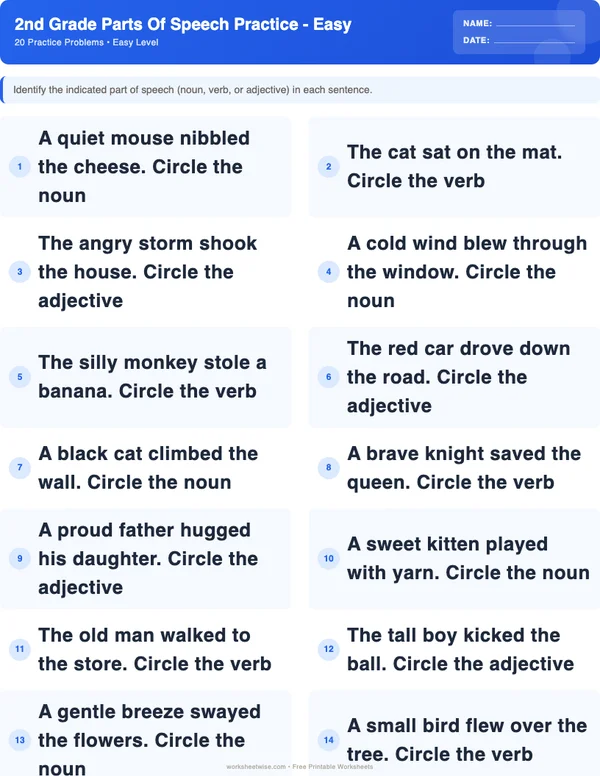
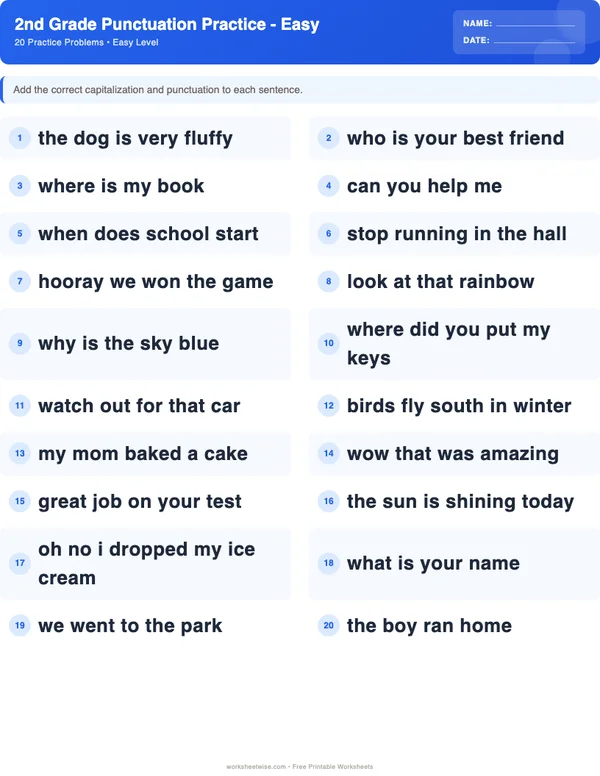
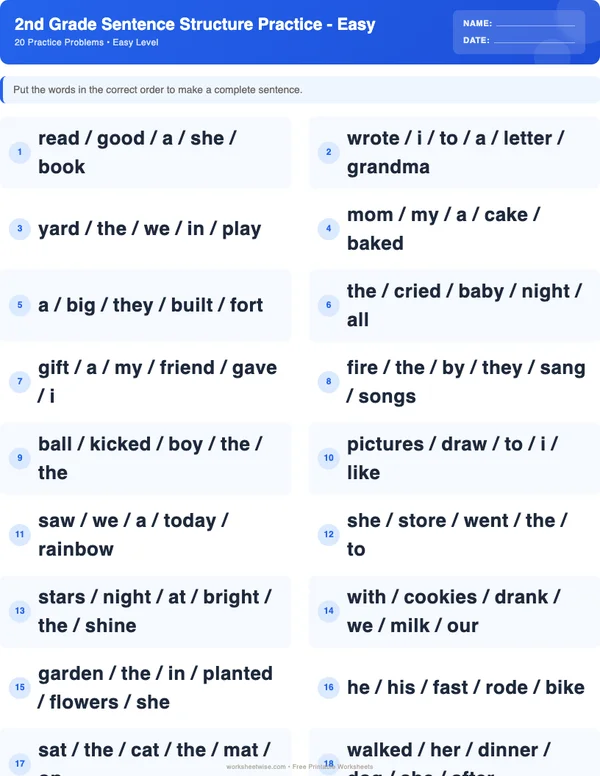
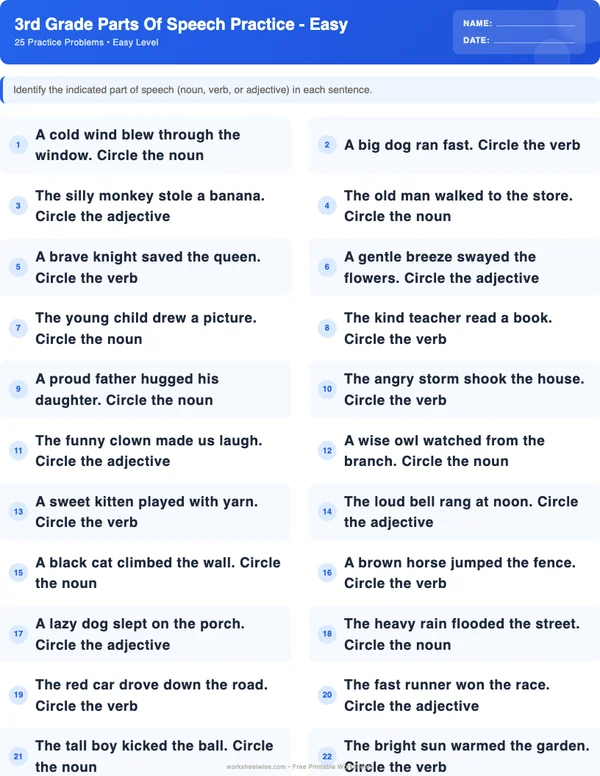
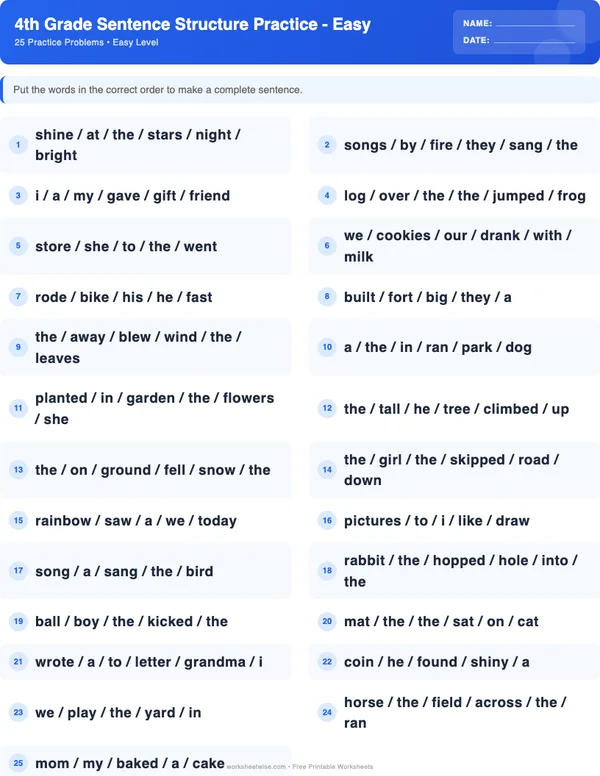
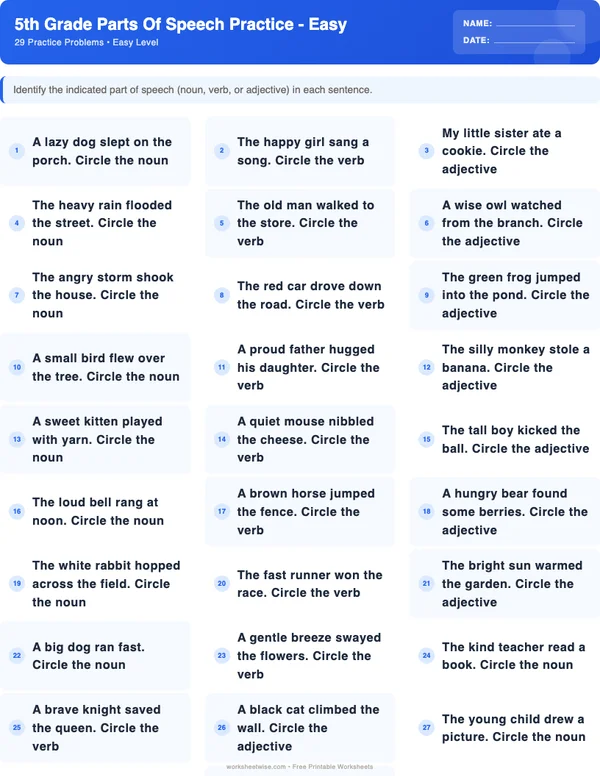
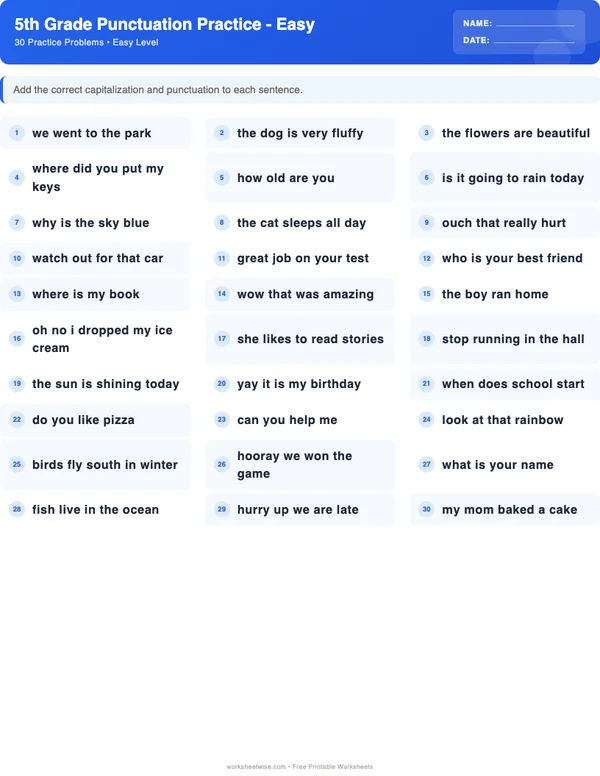
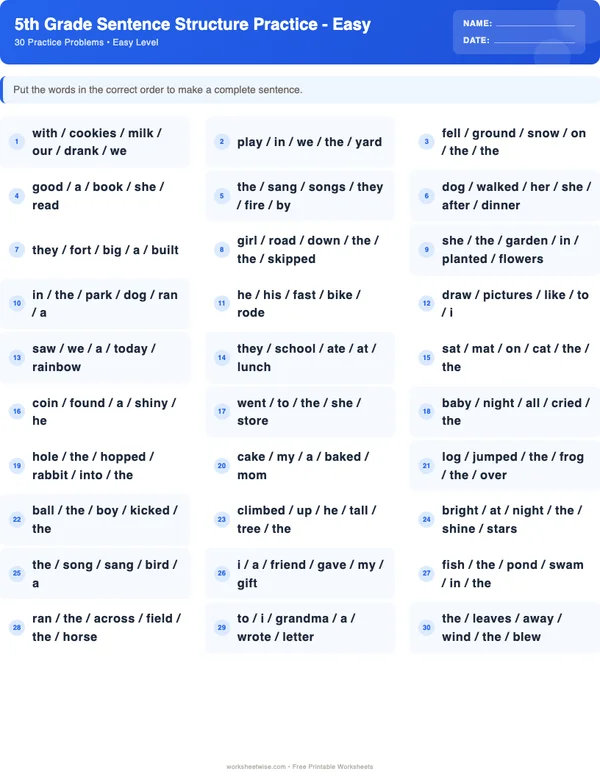
19 relevant free entry points are available. Each one includes a printable learner PDF and separate answer key.
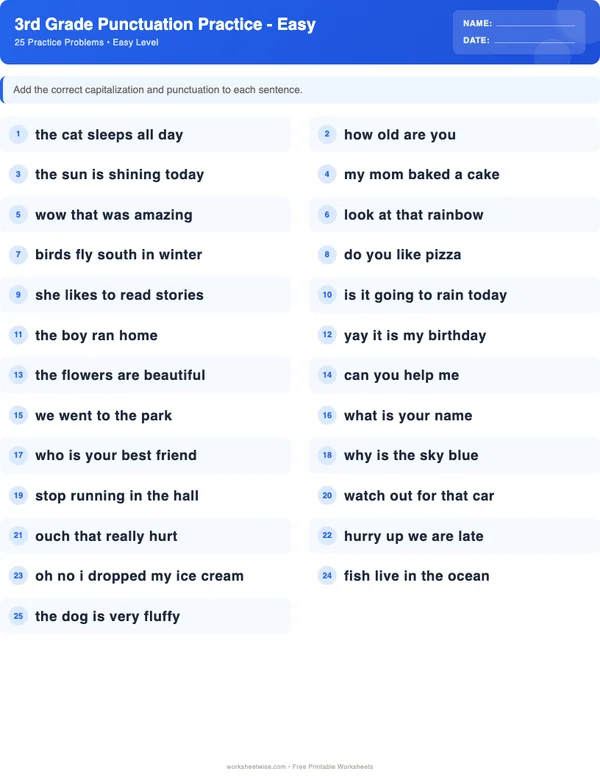
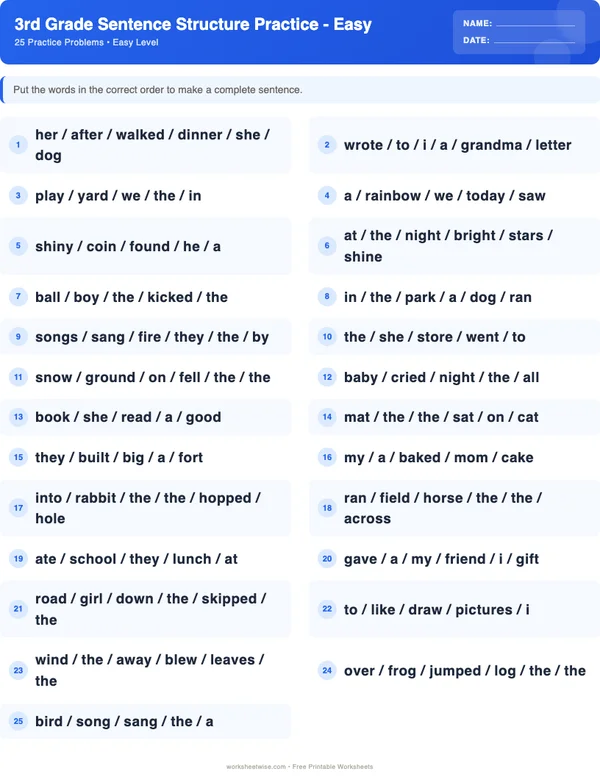
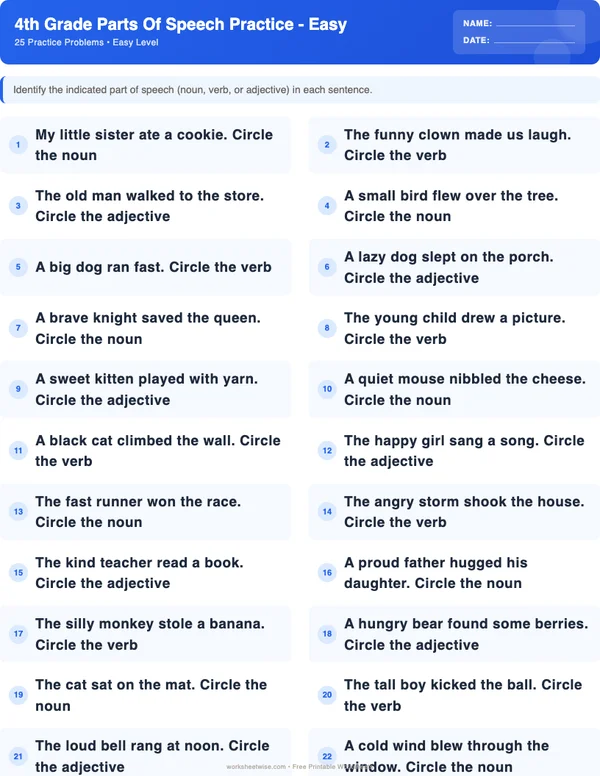
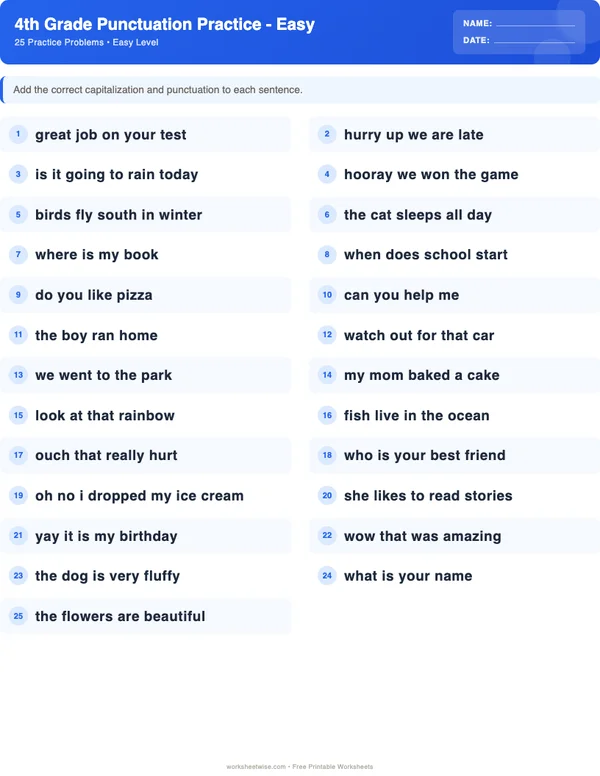
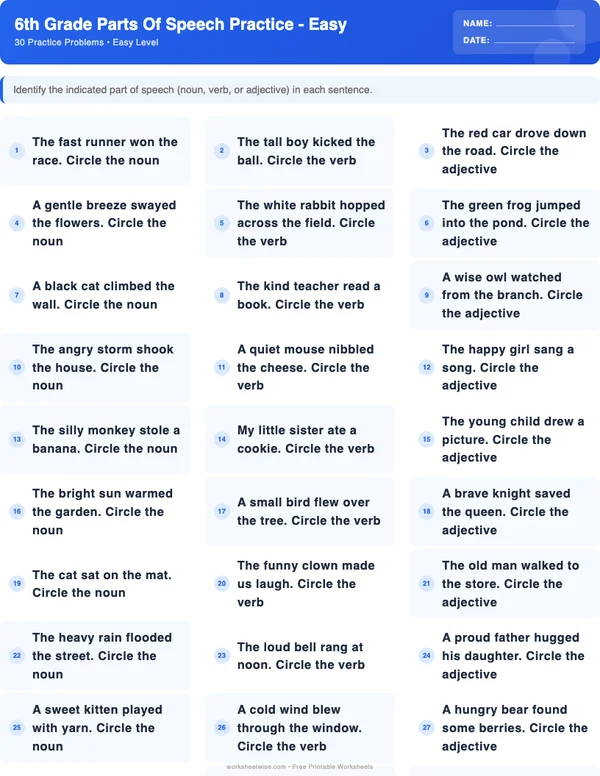
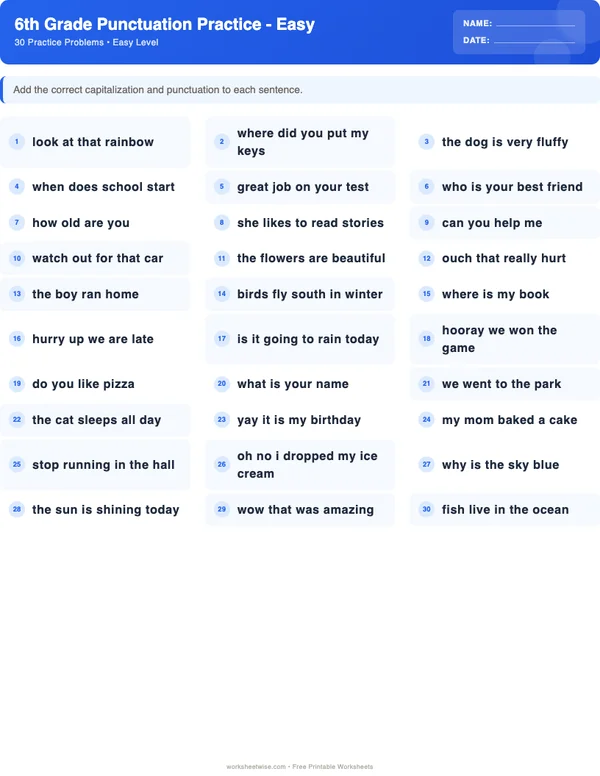
A useful practice loop
Print less. Observe more.
- Choose one skill and model the first item aloud.
- Use a short set and notice the learner’s strategy.
- Change the next task from the work you can see.
Need more than the free sheet?
Plus includes all 342 matching catalogue variations where available, plus saved deterministic generators and the worksheet designer.
See Plus membershipComplete guide
How to teach and practise after-school grammar worksheets
3,590 words Updated 6 instructional visuals
Make after-school grammar brief, spoken, and finishable
After-school grammar practice works best when the learner can see the stopping point, hear the language before analyzing it, and discuss one or two answers with an adult. Choose a sheet that practices one grammatical decision—not every related rule—and treat its printed problem count as a bank of items rather than a requirement to finish the page.
A useful session has five parts:
- Reset after the transition from school.
- Model one item aloud.
- Complete a short, marked section.
- Discuss one correct answer and one uncertain answer.
- Record the error pattern that will determine the next sheet.
For a 12-item first-grade sheet, that might mean doing four items today, drawing a line under item 4, and saving the rest. For a 14-item third-grade sheet, six carefully discussed responses may reveal more than all 14 completed in a rush. A 29-item fifth-grade parts-of-speech sheet should almost always be divided into visible sections before the learner begins.
This is a print-plus-conversation routine. The print provides stable examples and a record of responses; conversation reveals whether the learner understands the grammar, guessed from surface clues, misunderstood the directions, or simply ran out of attention. The adult’s job is not to turn the afternoon into another full class period. It is to select a narrow target, make the language audible, and stop with enough evidence to choose what comes next.
The live catalogue currently covers three grammar topics—parts of speech, punctuation, and sentence structure—across seven grade groupings, with 19 free entry points and 342 variants. Those counts describe choice, not a sequence every learner should complete.
Choose the grammatical decision before choosing the grade label
Grade labels describe the intended practice level; local curriculum sequences differ. Use the label to locate likely material, then inspect what the learner must actually do. A grade label is not a diagnosis, and a mismatch does not establish a learning difficulty.
The catalogue’s representative free sheets are labeled “easy,” but that word should describe observable task features rather than the learner. In this context, an easier task might offer short sentences, familiar vocabulary, one rule at a time, a small answer set, or identification instead of original composition. A more demanding task might require the learner to classify a word by its role in context, edit several error types, explain a choice, combine sentences, or generate and punctuate an original sentence.
Use four selection questions:
- Is the target identification, correction, construction, or explanation?
- How much reading and handwriting does the response format require?
- Does each item test one grammar decision or several at once?
- Can the sheet be divided without breaking the task?
The last question matters after school. A sort containing nine independent words can be stopped after three. A paragraph-editing task may lose coherence if stopped halfway through a sentence. Mark a sensible endpoint before handing over the page.
Compare the three live skill families
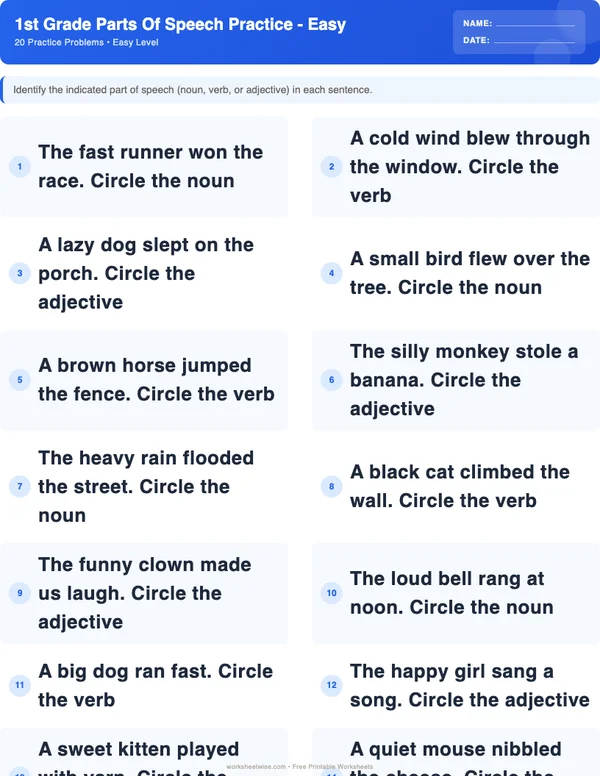
Parts of speech asks what a word is doing in a particular sentence. Early work may separate nouns from verbs; later work can distinguish adjectives, adverbs, pronouns, prepositions, conjunctions, and words that change function with context. This family suits a learner who can read the sentence but needs help naming or using grammatical roles.
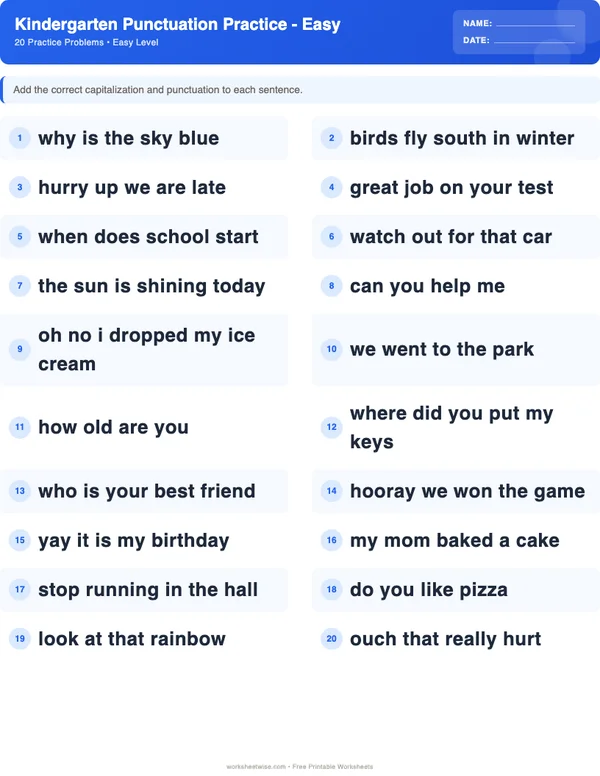
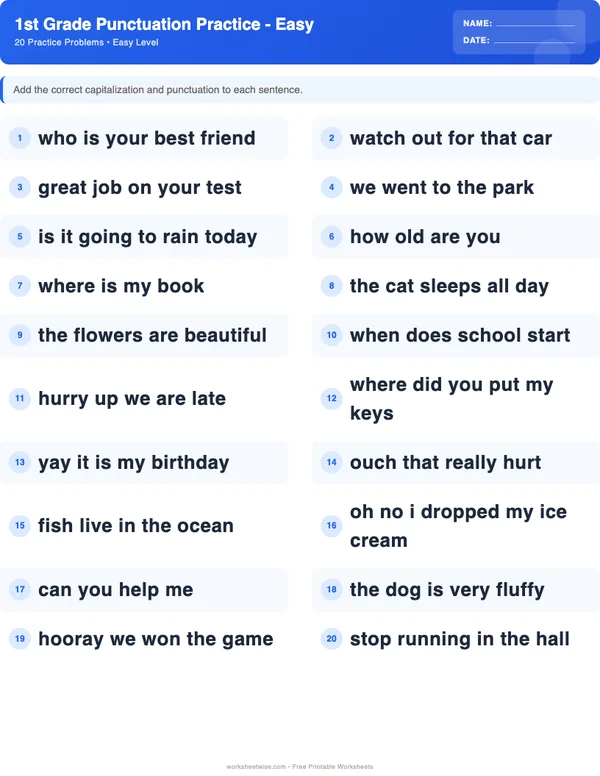
Punctuation asks what mark makes the intended meaning and sentence boundary visible. Early sheets may contrast periods, question marks, and exclamation points. Later tasks can address commas, apostrophes, quotation marks, colons, or semicolons. Select one punctuation use at a time unless the purpose is explicitly mixed review.
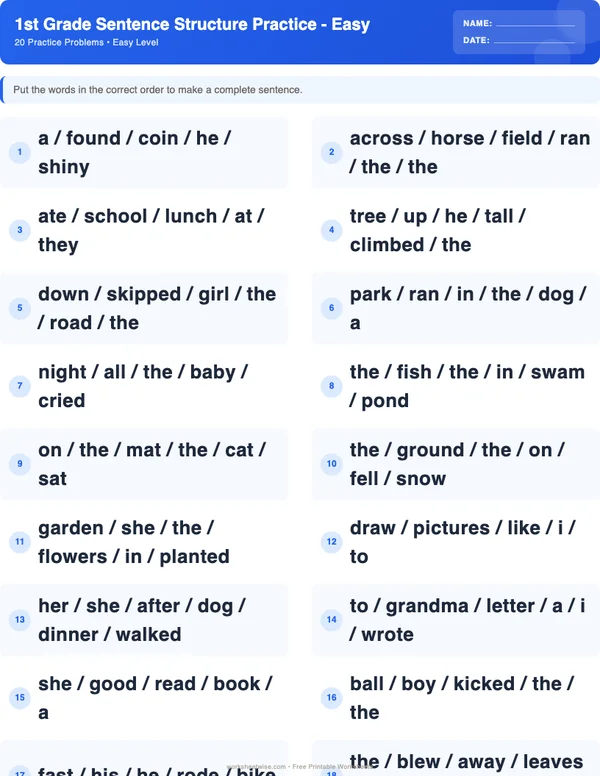
Sentence structure asks whether a group of words expresses a complete thought and how its parts fit together. Work may include subjects and predicates, fragments and run-ons, sentence expansion, combining, or varied beginnings. This family is appropriate when the problem is larger than a missing mark—for example, when “Under the old table” has punctuation but still lacks a complete thought.
Do not choose a punctuation sheet merely because a run-on contains missing punctuation. First determine whether the learner can hear where one complete thought ends and another begins. If not, sentence structure is the more direct target.
Use a transition routine that protects attention
A learner arriving from school may need food, movement, quiet, or a few minutes without questions. Fatigue can affect performance, but one tired session does not establish what the learner knows. Keep the entry routine predictable so that the grammar itself—not negotiation about the routine—receives the available attention.
Reset and preview: two or three minutes
Offer a brief transition, then show the whole plan: “We will say one sentence together, I will do one example, you will do four, and then we will check two.” Draw a stopping line on the sheet. Let the learner choose between two low-cost options, such as pencil or marker, or reading independently versus taking turns.
State the target in language tied to the task:
- “Today we are finding who or what the sentence is about and what that person or thing does.”
- “Today we are choosing the mark that matches how the sentence works.”
- “Today we are deciding whether each highlighted word names something or shows an action.”
Avoid “We’re doing grammar” as the only purpose. It gives the learner no usable decision rule.
Model one item without giving away the set
Use a brief think-aloud:
“The puppies chase the ball. I ask, ‘Who or what?’—the puppies. Then I ask, ‘Did what?’—chase the ball. Both parts are present, so this is a complete sentence.”
The adult demonstrates the decision, not merely the answer. Then invite the learner to complete a near example orally before writing.
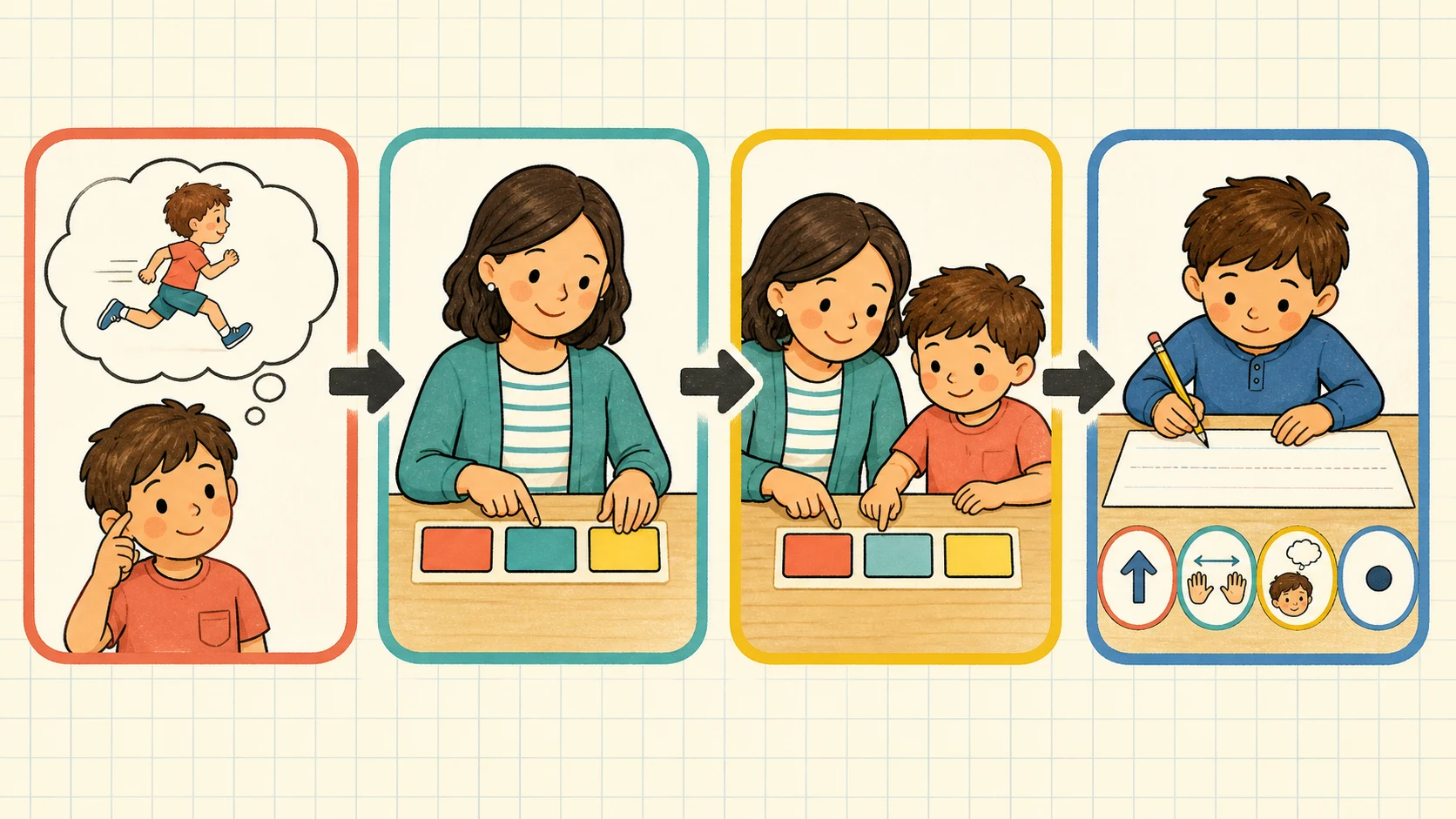
For first-grade sentence work, a repeated model–say–mark–check cycle reduces the need to explain a new routine after a long school day.
Work to the visible stopping point
For a 12-item kindergarten or first-grade sheet, begin with three or four items. For a 14-item third- or fourth-grade sheet, five or six may be a reasonable first sample. These quantities are practical suggestions, not sourced thresholds. Increase or decrease them based on observable behavior: rereading directions, deteriorating handwriting, rapid guessing, loss of place, or continued accurate explanation.
Do not extend the session simply because the first items were correct. Stopping as promised builds trust in the routine and preserves unused items for a later check.
Close with explanation, not a score
Ask the learner to choose:
- one answer that felt straightforward;
- one answer that required a decision;
- one item they would like the adult to model.
End by writing a short note such as “names nouns accurately; calls every word ending in -ly an adverb” or “hears questions but confuses excited statements with exclamations.” That note is the bridge to the next sheet.
Model grammar through sentences, voice, and movement
Grammar labels become useful when they help a learner inspect real language. The IES foundational reading guide recommends explicit instruction and supported practice in foundational skills. It does not evaluate WorksheetWise materials, but its emphasis supports a routine in which the adult clearly models the target and gradually transfers the decision to the learner.
The IES elementary writing guide also recommends teaching writing processes and sentence construction within regular writing practice. Applied here, a worksheet should feed back into something the learner can say, revise, or write—not remain a page of disconnected labels.
Checked example 1: nouns and verbs in a first-grade context
Use the sentence:
The rabbit hops.
Ask the learner to touch the word that names an animal and act out the word that shows what it does. Rabbit is a noun in this sentence; hops is a verb. Then change the noun while keeping the verb: “The frog hops.” Change the verb while keeping the noun: “The rabbit rests.”
This example belongs with the live 1st Grade Parts of Speech guide and free sheet because the catalogue specifically begins early parts-of-speech work with concrete nouns and verbs. The movement preserves the grammatical target: the learner must still distinguish naming from doing. It merely reduces the amount of desk work.
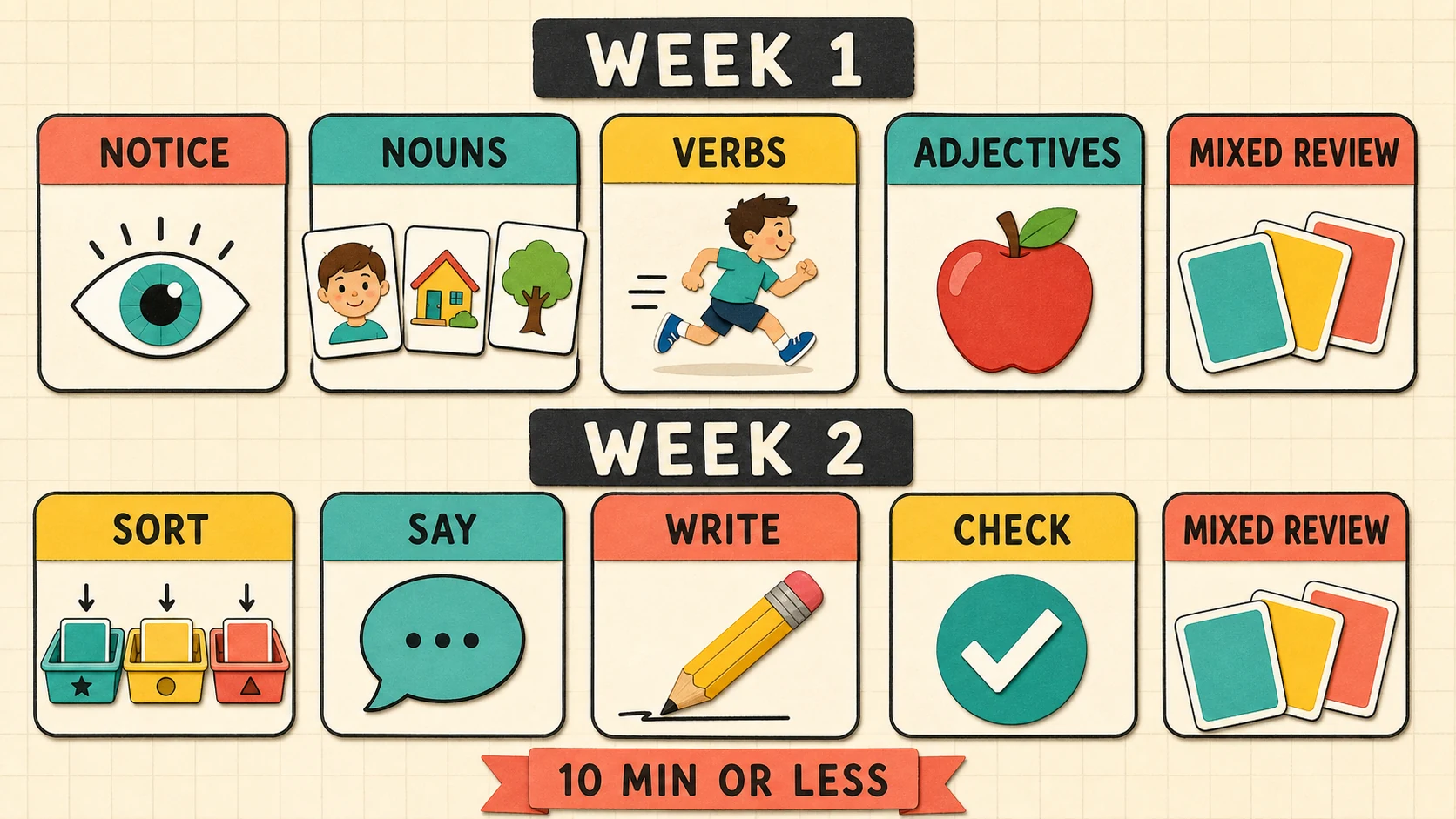
Across two weeks, revisit noun–verb decisions in short sets instead of making one long page carry all the practice.
Checked example 2: a complete sentence versus a fragment
Compare:
Under the table.
The cat sleeps under the table.
“Under the table” tells where but does not identify who or what is under it or what happens. “The cat sleeps under the table” supplies the subject the cat and the predicate sleeps under the table. To preserve the target while reducing writing, place both sentences on cards and ask the learner to stand beside the complete one, then orally repair the fragment.
This belongs with the live 1st Grade Sentence Structure guide and free sheet, whose representative content includes complete sentences, fragments, subjects, and predicates. It is not primarily a punctuation example: adding a period to the fragment does not make the thought complete.
Checked example 3: punctuation follows sentence purpose
Read these aloud:
The bus is here.
Is the bus here?
The bus is here!
The words remain nearly identical, but the purposes differ. The first states information, the second asks, and the third expresses strong emphasis or excitement. Ask the learner to match each spoken version to a printed mark, then write only the mark rather than copying the sentence.
This example fits the kindergarten and first-grade punctuation entries because their catalogue guidance begins with periods, question marks, and exclamation points connected to voice. The response remains grammatical even when handwriting is minimized. For a printable starting point, use the Kindergarten Punctuation guide and free sheet.
Checked example 4: word class depends on context
Compare:
We run after school.
I went for a run after school.
In the first sentence, run tells what we do, so it functions as a verb. In the second, a introduces run as the name of an activity, so it functions as a noun. A learner who says “run is always a verb because it is an action word” is using a memorized meaning without checking the sentence.
This example belongs in later parts-of-speech practice because the live catalogue explicitly notes that English words can function as different parts of speech depending on context. It should follow reliable noun–verb identification in straightforward sentences, not replace that foundation.
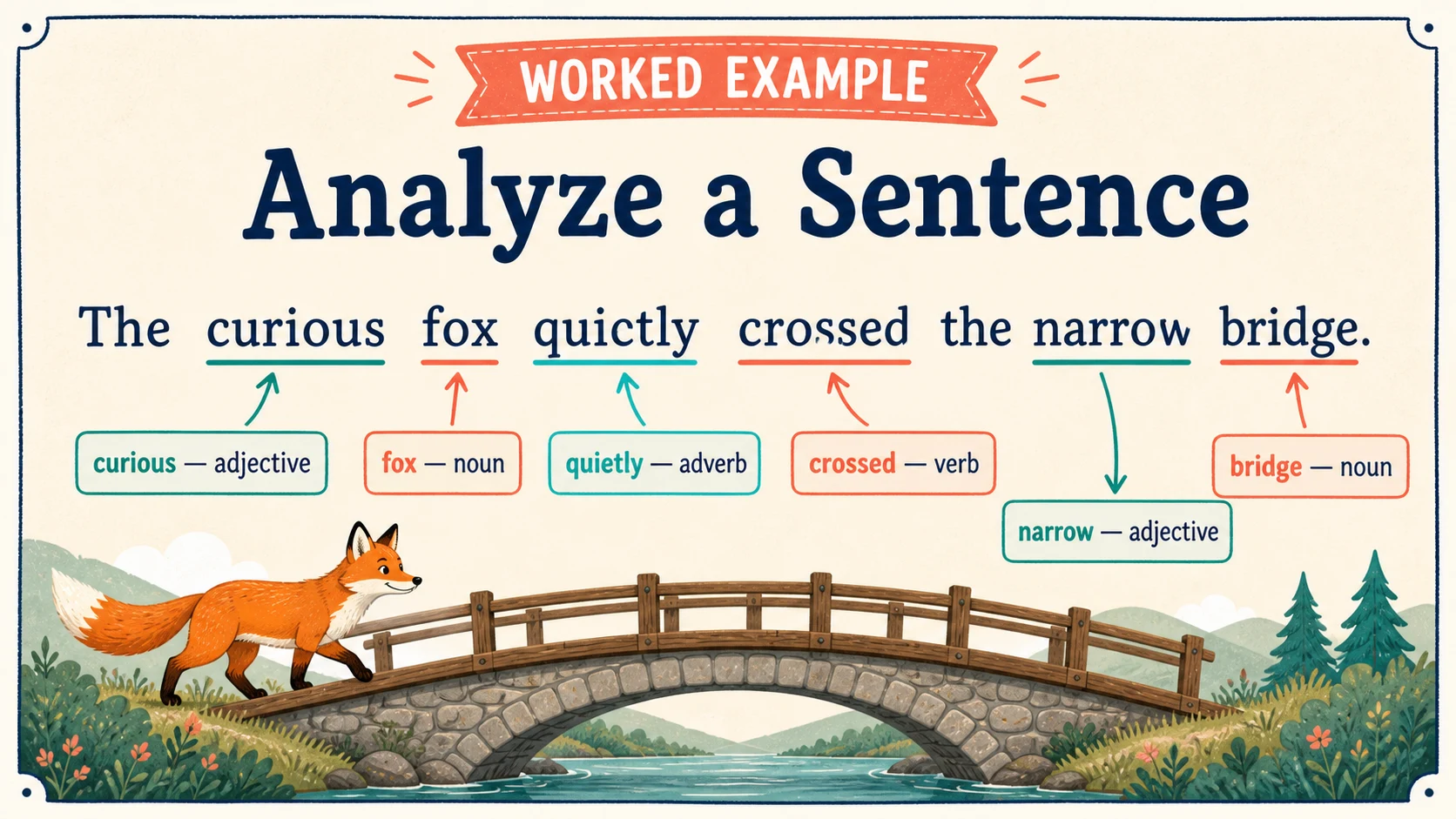
The important move in third-grade classification is from noticing a word’s meaning to explaining its job in this sentence.
Match the response format to the target—not to fatigue
Changing how a learner responds is often appropriate; changing what the item tests is not. If the target is choosing end punctuation, circling a mark can replace copying a full sentence. If the target is constructing a complete sentence, however, selecting from two options does not provide the same evidence as creating or repairing one.
Adaptations that preserve the skill
For parts of speech, the learner can:
- highlight nouns in one color and verbs in another;
- place word or sentence cards into labeled groups;
- act out the verb, then point to the noun performing it;
- answer orally while the adult records the classification;
- underline a word and explain its job in the sentence.
For punctuation, the learner can:
- hold up a period, question-mark, or exclamation-point card;
- add only the missing mark;
- read the sentence with the voice implied by each candidate mark;
- edit one sentence at a time on a strip of paper;
- explain what meaning would change if a different mark were used.
For sentence structure, the learner can:
- arrange subject and predicate cards;
- orally complete “Who or what?” and “Did what?”;
- cut apart two complete thoughts in a run-on;
- combine two short sentences before writing the result;
- dictate a repair, then copy only the corrected section.
These are editorial suggestions for using the catalogue, not claims about capabilities built into every worksheet.
Changes that accidentally lower or replace the target
Be cautious when an adaptation supplies the grammatical decision. Reading every sentence with question intonation before asking for the end mark gives away the answer. Labeling the noun and asking the learner only to color it practices following directions, not identifying nouns. Repairing a fragment for the learner and asking them to copy it tests copying more than sentence construction.
Also separate reading load from grammar when possible. If decoding a sentence is consuming all the learner’s effort, read it aloud once and ask for the grammar decision. That shows what the learner can do with oral access, but it does not show independent reading performance. Record the condition accurately.
Read errors as evidence for the next sheet
A percentage alone cannot tell you what to teach next. Two learners may each answer 8 of 12 correctly while making entirely different errors. Review incorrect answers by pattern, and include correct answers that were guesses or could not be explained.
If the learner follows a surface clue
Examples include calling every -ly word an adverb, every action-related word a verb, or every excited sentence an exclamation. The next sheet should narrow the contrast and require context.
For parts of speech, use paired sentences such as the two uses of run above. For punctuation, compare a strong command that still takes a period—“Please close the door.”—with an exclamation—“Watch out!” Ask what the sentence is doing, not what emotion the reader can perform.
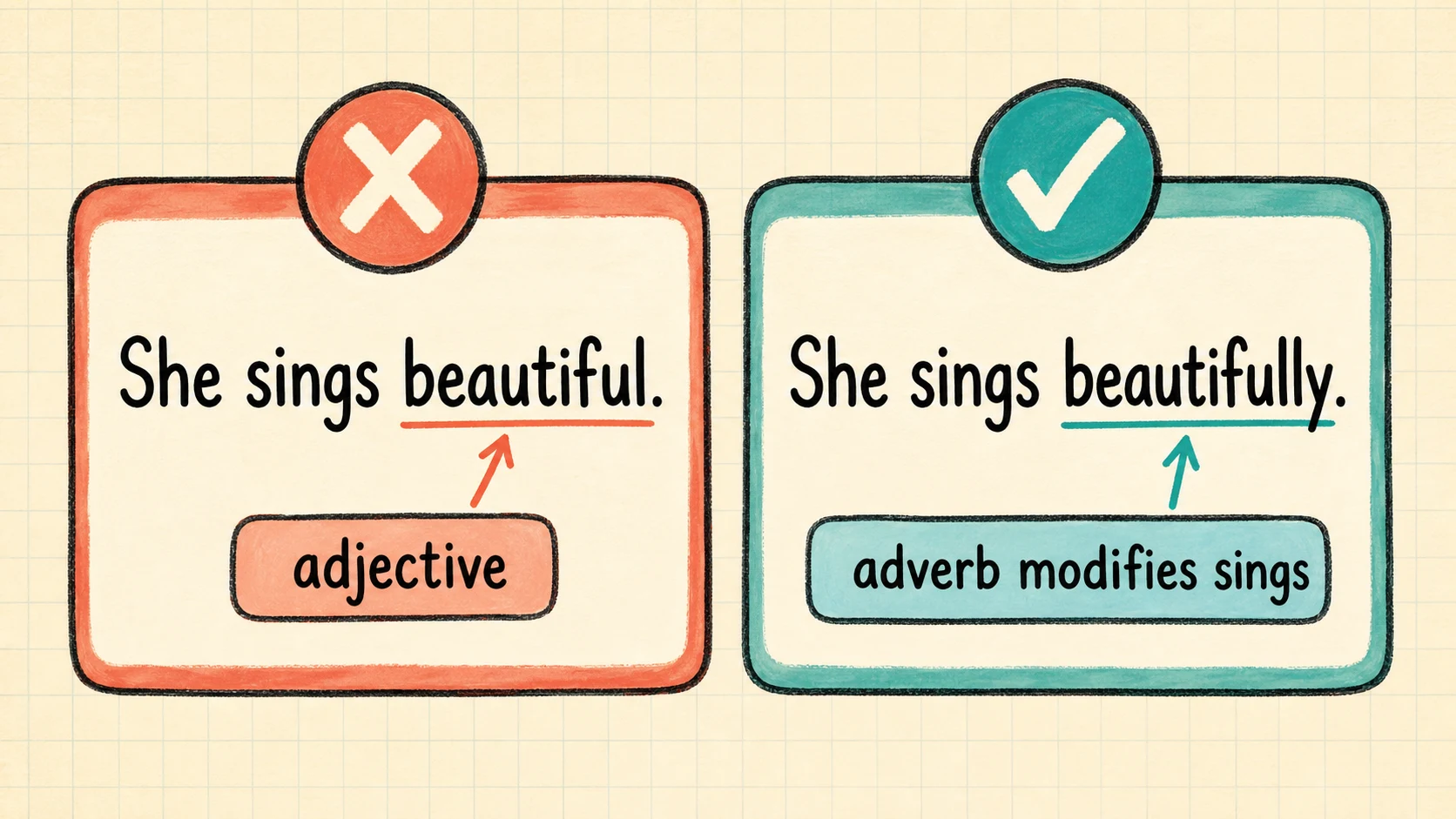
Older elementary practice should connect each recurring classification error to a specific contrast, not simply assign more mixed labeling.
If the learner knows the rule orally but misses it on paper
The issue may be directions, tracking, handwriting load, or the visual density of the page; the session does not establish which explanation is correct. Repeat three comparable items with the adult reading the directions and the learner responding orally. If the grammar decision is then accurate, choose a sheet with fewer visible items, cover unused rows, or allow marking instead of copying.
Keep the target constant. Do not jump to a harder grammar skill merely because oral performance is stronger.
If the learner identifies but cannot construct
A learner may correctly mark subjects and predicates yet write “The noisy dog” as a complete sentence. The next sheet should move from recognition to repair, not immediately to complex sentence types. Provide a fragment and ask for the missing predicate: “The noisy dog barked at the mail carrier.”
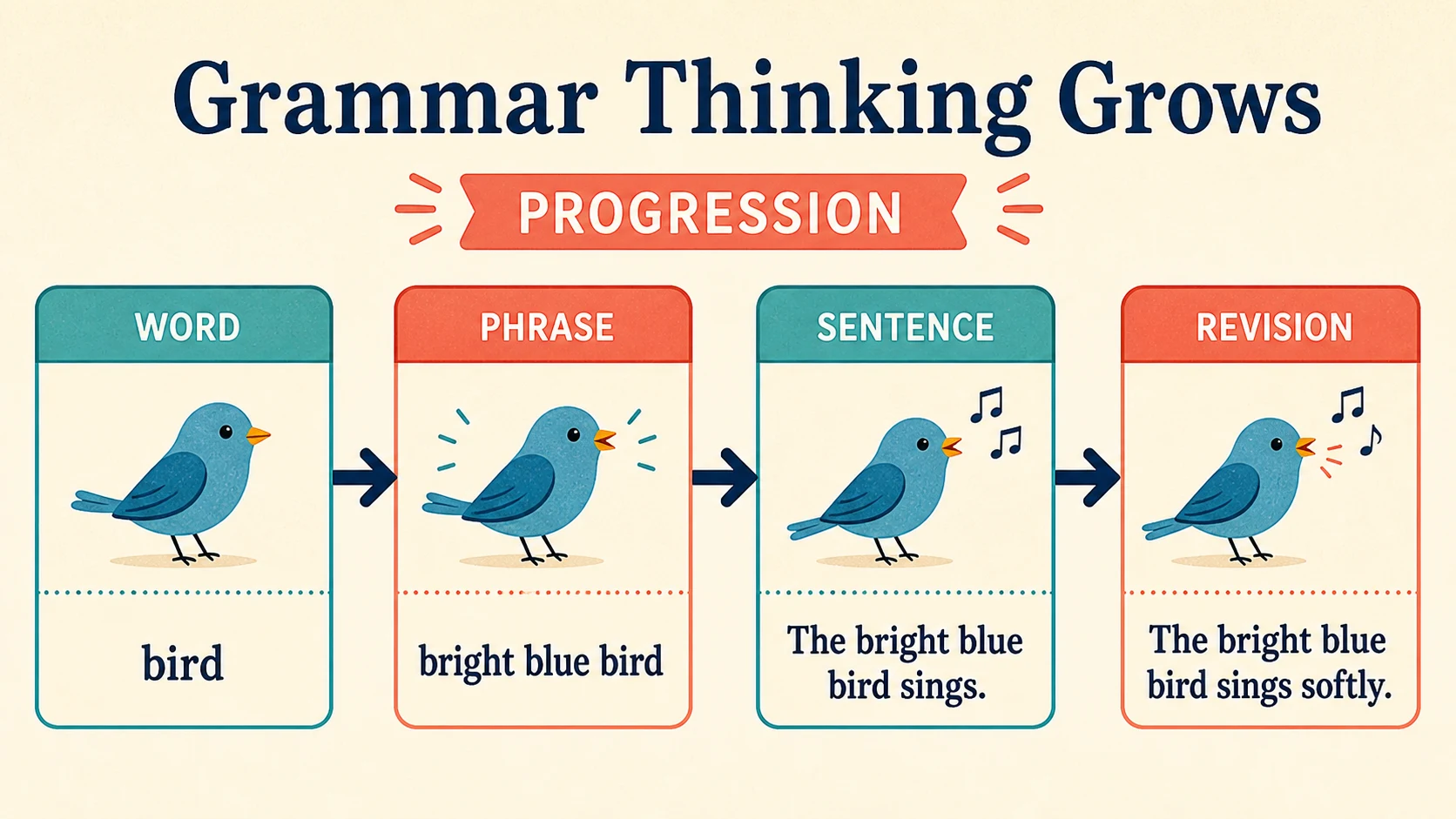
Move from supported identification to independent use only when the learner can explain the relationship being marked.
If errors appear only near the end
Compare the first third of the page with the last third. If the target and item design remain similar but accuracy, explanation, or handwriting declines, first shorten the next session rather than changing topics. Start with two previously missed items after a reset. If those are now accurate and explainable, the prior pattern may have reflected the conditions of that session.
Do not describe this as proof of an attention disorder, language disorder, or any other diagnosis. Worksheets are practice tools, not diagnostic instruments.
Turn feedback into one usable grammatical cue
After-school feedback should be short enough to apply on the next item. “Be careful” and “Try again” do not identify the decision. A useful cue sends the learner back to meaning or structure.
For parts of speech, say: “Use the whole sentence. What job is light doing here?” For punctuation, ask: “Is the writer telling, asking, or showing strong feeling?” For sentence completeness, prompt: “Who or what? Did what?”
Use this sequence:
- Ask the learner to explain the current answer.
- Name the exact conflict.
- Re-model with one parallel example.
- Return to the original item.
- Check with one new item.
Suppose the learner marks quick as an adverb in “The quick fox runs.” Ask what quick describes. It describes the noun fox, so it functions as an adjective. Contrast that with “The fox runs quickly,” where quickly describes runs. Then return to the original sentence and ask the learner to explain the relationship.
Do not correct every secondary issue while addressing one target. If the task is combining “Mia opened the window. Mia felt the breeze,” focus on a valid combination such as “Mia opened the window and felt the breeze.” Unless capitalization or spelling prevents meaning, save unrelated corrections for another time.
The Common Core English Language Arts standards organize language expectations by grade and include conventions in writing and language use. They can help adults see common grade-intended expectations, but they do not determine an individual learner’s placement, and local curricula may teach skills in a different order.
Plan two weeks around retrieval and evidence
A two-week plan does not require ten different sheets. Reusing unfinished items and revisiting the same decision in speech, sorting, editing, and writing makes the sequence more coherent.
Days 1–3: establish the decision
On day 1, model the target and complete a short set. On day 2, begin with two oral examples, then finish another marked section. On day 3, use a different response format while preserving the same skill.
For third-grade parts of speech, the sequence might be:
- Day 1: identify nouns and verbs in six sentences;
- Day 2: sort highlighted words by their role in sentences;
- Day 3: explain a contrast such as run as a verb and a noun.
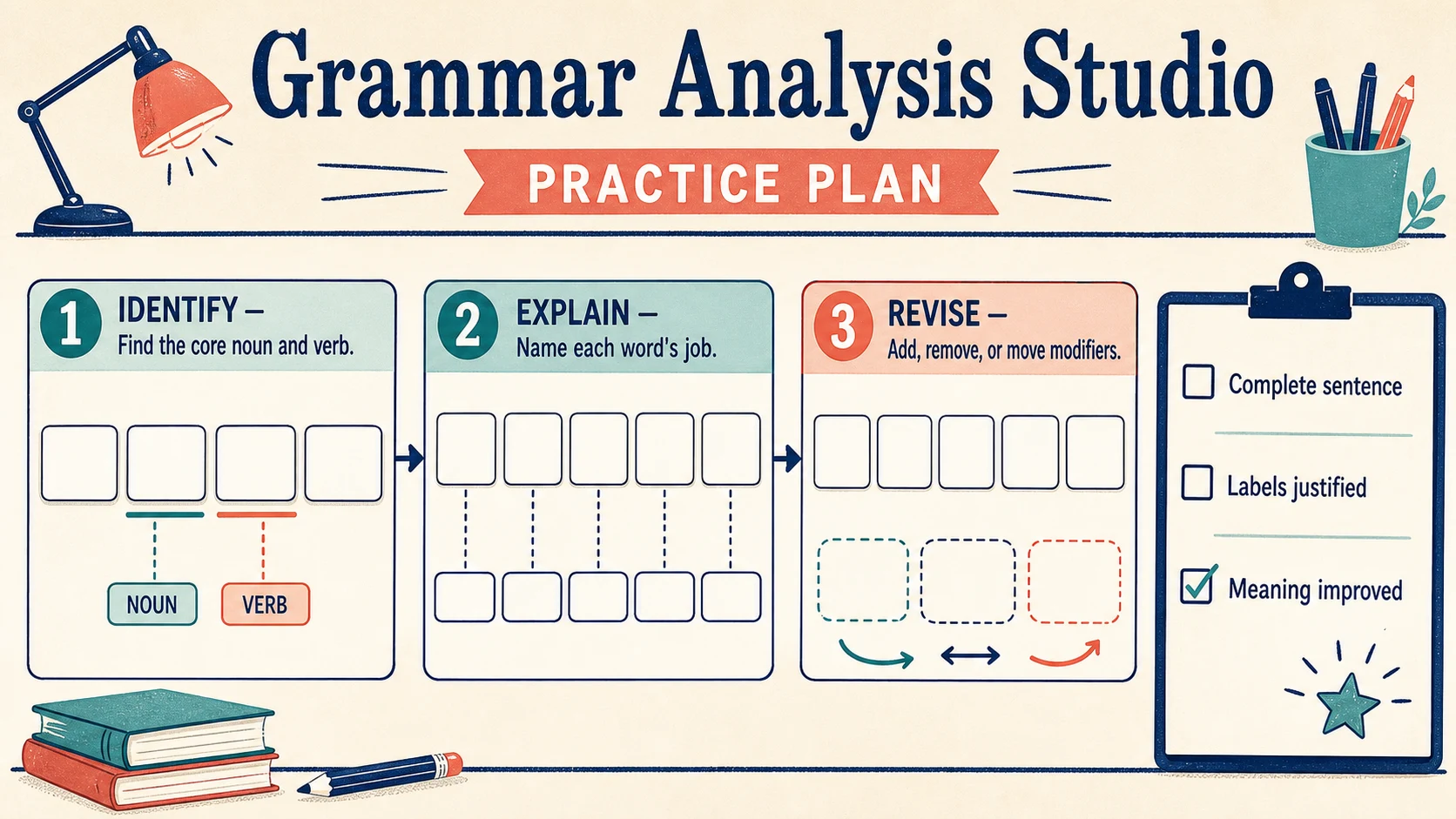
The third-grade plan should revisit one classification decision in varied contexts before adding more categories.
Days 4–6: repair the observed misconception
Choose the next sheet from the notes, not from the calendar. If the learner confuses adjectives and adverbs, select sentences that make the described word visible. If punctuation errors cluster around questions, contrast statements with questions before mixing in exclamations. If fragments are mistaken for sentences, practice adding the missing subject or predicate.
Retain one previously missed item as a check. A new page with entirely new wording can hide whether feedback transferred.
Days 7–10: apply and review
Shift from identifying to editing or constructing only when the learner can explain the earlier decision. A parts-of-speech learner might replace a vague verb in “The dog went across the yard” with raced, trotted, or wandered, then explain that the replacement still functions as a verb. A punctuation learner might add marks to a three-sentence mini-dialogue. A sentence-structure learner might combine two related simple sentences.
Reserve the final session for a small mixed check: one familiar item, two transfer items, and one short application. Stop there. The purpose is to choose the next instructional move, not to produce an impressive quantity of completed paper.
Know what a worksheet can and cannot show
A completed sheet can show recorded responses under particular conditions. It may reveal a stable misconception, a direction-reading problem, a response-format barrier, or a late-session decline. It cannot by itself explain why the pattern occurred.
Do not infer a diagnosis, broad writing ability, curriculum mastery, or future outcome from one page. Do not assume that identifying nouns automatically improves composition, or that perfect punctuation choices transfer immediately to original writing. Check transfer directly with a brief spoken or written sentence.
Keep these boundaries visible:
- A grade label is an intended practice level, not a placement decision.
- “Easy” should refer to short text, constrained choices, limited rule mixing, and supported responses—not to a learner.
- Oral support changes what the result demonstrates; note when text was read aloud.
- Correct answers without explanations may include guesses.
- Fatigue is a possible condition affecting performance, not a conclusion about the learner.
- Grammar conventions vary by context, and some sentences permit more than one effective revision.
If repeated, carefully supported practice still produces confusion, share specific work samples and error notes with the learner’s teacher. “On three separate days, Sam identified action verbs but classified run as a verb in both example sentences” is more useful than “Sam is bad at parts of speech.”
Choose tomorrow’s sheet from today’s evidence
At the end of the session, write one observable statement and one next action:
- “Identified concrete nouns and action verbs in 5 of 6 sentences; could not explain a word that changed function.” Next: use three noun–verb context pairs.
- “Selected question marks accurately when sentences were read aloud; missed two while reading independently.” Next: repeat four question-versus-statement items with reduced visual load and record whether oral reading changes the response.
- “Recognized complete sentences but did not repair fragments.” Next: choose a sentence-structure sheet requiring missing subjects or predicates.
- “First six punctuation items were accurate; last four were rapid guesses.” Next: keep the same punctuation target and stop after five items.
That is the central after-school decision: do not reward completion by automatically moving forward, and do not respond to errors by assigning more of the same page indiscriminately. Narrow the contrast, adjust the response load, model once, and collect a fresh sample.
For the next session, open the full worksheet library, choose Grammar, then select the topic indicated by today’s error note. Print one sheet, mark the first stopping point before the learner arrives, and prepare one spoken example that tests the same grammatical decision.
Put it into practice
Use the guide with a real printable
Move from explanation to a short, observable practice task. Check the first item together, then adjust the next session from the learner's actual work.
Open the first free worksheetExplore a neighboring collection