Curated collectionAnswer keys includedPrint-ready PDFs
Differentiated Grammar Worksheets
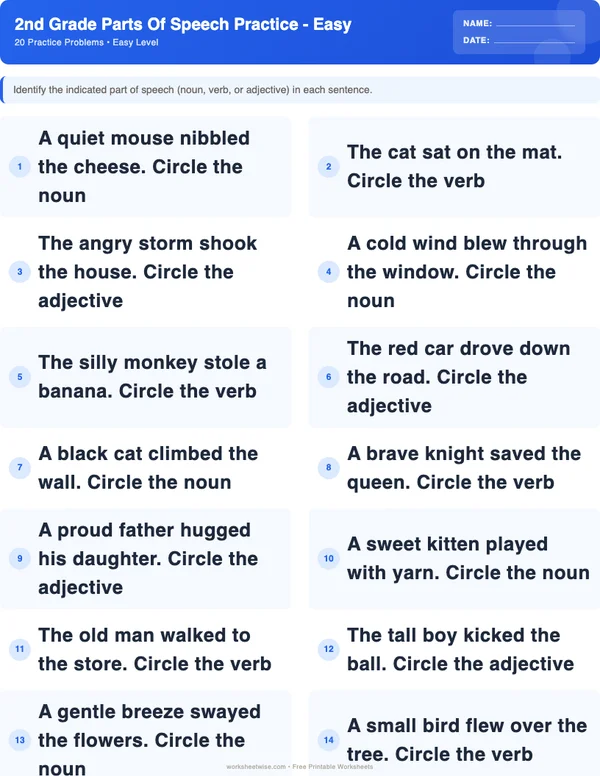
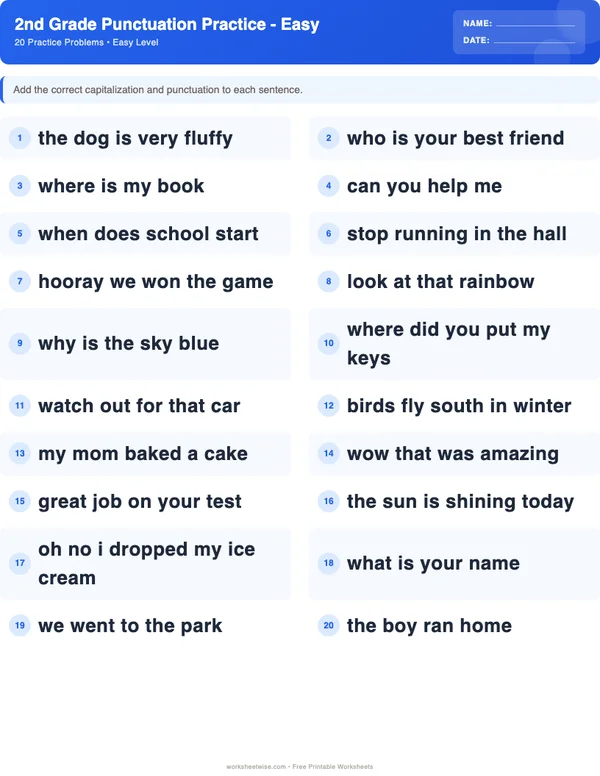
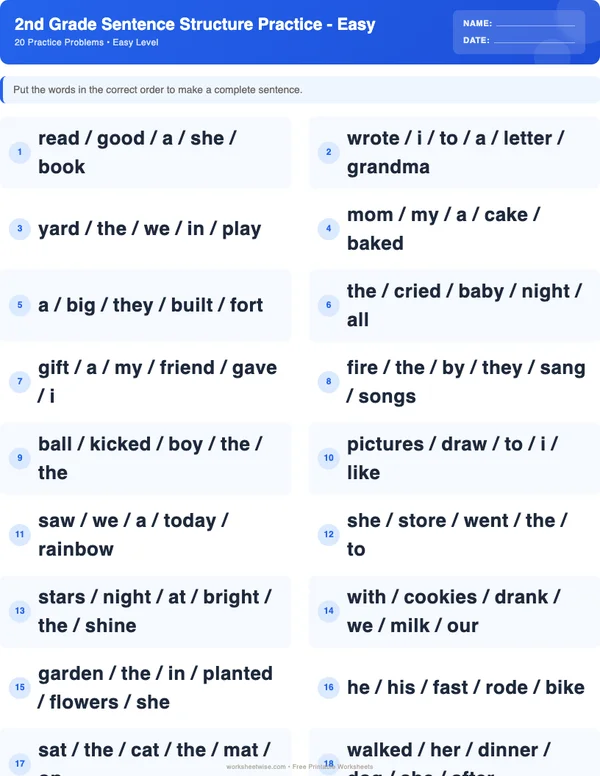
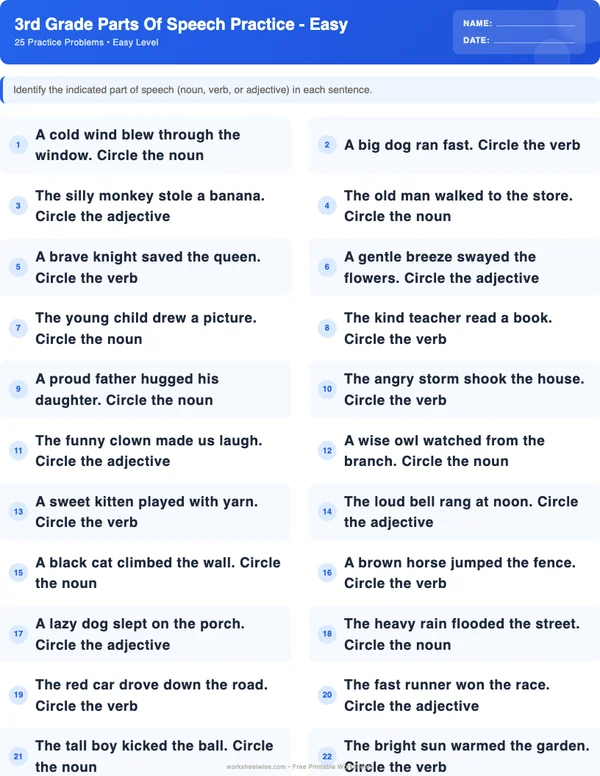
Hold the learning goal steady while changing number bounds, prompts, representations, response load and extension demand across three real worksheet versions.
Start with a real resource
Browse this worksheet collection
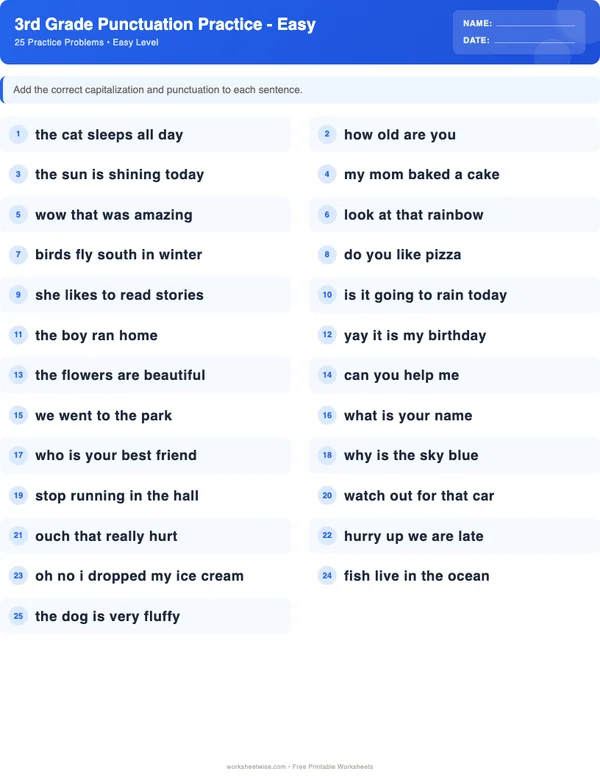
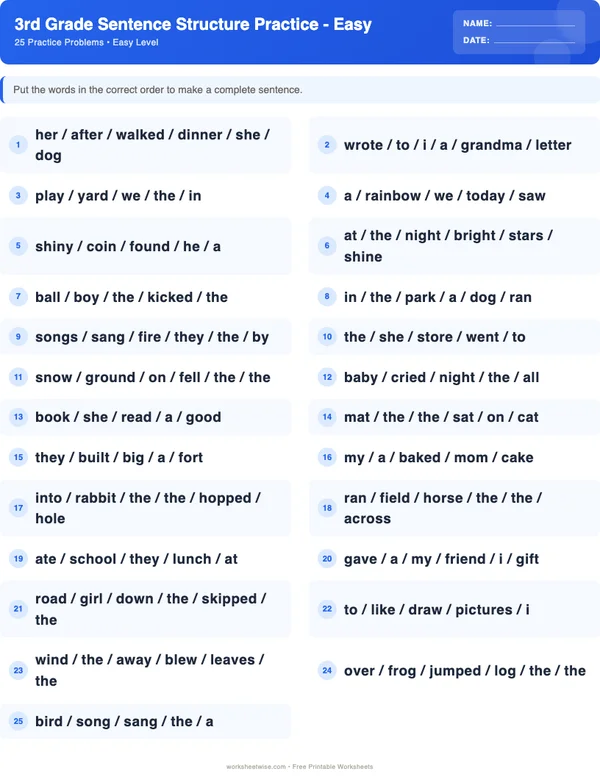
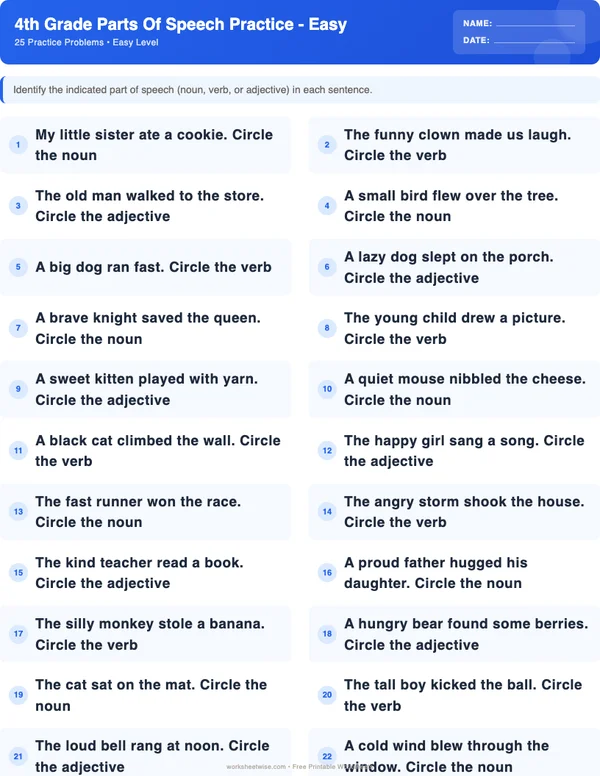
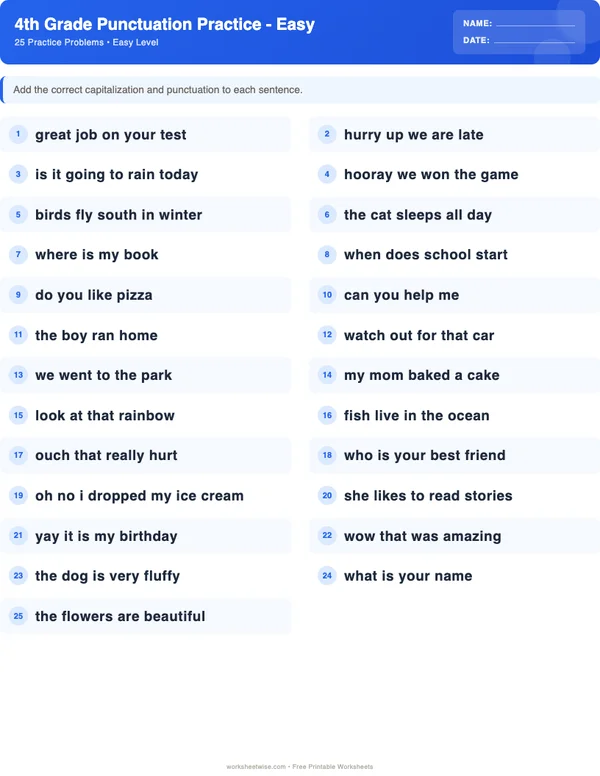
19 relevant free entry points are available. Each one includes a printable learner PDF and separate answer key.
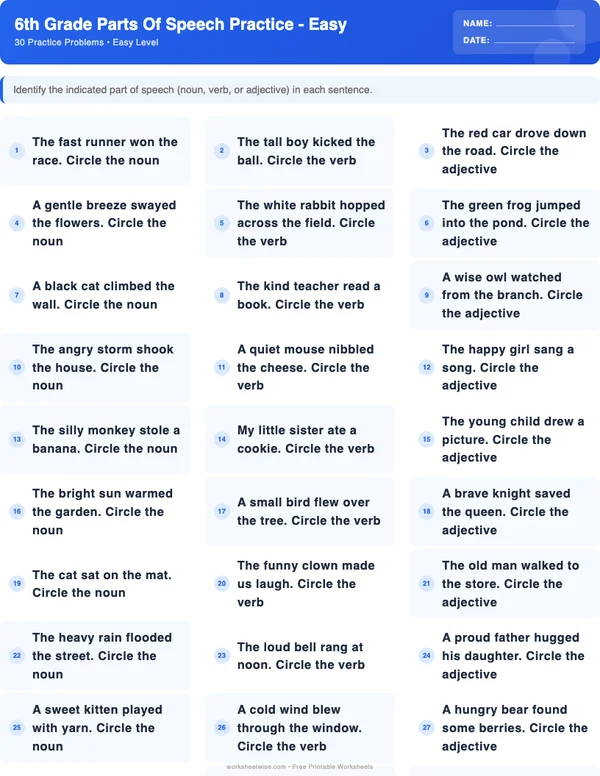
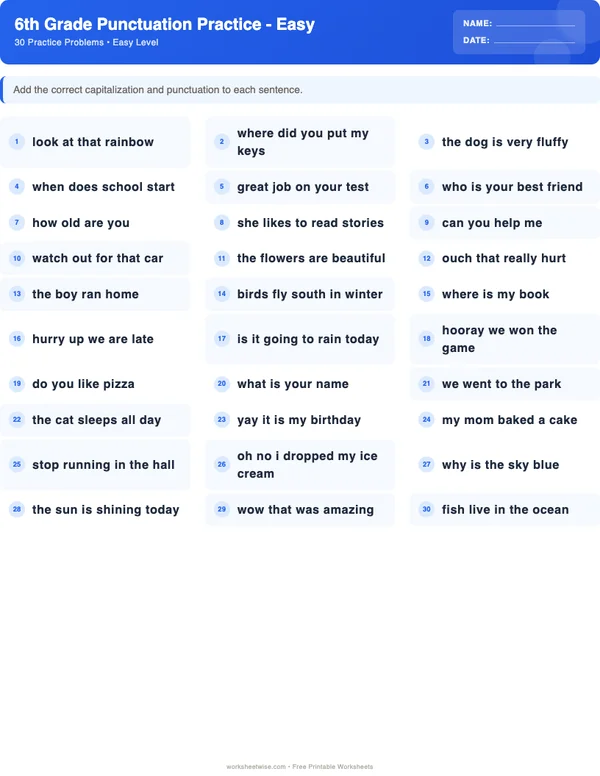
A useful practice loop
Print less. Observe more.
- Choose one skill and model the first item aloud.
- Use a short set and notice the learner’s strategy.
- Change the next task from the work you can see.
Need more than the free sheet?
Plus includes all 342 matching catalogue variations where available, plus saved deterministic generators and the worksheet designer.
See Plus membershipComplete guide
How to teach and practise differentiated grammar worksheets
3,448 words Updated 6 instructional visuals
Keep the grammar target fixed and vary the route to it
Differentiated grammar practice should not give three learners three unrelated goals. Choose one precise target—such as selecting end punctuation, identifying nouns and verbs, or distinguishing a complete sentence from a fragment—then prepare three versions that change the support, response load, representation, and extension demand.
A practical set might look like this:
- Version A: model and recognize. The adult reads each item, demonstrates the first decision, offers visual choices, and asks the learner to point, match, circle, or explain orally.
- Version B: recognize and apply. The learner completes the catalogue sheet in its printed response format, with a brief reminder available.
- Version C: apply and transfer. The learner completes fewer routine items, explains selected answers, corrects errors, or writes a new example using the same grammatical idea.
The target stays steady. If everyone is learning to choose among a period, question mark, and exclamation point, Version C should not quietly become a lesson on commas. If everyone is distinguishing subjects from predicates, Version A should not be reduced to copying words without making that distinction.
The live differentiated grammar catalogue contains 342 variants across seven grade labels and three topics: punctuation, parts of speech, and sentence structure. Nineteen resources are free entry points. Those counts describe available catalogue choices, not evidence that every choice is suitable for every learner.
Grade and age can help adults discover likely material, but age is a discovery aid rather than a placement decision. Grade labels describe intended practice level; local curriculum sequences differ. Select from what the learner can currently understand and attempt, then use observed work—not the label—to decide what comes next.
Start with the grammatical decision, not the worksheet label
Before printing, complete this sentence:
“In every version, the learner will decide whether ______.”
A narrow decision is easier to model, observe, and adapt than a broad goal such as “improve grammar.” Representative live skills support several useful starting points:
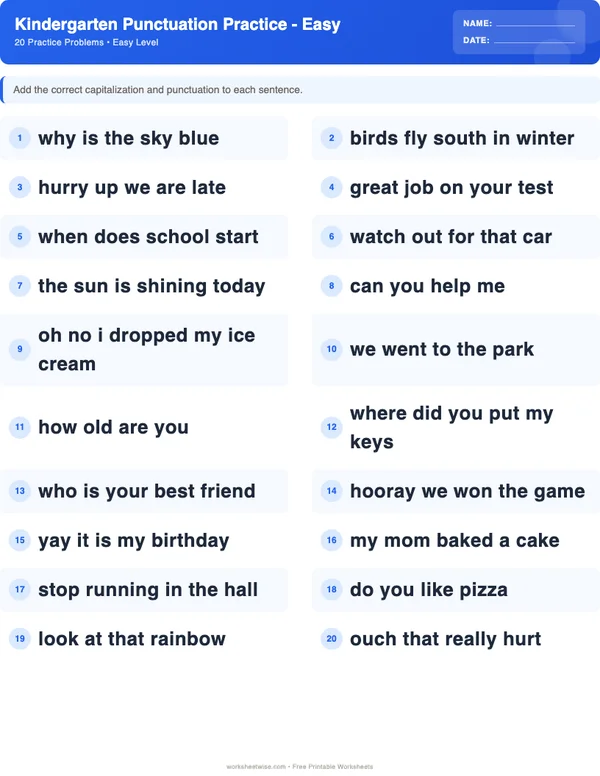
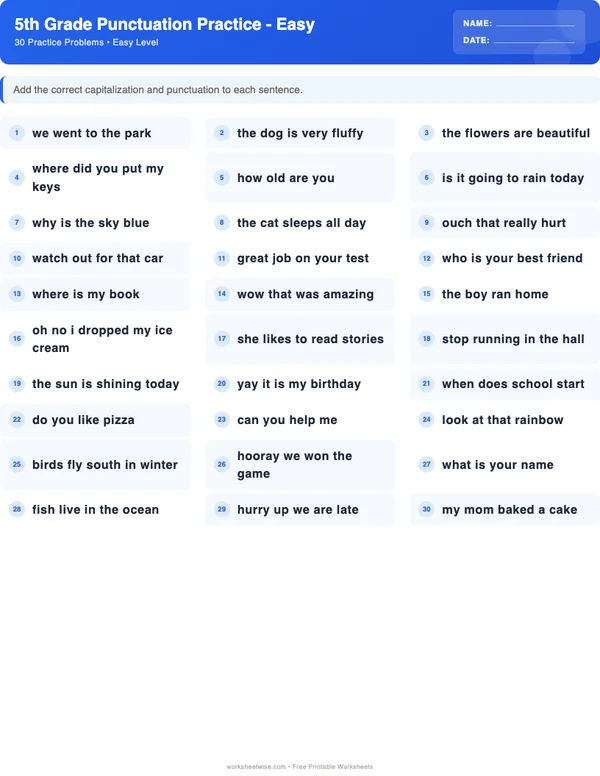
- In kindergarten and first-grade punctuation, the decision can be whether a sentence is a statement, question, or exclamation and which end mark communicates that purpose.
- In first- or second-grade parts of speech, it can be whether a word functions as a noun or a verb in a sentence.
- In first- or second-grade sentence structure, it can be whether a word group expresses a complete “who or what” plus “did what or is what.”
- In later punctuation work, it can be where a particular comma rule applies, whether an apostrophe marks a contraction or possession, or how dialogue punctuation is arranged.
Do not combine all of those decisions in one differentiated set. A learner who misses end marks, capitals, commas, spelling, and sentence boundaries on a mixed page has produced many errors but little clean information about any single target.
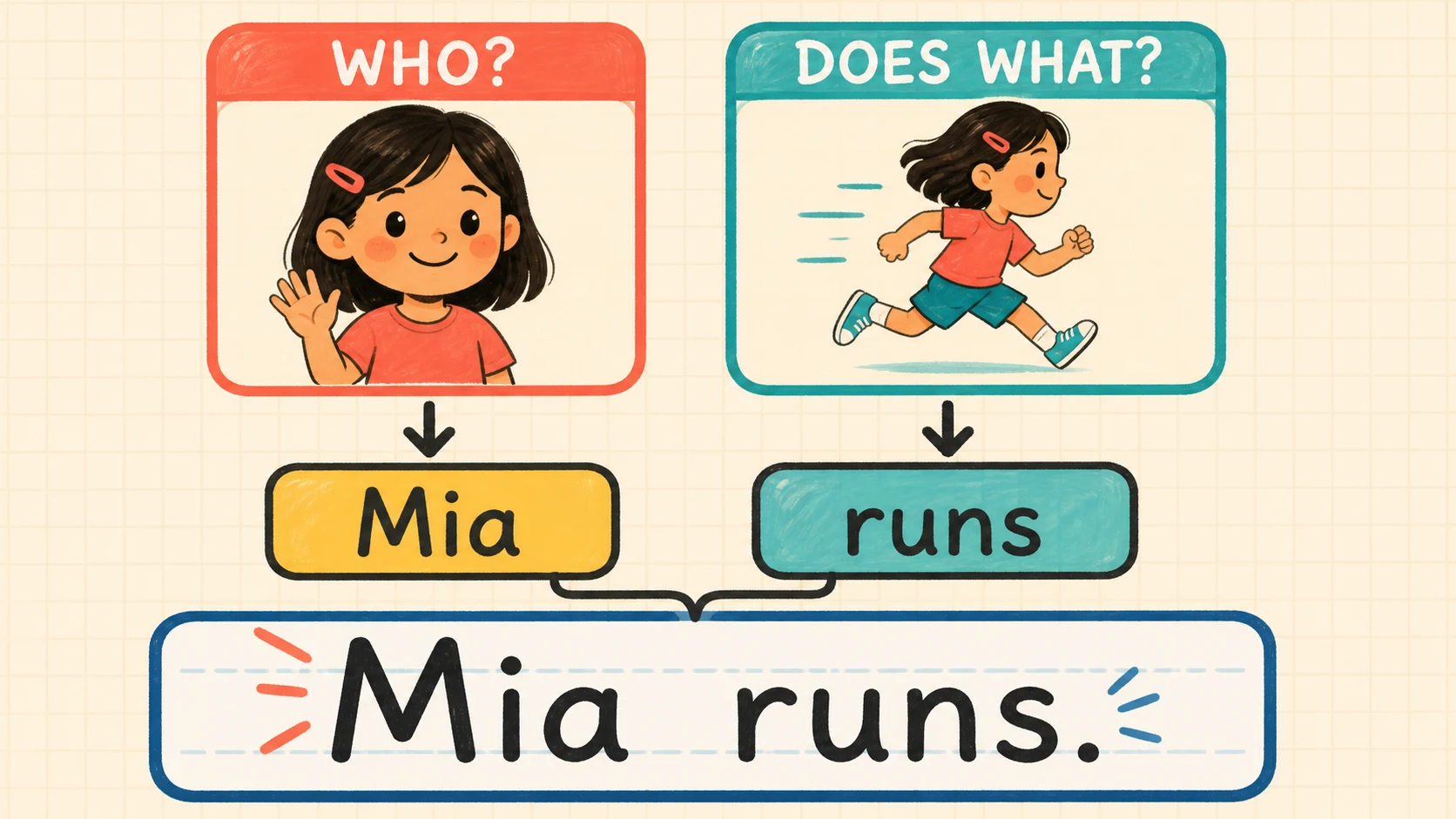
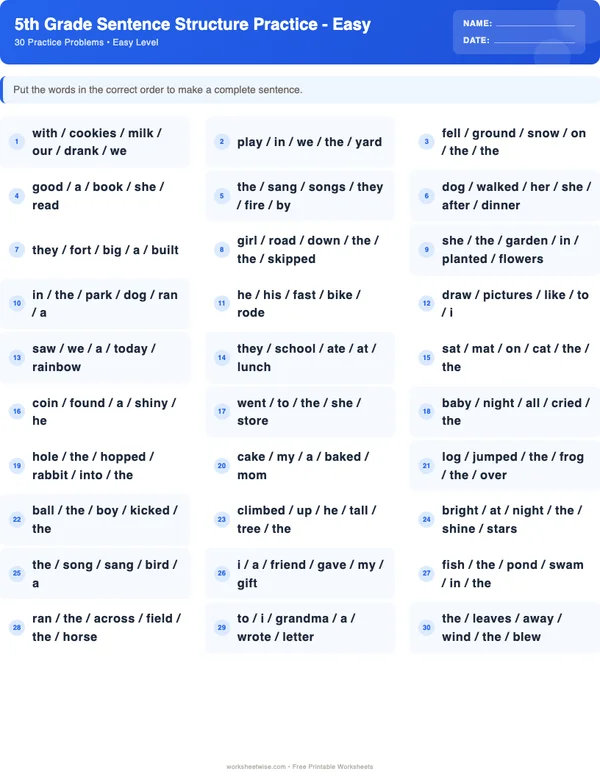
Use the map to choose one sentence-structure decision—completeness, subject and predicate, combining, or expansion—rather than treating the whole topic as one task.
Define difficulty through visible task features
The catalogue calls the representative free sheets “easy,” but that label should describe the task, not the learner. In this guide, lower-demand practice has observable features such as:
- one rule at a time;
- short, familiar sentences;
- two or three visible answer choices;
- an adult-read option;
- pointing, matching, or circling instead of extensive writing;
- one worked example;
- fewer items completed in a sitting.
A higher-demand version may remove the choices, mix correct and incorrect examples, require a reason, place the target in a short passage, or ask the learner to create and check an original sentence. Those features increase language processing or response demand. They do not make the learner “advanced.”
Build three versions from one live entry point
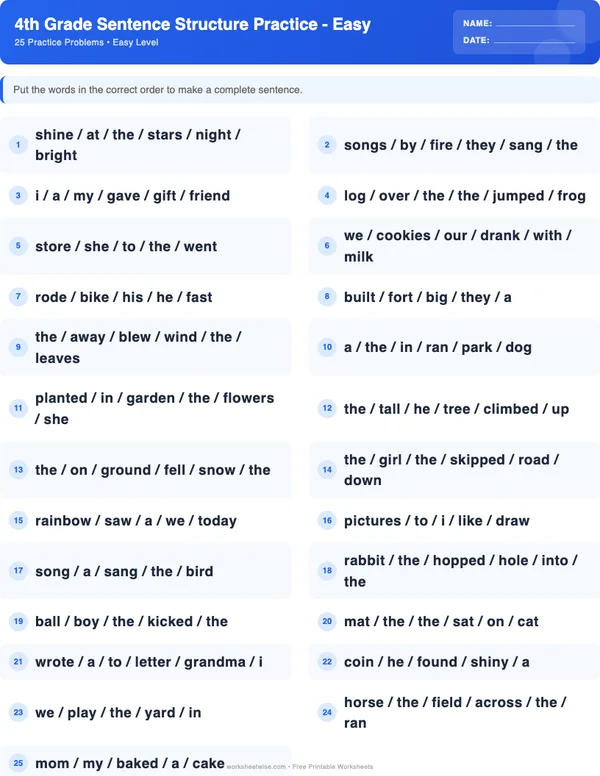
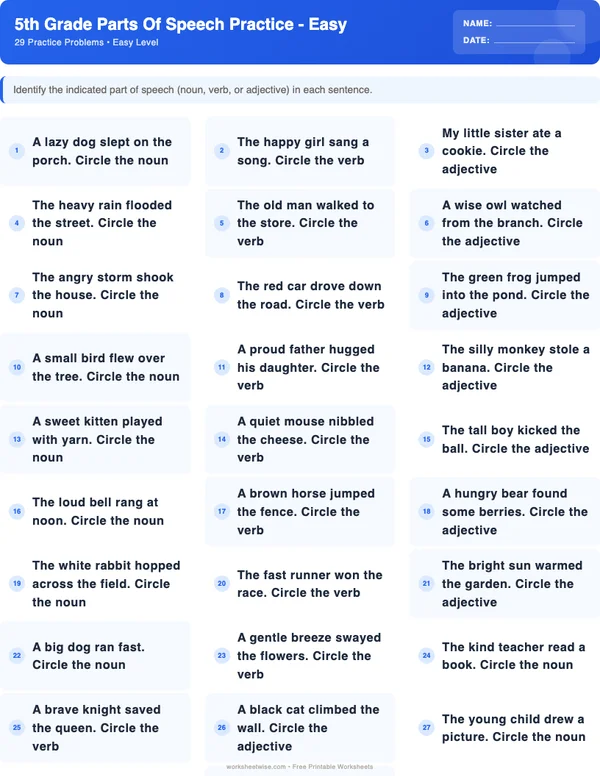
The representative free kindergarten, first-grade, and second-grade sheets contain 12 problems. Third- and fourth-grade examples contain 14, while the listed fifth-grade parts-of-speech sheet contains 29. Item count is therefore a real selection consideration, but it is not a measure of conceptual difficulty by itself.
Use a live sheet as the shared source, then decide how much of it each learner will encounter and how the learner will respond. The adaptations below are editorial suggestions for adult use; they are not stated product capabilities.
Version A: supported grammar modeling
Use six carefully selected items from a 12-item sheet. Cover the rest of the page. Read the sentence aloud, identify the decision, and think through one example:
“Can you help me pack”
Say it once as a statement and once with a questioning voice. Ask which meaning makes sense. Then place a period and question mark on two cards and let the learner point to the question mark before writing anything.
Continue with short turns: adult reads, learner repeats with expression, learner chooses, adult asks why. If handwriting or reading effort would obscure the grammar decision, accept pointing or card placement.
Version B: guided independent application
Use the same target and the sheet’s normal item format. Complete one example together, then ask the learner to attempt a small block independently. Keep a compact reminder visible, such as:
- tells something → period;
- asks something → question mark;
- shows strong feeling → exclamation point.
Pause after four to six items. Check for a pattern rather than announcing a score. If the learner can explain the rule but has copied marks inaccurately, the next adaptation concerns response production. If the learner cannot distinguish the sentence purposes orally, more written items will not address the central confusion.
Version C: explanation and transfer
Keep the identical punctuation target but reduce routine repetition. After several selections, ask the learner to revise or create sentences:
“The puppy escaped.”
Change it into a question without changing the topic:
“Did the puppy escape?”
Then create an exclamation:
“The puppy escaped!”
This version belongs in the same differentiated set because every response still demonstrates the relationship between sentence purpose and end punctuation. The extension increases generation and explanation demand; it does not introduce an unrelated rule.
Model grammar as meaning expressed through form
A useful grammar model connects what a sentence means with the form a writer chooses. Naming a mark, noun, verb, subject, or predicate is not enough if the learner cannot use that knowledge while reading or writing.
The IES guide to effective elementary writing recommends explicit strategy instruction, modeling, guided practice, and movement toward independent use. Applied here, that means an adult should demonstrate the actual decision instead of merely giving a direction such as “Add punctuation.”
A brief model has four parts:
- Read the whole sentence for meaning.
- Name the feature being decided.
- Compare plausible choices.
- check the completed sentence by reading it again.
For sentence structure, the language might be:
“Under the table” tells me where, but it does not tell me who or what is there or what happens. I cannot answer both ‘Who or what?’ and ‘Did what or is what?’ I will add “The cat slept.” Now the complete sentence is “The cat slept under the table.”
The IES foundational reading guide concerns early reading rather than WorksheetWise products. Its emphasis on explicit instruction and supported practice is still relevant when decoding effort interferes with a young learner’s opportunity to show a grammar decision. An adult may read the item aloud while leaving the grammatical choice to the learner.
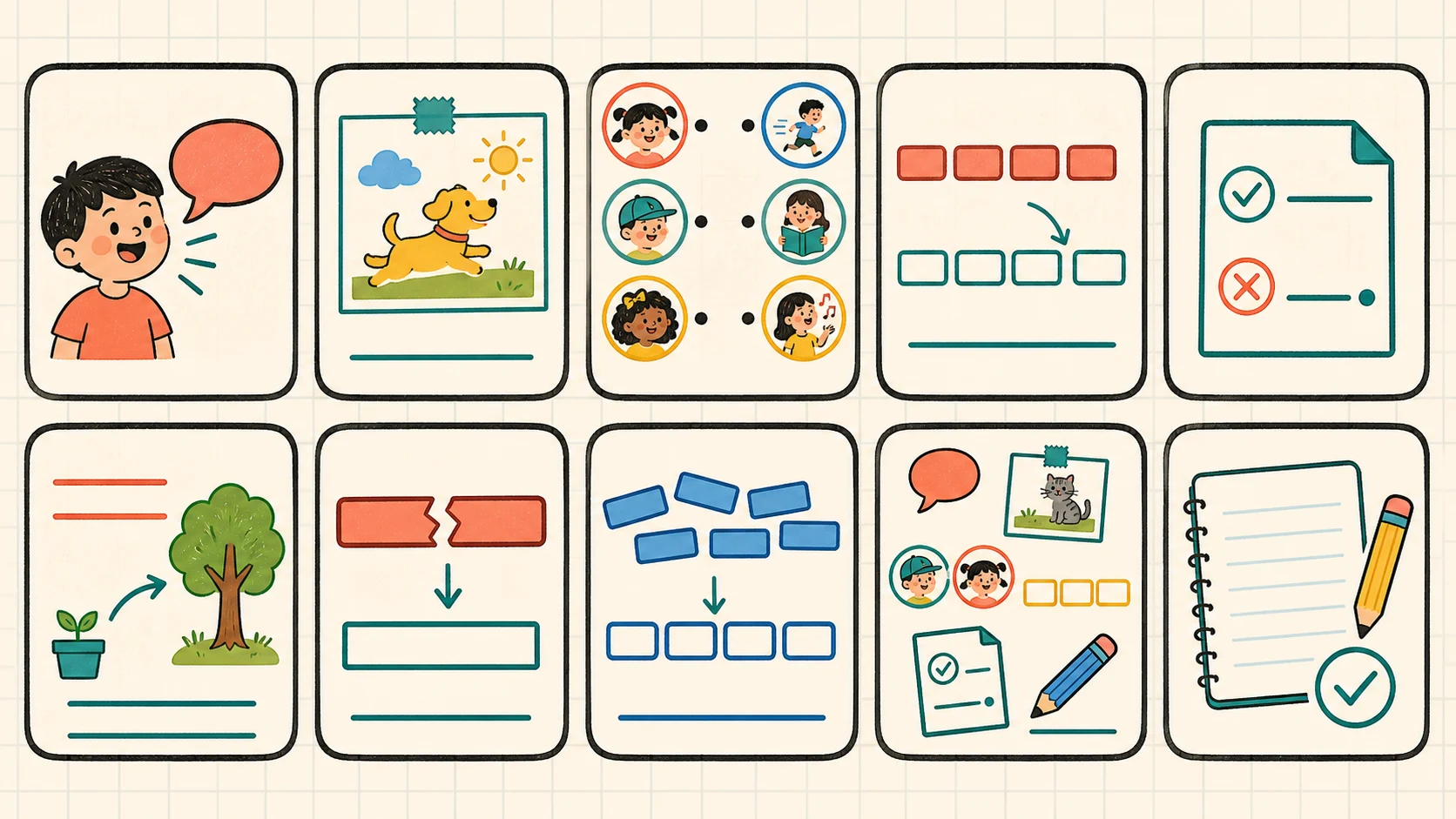
Revisit one sentence-completeness decision across oral examples, recognition, repair, and original writing instead of exhausting it in one long session.
Use a short teach–try–check routine
A differentiated sheet works best inside a repeatable interaction. Ten focused minutes can reveal more than completing a page without discussion.
Teach: establish one contrast
Show two examples that differ only in the target feature:
“The bird sings.”
“Under the tree.”
Ask what the first has that the second lacks. Identify “The bird” as the who or what and “sings” as what it does. Do not define every kind of subject or predicate during this contrast.
Try: sample several response formats
Ask for the same decision in three ways:
- Oral: “Is ‘after lunch’ a complete sentence? Tell me what is missing.”
- Recognition: Circle the complete sentence: “The tall tree” or “The tall tree swayed.”
- Repair: Change “Ran across the yard” into a complete sentence.
If the learner succeeds orally but not in writing, the grammatical idea may be more secure than the page suggests. If the learner circles correctly but cannot explain or repair, recognition is present but transfer needs work.
Check: record the type of decision
Mark each response with a small code:
- M: meaning understood;
- R: rule or category identified;
- P: response produced accurately;
- T: target transferred to a new sentence.
These are informal observation codes, not a diagnostic test. They prevent a reversed letter, omitted capital, or difficult-to-read word from being treated automatically as a grammar misconception.
Finish with one exit item that was not modeled. The answer determines the next sheet or adaptation.
Four checked examples for selecting and adapting tasks
The following examples are checked for grammatical accuracy and grounded in representative live catalogue topics. They illustrate adult decisions, not claims about the exact wording printed on a particular PDF.
Example 1: first-grade end punctuation
Use these three sentences:
“The bus is here.”
“Is the bus here?”
“The bus is here!”
Each is complete and correctly punctuated. The first states information, the second asks for information, and the third expresses strong feeling. They belong in first-grade punctuation practice because the live topic includes periods, question marks, and exclamation points, and the representative free sheet contains 12 problems.
For supported practice, read the sentences aloud and let the learner match punctuation cards. For standard application, remove the final marks and ask the learner to add them. For extension, ask the learner to describe how the reader’s voice and the sentence’s purpose change.
Do not teach “questions always sound higher” as an infallible rule. Voice can support early noticing, but meaning and sentence form should confirm the choice.

Alternate listening, mark selection, sentence editing, and brief writing so first-grade punctuation becomes a meaning decision rather than a page-filling habit.
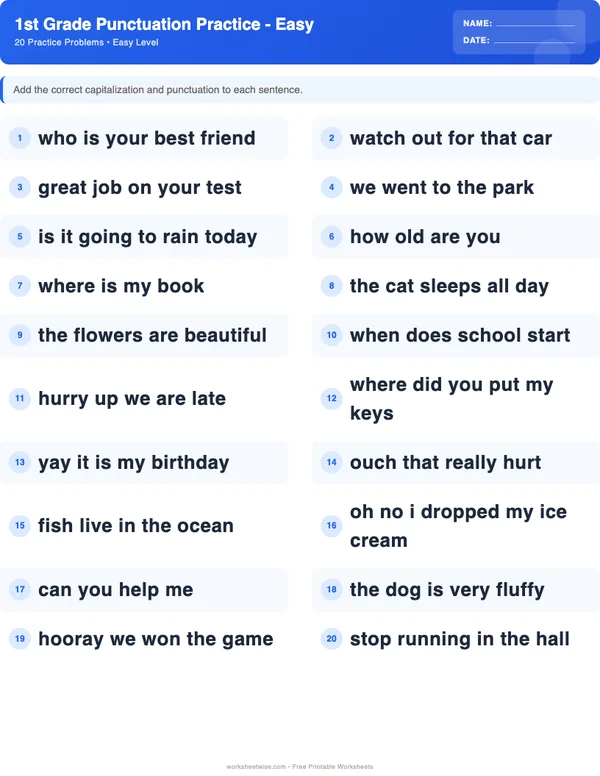
The 1st Grade Punctuation guide and free sheet is the direct catalogue entry point for this target.
Example 2: first-grade sentence completeness
Compare:
“The rabbit hopped.”
“Beside the fence.”
“The rabbit hopped” is a complete simple sentence: “The rabbit” supplies the subject and “hopped” supplies the predicate. “Beside the fence” is a prepositional phrase, not a complete sentence in this isolated form.
For supported practice, give word cards for the rabbit, hopped, and beside the fence. Ask the learner to build a complete sentence physically. For application, ask the learner to identify the complete option. For transfer, repair the fragment:
“The rabbit rested beside the fence.”
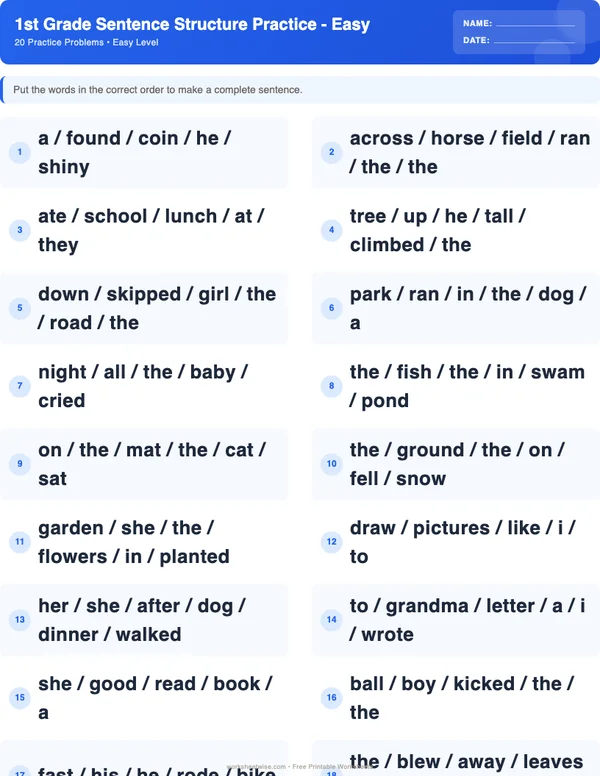
This example belongs here because the live first-grade sentence-structure topic explicitly covers complete sentences and fragments, subjects and predicates, and sentence expansion. Explore the 1st Grade Sentence Structure guide and free sheet when this is the observed need.
Example 3: first- or second-grade nouns and verbs
Use the sentence:
“Birds build nests.”
“Birds” is a plural noun functioning as the subject. “Build” is a verb naming the action. “Nests” is also a plural noun, functioning as the object of the verb.
Start by asking the learner to act out build and point to pictures or objects that could be nests. Then underline the verb and circle both nouns in the sentence. For extension, replace one noun and the verb while preserving the pattern:
“Beavers construct dams.”
This example belongs in parts-of-speech differentiation because the live first- and second-grade resources begin with nouns and verbs in sentences. It also exposes an important selection issue: asking for “the noun” would be ambiguous because the sentence contains two nouns. The prompt must say “circle all nouns” or identify the subject noun specifically.
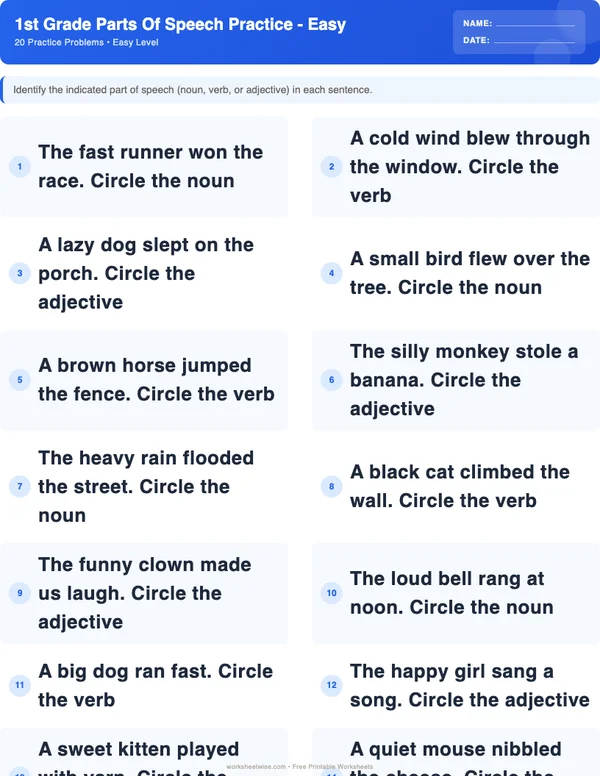
The 1st Grade Parts of Speech guide and free sheet offers a relevant free entry point.
Example 4: later punctuation with a compound sentence
Use:
“I finished my draft, but I forgot the title.”
The comma is correctly placed before but because the conjunction joins two independent clauses: “I finished my draft” and “I forgot the title.” Both can stand as sentences.
For supported practice, print each clause on a separate strip and join them with a but card. Mark the boundary physically. For application, ask the learner to insert the comma. For extension, compare:
“I finished my draft but forgot the title.”
This second sentence does not require the same comma because “forgot the title” does not include its own stated subject; it shares I with the first verb. The contrast belongs here because the live punctuation progression includes commas in compound sentences and recommends teaching one comma use at a time.
The example should be used only when the learner can already identify complete thoughts. Otherwise, the sheet is testing clause recognition and punctuation simultaneously.
Read errors as evidence about the next task
An incorrect answer does not identify its own cause. Ask the learner to reread, explain, or reconstruct one item before choosing another sheet.
End-mark errors
If every sentence receives a period, ask the learner to sort spoken statements, questions, and exclamations before returning to print. The next sheet should keep short sentences and visible choices.
If oral sorting is accurate but written marks are omitted, keep the target and reduce copying. Ask the learner to place punctuation cards or highlight the sentence ending. Then restore written production gradually.
If exclamation points appear after any sentence about something exciting—“I have a red bike!”—accept that punctuation may depend on intended emphasis, but require the learner to explain the intended voice. Grammar decisions sometimes involve meaning, not only one mechanically correct symbol.
Sentence-structure errors
If a learner accepts “The noisy dog” as complete, ask “What did the dog do?” The next practice should contrast expanded noun phrases with complete sentences:
“The noisy dog”
“The noisy dog barked.”
If the learner rejects commands such as “Close the gate.” because no subject is printed, explain that the understood subject is you. Do not infer a broad sentence deficit from that one pattern.
Parts-of-speech errors
If run is always called a verb, compare:
“We run daily.”
“We went for a run.”
In the first sentence, run is a verb. In the second, it is a noun. The next sheet should classify words in complete sentences rather than sort isolated vocabulary. That keeps the target—word function—steady while changing the representation to reveal context.
Punctuation errors in connected text
When commas appear wherever a learner pauses while reading, return to clause or list structure. A pause can be a useful listening cue, but it is not a sufficient comma rule. Ask the learner to bracket the parts being joined before inserting punctuation.
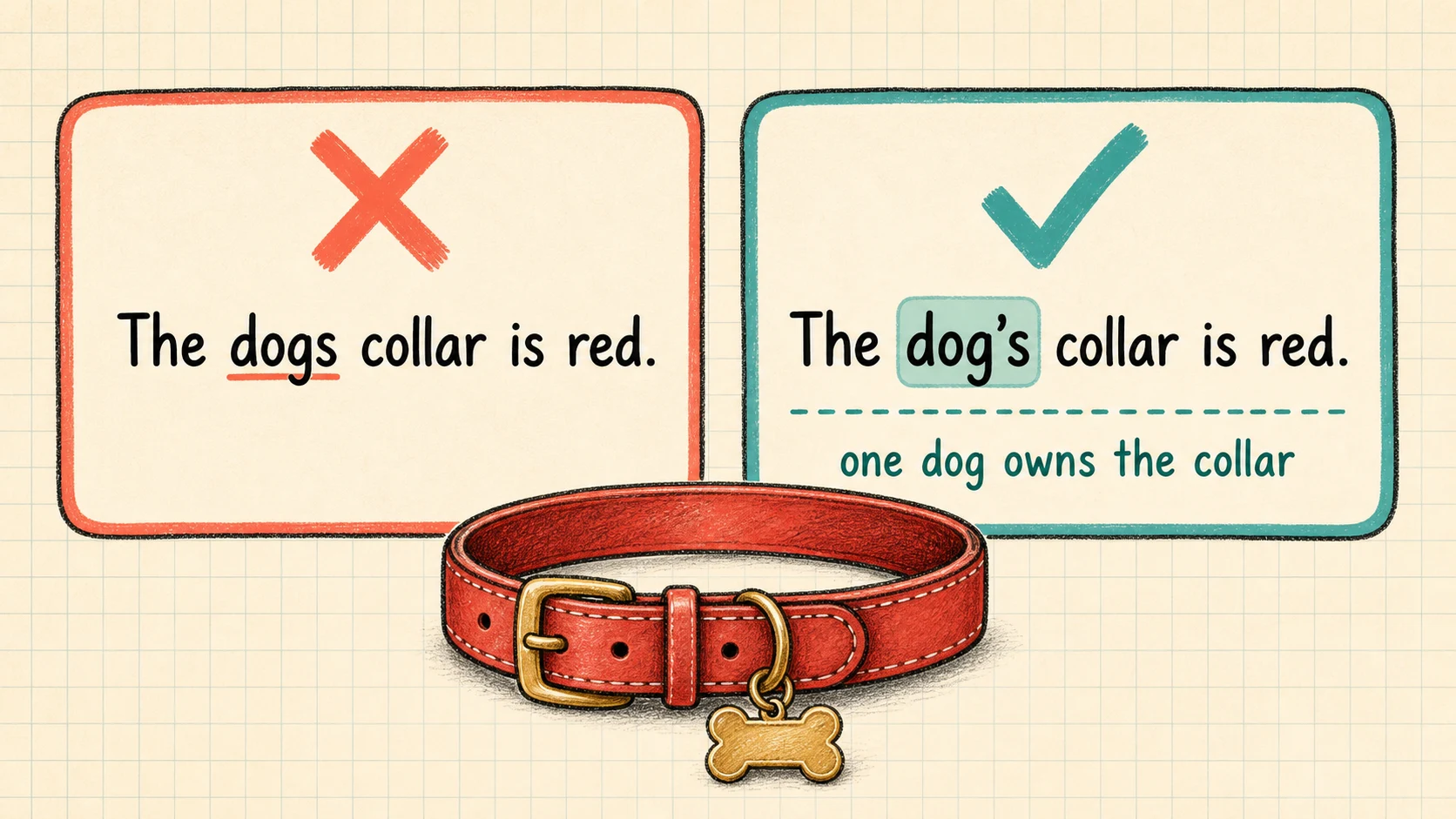
Match the next punctuation task to the pattern—clause boundary, dialogue format, apostrophe meaning, or rule overgeneralization—not merely to the number marked wrong.
Give feedback that names the decision
“Good job” and “Try again” do not tell a learner which thinking to repeat or revise. Effective feedback is brief, specific, and followed by another attempt.
Use this sequence:
- Confirm what is secure: “You noticed that the sentence asks for information.”
- Name the mismatch: “A question needs a question mark here, not a period.”
- Prompt a check: “Read it again as a question and inspect the final mark.”
- Test transfer: “Now punctuate: ‘Where did the turtle go’.”
For a fragment, say:
“You found the person or thing: ‘The little fox.’ We still need what the fox did or was. Add a predicate.”
For a parts-of-speech confusion, say:
“You chose light without checking its job. In ‘The light shines,’ it names a thing. In ‘The light bag,’ it describes the bag. Read the whole sentence before labeling it.”
Avoid correcting every surface feature at once. If the target is subject–predicate completeness, note a spelling error separately and keep the grammar conversation on completeness. When the learner has completed the correction, ask for one new sentence showing the same feature. That final transfer item is more informative than copying the adult’s answer.
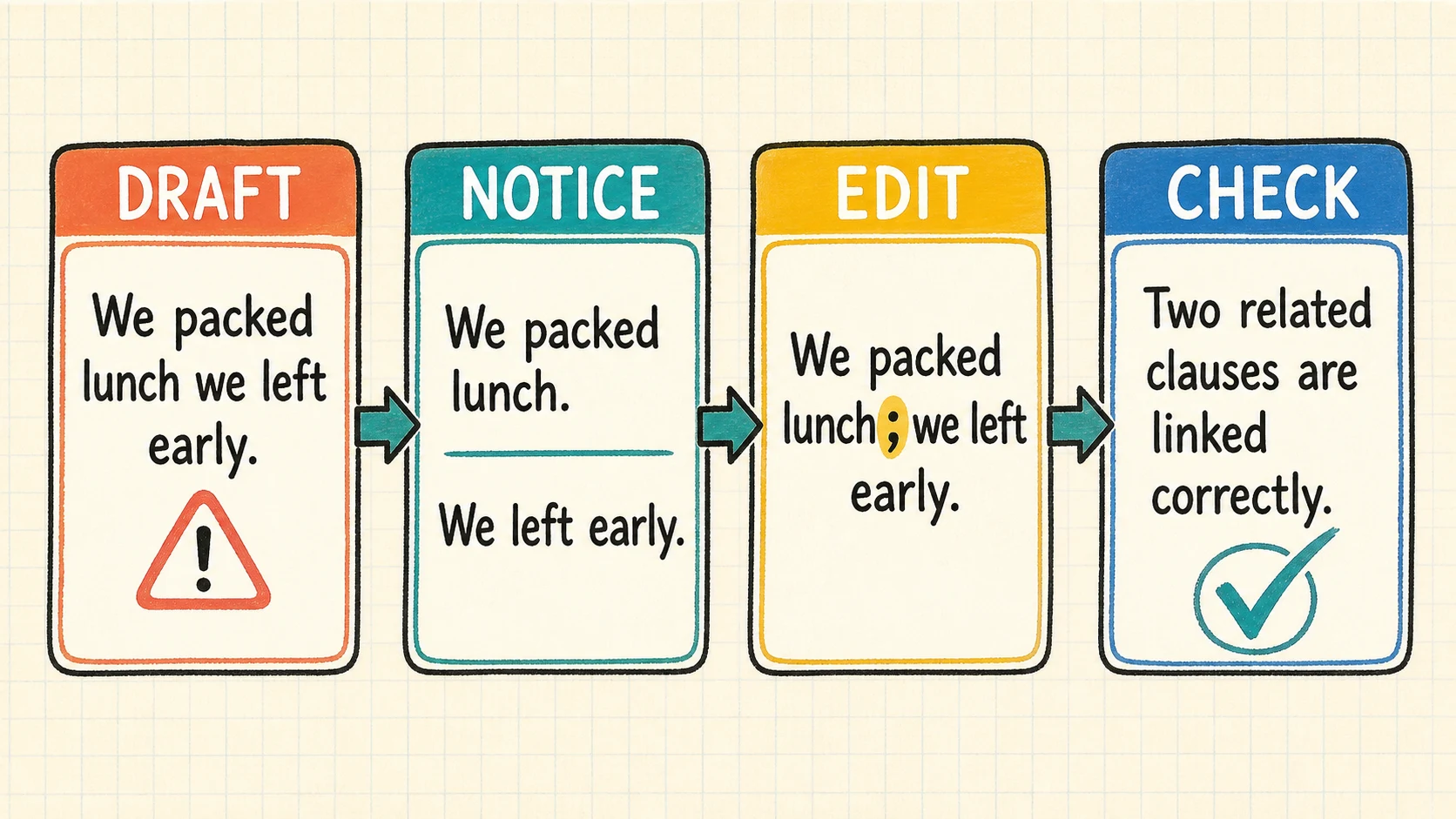
Remove punctuation supports only after the learner can explain the target rule and apply it to an unmodeled sentence.
Plan review without turning practice into repetition
A two-week sequence does not require ten full worksheets. Revisit the same decision through changing formats and short intervals.
A workable pattern is:
- Day 1: model the contrast and complete four supported items.
- Day 2: sort or match examples orally.
- Day 3: complete a small independent block.
- Day 4: repair two incorrect examples.
- Day 5: write or dictate one original example.
- Days 6–8: revisit after other work, mixing one familiar and one new context.
- Day 9: edit a short passage containing only the target error type.
- Day 10: use an unprompted exit item to choose the next step.
This schedule is a suggested routine, not sourced evidence about a guaranteed pace. Learners may need more or fewer encounters.
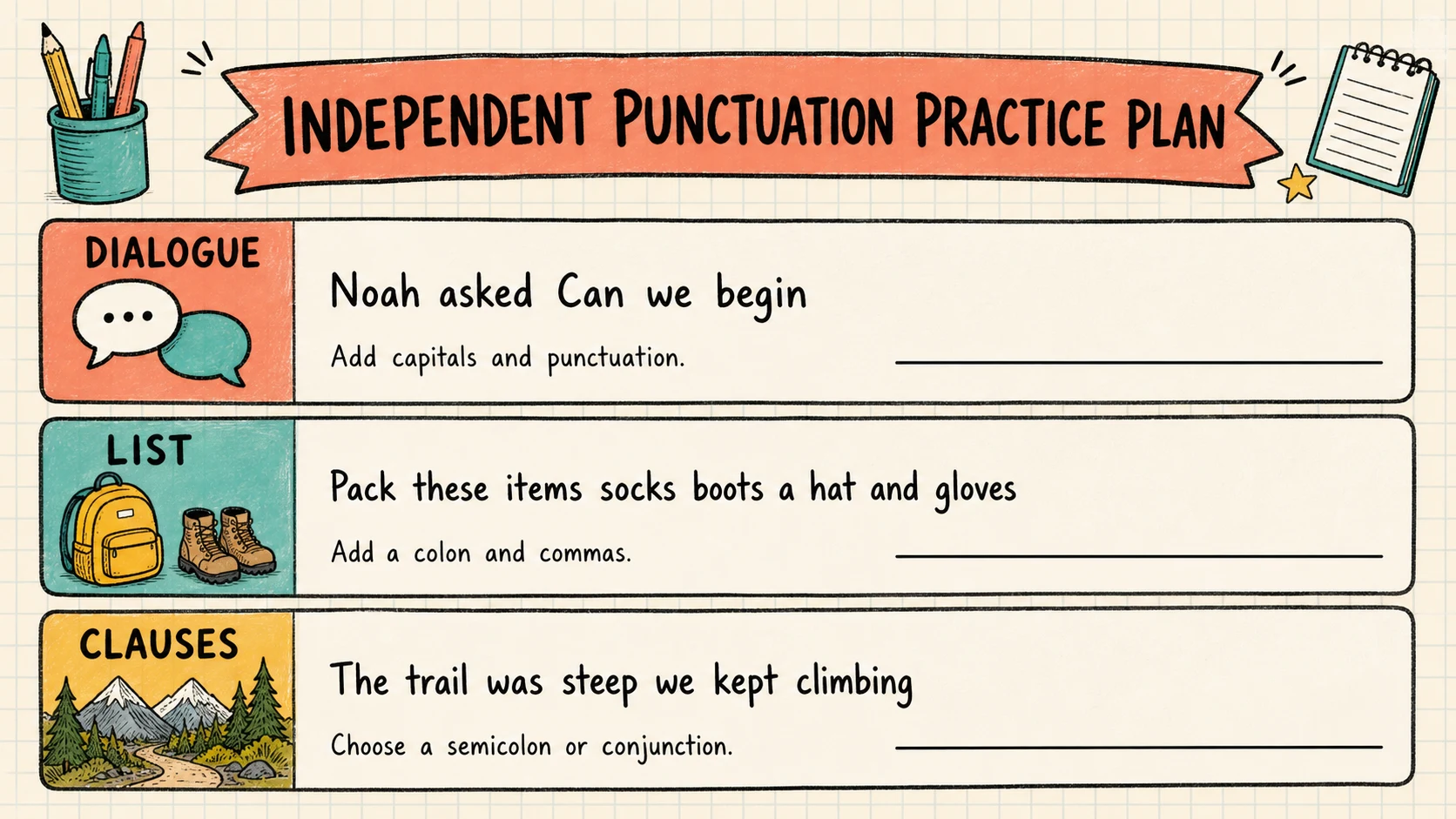
Use later-grade review to move from isolated rule recognition to editing and explanation while keeping each session focused on a defined punctuation decision.
The Common Core English Language Arts standards provide grade-specific language expectations, but they do not determine an individual learner’s placement and did not assess WorksheetWise. Use standards as one planning reference alongside local curriculum, current classroom instruction, and observed work.
Preserve the target when access needs change
Adaptations are useful only when they leave the intended grammatical thinking visible.
If reading is the barrier, read the item aloud. If handwriting is the barrier, accept pointing, movable cards, oral explanation, highlighting, or dictation. If a page is visually crowded, cover unused items and reveal one row at a time. If expressive language is difficult, offer a sentence frame: “This is a question because ___.”
For ages three and four, prioritize brief adult-led oral, matching, manipulative, and movement work over desk work. A child might walk to a period, question-mark, or exclamation-mark card after hearing a sentence, act out verbs, place an object under or beside another object, or build a spoken sentence from picture cards. Age remains a discovery aid rather than a placement decision.
Do not preserve the sheet format at the expense of the target. At the same time, do not remove the grammatical decision. Reading every item and supplying the answer for the learner changes the task from supported grammar practice to listening and copying.
Know what a worksheet can and cannot show
A completed page is a sample of performance under particular conditions. It cannot diagnose a learning disorder, establish a complete writing profile, or prove durable mastery. Accuracy may be affected by reading load, vocabulary, attention, motor demands, unfamiliar directions, fatigue, or guessing.
The catalogue’s grade labels indicate intended practice level, not mandatory placement. The “easy” designation on representative free sheets should be interpreted through observable features such as constrained choices, familiar examples, one rule, and limited response load—not as a description of a child.
Avoid drawing a large conclusion from one mixed sheet. Use at least three forms of evidence when practical:
- a response to a printed item;
- an oral explanation or sorting decision;
- an original or repaired sentence.
If those disagree, adapt the response format before changing the grammatical target. If concerns are persistent across contexts, document specific examples and consult the learner’s teacher or an appropriately qualified professional. Do not diagnose from worksheet errors.
Choose the next sheet from one observable result
End each session by recording one sentence:
“With ______ support, the learner correctly ______ in ______ of the final unmodeled examples and explained ______.”
Then make one decision:
- If the learner cannot make the distinction orally, return to modeling with clearer contrasts.
- If oral decisions are accurate but print responses are not, reduce reading or writing load while keeping the grammar choice.
- If printed recognition is accurate but correction is not, choose an error-repair sheet.
- If correction is accurate but original use is inconsistent, choose a short editing or sentence-generation task.
- If independent transfer is accurate across new examples, move to a neighboring skill or a mixed review that still makes errors interpretable.
The immediate practical step is to open the full worksheet library, choose one punctuation, parts-of-speech, or sentence-structure entry point, and complete the target sentence—“In every version, the learner will decide whether…”—before printing anything.
Put it into practice
Use the guide with a real printable
Move from explanation to a short, observable practice task. Check the first item together, then adjust the next session from the learner's actual work.
Open the first free worksheetExplore a neighboring collection