Curated collectionAnswer keys includedPrint-ready PDFs
Tutoring Phonics Worksheets
Use one-to-one think-alouds, immediate error interpretation and a session-to-session note trail instead of assigning an undifferentiated packet.
Start with a real resource
Browse this worksheet collection
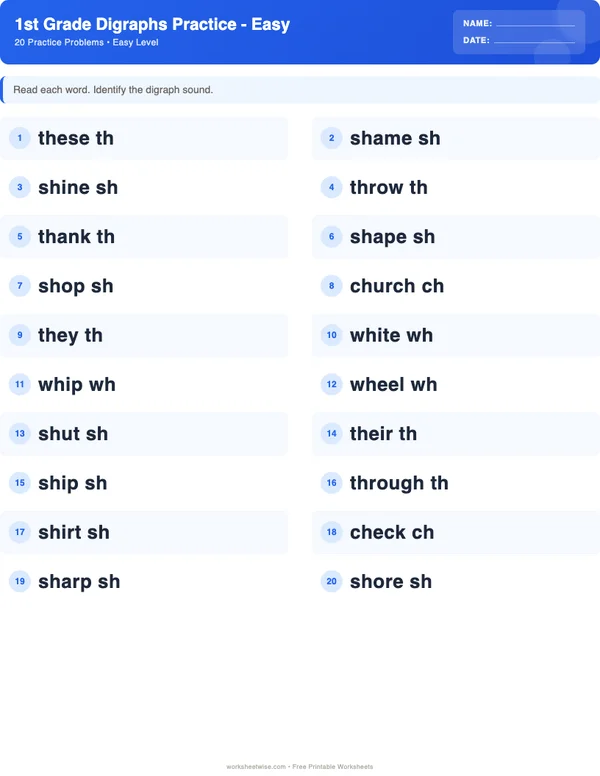
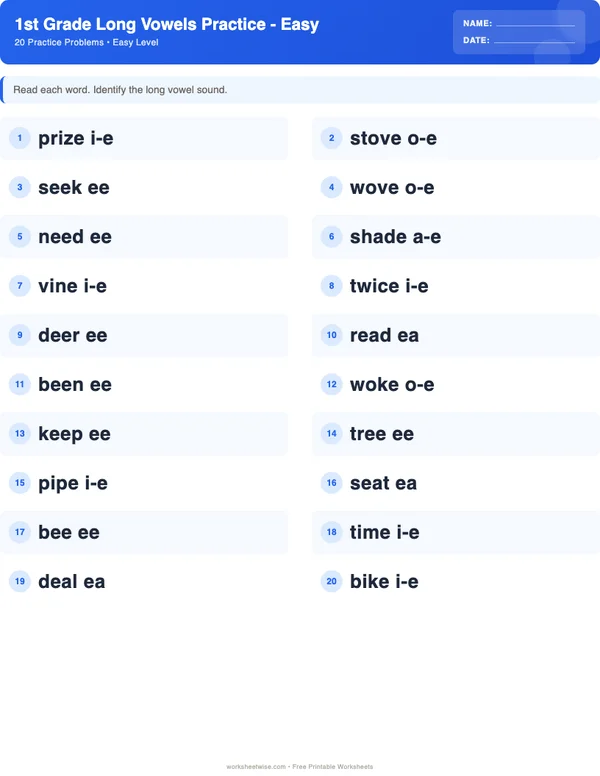
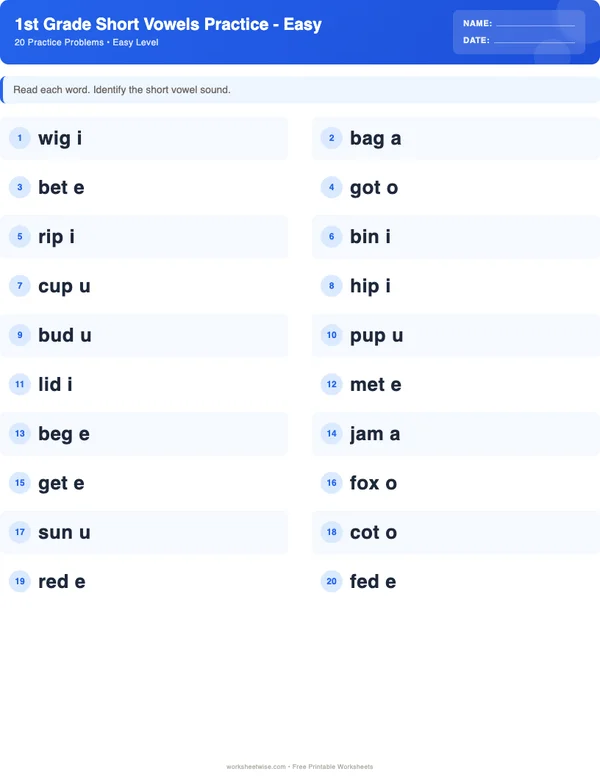
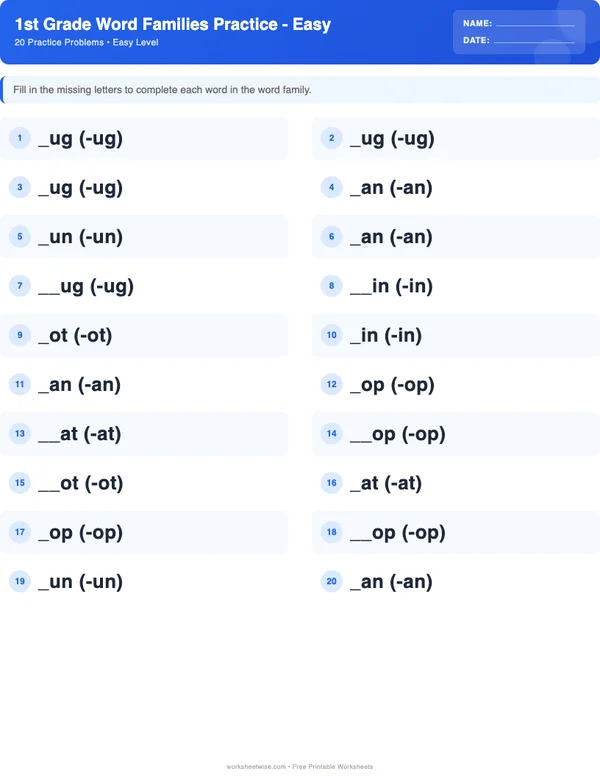
22 relevant free entry points are available. Each one includes a printable learner PDF and separate answer key.
A useful practice loop
Print less. Observe more.
- Choose one skill and model the first item aloud.
- Use a short set and notice the learner’s strategy.
- Change the next task from the work you can see.
Need more than the free sheet?
Plus includes all 396 matching catalogue variations where available, plus saved deterministic generators and the worksheet designer.
See Plus membershipComplete guide
How to teach and practise tutoring phonics worksheets
3,505 words Updated 6 instructional visuals
Turn each worksheet into a one-to-one teaching conversation
Tutoring phonics worksheets work best when the adult does more than assign a packet and mark answers. Choose one narrow phonics target, model the thinking aloud, watch how the learner responds, interpret errors immediately, and record one observation that determines the next sheet. A useful session might involve only six to ten items from a 20-problem worksheet. Completion is less informative than hearing what the learner notices, blends, confuses, and repairs.
The WorksheetWise catalogue currently contains 396 phonics worksheet variants across four intended grade levels and seven topics, with 22 free resources. That breadth supports careful selection, but it also makes undifferentiated packets tempting. Resist that temptation. A learner who reads pin as pen, stop as sop, and ship as sip has produced three different kinds of evidence. The next task should respond to the specific sound or pattern involved, not simply come from the next page in a stack.
The IES foundational reading practice guide recommends explicit instruction in sound segments, letter–sound relationships, decoding, word analysis, and connected-text reading. That is sourced guidance, not an evaluation of WorksheetWise. The session design below applies those broad principles to the catalogue’s actual phonics topics and to the close observation possible in tutoring.
Select by the operation the learner must perform
Start with the intended operation, not the worksheet’s grade label or artwork. Decide whether you need to observe the learner:
- hearing a sound without seeing print;
- matching a sound to a letter or letter group;
- blending printed sounds into a word;
- segmenting a spoken word for spelling;
- distinguishing two nearby patterns;
- applying a known pattern in a sentence; or
- recalling a high-frequency word while accounting for its regular and irregular parts.
Grade labels describe the intended practice level; local curriculum sequences differ. Age is a discovery aid rather than a placement decision. A first grader may need a focused CVC contrast, while a younger learner may already be ready to manipulate a familiar word family orally. Select from direct evidence rather than assuming that age, grade, or a previous packet establishes readiness.
For ages three and four, prioritize brief adult-led oral, matching, manipulative, and movement work over desk work. A Pre-K sheet can supply pictures or word choices without becoming a demand to complete 20 written responses. Ask the child to move a token for each sound, step toward the matching picture, or place a letter beside an anchor image. Stop while attention and accuracy are still observable.
The catalogue calls the representative free sheets “easy,” but difficulty should be defined through visible task features, never attached to the learner. In these resources, the free-sheet level is represented by a single familiar topic and 20 problems. Actual demand still changes with response format. Choosing between two pictured words provides more support than spelling from dictation. Reading isolated CVC words requires less integration than reading those words in sentences. Sorting visible words by vowel pattern reduces recall demands compared with generating the spelling independently.
Use a three-question selection test
Before printing, answer:
- What feature must the learner notice? For example, the medial vowel in pin, the two audible consonants in stop, or the single sound represented by sh.
- What response will reveal the thinking? Saying a word, pointing, moving letters, reading, sorting, or writing each exposes something different.
- What competing feature will make the observation meaningful? Contrast pin with pen, sop with stop, or ship with sip. A page containing only one predictable pattern may invite guessing.
If those answers are unclear, the sheet is not yet a good tutoring choice.
Compare live skills before choosing the first sheet
The representative catalogue resources include CVC words, short vowels, word families, sight words, consonant blends, digraphs, and long vowels. These are not interchangeable versions of “beginning phonics.” Each asks the learner to coordinate sounds and print differently.
CVC words reveal whether three sounds stay connected
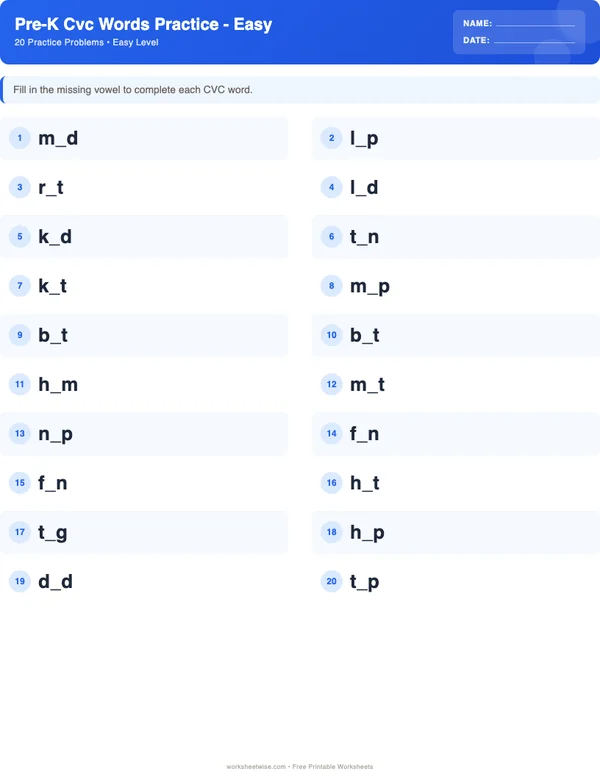
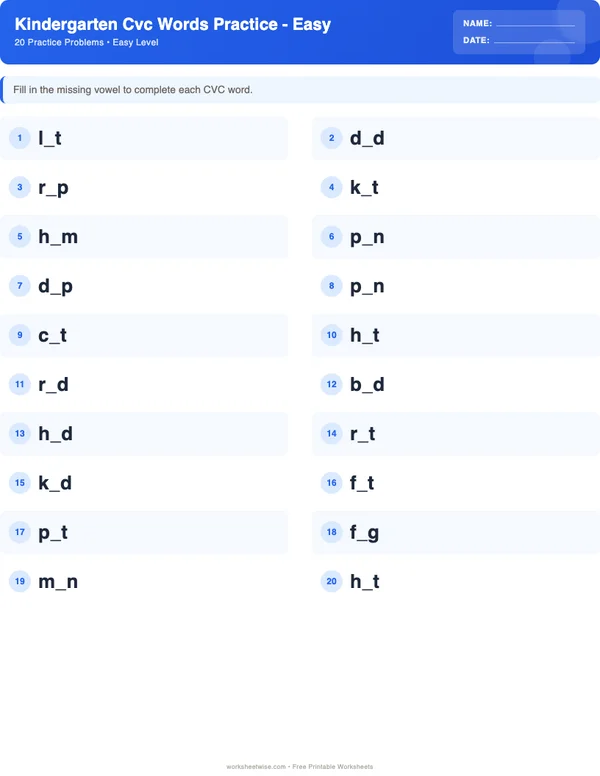
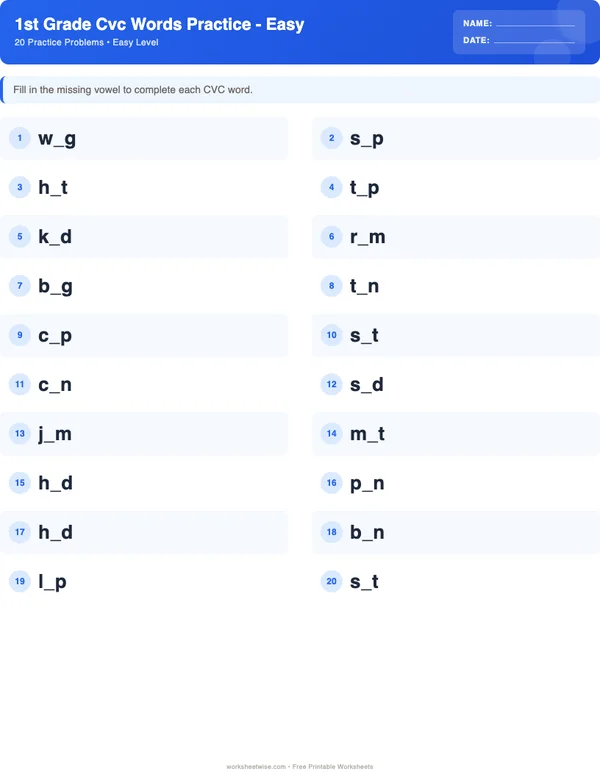
The Pre-K, kindergarten, and first-grade CVC resources each contain 20 problems and may include word building, picture matching, fill-in-the-blank work, and reading. Use a CVC task when you need to observe whether the learner can identify three phonemes, match them to letters, and blend without losing the middle sound.
The catalogue’s continuous-blending suggestion uses a stretched production such as /cccaaattt/ → cat. For a tutoring check, model one word and then ask the learner to try map. If the response is mat, the learner retained the initial and vowel but substituted the final consonant. If the response is mop, investigate vowel discrimination. If the learner says separate sounds correctly but cannot form the word, the next task should remain at blending rather than jump to a harder spelling pattern.
The Pre-K CVC Words guide and free sheet is a useful source of items for oral blending and token work. The kindergarten CVC resource provides another grade-labelled entry point, but the observable operation—not the label—should decide which page you use.
Short vowels isolate a sound-position problem
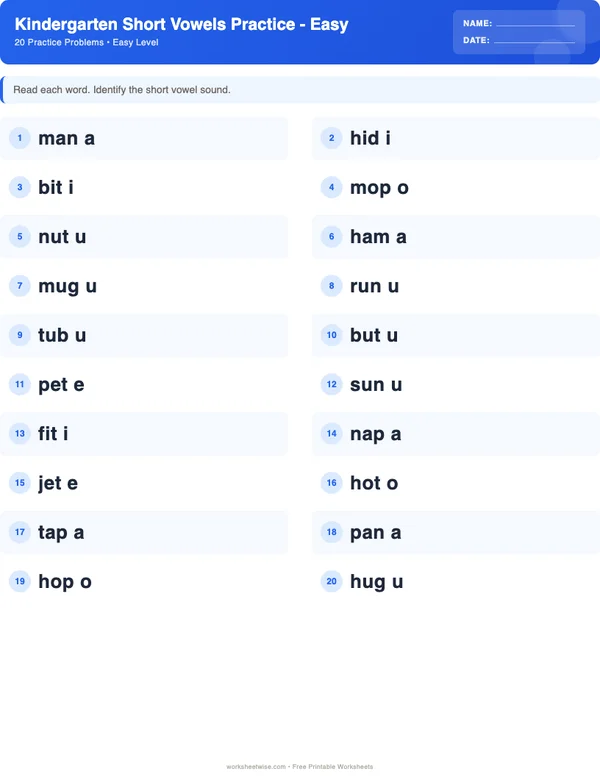
Choose short-vowel work when consonants are mostly stable but the middle sound is uncertain. The catalogue describes picture sorting, word reading, spelling, and fill-in-the-middle responses. These formats are valuable for different questions:
- A picture sort asks whether the learner can hear and categorize the vowel.
- A middle-letter choice asks whether the learner can connect that sound to print.
- Reading a complete word asks whether the mapping survives blending.
- Dictation asks whether the learner can retrieve and write the mapping.
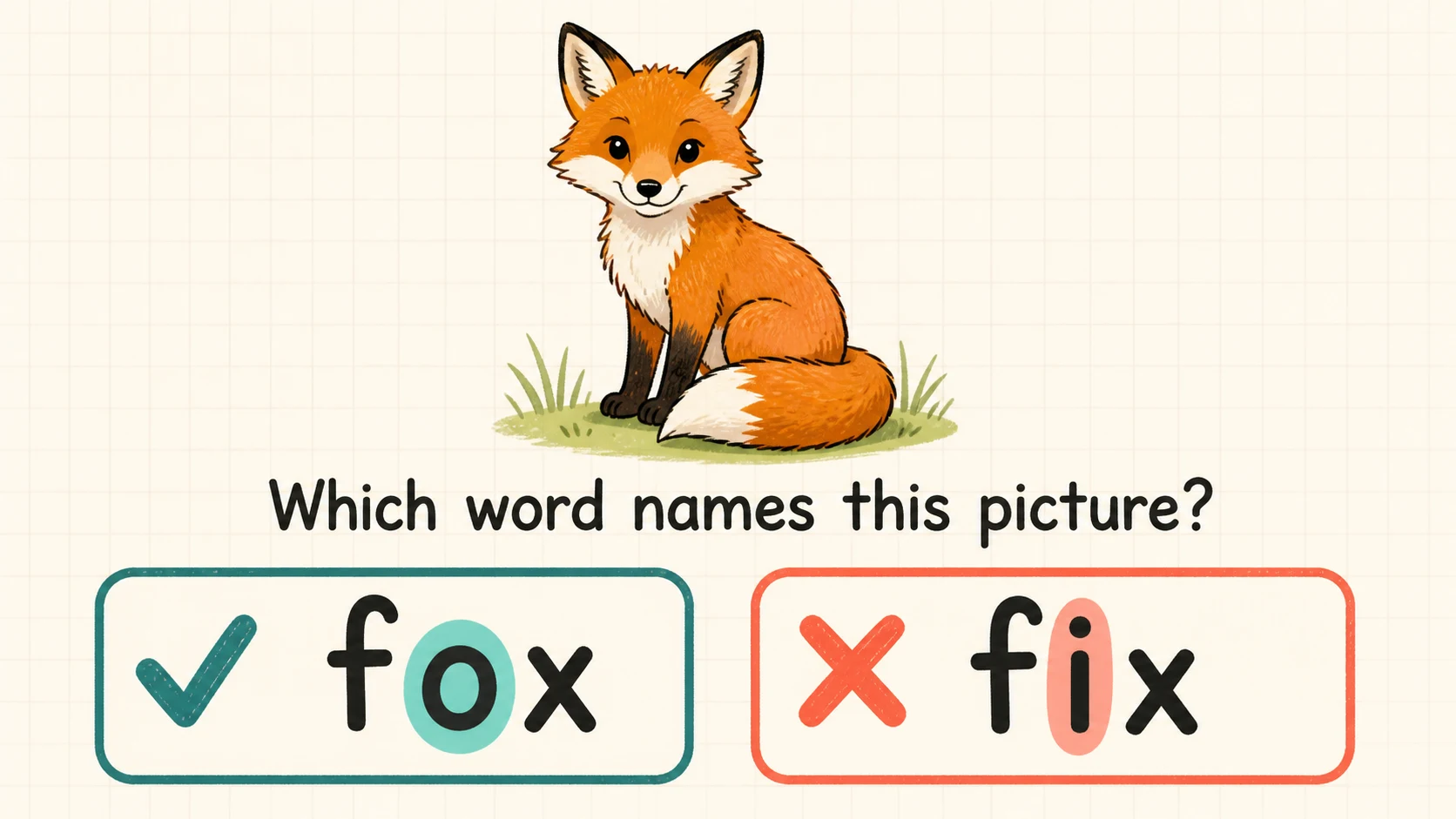
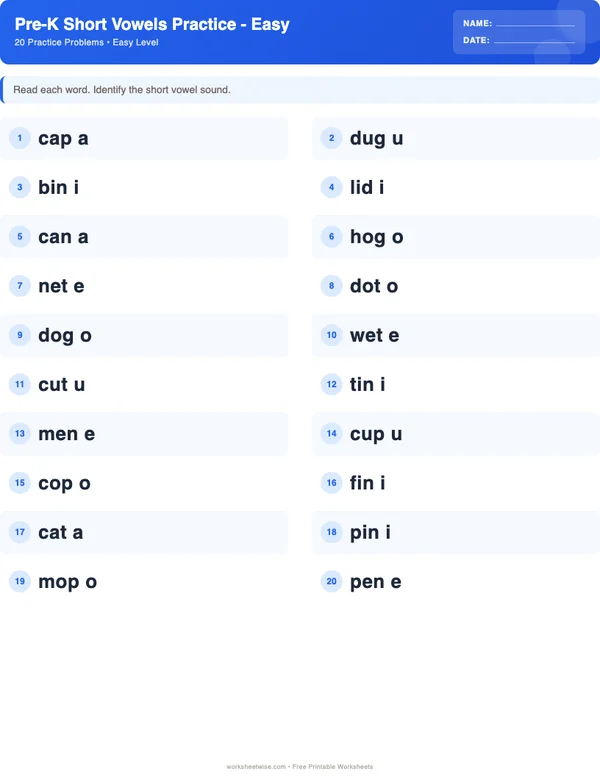
Use each first-grade short-vowel error as evidence for a particular teaching response, not as a reason to assign every remaining vowel page.
The Pre-K Short Vowels guide and free sheet can be used selectively for matching and discrimination. Do not require writing when the target is hearing the vowel and handwriting would obscure the evidence.
Word families test whether a stable chunk can be reused
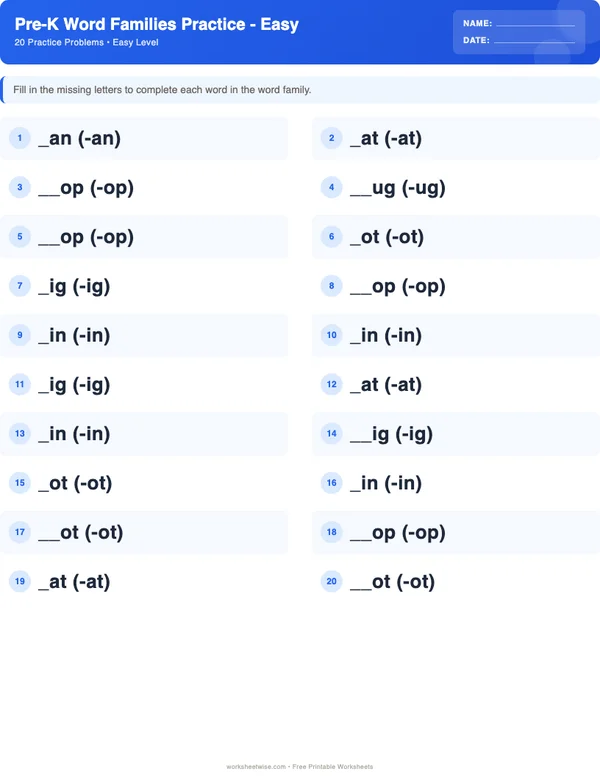
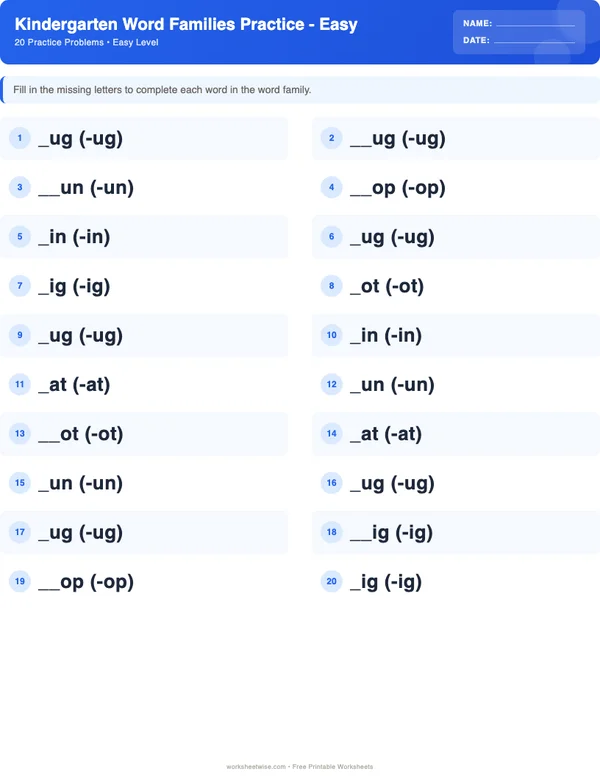
Word-family tasks hold an ending constant while changing the onset: cat, bat, hat or big, dig, pig. They belong in tutoring when the learner can blend individual CVC words but does not yet use a familiar ending efficiently.
A word-family sheet should not replace letter-by-letter phonics. Ask the learner to explain what remained unchanged when cat became bat. Then introduce one item outside the run. If the learner reads every new card as an -at word regardless of its letters, the repeated layout has encouraged anticipation rather than inspection. Follow with a mixed sort from the Pre-K Word Families guide and free sheet.
Blends and digraphs require opposite explanations
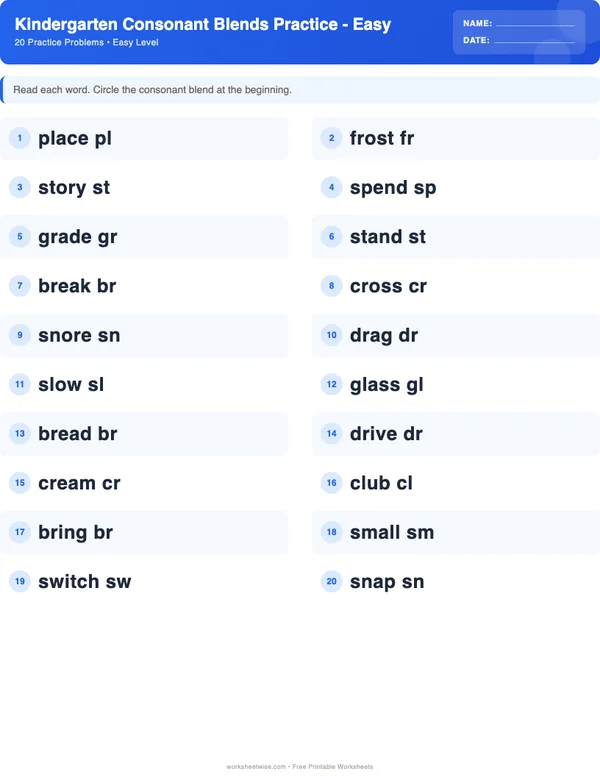
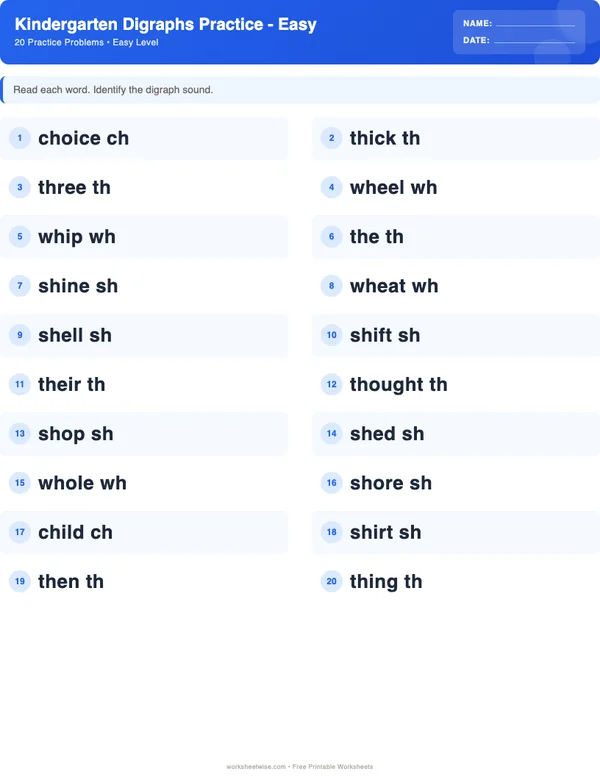
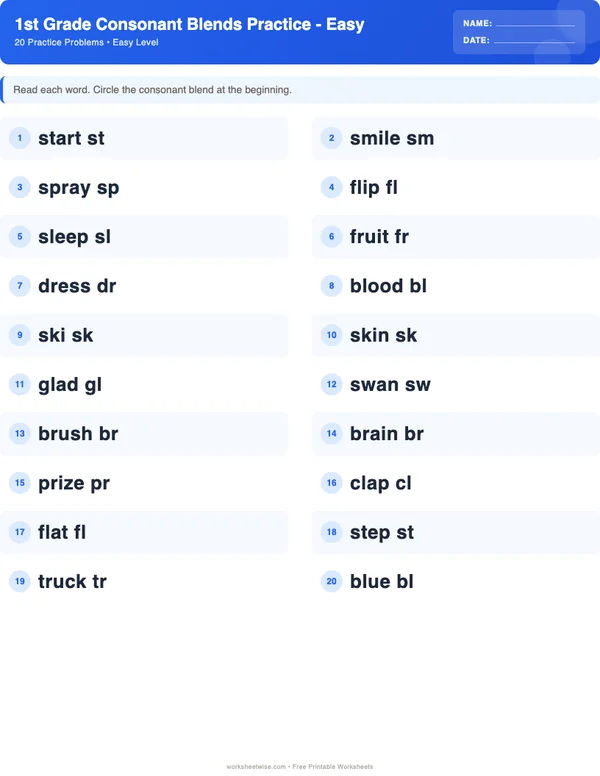
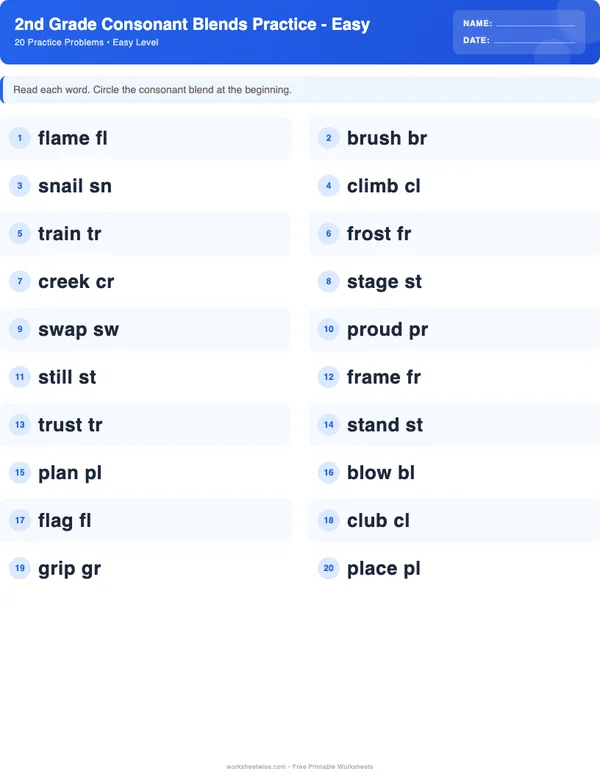
A blend contains two retained consonant sounds, as in st in stop. A digraph uses two letters for one sound, as in sh in ship. Tutoring must make that contrast audible.
For a blend, ask, “What two sounds do your ears still hear?” For a digraph, say, “These two letters are working together for one sound.” Avoid the vague prompt “Look at the beginning,” because it does not tell the learner what to inspect.
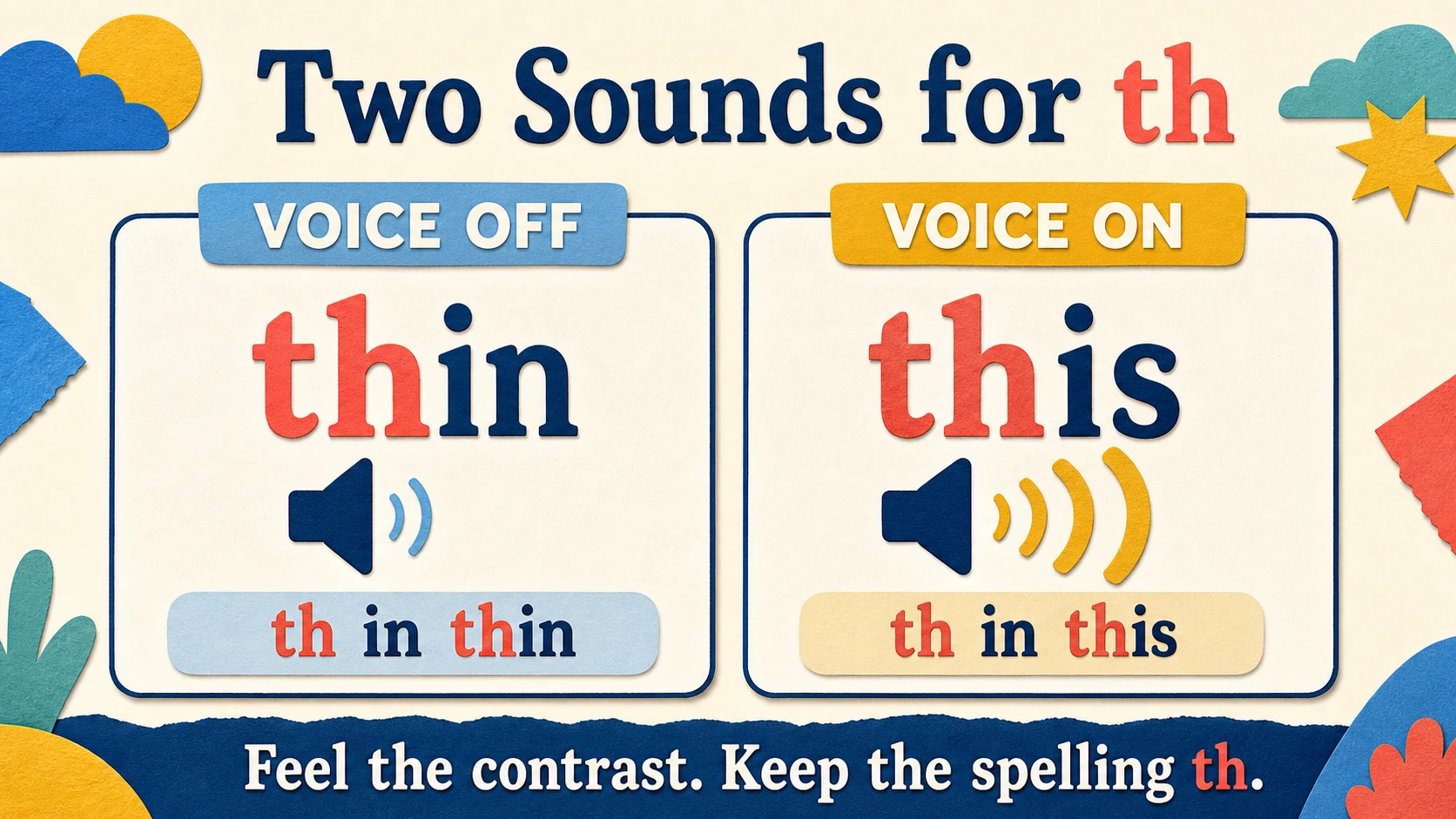
In this second-grade digraph model, the concrete representation is a temporary bridge to identifying and using the two-letter spelling.
Although the verified representative list includes kindergarten and first-grade digraph resources, the displayed visual concerns a second-grade example. Treat each grade marker as an intended practice level, not proof of placement or a fixed sequence.
Long vowels demand comparison among spellings
The live first-grade long-vowel resource covers silent-e words, vowel teams, and open syllables through sorts, reading, and encoding. That is a larger pattern space than a CVC lesson. Begin with one contrast, such as cap/cape or hop/hope, before mixing a_e, ai, and ay.
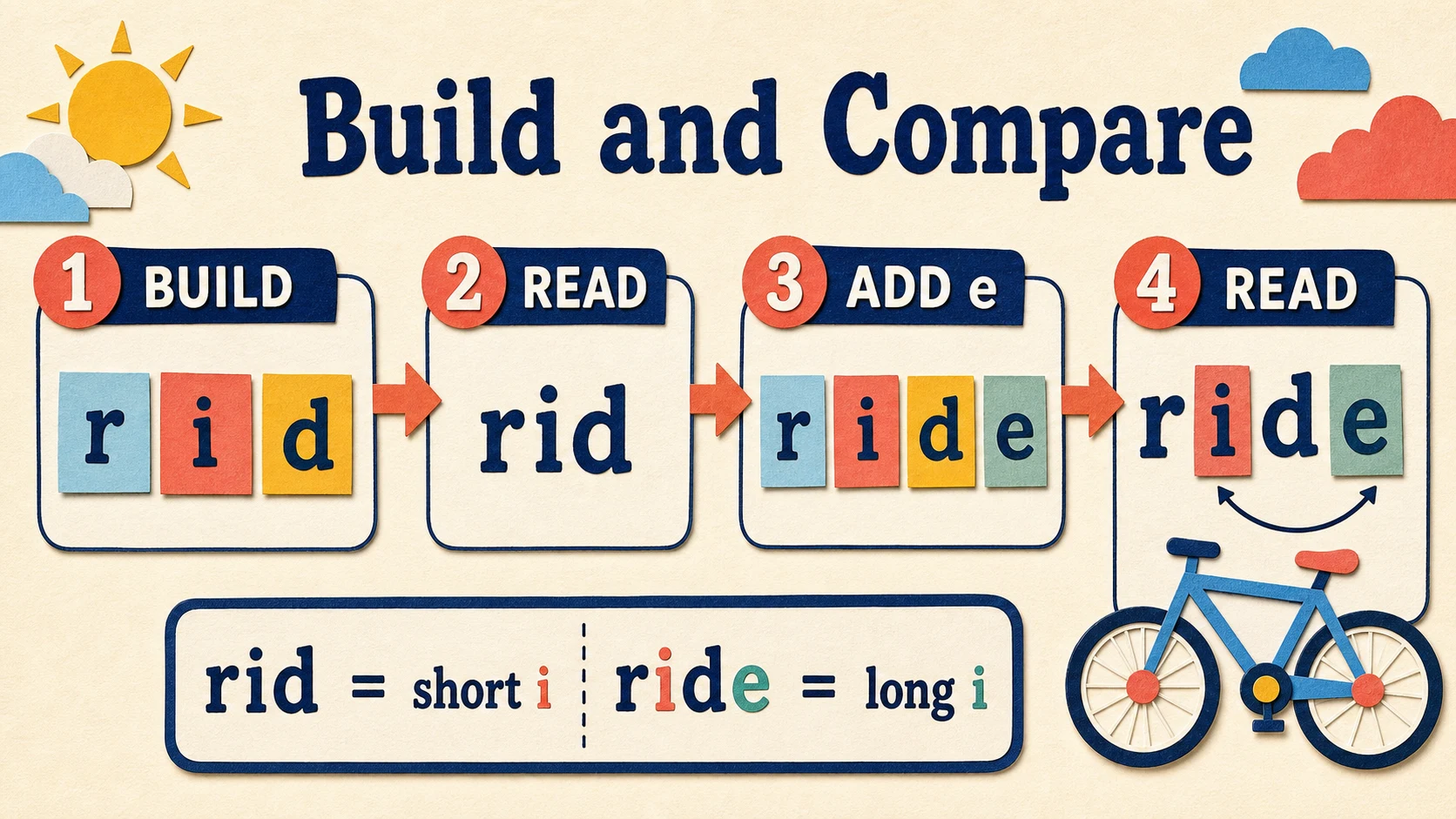
The first-grade progression should remove support only after the learner can state and apply the selected long-vowel contrast.
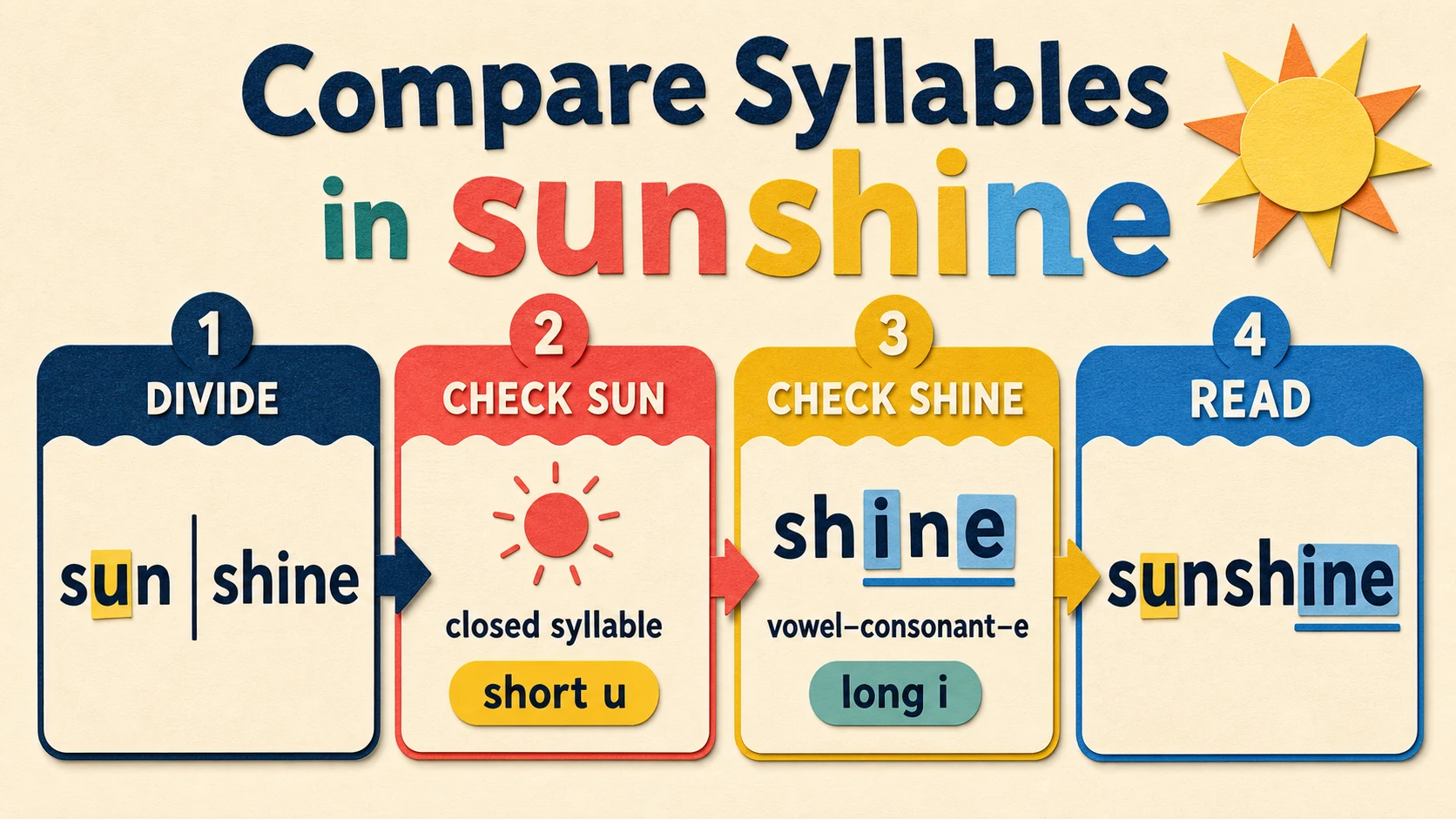
The second-grade progression is useful for planning increased response demand without assuming that every learner needs the same starting point.
A sort with printed choices tests recognition of spelling categories. Dictation requires the learner to select and produce a spelling. Do not treat success on the first as proof of independence on the second.
Sight words still require attention to print
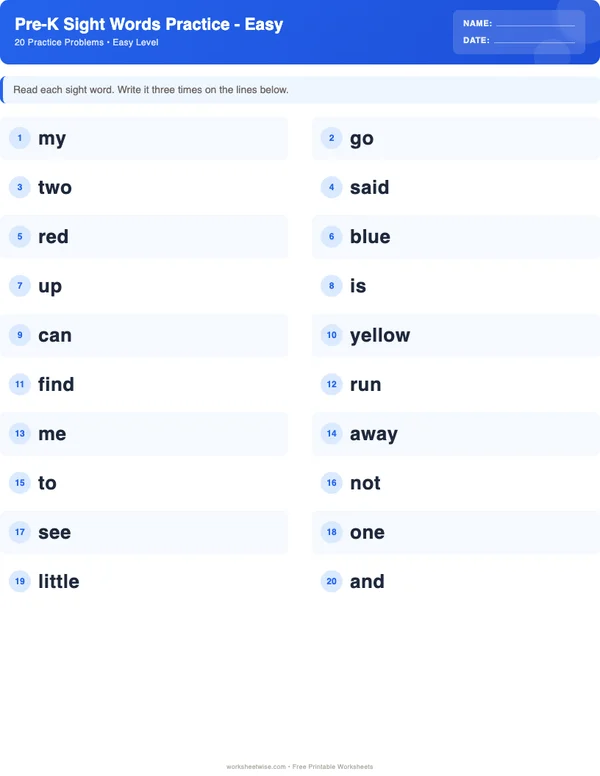
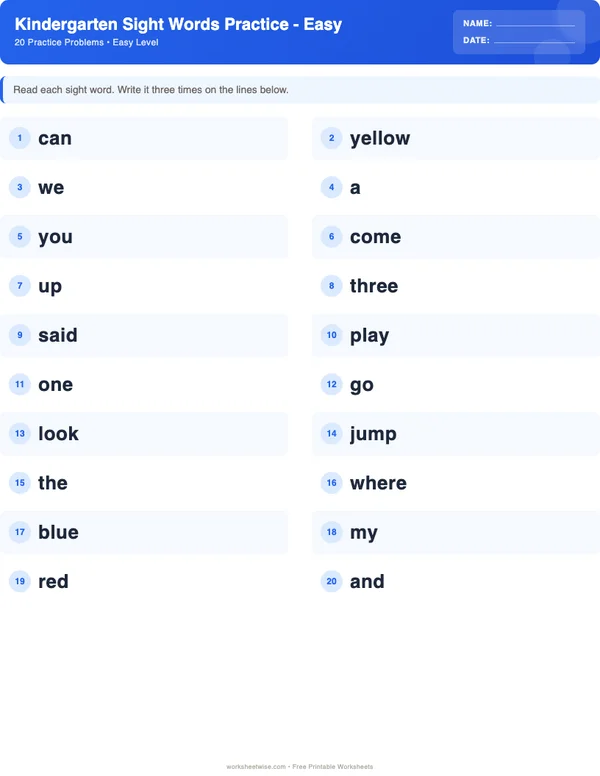
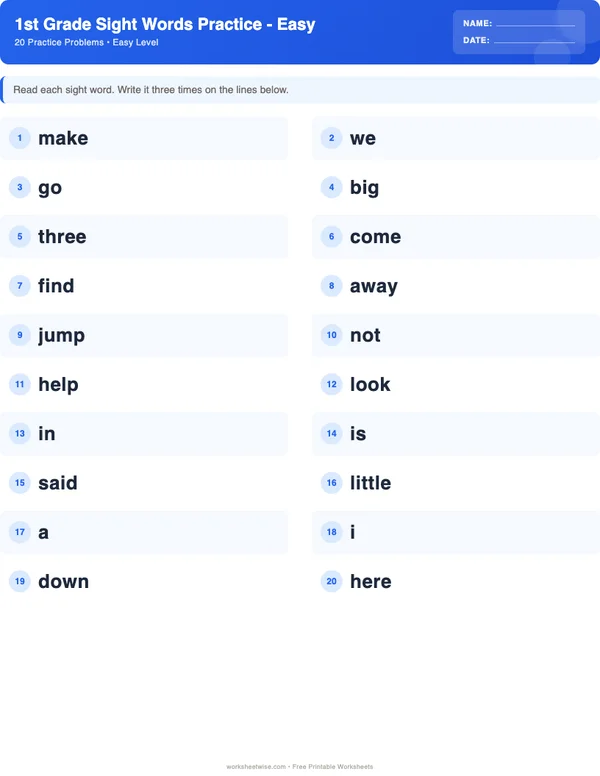
The live sight-word resources include tracing, writing, finding words in sentences, contextual use, and passage reading. Select them when a frequent word interrupts otherwise manageable reading, but do not reduce instruction to visual memorization.
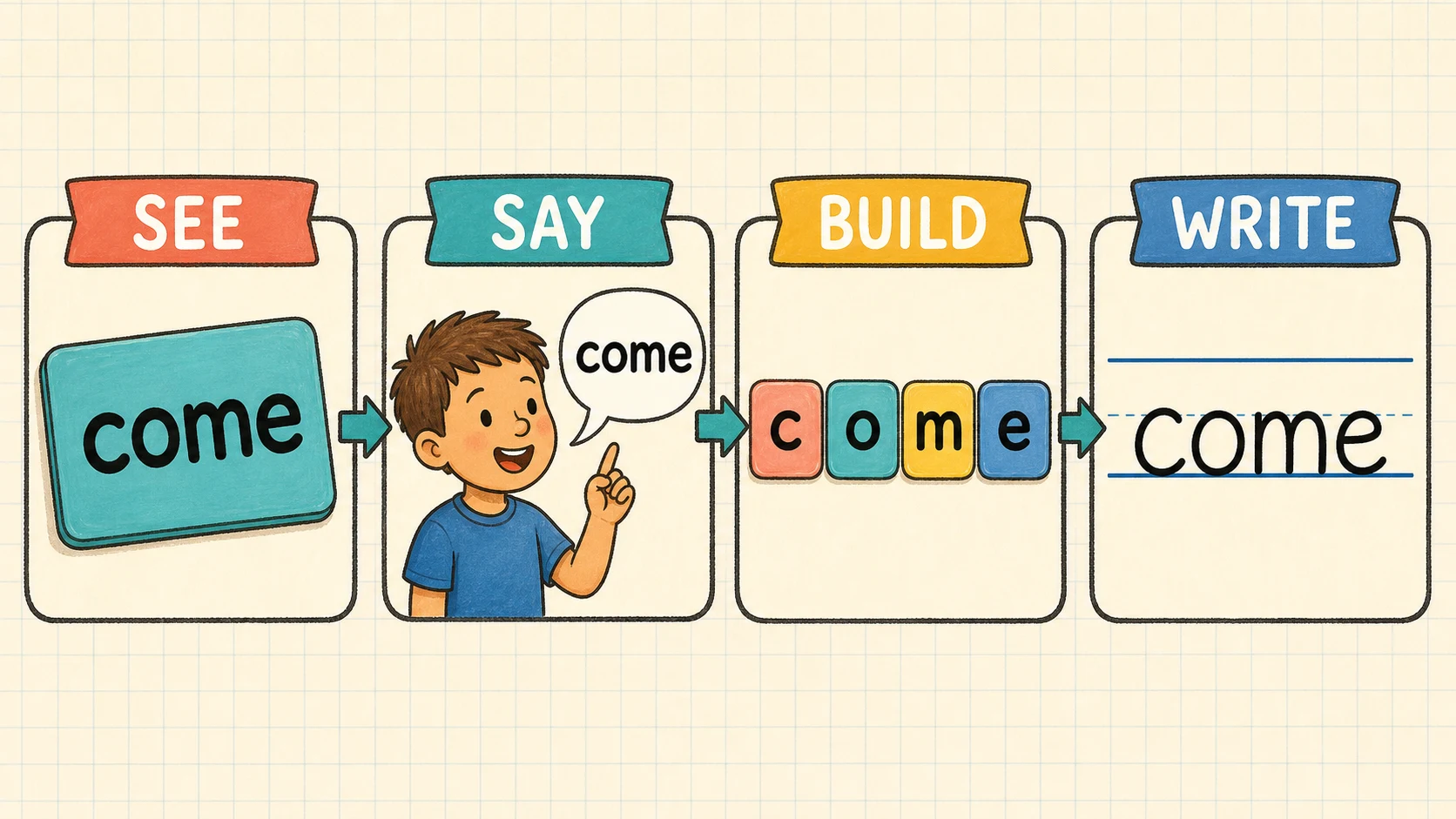
For first-grade sight-word practice, move from examining the printed word to recalling and reading it in context, while preserving attention to its letters.
The catalogue suggests separating regular and irregular parts. In said, for example, s and d correspond predictably while ai represents the unexpected part in this word. This example belongs here because it demonstrates how a high-frequency word can be analyzed rather than merely flashed repeatedly.
Run a repeatable 20-minute tutoring routine
A consistent routine frees the adult to concentrate on the learner’s processing. Adjust the duration for attention, age, and the complexity of the response, but keep the evidence cycle intact.
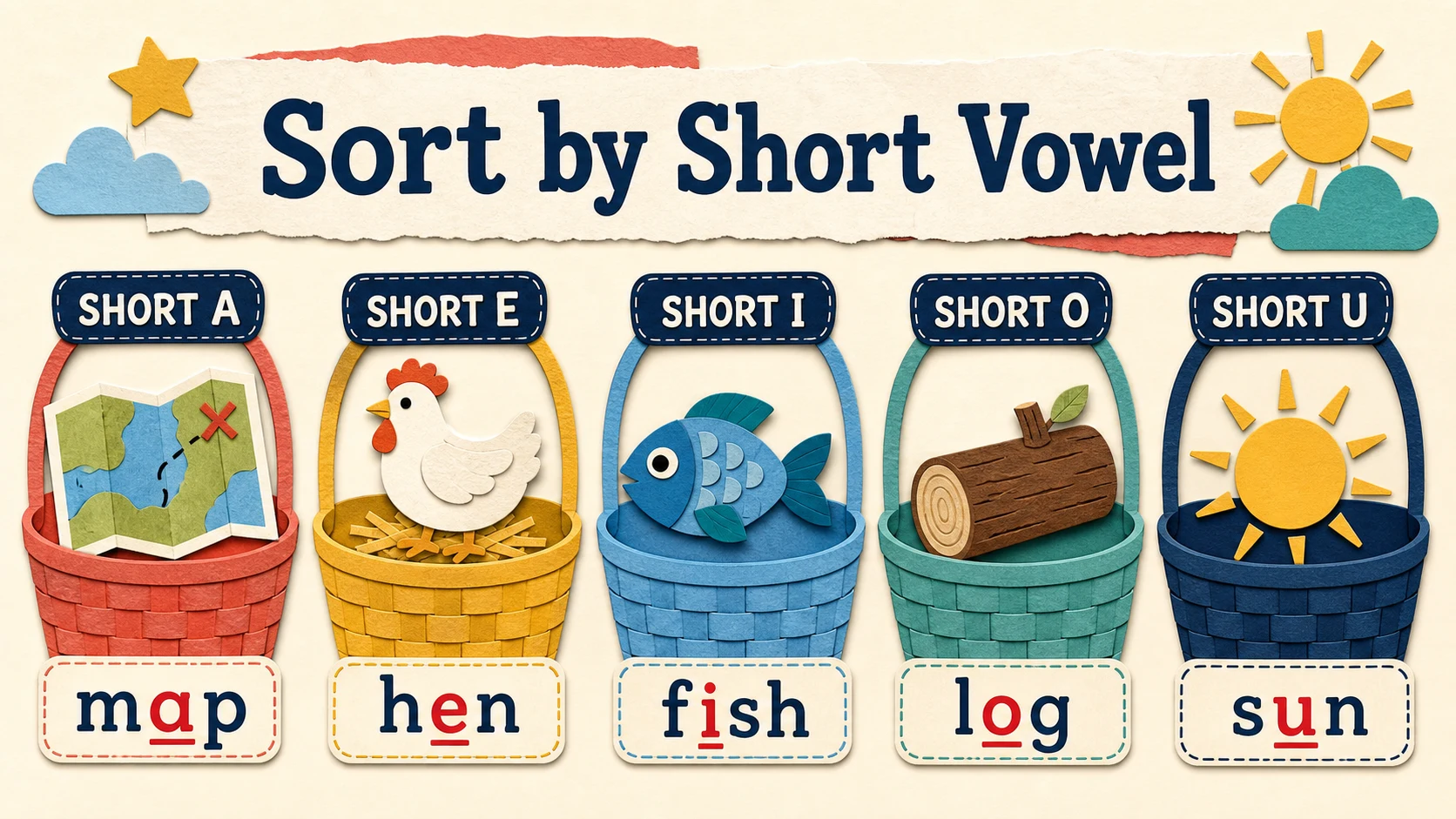
This second-grade short-vowel routine keeps modeling, learner response, correction, and transfer close enough for the tutor to interpret them within one session.
Minute 0–3: retrieve one known pattern
Use three quick items from the previous note. Do not teach them again immediately. Ask for the response that matters: read, spell, sort, or manipulate.
Suppose the previous note says, “Read cat and map accurately; changed pin to pen twice.” Begin with map, pin, and sit. This checks whether the suspected short i/e confusion persists without turning the warm-up into a broad review.
Minute 3–6: model one think-aloud
Cover most of the worksheet and expose one item. Make the phonics decision audible:
“I see ship. I notice
shat the beginning. Those two letters represent one sound, /sh/. I keep that sound together, then blend /sh/ /i/ /p/: ship.”
Keep the model exact. “Sound it out” is an instruction, not a model. A useful think-aloud identifies the print feature, states its sound function, and demonstrates the physical or mental action required.
Minute 6–12: use coached responses, then fade
Complete two or three items with decreasing support:
- First item: tutor models; learner repeats and explains.
- Second item: tutor points to the relevant letters; learner performs the operation.
- Third item: learner attempts independently.
- Fourth item: learner explains or writes the answer.
Do not fade support according to page position. Fade it after a correct process is visible. If an error appears, return briefly to the smallest support that addresses it.
Minute 12–16: contrast and transfer
Present one close contrast and one unfamiliar item using the same pattern. After practicing ship, contrast it with slip. Ask whether the first two letters represent one sound or two. Then try shop. These items reveal whether the learner understood the digraph or memorized the modeled word.
For long vowels, use cap/cape and then hop/hope. For short vowels, use pen/pin and then bed/bid. For final blends, use ten/tent and then bum/bump. Each pair changes one meaningful feature, so an incorrect response is easier to interpret.
Minute 16–20: encode and leave a note trail
End with one spoken word for the learner to build or write. Decoding and encoding place different demands on the same knowledge. A learner may read ship from visible print but spell it sip, showing that the sh representation is not yet available during recall.
Record the target, response conditions, exact error, support that worked, and next action. For example:
Target: initial
shin CVC words. Read ship after a model and shop after a finger cue. Read shut as sut independently. Spelled ship assip. Next session: begin with oral /sh/ identification, buildshas one tile, then use four initial-shreading and spelling items before adding finalsh.
That note is more actionable than “Needs more digraph practice.”
Check four examples before using them
The following examples have been checked against the stated sound and spelling relationships. Each isolates a live catalogue skill and supports a specific tutoring decision.
Example 1: cat → mat → map → mop
All four are CVC words. From cat to mat, the initial consonant changes. From mat to map, the final consonant changes. From map to mop, the medial vowel changes from short a to short o.
This chain belongs in CVC tutoring because it reveals whether the learner attends to every position. If the learner calls mop “map,” keep the consonants fixed and contrast the vowels orally and in print. If map becomes “mat,” work on the final phoneme. Do not infer a general reading condition from either response.
Example 2: pen/pin, set/sit, bed/bid
Each pair keeps the initial and final consonants constant while contrasting short e and short i. The pairs therefore reduce competing changes and make vowel discrimination observable.
Say each pair without print first. If the learner cannot distinguish the spoken words, use oral matching before asking for letters. If oral choices are accurate but written choices are not, the next sheet should emphasize sound-to-letter matching. If reading is accurate but dictation is not, retain the same contrast and change the response to building or writing.
Example 3: sop/stop and ten/tent
In stop, both /s/ and /t/ remain audible before the vowel; st is a blend. Reading stop as sop drops /t/. In tent, /t/ follows /n/ at the end; reading it as ten drops the final consonant.
These examples belong in blend work because they locate sound deletion at different word positions. For stop, have the learner touch one finger for /s/ and another for /t/ before blending the whole word. For tent, compare the mouth movement and sound sequence in ten and tent, then build both with letters. Choose the next sheet by error position: initial blends for the first pattern, final blends for the second.
Example 4: ship/slip
In ship, sh represents one consonant sound. In slip, sl represents two retained consonant sounds. Both words then contain short i and final /p/.
This pair belongs in digraph tutoring because the rest of the word is controlled while the opening structure changes. If the learner identifies two sounds in sh, model the paired letters as one unit. If the learner treats sl as one sound, separate it with two counters. A mixed digraph-and-blend sort is the appropriate next sheet only after each structure has been modeled clearly.
Example 5: cap/cape and hop/hope
Adding final e changes the vowel from short to long in these checked pairs: cap/cape and hop/hope. They belong in the first-grade long-vowel context because the verified live resource explicitly includes the silent-e pattern.
Ask the learner to mark what changed, read both words, and explain what happened to the vowel. If the learner reads both members identically, use more CVC/CVCe contrasts. If the learner reads the pairs but spells hope as hop, keep the pattern and switch the next response to word building and dictation. Do not move immediately to several vowel teams.
Interpret the error before correcting the answer
Immediate feedback should be brief, specific, and followed by another attempt. The goal is not to announce that an answer is wrong; it is to identify the phonics decision that needs repair.
When the learner guesses from the picture
Cover the picture and ask the learner to point under each relevant letter or letter group while reading. Then uncover the image as a meaning check. The next sheet should reduce picture support and retain familiar patterns. Pictures can support vocabulary, but they should not conceal whether print is being decoded.
When the learner names letters instead of producing sounds
Confirm the letter name, then redirect: “That letter is m. What sound do we use here?” If this recurs, choose a smaller letter–sound matching task before expecting blending. Preserve the phonics target by allowing pointing or tiles instead of adding handwriting demands.
When sounds are correct but the word is not blended
Model a connected sweep under the word and have the learner repeat without long pauses. Use continuous sounds where possible. The next sheet should contain short, decodable items with the same pattern, not a more visually complex page.
When one sound disappears
Identify its position. In stop → sop, ask the learner to touch s and t separately. In tent → ten, return to the final sound and compare both words. Choose a sheet that concentrates on the affected position rather than mixing every blend.
When the worksheet format causes the error
A learner may understand a sound pattern but lose the place in a crowded row, struggle to draw matching lines, or devote most attention to handwriting. Test the same target orally or with movable letters. If performance improves, adapt the format while keeping the phonics decision unchanged.
Useful adaptations include covering unused rows, cutting a page into item strips, offering letter tiles, allowing an oral answer before writing, enlarging the response area, or letting the learner point while the tutor records. These alter access and output, not the target skill.
Make feedback name the useful information
Effective feedback is local and actionable:
- Instead of “Try again,” say, “You kept /s/ but left out /t/. Touch both letters in
st.” - Instead of “Remember magic e,” say, “Compare hop and hope. What changed in the vowel sound?”
- Instead of giving ship, say, “These two letters work together. Say the one sound for
sh, then blend.” - Instead of “You know this,” say, “Read the regular part of said. Now identify the part that does not have its expected sound here.”
After the cue, present a nearby item. A correction without a fresh response tells you that the learner heard the explanation, not that the learner can use it.
The Common Core English Language Arts standards include grade-specific expectations related to foundational reading and phonics, but standards should be consulted within the learner’s local curriculum. They do not place an individual learner, and their inclusion here does not claim formal alignment for a particular WorksheetWise sheet.
The IES elementary writing guide addresses writing instruction broadly. In this tutoring context, its relevance is limited: a short spelling or sentence response can reveal whether a phonics pattern transfers into written production. It does not justify turning a focused phonics session into extended composition or treating handwriting quality as phonics evidence.
Let the note trail choose the next sheet
At the end of every session, select among four moves:
- Repeat the target with less support when the learner succeeded only after a cue.
- Keep the target but change the response format when reading and spelling results differ.
- Narrow the contrast when errors cluster around one sound or position.
- Add one controlled complication when the learner applies the pattern independently in reading and encoding.
A simple note table keeps decisions concrete:
| Record | Useful detail |
|---|---|
| Target | “Short e/i in medial CVC position” |
| Format | “Read printed words; then spelled from dictation” |
| Independent evidence | “Read 5 of 6 contrasts accurately” |
| Exact error | “Spelled pin as pen; corrected after oral contrast” |
| Effective support | “Repeated spoken pair before selecting vowel” |
| Next sheet | “Mixed e/i CVC dictation with six items, then two reading checks” |
Do not write “easy sheet next” or “harder work.” Describe the next task through observable features: fewer pictures, mixed rather than blocked vowels, independent spelling instead of selection, a final blend added to a known CVC base, or a familiar pattern placed in a sentence.
Keep worksheets within their proper limits
A worksheet samples performance under particular conditions. It does not diagnose a reading disorder, explain why a learner is struggling, or establish mastery by itself. Fatigue, unfamiliar vocabulary, speech differences, attention, vision, hearing, motor demands, language background, and the design of the response format can all affect what the tutor sees. Do not make a diagnosis or promise an outcome from worksheet results.
Avoid teaching an unfamiliar picture label as though it were a phonics error. If an image could be called cup, mug, or glass, name the intended word before asking the learner to analyze its sounds. Likewise, do not use nonsense words unless the adult understands their limited purpose and can pronounce them consistently.
Connected reading also matters. The IES foundational-skills guidance includes reading decodable words in isolation and in text. After a learner handles the target in words, use a short sentence or appropriately controlled passage containing that pattern. If the text introduces too many untaught spellings, it no longer provides a clean transfer check.
For practice outside individual tutoring, the After-school Phonics Worksheets page offers a different use context. If the main purpose is documenting what a learner can do before instruction, consult the Formative assessment Phonics Worksheets page rather than turning coached tutoring responses into an assessment result.
Prepare the next session now
Open the free deterministic worksheet generators and create one short set around the exact pattern in today’s note. Choose six to ten items, include one close contrast, and plan both a reading response and one build-or-write response. At the top of the page, write the cue you will model once and the independent behavior you will watch for. That turns the next printable from another packet into a deliberate follow-up to what the learner actually did.
Put it into practice
Use the guide with a real printable
Move from explanation to a short, observable practice task. Check the first item together, then adjust the next session from the learner's actual work.
Open the first free worksheetExplore a neighboring collection