Curated collectionAnswer keys includedPrint-ready PDFs
Tutoring Grammar Worksheets
Use one-to-one think-alouds, immediate error interpretation and a session-to-session note trail instead of assigning an undifferentiated packet.
Start with a real resource
Browse this worksheet collection
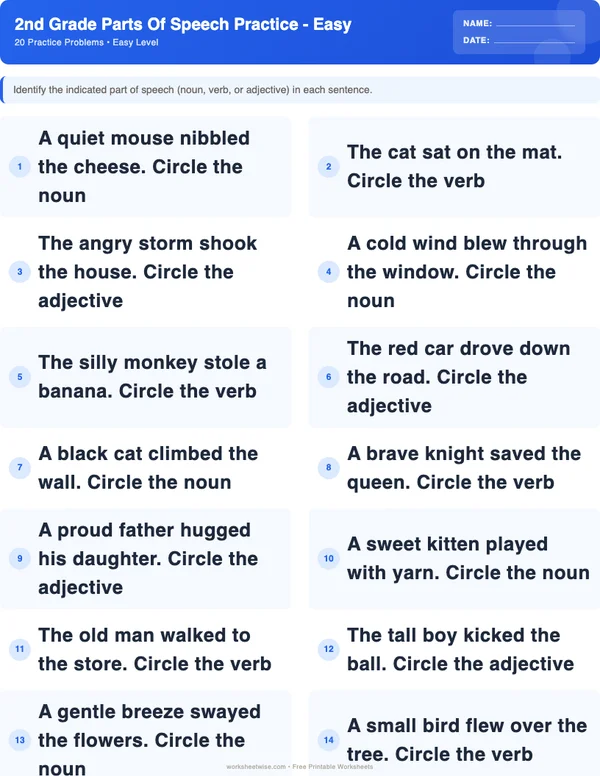
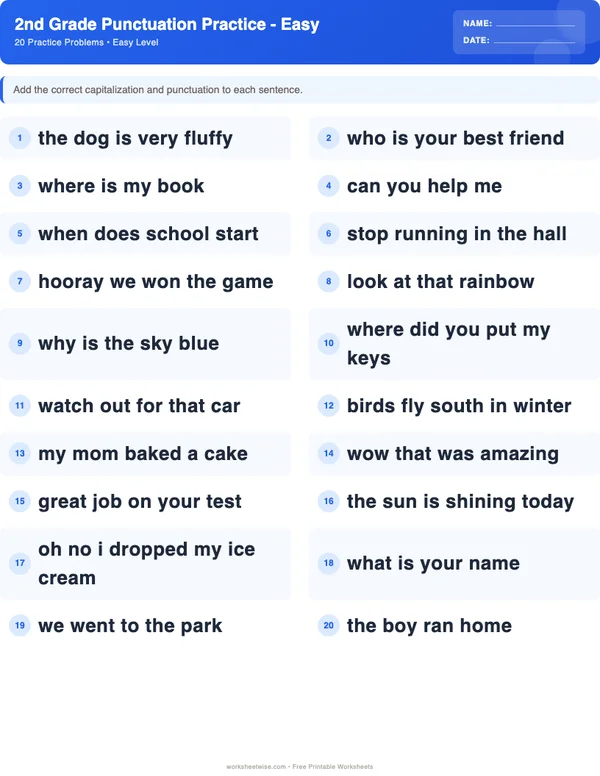
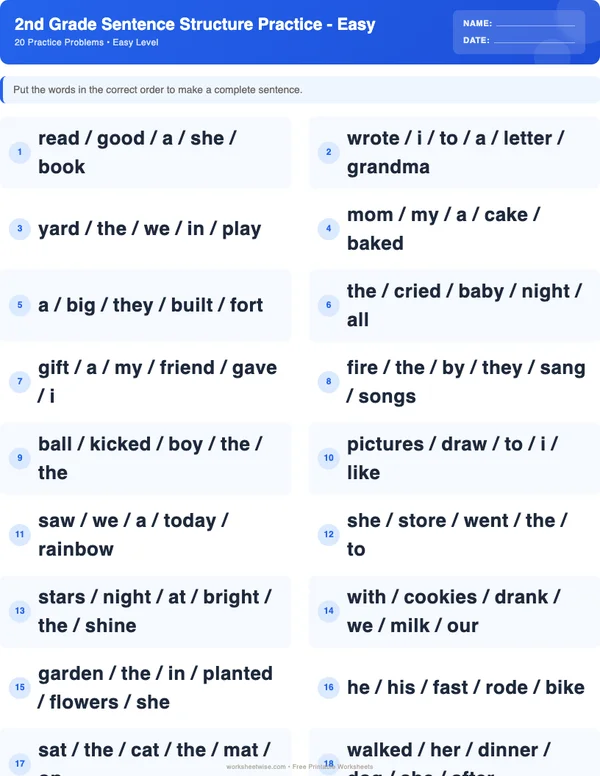
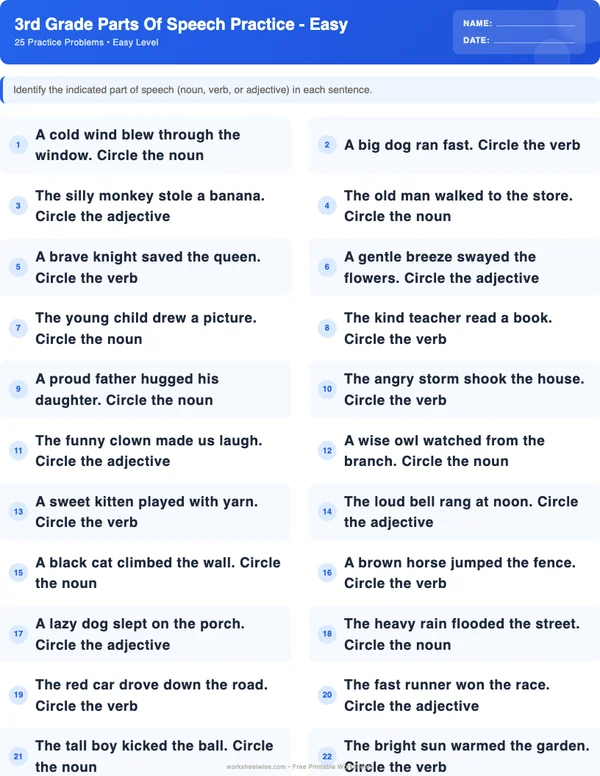
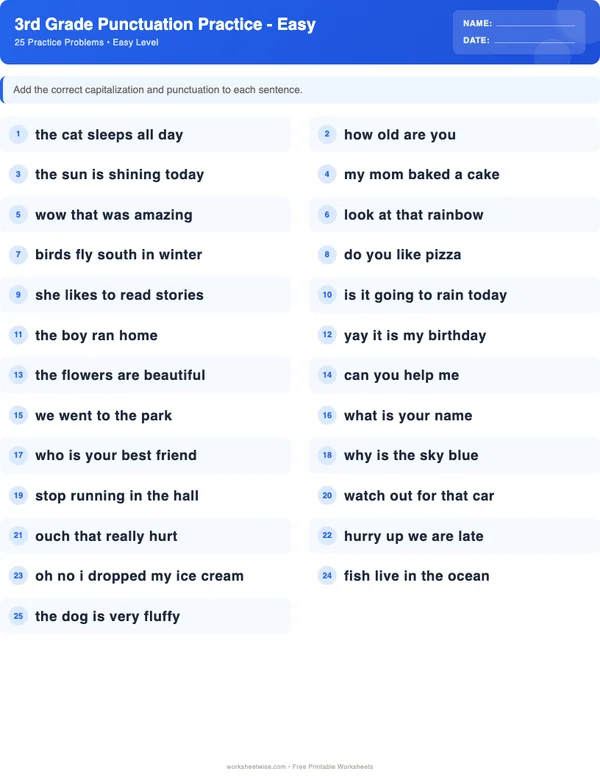
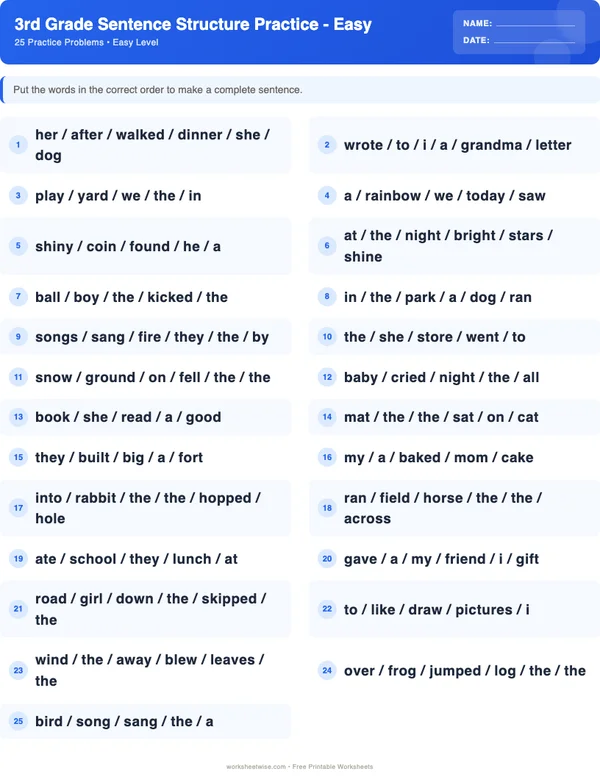
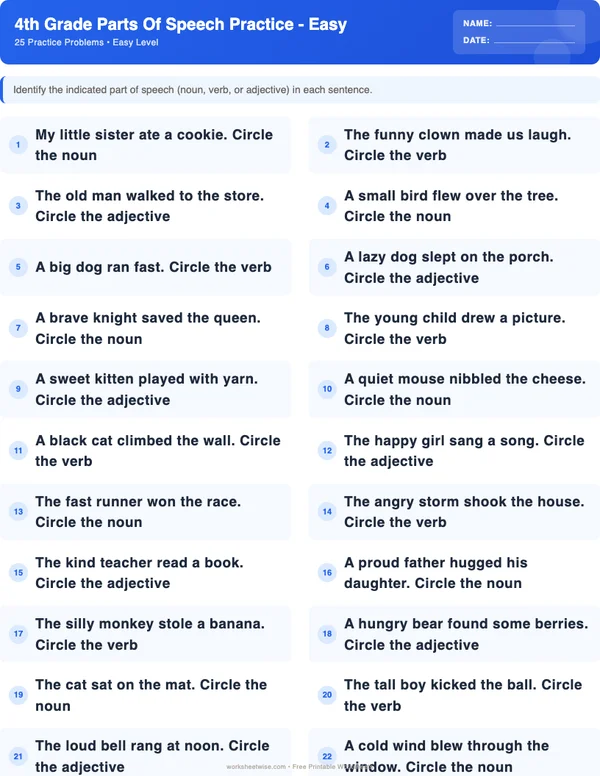
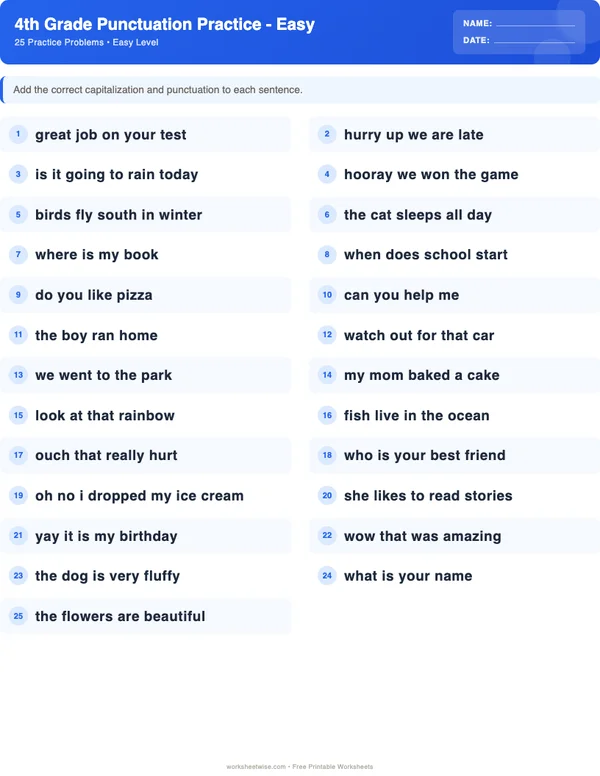
19 relevant free entry points are available. Each one includes a printable learner PDF and separate answer key.
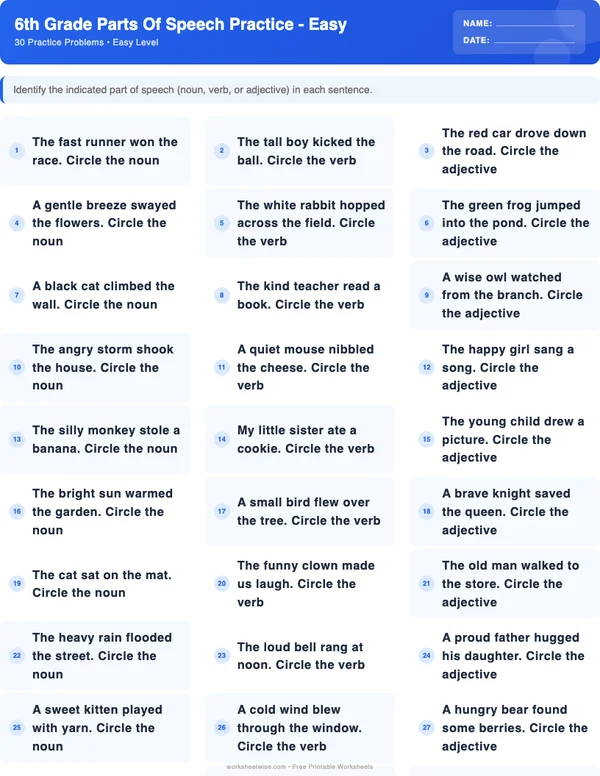
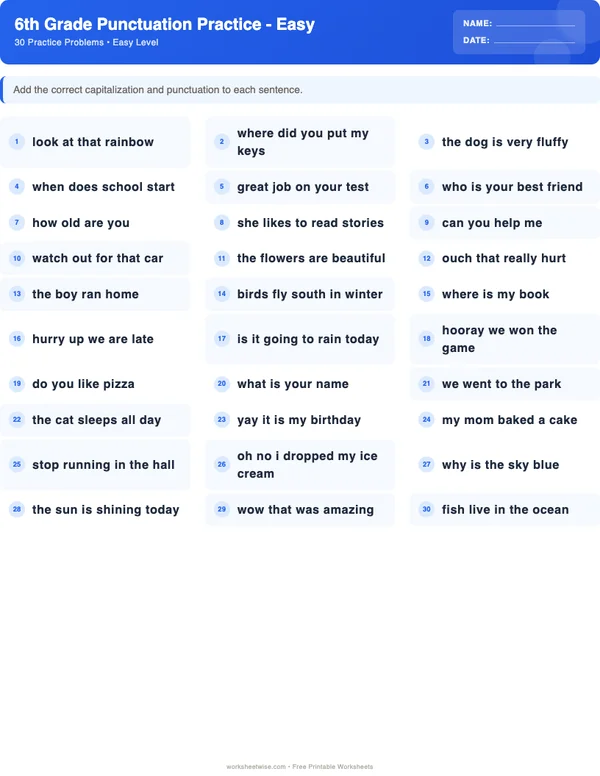
A useful practice loop
Print less. Observe more.
- Choose one skill and model the first item aloud.
- Use a short set and notice the learner’s strategy.
- Change the next task from the work you can see.
Need more than the free sheet?
Plus includes all 342 matching catalogue variations where available, plus saved deterministic generators and the worksheet designer.
See Plus membershipComplete guide
How to teach and practise tutoring grammar worksheets
3,238 words Updated 6 instructional visuals
Use Each Grammar Sheet as Evidence, Not as a Packet
Tutoring grammar worksheets work best when the tutor selects one narrow target, models the thinking aloud, watches how the learner responds, and uses the errors to choose the next sheet. Do not assign a mixed packet and wait until the end to count correct answers. In one-to-one tutoring, every response can reveal whether the learner misunderstood a grammar concept, misread the direction, lost track while writing, or simply made a mark in the wrong place.
The live WorksheetWise catalogue contains 342 grammar variants, including 19 free resources across seven grade labels and three topics: parts of speech, punctuation, and sentence structure. That range is useful only if selection remains disciplined. A tutor should normally begin with one sheet, preview its response demands, and decide in advance what evidence would justify moving forward, repeating the target differently, or stepping back.
A grade label describes an intended practice level, not a placement decision. Local curriculum sequences differ, and learners within the same grade may have very different experience with a particular convention. Select from the catalogue by inspecting the sentences, concepts, and required responses—not by assuming that a learner must complete every sheet attached to a grade.
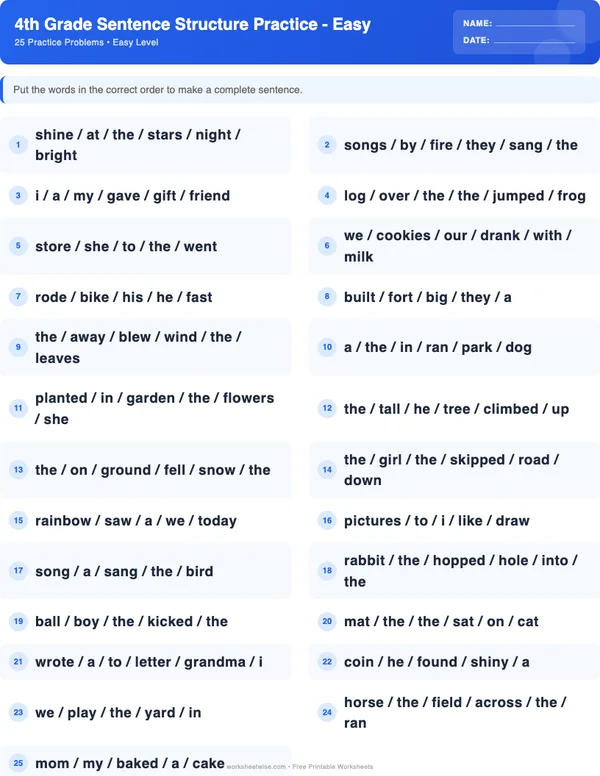
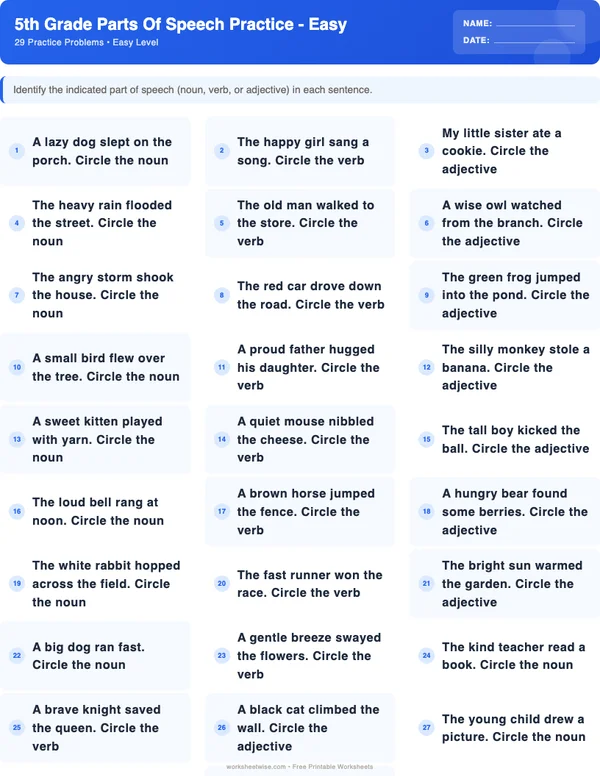
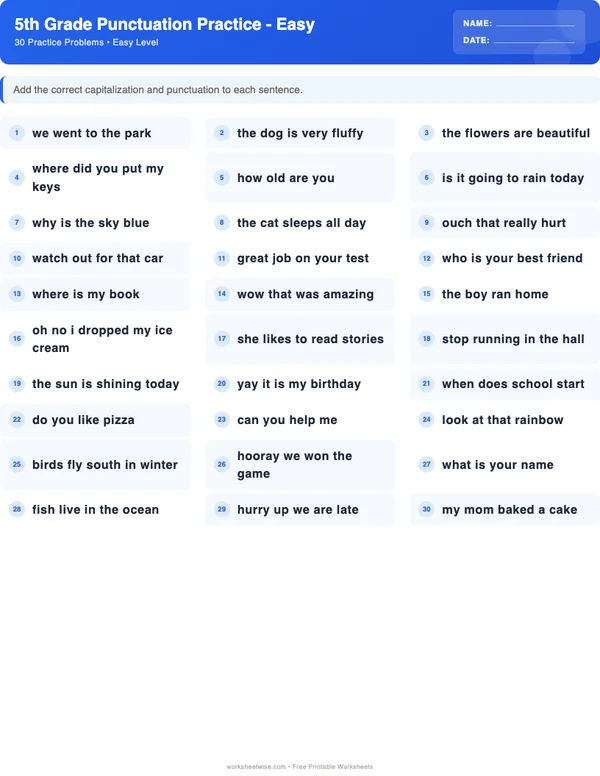
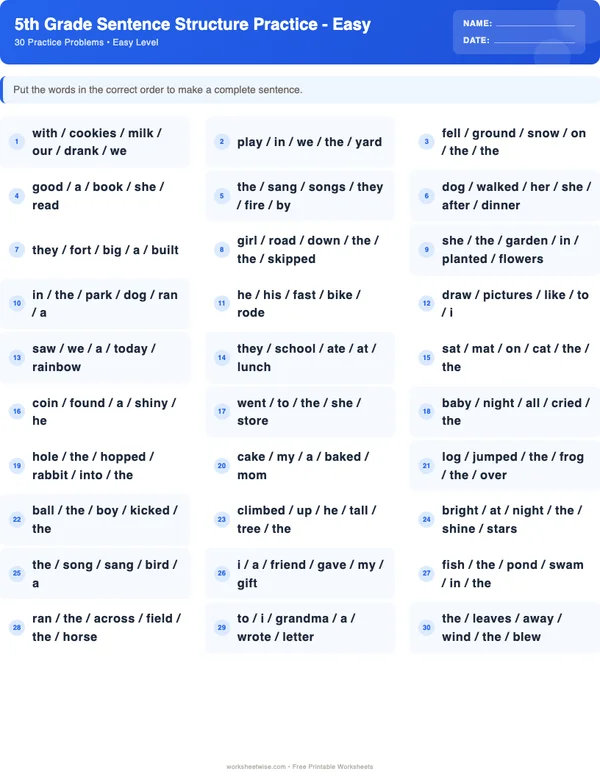
The catalogue’s representative free sheets are labeled “easy,” but that term should describe observable task features rather than a learner. In these resources, the early-grade examples have 12 problems and address foundational content such as end punctuation, nouns and verbs, or complete sentences. Representative third- and fourth-grade sheets have 14 problems, while the listed fifth-grade parts-of-speech sheet has 29. Before calling any task accessible, check whether it presents one rule at a time, uses short familiar sentences, supplies answer choices, and asks for identifying rather than generating. Those are meaningful features; “this is an easy learner” is not.
Choose Among the Three Live Grammar Strands
The three catalogue topics are related, but they do not provide interchangeable practice. Choose the strand that matches the error you actually observed.
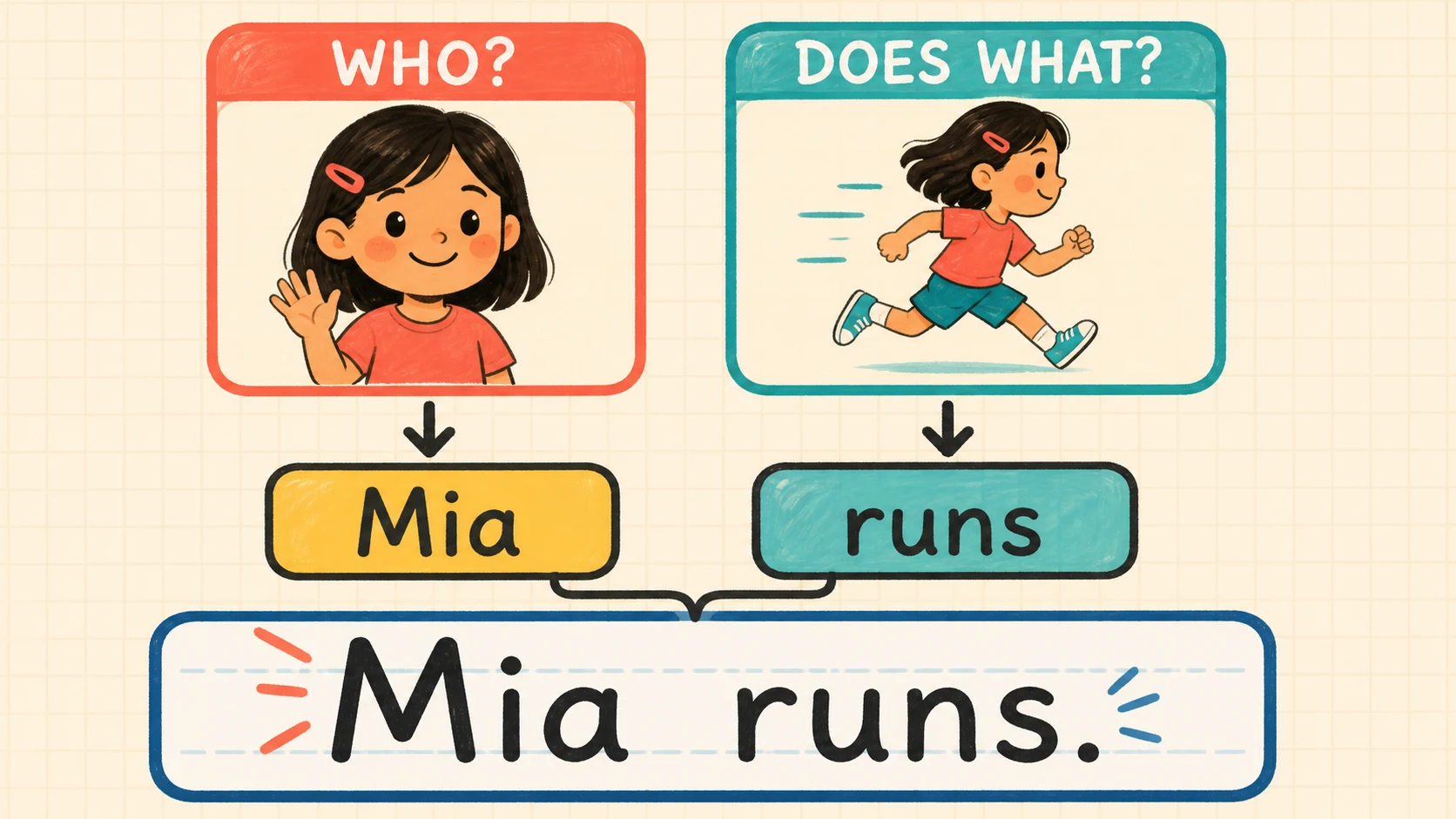
Use the map to locate the sentence-level relationship that needs attention before selecting another first-grade task.
Choose sentence structure when the thought itself is incomplete or poorly joined
Use a sentence-structure sheet when the learner has trouble deciding whether words form a complete sentence, locating who or what the sentence is about, supplying what that subject does or is, or separating two complete thoughts.
For example, consider the phrase “under the table.” It names a location but does not tell who or what is there or what happens. Ask:
- “Who or what is this about?”
- “What happens under the table?”
- “Can you say a complete sentence using these words?”
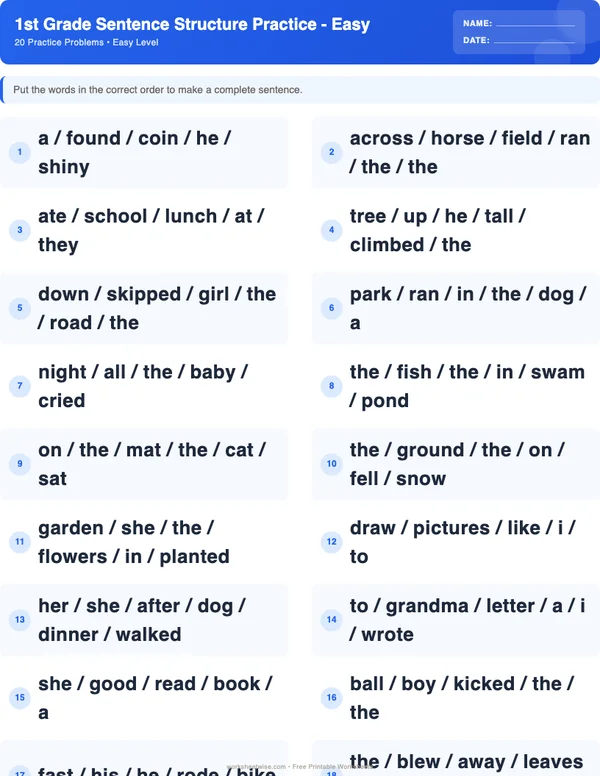
“The puppy slept under the table” is complete because the puppy supplies the subject and slept under the table tells what it did. This example belongs in tutoring sentence structure because the decision is about completeness, not capitalization or the part-of-speech label for under. The 1st Grade Sentence Structure guide and free sheet is a sensible catalogue entry point when the learner needs work with simple sentence construction.
Choose parts of speech when a word’s job is unclear
Use a parts-of-speech sheet when the learner can read the sentence but cannot explain how a word functions within it. Start with nouns and verbs when those categories are not secure. They allow concrete modeling: point to or name a person, place, or thing for a noun, and act out many verbs.
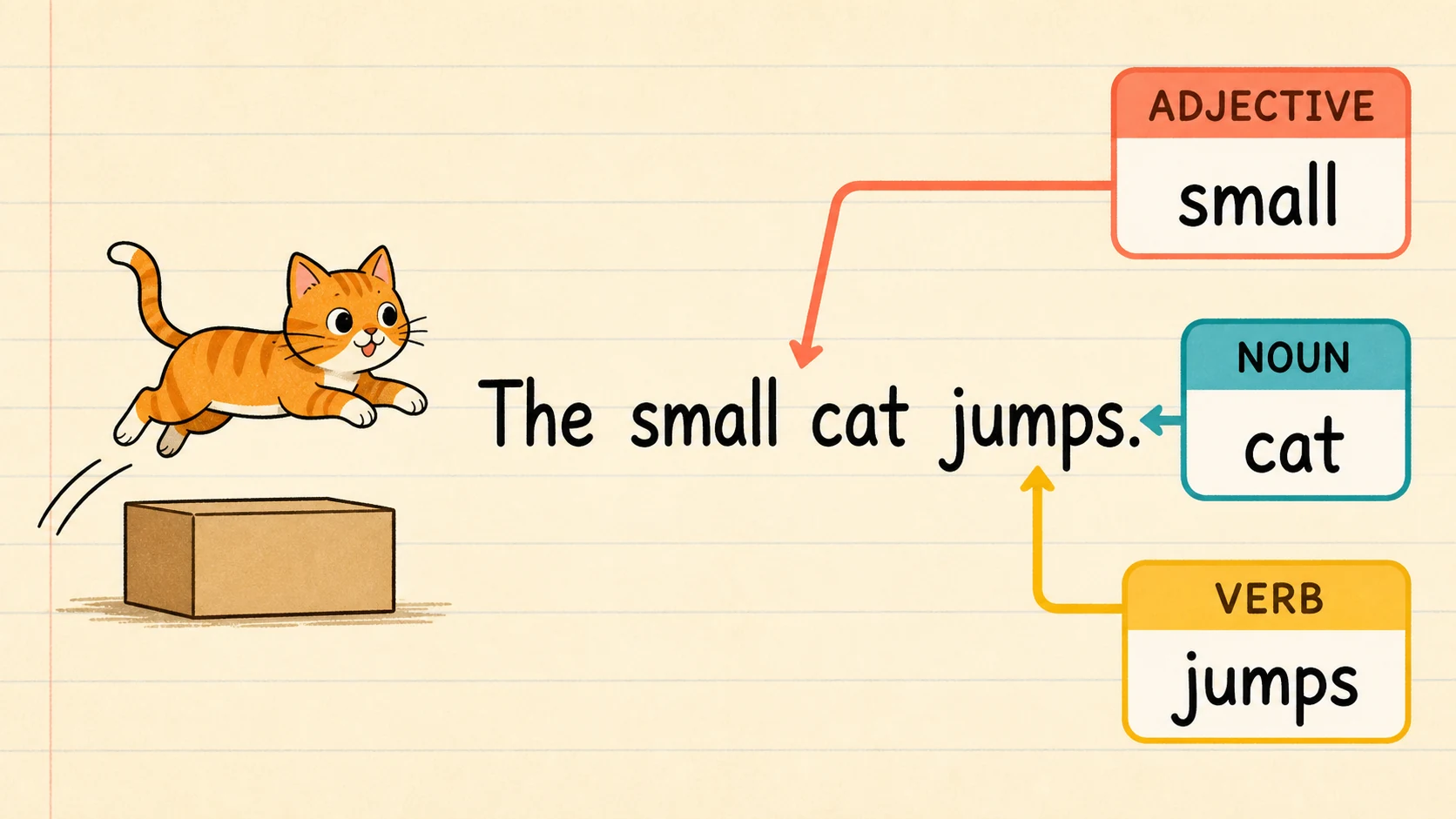
The concrete-to-written sequence shows how a tutor can make the grammatical decision visible before requesting an answer.
A checked example is “The light shines.” Here, light names the thing that shines, so it functions as a noun. In “Please light the candle,” light names the action, so it functions as a verb. In “I wore a light jacket,” light describes the jacket, so it functions as an adjective. The spelling has not changed; the sentence context has. This example belongs in parts-of-speech tutoring because it prevents the false rule that every word has one permanent label.
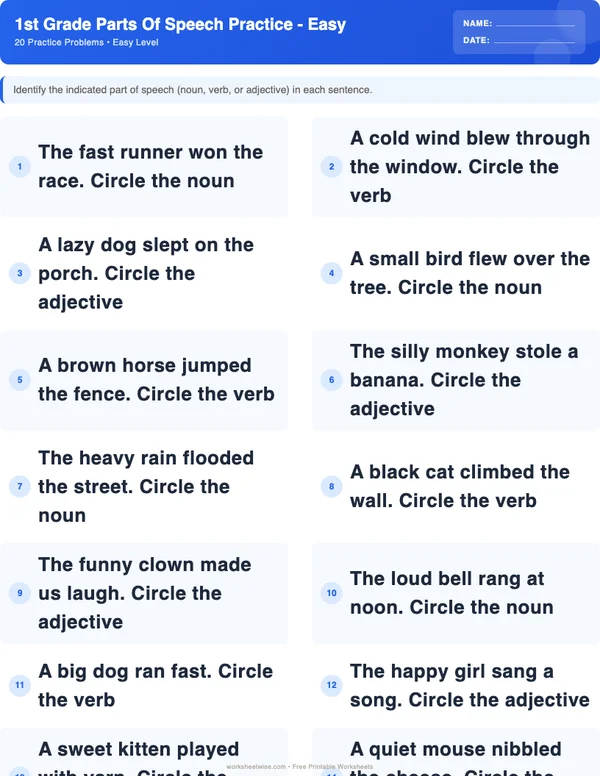
The 1st Grade Parts of Speech guide and free sheet provides 12 problems in its representative free resource. Use only enough items to see whether the learner can identify the word’s job and explain the evidence. Twelve unexplained guesses are less informative than four decisions accompanied by sound reasoning.
Choose punctuation when the sentence is understood but its signal is missing
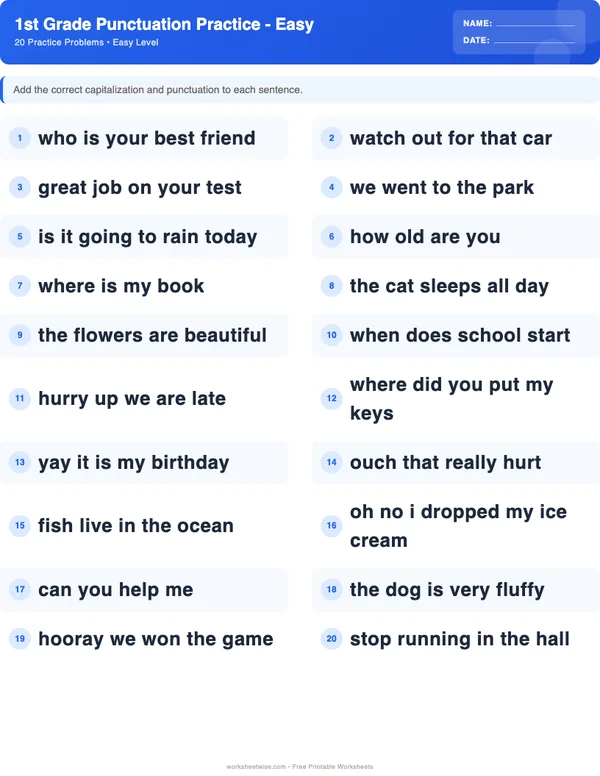
Use punctuation practice when the learner can express the intended meaning but does not mark it clearly for a reader. Early work should separate statements, questions, and exclamations through both meaning and voice.
For example:
- “The bus is here.” states information, so a period is appropriate.
- “Is the bus here?” asks for information, so it needs a question mark.
- “The bus is here!” expresses strong feeling or urgency, so an exclamation point can fit.
This example belongs in punctuation tutoring because all three strings concern the same event, while sentence form and communicative purpose determine the final mark. Do not teach “a rising voice always means a question” as a complete rule. Use the voice as an initial clue, then check whether the sentence actually asks something.
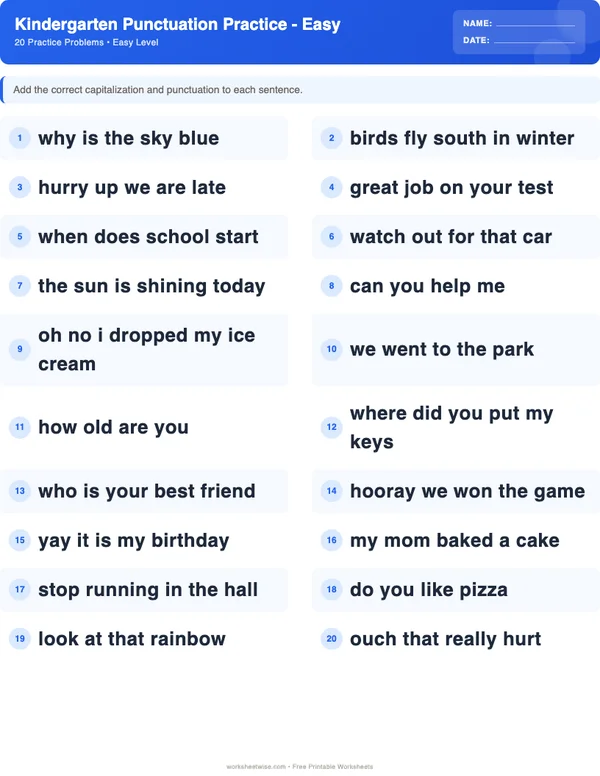
The representative Kindergarten Punctuation guide and free sheet contains 12 problems and focuses on an appropriate early decision: selecting or supplying punctuation. If that is too much handwriting, the tutor can read each sentence and let the learner point to a period, question mark, or exclamation point card. The grammar target remains intact.
Preview the Response Format Before the Session
A worksheet tests both grammar and the means of answering. Circling a noun, rewriting a sentence, inserting a mark, sorting words, and composing an original sentence place different demands on attention, reading, handwriting, and memory. A wrong response cannot be interpreted responsibly until the tutor knows which demands were present.
Before using a sheet, answer these questions:
- What exact grammar decision does each item require?
- Does the learner identify, select, correct, explain, or generate?
- Can an error be erased or revised without making the page confusing?
- Are two conventions tested at once?
- What oral response could preserve the grammar target if writing interferes?
- Which two items will I model, and which items will I reserve for independent evidence?
Suppose the target is identifying verbs. Circling runs in “Mia runs home” requires recognition. Completing “Mia ___ home” requires producing a word that fits both meaning and grammar. Writing an original sentence with a verb adds idea generation, spelling, handwriting, capitalization, and punctuation. These tasks are not equivalent, even though all mention verbs.
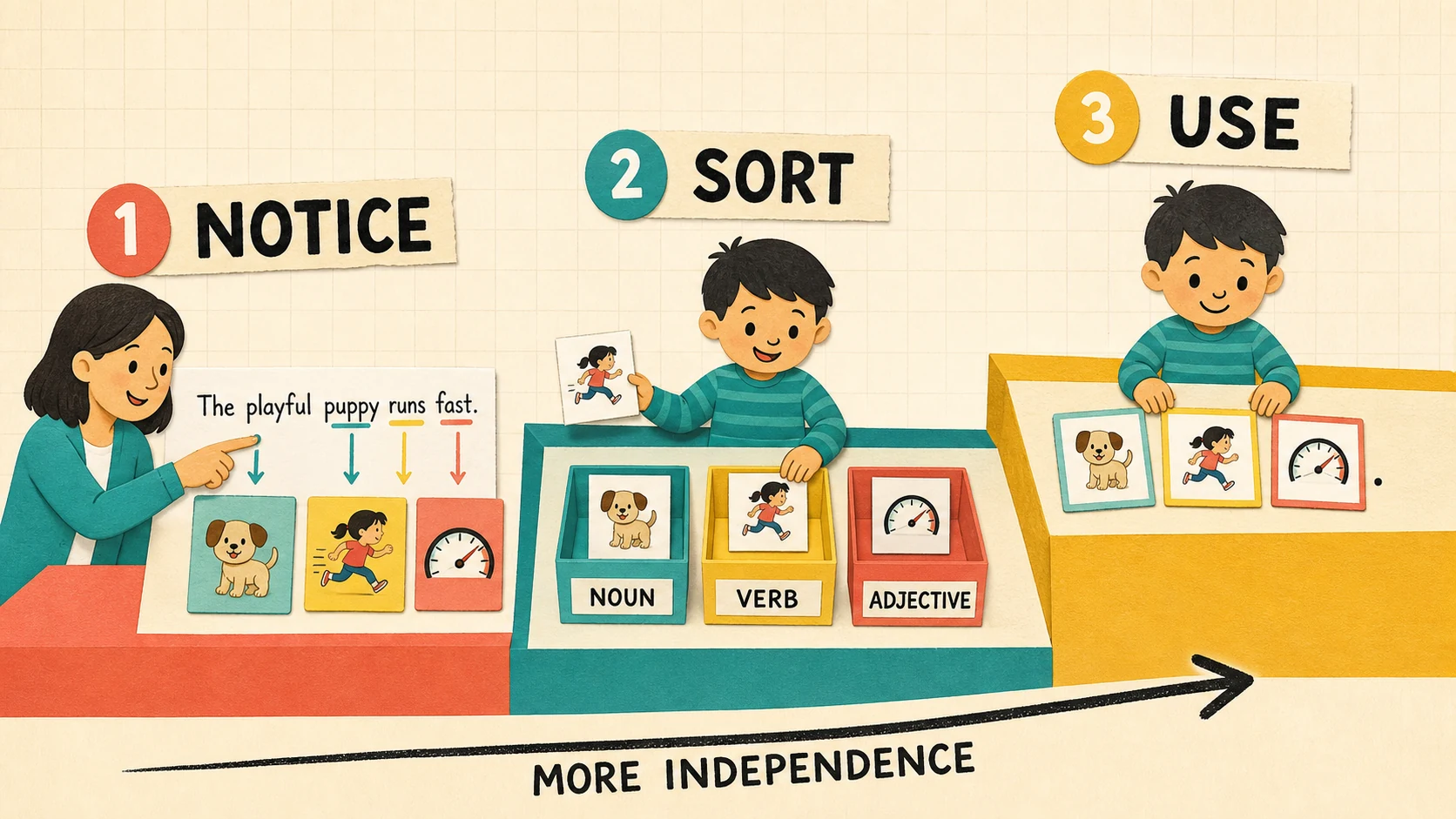
This progression helps a tutor change the amount of support without quietly changing the first-grade parts-of-speech target.
A useful sequence is to begin with a model, continue with a forced choice, move to identification in a sentence, and finish with one generated example. If the learner succeeds when choosing between two words but not when generating one, the next step should support retrieval—not restart the definition automatically.
Run a Short Think-Aloud Cycle
A tutoring routine should be repeatable enough that the learner knows what kind of thinking will be requested. It should also remain short enough for the tutor to interpret errors while they are fresh.
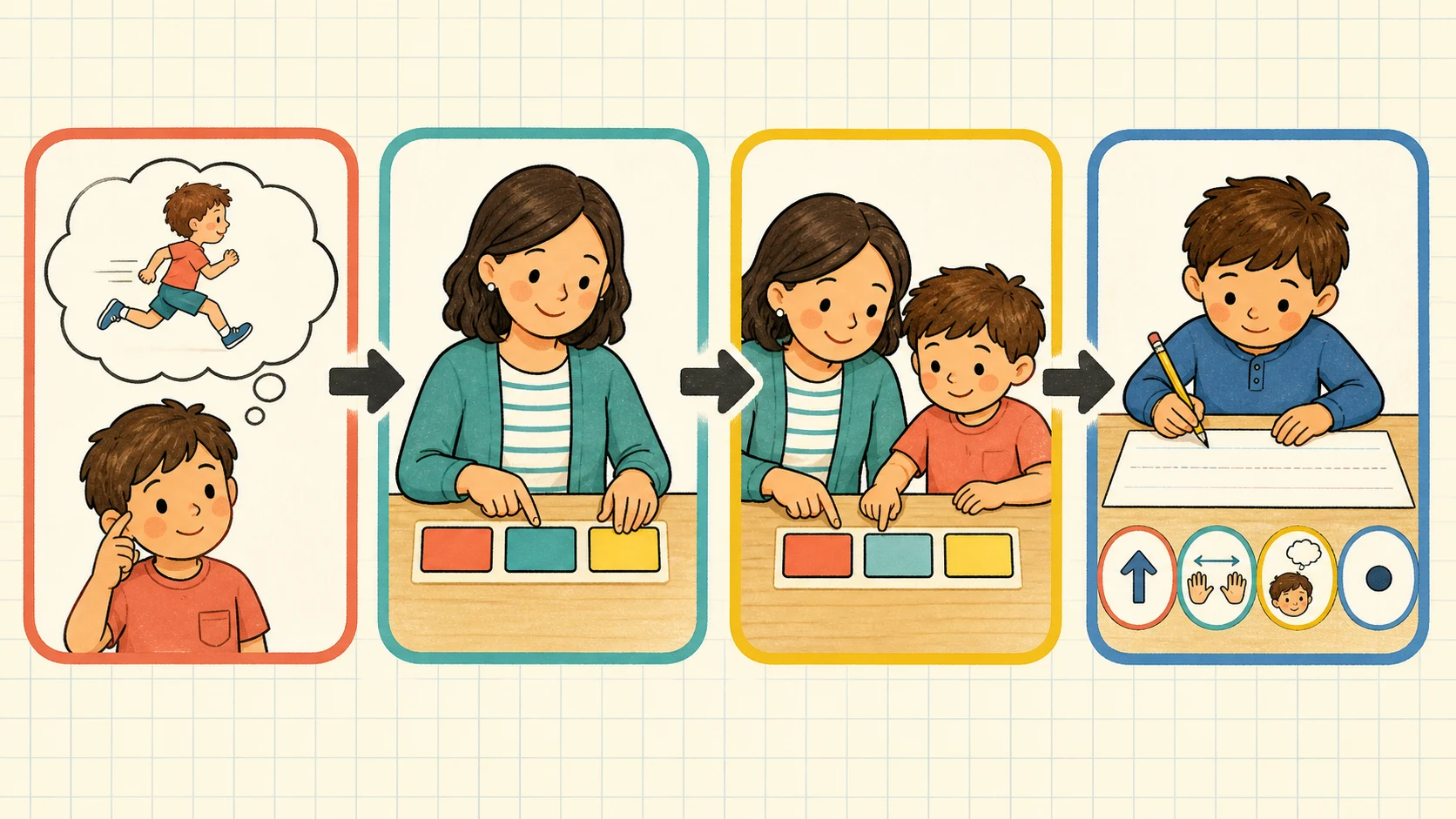
The routine turns a first-grade sentence-structure sheet into a cycle of modeling, observed practice, and a recorded next decision.
Begin with a one-item retrieval check
Present an unmarked example from the previous session. Do not reteach first. Ask the learner to solve it and explain the decision.
If the previous target was complete sentences, use “The birds sing.” Ask, “Is this complete? How do you know?” A sufficient explanation might be, “It tells who—the birds—and what they do—sing.” Correct performance without an explanation may still warrant one more check with different wording.
Model the grammatical decision, not just the answer
Cover the rest of the sheet and expose one item. Think aloud in concise steps:
“I am checking whether this is a complete sentence. First I ask who or what. I see the rabbit. Then I ask what the rabbit does. I see hops. Both parts are present, so I will mark it complete.”
Avoid narrating irrelevant details or delivering a long lecture. The model should reveal the decision rule the learner will soon use.
For punctuation, say, “This sentence asks where the keys are. The writer expects an answer, so I need a question mark.” For parts of speech, say, “In this sentence, paint tells what Ava does. That makes it a verb here.”
Solve together, then reduce the prompts
On the second item, invite the learner to supply each step. On the third, give only the initial cue: “What will you check first?” On the fourth, say nothing until the learner finishes. This gradual reduction lets the tutor see whether the learner can carry the reasoning independently.
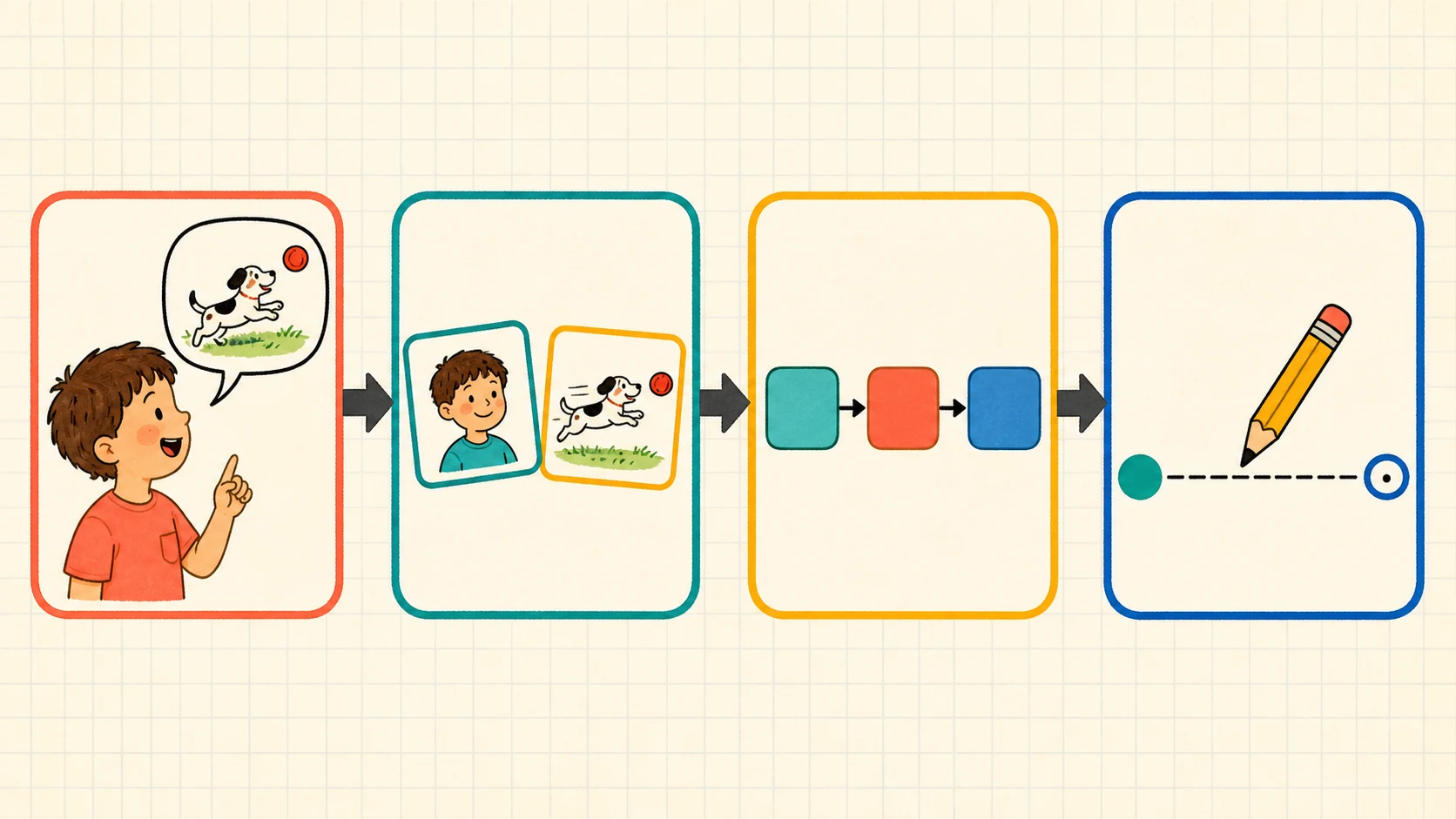
Move along this progression only when the learner, rather than the tutor’s prompts, is carrying the sentence-completeness check.
End with transfer and a note
Ask for one new oral or written example that is not copied from the sheet. If the target is sentence combining, present “The dog is big. The dog is brown.” Accept “The dog is big and brown” as a correct combination. “The big, brown dog” is not a complete sentence by itself; it can be used as a noun phrase inside one, such as “The big, brown dog barked.” This distinction matters because an attractive combination can still lose the predicate.
Record what the learner did without help, what prompt changed the response, and what will come next. “Needs grammar practice” is too vague to guide selection.
Interpret Errors Before Correcting Them
Immediate feedback should begin with classification, not judgment. A tutor who says “No, try again” may get a corrected answer but learn little about the original reasoning.
Concept error: the learner is applying the wrong grammatical idea
If the learner calls quickly an adjective in “The turtle moved quickly,” ask, “What does quickly tell us more about?” It describes how the turtle moved, so it modifies the verb and functions as an adverb. Contrast it with “The quick turtle moved,” where quick describes the noun turtle and functions as an adjective.
This checked pair belongs here because the word forms are closely related while their sentence jobs differ. If the learner consistently labels any describing word an adjective, the next sheet should contrast adjective–noun and adverb–verb relationships in full sentences. A broad sheet covering all eight parts of speech would obscure the misconception.
Direction error: the grammar may be secure, but the required action was missed
A learner might underline the noun when the direction says to circle the verb. Before reteaching nouns and verbs, ask the learner to read or restate the direction and then identify both words orally. If the oral distinctions are correct, change the response support: box the direction verb, model the first mark, or place a small legend at the top.
The next sheet can remain at the same conceptual level but should use one consistent marking action. This preserves grammar practice while reducing avoidable response confusion.
Production error: recognition is stronger than generation
A learner may correctly identify complete sentences but write “The noisy children.” Ask, “What did the noisy children do?” If the learner adds “laughed,” the resulting sentence—“The noisy children laughed”—has a subject and predicate. The next task should offer sentence stems or a subject paired with several possible predicates before requiring fully original sentences.
Performance slip: the learner can explain and self-correct
If the learner places a period after a clear question but immediately says, “That asks something; it needs a question mark,” treat the event differently from a repeated misconception. Ask for one nearby check item. If the learner applies the rule independently, continue; record the slip only if it becomes a pattern.
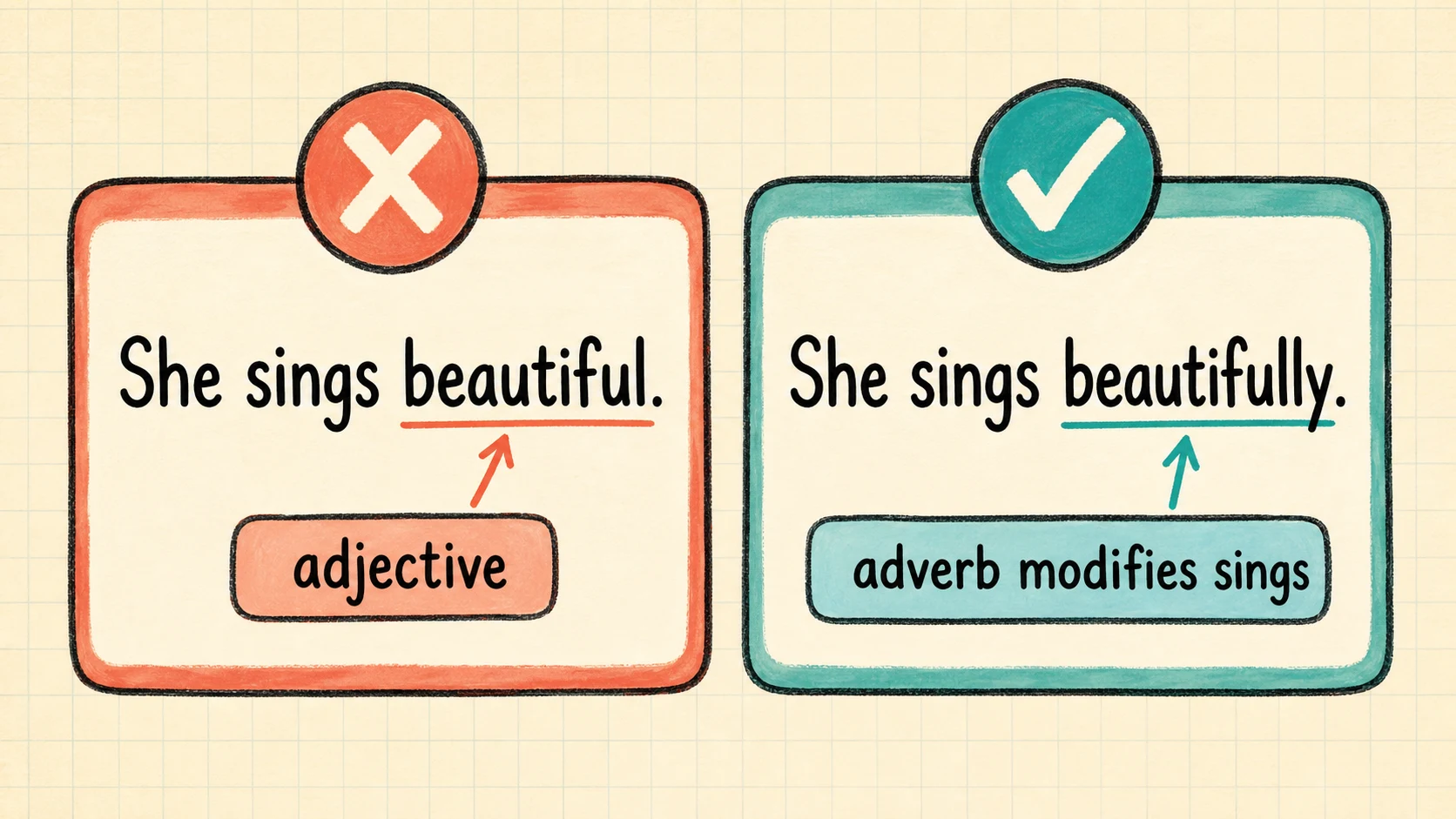
The upper-grade error map illustrates a principle that applies throughout tutoring: match the teaching response to the observed reasoning, not merely to the marked answer.
Make Feedback Immediate, Specific, and Usable
Feedback should tell the learner what was effective, locate the exact problem, and prompt the smallest productive revision. Prefer:
- “You found the subject, the fox. Now check what the fox does.”
- “You chose a question mark. Read the sentence and tell me what answer the writer expects.”
- “You called run a noun. In this sentence, what job is run doing?”
- “Your two ideas are both complete. Show me where the first thought ends.”
Avoid praise that hides the criterion, such as “Great grammar,” and correction that simply supplies the answer. A useful feedback sequence is notice, explain, revise, verify:
- Notice: Point to the relevant word, clause, or mark.
- Explain: Ask the learner to state the relationship or rule.
- Revise: Let the learner change the answer.
- Verify: Test the same idea in a different sentence.
The IES guide on teaching elementary students to be effective writers recommends explicit instruction in the writing process and teaching foundational writing skills, including sentence construction. That sourced guidance supports modeling and guided practice. The particular four-step feedback sequence above is an editorial suggestion for organizing a tutoring exchange; it is not presented as an IES protocol.
Similarly, the IES foundational reading guide emphasizes systematic instruction and opportunities to practice foundational skills. It concerns early reading rather than an evaluation of WorksheetWise. Here, its relevance is limited but practical: a learner who must labor to decode every grammar item may not reveal grammar knowledge cleanly. The tutor can read the sentence aloud while keeping the grammatical decision with the learner.
Let the Note Trail Choose the Next Sheet
A session note should make the next selection almost mechanical. Record evidence in five fields:
- Target: the exact relationship or convention practiced.
- Independent evidence: items solved and explained without prompts.
- Error pattern: the repeated response and likely source.
- Effective prompt: the least help that produced a correct revision.
- Next action: repeat, narrow, change format, or extend.
For example:
Target: Complete sentence versus fragment.
Independent evidence: Correctly explained 3 of 5 examples.
Error pattern: Accepted prepositional phrases as complete sentences.
Effective prompt: “Who or what is this about, and what happens?”
Next action: Use a first-grade sentence-structure sheet with short phrases and complete sentences; answer four items orally before writing.
Use the following selection rules:
- If the learner misses the same relationship in two differently worded items, choose a narrower sheet and model a contrast.
- If the learner corrects after rereading the direction, retain the target but simplify the response format.
- If the learner explains several varied items independently, select a sheet that requires correction or generation rather than identification.
- If reading or handwriting masks the grammar decision, keep the same sentences but allow oral answers, pointing, word cards, or dictation.
- If errors cross topics, choose the error that blocks meaning first. An incomplete sentence usually deserves attention before polishing its end punctuation.
The 29-problem representative fifth-grade parts-of-speech resource is not automatically a better challenge than a 14-problem fourth-grade resource. Length mainly changes endurance and the amount of evidence collected. Inspect whether the task moves from identifying familiar categories to resolving contextual ambiguity, explaining relationships, or revising a sentence.
Adapt Access Without Replacing the Grammar Target
An adaptation preserves the decision the learner must make. If the target is selecting end punctuation, reading the sentence aloud is an access change; telling the learner “your voice went up, so use a question mark” makes the decision for them. If the target is distinguishing nouns from verbs, using picture and action cards preserves the category decision; asking the learner merely to copy labels does not.
Useful adaptations include:
- Reduce the visible page to three or four items with a blank sheet of paper.
- Read directions and sentences aloud while the learner supplies the grammar answer.
- Let the learner point, sort cards, move punctuation tiles, or dictate a revision.
- Increase spacing or rewrite one item clearly when crowded marks interfere.
- Alternate oral and written items to separate concept knowledge from handwriting stamina.
- Supply a two-part cue such as “Who or what? Did what?” and fade it across items.
- Permit a brief movement demonstration for verbs or spatial prepositions.
Do not change the target silently. If a learner is supposed to generate a sentence but receives a complete sentence to copy, the task has shifted from composition to transcription. Record that change and return to generation through a supported intermediate task.
Age, when displayed elsewhere as a discovery aid, should not determine placement by itself. For children ages three and four, prioritize brief adult-led oral language, matching, manipulatives, and movement over desk work. A child might act out jump, match a period card to a spoken statement, or complete “The dog ___” orally. These activities should remain short and relational; a full elementary worksheet is not required to make the grammar idea visible.
Keep the Claims Within the Evidence
Worksheets can provide structured examples and a record of responses. They cannot diagnose a language, reading, attention, or learning condition. A persistent pattern can justify documenting the exact behavior and discussing it with the learner’s family or school team, but it does not justify assigning a diagnosis.
Do not promise that completing a certain number of sheets will produce a score increase, grade-level performance, or better writing. Grammar knowledge must eventually appear in reading and authentic composition, not only in marked exercises. Use a worksheet to isolate a decision, then ask the learner to apply that decision in a sentence from current writing.
The Common Core English Language Arts standards include grade-specific expectations for language conventions and sentence production. They can help adults understand one widely used sequence, but they did not assess WorksheetWise, and their grade labels should not override local curriculum or observed performance. Catalogue grade labels describe intended practice levels; local sequences differ.
The catalogue’s teaching suggestions—such as beginning parts of speech with nouns and verbs, connecting end punctuation to meaning and voice, and using “Who? Did what?” for sentence structure—come from the supplied WorksheetWise catalogue facts. The session routine, error categories, and note format in this guide are editorial recommendations. Keeping those two kinds of guidance distinct lets a tutor decide what fits the learner without turning a practical suggestion into an unsupported research claim.
Prepare the Next Session From One Observable Decision
End the current session by writing one sentence that names the next instructional move. Good examples are:
- “Next time, contrast fragments with complete sentences using four oral items before any writing.”
- “Next time, keep nouns and verbs but use the same marking symbol throughout.”
- “Next time, move from choosing end marks to punctuating three unmarked sentences.”
- “Next time, contrast light as a noun, verb, and adjective in full sentences.”
Then open the full worksheet library and choose one resource whose topic, sentence complexity, and response format match that note. Preview two items for modeling and reserve at least two different items for independent evidence. That single, documented choice is the practical alternative to printing another undifferentiated grammar packet.
Put it into practice
Use the guide with a real printable
Move from explanation to a short, observable practice task. Check the first item together, then adjust the next session from the learner's actual work.
Open the first free worksheetExplore a neighboring collection