Curated collectionAnswer keys includedPrint-ready PDFs
Tutoring Math Worksheets
Use one-to-one think-alouds, immediate error interpretation and a session-to-session note trail instead of assigning an undifferentiated packet.
Start with a real resource
Browse this worksheet collection
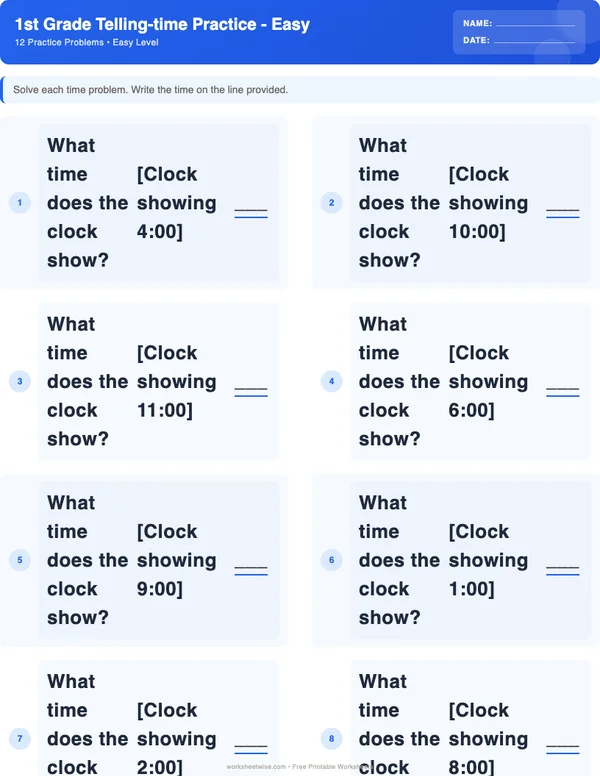
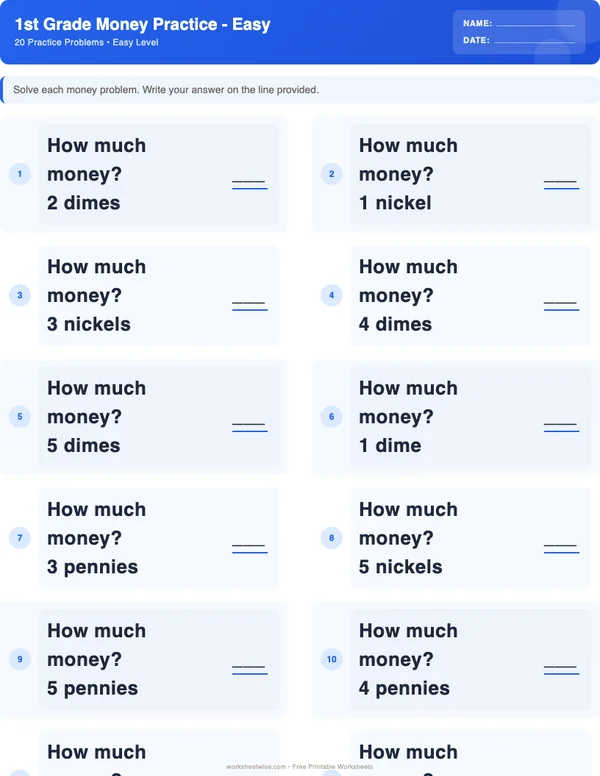
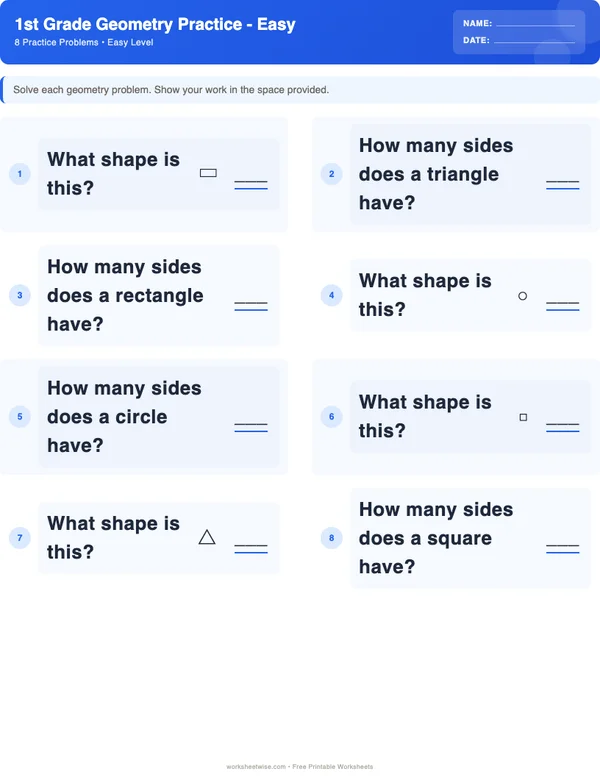
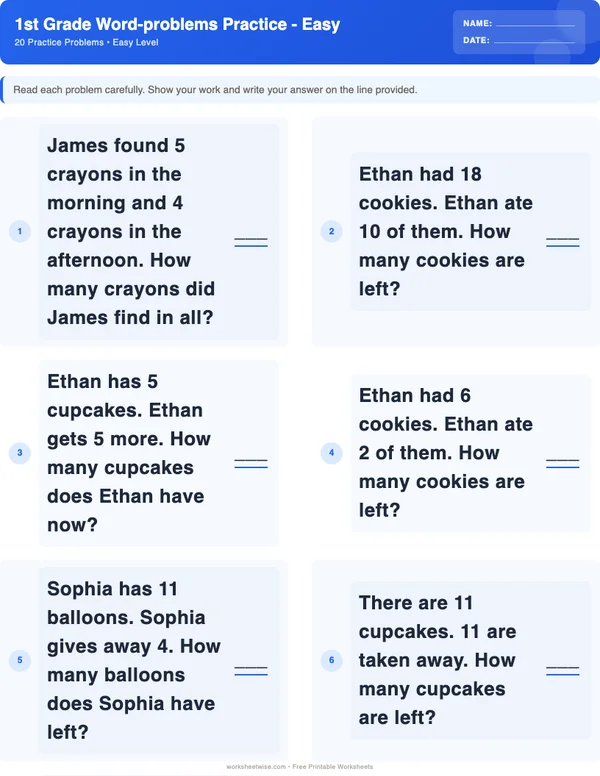
61 relevant free entry points are available. Each one includes a printable learner PDF and separate answer key.
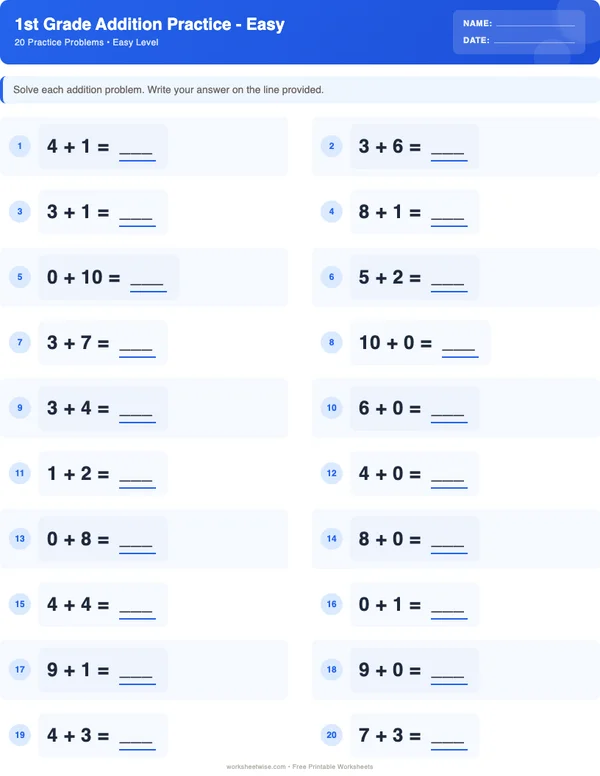
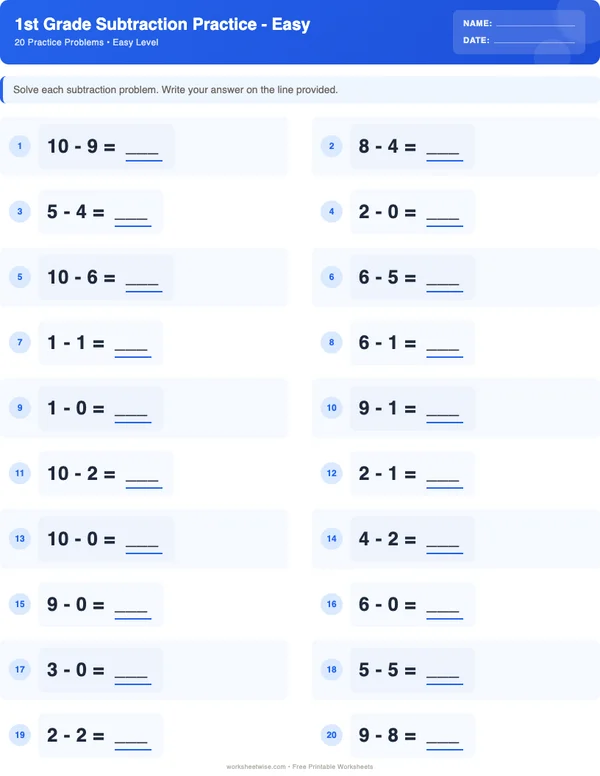
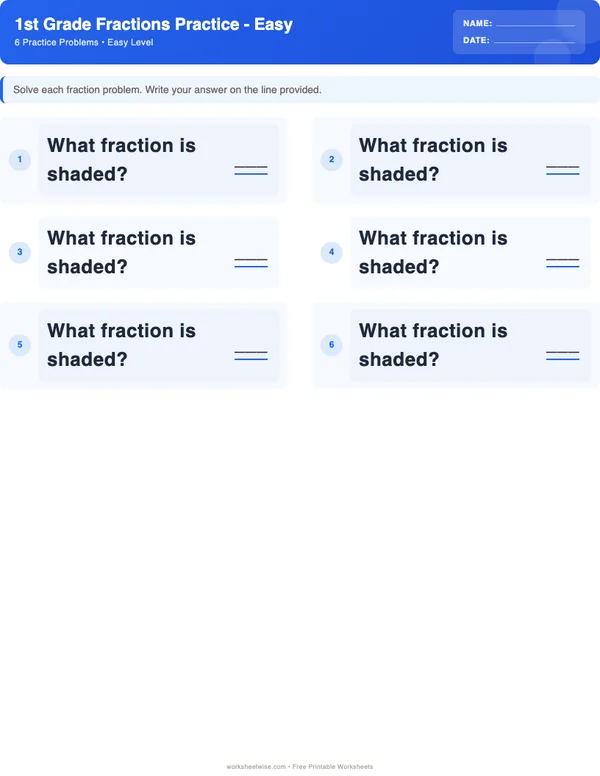
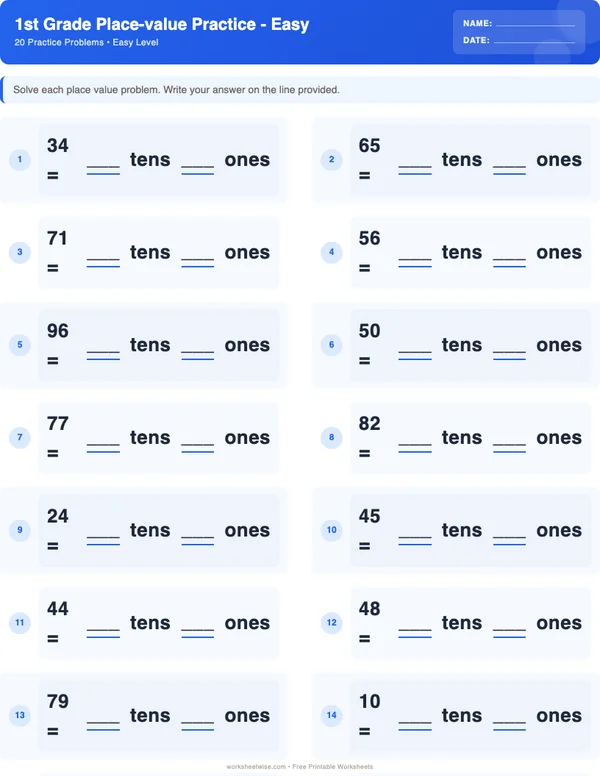
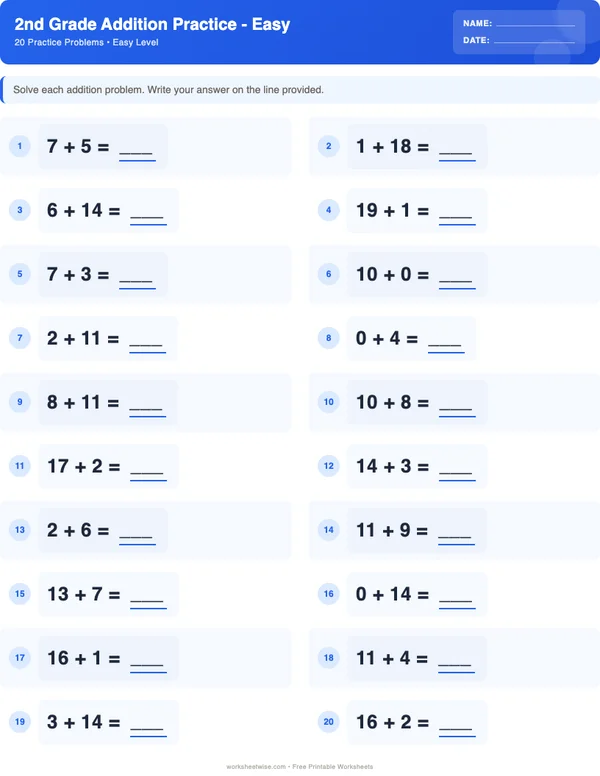
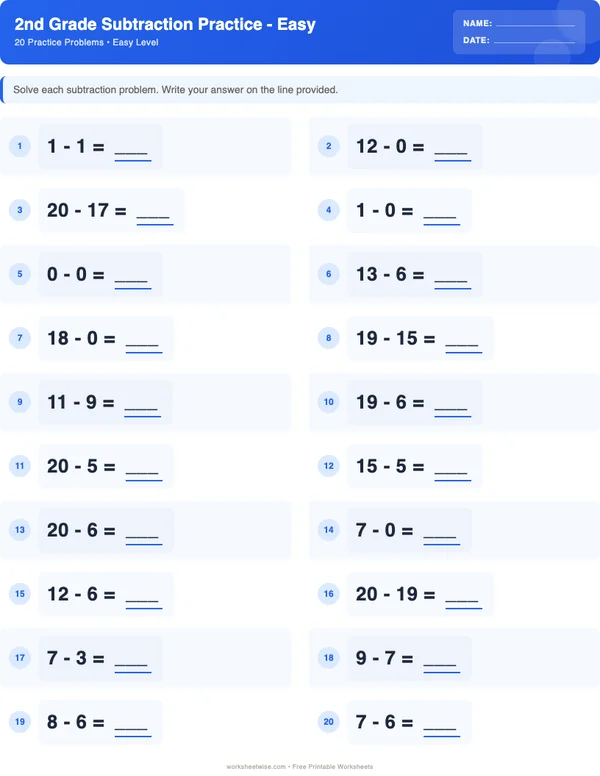
A useful practice loop
Print less. Observe more.
- Choose one skill and model the first item aloud.
- Use a short set and notice the learner’s strategy.
- Change the next task from the work you can see.
Need more than the free sheet?
Plus includes all 1098 matching catalogue variations where available, plus saved deterministic generators and the worksheet designer.
See Plus membershipComplete guide
How to teach and practise tutoring math worksheets
3,759 words Updated 6 instructional visuals
Turn a worksheet into a one-to-one math conversation
Tutoring math worksheets work best when the adult selects a small set of problems, asks the learner to think aloud, interprets errors immediately, and records what should happen next. Do not begin by handing over an undifferentiated packet. Begin with one mathematical question: “What do I need to learn about this learner’s reasoning today?”
A useful session has four parts:
- Present one problem without teaching it first.
- Ask the learner to model, solve, and explain.
- Change one task feature to test your interpretation of any error.
- Record the evidence and select the next sheet from that evidence.
This approach matters in math because a written answer can conceal very different reasoning. A learner who writes might have recalled a fact, counted backward, counted up from 5, or modeled a missing part. A learner who writes might have confused the operation sign, combined the numbers automatically, or misunderstood the story represented by the equation. The tutor needs to hear and see the method before deciding what to teach.
The catalogue currently provides 1,098 math variants, including 61 free resources across eight intended grade levels and 12 topics. Those counts describe available choices, not a recommended workload. The tutor’s job is to narrow the choice to the few items that will reveal or strengthen a specific idea.
Select by mathematical demand, not by packet length
Start with the target relationship, then inspect the response format and supports. “Twenty problems” is not a learning goal. A 20-item counting sheet, a 20-item addition sheet, and a 20-item place-value sheet can demand entirely different kinds of reasoning.
Use these selection criteria:
- Target: What relationship should the learner understand or use?
- Representation: Will the learner work with objects, pictures, diagrams, numerals, or words?
- Response: Must the learner count, match, draw, write a number, construct an equation, or explain?
- Number range: Are the quantities small enough that the target skill—not calculation overload—remains visible?
- Variation: Do successive items change in a way that exposes a misconception?
- Independence: Which support may be removed without changing the mathematics?
- Evidence value: What could a wrong answer tell you?
Grade labels describe an intended practice level; local curriculum sequences differ. Age is a discovery aid rather than a placement decision. Use age or grade to locate plausible material, then use observation to decide where to begin.
The free catalogue sheets described as “easy” should not be treated as sheets for an “easy learner.” Here, difficulty should be understood through observable task features: smaller quantities, fewer steps, familiar representations, direct prompts, generous visual support, or a limited response demand. A learner may handle large-number computation but need substantial support interpreting comparison stories. Another may explain a geometric property orally while struggling to write it.
For an initial meeting, choose three to five representative items rather than assigning a complete sheet. If those items produce consistent, well-explained responses, move to a variation that changes one feature. If they expose uncertainty, stay with the idea and change the representation.
Run a repeatable think-aloud routine
Preview the target before the learner arrives
Write a one-sentence session target in observable terms. “Understand subtraction” is too broad. Better targets include:
- Represent a take-away and a missing-part situation with objects.
- Explain why a teen number contains one ten and some ones.
- Identify a triangle by its properties when its orientation changes.
- Show why and name the same amount.
- Retell a word problem before choosing an operation.
Next, choose one opening item, one confirming item, and one contrast item. The contrast should preserve the target while changing a potentially distracting feature. For triangle classification, rotate the shape. For counting, scatter the objects. For subtraction, keep the numbers but change the story from removal to comparison.
Ask for a model before correcting
Give the learner quiet time, then use neutral prompts:
- “What is happening in this problem?”
- “Show it another way.”
- “What does this number represent?”
- “How did you decide?”
- “Where could we check that in your model?”
Avoid questions that disclose the procedure, such as “Don’t you need to borrow?” or “Shouldn’t you add?” The goal is to collect usable evidence before intervening.
If the learner cannot begin, offer the least intrusive support that preserves the target. You might read a word problem aloud if decoding is obstructing the mathematics, provide counters if the target is quantity rather than mental calculation, or enlarge a clock face if visual access is the barrier. Do not convert a modeling task into imitation by completing its decisive step.
Interpret, test, and teach immediately
When an answer is wrong, form a tentative interpretation, not a verdict. Test that interpretation with one carefully chosen prompt or problem.
Suppose a learner counts seven scattered counters as eight. Rearrange the same seven counters into a row and ask again. A correct recount in the row but not in the scattered set suggests that tracking objects, rather than saying the count sequence, needs attention. Have the learner move each object into a “counted” area while saying one number per object.
Immediate feedback should name the mathematical relationship:
“You said one number for each counter, but this counter was counted twice. Move every counted counter across the line so each object receives one number.”
That is more useful than “Try again” and less intrusive than recounting for the learner.
Close with retrieval and a note
End with one fresh item that uses the same target without copying the corrected problem. Ask the learner to explain what they will remember next time. Record the result while the reasoning is still clear.
A practical note can fit in four lines:
- Task: What the learner was asked to model or solve.
- Observed: Exact action, statement, or written response.
- Interpretation: A tentative mathematical explanation.
- Next: The representation and task variation to use next session.
Write “counted the third object twice when objects were scattered,” not “weak at counting.” The first statement is observable and actionable; the second is vague.
Compare live skills by what they reveal
Counting: test one-to-one correspondence, not recital alone
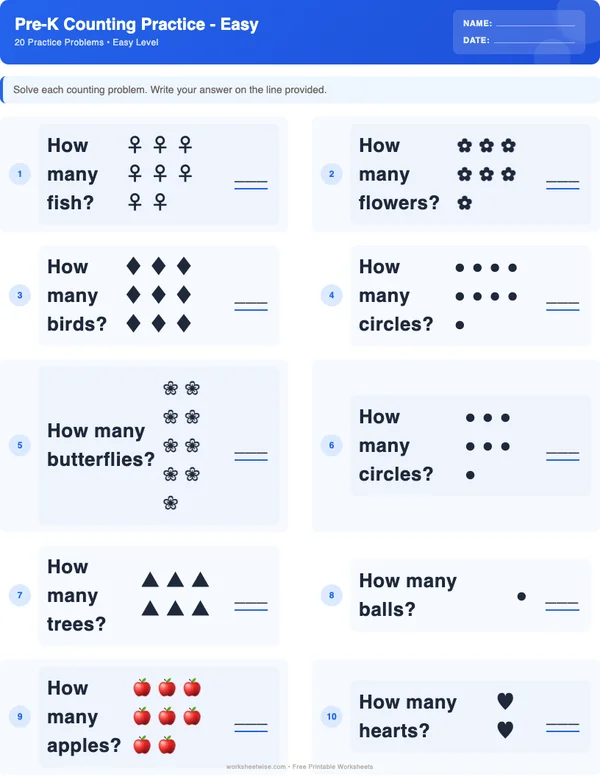
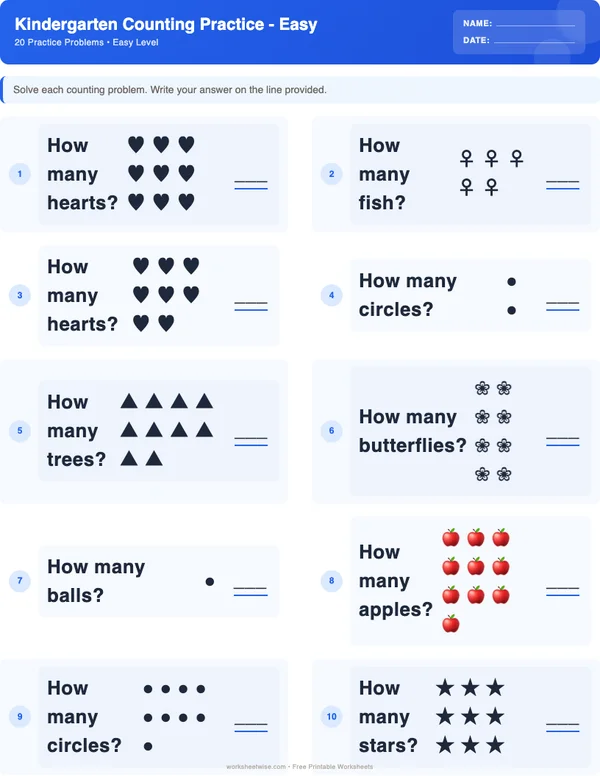
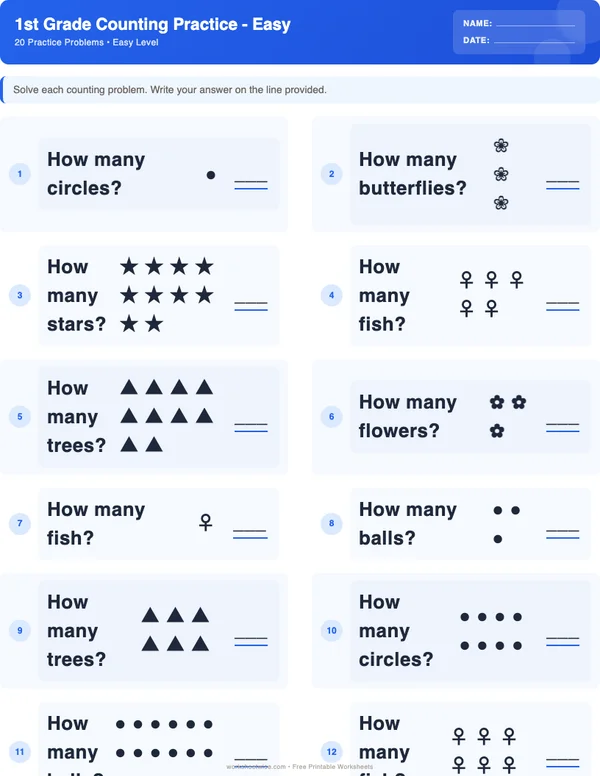
The live Pre-K and Kindergarten counting resources each contain 20 problems and include number sequences, missing numbers, and sets of objects. Those formats should not be treated as interchangeable. Reciting numbers in order tests a different demand from coordinating one spoken number with each object.
Checked example 1: Place seven buttons in a scattered arrangement. Ask the learner to count them, then to show how they know none was skipped or counted twice. Seven is the correct total if each of the seven buttons receives exactly one count word. This example belongs here because the catalogue guidance specifically distinguishes rote counting from one-to-one counting and recommends scattered sets as a revealing check.
If the learner says “one, two, three, four, five, six, seven” but touches one button twice and misses another, do not assign more missing-number sequences. The verbal sequence is present; object tracking is the next target. Use the Pre-K Counting guide and free sheet or Kindergarten Counting guide and free sheet only after deciding whether pictures or numerals will extend the observed skill.
For ages three and four, prioritize brief adult-led oral, matching, manipulative, and movement work over desk work. Count toy animals into a container, match a numeral to a small set, or take four jumps together. A worksheet image can supply a prompt, but the adult should keep the exchange short and concrete.
Addition: separate quantity composition from symbol following
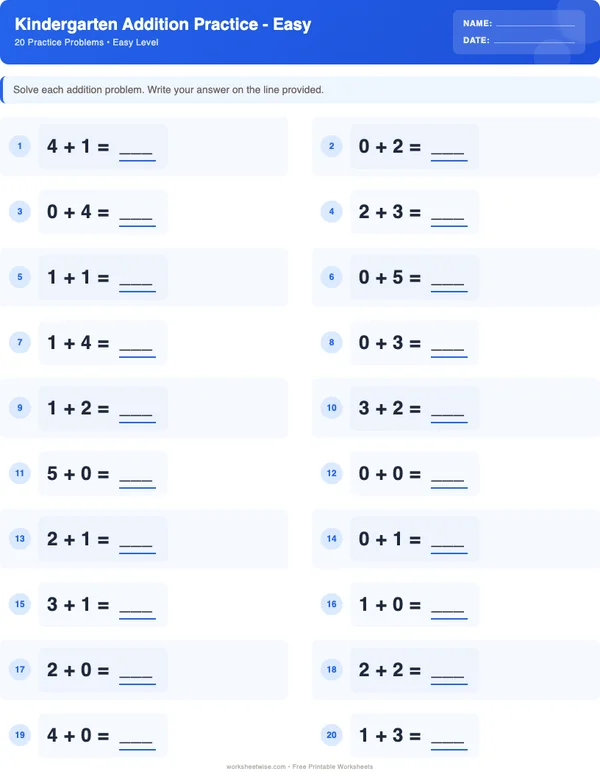
The representative Kindergarten addition resource contains 20 problems. Its catalogue guidance recommends moving from physical objects to drawings and then to abstract number sentences. That sequence gives the tutor a useful comparison across response formats.
Checked example 2: Ask the learner to solve . With counters, make 8 and 5. Move 2 counters from the group of 5 to complete a group of 10; 3 remain, so . Check by counting all 13 counters. This example belongs here because it tests composing 10, a relationship highlighted in the catalogue guidance, while making every movement visible.
If the learner obtains 13 with counters but writes without them, the next sheet should preserve addition within the same range and include ten frames or drawings. If the learner can explain using “8 needs 2, leaving 3,” the next task can reduce visual support or vary the addends. Do not respond to a single abstract error by retreating automatically to smaller numbers; first find out whether the difficulty lies in the quantity, the strategy, or recording the answer.
Subtraction: vary the situation before increasing the numbers
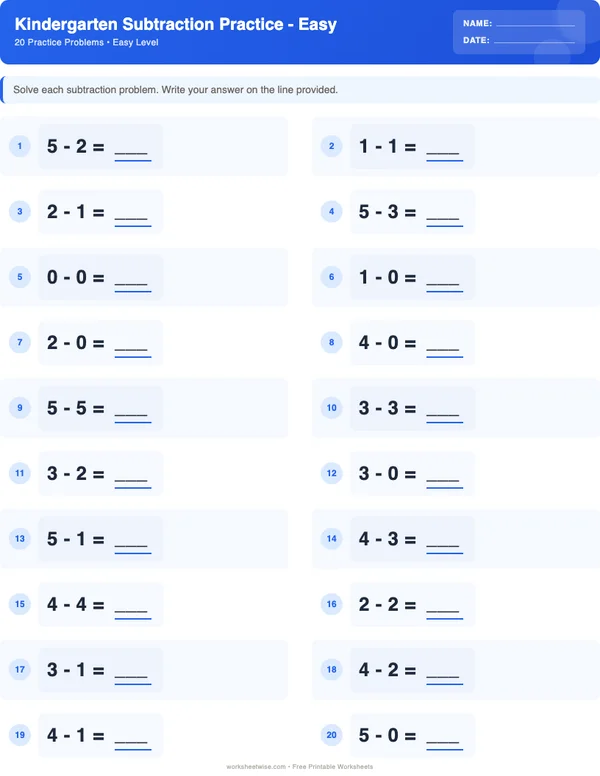
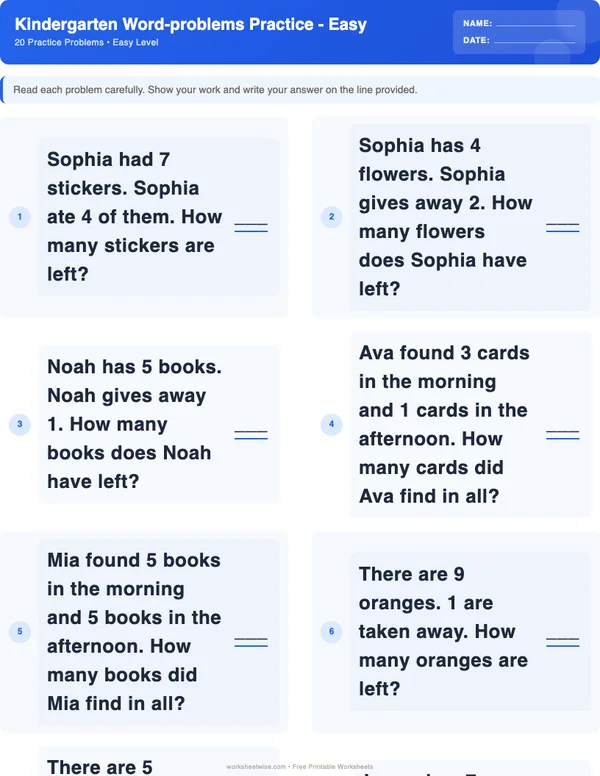
The live Kindergarten and first-grade subtraction resources each contain 20 problems. Catalogue guidance distinguishes removal, comparison, and missing-part situations. A learner can calculate familiar subtraction facts yet misrepresent one of those situations.
Checked example 3: Compare these prompts:
- “There are 8 birds. Three fly away. How many remain?”
- “Mia has 8 shells. Leo has 3 shells. How many more does Mia have?”
- “There are 8 seats. Three are filled. How many are empty?”
Each answer is 5 because , but the relationship is presented as removal, comparison, and missing part. This example belongs here because it keeps the numbers and operation constant while changing the mathematical situation.
If the learner solves only the fly-away story, the next sheet should not merely offer more subtraction facts. Choose or create items that contrast the three situations, allow acting out or bar models, and ask the learner to say what the 5 represents. The Kindergarten Subtraction guide and free sheet is a suitable entry point when that intended level and number range fit the observation.
Place value: require trades and explanations
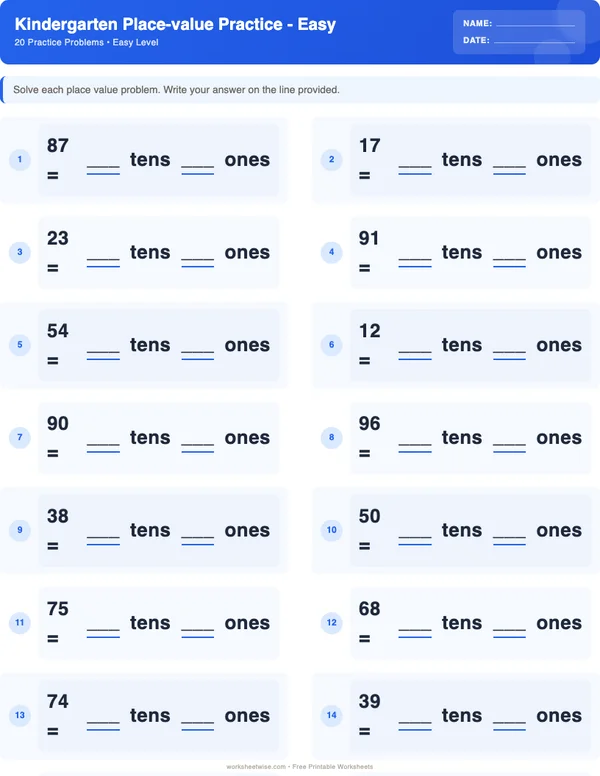
The representative Kindergarten and first-grade place-value resources contain 20 problems. Their catalogue descriptions include composing and decomposing numbers, while the teaching guidance emphasizes bundling and trading.
Ask a learner to build 14 as one bundle of 10 and four single objects. Then ask whether 14 single objects and one ten plus four ones are equal quantities. The answer is yes: regrouping changes the organization, not the total.
A written response such as “14 is 1 and 4” needs interpretation. Does the learner mean one ten and four ones but omit the units, or do the digits function as separate labels? Ask the learner to build 14 and point to what the 1 records. If the learner points to one object rather than one group of ten, return to bundling before assigning expanded-form notation.
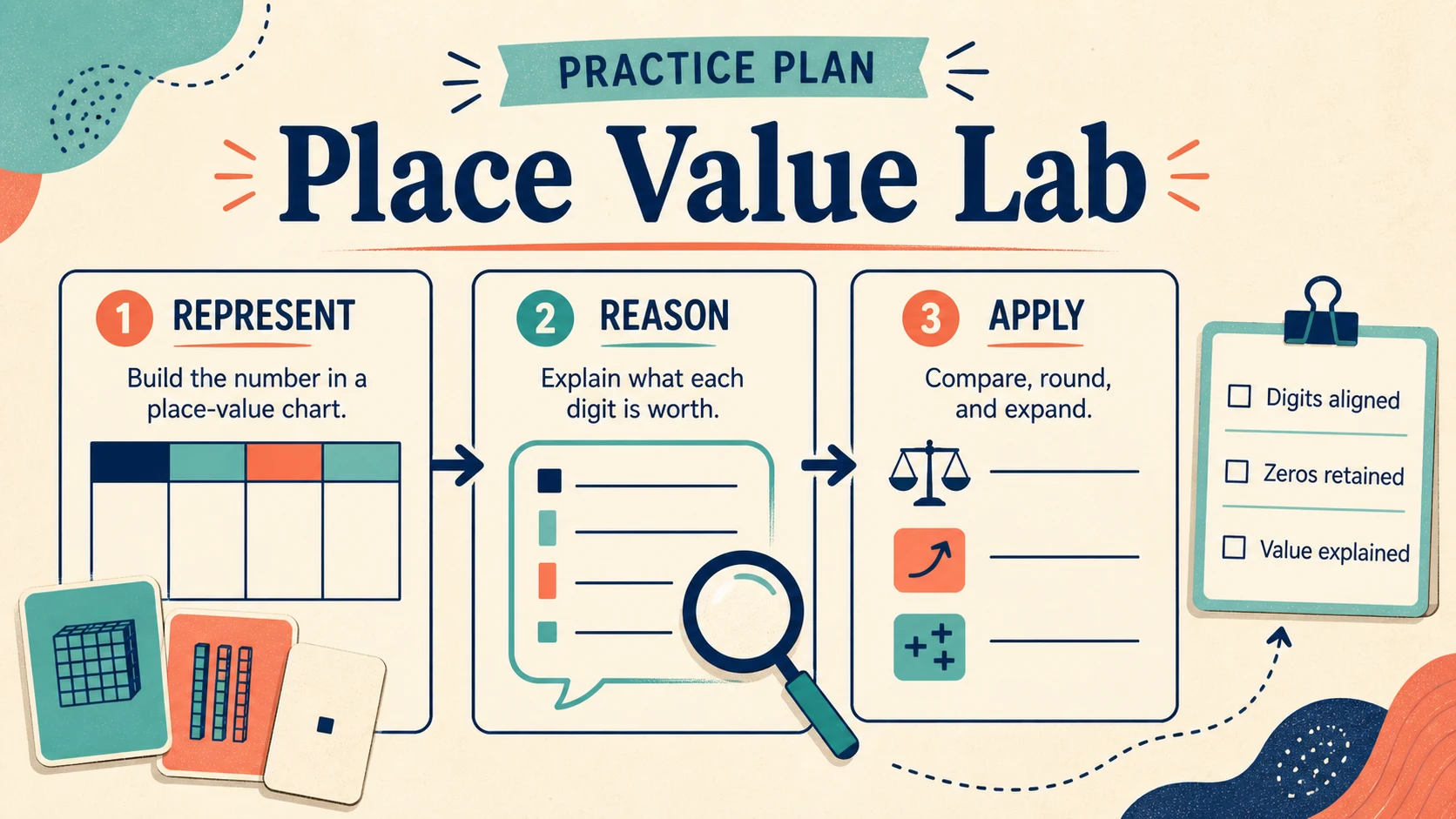
A two-week note trail should revisit the precise place-value relationship observed in tutoring, not repeat a full upper-grade packet unchanged.
The image describes a fifth-grade practice plan, but it should not be read as evidence that every fifth-grade learner needs the same sequence. Use its timeline as an organizational model: teach, revisit after a gap, and compare later reasoning with the original note.
Use geometry to expose definition-based reasoning
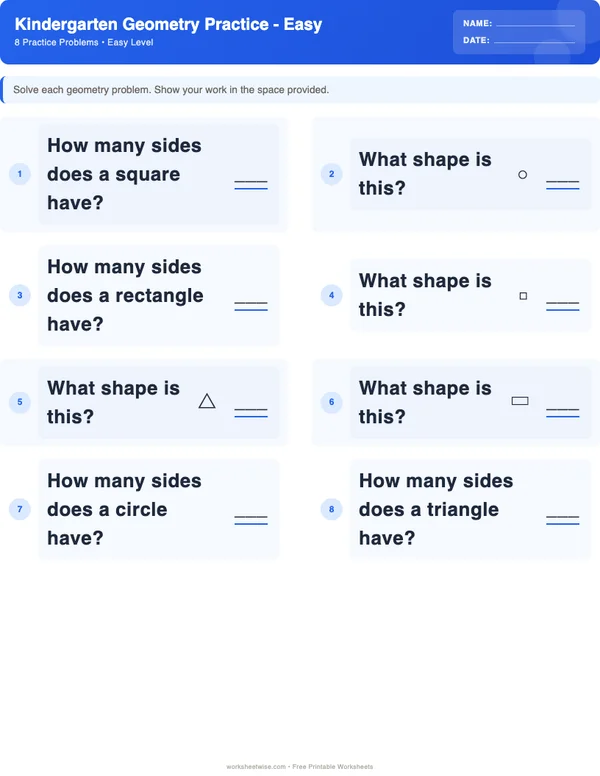
Geometry provides unusually clear opportunities to distinguish visual recognition from property-based classification. The representative Kindergarten geometry resource contains 20 problems and covers early shape identification and description. Its catalogue guidance recommends sorting, tracing, building, and viewing shapes in varied orientations.
Checked example 4: Show an upright equilateral triangle, a right triangle rotated so one side is vertical, and an obtuse triangle resting on a vertex. All three are triangles because each is a closed two-dimensional shape with three straight sides and three vertices. Orientation, equal side lengths, and visual “pointiness” do not determine membership. This example belongs here because the catalogue specifically warns that limited orientations can narrow a learner’s concept of a triangle.
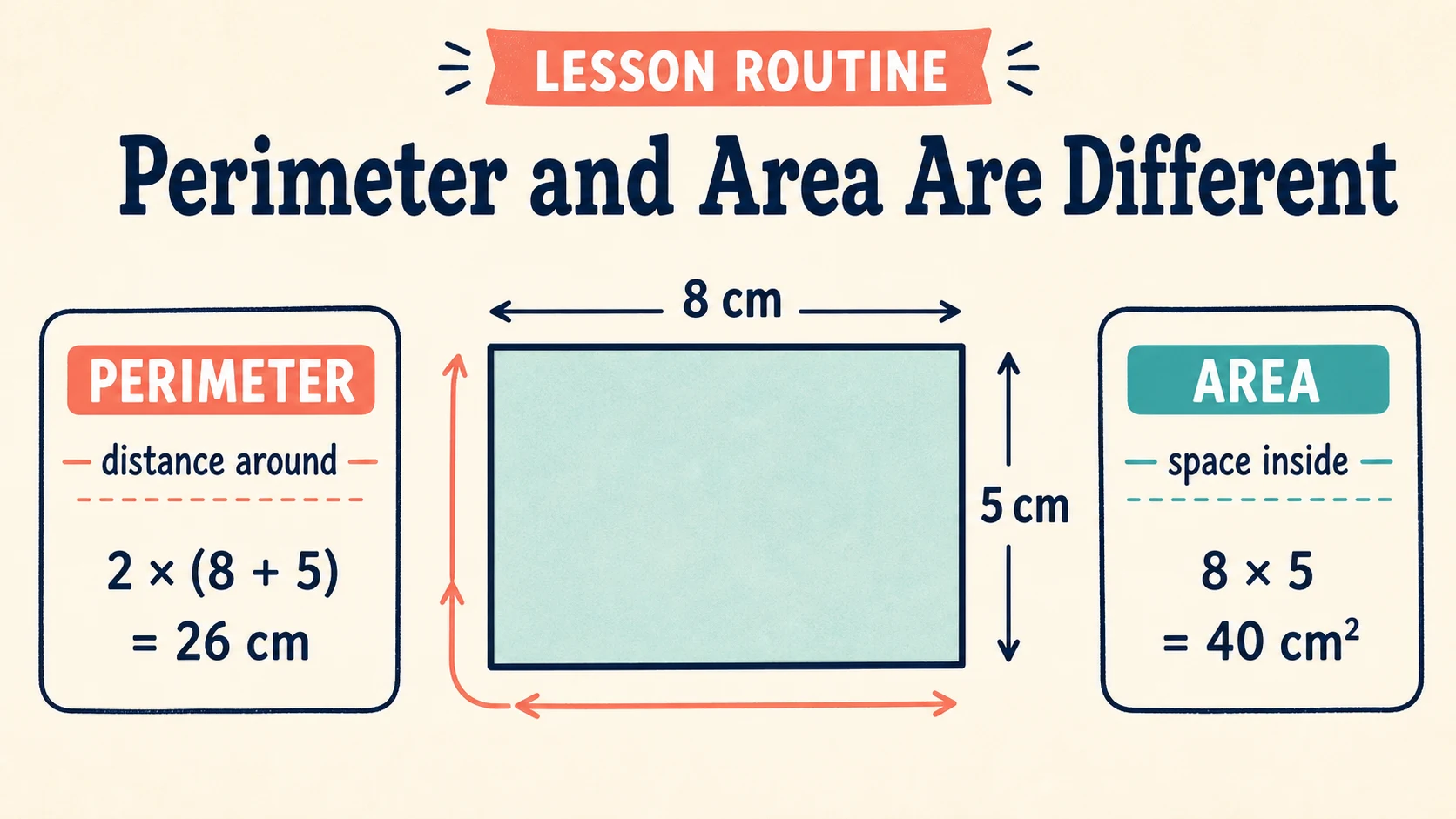
Use the third-grade geometry routine as a structure for model–explain–check cycles while selecting properties appropriate to the learner’s current task.
If a learner accepts only the upright triangle, do not say, “Look carefully.” Ask, “How many straight sides does each closed shape have?” Then present a non-example, such as an open three-segment figure, to test whether closure is part of the learner’s definition.
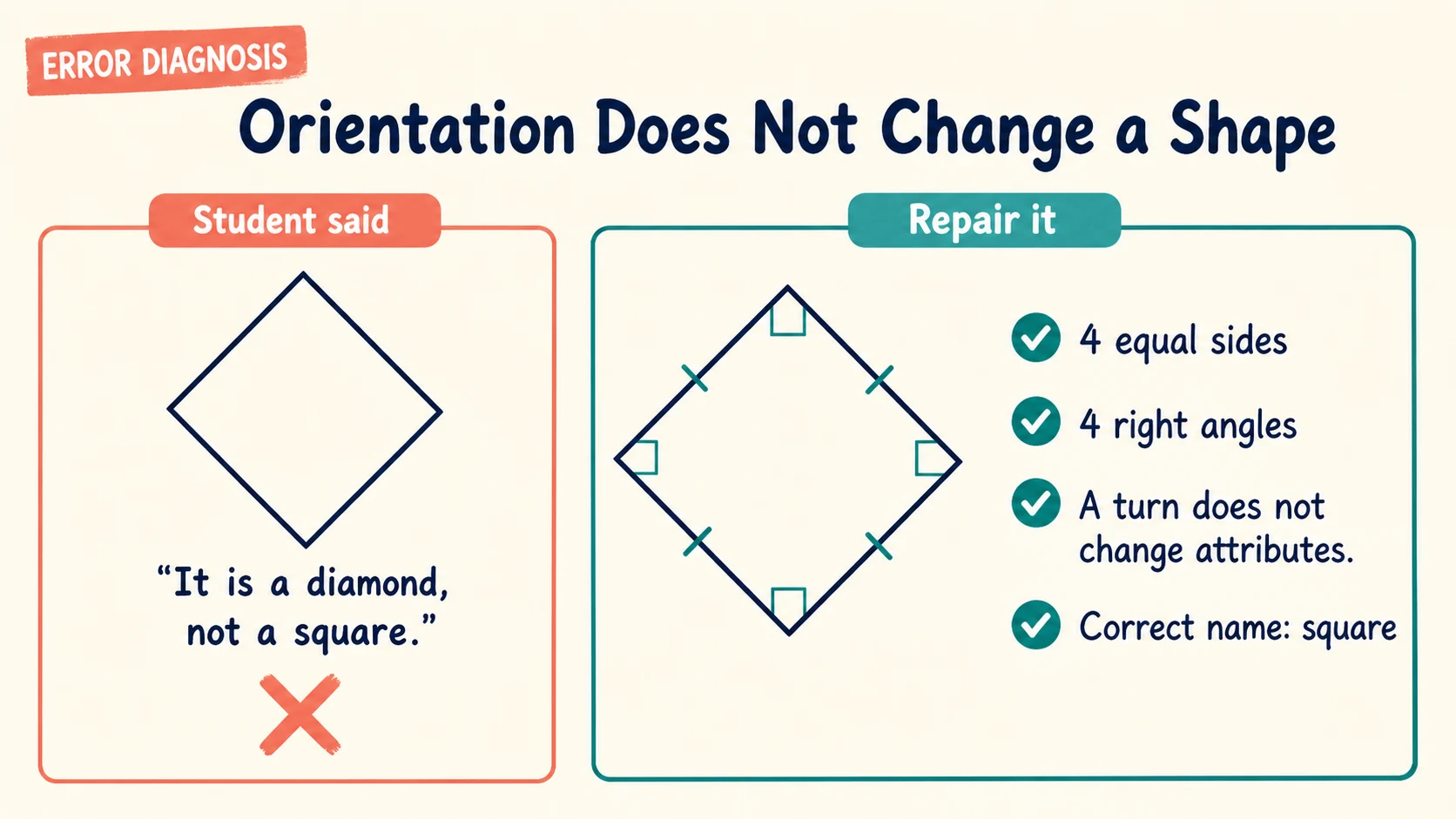
Pair each geometry error with a property-based follow-up so the next sheet tests the suspected rule rather than supplying more look-alike shapes.
The Kindergarten Geometry guide and free sheet can support early naming and matching. Preserve the target when adapting: allow the learner to point or sort instead of write if the target is classification, but do not name the shape for the learner.
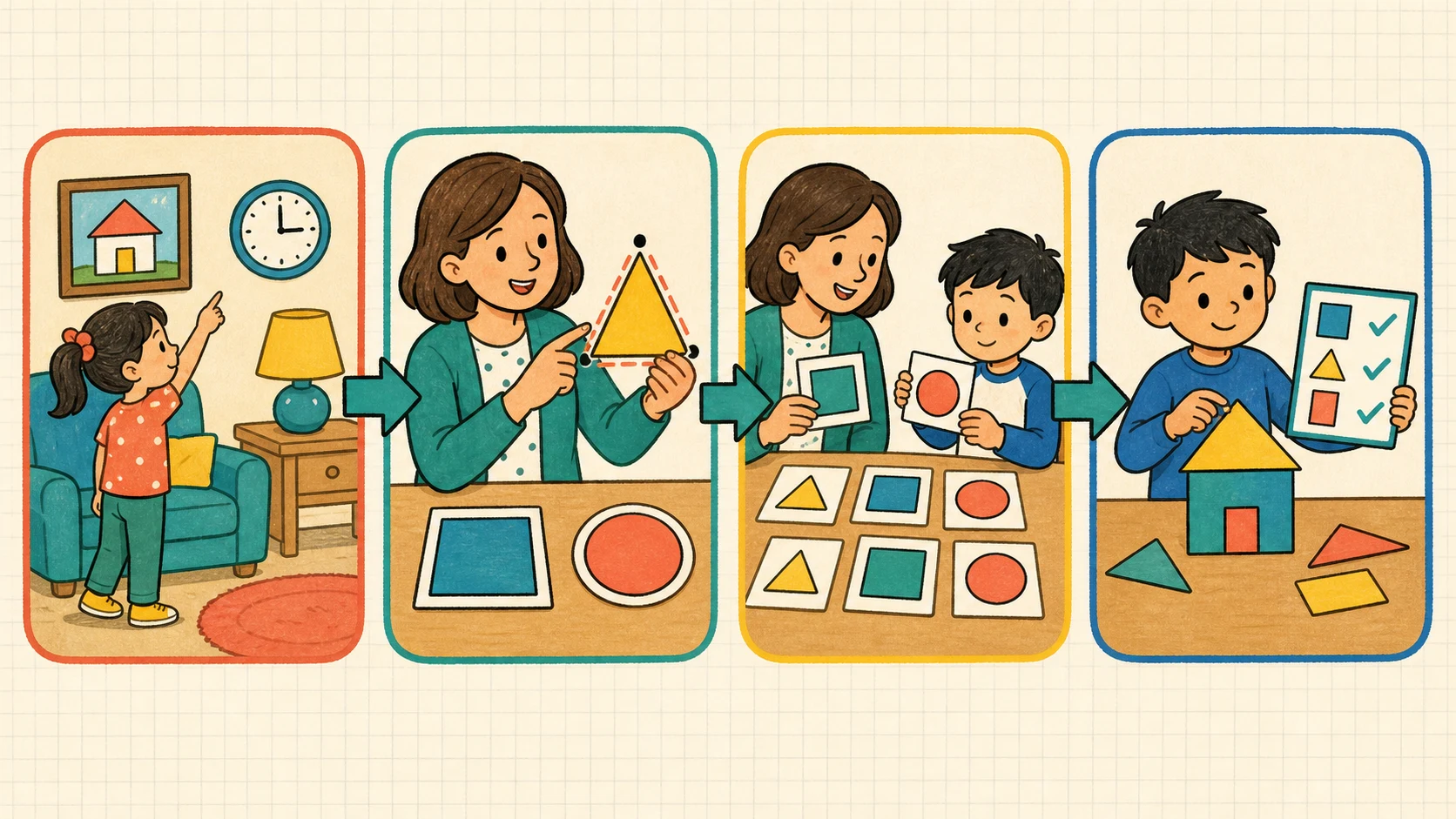
For first-grade geometry practice, keep the spoken explanation central: the learner should identify the attribute that makes a shape belong.
Treat multiplication and fractions as models, not answer races
Multiplication: compare equal groups, arrays, and equations
A learner who recalls may not yet connect the equation to a situation. Ask for six groups of four counters, a six-row-by-four-column array, and an equation. All represent 24 objects, although the arrangement emphasizes different structure.
Then ask what changes in . The total remains 24, but the described number of groups and amount in each group switch. A rectangular array can make the equality visible without erasing the distinct meanings of the factors in a context.
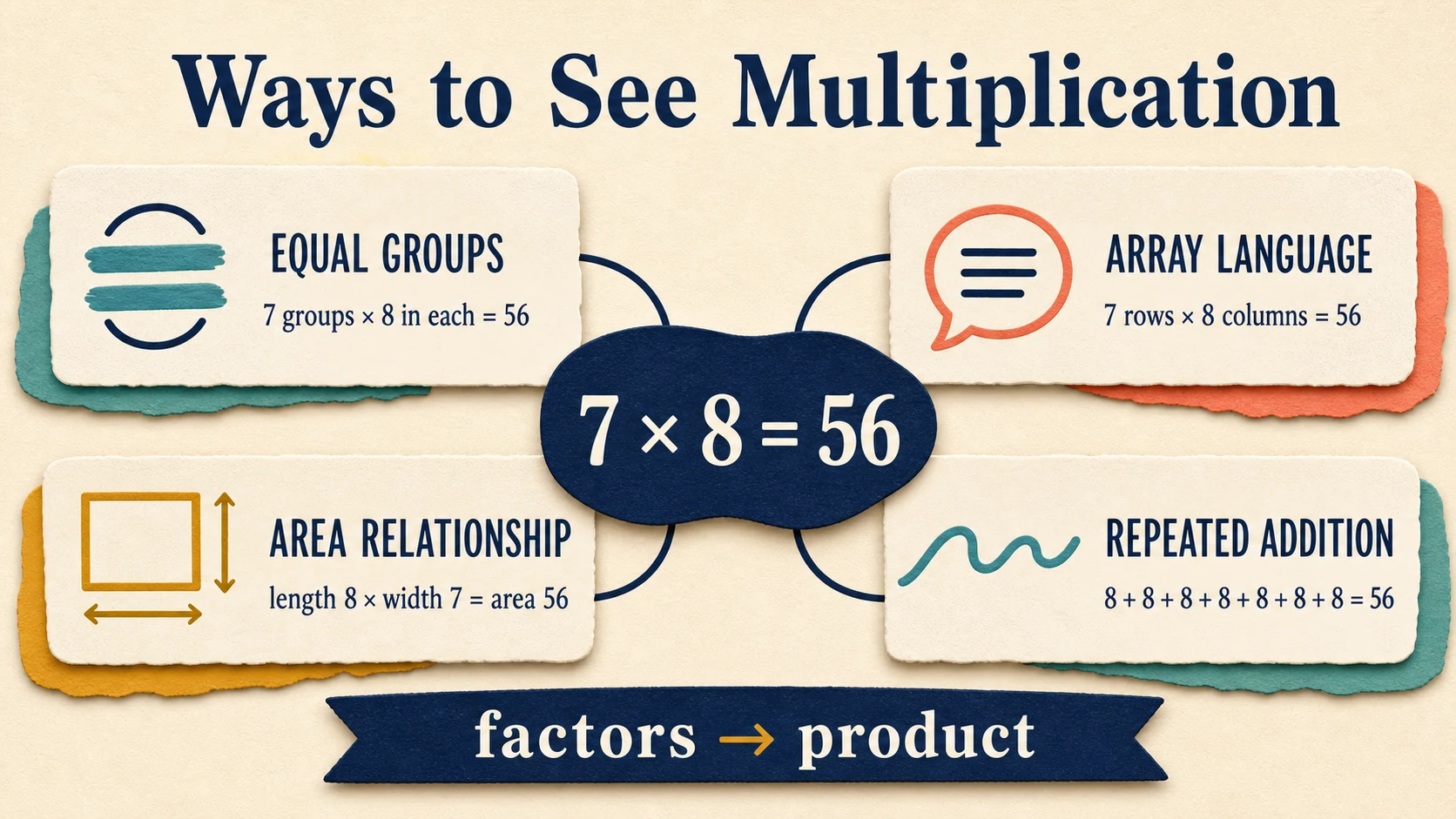
Use the upper-grade multiplication map to locate a specific relationship for discussion; do not treat the whole map as one tutoring assignment.
If a learner writes 10 for , ask for a model before classifying the error. Six plus four equals 10, so the response may indicate that the learner combined the displayed numbers using addition. The next sheet should contrast repeated addition and multiplication with small equal groups, not simply provide more products to memorize.
Fractions: inspect equality, magnitude, and notation separately
The representative first-grade fractions resource has six problems—much shorter than the 20-problem sheets in several other topics. Its catalogue description begins with partitioning shapes into equal parts, and its guidance emphasizes visual models and number lines.
Checked example 5: Fold or draw two identical strips. Partition one into four equal parts and shade two. Partition the other into eight equal parts and shade four. Both shaded regions cover one-half of an identical whole, so . This example belongs here because it checks equivalence through equal wholes and equal partitions before relying on a symbolic rule.
A learner who says because 8 is greater than 4 may be treating denominators as whole-number counts rather than the number of equal parts in one whole. Draw equal-length number lines from 0 to 1, partition one into fourths and the other into eighths, and locate both fractions. One-fourth lies farther from 0 than one-eighth.
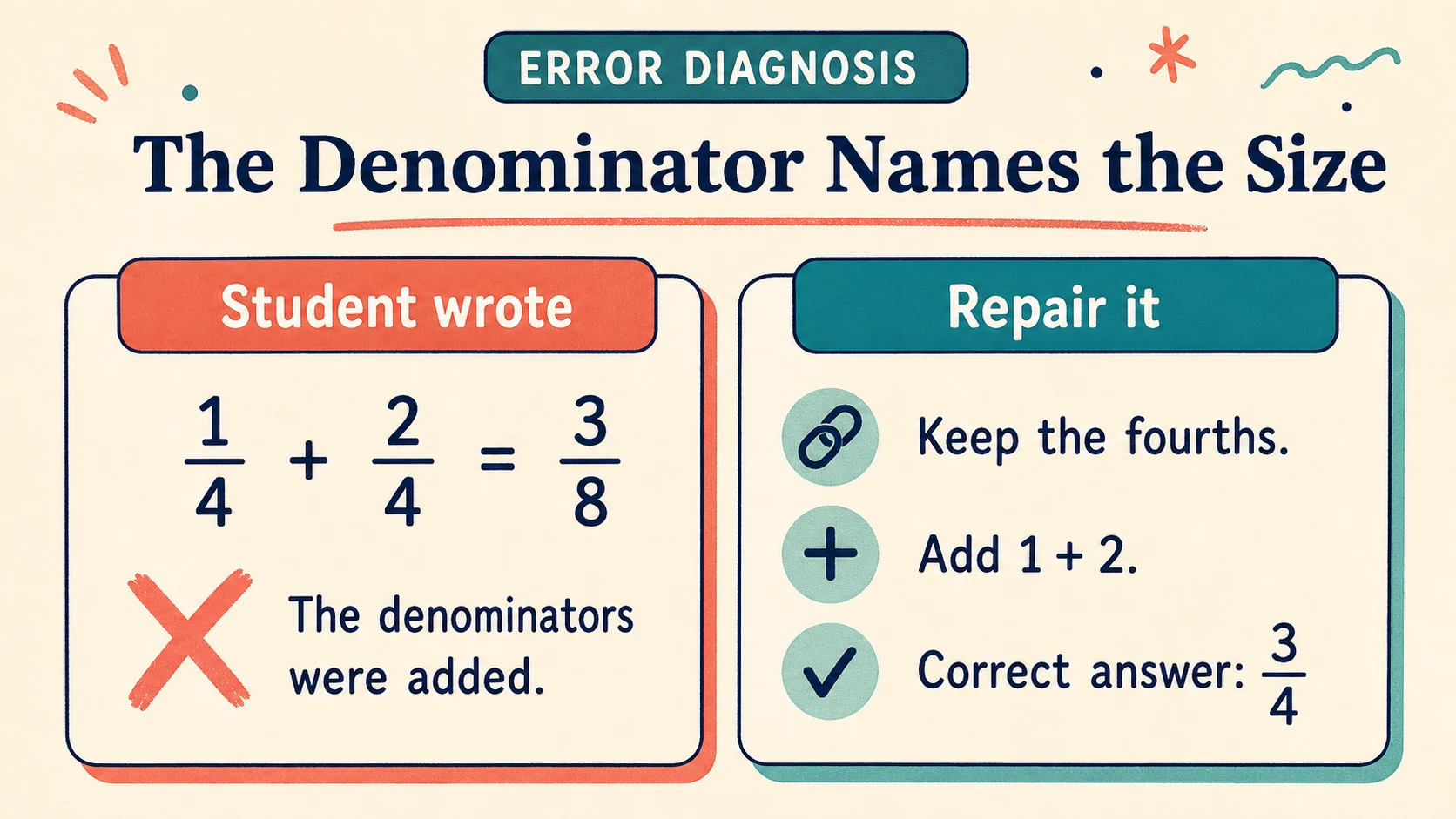
Use a fraction error to choose between equal-part models, number-line magnitude work, and notation practice; those are different next steps.
Keep the whole constant when comparing fractions. Changing both the fraction and the size of the whole can introduce a second issue and make the evidence ambiguous.
Interpret errors before choosing the next sheet
An error is a clue, but one response is not enough to establish a stable pattern. Use a short confirmatory task.
| Observed response | Tentative interpretation | Quick check | Next-sheet feature |
|---|---|---|---|
| Counts a scattered object twice | Tracking may be inconsistent | Recount the same objects in a row, then move each as counted | Small pictured sets with a marking or matching action |
| Solves addition with counters but not numerals | Representation shift may be the obstacle | Match a counter model, ten-frame drawing, and equation | Same number range with visual-to-symbol matches |
| Uses addition for every story | Operation may be chosen from numbers rather than relationships | Retell one removal and one comparison story without solving | Mixed story structures with drawing space |
| Calls only upright examples triangles | Orientation may be treated as defining | Sort rotated examples and open non-examples | Varied orientations plus property prompts |
| Says | Whole-number reasoning may be applied to denominators | Place both on equal number lines | Unit-fraction comparisons with equal wholes |
| Writes 26 for | May subtract smaller digit from larger in each column | Model 43 and trade one ten for 10 ones | Base-ten drawings or trades before abstract regrouping |
The last example is checked: , because and . If a learner writes 26, do not diagnose a condition or infer a general disability. Build 43 with four tens and three ones. To remove five ones, trade one ten for ten ones, leaving three tens and 13 ones; removing two tens and five ones leaves one ten and eight ones.
The Formative assessment Math Worksheets may be useful when the primary purpose is to collect evidence across a defined skill. Tutoring, however, should add immediate dialogue and a note trail rather than waiting until a packet is complete.
Give feedback that keeps the learner doing the mathematics
Effective feedback is specific enough to guide attention but restrained enough that the learner still makes the decisive move.
Use this sequence:
- Name what is established. “Your model begins with 13 counters.”
- Locate the conflict. “The story removes 5, but your drawing added another group.”
- Prompt a mathematical action. “Show five counters leaving.”
- Ask for reconciliation. “How does the new model change your equation?”
- Check with a fresh item. Use the same relationship with different numbers.
Avoid praise tied only to speed. Also avoid turning every error into a lecture. If a learner self-corrects after noticing that a model and equation disagree, ask what triggered the correction. That explanation may be the most useful evidence in the session.
For a correct answer with fragile reasoning, feedback can still deepen the work: “You got 5. Show whether that 5 means objects left, how many more, or an unfilled part.” For a correct and well-explained response, vary one feature rather than repeating several near-identical items.
Tutors may consult the two Institute of Education Sciences practice guides without implying that IES evaluated WorksheetWise. The early-mathematics guide recommends intentional work with number, operations, geometry, patterns, measurement, and data through progressions and regular monitoring. The guide for students struggling with mathematics emphasizes systematic instruction, clear mathematical language, representations, number lines, word-problem instruction, and cumulative review. These are sourced recommendations from IES’s early-mathematics guide and IES’s mathematics-intervention guide; the specific tutoring routine and examples in this field guide are editorial applications.
Adapt access without replacing the target
A useful adaptation removes an irrelevant barrier while preserving the mathematical decision.
If the target is subtraction-story structure, the tutor may:
- Read the prompt aloud.
- Let the learner act it out.
- Provide counters or a bar-model frame.
- Accept a spoken equation before requiring written notation.
The tutor should not tell the learner which operation to use, because choosing the relationship is the target.
If the target is shape classification, allow pointing, sorting, or oral description when handwriting is burdensome. Do not reduce the set to one familiar orientation. If the target is place-value regrouping, enlarge the workspace or provide base-ten blocks. Do not perform the trade and ask the learner merely to copy it.
For young learners, especially ages three and four, replace prolonged desk work with brief adult-led oral counting, object matching, manipulatives, and movement. Stop when attention no longer supports observation; completing a page is not the goal.
The Common Core mathematics standards can help adults inspect how mathematical practices and content are described, but standards should not be used here to claim automatic alignment for a particular sheet. Local standards and teaching sequences vary, and a catalogue grade label remains an intended practice level rather than a placement ruling.
Keep a session-to-session decision trail
A useful note trail is short enough to maintain and precise enough to change tomorrow’s selection.
Example note after counting
- Task: Count seven scattered buttons.
- Observed: Said the sequence through seven but counted one button twice.
- Interpretation: Verbal sequence appears available; tracking needs confirmation.
- Next: Move each object across a line while counting, then try a pictured scattered set.
Example note after subtraction stories
- Task: Solve three situations.
- Observed: Solved removal; added in comparison and missing-part stories.
- Interpretation: Fact calculation is not the only issue; situation structure is unstable.
- Next: Retell and model one comparison and one missing-part story before writing equations.
Example note after fractions
- Task: Compare and using equal strips.
- Observed: Initially selected because 8 is larger; revised after partitioning strips.
- Interpretation: Visual magnitude reasoning can correct denominator-as-whole-number reasoning.
- Next: Place unit fractions on equal number lines, then explain the denominator’s role.
At the next session, begin with the recorded follow-up rather than a random warm-up. If the learner succeeds without the previous support and explains the relationship, select a sheet that changes one feature. If the same error returns, strengthen the model or reduce competing demands. If a new error appears, record it separately rather than forcing it into the earlier interpretation.
Know what a worksheet cannot establish
A worksheet can provide prompts, structured practice, and a record of written responses. It cannot by itself reveal every strategy, determine why an error occurred, establish a diagnosis, guarantee mastery, or promise an academic outcome. A tutor should not infer broad ability from one page, one session, speed, handwriting, or a catalogue difficulty label.
Escalate concerns appropriately when errors persist across representations and sessions, when school expectations are unclear, or when access needs extend beyond ordinary tutoring adjustments. Share observable evidence with the learner’s caregiver or teacher: tasks attempted, exact responses, supports used, and what changed. Do not offer a diagnosis.
Nor should tutoring become isolated worksheet completion. Use objects, drawings, oral explanations, movement, and real contexts when they clarify the target. Printable tutoring math worksheets are most useful as one component of a responsive lesson, not as the lesson’s automatic structure.
Choose one next problem now
Open the full worksheet library and select one math sheet connected to the learner’s current topic. Before printing, circle only three items: an opening item, a confirming item, and a contrast item. Write the target relationship and the four-line note template at the top. In the next session, ask for a model and think-aloud on the first item; let that observed reasoning—not the remaining page count—determine the next sheet.
Put it into practice
Use the guide with a real printable
Move from explanation to a short, observable practice task. Check the first item together, then adjust the next session from the learner's actual work.
Open the first free worksheetExplore a neighboring collection