Curated collectionAnswer keys includedPrint-ready PDFs
Formative Assessment Phonics Worksheets
Sample a defined skill, observe strategy and error patterns, and choose an instructional response; these are practice checks, not standardized or diagnostic instruments.
Start with a real resource
Browse this worksheet collection
22 relevant free entry points are available. Each one includes a printable learner PDF and separate answer key.
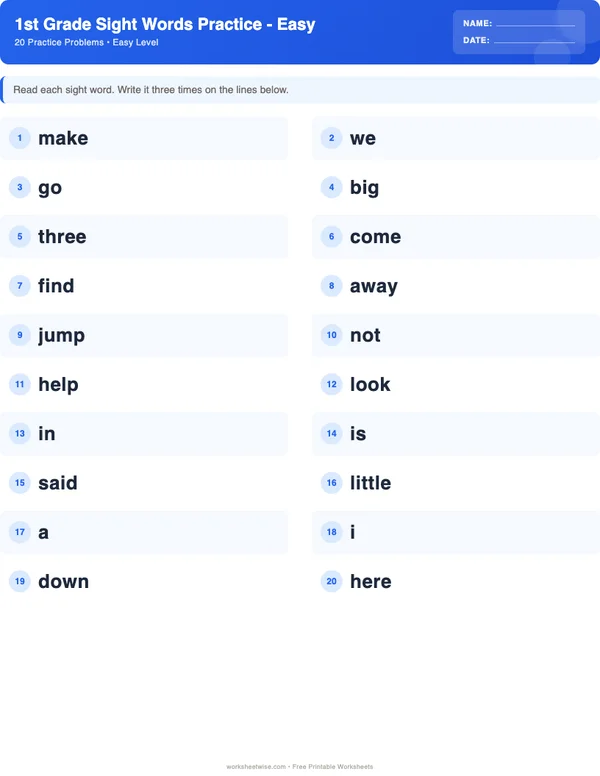
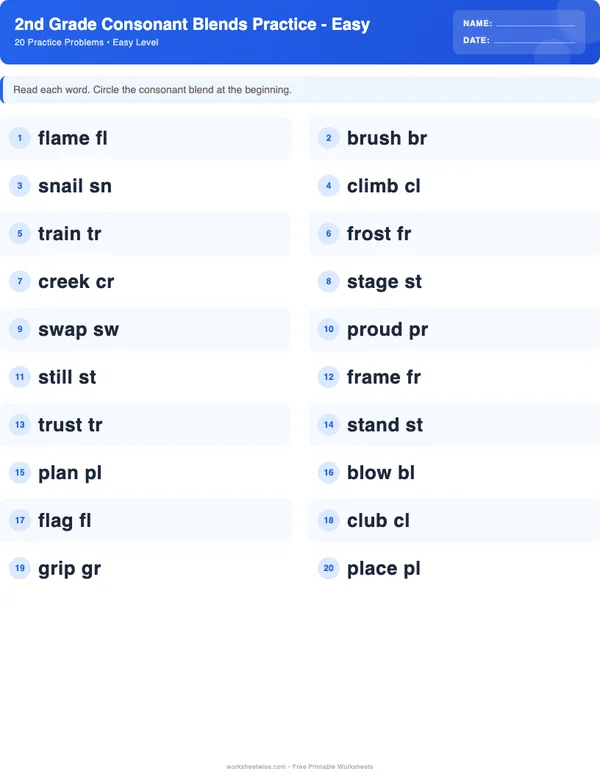
A useful practice loop
Print less. Observe more.
- Choose one skill and model the first item aloud.
- Use a short set and notice the learner’s strategy.
- Change the next task from the work you can see.
Need more than the free sheet?
Plus includes all 396 matching catalogue variations where available, plus saved deterministic generators and the worksheet designer.
See Plus membershipComplete guide
How to teach and practise assessment phonics worksheets
3,599 words Updated 6 instructional visuals
Use a phonics worksheet to decide what to teach next
A formative phonics check should answer a narrow instructional question: Can the learner use a particular sound–spelling pattern in this task, and what strategy appears when the answer is uncertain? Choose one defined skill, model the response format without solving the assessed items, watch the learner complete a manageable sample, and sort errors by pattern. Then select the next sheet because of the observed pattern—not because of age, grade, total score, or a desire to finish the sequence.
These worksheets are practice checks. They are not standardized or diagnostic instruments. A correct response can show what happened on one item in one format; it does not establish general mastery. An incorrect response can identify a useful teaching target; it cannot identify a disability, disorder, or cause.
The live WorksheetWise catalogue currently provides 396 phonics variants, including 22 free resources, across four intended grade levels and seven topics. That breadth is useful only when selection stays precise. “Do phonics” is too broad. Better questions include:
- Can the learner blend three phonemes in a CVC word without dropping the middle vowel?
- Can the learner hear the difference between short e and short i?
- When reading an initial blend, does the learner preserve both consonant sounds?
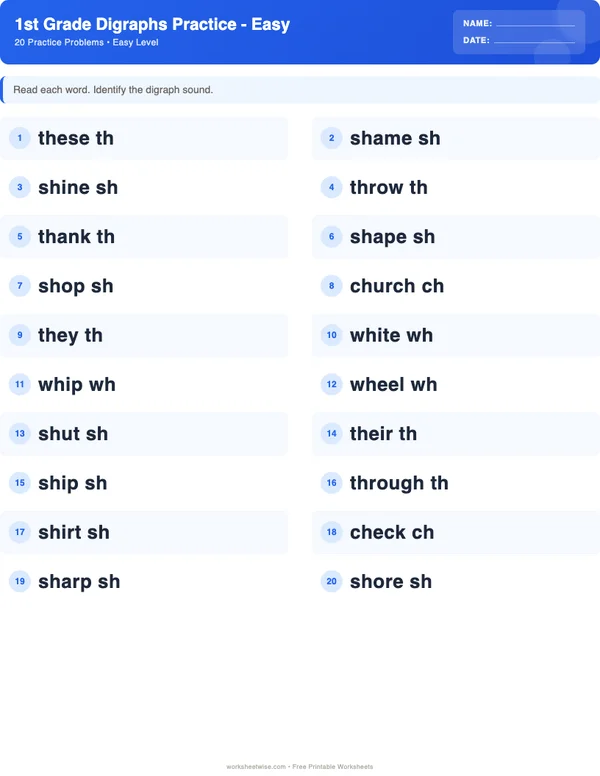
- Does the learner treat sh as one sound represented by two letters?
- Can the learner change the onset while keeping the -at rime stable?
- Can the learner distinguish a short-vowel CVC word from its silent-e counterpart?
The IES foundational reading practice guide recommends explicit work with sound segments, letter–sound relationships, decoding, word analysis, and connected text. That guidance supports a teach–observe–respond routine. It does not mean IES evaluated WorksheetWise or any worksheet named here.
Define the evidence before choosing a sheet
Begin by writing one sentence that names the target, the response, and the evidence you will observe:
The learner will read eight unfamiliar CVC words aloud while I note whether each phoneme is represented in the blend.
That statement is more useful than “Check CVC words.” It limits the sample, identifies oral reading as the response, and tells the adult what to record. If the real question concerns spelling, change the response:
The learner will build or write six dictated CVC words while I note which sound, if any, is omitted or represented by the wrong letter.
Reading and spelling are related but not interchangeable evidence. A learner might read map correctly from print yet spell it as mp. The first response suggests that the printed vowel supported decoding; the second reveals difficulty representing the medial vowel during encoding. The next activity should address that difference.
Separate the target skill from task demands
A worksheet may ask a learner to circle, match, write, sort, read, or complete a sentence. Each format adds demands beyond phonics. Before using it, ask:
- Must the learner identify a picture whose name may be unfamiliar?
- Is handwriting required even though the target is auditory discrimination?
- Can the answer be guessed from position, rhyme, or illustration?
- Are several phonics patterns mixed when you need evidence about one?
- Does the learner understand what “match,” “sort,” or “fill in” means?
- Can the adult hear the learner’s decoding process, or does the page record only a final choice?
If handwriting would obscure the target, let the learner point, say, move a tile, or dictate while the adult marks the answer. If picture naming is uncertain, name every picture before beginning. These adaptations preserve the phonics decision while removing an irrelevant barrier.
Treat age and grade as discovery aids
Age is a discovery aid rather than a placement decision. Grade labels describe intended practice level; local curriculum sequences differ. Choose from what has been explicitly taught and what the learner can show, not from a birthday or classroom label alone.
For ages three and four, prioritize brief adult-led oral, matching, manipulative, and movement work over desk work. A 20-problem free sheet can supply items without becoming a requirement to complete all 20. Cut out four pictures for an oral vowel sort, move three counters into sound boxes, or step once for each sound heard. Stop while the learner can still attend and respond.
The catalogue calls the representative free sheets “easy.” Translate that label into observable task features: a 20-problem sheet at the introductory end of its topic, with familiar patterns and response formats such as matching, building, sorting, or filling a missing letter. Do not label a learner “easy,” “developing,” or “advanced.” Difficulty belongs to the task: number of items, number of competing patterns, word familiarity, response mode, visual support, and whether reading or spelling is required.
Choose among live phonics skills by the decision you need
Adjacent phonics topics can produce similar-looking errors. The correct starting sheet is the one that isolates the earliest uncertain operation.
CVC words: inspect segmentation and blending
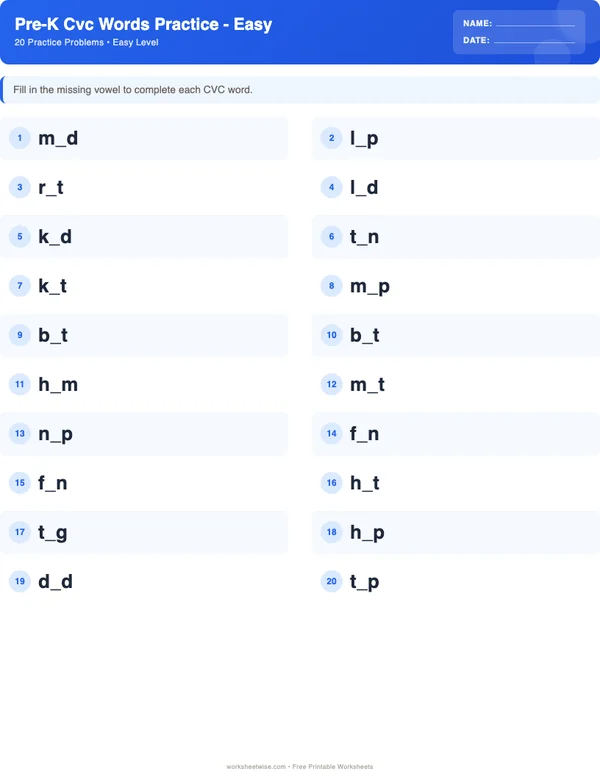
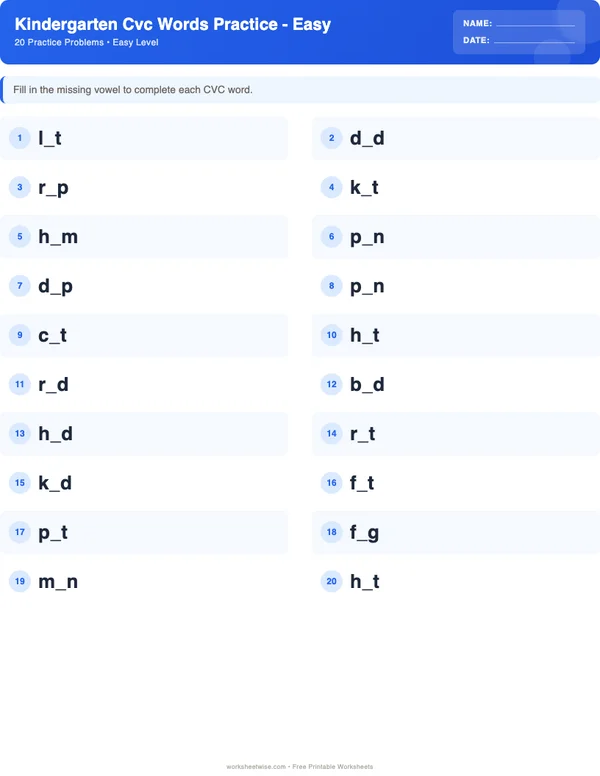
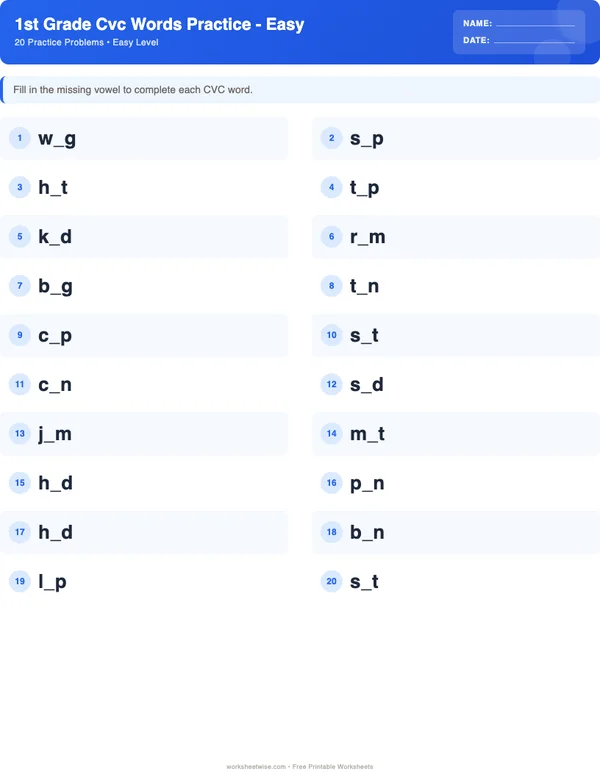
Use a CVC check when the question is whether the learner can map and combine three phonemes, as in cat, pin, and hug. Catalogue activities include word building, picture matching, missing-letter work, and reading. The free Pre-K, kindergarten, and first-grade CVC representatives each contain 20 problems, but a formative sample can be much shorter.
Checked example 1: map. Say map without showing the word. Ask the learner to push one token for each sound, select letters, and then sweep under the completed word while reading it. The checked segmentation is /m/ /ă/ /p/: three phonemes and three graphemes. If the learner builds mp, the omission concerns the medial vowel. If the learner builds mat, the first two correspondences are preserved and the final consonant changed. If the learner builds map but reads mop, the written construction is accurate while the spoken vowel is not.
This example belongs here because map has the catalogue’s defined consonant-vowel-consonant structure and uses the short a family. It allows both encoding and decoding evidence without introducing a blend or digraph. For a ready-made starting point, use the Kindergarten CVC Words guide and free sheet.
The catalogue teaching suggestion is to model continuous blending and use three connected sound boxes. Treat that as an instructional option, not as a finding produced by the worksheet itself. Model with a word outside the sample—perhaps sat—so you teach the response without giving away map.
Short vowels: inspect the middle sound
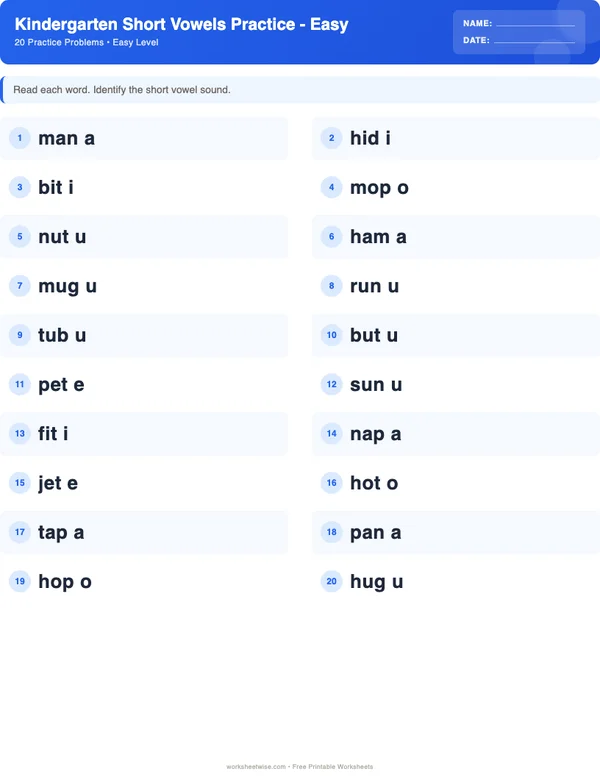
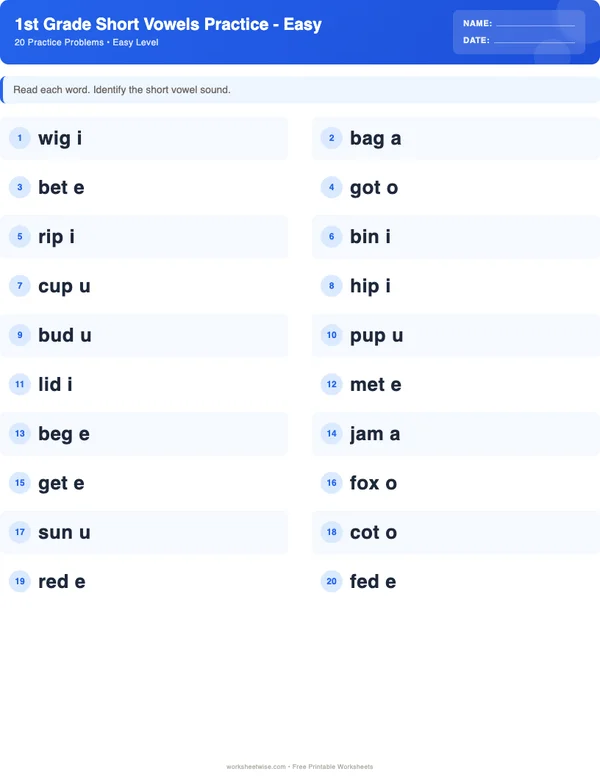
A short-vowel check is appropriate when initial and final consonants are mostly preserved but the middle vowel changes. Use a contrast containing only the vowels the learner has already encountered. Five-way sorting can hide the exact confusion.
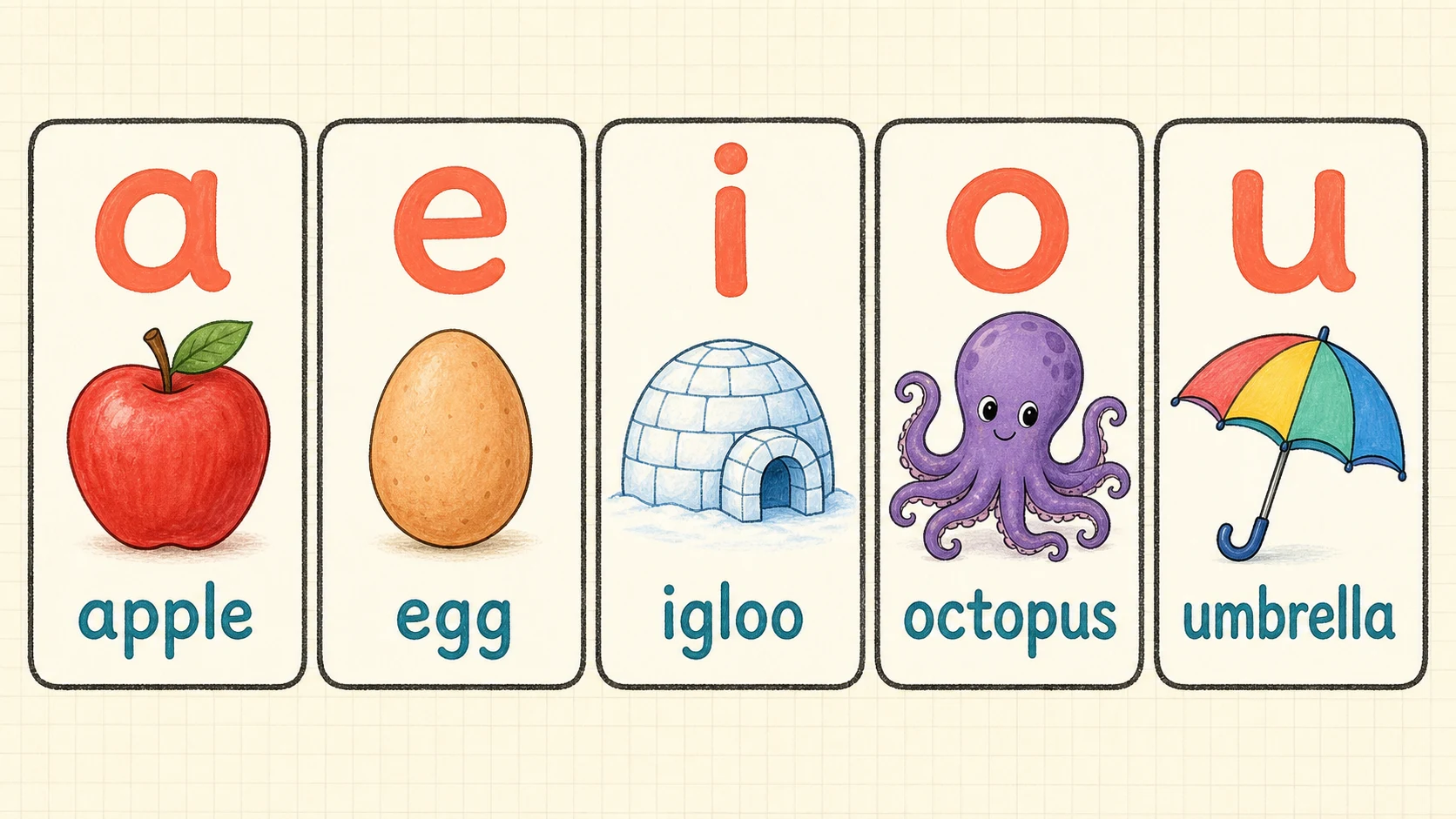
Use the map to choose one observable short-vowel action—hearing, selecting, reading, or spelling—rather than sampling every branch at once.
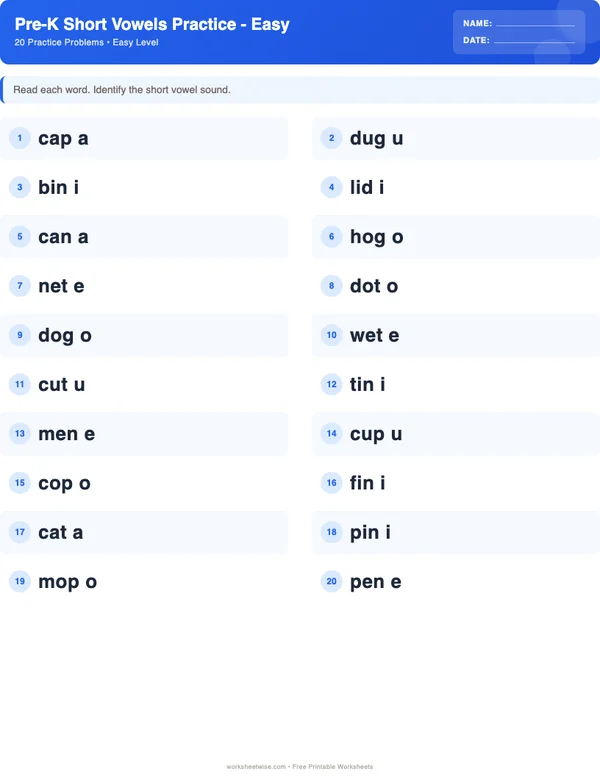
Checked example 2: pen and pin. Both are CVC words. Their initial /p/ and final /n/ remain constant; only the medial vowel changes: /ĕ/ in pen and /ĭ/ in pin. Say each word naturally, ask the learner to repeat it, and offer e and i tiles for the middle position. Then reverse the direction by showing each written word and asking for a reading.
This pair belongs in a short-vowel assessment because it isolates the catalogue’s specifically noted e/i contrast. A picture-only response would be weaker evidence if the pictures are ambiguous, so establish the word orally before asking for the vowel.
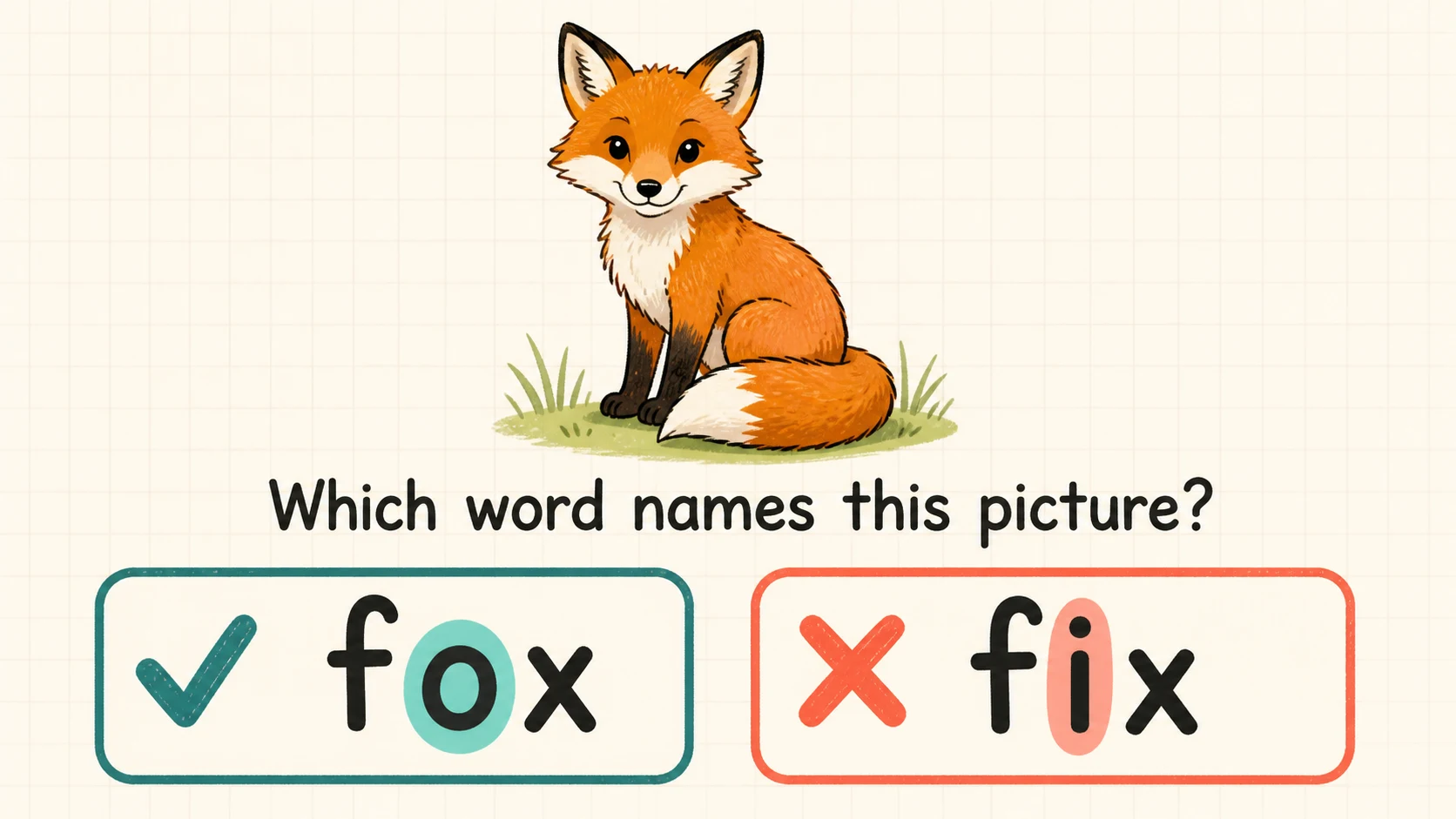
Read “diagnostic teaching responses” here as instructional troubleshooting: the patterns guide another teaching attempt, not a clinical or educational diagnosis.
If pen becomes pin in both reading and spelling, choose another two-choice e/i discrimination sheet. If the learner hears the contrast correctly but writes the wrong letter, return to explicit sound-to-letter mapping. If both words are correct in isolation, use a mixed CVC review or short decodable sentence before moving to a new vowel pattern.
Word families: inspect whether the ending stays stable
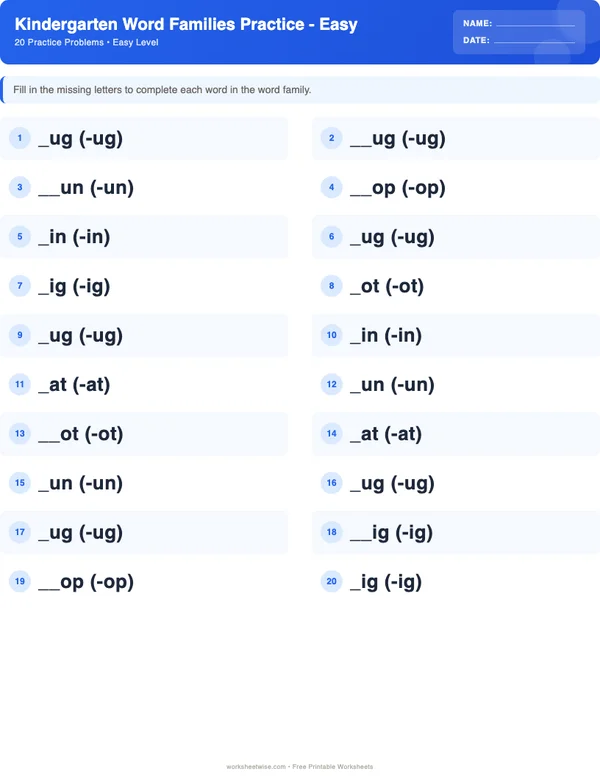
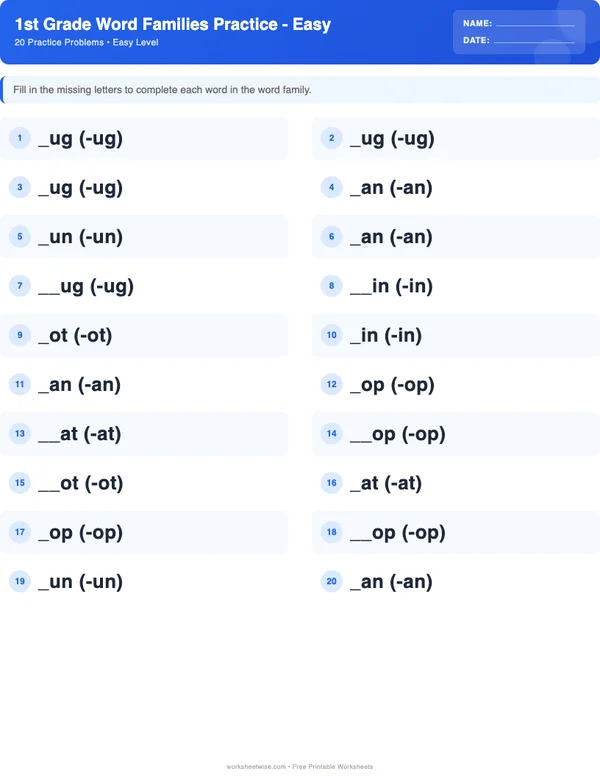
Word-family work asks the learner to recognize and manipulate a shared ending such as -at, -ig, or -op. It can reduce the amount that changes from item to item, but it should remain connected to phoneme-by-phoneme decoding.
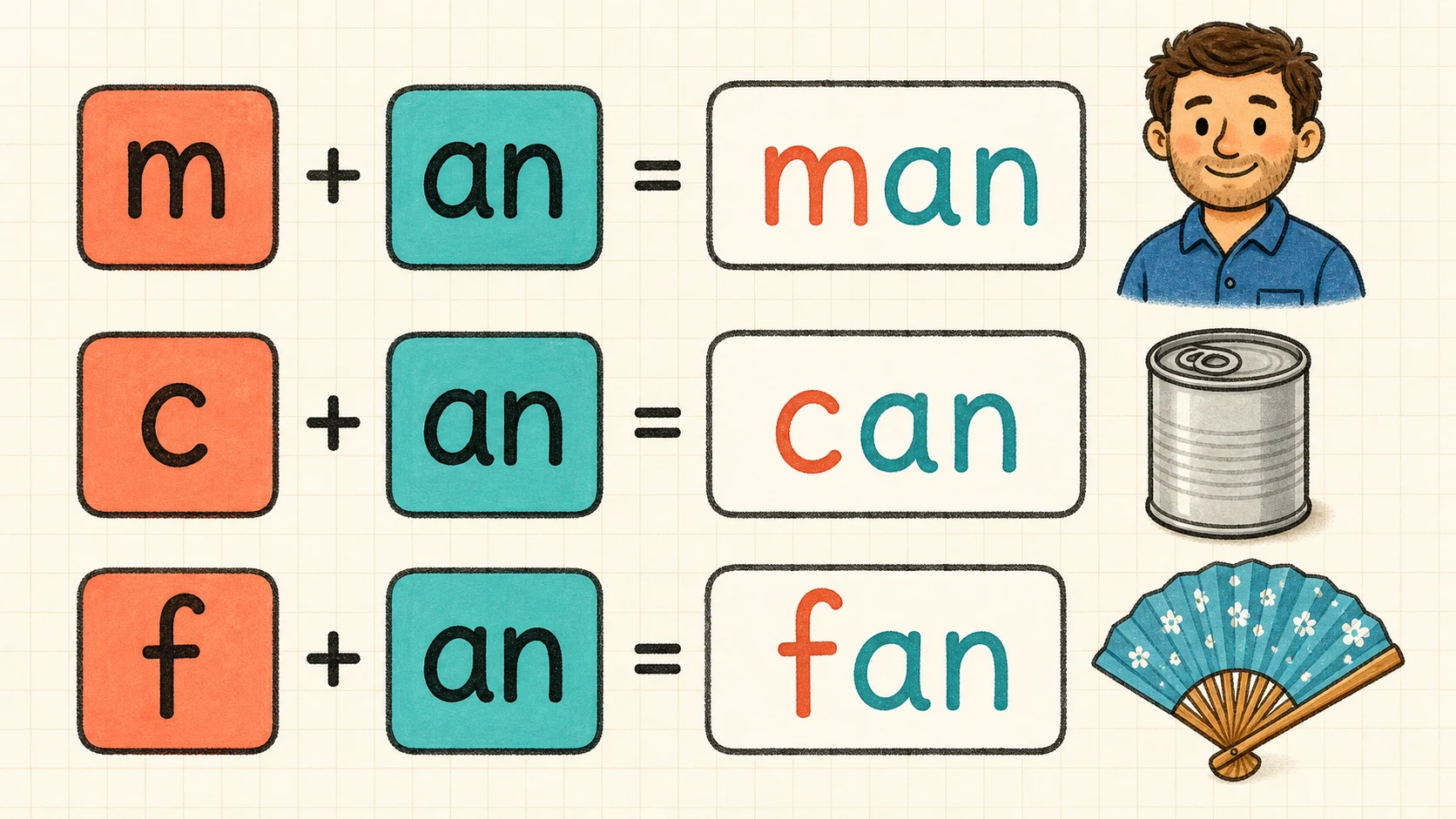
The useful evidence is not merely the marked answer; it is whether the learner keeps the rime stable while changing the initial sound.
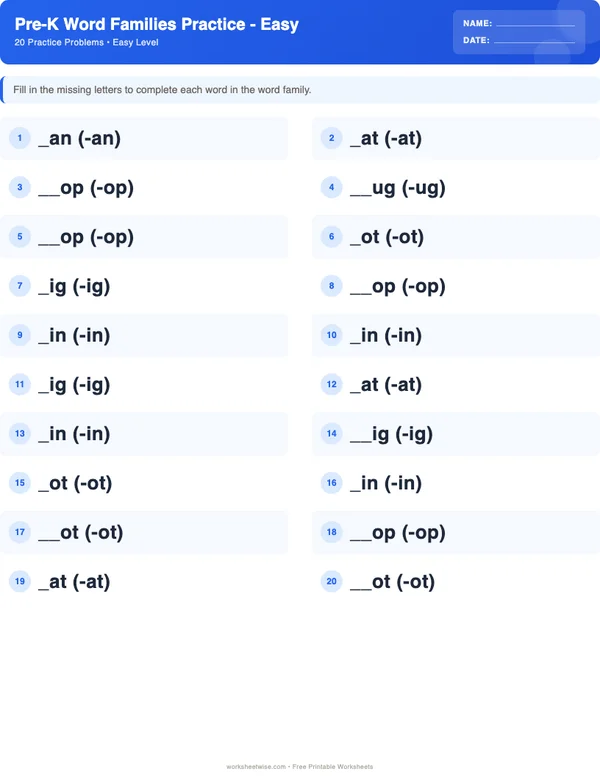
Checked example 3: cat, bat, hat. Each word ends in the letters at and the sounds /ă/ /t/. The initial phoneme changes from /k/ to /b/ to /h/. Build at once with tiles and swap only the first tile. Ask the learner to read every resulting word, then mix in can. A learner using the visible ending should place cat, bat, and hat together and reject can because its final phoneme is /n/, not /t/.
This example belongs here because it directly represents the catalogue’s -at family. It also checks more than rhyming by requiring attention to the printed pattern. If the learner calls every short-a word an -at word, the next sheet should contrast two endings, such as -at and -an. If the learner cannot decode the three words individually, return to CVC blending rather than adding more families. The Pre-K Word Families guide and free sheet offers an appropriate source for adult-led matching and tile work.
Blends: listen for both consonants
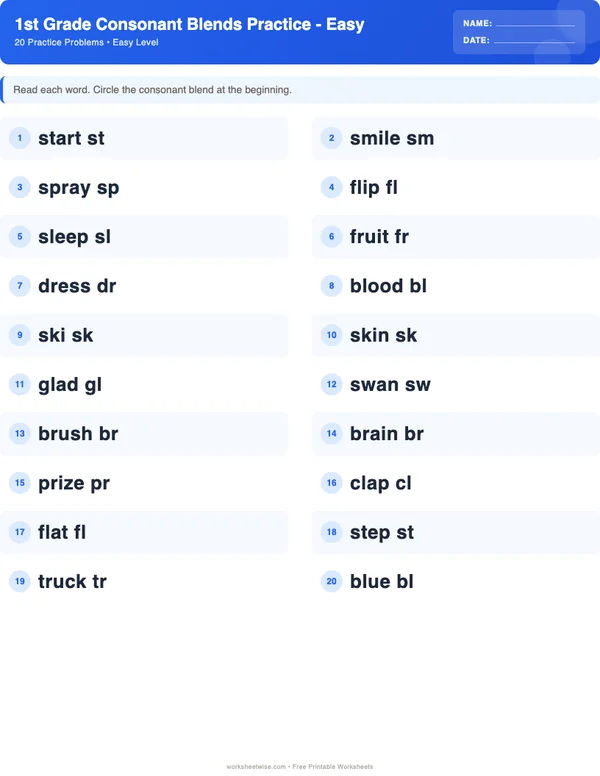
In a blend, each consonant retains its sound. That makes sound preservation—not simply recognizing two adjacent letters—the central evidence.
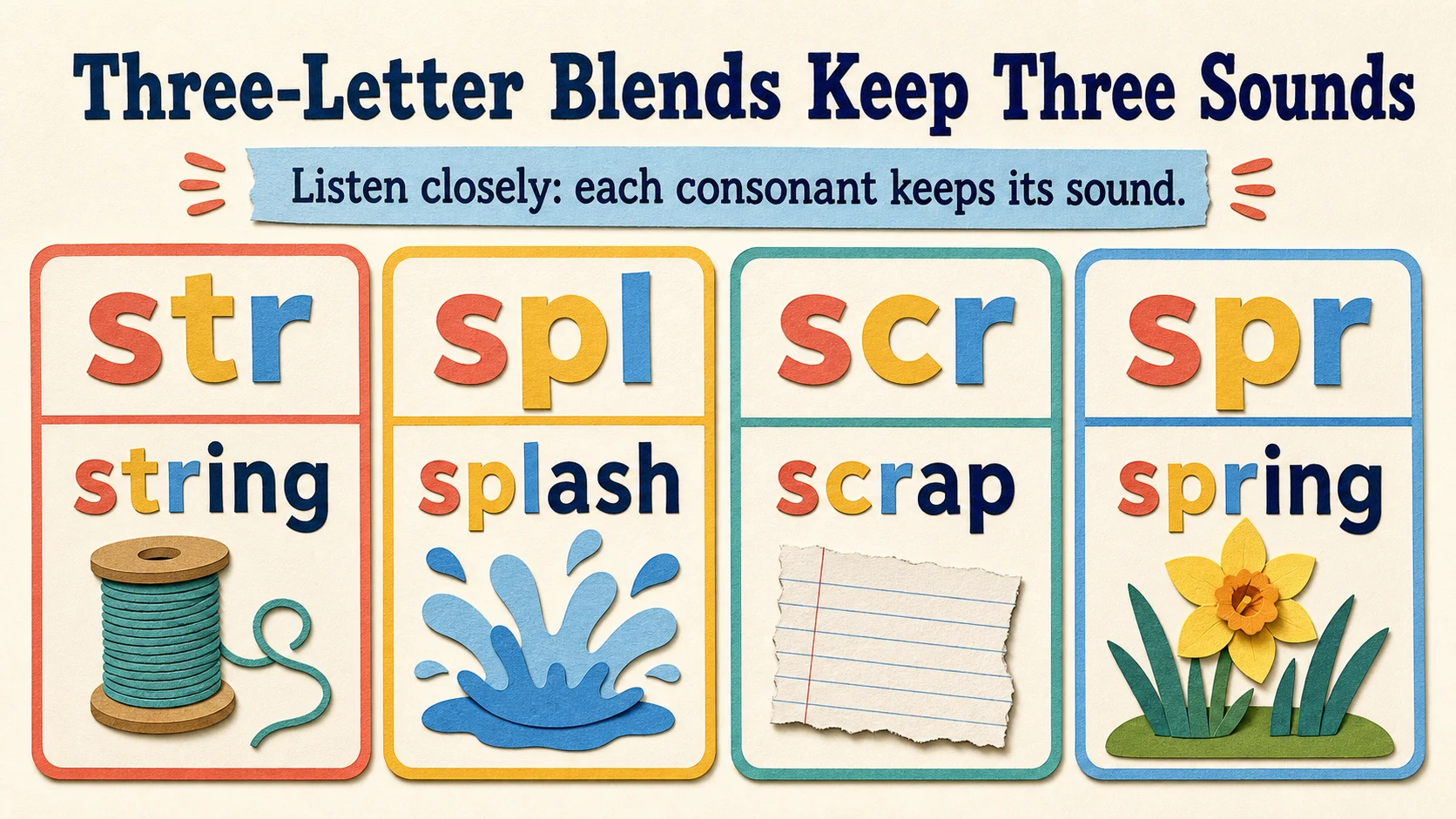
Use the branches to separate initial-blend preservation from final-blend preservation; success with one position does not answer the other question.
Checked example 4: stop versus sop. Stop begins with /s/ and /t/ before /ŏ/ /p/; sop lacks /t/. Show stop, ask the learner to touch each letter while reading, and record whether both consonants are heard. Then show sop. If both cards are read as sop, the pattern is omission of the second consonant in the initial blend, not a short-vowel error.
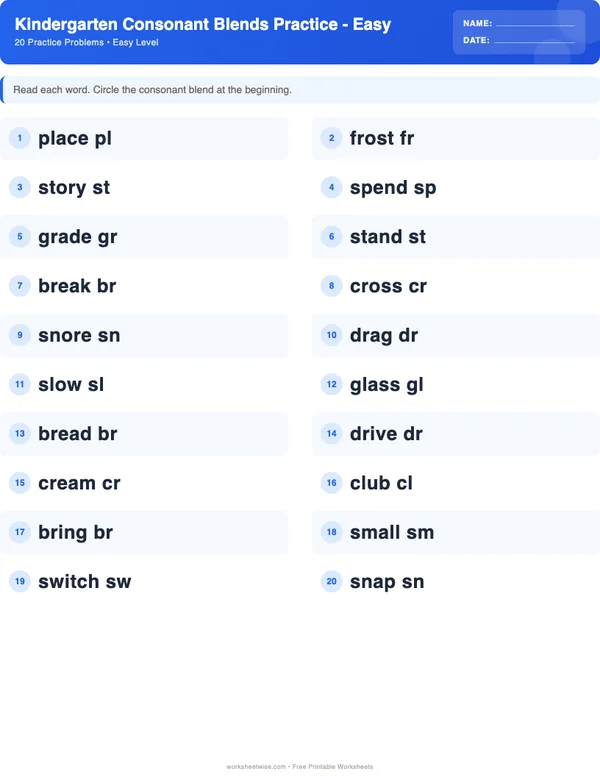
This example belongs in a blend check because st represents two retained sounds, unlike a digraph. The next sheet should keep the vowel and ending simple while sampling a small set of taught initial blends. The catalogue suggests tapping each sound and using chains such as lap → clap → clam → clamp. In that chain, confirm every change: lap adds /k/ to become clap; clap changes final /p/ to /m/ for clam; clam adds final /p/ for clamp. Because several positions change across the chain, use it for guided instruction after the narrow check, not as the cleanest first measurement.
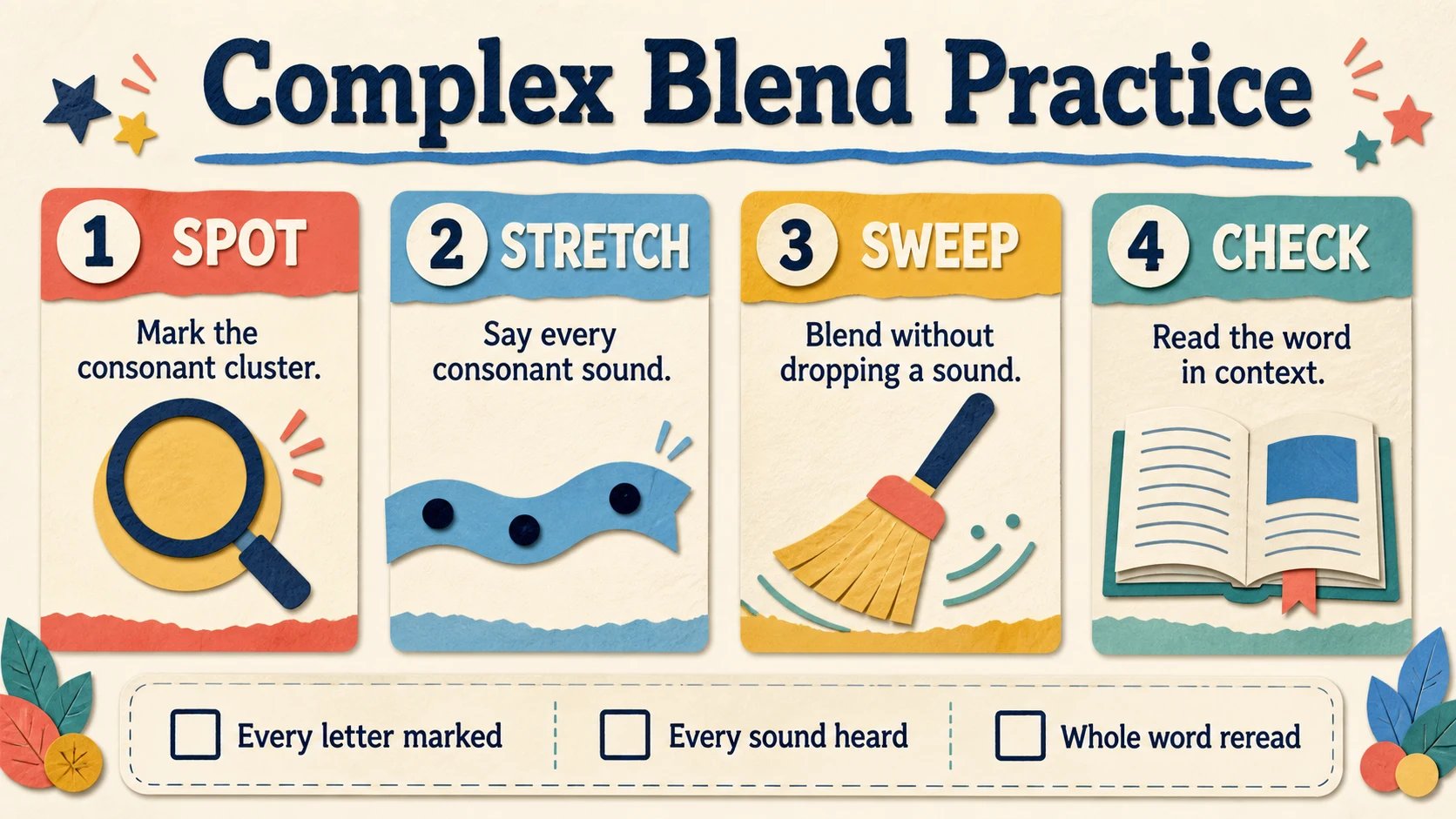
Treat the plan as a scheduling model: advance or repeat according to observed sound preservation rather than the calendar alone.
Digraphs: verify that two letters represent one sound
A digraph needs a different model from a blend. In sh, two letters work together to represent /sh/; in sl, each letter’s sound remains audible.
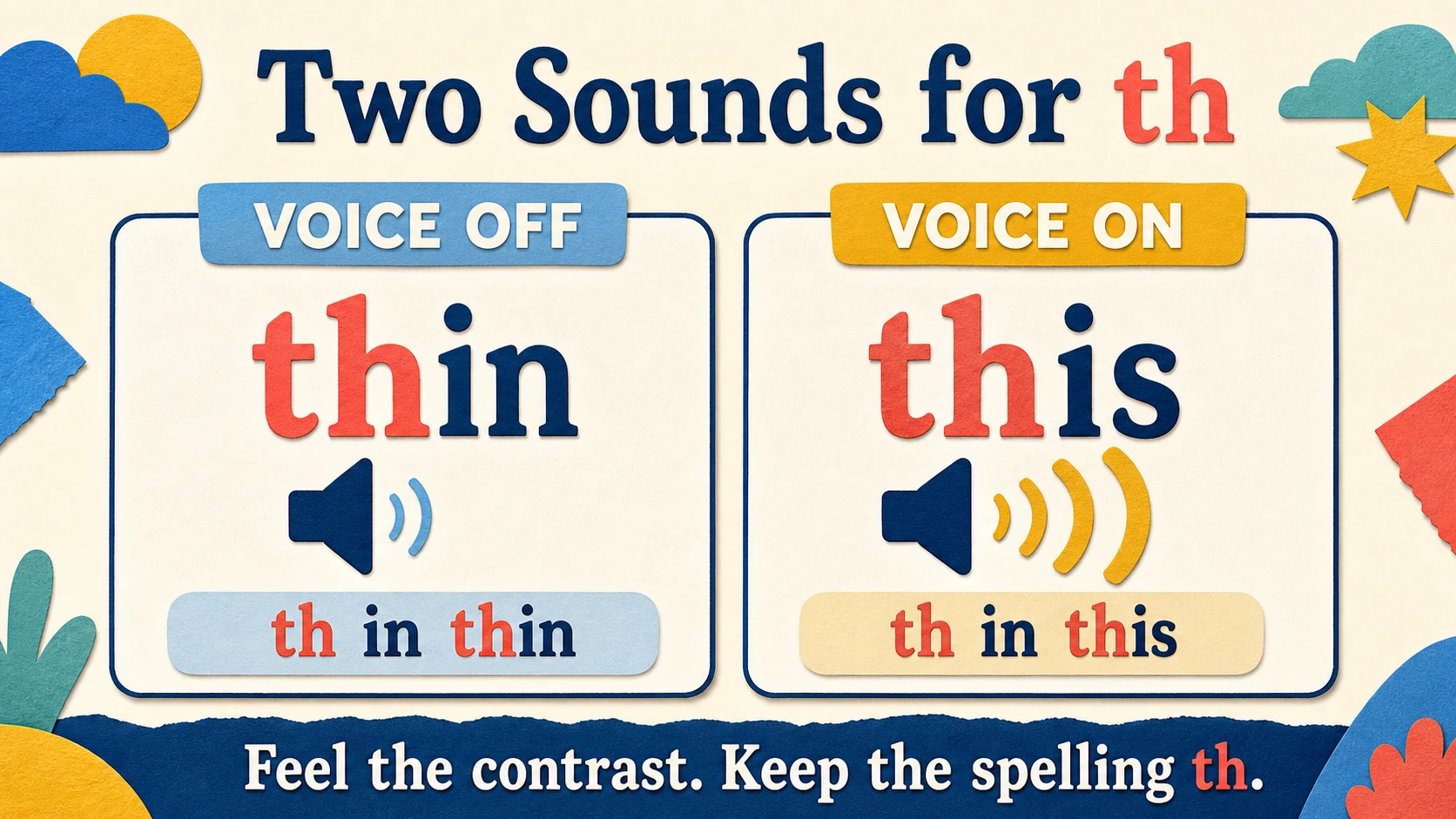
The concrete model should make the one-sound/two-letter relationship visible before the learner completes an independent item.
Checked example 5: ship versus slip. Segment ship as /sh/ /ĭ/ /p/: three phonemes represented by four letters because sh represents the first sound. Segment slip as /s/ /l/ /ĭ/ /p/: four phonemes represented by four letters. Have the learner place one counter per sound, then map letters to the counters. If four counters are used for ship, reteach sh as one sound represented by two letters. If slip receives only three counters, separately model that sl preserves two sounds.
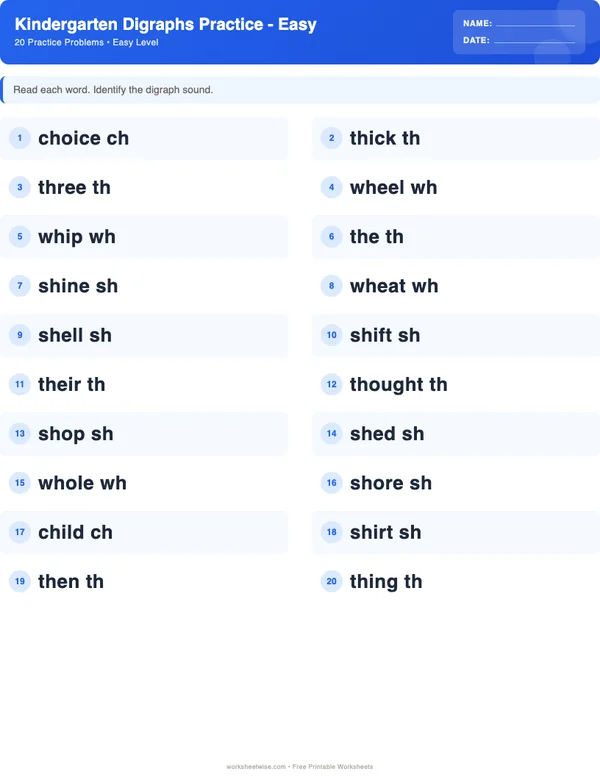
This comparison belongs here because it prevents a common category error: treating every adjacent consonant pair in the same way. Keep the independent check to previously taught digraphs. A learner who handles initial sh should next sample it in a final position such as wish before mixing sh, ch, and th.
Long vowels: compare patterns without teaching a false absolute
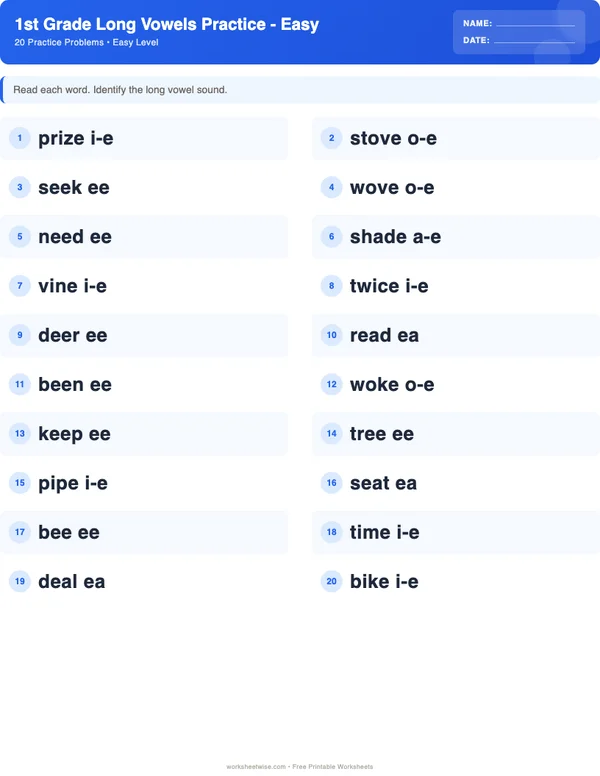
Use a long-vowel sheet only after the immediate question has moved beyond short-vowel CVC decoding. Begin with a controlled CVC/CVCe contrast rather than mixing silent-e, vowel teams, and open syllables.
Checked example 6: cap and cape. Cap has the short-a vowel in a closed CVC pattern. Cape adds final e; its vowel is long /ā/, and the final e is not pronounced as a separate phoneme. Ask the learner to read cap, add the e tile, and reread. Then reverse the change. If the learner reads both as cap, choose another silent-e contrast. If the learner reads both accurately but cannot spell the dictated words, select an encoding task with the same contrast.
This example belongs here because silent-e is one of the live first-grade long-vowel patterns and the pair changes only one letter. Avoid presenting “two vowels go walking” as a rule: the catalogue itself notes exceptions. Teach the exact spelling patterns represented in the selected words.
Run a five-part check that captures strategy
A useful session can be brief. The value comes from consistent observation, not from administering every problem.
1. Name the question
Write one target and one response mode. For example: “Can the learner distinguish short e from short i when spelling CVC words?” Do not combine this with blends, handwriting quality, sentence composition, and reading speed.
2. Model the format with a parallel item
Demonstrate what to do, including how to point, sort, build, or record an answer. Use an item outside the scored sample. Think aloud about the phonics operation: “I hear /m/ /ă/ /t/. I need one letter for each sound: m-a-t.” Do not model an assessed answer and then count its imitation as independent evidence.
3. Sample a small set independently
Use enough items to see whether a pattern repeats. Six to ten carefully selected responses are often more interpretable than 20 mixed responses. Include more than one word for the target pattern and avoid a sequence in which every answer occupies the same position.
During independent work, do not turn every hesitation into immediate teaching. Record what happens first: sounded out accurately, guessed from a picture, named letters without blending, omitted a sound, self-corrected, or requested help. Assistance changes the evidence, so mark it.
4. Give specific feedback
Feedback should identify the phonics operation and prompt another attempt:
- “You read stop as sop. Touch
sandt; say both sounds, then blend the whole word.” - “You chose
ifor pen. Say pen and pin. Which middle sound matches the word I said?” - “You sorted can with the -at words. Read the final two letters in each word.”
- “You used four sound counters for ship. Slide
sandhtogether; they represent /sh/ here.”
Avoid praise that provides no information and corrections that merely supply the answer. After a prompt, give a parallel item so the learner can apply the correction. The IES writing practice guide concerns elementary writing rather than a specific WorksheetWise phonics product, but its emphasis on explicit strategy instruction, modeling, supported practice, and feedback is relevant when the response involves spelling or written word construction.
5. Record an observable next action
Finish the note with a decision another adult could follow:
On six dictated CVC words, the learner represented both consonants in all six and confused
eandiin four. Next: use a two-vowel auditory sort with e/i, followed by four dictated minimal-pair words. Do not introduce long vowels in the next check.
That statement is actionable. “Needs more phonics” is not.
Read error patterns before counting correct answers
A total such as 14/20 compresses unlike responses. Two learners can receive that total for different reasons and need different next sheets.
| Observed pattern | What the response supports | Next sheet or teaching move |
|---|---|---|
Reads map as mp or spells it mp repeatedly |
The medial vowel is not consistently represented in this format | Short-a CVC sound boxes and letter building |
Chooses i in pen and e in pin across several items |
The e/i contrast is unstable in the sampled task | Two-choice oral discrimination, then spelling |
| Reads stop as sop while reading sop accurately | The second sound in the initial blend is being dropped | Initial st/sp sound tapping with simple endings |
| Reads ship with separate /s/ and /h/ sounds | sh is not yet treated as one sound in this context |
One-digraph sh matching and word building |
| Sorts can into the -at family | The sort may be based on the initial letter or general short-a similarity | Contrast -at and -an with endings highlighted |
| Reads isolated items correctly but guesses in a sentence | Word-level use has not transferred consistently to connected text | Brief decodable text limited to taught patterns |
| Misses picture items but reads the printed words correctly when pictures are named | Picture vocabulary or interpretation affected the response | Use oral naming support or a no-picture format |
| Gives correct oral answers but written answers are incomplete or illegible | The written format may be masking phonics knowledge | Permit pointing, tiles, or adult transcription |
One error is a clue, not a pattern. Repeat the same operation with a parallel item before changing the instructional path. Also record self-corrections. A learner who first says sop, tracks st, and changes the response to stop is showing a usable monitoring strategy, even though the first attempt was inaccurate.
The Common Core English Language Arts standards include grade-specific foundational-skills expectations involving sound–spelling correspondences, decoding, and word analysis. Use those descriptions only as one possible reference point. They do not override local curriculum order, determine placement, or show that a particular WorksheetWise sheet is aligned unless such alignment has been separately established.
Adapt the response without changing the phonics target
An adaptation is sound when the phonics decision remains the same.
For a learner who tires during a 20-item page, cover all but one row and complete six representative items. For a learner whose handwriting is slow, provide movable letters for a spelling check. For a learner unfamiliar with a pictured object, supply the object’s name before asking for its first, middle, or final sound. For a multilingual learner, verify that the picture label and target pronunciation are known; do not interpret an unfamiliar English word as evidence about the learner’s general sound awareness.
For ages three and four, turn the page into an adult-led interaction:
- Place pictures for cat, map, and sun on the floor; ask the child to step to the two short-a words.
- Give three counters for hug; move one counter for /h/, /ŭ/, and /g/, then sweep across them.
- Fix the
atending on a small board; let the child exchangec,b, andh. - Hold
shon one card andspluslon separate cards; join two fingers for one digraph sound and move two fingers for the two blend sounds.
These are suggestions derived from the catalogue’s skills and response formats. They preserve the sound–symbol target while reducing desk work. They are not claims about a guaranteed method or outcome.
Some accommodations do change the evidence. Reading every word aloud during a decoding check turns the task into following or matching. Naming the required vowel during a short-vowel check supplies the answer. Allowing a picture guess when the question is independent decoding measures something different. Record such help and repeat later with less support.
Set firm boundaries around interpretation
A practice sheet offers a small observation under specific conditions. It cannot establish a reading level, diagnose dyslexia or another condition, prove curriculum mastery, or predict later achievement. It should not be used to rank learners from a single administration. Do not infer motivation, intelligence, attention capacity, or language ability from unfinished work.
Check environmental explanations before interpreting a response: Was the direction understood? Could the learner see the print? Was the picture label known? Had the pattern been taught? Was the task interrupted? Did fatigue increase across the page? Was the adult supplying cues inconsistently?
When errors remain persistent across explicit instruction, multiple response formats, repeated observations, and appropriate opportunities to practice, document the actual examples and consult the learner’s teacher or an appropriately qualified professional. Bring records such as “read stop as sop on four initial-blend items across two sessions,” not a home diagnosis.
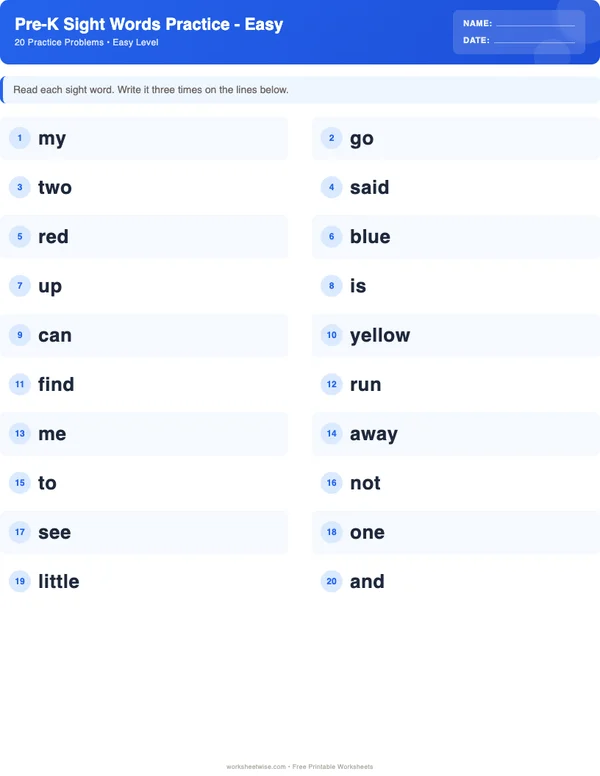
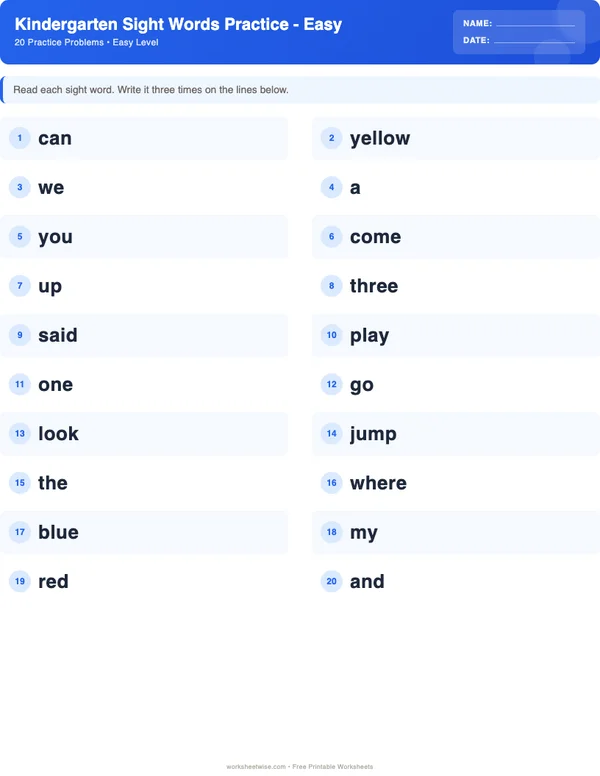
Sight words also require a boundary. The live catalogue includes them as a phonics topic, with tracing, writing, sentence finding, and passage work. Yet a high-frequency word may contain both regular and irregular spellings. If checking said, record whether the learner maps the regular initial and final consonants and how the middle spelling is handled. Do not use one irregular word to judge general decoding.
Turn today’s errors into tomorrow’s sheet
Use a simple decision rule after every check:
- If errors cluster around an earlier component, step back narrowly. A learner dropping the middle sound in CVC words needs CVC segmentation before consonant blends.
- If one contrast is unstable, narrow the alternatives. Confusion between e and i calls for a two-vowel comparison, not a five-vowel page.
- If the skill is accurate only with support, keep the target and reduce support gradually. Move from tiles to printed words, then to independent reading.
- If isolated words are accurate, change the context rather than the pattern. Use a short phrase or decodable sentence containing only taught correspondences.
- If several formats are accurate across more than one occasion, sample the next adjacent pattern while retaining brief cumulative review.
The next sheet should therefore be explainable in one sentence: “I chose an initial st and sp blend sheet because the learner preserved CVC endings but dropped the second initial consonant in four parallel words.” If you cannot state that connection, the selection is probably being driven by sequence, appearance, or grade label rather than evidence.
Tomorrow, take one real entry point—the Pre-K Short Vowels guide and free sheet—and use only six items to test one contrast. Write the target before starting, note the learner’s first strategy on every item, and end by naming the exact format of the next check.
Put it into practice
Use the guide with a real printable
Move from explanation to a short, observable practice task. Check the first item together, then adjust the next session from the learner's actual work.
Open the first free worksheetExplore a neighboring collection