Curated collectionAnswer keys includedPrint-ready PDFs
Summer Learning Math Worksheets
Maintain selected skills through a light spaced schedule, learner choice and short review loops rather than recreating a school day.
Start with a real resource
Browse this worksheet collection
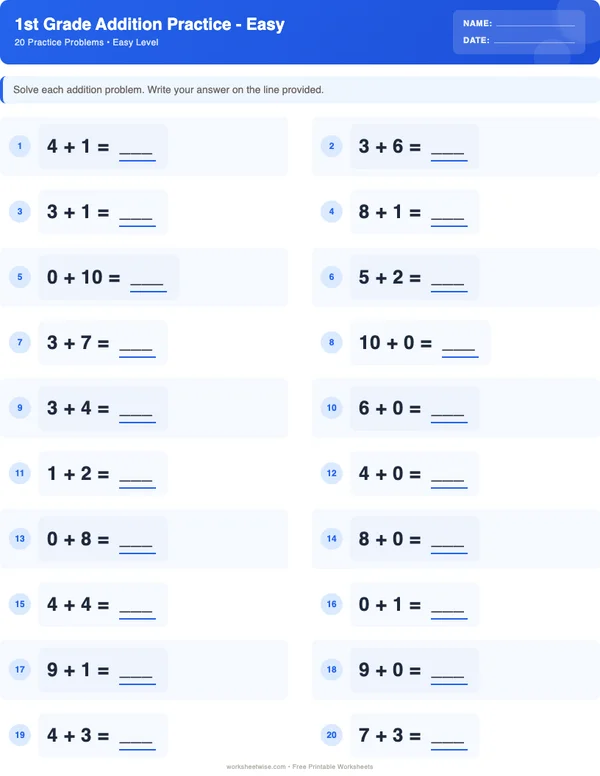
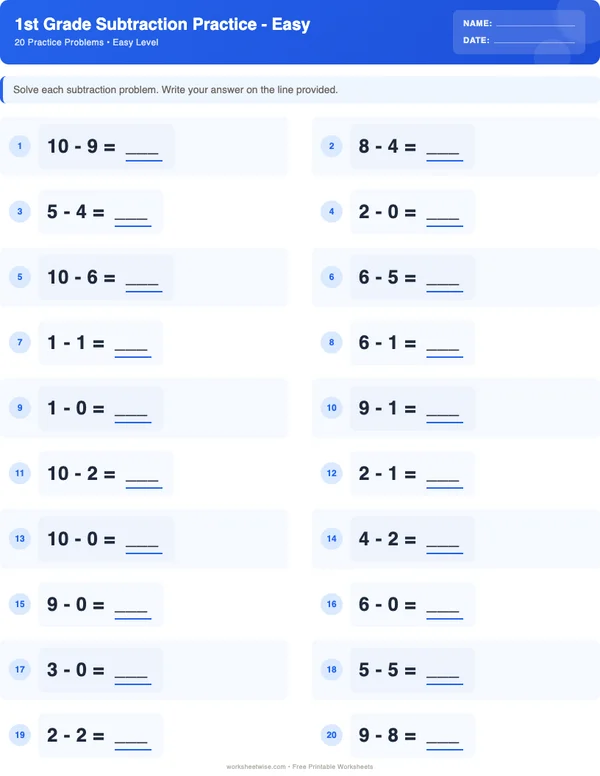
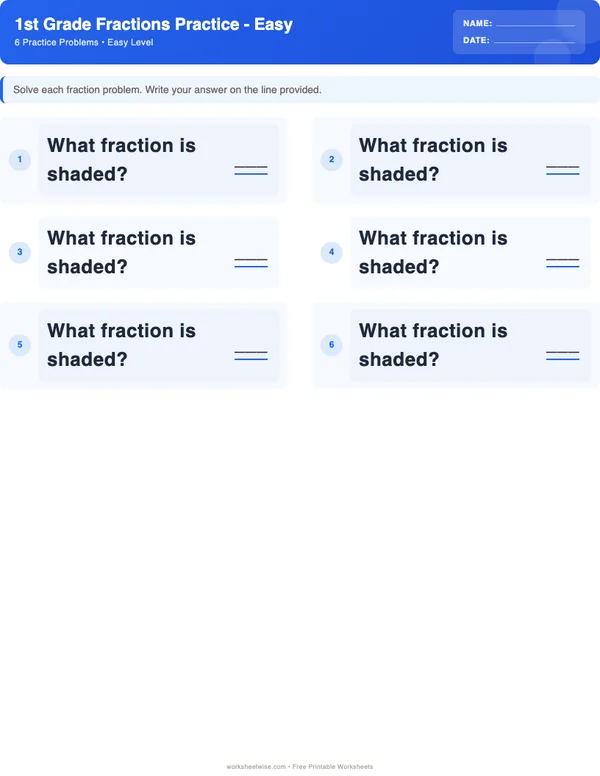
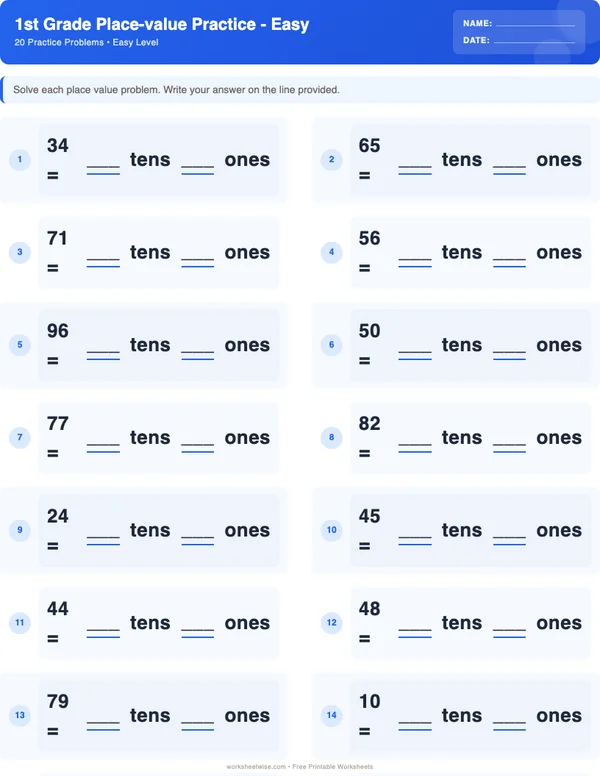
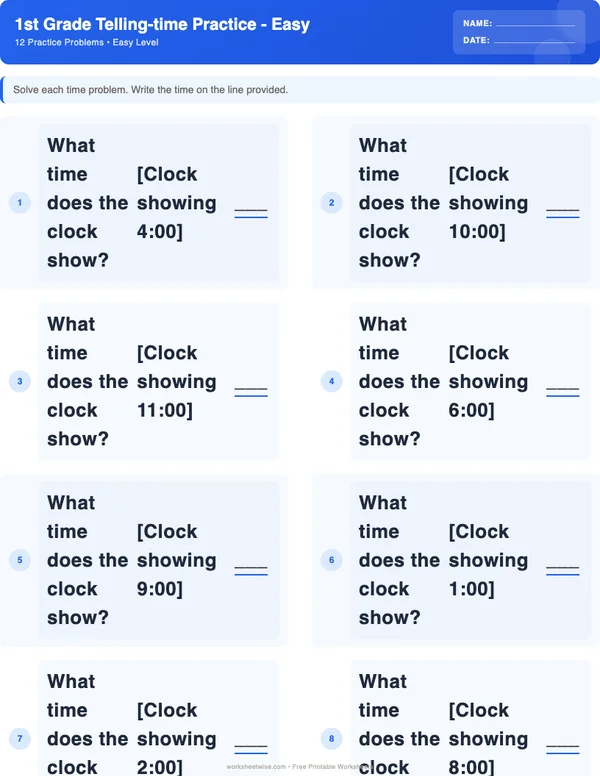
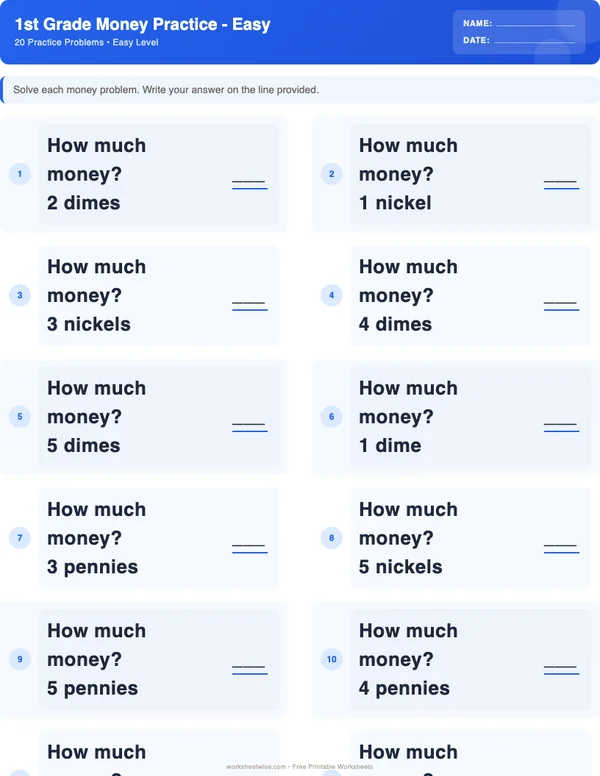
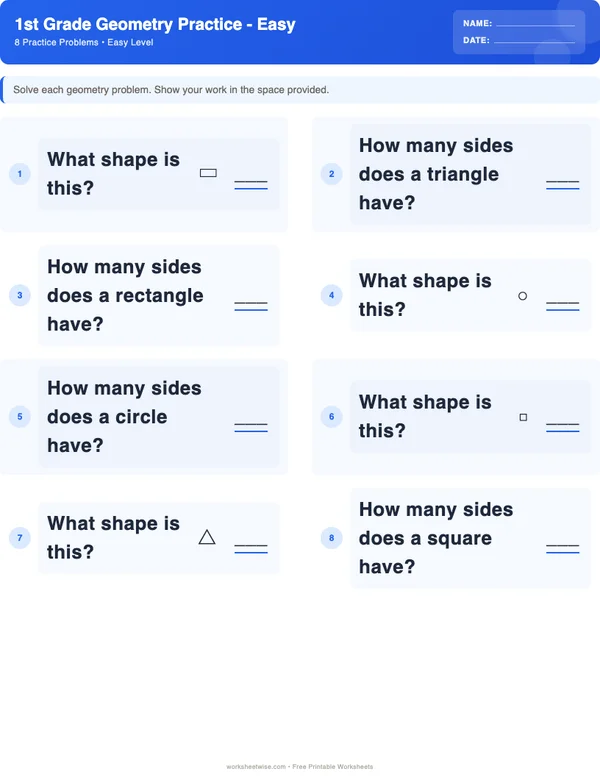
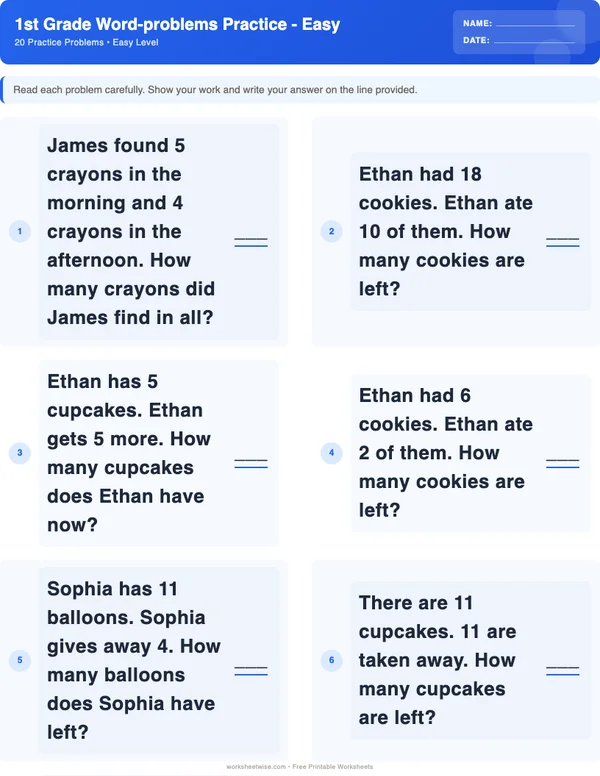
61 relevant free entry points are available. Each one includes a printable learner PDF and separate answer key.
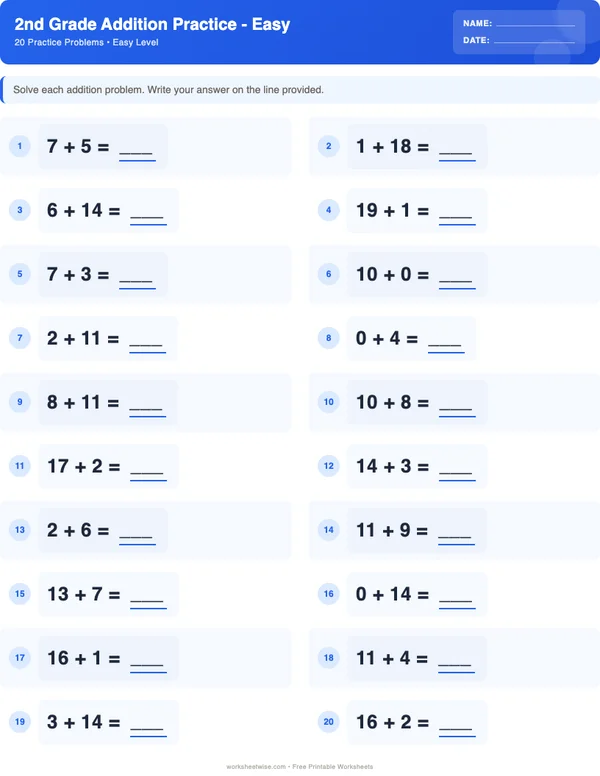
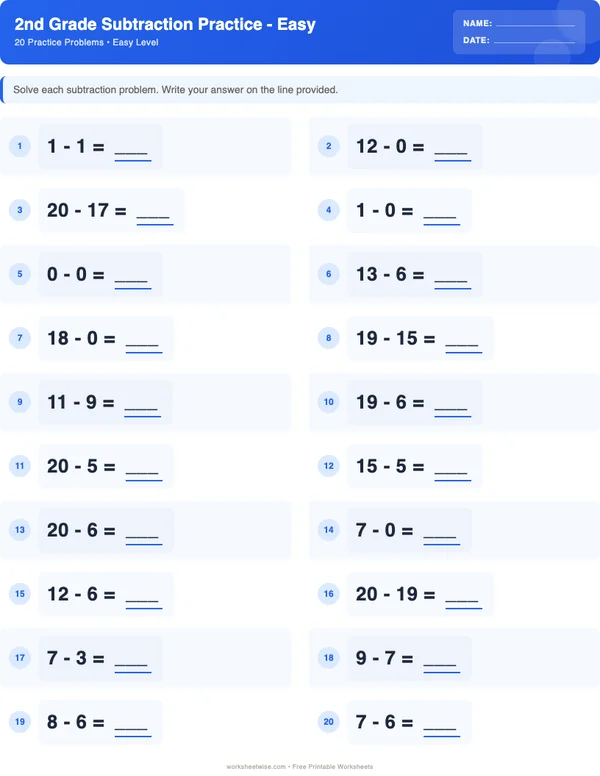
A useful practice loop
Print less. Observe more.
- Choose one skill and model the first item aloud.
- Use a short set and notice the learner’s strategy.
- Change the next task from the work you can see.
Need more than the free sheet?
Plus includes all 1098 matching catalogue variations where available, plus saved deterministic generators and the worksheet designer.
See Plus membershipComplete guide
How to teach and practise summer-learning math worksheets
3,735 words Updated 6 instructional visuals
Keep summer math light, specific, and responsive
Summer math works best as maintenance: choose a small number of skills worth keeping available, revisit them across several days, and let the learner’s work determine what comes next. A practical schedule is three short sessions each week, usually 10–20 minutes depending on the learner and task. Each session should contain one familiar problem, a small set of focused problems, and a brief review of an earlier idea.
Do not attempt to reproduce a school day or complete every available sheet. The live WorksheetWise catalogue for this page includes 1,098 math variants across eight grade labels and 12 topics, with 61 free entry points. That range is useful for selection, but quantity is not a learning plan. Select one current maintenance target, one older review target, and occasionally one application task such as a word problem.
Use grade and age labels as discovery aids rather than placement decisions. Grade labels describe the intended practice level, and local curriculum sequences differ. Begin by inspecting what the learner must actually do: count pictured objects, complete equations, partition shapes, interpret a clock, model a story, or explain a geometric calculation. Then watch one short attempt before deciding whether that task belongs in the week.
A strong summer loop is:
- Choose a narrow target.
- Let the learner select between two suitable formats.
- Work only enough items to reveal a pattern.
- Discuss one correct response and one error.
- Revisit the idea after a gap.
- Choose the next sheet from the observed evidence.
That final decision matters most. A wrong answer is not a reason to assign more of the same automatically. It may point to a representation problem, a response-format problem, a calculation slip, or a misconception requiring a different model.
Build a two-week rhythm instead of a daily school schedule
A two-week plan needs spacing, not volume. Three sessions per week allow a skill to be recalled after a break while leaving room for ordinary summer life. Keep the sequence stable enough to feel familiar but flexible enough to respond to the learner.
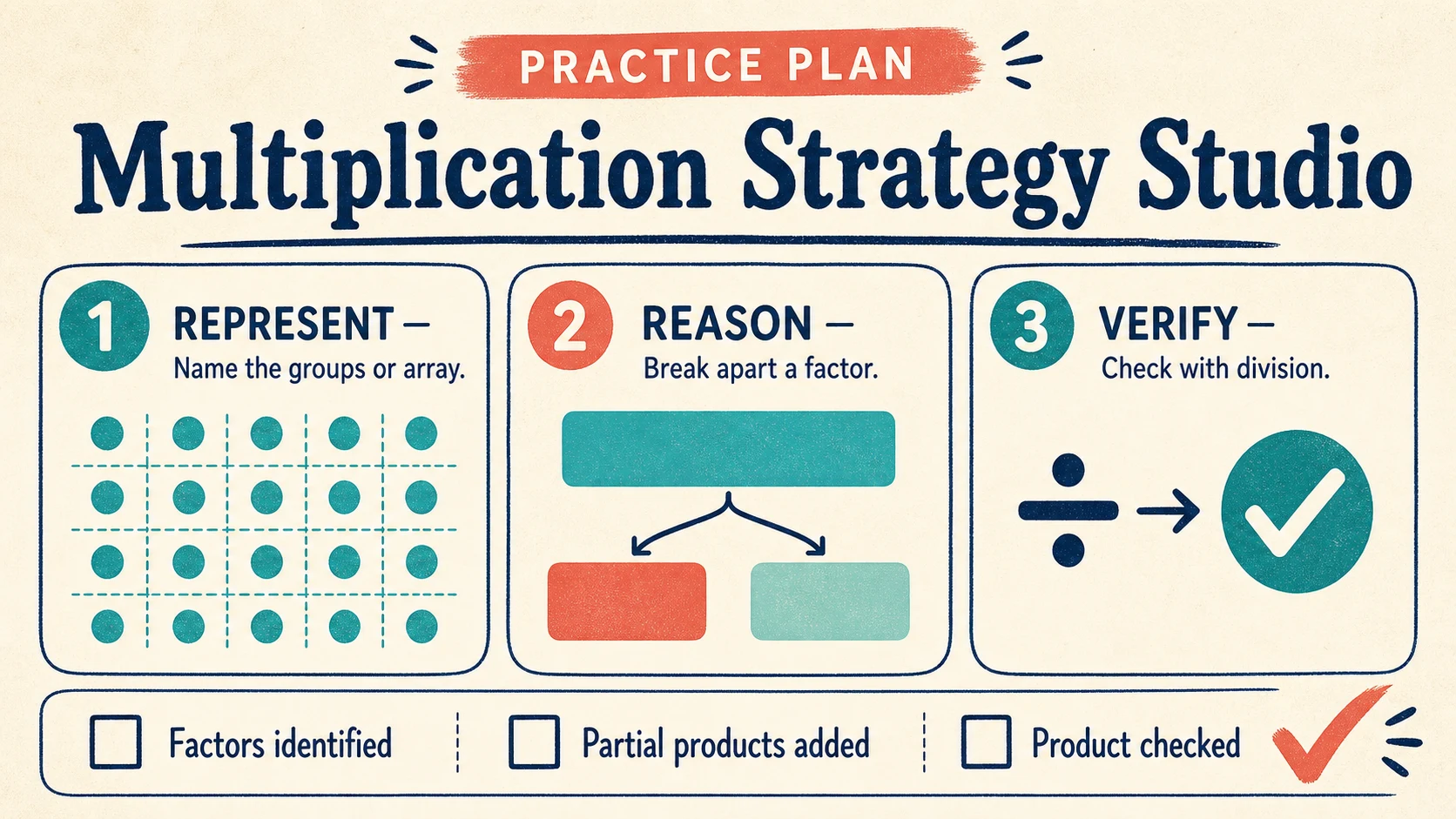
Use the gaps in this multiplication plan deliberately: each return shows whether an equal-groups idea or fact strategy remains available without immediate rehearsal.
A workable pattern is:
| Session | Main purpose | Suggested structure | Decision to record |
|---|---|---|---|
| Monday | Reconnect | One oral warm-up, 4–8 focused items, one explanation | Which representation helped? |
| Wednesday | Retrieve and vary | Two review items, then a changed format or context | Did the learner transfer the idea? |
| Friday | Apply and check | One model, a short mixed set, one self-check | What error pattern should shape Monday? |
For a learner maintaining multiplication, Monday might use arrays, Wednesday might use equations with a missing factor, and Friday might use an equal-groups story. The mathematical relationship remains the target while the response format changes. If the learner can calculate 6 × 4 = 24 but cannot draw or identify six groups of four, more bare facts would conceal the modeling gap. The next task should return to arrays or grouped objects.
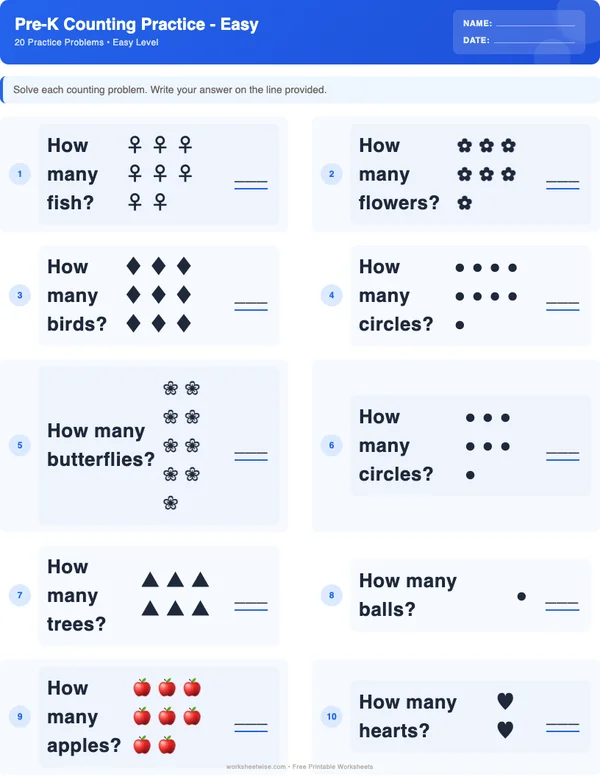
For early counting, the same rhythm should be shorter and more physical. Monday could involve touching and counting six buttons; Wednesday, matching a numeral card to a small set; Friday, moving five toy animals into a “bus” while counting each one. For ages three and four, prioritize brief adult-led oral, matching, manipulative, and movement work over desk work. A 20-problem Pre-K counting sheet is a source of possible prompts, not an instruction to seat a young child until every item is complete.
Use choice without surrendering the target
Offer two choices that practice the same idea: “Would you rather show these additions with counters or a ten frame?” or “Would you like the clock-matching problems or the draw-the-hands problems?” Choice concerns the route, order, or context—not whether the target disappears.
Avoid offering one task that is much harder to read or calculate than the other. If the goal is subtraction situations, a learner should not have to choose between a clear picture problem and a dense paragraph. That choice would mix mathematical demand with reading demand.
Stop when the evidence is sufficient
A sheet does not need to be finished in one sitting. Stop after the learner has shown a stable method across several items, after the same meaningful error appears twice, or when fatigue begins to change the work. Mark the stopping point and return later only if another sample will answer a useful question.
Select sheets by task features, not labels alone
The catalogue’s representative free sheets are marked “easy,” but difficulty should be defined through observable task features rather than attached to a learner. An easier task might use smaller quantities, one operation, direct pictures, fewer answer choices, or a familiar response format. A more demanding task might remove visual supports, vary the unknown’s position, combine operations, require an explanation, or place the same mathematics inside a word problem.
Before printing, inspect five features:
- Mathematical target: What relationship or procedure should remain available?
- Representation: Are quantities shown with objects, pictures, diagrams, number lines, symbols, or words?
- Response: Must the learner point, match, circle, draw, write a numeral, write an equation, or explain?
- Load outside mathematics: How much reading, handwriting, visual scanning, or working memory does the page require?
- Variation: Do items reveal flexible understanding, or do they repeat one surface pattern?
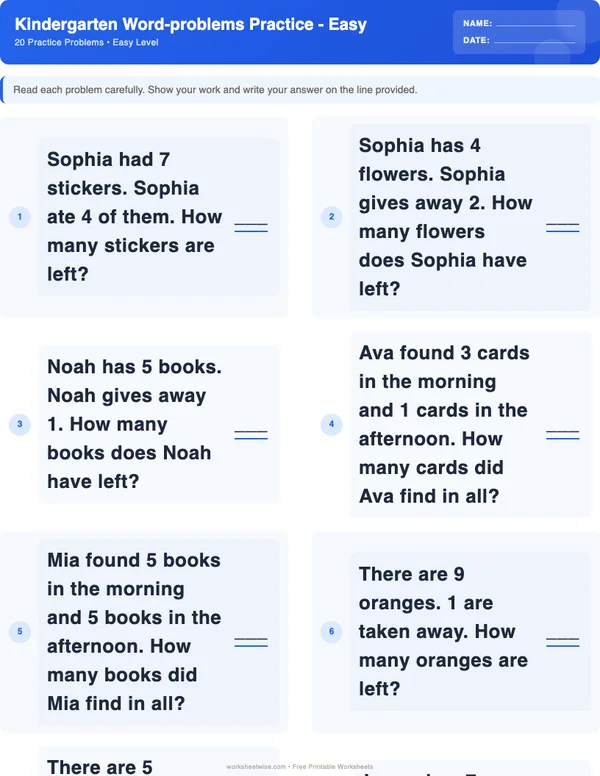
The catalogue’s free Kindergarten word-problem entry has 12 problems, while several Kindergarten counting, addition, subtraction, place-value, and geometry entries have 20. That does not make a 12-problem page automatically shorter or simpler. Reading a situation, identifying quantities, choosing an operation, modeling it, calculating, and checking the answer can demand more than completing a line of familiar equations.
The full worksheet library is therefore best used as a menu. Filter to a likely grade and topic, then judge the visible task. If the learner is maintaining a recently taught skill, select a format they recognize for the first encounter. Introduce a different format only after the underlying idea is visible.
Match the sheet to a precise maintenance goal
“Practice fractions” is too broad. “Recognize whether a shape has been divided into equal parts” is selectable and observable. So are “count a scattered set once each,” “use a known addition fact to solve a related subtraction,” and “distinguish area from perimeter.”
A precise goal also prevents accidental escalation. A sheet requiring fraction comparison should not be chosen merely because the learner previously named halves and fourths. The notation may look similar while the reasoning is different.
Model the mathematics before requiring a compact answer
Models expose relationships that a bare answer can hide. The IES guide for teaching mathematics to young children recommends helping children progress through developmental learning paths and using instruction that builds on what they know. In this guide, that supports a practical summer decision: begin with objects or meaningful representations when the symbolic response is not yet secure, then connect the model explicitly to the notation. This is sourced guidance from IES, not an evaluation of WorksheetWise.
The model should clarify the target rather than decorate the page. Counters can show addition, but an unorganized pile may obscure making ten. Square tiles can distinguish area from perimeter, while an unrelated picture of a garden may add reading and visual demands without improving the geometry.
Checked example: first-grade fractions and equal parts
Suppose a shape is divided into four pieces, but one piece is much larger than the others. The prompt asks whether the pieces show fourths. The checked answer is no: fourths require four equal parts. Merely counting four regions is insufficient.
This example belongs here because the live catalogue includes a 1st Grade fractions free sheet with six problems, and its description begins with partitioning shapes into equal parts and naming fractions. It is an appropriate maintenance target before fraction equivalence or operations.
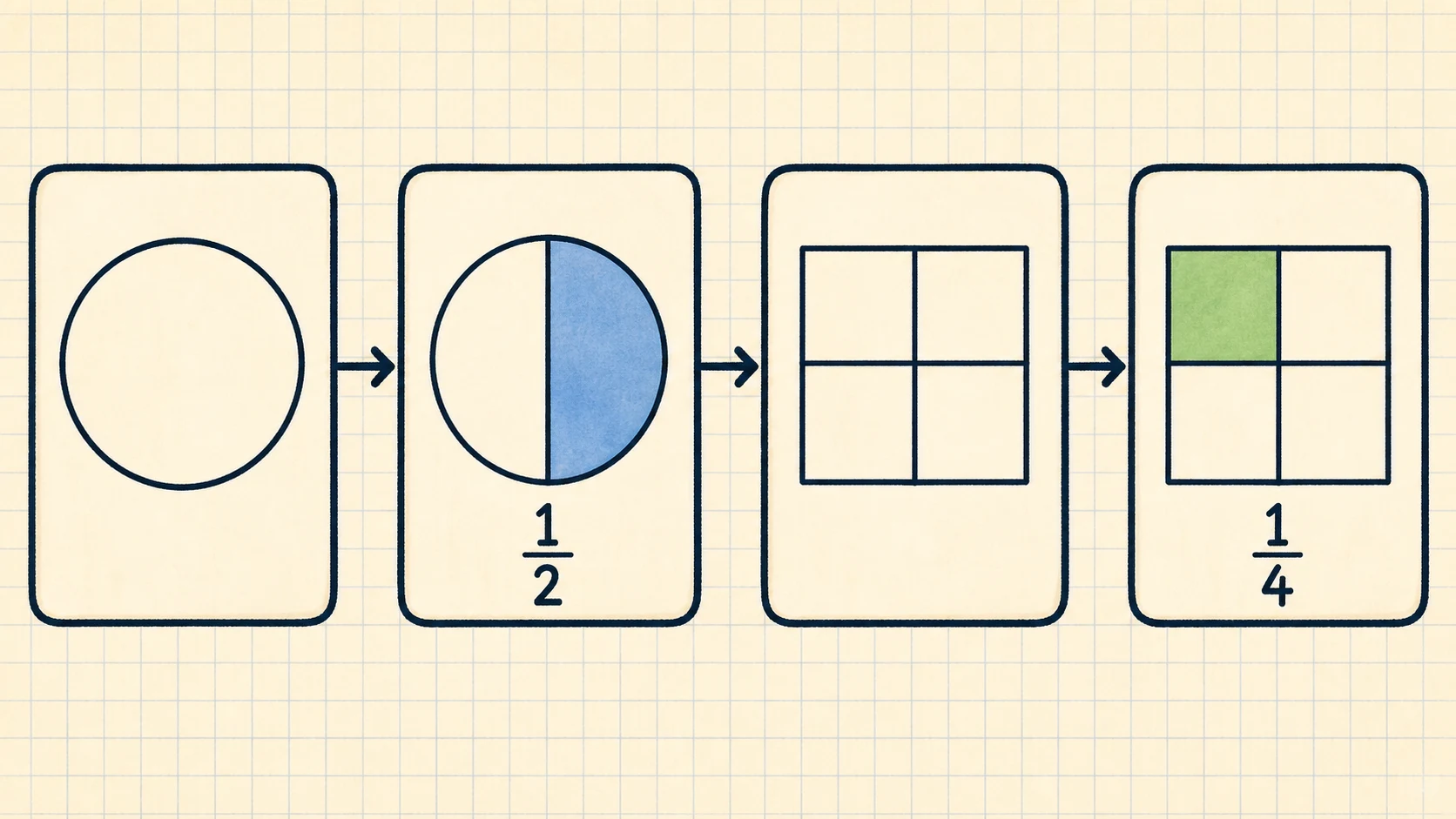
For first-grade summer review, keep the path narrow: equal shares, names such as half or fourth, and a picture or fold that justifies the name.
A useful adult prompt is, “How could we prove the parts are equal?” The learner might fold a matching paper shape, cover regions with equal tiles, or explain that each share must be the same size. If the learner names every four-part shape “fourths,” the next task should emphasize equal versus unequal partitions—not introduce more fraction symbols.
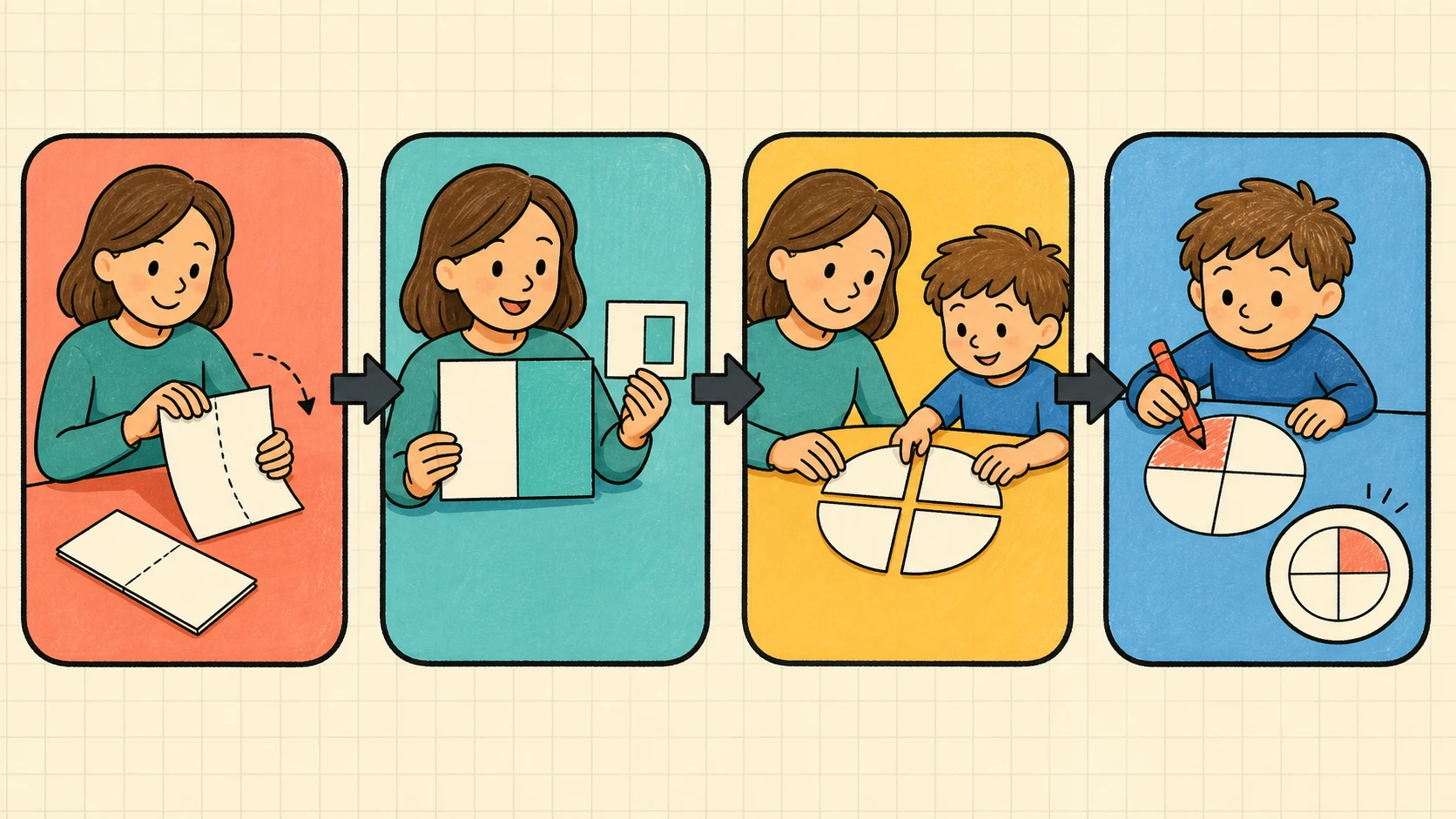
Repeat this short fractions routine with new shapes rather than lengthening the session: notice the whole, inspect the shares, name the fraction, and justify it.
Checked example: Kindergarten addition within a concrete model
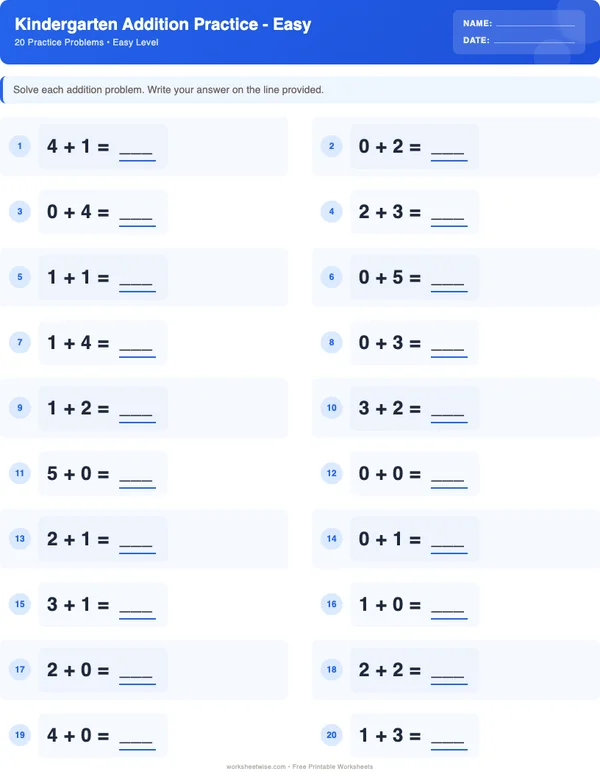
Place seven counters on a ten frame and add two more. The checked total is 9. A learner might see seven as five and two, then add two; another might count on, “eight, nine.” Both methods preserve the meaning of addition.
This example belongs because the live Kindergarten addition entry contains 20 problems and describes a progression from objects and pictures toward number sentences. Its catalogue teaching tip recommends a concrete-to-representational-to-abstract progression. After modeling, connect the result to 7 + 2 = 9.
If the learner recounts all nine counters accurately, the concept is visible even if counting on is not yet used. The next sheet can retain pictures while encouraging counting on. If the learner writes 72, the issue may be interpreting the response format rather than addition itself; ask the learner to read the equation aloud before choosing another sheet. The Kindergarten Addition guide and free sheet is a sensible entry point when objects, pictures, and equations need to remain closely connected.
Treat response formats as part of task selection
A learner may understand a relationship but fail to show it in the expected format. Matching, drawing, circling, filling a blank, writing an equation, and explaining orally are not interchangeable performances.
Before correcting the mathematics, ask the learner to explain what the prompt requires. If a task says “draw the minute hand,” a correctly stated time with an incomplete clock drawing is different from misunderstanding the time. If a word problem asks for an equation and a labeled answer, writing only the correct number is incomplete communication, not necessarily faulty calculation.
Use a three-part response when the target involves application:
- Model: a drawing, bar, array, number line, objects, or geometric diagram.
- Calculation: numbers and operation symbols.
- Statement: a short answer with a unit or object label.
For early learners, pointing and oral explanation can replace extensive writing. Preserve the mathematics by reducing handwriting, not by solving the mathematical decision for the learner.
Checked example: Kindergarten subtraction situations
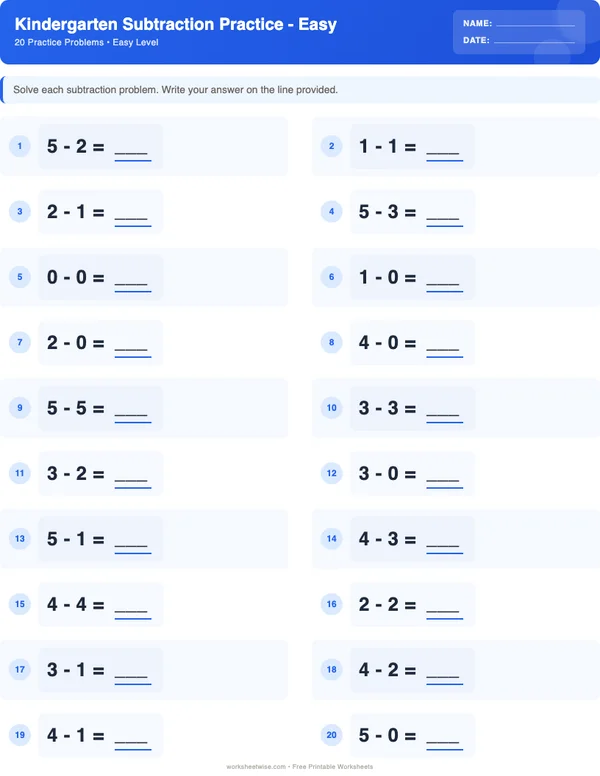
Consider: “Eight shells are on a towel. Three are put in a bucket. How many remain?” The checked model starts with eight objects and removes three. The checked equation is 8 − 3 = 5, so 5 shells remain.
Now compare: “Mia has eight shells. Leo has three. How many more does Mia have?” The checked equation is also 8 − 3 = 5, but the situation is comparison rather than removal.
These examples belong because the live Kindergarten subtraction resource explicitly covers take-away, comparison, and missing-part meanings. If a learner solves removal stories but adds in the comparison story, do not assign a long page of subtraction facts. Choose a sheet or oral set contrasting two story structures with the same numbers. Ask the learner to model both with counters. The Kindergarten Subtraction guide and free sheet can support that targeted comparison.
The calculation alone cannot show whether the learner understands the situation. Conversely, requiring a written paragraph from a child who can model and explain the comparison orally may measure writing more than subtraction.
Use word problems to test modeling, not keyword hunting
Word problems reveal whether a learner can connect quantities and relationships. They also introduce reading and language demands, so interpretation must be cautious. Do not diagnose a learning difficulty from worksheet performance or treat one incorrect story problem as proof that an operation is unknown.
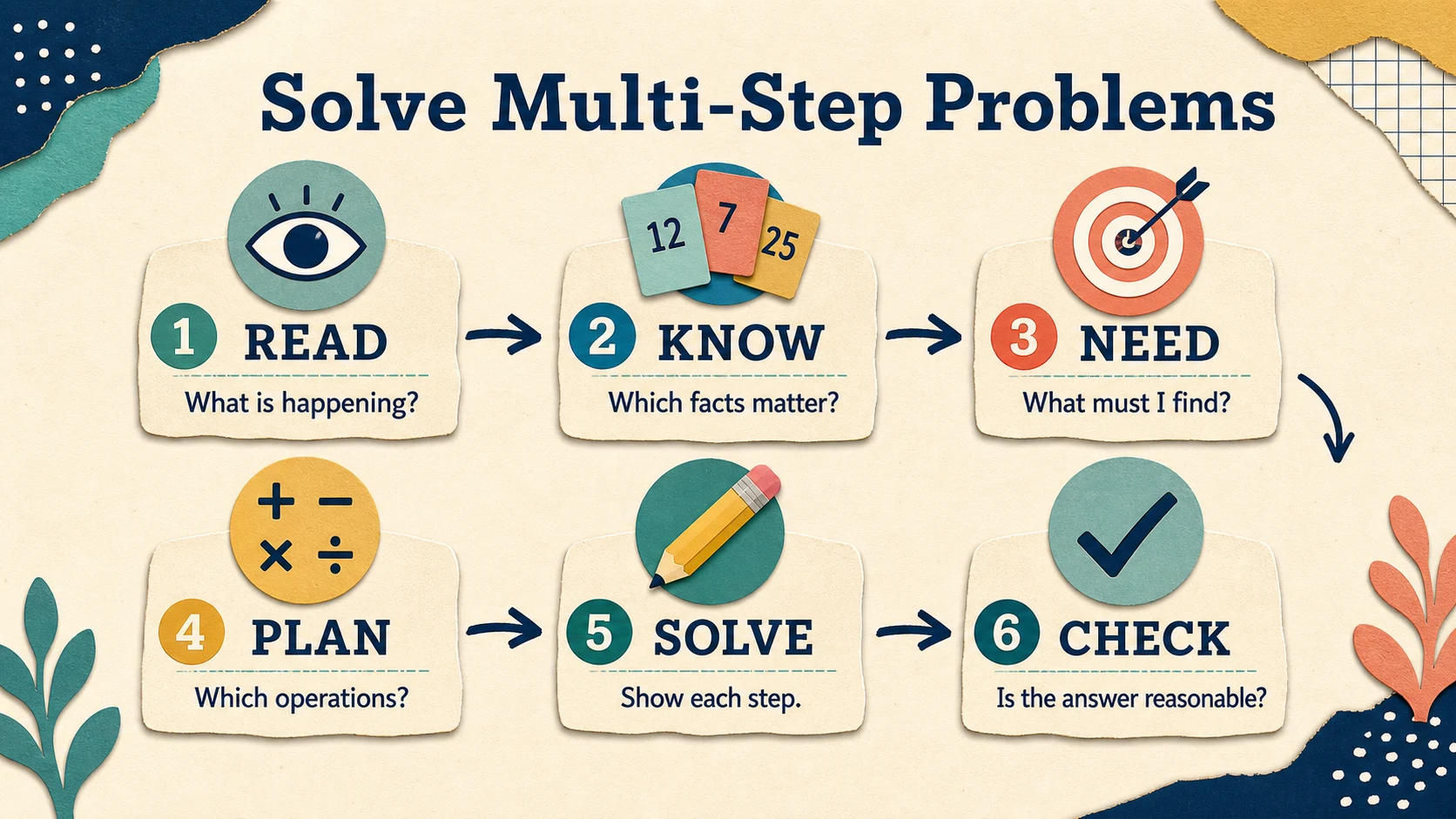
In upper-grade summer review, a word-problem answer should connect the situation, chosen model, operation sequence, and reasonableness check.
The catalogue recommends reading the whole problem, retelling it, identifying known and unknown information, choosing a strategy, solving, and checking. It also cautions against relying on words such as “left” or “in all” as automatic operation signals. That is page-specific catalogue guidance. The IES practice guide on assisting students who struggle with mathematics likewise provides recommendations involving systematic instruction, mathematical language, representations, number lines, and word problems. It did not assess these worksheets.
Checked example: an upper-grade two-step situation
“A camp has 6 cabins. Each cabin holds 8 campers. Five campers leave early. How many campers remain if every bed was initially filled?”
The checked reasoning is:
- Six equal groups of eight:
6 × 8 = 48. - Five leave:
48 − 5 = 43. - 43 campers remain.
This example belongs in a summer math guide because it combines maintenance of multiplication with interpretation and a second operation. It also illustrates why keyword methods fail: the important work is identifying the initial equal-groups structure and the subsequent change.
If a learner writes 6 × 8 × 5, ask for a sketch or bar model. If the learner models 48 campers and crosses out five but calculates 48 − 5 incorrectly, the story structure is sound; select a short subtraction review rather than another page of multi-step stories. If the learner calculates both steps but reports “43 cabins,” keep the mathematics and require a unit check.
Read errors as evidence for the next representation
Correction should be brief, specific, and usable. Avoid covering a page in marks or immediately demonstrating every missed item. Select one representative response and ask:
- “What does this number represent?”
- “Show the quantities another way.”
- “Where did your answer first stop matching the model?”
- “Can you check it with an inverse operation, estimate, or second representation?”
Then classify the evidence provisionally. A single response may be a slip. Two or three similar responses across changed numbers are stronger evidence of a recurring misconception.
Counting errors: sequence versus one-to-one correspondence
If a young learner says the number sequence correctly but counts one object twice, change the arrangement and response. Give a scattered group of seven buttons and ask the learner to move each button into a cup while counting. The checked total remains seven because moving the objects does not change the quantity.
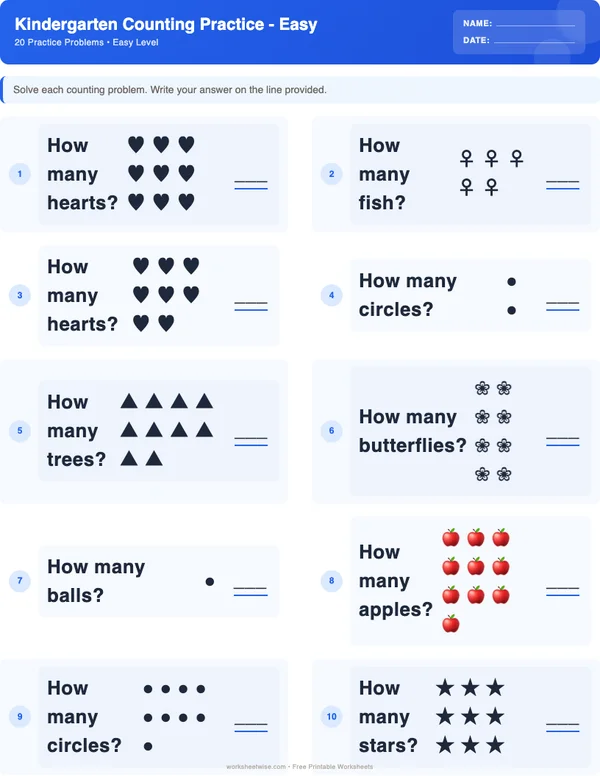
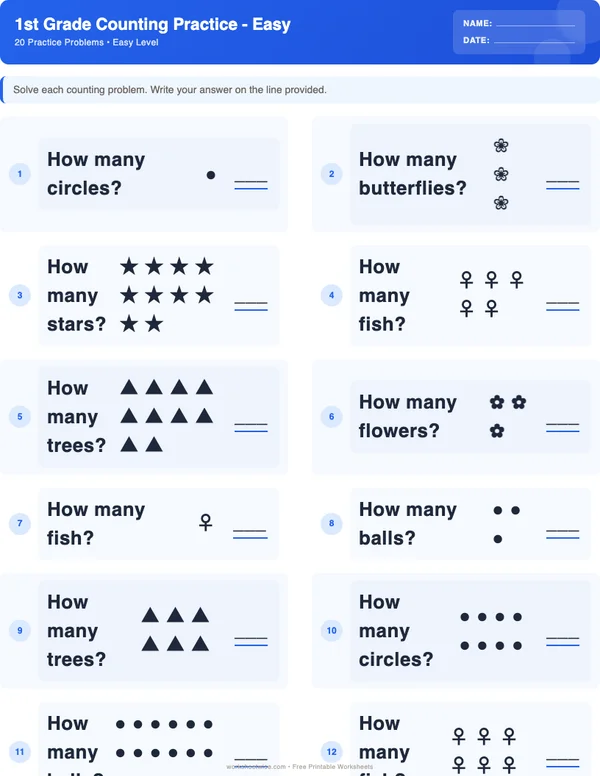
This example belongs because the catalogue’s Pre-K and Kindergarten counting entries distinguish reciting number words from counting objects one-to-one. If moving each object solves the problem, the next activity should continue physical tracking before returning to pictured sets. Use the Pre-K Counting guide and free sheet as a prompt bank, especially for brief adult-led work. Do not interpret incomplete desk work from a three- or four-year-old as a placement result.
Place-value errors: quantity versus digit reading
Suppose a learner represents 14 as one group of ten and four ones. The checked decomposition is 14 = 10 + 4. If the learner builds four tens and one one after seeing the digits 1 and 4, ask them to count the total and compare it with 14 on a number line.
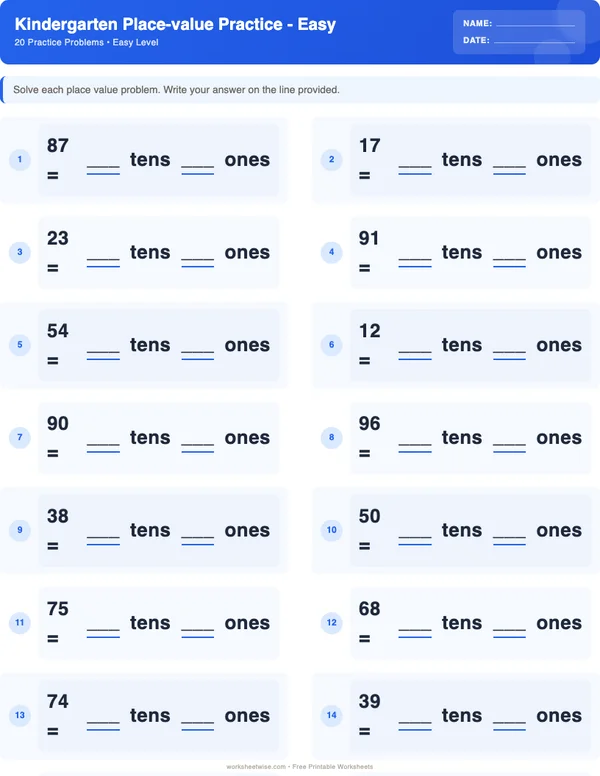
The next task should use bundling or base-ten materials and require matching each model to a numeral. A page of additional written numerals would not address the model-symbol mismatch. The Kindergarten Place Value guide and free sheet is relevant when the maintenance target is composing teen numbers rather than merely naming digits.
Decimal errors: inspect place value before reteaching an algorithm
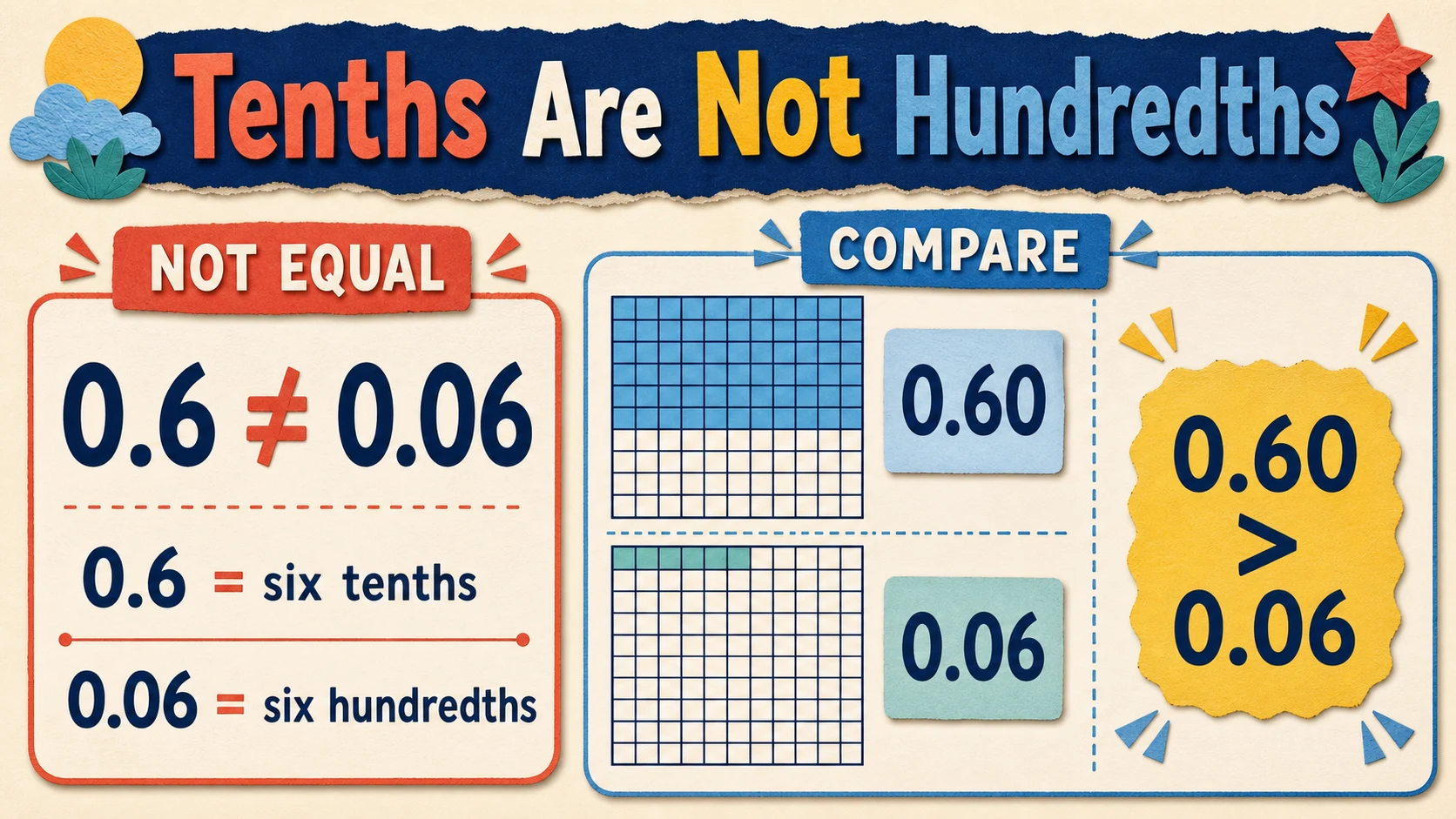
Use this decimals error map to choose a response, not a label: compare magnitudes, rebuild the place-value model, or revisit aligned notation according to the work shown.
If a learner claims 0.8 < 0.35 because 8 is less than 35, ask them to represent both on a number line from 0 to 1 or rename 0.8 as 0.80. The checked comparison is 0.80 > 0.35. The error suggests whole-number reasoning has been applied to decimal notation.
Do not respond first with a long set of comparison symbols. Select a sheet that makes tenths and hundredths visible, asks for equivalent decimal notation, or places decimals on a number line. If the learner models the quantities correctly but reverses < and >, the next task should focus on the comparison-symbol response format instead.
Although the supplied image labels this as a 3rd grade decimals example, grade labels remain intended practice levels, not universal sequencing. Check local curriculum expectations and the learner’s previous instruction.
Give feedback that preserves ownership of the solution
Effective summer feedback should reopen the problem without turning the adult into the solver. Start with what the representation shows, then identify the exact conflict.
Useful feedback sounds like:
- “Your drawing shows four equal groups, but your equation shows five groups. Which one matches the story?”
- “You counted eight objects, but the last number you wrote was nine. Touch each object once and try again.”
- “Your tiles cover 12 square units. Which marks show the distance around the outside?”
- “You wrote 3:45. Check whether the hour hand has reached 4 yet.”
- “Your answer is 43. What unit belongs with it?”
Praise should also be evidence-based: “You used the related addition fact to check the subtraction” is more informative than “You’re a math star.”
After feedback, have the learner solve one close variation independently. That one item is the review loop. If it is correct and the learner can explain the relationship, space the next encounter by several days. If the same error returns, change the representation or reduce unrelated demands.
Checked example: geometry from model to answer
A rectangle is 6 units long and 4 units wide. The checked area is 6 × 4 = 24 square units. The checked perimeter is 6 + 4 + 6 + 4 = 20 units, or 2(6 + 4) = 20 units.
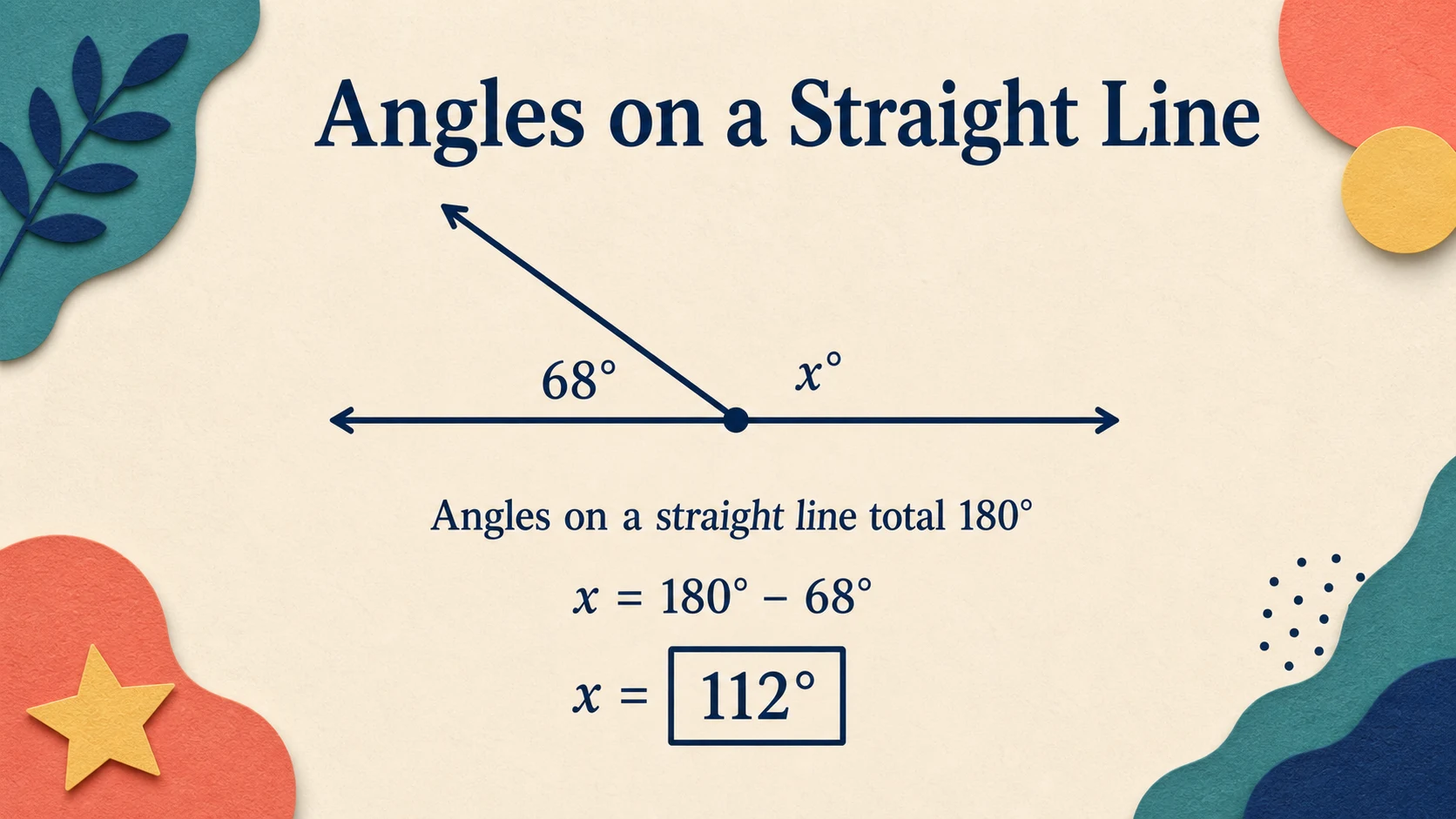
Keep the model attached to the geometry calculation: covered interior units support area, while boundary lengths support perimeter.
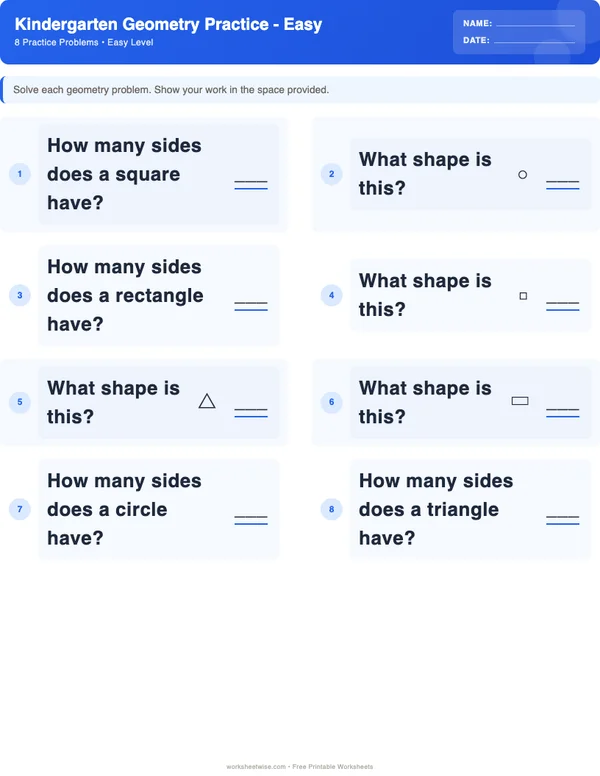
This example belongs because geometry appears in the live catalogue and progresses from identifying shapes to area, perimeter, volume, angles, and coordinate geometry. It also shows how two correct calculations can answer different questions.
If the learner gives 24 for both area and perimeter, build the rectangle with 24 square tiles, then trace or count only the outer edges. The next sheet should contrast area and perimeter on two or three rectangles. If the learner identifies the correct measure but makes 6 × 4 = 20, choose a brief multiplication review while keeping one geometry check later in the week.
The Common Core State Standards for Mathematics can help adults inspect broad grade-level expectations and mathematical practices, but it should not be used here to claim standards alignment for a particular WorksheetWise sheet. Local sequences and adopted standards vary.
Adapt access while keeping the mathematical decision intact
An adaptation preserves the target when it removes an obstacle unrelated to that target. Read a word problem aloud if decoding is obscuring the learner’s mathematical model. Enlarge a clock face if visual scanning is the barrier. Let a learner point, dictate, or use number cards when handwriting is not the skill being maintained. Cover part of a busy page and reveal one row at a time.
Do not preserve the appearance of the task while removing its mathematical decision. If the target is choosing an operation, telling the learner which operation to use changes the task. Instead, ask for a retelling or model. If the target is counting a scattered set, arranging the objects into an easy row is a temporary scaffold; check the skill again with a scattered arrangement later.
For ages three and four, adaptations should usually move away from extended desk work. Turn a printed counting item into an adult-led oral prompt, match numeral cards to small collections, count jumps or claps, and handle real objects. Keep the interaction brief and end while the child is still participating.
Other boundaries matter:
- A worksheet sample cannot establish a diagnosis.
- A correct page does not prove durable mastery or transfer.
- A difficult page may reflect unfamiliar directions, language, handwriting, fatigue, or visual load.
- Grade labels do not override prior teaching or local curriculum.
- Summer maintenance should not be used to rush into unintroduced material.
- Timed work should not replace a model or strategy when understanding is still being established.
When several explanations remain possible, collect a small second sample in another format rather than making a larger claim.
Turn each observed pattern into one next-sheet decision
End every session with a written note containing three pieces of information: the target, the evidence, and the next action. Keep it behavioral and brief.
For example:
- Target: Equal parts in first-grade fractions. Evidence: Counted four regions but ignored unequal sizes twice. Next: Choose three equal-versus-unequal partition items and add paper folding.
- Target: Kindergarten subtraction comparison. Evidence: Solved removal correctly but added in a “how many more” story. Next: Contrast one removal and one comparison story using the same numbers.
- Target: Decimal magnitude. Evidence: Treated digits after the decimal as a whole number. Next: Compare tenths and hundredths on a 0–1 number line.
- Target: Area versus perimeter. Evidence: Used multiplication for both questions. Next: Build one tiled rectangle and trace its boundary before completing a two-item contrast.
- Target: Counting scattered objects. Evidence: Stable number sequence, duplicated two objects. Next: Count by moving each object, then retry a new scattered set.
A broadly correct session calls for spacing or modest variation, not immediate acceleration. A single calculation slip calls for a quick check. A recurring misconception calls for a different model. An unclear response format calls for explicit directions and one equivalent task. Fatigue calls for stopping, not lowering the mathematical judgment permanently.
For the next session, open the free deterministic worksheet generators and create one short set around the exact skill recorded in your note. Use only enough items to test whether the learner can apply the revised model after a gap; let that observable response—not the desire to finish a packet—choose the following sheet.
Put it into practice
Use the guide with a real printable
Move from explanation to a short, observable practice task. Check the first item together, then adjust the next session from the learner's actual work.
Open the first free worksheetExplore a neighboring collection