Curated collectionAnswer keys includedPrint-ready PDFs
School Readiness Phonics Worksheets
Pair low-pressure print tasks with oral language, play and hands-on models without using a worksheet as an age-placement test.
Start with a real resource
Browse this worksheet collection
22 relevant free entry points are available. Each one includes a printable learner PDF and separate answer key.
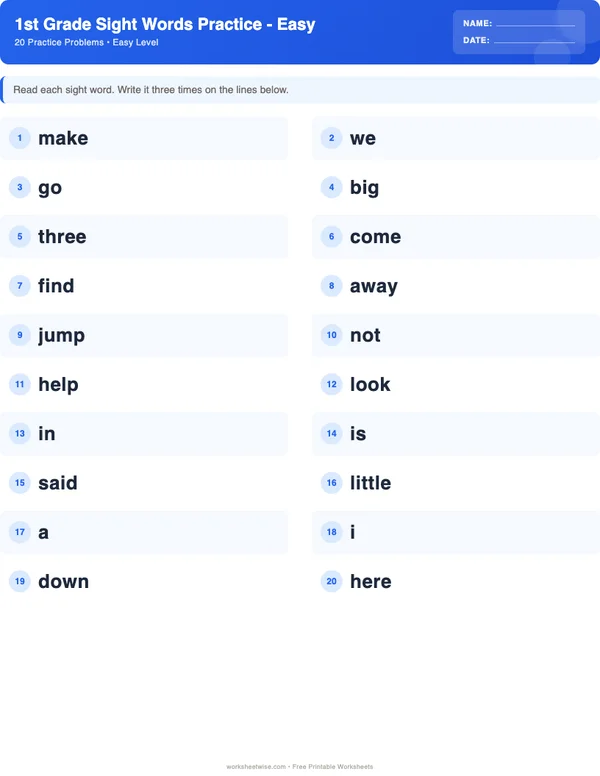
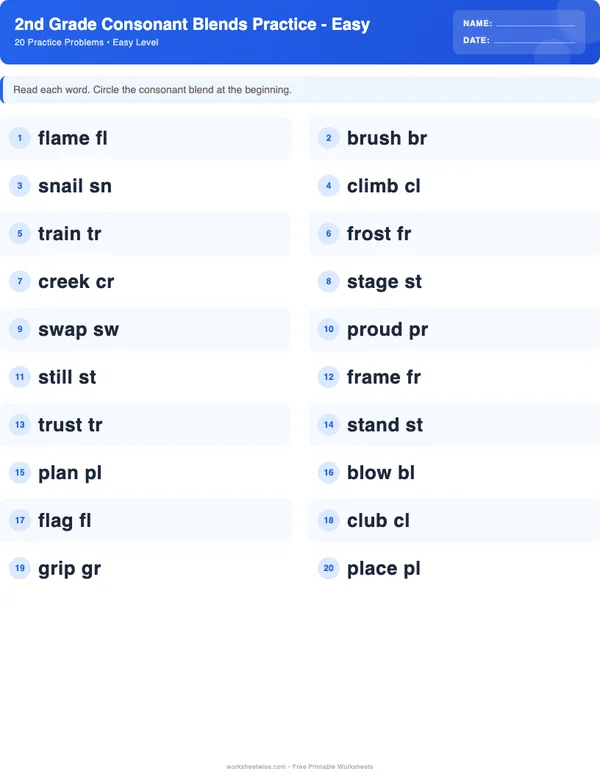
A useful practice loop
Print less. Observe more.
- Choose one skill and model the first item aloud.
- Use a short set and notice the learner’s strategy.
- Change the next task from the work you can see.
Need more than the free sheet?
Plus includes all 396 matching catalogue variations where available, plus saved deterministic generators and the worksheet designer.
See Plus membershipComplete guide
How to teach and practise school-readiness phonics worksheets
3,291 words Updated 6 instructional visuals
Use the worksheet as one turn in a phonics conversation
School-readiness phonics worksheets work best as brief practice after an adult has modeled the sound pattern with spoken words, objects, counters, or movable letters. Select a sheet for the operation it asks the learner to perform—not for the age or grade printed on it. Then watch how the learner responds, give feedback about the sound or spelling pattern, and choose the next sheet from the error you actually observed.
A productive sequence is:
- Say and hear the target sound without print.
- Build or change one word with counters or letters.
- Complete a small, selected part of a worksheet.
- Read or explain the answers aloud.
- Record one observable error pattern.
- Repeat, narrow, or extend the skill at the next session.
That sequence keeps print connected to speech. It also prevents a 20-item sheet from becoming an endurance exercise or an informal age-placement test.
The live WorksheetWise catalogue contains 396 phonics variants across four grade labels and seven topics, including 22 free entry points. Those labels help adults discover likely material; they do not decide where a learner belongs. Grade labels describe an intended practice level, and local curriculum sequences differ. Age should likewise be treated as a discovery aid rather than a placement decision.
For children ages three and four, prioritize brief adult-led oral, matching, manipulative, and movement activities over desk work. A child might point to two pictures that begin alike, push counters for the sounds in map, or jump once for each sound before marking one answer. Stopping after three successful responses may reveal more than insisting on all 20 problems.
Choose the sound operation before choosing the sheet
A page can look child-friendly while asking for a demanding combination of listening, decoding, handwriting, vocabulary, and visual scanning. Before printing, identify the phonics operation and the response format separately.
Decide what the learner must notice
Useful target operations in this catalogue include:
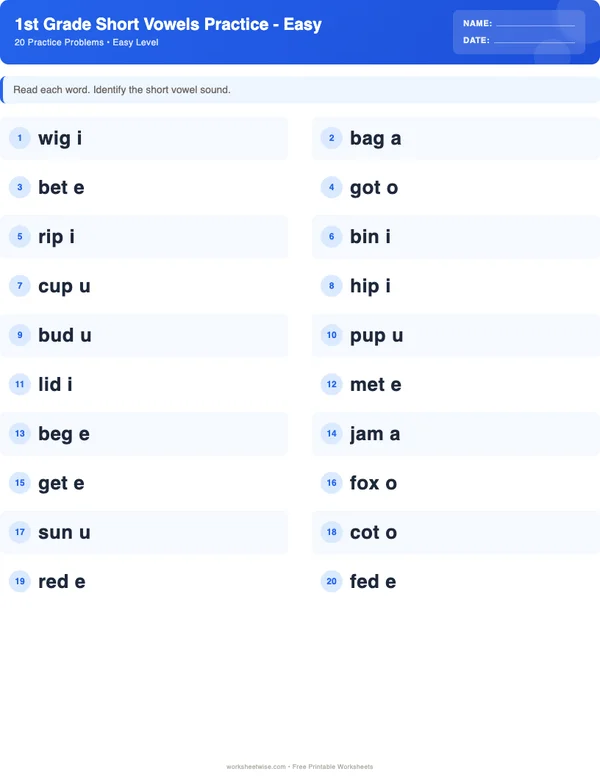
- Hearing the middle vowel in a CVC word
- Blending three sounds into a word
- Segmenting a spoken word for spelling
- Keeping both sounds in an initial or final consonant blend
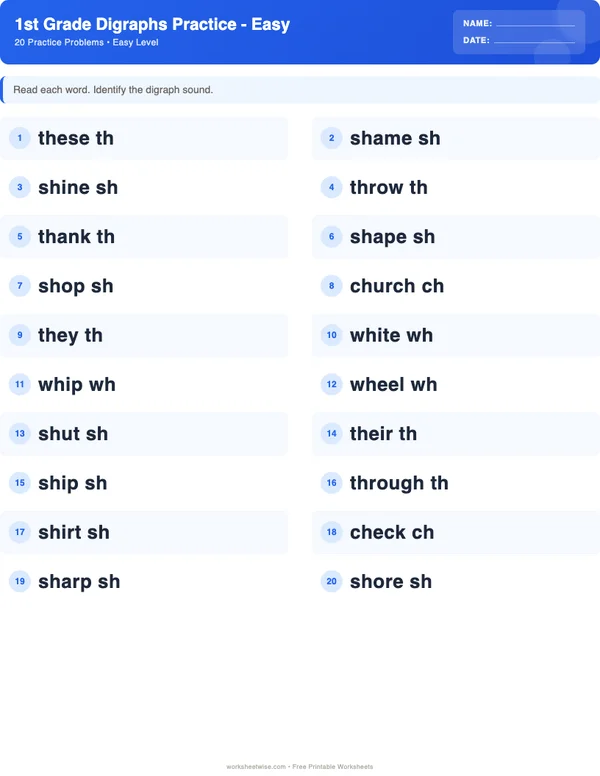
- Treating two letters as one sound in a digraph
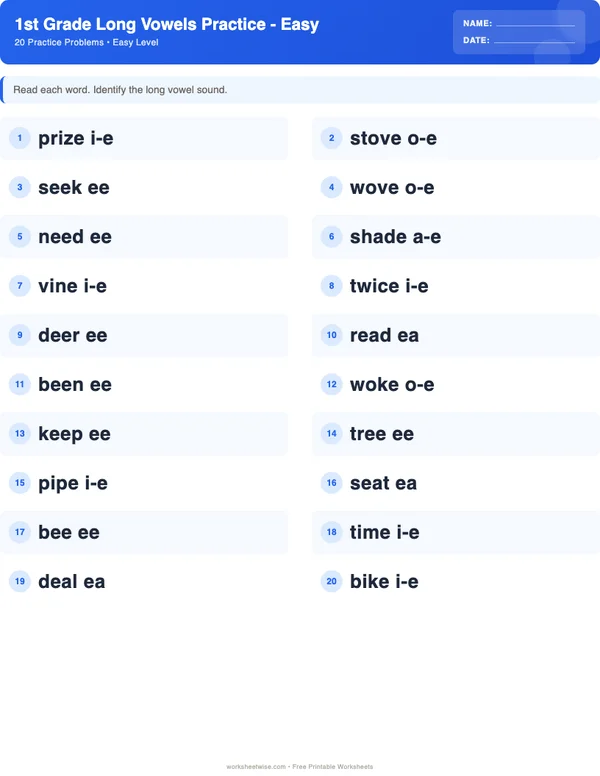
- Comparing short-vowel and long-vowel patterns
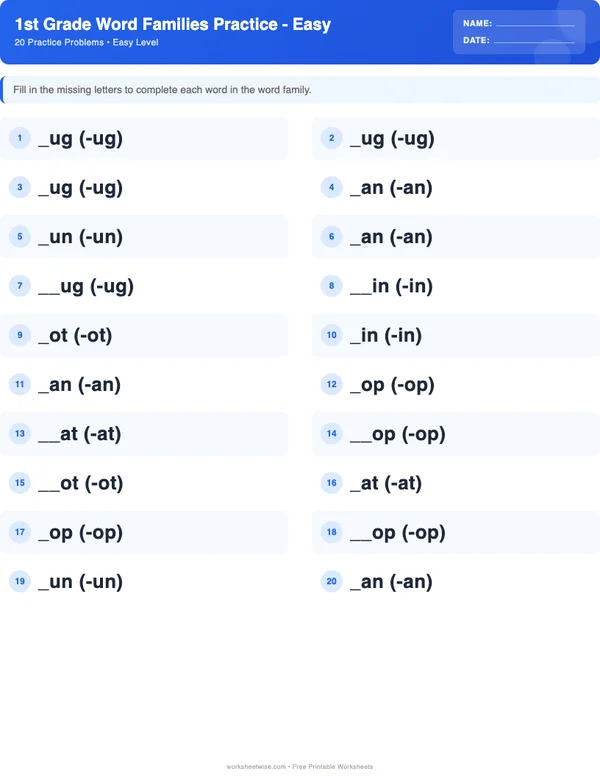
- Recognizing a shared word-family ending
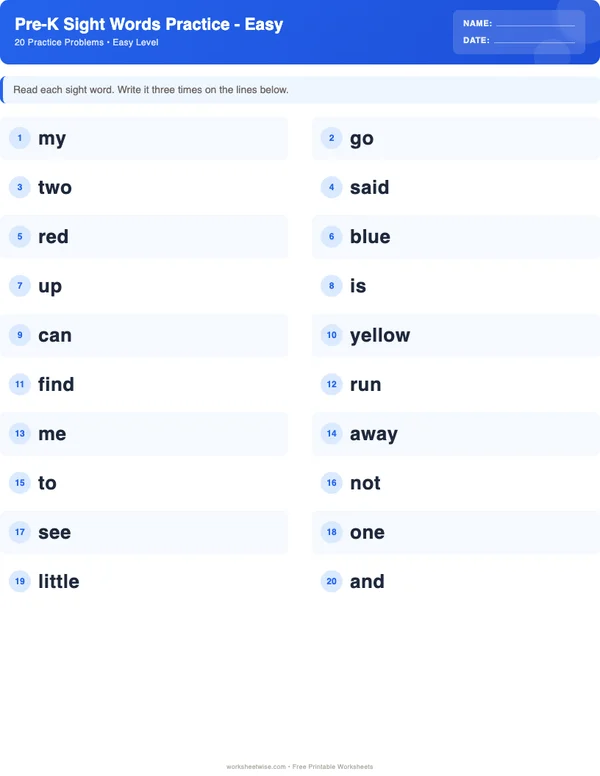
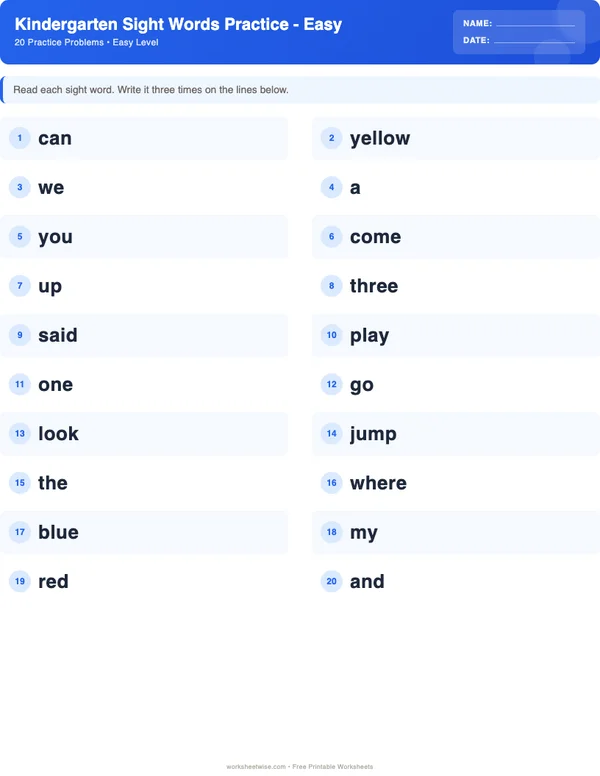
- Reading a taught high-frequency word in context
Choose one primary operation. If the goal is hearing short i, a picture sort between pin and pen is better targeted than a page that also requires the learner to read several directions and write complete sentences.
Inspect how the learner must respond
A response can require pointing, matching, circling, cutting and sorting, choosing a letter, building a word, copying, spelling from dictation, reading aloud, or composing a sentence. These formats are not interchangeable.
A learner may correctly point to ship after hearing /sh/ but struggle to write the word. That result does not yet show confusion about the digraph; handwriting, letter retrieval, or spelling may have interfered. Conversely, accurate picture matching can sometimes come from guessing by meaning rather than decoding. Ask the learner to read the printed word or explain the relevant sound before drawing a conclusion.
In this catalogue, the free sheets labeled “easy” contain 20 problems. Define that difficulty through observable task features: familiar picture support, one clearly repeated pattern, limited competing spellings, short words, and a constrained response such as matching or filling one letter. The label does not describe the learner, and 20 visually simple items may still be too many for one sitting.
Build the prerequisite with speech and objects
The IES foundational reading practice guide recommends teaching learners to connect segments of speech to letters and to decode words through knowledge of letter–sound relationships. It also addresses reading decodable words in isolation and connected text. This is authoritative instructional guidance; it is not an evaluation of WorksheetWise or any sheet in the catalogue.
A worksheet should follow a short model of the same operation it expects.
Model a CVC word in three channels
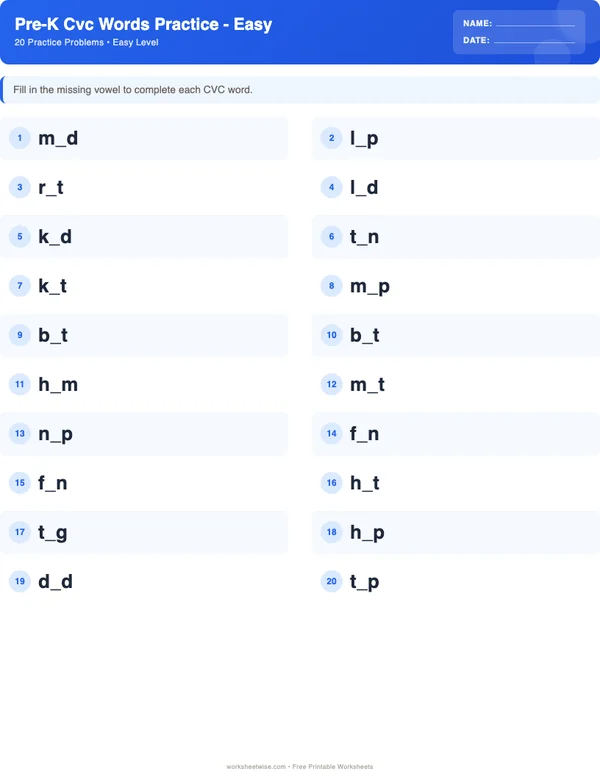
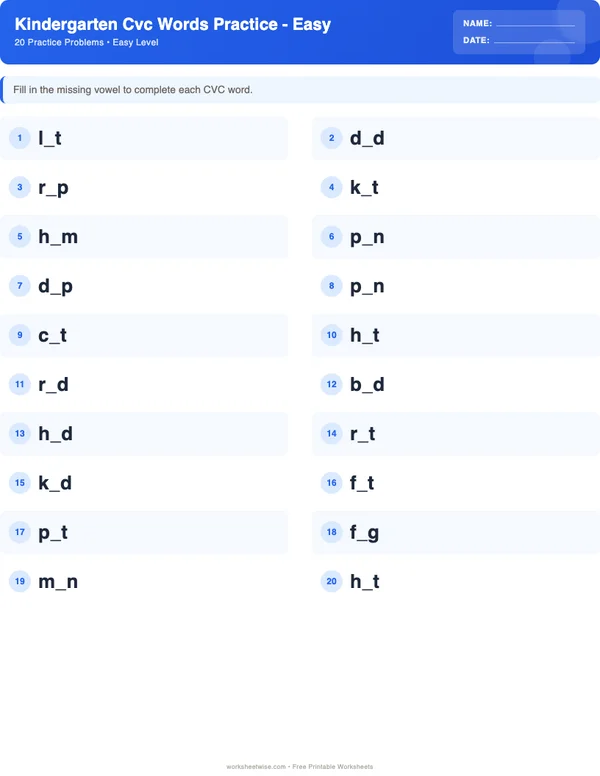
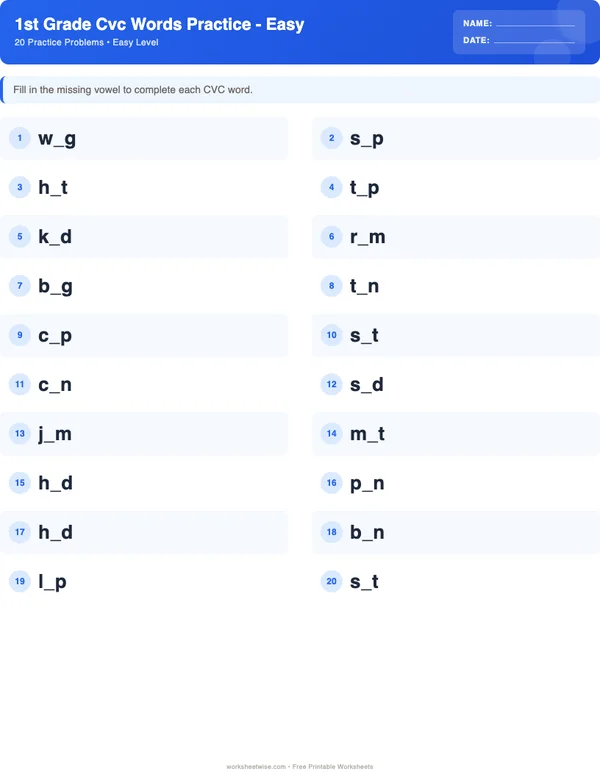
Suppose the selected Pre-K CVC Words guide and free sheet includes picture matching, word building, filling blanks, or reading among its 20 items. Before using it, model map:
- Say map naturally.
- Repeat it slowly while stretching the sounds: /mmmăăăp/.
- Push one counter into each of three boxes for /m/, /ă/, and /p/.
- Replace the counters with m, a, and p.
- Sweep a finger under the letters and blend map.
- Change m to t, then blend tap.
This example belongs here because CVC words are a verified live Pre-K, kindergarten, and first-grade topic, and the catalogue specifically describes sound boxes, continuous blending, word building, decoding, and spelling. The adult is not testing whether the child “is at Pre-K level.” The adult is checking whether three spoken sounds can be coordinated with three letters.
If the child says each sound accurately but cannot blend the word, return to the finger sweep and continuous blend. If the child blends map but writes mp, return to the three counters and ask, “Which sound goes in the middle?” Those are different errors requiring different next actions.
Contrast blends with digraphs physically
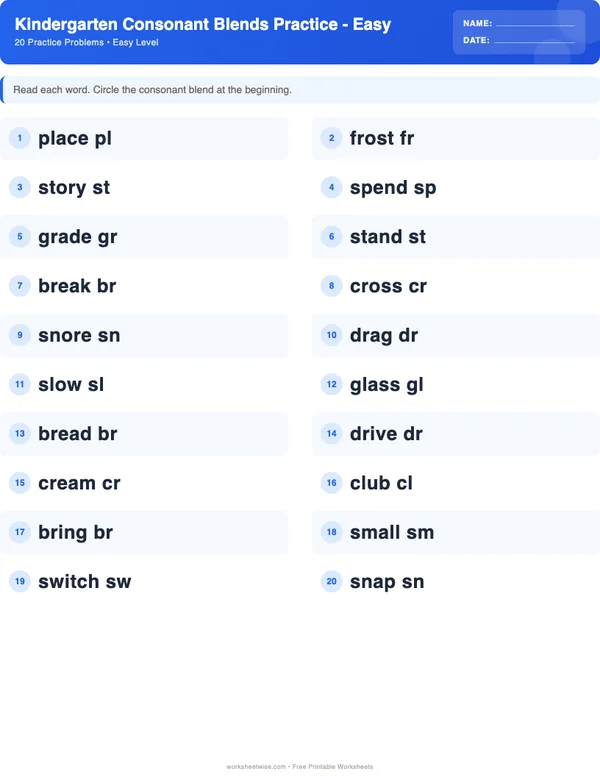
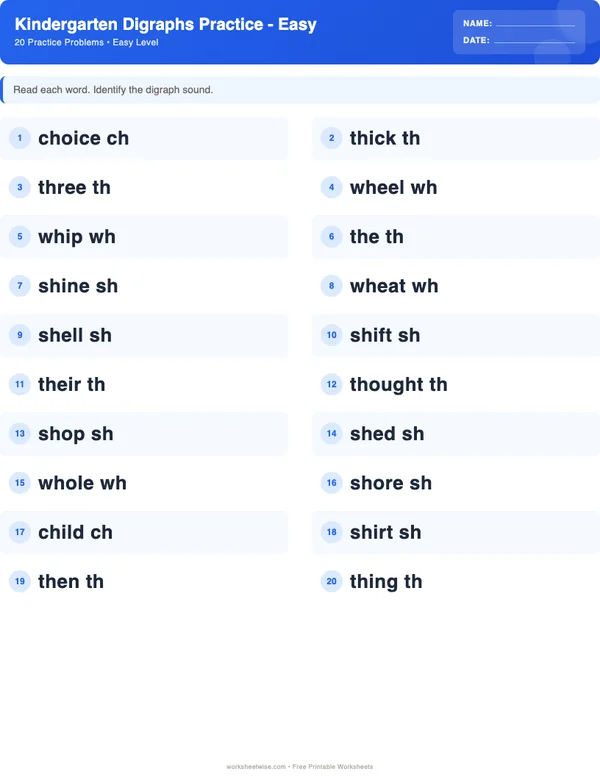
For a blend, place two counters apart because both consonant sounds remain audible. In stop, use four counters: /s/ /t/ /ŏ/ /p/. For a digraph, put two letter tiles together over one sound box. In ship, s and h occupy one sound position for /sh/, followed by /ĭ/ and /p/.
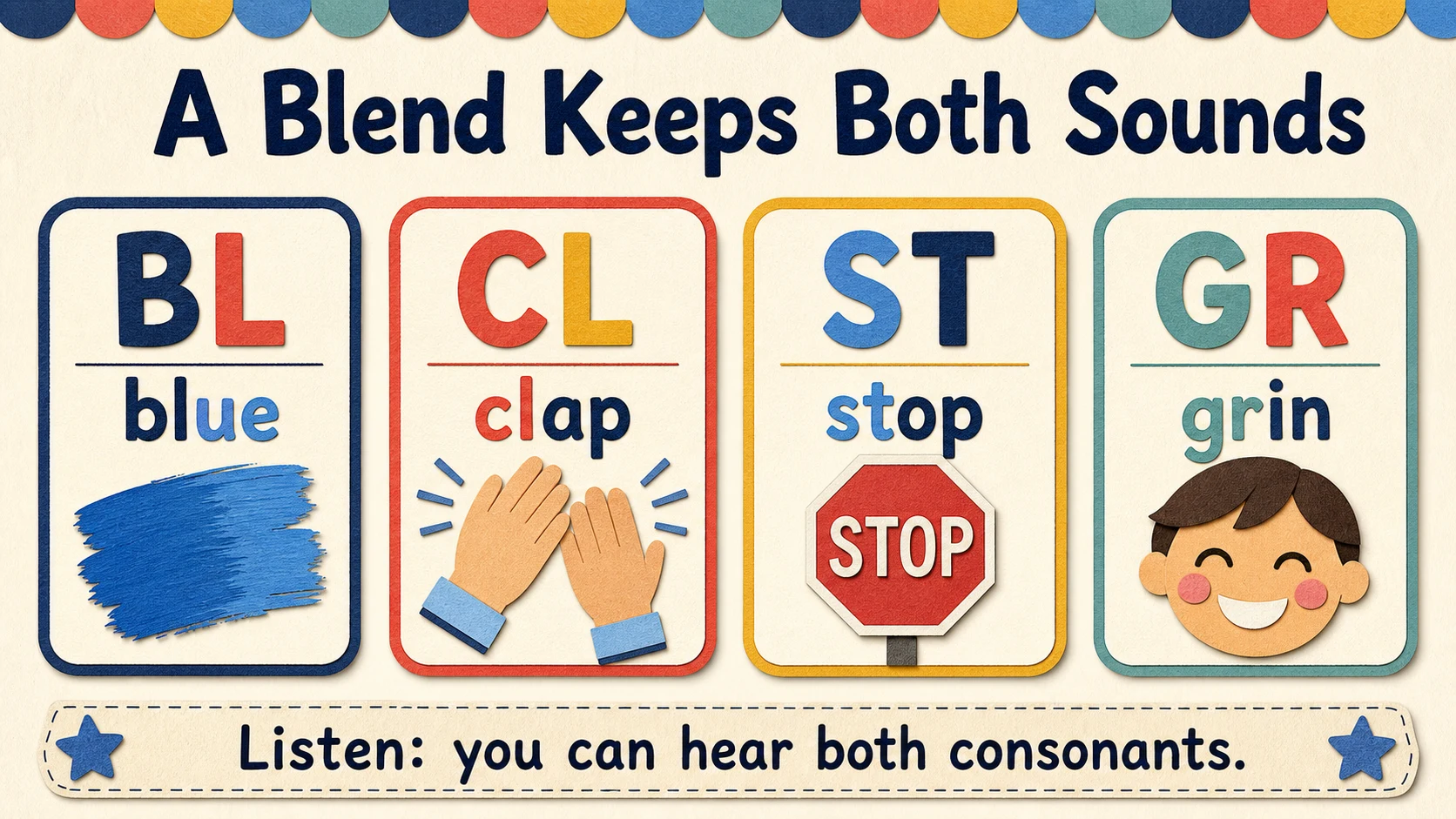
Use the map to locate the exact blend operation—hearing both consonants, decoding the whole word, or spelling the blend—before selecting a response format.
This model makes a critical distinction visible: st represents two sounds, while sh represents one. If a child reads stop as sop, the next lesson should preserve the blend and reduce other demands. If a child reads ship with separate /s/ and /h/ sounds, the next lesson should return to the two-letters/one-sound model.
Run a repeatable listen–build–print–read routine
Keep the routine stable while changing the target words. Predictability frees attention for the phonics decision.
Listen and move
Begin with two or three spoken examples and no visible words. For short a, say map, sit, and tap. Ask the learner to move a counter forward only when the middle sound is /ă/. Repeat any item naturally; do not distort the vowel to make the answer obvious.
For ages three and four, this may be the entire successful lesson. Use pictures or familiar objects, keep the adult in control of pacing, and add movement: step into the /ă/ hoop, place the cat card beside the apple anchor, or push one block for each sound. A worksheet can wait until the oral distinction is reliable and the learner still wants another turn.
Build and change
Build one word with movable letters. Change only one feature at a time so the learner can notice its effect:
cap → cape
The first word has the short vowel /ă/. Adding final e changes the word to cape, with long /ā/. Ask the learner to read both, name what changed in the spelling, and say what changed in the vowel sound.
This is a fully checked contrast: cap is CVC, while cape is CVCe, and the live first-grade long-vowels description includes silent-e words such as make, ride, and hope. It belongs in school-readiness practice only after short-vowel CVC reading is reasonably secure during the activity—not because a learner has reached a particular birthday.
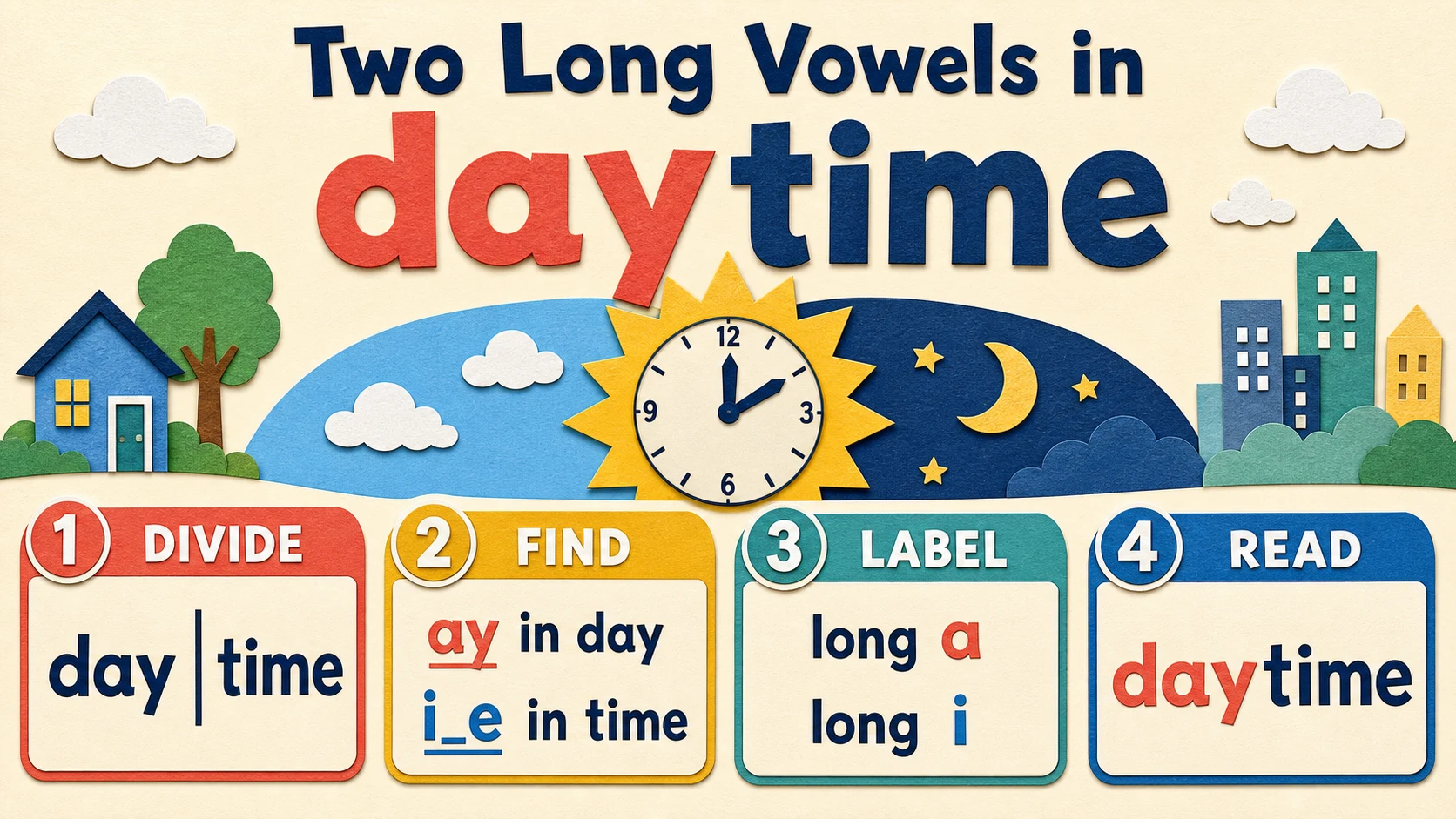
The worked sequence illustrates how an adult can expose the spelling change before asking for an independent long-vowel response.
Print a small sample
Cover the lower part of a 20-problem page and expose three to five items. Model the first response, complete the second together, and invite the learner to try the rest. If the page mixes several spellings, mark only the subset matching the day’s target.
Do not require completion merely because the page has been printed. A brief sample with an oral explanation gives clearer evidence than a finished page produced through guessing, prompting, or fatigue.
Read back and transfer
Ask the learner to read each completed word, including any word originally answered through picture matching. Then dictate one new word with the same pattern. After working with cap/cape, for example, build or write hop/hope. This checks whether the learner can transfer the contrast rather than repeat the modeled answer.
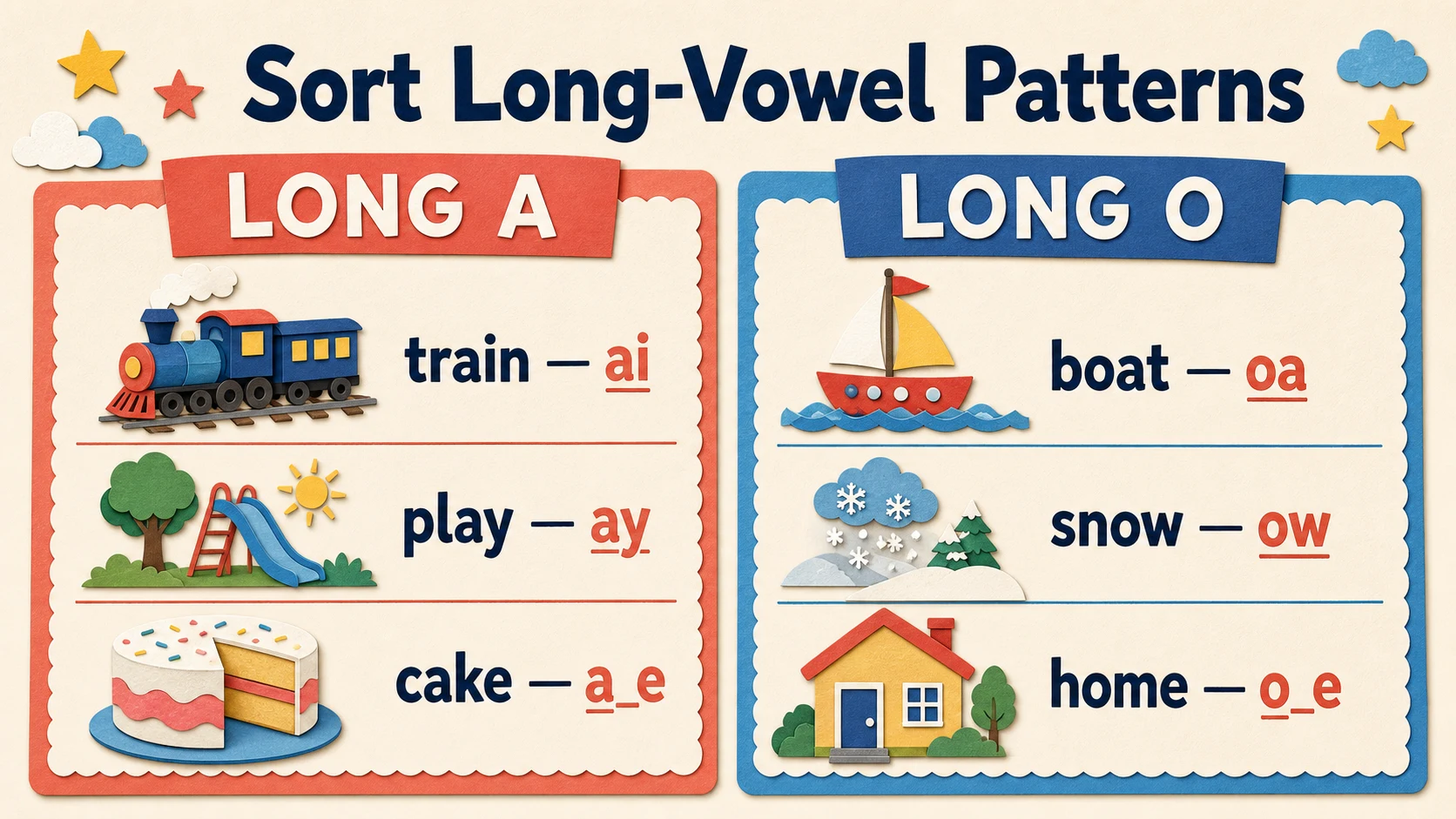
Keep the routine—oral contrast, concrete model, selected print items, read-back, and one transfer word—more consistent than the worksheet layout.
Compare four live skill paths before progressing
The representative resources are not a single ladder that every learner must climb in identical order. Compare the demands and choose the narrowest useful practice.
Short vowels before mixed CVC reading
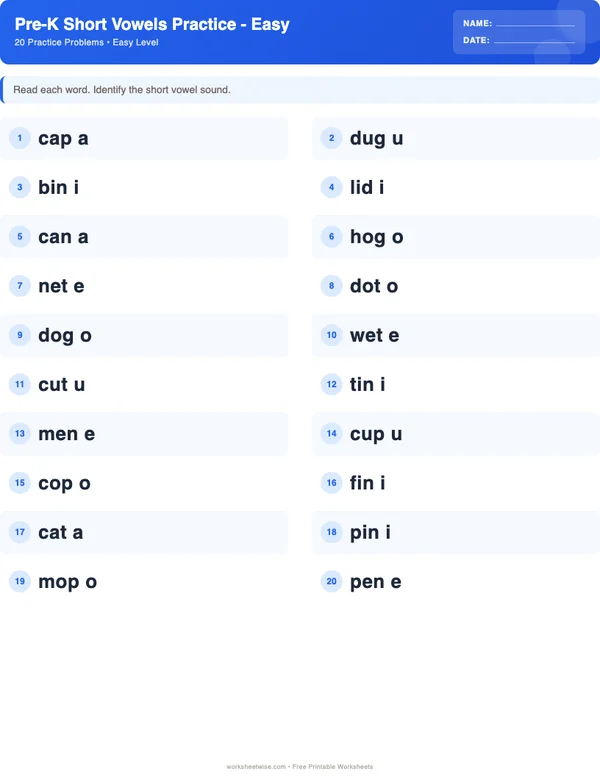
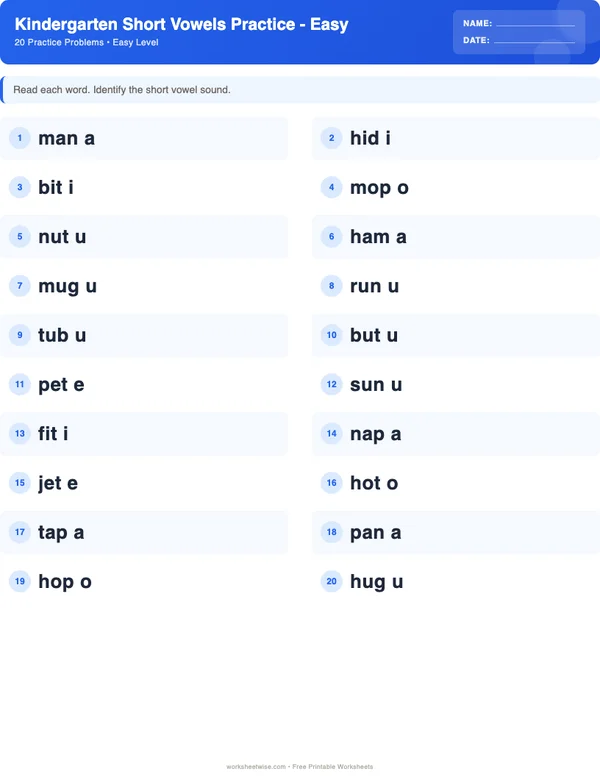
The Pre-K Short Vowels guide and free sheet offers a live route into picture sorting, word reading, spelling, and filling the middle letter. Use it when the learner can attend to the beginning and ending consonants but confuses the middle vowel.
A checked contrast is pen/pin:
- pen: /p/ /ĕ/ /n/
- pin: /p/ /ĭ/ /n/
Only the vowel phoneme and letter change. That makes the pair useful for determining whether the learner hears the contrast. Say both words without showing print first. Have the learner point to or place a counter under an e or i card. Then show the words and ask what changed.
This example belongs here because the live short-vowels teaching information explicitly identifies short e and short i as a confusable pair and lists pen/pin. If oral sorting is inaccurate, another printed fill-in-the-middle page is not yet the best next step. Use more adult-led listening with known pictures. If oral sorting is accurate but spelling is not, move to letter tiles or a two-choice vowel response.
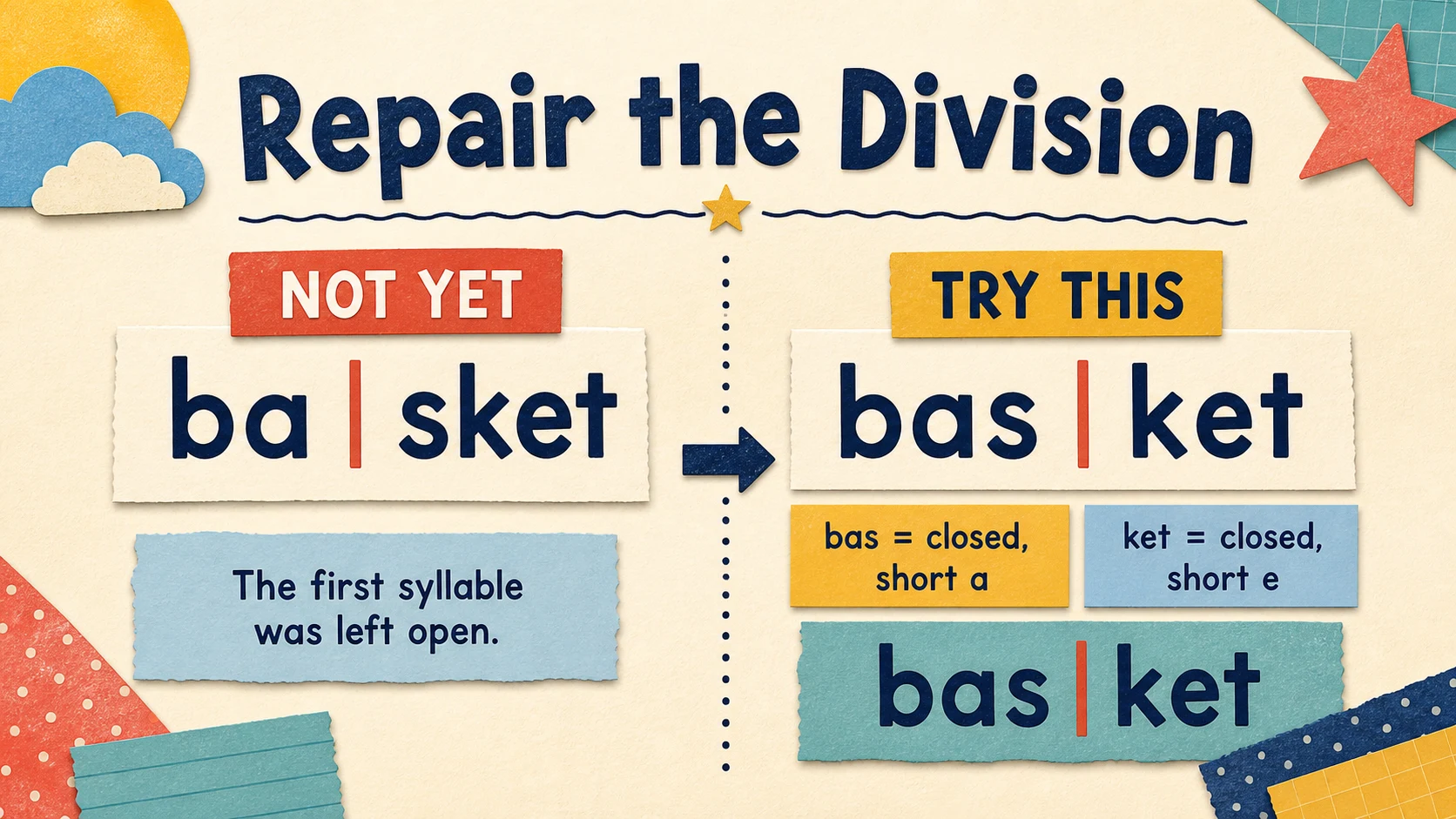
Match the response to the observed behavior: a listening confusion, an omitted sound, and an incorrect letter choice require different follow-up.
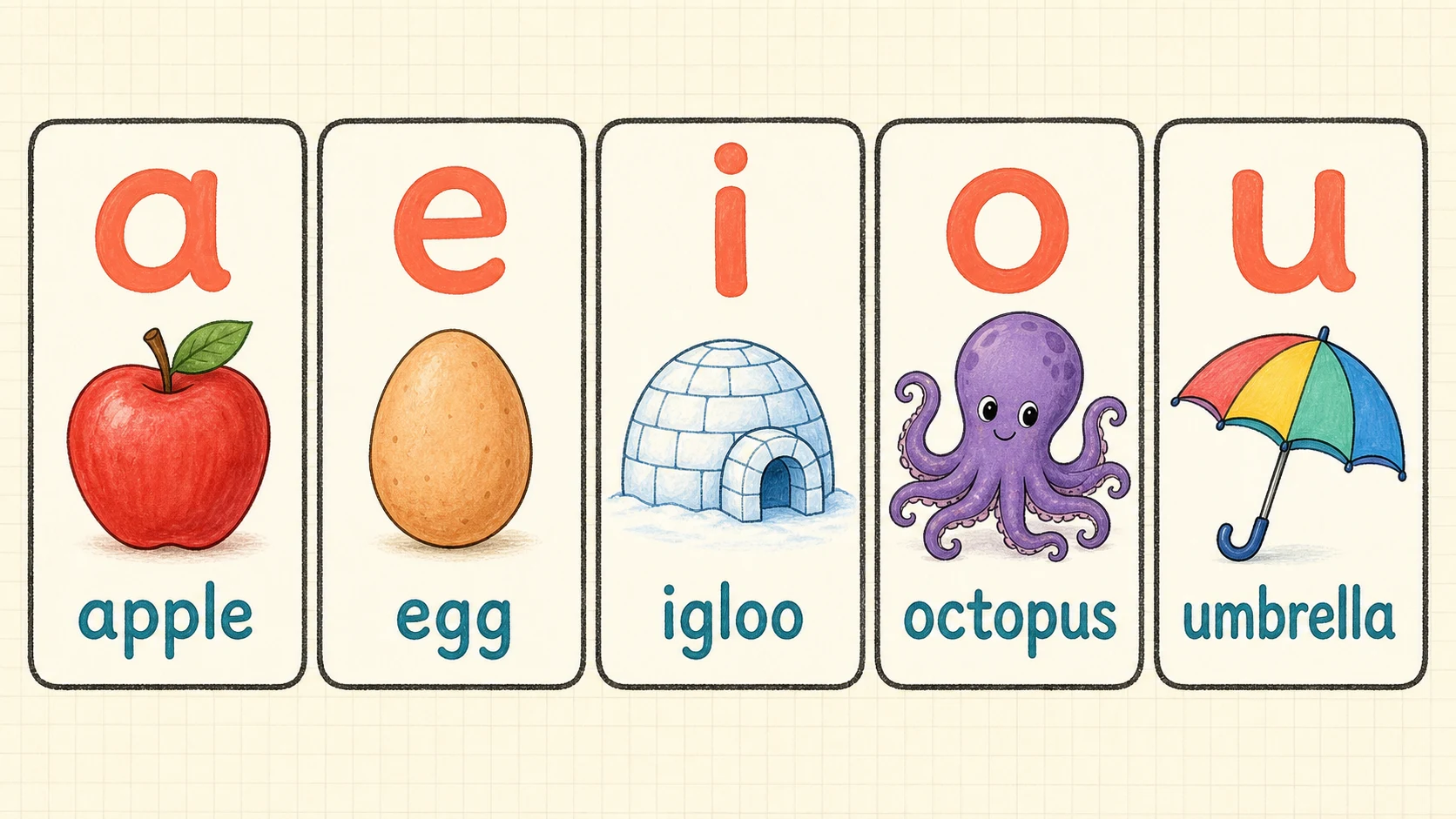
Use this map to separate vowel discrimination from CVC blending, spelling, and reading in context rather than treating “short vowels” as one indivisible skill.
CVC words before blends
A learner who can blend lap may be ready to compare it with clap. Check the sound structure:
- lap: /l/ /ă/ /p/ — three phonemes
- clap: /k/ /l/ /ă/ /p/ — four phonemes
The cl in clap is a blend because both /k/ and /l/ are heard. If the learner reads clap as lap, the problem is not the short vowel. Keep /ă/ stable and work on retaining the initial /k/.
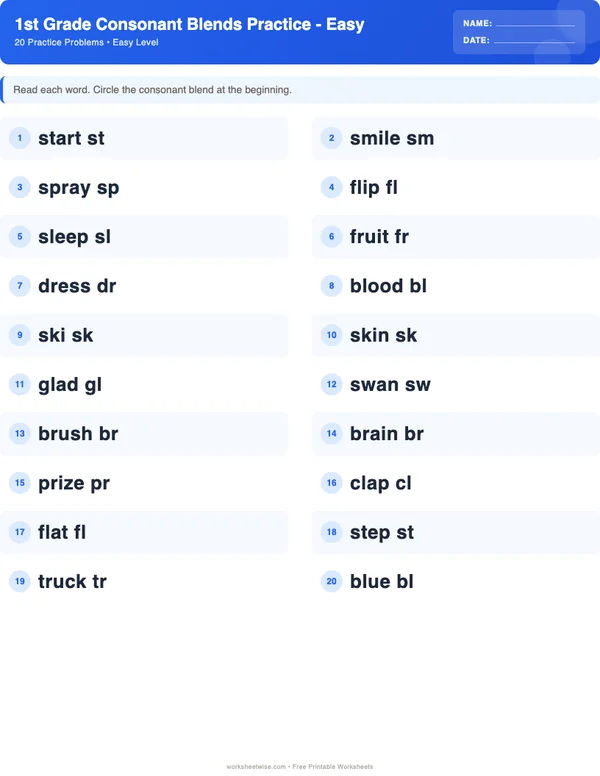
This example is grounded in the catalogue’s consonant-blend word chain, which includes lap → clap → clam → clamp. It belongs here because each change exposes whether the learner retains the newly added sound. The Kindergarten Consonant Blends guide and free sheet is a sensible discovery point when CVC blending is secure during comparable tasks.
Word families for controlled changes
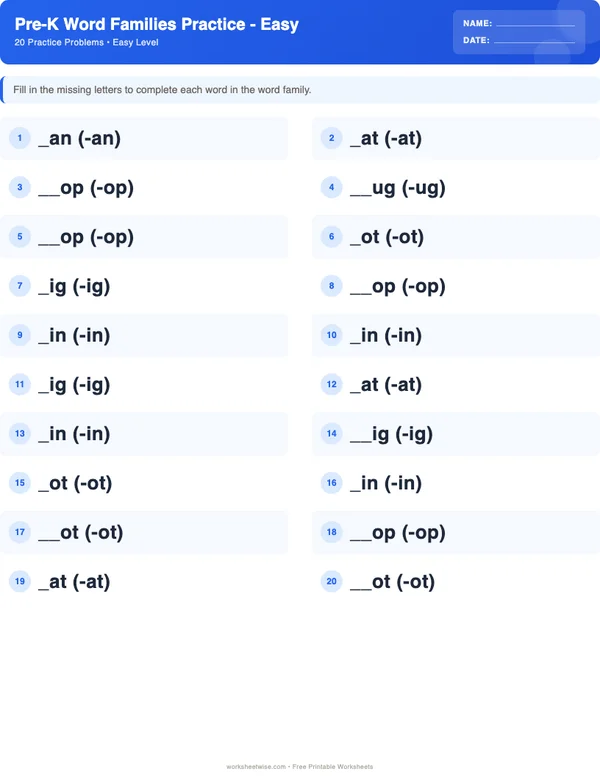
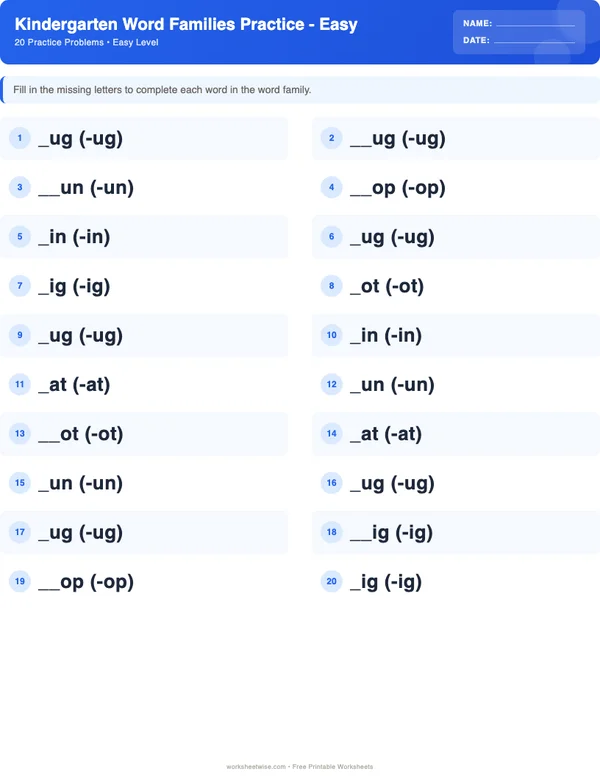
Use cat → bat → hat to hold -at constant while changing the initial consonant. All three are CVC words with short a, and all share the verified -at family.
Word-family practice belongs here when changing the onset helps a learner blend several words without rebuilding the entire pattern each time. It should not become visual guessing from the ending alone. Occasionally mix in can or cap and ask the learner to attend to every letter. The Pre-K Word Families guide and free sheet provides the relevant live practice route.
Long vowels after a secure short–long contrast
Use hop/hope, not a large mixed list of silent-e words, for the first contrast:
- hop: /h/ /ŏ/ /p/
- hope: /h/ /ō/ /p/
Ask the learner to build both words and explain the changed vowel sound. Then offer a sort containing a small number of CVC and CVCe pairs. Once that operation is reliable, introduce additional long-vowel spellings such as oa in boat as a separate pattern rather than implying that all long vowels are spelled with final e.
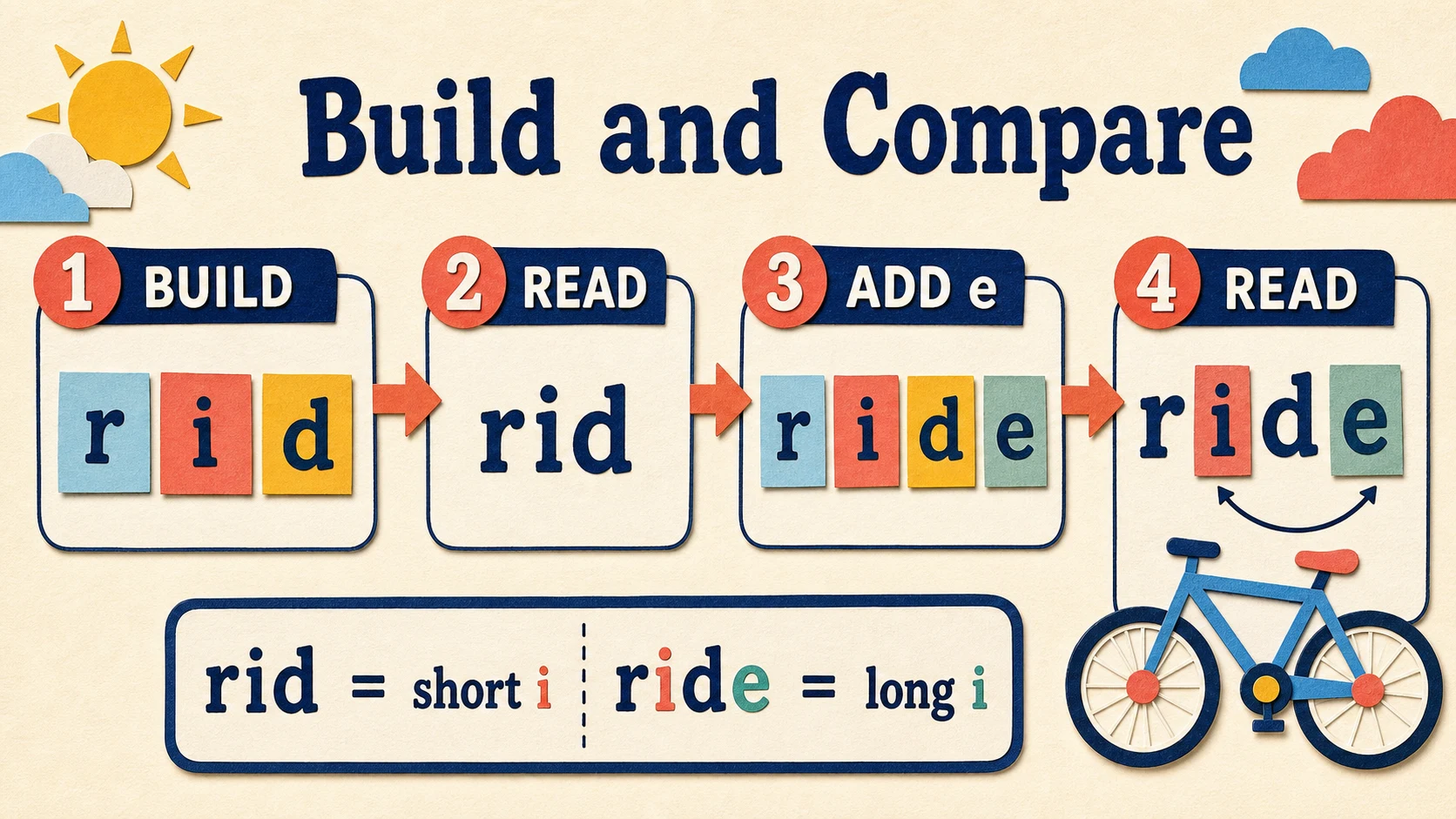
Move forward when the learner explains and applies the contrast in a new word, not merely after finishing the supported column.
Give feedback that names the phonics decision
“Try again” gives no usable information. “Good job” does not tell the learner what was successful. Feedback should direct attention to the sound–spelling relationship while leaving the learner responsible for the answer.
For a dropped blend in stop, say: “You read sop. Touch each letter at the start. What sound comes after /s/?” Then have the learner tap /s/ and /t/ separately before blending the whole word.
For pin read as pen, say: “The first and last sounds match. Listen to the middle: pin, /ĭ/. Which vowel represents the sound we practiced?” If the learner still cannot choose, return to the oral pen/pin contrast rather than repeating the same printed prompt.
For ship sounded as /s/ /h/ /ĭ/ /p/, say: “These two letters work together here. Put two fingers together for sh, say /sh/, and blend again.” This feedback preserves the digraph target while reducing the conceptual load.
For cape read as cap, cover the final e, read cap, uncover it, and ask what changed. Avoid saying only “Remember magic e,” because the learner needs to compare the actual spellings and sounds.
The IES writing practice guide is chiefly about elementary writing, but its emphasis on teaching foundational writing skills and giving opportunities to write for meaningful purposes supports a practical boundary here: handwriting should not obscure the phonics evidence. When spelling is the target, a short dictated word can be useful. When sound discrimination is the target, requiring extensive handwriting introduces an unnecessary competing demand. This is an instructional application, not a claim that the guide reviewed these worksheets.
Let the error choose the next sheet
A score such as 14 out of 20 hides the pattern that matters. Record what the learner did, what support changed the response, and what should happen next.
If the learner guesses from pictures
Observable pattern: the learner chooses a plausible picture but cannot read the printed word.
Next action: use fewer pictures, ask for an oral blend before matching, and choose a sheet with printed word comparison or word building. Keep the same phonics pattern so the new format—not new content—tests whether decoding is occurring.
If the middle vowel changes repeatedly
Observable pattern: pin becomes pen, sit becomes set, but consonants remain accurate.
Next action: select a single short-vowel contrast rather than a five-vowel review. Begin orally, then use a two-column sort, followed by two-choice fill-in-the-middle items. Do not move to long vowels merely because a grade sequence lists them next.
If one consonant disappears from a blend
Observable pattern: stop becomes sop, or clap becomes cap.
Next action: choose initial-blend words with a stable, familiar short vowel. Use sound counters and tapping before a matching or reading sheet. If initial blends become reliable, later check final blends separately; success with clap does not establish success with tent.
If the learner treats a digraph as a blend
Observable pattern: sh is pronounced as two separate sounds.
Next action: return to one digraph, one sound box, and two joined letter tiles. Contrast ship with slip: /sh/ occupies one sound position, while /s/ and /l/ remain separate. Then choose a sheet limited to initial sh, not a mixed digraph review.
If the pattern works only in copied examples
Observable pattern: cap/cape is correct after modeling, but hop/hope is not.
Next action: repeat the same CVC/CVCe operation with two or three new pairs and movable letters. Choose another supported silent-e sheet rather than a mixed vowel-team page. Transfer, not page completion, is the observable condition for increasing variety.
For a more formal record of which prompts produced which responses, the Formative assessment Phonics Worksheets route may be useful. It should document instruction, not produce a diagnosis.
Adapt access without removing the phonics target
An adaptation is useful when it reduces an irrelevant barrier while preserving the decision the learner must make.
If handwriting is laborious, let the learner point, circle, stamp, or place a letter tile. This preserves vowel discrimination or decoding. If visual scanning is difficult, cover all but one row. If the directions are linguistically dense, read them aloud and model one item. If sustained attention is limited, divide 20 problems across several short sessions.
For ages three and four, make the print task subordinate to interaction. Cut apart three picture cards, match them on the floor, build one word, and mark one corresponding answer. Do not interpret refusal to sit through a full sheet as evidence about phonics knowledge.
Vocabulary can also distort results. Before using a picture-based item, confirm that the child knows the pictured word. If an image intended as ram is called sheep, the response cannot cleanly reveal recognition of the -am family. Supply the intended word, then ask about its sounds.
Avoid adaptations that answer the phonics question. Reading every target word aloud removes decoding. Emphasizing the correct vowel unnaturally can remove auditory discrimination. Placing the correct letter directly beside its blank can convert spelling into copying.
The Common Core English Language Arts standards include grade-specific foundational-skills expectations involving print concepts, phonological awareness, phonics, word recognition, and fluency. Use those standards only as one reference for intended grade-level practice. They do not determine an individual child’s placement, and they do not establish alignment for a WorksheetWise resource unless that alignment has been separately verified.
Keep firm boundaries around what a sheet can show
One worksheet response is a sample taken under particular conditions. It may show that a learner omitted /t/ in three initial st words, distinguished pen from pin orally, or needed picture support to decode a CVC word. It cannot establish a diagnosis, a general reading level, school readiness as a whole, or future outcomes.
Do not infer too much from:
- A total score without inspecting the error types
- Success obtained after unrecorded adult prompting
- Errors on unfamiliar picture vocabulary
- Incomplete work caused by fatigue or loss of interest
- Correct answers that the learner cannot read back
- A mismatch between handwriting demands and phonics knowledge
- A grade or age label printed on the resource
Suggestions in this guide—such as exposing only five problems, using two-choice vowel cards, or ending with a transfer word—are editorial teaching decisions based on the verified task context. The cited IES and Common Core sources provide broader authoritative guidance; they did not assess WorksheetWise, its catalogue, or these specific routines.
If a learner continues to struggle across repeated, carefully modeled oral and print tasks, document the exact words, responses, prompts, and conditions. Share observations with the child’s teacher or an appropriately qualified professional. Describe behavior rather than assigning a label: “When reading five st words, the learner omitted /t/ in four, including after a sound-box model” is more useful than “The learner is behind.”
Make tomorrow’s page follow today’s evidence
End each session with a one-line record:
Target — observed response — effective prompt — next task
For example:
Initial st blend — read stop as sop twice — tapping /s/ and /t/ restored both sounds — next: three initial st words with counters, then five matching items.
That note determines tomorrow’s choice. Repeat the same skill with less support if the prompt worked. Narrow the contrast if errors were inconsistent. Change the response format if writing or picture guessing obscured the target. Introduce a new pattern only when the learner can explain or apply the current one in an unmodeled example.
For the next session, open the free deterministic worksheet generators and create a short set that matches the single operation in your note—for instance, initial st words rather than a broad blend review. Pair it with counters and movable letters, complete only a small sample, and let the learner’s read-back decide what comes next.
Put it into practice
Use the guide with a real printable
Move from explanation to a short, observable practice task. Check the first item together, then adjust the next session from the learner's actual work.
Open the first free worksheetExplore a neighboring collection