Curated collectionAnswer keys includedPrint-ready PDFs
Intervention Phonics Worksheets
Identify a narrow prerequisite, model it explicitly, reduce task variation and use observed errors to select the next practice step; no diagnostic or treatment claims.
Start with a real resource
Browse this worksheet collection
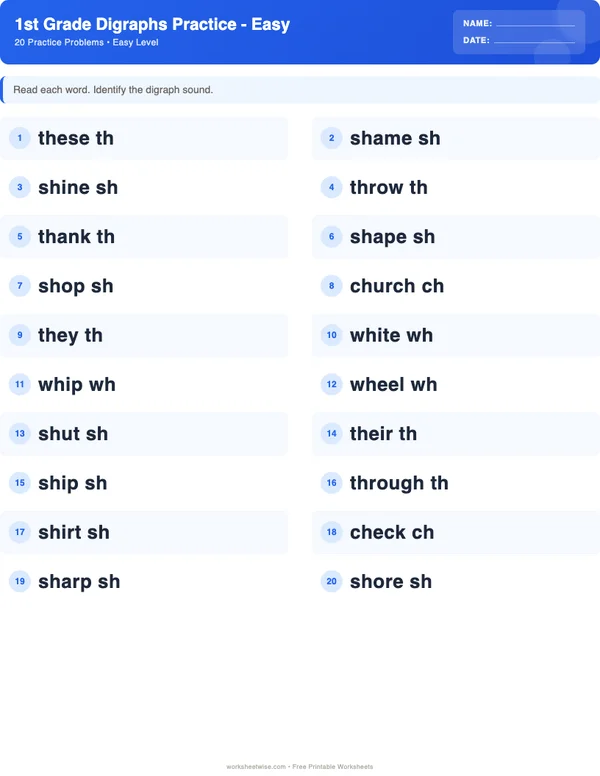
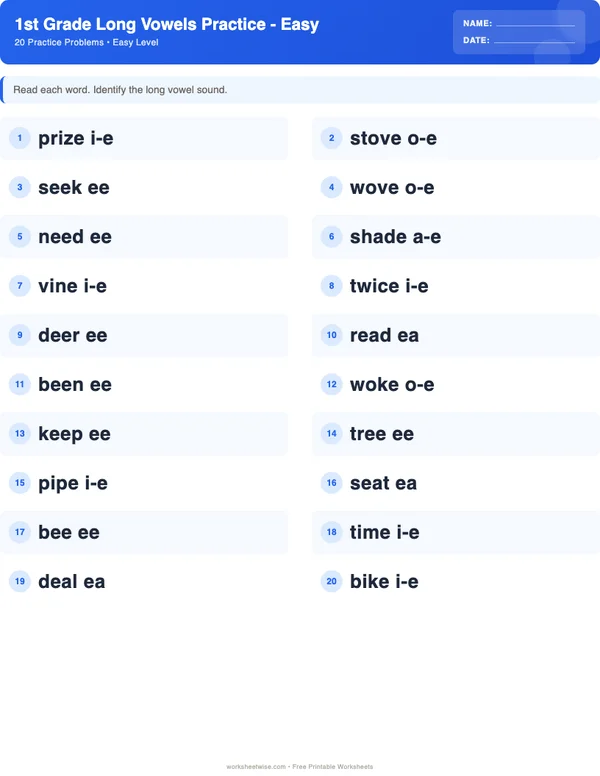
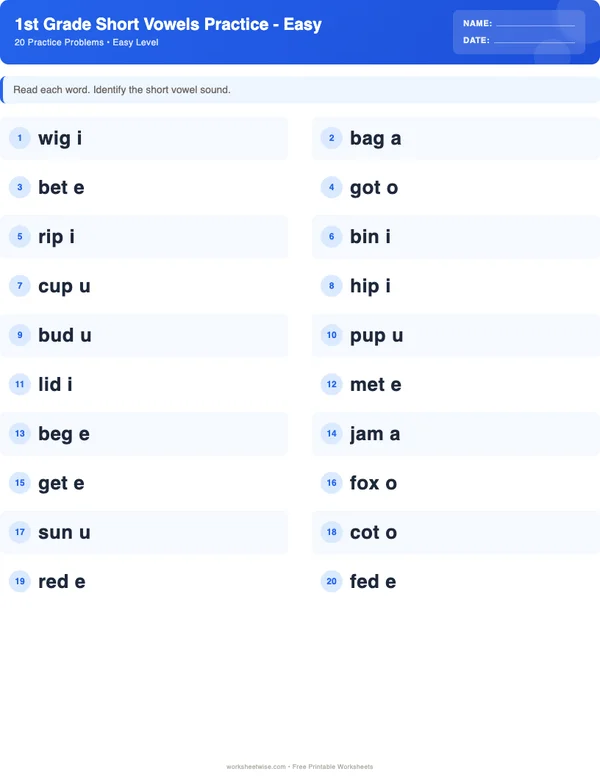
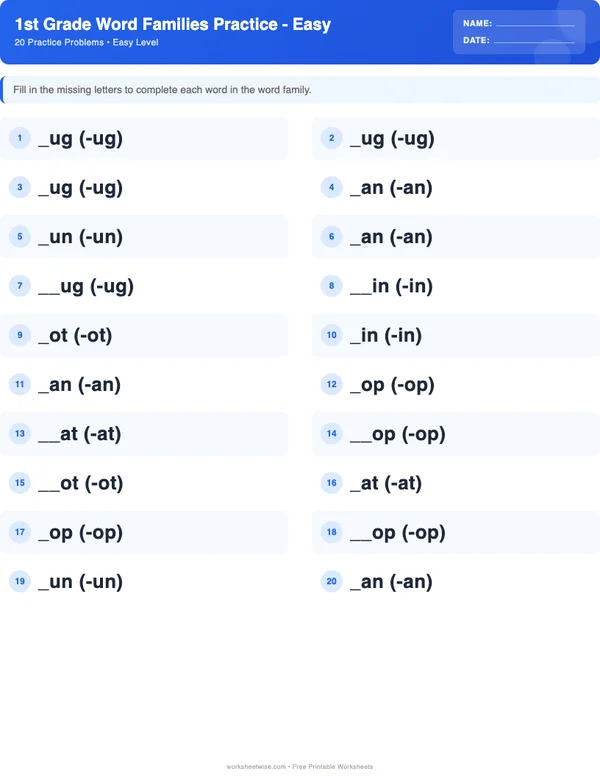
22 relevant free entry points are available. Each one includes a printable learner PDF and separate answer key.
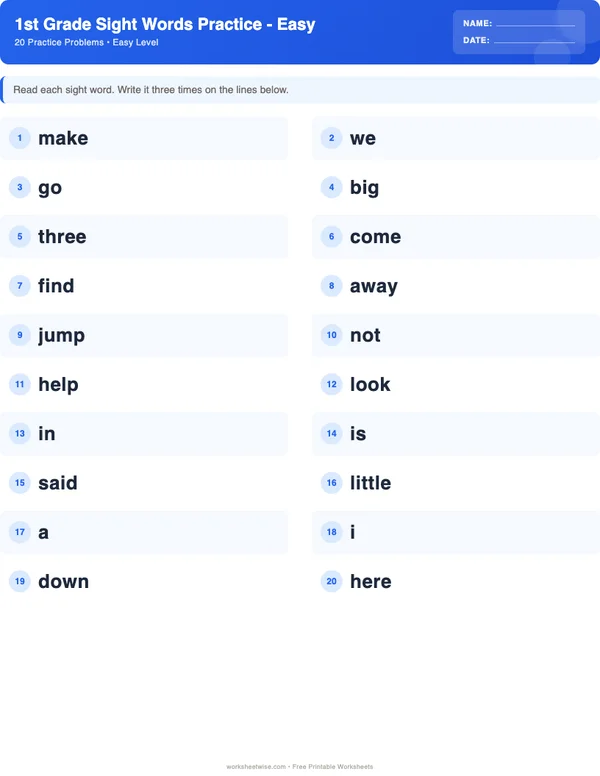
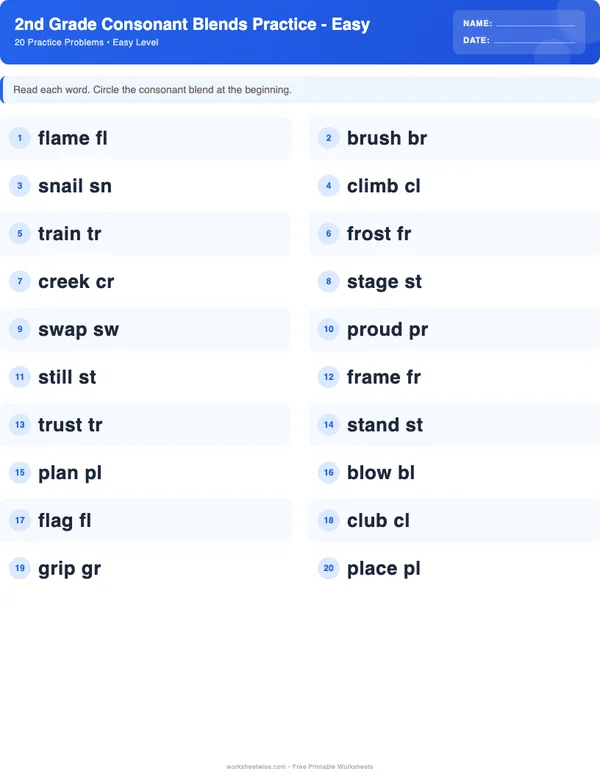
A useful practice loop
Print less. Observe more.
- Choose one skill and model the first item aloud.
- Use a short set and notice the learner’s strategy.
- Change the next task from the work you can see.
Need more than the free sheet?
Plus includes all 396 matching catalogue variations where available, plus saved deterministic generators and the worksheet designer.
See Plus membershipComplete guide
How to teach and practise intervention phonics worksheets
3,451 words Updated 6 instructional visuals
Start with the smallest phonics decision
Use intervention phonics worksheets to answer one practical question: What narrow prerequisite should the learner practice next? Do not begin with a broad goal such as “improve phonics.” Identify an observable pattern—confusing short e and short i, omitting the second sound in an initial blend, treating sh as two separate sounds, or reading CVCe words as short-vowel words—and select a sheet that keeps attention on that pattern.
A useful sequence is:
- Hear the target sound or contrast.
- Watch the adult model the sound-to-letter connection.
- Respond with objects, letters, speech, pointing, or writing.
- Complete a short, tightly controlled portion of a worksheet.
- Review the errors by type, not merely by total score.
- Choose the next sheet from the error pattern.
This approach reflects the broader guidance in the IES foundational reading practice guide, which recommends explicit instruction in sound segments, letter–sound relationships, decoding, word analysis, and connected text. That source did not assess WorksheetWise. Here, its guidance is applied to the catalogue’s specific CVC words, short vowels, word families, sight words, consonant blends, digraphs, and long vowels.
The live catalogue contains 396 phonics worksheet variants, including 22 free resources across four intended grade levels and seven topics. More choice is useful only when the adult narrows it. A learner who omits /t/ in stop does not need a general mixed-phonics page; the next task should preserve the complete /s/–/t/–/o/–/p/ sequence.
Grade labels describe intended practice level, not a placement decision. Local curriculum sequences differ. Age is also a discovery aid rather than a placement decision. For ages three and four, prioritize brief adult-led oral, matching, manipulative, and movement work over desk work.
Select a sheet by prerequisite, contrast, and response demand
Before printing, inspect three features: the code being practiced, the number of competing patterns, and what the learner must physically do.
Name the prerequisite in one sentence
Write a statement that can be observed:
- “The learner will blend three sounds in a CVC word without inserting pauses.”
- “The learner will distinguish medial short e from short i.”
- “The learner will retain both sounds in an initial st blend.”
- “The learner will read sh as one sound represented by two letters.”
- “The learner will compare CVC and CVCe words without guessing from the first letter.”
If the statement contains several targets joined by “and,” it is probably too broad for the first sheet. “Read blends, digraphs, long vowels, and sight words” cannot tell you why an answer was wrong.
Control how much changes from item to item
Reduce variation at the beginning. For CVC practice, keep the medial vowel stable while changing one consonant: cat → mat → map. That sequence allows the learner to notice exactly what changed. A jump from cat to pin to hug changes too many features for an adult trying to interpret an error.
Increase variation only after the learner responds accurately with the model available. A later set might mix cat, pin, and hug to test whether the learner selects the vowel sound without relying on a repeating pattern.
Match the response format to the teaching question
A response format is not neutral. Each format reveals different information:
- Pointing or picture matching can show sound discrimination while reducing handwriting demands.
- Moving tokens into sound boxes shows whether the learner detects each phoneme.
- Building with letter tiles separates spelling knowledge from pencil control.
- Reading aloud reveals blending, omissions, substitutions, and self-correction.
- Writing from dictation requires the learner to segment sounds and select letters.
- Sorting words shows whether the learner notices a contrast across examples.
- Reading a sentence checks whether the pattern transfers beyond an isolated list.
A correct picture match does not establish that the learner can spell the word. A correctly copied word does not establish that the learner can segment it from speech. Choose the response that tests the exact decision you need to make.
Run a short model–respond–record routine
A worksheet is the practice surface, not the whole lesson. Use an adult-led routine that makes the target audible and visible before independent work begins.
Model one complete example
State the target plainly and demonstrate the mental action. For cat, say: “I see three letters. I will connect each letter to its sound and keep the sounds moving: /cccaaat/, cat.” Point under the letters from left to right.
For ship, say: “These two letters, s and h, work together here. I hold two fingers together because the two letters represent one sound: /sh/. Then /i/ and /p/: /shiiip/, ship.”
The catalogue teaching notes suggest continuous blending and sound boxes for CVC work. Treat those as WorksheetWise teaching suggestions, not as claims that one technique will work for every learner.
Ask for an immediate matched response
Give the learner an item with the same structure as the model. After modeling cat, ask for mat, not ship. After modeling cap/cape, ask the learner to compare hop/hope, not a vowel-team word such as boat.
If the learner cannot respond, repeat the model with less verbal explanation and more visible action. Move one token for each sound, join two fingers for a digraph, or underline the final silent e. Do not add five new rules at once.
Record the attempt before correcting it
Use brief notation:
- ✓ = accurate without help
- SC = self-corrected
- V = vowel substitution
- O = sound omitted
- A = sound added
- G = guessed from picture or first letter
- P = accurate after prompt
These marks are teaching records, not diagnostic labels. They make the next choice more informative than a percentage alone. Six errors caused by the same omitted sound call for a different response from six unrelated slips.
Correct the word and preserve another attempt
Give concise feedback:
- Confirm what was accurate.
- Identify the mismatched sound or pattern.
- Model the correction.
- Ask the learner to produce the word again.
- Provide a new, closely matched item.
For stop read as sop: “You kept /s/, /o/, and /p/. This word also has /t/ after /s/. Tap four sounds: /s/ /t/ /o/ /p/. Now blend stop. Try step.”
Do not finish the page automatically. Once the pattern of errors is clear, another 15 near-identical mistakes may rehearse the wrong response.
Compare the live phonics skills before moving forward
The representative catalogue resources show why topic names alone are insufficient. Several sheets contain 20 problems and carry the catalogue label “easy,” yet they do not make the same demands.
Here, easy describes observable task features: a familiar or tightly limited spelling pattern, straightforward directions, restricted variation, and a relatively simple response such as matching, filling one letter, or reading a short word. It must never become a label for a learner. A 20-item sheet can still be unsuitable if it mixes patterns the learner has not been taught or requires more writing than the phonics decision warrants.
CVC words versus short vowels
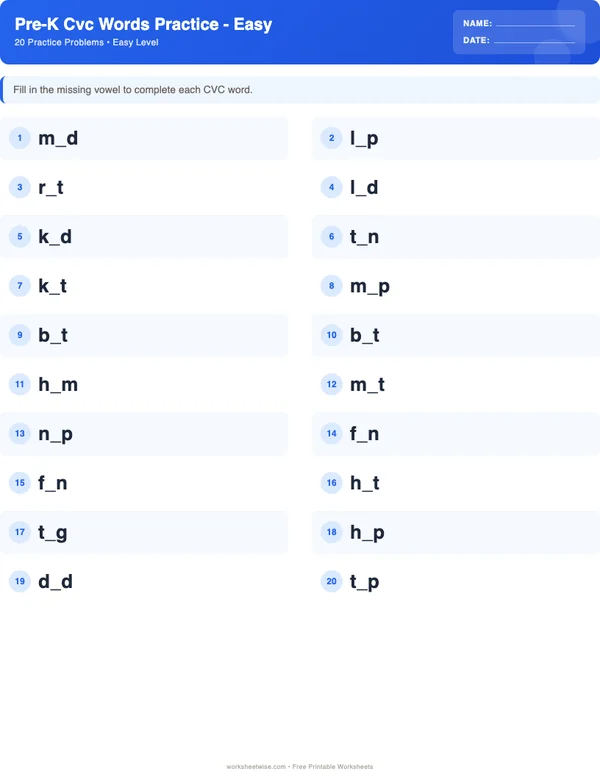
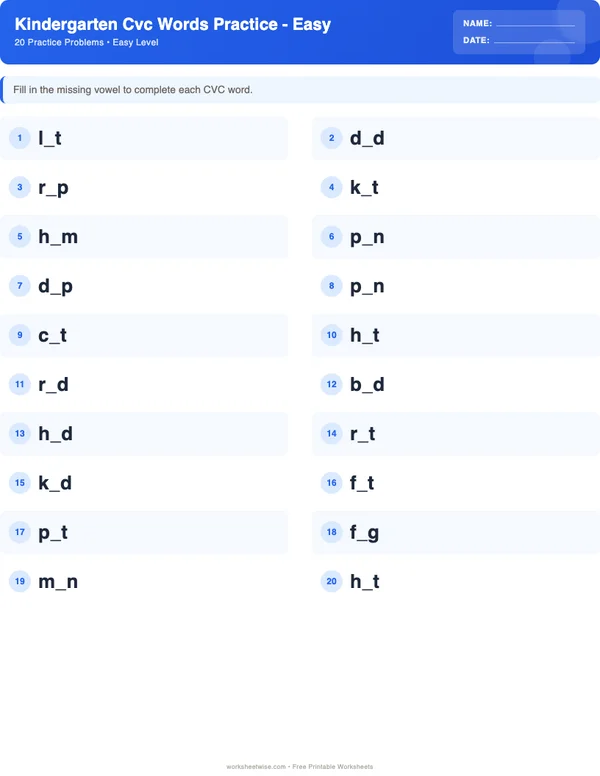
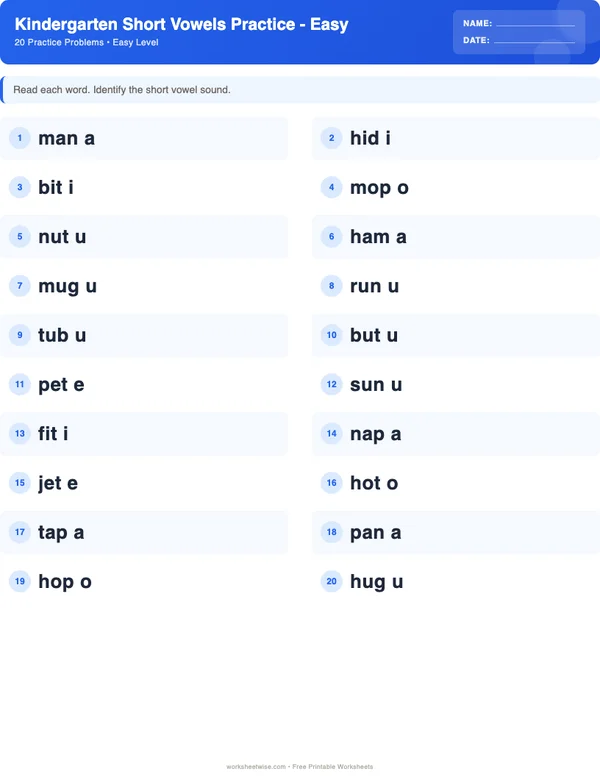
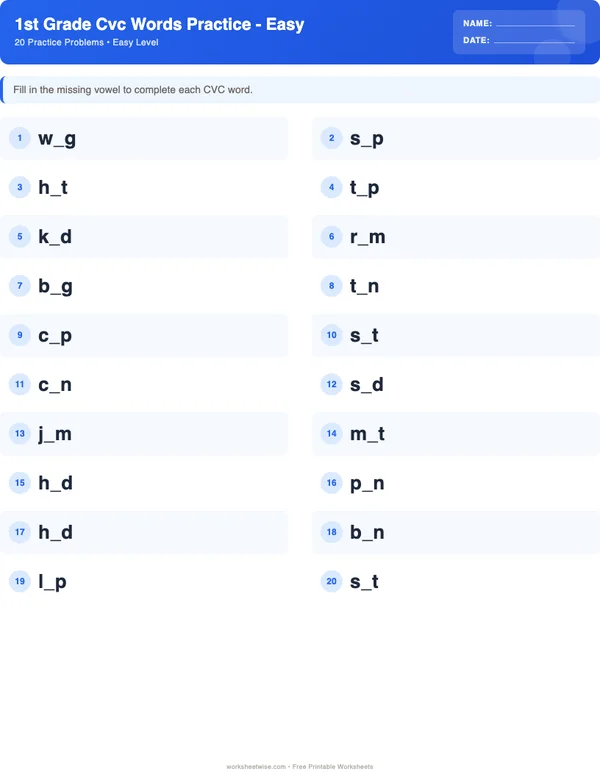
CVC work asks the learner to coordinate three sounds and three letters in words such as cat, pin, and hug. Short-vowel work can narrow the question further: which medial vowel is heard or written?
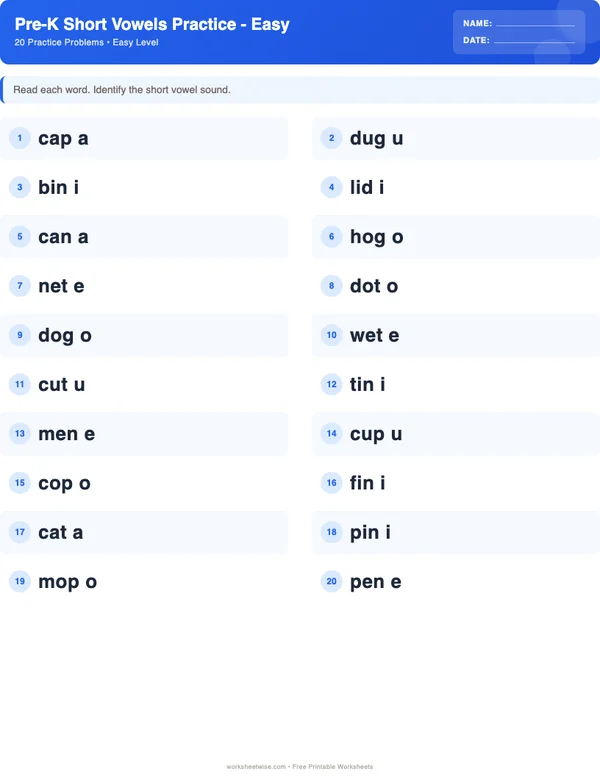
Choose a CVC sheet when the learner needs practice moving through the complete word. Choose a short-vowel sheet when consonant handling is reasonably stable but the medial vowel is confused. The Pre-K CVC Words guide and free sheet and Pre-K Short Vowels guide and free sheet provide separate entry points for those decisions.
Word families versus sight words
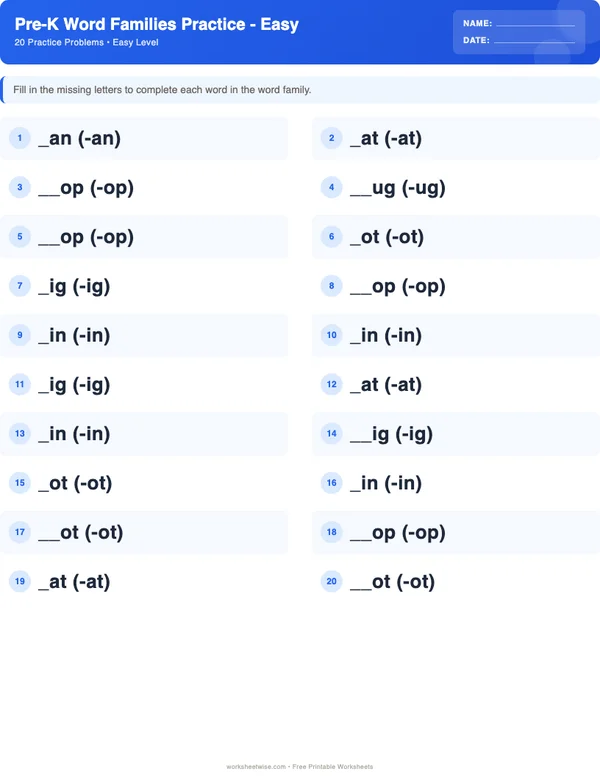
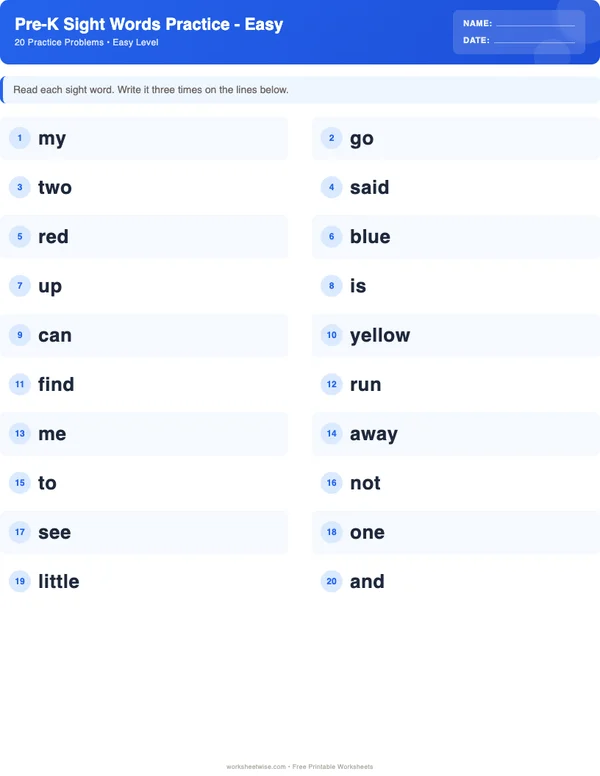
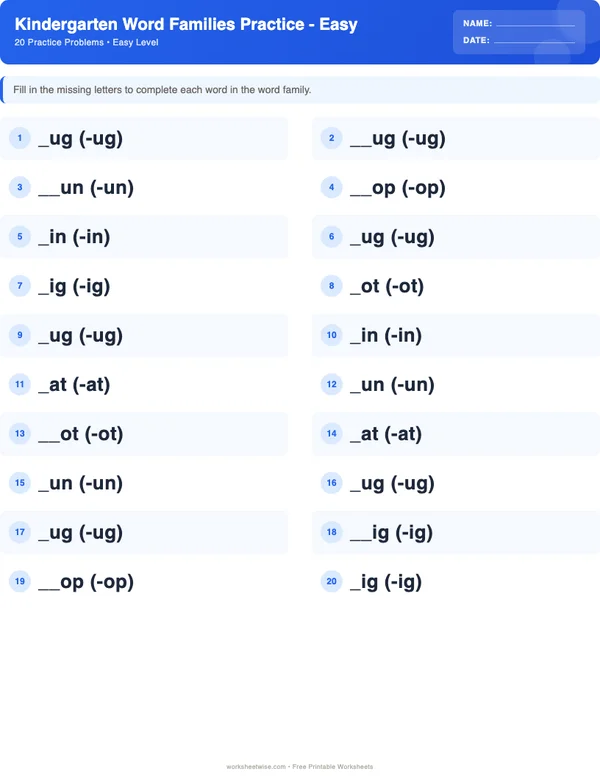
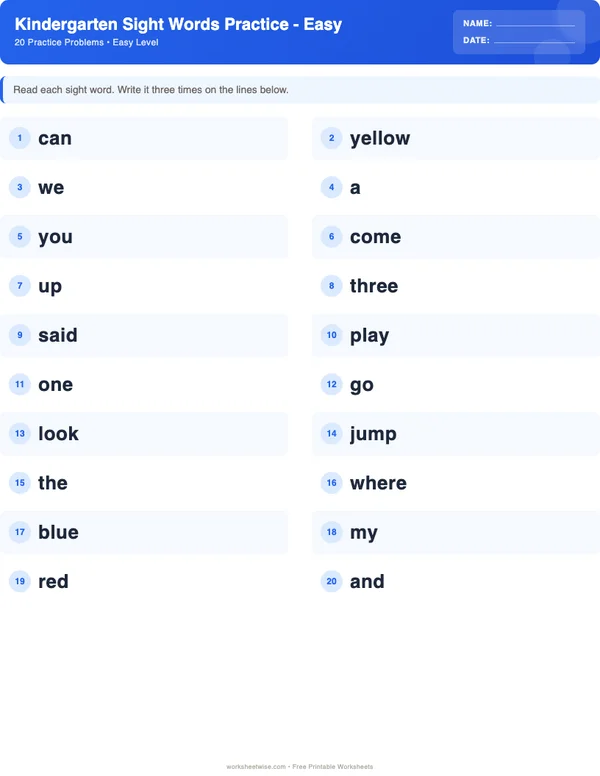
Word-family tasks hold an ending constant while changing the onset: cat, bat, hat, mat. This helps expose whether the learner can preserve -at and substitute a new beginning sound. Sight-word work asks a different question. Some high-frequency words are largely decodable; others contain an unexpected spelling–sound relationship that needs explicit attention.
Do not send a learner to sight-word memorization because CVC blending is effortful. Conversely, repeated CVC sheets will not by themselves explain the unexpected middle spelling in said. Mark the regular letters and explicitly identify the part that must be remembered.
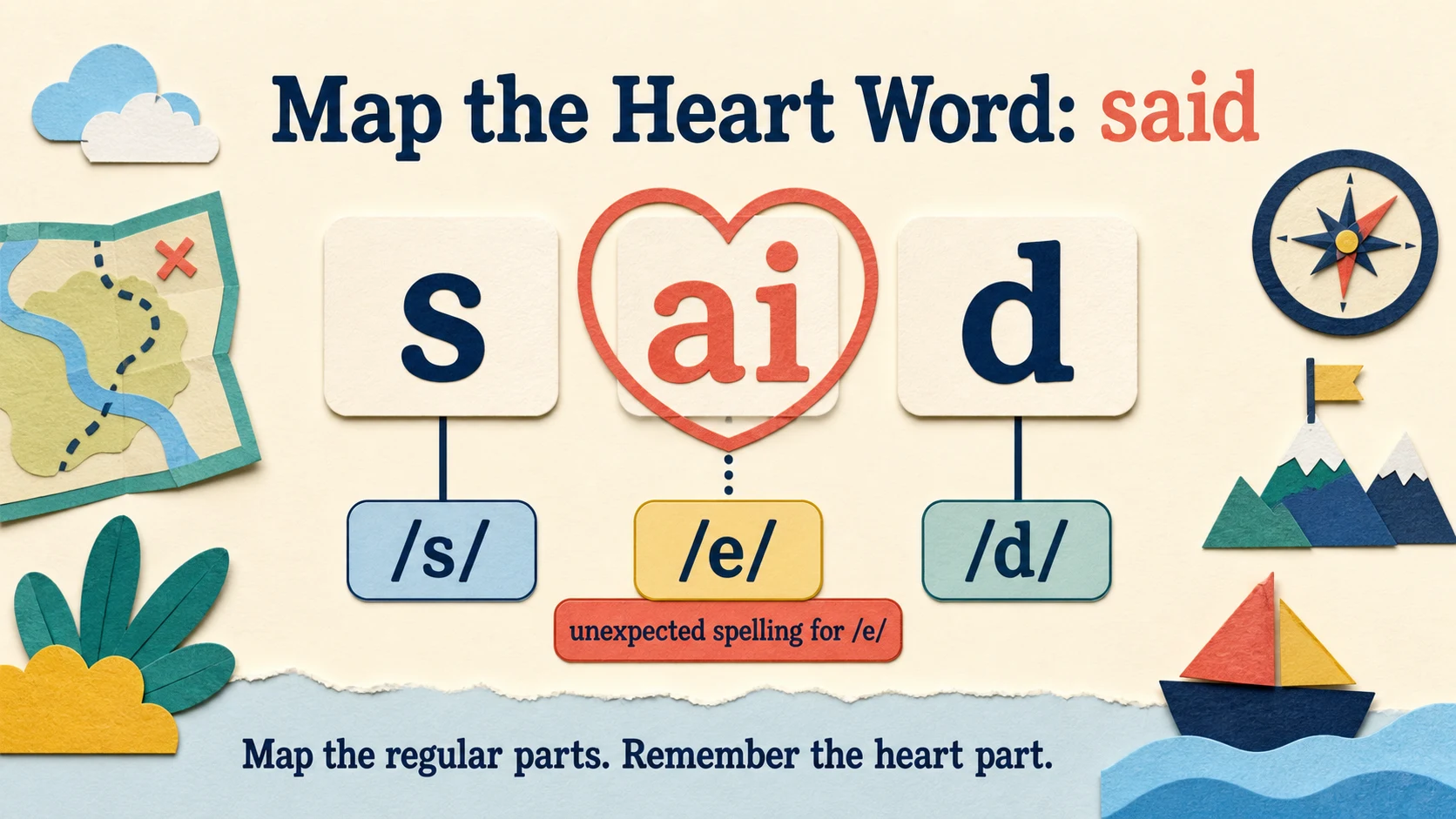
Use the map to separate automatic recognition, letter-by-letter analysis, spelling, and use in context rather than treating every sight-word error as the same problem.
Blends versus digraphs
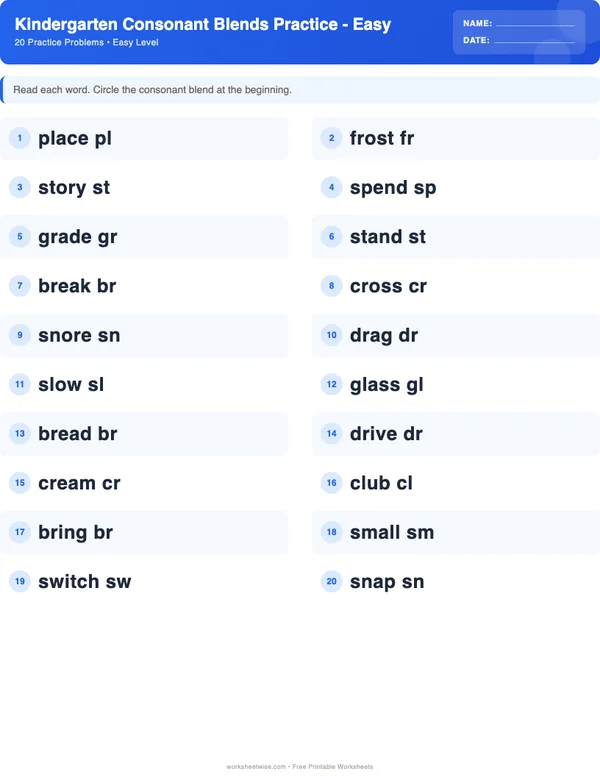
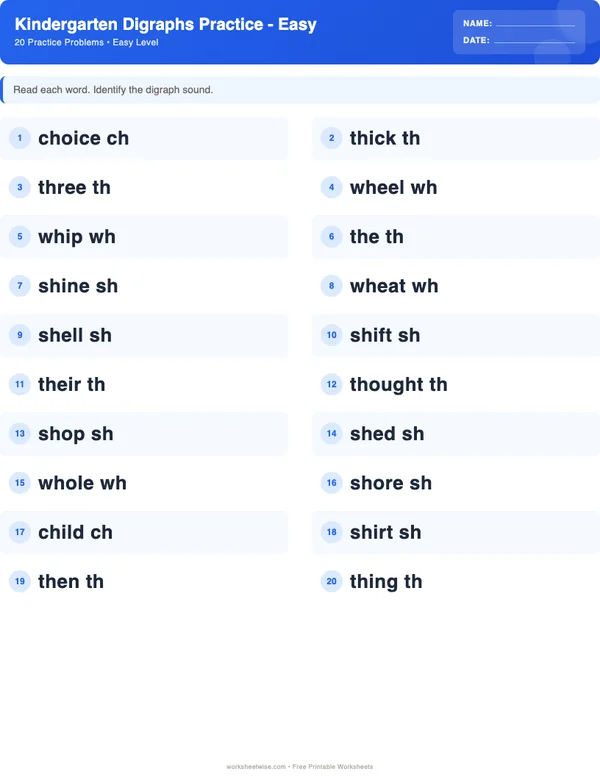
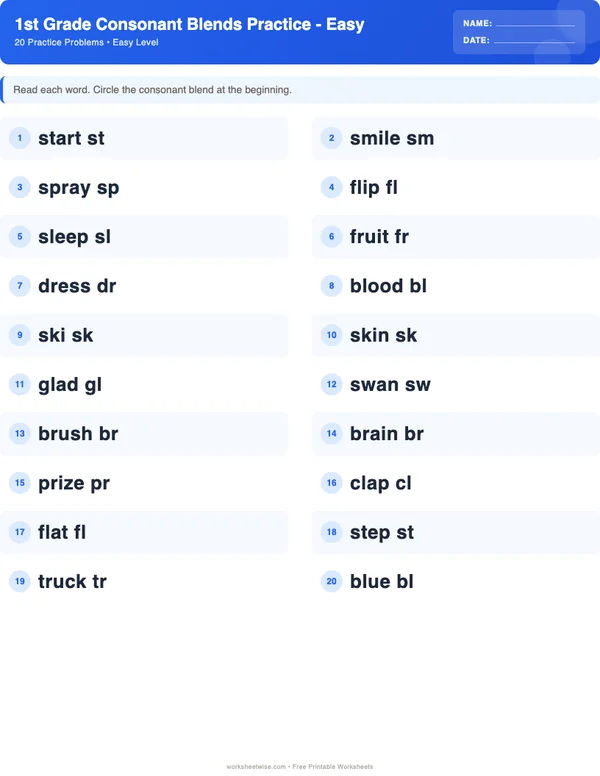
In a blend, each consonant retains its sound: st in stop contains /s/ and /t/. In a digraph, two letters represent one sound: sh in ship. This distinction determines the correction. Asking a learner to “say both sounds” is appropriate for st but incorrect for sh.
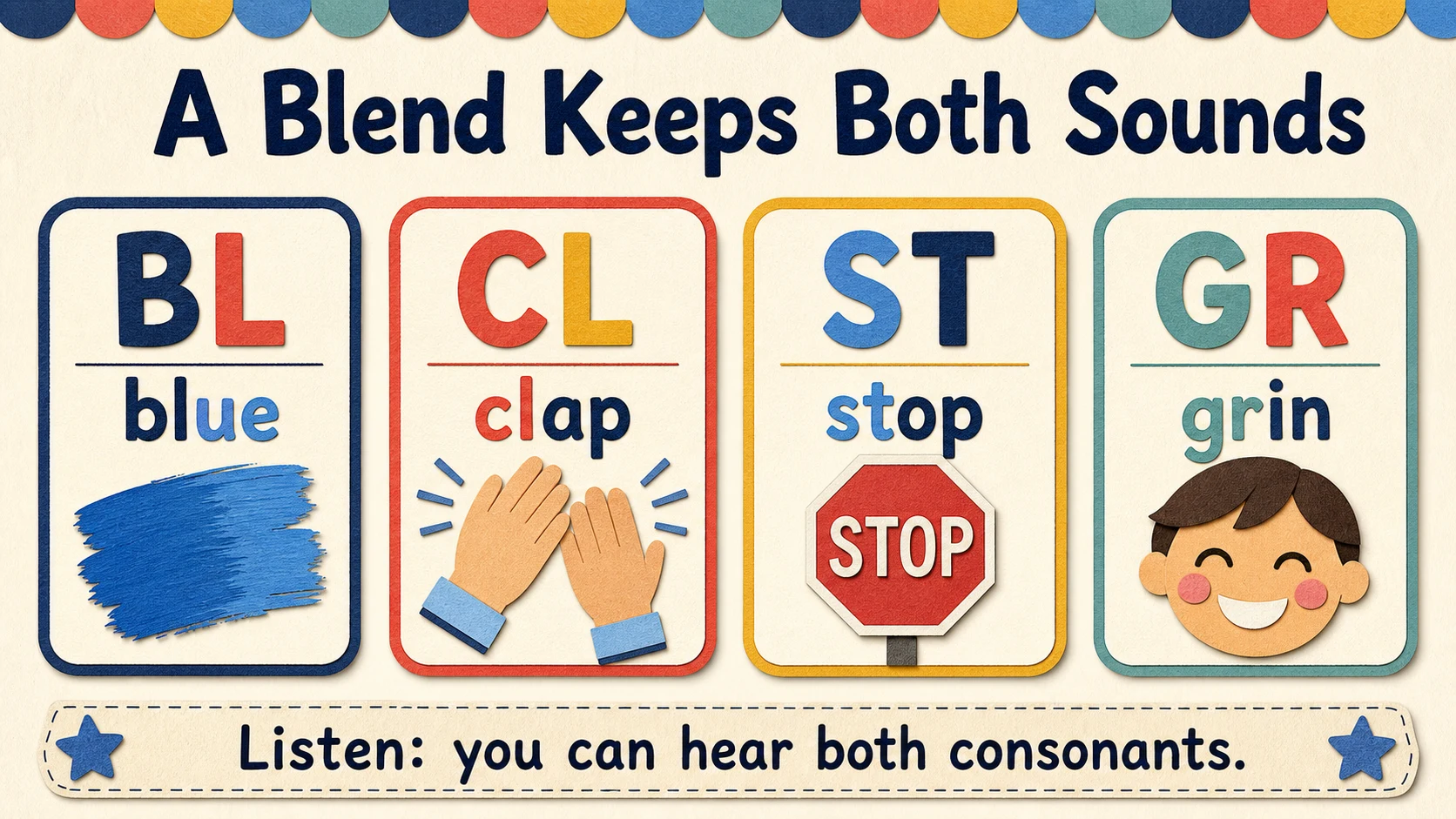
Use the blend map to choose between initial blends, final blends, word-level reading, and later sentence practice without mixing all four demands initially.
Use checked examples to make the next choice
The following examples use words and contrasts from the verified catalogue descriptions and teaching notes. Each belongs in this intervention context because the response exposes a narrow, teachable prerequisite and leads to a specific next sheet.
Example 1: pen is read as pin
The letters differ only at the medial vowel. Say both words without showing print and ask the learner to point to a picture or token assigned to pen and pin. Then display the words, underline e and i, and model the mouth and sound contrast. Follow with the catalogue’s minimal pairs set/sit and bed/bid.
If the oral choice is inaccurate, return to brief listening and matching rather than adding writing. If oral discrimination is accurate but the printed words are confused, use a two-column e/i word sort. If reading is accurate but dictation produces the wrong vowel, choose fill-in-the-middle or spelling practice.
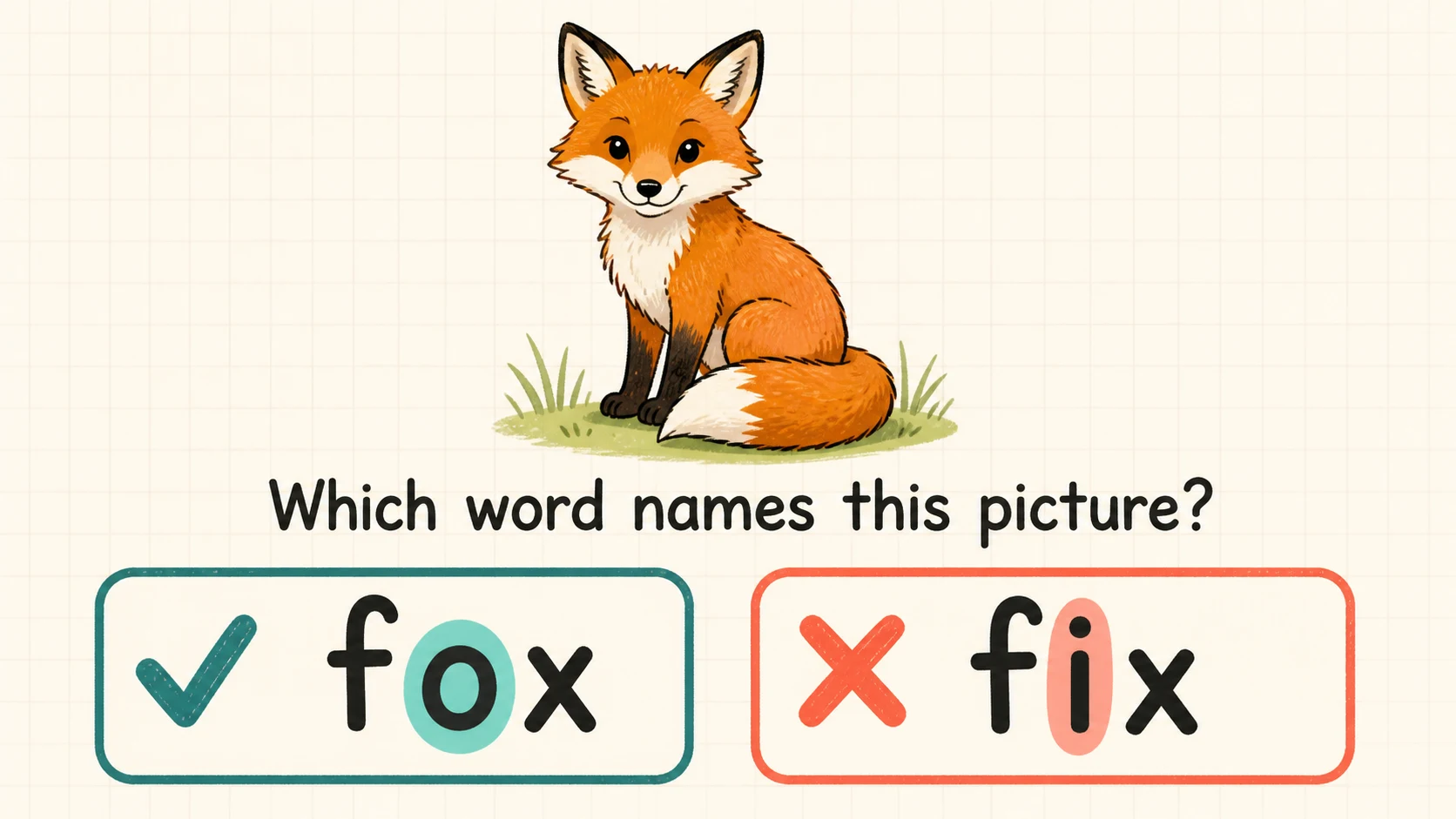
Although the fixed image label uses “diagnostic,” use these pairings only to organize observed errors and teaching responses; they do not establish a diagnosis.
This example belongs here because the error is more specific than “cannot read CVC words.” It identifies a vowel contrast while keeping the surrounding word structure simple.
Example 2: stop is read as sop
The learner has retained the first sound and the CVC frame but omitted /t/. Place four tokens in a row. Ask the learner to move one token for /s/, /t/, /o/, and /p/, then sweep beneath them while blending. Compare sop and stop so the missing sound changes the visible and audible sequence.
Next, try step. If /t/ is again omitted, select an initial st sheet with oral reading or letter building, not a broad blend page containing bl, cr, sn, and final blends. If step is accurate but tent becomes ten, shift to final-blend contrasts such as the catalogue examples ten/tent and bum/bump.
This example belongs because it distinguishes an initial-blend omission from a general vowel or word-recognition problem.
Example 3: ship is treated as four separate sounds
If the learner says /s/ /h/ /i/ /p/, show two fingers apart for /s/ and /h/, then bring them together for /sh/. Put sh in one sound box, i in the next, and p in the third. Compare ship with slip: sh represents one sound, while sl retains two.
Try wish to move the same digraph to the final position. If initial sh is accurate but final sh is not, choose a sheet that holds the digraph constant and changes its position. Do not immediately introduce ch, th, wh, and ck.
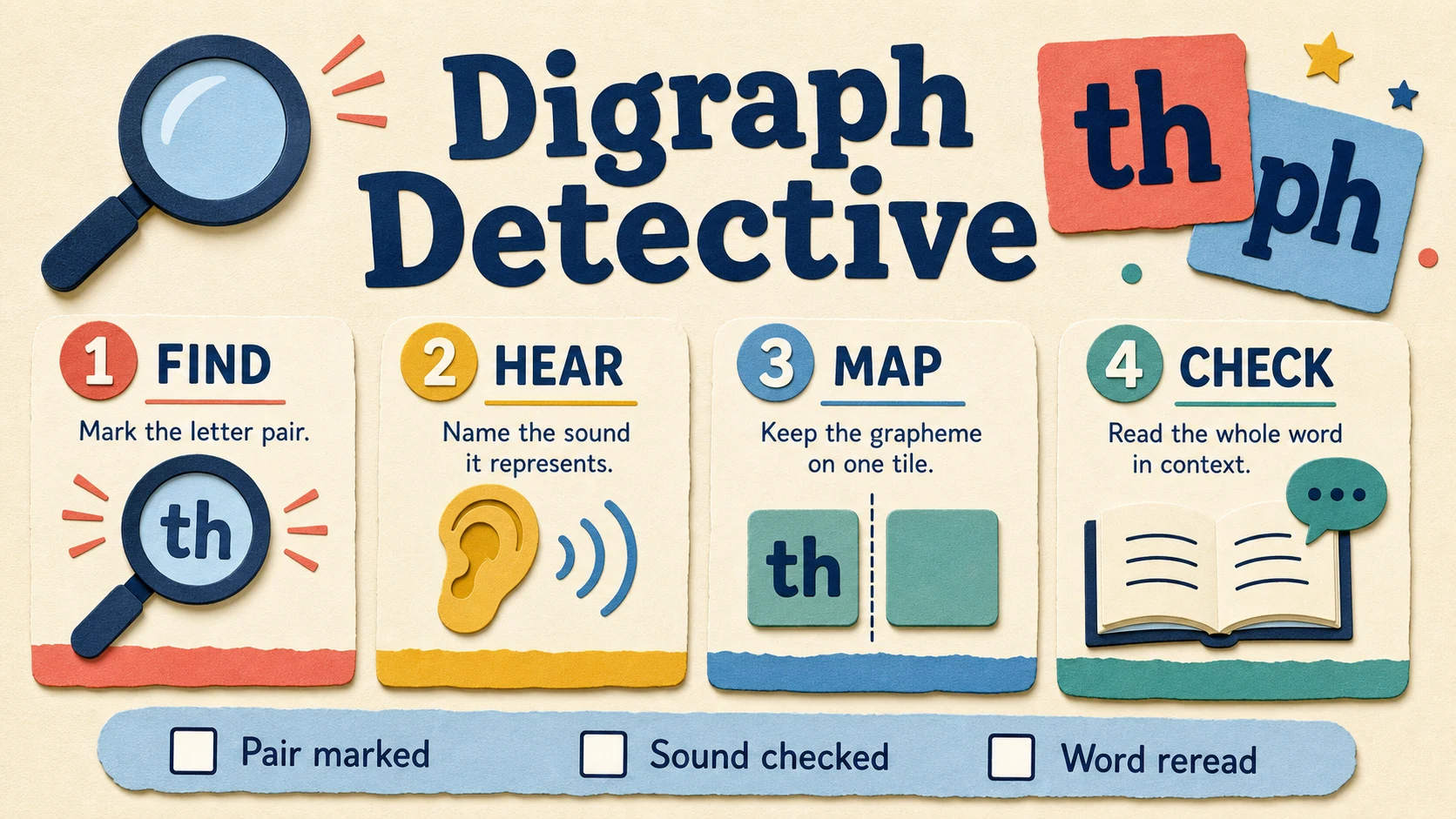
Treat the plan as a pacing option: repeat or shorten a step according to observed responses, and review previously taught CVC and blend words alongside the selected digraph.
This example belongs because it tests the defining contrast between digraphs and blends. It also shows why the adult must model the number of sounds, not merely name the letters.
Example 4: hope is read as hop
Place hop and hope side by side. Underline the medial o in both words and box the final e in hope. Model: “In this pair, the final e changes the vowel from /ŏ/ to /ō/. This word is hope.” Repeat with the verified pairs cap/cape, pin/pine, and cub/cube.
If all CVCe words are read with short vowels, return to paired CVC/CVCe comparison. If hope is accurate in reading but written as hop during dictation, select encoding work that requires adding the final e. If silent-e words are stable, a later sheet may introduce a different long-vowel spelling pattern. Do not use “two vowels go walking” as an absolute rule; English spelling includes exceptions.
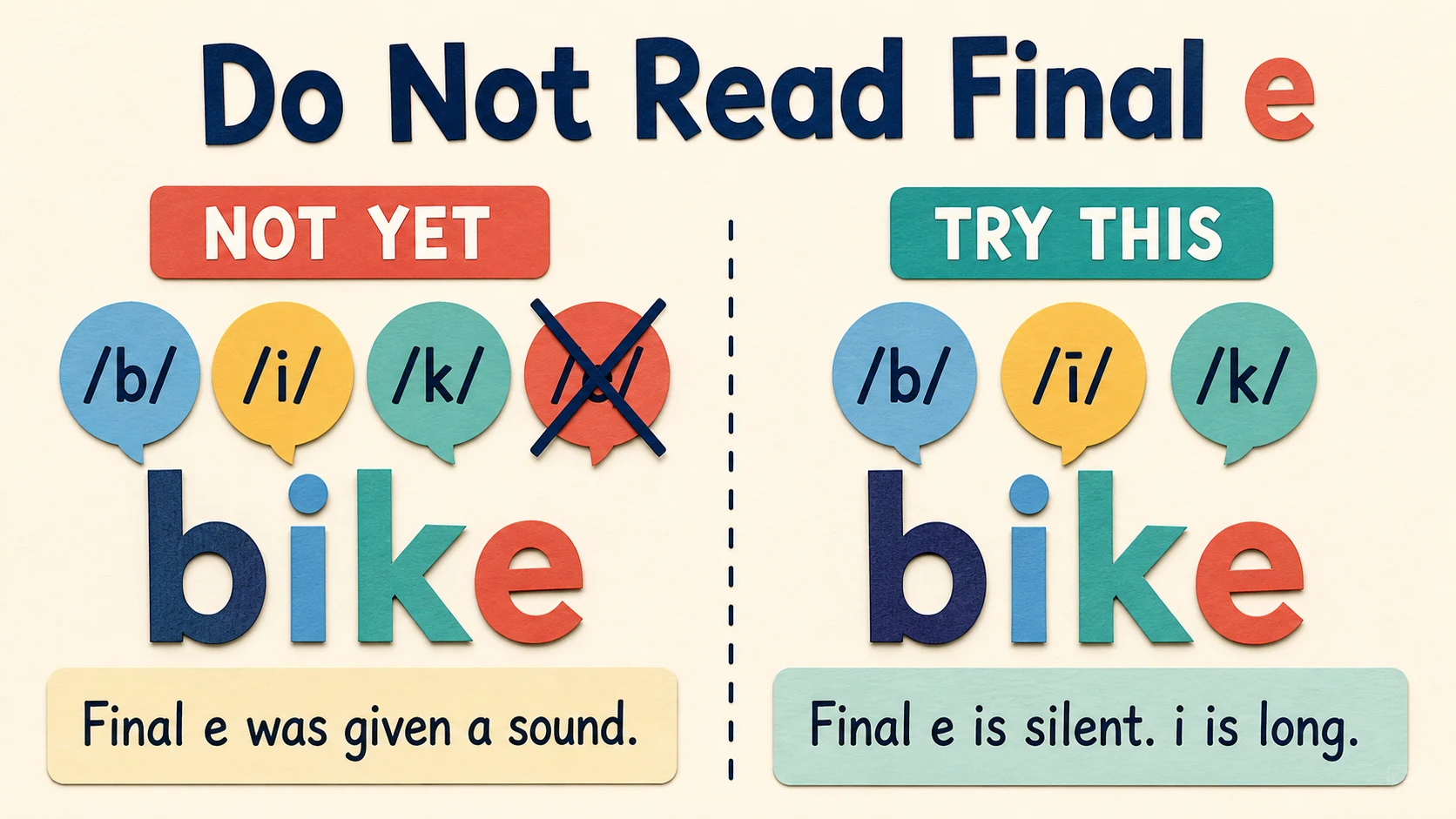
Use the visual to connect a specific long-vowel error to another model, contrast, or response format—not to classify the learner.
This example belongs because it checks whether the learner notices a visually distinctive spelling change while contrasting it with an already familiar CVC form.
Example 5: the learner reads cat but stalls on mat
Keep -at visible and replace only the first letter. Build cat → mat → bat → hat with tiles. Ask the learner to touch the unchanged -at after each substitution, then blend the whole word. A Pre-K Word Families guide and free sheet can support this controlled onset change.
If the learner reads each word only after sounding out all three phonemes, that may be accurate practice rather than an error. Continue until the substitutions become smoother; do not demand speed at the cost of accuracy. If the learner guesses any rhyme after seeing -at, mix in a contrasting family such as -ig and require attention to the complete word.
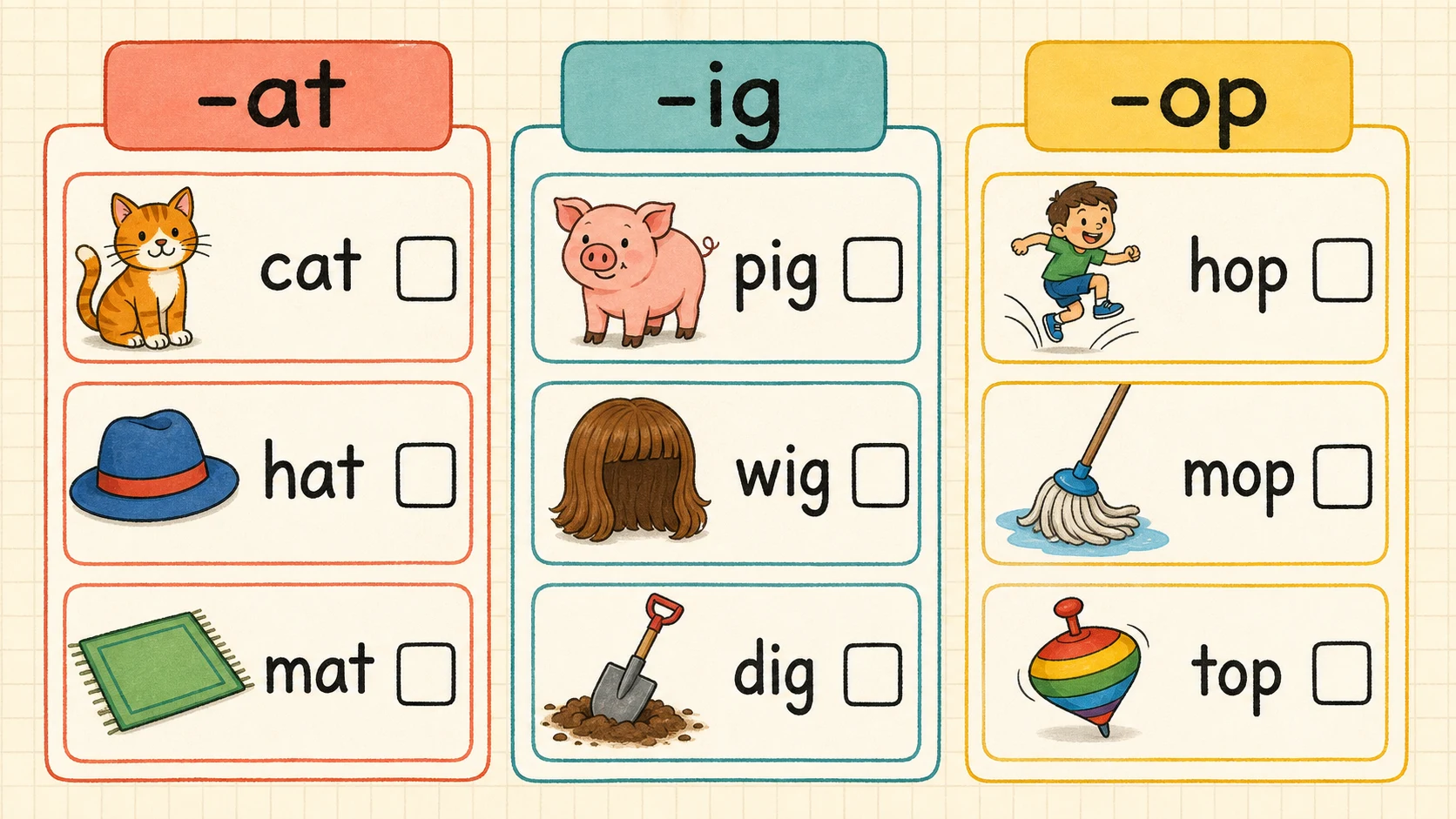
Use repeated family practice to stabilize the shared ending, then introduce a second family so the learner must inspect rather than assume the rime.
This example belongs because word families reduce variation deliberately while still requiring the learner to process the changed onset.
Interpret patterns of errors, not just totals
A score of 14 out of 20 does not reveal what should happen next. Review the six missed items and ask what changed.
When errors repeat predictably
A repeated error supports a narrow response:
| Observed pattern | Likely instructional question | Next practice step |
|---|---|---|
| pen becomes pin across several words | Is the e/i contrast heard, mapped, or spelled inaccurately? | Oral minimal pairs, then an e/i sort or dictation |
| stop becomes sop | Is the second sound in the initial blend omitted? | Four-sound tapping and focused st word practice |
| ship is segmented as /s/ /h/ /i/ /p/ | Is the learner treating a digraph as a blend? | One-box sh modeling in initial and final positions |
| hope becomes hop | Is final e being overlooked? | CVC/CVCe pairs before mixed long-vowel patterns |
| Every picture-named word is correct, but unfamiliar printed words are guessed | Is the picture supplying the answer? | Remove pictures and use controlled word reading |
| Reading is accurate, but dictation omits letters | Is segmentation or spelling less stable than decoding? | Sound boxes followed by tile building or writing |
These are instructional interpretations, not clinical conclusions. A single error may reflect distraction, an unfamiliar picture, vocabulary, speech production, vision, hearing, language background, or unclear directions. Repeat the item in another format before changing the target.
When errors are scattered
If mistakes do not share a pattern, reduce the task’s complexity. Check whether the sheet mixes several vowel sounds, blends, digraphs, and sentence reading. Re-present five items with one feature held constant.
Also verify the directions. A learner may understand the phonics target but misunderstand whether to circle, match, write, or select more than one answer. Model the response format using an item that is not part of the scored practice.
Adapt access without changing the phonics target
An adaptation preserves the sound–spelling decision while reducing an unrelated barrier.
For a learner who tires during handwriting, replace written answers with letter tiles, pointing, or oral reading. If the target is spelling ship, provide the letters s, h, i, and p for selection rather than writing—but do not provide sh already joined if the decision is whether those letters represent /sh/.
For a learner distracted by a crowded page, cover all but one row. Keep the original word and answer choices visible. For a learner who needs movement, place vowel cards across the room and have the learner carry pen to e and pin to i. For ages three and four, such brief adult-led oral, matching, manipulative, and movement activities should take priority over desk work.
Read directions aloud when reading the directions is not the target. Name an unclear picture so vocabulary does not determine the phonics answer. Allow additional response time without supplying the sound. Enlarge print when needed, but preserve letter order and contrasts.
Do not adapt a decoding task by reading every target word aloud and asking the learner to copy it. That removes decoding. Do not turn a spelling task into tracing alone; copying conceals whether the learner can segment and select letters.
Connect word practice to sentences without losing control
Isolated words make error patterns easier to see, but phonics must eventually operate in meaningful reading. After a learner reads the selected pattern accurately across several examples, introduce a short sentence containing taught patterns and only a manageable number of explicitly taught high-frequency words.
The IES foundational-skills guide includes daily connected-text reading alongside word-level instruction. Apply that recommendation cumulatively: a passage emphasizing sh can also contain previously taught CVC words, but it should not depend on untaught vowel teams to test sh.
Writing can provide a second view of the same knowledge. The IES elementary writing practice guide recommends explicit instruction in foundational writing skills and regular opportunities to write. It did not evaluate these worksheets. In this context, a brief dictated word or sentence can reveal whether a pattern used during reading is also available for spelling.
The Common Core English Language Arts standards include grade-specific foundational-skills expectations involving sound–spelling correspondences, decoding, and word recognition. They can help adults inspect broad expectations, but this page does not claim standards alignment for any individual WorksheetWise resource. Grade labels indicate intended practice levels, and local sequences may introduce patterns in a different order.
Use a two-week cycle without locking in the calendar
A two-week plan should remain responsive rather than forcing ten consecutive sheets.
During the first few sessions, model one narrow pattern and use five to eight carefully selected items. Record the error type. In later sessions, vary the response: oral discrimination, tile building, word reading, sorting, dictation, and finally a short sentence. Include a small amount of previously secure material so the learner must identify the target rather than follow a page-wide pattern.
A possible sequence for sh is:
- Session 1: hear /sh/ and match initial-sh pictures.
- Session 2: build and read ship and two matched words.
- Session 3: compare sh with a two-sound blend such as sl.
- Session 4: read sh in final position, as in wish.
- Session 5: mix initial and final positions.
- Session 6: spell selected words from dictation.
- Session 7: read a controlled sentence.
- Session 8: review CVC, blend, and sh words together.
- Session 9: repeat the weakest response format with new words.
- Session 10: decide whether to continue sh, contrast it with ch, or return to the prerequisite exposed by errors.
The calendar is a suggestion. Move forward because the learner’s responses remain accurate when support and repetition are modestly reduced—not because ten days have passed.
Keep the limits of worksheet evidence visible
A worksheet records performance on particular items under particular conditions. It cannot diagnose a reading disorder, identify a cause, prescribe treatment, or guarantee progress. Do not infer a learner’s overall reading ability from one page or compare the learner with a grade label as if it were a clinical threshold.
Worksheet evidence is also sensitive to adult assistance. Mark prompts, demonstrations, read-aloud directions, picture naming, and self-corrections. An answer completed after the adult supplies the vowel is not equivalent to an independent response, but it remains useful evidence about which prompt helped.
Avoid racing through the catalogue. The presence of 396 variants and 22 free resources creates options, not a required sequence. A second sheet on the same narrow pattern may be more appropriate than advancing to a new topic. Conversely, repeating an unchanged format after the learner has shown the skill may measure patience rather than phonics.
When errors remain frequent despite clear modeling, reduced task variation, repeated opportunities, and access adaptations, document what the learner could do, what prompts were used, and which patterns persisted. Share those observations with the learner’s teacher or an appropriately qualified professional. Report concrete behavior—“omitted the second consonant in five of six initial st words”—rather than proposing a diagnosis.
Make the next sheet earn its place
After the session, write one sentence in this form:
When asked to ___, the learner ___ on ___ of ___ items; next I will use ___ to check or teach ___.
For example:
When asked to read initial st words, the learner omitted /t/ on four of five items; next I will use a focused blend sheet with sound tapping and no final blends to teach retention of both initial consonants.
Then open the free deterministic worksheet generators and create one narrowly controlled follow-up: keep st constant, limit unrelated spelling patterns, and choose a response format that reveals whether /t/ is retained. Print only the amount you can model, observe, correct, and use to make the following decision.
Put it into practice
Use the guide with a real printable
Move from explanation to a short, observable practice task. Check the first item together, then adjust the next session from the learner's actual work.
Open the first free worksheetExplore a neighboring collection