Curated collectionAnswer keys includedPrint-ready PDFs
School Readiness Math Worksheets
Pair low-pressure print tasks with oral language, play and hands-on models without using a worksheet as an age-placement test.
Start with a real resource
Browse this worksheet collection
61 relevant free entry points are available. Each one includes a printable learner PDF and separate answer key.
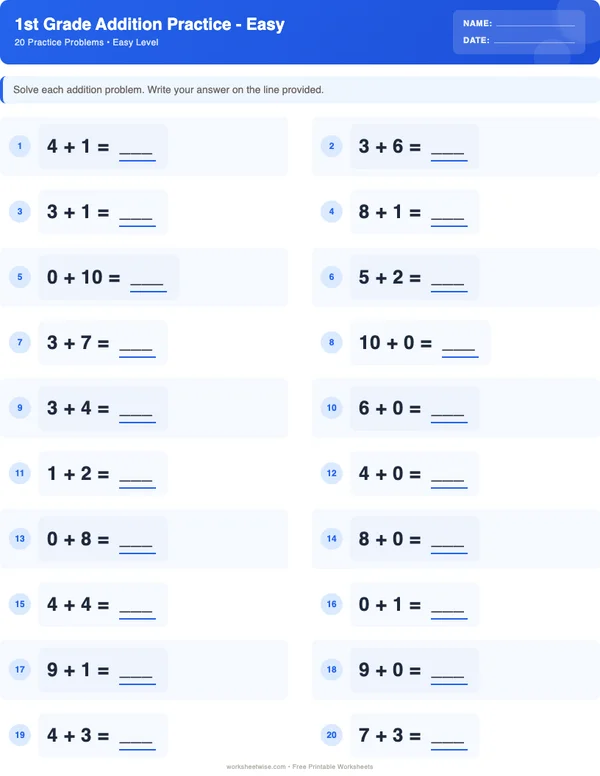
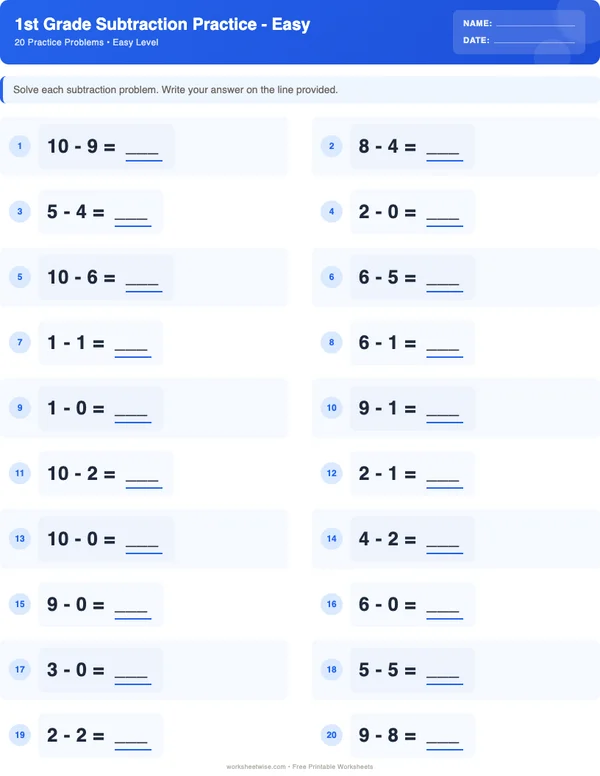
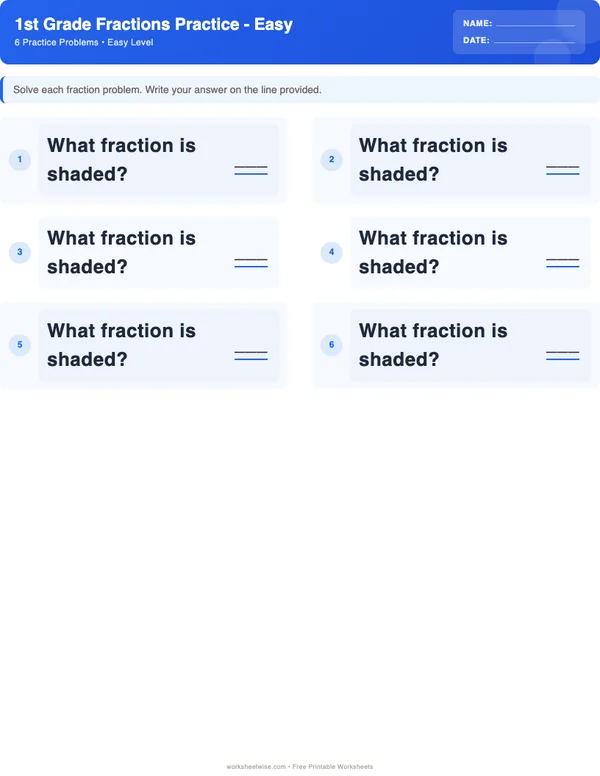
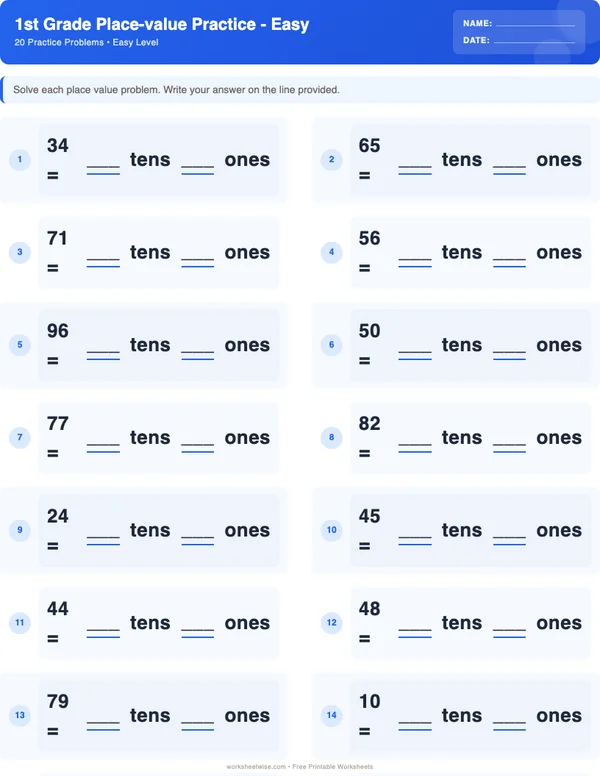
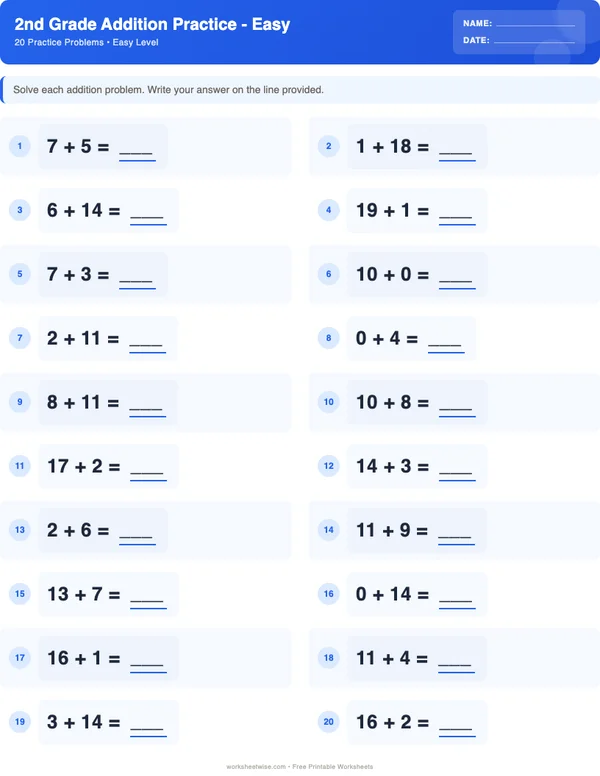
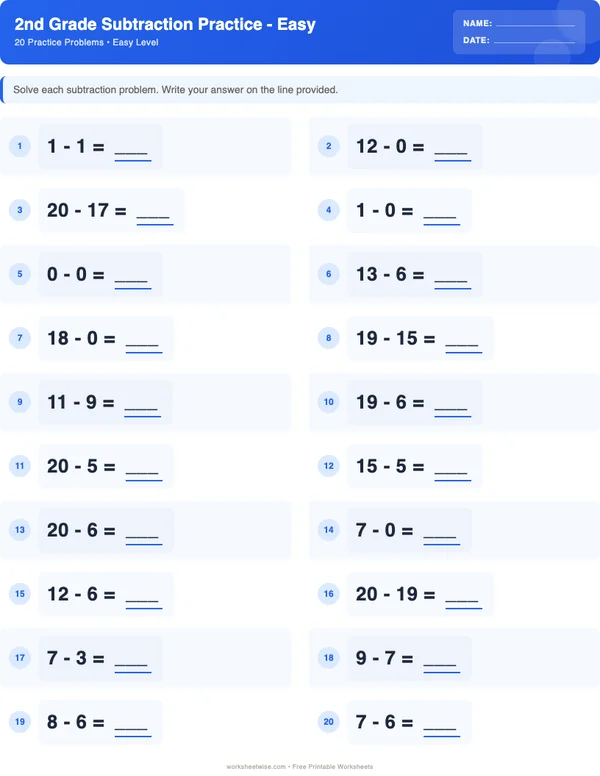
A useful practice loop
Print less. Observe more.
- Choose one skill and model the first item aloud.
- Use a short set and notice the learner’s strategy.
- Change the next task from the work you can see.
Need more than the free sheet?
Plus includes all 1098 matching catalogue variations where available, plus saved deterministic generators and the worksheet designer.
See Plus membershipComplete guide
How to teach and practise school-readiness math worksheets
3,577 words Updated 6 instructional visuals
Use the sheet as one part of a math conversation
School-readiness math worksheets are most useful when an adult turns a few printed items into a short cycle of modeling, talking, handling objects, and checking understanding. Choose a sheet by the mathematical action it requires—not by the age or grade printed on it—then stop before fatigue replaces useful evidence. A child might count seven buttons accurately but lose track of seven scattered pictures, or solve with counters but not yet interpret the symbols. Those differences should determine the next activity and sheet.
Age is a discovery aid, not a placement decision. Grade labels describe an intended practice level, and local curriculum sequences differ. For ages three and four especially, prioritize brief adult-led oral, matching, manipulative, and movement work over desk work. A printed page might supply two matching prompts or a picture to discuss; it should not become an age-placement test.
The live catalogue currently contains 1,098 math variants across eight grade groupings and 12 topics, with 61 free entry points. That breadth supports careful selection, but the number of available sheets is not a reason to assign more work. Start with one mathematical target, select a response format the learner can access, and use the first few responses to decide whether to continue, simplify the representation, or move on.
The IES guide to teaching math to young children recommends developmental progressions, regular monitoring, explicit mathematical language, and instruction that helps children view and describe their world mathematically. That is sourced guidance; the short routine below is a practical WorksheetWise application of those principles, not a claim that IES reviewed these resources.
Select the mathematical action before the grade label
A page can look simple while asking for several different abilities. Before printing, identify what the learner must notice, represent, and record.
Decide what the task is actually measuring
Ask these questions:
- Is the learner counting objects, reading numerals, completing a number sequence, or coordinating all three?
- Does an addition item ask the learner to join two groups, interpret a picture, or operate only on symbols?
- Does subtraction represent taking away, comparing two quantities, or finding a missing part?
- Does a geometry item ask for a name, a match, a sort, or a description of attributes?
- Must the learner read directions independently, or can the adult read them aloud?
- Is handwriting necessary to show the target skill, or could pointing, circling, moving counters, or answering orally preserve it?
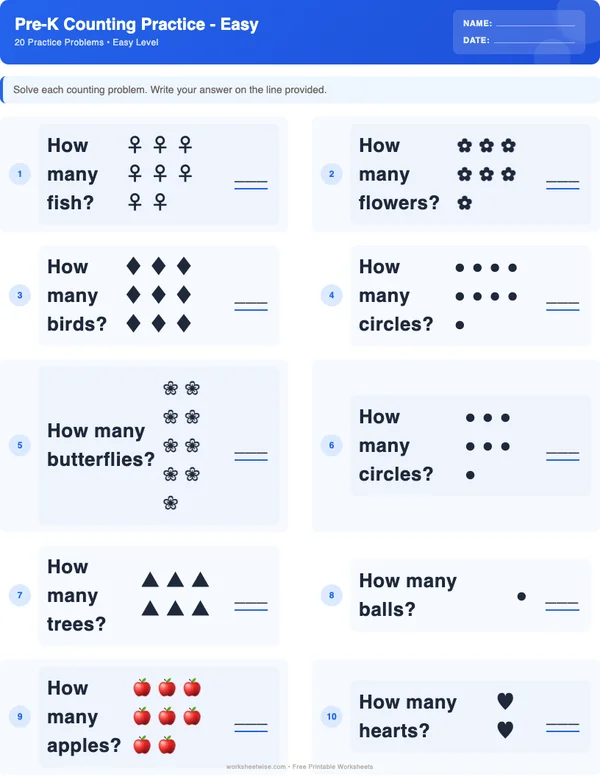
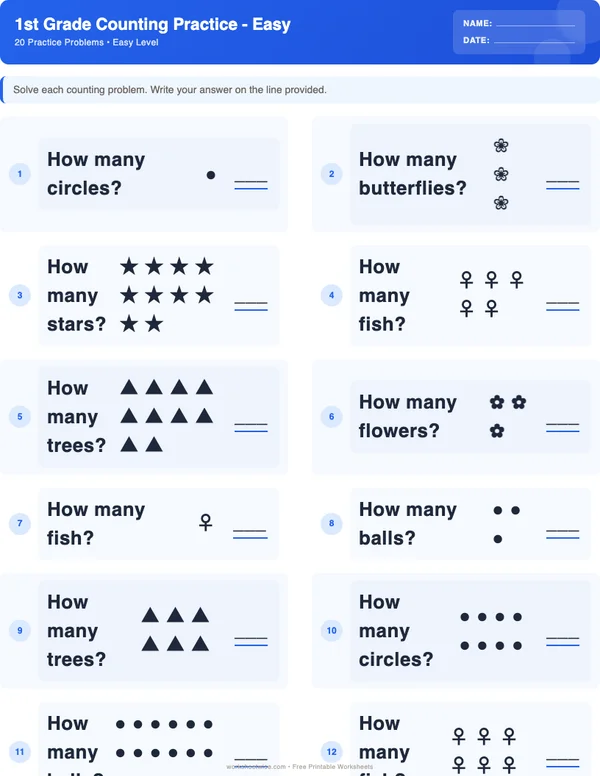
The free Pre-K Counting guide and sheet, for example, contains 20 problems and is described in the catalogue as “easy.” Here, “easy” should be interpreted through observable task features: familiar counting content, a relatively direct response, limited steps per item, and less symbolic transformation than later work. It must not become a label for the learner. Twenty available problems also do not mean a three- or four-year-old should complete all 20.
Match the representation to the target
Select among three broad forms:
- Concrete: the learner touches, moves, groups, folds, trades, or builds.
- Representational: the learner uses pictures, marks, ten frames, number lines, clock faces, or drawn shapes.
- Abstract: the learner works with numerals, operation signs, and equations.
The catalogue’s addition guidance suggests moving from physical objects to drawings and then number sentences. That sequence is also compatible with the systematic-instruction and visual-representation recommendations in the IES guide for assisting students who struggle with mathematics. This does not require every learner to pass through the stages at the same speed. It means that when symbols become unreliable, an adult has a sensible representation to return to.
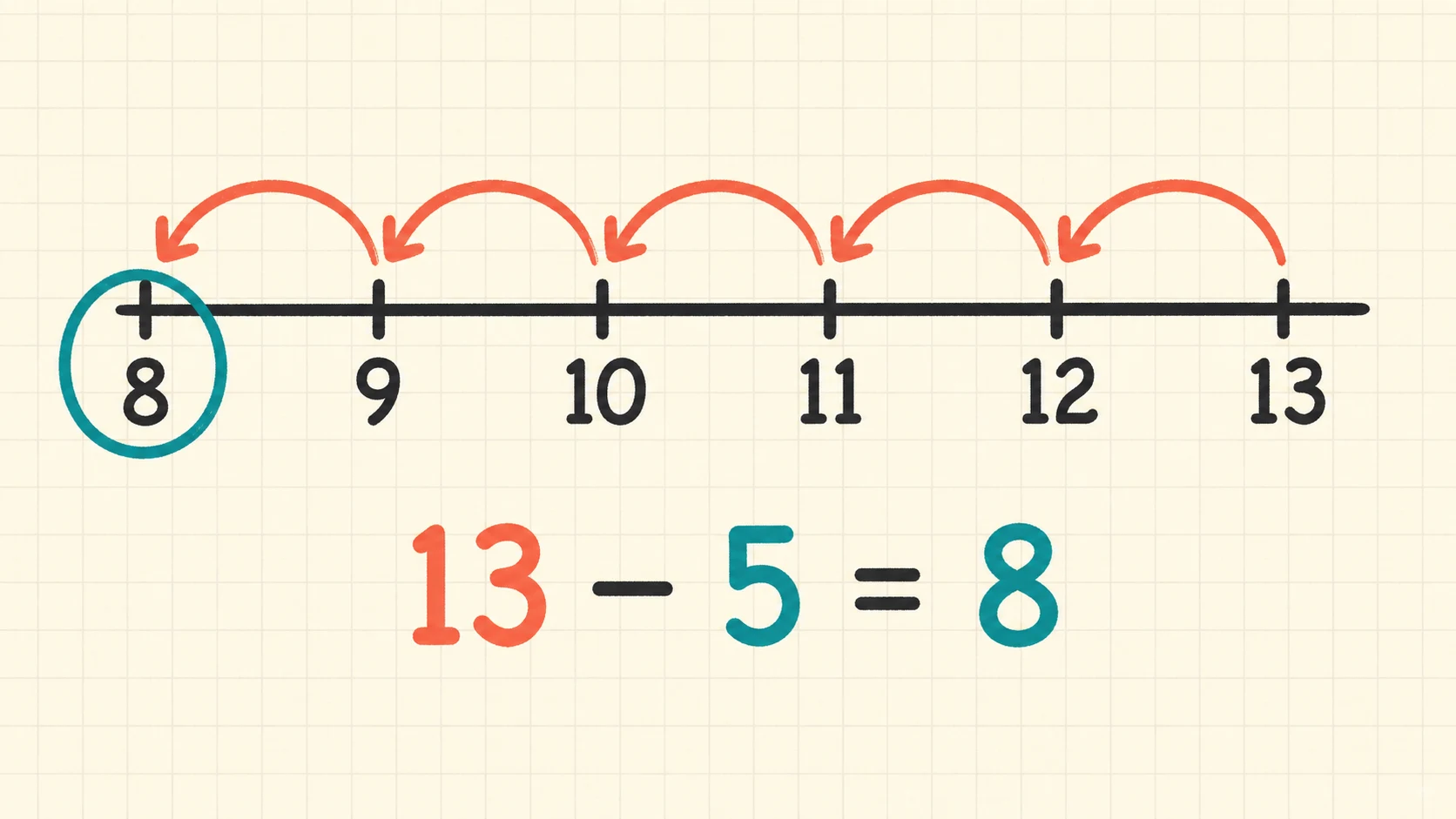
Use the concrete model to reveal what is removed or compared before asking the learner to record a subtraction sentence.
Compare live skills by the thinking they require
Representative catalogue entries show why “math readiness” cannot be reduced to a single score. Counting, addition, subtraction, fractions, place value, geometry, time, money, and word problems use overlapping but distinct reasoning.
Counting: coordinate words, objects, and quantity
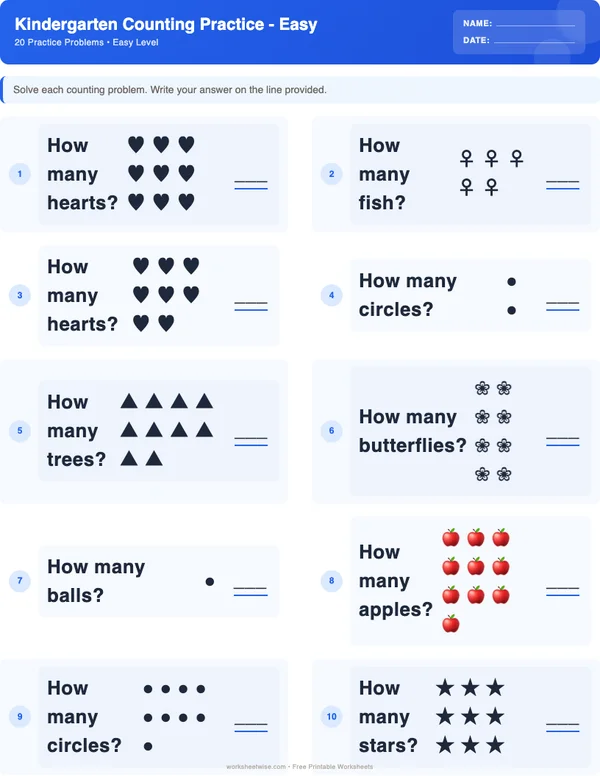
The Pre-K and kindergarten counting entries each provide a 20-problem free sheet. Both cover number sequences, missing numbers, and counting sets, while the catalogue description distinguishes Pre-K work with concrete objects and counting toward 20 from later counting progressions.
A suitable starting action for a young learner is not “complete the Pre-K page.” It is “touch each object once while saying one number word, then tell how many there are.” If the sheet shows a set, let the learner place a small token on each printed object while counting. This reduces the demand of remembering which objects have already been counted.
Choose the kindergarten counting entry when the learner can already coordinate one touch with one number word and the sheet’s actual items offer the desired next demand—perhaps a missing numeral or a less orderly arrangement. Do not select it merely because the learner is kindergarten age.
Addition and subtraction: interpret the situation first
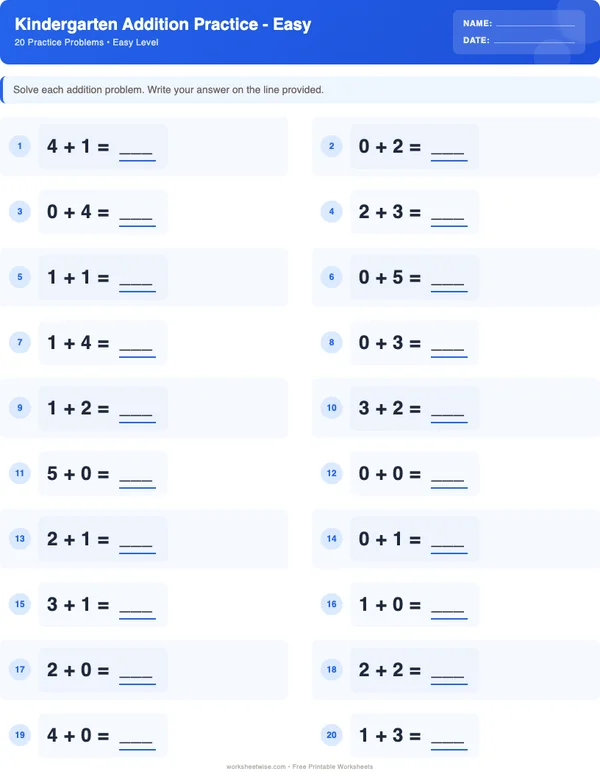
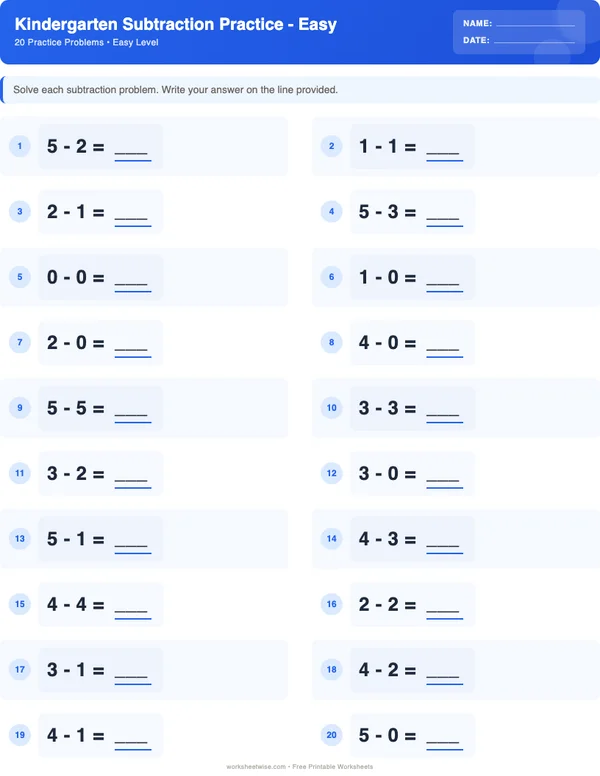
The live kindergarten addition sheet has 20 problems. The corresponding subtraction sheet also has 20, but the concepts are not interchangeable. Addition may join or compose quantities. Subtraction may remove a quantity, compare two quantities, or ask for a missing part.
For a learner who can combine counters but does not recognize , use the Kindergarten Addition guide and free sheet with oral narration: “There are four counters here and three more here. Put them together. How many now?” Only after the learner acts out the joining should the adult connect the groups to .
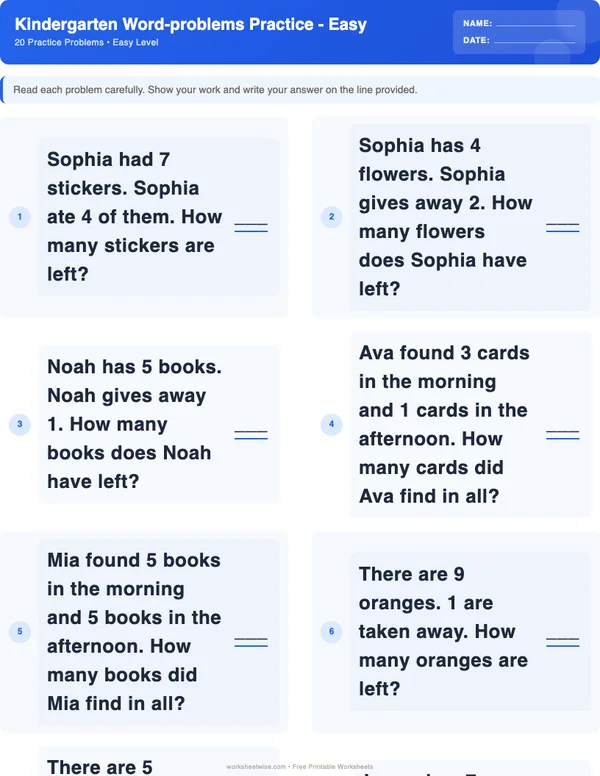
For subtraction, response patterns matter even more. A child might solve “Five birds, two fly away” but not “You have five blocks and I have two; how many more do you have?” Both can be represented by , yet the actions and language differ. The Kindergarten Subtraction guide and free sheet is therefore best paired with spoken stories and objects, not treated as isolated fact practice.
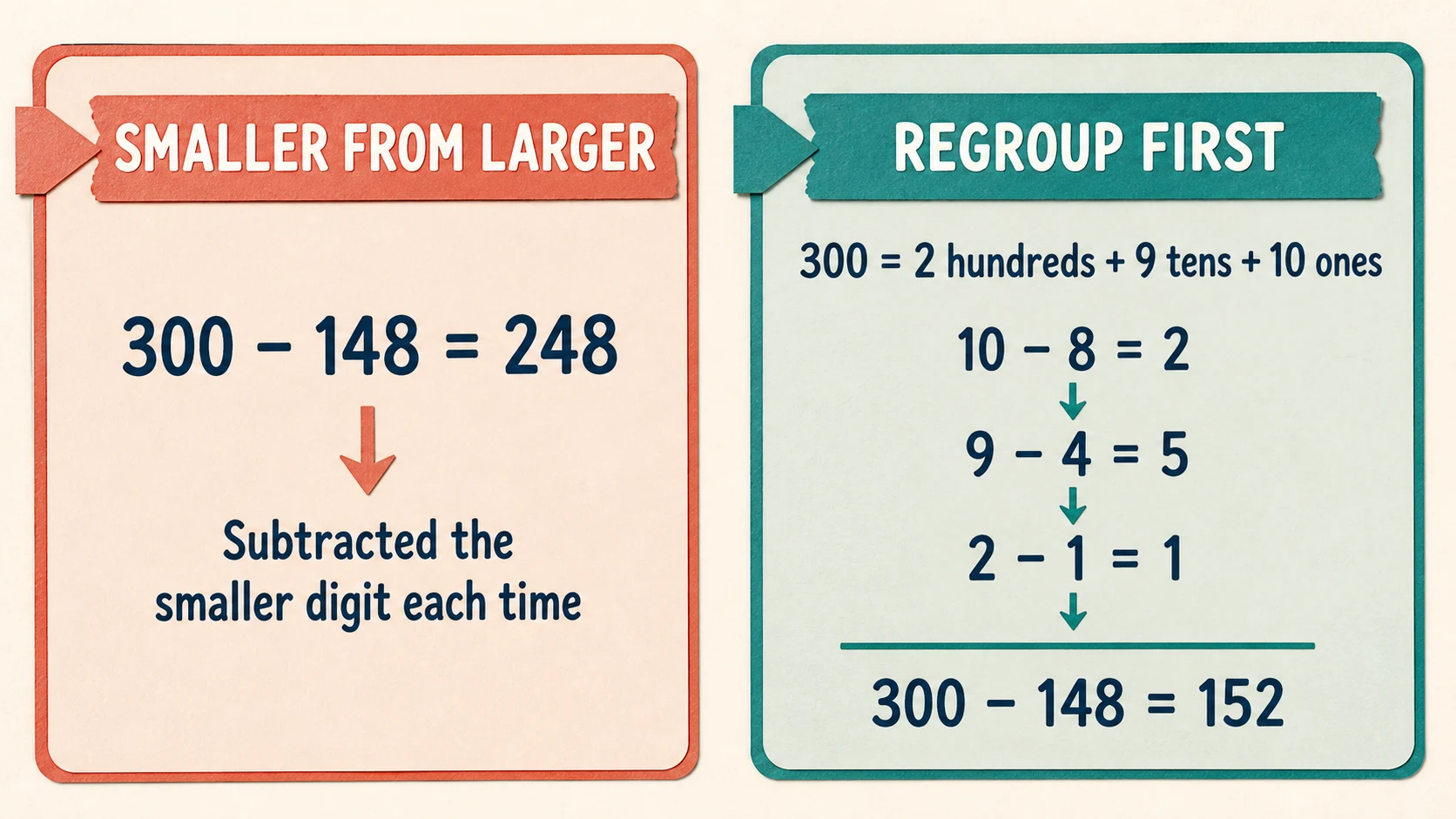
Later subtraction errors illustrate why adults should identify the meaning and place-value action behind an answer instead of marking the entire method “wrong.”
Place value and fractions: relationships, not visual guessing
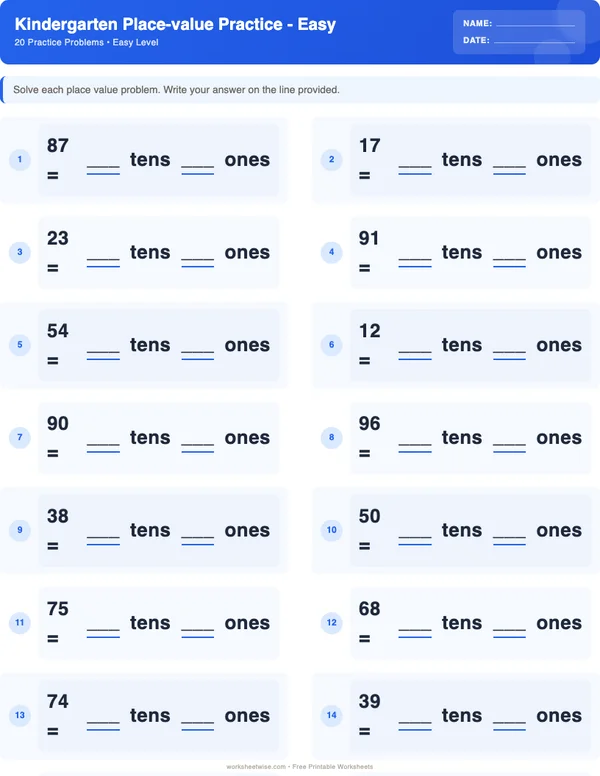
Early place value starts with composing a ten and some ones. The kindergarten catalogue entry includes composing and decomposing numbers among its broader topic coverage. Choose an actual item only if its number range and representation match the intended relationship. A learner who can recite “thirteen” may still need to build one group of ten and three single objects.
Fractions introduce a different relationship: equal parts of one whole. The representative first-grade free sheet contains six problems, far fewer than the 20-item arithmetic sheets. The shorter count does not automatically make it easier. An item may require the learner to notice whether parts are equal, identify the whole, and connect a shaded region to a fraction name.
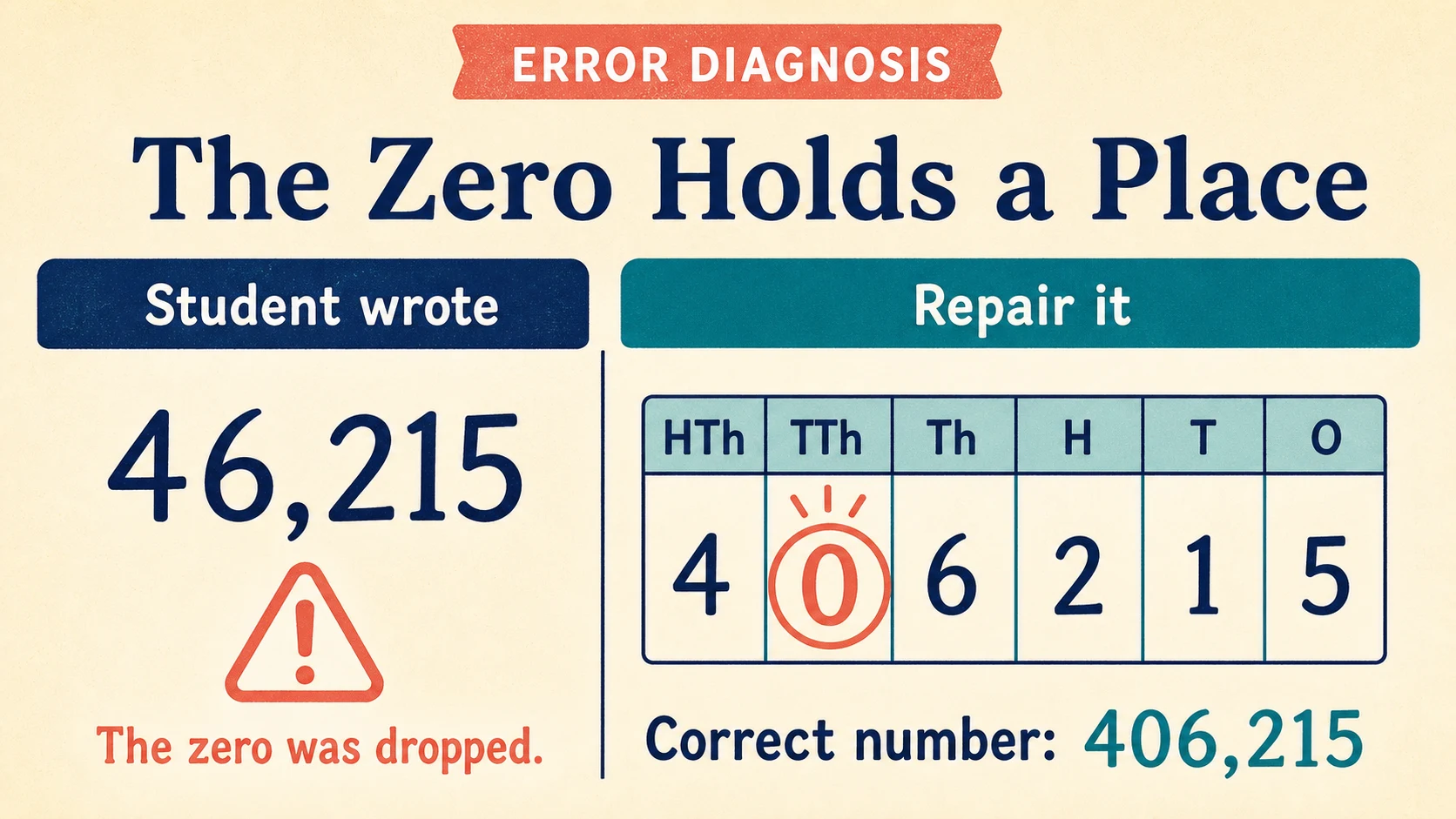
Upper-grade place-value mistakes are a reminder that digit position must remain connected to quantities and exchanges from the earliest bundling work.
Run a brief model–talk–print–check routine
A repeatable routine helps adults collect useful evidence without turning a worksheet into an endurance exercise. For young learners, the whole encounter may last five to ten minutes. Stop sooner if attention or willingness drops.
1. Name one target and remove avoidable barriers
State the target in observable terms: “Today we will touch each picture once and find how many,” or “Today we will show what happens when three are taken away.” Avoid broad goals such as “do math” or “see what level you are.”
Read directions aloud when reading is not the target. Cover unused rows with paper. Offer a thick pencil, counters, scrap paper, or a number line if those supports preserve the mathematics. For ages three and four, begin away from the desk: count steps, match numeral cards to groups, build shapes, or move objects into sets. Bring in one or two printed prompts only after the action makes sense.
2. Model one complete example
Think aloud without completing the learner’s target item. For counting, demonstrate moving each counted object to a new area. For addition, create two groups and push them together. For subtraction, physically remove objects or align two rows for comparison.
Keep the language exact: “I touched each bear once. The last number I said was seven, so there are seven bears.” This connects the counting process to cardinality without adding a chant or mnemonic that hides the reasoning.
3. Ask for a second representation
After the learner acts, ask for a picture, marks, a numeral, or a spoken explanation. The second representation is not extra decoration; it tests whether the learner can connect forms.
For , the learner might:
- Build four red counters and three blue counters.
- Push them together and count seven.
- Draw four dots and three dots.
- Point to or write .
If handwriting is difficult, provide numeral cards to arrange. The target remains joining quantities, not pencil control.
4. Use only a small slice of the sheet
Begin with two or three carefully chosen items. Continue only if the learner is still attending and the responses are giving new information. Completing 20 near-identical items may show persistence, but after a stable pattern appears it often adds little evidence about the specific concept.
Mark the stopping point, not every empty item. An unfinished sheet can still be a successful teaching record.
5. Check with a new but equivalent example
Change the surface details while preserving the target. If the learner counted six objects in a row, offer six scattered buttons. If the learner solved , ask for with counters. If the learner took two from five, ask how many more five is than two. The response shows whether understanding transfers or depends on one arrangement.
Four checked examples and the decision each supports
These examples are grounded in the page’s representative skills and intended practice levels. They are suggestions built from the catalogue facts; they are not published outcomes or standardized assessments.
Example 1: Count seven scattered objects
Place seven buttons in a loose arrangement. Ask, “How many buttons are here?” Suppose the learner says “one, two, three, four, five, six, seven, eight” because one button is counted twice.
The correct quantity is seven. Check it by moving each button into a line while counting once: .
This example belongs here because the Pre-K and kindergarten catalogue entries explicitly include counting sets, and the supplied teaching guidance recommends touching concrete objects and using scattered arrangements to examine one-to-one correspondence. The next sheet should not jump to larger numerals. Choose a counting page with small pictured sets, and let the learner cover each picture with a token while counting. If that works, remove the tokens but keep the sets small.
Example 2: Join four and three
Give the learner four counters, then three more. Ask, “How many altogether?” The checked result is:
A learner who recounts all seven accurately has solved the problem even if counting on is not yet used. A learner who answers six after counting “four, five, six” may have counted only the three new counters without treating four as the starting quantity.
This example belongs because the live kindergarten addition entry begins with addition using objects and pictures and includes work within small totals before later ranges. The next action depends on the error. If joining is understood but the written sign is not, retain the same small quantities and connect the action to . If one-to-one counting breaks down, return to smaller combined sets on the Kindergarten Counting guide and free sheet.
Example 3: Interpret through related addition
Build 13 with a ten frame and three extra counters. Remove five: first remove the three extras, then two from the full frame. Eight remain, so:
Check with the inverse relationship:
This example belongs because the first-grade subtraction catalogue entry includes subtraction within 20 and related addition facts. It also exposes more than answer accuracy. If the learner produces 18, the operation sign may have been overlooked or interpreted as addition. If the learner begins at 13 and counts five number words including 13—“13, 12, 11, 10, 9”—the answer of nine reflects an inclusive-counting error. The next sheet should retain subtraction within 20 but provide a number line or objects, not introduce larger numbers.
Example 4: Compare one-half and one-fourth
Use two equal paper strips. Fold one into two equal parts and shade one part. Fold the other into four equal parts and shade one part. One-half is larger than one-fourth:
The check is visual and relational: both strips represent equal wholes, and the single half covers more of its strip than the single fourth.
This example belongs because the representative first-grade fractions entry covers partitioning shapes, identification, and comparison, while its catalogue guidance emphasizes concrete and visual models. If the learner says one-fourth is larger “because four is bigger,” do not assign more symbolic comparisons. Choose a sheet that shows equal wholes partitioned into equal parts, and pair each item with folding or fraction strips.
Treat difficulty as a feature of the task
The representative free sheets are catalogued as “easy,” but that label should be translated into observable demands before selection. Inspect the actual page for:
- the size and familiarity of the numbers;
- whether objects are orderly or scattered;
- whether pictures, number lines, or frames are provided;
- how many operations or decisions occur in one item;
- whether the unknown is always in the answer position;
- the amount of reading and handwriting required;
- whether examples change format across the page;
- the density and number of visible items.
A direct numeral match can be less demanding than producing a numeral from memory. Counting five objects in a row can be less demanding than counting five scattered objects. Solving after acting out removal can be less demanding than interpreting a comparison story with the same numbers. These are descriptions of task complexity, not fixed descriptions of a child.
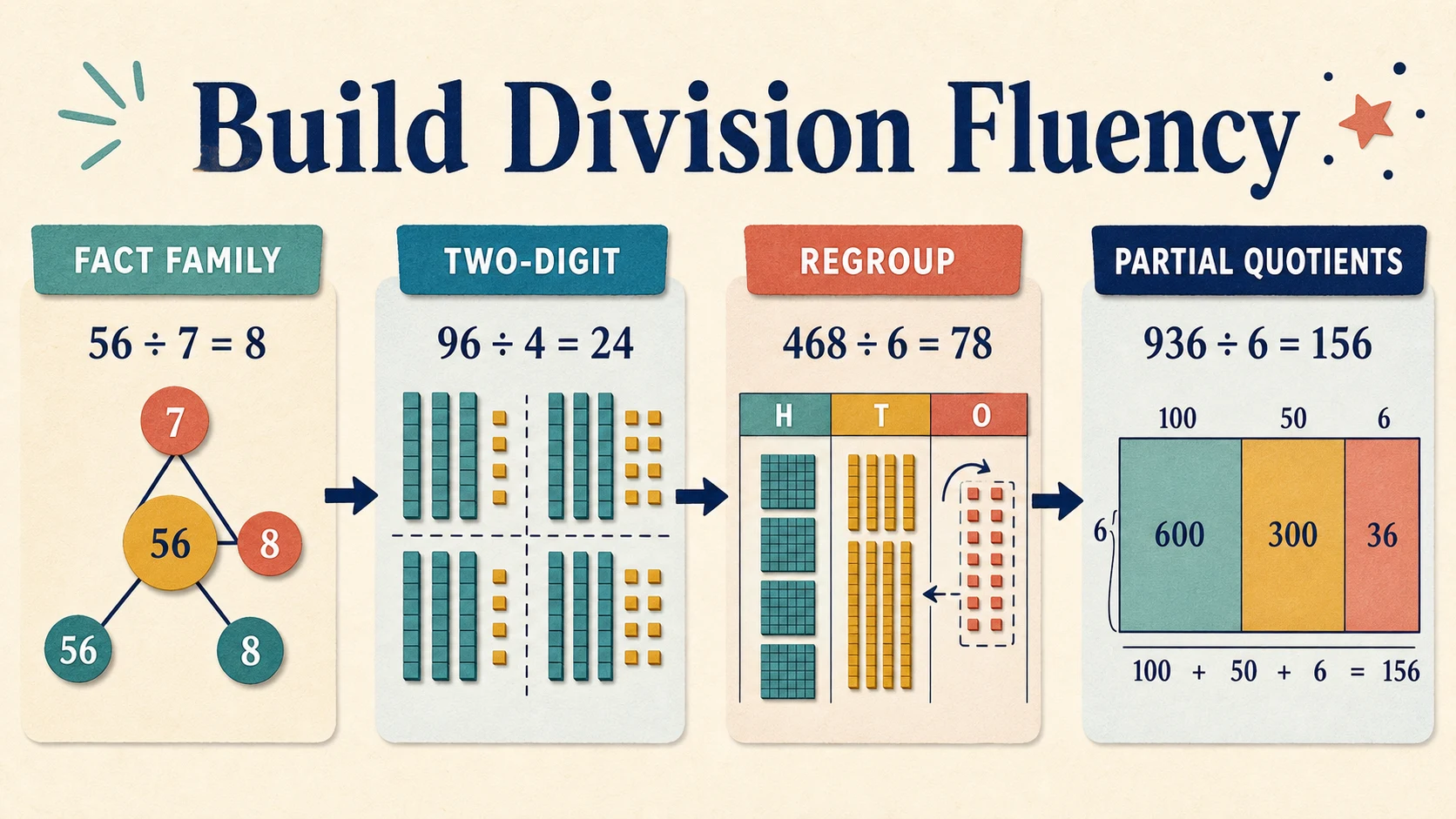
This later progression makes the selection principle visible: independence should increase only as the representation, procedure, and explanation become stable.
Adapt access without changing the mathematics
An adaptation preserves the target when it changes how the learner receives information or responds, but not the essential mathematical decision.
Adaptations that preserve the target
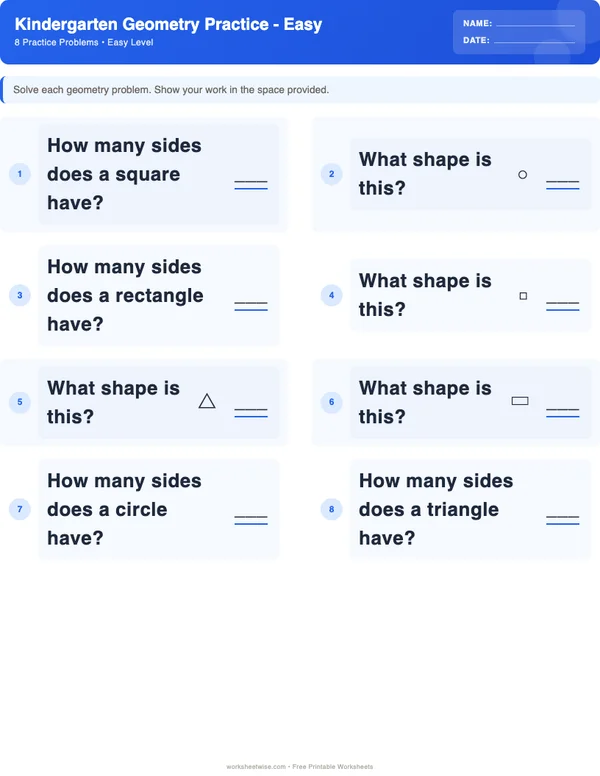
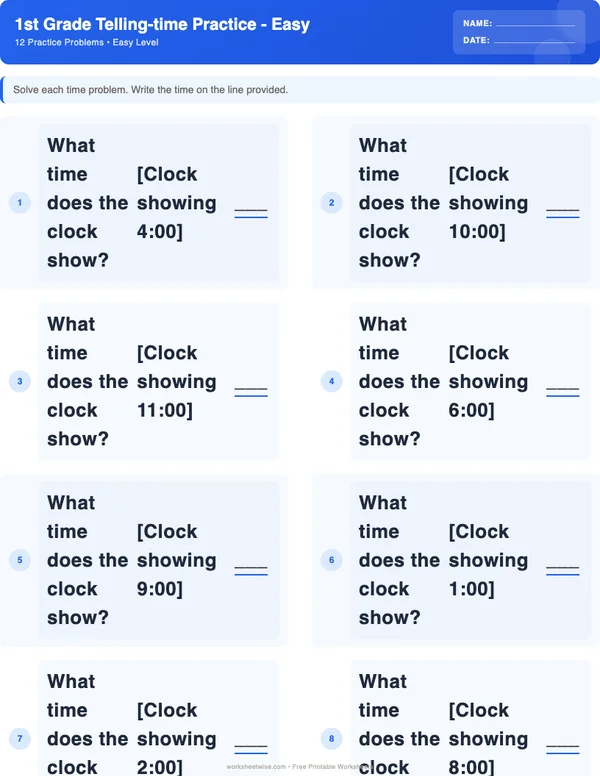
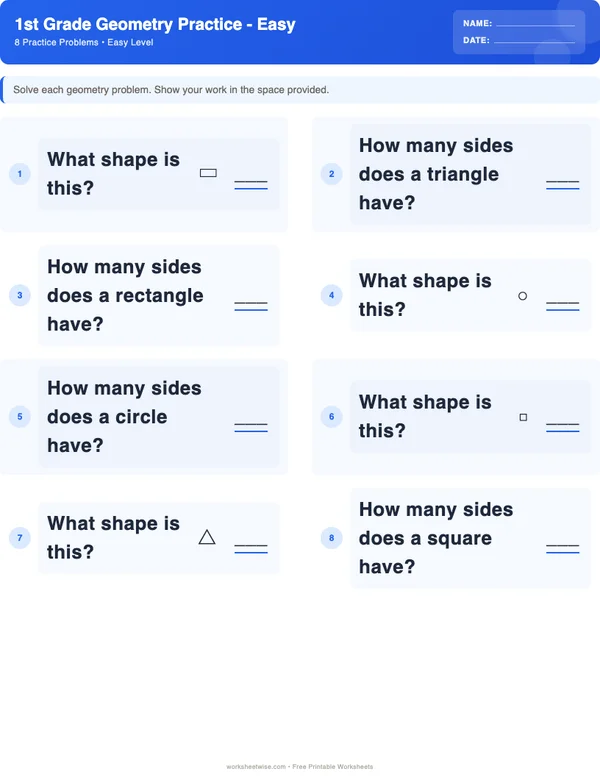
For counting, enlarge images, provide movable markers, let the learner point instead of circle, or cut a row into separate cards. For addition, read the prompt aloud and allow counters or a ten frame. For geometry, let the learner sort physical shapes before matching printed ones. For time, provide a demonstration clock when the goal is coordinating hour and minute hands. For word problems, read the text aloud when the target is modeling the quantities rather than decoding print.
Movement can also preserve the target. A learner may take five steps and then three more to represent , or stand on floor numerals while counting forward. Oral responses preserve the target when handwriting would otherwise obscure what the learner knows.
Changes that alter the target
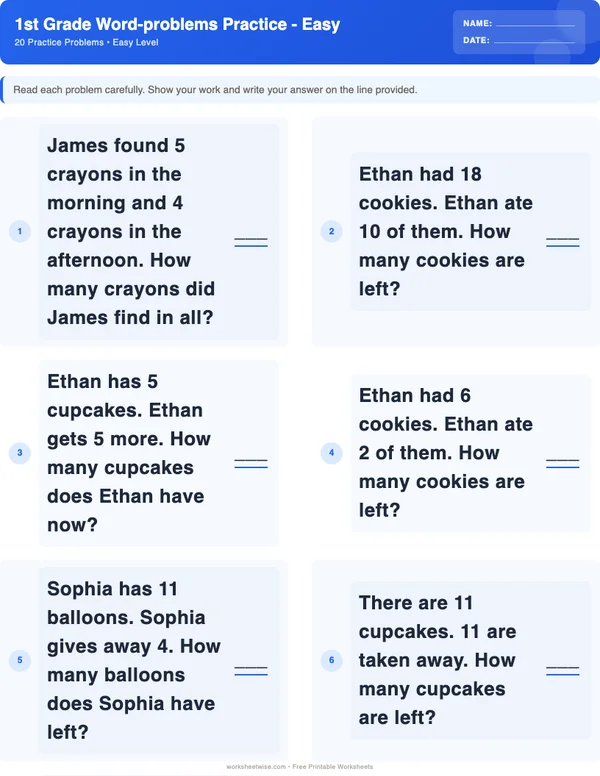
Some supports make a different task. Telling the learner which operation to use removes the operation-selection demand from a word problem. Counting the objects aloud while the learner points may test tracking rather than independent counting. Drawing partition lines in advance changes a fraction-partitioning task into fraction identification. Writing the first digit of every answer may turn numeral production into tracing or completion.
Such changes can still be useful instruction. Label them accurately: “We solved this together with the operation supplied,” rather than treating the response as independent evidence.
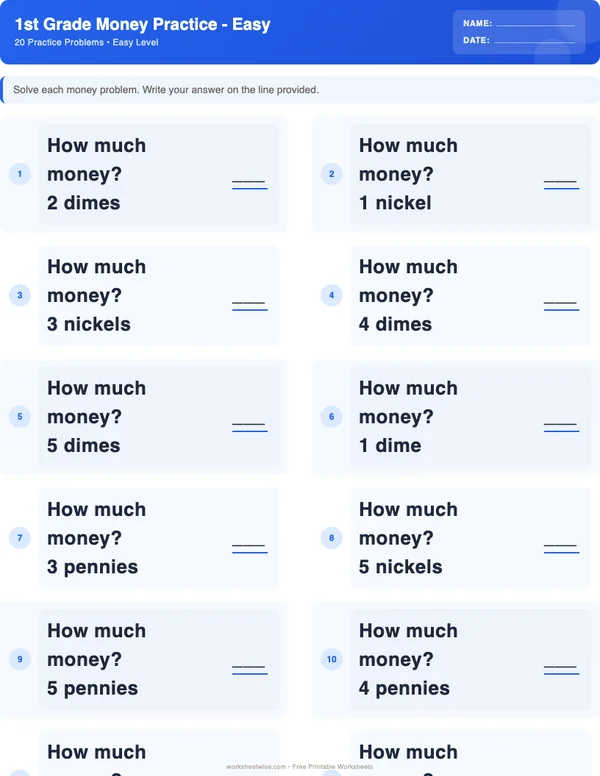
For learners using the catalogue’s clock, money, geometry, or word-problem resources, handle real or realistic objects first when possible. The printed representation should reconnect to the same mathematical relationship, not replace the experience entirely.
Read errors as evidence for the next sheet
Do not react to one wrong answer by moving down a grade, and do not react to one correct answer by moving up. Look for a repeatable pattern across two or three equivalent examples.
Counting errors
If number words are out of order, practice the oral sequence through songs, steps, or call-and-response without requiring object counting at the same time. If the sequence is correct but objects are skipped or double-counted, keep the quantity small and add a physical tracking method. If every object is counted correctly but the learner cannot answer “How many?” without recounting, ask the cardinality question after each small set and restate the connection to the last number said.
Operation and modeling errors
If a learner adds when the story describes removal, act out the story and ask what changed before showing a symbol. If the learner handles a take-away story but not a comparison, keep the same numbers and change only the situation. If calculations are accurate but a word problem is not, reduce the reading load and ask the learner to retell and model the situation.
The IES struggling-students guide supports explicit, systematic instruction, clear mathematical language, visual representations, and attention to word problems. Applying that guidance here means identifying the failed decision and choosing a sheet that holds other demands steady.
Place-value and decimal errors
When a learner treats digits as separate marks rather than values in positions, return to bundles, base-ten blocks, or a place-value chart. Ask for an exchange: one ten for ten ones, with the total unchanged. Do not correct a regrouping error by supplying a slogan alone.
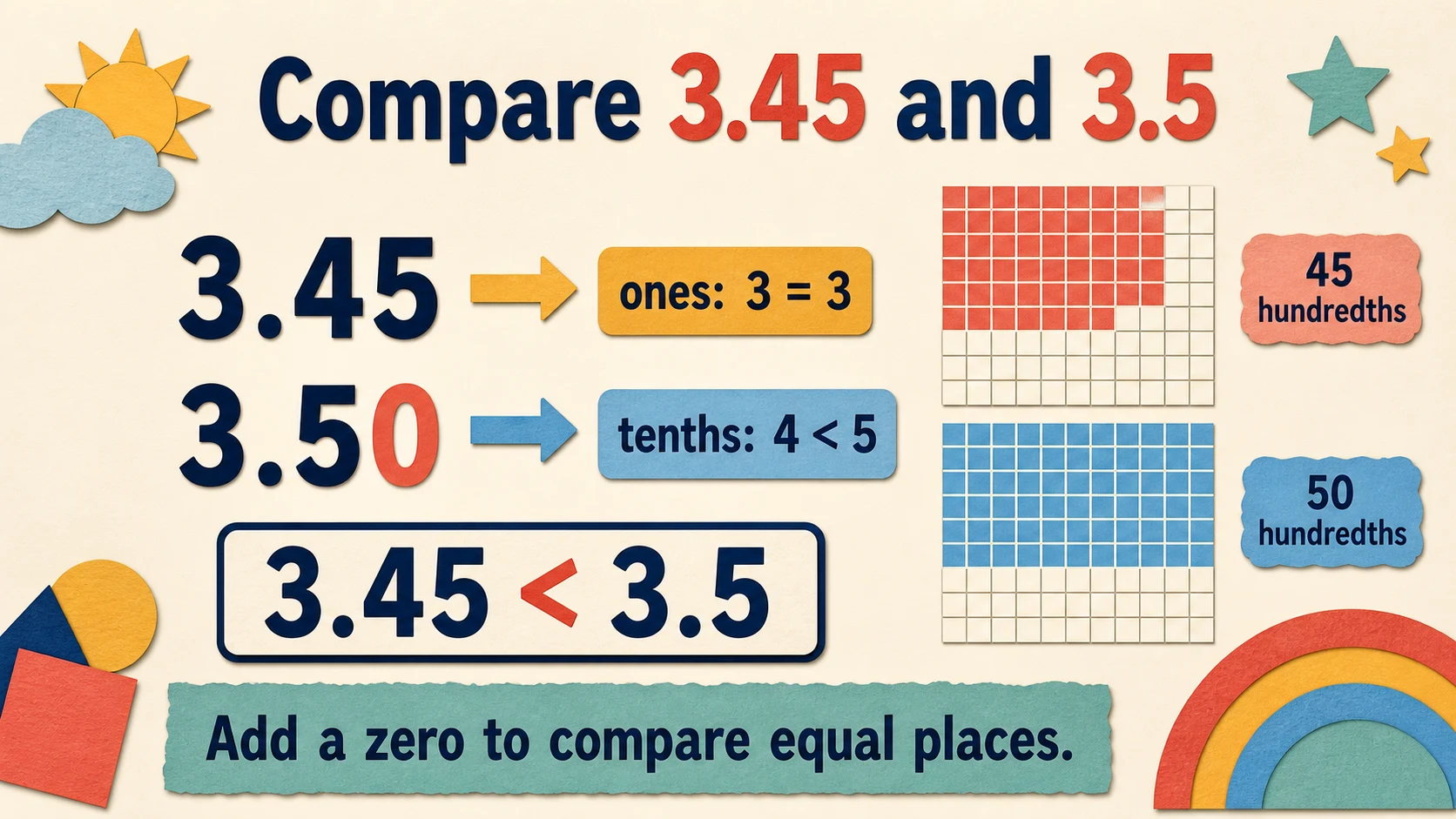
The decimal model shows the long-term value of connecting a written number to a quantity rather than teaching symbols as isolated marks.
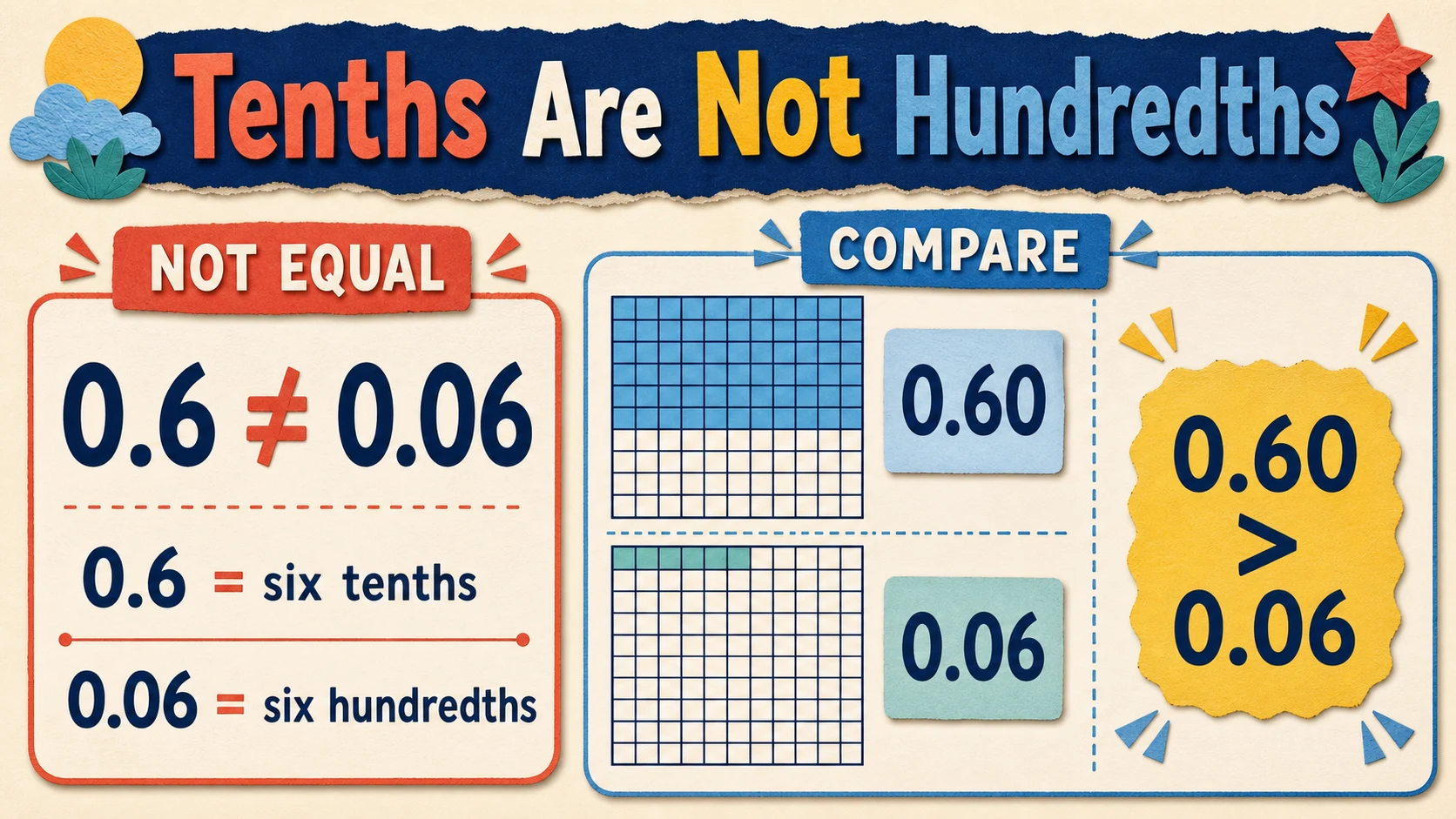
Use later decimal misconceptions as a planning warning: early place-value feedback should name the unit, the position, and the represented quantity.
The Common Core mathematics standards provide one public progression for grade-level mathematical content and practices, including modeling, representation, and explaining reasoning. They can help adults understand the kind of work commonly associated with a grade, but they do not establish an individual learner’s placement from one worksheet. Local curricula may order content differently, and nothing on the page should be used to diagnose a learning condition.
Give feedback that changes the next attempt
Useful feedback names the mathematical action that worked and identifies one next move.
Instead of “Great job,” say, “You moved every counter after counting it, so none were counted twice.” Instead of “Be careful,” say, “You started counting backward with 13 as the first count. Keep 13 as the starting number, then make five jumps.” Instead of “Wrong operation,” ask, “Did the story’s quantity grow, shrink, or compare two groups? Show that with counters.”
A practical sequence is:
- Ask the learner to explain or show the answer.
- Identify the first point where the model and reasoning diverge.
- Restate the target in plain language.
- Model one parallel item.
- Let the learner retry the original item or an equivalent one.
- Record the support that was needed.
Praise should remain truthful and specific: persistence, an accurate representation, a useful check, or a corrected strategy. Avoid promising that finishing pages will produce readiness or future achievement.
Know what a worksheet cannot establish
A worksheet provides a sample of performance under particular conditions. It cannot, by itself, determine school readiness, assign an age or grade placement, diagnose a disability, or explain why an error occurred. Attention, unfamiliar directions, language demands, vision, motor demands, anxiety, fatigue, and prior experience can all affect the visible response.
It also cannot replace oral language, play, movement, manipulatives, shared problem solving, or observation across time. A learner who refuses a page may still demonstrate the target while building, sorting, shopping in pretend play, or explaining a quantity aloud. Conversely, a learner may complete a familiar format through pattern recognition without being able to model the same idea in a new context.
Use the catalogue’s 61 free entry points to sample narrowly, not to conduct an exhaustive test. If concerns persist across settings and representations, document concrete observations—what the task asked, what the learner did, what support changed the response—and discuss them with the learner’s teacher or an appropriate qualified professional. Keep the record descriptive rather than diagnostic.
Turn today’s observation into tomorrow’s choice
End each session with one sentence in this form:
When asked to ___, the learner ___; with ___ support, the learner ___; next we will ___.
For example:
When asked to count seven scattered buttons, the learner counted one twice; with permission to move each button, the learner counted seven accurately; next we will count pictured sets using one marker per picture.
That note points directly to the next resource and prevents random page hopping. Start now with the Pre-K Counting guide and free sheet: choose two small-set items, place seven real objects nearby, and run one model–talk–print–check cycle before deciding whether the next sheet should repeat counting, add a new arrangement, or introduce a numeral match.
Put it into practice
Use the guide with a real printable
Move from explanation to a short, observable practice task. Check the first item together, then adjust the next session from the learner's actual work.
Open the first free worksheetExplore a neighboring collection