Curated collectionAnswer keys includedPrint-ready PDFs
Intervention Math Worksheets
Identify a narrow prerequisite, model it explicitly, reduce task variation and use observed errors to select the next practice step; no diagnostic or treatment claims.
Start with a real resource
Browse this worksheet collection
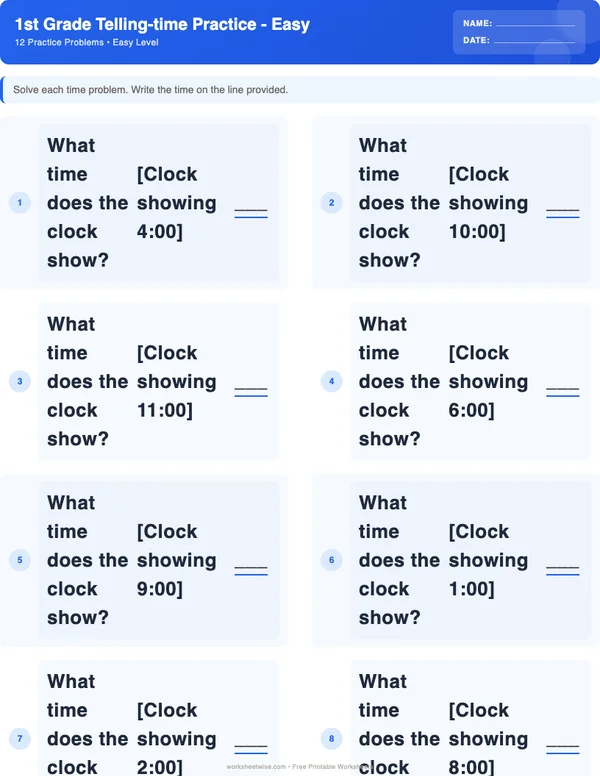
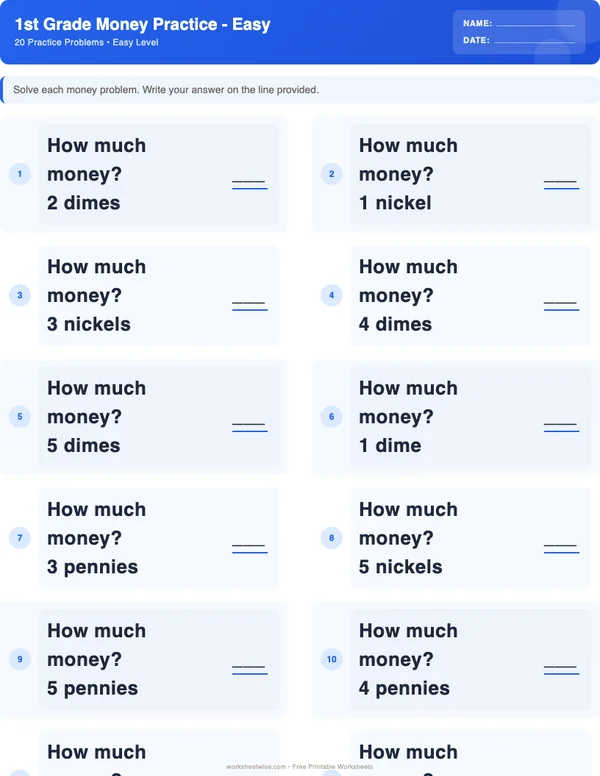
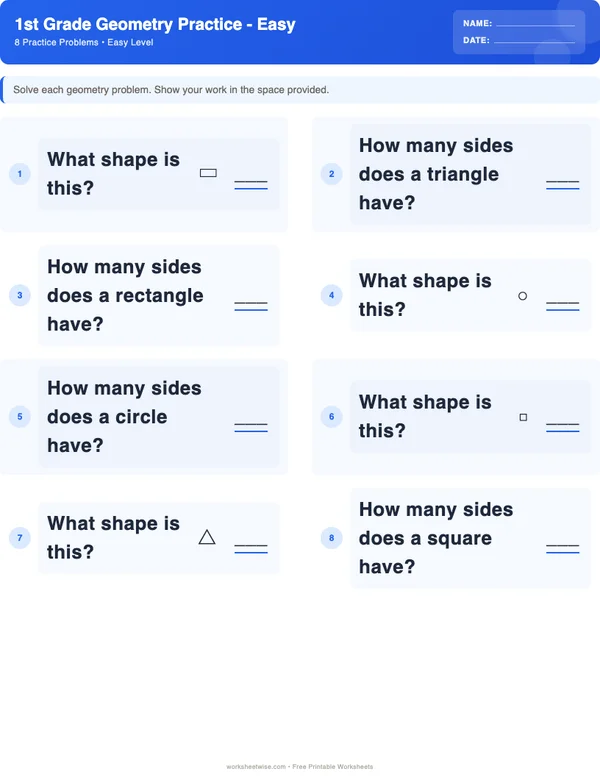
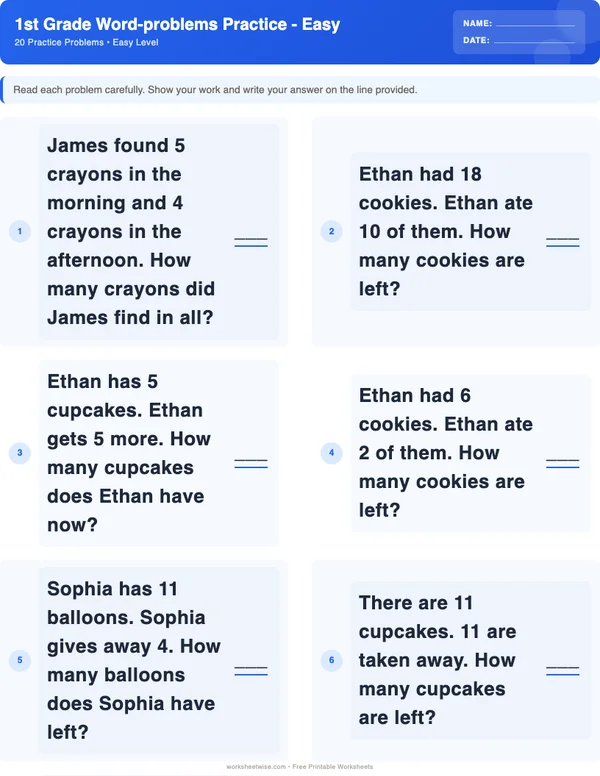
61 relevant free entry points are available. Each one includes a printable learner PDF and separate answer key.
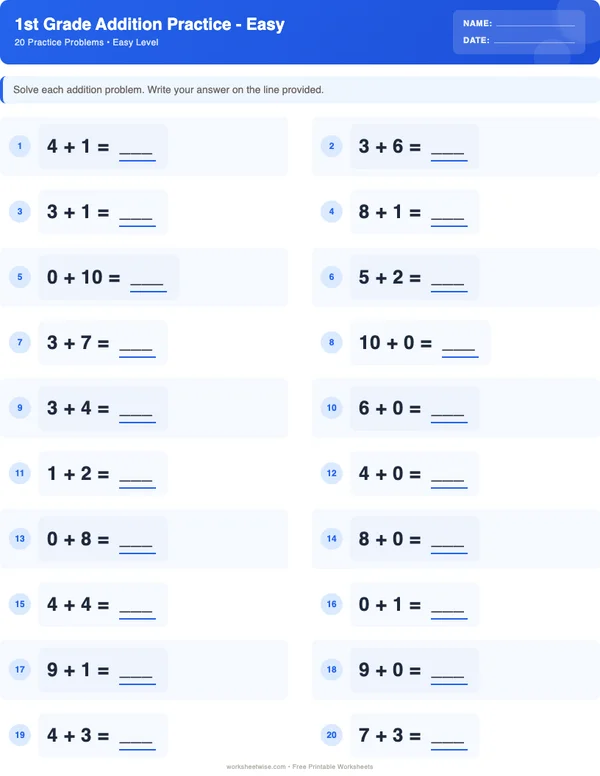
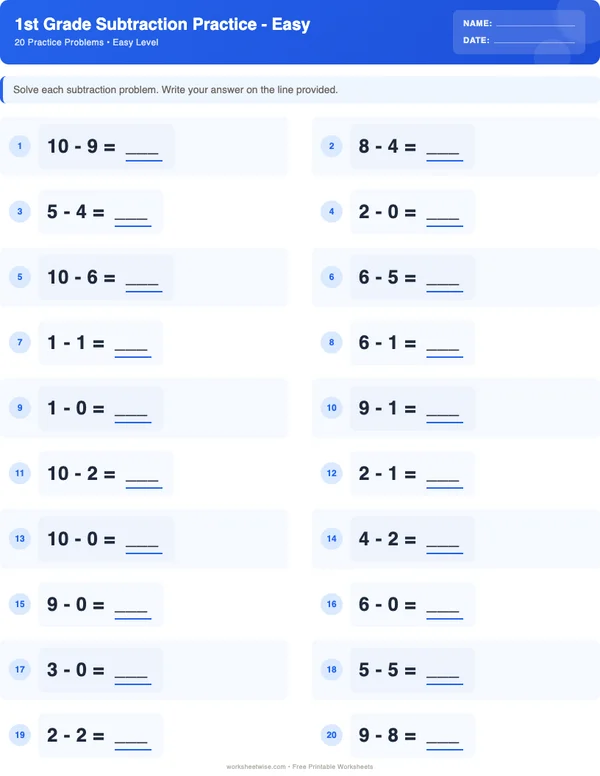
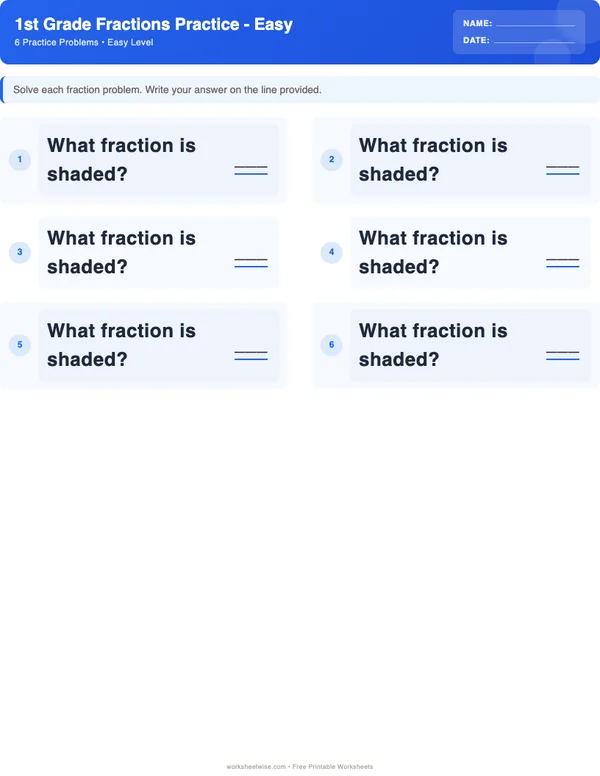
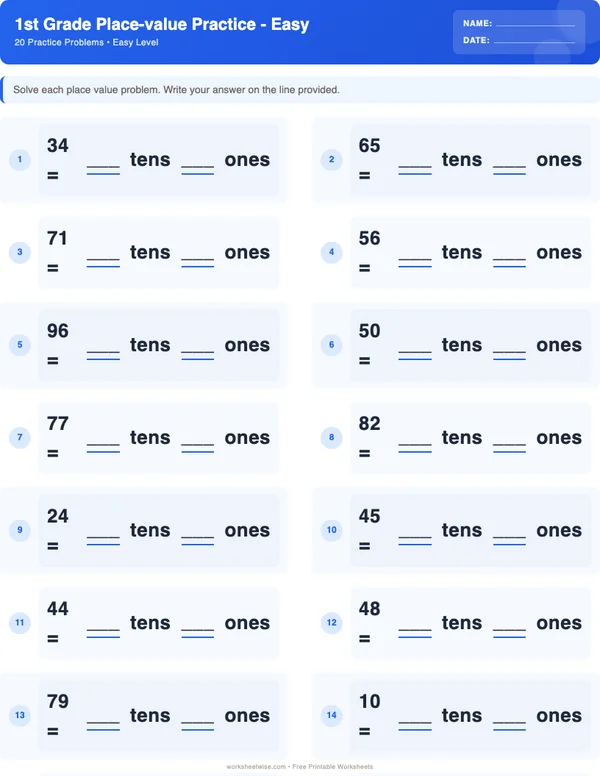
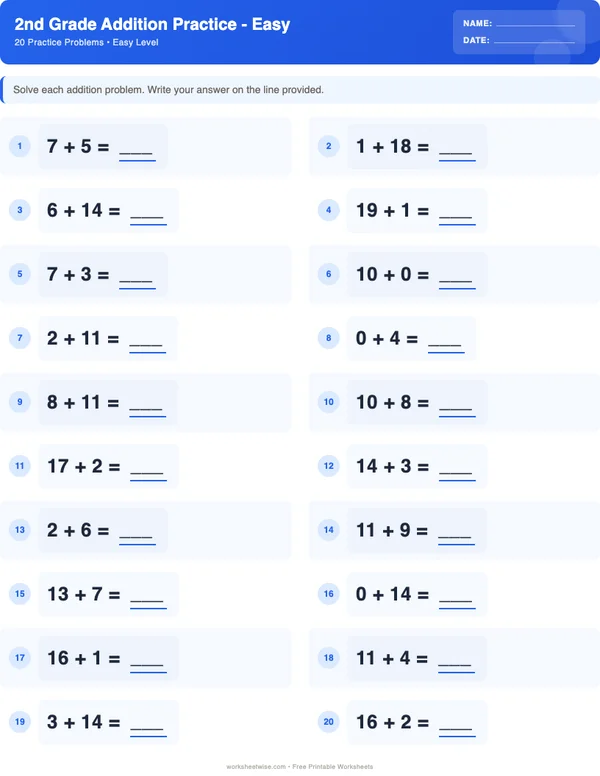
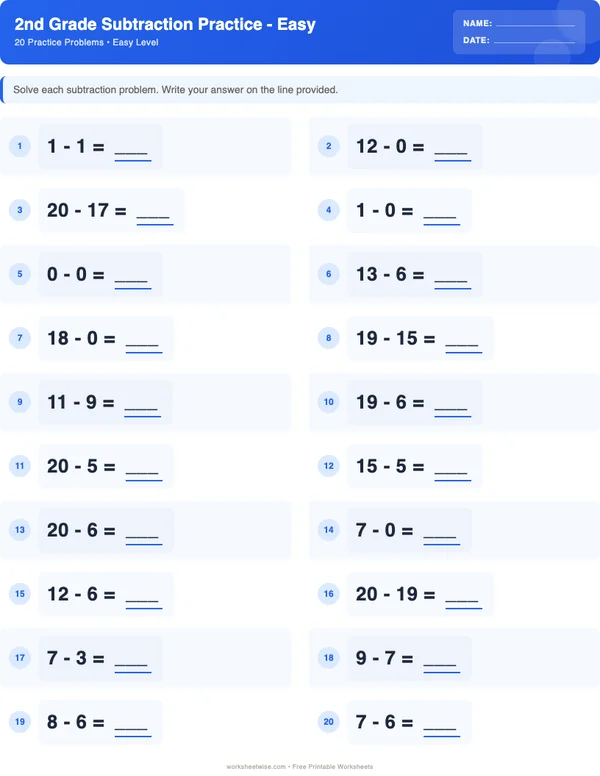
A useful practice loop
Print less. Observe more.
- Choose one skill and model the first item aloud.
- Use a short set and notice the learner’s strategy.
- Change the next task from the work you can see.
Need more than the free sheet?
Plus includes all 1098 matching catalogue variations where available, plus saved deterministic generators and the worksheet designer.
See Plus membershipComplete guide
How to teach and practise intervention math worksheets
3,782 words Updated 6 instructional visuals
Start with one narrow mathematical prerequisite
Intervention math worksheets are most useful when an adult selects a small prerequisite, models it explicitly, keeps the first practice items similar, and uses the learner’s errors to choose what happens next. The worksheet is not the intervention by itself. It is a controlled practice surface inside a short cycle:
- Name one target.
- Check the prerequisite with two or three prompts.
- Model one example while explaining the mathematics.
- Complete a few closely related items together.
- Let the learner respond independently.
- Sort errors by what they reveal.
- Select the next sheet—or return to objects, drawings, or oral work.
“Improve at fractions” is too broad. “Partition a whole into equal fourths and identify one fourth” is narrow enough to teach and observe. “Work on addition” is too broad. “Compose 10 from two addends before adding within 20” gives the adult a clear model, a controlled response format, and a meaningful next decision.
WorksheetWise currently catalogs 1,098 math worksheet variants across eight grade labels and 12 topics, including 61 free resources. That breadth supports precise selection, but it also makes restraint important: begin with the smallest task that would unlock the learner’s next step.
Grade labels describe the intended practice level; local curriculum sequences differ. Age can help an adult discover plausible resources, but it is not a placement decision. Neither a grade label nor a worksheet error diagnoses a learning condition, establishes a treatment need, or predicts an outcome.
Define the target before choosing a sheet
A useful target names the mathematical object, the action, the range, and the response.
Compare these two requests:
- Broad: “Practice place value.”
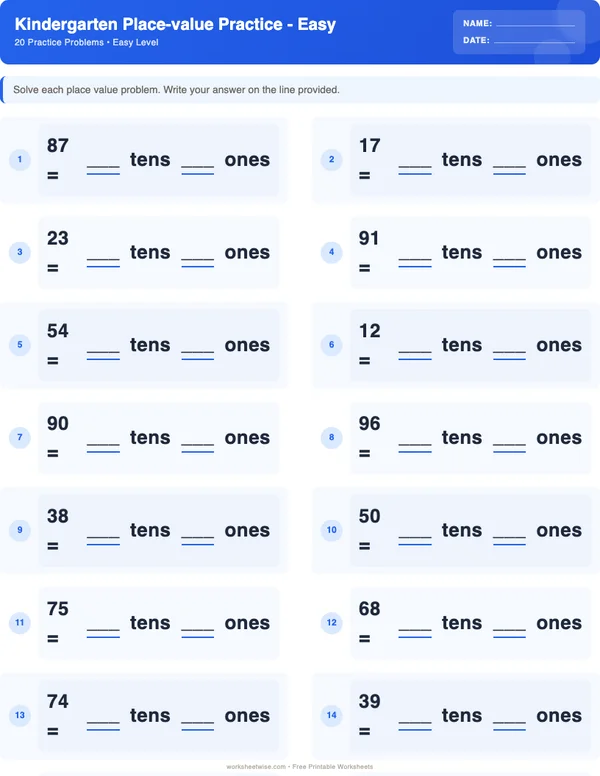
- Selectable: “Represent a two-digit number as one group of ten and some ones, then write the matching numeral.”
The second target tells the adult what materials to prepare, what to model, and what evidence to collect. A learner who builds 14 correctly but writes 41 has shown something different from a learner who counts out 14 loose cubes and never makes a ten. Those responses should not lead to the same next sheet.
Use four questions before printing:
What must the learner notice?
For counting, the learner may need to notice that each object receives one count word and that the final count word names the total. For fractions, the learner may need to notice whether parts are equal. For place value, the critical feature may be the position of a digit rather than the digit alone.
What must the learner do?
Choose an observable verb: touch and count, match, partition, compose, compare, draw, write, explain, or calculate. “Understand” cannot be seen directly. “Build 13 with one ten and three ones, then explain the two digits” can be observed.
What variation should remain fixed at first?
If the target is composing 10, do not simultaneously vary the operation, number range, picture type, problem wording, and response format. Keep the structure stable while changing only the addends. Once the learner responds accurately and can explain the model, introduce one new feature.
What response will provide useful evidence?
Multiple choice may reveal recognition but conceal how the learner produced an answer. A drawing can expose counting or grouping decisions. An equation can reveal symbol use. An oral explanation can show whether a correct answer followed a sound model or a guess.
The IES practice guide for assisting students struggling with mathematics recommends systematic instruction, clear mathematical language, representations, and deliberate practice among its evidence-based recommendations. That guidance did not evaluate WorksheetWise. Here, it supports using a printable as one part of explicit, responsive instruction rather than assigning a long mixed sheet without observation.
Compare live skills by their mathematical demand
Two worksheets can each contain 20 problems and still demand very different thinking. Selection should follow the work inside each item, not the page length or grade label alone.
Counting: coordinate words, objects, and totals
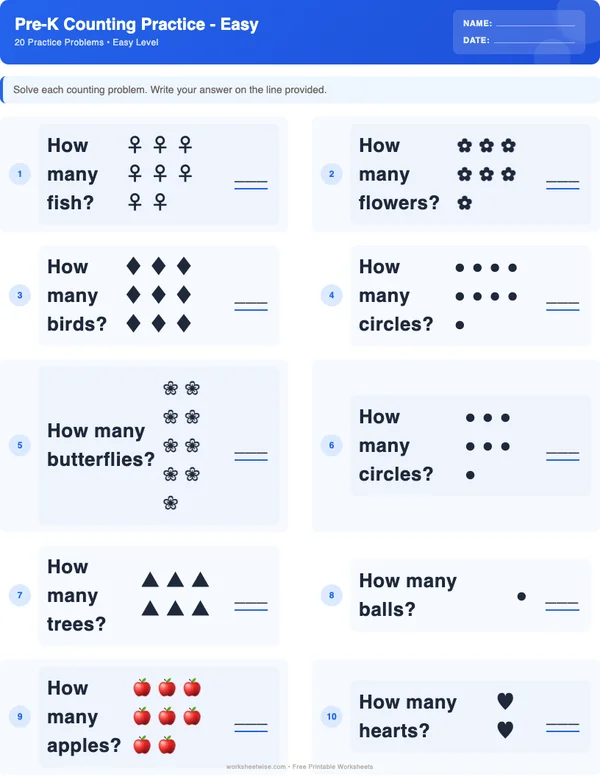
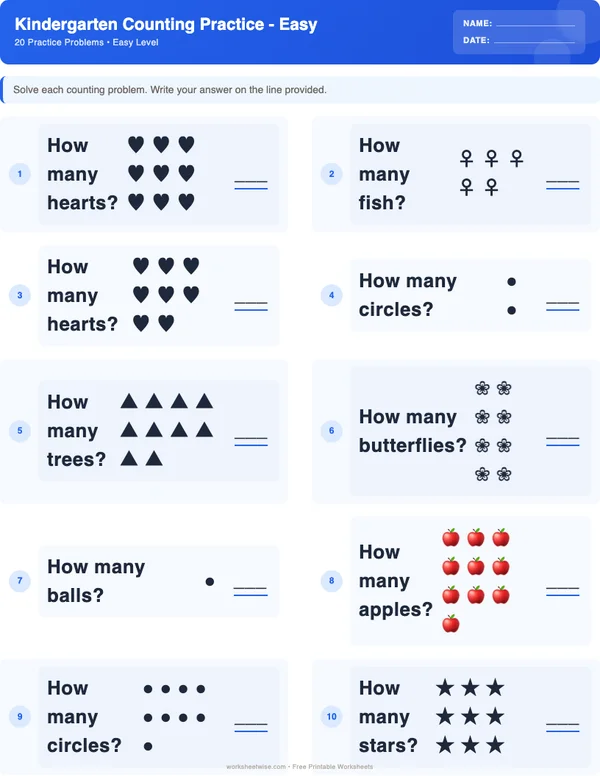
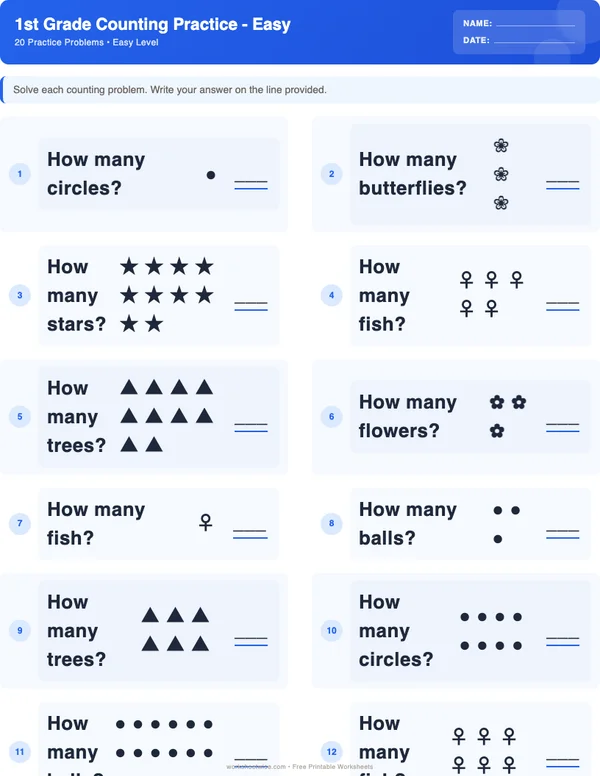
The live Pre-K and kindergarten counting entries each offer a free 20-problem sheet. The catalog describes work with number sequences, missing numbers, and sets of objects, while the early progression includes concrete counting.
A sequence item such as 7, 8, __, 10 asks the learner to retrieve the next number word and connect it to a written numeral. Counting a scattered set asks for one-to-one correspondence, an organized counting path, and cardinality. A learner may succeed on one and not the other.
For ages three and four, prioritize brief adult-led oral, matching, manipulative, and movement work over desk work. Ask the child to move five toy animals into a pen, touching each animal once while counting. Then match the set to the numeral 5. A 20-item page can be sampled or cut into a few prompts; it need not be completed in one sitting. The Pre-K Counting guide and free sheet is an entry point, not a placement verdict.
Addition: move from quantity to representation to notation
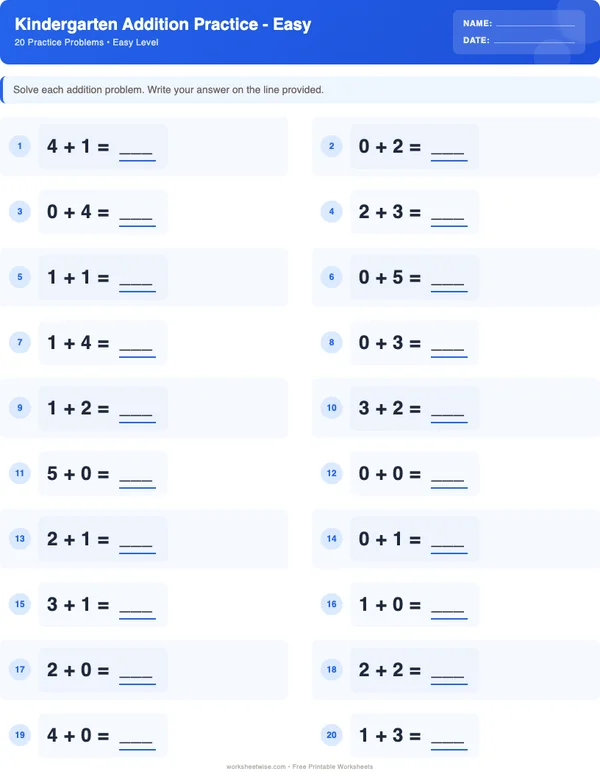
The live kindergarten addition resource has 20 problems. The catalog progression begins with adding within 5 using objects and pictures, then moves toward addition within 10 and 20 and later multi-digit work.
An item showing two groups of dots reduces the need to imagine quantities. 3 + 2 = __ removes that visual support. A missing-addend prompt such as 3 + __ = 5 changes the direction of reasoning again. These formats should not be treated as interchangeable just because all involve addition.
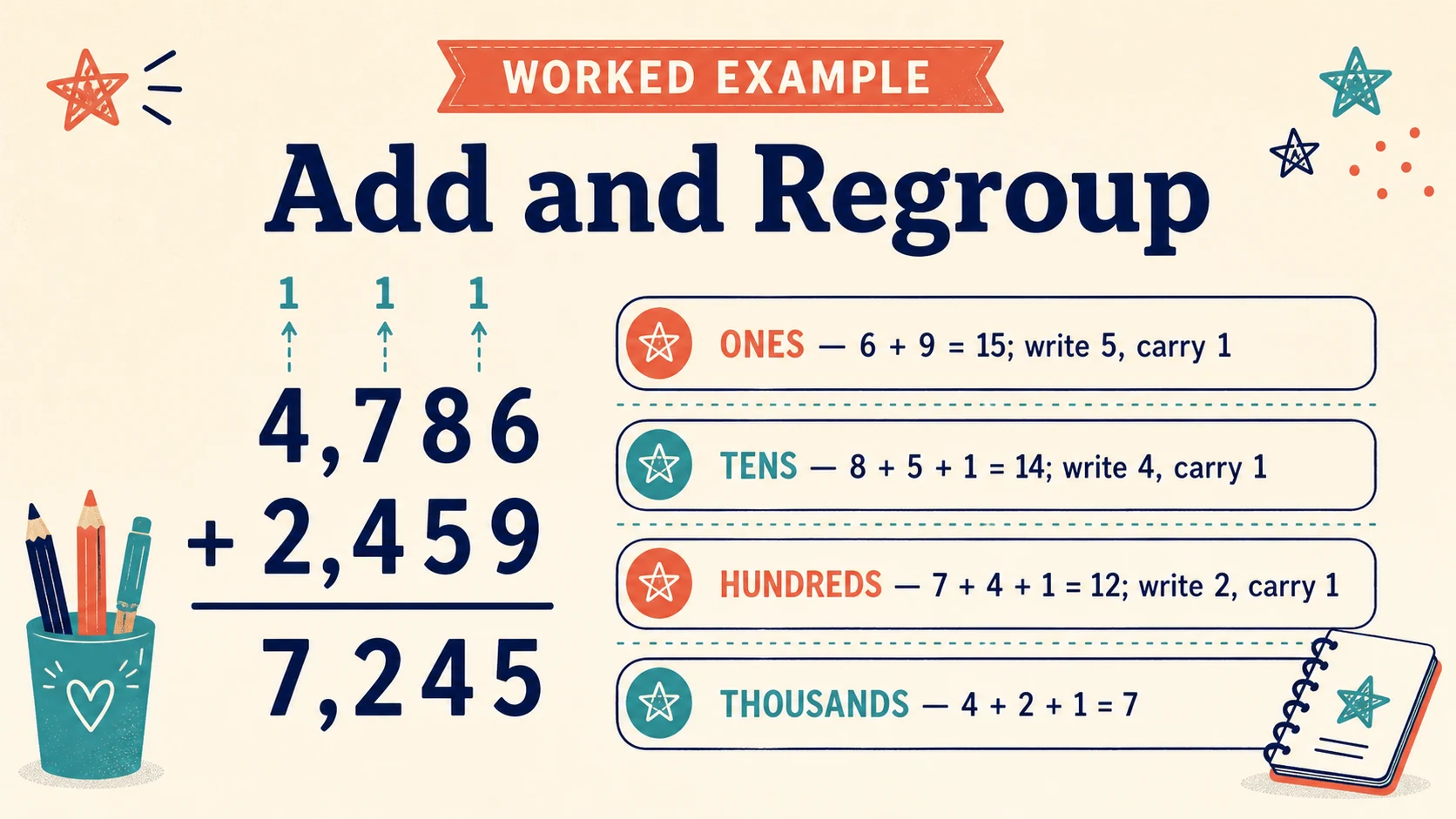
Use the model-to-answer path to check whether an incorrect sum begins with the represented quantities, their combination, or the written procedure.
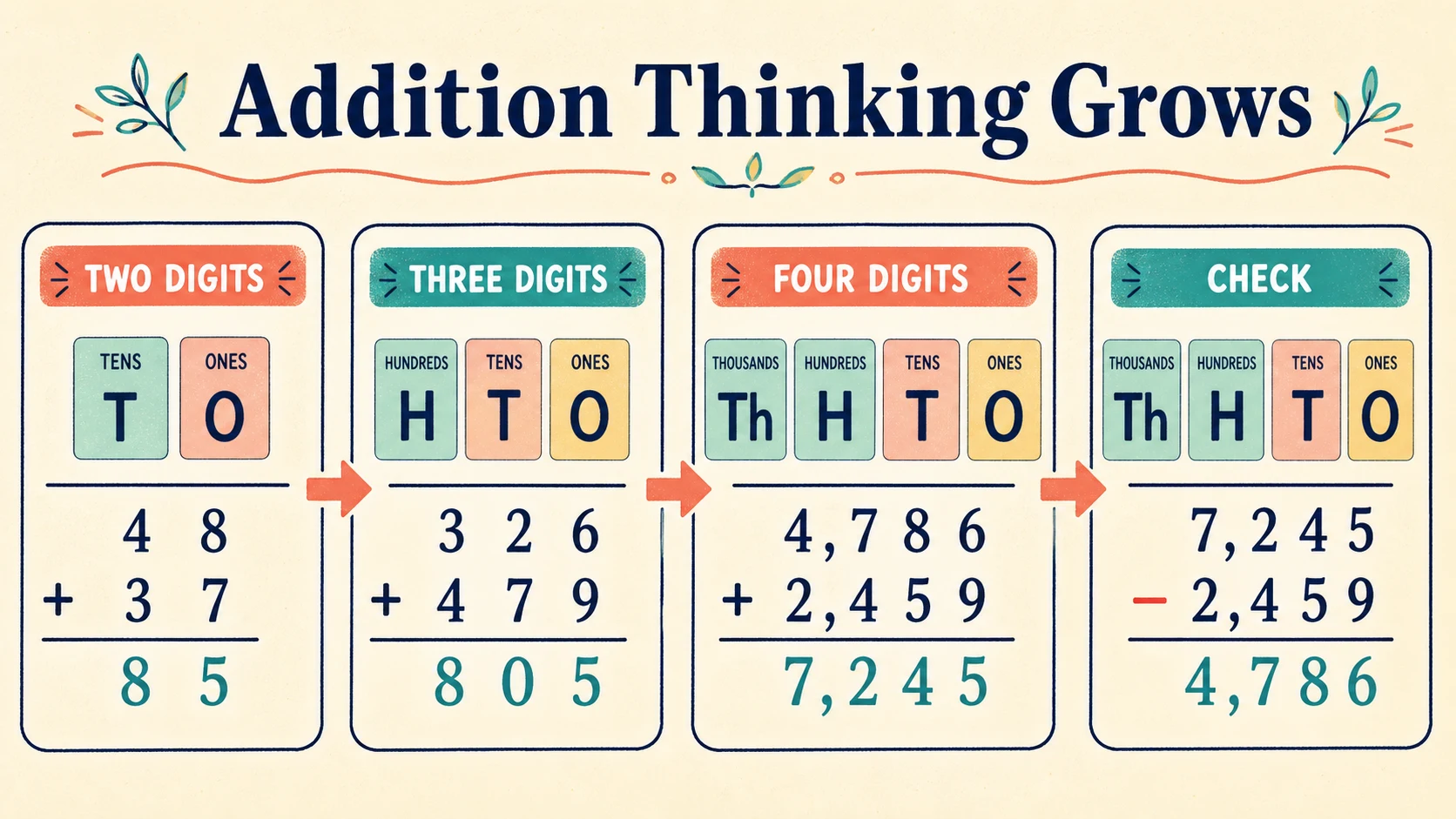
Reduce support only after the learner can connect the model, place-value language, and recorded addition step.
The fifth-grade visual is relevant because the same selection principle continues into larger-number addition: control the transition from model to notation. Do not remove the model merely because a worksheet carries an upper-elementary label.
Subtraction: distinguish three situations
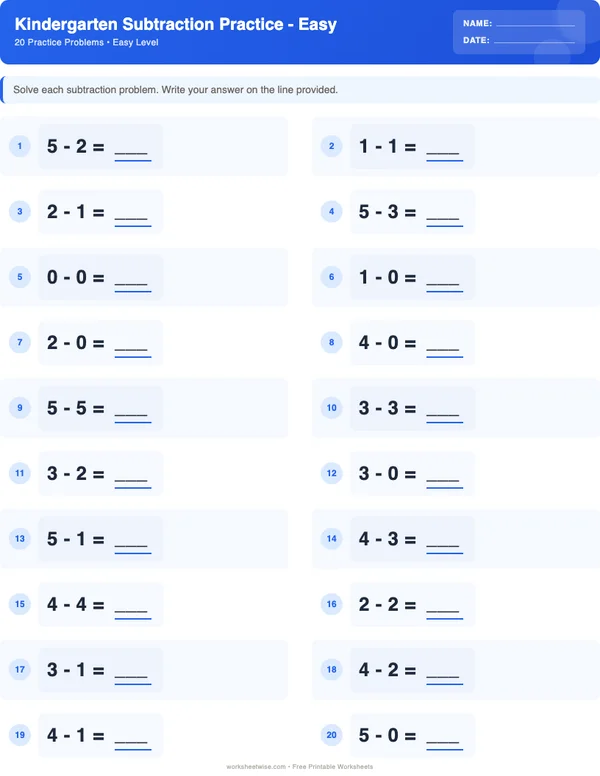
The live kindergarten subtraction sheet contains 20 problems, and the catalog identifies removal, comparison, and missing-part situations. These have related equations but different models:
- Removal: Five birds are present; two leave.
- Comparison: One child has eight blocks and another has three.
- Missing part: Six counters are visible; how many more make ten?
A learner who can act out 5 − 2 may not yet interpret “how many more?” as a difference. If the observed error occurs only in comparison problems, another page of removal equations is poorly targeted. Choose a sheet or a small set of items that preserves the comparison structure and use aligned bars or rows to make the difference visible.
Fractions: equality of parts comes before symbol rules
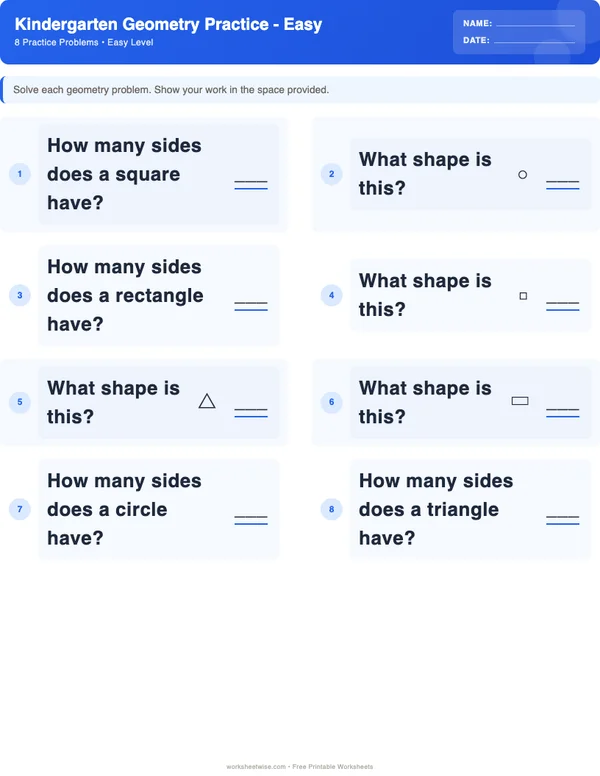
The live catalog describes a progression from partitioning shapes and naming fractions to number lines, comparison, equivalence, and operations. The representative first-grade fraction resource has six problems, making it easier to inspect each response than a long mixed page.
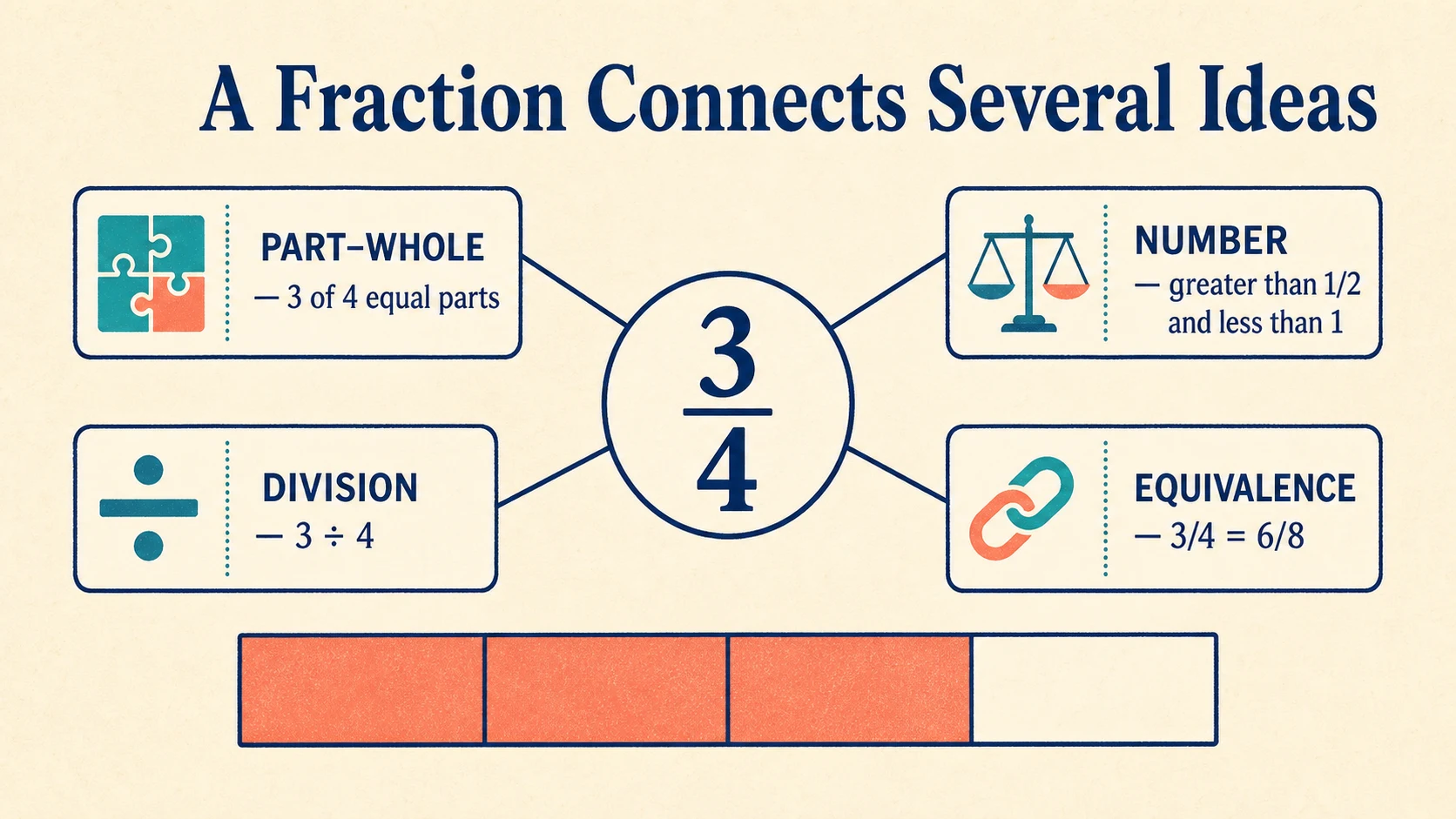
Read the map as a prerequisite network: equal partitioning and unit fractions support later comparison, equivalence, and operations.
A shape divided into four pieces is not automatically showing fourths; the pieces must be equal in area. Before selecting symbolic comparison or equivalence, ask the learner to partition two identical paper strips into equal halves and equal fourths. If the learner labels unequal pieces as fourths, the next practice should preserve equal-part decisions rather than introduce numerator and denominator procedures.
The Common Core mathematics standards describe grade-level expectations, including fraction development and mathematical practices, but the standards are not a diagnostic instrument and did not assess these worksheets. Consult the Common Core mathematics standards only as one reference point; local sequences and the learner’s demonstrated prerequisites should govern the immediate task.
Use observable difficulty, not learner labels
The catalog’s representative free sheets are marked “easy.” Treat that as a resource label, not a description of a child. Define difficulty by features that can be inspected:
- Number range: within 5 versus within 20.
- Representation: objects or pictures versus numerals alone.
- Step count: one operation versus several dependent steps.
- Language load: direct equation versus a story that must be interpreted.
- Unknown position: result unknown versus start or change unknown.
- Visual organization: aligned sets versus scattered objects.
- Response demand: match, select, draw, write, or explain.
- Variation: one stable structure versus mixed structures.
- Support: visible ten frame, number line, place-value chart, or no model.
A sheet marked easy may still be demanding for a learner who must scan a crowded page, write many numerals, or interpret unfamiliar instructions. Conversely, a learner may solve larger numbers accurately when allowed to build or draw.
Selection should therefore be stated concretely: “This sheet keeps totals within 5, includes pictures, and asks for a written answer,” not “This is for an easy learner.” If handwriting masks the mathematical target, let the learner point, dictate, use number cards, or place counters. Preserve the mathematics while changing access to the response.
Run a short model–practice–observe cycle
A practical session can take 12 to 20 minutes. Stop earlier when attention or effort makes the evidence unreliable.
1. Check the prerequisite
Offer two unscored prompts. For addition within 10, ask the learner to show 7 on a ten frame and tell how many spaces remain. For subtraction comparison, build rows of eight and five counters and ask which has more and by how many.
If the prerequisite is not available with reasonable support, do not proceed merely because the worksheet has been printed. Teach that prerequisite.
2. Model one complete example
Use consistent language and connect each statement to the model.
For 8 + 5, place eight counters on two ten frames. Say: “Eight needs two to make ten. I move two from the group of five. Now I have ten and three more, so the total is thirteen.” Record 8 + 5 = 10 + 3 = 13.
The important feature is not a catchphrase. It is the visible preservation of quantity when five is decomposed into two and three.
3. Solve two examples together
Ask the learner to perform the next action rather than watch another complete demonstration: “Show 9. How many spaces are open? Split the 4 so one part fills the frame.”
Prompt only as much as needed. Record whether help concerned the model, the number fact, the operation, the symbols, or the response format.
4. Assign a small independent sample
Begin with three to five closely related items, even if the page contains 20. Cover the rest with paper if visual load is distracting. A small sample observed carefully is more informative than a finished page completed through repeated adult hints.
5. Verify with a second format
After a correct equation, ask for a quick model or explanation. After a correct picture response, ask for the matching equation. This checks whether performance transfers across two representations without turning the session into a broad test.
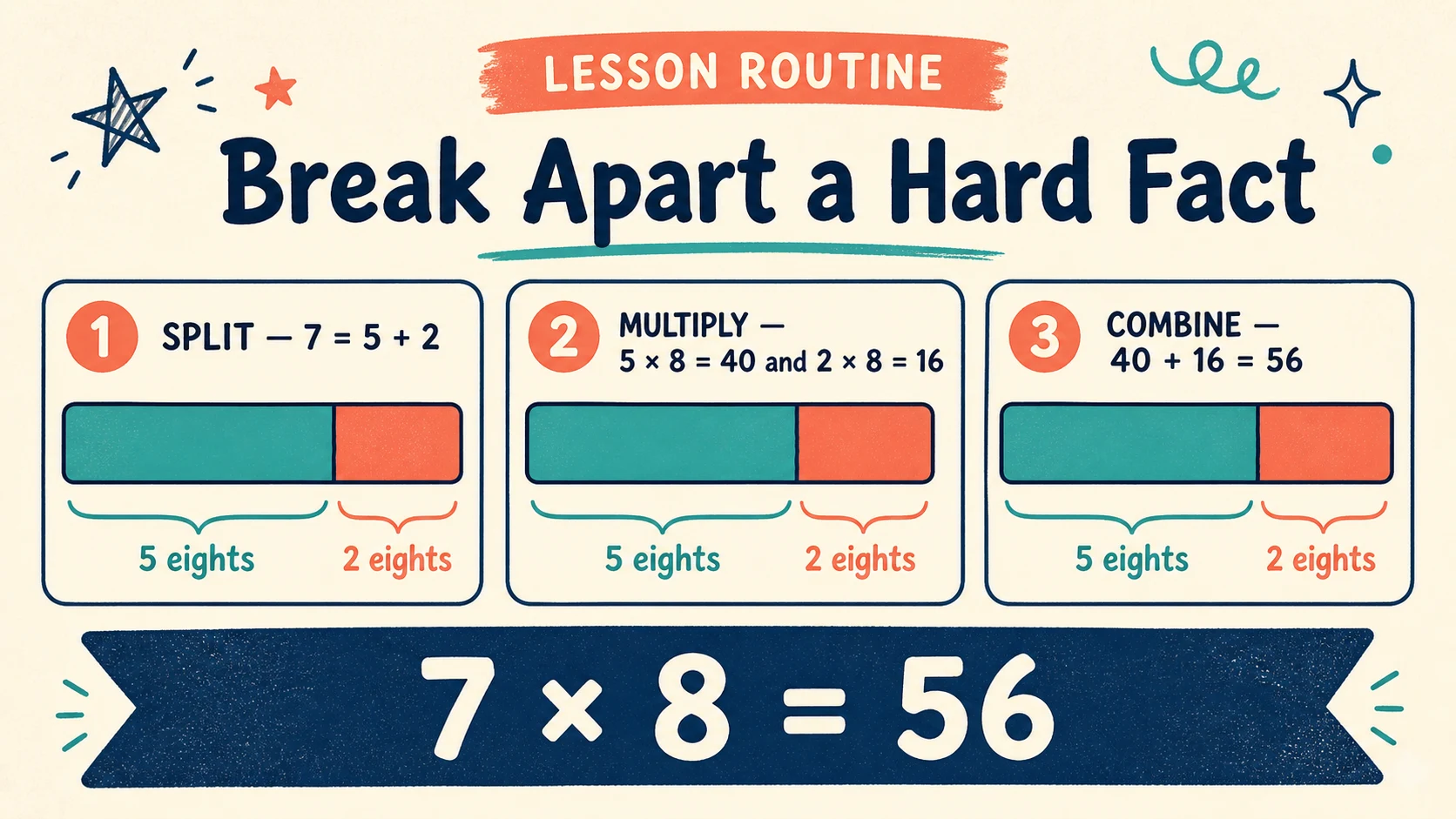
Repeat the same compact sequence—prerequisite check, explicit model, supported response, independent sample, and error-based next step—for multiplication practice.
The IES Teaching Math to Young Children practice guide emphasizes developmental progressions, monitoring children’s mathematical knowledge, and helping children view and describe their world mathematically. It did not review WorksheetWise. Its guidance supports short observation-rich encounters, especially when objects, movement, and adult conversation provide better evidence than extended seatwork.
Check four examples before assigning the next page
The following examples show how the arithmetic or model should be verified and why each belongs in this intervention workflow.
Example 1: Count a scattered set, not only a row
Place seven buttons irregularly on a mat. Ask the learner to move each button into a cup while saying one number word per button.
Checked result: seven moved buttons correspond to the count sequence 1, 2, 3, 4, 5, 6, 7; the total is 7.
This belongs here because the live counting materials include sets of objects, and a scattered arrangement can expose repeated or skipped objects that a tidy row may conceal. If the learner says the sequence correctly but touches one button twice, the next task should use smaller scattered sets and a move-as-you-count routine. It should not jump to missing-number sequences, because the observed need is coordinating objects with count words.
Example 2: Compose ten in kindergarten addition
Solve 8 + 5.
Represent five as 2 + 3. Then:
8 + 5 = 8 + 2 + 3 = 10 + 3 = 13
Checked result: 13, confirmed by counting eight counters and five counters together.
This belongs here because the live kindergarten addition progression includes addition within 10 and 20, and its guidance uses concrete, representational, and abstract forms. If the learner writes 12 after correctly filling the ten frame, ask them to count the three counters outside the frame and record 10 + 3. If the learner cannot identify that 8 needs 2, return to complements of 10 rather than assigning more mixed sums.
Example 3: Interpret subtraction as comparison
Maya has eight cubes. Leo has five cubes. How many more cubes does Maya have?
Align the cubes in two rows. Five pairs match, leaving three unpaired cubes in Maya’s row.
8 − 5 = 3
Checked result: Maya has 3 more cubes.
This belongs here because the live subtraction description explicitly distinguishes comparison from taking away. If the learner removes five cubes from Maya’s set and still obtains three, ask them to explain what the three represents. A correct answer with a removal interpretation may not transfer to less convenient comparisons. The next sheet should retain comparison wording and aligned models before varying the unknown position.
Example 4: Decide whether parts are fourths
Draw two same-size rectangles. Divide the first into four equal vertical strips. Divide the second into four visibly unequal regions. Ask which rectangle shows fourths.
Checked result: only the first model shows fourths because all four parts are equal in area. Four regions alone are insufficient.
This belongs here because the catalog’s fraction progression begins with partitioning shapes into equal parts. If the learner chooses both shapes, the next practice should involve sorting equal and unequal partitions, folding paper, and explaining the word equal. Symbolic items such as 1/4 versus 1/3 would add notation before the prerequisite is secure.
Example 5: Connect multiplication to equal groups
Show four groups with three counters in each group.
3 + 3 + 3 + 3 = 12, so 4 × 3 = 12 when the first factor counts groups and the second counts the number in each group.
Checked result: 12 counters.
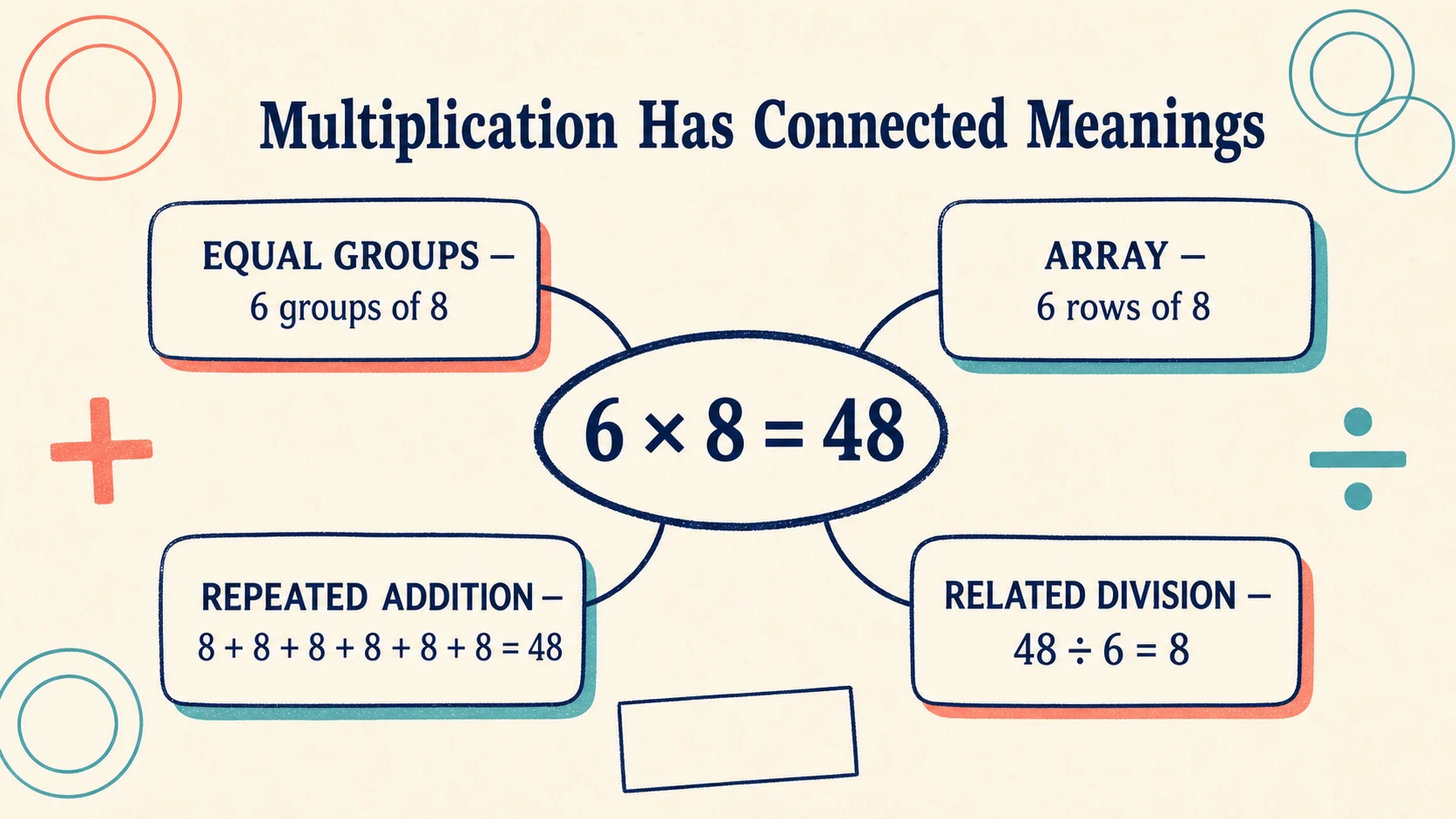
Use the multiplication map to locate the narrow prerequisite—equal groups, repeated addition, arrays, or facts—rather than assigning a mixed multiplication page.
This example belongs here because third-grade multiplication practice can conceal different prerequisites. If the learner counts 11 counters, recount each equal group before drilling the fact. If the groups are modeled correctly but the equation is reversed, compare 4 groups of 3 with 3 groups of 4; both total 12, but the representations describe different group structures.
Example 6: Preserve value when regrouping
Represent 3,406 as 3 thousands + 4 hundreds + 0 tens + 6 ones.
Checked expanded form:
3,406 = 3,000 + 400 + 6
Regroup one hundred as ten tens:
3 thousands + 3 hundreds + 10 tens + 6 ones
The total remains 3,406 because 400 = 300 + 100 and 100 = 10 tens.
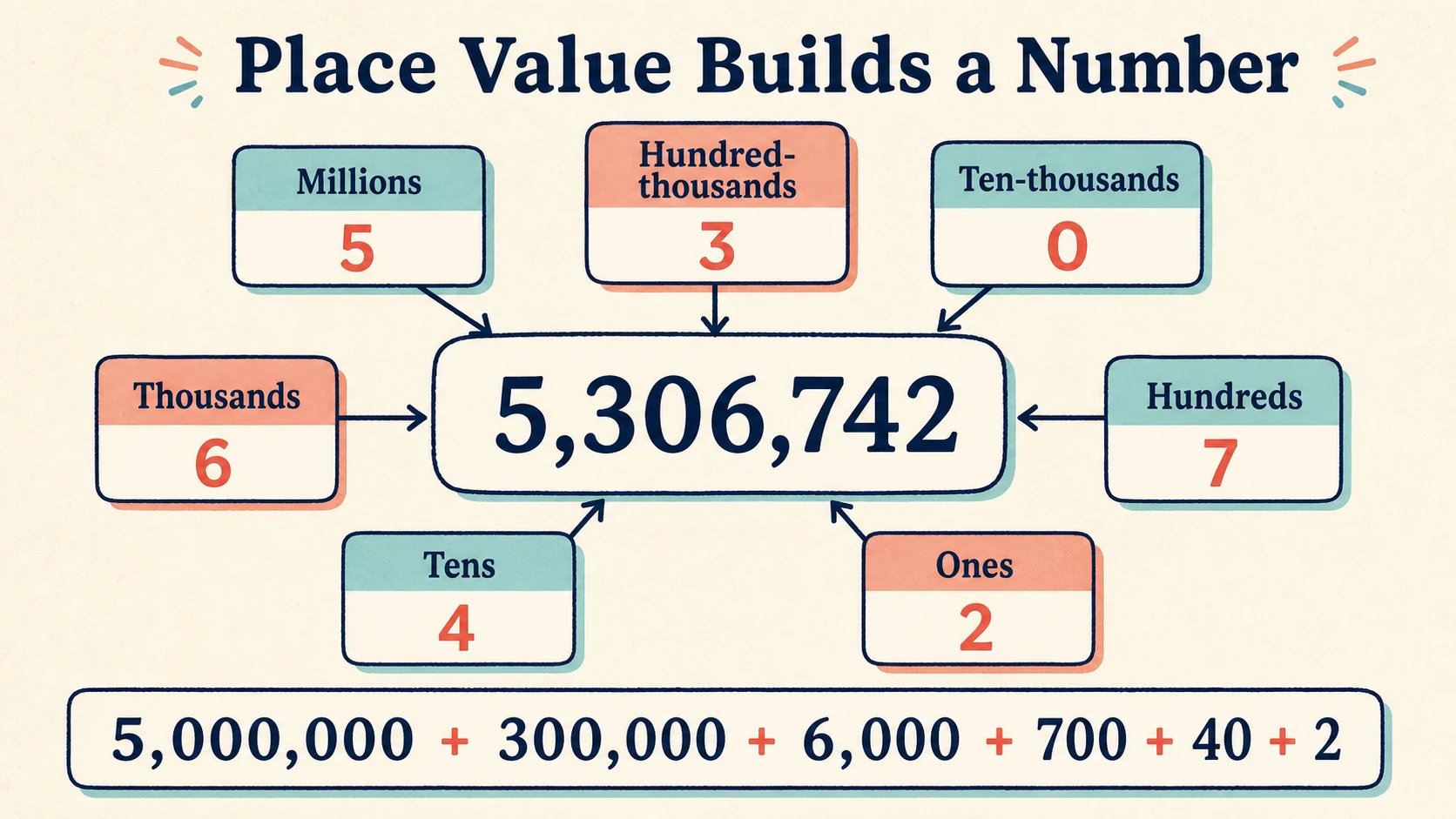
Trace an upper-elementary place-value error back to digit value, decomposition, comparison, rounding, or decimal relationships before selecting another sheet.
This belongs here because the catalog’s place-value progression includes composing, decomposing, expanded form, comparison, and rounding. If the learner writes 3,000 + 400 + 60, the next task should contrast the tens and ones positions with a place-value chart. More rounding practice would not address the error shown.
Interpret errors before giving feedback
Marking every wrong answer with the same symbol loses useful information. Sort what happened.
Model-construction errors
The learner builds the wrong quantity, makes unequal groups, changes a quantity while regrouping, or partitions a whole unequally.
Feedback should return to the model: “Check whether every group has three,” or “When this hundred is traded, how many tens replace it?” The next sheet should keep the same concept and include visible models.
Operation or situation errors
The learner adds in a comparison problem, subtracts in a joining problem, or treats equal groups as an additive change.
Ask the learner to retell or act out the situation. Avoid keyword rules. “Left” does not always settle the operation, and “in all” is not a substitute for understanding quantity relationships. Select another task with the same situation structure but simpler numbers.
Place-value or notation errors
Examples include writing 41 for fourteen, treating the 4 in 3,406 as four tens, adding denominators in a fraction sum, or misaligning digits in column addition.
Name the value rather than only the digit: “This 4 represents four hundreds.” Pair notation with a chart, blocks, or number line. The next page should reduce computation while preserving the notation decision.
Strategy-execution errors
The learner chooses a reasonable strategy but loses track during counting, decomposes incorrectly, or omits a regrouped unit.
Do not replace the strategy immediately. Shrink the numbers, add a recording scaffold, and have the learner check the result with a second representation. When execution becomes stable, restore the original range.
Response-format errors
A learner may explain the answer accurately but reverse digits in writing, misunderstand where to record it, or be unable to draw the demanded model.
Change how the learner responds without changing the target: offer numeral cards, oral dictation, larger writing space, pre-drawn frames, or pointing choices. Record that the adaptation changed access, not mathematical difficulty.
Feedback should identify the next mathematical action: “Make one group of ten before writing the digits” is more useful than “Try again.” Ask the learner to act on the feedback immediately with one near-match item.
Choose the next sheet from the error pattern
Use at least three independent items before treating a response as a pattern. One error may be fatigue, page navigation, or an accidental mark.
Choose the next step by this decision rule:
- Accurate model and answer across two formats: introduce one controlled variation, such as a larger number range or a different unknown position.
- Accurate model but inaccurate notation: keep the range and model; add explicit model-to-symbol matching.
- Inaccurate model but accurate answer: return to explanation and construction; the answer may have come from recall or guessing.
- Same misconception on several items: select a contrast set that makes the critical distinction visible.
- Mixed errors without a stable pattern: shorten the task and observe orally before selecting another sheet.
- Correct only with repeated prompts: repeat the same target with fewer prompts rather than advancing.
- Accurate work followed by declining attention or handwriting: split the page; do not interpret endurance as mathematical mastery.
For additional observation rather than diagnosis, Formative assessment Math Worksheets can help organize a brief check. When the target is already clear and the learner needs practice in a quieter home routine, After-school Math Worksheets offers a different use-case entry point.
Adapt access while preserving the mathematics
An adaptation is useful when it removes an irrelevant barrier without answering the target.
For counting, enlarge and space the objects, permit touching, or let the learner move each object. Do not pre-number the objects if organizing the count is what you need to observe.
For addition, provide counters or a ten frame when composition is the target. Do not show the completed decomposition if choosing how to make ten is the target.
For fractions, allow paper folding, fraction strips, or a number line. Do not use differently sized wholes in a comparison unless reasoning about whole size is intentional.
For place value, use a chart and place-value disks. If reading large numerals is not the target, read the prompt aloud. Keep the learner responsible for assigning each digit its value.
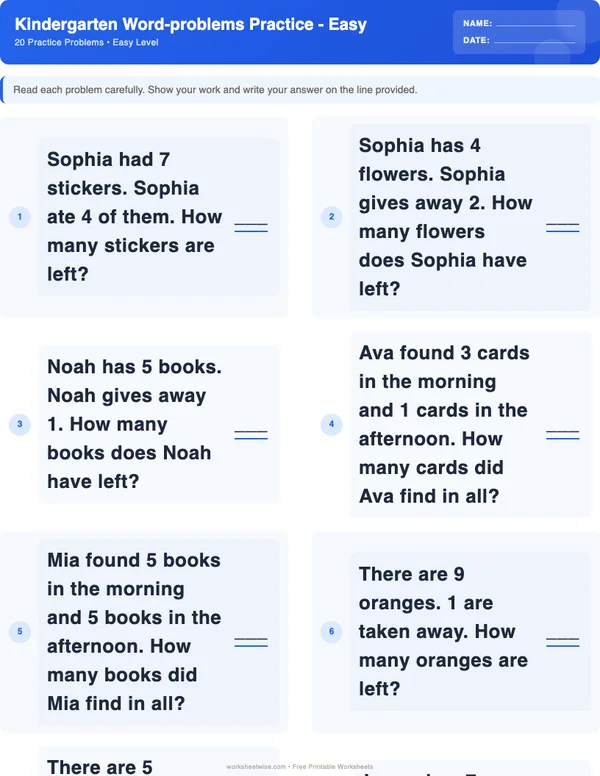
For word problems, reduce reading interference by reading the text aloud while preserving all quantities and relationships. Ask the learner to retell the situation, draw it, and select an operation. Do not translate the story into an equation for them when interpretation is the target.
The same rule applies to output: oral response, pointing, manipulatives, and larger writing spaces may preserve the target. Giving fewer problems changes practice volume, not necessarily mathematical demand. Giving smaller numbers does change demand and should be documented as a deliberate prerequisite step.
Keep the boundaries explicit
Printable intervention math worksheets can provide structured examples, consistent response spaces, and repeatable practice. They cannot independently determine why a learner is struggling, diagnose a disability, prescribe treatment, or establish that a skill is mastered in every context.
A correct page may reflect familiar formatting, prompts, or memorized procedures. An incorrect page may reflect reading load, vision, motor demands, unfamiliar vocabulary, fatigue, anxiety, distraction, or misunderstanding of directions. Discuss persistent concerns with the learner’s teacher and, where appropriate, qualified school professionals who can consider broader evidence.
Do not infer standards alignment beyond what a resource explicitly states. Do not equate a worksheet’s grade label with the learner’s identity or fixed level. Use grade and age to discover materials, inspect the task features, and then place based on observed responses. Keep brief notes such as:
- Target: compose 10 to add within 20.
- Model used: ten frame and counters.
- Independent sample: three items.
- Pattern: fills the frame correctly; omits counters left outside.
- Feedback: record
10 + extra. - Next action: repeat with three near-match items and a two-part recording box.
That note is more actionable than a score alone because it connects evidence to the next teaching decision.
Make the next session from one observed error
Choose one recent piece of work and circle the first error, not every later consequence. Write the narrow prerequisite beside it. Then select or generate only three to five items that preserve that prerequisite and one response format.
If the error was writing 41 after building fourteen, choose place-value matching between one ten, four ones, and 14. If it was calling unequal regions fourths, choose equal-versus-unequal partition sorts. If it was solving only removal stories, choose subtraction comparisons with aligned quantities. If it was counting the same scattered object twice, use a move-as-you-count routine before returning to print.
Use the free deterministic worksheet generators to create that small, controlled next set. Model the first item, complete the second together, observe the remaining items without coaching, and let the resulting error pattern—not the desire to finish a packet—determine the sheet that follows.
Put it into practice
Use the guide with a real printable
Move from explanation to a short, observable practice task. Check the first item together, then adjust the next session from the learner's actual work.
Open the first free worksheetExplore a neighboring collection