Curated collectionAnswer keys includedPrint-ready PDFs
Teacher Worksheets With Answer Keys
Connect searchable printables, deterministic generators, three genuine difficulty levels, answer keys and the worksheet designer into one preparation workflow.
Start with a real resource
Browse this worksheet collection
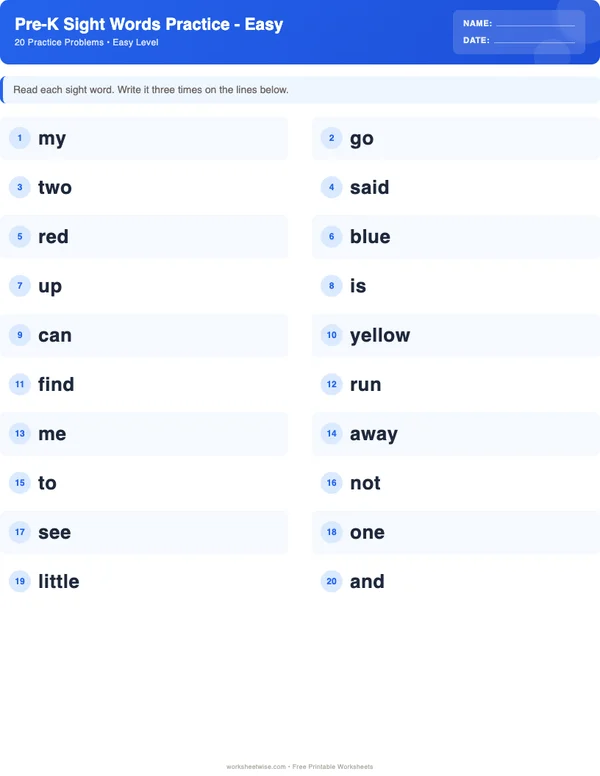
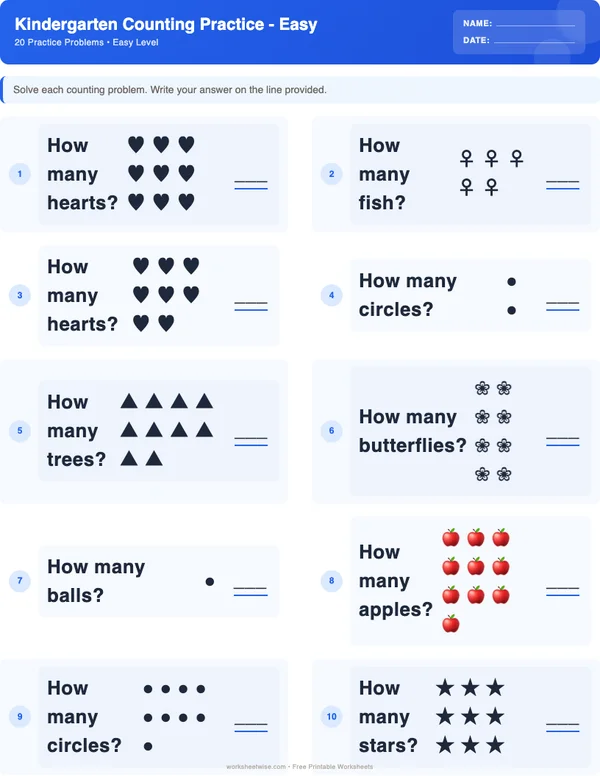
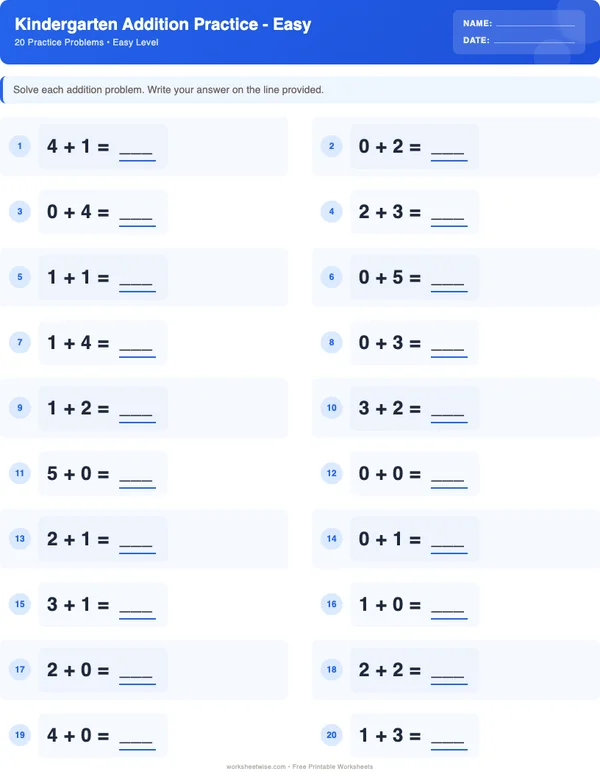
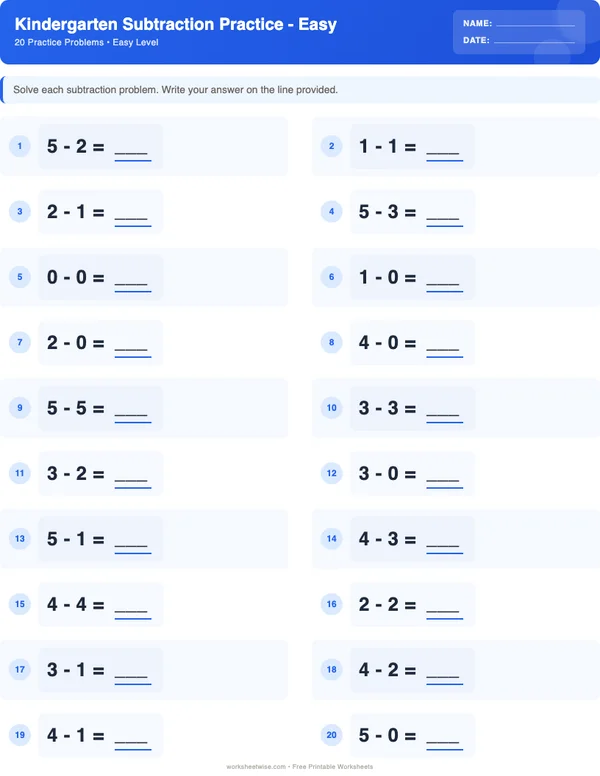
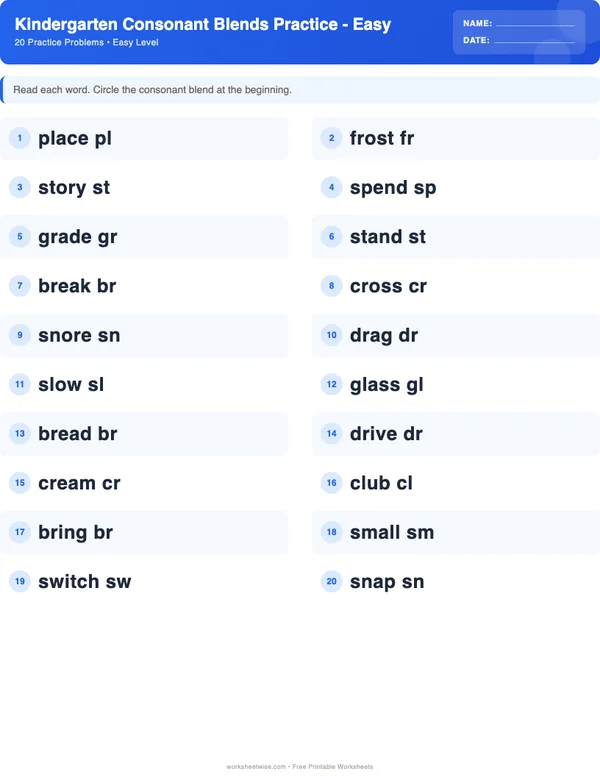
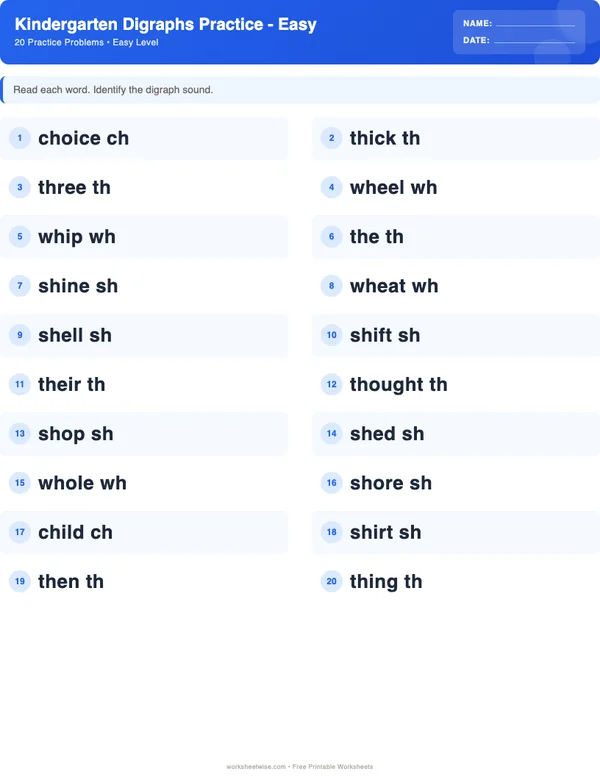
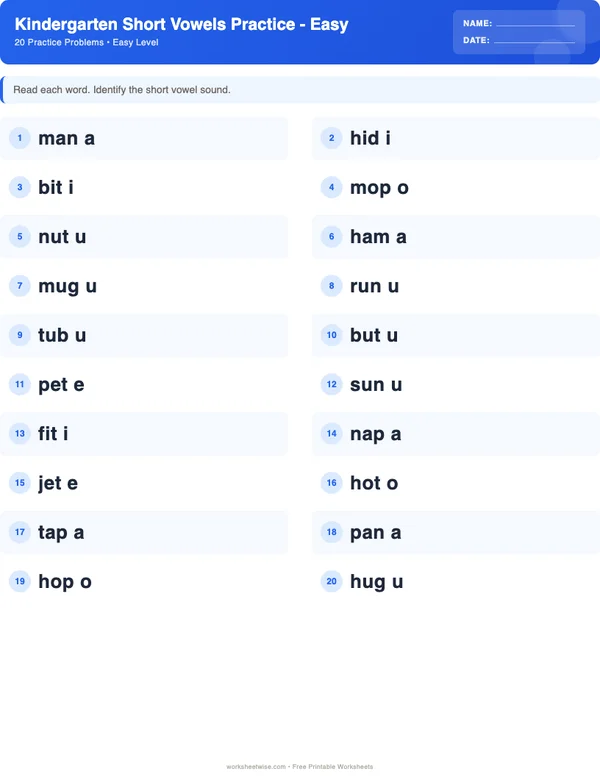
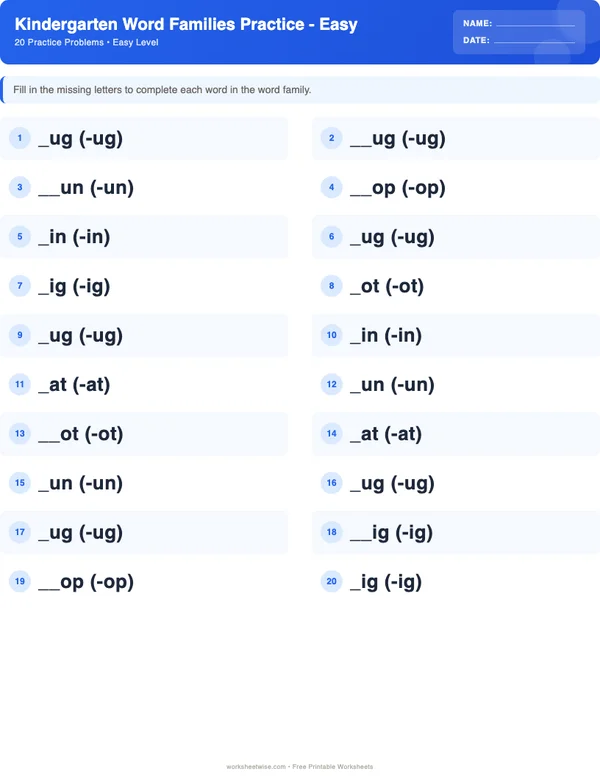
107 relevant free entry points are available. Each one includes a printable learner PDF and separate answer key.
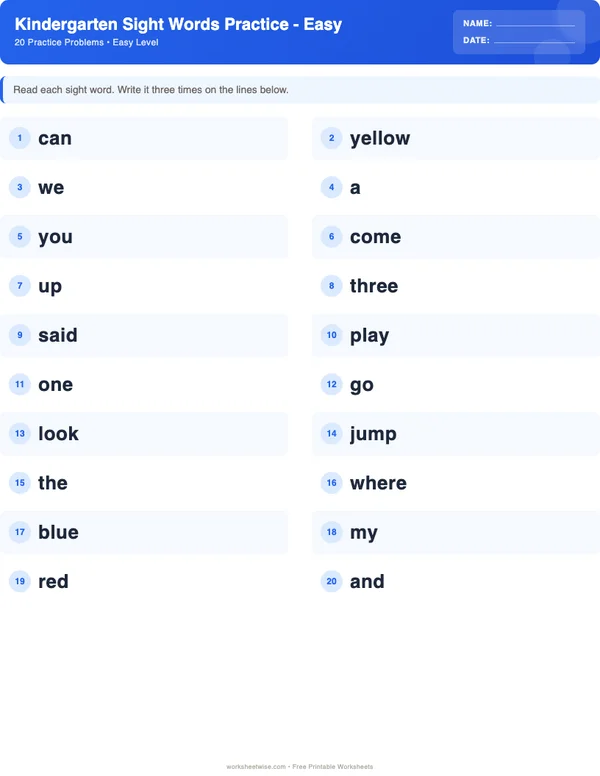
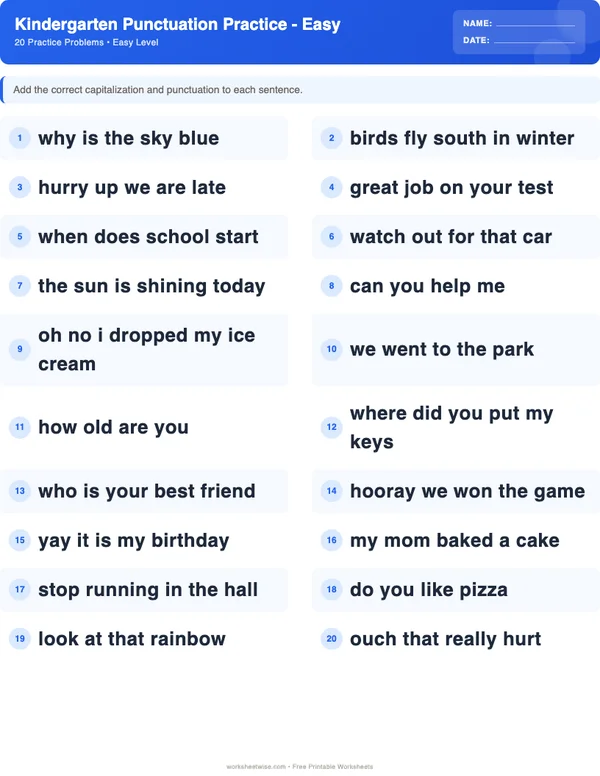
A useful practice loop
Print less. Observe more.
- Choose one skill and model the first item aloud.
- Use a short set and notice the learner’s strategy.
- Change the next task from the work you can see.
Need more than the free sheet?
Plus includes all 1926 matching catalogue variations where available, plus saved deterministic generators and the worksheet designer.
See Plus membershipComplete guide
How to teach and practise worksheets for teachers
3,530 words Updated 6 instructional visuals
Build one preparation workflow, not a folder of unused printables
Teacher worksheets are most useful when search, generation, answer keys, and editing serve one instructional decision: What should learners practice next, and what evidence will show whether the practice helped?
WorksheetWise’s live catalogue provides 1,926 variants across eight grade labels, four subjects, and 23 topics, including 107 free resources. Those numbers make discovery easier, but volume is not a lesson plan. A workable routine connects the catalogue’s parts:
- Identify one observable target skill.
- Search for a close printable rather than browsing broadly.
- Compare its task demands with what learners can already do.
- Select among three difficulty levels by examining the actual task features.
- Use a deterministic generator when the skill is right but a fresh item set is needed.
- Use the worksheet designer when the layout, directions, examples, or response space need adjustment.
- Check the answer key before teaching.
- Launch the sheet with a short model.
- Observe strategies, not merely scores.
- Record one error pattern and choose the next action.
This guide develops that routine across elementary math, phonics, grammar, and writing. Grade labels describe an intended practice level; local curriculum sequences differ. Age is a discovery aid rather than a placement decision.
Start preparation with evidence from yesterday
Choose a worksheet only after naming what prompted it. “The class needs phonics” is too broad. “Several learners can segment three sounds but substitute the wrong medial vowel when spelling CVC words” is actionable.
Useful evidence can come from:
- An exit slip showing the same place-value error across several items.
- A reading conference in which a learner guesses CVC words from their first letter.
- Writing samples containing complete ideas without capitals or end punctuation.
- A math discussion in which learners count every object rather than recognizing or organizing groups.
- A previous worksheet where the total score hides a consistent misunderstanding.
Then write a one-sentence target. A strong target names an action and the conditions under which it will occur: “Represent a three-digit number with hundreds, tens, and ones,” or “Read a CVC word by blending all three sounds.”
Search the full worksheet library with that target in mind. Use grade, subject, and topic as discovery aids, then inspect the resource itself. A third-grade label does not establish that a page fits every third grader, and a kindergarten label does not make it unsuitable for an older learner who needs focused review.
Use five selection checks
Before printing, answer these questions:
- Is the target visible? You should be able to point to the exact learner action that demonstrates the skill.
- Are prerequisite demands controlled? A math page should not accidentally become a reading-comprehension test unless reading is part of the target.
- Is the amount of work appropriate? A 20-item sheet can be split, sampled, or completed over more than one session.
- Can you interpret likely errors? If several misunderstandings could produce the same response, plan a brief follow-up question.
- Does the answer key match every item? Solve or verify the examples and sample several items before class; never assume the key replaces professional checking.
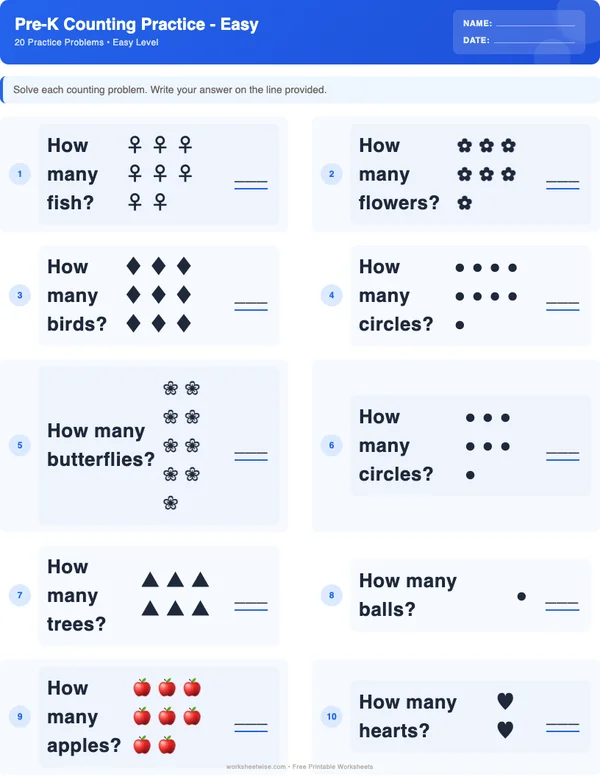
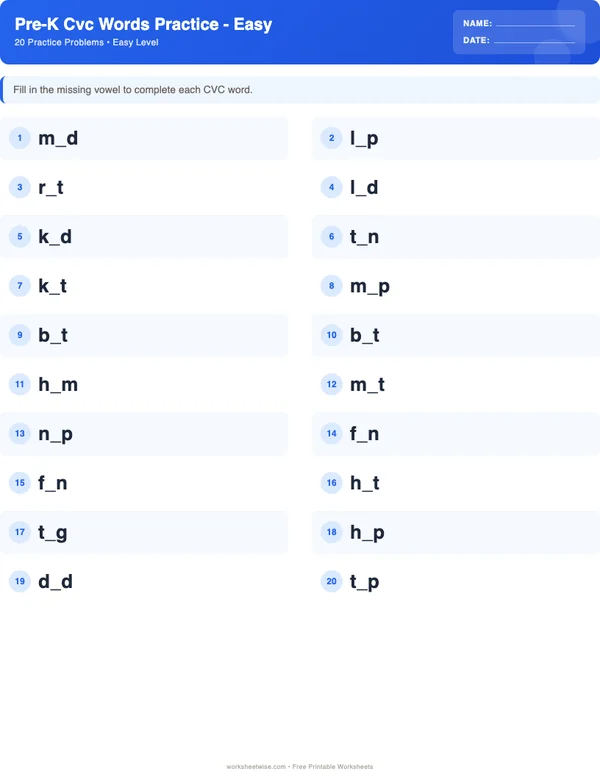
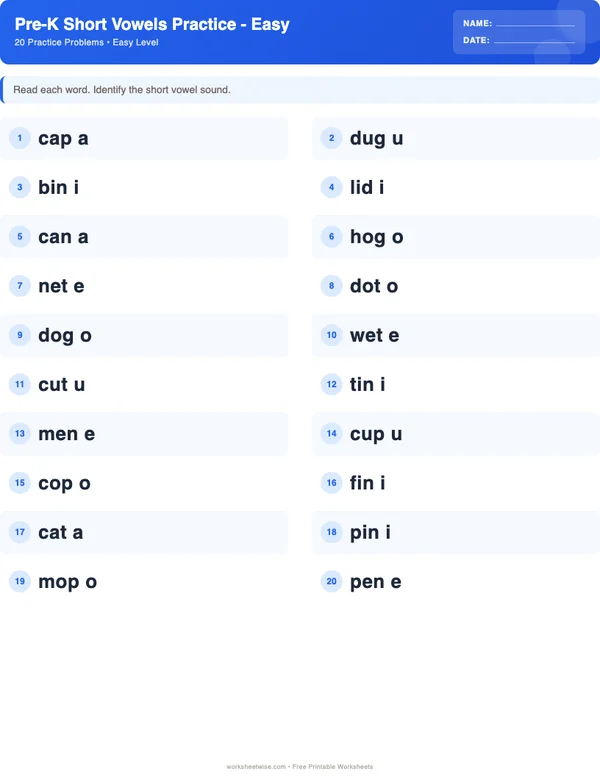
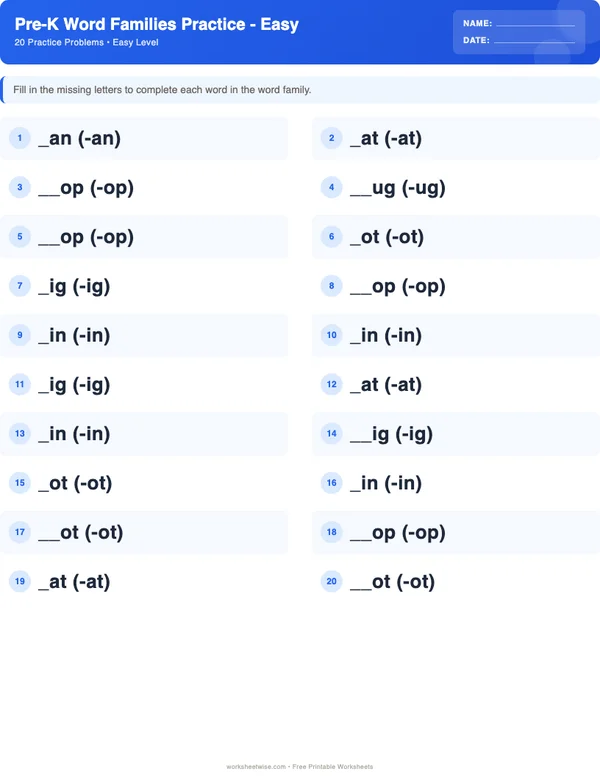
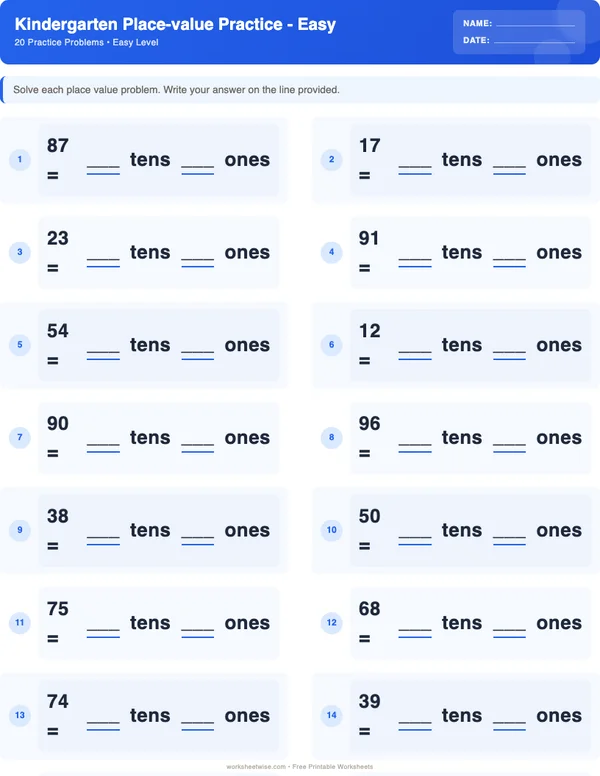
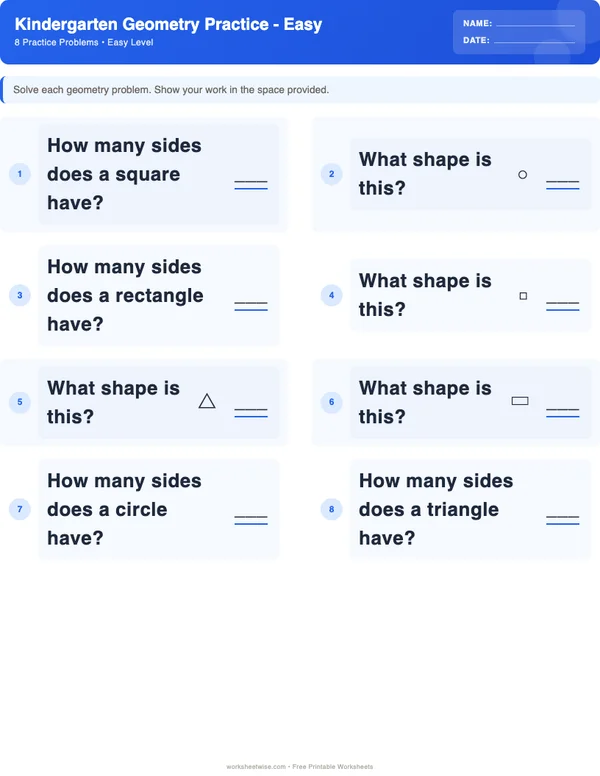
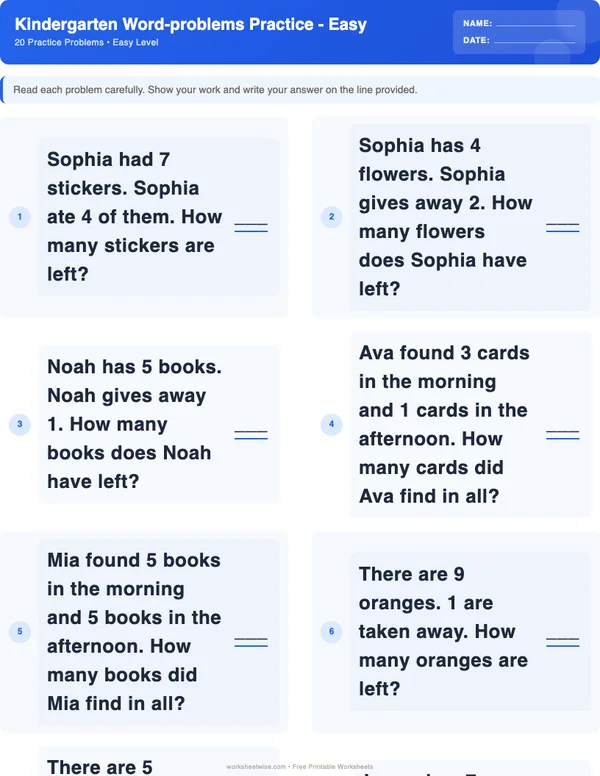
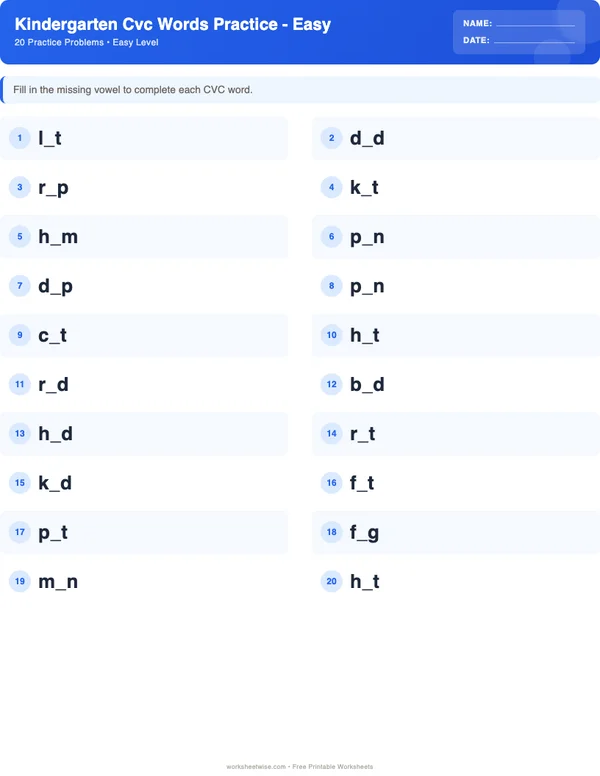
The catalogue’s representative free sheets include 20-problem resources for Pre-K counting, CVC words, short vowels, word families, and sight words; kindergarten counting, addition, subtraction, place value, geometry, CVC words, blends, and digraphs also have 20-problem examples. The representative kindergarten word-problems sheet has 12 problems. These are catalogue facts, not recommended session lengths. Select the number of items that will produce useful evidence without turning persistence or handwriting stamina into the main challenge.
Define difficulty through the work learners must do
WorksheetWise offers three difficulty levels. Treat them as versions of a task, not labels for children. Never call a learner “easy,” “developing,” or “advanced.” Instead, describe observable features of the page.
Compare support, decision load, and representation
A lower-demand version may include:
- Fewer choices.
- One operation or pattern at a time.
- Pictures, counters, sound boxes, or a number line.
- An example already completed.
- Consistent item formats.
- Smaller numbers or shorter words.
- More response space.
A middle-demand version may remove some visual support, mix familiar item formats, or ask learners to choose between two recently taught strategies.
A higher-demand version may include mixed representations, an unknown in different positions, distractors that require closer discrimination, longer transfer items, or a written explanation. “Harder” should not simply mean smaller print, denser pages, trick wording, or more repetitive items.
Move between levels according to evidence. If a learner solves 43 − 25 correctly with base-ten blocks but not with numerals alone, preserve the subtraction target and restore a representation. If the learner solves every item by mechanically applying a procedure but cannot explain the regrouping, increase reasoning demand rather than adding more of the same computation.
The free deterministic worksheet generators are useful when learners need another item set with the same structure. “Deterministic” matters operationally: the generated questions and matching key can be reproduced from the same defined setup. Still inspect the output, confirm the skill boundaries, and decide how many items to use.
Prepare the page, the answer key, and the teaching moves together
A printable is not ready merely because it has been downloaded. Prepare three connected documents or views:
- The learner page, with only the necessary items.
- The checked answer key, annotated with likely misconceptions.
- A short observation record listing the target and two or three behaviors to watch.
Use the worksheet designer when an existing resource is conceptually suitable but needs a teaching-specific adjustment. Appropriate changes include enlarging response spaces, reducing the number of visible items, adding one modeled example, separating mixed sections, or rewriting directions in language already used during instruction. Do not “adapt” a page by changing the target skill unless you also change the lesson goal.
For each answer, note what successful work could look or sound like. A correct answer to 352 = ___ hundreds + ___ tens + ___ ones is 3, 5, 2, but the stronger check is whether the learner can connect each digit to its value. A wrong answer of 3, 50, 2 suggests something different from reversing tens and ones.
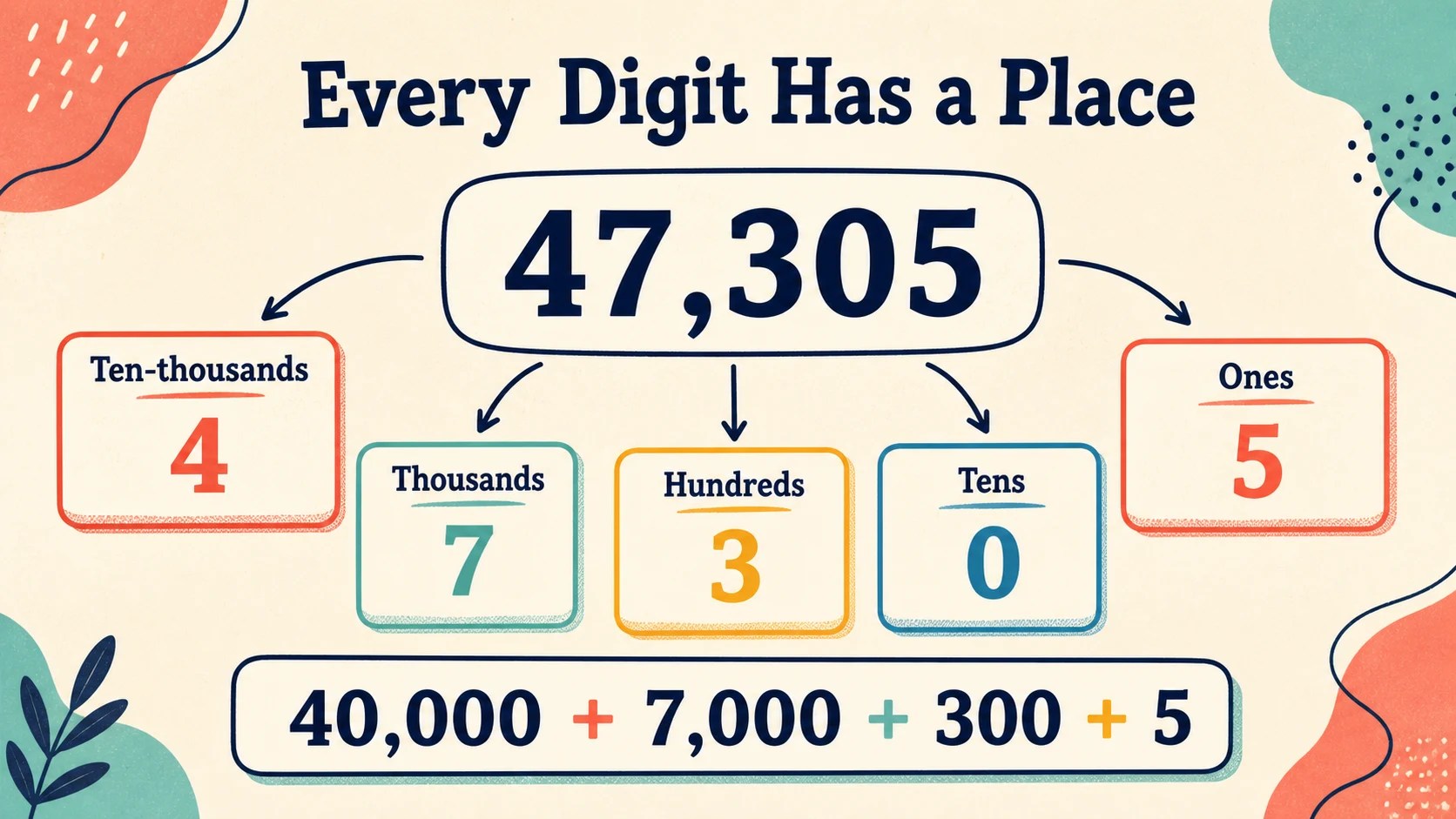
Use the place-value map to decide whether the lesson targets composing, decomposing, comparing, rounding, or translating among forms; those are related practices, not interchangeable items.
The catalogue’s place-value description spans composing and decomposing numbers, standard, expanded, and word forms, comparison, ordering, and rounding. That breadth is a reason to narrow a lesson, not to cover every form at once. The IES guide for assisting students struggling with mathematics recommends systematic instruction that includes clear models, mathematical language, representations, and deliberate practice. That guidance supports a modeled launch and purposeful item selection; it is not an assessment of WorksheetWise.
Launch each worksheet as a brief teaching episode
A productive launch usually takes three to seven minutes. It makes the target and response routine clear without solving the entire page for learners.
Use an “I do, we notice, you try” opening
First, state the target in plain language: “Today we will listen for the middle sound in short CVC words.” Model one item while verbalizing the relevant decision. Next, ask learners what they noticed. Finally, let everyone try one similar item and check the process before independent work begins.
For sentence work, model how to test whether words form a complete thought. Do not start with editing marks alone. Say the sentence, identify who or what it is about, identify what happens, and then add capitalization and punctuation.
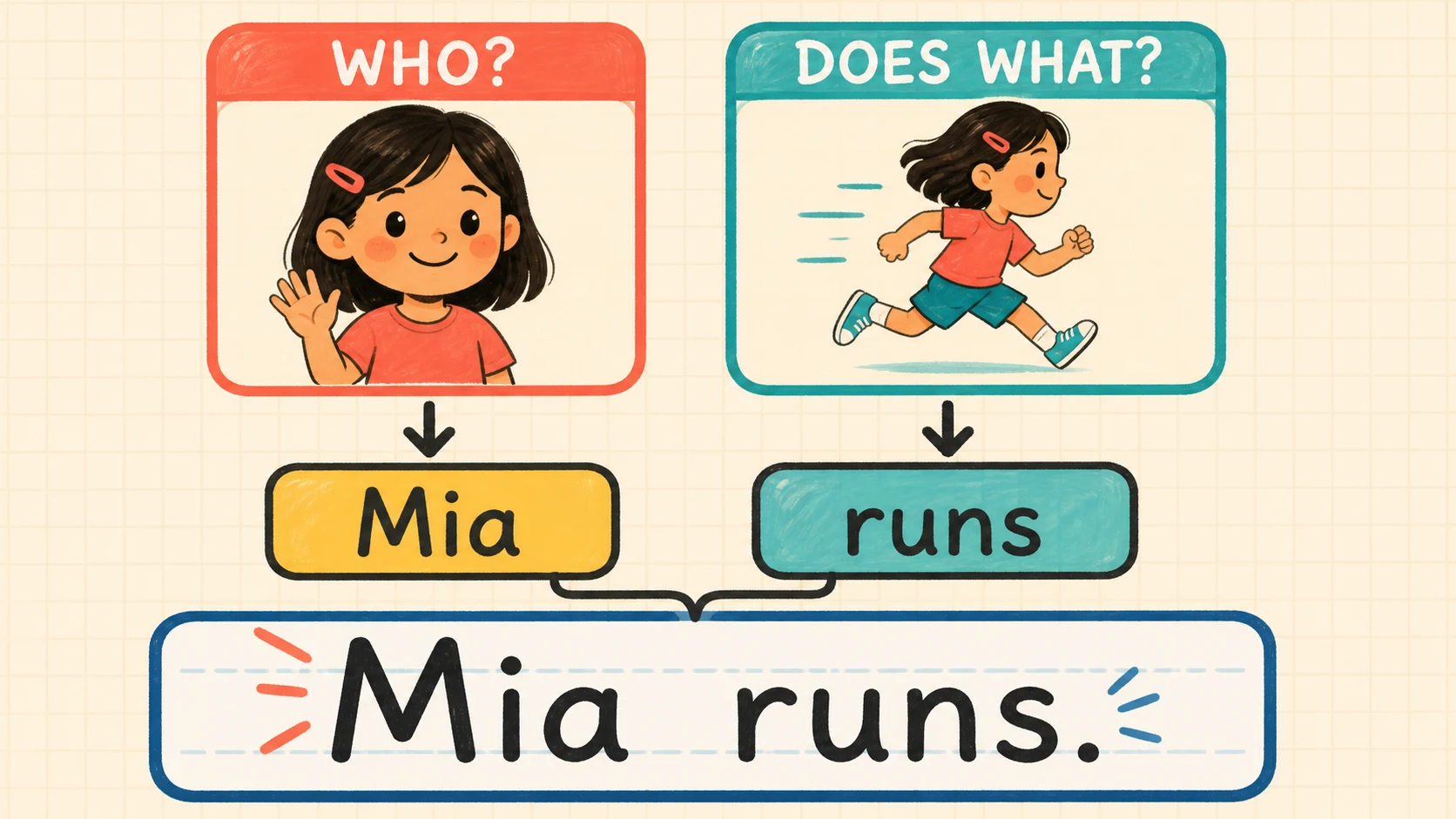
Use this sentence-structure map to isolate the day’s decision—complete thought, word order, capitalization, punctuation, or expansion—before selecting practice.
The IES elementary writing guide emphasizes teaching writing strategies explicitly, gradually releasing responsibility, and giving learners frequent opportunities to write. A worksheet can support one portion of that work, but arranging or correcting sentences cannot replace composing meaningful text.
For a short parts-of-speech lesson, put one sentence on the board: “The small dog runs.” Ask learners to name the person, place, thing, or idea (dog), the action (runs), and the word that describes the dog (small). Then complete one analogous worksheet item together.
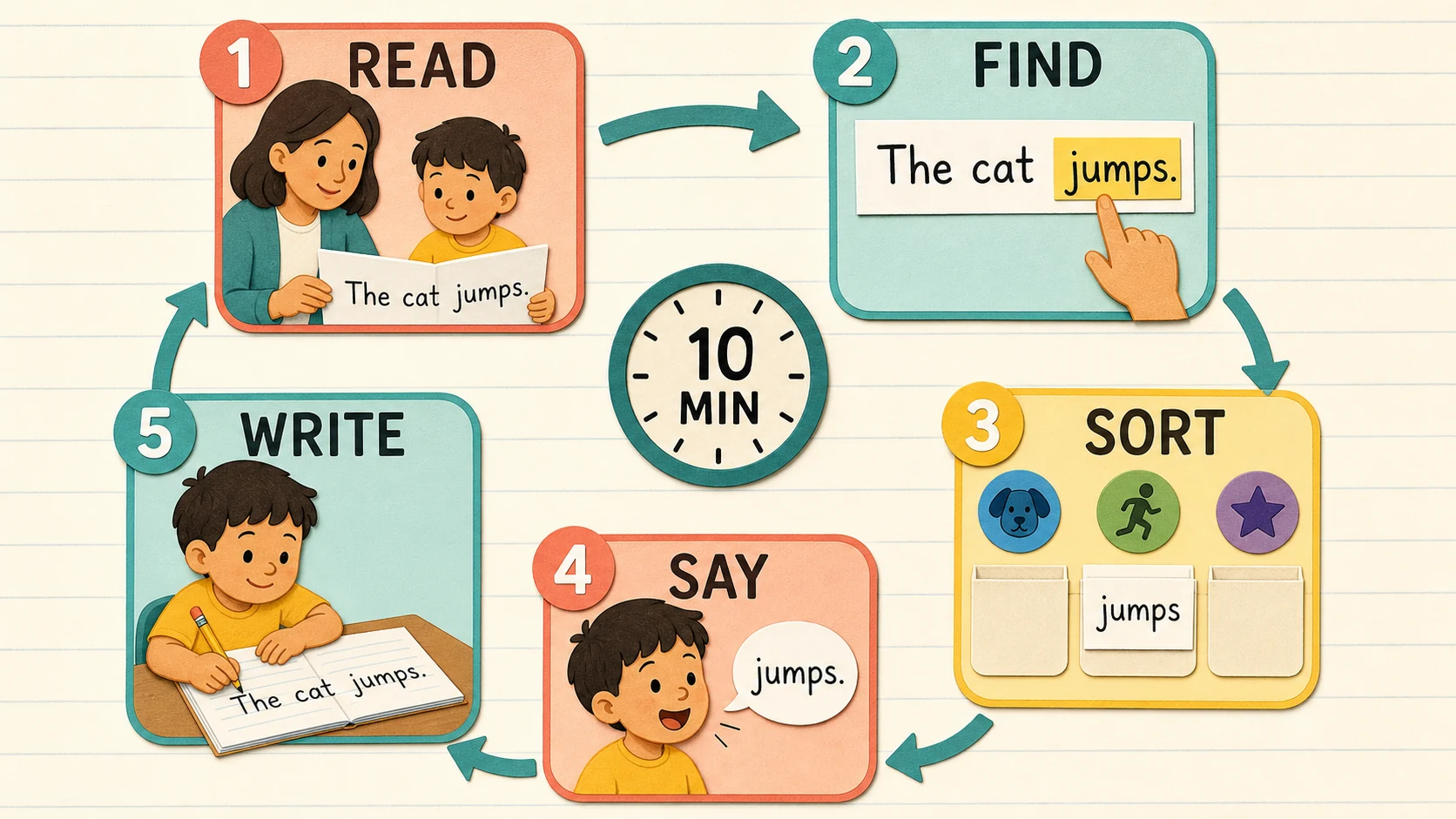
Repeat the routine with new sentences while keeping the grammatical decision stable enough for learners to explain how they classified each word.
This example belongs in a teacher workflow because it links a printable to oral language and teacher modeling. The sheet supplies practice; the spoken explanation reveals whether a learner is using meaning or merely copying a position-based pattern.
Observe the strategy while learners work
Do not spend independent work time only grading previous papers. Circulate with a narrow observation question: “What is the learner doing before writing an answer?”
Record behaviors such as:
- Touches each object once while counting.
- Recites numbers correctly but loses one-to-one correspondence.
- Blends all sounds continuously.
- Says separate sounds and guesses before combining them.
- Uses tens and ones correctly with blocks but reverses written digits.
- Selects an operation from the situation.
- Hunts for a keyword without retelling the problem.
- Repairs an incomplete sentence when reading it aloud.
- Copies punctuation without explaining its purpose.
Checked example: counting a scattered set
Place seven counters in a scattered arrangement. Ask the learner to count them, moving each counted counter into a line. The verified total is seven. If the learner says “seven” after touching each counter exactly once, the evidence supports one-to-one correspondence and cardinality in this set. If the learner recounts a counter or skips one, do not infer that the learner “cannot count to seven.” Ask for a second count with the objects moved or organized.
This example belongs here because the catalogue guidance specifically distinguishes counting scattered objects from reciting a sequence. The Pre-K Counting guide and free sheet can provide follow-up practice, but ages three and four should primarily receive brief adult-led oral, matching, manipulative, and movement work rather than extended desk work. Let a child touch counters, hop while counting, or match a numeral to a set; use only a small portion of a page when paper adds value.
The IES guide to teaching math to young children supports building young children’s mathematical understanding through developmental progressions, regular monitoring, and attention to mathematical ideas in everyday activity. Use that sourced guidance to frame observation. The specific seven-counter routine above is an editorial teaching suggestion based on the supplied catalogue context.
Check phonics by pairing reading with spelling
A phonics answer key can confirm a written response, but it cannot tell whether a learner blended, recalled a memorized word, copied a neighbor, or guessed from a picture. Pair one printed response with a brief oral check.
Checked example: change one sound at a time
Build this chain with letter tiles:
cat → mat → map → mop
Every step changes exactly one letter and one phoneme:
cat → mat: initial/k/changes to/m/.mat → map: final/t/changes to/p/.map → mop: medial shortachanges to shorto.
Ask the learner to read each word, identify what changed, and spell the new word. This checked example belongs here because the representative CVC guidance uses this exact chain to develop sound manipulation while keeping most of the word stable. It connects decoding with encoding rather than treating a correct circle or match as complete evidence.
The IES foundational reading skills guide recommends explicit instruction in sound segments, letter–sound relationships, decoding, and connected text. It did not assess WorksheetWise. Use its guidance to surround a printable with oral blending and reading, rather than presenting isolated written items as the whole lesson.
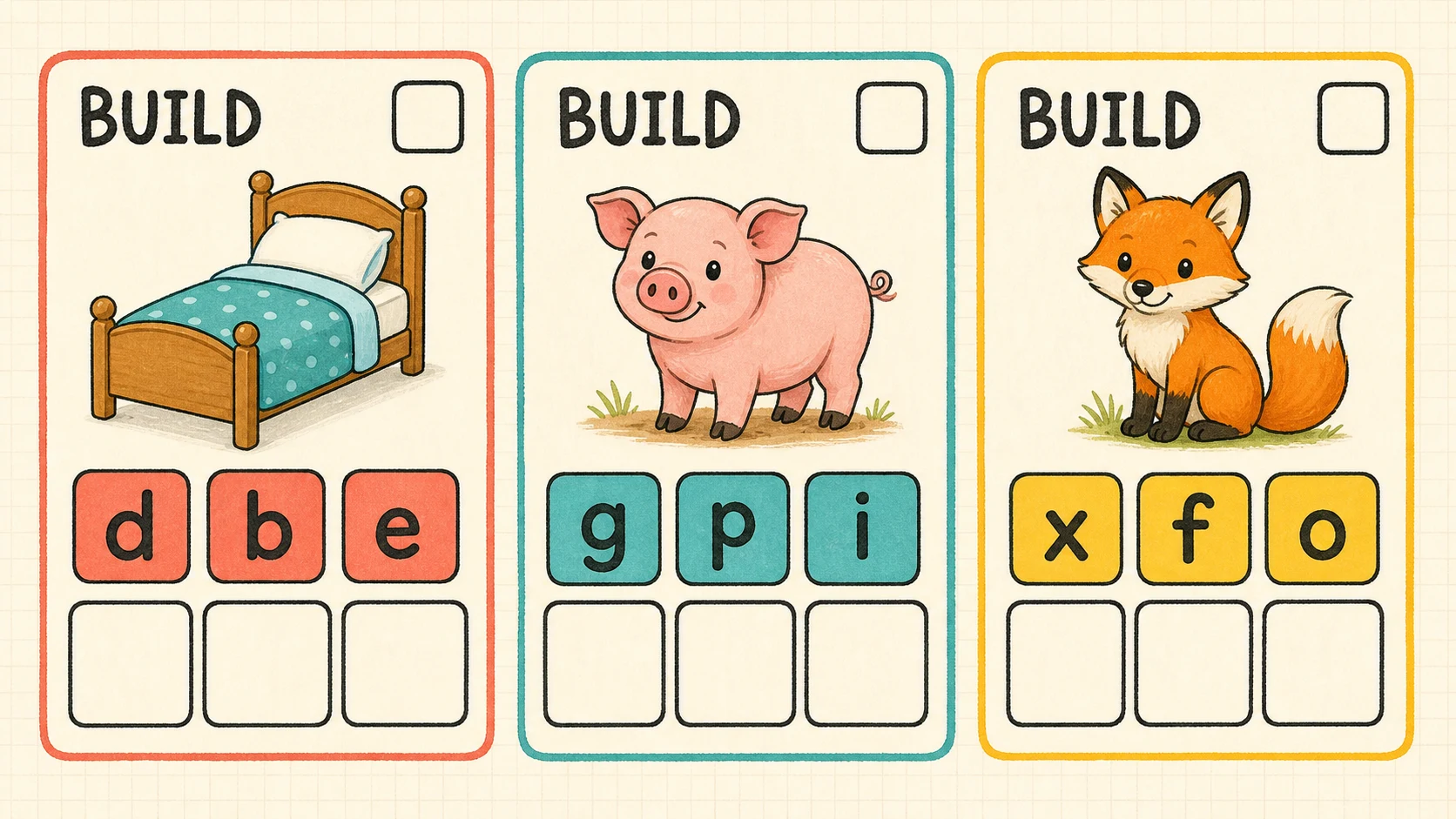
Space CVC review across days so the learner reads, builds, spells, and later retrieves the same sound pattern in a new item set.
Checked example: discriminate short vowels without changing the target
Say pen and pin. Both are CVC words. Their initial /p/ and final /n/ are the same; only the medial vowel differs. Ask the learner to repeat each word, identify the middle sound, select e or i, and then write the whole word.
This example belongs here because the catalogue identifies short e and short i as a commonly confusable pair and recommends minimal-pair listening. If handwriting is laborious, let the learner point to letter cards or place a tile in the middle of p_n. That adaptation preserves vowel discrimination. Reading the word aloud afterward reconnects the listening decision to decoding.
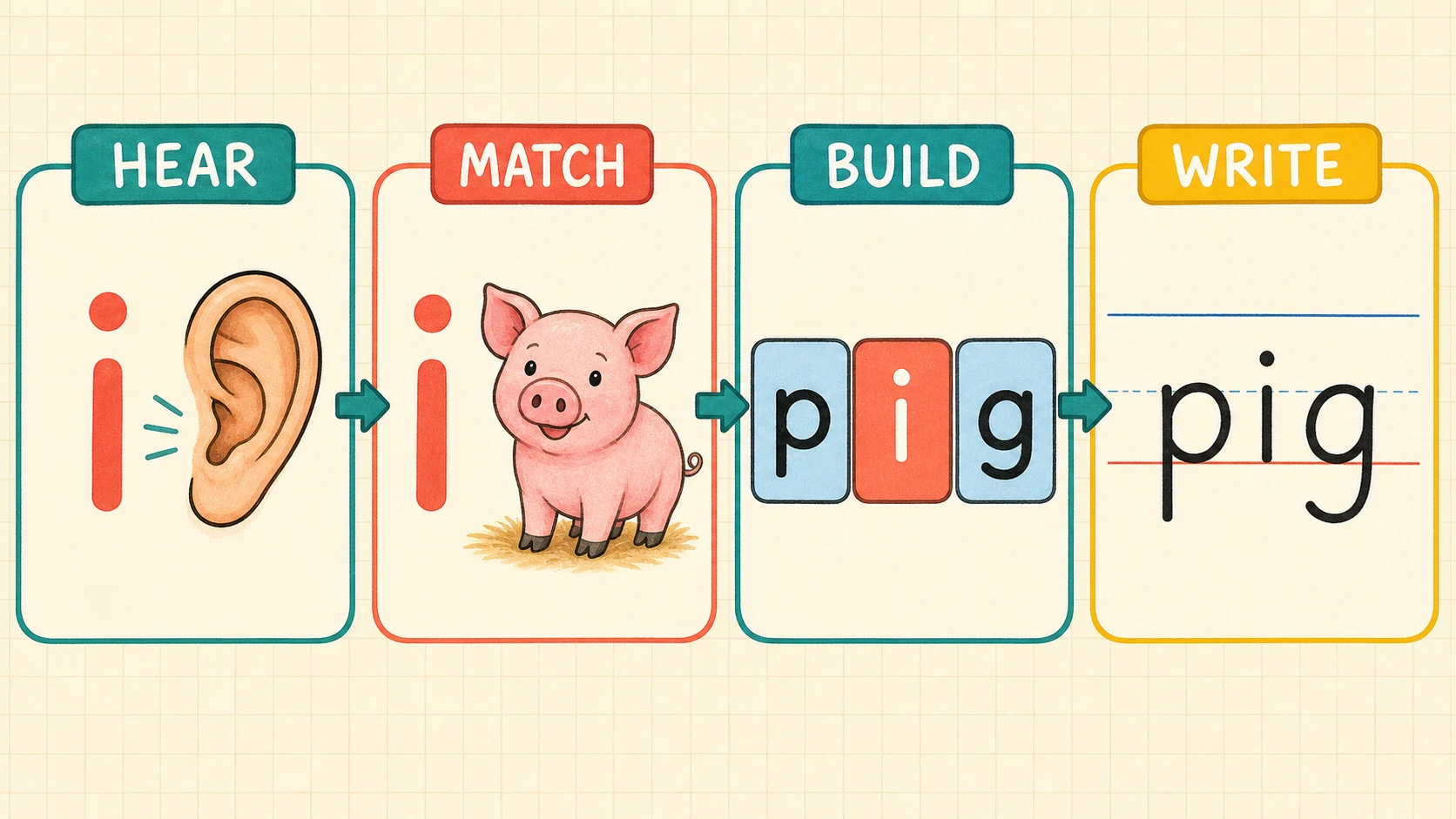
Move from an adult-modeled contrast and picture or letter choices toward independent reading and spelling only when the learner’s responses show the vowel distinction.
The Pre-K Short Vowels guide and free sheet is an appropriate discovery point for this pattern, not an automatic placement decision. For ages three and four, keep the work brief, oral, adult-led, and supported by matching, movement, objects, or letter tiles.
Interpret math errors before assigning another page
An answer key identifies differences between expected and recorded answers. It does not explain them. Group errors by likely process, then test the interpretation with one question or concrete model.
Checked example: subtraction with regrouping
For 43 − 25, the correct answer is 18.
A learner who writes 22 may have subtracted 2 tens from 4 tens and then ignored or mishandled the ones. A learner who writes 26 may have subtracted the smaller digit from the larger in each column: 5 − 3 = 2 and 4 − 2 = 2 would actually produce 22, while reversing only the ones and preserving an incorrectly regrouped tens calculation can produce other results. The written answer alone is therefore insufficient.
Ask the learner to represent 43 with four tens and three ones. To subtract five ones, trade one ten for ten ones, producing three tens and thirteen ones. Then:
13 − 5 = 83 tens − 2 tens = 1 ten- Result:
18
This example belongs here because the catalogue’s subtraction guidance explicitly identifies physical trading with base-ten blocks as a response to regrouping errors. Preserve the subtraction target by changing the representation, not by switching immediately to easier unrelated facts.
For place value, consider 4,352. Its checked expanded form is 4,000 + 300 + 50 + 2. If a learner writes 4,000 + 300 + 5 + 2, ask what value the digit 5 has in the tens position. The error may concern place value, not addition.
When using grade-labelled material, remember that the Common Core mathematics standards describe grade-level expectations within that framework, but local sequences and terminology differ. Standards can help clarify the mathematical destination; they do not place an individual learner or diagnose a difficulty.
Give feedback that leads to one immediate revision
Return information while the learner can still use it. A score such as 14/20 is a record of correctness, not complete feedback.
Use this sequence:
- Name what the learner did accurately.
- Identify one pattern, not every mark.
- Ask for an explanation or a second representation.
- Model only the missing decision.
- Have the learner revise one original item.
- Give one new, closely matched item.
For short vowels: “You heard the first and last sounds in pin. Listen to the middle as I contrast pen and pin. Choose the vowel again, then read the whole word.”
For place value: “You identified four thousands and three hundreds. Build the tens and ones with blocks, then rewrite the expanded form.”
For sentence structure: “Your words express a complete idea. Read it aloud and mark where the reader needs the sentence to begin and end.”
Feedback should preserve the target. Reading directions aloud can remove an irrelevant decoding barrier from a math task. Allowing counters can expose counting or addition reasoning. Providing a word bank can reduce spelling load during a sentence-classification task. In contrast, telling the learner which operation to use removes a central decision from a word problem, and supplying the middle vowel removes the target from vowel discrimination.
Record patterns compactly enough to use them
A useful record fits on one line per learner or group:
Date | target | conditions | evidence | error pattern | next action
For example:
Aug. 30 | short e/i in CVC words | oral pair + letter tiles | 4/6 contrasts correct | /e/ replaced with /i/ twice | repeat two minimal pairs, then 4 generated items
Or:
Aug. 30 | represent 3-digit numbers | numerals + base-ten blocks | 5/6 correct with blocks | tens/ones reversed without blocks | fade blocks to quick sketch
Record the conditions because accuracy with a model is different evidence from accuracy without one. Avoid diagnostic language. “Skipped objects in two scattered sets” is observable; “has dyscalculia” is a diagnosis that the worksheet cannot establish. “Guessed two words from pictures before blending” is observable; it does not establish a reading disorder.
Use answer keys for efficient verification, then retain only information that changes instruction. There is little value in archiving every marked page if no one will use the marks. A class tally may be enough:
- Ready for a new representation.
- Needs another matched example.
- Needs a brief teacher conference.
- Needs the same target with less reading or writing load.
- Needs the target taught with objects, movement, or oral rehearsal.
The Formative assessment Worksheets With Answer Keys collection can support this evidence cycle when the purpose is a quick instructional check rather than a grade.
Reuse practice without repeating the same mistake
Reuse should create retrieval and transfer, not photocopy fatigue. Keep the target stable while changing one dimension at a time.
Plan a two-week review cycle
A practical cycle might be:
- Day 1: Model the target and complete three to five items.
- Day 2: Revisit errors with objects, sound boxes, or sentence strips.
- Day 4: Use a newly generated set with the same structure.
- Day 6: Mix the target with one previously secure skill.
- Day 8: Apply it orally, with manipulatives, or in connected text.
- Day 10: Use a brief independent check and compare the error pattern with Day 1.
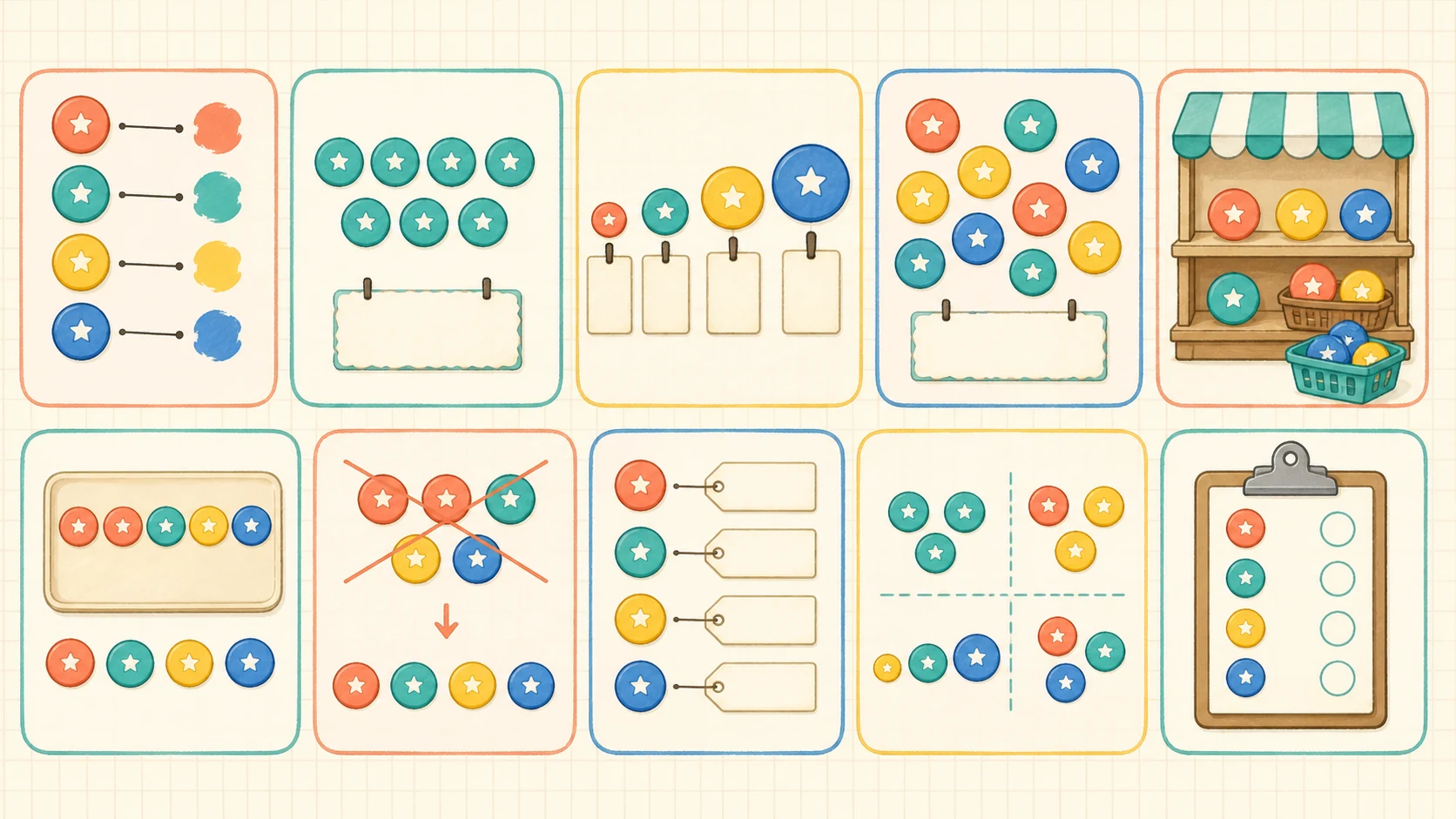
Use a spaced money plan to alternate coin identification, value comparison, composing amounts, and a brief check instead of repeating one dense page.
Suppose the target is composing 10 cents. Checked combinations include one dime; two nickels; one nickel and five pennies; or ten pennies. A first task may ask learners to match a dime to 10¢. A later task may ask for two different combinations that total 10¢. The numerical target remains fixed while the representation and decision load change. This example belongs here because it shows what genuine progression looks like: not merely more items, but a move from identification to composition and flexible representation.
Store the original search terms, selected level, generator settings, design changes, and the error pattern that prompted each revision. That makes reuse instructional rather than clerical. If a new class shows different evidence, do not reuse last year’s sequence unchanged.
Know when a worksheet is the wrong tool
Choose another format when the target depends on performance that paper cannot adequately reveal.
A worksheet is usually the wrong primary tool when learners need to:
- Develop counting through touching, moving, and organizing real objects.
- Hear and produce subtle sound contrasts before mapping them to letters.
- Blend orally while an adult responds immediately.
- Build and trade tens with physical materials.
- Discuss multiple mathematical strategies.
- Compose, confer about, and revise an extended piece of writing.
- Measure actual objects or investigate shapes in varied orientations.
- Read connected text with expression and meaning.
- Collaborate, explain, gesture, or demonstrate a process.
- Learn a concept that has not yet been explicitly taught.
For ages three and four, default to brief adult-led oral, matching, manipulative, and movement activities. A page may document or extend a tiny portion of that experience, but it should not displace it. Age remains a discovery aid, not a placement decision.
Also stop a worksheet session when the evidence has become unusable. If fatigue produces random responding, if unfamiliar directions overwhelm the target, or if every item repeats an already demonstrated skill, finishing the sheet adds little. Mark the stopping point and record why.
A worksheet is also inappropriate as a diagnostic instrument. It can reveal an error worth investigating, but it cannot establish a disability, developmental condition, or cause. Likewise, neither a completed sheet nor a catalogue grade label promises mastery, standards alignment in a local jurisdiction, or a particular outcome.
Make tomorrow’s sheet from today’s evidence
The complete workflow is circular: search or generate, inspect, adapt, check the key, model, observe, respond, record, and reuse only what the evidence justifies. Across subjects, the constant is not the page format. It is the teacher’s decision about the target and next action.
Tomorrow, choose one real error pattern from recent work and open the free deterministic worksheet generators. Create a short matched set for that single target, verify every item against its answer key, and plan one model plus one follow-up question before printing.
Put it into practice
Use the guide with a real printable
Move from explanation to a short, observable practice task. Check the first item together, then adjust the next session from the learner's actual work.
Open the first free worksheetExplore a neighboring collection
Choose by a different teaching need
After-School Worksheets With Answer Keys Formative Assessment Worksheets With Answer Keys Classroom Worksheets With Answer Keys Homeschool Worksheets With Answer Keys Homework Worksheets With Answer Keys Independent Practice Worksheets With Answer Keys Intervention Worksheets With Answer Keys Morning Work Worksheets With Answer Keys