13 free PDFs with answer keys
4th Grade worksheets
Choose only from subjects and skills with real files in the current 4th Grade catalogue. Start with the free standard sheet, then add more practice only if you need it.
Complete guide
How to teach and practise 4th grade worksheets
3,439 words Updated 6 instructional visuals
Choose fourth-grade practice by the work a learner can explain
The most useful fourth-grade worksheet is not simply the one marked “4th Grade.” Choose a task by examining three things: the strategy it requires, the representation it provides, and how independently the learner can complete it. A student who can calculate accurately but cannot explain a remainder needs different practice from one who understands the situation but loses track of multiplication facts.
The live WorksheetWise fourth-grade catalogue contains 234 variants across 13 topics in three subjects: Math, Spelling, and Grammar. Thirteen resources provide free entry points. Use the grade label to find plausible material, then preview the actual questions before assigning a page.
A sound selection decision follows this order:
- Identify one observable need in recent work.
- Choose a page that isolates that need without adding avoidable reading, notation, or writing demands.
- Ask the learner to complete a small sample and explain one answer.
- Decide whether the next task should repeat the representation, reduce support, or address a prerequisite.
Fourth-grade labels describe an intended practice level; local curriculum sequences differ. They do not establish placement, identify a learning condition, or guarantee that a particular topic has already been taught. Age works the same way: the worksheets for 9-year-olds guide can aid discovery, but age is a discovery aid rather than a placement decision. For ages three and four, prioritize brief adult-led oral, matching, manipulative, and movement work over desk work.
Readiness is visible in strategy, representation, and independence
Before choosing a worksheet, inspect a recent work sample. Do not begin with the percentage correct alone. Look at how the answers were produced.
Strategy: what mathematical or language idea is being used?
In math, determine whether the learner can represent the operation before relying on a memorized procedure. For example, a student preparing for should be able to connect the expression to six groups or decompose it by place value:
This example belongs in fourth-grade selection because the stated multiplication demand includes multiplying numbers of up to four digits by one digit. If the learner can obtain 13,824 and explain the partial products, practice with the standard algorithm may be appropriate. If the learner writes 12,1824 or cannot say what the 1,800 represents, return to an area model or expanded form rather than assigning more rows of the same algorithm.
In language work, strategy is visible when a student uses sentence context, word structure, or a punctuation rule instead of guessing. Ask, “What in the sentence helped you decide?” A correct answer followed by no usable explanation may not yet be dependable.
Representation: what makes the idea visible?
Representations include base-ten blocks, number lines, fraction strips, hundredths grids, arrays, bar models, diagrams, oral rehearsal, word sorts, and sentence frames. They are not rewards reserved for incorrect answers. They let adults see whether the learner understands the relationship beneath a symbol.
A fraction comparison page, for instance, may require symbolic comparison only. Before assigning it, ask the learner to place and on number lines or create equivalent fractions:
Therefore, . The calculation is checked because both fractions were converted using valid equivalent forms with a common denominator. It belongs here because comparing fractions with unlike denominators is part of the fourth-grade demand described for this page. If the student chooses merely because 7 and 9 are larger digits, visual equivalence remains necessary.
Independence: what happens after support is removed?
Record the least help required:
- Independent: starts, chooses a strategy, checks, and explains without prompting.
- One prompt: succeeds after a neutral cue such as “Show the quantities.”
- Modeled start: continues after an adult demonstrates a similar item.
- Guided throughout: needs prompts at most decisions.
- Not yet accessible: cannot engage even after the task is represented more concretely.
These descriptions concern task performance, not fixed ability. A learner may work independently with place value and need guided practice with inference or dialogue punctuation.
Preview a page before putting it in front of the learner
A two-minute adult preview prevents many false conclusions. Check the target, the hidden prerequisites, the amount of work, and the response format.
Name the exact target
“Practice math” is too broad. Better targets include:
- Regroup accurately in multi-digit addition.
- Interpret a division remainder in context.
- Compare tenths and hundredths by place value.
- Distinguish a preposition from an adverb in a sentence.
- Punctuate a line of dialogue.
- Combine two related sentences without creating a run-on.
- Sort spelling words by a shared pattern.
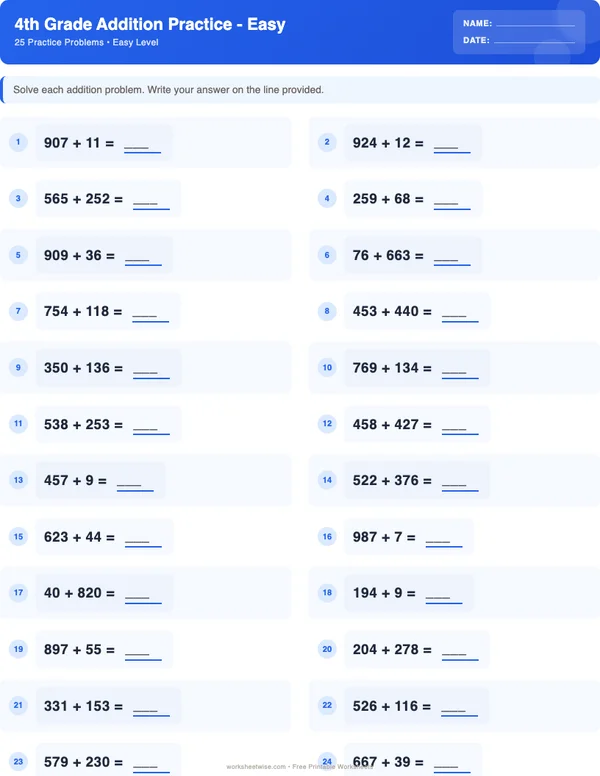
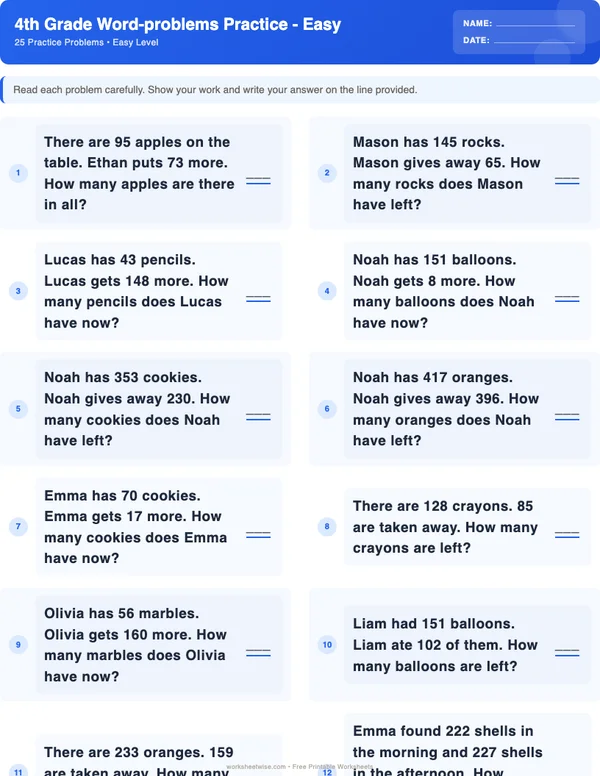
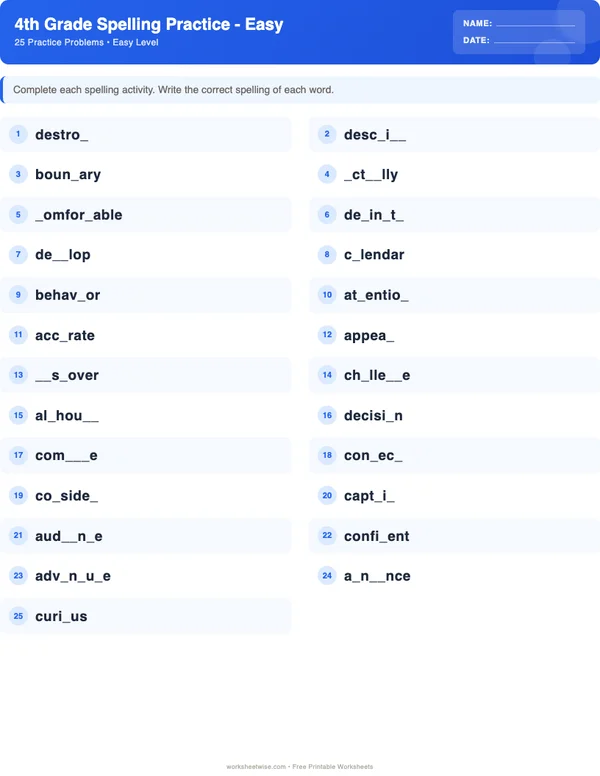
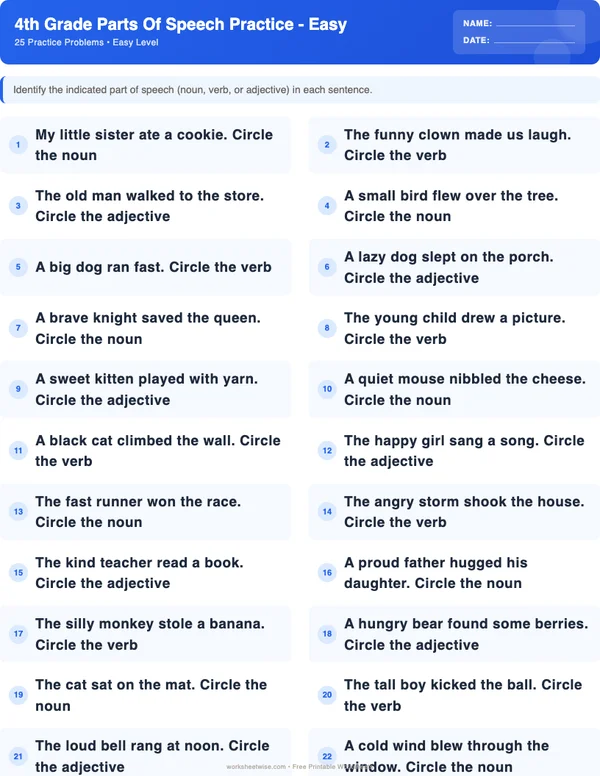
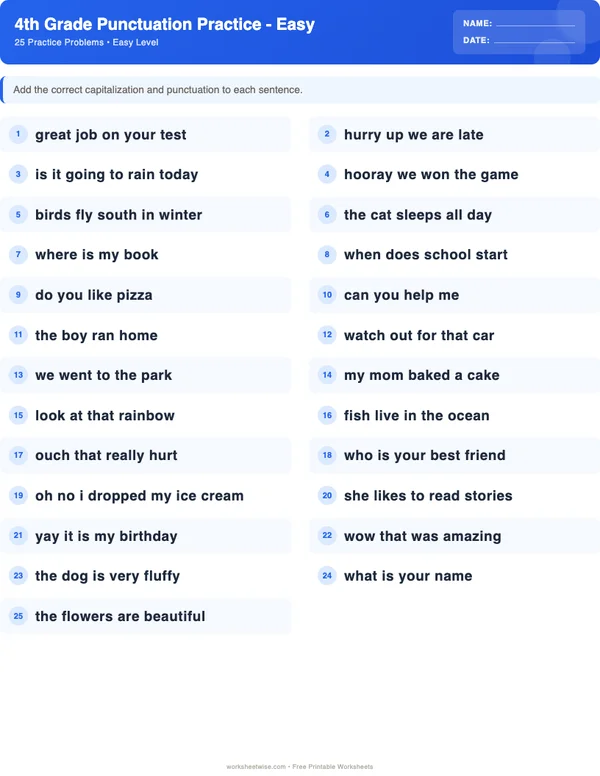
The free Addition, Subtraction, Multiplication, Division, and Place Value sheets each contain 25 problems. Fractions and Decimals each contain 22. Word Problems, Parts of Speech, Punctuation, and Sentence Structure each contain 14. Spelling Words contains 25. These are catalogue facts, not recommended session lengths. A learner may need only four carefully selected questions for an informative first attempt.
Expose hidden demands
A correct computation can be hidden inside difficult reading. Conversely, a learner may understand a word-problem situation but make one arithmetic error. Preview directions, vocabulary, number size, visual density, writing space, and whether several skills are mixed.
The catalogue’s free sheets are marked “easy,” but that label should be interpreted through observable task features, not applied to a learner. Look for features such as familiar directions, one operation at a time, smaller numbers, visible models, direct sentence structures, or fewer decision points. A page becomes more demanding when it removes models, mixes operations, increases number size, places the unknown in different positions, adds irrelevant information, or requires a written justification.
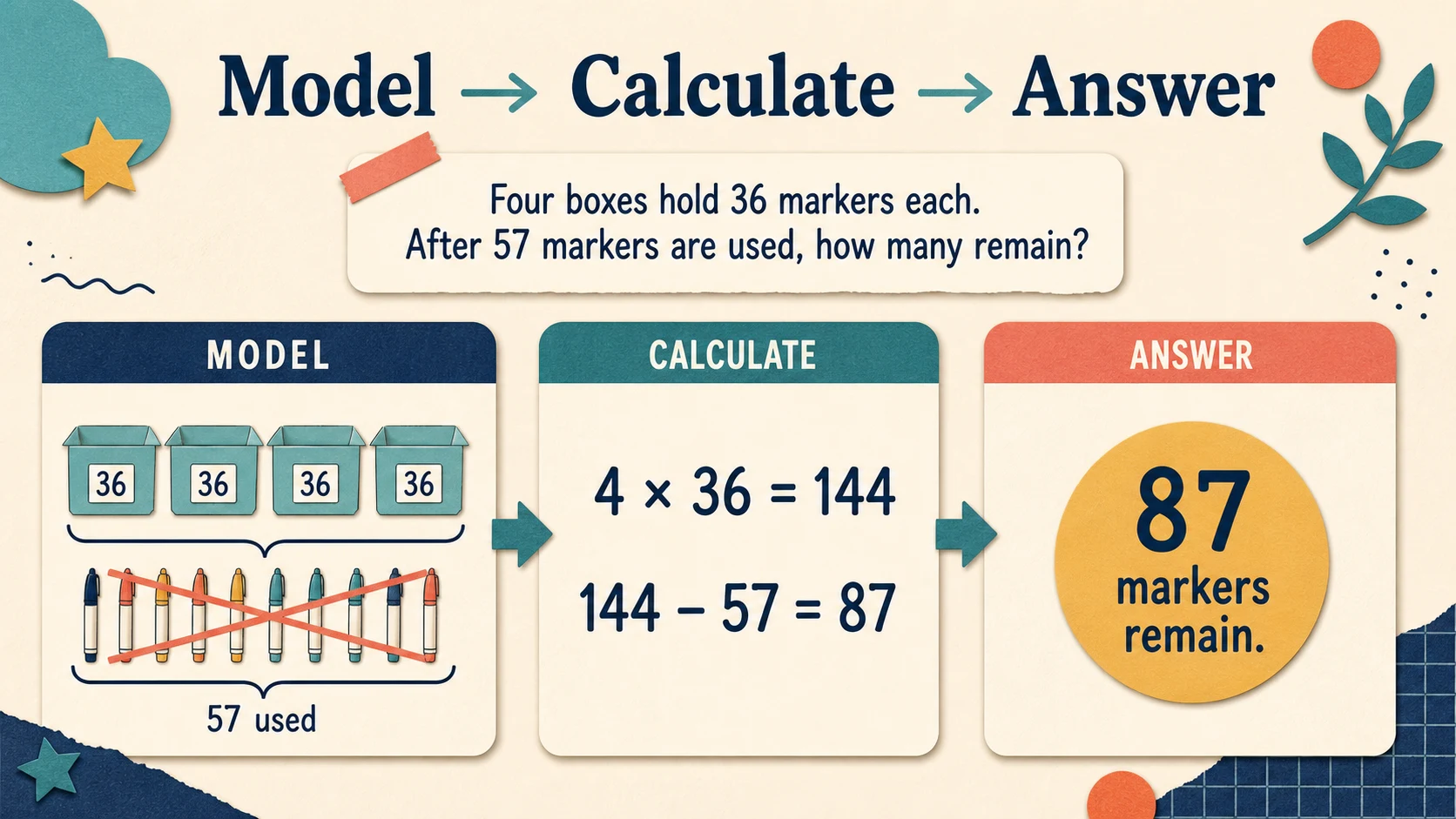
In fourth-grade word problems, progression should remove decision support gradually while preserving the need to understand the quantities and their relationship.
Test one representative item aloud
Ask the learner to explain what the first problem is asking without solving it. Then request a plan. This separates task access from execution.
Suppose 25 students need vans that each hold 6 students. The calculation is remainder , but four vans hold only 24 students. The answer in context is five vans. This checked example belongs at this level because fourth-grade division includes multi-digit dividends, one-digit divisors, remainders, and interpretation. If the learner reports “4 R1,” the division may be correct while the interpretation remains unfinished.
Map the nine live math topics without treating them as one ladder
The catalogue includes Addition, Subtraction, Multiplication, Division, Fractions, Decimals, Place Value, Geometry, and Word Problems. These topics interact, but readiness in one does not automatically place a student in another.
Secure place value before increasing computation load
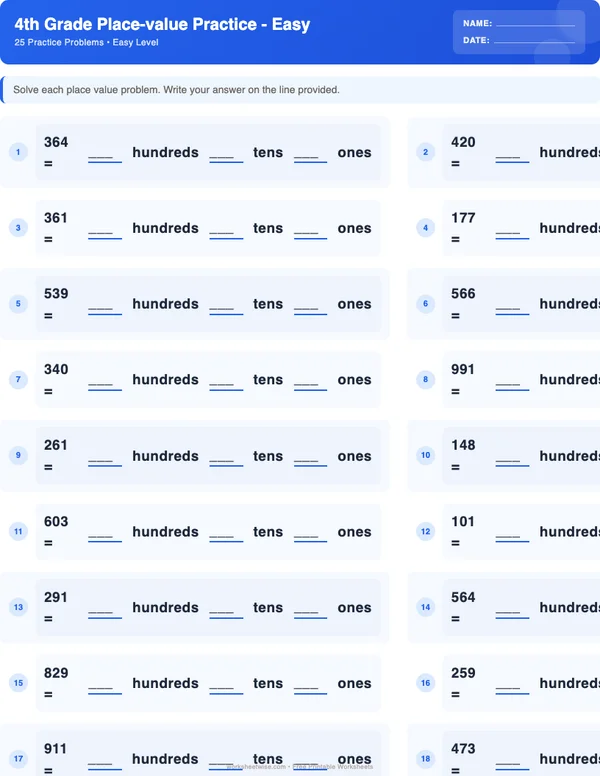
Use Place Value work when errors show confusion about a digit’s value, expanded form, ordering, or rounding. It is also a useful prerequisite check for multi-digit Addition and Subtraction.
For , the verified sum is 4,225:
- Ones: , so write 5 ones and regroup 1 ten.
- Tens: , so write 2 tens and regroup 1 hundred.
- Hundreds: , so write 2 hundreds and regroup 1 thousand.
- Thousands: .
This belongs in fourth-grade selection because it tests multi-digit addition, place-value alignment, and an explanation of regrouping. A learner who writes 3,111 by adding only visible digits without regrouping needs a place-value model. A learner who makes one isolated fact error but aligns and regroups correctly needs a shorter fact check, not a full conceptual restart.
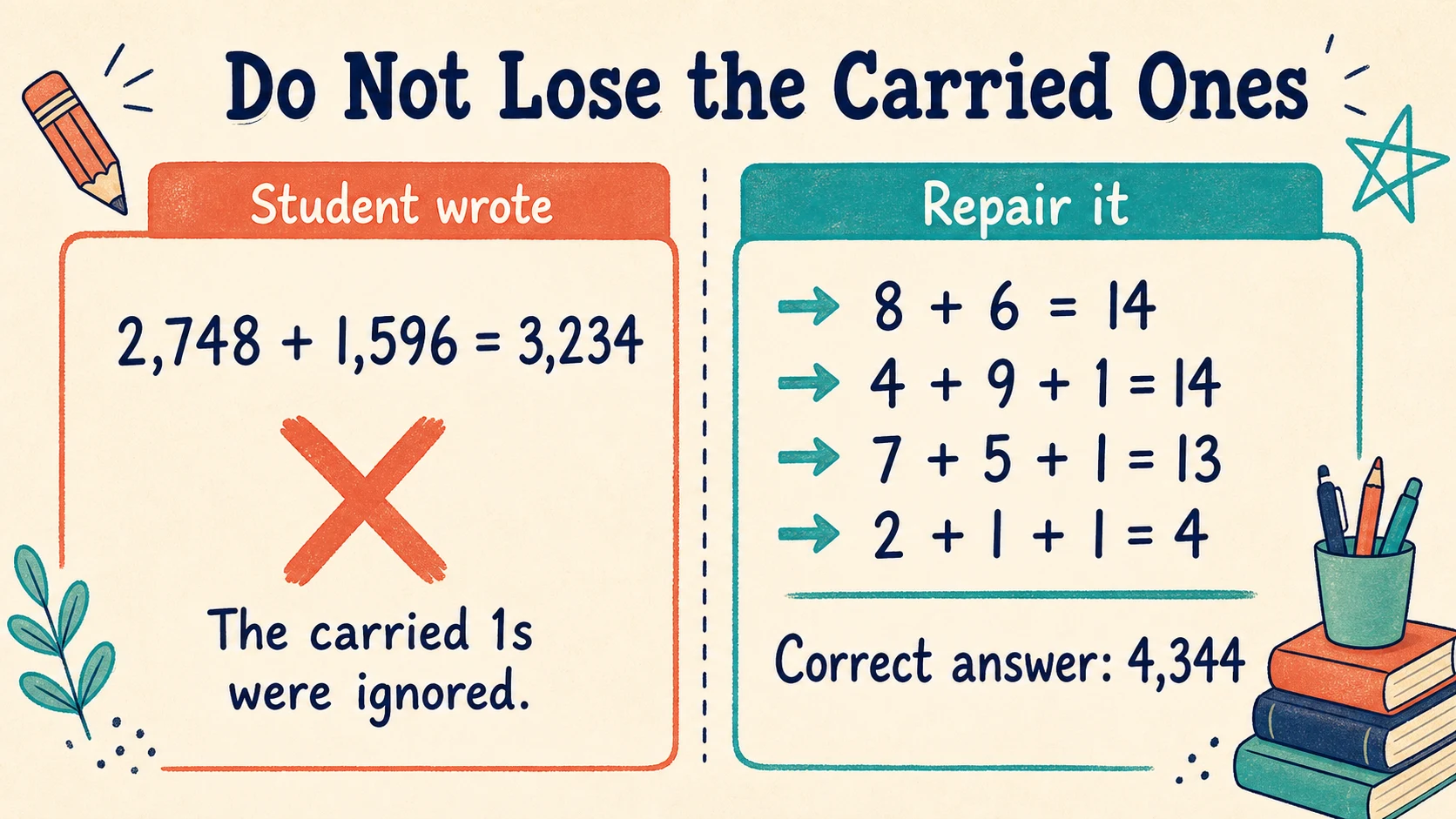
The useful response to an addition error depends on whether the work shows misalignment, misunderstood regrouping, or an isolated fact slip.
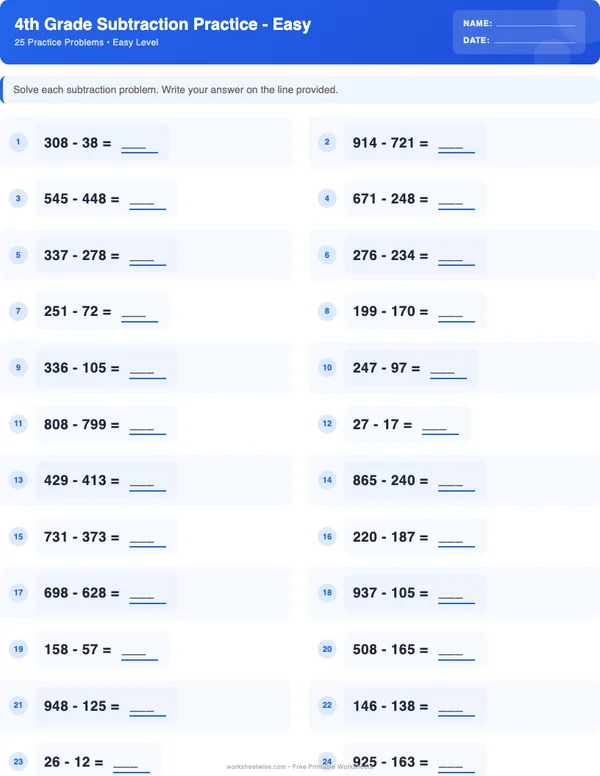
The 4th Grade Addition guide and free sheet is an appropriate next resource when place values are aligned and the current question is computation. Use the 4th Grade Subtraction guide and free sheet when the work instead shows trouble exchanging one unit for ten of the next smaller unit or recognizing subtraction as difference, removal, or a missing part.
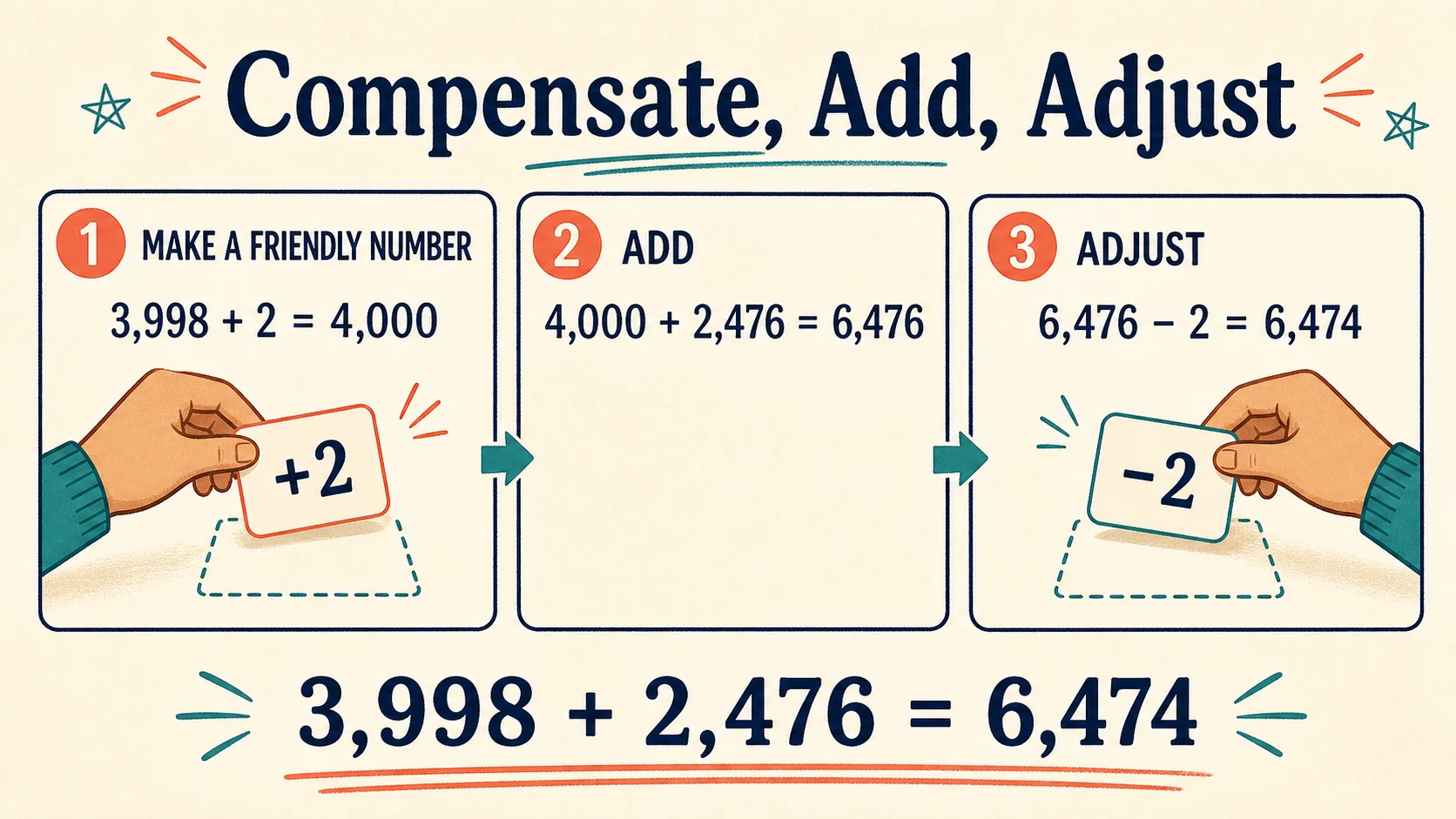
For addition practice, a brief model–attempt–explain–check cycle gives more information than assigning all 25 problems immediately.
Separate fact retrieval from multi-digit reasoning
In Multiplication, determine whether an error comes from an unknown fact, incorrect place-value decomposition, or failure to combine partial products. An array or area model can preserve multi-digit reasoning while allowing a fact chart temporarily. That adaptation keeps the target on place value rather than turning the page into a memory test.
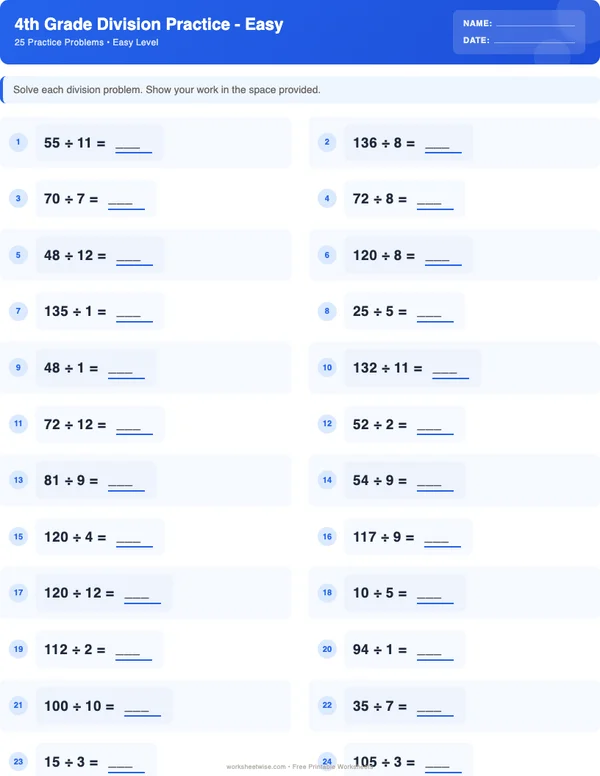
In Division, distinguish equal sharing from finding how many equal groups fit. Connect division to multiplication, then attend to the meaning of remainders. For , the checked result is remainder , because . Ask what the 1 represents. If the context concerns objects that cannot be divided, the response may require rounding up, rounding down, or reporting the leftover explicitly.
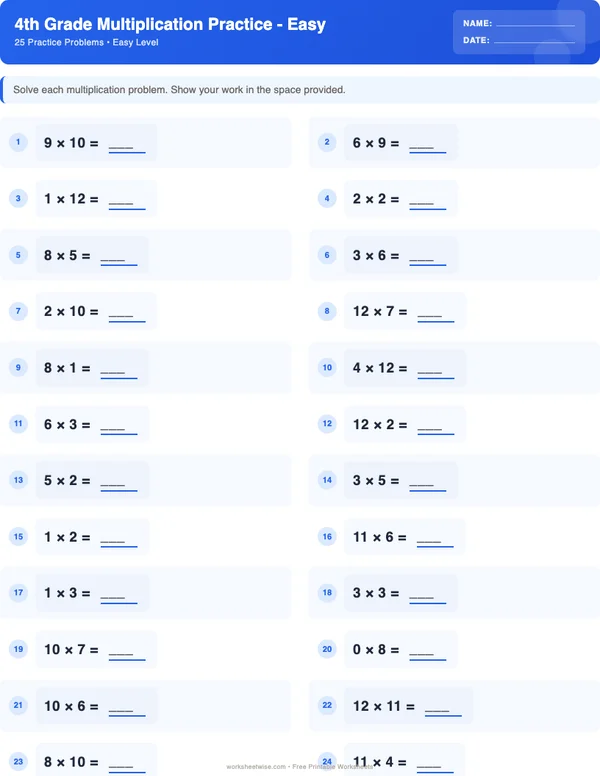
The 4th Grade Multiplication guide and free sheet and 4th Grade Division guide and free sheet let adults choose the operation that the work sample actually exposes.
The Common Core mathematics document describes fourth-grade work with multi-digit multiplication, division with one-digit divisors, fraction equivalence and comparison, and decimal notation for fractions. It can clarify one widely used sequence, but it should not be presented as proof that a specific learner or local curriculum is at the same point. See the Common Core State Standards for Mathematics.
Keep fractions visible and connect decimals to them
Begin a fraction task with a number line, strip, or area model when the symbols conceal the learner’s reasoning. Then move to equivalent fractions, comparison, like-denominator addition and subtraction, and conversions between mixed numbers and improper fractions as appropriate to the work already taught.
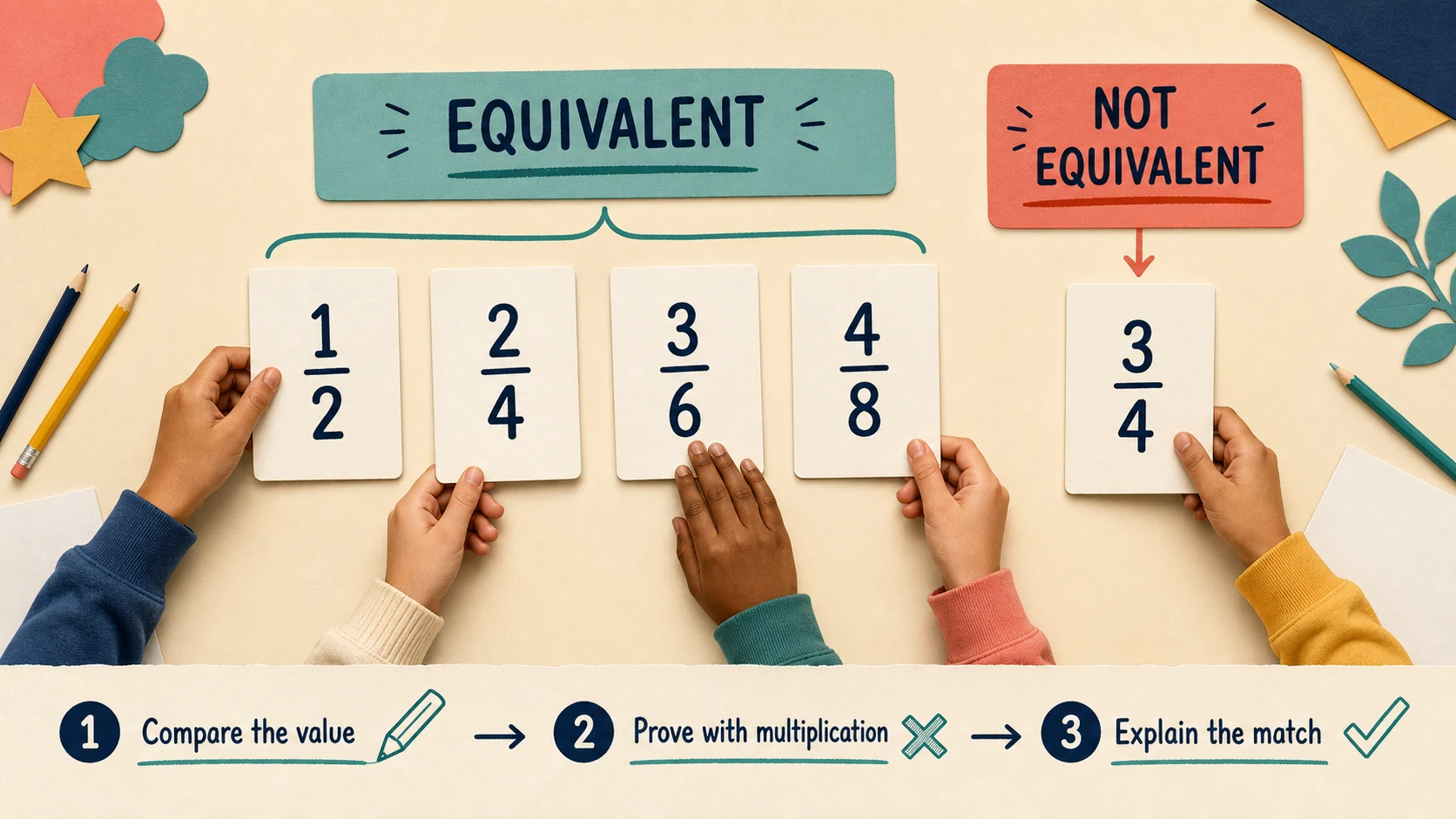
The fourth-grade fraction routine should connect a model, a symbolic statement, and an explanation before increasing the number of items.
For decimals, test the tenths–hundredths connection directly. Compare and by rewriting as . Forty hundredths is greater than thirty-six hundredths, so . This checked example belongs here because fourth-grade decimal work is introduced through fractions with denominators of 10 and 100. If a learner selects 0.36 because “36 is bigger than 4,” use a hundredths grid or place-value chart. Do not merely repeat the instruction to “line up the decimal points.”
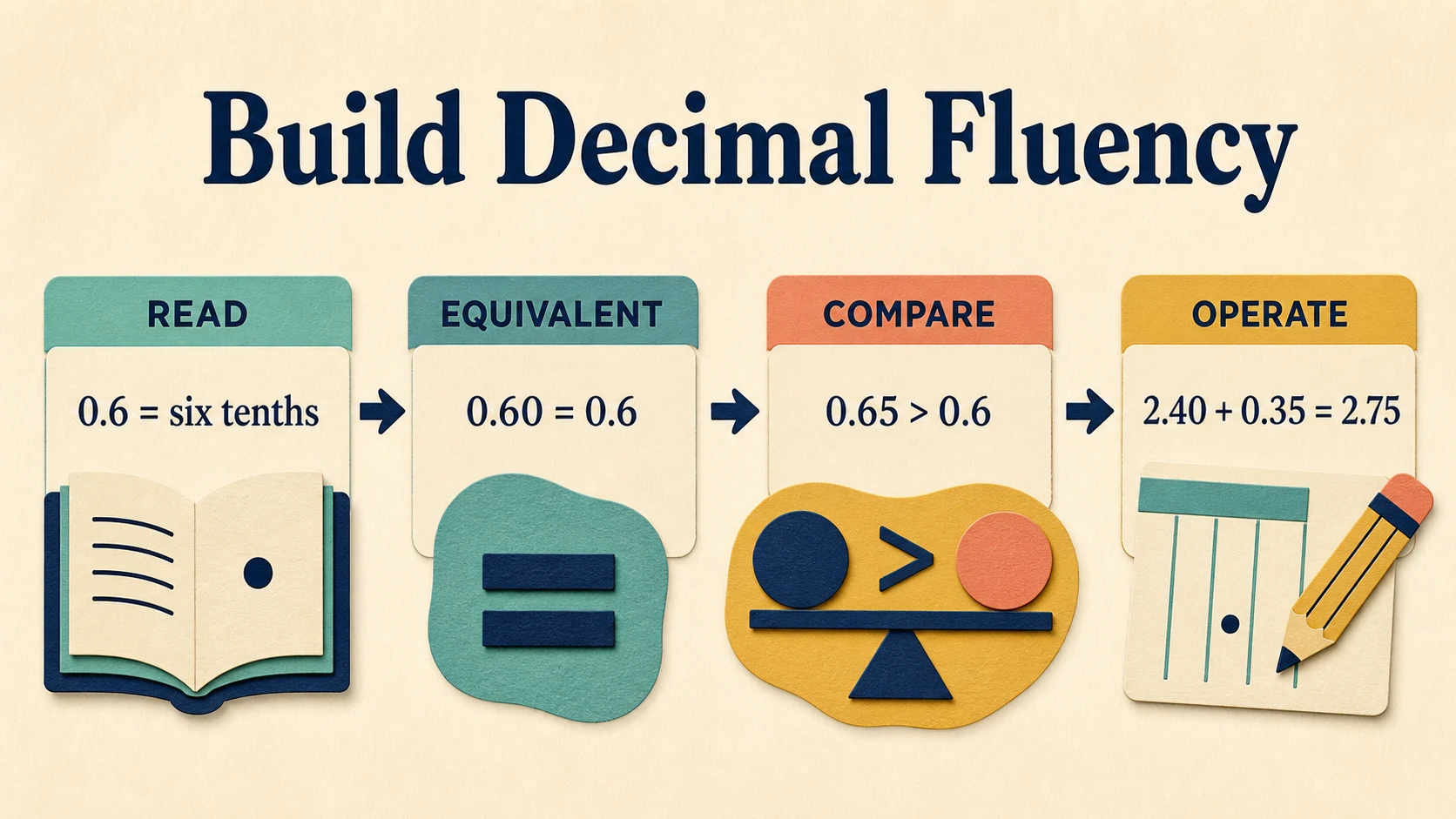
Decimal support should move from hundredths or place-value models to notation while keeping the comparison itself unchanged.
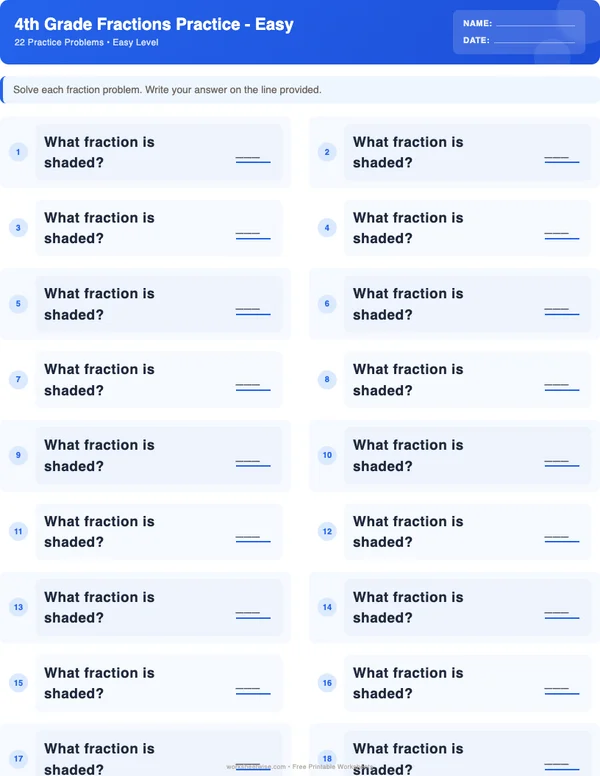
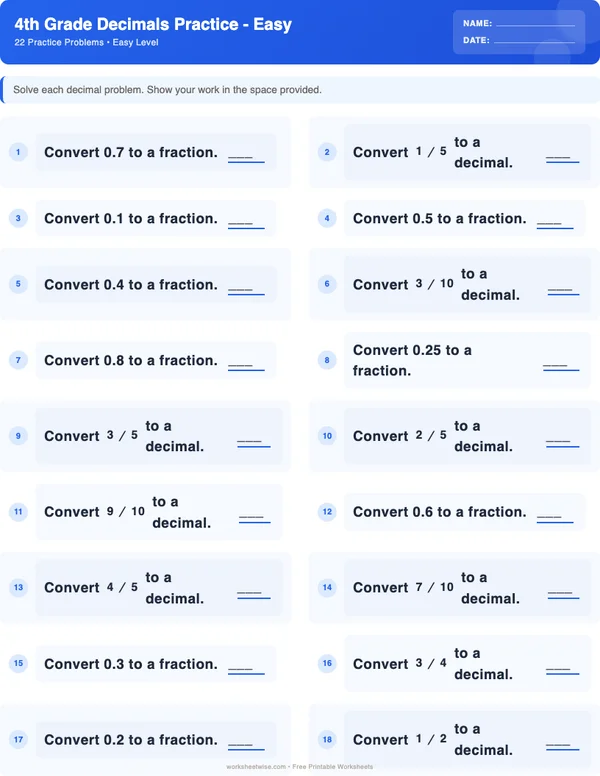
Use the 4th Grade Fractions guide and free sheet or 4th Grade Decimals guide and free sheet according to the representation that breaks down.
Treat geometry and word problems as reasoning domains
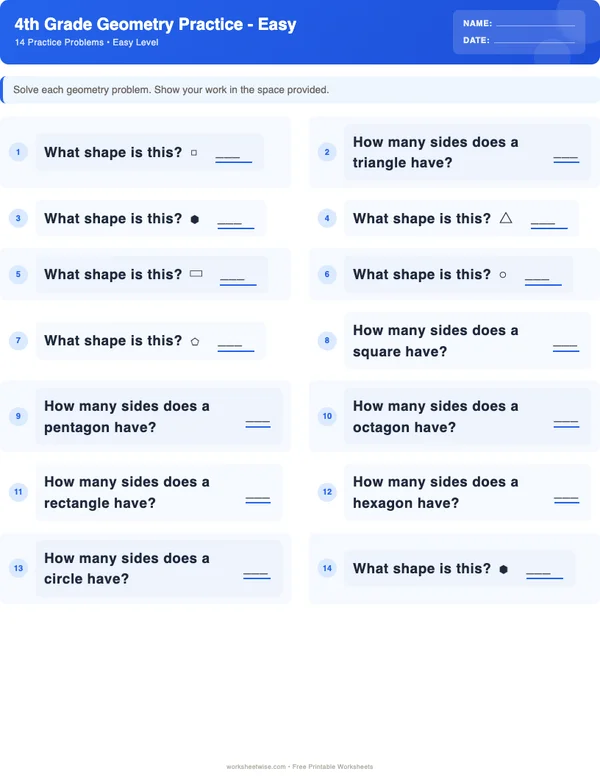
Geometry practice should reveal whether students can use properties rather than recognize a familiar-looking prototype. Rotate figures. Ask which properties justify a classification. For area and perimeter, let students compare rectangles made from square units so the two measures do not collapse into one procedure.
Word Problems should not be selected merely because arithmetic pages are accurate. They add decisions about relevant information, operations, equations, units, and reasonableness. Avoid rigid keyword rules: “left” does not always mean subtract, and “each” does not decide between multiplication and division. A bar model, labeled sketch, or oral retelling preserves the reasoning target while reducing memory load.
The IES practice guide on assisting students struggling with mathematics recommends systematic instruction that includes clear models, verbalization of mathematical thinking, visual representations, and deliberate review. That is sourced guidance for instructional design; the particular worksheet choices and routines in this guide are editorial suggestions based on the supplied catalogue.
Use spelling work to study transferable patterns
The live Spelling subject contains Spelling Words, with a 25-item free sheet. Select it when a writing sample shows a pattern worth examining, not merely because it is the current week’s list.
Move from word parts to spelling in context
Preview whether the page asks for copying, recall, sorting, error identification, or use in a sentence. These response formats make different demands. Copying can support attention to letter order, but it does not demonstrate independent recall. A sort can reveal whether the learner recognizes a pattern. Dictation tests whether the pattern survives without visual access.
Consider careless:
The base word remains intact when the suffix is added. A learner can build the word with two cards, read each part, cover the model, write the whole word, and check it letter by letter. This example belongs in fourth-grade spelling because the catalogue includes suffixes and multisyllabic words, and the task makes the structural strategy observable. It does not establish that careless appears on a particular sheet.
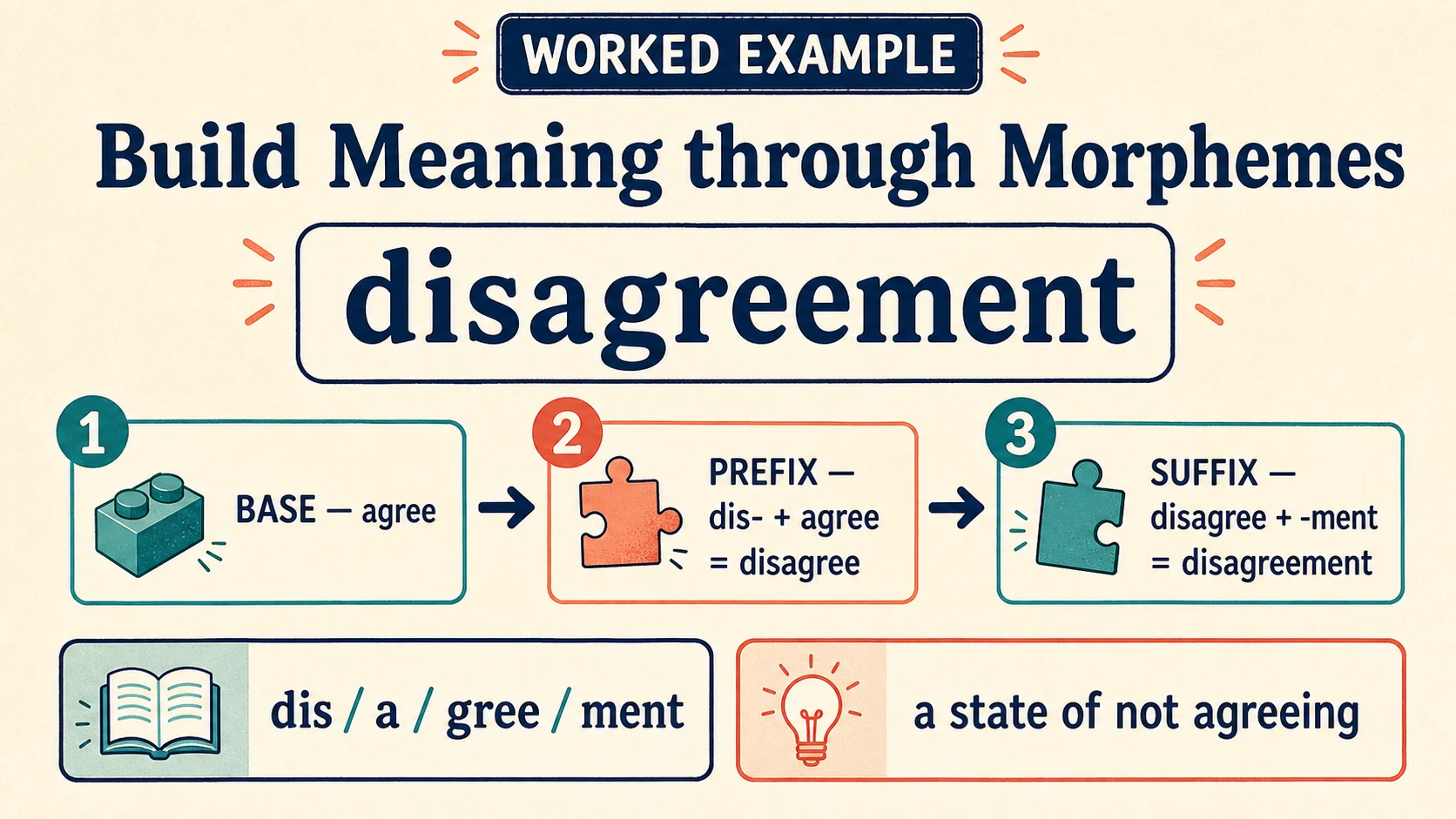
Word-part cards can make a fourth-grade spelling pattern visible before the learner recalls and applies the complete word independently.
After isolated practice, ask for a sentence such as, “The careless camper left the gate open.” Check spelling again in the sentence. Accurate copying followed by a misspelling during composition indicates that transfer, not initial recognition, should be the next target.
Choose among the three live grammar topics by the sentence error
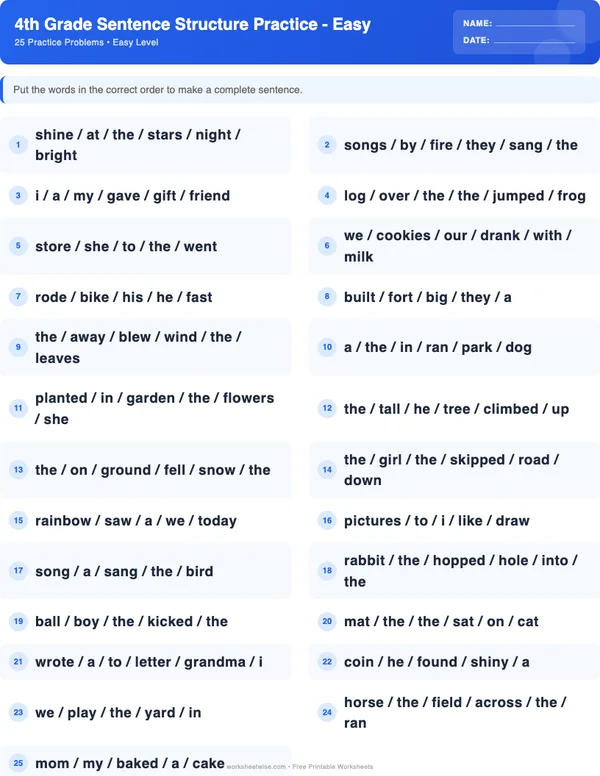
The Grammar catalogue contains Parts of Speech, Punctuation, and Sentence Structure. Each free entry point has 14 problems. Use an authentic sentence from the learner’s work to choose among them.
Parts of speech should serve sentence meaning
Choose Parts of Speech when the learner needs to understand how a word functions in context. In “We light the lantern,” light is a verb. In “The light lantern was easy to carry,” light is an adjective. In “The light filled the tent,” it is a noun. This is more revealing than asking for a memorized definition.
Fourth-grade grammar also includes relative pronouns, progressive verb tenses, prepositional phrases, and commonly confused words. A worksheet on broad parts of speech may support some prerequisites, but the verified catalogue facts do not establish a dedicated live page for each of those narrower skills.
Punctuation and sentence structure require different responses
Choose Punctuation when the sentence is complete but its marks are missing or incorrectly placed. For dialogue, give the learner an already-written line to punctuate before asking for original dialogue. A manageable example is:
Maya said, “I found the map.”
Check the capital letter, comma before the quotation, quotation marks, and final punctuation. Then transfer the pattern to two speakers, placing a new speaker on a new line.
Choose Sentence Structure when the problem is a fragment, run-on, weak combination, or repetitive pattern. “The storm ended. We left the shelter.” can become “When the storm ended, we left the shelter.” The revision creates a relationship between the ideas and uses an introductory dependent clause. If punctuation is correct but every sentence has the same structure, combining and varying beginnings is the more precise target.
The IES guide on teaching elementary students to be effective writers supports explicit instruction in the writing process, teaching strategies for writing, and developing fluency with foundational writing skills. It does not evaluate WorksheetWise. Here, using grammar pages to revise a learner’s own sentence is a suggested way to connect isolated practice with composition.
Reading and extended writing need more than this live catalogue provides
Fourth-grade readers are expected to do more than retrieve details. They analyze structures such as chronology, cause and effect, and comparison; make inferences supported by the text; summarize; interpret figurative language; and integrate information across sources. The Common Core English Language Arts standards offer one authoritative account of these grade-level demands, although local sequences and texts vary.
The supplied live catalogue lists Math, Spelling, and Grammar resources, not dedicated fourth-grade reading-comprehension or essay-writing topics. Do not represent a grammar or spelling page as complete reading or writing instruction.
Adults can still use open-ended conversation around actual reading:
- “What changed from the beginning to the end?”
- “Which sentence supports that inference?”
- “Why did the author organize this section as cause and effect?”
- “How are the two accounts alike, and where do they differ?”
- “What does the metaphor suggest beyond its literal words?”
For writing, inspect whether an opinion has reasons arranged purposefully, an informative report groups facts into categories, or a narrative uses a clear sequence, dialogue, and descriptive detail. Grammar practice can address a sentence-level obstacle, but the learner must return to the full piece and revise it.
The IES foundational reading skills guide concerns foundational instruction that supports reading for understanding. Its recommendations should not be stretched into claims about a particular fourth-grade comprehension plateau or used to diagnose an individual reader. If comprehension concerns are persistent, gather examples across different texts and settings and discuss them with the learner’s teacher or an appropriately qualified professional.
Run a short practice cycle that produces usable evidence
A worksheet session should leave an adult knowing what to do next. Use this repeatable routine.
Preview, attempt, explain, and decide
Preview: State one target and select three to six representative items. Prepare one model only if the work sample shows it is needed.
Attempt: Let the learner begin without correction. Note starts, erasures, counting methods, diagrams, skipped items, and requests for help.
Explain: Ask for an explanation of one correct answer and one uncertain answer. Useful prompts include “How do you know?”, “What does this digit represent?”, and “Can you show the relationship another way?”
Check: Use an answer key where available, but also verify method and units. The Worksheets With Answer Keys collection can support prompt feedback; an answer key confirms the result, not the learner’s reasoning.
Decide: Choose only one next move:
- Repeat with the same representation when the idea is emerging but unstable.
- Reduce the numbers or language while preserving the target relationship.
- Add a model when symbols are hiding the reasoning.
- Remove a model after two or more independent explanations.
- Address a prerequisite when the current task cannot be entered meaningfully.
- Increase variation when answers are accurate but tied to one familiar format.
Adapt the access demand without replacing the target
A useful adaptation changes what is incidental while keeping the intended decision intact.
For a multiplication-place-value target, allow a fact chart but still require decomposition and partial products. For a word-problem target, read the text aloud while the learner chooses the operation and represents the quantities. For decimal comparison, provide a place-value chart but do not tell which value is larger. For punctuation, supply handwriting or keyboard support while preserving decisions about the marks. For spelling recall, oral rehearsal is helpful, but leaving the target word visible changes recall into copying.
Avoid adaptations that answer the central question. Color-coding the two numbers to be added may improve access; circling the correct operation in advance removes operation selection from a word problem. Supplying fraction strips preserves comparison; drawing the completed fraction model does not show whether the learner can represent it.
Limitations matter. A single worksheet cannot establish mastery, explain inconsistent performance, or distinguish among attention, language, instruction, memory, vision, stress, and other possible influences. Do not diagnose from a page. Compare several work samples, note the conditions, and coordinate with the classroom teacher when difficulty persists.
Let each work sample choose the next page
After practice, annotate three facts: what the learner did independently, which representation or prompt changed the work, and which error repeated. Then select the next resource from that evidence.
If a learner solved with correct partial products but combined them incorrectly, choose a short multiplication set and emphasize adding partial products. If was judged greater than , move to tenths and hundredths models before mixed decimal comparisons. If division calculations were accurate but the van problem ended at “4 R1,” choose contextual remainder problems. If punctuation was accurate in exercises but missing from original dialogue, revise two lines from the learner’s narrative instead of assigning another identification page.
Start now by opening the full worksheet library, choosing one of the 13 live fourth-grade topics that matches a recent error, and previewing just the first three representative items. Record the learner’s strategy, representation, and level of independence before deciding whether to continue.
Put it into practice
Use the guide with a real printable
Move from explanation to a short, observable practice task. Check the first item together, then adjust the next session from the learner's actual work.
Open the first free worksheet