Curated collectionAnswer keys includedPrint-ready PDFs
Worksheets for 12-Year-Olds: Printable Practice Guide
Sixth-grade readiness and consolidation chosen by demonstrated skill need rather than age-based placement.
Start with a real resource
Browse this worksheet collection
9 relevant free entry points are available. Each one includes a printable learner PDF and separate answer key.
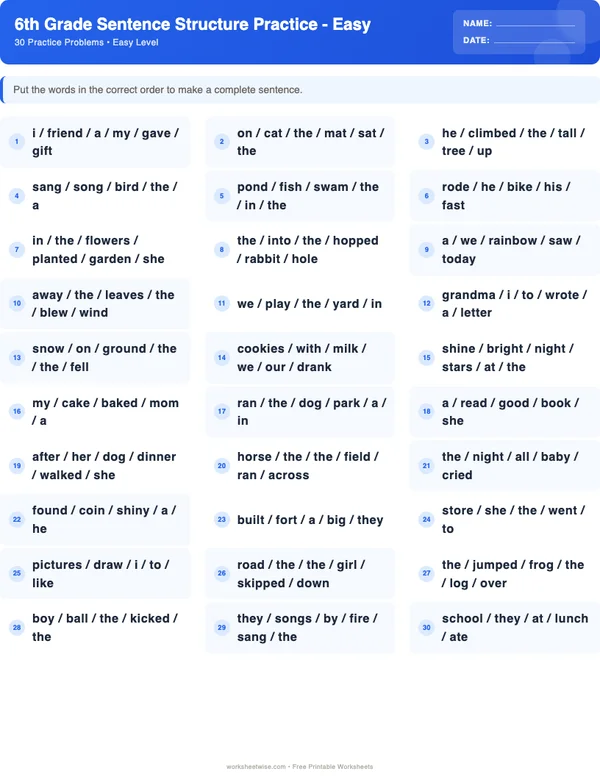
A useful practice loop
Print less. Observe more.
- Choose one skill and model the first item aloud.
- Use a short set and notice the learner’s strategy.
- Change the next task from the work you can see.
Need more than the free sheet?
Plus includes all 162 matching catalogue variations where available, plus saved deterministic generators and the worksheet designer.
See Plus membershipComplete guide
How to teach and practise worksheets for 12 year olds
3,156 words Updated 6 instructional visuals
Choose by the work in front of you, not by the learner’s age
Worksheets for 12-year-olds should usually offer sixth-grade consolidation or readiness practice, but age is a discovery aid rather than a placement decision. Start with a likely topic, watch the learner complete a small sample, and adjust from that evidence. A 12-year-old may calculate accurately but misread word problems, understand decimal place value but make procedural errors, or discuss sophisticated ideas while still needing support with sentence boundaries.
The WorksheetWise catalogue currently provides 162 sixth-grade variants across math and grammar, covering nine topics. Nine free resources offer an entry point. Those numbers describe available choices, not a recommended workload. One well-chosen section, followed by explanation and correction, is more useful than completing several pages mechanically.
Use observed work to make the initial decision:
- Choose multiplication or division when inefficient or inaccurate whole-number computation blocks later work.
- Choose fractions or decimals when the learner confuses magnitude, notation, equivalence, or operations.
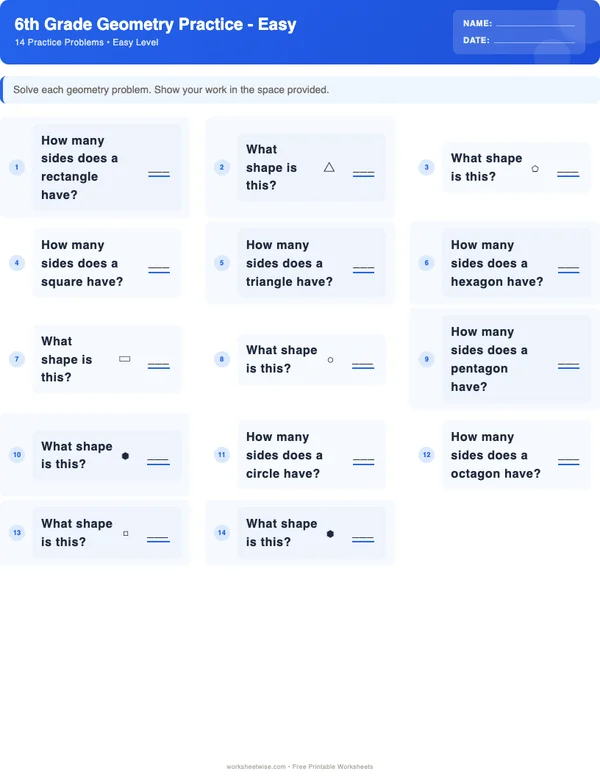
- Choose geometry when the difficulty involves spatial properties, measurement, area, perimeter, angles, or coordinates.
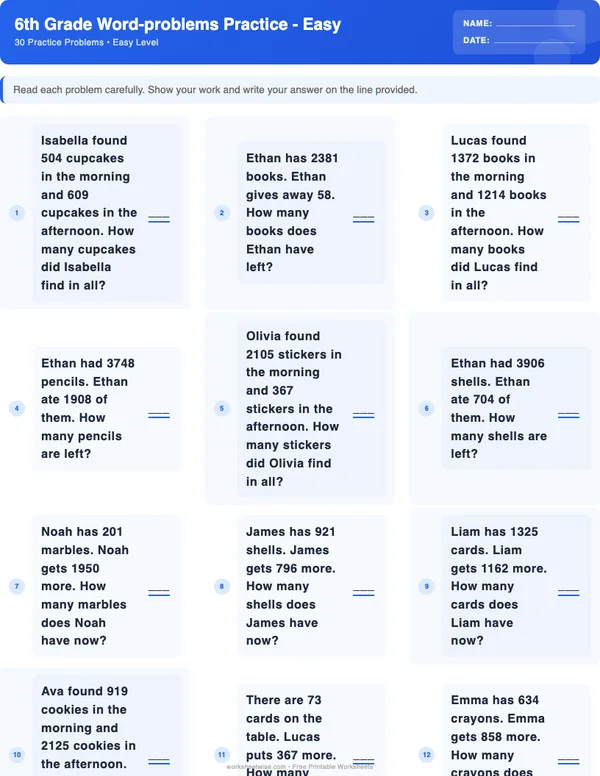
- Choose word problems when the learner can perform operations but cannot represent a described situation.
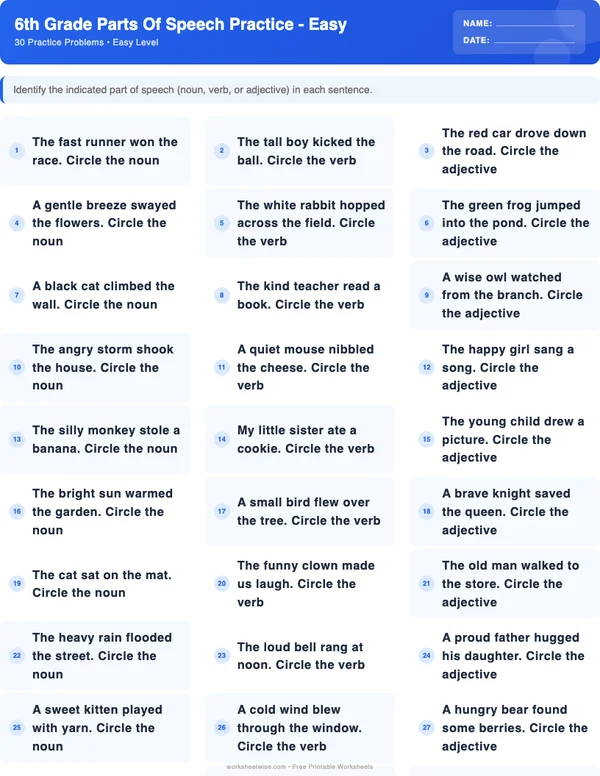
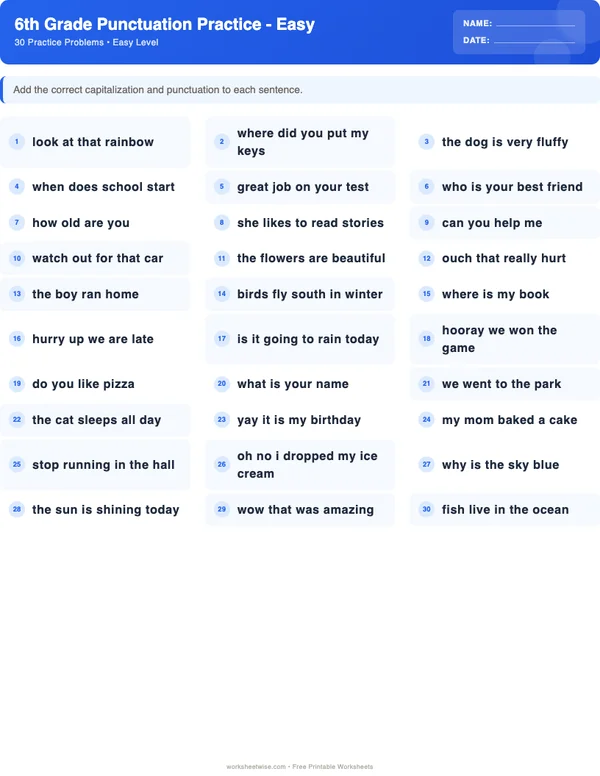
- Choose parts of speech, punctuation, or sentence structure when a specific language pattern is affecting reading or writing.
- Move to an earlier practice level when the task assumes knowledge the learner cannot yet explain or model.
Grade labels describe an intended practice level; local curriculum sequences differ. A sixth-grade label does not establish what every 12-year-old has been taught, nor does one worksheet establish mastery, a learning difficulty, or a diagnosis.
Make a short observation before selecting a full sheet
Begin with three to five items, not an entire page. Ask the learner to work normally while you watch for the point at which reasoning becomes uncertain. Do not interrupt every hesitation. A pause can mean the learner is thinking, checking, recalling a fact, or trying to understand the directions.
Observe understanding separately from speed
Record what the learner actually does:
- Does the learner understand the directions after one reading?
- Can they explain what the symbols, quantities, or sentence parts represent?
- Do they choose a sensible strategy without prompting?
- Are errors concentrated around one feature?
- Can they detect an unreasonable answer?
- Does performance change when the problem is read aloud?
- Can they solve a similar example using objects, a drawing, or oral language?
Speed alone is weak placement evidence. Slow, accurate reasoning may need practice for efficiency. Fast work with repeated conceptual errors needs a different task or a return to a model. Neatness, confidence, and willingness also should not be confused with understanding.
A practical starting check for division is 156 ÷ 12. Ask the learner first to estimate, then solve, and finally verify with multiplication. An answer of 13 supported by 13 × 12 = 156 shows coordination among quotient, divisor, and dividend. An unsupported 13 may be a remembered procedure. An answer of 103 after a long-division attempt points toward place-value or quotient-position confusion. This example belongs in a sixth-grade readiness guide because it tests multi-digit division while remaining easy to verify through the inverse operation.
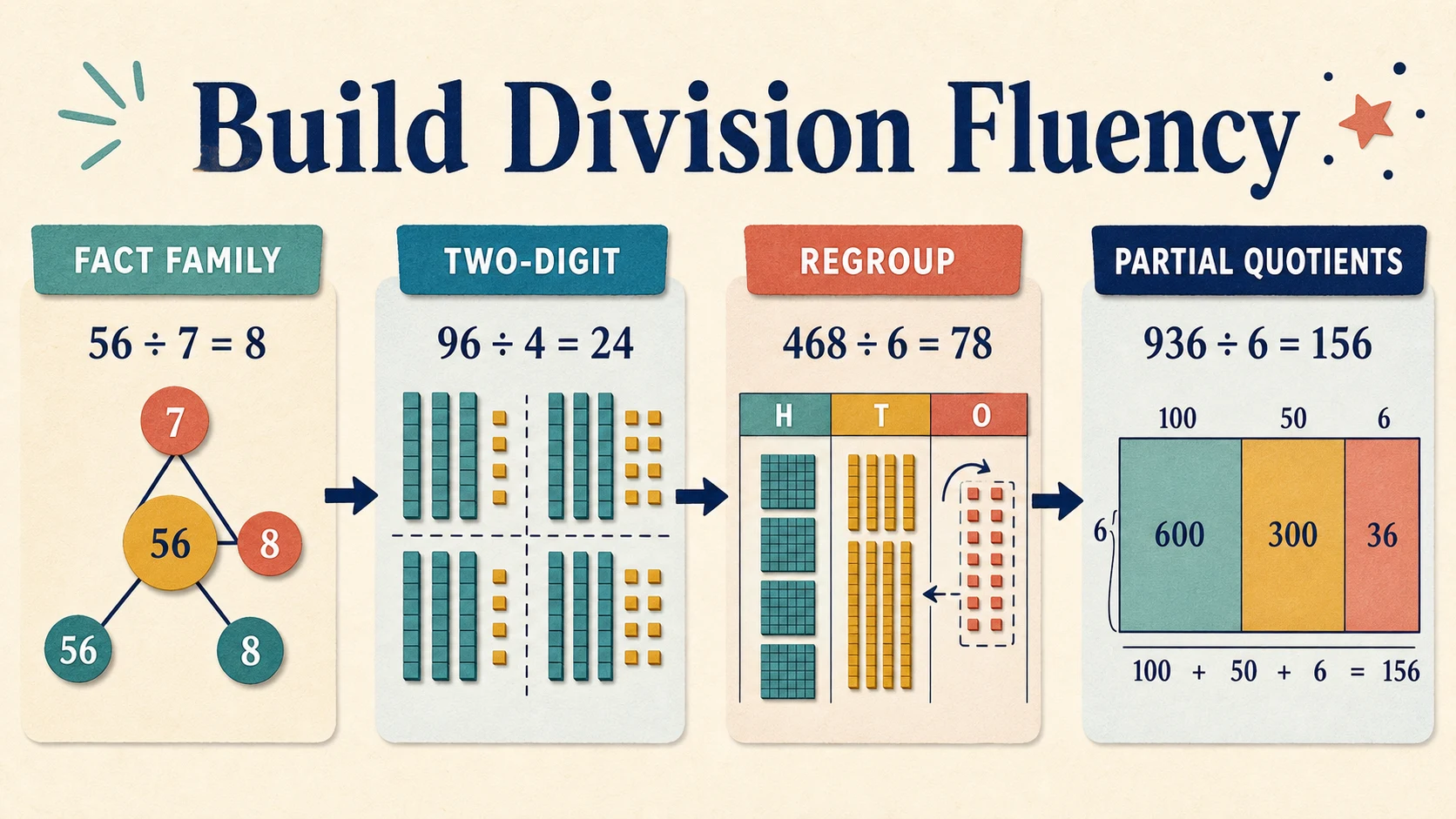
Use the progression to locate the first step the learner can explain, not merely the last step they can finish.
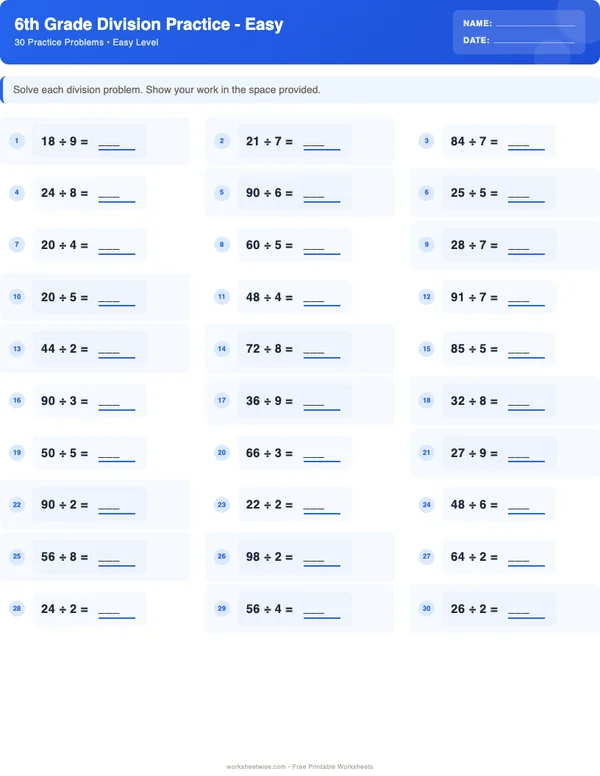
If division needs attention, the 6th Grade Division guide and free sheet provides a focused starting point. Its free sheet contains 30 problems, but the learner need not complete all 30 in one sitting.
Define difficulty through task features
The catalogue calls each representative free sheet “easy.” Treat that as a resource label, not a label for a learner. Translate it into observable task features before deciding whether it fits:
- How many steps are required?
- Are models, examples, or answer structures supplied?
- Are the numbers familiar or computationally demanding?
- Must the learner select an operation, or is it stated?
- Is the same pattern repeated, or must the strategy change?
- Does the language add a reading burden?
- Must the learner explain, revise, or generate an answer?
A page can be computationally accessible yet conceptually demanding. Identifying a comma in an already-written sentence, for example, asks less than composing and punctuating dialogue. A one-step decimal calculation asks less than deciding which decimal operation a situation requires.
Select one target and preserve it
A useful worksheet has a narrow purpose you can name before printing it: “compare decimal magnitude,” “interpret division remainders,” or “repair sentence fragments.” If the purpose is simply “do sixth-grade work,” selection is still too broad.
Match the task to demonstrated need
Use this decision sequence:
- Name the error or hesitation visible in recent work.
- Identify the knowledge required immediately before the missed step.
- Choose a page that practices that knowledge without adding several unrelated demands.
- Preview three items for vocabulary, notation, and assumed procedures.
- Decide in advance what would count as evidence to simplify, continue, or stop.
Suppose a learner says 0.36 is greater than 0.4 because 36 is greater than 4. The target is decimal place value and magnitude, not multiplication or generic accuracy. Rewrite 0.4 as 0.40, shade 36 and 40 squares on hundredths grids, and compare them. Then return to 0.36 < 0.40. This fully checked comparison belongs here because sixth-grade decimal work depends on understanding tenths and hundredths, and the error reveals a specific place-value misconception rather than carelessness.
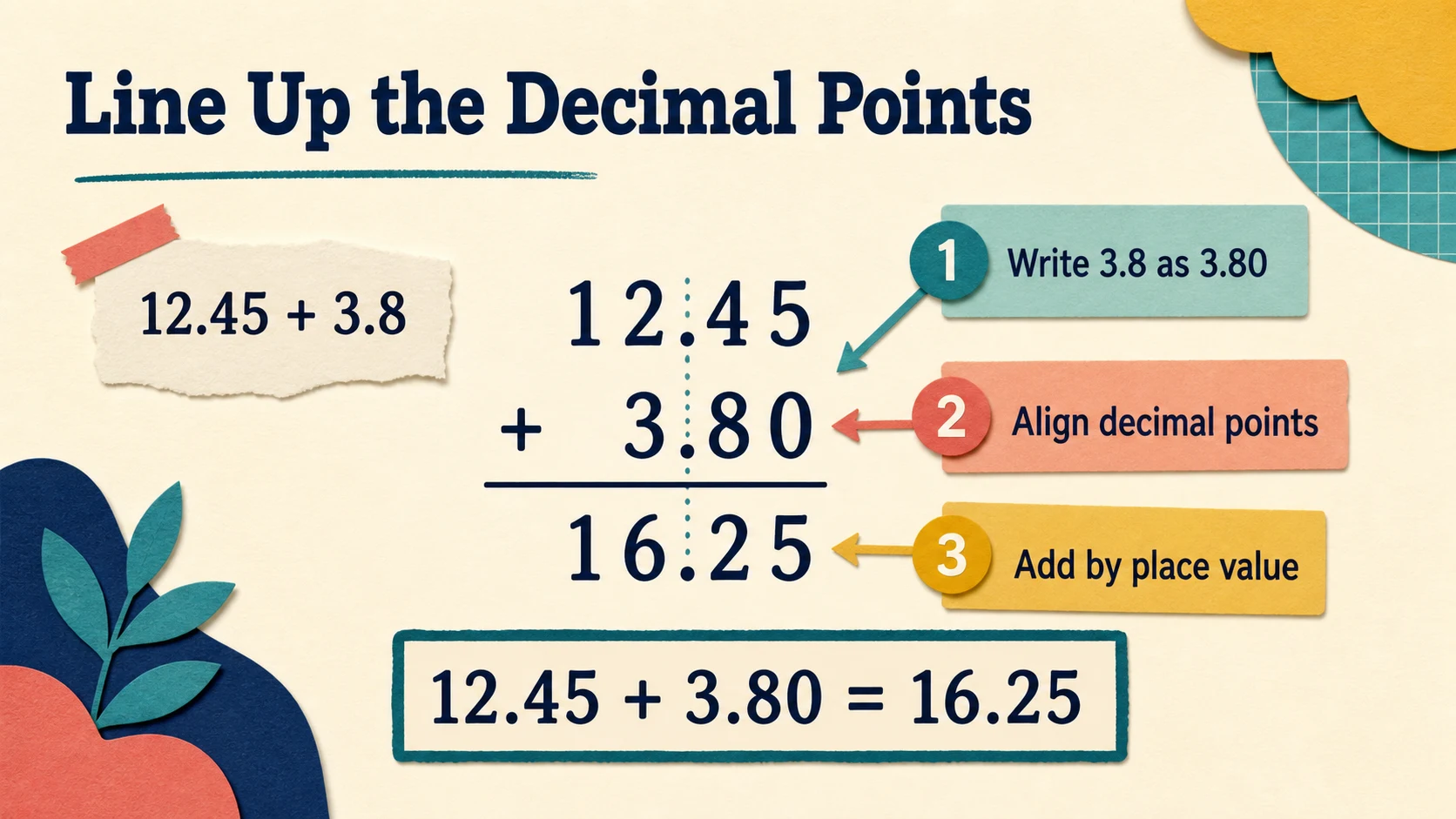
Move from a visible quantity to decimal notation, then ask the learner to justify the comparison in words.
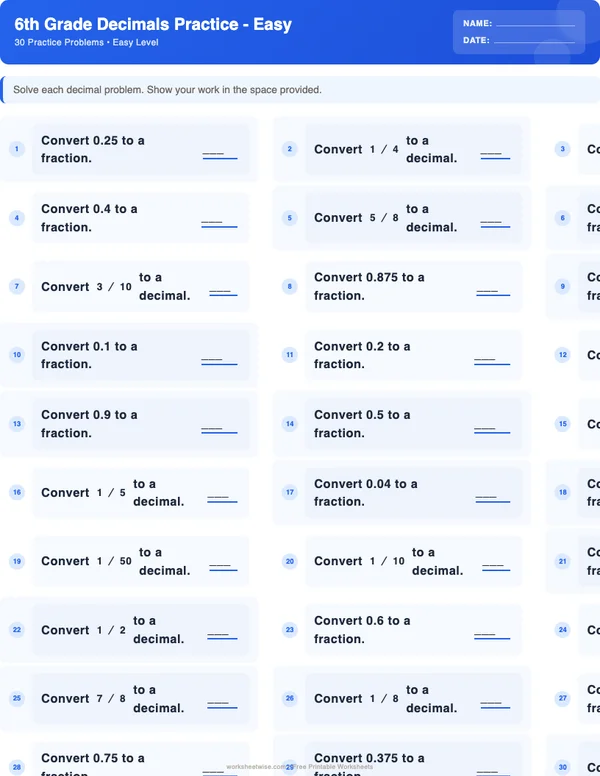
Continue with the 6th Grade Decimals guide and free sheet if the learner can compare modeled decimals but needs symbolic practice. Simplify to tenths, money, or hundredths grids if the learner cannot yet connect a decimal to a quantity.
The Common Core mathematics standards can help adults understand one widely used progression for mathematical content, but they do not determine an individual learner’s placement or replace local curriculum expectations. Use them as contextual guidance, not proof that a particular page suits every 12-year-old.
Adapt access without replacing the target skill
An adaptation preserves the intended thinking while reducing an irrelevant barrier. If the target is choosing an operation in a word problem, an adult may read the problem aloud. If the target is reading the problem independently, reading it aloud would remove part of the skill being observed.
Useful adaptations include:
- Cover all but one row to reduce visual load.
- Allow graph paper to support digit alignment.
- Read directions aloud while leaving item text for independent reading.
- Provide fraction strips, base-ten blocks, counters, or a number line.
- Let the learner dictate an explanation before writing it.
- Reduce the number of repeated items after the pattern is clear.
- Replace copying with circling, sorting, or moving word cards when handwriting is not the target.
- Provide a worked example, then use a closely related item to check transfer.
Avoid adaptations that silently supply the answer: naming the required operation, marking every place where punctuation belongs, or telling the learner which words are nouns before classification begins.
Keep practice brief, active, and accountable
A worksheet session should include thinking before the pencil starts and explanation after it stops. For many 12-year-olds, 10–20 focused minutes on one target is enough for a useful observation. That duration is a practical suggestion, not a research claim or a universal rule. Shorten it when attention or frustration is deteriorating; extend it when the learner is productively engaged.
Use a repeatable six-part routine
- Set the purpose. Say, “Today we are checking how you decide what a remainder means.”
- Preview one item. Identify unfamiliar terms without solving the problem.
- Model only if needed. Think aloud through one example while making the representation visible.
- Release a small set. Ask the learner to complete three to five related items.
- Discuss one correct and one incorrect response. Focus on reasoning, not the score.
- Record the next decision. Write “continue,” “simplify,” “change representation,” or “stop and reteach,” with a brief reason.
The Institute of Education Sciences guide on assisting students struggling with mathematics recommends systematic instruction, clear mathematical language, representations, and deliberate word-problem instruction. Those principles support explicit modeling and cumulative review; the guide did not evaluate WorksheetWise or prescribe a particular WorksheetWise page.
For word problems, use a stable routine: read, retell, represent, solve, and check. Avoid choosing an operation from a keyword alone. The word “left,” for example, does not always require subtraction; the situation determines the relationship.
Consider this checked problem: “Twenty-five students are traveling in vans that hold six students each. What is the fewest number of vans needed?” The calculation is 25 ÷ 6 = 4 remainder 1, but four vans hold only 24 students. The answer must therefore be five vans. This example belongs in sixth-grade consolidation because the computation is accessible while the context requires interpreting, rather than merely reporting, a remainder.
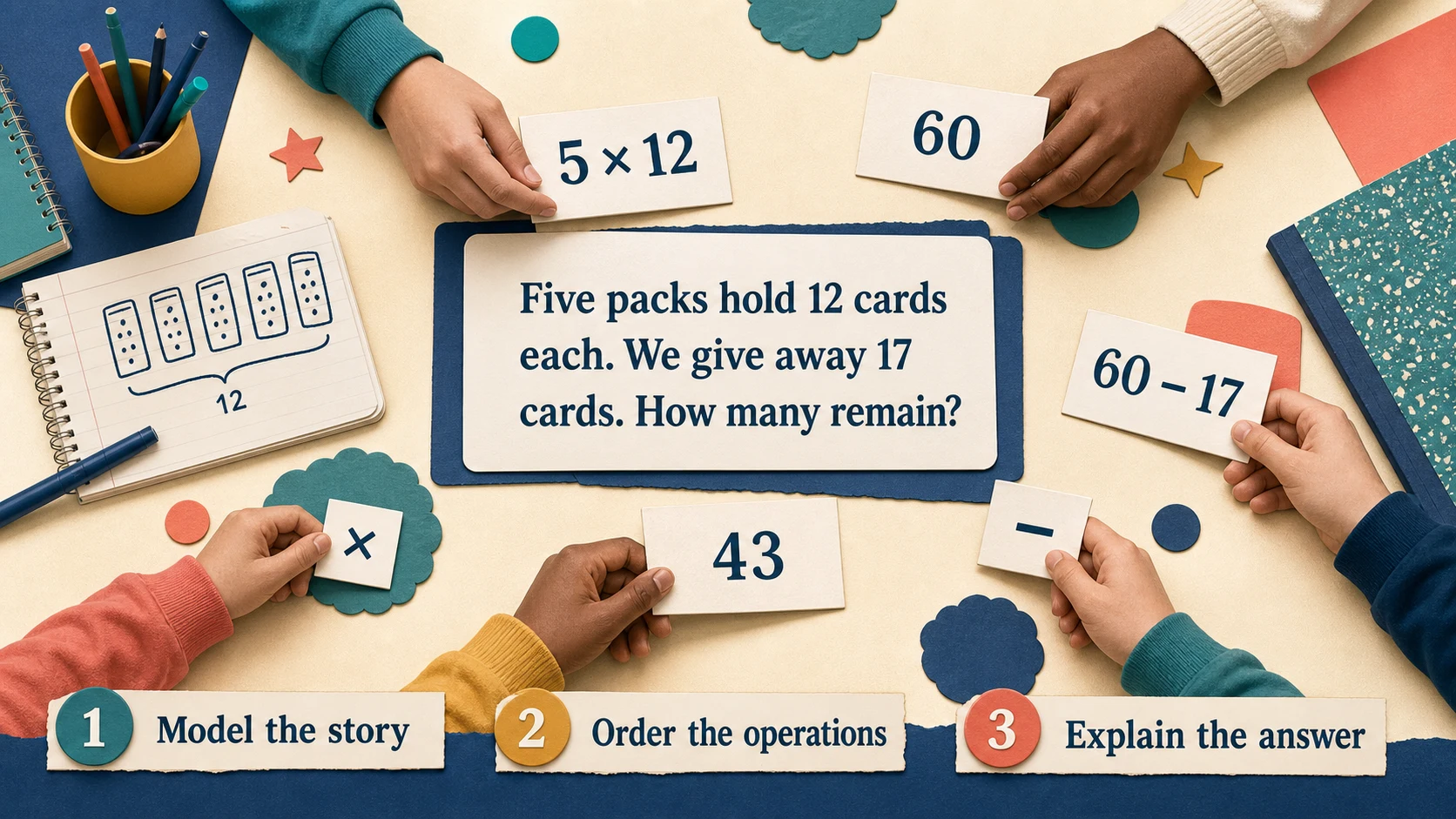
Keep the routine constant so the learner’s representation and decision-making become easier to observe.
The 6th Grade Word Problems guide and free sheet offers 30 problems. Select a small, coherent group and require a diagram or sentence explaining at least one answer.
Pair paper with talk, models, and movement
Paper records a response; it does not always reveal how the learner formed it. A short conversation or physical model makes hidden reasoning more visible.
Connect math notation to quantities
For fractions, let the learner build or draw before calculating. Ask which is greater, 3/4 or 5/8. On a common denominator, 3/4 = 6/8, so 6/8 > 5/8. With fraction strips, the same relationship is visible. This example belongs here because comparing fractions is foundational to later fraction operations, and it checks magnitude rather than reliance on a memorized cross-multiplication routine.
Possible material pairings include:
- Counters for equal sharing and grouping in division.
- An array or area model for multiplication.
- Fraction strips or folded paper for equivalence.
- A hundredths grid or base-ten pieces for decimals.
- Square tiles for distinguishing area from perimeter.
- Graph paper for coordinates and aligned computation.
After modeling, return to the original notation. Materials should clarify the concept, not become an unrelated craft activity. Ask, “Where is 6/8 in your model?” or “How does the picture show that four vans are insufficient?”
Turn grammar into spoken and movable language
Grammar work becomes more informative when the learner hears, rearranges, and revises sentences. Write clauses or phrases on separate cards. Let the learner move them, read the results aloud, and then punctuate the final version on paper.
Take the fragment “Because the storm ended.” It has a subject, the storm, and a verb, ended, but the opening word creates an unfinished dependent clause. “Because the storm ended, the players returned to the field” completes the thought. This checked example belongs here because sixth-grade sentence work commonly consolidates fragments, clause relationships, and varied sentence structures.
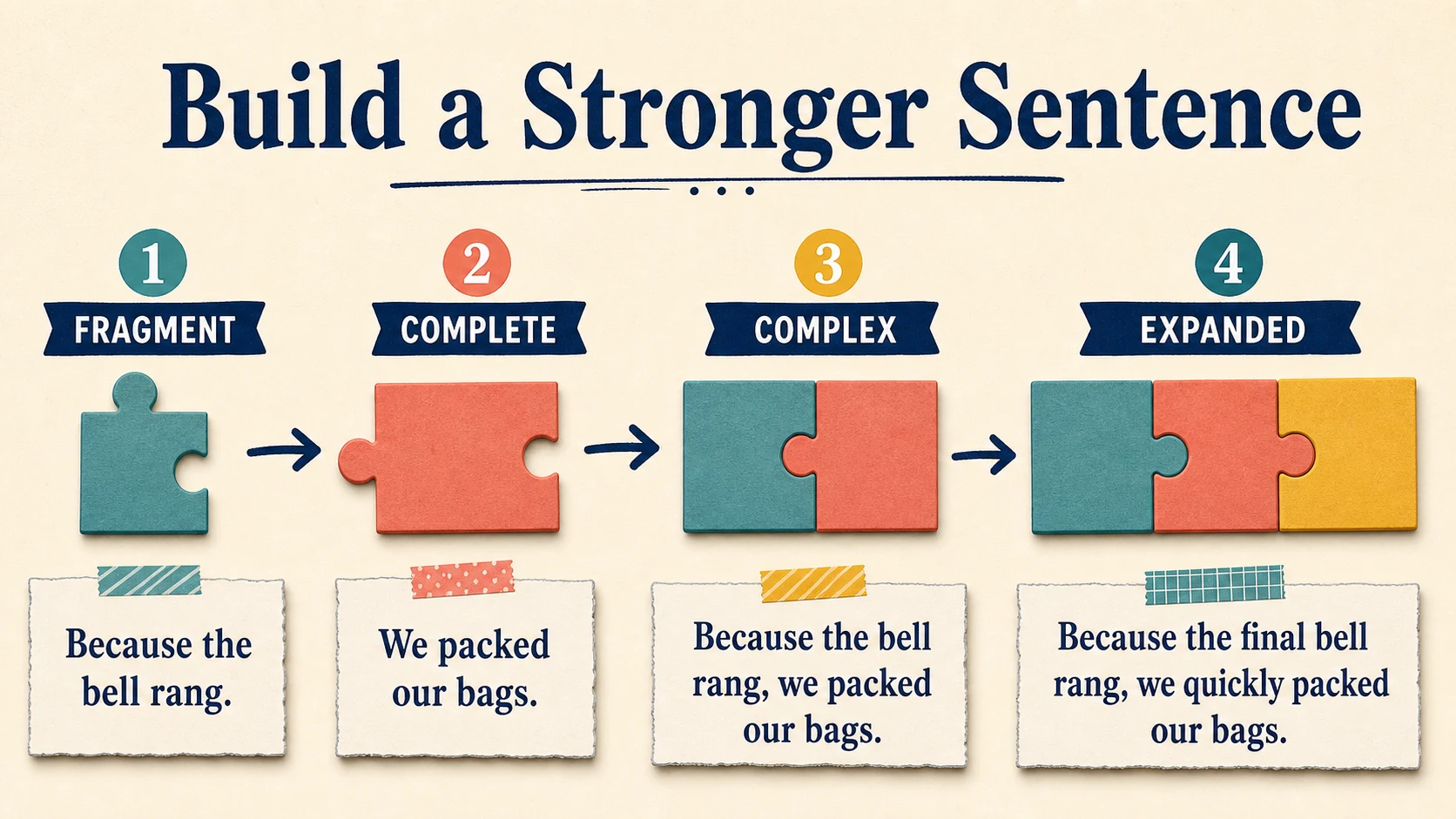
Begin with oral completion and clause cards before asking for independent sentence revision.
The Institute of Education Sciences guide on teaching elementary students to be effective writers recommends explicit instruction in the writing process, gradual release, collaboration, and attention to sentence construction. This supports modeling a revision and then asking the learner to apply the same principle independently. It is sourced instructional guidance, not evidence of an outcome from these worksheets.
Parts of speech should also remain connected to context. In “We light the lantern,” light is a verb. In “The light faded,” it is a noun. In “Carry the light bag,” it is an adjective. The word’s job changes with the sentence. This example belongs in upper-elementary grammar because it prevents classification by memorized word lists and supports more precise sentence analysis.
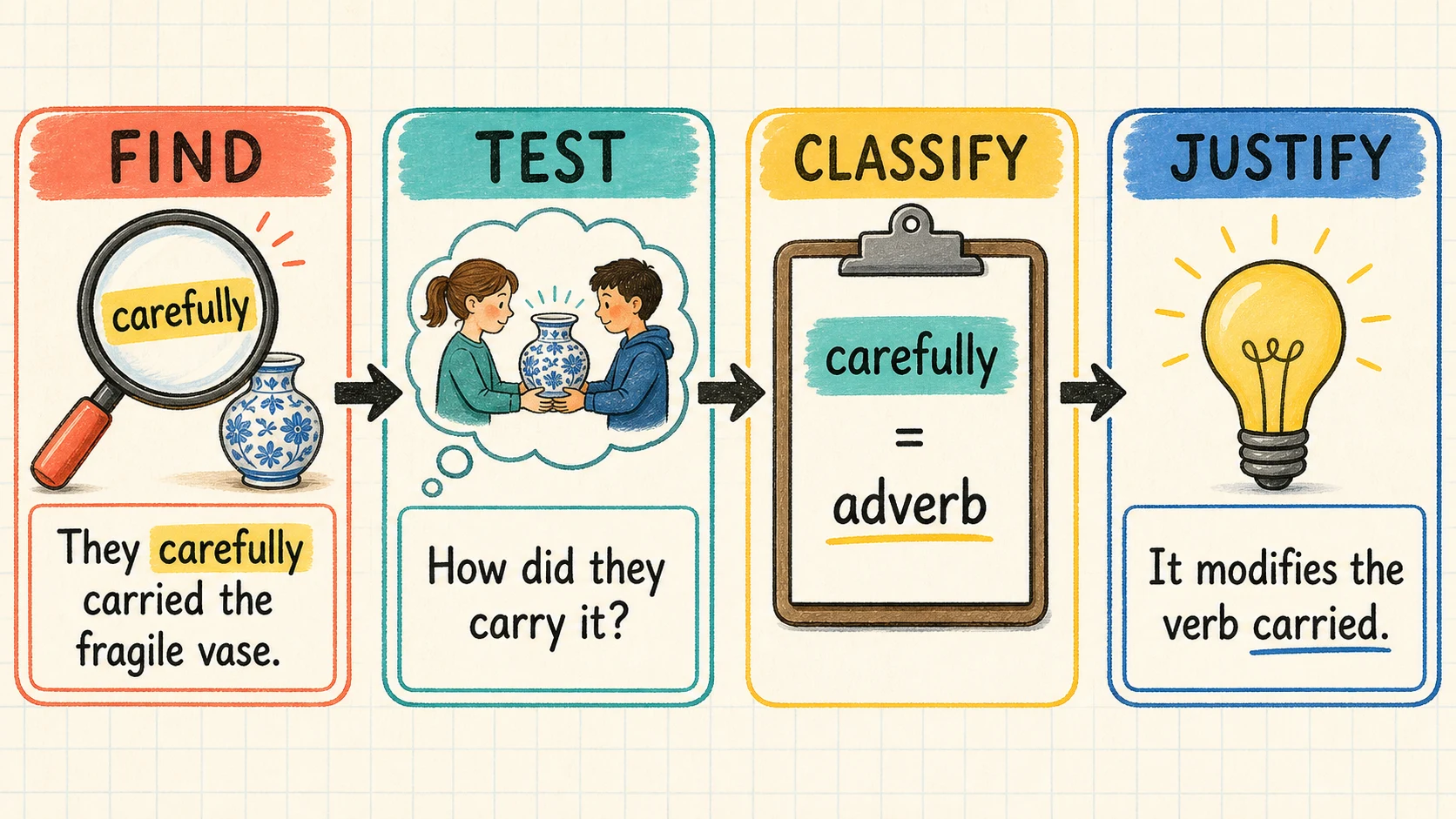
Ask what each word does in its sentence before asking for a grammatical label.
Interpret patterns of errors before assigning more practice
A wrong answer is a starting point for inquiry. Ask the learner to explain or reproduce the method before deciding what it means. One error may be accidental; a repeated pattern across comparable items is more informative.
Sort errors by likely instructional response
Concept error: The learner treats 1/8 as larger than 1/4 because 8 is larger than 4. Use equal-sized fraction models and compare magnitude before returning to symbols.
Procedure error: The learner understands decimal magnitude but misaligns place values during addition. Use graph paper or a place-value chart, model one aligned example, and then check a new item.
Language error: The learner can calculate but cannot retell what a word problem asks. Reduce sentence complexity temporarily, define essential vocabulary, and require an oral retell before computation.
Attention or copying error: The learner explains the method accurately but copies 0.63 as 0.36. Reduce visual clutter, allow pointing or highlighting, and check whether the error persists.
Overgeneralization: After learning commas in a list, the learner inserts commas whenever a sentence feels long. Contrast examples and name the particular grammatical structure.
For punctuation, compare these two sentences:
- “After dinner, we played games.”
- “We played games after dinner.”
The introductory phrase in the first sentence is followed by a comma; the same phrase at the end does not require that introductory comma. This example belongs here because it tests a specific punctuation decision through sentence structure, rather than asking the learner to insert commas by pause or sentence length.
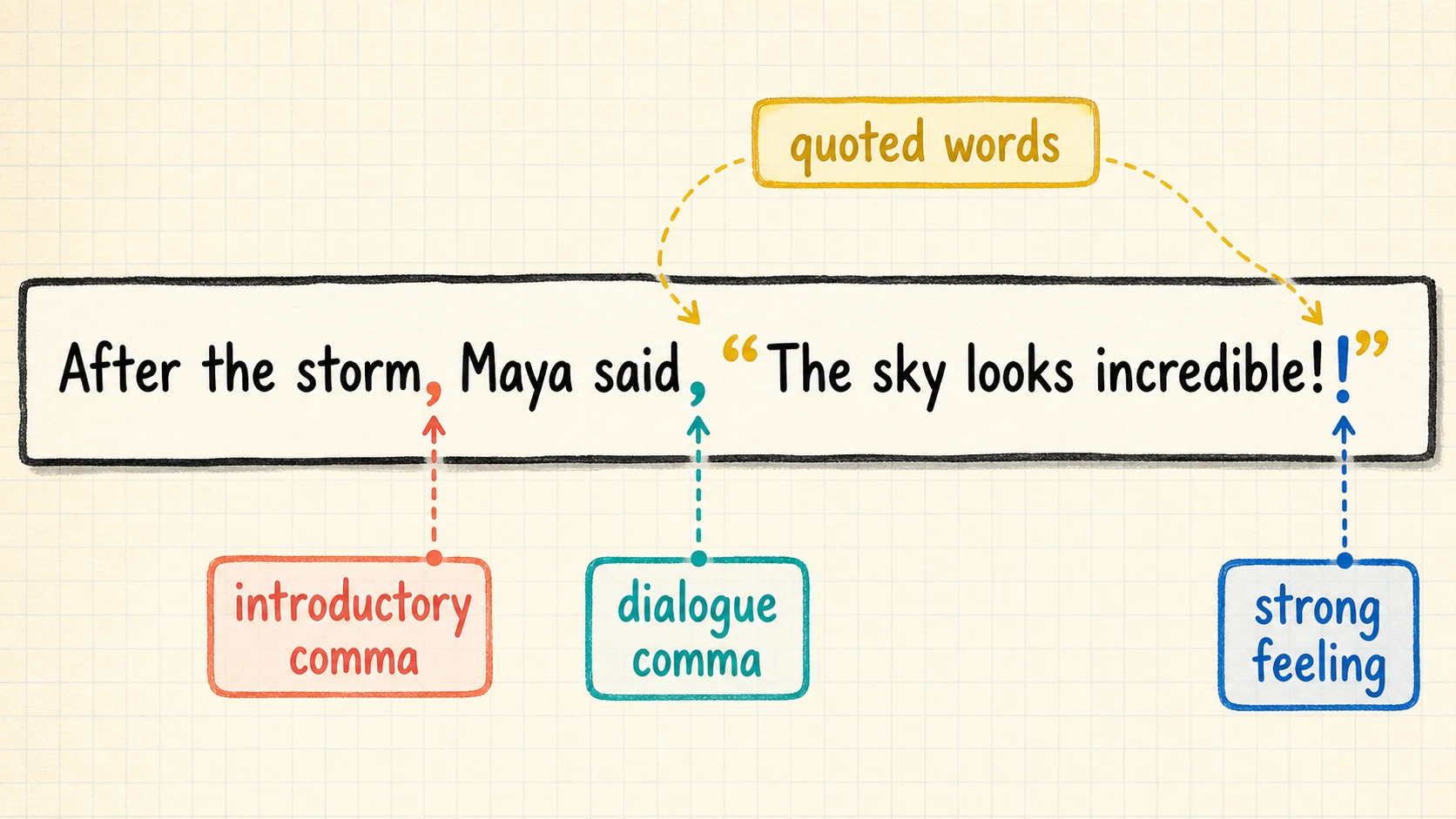
Have the learner move the phrase, read both versions, and explain why the punctuation changes.
The Common Core English language arts standards describe grade-level expectations for language and writing in one widely used framework. Local sequences and terminology may differ, so confirm what the learner has actually been taught.
Decide whether to simplify, continue, or stop
Make the decision from observable evidence, not from age, grade label, or total score alone.
Simplify when prerequisite knowledge is missing
Simplify if the learner cannot explain the example, cannot represent the quantities, misunderstands several items in the same way, or needs prompts at nearly every step. Simplifying may mean:
- Using smaller or friendlier numbers while keeping the operation.
- Returning from symbols to a diagram or object model.
- Changing a multi-step item into one visible relationship at a time.
- Supplying sentence parts for sorting before requiring original writing.
- Contrasting two punctuation patterns instead of editing a paragraph.
- Selecting an earlier age guide only as a route to more accessible material.
The Worksheets for 11-Year-Olds guide can help locate a less demanding entry point, but the age label still does not place the learner. Preview the actual task features.
For ages three and four, practice should prioritize brief, adult-led oral, matching, manipulative, and movement work over desk work. That principle matters when comparing age pages: a younger-age resource is not simply the same desk task with smaller numbers. The Worksheets for 4-Year-Olds guide, for example, belongs to a substantially different teaching context and should not be used as a casual label for an older learner.
Continue when reasoning is becoming independent
Continue with a few more items when the learner:
- Explains the target idea accurately.
- Corrects an error after a neutral prompt such as “Check the magnitude.”
- Uses a model and can connect it to notation.
- Applies the method to a new example.
- Maintains accuracy without growing dependence on adult cues.
Increase difficulty by changing one feature at a time. Remove the model, add one step, vary the position of the unknown, require an explanation, or ask for an original sentence. Do not simultaneously increase reading load, number size, steps, and independence; that makes any new error difficult to interpret.
Stop when more items will not add useful evidence
Stop the session when frustration is escalating, the learner is guessing, the same misconception persists after one clear model, or fatigue makes the sample unreliable. Also stop when the learner has already demonstrated the target consistently. Finishing every item is not necessary if repetition no longer provides information or useful practice.
A stopping decision is not a diagnosis. Save one or two examples, note the prompt required, and share the pattern with the learner’s teacher when it is persistent or conflicts with classroom expectations. Formal decisions about disability, intervention, or grade placement require appropriate professional assessment and broader evidence.
Use the catalogue without turning it into a workload
The nine representative free entry points cover multiplication, division, fractions, decimals, geometry, word problems, parts of speech, punctuation, and sentence structure. Most contain 30 problems; the fraction sheet contains 22. Treat those counts as page contents, not daily prescriptions.
Choose a resource by the smallest defensible target:
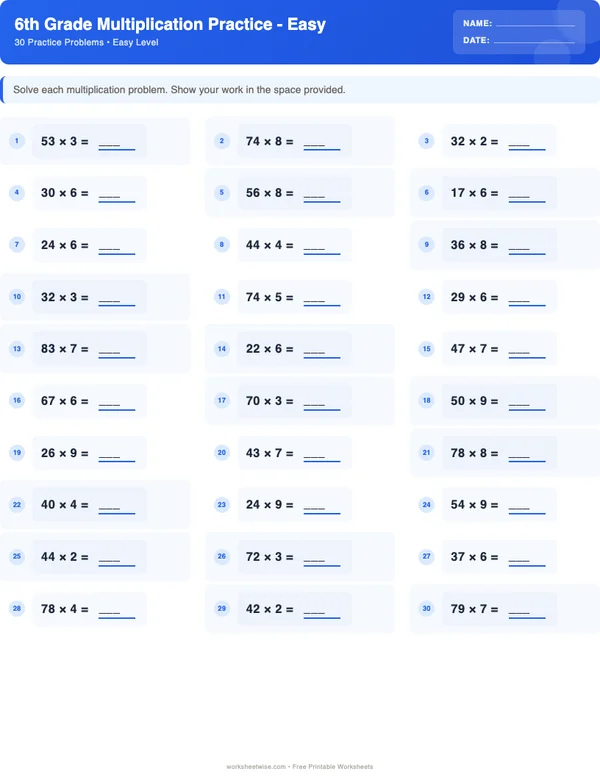
- If multiplication facts are known but multi-digit products are disorganized, use an area model before algorithm-only practice. The 6th Grade Multiplication guide and free sheet is the relevant entry point.
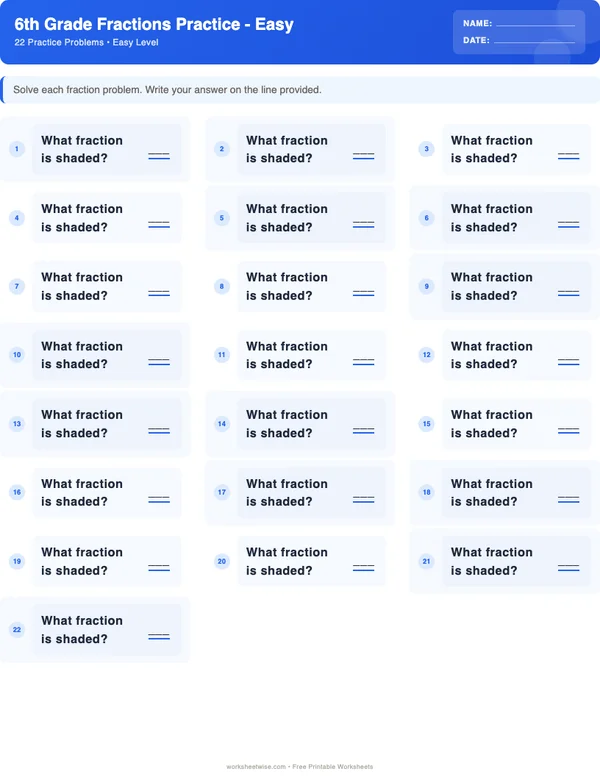
- If the learner adds denominators when adding fractions, return to equal-sized parts and equivalent fractions through the 6th Grade Fractions guide and free sheet.
- If decimal length is being mistaken for decimal magnitude, select decimal comparison rather than a mixed computation page.
- If calculation is secure but situation modeling is weak, choose word problems and require a bar model or retell.
- If sentences are complete but monotonous, practice sentence combining rather than basic subject identification.
- If punctuation errors occur only in dialogue, isolate quotation-mark conventions instead of assigning every punctuation type.
WorksheetWise’s catalogue facts describe available resources and their intended topics. They do not show that a learner will improve by a particular amount, that every variant matches a local sequence, or that worksheet completion alone transfers to independent reading, writing, or problem solving. Paper practice works best as one part of instruction that also includes explanation, feedback, modeling, application, and review.
Record one decision and take the next observable step
After the session, write a three-line note:
- Observed: “Compared tenths correctly but said 0.36 was greater than 0.4.”
- Support that helped: “Hundredths grids and rewriting 0.4 as 0.40.”
- Next check: “Compare 0.7 and 0.68 without a grid, then explain.”
That note is more useful than “got 7/10.” It identifies the mathematical idea, the effective support, and a testable next action. Use the same structure for grammar: “Identified fragments orally; needed clause cards to complete because sentences; next check is one independent revision.”
For the next session, open the free deterministic worksheet generators, create a short set aimed at the one recorded need, and begin with three items. Continue only if the learner can explain the target with decreasing support; simplify or stop if the same misunderstanding remains.
Put it into practice
Use the guide with a real printable
Move from explanation to a short, observable practice task. Check the first item together, then adjust the next session from the learner's actual work.
Open the first free worksheetExplore a neighboring collection
Choose by a different teaching need
Worksheets for 11-Year-Olds: Printable Practice Guide Worksheets for 10-Year-Olds: Printable Practice Guide Worksheets for 3-Year-Olds: Printable Practice Guide Worksheets for 4-Year-Olds: Printable Practice Guide Worksheets for 5-Year-Olds: Printable Practice Guide Worksheets for 6-Year-Olds: Printable Practice Guide Worksheets for 7-Year-Olds: Printable Practice Guide Worksheets for 8-Year-Olds: Printable Practice Guide