Curated collectionAnswer keys includedPrint-ready PDFs
Worksheets for 11-Year-Olds: Printable Practice Guide
Upper-elementary consolidation with explicit models, efficient methods and independent error analysis.
Start with a real resource
Browse this worksheet collection
9 relevant free entry points are available. Each one includes a printable learner PDF and separate answer key.
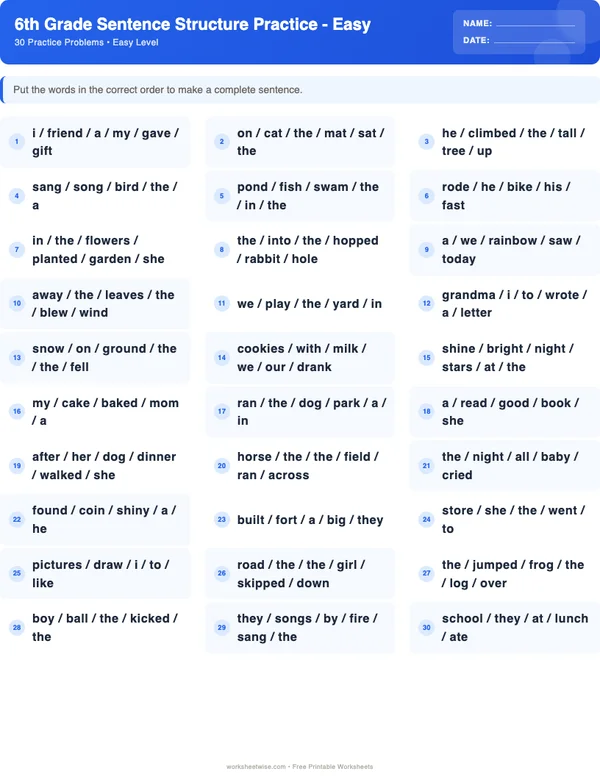
A useful practice loop
Print less. Observe more.
- Choose one skill and model the first item aloud.
- Use a short set and notice the learner’s strategy.
- Change the next task from the work you can see.
Need more than the free sheet?
Plus includes all 162 matching catalogue variations where available, plus saved deterministic generators and the worksheet designer.
See Plus membershipComplete guide
How to teach and practise worksheets for 11 year olds
3,475 words Updated 6 instructional visuals
Choose by observed work, not by age alone
Worksheets for 11-year-olds should help a learner consolidate upper-elementary skills, use efficient methods, and explain or correct mistakes with increasing independence. The best starting sheet is not necessarily the one with the learner’s age or school grade on it. Age is a discovery aid rather than a placement decision. Use it to find plausible material, then use observed work to decide whether to simplify, continue, or stop.
The live catalogue for this page contains 162 variants across two subjects and nine topics, all filtered to an intended 6th Grade practice level. Nine free entry points cover multiplication, division, fractions, decimals, geometry, word problems, parts of speech, punctuation, and sentence structure. That breadth is useful only if the adult selects narrowly: one target skill, one short attempt, and one decision based on what the learner actually does.
Grade labels describe intended practice level; local curriculum sequences differ. An 11-year-old may handle decimal computation confidently while still needing fraction bars, or write lively paragraphs while confusing fragments with complete sentences. Neither age nor a single worksheet score establishes a diagnosis. Look instead at method choice, accuracy patterns, explanations, use of models, and response to a small prompt.
A practical first decision is:
- Start with an 11-year-old or 6th Grade entry point when the symbols, vocabulary, and expected method look familiar.
- Move to a narrower or more supported task when the learner cannot begin, misreads most directions, or lacks a prerequisite that the page assumes.
- Continue when the learner can represent the task, explain a reasonable method, and correct occasional errors.
- Stop when effort has stopped producing useful information—especially when frustration, rushing, or fatigue begins to replace mathematical or grammatical thinking.
The aim is not to finish the largest number of items. It is to make the learner’s thinking visible and choose the next productive step.
What to observe before selecting a worksheet
Begin with a two- or three-item sample rather than assigning a full sheet immediately. The available free sheets contain either 22 or 30 problems, but that count is an inventory fact, not a recommended sitting length. Cover the rest of the page if necessary.
Entry, method, and explanation
Watch three separate behaviors.
First, can the learner enter the task? A learner who reads a decimal comparison and immediately draws a place-value chart has an entry point even if the final answer is wrong. A learner who stares at the page may need the direction restated, one worked model, or prerequisite practice.
Second, what method appears? In multiplication, repeated addition may produce a correct answer but be inefficient for a multi-digit task. In division, a memorized long-division sequence may look fluent until a zero or remainder appears. In punctuation, adding commas by where the voice pauses may work occasionally but does not show command of a specific rule.
Third, can the learner explain or check the result? Ask, “What does this number or mark do?” or “How could you tell if that answer is reasonable?” At this age, independent error analysis should become part of practice, but it can begin with a choice: “Is the mistake in the setup, the calculation, or the check?”
Reading and recording demands
A worksheet may appear to test one skill while placing substantial demands on another. A word problem requires reading, selecting information, choosing an operation, computing, and interpreting the result. A grammar correction task may require the learner to hold a long sentence in working memory while locating its clause boundary.
If the target is division, read the problem aloud when decoding is blocking access. If the target is punctuation, let the learner hear the sentence before editing it. These adaptations preserve the intended reasoning; they do not supply the answer.
Also notice handwriting and page-navigation load. Crowded work, lost place value, or skipped lines can create errors that are not evidence of weak conceptual understanding. Offer graph paper, a blank cover sheet, or more workspace before changing the target skill.
Define difficulty through the task itself
The catalogue identifies each representative free sheet as “easy.” Treat that label as a description of the entry point within its topic, never as a label for a learner. Difficulty must be checked through observable task features.
A more accessible task generally has:
- one familiar operation or rule at a time;
- a visible example or model;
- smaller or more convenient numbers;
- short, direct directions;
- limited text to hold in mind;
- space for intermediate work;
- one clear answer format.
A more demanding task may require multiple operations, unlike denominators, interpretation of a remainder, selection among several punctuation rules, construction of an original sentence, or justification without a supplied model.
This distinction matters because superficially similar items can demand different reasoning. Computing asks for a quotient and remainder. Deciding how many six-seat vans are needed for 25 students also asks what the remainder means. The arithmetic may be identical, but the contextual decision raises the demand.
Do not increase difficulty merely by adding more of the same. Thirty successful calculations may measure endurance more than understanding. A better progression changes one feature: remove the model, vary the representation, introduce a nonexample, or ask for an explanation.
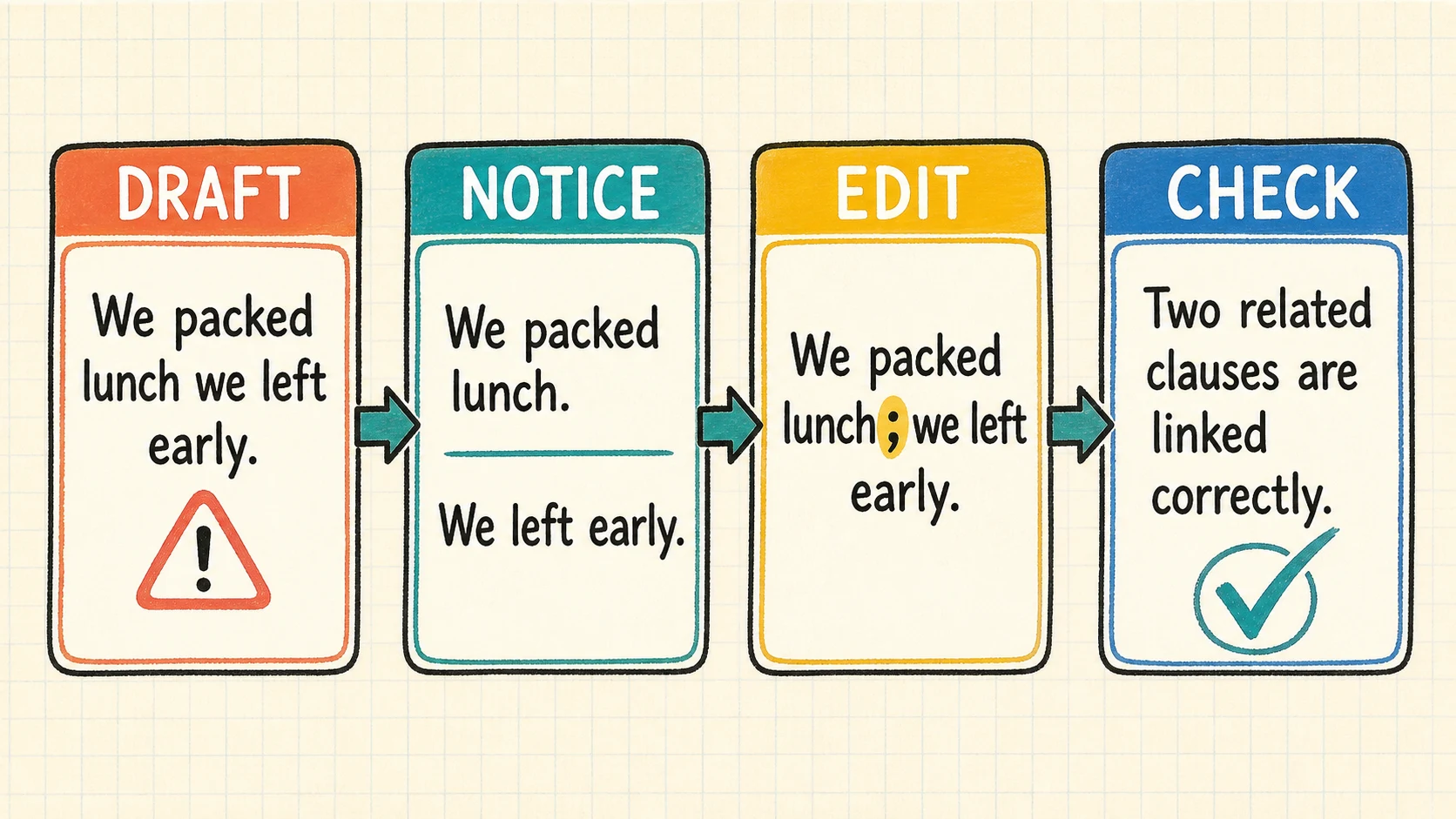
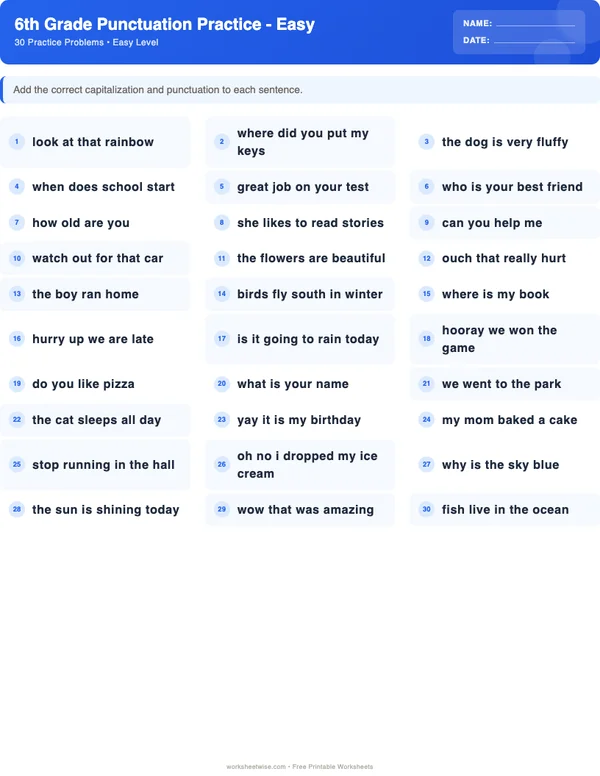
Use this punctuation progression to decide which support to remove next, not to require every learner to begin or finish at the same point.
Use a brief model–try–explain–check routine
A productive session can take 12 to 18 minutes. Set an endpoint before beginning so that practice feels bounded and purposeful.
Model one decision
Choose one item and think aloud about the decision that matters. Keep the model short. For decimal comparison, say, “I will align the place values and compare tenths before hundredths.” For sentence structure, say, “I am checking whether each side can stand as a complete thought.”
The IES guide on assisting students who struggle with mathematics recommends systematic instruction that includes clear models, verbalization, visual representations, and deliberate practice. That is general instructional guidance; it is not an assessment of WorksheetWise or a claim about a particular learner.
Try two or three items
Have the learner work a small set while speaking only when useful. Avoid narrating every move for them. If they pause, ask a decision question:
- “What quantity are you trying to find?”
- “Which place has the first difference?”
- “Where does the first complete thought end?”
- “What model would make this visible?”
Marking every error immediately can disrupt the evidence. Unless the mistake will contaminate all later work, let the learner complete the short set.
Explain one choice
Ask the learner to select one answer and explain it. The explanation can be spoken, drawn, or written. A learner might point to two fraction strips, label equal lengths, and say that and name the same amount. That is a valid explanation even if extended writing would obscure the fraction knowledge being observed.
Check and choose a next move
Use a different checking method from the original method. Estimate a decimal product, multiply to check division, read a revised sentence aloud, or substitute the original nouns for pronouns.
Then make one decision:
- Simplify when the learner cannot represent the task or repeatedly needs the adult to choose the method.
- Continue when the method is sound and errors are limited, interpretable, and correctable.
- Stop or switch when fatigue, distress, indiscriminate guessing, or escalating prompts make the remaining answers uninformative.
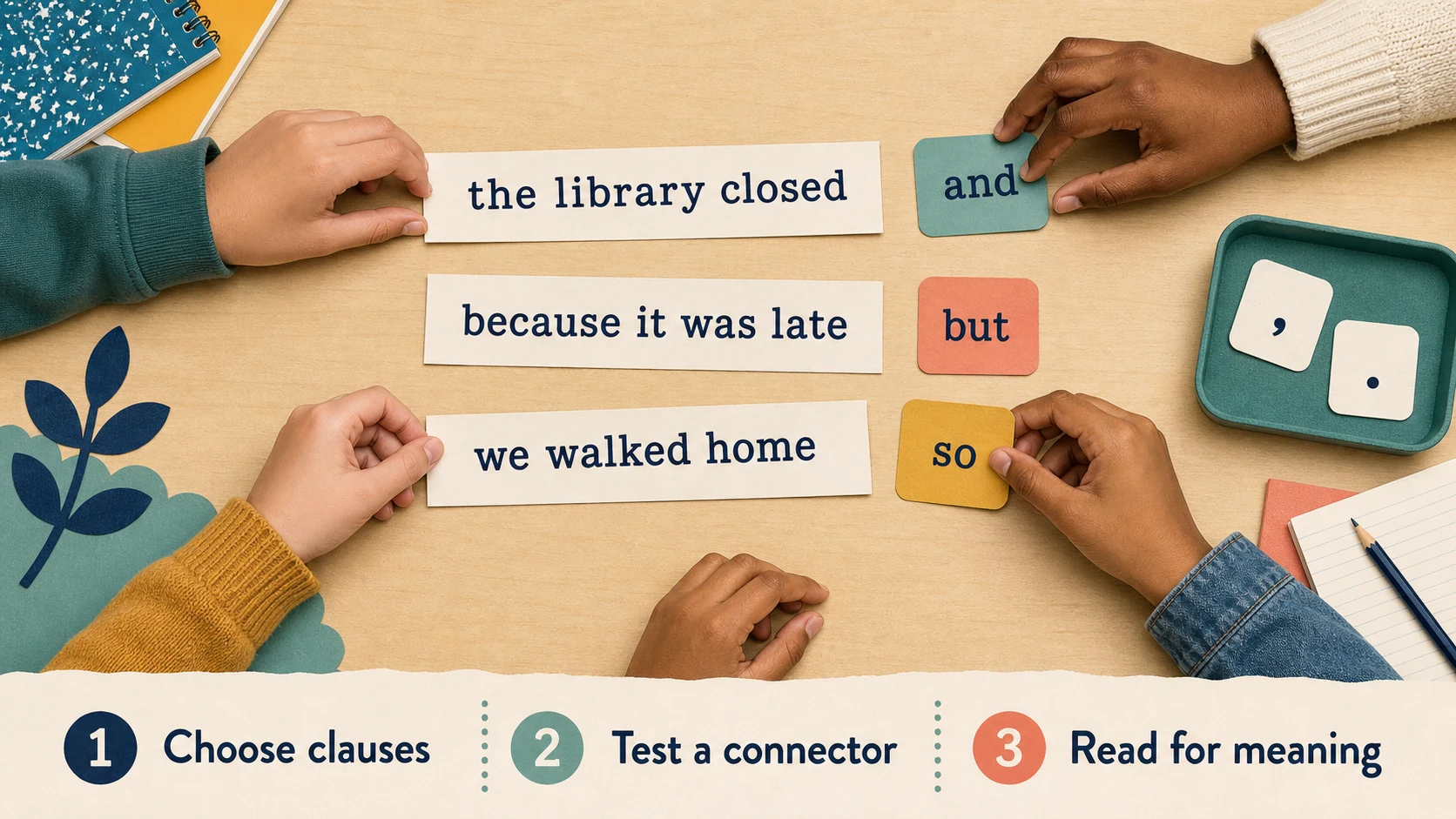
This sentence routine keeps practice active: inspect a model, make a structural choice, explain it, and test the revision in real reading.
Pair paper with talk, models, and materials
An 11-year-old does not outgrow concrete materials. Materials should clarify a relationship and then yield to drawings or symbols when the learner can explain that relationship.
Fractions and decimals need visible magnitude
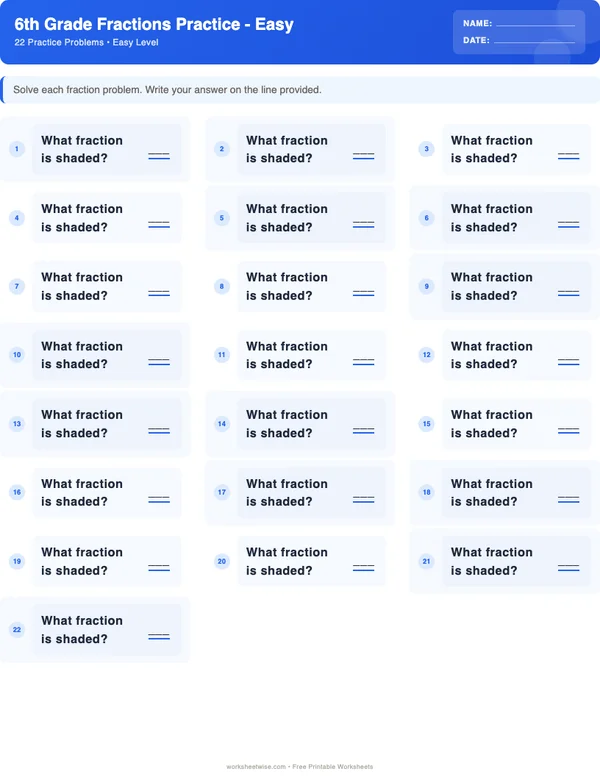
For fractions, use paper strips, fraction bars, or a number line. Ask the learner to locate , then place without calculating first. The goal is to reason about magnitude: , so lies one eighth below it.
This example belongs here because the catalogue’s 6th Grade fractions material includes comparison and equivalence, and its teaching guidance explicitly calls for visual models before symbolic procedures. It is fully checkable: , and therefore .
For decimals, draw a place-value chart or shade a hundredths grid. Compare and . Rewrite as ; 40 hundredths is greater than 36 hundredths, so . This example belongs on the page because decimal place value and comparison are listed catalogue skills, and confusing digit length with value is a specifically identified misconception.
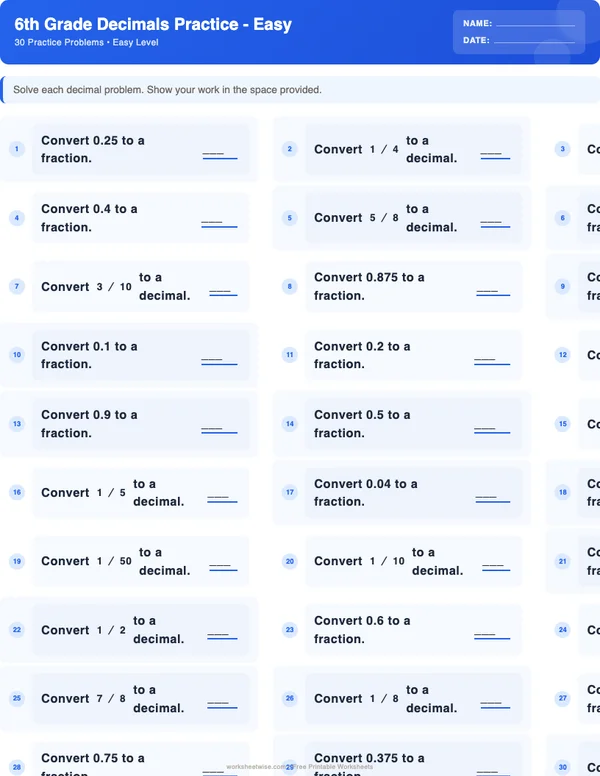
The 6th Grade Decimals guide and free sheet is the appropriate focused entry point when place value, comparison, rounding, or decimal computation is the observed target.
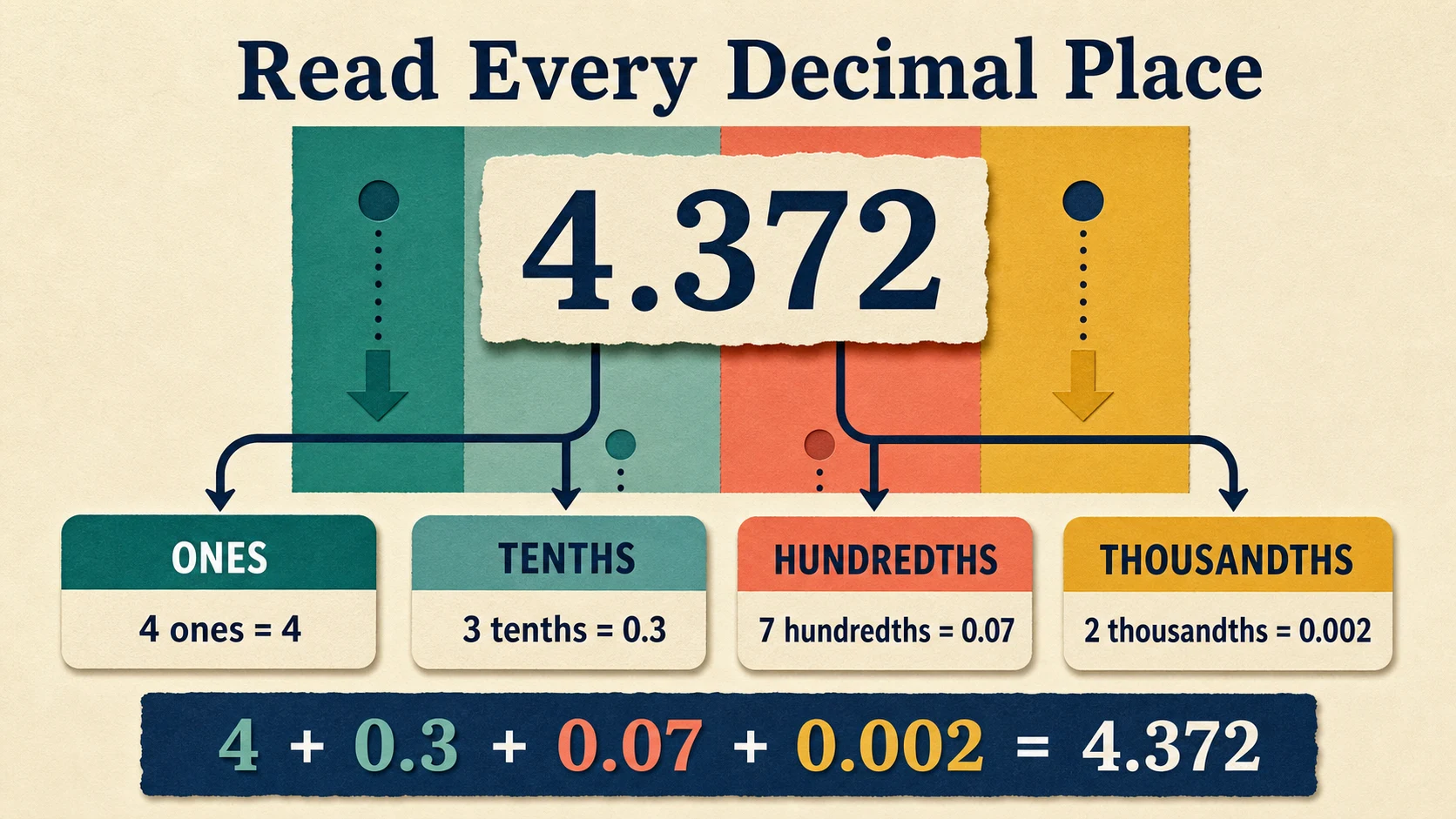
Use the map to isolate one decimal relationship—such as place value before comparison—rather than assigning the entire topic at once.
Multiplication and division need connected representations
Keep multiplication and division visibly connected. For , a learner might use partial quotients:
Since and , the quotient is . Check with .
This example belongs here because the catalogue describes partial quotients or an area model as a conceptual bridge to long division and emphasizes the inverse relationship with multiplication. Every step checks: , , and .
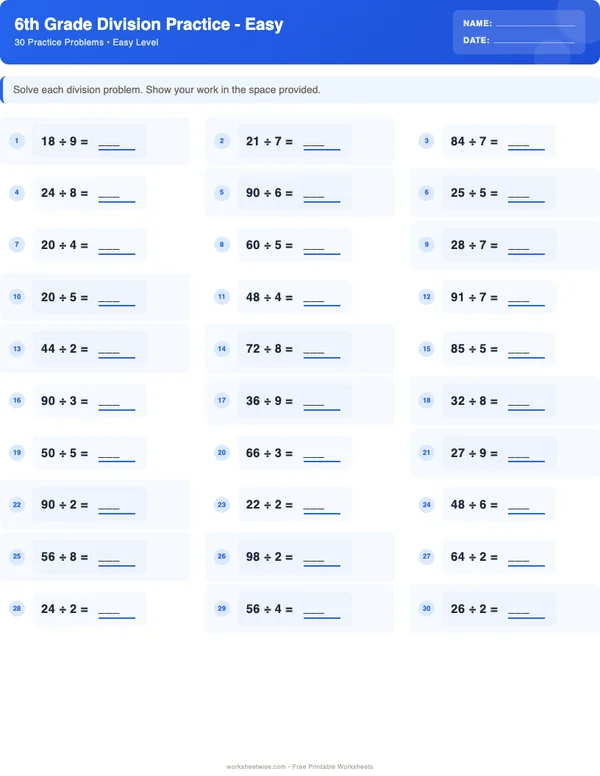
If the learner understands equal groups but loses track within the conventional algorithm, preserve division as the target and change the representation. Do not automatically send them to unrelated easier arithmetic. The 6th Grade Division guide and free sheet provides the relevant topic-specific entry point.
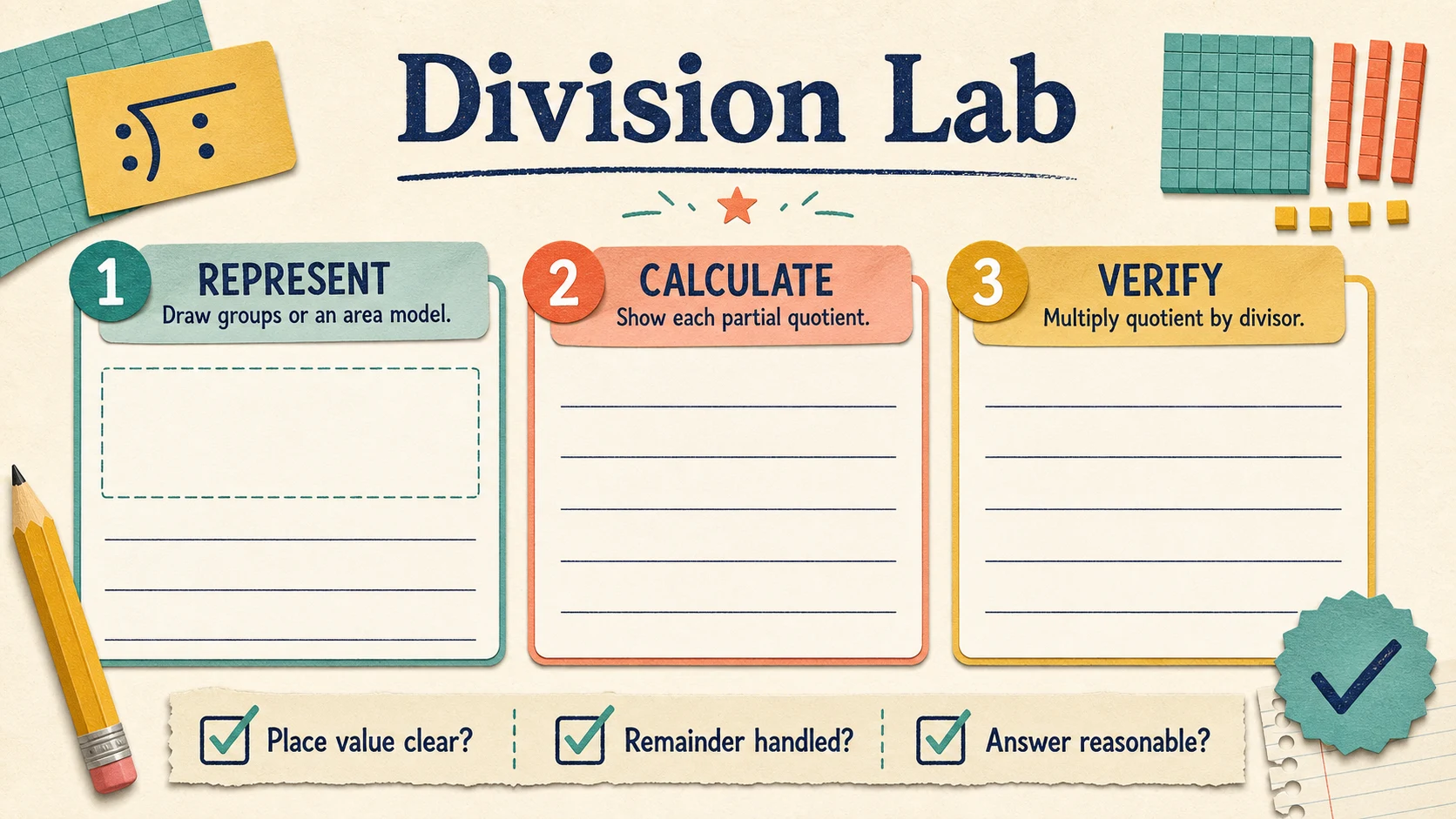
Treat the two-week plan as a spacing framework: shorten or repeat a step when the learner’s representations and checks show that the method is not yet stable.
Geometry benefits from building and measuring
Give the learner 12 square tiles and ask for two rectangles. A rectangle has area 12 square units and perimeter units. A rectangle has the same area, 12 square units, but perimeter units.
This checked example belongs here because the catalogue’s geometry scope includes area and perimeter, and the supplied teaching guidance recommends building multiple shapes with the same area to distinguish the two measures. The material preserves the target: tiles show area as covered surface, while counting outside edge units shows perimeter.
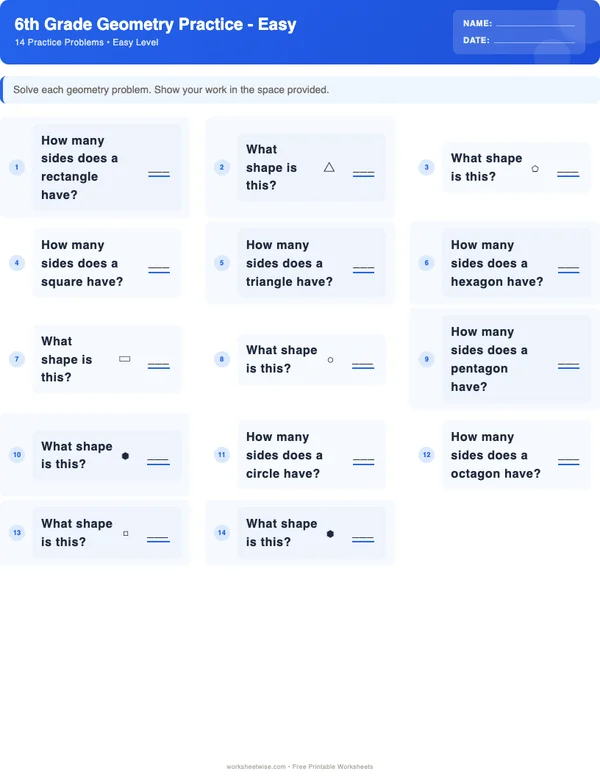
Continue to the 6th Grade Geometry guide and free sheet when the learner can build and describe the figures but needs more recorded practice.
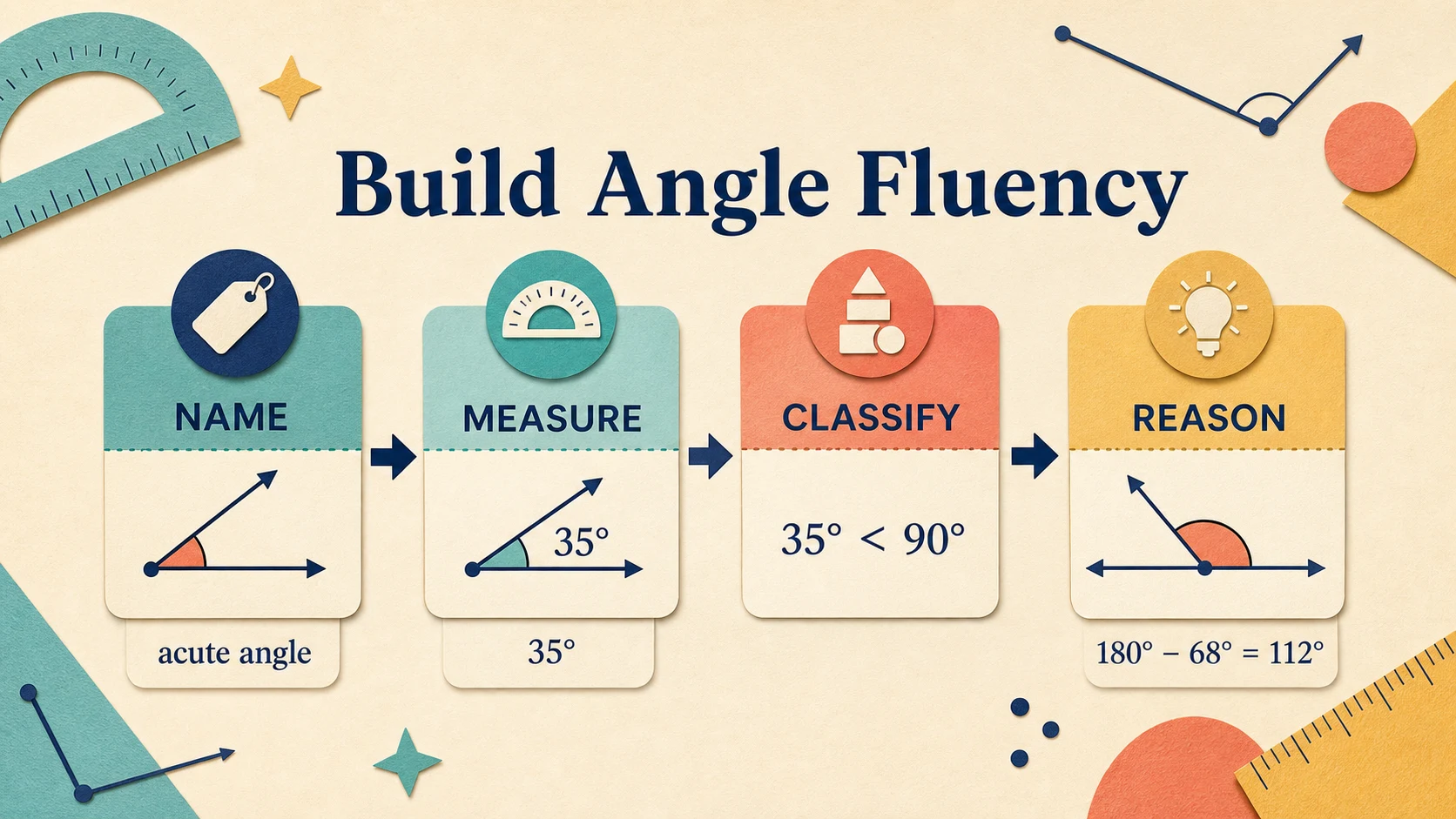
This progression clarifies when to move from constructed shapes to drawings, formulas, and independent justification.
Interpret errors before assigning more practice
An error is useful only when it changes the next teaching decision. Sort errors by probable source, then test the interpretation with one follow-up item. Do not infer a diagnosis from a worksheet.
A representation error
Suppose a learner says because 36 is greater than 4. The likely issue is decimal place value, not comparison vocabulary or subtraction. Ask the learner to build or shade both values. If the model corrects the answer, continue with place-value representations before returning to bare symbols.
Likewise, if because 8 is greater than 4, compare equal-sized paper strips partitioned into fourths and eighths. Preserve fraction comparison as the target while making unit-fraction size visible.
A procedure without meaning
A learner may perform long division steps correctly but write “4 remainder 1 vans” for 25 students traveling in six-seat vans. The computation is correct; the interpretation is not. Four vans leave one student without a seat, so five vans are required.
This checked example belongs here because interpreting remainders in context is explicitly part of the catalogue’s division description and teaching guidance. Follow with a contrasting question: “Twenty-five stickers are shared equally among six students. How many whole stickers does each receive?” Here the answer may be four each with one left over. The operation is the same, but the situation controls the meaning.
A language or structure error
Consider: “After the storm ended we went outside.” If the target rule is a comma after an introductory element, the edited sentence is “After the storm ended, we went outside.” The opening dependent clause cannot stand alone, while “we went outside” can.
Now consider: “The storm ended, we went outside.” A comma alone cannot join these two complete thoughts. Valid revisions include “The storm ended, and we went outside” or “The storm ended. We went outside.”
These examples belong here because the catalogue’s punctuation scope includes commas after introductory elements and in compound sentences, while sentence structure includes fragments, run-ons, and sentence combining. They also show why “add a comma where you pause” is insufficient: the writer must identify the relationship between clauses.
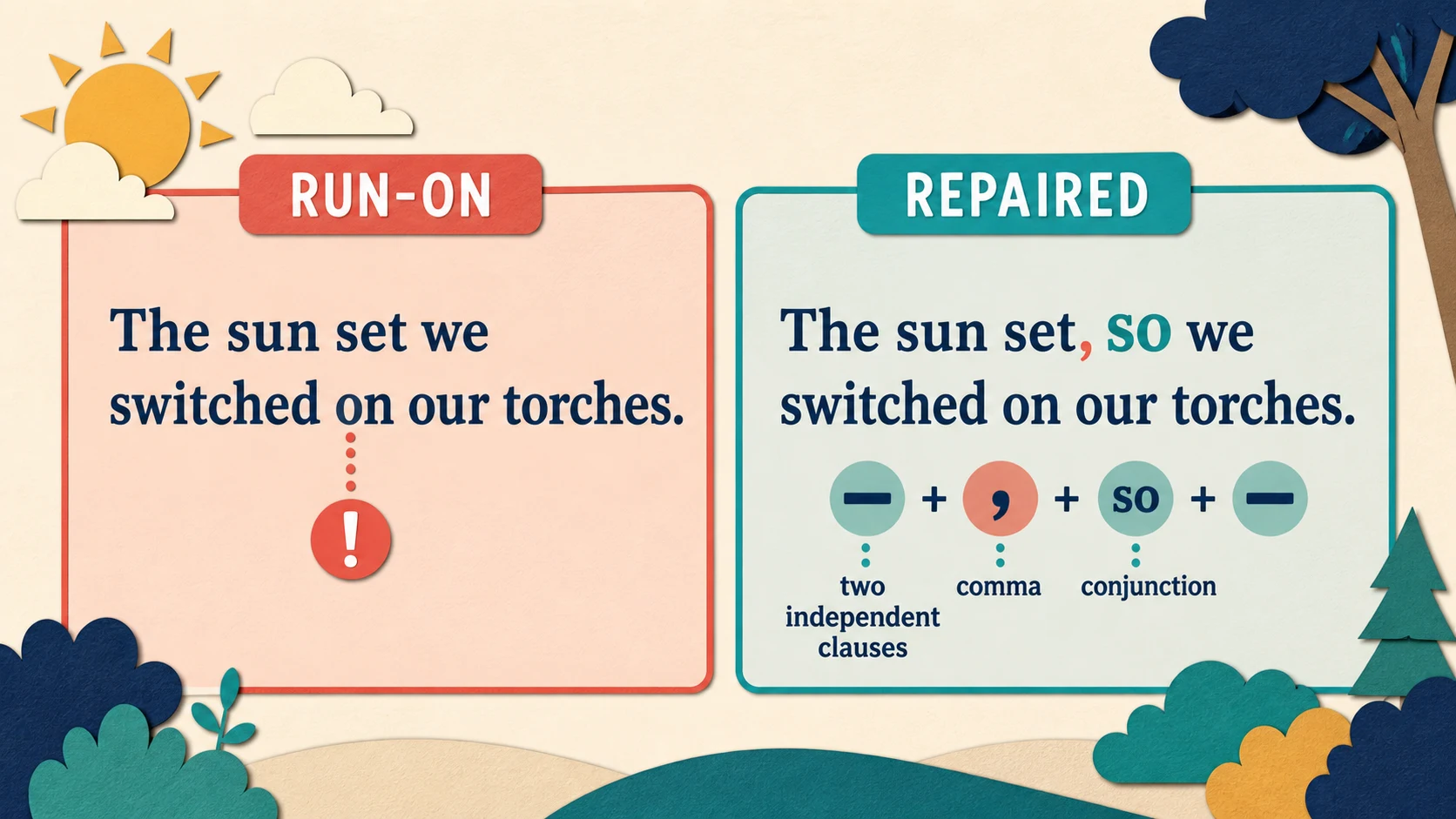
Match the response to the observed sentence error: restore a missing clause, separate complete thoughts, or model a valid connection.
The IES elementary writing guide supports teaching writing strategies explicitly, guiding learners through the writing process, and helping them develop fluency with sentence construction and related skills. Apply that guidance through modeling and purposeful revision, not through unsupported claims that one worksheet will improve writing.
A recording or attention error
If a learner explains correctly but writes 165, ask for an inverse check or an estimate. If the learner immediately catches the transposition, the next action is a reliable checking routine, not a return to basic multiplication concepts.
Repeated skipped rows may indicate that the page is visually difficult to navigate. Reveal one row at a time. This changes page access without changing the content. If accuracy improves, keep the navigation support temporarily and fade it as the learner begins tracking independently.
Adapt without removing the target skill
A useful adaptation changes access, volume, or representation while leaving the central decision intact.
Reduce volume, not thinking
Assign six selected problems instead of all 22 or 30. Include enough variation to expose the method: two direct items, two with a changed representation, one error-analysis item, and one application. A shorter set with explanation is more informative than a long set completed by guessing or imitation.
For a fractions page, the six items might include two equivalence questions, two comparisons, one deliberately incorrect worked example to repair, and one number-line placement. The target remains fraction relationships.
Separate reading from mathematical reasoning
Read a word problem aloud, underline quantities only after the learner retells the situation, and ask for a diagram before an equation. Avoid keyword rules such as “left means subtract.” The same word can occur in different structures, and hunting for cues bypasses the situation.
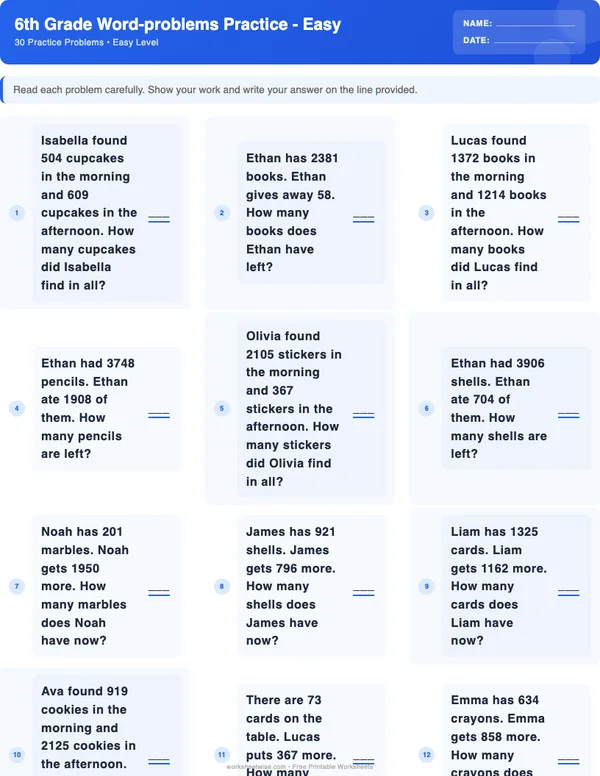
The catalogue recommends retelling, identifying known and unknown quantities, choosing a strategy, solving, and checking. The 6th Grade Word Problems guide and free sheet is a focused option when calculation is intact but choosing or interpreting operations is not.
Separate transcription from sentence knowledge
Allow a learner to dictate a corrected sentence before copying it. Provide movable word cards for combining clauses. Read alternatives aloud and ask which punctuation shows the intended relationship. These changes reduce writing load while preserving sentence construction and punctuation decisions.
The IES foundational reading guide addresses foundational reading instruction. It can inform support when word recognition or decoding blocks access, but it should not be stretched into a diagnosis or used to claim that an upper-elementary grammar error has a particular cause.
Adjust the model, then fade it
A model is temporary support, not an answer key to imitate indefinitely. Use this sequence:
- Adult demonstrates one item and names the key decision.
- Adult and learner complete one together.
- Learner completes one with a prompt available.
- Learner completes one without the prompt.
- Learner explains or checks the result independently.
If performance collapses at step four, restore only the missing support. For decimals, that might be the place-value chart rather than the worked answer. For sentence structure, it might be the “Can each part stand alone?” question rather than a completed correction.
Decide whether to simplify, continue, or stop
Use evidence from a small sample rather than a percentage threshold alone.
Simplify the entry point
Simplify when the learner cannot begin after directions are clarified, cannot show the quantities or language units involved, or makes the same conceptual error across two carefully chosen items.
Simplifying can mean:
- using friendlier numbers while retaining the operation;
- returning from symbols to tiles, strips, grids, or diagrams;
- presenting one punctuation rule instead of several;
- shortening the sentence while retaining the same clause relationship;
- supplying a partially completed model;
- moving to the Worksheets for 10-Year-Olds guide to inspect a potentially earlier entry point.
The age-ten link is an exploration tool, not a placement verdict. Select from it only if the observable task features address the missing prerequisite.
Continue and increase independence
Continue when the learner starts without excessive prompting, uses a defensible method, explains what the representation means, and corrects a limited error after a neutral prompt.
Increase demand by one dimension. Remove the place-value chart, introduce less convenient numbers, ask for a written justification after an oral one, or mix two already-understood punctuation rules. Do not simultaneously increase number size, reading load, item count, and independence.
The Common Core mathematics standards can help adults understand common grade-level progressions and mathematical practices, while the Common Core English language arts standards provide a comparable reference for language and writing expectations. They do not override local curriculum, establish placement, or show that a particular WorksheetWise page is aligned merely because its catalogue uses a grade label.
Stop and record what happened
Stop when the learner begins indiscriminate guessing, cannot explain choices they made moments earlier, becomes distressed, or needs progressively more adult direction to produce each answer. Also stop when the evidence is already clear. Ten repetitions of the same misconception add little.
Record one neutral observation, not a judgment:
- “Compared decimals by treating the digits as whole numbers; corrected both values after shading hundredths grids.”
- “Used partial quotients accurately; interpreted a remainder as part of the quotient in a seating problem.”
- “Identified two complete thoughts but joined them with a comma alone.”
- “Distinguished area from perimeter with tiles; omitted two sides when using a drawn rectangle.”
Each note points toward an instructional response and can be shared with a teacher. None constitutes a diagnosis.
Keep independence accountable but humane
Independent practice should mean that the learner owns more of the decisions, not that the adult disappears. Before stepping back, agree on what the learner can do when stuck:
- Reread the direction and inspect the model.
- Mark what is known and what must be found.
- Choose a representation or checking method.
- Circle the exact point of uncertainty.
- Ask a specific question.
A specific question—“Do I compare tenths or count all the digits?”—reveals more than “I don’t get it.” The adult can respond with a prompt rather than taking over.
At the end, have the learner mark one item:
- a star for an answer they can explain;
- a triangle for an answer they corrected;
- a question mark for a remaining uncertainty.
Discuss the triangle first. Correction is central to the page’s consolidation purpose. Ask what changed between the first and second attempt. Then select one next action: repeat the representation, practice the efficient method, or transfer the skill to one unfamiliar item.
Start with one free entry point and one recorded decision
Open the full worksheet library, choose one of the nine free 6th Grade topic entry points, and preview only three items. Select the topic from current observed work—not age alone—and plan one matching support such as a number line, square tiles, graph paper, oral rehearsal, or movable word cards.
During a 12-minute session, model one decision, let the learner try two items, ask for one explanation, and check with a different method. Then write a single evidence-based note and choose exactly one response: simplify the representation, continue with one support removed, or stop and return later. That small cycle turns a printable page into useful information about what the learner should do next.
Put it into practice
Use the guide with a real printable
Move from explanation to a short, observable practice task. Check the first item together, then adjust the next session from the learner's actual work.
Open the first free worksheetExplore a neighboring collection
Choose by a different teaching need
Worksheets for 12-Year-Olds: Printable Practice Guide Worksheets for 10-Year-Olds: Printable Practice Guide Worksheets for 3-Year-Olds: Printable Practice Guide Worksheets for 4-Year-Olds: Printable Practice Guide Worksheets for 5-Year-Olds: Printable Practice Guide Worksheets for 6-Year-Olds: Printable Practice Guide Worksheets for 7-Year-Olds: Printable Practice Guide Worksheets for 8-Year-Olds: Printable Practice Guide