Complete guide
How to teach and practise pre-k sight words worksheets - standard theme (easy)
How to use this 20-item sight-word worksheet
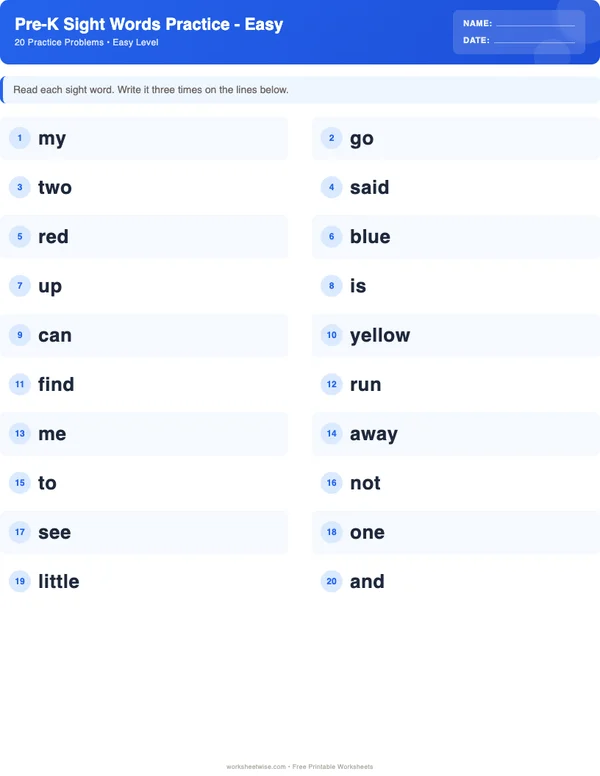
The free Pre-K Sight Words worksheet gives the learner 20 words. For each item, the learner reads the printed sight word and writes it three times on the lines below it. A separate printable answer key is included.
The most useful way to teach the page is to begin with one clearly modeled item, complete a few items together, and then release only as many items as the learner can handle accurately. Do not assume that all 20 must be finished in one sitting. The learner’s observed reading, letter formation, attention, and recall should determine the pace.
This worksheet practices four related skills:
- Recognizing a printed high-frequency word
- Reading that word aloud
- Remembering its letter sequence
- Writing the word accurately three times
The page is labeled Pre-K because that is its intended practice level. Grade labels do not guarantee that every learner has encountered the same words or handwriting expectations. Local school, homeschool, and intervention sequences differ, so use the label as a starting point rather than a deadline.
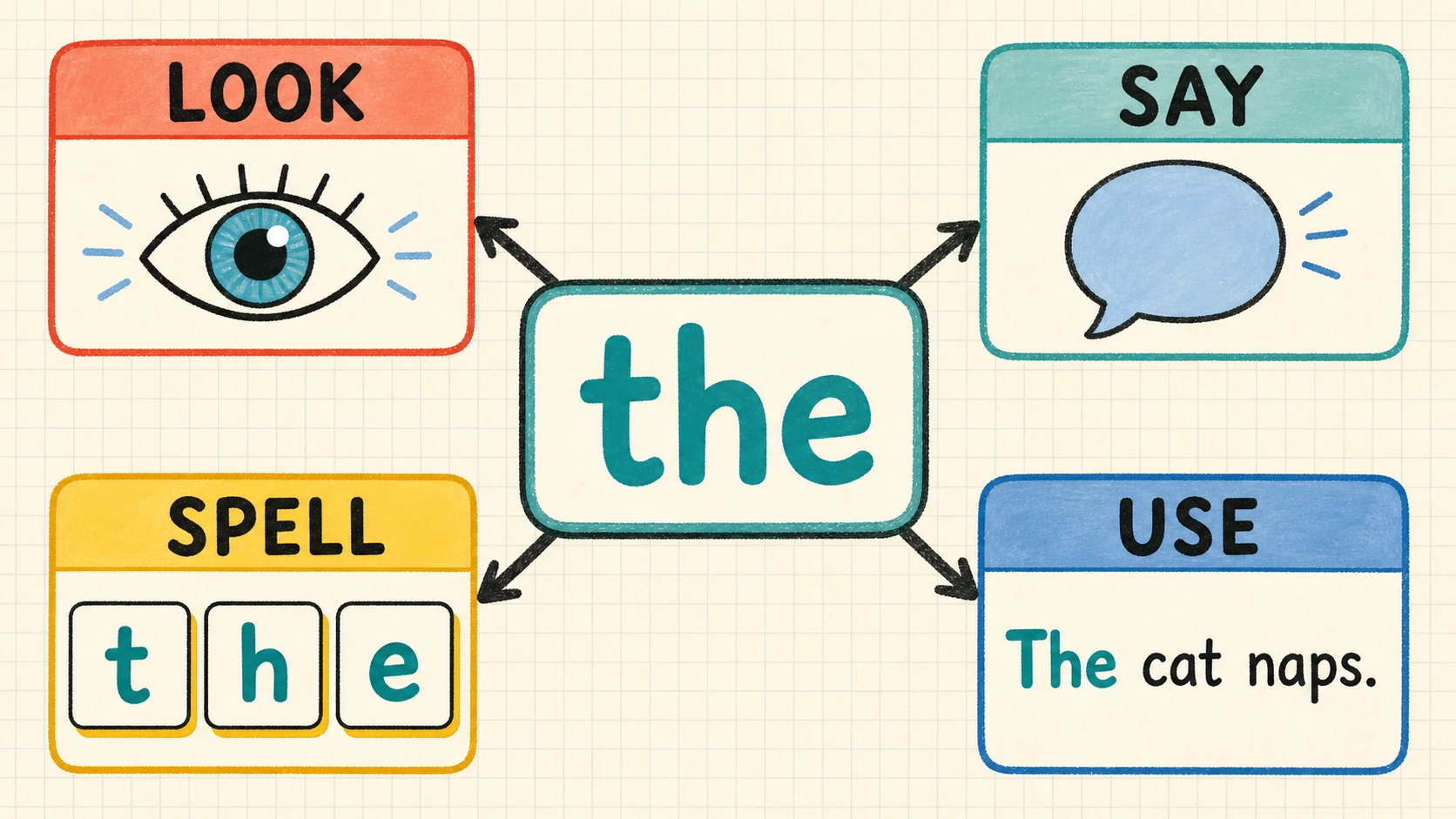
Move from a short launch to modeling, guided practice, independent work, checking, and later retrieval.
Prepare the learner and the materials
Print the worksheet and keep the answer key out of the learner’s immediate view. Provide a pencil, a comfortable writing surface, and an eraser only if erasing does not interrupt the learner’s concentration. A crayon or thicker pencil may be easier for a child whose grip is still developing, provided the letters remain readable.
Before beginning, scan the page yourself. The catalogue identifies the worksheet as an easy-level set, but “easy” describes its place within this worksheet collection. It does not mean that every word, letter shape, or writing demand will already be easy for a particular learner.
Check three readiness points:
- Can the learner attend to one printed word at a time?
- Can the learner copy at least some lowercase letters from a model?
- Can the learner attempt to say a familiar word shown in print?
A “no” does not necessarily mean the worksheet is unusable. It means the adult should reduce the amount presented at once and provide more modeling.
Set a clear purpose
Use a brief direction such as:
“We will look at one word, say it, and write the same word three times.”
That explanation matches the printed instruction without adding a second task. Avoid turning the opening into a quiz covering the whole page. The learner needs to understand the routine before being asked to work independently.
Cover unused items when necessary
Twenty items can look crowded to a beginning learner. Place a blank sheet of paper over the lower part of the page so that only one or two items are visible. Slide the cover down as the learner proceeds.
This changes the visual load, not the skill. The learner still reads the target word and writes it three times. Do not replace the word with a picture clue or write the entire response for the child, because either change would remove part of the intended practice.
Follow a short, observable lesson progression
The lesson can be completed in one sitting or divided across several brief sessions. Use the learner’s work to decide. The following sequence is a practical instructional suggestion, not a universal timetable.
| Lesson stage | Adult action | Learner action | Decision point |
|---|---|---|---|
| Launch | Explain the read-and-write routine | Attend to one item | Can the learner restate or demonstrate the task? |
| Model | Read and write one example while thinking aloud | Watch, listen, and track the letters | Does the learner notice that all three copies must match? |
| Guided practice | Prompt through two or three items | Read, spell, and write with support | Are prompts becoming less necessary? |
| Independent practice | Assign a small visible group of items | Complete the routine without immediate prompting | Is accuracy stable without help? |
| Check | Compare the word and each copy | Find and correct a mismatch | Can the learner explain what changed? |
| Retrieval | Revisit selected words later without tracing | Read or write from memory | Which words are retained on a separate occasion? |
This sequence is consistent with the broad instructional principle of giving explicit teaching and supported practice before expecting independent performance. The IES foundational reading practice guide discusses systematic instruction in foundational reading skills. It did not evaluate this WorksheetWise page, so it should be used only to frame the general teaching approach.
For a broader view of how word recognition fits with other sight-word activities, use the Sight Words topic guide rather than trying to turn this single printable into a complete progression.
Model the exact task before expecting independence
Choose one item to demonstrate. Point to the printed word, read it, and track its letters from left to right. Then write it three times, checking each copy against the model.
Your spoken model might follow this pattern:
“This word is the. I see the letters t-h-e. I will write the on the first line. I check: t, h, e. Now I write the same word on the second and third lines.”
Keep the model brief. The goal is to expose the process, not to perform several items while the learner watches passively.
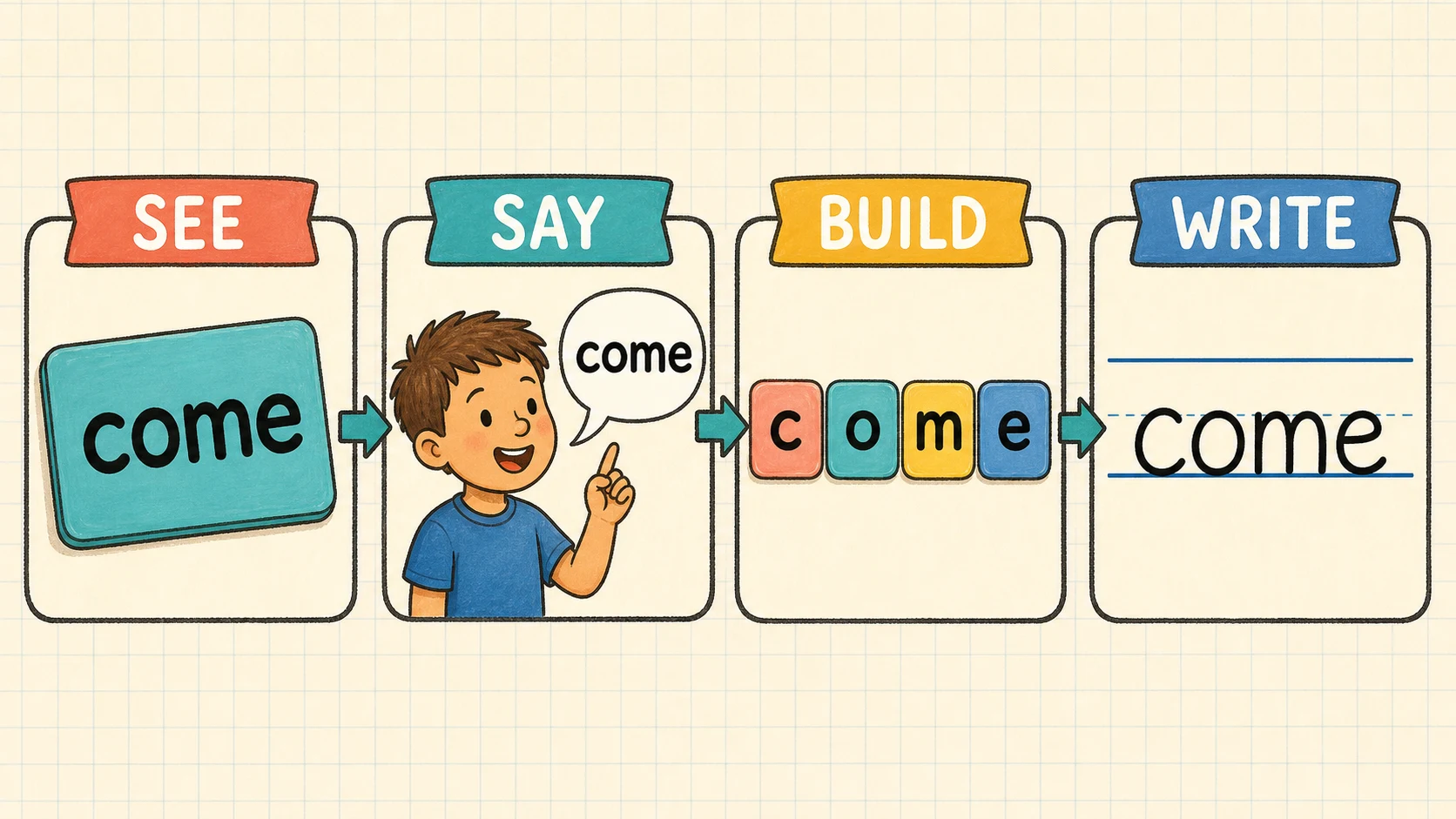
Model one complete item, guide a few more, and remove prompts as the learner becomes accurate.
Separate reading from copying
A learner may copy the letters correctly without recognizing the word. Ask for the word first:
- Point to the printed model.
- Ask, “What word is this?”
- Supply the word calmly if the learner does not know it.
- Have the learner repeat it.
- Then begin the three written copies.
This keeps the recognition goal visible. It also prevents handwriting accuracy from being mistaken for word reading.
Demonstrate how to check a copy
After writing, point between the model and the response:
- First letter against first letter
- Middle letter or letters in order
- Final letter against final letter
- Entire word read once more
For a three-letter word, the check may take only a few seconds. A beginning learner does not need a long editing lecture. The important habit is noticing that a written word can be compared with a stable model.
The IES elementary writing practice guide offers high-level guidance about teaching writing processes and foundational writing skills. It does not provide a judgment about this specific worksheet. Here, its relevance is limited to the general value of explicit modeling, supported writing, and opportunities to practice.
Work through fully checked examples
The following examples use high-frequency words mentioned in the supplied topic information. They illustrate how to teach and verify the routine; they do not claim that these exact words appear among the worksheet’s 20 items.
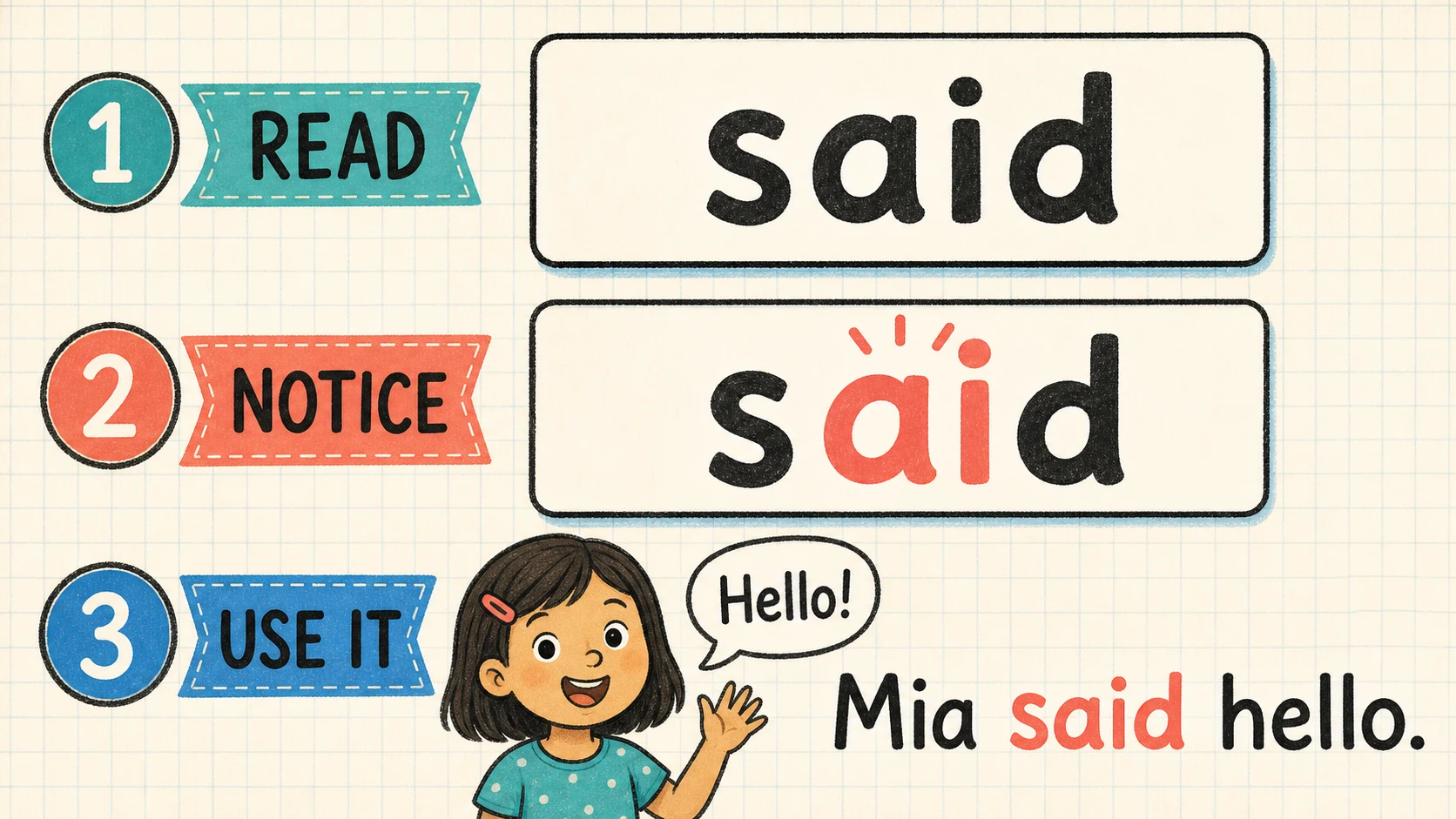
Read the model, preserve the letter order, and compare all three copies with it.
Example 1: “and”
Printed model: and
- First copy: and
- Second copy: and
- Third copy: and
Check the sequence: a-n-d appears in all three copies. Each begins with a, contains n in the middle, and ends with d. The learner should also read and aloud, because accurate copying alone does not demonstrate recognition.
If the learner writes ad, say, “Compare the middle of your word with the model.” This directs attention to the missing n without supplying a completely rewritten response.
Example 2: “the”
Printed model: the
- First copy: the
- Second copy: the
- Third copy: the
Check the sequence: t-h-e. A response such as hte contains the right letters but not the right order. Ask the learner to point to each model letter from left to right and then point to the corresponding letter in the copy. The corrected form is the.
The topic catalogue treats the as a word that includes an irregular spelling relationship. For this worksheet, the immediate task remains recognition and accurate writing. A brief note about an unexpected sound-spelling part may support memory, but it should not replace reading the whole word.
Example 3: “is”
Printed model: is
- First copy: is
- Second copy: is
- Third copy: is
Check the sequence: i-s. The word has two letters, so adding a letter is an error even if the result resembles another familiar pattern. If the learner writes iss, point to the printed model and ask, “How many letters do you see here?” Then compare that count with the response.
Do not require perfect penmanship before acknowledging the correct letter sequence. If both letters are identifiable and ordered correctly, the word-level response is accurate, though letter formation may still need separate practice.
Example 4: “said”
Printed model: said
- First copy: said
- Second copy: said
- Third copy: said
Check the sequence: s-a-i-d. A response such as sed may represent an attempt to write from sound rather than from the printed word. Explain that the spoken word and the displayed spelling must be connected: “This word is said. The middle is written ai here.”
The supplied topic guidance identifies the s and d as regular parts and ai as the portion that must be remembered in this word. That explanation may help a learner who is ready for it. If it causes confusion, return to the simpler compare-and-copy routine.
Example 5: “was”
Printed model: was
- First copy: was
- Second copy: was
- Third copy: was
Check the sequence: w-a-s. If the learner writes saw, all three letters are present, but their order has been reversed. Have the learner trace under the printed letters with a finger while saying, “w, a, s,” then rewrite the word once.
Example 6: “of”
Printed model: of
- First copy: of
- Second copy: of
- Third copy: of
Check the sequence: o-f. If the response looks like ov, distinguish the word’s spoken form from its conventional spelling: “We say the word of, and on this page we write it o-f.” The correct written response must match the printed model.
These examples show why reading, spelling memory, and handwriting should be observed separately. A learner can succeed in one part while needing help in another.
Run guided practice without taking over
After modeling, complete two or three worksheet items with the learner. The adult should prompt the process while the learner does the reading and writing.
A useful prompt ladder moves from lighter to stronger support:
- “Read the word.”
- “Look at the first letter.”
- “Point to each letter in order.”
- “Say the letters with me.”
- “Watch me complete one copy; you complete the next.”
Begin with the least help likely to work. If the learner responds successfully, return to a lighter prompt on the next item. If the learner cannot begin, provide a direct model rather than repeating the same question in a louder or more insistent way.
Know when guided practice is sufficient
Move toward independent work when the learner can:
- Read or repeat the displayed word
- Begin at the left side of the writing line
- Copy the letters in the displayed order
- Complete three copies rather than stopping after one
- Compare a response with the model when reminded
The learner does not need to perform every action quickly. Accuracy and understanding matter more than speed during the first encounter.
The Common Core English Language Arts standards provide a broad reference point for foundational reading and writing expectations, including high-frequency-word recognition in kindergarten. They do not certify this page, guarantee that it matches a local Pre-K curriculum, or establish that every Pre-K learner should complete it on the same schedule.
Adapt support while preserving the skill
An adaptation is appropriate when it helps the learner access the same task: seeing a word, reading it, and writing that word three times. An adaptation changes the skill when it eliminates recognition, supplies every response, or substitutes an unrelated activity.
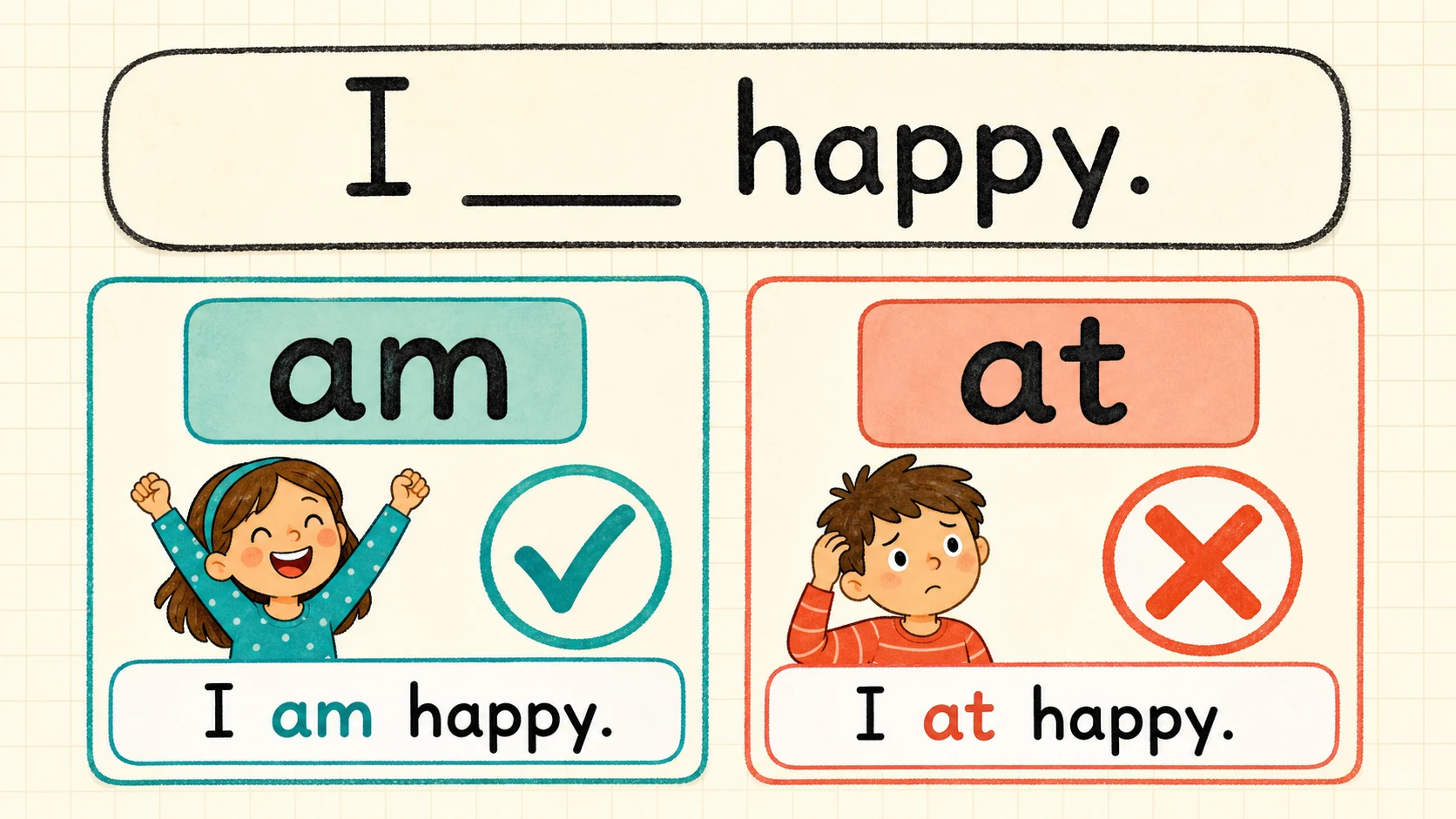
Adjust the amount shown, the prompt level, or the writing conditions while keeping the read-and-write task intact.
When handwriting is the main barrier
Allow a thicker pencil, a pencil grip already familiar to the learner, or a short movement break between items. Present fewer items per sitting. You may place a small starting dot at the left edge of a blank response line if the learner has trouble locating where to begin.
Do not trace all three responses for the learner. If tracing is temporarily necessary, use it for one modeled copy and ask the learner to produce the remaining copies while looking at the printed word.
When word recognition is the main barrier
Say the word, have the learner repeat it, and point to the letters together. Return to the same word later and see whether the spoken prompt is still needed.
A brief oral sentence can clarify meaning when appropriate: “I see the dog.” Keep the displayed target word visible. The sentence supports recognition, but the worksheet task is still to read and write the word itself.
When the full page is the main barrier
Cover most of the page and expose one item at a time. Divide the worksheet into groups such as four or five items, but treat those group sizes as adjustable. Stop earlier if letter order begins to deteriorate, the learner starts skipping copies, or prompts increase rather than decrease.
Finishing ten accurate items across two sessions is more informative than pushing through 20 items after the learner can no longer attend to the word models.
Interpret errors before deciding how to respond
An error is useful evidence only when the adult identifies what kind of breakdown occurred. Marking every mismatch simply “wrong” hides important differences.
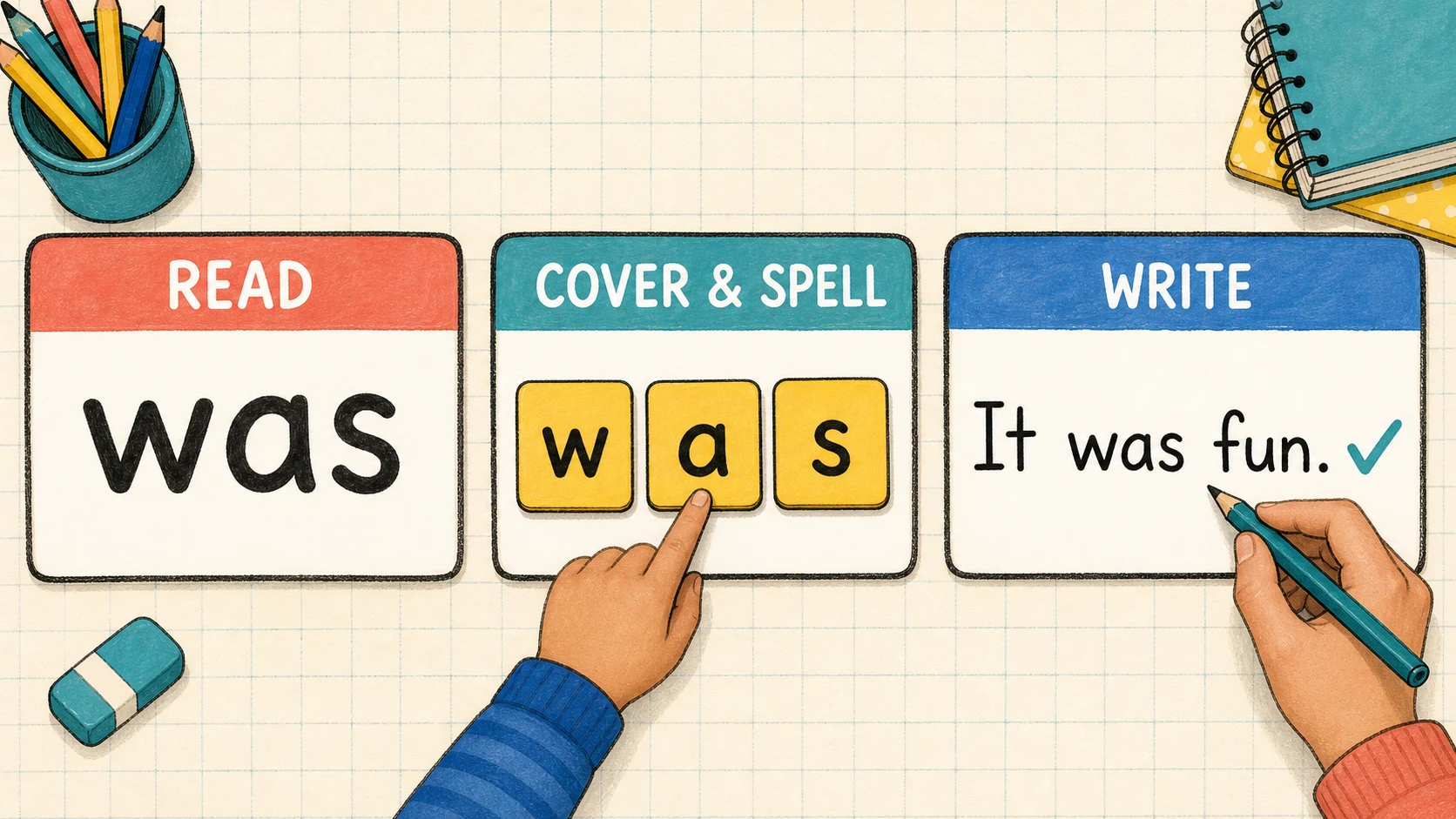
Compare the model and response from left to right, identify one mismatch, and correct it deliberately.
Common error patterns
| Observed work | Possible immediate issue | Useful response |
|---|---|---|
| Learner says nothing but copies accurately | Recognition is not yet demonstrated | Supply or elicit the word, then ask for a reread |
| A letter is omitted | Visual tracking or letter-sequence memory broke down | Compare each position with the printed model |
| Correct letters appear in the wrong order | Left-to-right sequencing needs support | Point and say each letter in order before rewriting |
| The word is written as it sounds | The learner relied on sound rather than the displayed spelling | Reconnect the spoken word to its conventional printed form |
| First copy is accurate; later copies drift | Attention or repeated checking decreased | Check after each copy rather than after all three |
| All copies are accurate but extremely labored | The word or writing process is not yet automatic | Keep practice brief and revisit later |
| Letters are poorly formed but identifiable | Handwriting needs support, while spelling may be correct | Record word accuracy separately from formation |
| Learner skips the third line | The routine or counting demand was missed | Point to each completed copy and count to three |
These are interpretations of the visible work, not diagnoses. A single worksheet cannot establish a learning condition, measure overall reading fluency, or explain why a child finds writing difficult.
Boundary cases that require judgment
A recognizable reversed letter may still preserve the intended letter identity, especially in early handwriting. Note the formation issue, but do not automatically treat the word as misspelled if the sequence is otherwise clear. If the mark could represent a different letter, ask the learner what letter was intended.
Capitalization is another boundary case. If the model uses lowercase and the learner writes an uppercase version of the correct letter, the word may be recognizable but does not exactly match the model. Treat this as a copying or letter-form issue and model the lowercase form without overstating the error.
Spacing between letters can make one word look like several pieces. Ask the learner to reread the response and compare its spacing with the model. The goal is a readable word, not typographic perfection.
Use the answer key responsibly
The separate answer key is a checking tool for the adult. It should confirm the intended response rather than replace close observation of how the learner worked.
For each item, check four things:
- The learner addressed the correct printed word.
- The learner wrote three responses.
- Each response contains the correct letters in the correct order.
- The learner can read the word, either immediately or after instruction.
Because the target word is printed on the worksheet, the learner can also participate in checking. Ask, “Does your first copy match the word at the top?” This is more instructive than revealing the answer key immediately.
Do not calculate a score and treat it as a complete measure of sight-word knowledge. Copying with a visible model, reading a word, and recalling its spelling without a model place different demands on the learner. Record those distinctions when they matter:
- R: read independently
- P: read after a prompt
- C: copied accurately
- M: later produced from memory
A learner who earns C but not R needs recognition practice, not simply more copying. A learner who earns R but struggles with C may know the word orally while needing additional handwriting support.
Plan retrieval after the worksheet
Immediate success does not show whether a word will be recognized later. Revisit a small selection on separate occasions, using the learner’s performance to determine spacing.
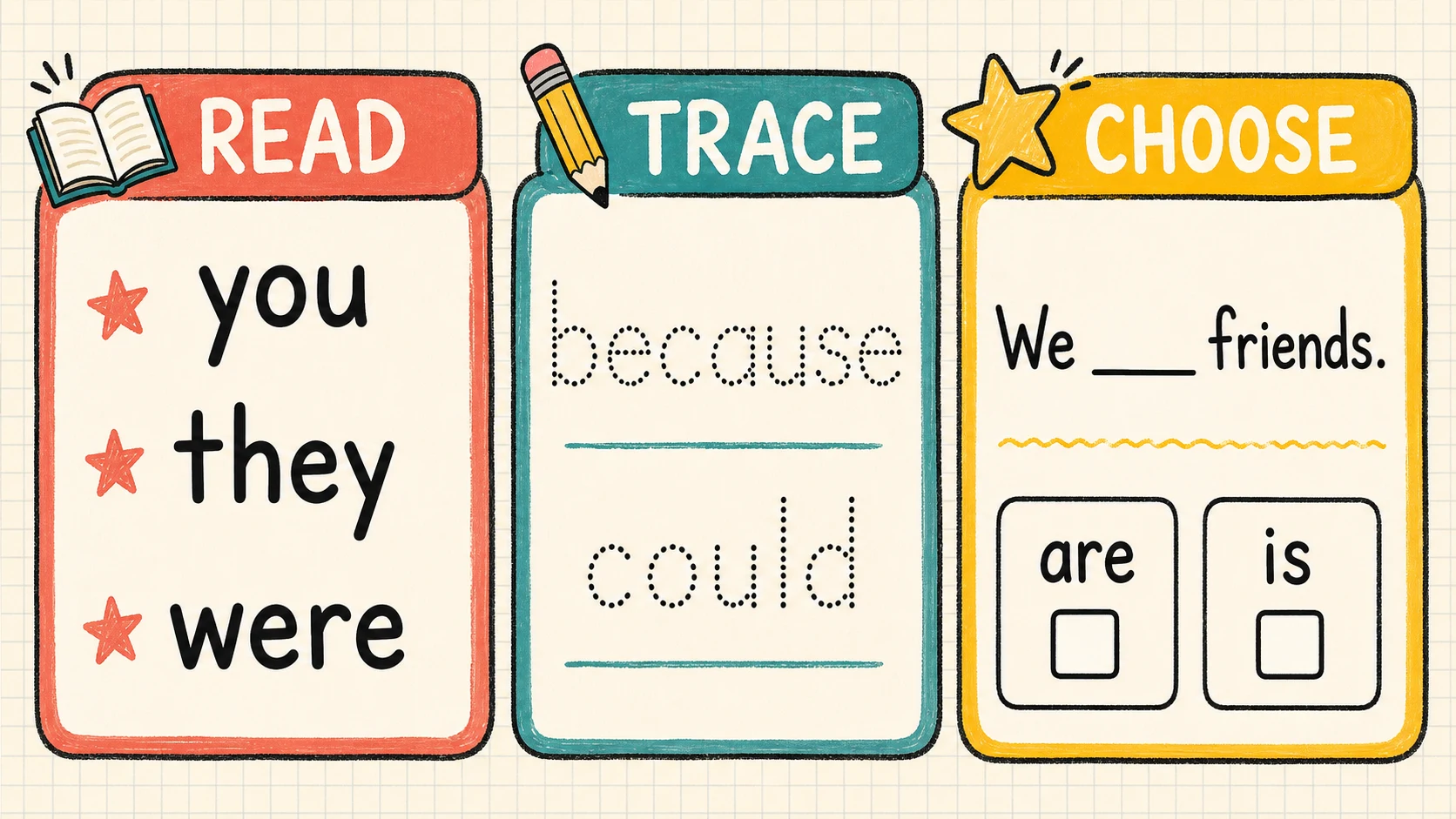
Revisit selected words after a pause and adjust the next review according to what the learner retains.
A practical review plan might look like this:
| Review point | Suggested activity | What to observe |
|---|---|---|
| Later in the same lesson | Reread two or three completed items | Can the learner recognize them after attention has shifted? |
| Next planned literacy session | Show selected words without the written copies | Which words are read without a prompt? |
| A later session | Ask for reading, then one written recall attempt | Is recognition stronger than spelling memory? |
| Following review | Mix secure words with words still needing support | Does recognition hold when order and context change? |
This is an adjustable plan, not a sourced universal schedule. Shorten the interval when a word is forgotten completely. Lengthen it when the learner recognizes the word accurately on separate occasions.
The supplied topic guidance suggests introducing a small number of new words while reviewing previously taught ones and treating repeated success across separate occasions as stronger evidence than one correct attempt. Apply that principle cautiously here: the worksheet contains 20 items, but it does not require all 20 to become new memory targets at once.
Avoid common misconceptions about the page
Writing a word three times does not by itself prove instant recognition. The printed model remains available, so the learner may rely primarily on copying.
Sight-word instruction also does not mean that phonics should be ignored. Some high-frequency words are decodable, while others contain spelling-sound relationships that require additional attention. When useful, identify the parts that follow known patterns and the parts that must be remembered. Keep that explanation within the learner’s current knowledge.
Likewise, “easy” does not mean “appropriate for every Pre-K learner without support.” A child who is just learning that print carries meaning may need oral word work and letter recognition before independent completion is reasonable. Another learner may read the words readily but still find three written repetitions physically demanding.
Finally, the worksheet is not a comprehensive reading lesson. It does not by itself assess connected-text reading, vocabulary, phonological awareness, or full phonics development. Use the Pre-K phonics collection to place this practice beside other foundational literacy work.
Decide what to do next from the learner’s work
Sort the completed items into three practical groups:
- Secure: Read independently and written accurately
- Developing: Read or written correctly after a light prompt
- Not yet secure: Misread, omitted, or copied inaccurately despite support
If most items are secure, revisit a few words later without the model and use them in short oral or written contexts. If many are developing, repeat the same read-point-spell-write-check routine with a smaller group. If many are not yet secure, return to explicit modeling and reduce the visible workload rather than assigning another full page immediately.
For continued, varied practice, the Pre-K Sight Words Worksheet Pack contains 18 worksheets. Choose further work because it matches the learner’s observed needs, not merely because another page is available. Your most useful next action is to complete four or five items from the free worksheet, record which words the learner reads without help, and then use the broader Sight Words topic guide to select the next practice step.
Put it into practice
Use the guide with a real printable
Move from explanation to a short, observable practice task. Check the first item together, then adjust the next session from the learner's actual work.
See the 18-worksheet pack