Complete guide
How to teach and practise kindergarten sight words worksheets - standard theme (easy)
How to use this 20-item sight-word worksheet
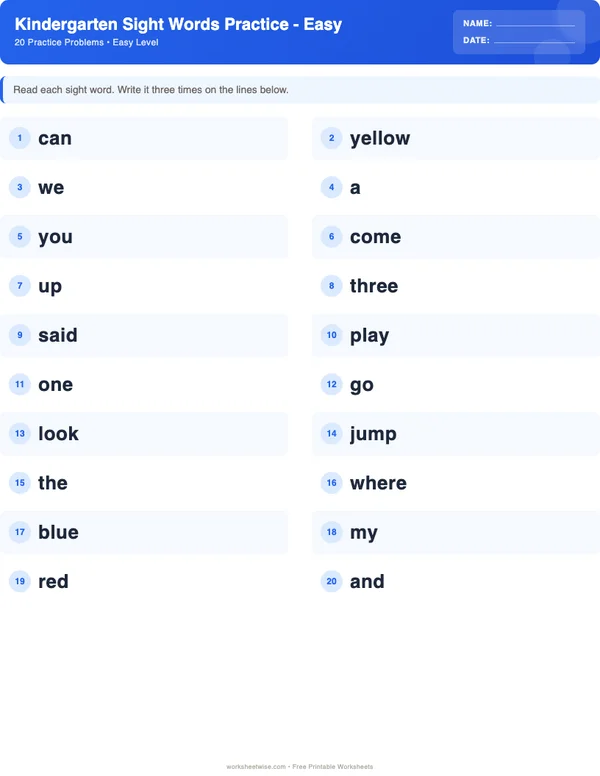
The free Kindergarten Sight Words worksheet asks the learner to read each printed word and write it three times. Use it as a focused lesson in accurate word recognition, letter-order memory, and spelling—not merely as a handwriting assignment.
A practical sequence is:
- Preview the printed words.
- Model one item aloud.
- Complete two or three items together.
- Let the learner attempt a manageable section independently.
- Review errors by comparing letters in order.
- Revisit uncertain words on later days.
The worksheet contains 20 items and includes a separate printable answer key. Twenty items may be appropriate in one sitting for some learners, but the learner’s observed work should determine the pace. Divide the page across shorter sessions when reading becomes hesitant, letter order deteriorates, or the learner begins copying without attending to the word.
Grade labels describe the intended practice level; they do not establish a universal sequence. Local curricula, classroom routines, and the words already taught may differ.
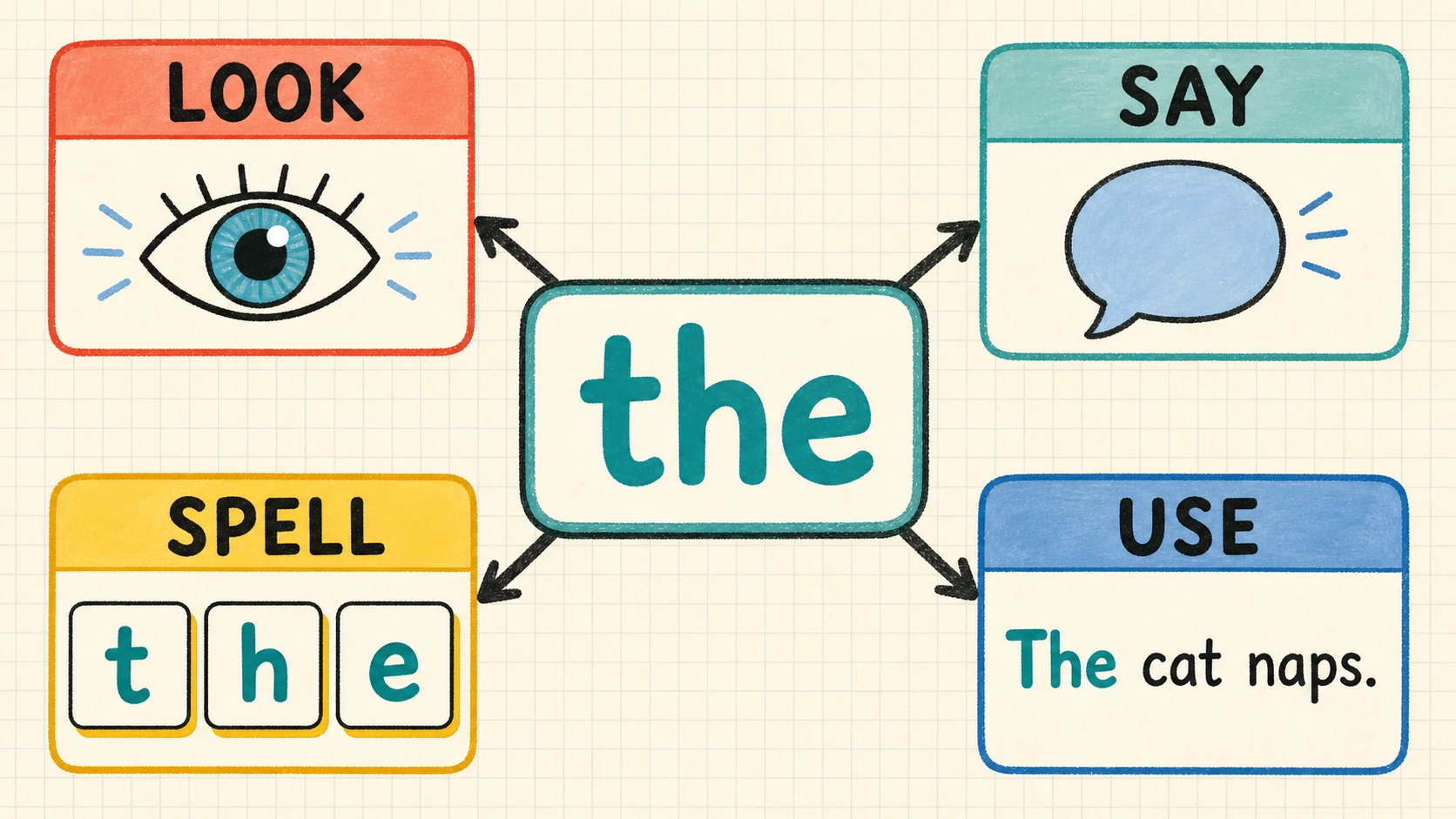
Preview, model, guide, release, check, and revisit.
What this worksheet practices
This easy-level printable focuses on four related skills from its catalogue description:
- sight-word recognition;
- reading fluency;
- word memory; and
- spelling.
The learner sees a printed word, reads it, and reproduces it three times. Repetition gives the adult several samples to inspect. It can reveal whether the learner recognizes the word, keeps its letters in the correct order, and writes it consistently.
The page does not, by itself, demonstrate that a word is recognized instantly in every setting. A learner may copy successfully while looking back at the model after each letter. Conversely, a learner may read a word correctly but form one letter imperfectly. Those performances call for different responses.
Sight words include common words that can be explained largely through familiar letter-sound relationships as well as words containing an unexpected spelling. The broader Sight Words topic guide explains that larger progression. This lesson stays with the exact read-and-write task on the printable.
The IES foundational reading practice guide supports explicit instruction in foundational reading skills at a high level. It did not evaluate this WorksheetWise printable. Similarly, the Common Core English Language Arts standards provide broad grade-level context for reading common high-frequency words, but the worksheet should not be described as comprehensive standards coverage.
Prepare the lesson before the learner starts
Print the worksheet and keep the answer key out of the learner’s immediate view. Provide a pencil and, if useful, a blank card or sheet of paper for covering later items. A quiet surface matters more than elaborate materials.
Preview the word set
Scan all 20 printed words before teaching. The catalogue does not provide the actual word list, so do not assume that every example in this guide appears on the page.
Sort the printed items mentally into three groups:
- words the learner has read accurately before;
- words that may need a reminder; and
- words that have not yet been taught.
This is a teaching decision, not an answer-key decision. If many words are unfamiliar, use only the known or recently taught portion first. The remaining items can wait until their words have been introduced.
Establish a starting point
Point to two or three printed words without asking for writing. Say, “Read this word if you know it.” Do not turn the preview into a high-pressure test. Its purpose is to decide how much modeling the learner needs.
Notice the kind of response:
- immediate and accurate;
- accurate after a pause;
- sounded out successfully;
- guessed from the first letter;
- confused with another word; or
- not attempted.
Those observations are more informative than a single total score. An immediate reading suggests stronger retrieval than a correct response reached only by repeatedly checking individual letters.
Keep the materials simple
The learner should be able to see the model word and the three writing lines clearly. If the full page feels visually crowded, cover the lower items. Reveal one item at a time without changing the reading-and-writing skill.
Avoid prewriting the answers in dotted letters unless tracing is an intentional first step. The original task asks the learner to write each word three times. Any added support should lead back toward that task.
A manageable lesson progression
| Phase | Adult action | Learner action | What to observe |
|---|---|---|---|
| Preview | Point to a few words and invite reading | Reads or says “I don’t know yet” | Recognition, hesitation, guessing |
| Model | Demonstrate one complete item | Watches and reads with the adult | Attention to the whole word |
| Guided practice | Prompt through two or three items | Reads, spells, and writes with support | Letter order and use of the model |
| Independent practice | Assign a small section | Completes items without immediate prompting | Accuracy, stamina, self-checking |
| Review | Compare each copy with the printed word | Finds and corrects differences | Ability to notice a mismatch |
| Retrieval | Revisit selected words later | Reads or writes without the page model | Whether the word can be recalled |
For a learner new to this format, one model plus two guided items may be appropriate before independent work. Another learner may need only a quick reminder of the directions. “Easy” describes the catalogue difficulty, not how every individual learner will experience all 20 items.
Model the task explicitly
Use a word from the actual page for the live demonstration. The examples below use catalogue-listed sight words to show the routine; they are not a claim about the worksheet’s unseen word list.
Say, inspect, spell, and write
A concise model might sound like this:
“The word is can. I read it first: can. I see the letters c-a-n. I will say the letters as I write them: c-a-n. Now I compare my copy with the printed word. Both begin with c, have a in the middle, and end with n.”
Then write the word on each of the three lines. Keep the spoken routine brief enough that attention remains on the word.
The supplied topic guidance recommends a sequence of seeing, saying, spelling, writing, and using a word in a sentence. On this printable, the core task ends after three written copies. A short oral sentence can confirm meaning, but it should not replace reading and spelling the word.
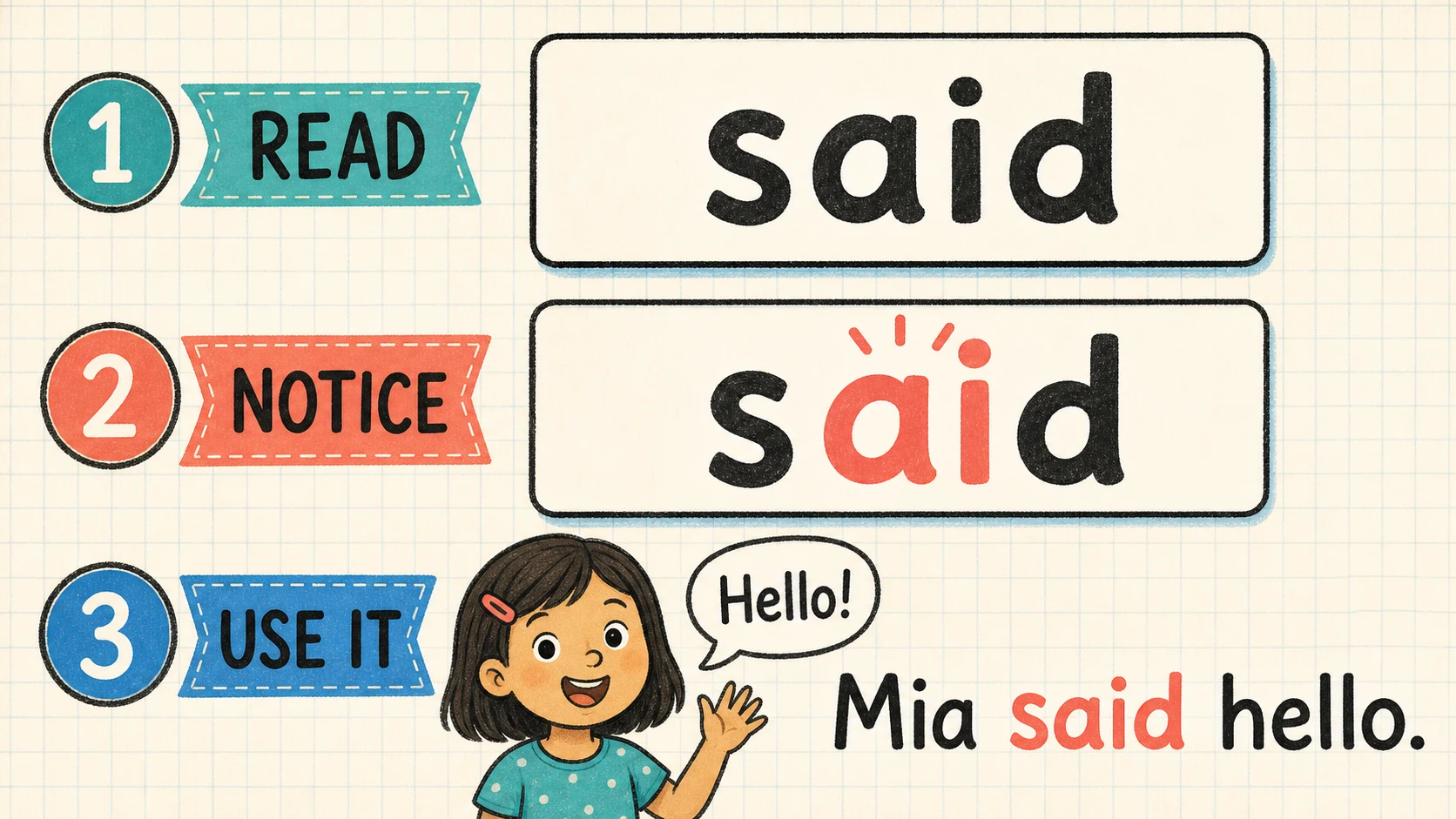
Each copy is checked against the printed model, letter by letter.
Show how to check without erasing too soon
If you deliberately make a simple error while modeling, choose one the learner can detect:
- model: can
- mistaken copy: cna
Point beneath the letters from left to right. The first letters match: c/c. The second letters do not: the model has a, while the copy has n. The third letters are also reversed. Rewrite can, then compare again.
This makes checking concrete. “Look carefully” is vague; “compare the first, middle, and last letters” tells the learner what to do.
Four fully checked practice examples
These examples demonstrate the verification process. Use the words printed on the worksheet during the actual lesson.
Example 1: can
Printed model: can
- Copy 1: can
- Copy 2: can
- Copy 3: can
Check: each copy has three letters in the order c-a-n. All begin with c, contain a in the middle, and end with n. The copies match the model.
Instructional sentence: “I can hop.”
The sentence is an optional meaning check. It is not evidence that the word appears on the worksheet.
Example 2: is
Printed model: is
- Copy 1: is
- Copy 2: is
- Copy 3: is
Check: each copy has two letters. The first is i, and the second is s. No letter is missing, added, or reversed in order.
Instructional sentence: “It is red.”
A common boundary issue is a learner who reads is correctly but writes si. That is not a recognition failure alone; the adult should check whether the learner retained the left-to-right letter sequence.
Example 3: and
Printed model: and
- Copy 1: and
- Copy 2: and
- Copy 3: and
Check: all copies contain a-n-d in that order. Each starts with a and ends with d. None omits the middle n.
Instructional sentence: “Cats and dogs.”
If the learner writes ad, point to the model and compare the number and position of letters. Ask, “Which letter comes between a and d?” This keeps the correction tied to the spelling.
Example 4: the
Printed model: the
- Copy 1: the
- Copy 2: the
- Copy 3: the
Check: every copy contains t-h-e, with t first, h second, and e last. All three match.
Instructional sentence: “Close the box.”
The catalogue identifies the as an example of a high-frequency word with an irregular spelling. Do not force a misleading sound-by-sound explanation. Draw attention to the exact letter sequence and to any part that needs to be remembered.
These four examples are fully checked because the model and each copy can be compared directly. They illustrate the procedure without claiming to reproduce four actual worksheet items.
Move from guided to independent practice
After modeling, complete two or three real items together. Point to the printed word and prompt:
- “Read the word.”
- “Say the letters.”
- “Write it once.”
- “Compare it.”
- “Write it two more times.”
- “Check all three copies.”
Gradually reduce your language. On the next item, ask only, “What do you do first?” Later, allow the learner to carry out the sequence independently.
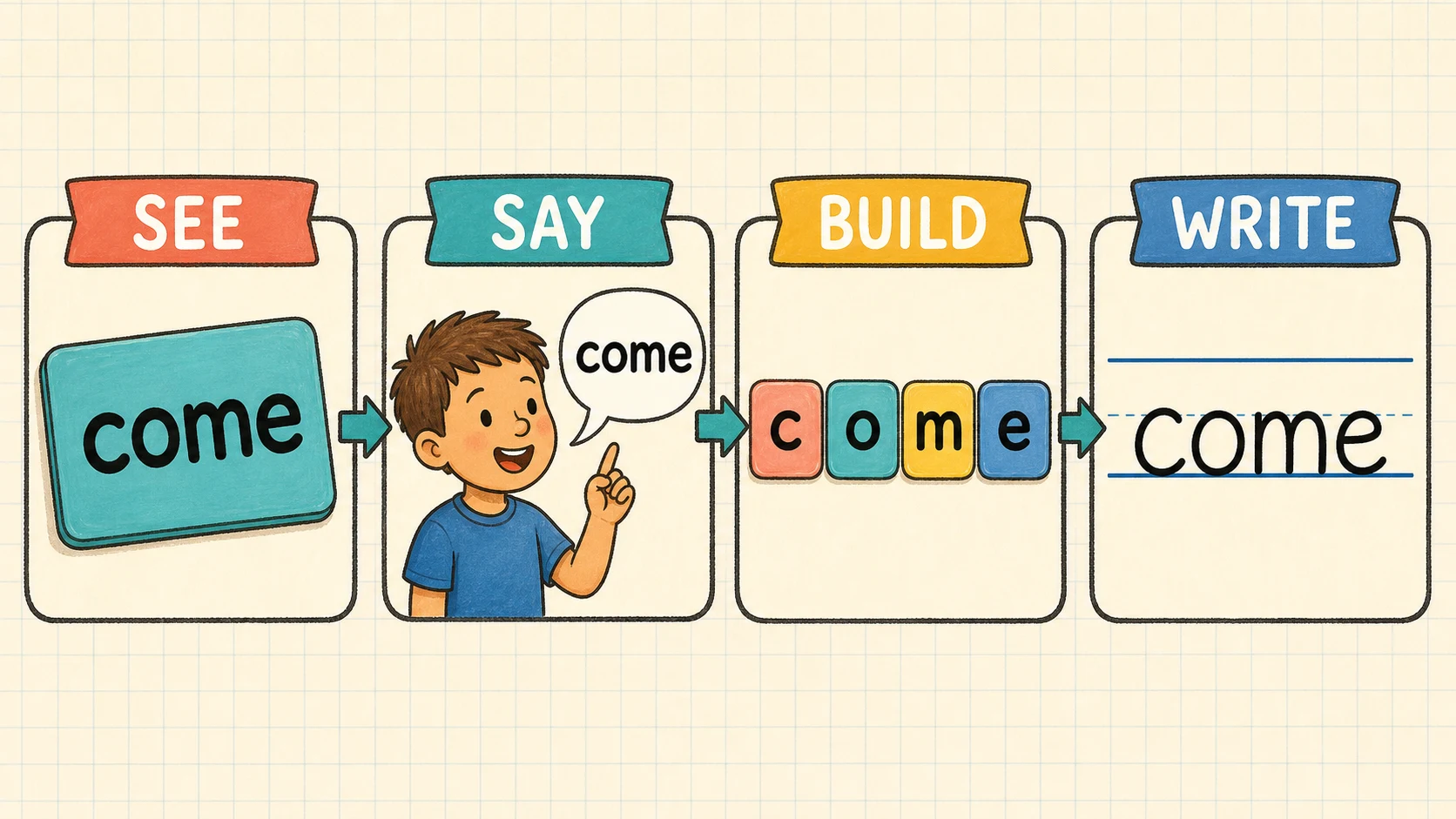
Support is reduced after the learner demonstrates the routine accurately.
Decide how much constitutes independent work
Independence means the learner can follow the established routine without the adult supplying the word or spelling. It does not require completing all 20 items at once.
Assign a small, visible stopping point: perhaps the next row or several items. Check that section before continuing. If accuracy remains stable, release another section. If errors increase, return briefly to guided practice or end the session and resume later.
The learner’s work should drive pacing. Signs that the section is becoming unproductive include repeatedly skipping words, copying letters in a different order, asking for every spelling, or rushing through the third copy with less accuracy than the first.
Preserve the reading component
A child can complete a copying page silently without retrieving the spoken word. Ask for the word before the first written copy. If pronunciation is uncertain, say the word and have the learner repeat it, then continue with the spelling routine.
Do not insist on instant reading of a word that has not been taught. First provide explicit instruction; later opportunities can assess retrieval.
Adapt support without changing the skill
Useful adaptations make the task accessible while retaining its central demand: read the printed word and reproduce its letters in order.
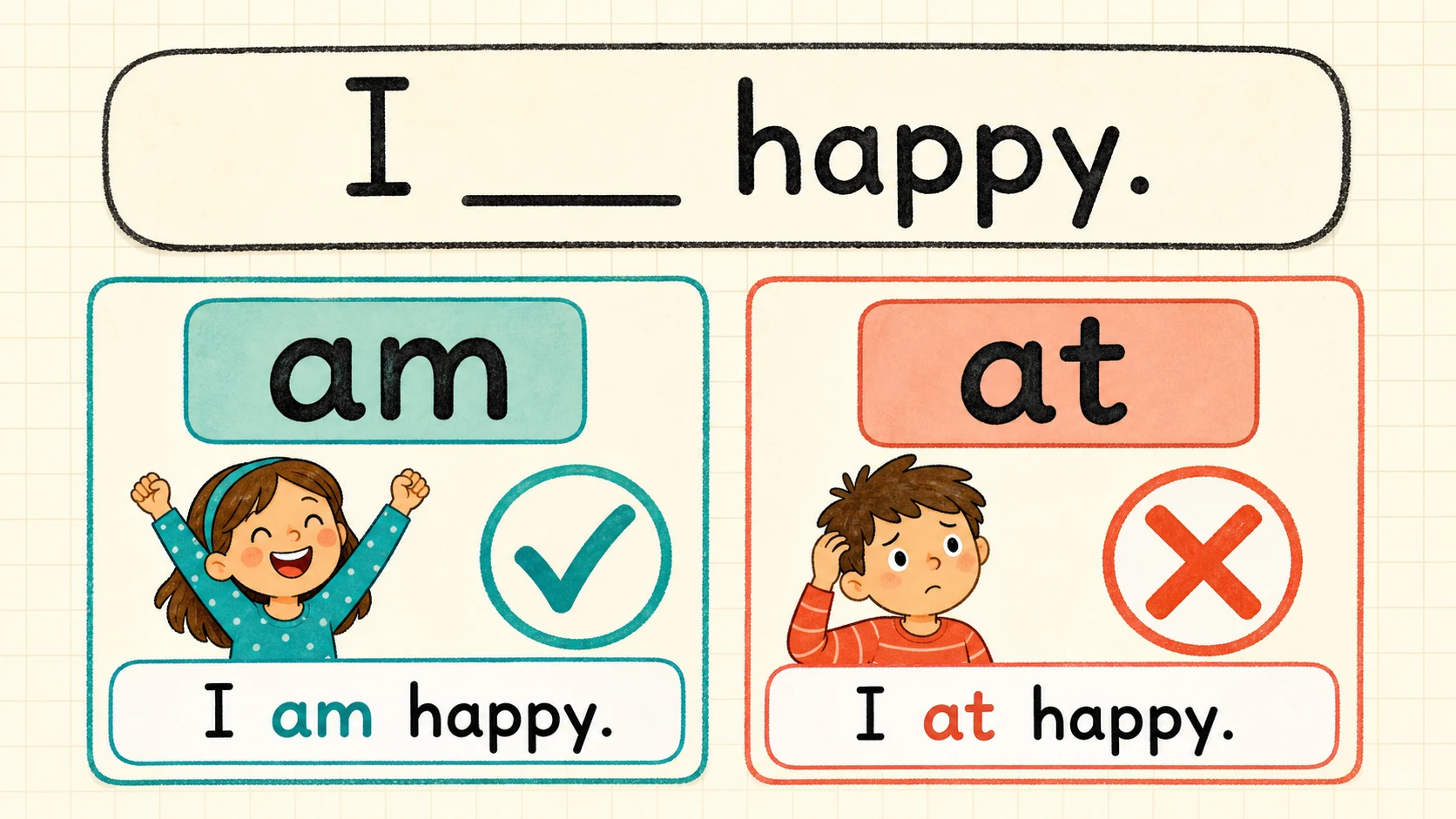
Reduce visual load, add a verbal routine, or divide the page into shorter sections.
For a learner overwhelmed by the full page
Cover all but one item. Reveal the next item only after the current word has been read, written three times, and checked. This reduces visual competition without removing recognition or spelling.
You may also split the 20 items across sessions. Mark a clear stopping point in pencil. Beginning again later is preferable to finishing through inattentive copying.
For a learner who recognizes words but misspells them
Emphasize ordered comparison. Ask the learner to touch or point under each printed letter while naming it, then do the same under the copy. If the word is and, the check is a-a, n-n, d-d.
After one accurate copy, briefly cover the model and invite a memory attempt. Reveal the model for checking. Treat that as additional practice rather than silently replacing one of the required three copies.
For a learner whose handwriting obscures the answer
Give enough space and ask for slower formation, but judge spelling separately from neatness. If the intended letters can be identified and are in the correct order, note the handwriting issue without calling the word misspelled.
If letter formation makes the response unreadable, have the learner name the letters orally and then rewrite the word once. The worksheet is not a complete handwriting assessment.
For a learner ready for a little more challenge
After the three copies, cover the printed word and ask for one additional oral reading or one memory spelling. Another option is to ask for a short sentence containing the word.
These extensions should be brief. They add retrieval or context while leaving the worksheet’s original task intact.
Interpret errors before correcting them
Errors are clues about the point at which the routine broke down. Record what happened rather than attaching a broad label to the learner.
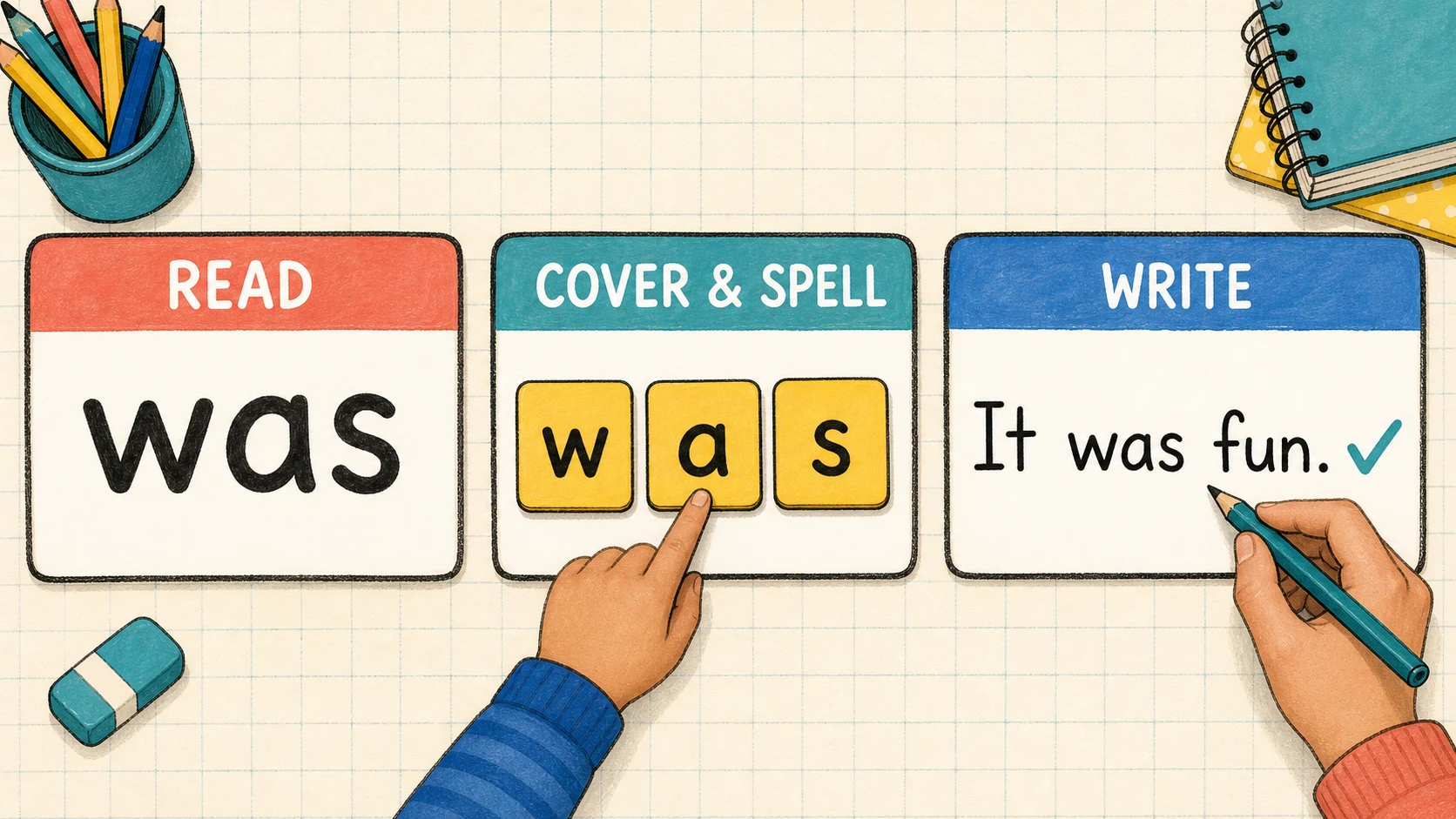
Read, compare from left to right, identify the difference, and rewrite once.
Reading errors and spelling errors are not identical
If the learner cannot read a word but copies it accurately, visual copying may be stronger than word recognition. Teach or review the spoken word, then check retrieval later without asking the learner to copy first.
If the learner reads correctly but writes the letters in the wrong order, focus on spelling memory and ordered comparison.
If the first copy is accurate but later copies are not, attention or pacing may be the issue. Shorten the work segment and require a check after every copy.
If all three copies contain the same omission, the learner may not be inspecting the whole model. Point beneath each letter and compare the word’s length.
Watch for guessing from partial information
A learner may see the first letter and say another familiar word. Do not respond only with “No.” Ask the learner to look across the complete word:
- “What is the first letter?”
- “What comes next?”
- “What is the last letter?”
- “Now read the whole word.”
This redirects attention to the printed form. It does not prove that the learner will recognize the word automatically later, so include it in retrieval review.
Avoid two common misconceptions
First, three accurate copies do not necessarily mean mastery. The model remained visible, so successful copying may depend on continuous reference.
Second, one misshapen letter does not automatically mean the word is unknown. Determine whether the learner selected the correct letter but formed it poorly, or selected a different letter entirely.
A third boundary case is an unfamiliar word. Difficulty with an untaught item should prompt instruction, not a conclusion that the learner has failed previously taught content.
Use the answer key responsibly
The separate answer key is useful for confirming the expected written forms and checking efficiently. It should not replace direct comparison with the printed word or observation of how the learner completed the task.
A responsible checking routine is:
- Read the learner’s response as written.
- Compare it with the printed model and answer key.
- Check letter identity, order, omissions, and additions.
- Ask the learner to find a mismatch when possible.
- Correct only the affected word.
- Note words that need later retrieval practice.
Because the activity presents each target word directly, the key may appear straightforward. Its value is consistency, especially when checking several pages. Still, it cannot show whether the learner read the word independently, copied letter by letter, received help, or worked from memory. Those facts come from observation.
The IES elementary writing practice guide offers high-level instructional framing for writing development. It does not certify this worksheet or turn a sight-word copying task into a comprehensive writing lesson. Sentence composition, idea development, and broader writing instruction require activities beyond this page.
Decide what to do after checking
Sort the results into instructional categories rather than relying only on a percentage.
- Accurate reading and accurate writing: include the word in later retrieval, but do not require immediate reteaching.
- Accurate after hesitation: schedule another reading opportunity soon.
- Accurate reading with inaccurate spelling: practice the letter sequence and compare from left to right.
- Accurate copying without independent reading: teach or review recognition.
- Repeated guessing: return attention to the whole printed word.
- Many errors late on the page: reduce the next session’s workload before changing the skill level.
The worksheet’s catalogue description identifies it as suitable for beginning practice or extra reinforcement. It does not provide a universal passing score. Use the pattern of responses, previous instruction, and later retrieval to make the next decision.
For a larger organized sequence, consult the Kindergarten phonics collection or the broader topic guide. Do not use this one page to replace systematic phonics, reading connected text, or instruction in unfamiliar words.
Schedule retrieval after the worksheet
Writing a visible model three times is initial practice. Retrieval asks the learner to produce the word after some time has passed and with less visual support.
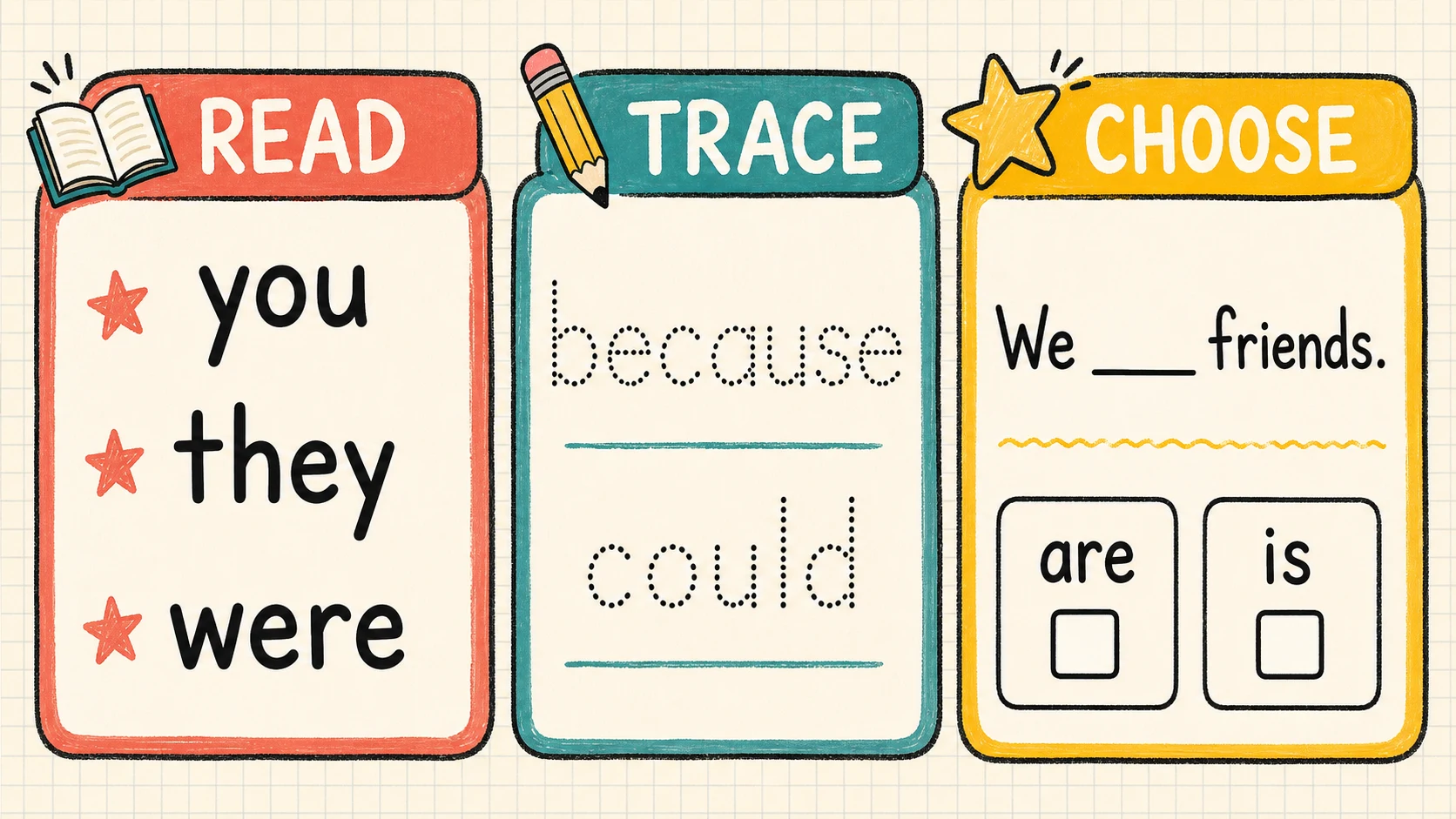
Revisit uncertain words after increasing intervals, adjusting the timing from observed performance.
A practical, flexible schedule is:
| Time | Brief review |
|---|---|
| End of the lesson | Read three to five selected words from the page |
| Next practice session | Read the selected words in mixed order |
| A few days later | Read them again; spell one or two without the model |
| The following week | Check the words in a fresh order or short text when available |
| Later review | Revisit words that remain hesitant or inaccurate |
This is an instructional suggestion, not a universal timetable. Shorten the interval when a word is forgotten. Lengthen it when the learner retrieves the word accurately on separate occasions.
The supplied topic guidance suggests moving words to a mastered group only after correct reading on three separate occasions. If you use that rule, record the occasions rather than counting three repetitions completed during one worksheet session. Reading connected text can then show whether recognition transfers beyond an isolated list.
Limitations and the honest next step
This worksheet provides focused practice, not a complete sight-word program. It cannot by itself establish fluent reading, diagnose a learning difficulty, measure comprehension, or demonstrate comprehensive standards alignment. It also does not replace phonemic awareness, phonics, oral language, decodable reading, or meaningful writing.
Its strength is narrower and useful: 20 clearly structured opportunities to read a high-frequency word, reproduce its spelling three times, and reveal patterns that an attentive adult can use for the next lesson.
After completing and checking the page, choose three to five uncertain words for spaced retrieval. Then use the Kindergarten Sight Words topic guide to place that review within broader practice. If the learner benefits from additional pages in the same area, the 18-worksheet Kindergarten Sight Words Worksheet Pack is the relevant next resource; select the next page according to the learner’s observed accuracy, not simply because the current worksheet is finished.
Put it into practice
Use the guide with a real printable
Move from explanation to a short, observable practice task. Check the first item together, then adjust the next session from the learner's actual work.
See the 18-worksheet pack