Complete guide
How to teach and practise 6th grade punctuation worksheets - standard theme (easy)
What this worksheet teaches
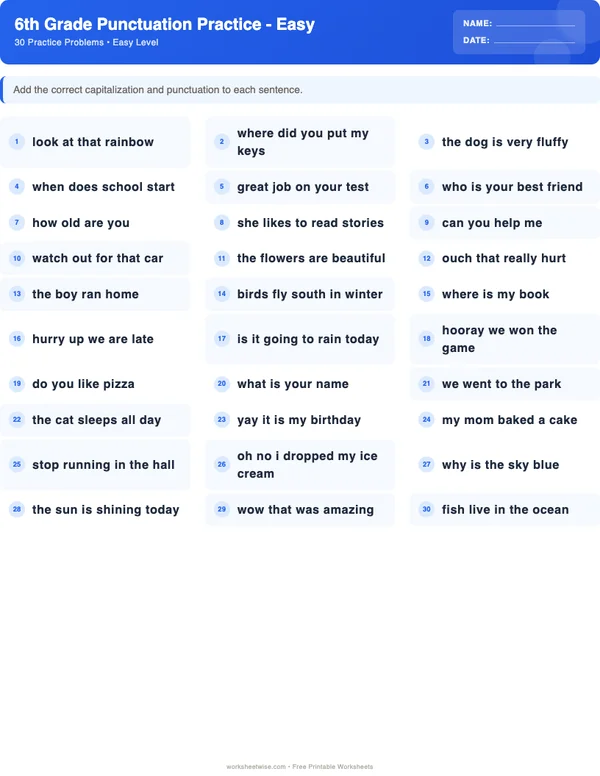
The free 6th Grade Punctuation worksheet gives a learner 30 easy-level sentences to correct. The direction is specific: add the correct capitalization and punctuation to each sentence. Practice is limited to four mechanics:
- Capitalization
- Periods
- Question marks
- Exclamation marks
The direct answer is simple: use the worksheet to see whether the learner can recognize a sentence’s purpose, choose the matching end mark, and restore basic capitalization. Model two or three sentences, complete a short guided set, and then let the learner work independently. Review errors by type rather than relying only on a total score.
This printable is useful for foundational reinforcement, a grammar warm-up, homework, homeschool practice, or a brief check before moving to more complex punctuation. It is not a complete sixth-grade punctuation course. Commas, apostrophes, quotation marks, colons, and semicolons fall outside this worksheet’s stated skill set.
Grade labels describe the intended practice level; local curricula and instructional sequences differ. An adult should use the learner’s observed work—not the label alone—to decide how much help and review are appropriate.
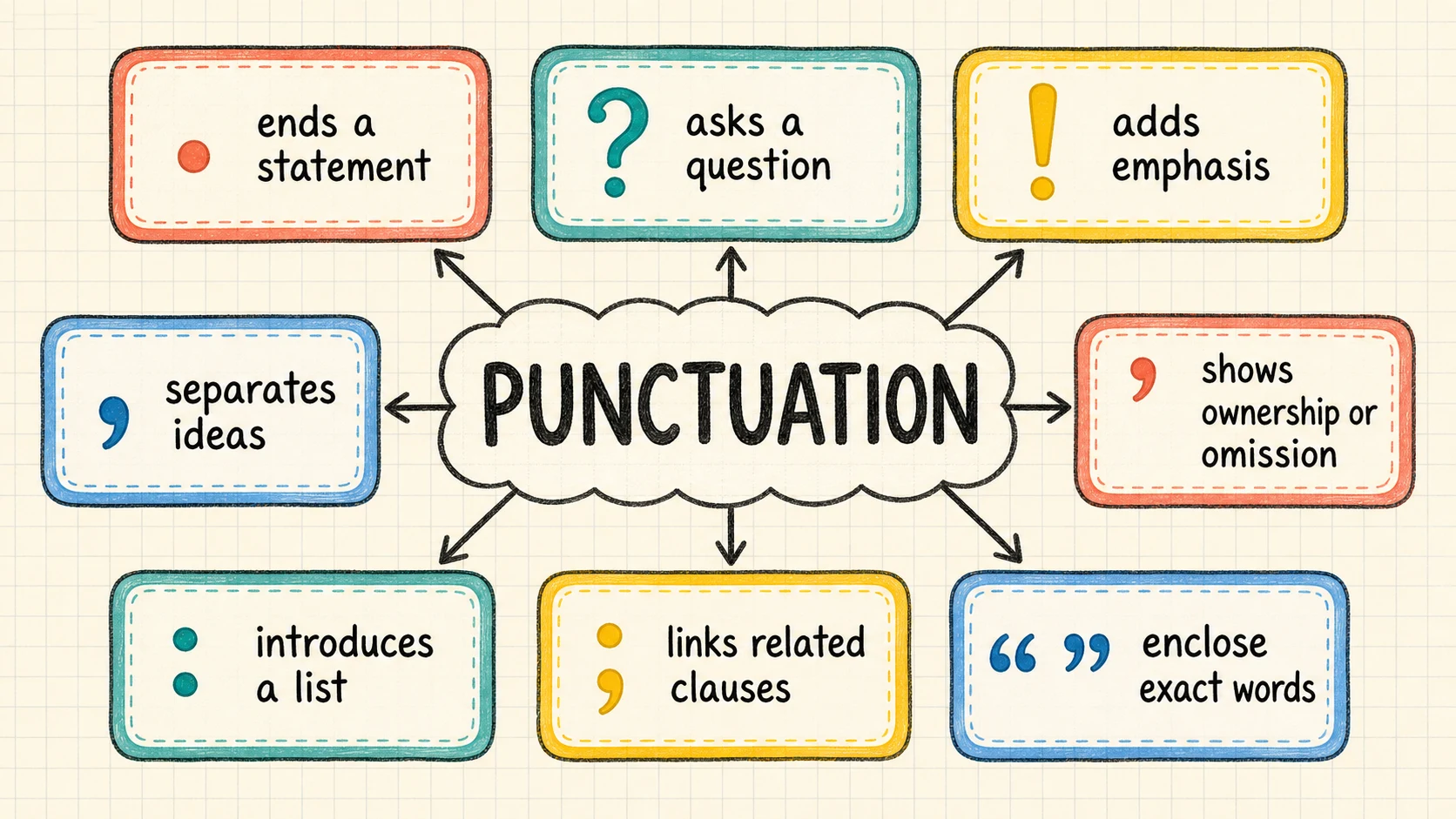
Move from a brief launch to modeling, guided practice, independent work, correction, and later retrieval.
Plan the lesson around evidence from the learner
A practical lesson can fit into one sitting, but there is no universal timetable. A learner who explains each decision accurately may move through the stages quickly. A learner who guesses, loses track of capitals, or confuses questions with statements needs a shorter set and more guided discussion.
| Lesson stage | Suggested use of the 30 items | What the adult observes | Possible decision |
|---|---|---|---|
| Launch | No worksheet items yet | Can the learner explain what a sentence needs at its beginning and end? | Review the four target conventions if needed. |
| Model | Adult-created examples | Does the learner follow the reasoning aloud? | Repeat the model if the choice of mark is unclear. |
| Guided practice | A small opening group | Can the learner identify sentence purpose with prompts? | Fade prompts when explanations become accurate. |
| Independent practice | Most remaining items | Can the learner correct both capitalization and punctuation without cues? | Pause if repeated errors show misunderstanding rather than inattention. |
| Review | Missed or uncertain items | Is there a pattern by skill or sentence type? | Reteach one pattern instead of repeating everything. |
| Retrieval | Selected examples on later days | Is the correction still accurate without immediate reminders? | Continue, reduce, or extend review from observed performance. |
Before printing, confirm that you have the worksheet and its separate answer key. Keep the key out of view during independent work. Provide a pencil and, if useful, a colored pencil for corrections.
This lesson structure is an instructional suggestion for using this printable. At a broader level, the IES guide on teaching elementary students to be effective writers recommends attention to the writing process and fluency with sentence construction and related transcription skills. It did not evaluate WorksheetWise or this particular activity.
Launch the task without doing the thinking for the learner
State the two-part job
Read the printed direction together: “Add the correct capitalization and punctuation to each sentence.” Ask the learner to restate it. A useful restatement is:
- Fix what needs a capital letter.
- Decide how the sentence ends.
Emphasize that every item requires both checks. A learner who adds a question mark but leaves the first word lowercase has completed only part of the task.
Avoid beginning with a long lecture on punctuation. Instead, establish a compact decision routine:
- Read the whole sentence.
- Decide whether it tells, asks, or expresses strong feeling.
- Capitalize the beginning and any other word that clearly requires a capital.
- Add a period, question mark, or exclamation mark.
- Read the corrected sentence again.
Activate relevant knowledge
Write these three sentence purposes on scrap paper:
| Purpose | Typical function | End mark |
|---|---|---|
| Statement | Tells something | Period |
| Question | Asks something | Question mark |
| Exclamation | Expresses strong feeling or force | Exclamation mark |
This is a starting tool, not an automatic word-matching rule. A sentence containing a question word is not necessarily a direct question, and an exciting topic does not automatically require an exclamation mark. The learner must consider what the complete sentence is doing.
Reading a sentence aloud can help make its purpose noticeable, but voice alone is not proof. A speaker can exaggerate a statement or read a question with a flat voice. Meaning and sentence structure should control the final choice.
Model a complete correction routine
Use examples you create rather than completing many worksheet items for the learner. The following examples are similar in skill demand, but they are not presented as items from the printable.
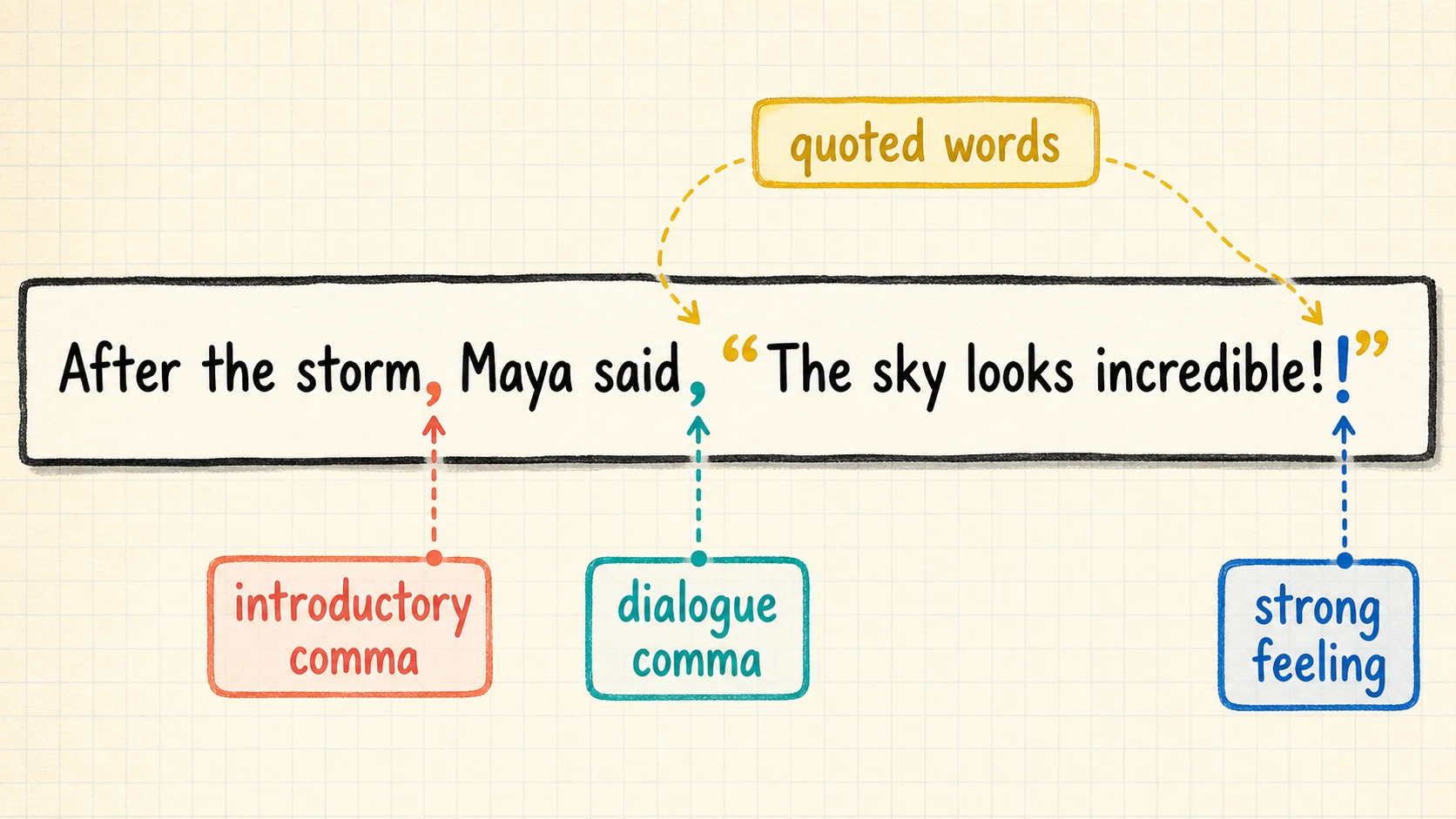
Check the beginning, identify the sentence’s purpose, select the end mark, and reread the result.
Worked example 1: a statement
Uncorrected: the library closes at six
Corrected: The library closes at six.
Reasoning:
thebegins the sentence, so its first letter becomes uppercase.- The sentence gives information. It does not ask a direct question or express a forceful reaction.
- A period completes the statement.
Verification: The begins with a capital, and the sentence ends with one period.
Worked example 2: a direct question
Uncorrected: where did maya place the science notes
Corrected: Where did Maya place the science notes?
Reasoning:
wherebegins the sentence, so it becomesWhere.Mayais a name and therefore needs a capital.- The speaker directly asks for information, so the sentence ends with a question mark.
Verification: The sentence has both necessary capitals and one question mark.
Worked example 3: an exclamation
Uncorrected: watch out for the falling branch
Corrected: Watch out for the falling branch!
Reasoning:
watchbegins the sentence, so it becomesWatch.- The sentence gives an urgent warning. An exclamation mark communicates that force.
- A period would make the warning less forceful, while a question mark would change it into a question.
Verification: The beginning is capitalized, and the mark matches the urgent meaning.
Think aloud, then shorten the explanation
During the first model, make every decision visible: “I read to the end before choosing a mark. This sentence asks where something is, so I need a question mark.” On the next example, shorten the reasoning. Then invite the learner to supply the next step.
The purpose of modeling is to reveal a repeatable process, not to demonstrate how quickly an adult can answer. The IES foundational reading practice guide concerns kindergarten through third grade rather than this sixth-grade worksheet. Its attention to language, word recognition, and connected text offers useful broad context, but it should not be treated as a sixth-grade punctuation recommendation or evidence about this printable.
Move from guided practice to independent work
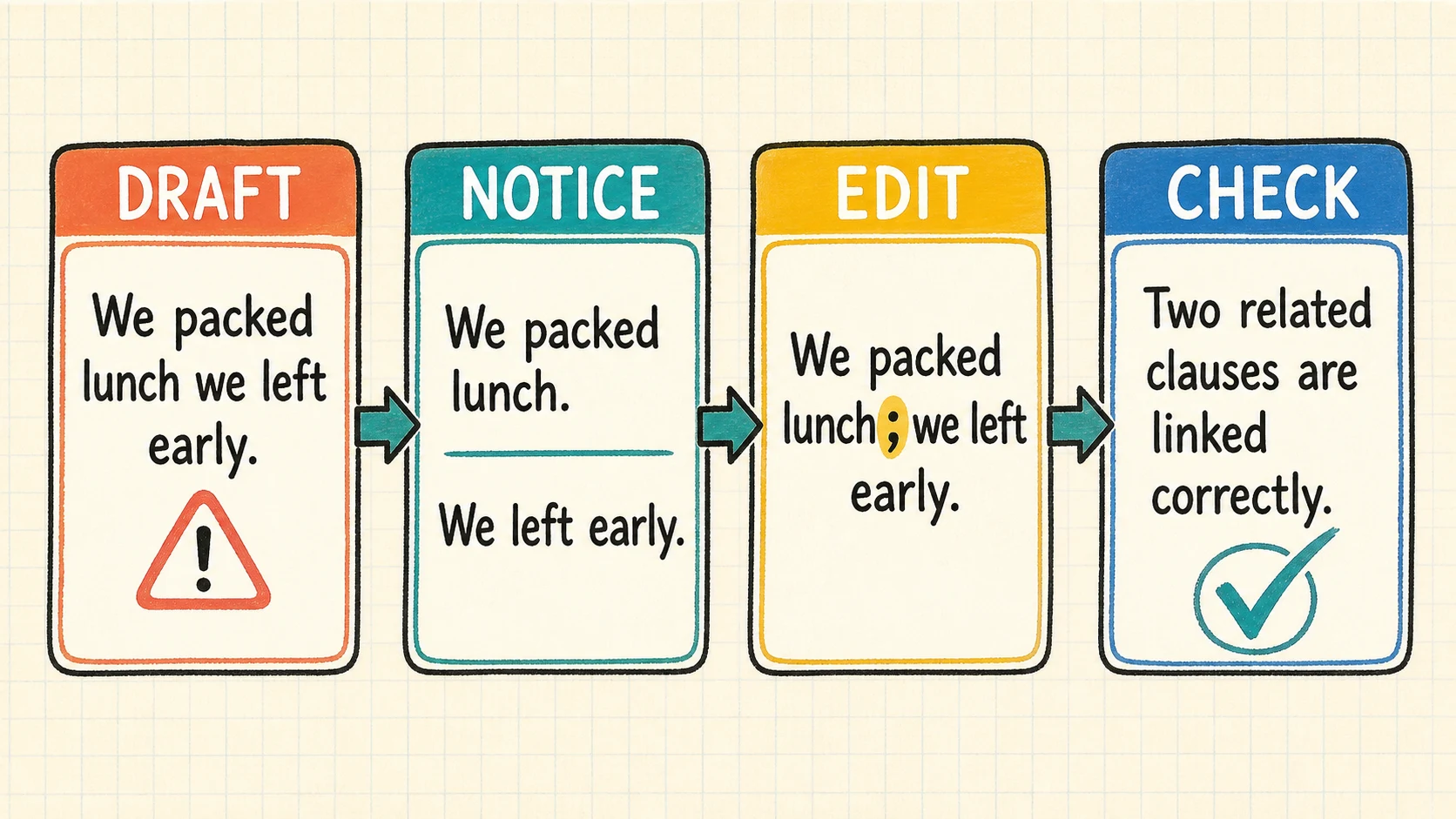
Prompts should reveal the learner’s reasoning and then fade as the learner becomes accurate.
Use prompts in a deliberate order
For a small opening group of worksheet items, ask questions that keep the intellectual work with the learner:
- “What is the complete sentence doing?”
- “Which word begins it?”
- “Are there any names or other words here that clearly need capitals?”
- “Which end mark matches the sentence’s purpose?”
- “How can you check both parts of the direction?”
If the learner answers correctly, reduce support. Move from several prompts to one broad prompt: “Show me how you will check this sentence.” Eventually, say only, “Complete the next one independently.”
If the learner gives a wrong answer, do not immediately name the correct punctuation. Ask for the purpose first. For example, “Is the speaker asking for information, telling something, or expressing a strong reaction?” This separates conceptual misunderstanding from a rushed mark.
Set a meaningful independence point
Independent work begins when the learner can apply the routine without being led through every choice. It does not require perfect performance during guided practice. A learner might explain four sentences correctly and be ready to try the next group alone.
Consider dividing the remaining page into manageable groups rather than announcing all 30 at once. After one group, make a brief observational check:
- Is every sentence beginning capitalized?
- Are end marks present?
- Is the learner reading full sentences before marking?
- Are corrections based on sentence purpose rather than a guessed pattern?
Do not correct each answer while independent work is underway. Continuous confirmation can turn independent practice into a cue-following exercise. If the learner is using a fundamentally wrong rule across several items, pause and reteach that rule; otherwise, save discussion for the review.
Use checked examples and boundary cases
Clear examples establish the rule. Boundary cases show whether the learner understands it rather than merely matching a familiar opening word.
Worked example 4: a command with a period
Uncorrected: place the completed form on my desk
Corrected: Place the completed form on my desk.
Reasoning:
Placebegins the sentence and needs a capital.- The sentence is a command, but it is calm rather than urgent or strongly emotional.
- Commands do not automatically take exclamation marks. A period is appropriate here.
This example prevents the misconception that every direction must end with !.
Worked example 5: a question word inside a statement
Uncorrected: i wonder where the bus will stop
Corrected: I wonder where the bus will stop.
Reasoning:
- The pronoun
Iis capitalized. - The complete sentence states that the speaker wonders about something.
whereintroduces the subject of the wondering, but the whole sentence is not a direct question.- The correct end mark is a period.
Compare it with the direct question Where will the bus stop? The two sentences concern the same information, but their structures and purposes differ.
Worked example 6: excitement without excessive punctuation
Uncorrected: we won the final game
A reasonable correction in an explicitly excited context is: We won the final game!
In a neutral report, We won the final game. could also be grammatical. This is an important boundary. If a worksheet sentence does not provide enough context to make emotional force unambiguous, consult the supplied answer key and discuss why its intended answer is likely. Do not teach the learner that punctuation is arbitrary, but do acknowledge when more than one reading is possible.
The worksheet’s easy level suggests straightforward exercises, so most items should support a clear intended choice. Still, an answer key records the worksheet’s intended response; it cannot supply context that is absent from a sentence.
A capitalization boundary
Uncorrected: our class visits the museum in may
Corrected: Our class visits the museum in May.
Our is capitalized because it begins the sentence, and May is capitalized because it names a month. class and museum remain lowercase because they are used generally here.
This example goes slightly beyond changing only the first letter while staying within the worksheet’s stated capitalization skill. If the learner’s page contains proper names, days, or months, have the learner check them. Do not introduce a large catalogue of capitalization rules unless the actual work shows that it is needed.
Adapt support without changing the target skill
Differentiation should make the same thinking more accessible. It should not replace punctuation decisions with unrelated copying, coloring, or guessing.
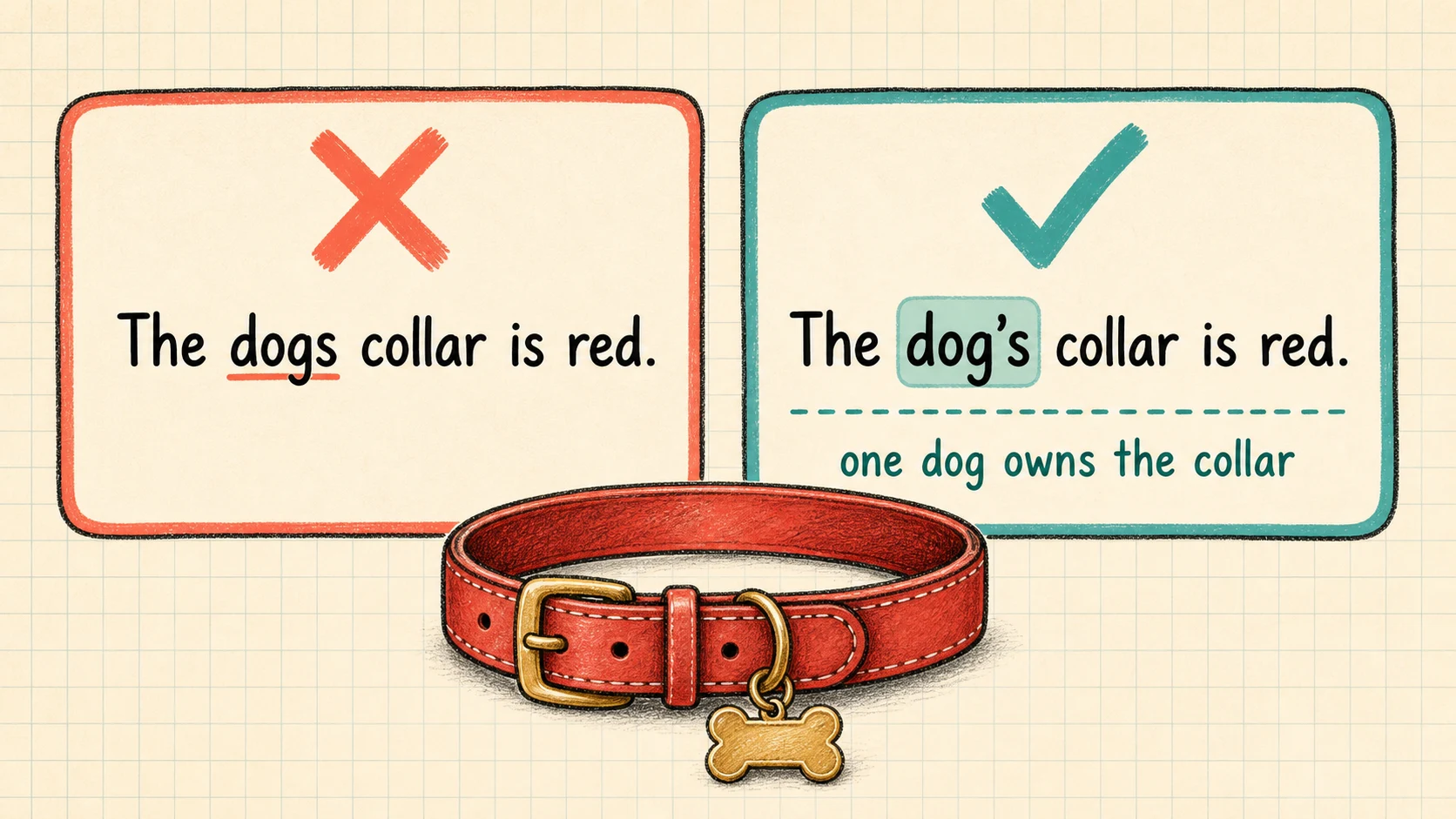
Change the amount of prompting, the visible workload, or the response method while preserving the capitalization-and-end-punctuation decision.
When the learner needs more support
Cover part of the page so only a few items are visible. Keep the three-purpose chart nearby. Let the learner point to “statement,” “question,” or “exclamation” before writing the mark. If handwriting effort is obscuring punctuation knowledge, the learner can state the correction aloud while the adult records exactly what is said for one or two diagnostic examples.
Another useful scaffold is a two-pass check:
- First pass: correct capitals only.
- Second pass: add end punctuation.
This reduces the number of details handled at once while preserving both worksheet skills. Later, return to a single-pass routine so the learner integrates the checks.
When performance is inconsistent
Ask the learner to place a small dot beside any answer that felt uncertain. Review dotted items first. Uncertainty can be more informative than a right-or-wrong total because a correct guess does not yet demonstrate a stable rule.
You can also ask for a brief oral label before the mark: “statement—period” or “question—question mark.” Remove this step once choices become consistent.
When the worksheet is immediately easy
Do not add unfamiliar punctuation to the original sentences and call it the same task. Instead, preserve the skill while increasing responsibility. Ask the learner to:
- Explain two choices without prompts.
- Find and correct both parts of each item in one pass.
- Write one original statement, direct question, and exclamation.
- Exchange those three unpunctuated sentences with a peer or family member for correction.
Original writing is a transfer check, not a substitute for completing the printable. For broader work beyond end punctuation, use the punctuation topic guide rather than stretching this easy worksheet beyond its scope.
Interpret errors before assigning more practice
A total number correct cannot show why errors occurred. Sort mistakes according to the decision that failed.
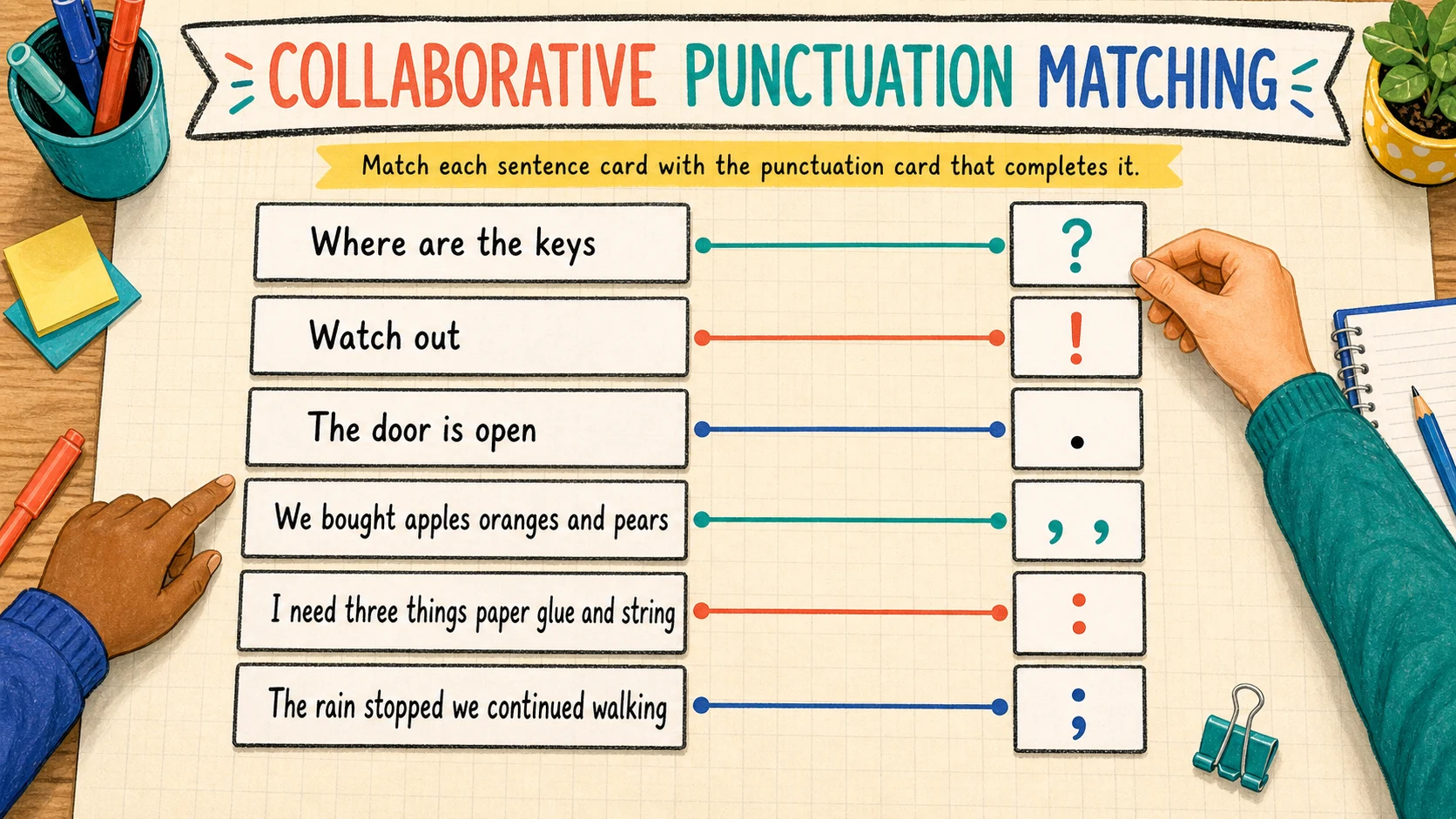
Classify the error, ask for the learner’s reasoning, reteach narrowly, and then check a fresh example.
Common patterns and likely interpretations
| Observed pattern | What it may indicate | Useful response |
|---|---|---|
| End marks are correct, but sentence beginnings stay lowercase | The learner may be focusing only on punctuation or overlooking the two-part direction. | Use the two-pass check, then return to integrated correction. |
| Nearly every item ends with a period | The learner may recognize sentences but not distinguish their purposes. | Contrast one statement, one direct question, and one urgent exclamation. |
| Every command receives an exclamation mark | The learner may equate commands with strong emotion. | Compare a calm direction with an urgent warning. |
Any sentence containing who, what, where, when, why, or how receives a question mark |
The learner may be matching a word rather than reading the whole structure. | Contrast “Where is it?” with “I know where it is.” |
| Capitals and marks are omitted near the end of the page | Attention, stamina, or checking may have changed across the task. | Use smaller groups and compare early and late accuracy before concluding that the rule is unknown. |
| Answers change after the adult merely pauses nearby | The learner may be relying on social cues rather than a self-check routine. | Ask for a reason and reduce yes-or-no confirmation. |
| The correct mark is named orally but written incorrectly | The concept may be stronger than the written execution. | Have the learner say, write, and point to the mark on a fresh example. |
These are instructional interpretations, not diagnoses. One error may be a slip. A repeated, explained pattern is stronger evidence of what to reteach. Avoid child-specific conclusions that the worksheet cannot support.
After discussing an error, give a new adult-created sentence with the same decision. If the learner corrects it and explains why, return to the page. If the same misunderstanding continues, stop adding volume and reteach the contrast.
Check the answer key responsibly
The separate printable key supports efficient checking, but it should come after the learner has attempted the work. First, ask the learner to perform a self-check without seeing the key:
- Point to the capital at the beginning of each sentence.
- Circle or name the end mark.
- Reread the complete corrected sentence.
- Mark uncertain choices for discussion.
Then compare the work with the supplied answer key. Use a neutral correction code if helpful: C for capitalization and E for end punctuation. A sentence can contain one kind of error or both.
Do not simply replace wrong marks and announce a score. Ask, “What purpose does this whole sentence serve?” The learner should make the correction and explain the relevant distinction. Record patterns privately if you need to plan review.
Treat ambiguous cases carefully. If the key uses an exclamation mark where a period also seems possible without additional context, explain the intended expressive reading. Do not tell the learner that the alternative is impossible if it produces a grammatical sentence under a reasonable neutral reading.
The Common Core English Language Arts overview places language use within a broader system of reading, writing, speaking, and listening, with grade-specific detail and literacy across subjects beginning in grade 6. Use that source as broad context only. This worksheet’s catalogue identifies capitalization, periods, question marks, and exclamation marks; it does not establish comprehensive standards alignment, and local requirements may organize these skills differently.
Decide what to do after the 30 items
If the learner is accurate and can explain choices
Move from isolated correction to brief application. Ask the learner to write a short paragraph containing a statement, a direct question, and an exclamation, then check its capitals and end marks. Next, consult the broader 6th Grade punctuation guide to choose an appropriate next skill instead of assuming a fixed sequence.
If one error pattern remains
Reteach only that contrast. For example, compare direct questions with statements containing question words. Use two or three fresh examples, then revisit selected missed items. Reprinting and repeating all 30 sentences may add work without clarifying the specific misunderstanding.
If several foundational errors remain
Return to a shorter model-guided-independent cycle on another day. The 6th Grade grammar hub can help place punctuation alongside other grammar practice, while the 6th Grade worksheet hub provides a wider view of available subjects.
For sustained punctuation practice, the 6th Grade Punctuation Worksheet Pack contains 18 worksheets and is listed at $4.79. It is an optional resource, not a necessary response to one imperfect page. Base the decision on recurring evidence from the learner’s work.
Schedule retrieval rather than immediate repetition
A learner may correct a sentence immediately after an explanation without retaining the distinction. Later retrieval checks whether the rule can be used after the prompt and answer are no longer fresh.
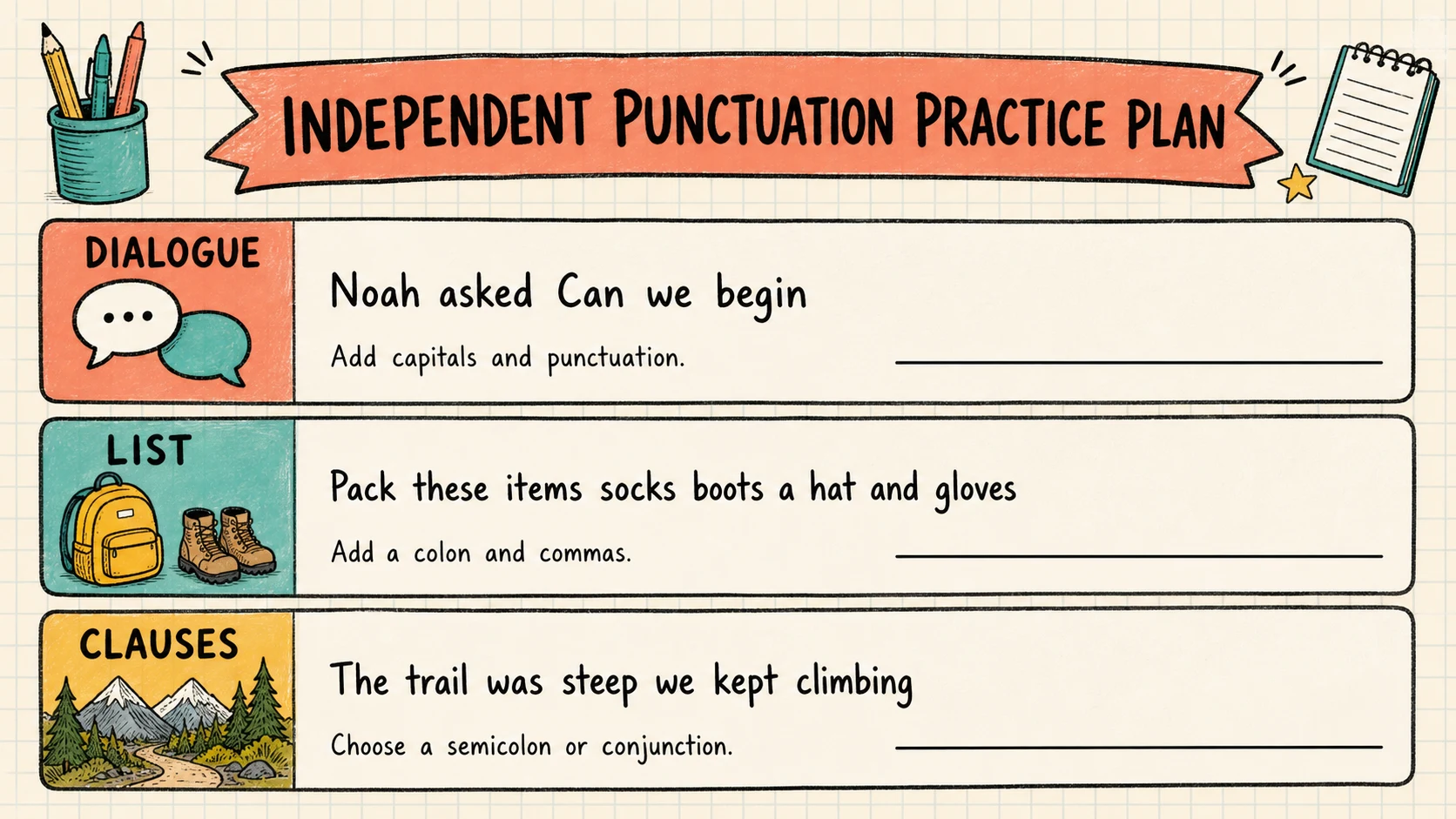
Revisit a small, purposeful sample later and adjust the schedule from the learner’s actual performance.
A flexible plan might look like this:
| Review point | Suggested task | Decision evidence |
|---|---|---|
| Later in the lesson | Correct one fresh sentence for each target end mark. | Can the learner apply the rule after other activity? |
| A day or two later | Correct three to five mixed sentences without the purpose chart. | Are choices accurate without immediate cues? |
| About a week later | Revisit selected error types plus one new example of each. | Are earlier misconceptions returning? |
| During later writing | Check capitals and end marks in the learner’s own paragraph. | Does the skill transfer beyond isolated items? |
These intervals are instructional suggestions, not a universal timetable or sourced prescription. Shorten or extend them according to observed work. If retrieval is accurate and well explained, reduce the frequency. If the learner repeats the same misconception, restore the relevant prompt and use a closer review.
Keep the worksheet’s limitations visible
This printable offers 30 straightforward correction exercises and a separate answer key. It can reveal useful patterns in basic capitalization and end punctuation, but it cannot by itself measure the learner’s complete writing ability, reading comprehension, attention, or command of sixth-grade grammar.
It also does not teach the entire punctuation progression. Commas in lists or compound sentences, apostrophes, dialogue punctuation, colons, and semicolons require their own examples and instruction. Follow the topic guide for that broader view rather than duplicating the whole progression here.
The honest next action is to complete the free worksheet, sort any errors by capitalization or sentence purpose, and schedule a small retrieval check. If the learner handles those checks independently, choose the next punctuation focus from the topic guide or create targeted follow-up material with the free worksheet generators.
Put it into practice
Use the guide with a real printable
Move from explanation to a short, observable practice task. Check the first item together, then adjust the next session from the learner's actual work.
See the 18-worksheet pack