Complete guide
How to teach and practise 2nd grade consonant blends worksheets - standard theme (easy)
What This Worksheet Teaches
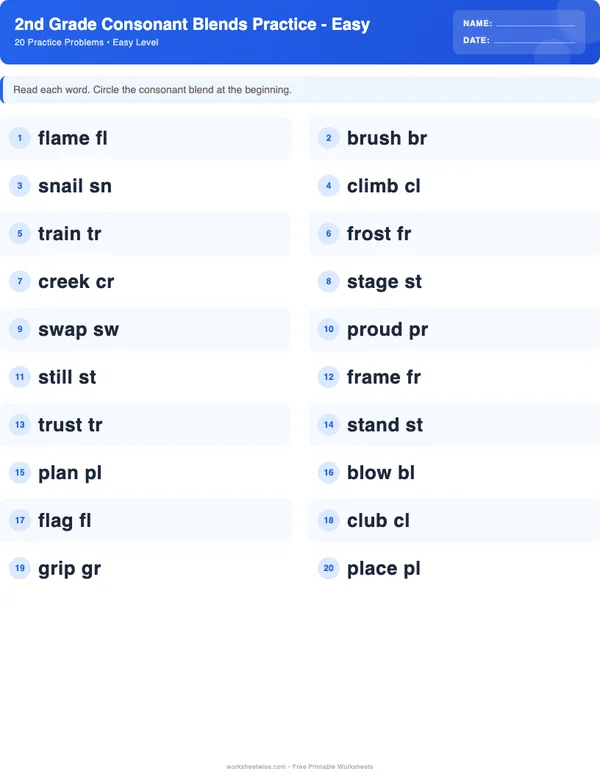
The free 2nd Grade Consonant Blends worksheet gives a learner 20 easy-level items with one consistent direction: Read each word. Circle the consonant blend at the beginning. Its immediate purpose is to help the learner notice two or three opening consonants, hear the separate sounds they represent, and identify those letters within a complete word.
A productive lesson can be simple: explain what a blend is, model two or three examples, complete several items together, and then let the learner try the remaining items independently. Watch the work rather than relying only on the final score. A learner who reads accurately but circles inconsistently needs different support from one who omits a consonant while reading.
This printable is intended for 2nd Grade practice, but grade labels describe an intended practice level, not a guarantee that every learner has encountered the same sequence. Local curricula and instructional sequences differ. Use the learner’s observed decoding and identification—not age or grade label alone—to decide how much modeling, practice, and review is appropriate.
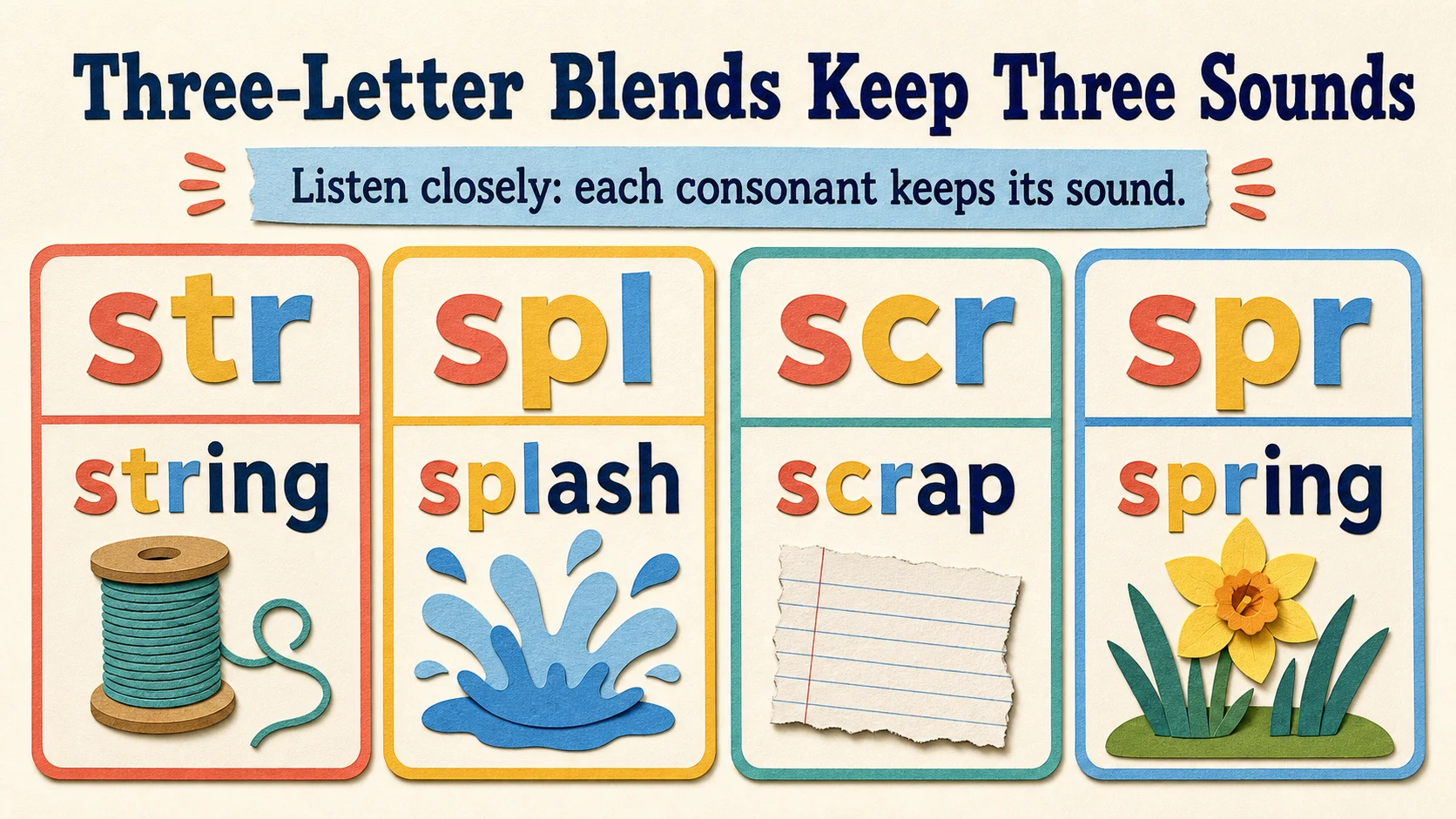
The lesson moves from a brief explanation through modeling, guided practice, independent work, feedback, and later retrieval.
A Practical Lesson at a Glance
The entire 20-item page does not have to be completed in one sitting. The following sequence is an instructional suggestion for using this specific printable. It is not a universal timetable.
| Lesson phase | Adult action | Learner action | What to observe |
|---|---|---|---|
| Prepare | Print the worksheet and keep the answer key separate. | Get a pencil or crayon and attend to the directions. | Is the page visually manageable? |
| Explain | Define a consonant blend using one whole-word example. | Listen, repeat the word, and identify the opening sounds. | Can the learner hear both consonants? |
| Model | Think aloud through two or three examples that are not worksheet items. | Follow how the spoken sounds connect to the letters. | Does the learner understand what should be circled? |
| Guide | Complete a small group of worksheet items together. | Read each word and explain the choice. | Is the learner decoding or guessing? |
| Release | Assign a manageable set of remaining items. | Work independently. | Are errors isolated or repeated? |
| Review | Discuss selected responses before showing the key. | Reread, reconsider, and correct when appropriate. | Can the learner explain a correction? |
| Retrieve | Revisit a few words after a delay. | Identify the blends without copying earlier marks. | Does the skill remain available later? |
This short, explicit sequence is consistent with the broad instructional emphasis in the IES foundational reading practice guide: learners need systematic instruction and opportunities to apply foundational reading skills. That source offers high-level guidance; it did not evaluate WorksheetWise or this particular printable.
Prepare the Learner and the Page
Check the prerequisite without giving a separate test
Consonant blends are a step beyond simple consonant-vowel-consonant words. Two or three consonants appear together, and each consonant retains its individual sound. Before starting, ask the learner to read one or two familiar words such as lap or ten. Then compare one with a blend, such as clap or tent.
You are not looking for perfect fluency. You are checking whether the learner can:
- Attend to the beginning of a spoken word.
- Connect common consonant letters with their sounds.
- Read or attempt a whole one-syllable word.
- Follow the physical direction to circle a specific letter group.
If reading a simple word consumes all of the learner’s attention, the worksheet may require close adult support. You can still preserve the target skill by reading the whole word aloud and asking the learner to listen for and circle the beginning blend. Later, return to learner-led decoding.
Keep the answer key out of sight
The worksheet includes a separate printable answer key. Keep it available to the adult but separate from the learner’s page during the first attempt. This prevents copying and makes the learner’s marks more useful as evidence.
Preview the direction aloud exactly as written: “Read each word. Circle the consonant blend at the beginning.” Then ask the learner to explain the job in their own words. A suitable response might be, “Read the word and circle the consonants at the start.” If the learner instead plans to circle the whole word or only the first letter, clarify the response format before judging phonics knowledge.
Explain the Target Clearly
Define a blend through a whole word
Say: “A consonant blend is a group of consonants together in a word. We can still hear each consonant sound. In stop, the beginning is st. I hear /s/ and /t/, so I circle both letters.”
Keep the word intact. The catalogue guidance recommends teaching blends in whole words rather than only rehearsing isolated letter pairs. Isolated practice can help the learner attend to a difficult sound sequence, but the learner ultimately needs to recognize that sequence while reading a word.
Common initial blends include groups such as st, sl, bl, cl, fr, and tr. This worksheet specifically asks for blends at the beginning of words. Final blends such as -nd, -nt, and -mp belong to the broader topic, but they are not the response target on this page.
For a fuller progression through initial and final patterns, use the Consonant Blends topic guide. It is more useful to link to that broader sequence than to turn this one printable into a complete blends curriculum.
Make the location part of the instruction
Emphasize the word beginning. Point to the left edge of a sample word and slide a finger under the letters as you read. A learner may understand blends generally yet circle a consonant pair at the end because both letters are easy to see. The location cue helps separate “find any adjacent consonants” from “find the opening consonant blend.”
The Common Core English Language Arts standards provide broad context for foundational decoding work, including regularly spelled one-syllable words and vowel distinctions. They do not establish that this exact worksheet provides comprehensive standards coverage. Local expectations and teaching sequences may also differ.
Model the Task with Fully Checked Examples
Use examples before touching the learner’s 20 responses. That preserves the worksheet as a more informative practice sample. The following examples are similar to the worksheet task; they are not claims about which words appear on the printable.
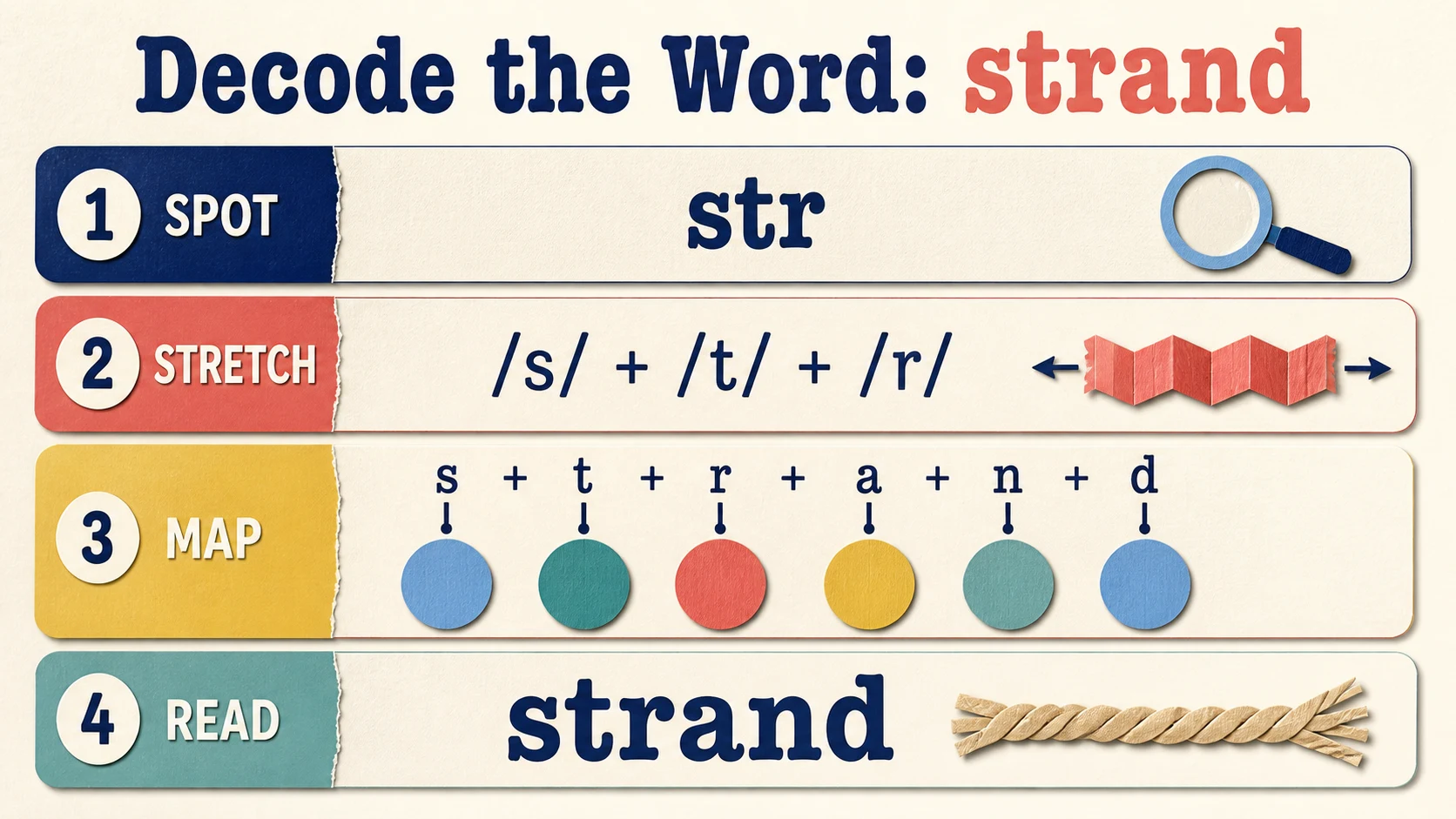
The model connects the spoken opening sounds, the printed letters, and the exact part to circle.
Example 1: stop
Write stop.
- Read the whole word: stop.
- Stretch the beginning slightly: sss-t-op.
- Identify the first two consonant sounds: /s/ and /t/.
- Match those sounds to s and t.
- Circle st, not only s and not the whole word.
Checked answer: (st)op
This example is useful because /s/ can be stretched, making the transition into /t/ easier to notice. Do not add a vowel between the consonants. Saying “suh-top” changes the sound sequence and can obscure the blend.
Example 2: clap
Write clap.
- Read clap.
- Compare it with lap.
- Notice that clap begins with /k/ followed by /l/.
- Identify the printed letters c and l.
- Circle cl.
Checked answer: (cl)ap
The letter c represents /k/ in this word. The blend is identified from both the letters and the sounds in the whole word.
Example 3: frog
Write frog.
- Read frog.
- Listen to the beginning: /f/ then /r/.
- Locate f and r at the start.
- Circle both consonants.
Checked answer: (fr)og
If the learner circles only f, ask, “What sound comes immediately after /f/ before the vowel?” The goal is to recover the second consonant, not merely to tell the answer.
Example 4: swim
Write swim.
- Read swim.
- Separate the opening sounds briefly: /s/–/w/.
- Blend them back into the whole word.
- Circle sw.
Checked answer: (sw)im
The w must remain audible. If the learner reads the word correctly but circles only s, the difficulty may be visual identification or interpretation of the direction rather than decoding.
Example 5: tent as a boundary case
Write tent and ask what should be circled if the direction is limited to a beginning blend.
Checked response: no beginning blend should be circled. The word begins with a single consonant, t. The final nt is a consonant blend, but it is at the end, outside this task’s stated target.
This boundary example teaches the learner to use the full direction. It should not be inserted as an extra scored item or used to imply that the worksheet contains no-blend words.
Example 6: ship as a contrast
Write ship. The opening letters sh work together as one sound rather than preserving two separately audible consonant sounds. Under the supplied definition, that is not a consonant blend.
Checked response: do not identify sh as a blend.
Keep this contrast brief. The worksheet is for consonant-blend practice, not a full lesson on every consonant pattern. If the distinction creates confusion, return to clear blend examples such as stop, clap, and frog.
Move from Guided to Independent Practice
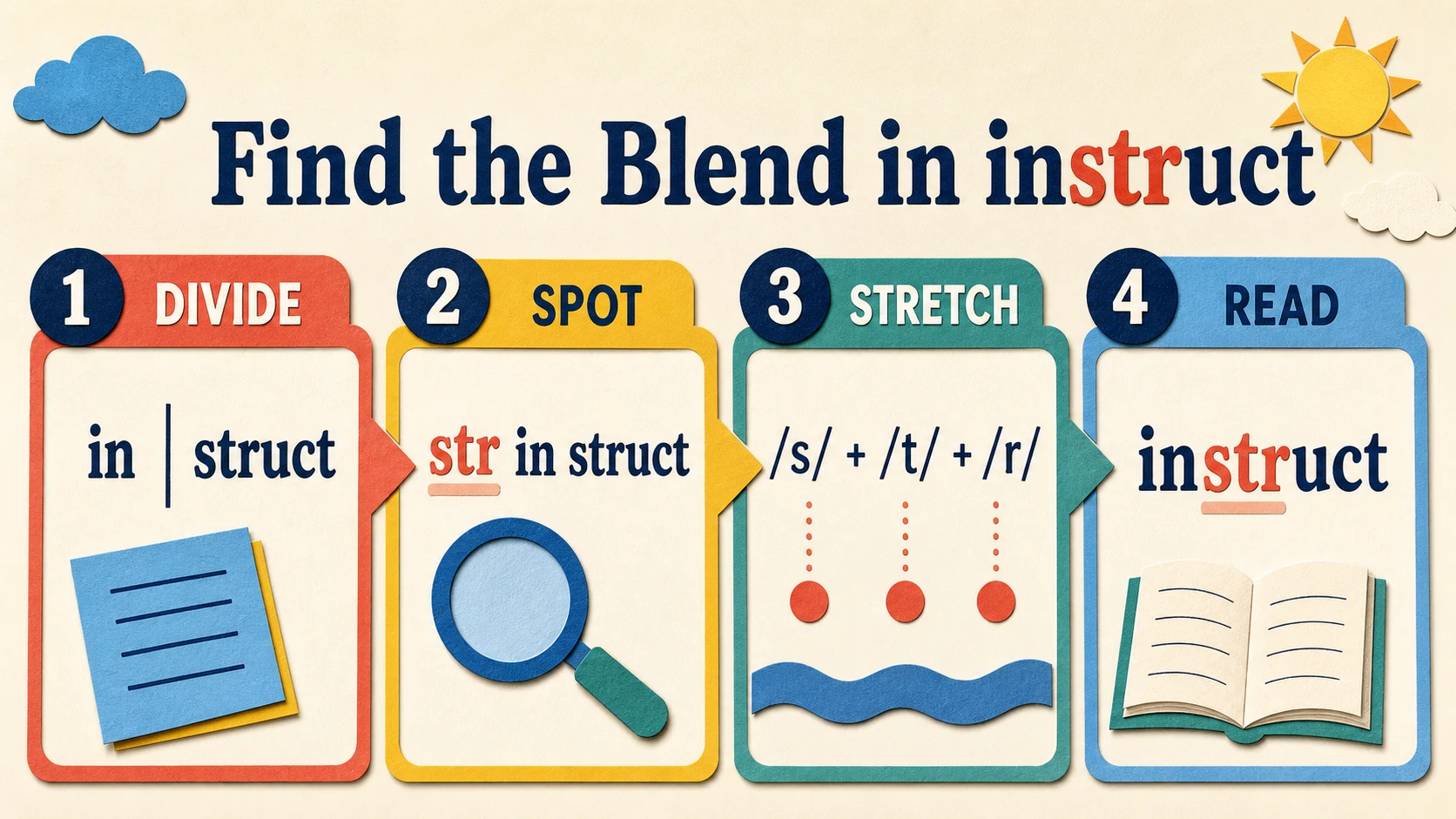
Guided practice should reveal the learner’s reasoning before the adult releases the remaining items.
Guide a small first set
Complete the first few worksheet items together. For each word, prompt in this order:
- “Read the whole word.”
- “Say the beginning slowly.”
- “Which consonant sounds do you hear before the vowel?”
- “Which letters show those sounds?”
- “What will you circle?”
This prompt sequence keeps attention on decoding rather than visual guessing. It also gives the adult several points at which to observe the process. If the learner reads the word accurately, names both opening consonants, and circles them correctly, begin fading the prompts.
Avoid turning every item into a long oral examination. After the learner demonstrates the routine, shorten your cue to “Read, listen, circle.” Excessive prompting can make a simple 20-item page tiring and can hide whether the learner can act independently.
Release only as much as the learner can manage
Independent practice need not mean completing all remaining items at once. You might release four items, check the process, and then release another group. This preserves independence while preventing the learner from rehearsing the same misunderstanding across most of the page.
Pause when you see a repeated error pattern. For example, if the learner circles only the first consonant three times, stop and reteach with one fresh model. Continuing without correction would give more practice in the wrong response.
If the learner is accurate and explains the pattern confidently, allow a longer independent stretch. The observed work should drive pacing. The word “easy” describes the worksheet’s catalogue difficulty, not how every learner must experience it.
Adapt Support Without Changing the Skill
Differentiation should change access, amount, or prompting while keeping the central task intact: read a word and identify its beginning consonant blend.
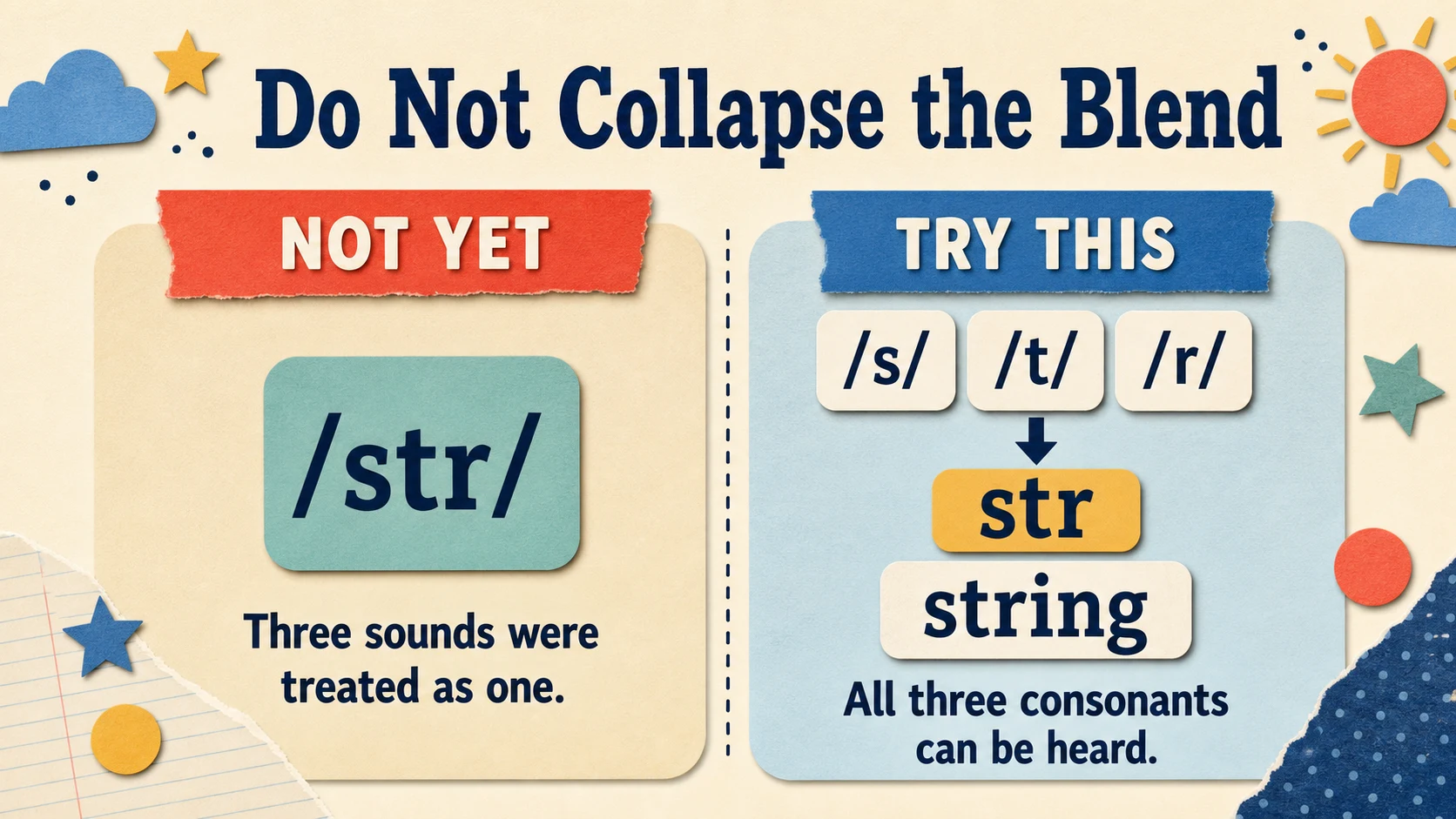
Support can be adjusted through pacing, sound prompts, and response format while preserving the same phonics target.
When the learner needs more support
Cover the lower part of the page with a blank sheet so only one row or small group is visible. This reduces the amount of print competing for attention without simplifying the phonics decision.
Read a difficult word aloud once, then ask the learner to repeat it, stretch the opening, and circle the blend. This adapts access when independent word reading is the barrier. It does not prove that the learner independently decoded that item, so note the support you provided.
You can also let the learner tap one finger for each opening consonant sound. For stop, one tap represents /s/ and the next /t/. Then the learner blends the word and circles st. The catalogue specifically suggests sound tapping when a learner drops one consonant.
If handwriting or circling is awkward, allow highlighting or underlining the same beginning letters. The phonics skill remains unchanged as long as the learner must identify the entire blend.
When the learner is nearly independent
Use a minimal cue such as “Check the whole beginning.” Do not immediately name the missing letter. Ask the learner to reread the word and compare the spoken opening with the circled letters.
Another option is delayed checking: let the learner complete four items, then review that set. This offers a manageable amount of independent practice while errors are still recent enough to discuss.
When the learner finishes accurately
Ask for a brief explanation on selected items: “How do you know those two letters form the beginning blend?” A clear answer should connect the letters with two audible consonant sounds at the start.
You can extend the same skill with a short word chain from the catalogue guidance:
lap → clap → clam → clamp
Discuss what changes at each step. Clap and clam have the initial blend cl; clamp keeps cl at the beginning and adds a final blend. This is an extension after successful worksheet work, not an additional requirement for earning credit on the page.
The 2nd Grade phonics collection can provide related practice when a learner needs work on an adjacent decoding skill rather than more repetitions of the same page.
Interpret Errors Before Correcting Them
A total score is useful, but the kind of error tells you more about what to teach next.
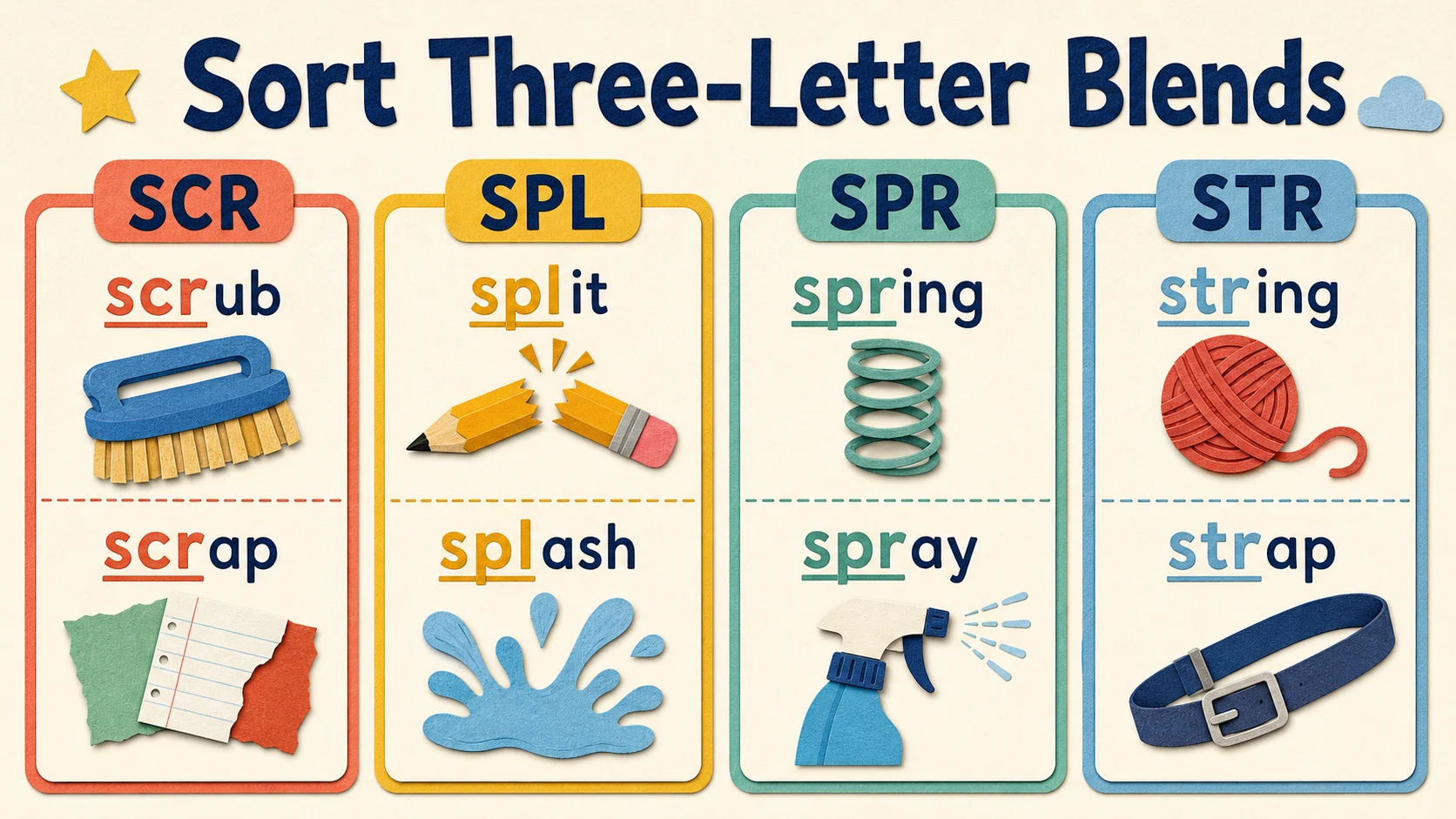
Rereading, listening, comparing, and correcting helps distinguish a decoding problem from a marking mistake.
Only the first consonant is circled
Suppose the word is frog, but the learner circles only f. Ask the learner to read the word aloud.
- If the learner says frog with both /f/ and /r/, the sound sequence may be understood even though the visual response is incomplete.
- If the learner says something closer to fog, the second consonant is being dropped during decoding.
- If the learner says frog and points to fr but circles only f, review the direction and response format.
For a dropped sound, tap /f/ and /r/ separately, then blend the complete word. For an incomplete mark, have the learner compare what was said, pointed to, and circled.
An extra vowel is included
A learner might circle sta in a word beginning with st. This often reflects uncertainty about where the consonant group ends. Ask, “Which letter shows the vowel sound?” Then restate that the target is the consonants before that vowel.
Do not frame the whole response as careless. The learner may have heard the opening chunk correctly but not yet separated the blend from the vowel.
A final blend is circled
If the learner circles nt in tent, the learner may recognize a real consonant blend while overlooking the word beginning in the direction. Acknowledge the accurate observation, then redirect the location: “Yes, nt is together at the end. This page asks for a blend at the beginning.”
That response preserves what the learner understood while correcting the task decision.
Adjacent consonants are selected without reading
A learner may scan for any pair of consonant letters and circle them without attempting the word. Ask for the whole word before accepting the answer. Because the defining feature is that the consonants retain their sounds, the spoken word is part of the reasoning, not an optional extra.
Reading is accurate, but marks are inconsistent
Do a short oral check with two or three missed items. If the learner can name the complete beginning blends orally, the worksheet score may understate phonics knowledge. Record that distinction: for example, “Read correctly; needed a reminder to circle both letters.”
Writing and marking demands can affect how knowledge appears on paper. The IES elementary writing practice guide offers high-level guidance about explicit instruction, modeling, and supported writing practice. It does not assess this worksheet, and it should not be used to claim that a particular marking error has one certain cause.
Check the Answer Key Responsibly
The included answer key supports efficient checking, but it should confirm analysis rather than replace it.
First, let the learner finish the agreed independent set. Next, ask the learner to reread any uncertain word before revealing the keyed response. Then compare the marked letters with the answer key. Finally, discuss one or two representative errors instead of reciting every correction.
For each item, consider three separate questions:
- Was the word read accurately?
- Was the complete beginning blend identified?
- Was the intended letter group marked clearly?
Count an answer as correct only when it meets the printed task. At the same time, note partial evidence. Reading stop correctly while circling only s is not a fully correct worksheet response, but it is instructionally different from reading stop as sop.
Do not use the key to infer a diagnosis, a fixed reading level, or broad mastery of phonics. Twenty easy-level items provide a narrow sample of beginning-blend identification. They do not comprehensively measure connected-text reading, spelling, final blends, unfamiliar-word decoding, comprehension, or every phonics expectation.
Decide What the Work Shows
Sort the page into a practical instructional pattern rather than relying on one percentage threshold.
Secure and independent
The learner reads the words, circles complete beginning blends, and handles most or all items without prompting. A few self-corrected marks do not necessarily require another full lesson. Move toward application in fresh words or connected text and schedule a short retrieval check.
Accurate with prompts
The learner succeeds after cues such as “Say the beginning slowly” or “Circle both consonants.” Repeat a smaller set later with fewer prompts. The next goal is not simply more correct answers; it is correct performance with reduced adult support.
One recurring misconception
The learner repeatedly drops the second consonant, includes a vowel, or selects a final blend. Teach that specific distinction using a few fresh words, then return to selected worksheet items. Avoid restarting the entire page unless the learner would benefit from a clean attempt after a meaningful delay.
Broad decoding difficulty
The learner cannot read many words even after the direction is understood. Provide oral support so the learner can still practice hearing beginning blends, but record that the items were not decoded independently. Review prerequisite decoding work through the 2nd Grade worksheet hub or the phonics collection before adding harder blend tasks.
Schedule Retrieval After the First Lesson
Retrieval means asking the learner to identify the skill again after some time has passed, without simply copying earlier answers. The schedule below is a flexible instructional suggestion, not a sourced universal timetable.
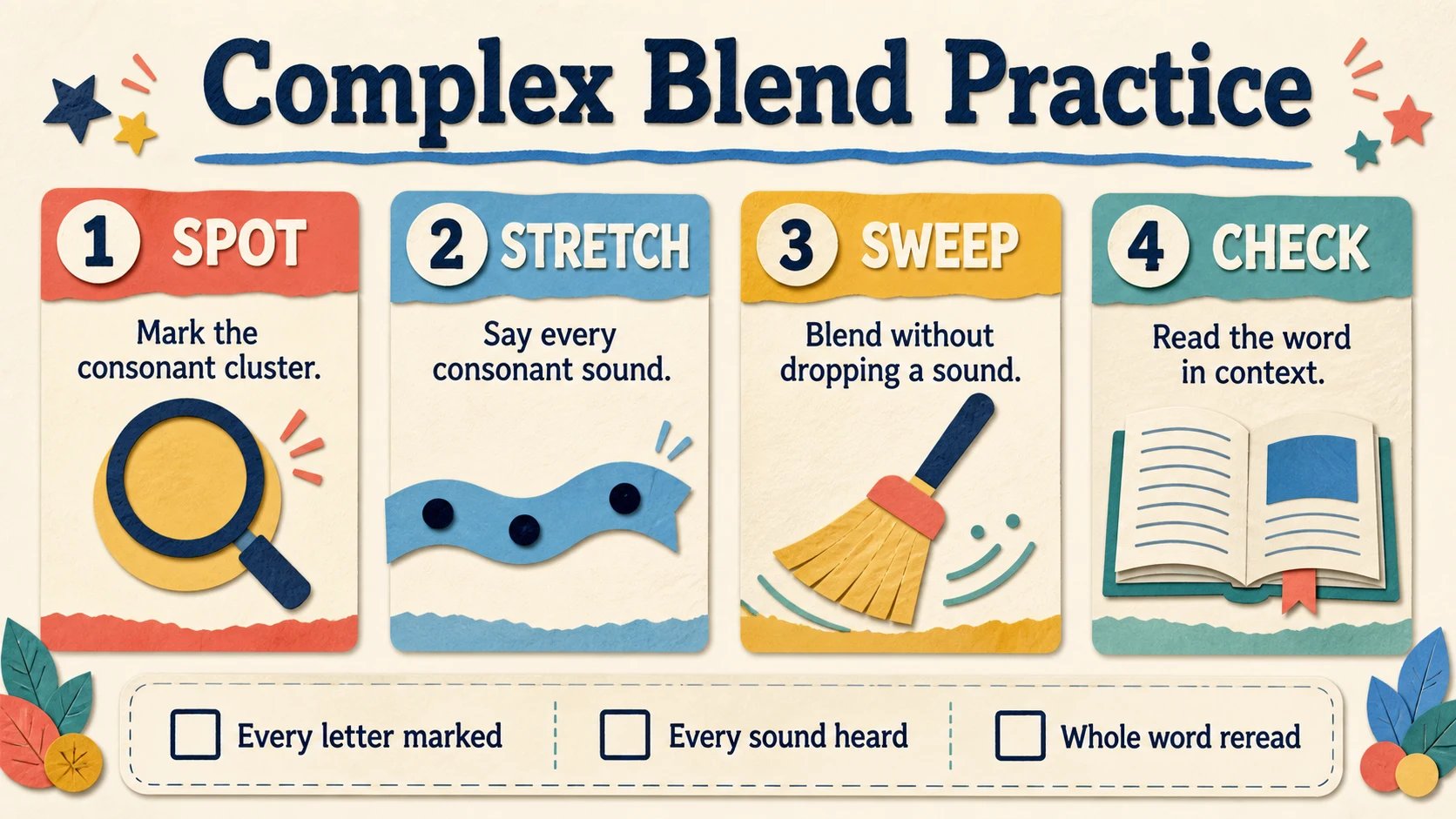
Short delayed checks reveal whether beginning-blend identification remains available beyond the first practice session.
A flexible review sequence
| Review point | Suggested activity | Evidence to collect |
|---|---|---|
| Later in the first lesson | Revisit two corrected words without showing the answers. | Can the learner explain the correction? |
| A later day | Present three to five fresh blend words. | Can the learner identify the beginning blends without the original page? |
| Several days after that | Mix clear examples with a boundary case such as a word that has only one initial consonant. | Does the learner follow both the sound rule and the location rule? |
| During later reading | Briefly notice a previously taught blend in a suitable word. | Can the learner apply the idea within connected text? |
Change the spacing according to observed work. If the learner remembers accurately, lengthen the interval or reduce the number of prompts. If the same misconception returns, shorten the interval and reteach it directly. Repeatedly assigning all 20 identical items may measure memory for the page rather than flexible recognition.
What This Printable Does Not Cover
This worksheet provides focused practice with identifying consonant blends at the beginning of 20 words. Its narrowness is useful during instruction, but it creates clear limits.
The page does not, by itself:
- Teach the complete progression of initial and final consonant blends.
- Establish independent mastery in connected reading.
- Measure spelling or written composition.
- Demonstrate comprehensive alignment with every local standard or curriculum.
- Explain why a particular learner finds decoding difficult.
- Guarantee reading fluency or any broader outcome.
- Supply a universal lesson length or review schedule.
The “Standard Theme” and “Easy” labels describe the worksheet’s format and catalogue difficulty. They do not mean that every second grader should complete it at the same speed or without support. Likewise, a strong score should be treated as evidence about this specific task, not as proof of complete phonics mastery.
A Useful Next Step
Choose the next activity from the pattern in the learner’s work. If beginning blends were unstable, return to a few guided examples and use the broader Consonant Blends topic guide to plan the sequence. If the learner was accurate only with prompting, repeat a short fresh set after a delay and fade the cues. If performance was secure and independent, apply the skill in new words and connected text rather than immediately repeating the same page.
For more sustained practice across the topic, the 2nd Grade Consonant Blends Worksheet Pack contains 18 worksheets. When the learner needs a fresh set instead of a fixed sequence, use the free worksheet generators to create another practice opportunity based on what the completed page actually revealed.
Put it into practice
Use the guide with a real printable
Move from explanation to a short, observable practice task. Check the first item together, then adjust the next session from the learner's actual work.
See the 18-worksheet pack